Zenless Zone Zero is a free-to-play, cross-platform urban fantasy action RPG from HoYoverse that blends stylish hack-and-slash combat with a retro-futuristic post-apocalyptic setting. You play as a Proxy, one half of the sibling duo Belle and Wise, guiding agents through dangerous pocket dimensions called Hollows while running a video rental store as your day job in the last surviving city, New Eridu.
 | Publisher: COGNOSPHERE PTE. LTD. Playerbase: High Type: Action Gacha RPG Release Date: July 4, 2024 (Global) Pros: +Exceptional art direction and urban fantasy aesthetic. +Fast, stylish combat with assist parries and chain attacks. +Comic-book storytelling panels and full voice acting. +More generous free-to-play currency than most gacha games. +Runs well on modest hardware. Cons: -TV mode exploration (Hollow Deep Dive) can feel sluggish and divisive. -Limited open-world exploration compared to HoYoverse siblings. -Combat is too easy early on before endgame unlocks. -Standard gacha rates still sting if you want a specific 5-star. |

Zenless Zone Zero Overview
Zenless Zone Zero is HoYoverse’s third major live-service title, following Genshin Impact and Honkai: Star Rail, and it goes in a noticeably different direction than either of them. Instead of a sprawling fantasy open world or a galaxy-hopping space opera, ZZZ keeps things tight and focused on one city, New Eridu, a retro-futuristic metropolis that survived an apocalyptic disaster called the Hollows. The city thrives by harvesting Ether from these Hollows, but the Hollows themselves are dangerous, dimension-warping labyrinths full of monsters called Ethereals.
You play as either Belle or Wise, a pair of siblings who run a VHS rental shop called Random Play by day and operate as the legendary Proxy “Phaethon” by night, guiding agents through Hollows via a Bangboo avatar. The game splits its time between slice-of-life urban exploration, comic-book-style visual novel storytelling, and flashy three-character tag-team combat. It has style to burn, and a lot of the fun comes from just soaking in the vibe.
Zenless Zone Zero Key Features:
- Tag-Team Action Combat – Build a squad of three agents and swap between them mid-combo for assist attacks, parries, dodge counters, and cinematic chain attacks that punish stunned enemies.
- Urban Slice-of-Life Hub – Explore Sixth Street, Lumina Square, and other districts of New Eridu. Run your video store, hit the arcade, grab noodles, and build relationships with the characters who live there.
- Comic-Book Storytelling – Major dialogue scenes play out as voiced comic panels with dynamic framing, while key story beats get fully animated cutscenes.
- Hollow Deep Dive System – Navigate the Hollows through a tile-based TV-monitor board that blends dungeon crawling with puzzles, combat encounters, and resource management.
- Factions and Trust System – Befriend agents from groups like the Cunning Hares, Belobog Heavy Industries, Victoria Housekeeping, and more, unlocking character stories and combat bonuses.
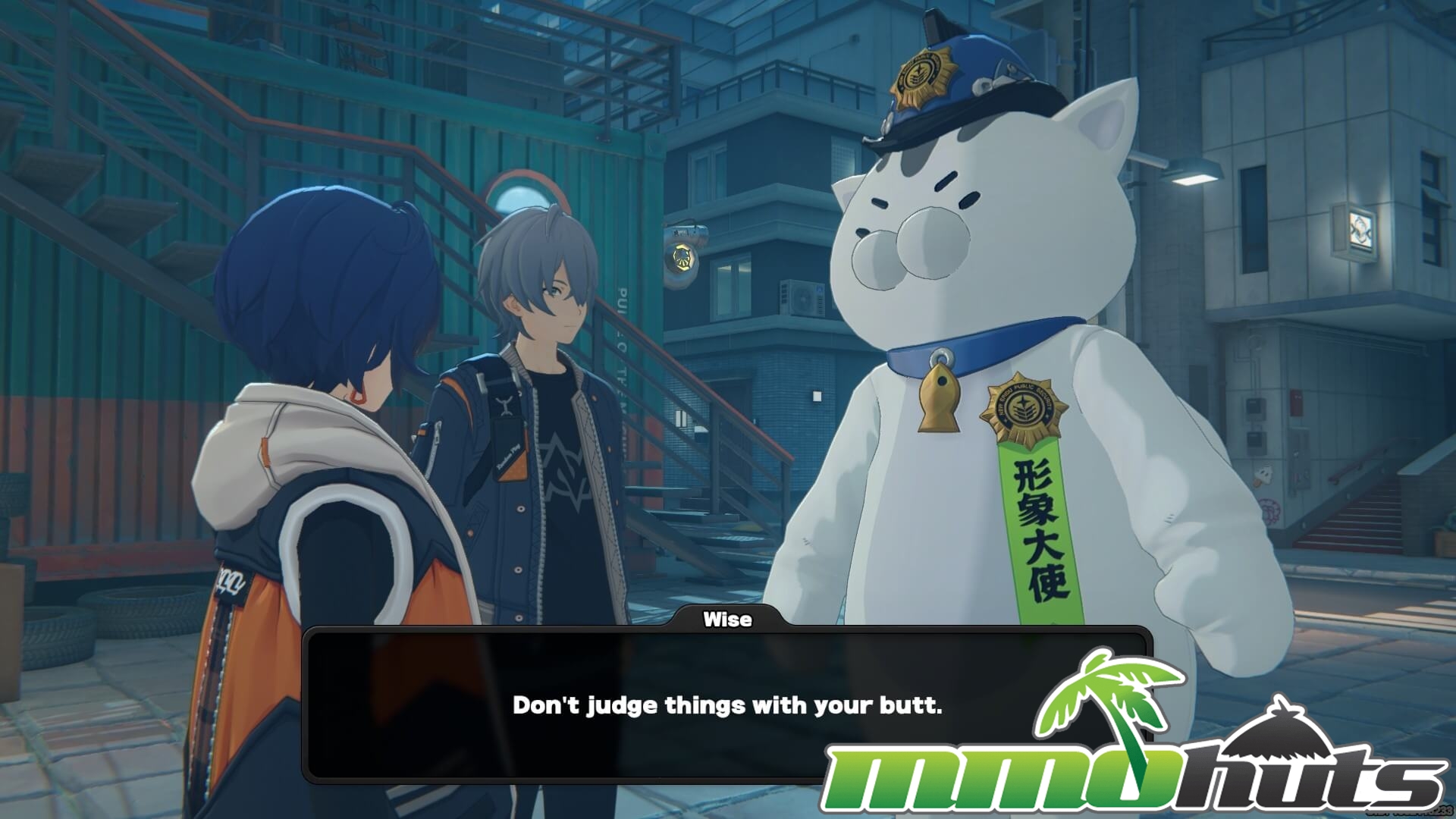
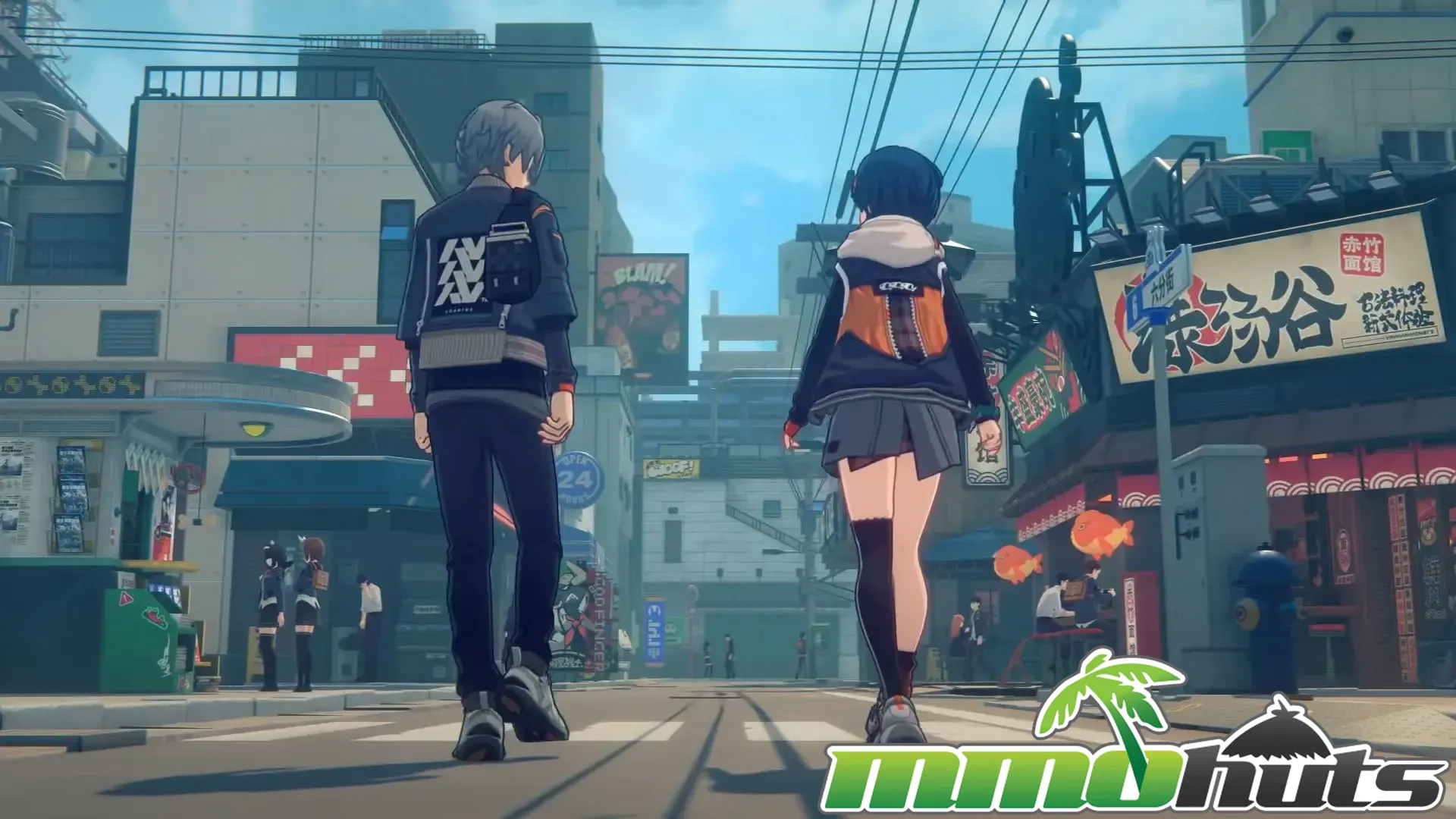
Zenless Zone Zero Screenshots




Zenless Zone Zero Featured Video

Zenless Zone Zero Review
Zenless Zone Zero is a free-to-play urban fantasy action RPG developed by HoYoverse and published globally by COGNOSPHERE. It launched on July 4, 2024 for PC, PlayStation 5, Android, and iOS simultaneously, and has steadily expanded its reach since, landing on Xbox Series X/S in June 2025 alongside the Version 2.0 update. A Steam release is planned for Q2 2026. The game is the studio’s third major live-service project, and it feels like the one where HoYoverse finally let its art team fully cut loose.
First Impressions and Setting
The first thing you notice about Zenless Zone Zero is how aggressively stylish it is. The menus pop with graffiti and CRT scanlines. The character designs fuse streetwear and tactical gear with animal features and mechanical limbs. The soundtrack bounces between lo-fi hip-hop beats, electronic dance tracks, and full vocal songs that play during boss fights. It wears its influences on its sleeve, Jet Set Radio, Persona 5, Hi-Fi Rush, early 2000s urban anime, but the blend feels distinct rather than derivative.
The setting is New Eridu, the last surviving city after a dimension-rupturing catastrophe called the Hollows swallowed most of civilization. Hollows spawn without warning, warping reality and spawning Ethereal monsters that corrupt anyone who stays inside too long. But Hollows also contain Ether, a valuable resource, so corporations, gangs, and government agencies all have reasons to send people in. That is where you come in. As a Proxy, you remotely guide agents through Hollows using a Bangboo, a small rabbit-like robot that serves as your eyes and ears inside the anomaly.
The storytelling is split between two modes: traditional in-engine cutscenes and comic-book panel sequences that slide across the screen with full voice acting. The comic panels are genuinely dynamic, with characters leaning out of their frames, action lines, and expressive portraits that give conversations more personality than the standard VN talking-head format. Both Belle and Wise are fully voiced and have distinct personalities, which is a nice change from the silent or near-silent protagonists in HoYoverse’s other games.
Combat and the Assist System
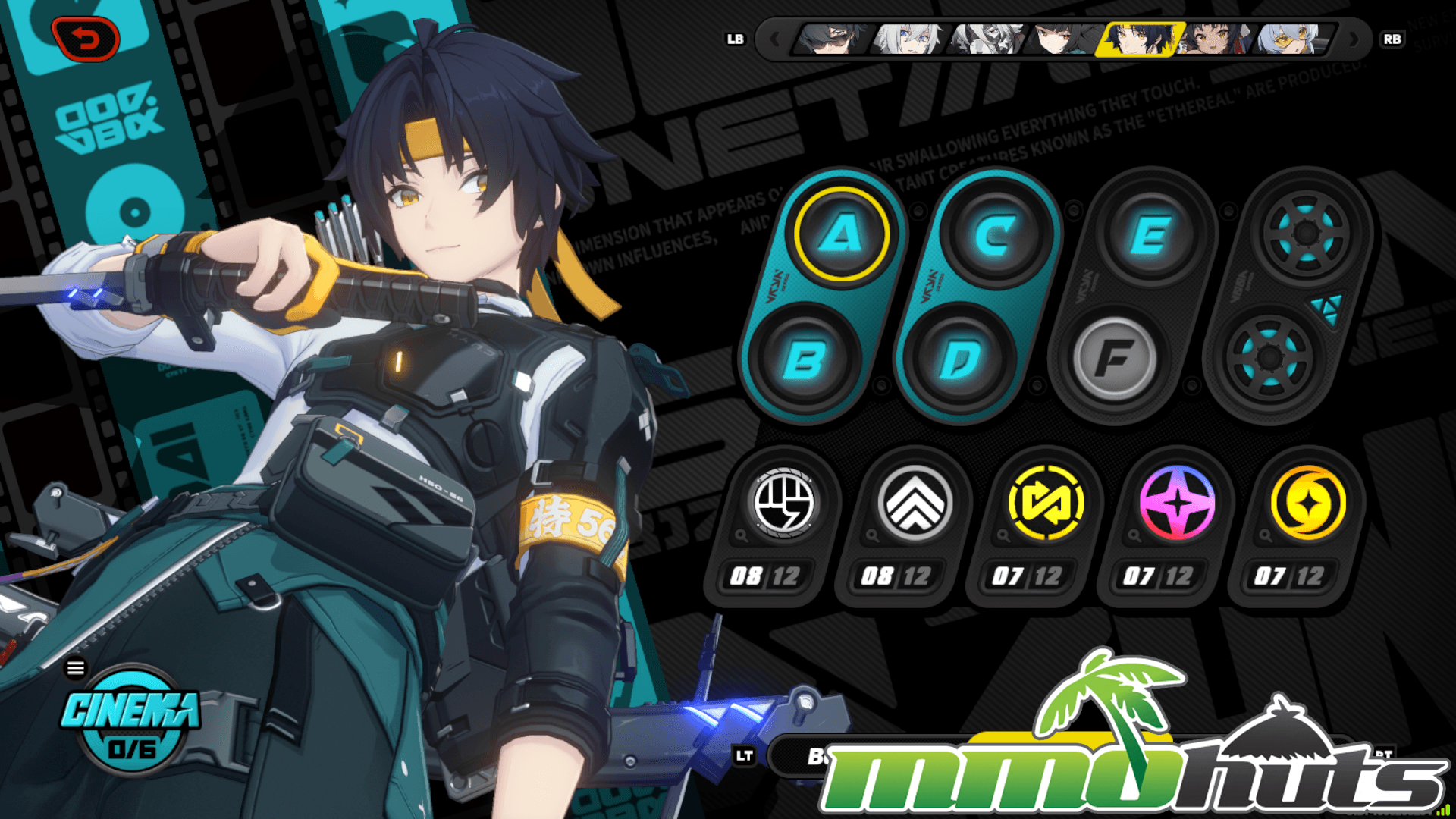
Combat is the main event in ZZZ, and it is a clear step up in mechanical depth from Genshin Impact. You field a team of three agents, each with a basic attack string, a special attack, an EX special that consumes energy, and an ultimate that builds up through combat. You control one character at a time and swap between them freely.
The defining mechanic is the Assist system. When an enemy telegraphs a heavy attack with a golden flash, tapping the swap button triggers a Perfect Assist, which parries the attack and lets the incoming character counter with a heavy hit. There are also Dodge Counters, which reward you with a slow-motion window after a well-timed evade, and Chain Attacks, which let you string together rapid-fire character swaps against a stunned enemy. When everything clicks, the combat feels like a rhythm game disguised as an action RPG. It is fast, flashy, and extremely satisfying.
The downside is that the difficulty curve is very gentle for most of the main story. Trash mobs stand around waiting to be killed, and even elite enemies telegraph their attacks so generously that you can mash through encounters on basic attack strings alone. The early game does not punish sloppy play, which makes the whole system feel unnecessarily forgiving until you reach endgame activities like Shiyu Defense, Hollow Zero, and the higher-difficulty Notorious Hunt bosses, where the training wheels come off and fights demand actual attention. A tighter ramp would make the combat feel more rewarding from the start.
Hollow Deep Dive and Exploration
The most divisive part of Zenless Zone Zero at launch was the Hollow Deep Dive system, the TV-mode board game that represents your Proxy’s digital view of the Hollows. You move a Bangboo across a grid of CRT TVs, each tile triggering different events: combat encounters, healing nodes, trap tiles, dialogue scenes, or simple path choices. Thematically, it is a clever way to visualize the Proxy’s remote guidance role, and some of the more elaborate boards, such as a train-heist sequence or a bomb-defusal scenario, use the format creatively.
The problem is pacing. TV mode is slower than whatever you were doing before it, and early-game boards are often just straight corridors with no meaningful choices. Spending several minutes slowly moving across a grid between combat encounters kills momentum, especially when the combat itself is so kinetic. HoYoverse clearly heard the feedback because the Version 2.0 update introduced the Waifei Peninsula as a fully navigable 3D area with traditional exploration, and the studio has gradually reduced TV mode’s presence across story content. It still exists in Hollow Zero and certain events, but it is no longer the primary way you interact with the world.
City exploration, by contrast, works well for what it is. Sixth Street, Lumina Square, and later hubs like Failume Heights are dense little neighborhoods full of shops, NPCs, side quests, and mini-games. You can play Snake and a Mr. Driller clone at the arcade, grab ramen for combat buffs, and stumble into surprisingly heartfelt side stories by talking to random citizens. It is not an open world, you cannot climb buildings or glide across rooftops, but the smaller scope lets the city feel lived in rather than stretched thin.
Gacha and Progression
Zenless Zone Zero uses the standard HoYoverse gacha framework with a few tweaks. The currency is Polychromes, which you exchange for Master Tapes (standard banner) or Encrypted Master Tapes (limited character banner). The pity system guarantees an S-Rank agent at 90 pulls, with a 50/50 chance of getting the rate-up character. Lose the 50/50 and the next S-Rank is guaranteed to be the featured agent. The weapon banner, called W-Engines here, has its own separate pity track and a 75/25 rate-up split, making it marginally less punishing than Genshin’s old weapon banner system.
There is also a third gacha track for Bangboo, the little companion robots that provide passive combat effects. Bangboo pulls use a separate currency called Boopons, which you earn exclusively through in-game activities. You cannot spend money on Bangboo pulls, which is a genuinely player-friendly design choice.
The free-to-play income is respectable. Daily commissions, weekly tasks, version events, and Hollow Zero runs feed a steady trickle of Polychromes. Completing the story and exploration content in a new version typically yields enough for around 70 to 90 pulls, enough to hit soft pity once. Compared to the broader gacha market, ZZZ feels on the more generous side, though the standard HoYoverse caveats still apply: pulling for a specific limited S-Rank and their signature W-Engine will drain your resources fast, and the temptation to swipe the credit card is always present.
Progression is the familiar multi-layered affair. Agents need level-up materials, skill upgrade chips, promotion ascension materials, W-Engines, and Disk Drives. Disk Drives are the artifact equivalent, equipable stat pieces with two-piece and four-piece set bonuses, and they are farmable through the HIA’s VR training mode. The grind is less tedious than in some competitors because the VR mode lets you customize enemy types and target specific rewards, cutting down on RNG frustration, but it is still a stamina-gated daily loop that demands patience.
World Design and Hub Areas
New Eridu is not one seamless map. The city is divided into hub districts connected by loading screens, and Hollows are separate instanced levels. It is a structure closer to Honkai: Star Rail than Genshin Impact, and it works well for the game’s mission-based structure. The loading screens are frequent, stepping out of Random Play onto Sixth Street triggers one, so if seamless immersion is a priority, this might chafe.
What the hubs lack in scale they make up for in personality. Sixth Street is a cozy residential strip with a noodle shop, a newsstand, an arcade, and your video store, all rendered with a warm, lived-in quality. Lumina Square adds corporate towers and a waterfront view. Failume Heights, introduced in Version 2.0, shifts to a traditional Chinese architectural style with a temple management minigame that functions as a surprisingly deep tycoon-style side activity. Each district has its own soundtrack, its own color palette, and its own cast of recurring NPCs.
The day/night cycle advances manually when you rest at the video store, which gates certain events and quests to specific times of day. It is a simple system that adds a mild routine element, wake up, open the store, do commissions, hang out with agents, sleep, repeat, without becoming a chore.
Story, Characters, and Presentation
The story structure is episodic, with each chapter focusing on a specific faction. You start with the Cunning Hares, a scrappy crew of odd jobs mercenaries that includes the monotone yet oddly endearing Anby, the theatrically over-the-top android Billy, and the debt-ridden schemer Nicole. Later chapters introduce Belobog Heavy Industries, a construction company run by a tiny girl with a giant hammer, Victoria Housekeeping, a maid service staffed by a werewolf butler and a shark-girl maid who are all suspiciously combat-capable, and the criminal investigation unit of New Eridu Public Security.
This faction-based storytelling is smart. Each arc is self-contained enough to be satisfying on its own while threading a larger conspiracy about the true nature of the Hollows, the city government, and the siblings’ mysterious past. The writing is lighter in tone than Genshin or Star Rail, leaning into comedy and character dynamics over world-ending stakes, and it is better for it. The voice acting across all four dubs (English, Japanese, Chinese, Korean) is consistently strong, and the English cast in particular nails the comedic timing.
Character designs are absurdly good. A bear in a gold chain, a wolf butler with a polite demeanor and a brutal kick-heavy moveset, a tiny blue oni with a massive sheathed blade, a punk rock guitarist who swings her guitar case as a weapon. The art team clearly had fun, and the variety keeps the roster visually interesting even as it grows past two dozen agents.
The Trust system functions like a lightweight Social Link mechanic. You can invite agents to hang out, take them to restaurants, play arcade games, or help them with personal problems through character-specific side quests. These moments are small but effective, they make the characters feel like people who exist in the city even when they are not fighting Ethereals.
Zenless Zone Zero vs Honkai: Star Rail and Genshin Impact
Comparisons between HoYoverse’s 2 previous major games are inevitable. Genshin Impact is the open-world exploration game with elemental reaction combat and a massive, seamless map. Honkai: Star Rail is the turn-based RPG with auto-battle, a galactic setting, and the Simulated Universe roguelike mode. Zenless Zone Zero is the action-focused city game with tag-team combat and a much smaller, denser world.
If you bounced off Genshin because the world felt too big and directionless, or if you found Star Rail’s turn-based combat too passive, ZZZ might be the sweet spot. The combat demands engagement without being punishing, and the city hub structure gives clear direction without the paralysis of an open-world checklist. On the other hand, if you play HoYoverse games primarily for exploration and discovery, ZZZ will feel restrictive. There are no sweeping vistas, no hidden temples, no climbing puzzles. The exploration happens in conversation and in combat arenas, not in the world geometry.
Between the three, ZZZ has the strongest visual identity and the weakest exploration layer. Which one matters more is a question of taste.
Final Verdict – Great
Zenless Zone Zero is HoYoverse’s most stylish game and arguably its most mechanically interesting one. The combat is fast, flashy, and rewards timing in a way that feels closer to a character action game than a mobile gacha RPG. The setting is refreshing, a retro-futuristic city with a personality all its own, and the comic-book presentation gives every story scene more life than the standard static VN format. The free-to-play economy is fair by genre standards, and the post-launch support has been steady, with the Version 2.0 overhaul addressing the biggest structural complaints from the launch period. It is not without flaws. The TV mode exploration still drags, the early-game difficulty is too forgiving to teach good habits, and the gacha is still a gacha with all the spending incentives that implies. But if you want a free-to-play action RPG that puts its combat and its characters front and center, Zenless Zone Zero delivers with confidence and a killer soundtrack.
Zenless Zone Zero Links
Zenless Zone Zero Official Site
Zenless Zone Zero Epic Games Store
Zenless Zone Zero Steam Page
Zenless Zone Zero Twitter
Zenless Zone Zero Facebook
Zenless Zone Zero Instagram
Zenless Zone Zero Reddit
Zenless Zone Zero Discord
Zenless Zone Zero YouTube
Zenless Zone Zero Twitch
Zenless Zone Zero TikTok
Zenless Zone Zero HoYoLAB
Zenless Zone Zero System Requirements
PC Minimum Requirements:
Operating System: Windows 10 64-bit or later
CPU: 7th Gen Intel Core i5
Video Card: Nvidia GeForce GTX 970
RAM: 8 GB
DirectX: Version 11.1 or later
Hard Disk: 57 GB (additional 58 GB required for decompression; SSD recommended)
PC Recommended Requirements:
Operating System: Windows 10 64-bit or later
CPU: 10th Gen Intel Core i7 or better
Video Card: Nvidia GeForce GTX 1660 or better
RAM: 8 GB or more
DirectX: Version 11.1 or later
Hard Disk: 57 GB SSD required
Android Minimum Requirements:
OS: Android 11.0 or HarmonyOS 4.0 or later
CPU: Snapdragon 855, Dimensity 1200, or Kirin 990
RAM: 8 GB
Storage: 20 GB
Android Recommended Requirements:
OS: Android 11.0 or HarmonyOS 4.0 or later
CPU: Snapdragon 888, Dimensity 8200, Kirin 9000 or better
RAM: 8 GB or more
Storage: 20 GB
iOS Requirements:
Operating System: iOS 14.0 or later
Minimum Device: iPhone XS or later, iPad with A12 Bionic chip or later, 4 GB RAM
Recommended Device: iPhone 11 Pro or later, iPad with A13 Bionic chip or later, 4 GB+ RAM
Storage: 26 GB
Note: macOS is currently not supported.
PlayStation 5 Requirements:
Storage: 55 GB available space
Zenless Zone Zero Music & Soundtrack
Coming soon!
Zenless Zone Zero Additional Information
Developer: HoYoverse (Shanghai JiaoZhai Technology Co., Ltd.)
Publisher: COGNOSPHERE PTE. LTD.
Engine: Unity
Producer: Li Zhenyu
Global Release Date: July 4, 2024
Xbox Series X/S Release Date: June 6, 2025
Steam Release Date: Q2 2026 (Planned)
Platforms: Microsoft Windows (HoYoPlay, Epic Games Store), PlayStation 5, Xbox Series X/S, Android, iOS, Steam (planned)
Development History / Background:
Zenless Zone Zero was first revealed by HoYoverse in May 2022 with a cinematic teaser that showcased the game’s distinctive urban fantasy aesthetic. The project entered a series of closed beta tests under the codenames Tuning Test, Equalizing Test, and Amplifying Test throughout 2023 and early 2024, with each phase refining the combat feel, the Hollow Deep Dive system, and the character roster. Producer Li Zhenyu has cited influences ranging from Persona 5 to Jet Set Radio to classic beat-em-ups, and the team’s goal was to create a HoYoverse game that felt faster, tighter, and more mechanically demanding than Genshin Impact while keeping the studio’s signature character-driven storytelling.
The game launched globally on July 4, 2024 across PC, PS5, and mobile devices to strong player interest, though the TV mode exploration system received mixed feedback and became a focal point for post-launch revisions. Through the first year of updates, HoYoverse significantly reworked the story structure, reduced TV mode prominence, added new districts like the Waifei Peninsula, and introduced the Suibian Temple management minigame. An Xbox Series X/S version arrived in June 2025 alongside the Version 2.0 update, and a Steam release is planned for Q2 2026. The game was nominated for Best Mobile Game at The Game Awards 2024 and won iPhone Game of the Year at the App Store Awards 2024.