Dune: Awakening is a buy-to-play open world survival MMO set on Arrakis, built by Funcom using Unreal Engine 5. It drops you into an alternate timeline where Paul Atreides was never born, Duke Leto survived the assault on Arrakeen, and the Fremen have mysteriously vanished. You start as a nameless prisoner sent to uncover what happened to them and slowly climb from scrabbling for dew drops to piloting ornithopters, commanding spice harvests, and wielding real political power through the Landsraad system.
 | Publisher: Funcom Playerbase: High Type: Survival MMO Release Date: June 10, 2025 (PC) Pros: +Incredibly faithful and immersive take on the Dune universe. +Base building is polished, flexible, and surprisingly painless even for solo players. +Buy-to-play with no subscription and no pay-to-win nonsense. Cons: -Combat adheres so strictly to Dune lore that melee often feels sluggish and repetitive. -Enemy variety is thin. -Mid-to-late game crafting grind is steep, especially for solo players. -Endgame direction and PvE content still need fleshing out. |

Dune: Awakening Overview
Dune: Awakening is the latest game from Funcom, the Norwegian studio behind Conan Exiles, The Secret World, and Age of Conan. It takes the survival-crafting formula the team honed over nearly a decade of Conan Exiles updates and applies it to Frank Herbert’s sci-fi universe with an almost obsessive commitment to authenticity. The result is an MMO that feels less like a traditional theme-park MMO and more like a harsh, beautiful, and politically charged sandbox where the planet itself is the main antagonist.
The setting is an alternate Dune timeline. Lady Jessica obeyed the Bene Gesserit and gave birth to a daughter instead of Paul. Without a Kwisatz Haderach, history fractured. Duke Leto survived. The Atreides and Harkonnen are locked in open war over Arrakis, and the Fremen have disappeared entirely. You are a sleeper agent sent by the Bene Gesserit to find them. What unfolds from there is a story that stretches across dozens of hours, mixing cinematic cutscenes with survival gameplay and faction intrigue.
People will compare it to Conan Exiles in space, and that is not entirely wrong, but Dune: Awakening is much more ambitious in scope. The world is split across multiple server types (social hubs, survival maps, and the PvP Deep Desert), and the political layer with the Landsraad voting system gives guilds and factions a reason to exist beyond just killing each other.
Dune: Awakening Key Features:
- Alternate Timeline Narrative – A cinematic main story set in a Dune universe where Paul Atreides was never born, with fully voiced cutscenes and choices that matter.
- Brutal Desert Survival – Manage hydration, avoid sunstroke, extract water from enemies and plants, and build stillsuits to survive Arrakis. The desert wants you dead.
- Sandworms and Coriolis Storms – Sandworms roam the open desert dynamically, not scripted. Get eaten and you lose everything. Weekly Coriolis storms reshape the Deep Desert entirely.
- Deep Class System – Five Schools of the Imperium (Swordmaster, Bene Gesserit, Mentat, Trooper, Planetologist) with hybrid multi-classing, active abilities, techniques, and passives.
- Base Building and Vehicles – Build anything from a small shelter to a massive guild fortress. Craft sandbikes and ornithopters, then fly across the northern hemisphere of Arrakis.
- Faction Politics and Landsraad – Swear allegiance to Atreides or Harkonnen, rise through ranks, and participate in server-wide voting that changes buffs, blueprints, and decrees for everyone.
- PvP Deep Desert – A massive, shared PvP zone nine times the size of the Conan Exiles map where guilds fight over spice blows and control points.
Dune: Awakening Screenshots


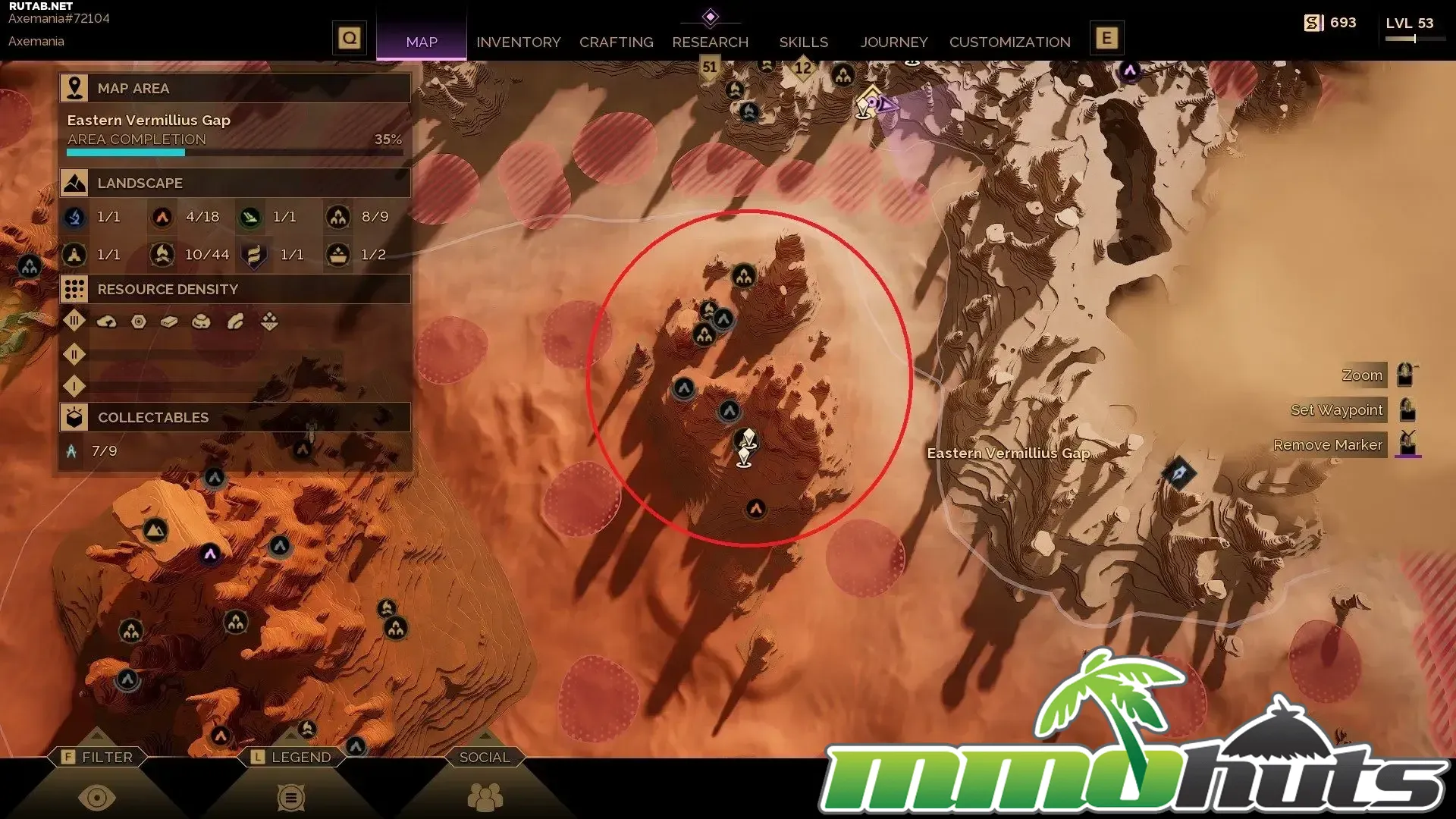
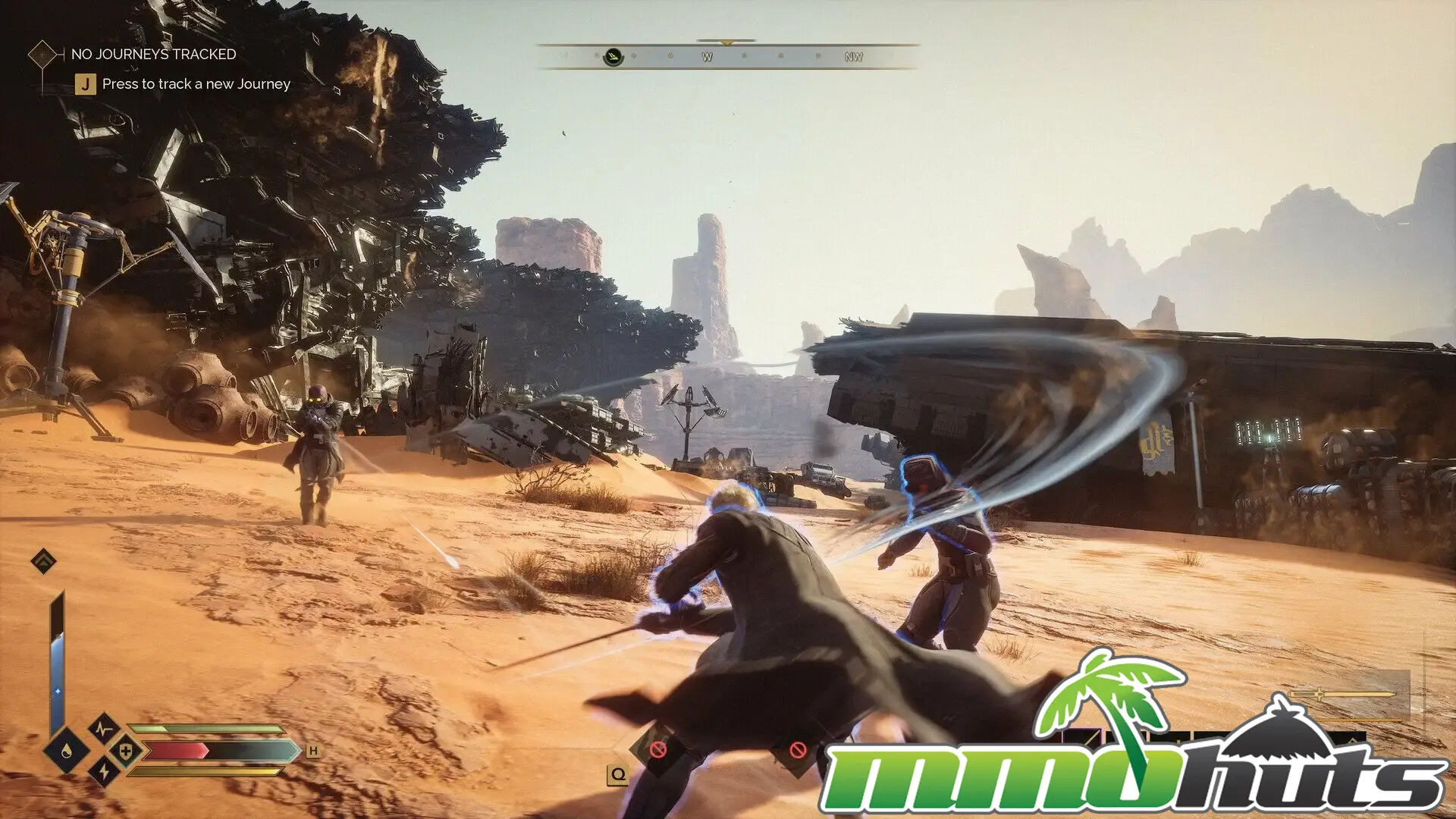
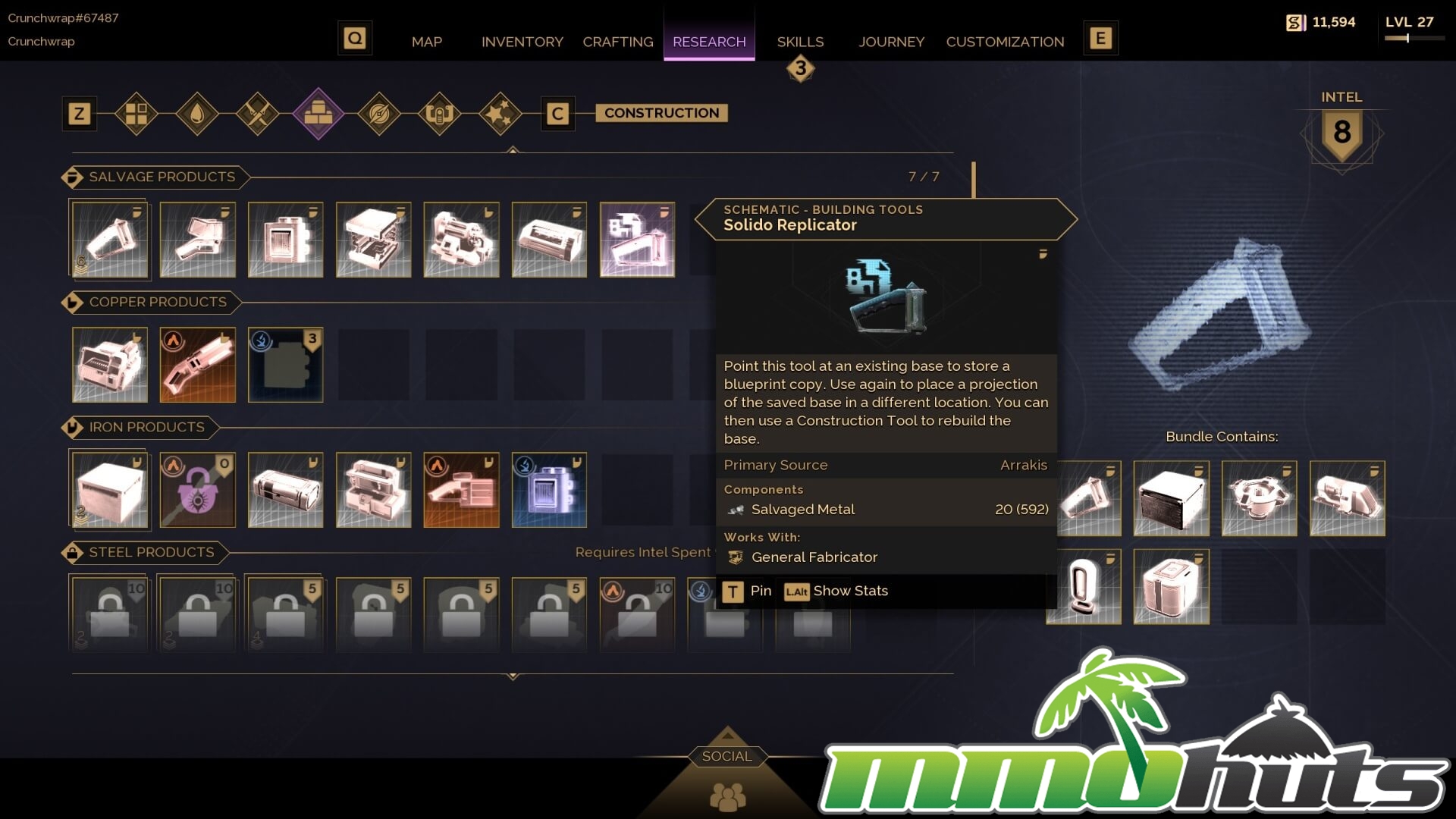
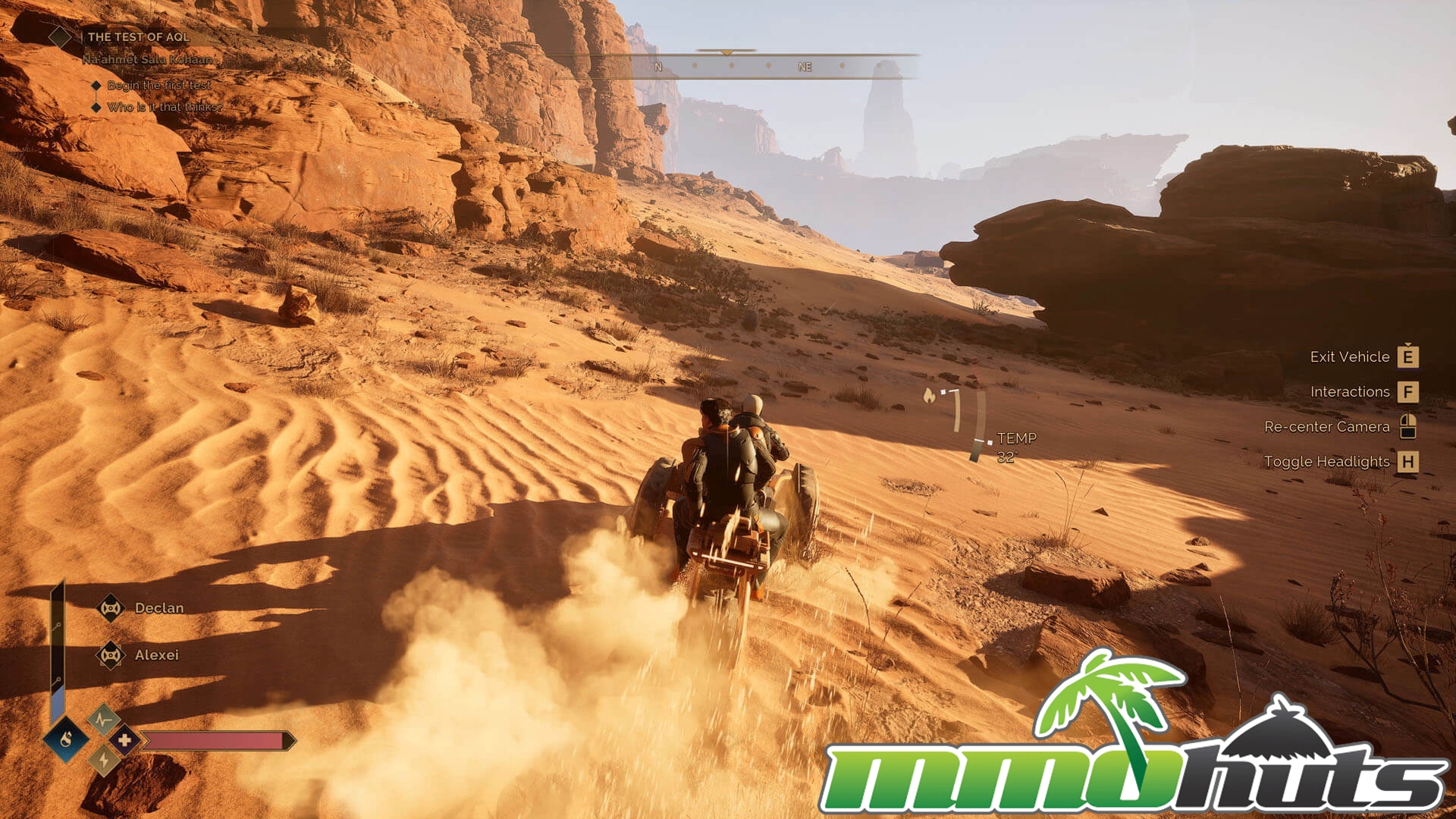
Dune: Awakening Featured Video

Dune: Awakening Review
Dune: Awakening is developed and published by Funcom, the Oslo-based studio that has been running live service games for over two decades. It launched on PC via Steam on June 10, 2025, after a brief delay from its original May 20 date to squeeze in one more beta phase. A five-day head start for Deluxe and Ultimate Edition pre-orders began June 5. Console versions for PlayStation 5 and Xbox Series X/S are confirmed for sometime in 2026, with Funcom estimating roughly a year of extra development to get performance and memory usage optimized for those platforms.
First Impressions and Atmosphere
The opening minutes of Dune: Awakening set the tone immediately. Character creation is framed as a Gom Jabbar test administered by a Bene Gesserit Reverend Mother. You do not just pick a hairstyle, you pick your home planet, your caste, your mentor, and the combination influences dialogue, starting abilities, and how NPCs react to you throughout the game. It is one of the most immersive character creators in the survival genre, and it signals that Funcom is not treating the Dune license as window dressing.
Once the ornithopter that brought you to Arrakis crashes and you are left in the desert with rags and a scrap-metal knife, the game finds its rhythm. The Hagga Basin, the starting zone, is a wide expanse of rocky canyons, scavenger camps, and open sand. It is beautiful in a desolate way. Sunlight bakes everything. The soundtrack by Knut Avenstroup Haugen, recorded at AIR Lyndhurst in London with a live orchestra, is exceptional. It shifts between dreamlike strings, rumbling percussion, and synth textures that feel simultaneously ancient and alien. This is not background noise. It carries the whole atmosphere.
The attention to Dune lore is exhaustive in a way that fans will notice and newcomers will simply feel. Water is scarce, so you harvest it from dew plants, extract it from corpses, and later build wind traps and Deathstills. The Cutterray, your primary gathering tool, traces a laser over resources to dismantle them instead of having you punch rocks. Shields work the way they do in the books: fast projectiles bounce off, the slow blade penetrates. Loading screens show quotes from the novels. NPCs like Maxim Kazmir, a slimy Harkonnen you meet early on, are written with personality and wit rather than functioning as quest dispensers. Funcom’s writers clearly read the books, not just watched the movies.
Survival Mechanics and the Water Economy
Survival in Dune: Awakening revolves almost entirely around water. There is no hunger meter and no sleep requirement, which is a smart concession. Instead, you have hydration and sunstroke. Stay in direct sunlight too long and your vision blurs, movement slows, and water drains faster until you either find shade or die. Early on this is punishing. You will drink blood from enemies out of desperation because the alternative is collapsing dehydrated in the sand.
But the water system evolves elegantly across the game. Once you build a base with wind traps and blood purifiers, water shifts from being a survival resource to an industrial one. Crafting higher-tier items requires water. Running refineries consumes water. You are never truly free of it, but the pressure changes shape. This is classic survival game design done well. You overcome one bottleneck only to find it mutates into a different, more interesting constraint.
Sandstorms are another hazard. A standard storm will kill you in about thirty seconds if you are caught in the open. You can huddle against rock faces for shelter. Coriolis storms, which hit the Deep Desert weekly, are a different beast entirely. They reshape the entire map, wiping and replacing points of interest, resource nodes, and objectives. This keeps the endgame from stagnating, though the reset cycle can feel disruptive if you were comfortable in a particular layout.
Combat: The Slow Blade Problem
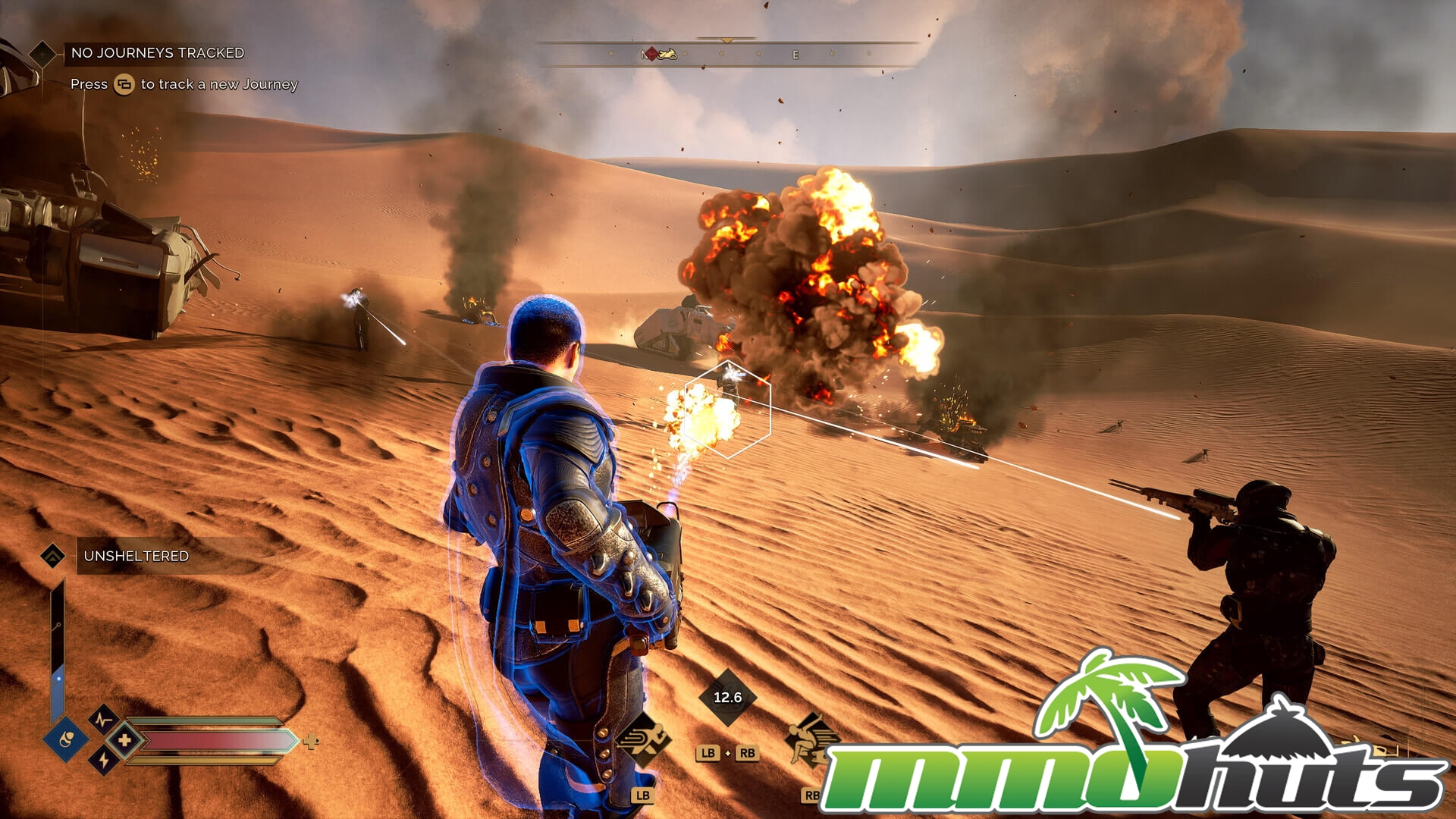
Combat in Dune: Awakening is the most divisive part of the package, and the issue is baked into the source material. In the Dune universe, personal shields make projectile weapons largely useless, so warfare regressed to knives and swords. The “slow blade penetrates the shield” rule is iconic, and Funcom built the combat around it. Melee heavy attacks are deliberately slow thrusts and slices designed to bypass shields. Light attacks are faster but bounce off. You can parry incoming strikes to stagger enemies and create openings.
The problem is that in PvE, this creates a repetitive loop. Against shielded enemies, you either spam light attacks to trigger a stagger state, then follow with a heavy stab, or you wait to parry, then heavy stab. Against unshielded ranged enemies, you just shoot them a few times and they drop. The loop does not evolve much across tens of hours. Enemy archetypes are limited to a handful of human variants: knife fighters, riflemen, snipers, heavy gunners, flamethrower troops. There are no aliens, no thinking machines, no real monsters besides the sandworms. Dune lore forbids all of that, and Funcom respected that restriction to a fault.
In PvP, the system works better. Baiting out parries, managing stamina, and landing a single devastating slow strike on another player is genuinely tense. Shields create interesting rock-paper-scissors dynamics that reward patience and timing. But if you are mostly here for PvE, which a large portion of the playerbase is, the combat will wear thin before the story or crafting does.
Ranged weapons have their moments. The Drillshot rifle fires slow penetrating darts that disable shields at range, letting you close distance for melee. Dart guns come in pistol, assault rifle, sniper, and shotgun variants. The class abilities add welcome variety: Bene Gesserit crowd control, Mentat turrets and traps, Trooper demolitions, Swordmaster gap-closing melee. Mixing and matching class trees as you unlock trainers across the world opens up hybrid builds that keep encounters from feeling totally stale. But the underlying mechanics never quite escape the gravitational pull of the slow blade.
Base Building and Crafting
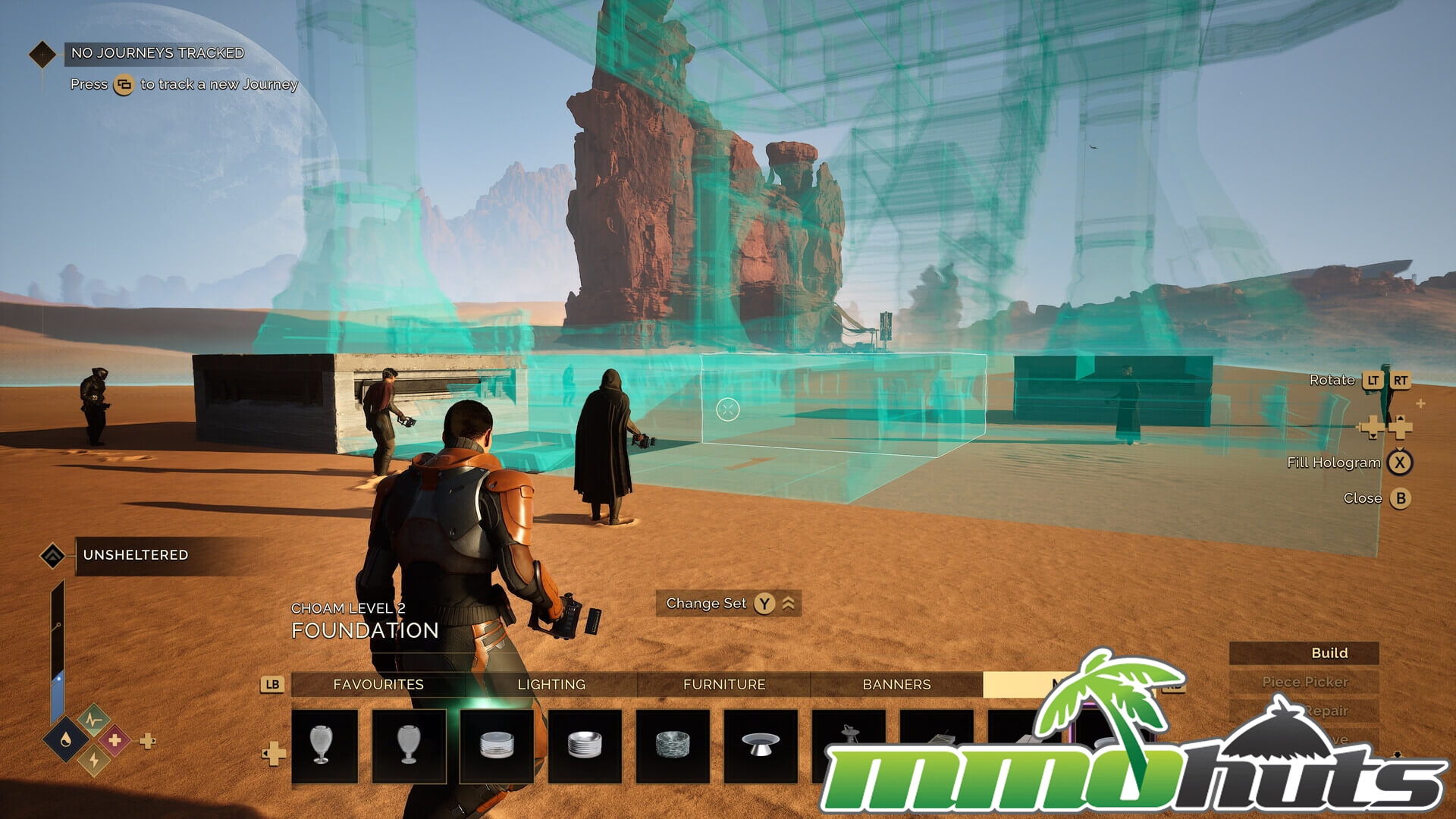
Base building is where Dune: Awakening flexes hardest. If you have ever spent hours in Conan Exiles or Valheim tweaking roof angles and window placements, this system will consume you. Pieces snap together cleanly. Walls, floors, ramps, pillars, rounded windows, lighting fixtures, ladders, and decorations are all available. You can build a cramped survival shack or a sprawling multi-level fortress. The game lets you save structures as blueprints that can be shared, sold on the Exchange, or rebuilt later in a different location with a single click, provided you have the materials.
The crafting progression is tied to intel points, which you earn from leveling up and finding intel caches in enemy camps. Spending intel unlocks research schematics across multiple tech tiers. Early on this feels generous. You explore, clear a few camps, and suddenly have more intel than you know what to do with. By the mid-game, the resource requirements spike significantly. Crafting higher-end gear demands specific materials found only in certain regions, often in quantities that demand hours of grinding. Solo players feel this acutely. Grouping up with a guild spreads the burden, but the grind is real either way.
Power management adds another layer. Generators need fuel. Blood purifiers need power. Refineries need water, which comes from purifiers. Everything feeds into everything else, and if one link in the chain breaks, the whole base slows down. This interconnectivity is satisfying to manage once you understand it, but the onboarding for these systems is sparse. You learn by failing, which is thematically appropriate for Arrakis but occasionally frustrating.
Vehicles, Exploration, and the World Map
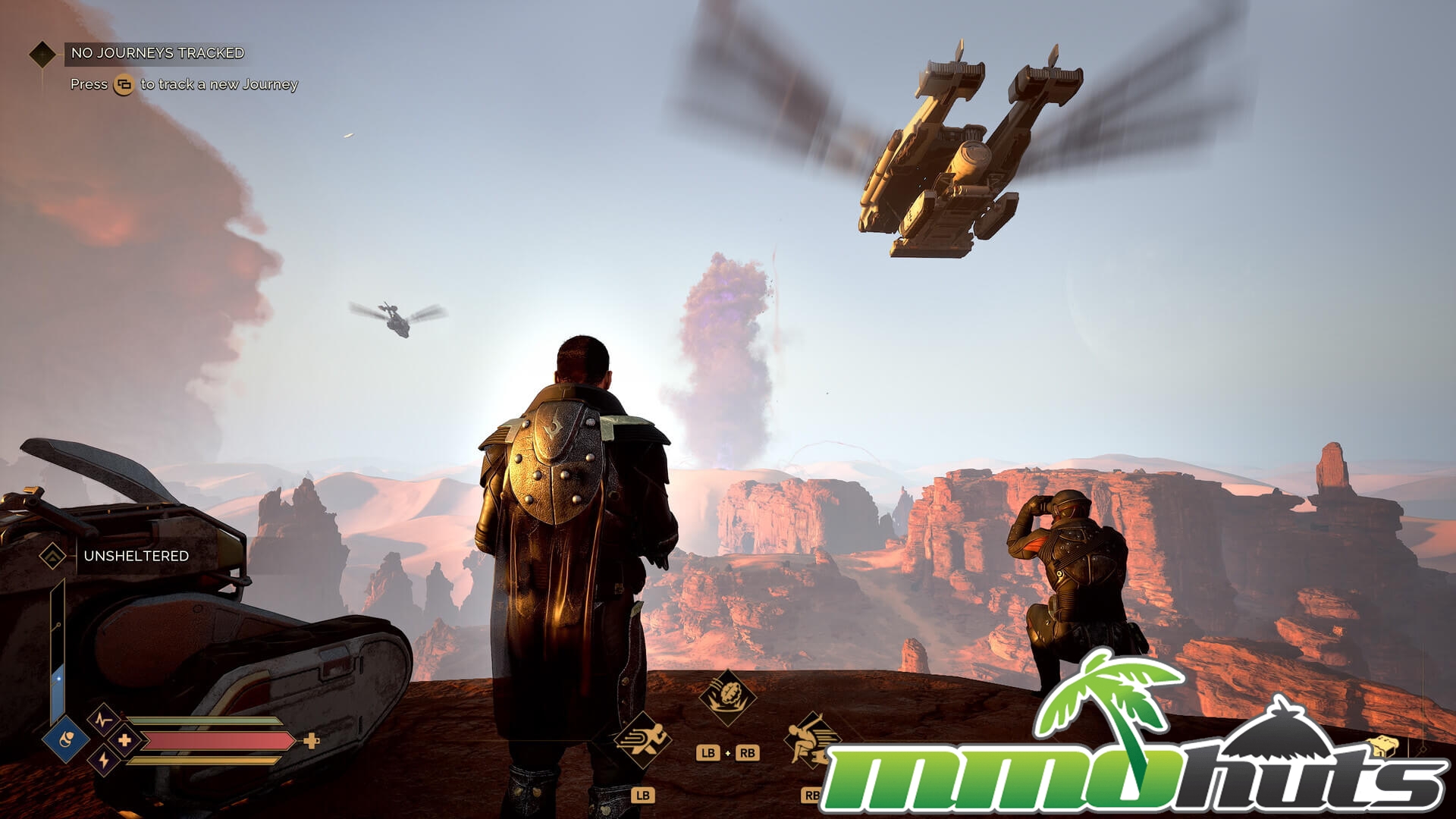
The progression of traversal options is one of the best-paced parts of Dune: Awakening. You start on foot, then craft a suspensor belt that lets you climb and fall from heights safely. Then you build a sandbike, and suddenly the basin opens up. You can cross large stretches of open desert quickly, though the sandworm still demands you plan your routes and stick to rock islands. Then, around the forty-hour mark for most players, you build your first ornithopter.
The ornithopter changes everything. You leave the Hagga Basin map and enter a top-down overland view of Arrakis’s northern hemisphere, flying between points of interest. Previously inaccessible areas become reachable. Distant faction hubs like Harko Village and Arrakeen become regular stops. The ornithopter is not just a vehicle, it is a phase transition in how you experience the game. Funcom pulled off a similar trick in Conan Exiles with mounts, but the ornithopter here is more transformative.
Exploration on foot rewards thoroughness. Caves, crevices, hidden camps, Fremen shrines, and ecology labs are scattered across each zone. Ecology labs are the game’s take on dungeons: ancient Imperial research facilities sealed for thousands of years, some overgrown with plant life where wind traps have been leaking water for millennia. They offer a break from the beige-and-orange desert palette and provide vehicle materials and lore.
Factions, Politics, and the Landsraad
Once you leave the Hagga Basin and engage with the wider world, Dune: Awakening reveals its MMO skeleton. You can pledge to House Atreides or House Harkonnen, and each choice unlocks different quests, blueprints, base pieces, and narrative content. Atreides hubs are noble, orderly, clean. Harko Village is a black-stone den of slave cages, back alleys, and a bar where a woman calls you kitten. The tonal split is stark and well executed.
The Landsraad is the political endgame. Every server has a Landsraad chamber where guild representatives vote on decrees that affect everyone. These can change weekly buffs, unlock or lock weapon blueprints, adjust resource yields, or shift faction power balances. The system gives guilds something to fight over that is not purely about killing each other, and it creates server-wide drama in a way that feels organic. It is not as deep as EVE Online’s politics, but for a survival MMO, it is a meaningful layer that most competitors lack.
PvP is always optional. The Deep Desert is a full-loot PvP zone where guilds fight over massive spice blows, but you can participate entirely through PvE support roles like crafting and logistics. You are never forced into combat with other players, though the most lucrative rewards are in contested space. This is a smart design choice that accommodates both audiences without diluting the stakes for either.
Dune: Awakening vs Conan Exiles
The comparison to Conan Exiles is unavoidable since both come from the same studio and share DNA. Conan Exiles is a smaller-scale survival game with private servers, full mod support, and a focus on individual or small-group play. Dune: Awakening scales everything up. The world is larger, the player count per world is higher, the political systems are more complex, and the narrative is far more ambitious. It also costs more and demands better hardware.
If you liked Conan Exiles for the freedom of modded private servers and intimate base raids, Dune: Awakening might feel over-structured. If you liked Conan Exiles but wished it had more purpose, more story, and a reason to care about other players beyond raiding their bases offline, Dune: Awakening is basically that wish fulfilled. It takes the survival formula and gives it direction without sacrificing the sandbox.
Final Verdict – Great
Dune: Awakening is the best survival MMO to launch in years and easily the most faithful video game adaptation of Frank Herbert’s universe ever made. The atmosphere, the music, the sandworm terror, the base building, and the political faction layer all cohere into something that feels ambitious and confident rather than scattered. Funcom’s experience with live service games shows in the polish and server stability, which was not a given for a launch of this scale. The combat is the main weakness, shackled by a loyalty to Dune lore that prioritizes authenticity over game feel, and the grind in the back half is heavier than it needs to be. But if you are looking for a survival game with real stakes, a world worth caring about, and a business model that respects your wallet (no pay to win, only cosmetic micro transactions, and paid DLC), this is an easy recommendation. Arrakis is harsh, but it is worth it.
Dune: Awakening Links
Dune: Awakening Official Site
Dune: Awakening Steam Page
Dune: Awakening Twitter
Dune: Awakening Facebook
Dune: Awakening Instagram
Dune: Awakening Reddit
Dune: Awakening Discord
Dune: Awakening YouTube
Dune: Awakening TikTok
Dune: Awakening Bluesky
Dune: Awakening System Requirements
PC Minimum Requirements (1080p @ 30fps, Low Settings):
Operating System: Windows 10 64-bit (or newer)
CPU: Intel Core i5-7400 / AMD Ryzen 3 1200
Video Card: NVIDIA GeForce GTX 1060 (6GB) / AMD Radeon 5600XT (6GB) / Intel Arc A380
RAM: 16 GB
Hard Disk: 60 GB available space (SSD required)
DirectX: Version 12
PC Medium Requirements (1080p @ 60fps, Medium Settings):
Operating System: Windows 10 64-bit (or newer)
CPU: Intel Core i5-8600K / AMD Ryzen 5 2600
Video Card: NVIDIA GeForce RTX 2070 (8GB) / AMD Radeon RX 6600 (8GB) / Intel Arc A770
RAM: 16 GB
Hard Disk: 75 GB available space (SSD required)
PC Recommended Requirements (1440p @ 60fps, High Settings):
Operating System: Windows 10 / 11 64-bit
CPU: Intel Core i7-10700K / AMD Ryzen 5 5600X
Video Card: NVIDIA GeForce RTX 3070 (8GB) / AMD Radeon RX 6700 XT (12GB) / Intel Arc B580
RAM: 16 GB
Hard Disk: 75 GB available space (SSD required)
PC Ultra Requirements (4K @ 60fps, Ultra Settings):
Operating System: Windows 10 / 11 64-bit
CPU: Intel Core i7-11700K / AMD Ryzen 7 5800X
Video Card: NVIDIA GeForce RTX 4070 (12GB) / AMD Radeon RX 7800 XT (12GB)
RAM: 16 GB
Hard Disk: 75 GB available space (SSD required)
Dune: Awakening Music & Soundtrack
Coming soon!
Dune: Awakening Additional Information
Developer: Funcom
Publisher: Funcom
Engine: Unreal Engine 5
Creative Director: Joel Bylos
Composer: Knut Avenstroup Haugen
PC Release Date: June 10, 2025 (Head Start: June 5, 2025 for Deluxe/Ultimate)
Original Planned Date: May 20, 2025 (delayed for additional beta testing)
PlayStation 5 / Xbox Series X|S Release: Sometime in 2026 (estimated roughly one year post-PC launch)
Platforms: Microsoft Windows (Steam), PlayStation 5 (TBA), Xbox Series X/S (TBA)
Business Model: Buy-to-play. No subscription. Optional paid DLCs and Season Pass. Free content updates.
Price (Launch): Standard Edition $49.99 / Deluxe Edition $69.99 / Ultimate Edition $89.99
Development History / Background:
Dune: Awakening was first announced at Gamescom 2022 during Opening Night Live. It is the first Dune game from Funcom since the studio acquired the interactive rights to the IP in 2019, predating the release of Denis Villeneuve’s first Dune film. The game is built on Unreal Engine 5 and leverages Lumen and Nanite for lighting and geometry. Funcom worked closely with Legendary Entertainment and the Herbert Estate throughout development, running major story and design decisions past both parties, and even consulting with Villeneuve’s team to ensure the game’s alternate timeline felt like a natural extension of the universe rather than fan fiction.
The alternate timeline concept was born from a practical constraint: designing a multiplayer game where a living messiah figure (Paul Atreides) exists is nearly impossible from a narrative standpoint. By having Lady Jessica give birth to a daughter instead, the timeline splinters, and Arrakis becomes a more chaotic, player-driven setting without undermining the source material.
Closed beta tests ran for several months leading into 2025, and the game’s Character Creator and Benchmark Mode was released on Steam ahead of launch as a free download, letting players test hardware and create characters ahead of time. The launch on June 10, 2025 was remarkably smooth for a new MMO, peaking at over 189,000 concurrent players on Steam and earning a Very Positive rating. Funcom committed to a post-launch roadmap of free content updates alongside paid DLCs and full expansions, with Chapter 2 arriving in September 2025 and further chapters continuing the main story.