Shadowbound is a free-to-play, 2D fantasy turn-based MMORPG from R2Games, built around collecting and fielding a sizable lineup of recruitable mercenaries that fight alongside your main character in formation-based battles.
 | Publisher: R2Games Playerbase: Medium Type: MMORPG Release Date: July 8, 2014 (International) PvP: Arenas Pros: +Strong mercenary collecting and party-building. +Puzzle-style dungeons add variety. +Plenty to do across quests and modes. Cons: -Auto-battle reduces hands-on combat satisfaction. -Cash shop advantages can feel pay-to-win. |

Shadowbound Overview
Shadowbound drops you into a traditional fantasy conflict where dark forces are pushing across the realm, and your role is to push back through quests, dungeons, and steady character growth. It is a 2D, browser-based MMORPG with turn-based encounters, and its main twist is that your power is not just your hero, it is the squad you assemble. You choose one of three classes, each leaning into a different approach to combat, whether you prefer the spell-focused Mage, the direct brawling of the Warrior, or the ranged, precision-oriented Hunter.
Progress revolves around recruiting mercenaries, outfitting them with gear, and arranging your team in formations that determine who takes hits up front and who stays safer in the back line. Alongside standard questing, the game mixes in puzzle-driven dungeons that ask for more than simply clicking through enemies, rewarding loot and resources that feed back into your party’s growth.
Shadowbound Key Features:
- Three Playable Classes – Warrior, Mage, and Hunter.
- Auto Combat Feature – a hands-off option that resolves fights with minimal input.
- Mercenaries – recruitable allies that expand your party and overall strength.
- Turn-Based Combat – positioning and lineup choices matter more than reflexes.
- Puzzle-Based Dungeons – instances with added mechanics that pay out useful rewards.
Shadowbound Screenshots





Shadowbound Featured Video

Shadowbound Review
Shadowbound is a free-to-play fantasy MMORPG designed for web browsers, developed and published by Reality Squared Games (R2Games), a studio best known for a large catalog of similar F2P titles. The international release landed on July 8, 2014 for Microsoft Windows via browser play, and it also supports Facebook as a platform.
Character Creation
Your initial setup is quick, but also notably barebones. Rather than a robust character creator, Shadowbound keeps it to the essentials: pick a gender, select one of the three classes, and enter a name. It is functional, yet it lacks the presentation and personality many MMORPG players expect from the first minutes of a new character.
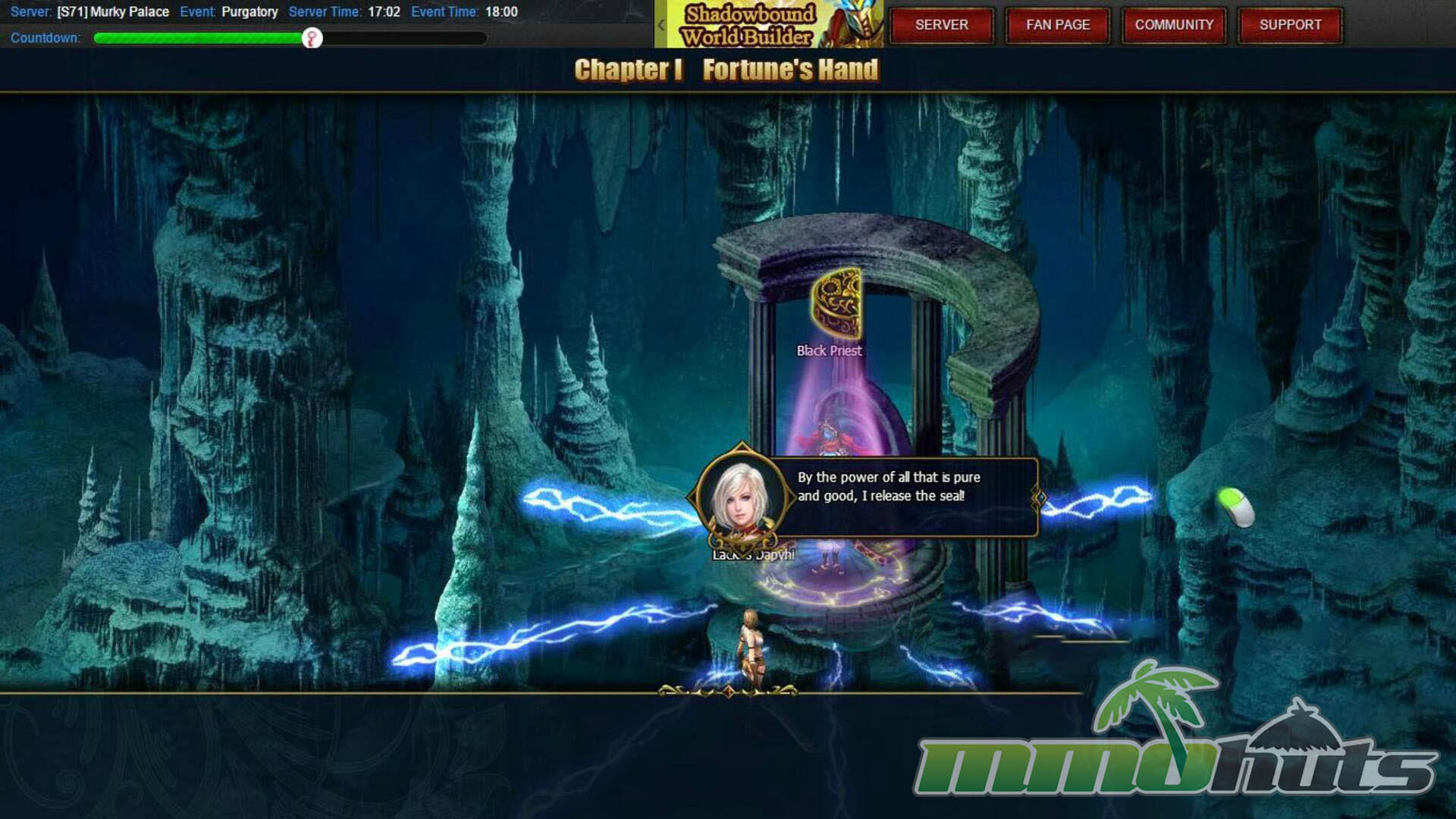
Class choice matters because it shapes how you approach encounters and slightly alters the feel of your progression, which helps if you plan to roll alts later. Early on, the game places you in the kingdom of Hazelgrove and immediately points you toward a straightforward opening conflict, including the rescue of Lilac, who becomes your first mercenary and effectively introduces the companion-driven core of the game.
Visually, the game leans into the flashy, high-contrast look common to many low-budget browser MMORPGs, with bright effects doing much of the heavy lifting. Audio is serviceable but repetitive, and for longer sessions it is the kind of soundtrack many players will likely turn down while they focus on menus and progression.
Getting Into the Routine
The main loop is familiar MMORPG structure: accept quests, move between NPCs, clear objectives, and collect rewards that unlock features over time. In the opening hours, quest text also doubles as a tutorial, explaining systems as they become available. If you intend to play efficiently, it is worth paying attention early, because many of Shadowbound’s menus and currencies can be confusing if you skip the guidance.
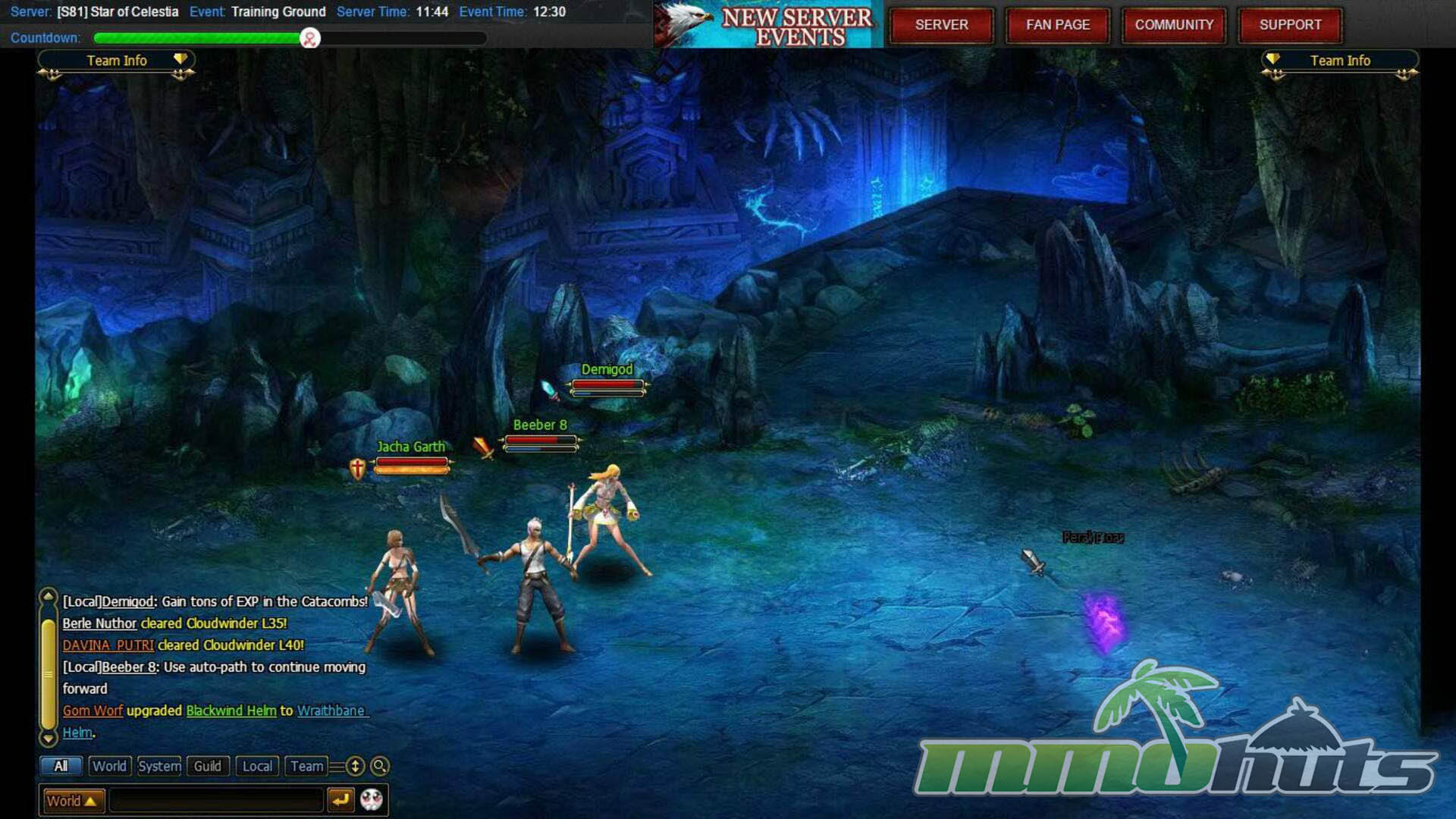
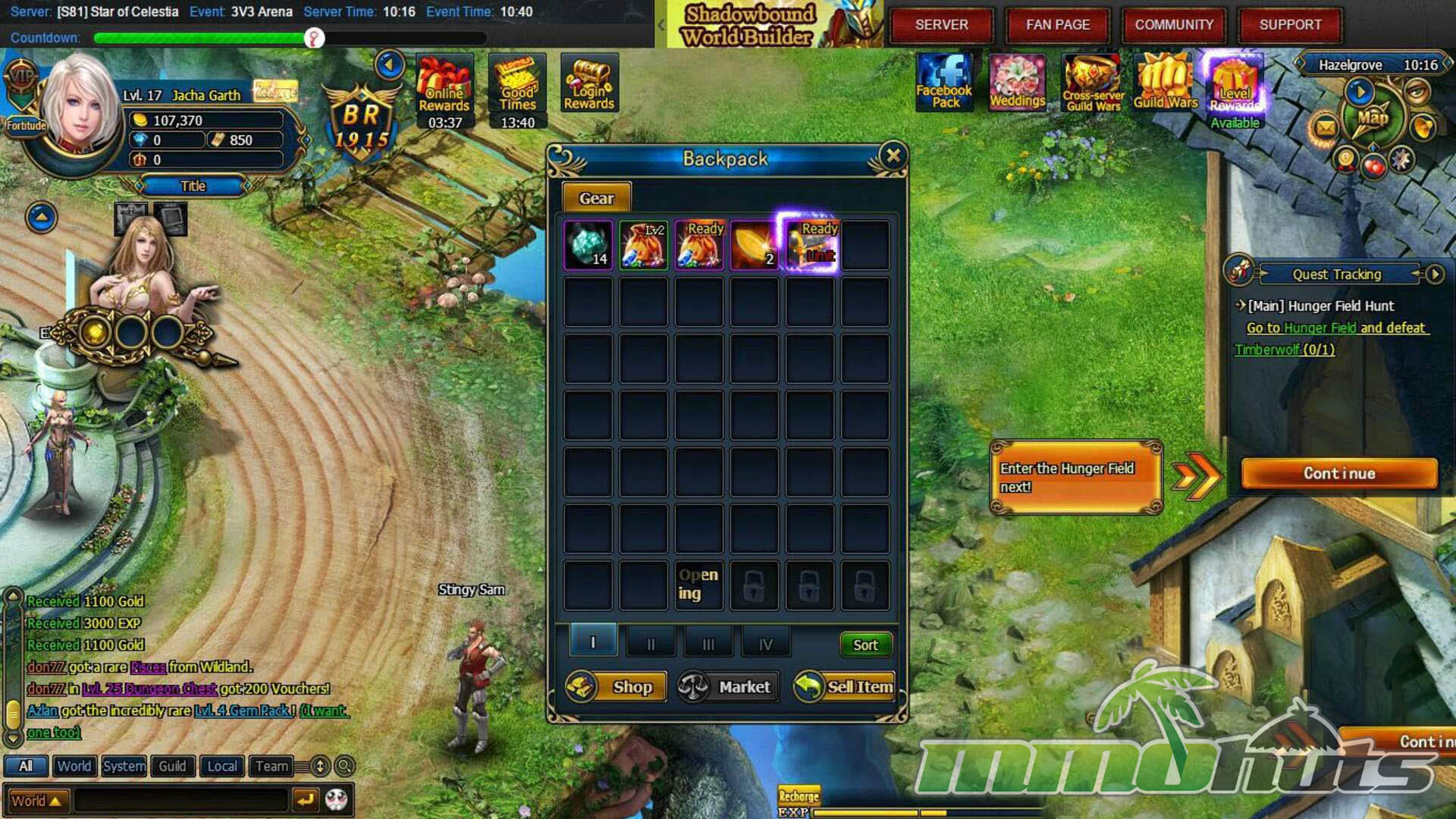
Travel is streamlined through auto-pathing, letting you click a quest and have your character move to the relevant NPC or location. Beyond questing, dungeons are the other major pillar. You will encounter standard solo runs as well as tougher elite dungeons that are positioned for group play, and these instances are generally where the best resource and loot gains come from.
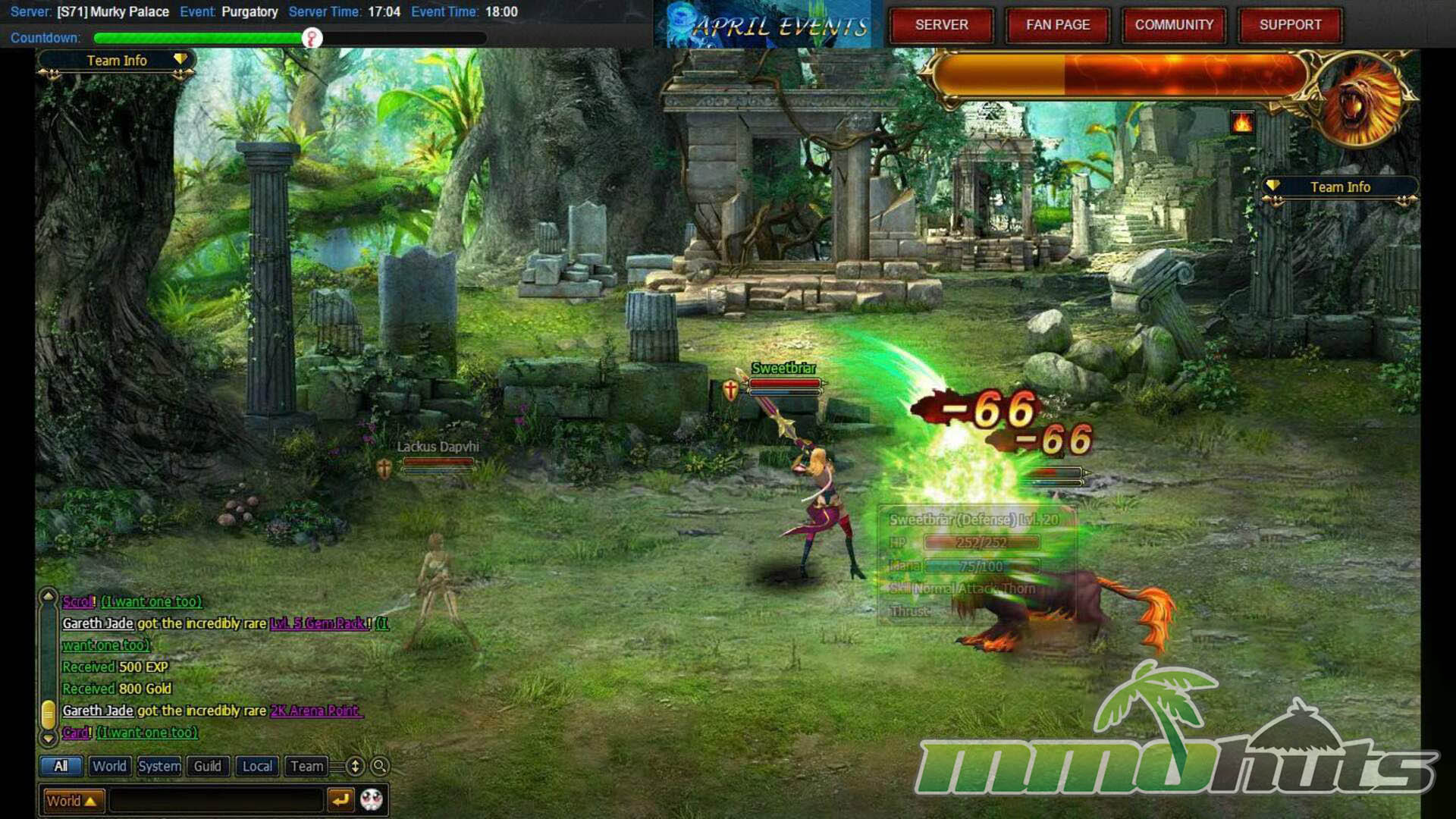
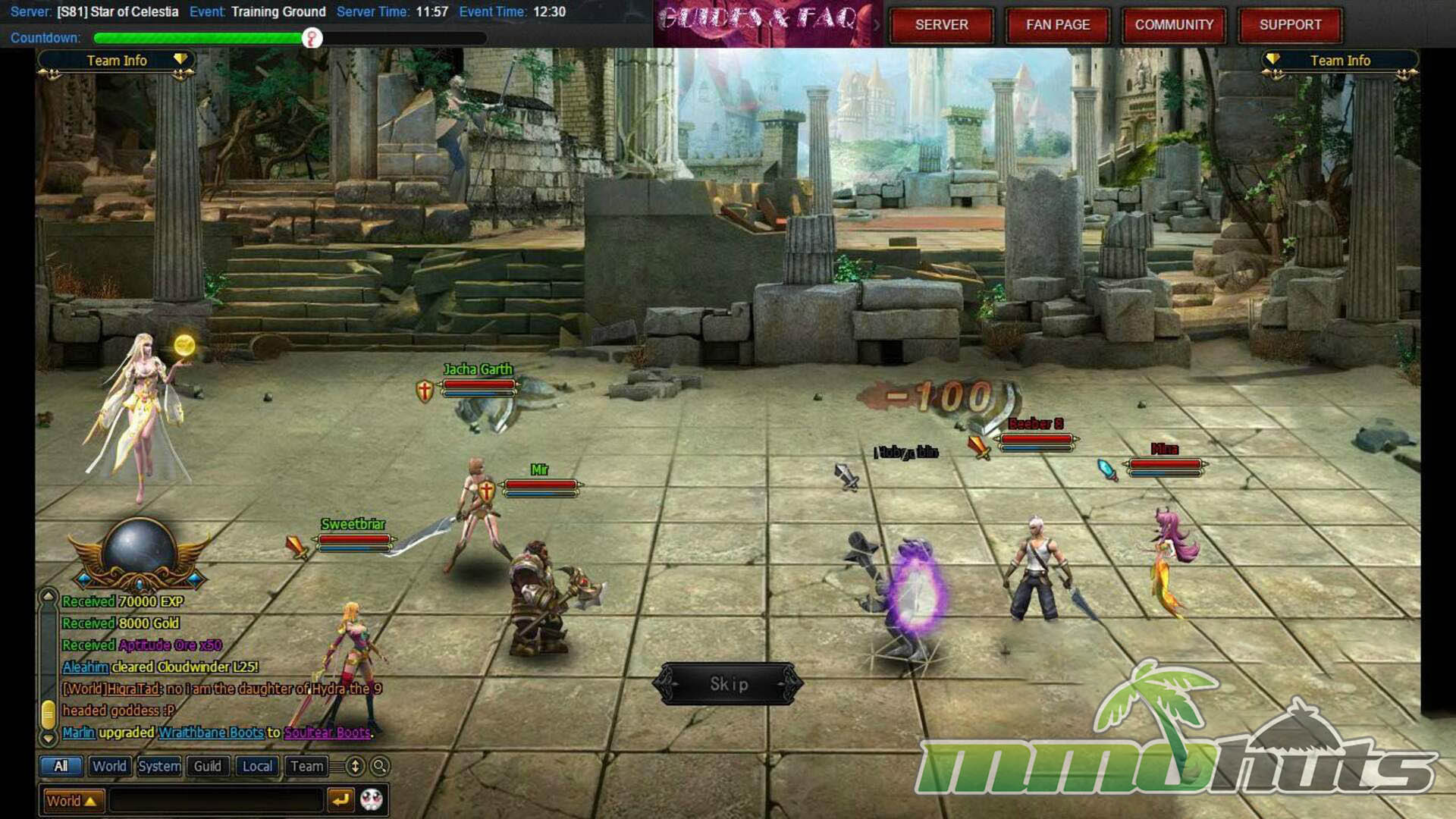
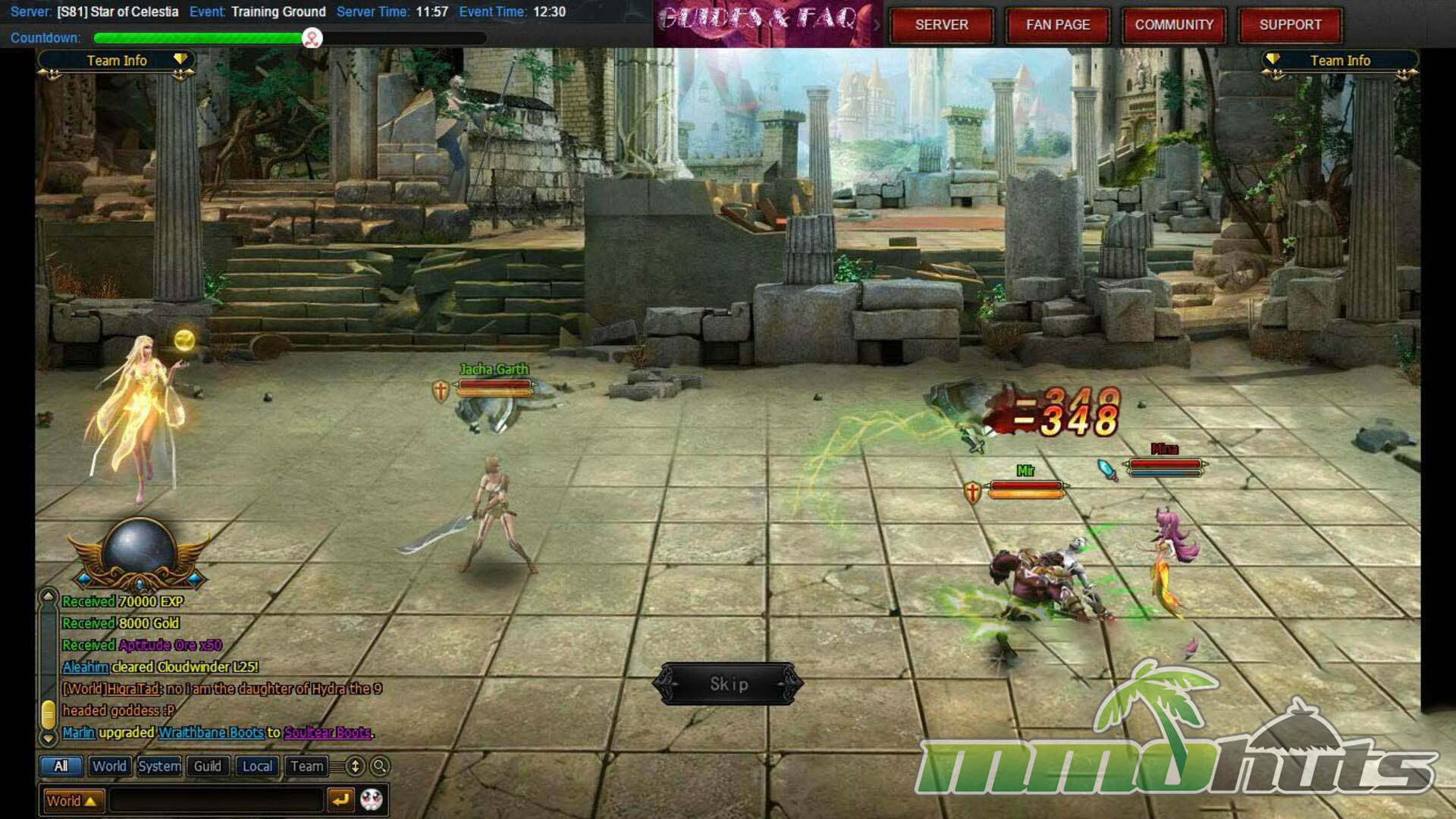
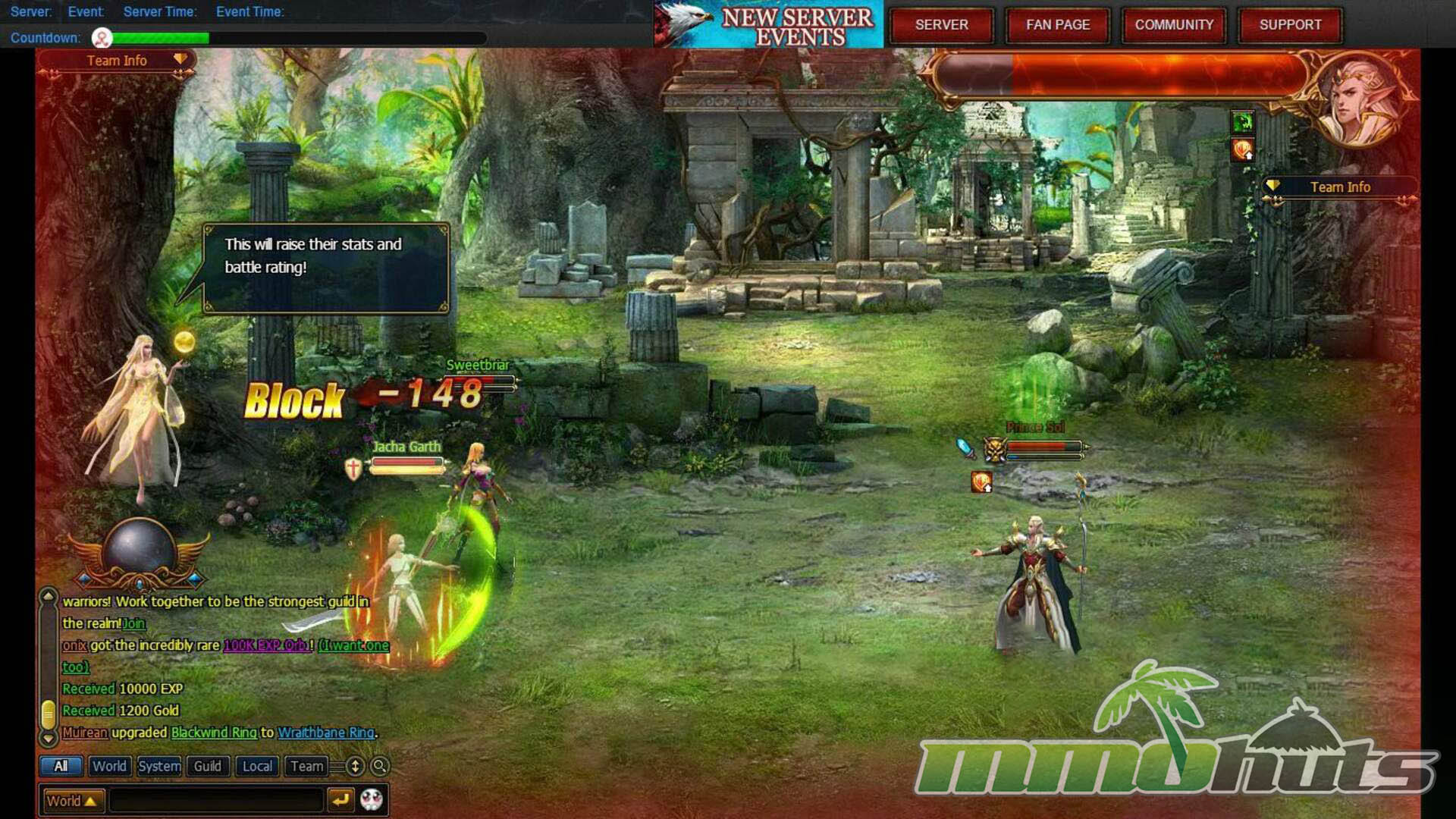
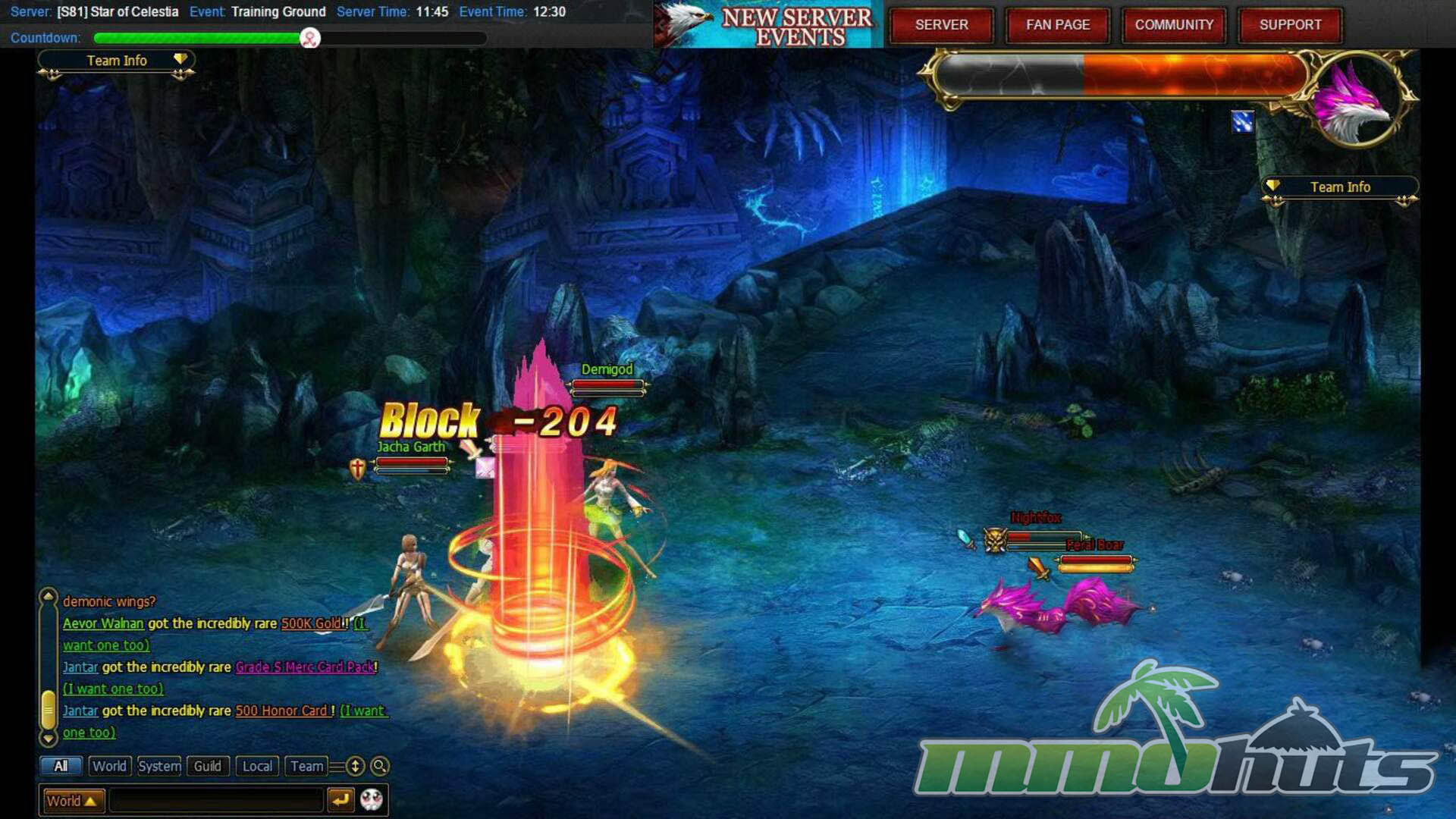
Combat is turn-based and built around a formation system. Before the fight begins, you decide who stands on the front line to soak damage and who stays behind to attack more safely. That tactical setup is the most meaningful choice you make in most battles, because once the match starts, the action largely resolves automatically with units trading attacks until one side falls. For players who enjoy active turn-by-turn decision making, that can feel like a missed opportunity, especially when the formation layer suggests there could have been deeper control.
Progression speed is one of the game’s more approachable qualities. Early leveling moves quickly, and gear upgrades arrive at a steady pace, so it does not take long to feel stronger. The grind becomes more noticeable later, and like many R2Games titles, Shadowbound offers a VIP route that accelerates the process with bonuses and additional items, effectively letting paying players reduce the time required to keep up.
Mercenaries and Party Building
The mercenary system is where Shadowbound shows its clearest identity. You recruit allies from a broad roster and build a party around your preferred strategy, with room for up to eight mercenaries at once. These companions participate directly in combat and can be equipped using gear from your inventory, so your overall strength is tied to how well you manage both your main character and your supporting lineup.
Each new hire is also recorded in the Mercenary Card System, which functions as a collection tracker and a reference library for what exists in the game and what you have already obtained. For players who enjoy collecting units and optimizing teams, this system provides a long-term hook, even when the moment-to-moment combat is more passive than tactical.
PvP
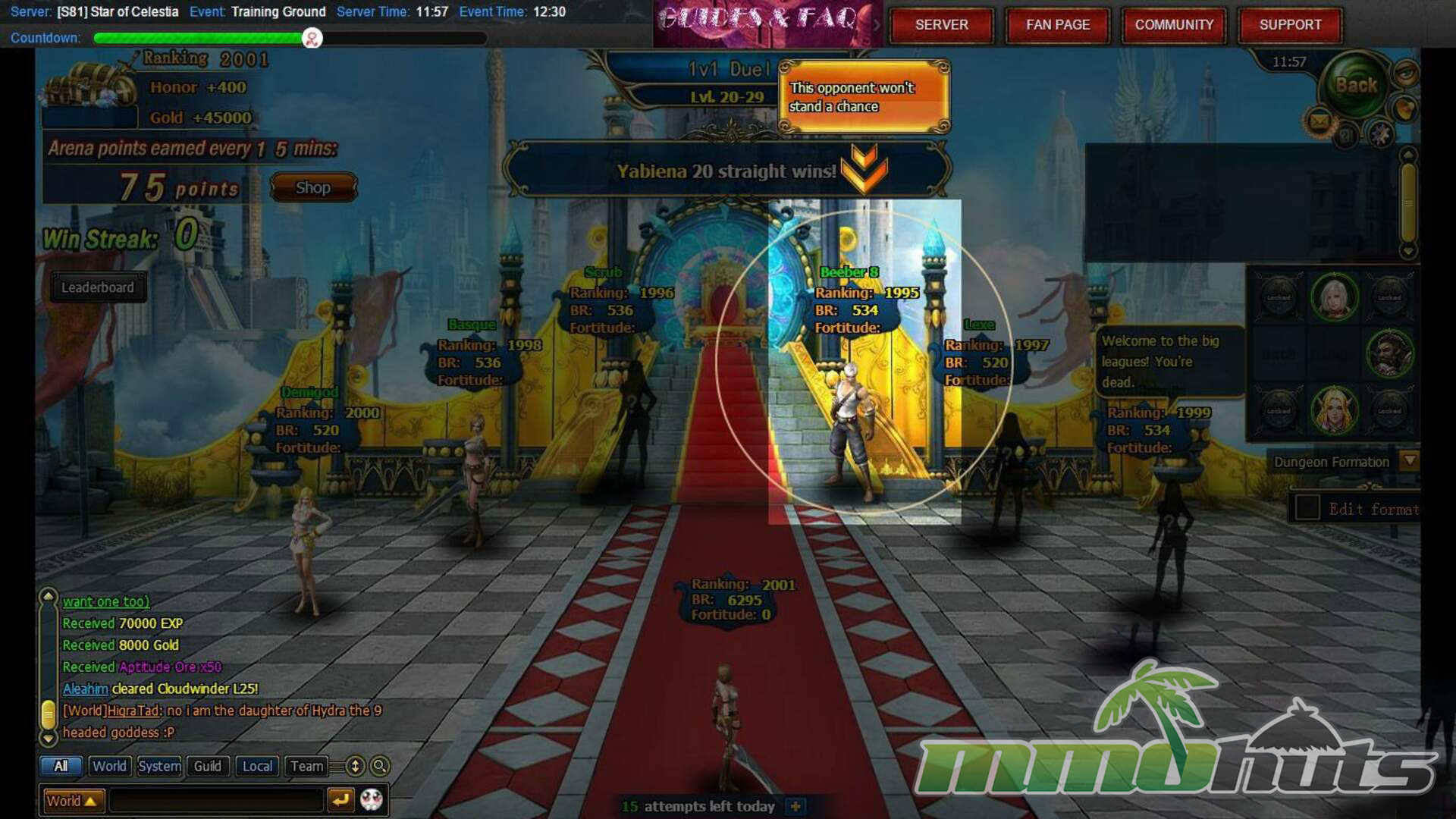
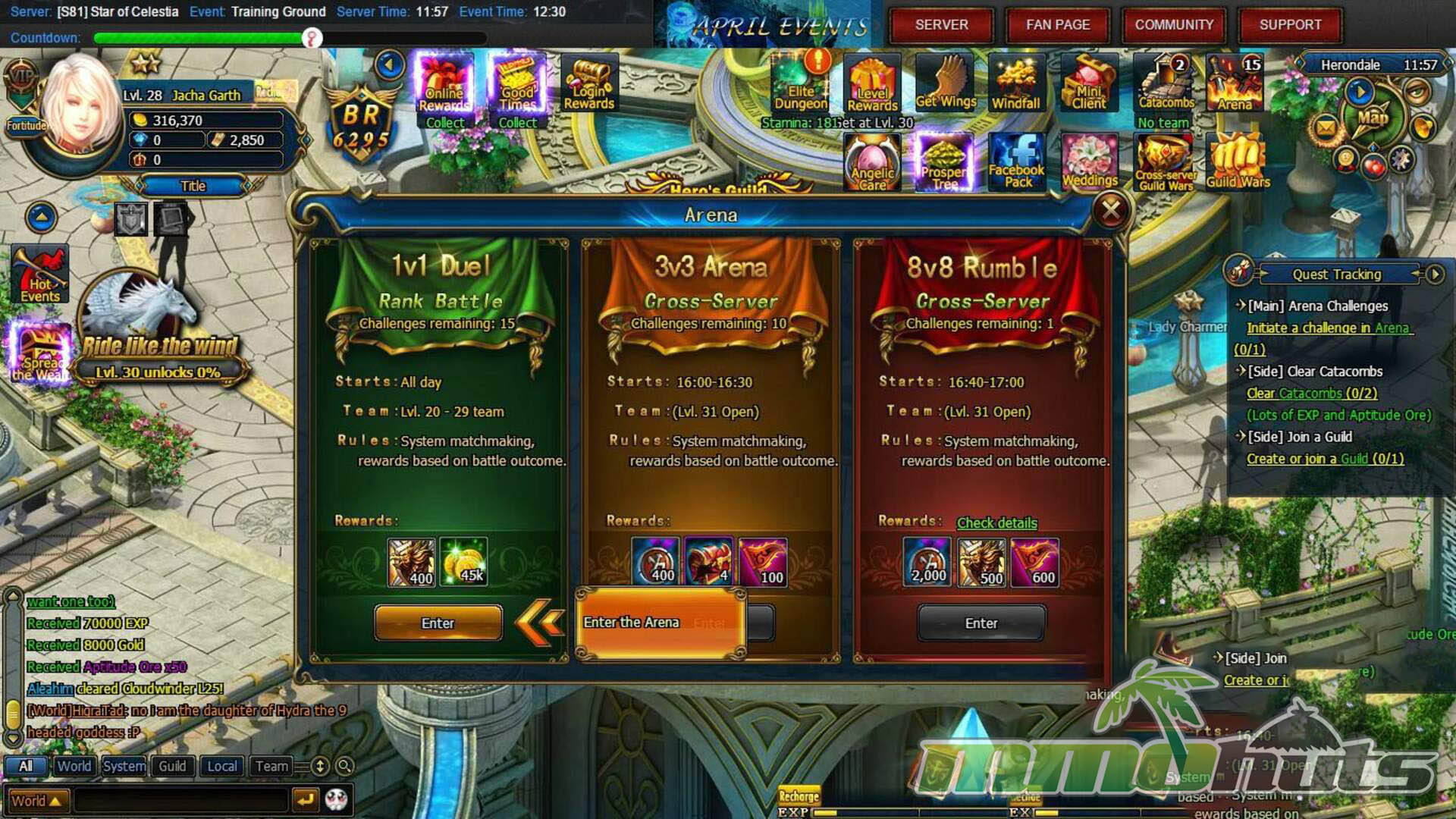
Player versus player content is centered on the Arena. Matches reward Honor Points, which can be exchanged for stronger gear and other useful upgrades, creating a clear incentive to participate even if competitive play is not your primary focus. Rankings are tracked through Arena leaderboards, and top placements grant ongoing bonuses, encouraging players to maintain their position rather than simply climb once and stop.
In practice, PvP tends to emphasize roster strength, gear quality, and progression advantages, so it often feels more like a test of preparation than a showcase of in-fight decision making.
Diamonds and Monetization
Diamonds are Shadowbound’s premium currency and are primarily obtained with real money purchases. The game can be played without paying, but spending is clearly designed to smooth out friction, whether that means acquiring items directly, improving equipment access, or bypassing time gates such as cooldowns.
One of the more important premium-adjacent systems involves Talismans, which are artifacts tied to unlocking rarer skills that make progression easier. Talismans become usable once you hit level 38. The game provides a basic Talisman every 24 hours and an Advanced Talisman every three days, and Talismans you obtain or sell also generate Talisman points. Those points can be used via the swap function to trade for additional Talismans.
Where monetization becomes most contentious is competitive balance. Players who buy large amounts of Diamonds can gain a meaningful edge, particularly in Arena play, and that advantage can make Shadowbound feel firmly pay-to-win. Anyone familiar with the monetization style seen in other R2 titles like Stormthrone, Summoner’s Legion, and Nova Genesis will recognize the general approach.
Final Verdict – Fair
Shadowbound largely delivers what its format promises: a lightweight, browser-friendly MMORPG with a fast early curve, lots of menus and progression tracks, and a strong emphasis on collecting and upgrading companions. The puzzle-based dungeons help break up the routine, and the mercenary roster plus card collection system can keep completion-minded players engaged for a surprisingly long time.
At the same time, auto-pathing and especially auto-battle reduce the sense of agency in combat, and the premium currency advantages are hard to ignore once you move into PvP or later-game progression. Shadowbound is best treated as a casual side MMO for players who like team-building and steady rewards, rather than a game for those looking for deep, hands-on tactical combat or a strictly fair competitive environment.
Shadowbound Links
Shadowbound Official Site
Shadowbound Wikia [Database / Guides]
Shadowbound Beginner Guides
Shadowbound Facebook
Shadowbound System Requirements
Minimum Requirements:
Operating System: XP / Vista / 7 / 8
CPU: Intel Pentium 4 or AMD Equivalent
Video Card: Any Graphics Card (Integrated works well too)
RAM: 512 MB
Hard Disk Space: 100 MB (Cache)
Shadowbound is a browser based MMO and will run smoothly on practically any PC. The game was tested and works well on Internet Explorer, Opera, Firefox and Chrome. Any modern web-browser should run the game smoothly.
Shadowbound Additional Information
Developer: R2Games
Publisher: R2Games
Platforms: Web (browser) and Facebook
Release Date: January 21, 2015 (Worldwide)
Development History / Background:
Shadowbound was developed by Chinese game developed R2Games and published globally through their R2Games portal. Shadowbound is a turn-based strategic MMORPG with 2D graphics.