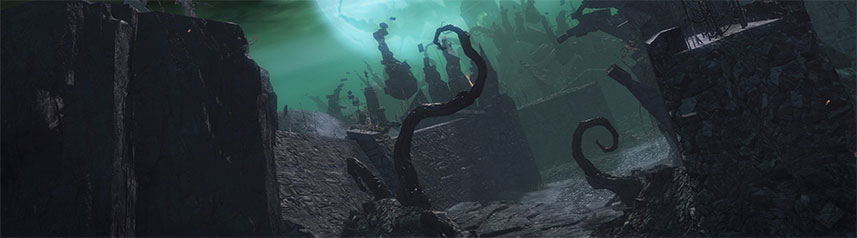
Stormthrone: Aeos Rising is a free-to-play browser MMORPG set in Aeos, a fantasy realm locked in a losing fight against demonic forces. You pick from six familiar class archetypes, chase stronger loot and Aeon weapons, and lean on convenience features like auto-pathing and AFK combat to keep progression moving even when you are not fully focused.
 | Publisher: R2 Games Playerbase: Medium Type: MMORPG Release Date: April 14, 2015 (International) Shut Down Date: June 30, 2017 PvP: Arenas / Cross Server Battles Pros: +Cross-server PvP activity. +Solid spread of class roles. +Surprisingly deep pet collection system. Cons: -Very standard fantasy look and feel. -Uses art strongly associated with WoW. |
Stormthrone Shut Down on June 30, 2017
Stormthrone Overview
Stormthrone: Aeos Rising drops you into a familiar MMO loop, pick a class, follow quest chains through demon-infested zones, and steadily unlock more systems as your level climbs. Combat and overall structure will feel instantly recognizable to genre veterans, especially anyone who has spent time in World of Warcraft, although Stormthrone presents it through a 2D, isometric browser format. Where it tries to differentiate itself is in volume and accessibility, with constant unlocks, multiple daily activities, and automation options that keep the pace brisk for both casual and grind-oriented players.
Stormthrone Key Features:
- Six Playable Classes – distinct kits, gear types, and talent-style progression.
- Leveling Variety – multiple activities for experience and currency beyond basic questing.
- AFK Mode – automated fighting and task completion for hands-off progression.
- Auto-Pathing System – one-click travel to objectives, NPCs, and points of interest.
- Collectible Pets – companions that contribute in combat and improve your stats.
Stormthrone Screenshots


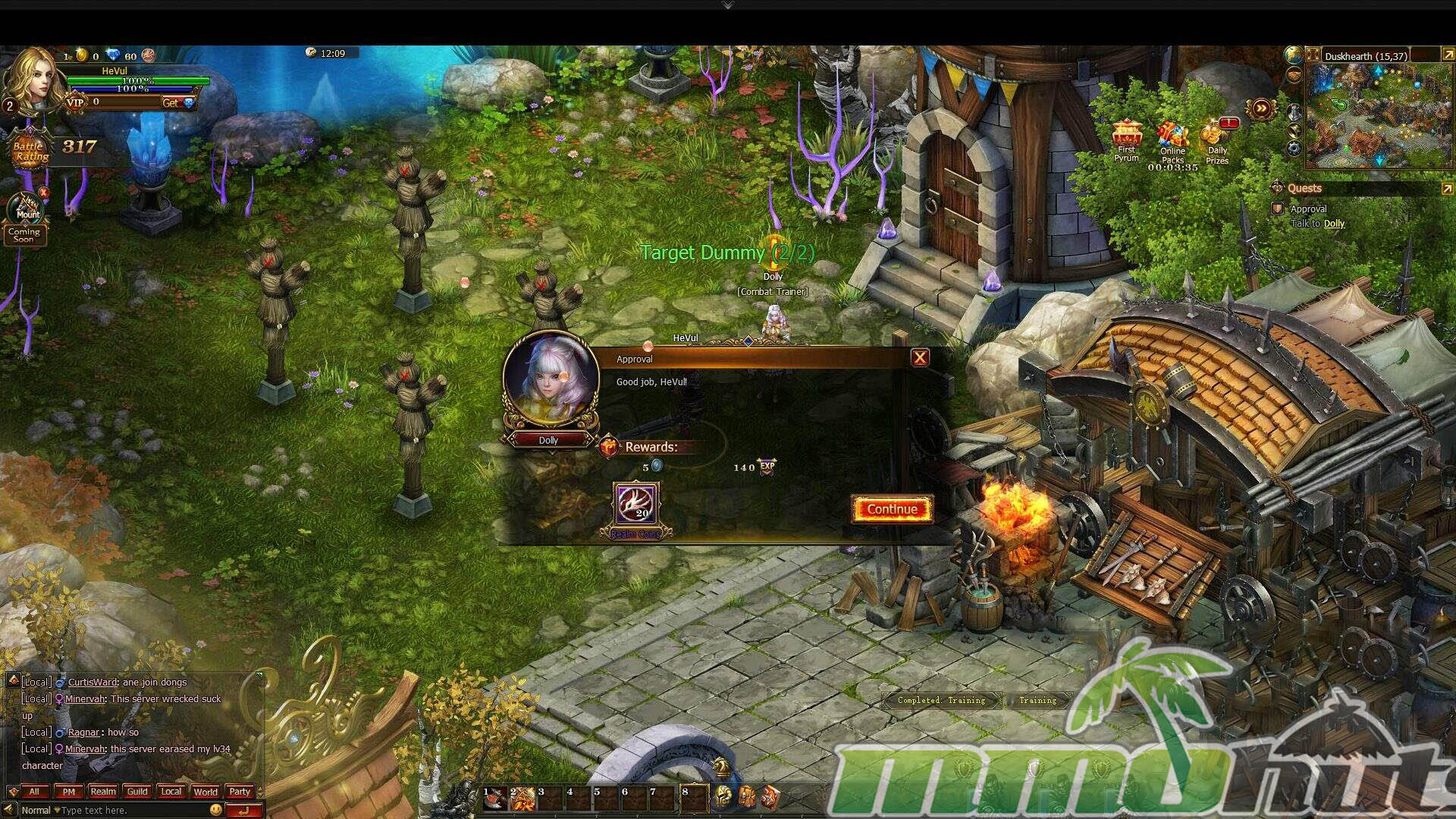

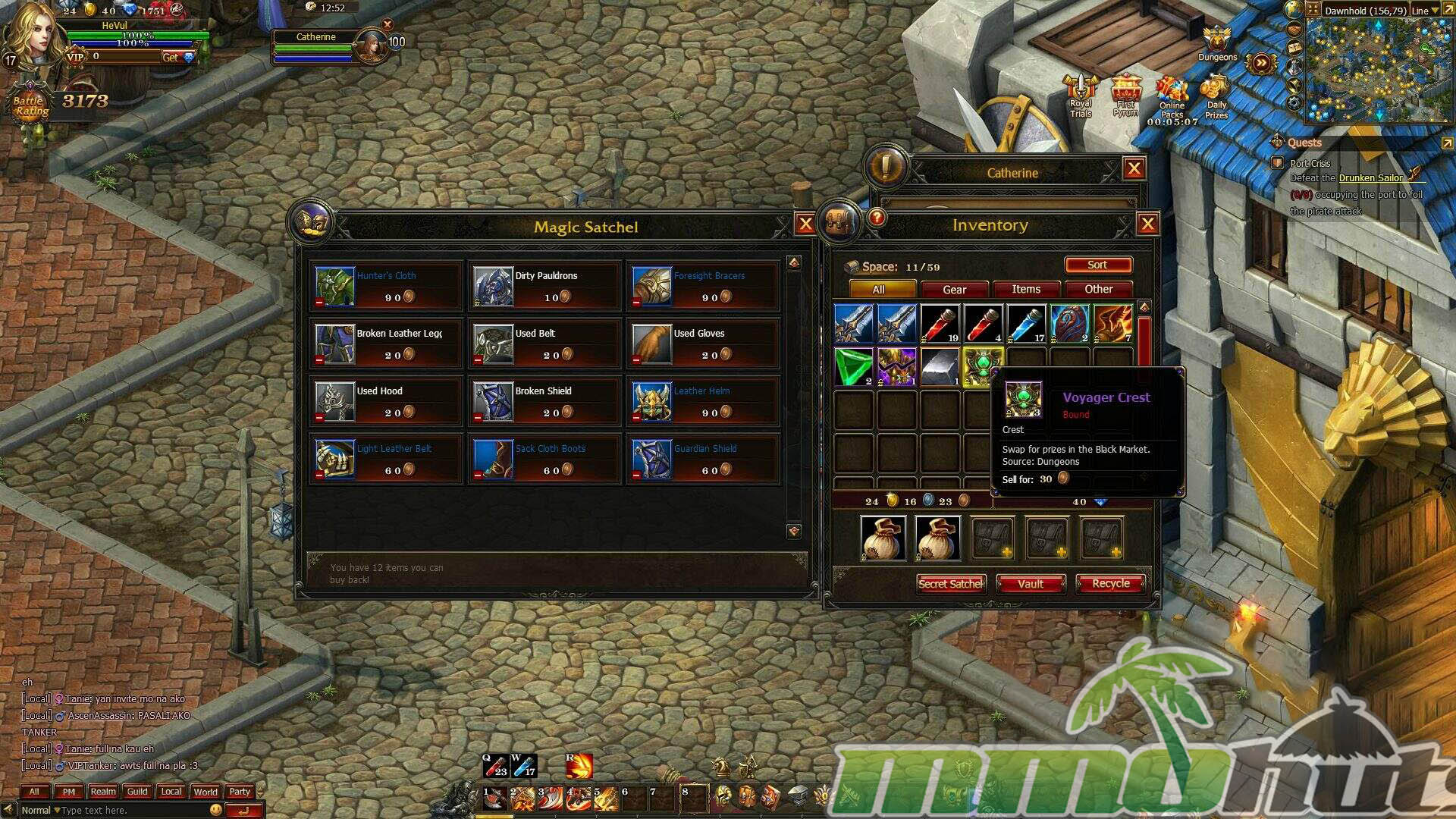
Stormthrone Featured Video

Stormthrone Review
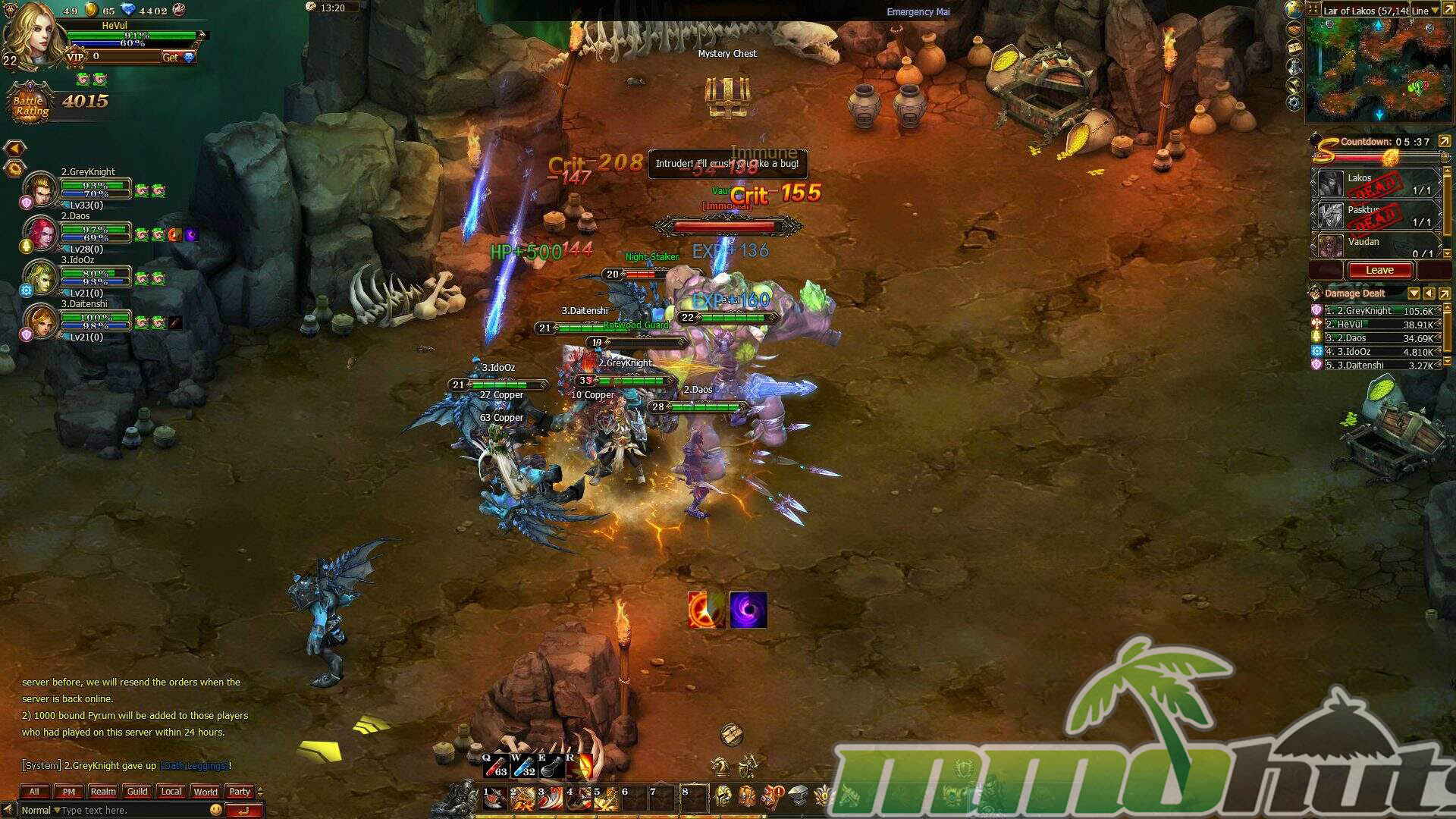
Stormthrone: Aeos Rising is a free-to-play, browser-based 2D MMORPG developed by Mokylin and published by R2Games, set in the fantasy world of Aeos. Its open beta began on April 14, 2015. The premise is straightforward: you take the role of an Aeon weapon wielder, push back demonic armies in PvE, then test your build and gear in a range of PvP formats, including cross-server play.
From a presentation and system perspective, it wears its inspirations openly. The character and world art will look extremely familiar to long-time MMO players, and the moment-to-moment combat cadence lands in the well-worn hotbar MMO territory. The reason to consider Stormthrone is not originality, it is convenience. The browser client, aggressive automation (auto-pathing and AFK fighting), and a steady stream of activities make it easy to log in, progress quickly, and sample lots of modes without the usual travel and downtime.
Starting Out in Aeos
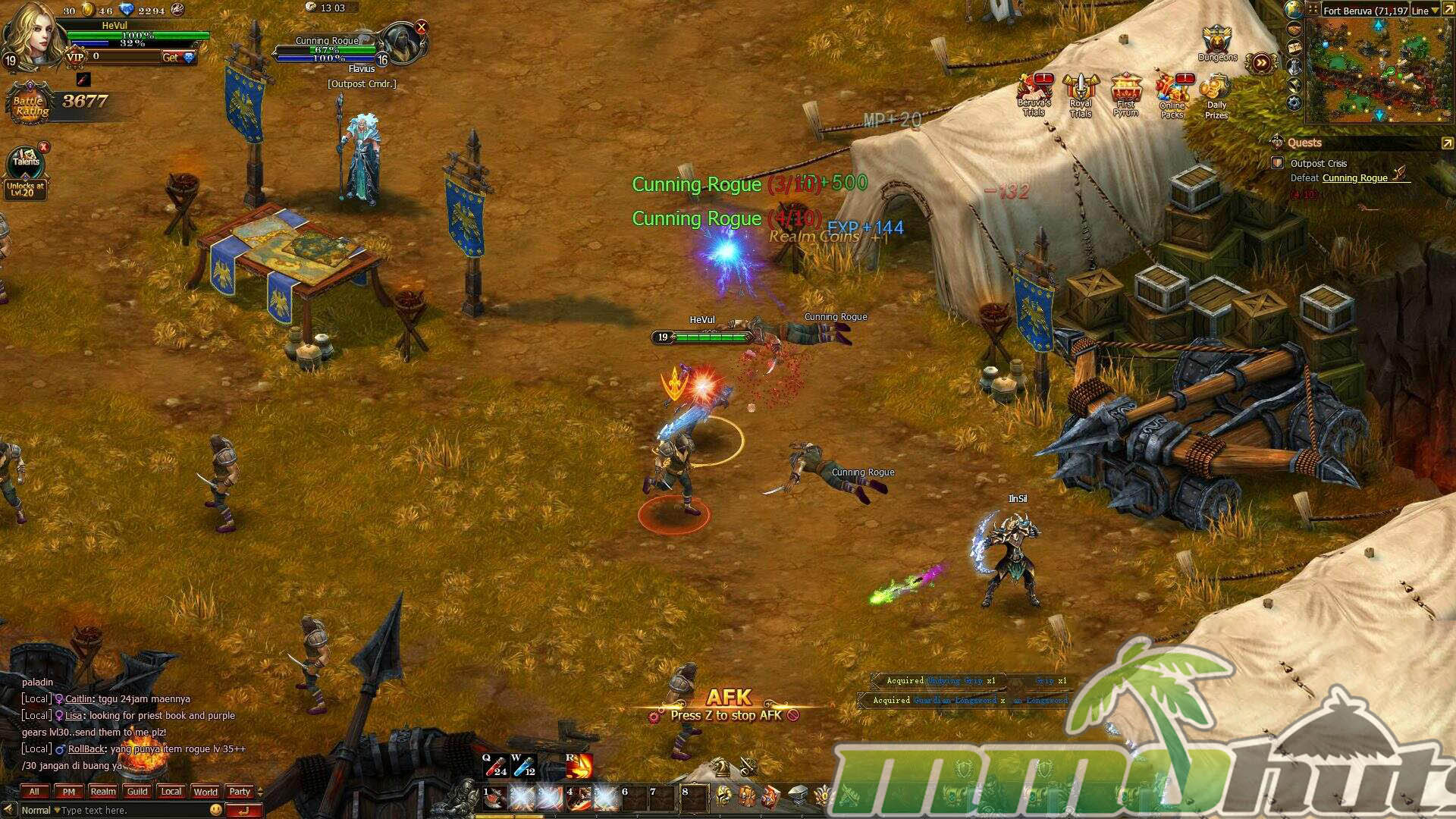
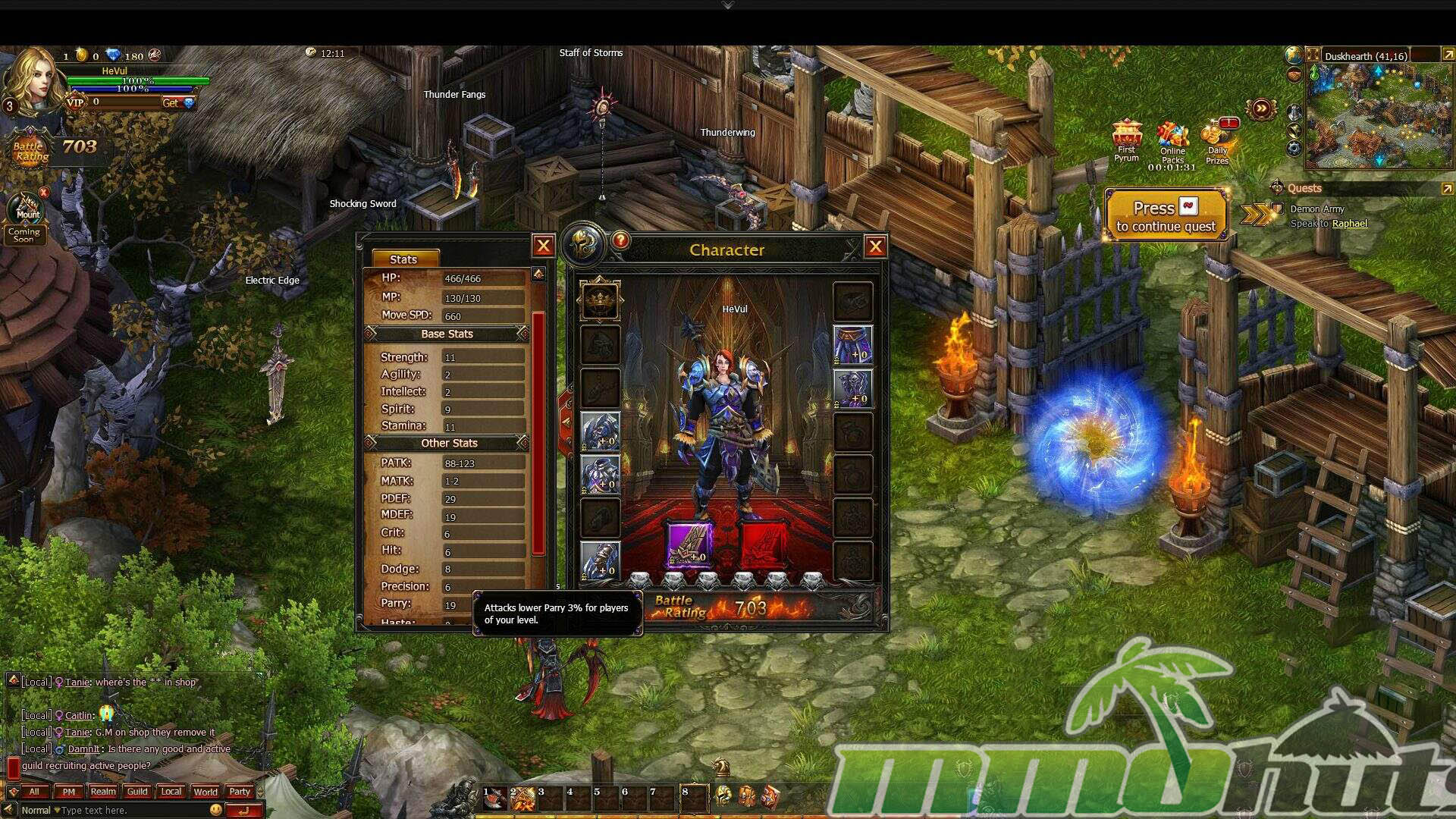
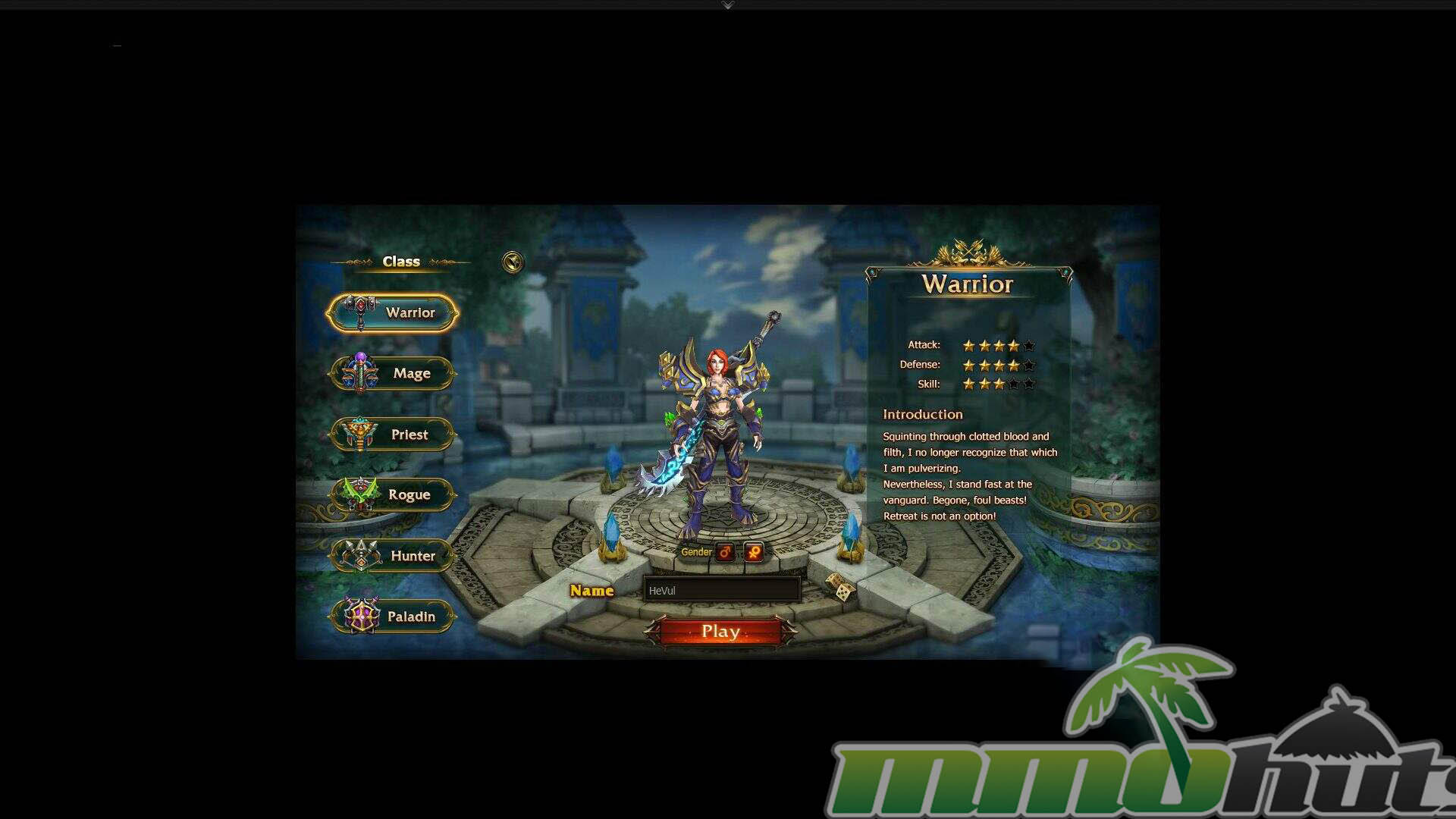
Your first decision is your class, and Stormthrone sticks to classic roles: Warrior, Rogue, Mage, Paladin, Priest, and Hunter. Each leans on different equipment and skill options, with talent-like choices that push you toward expected archetypes (frontline, burst damage, support, and so on). The opening minutes place you in the early safe area of Duskhearth and immediately teach the game’s biggest quality-of-life feature, auto-pathing. Click a quest, and your character runs directly to the target, mounting up automatically when available.
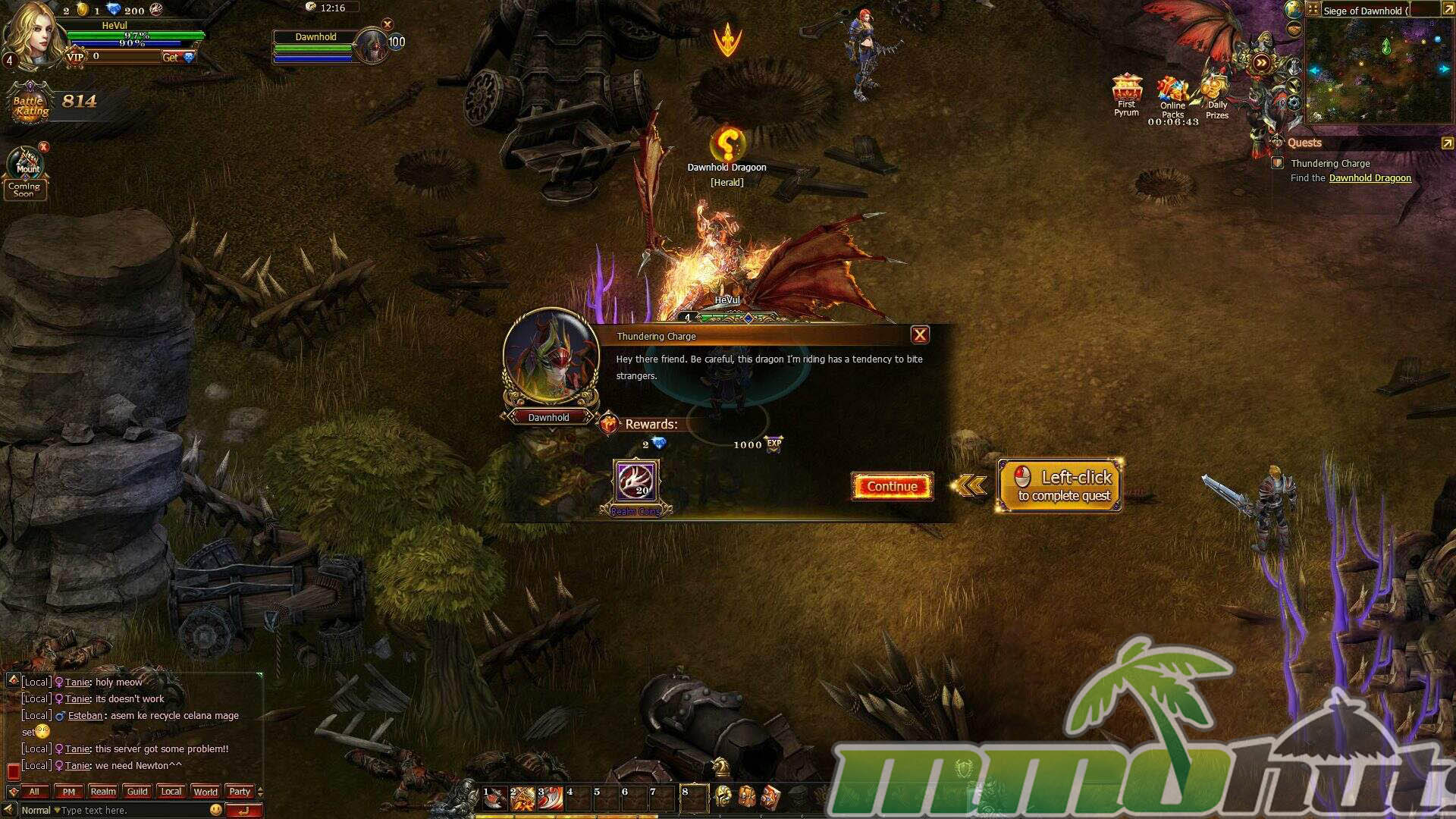
Early objectives are simple and rapid-fire, usually small kill tasks or quick interactions with NPCs and objects. Dialogue is kept short, which helps the onboarding feel fast rather than bogged down. The early chain funnels you toward a tutorial boss guarding an Aeon weapon, then sends you onward to Dawnhold, the first major hub, framed as a city under demonic pressure and in need of heroes.
Alongside the introductory quests, the game pushes long-term incentive systems early: timed play rewards, daily log-in bonuses, and compensation-style experience for missed activity windows. In practice, these mechanics are designed to keep players returning, and they also help smooth out leveling and early gearing for anyone playing consistently.
Core Gameplay Flow
Stormthrone keeps travel time low. Between portals, early mounts, and the auto-move features, you spend more time fighting and turning in objectives than crossing empty terrain. Questing is mostly linear and clearly signposted, and because the map highlights key NPCs, you can also auto-path to services like vendors and trainers without searching.
That streamlined approach makes leveling feel fast, sometimes extremely fast. It is efficient, but it also means exploration and discovery are not really the point. The game is built to move you through zones, unlock menus and features, and feed you into instanced content and scheduled events.
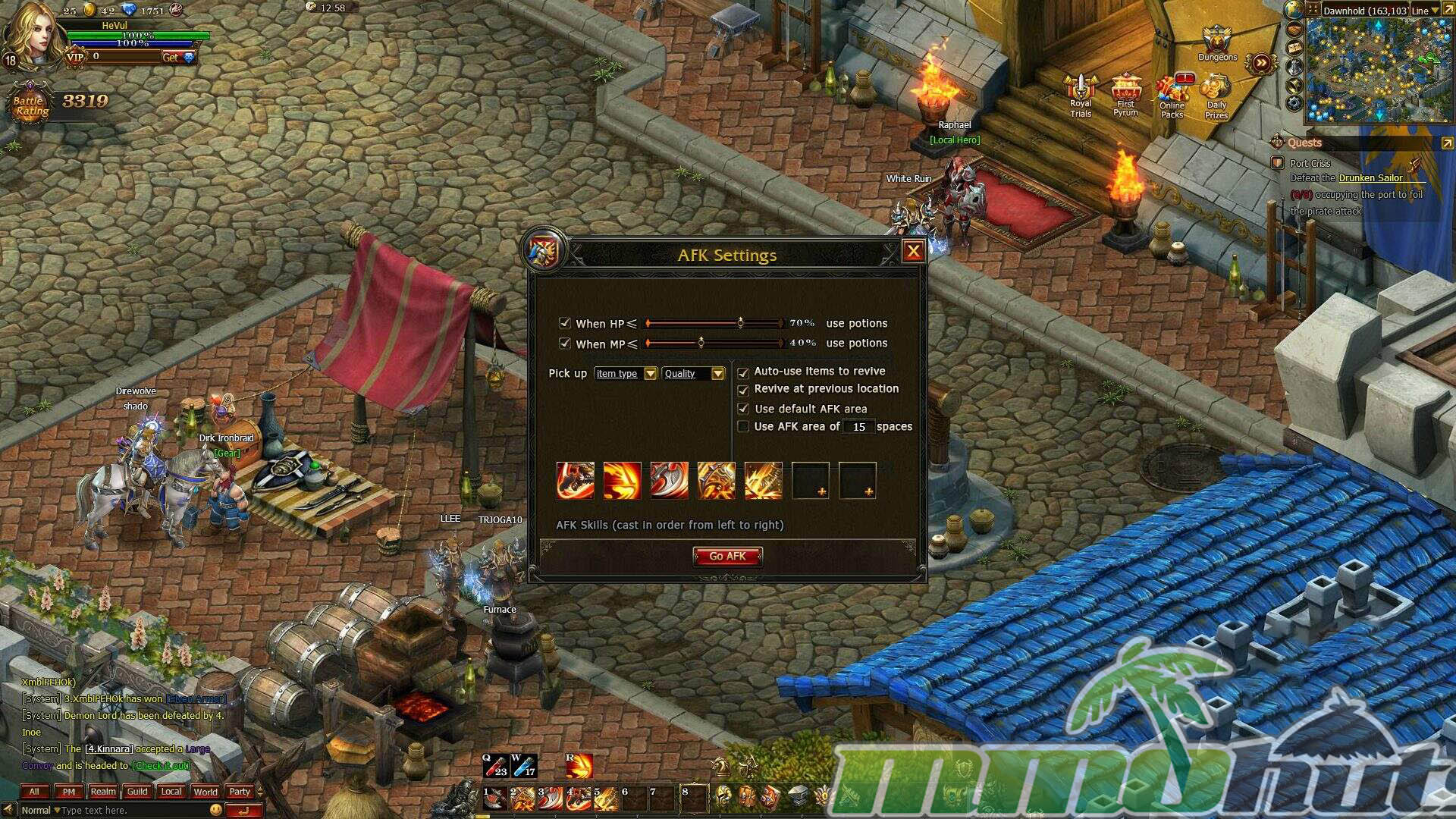
Around the mid-teens, the AFK system becomes a central pillar. You configure a basic rotation, then let your character handle combat automatically. In a genre and platform where botting has historically been common, baking automation directly into the design is a practical way to standardize that behavior. It also makes Stormthrone unusually compatible with short play sessions, you can set up AFK grinding while waiting for queues or while multitasking.
Notably, AFK play is not a blanket solution for everything. Competitive modes place more weight on manual play, which helps preserve at least some value in skill usage and gearing decisions when rankings are on the line. Anyone familiar with other Chinese browser MMOs will recognize this approach, as similar automation is a staple in the space.
Questing and Daily Structure
The main quest line is only part of the progression. Stormthrone layers in multiple quest categories and time-based activities as you level. Examples include Story quests at level 50 and Crusade quests at level 30. Crusade quests function like daily tasks, capped at 15 per day, and generally ask for bigger kill counts or more involved objectives in exchange for better rewards than standard questing.
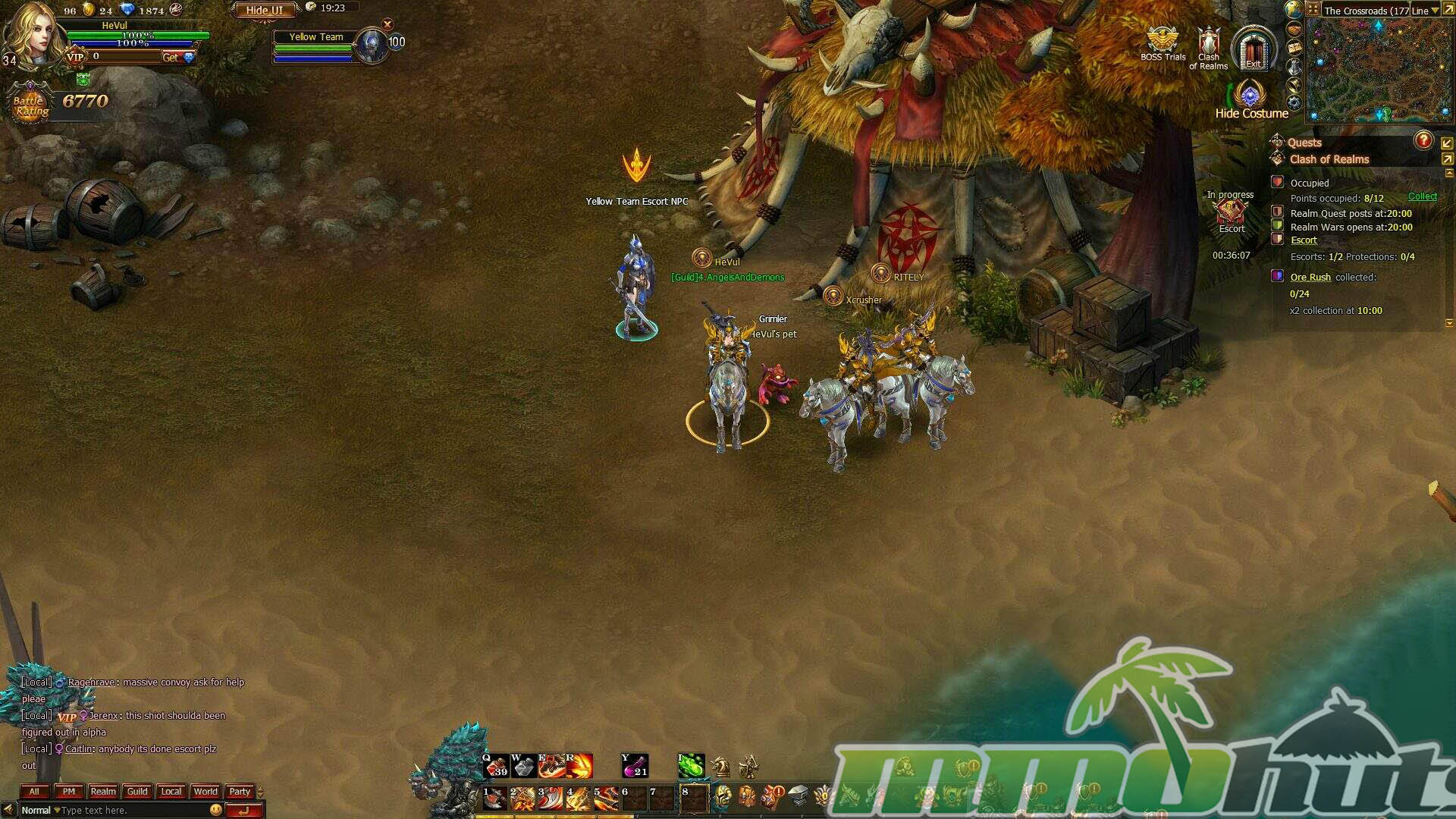
Because both auto-pathing and AFK combat accelerate the basic loop, the game is comfortable being played in the background. It is common to leave your character handling routine tasks while you wait for instanced content or timed events. Cross-server events also interrupt the routine throughout the day via on-screen prompts. One example is the Escort event on a cross-server map, where players summon convoys, defend them across the zone, and compete against both NPC threats and other players. Participation scaling encourages group activity, since more involvement typically means better payout.
Progression and Gear Chasing
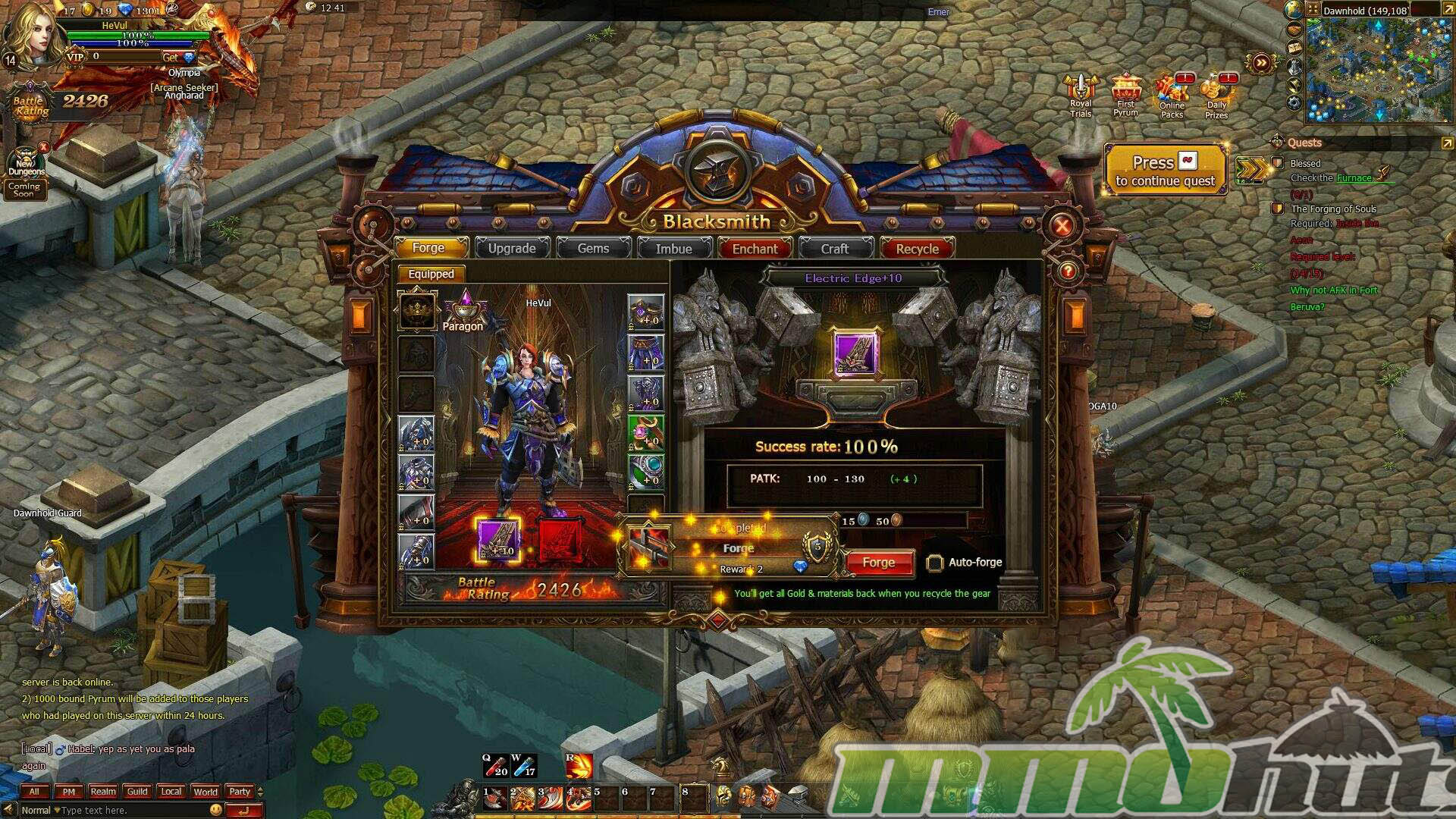
For equipment, instanced PvE does most of the heavy lifting. Dungeons are a consistent source of upgrades, and they tie directly into the Aeon weapon framework. Early on, your first Aeon weapon (Lady Valari’s Oath) is effectively a progression gate, requiring items from five early dungeons before it can be properly used. This creates a clear checklist for new players and nudges you into group content quickly.
Later, Legions fill the raid-like niche. These are 10-person encounters with higher difficulty and stronger rewards than standard dungeons, echoing the structure MMO players expect from larger-scale PvE. Stormthrone supports this with queueing for instanced content and includes built-in damage meters that rank players by output, which can be motivating for optimization-minded players and occasionally a source of pressure for more casual ones.
Another progression path is Forlorn Rift, a survival-style mode focused on fighting bosses in a compact instance with short breaks between rounds. Instead of showering you in gear, it emphasizes currency and skill books that provide passive stat improvements, making it a useful alternative track for strengthening your character.
Pets and Companion Power
Pets are one of Stormthrone’s more robust systems. You collect companions from the world, through purchases, or via crafting methods that involve assembling shards. Each pet has its own level, stats, and a loyalty value, and those attributes contribute to passive bonuses that apply even when the pet is simply stored in your collection.
When summoned, a pet adds an active combat skill that can complement your build, from crowd-control style utility to straightforward damage. Only one pet can accompany you at a time, but the game starts you with four pet slots and offers additional slots through premium currency. Overall, it is a system that meaningfully affects power, and it gives collectors an ongoing long-term goal beyond standard gear upgrades.
PvP: Battlegrounds, Arenas, and Cross-Server
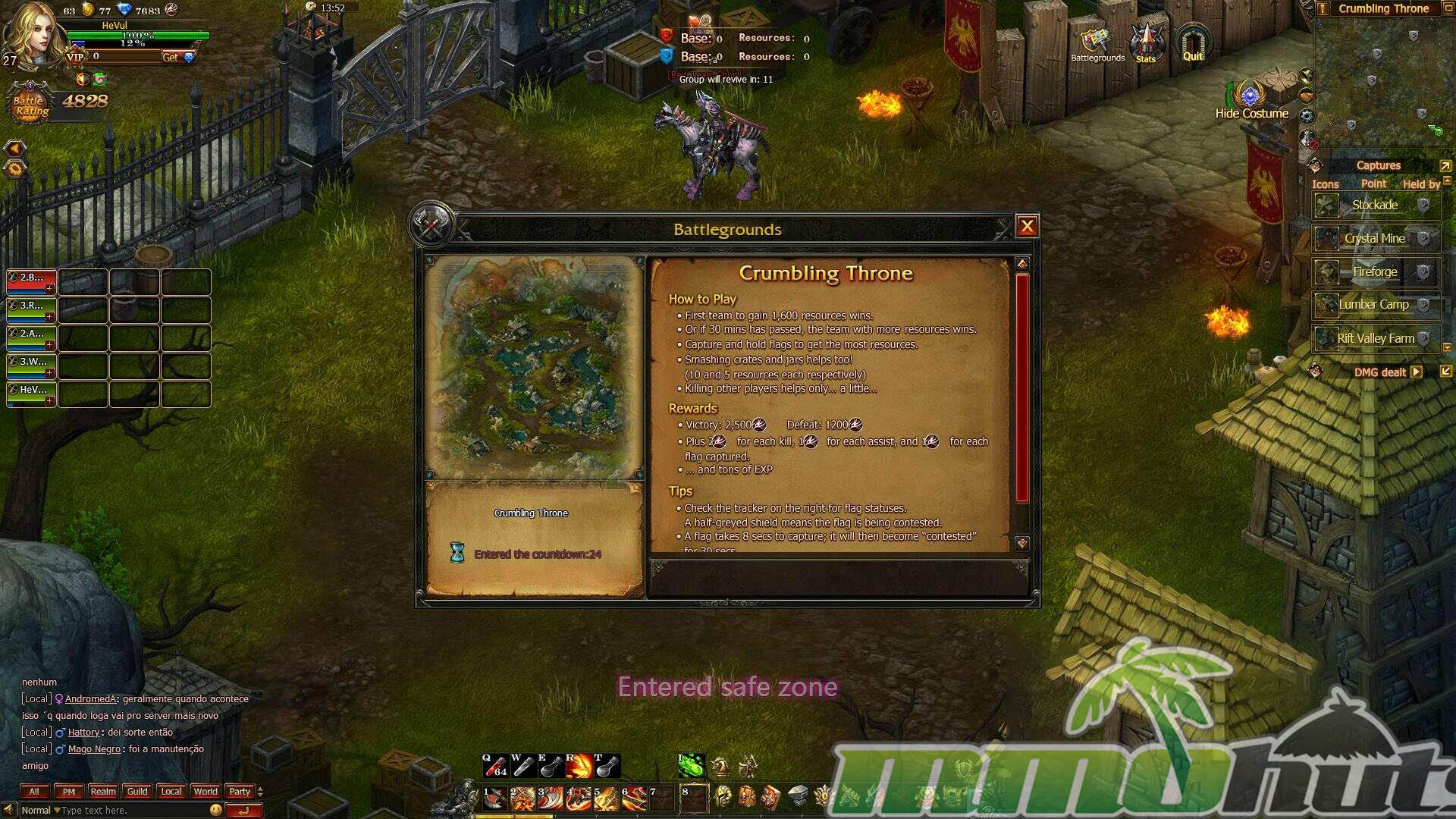
PvP provides its own reward loop, including gear access and PvP-specific currency for the Black Market. Early PvP begins with Battlegrounds, objective-based instanced maps that strongly resemble the battleground formula popularized by older theme-park MMOs. Crumbling Throne is a King of the Hill style mode, asking teams to capture and hold points to secure victory.
A practical and slightly unusual touch is the costume toggle for PvP readability. Enabling it overlays team colors and dramatic armor visuals so it is easier to distinguish allies from enemies in crowded fights, which helps when effects and character models blur together.
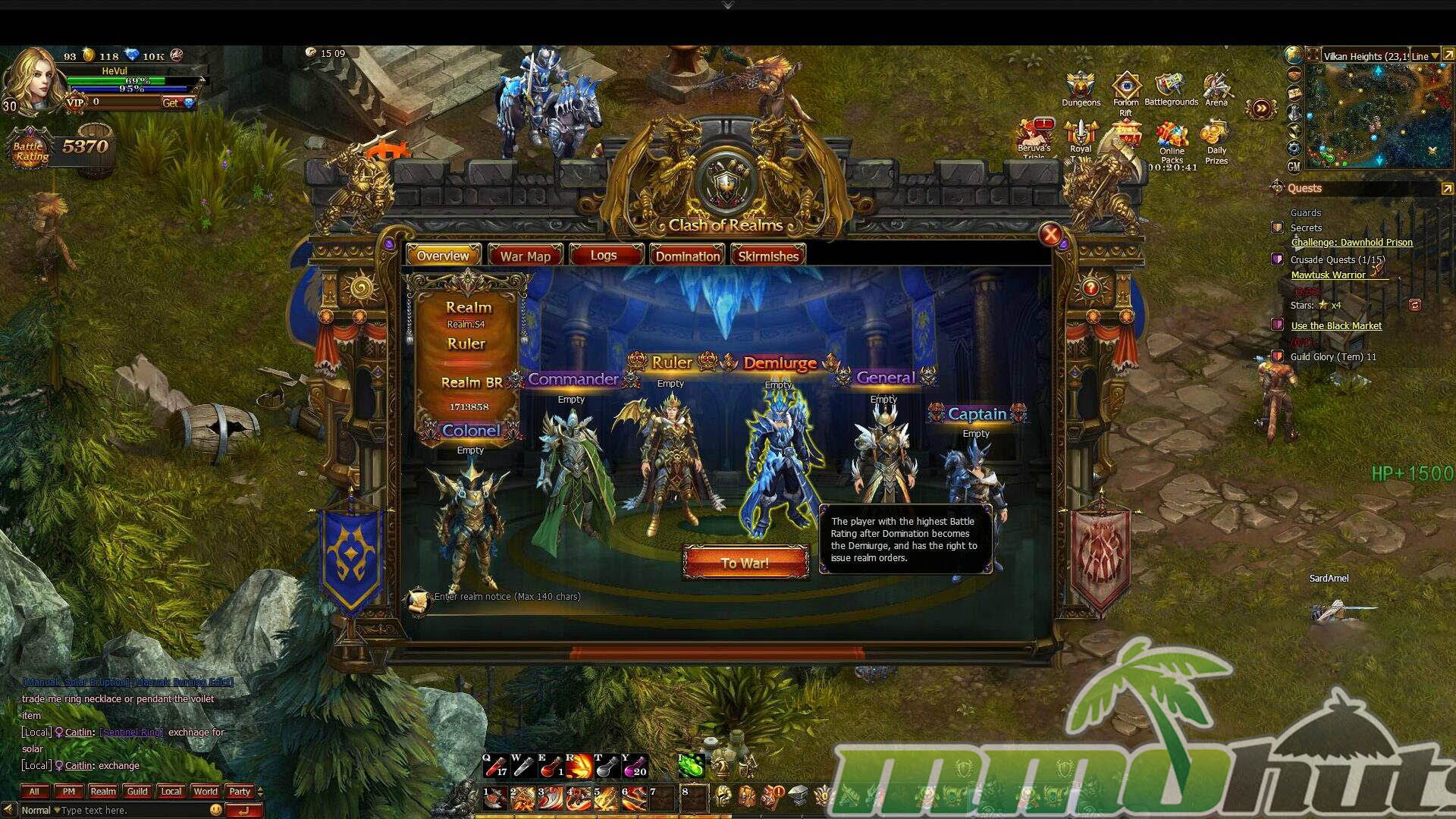
As you progress, arenas and cross-server PvP open up. The cross-server package, Clash of Realms, bundles multiple event types such as escort missions, world boss encounters, invasions, and ore collection, alongside direct PvP conflict. Guild cooperation matters here as well, since alliances and performance feed into rankings tied to cross-server combat outcomes. Arena matches, by contrast, lean into automation, allowing AFK-style fights against other players and NPCs to climb ranks and earn rewards.
Monetization and the Cash Shop
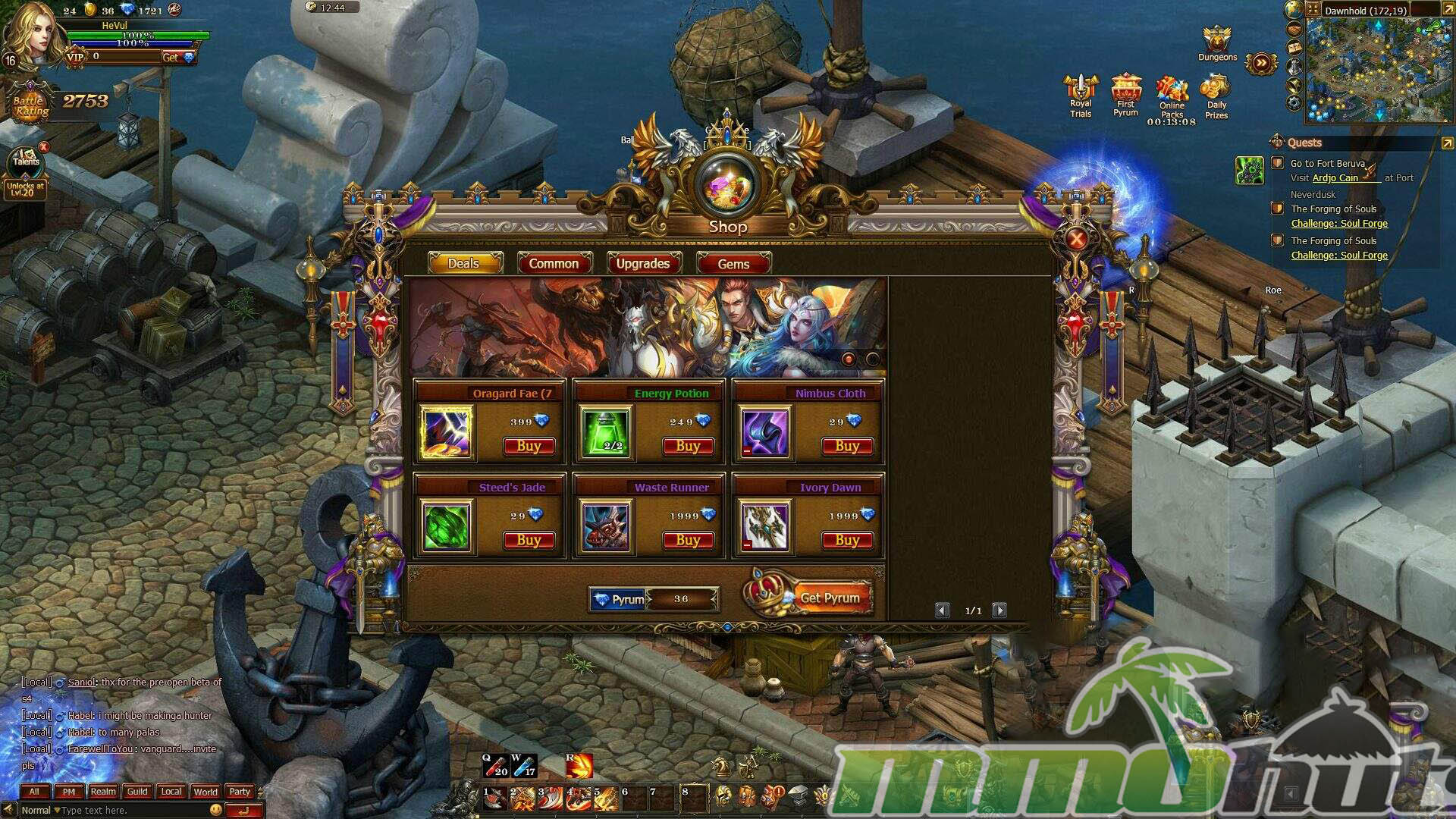
Stormthrone’s store sells a familiar set of power-adjacent items: mount progression materials, mount variants, cloak upgrades, and timed boosts for experience and gold. The premium currency, Pyrum, can be purchased with real money or obtained through gameplay. Spending also feeds into a VIP system that scales benefits based on how much currency you buy, offering convenience and progression advantages.
Pyrum can be used for immediate quest completion and for accelerating upgrades to mounts and pets. It can also be used to obtain stronger equipment and other items that tilt the playing field, particularly in competitive contexts. This pay-to-win leaning is consistent with many browser MMORPGs of its era, but it is still a meaningful consideration. Players focused primarily on PvE can engage with a lot of content while minimizing the impact, since PvP participation is optional, but competitive players will feel the monetization pressure more sharply.
Final Verdict – Fair
Stormthrone succeeds at being a fast, accessible browser MMO with a surprisingly wide spread of activities, and it makes consistent progression easy through automation and frequent rewards. The pet system and cross-server structure provide real goals beyond the main quest line, and the reduced travel and quick questing cadence make it friendly to short sessions.
At the same time, the game struggles to establish its own identity. The fantasy setting is standard, and the visual and audio presentation often comes across as heavily derived from World of Warcraft, which undercuts the sense of craft. Add a monetization model that can translate spending into power, and it becomes difficult to recommend broadly. For players who want a low-attention, WoW-flavored browser grind with lots of checklists and modes, it can be an easy fit, but anyone seeking originality or a fair competitive environment will likely bounce off it.
Stormthrone Links
Stormthrone Official Site
Stormthrone Official Game Guide
Stormthrone Facebook Page
Stormthrone System Requirements
Minimum Requirements:
Operating System: XP / Vista / 7 / 8
CPU: Intel Pentium 4 or AMD Equivalent
Video Card: Any Graphics Card (Integrated works well too)
RAM: 512 MB
Hard Disk Space: 100 MB (Cache)
Stormthrone is a browser based MMO and will run smoothly on practically any PC. The game was tested and works well on Internet Explorer, Opera, Firefox and Chrome. Any modern web-browser should run the game smoothly.
Stormthrone Music & Soundtrack
Stormthrone Additional Information
Developer: Mokylin
Publisher: R2 Games
Platforms: Web (browser) and Facebook
Release Date: April 14, 2015 (Worldwide)
Shut Down Date: June 30, 2017
Foreign Releases:
Storm Throne is available in China, Hong Kong, Taiwan, and Korea. R2 Games publishes the global version.
Development History / Background:
Stormthrone was developed by Chinese game developer Mokylin and published globally by R2 Games. The game is available in its home market as well as South Korea. Aside from those localized versions, everyone else can access the game through R2 Games.