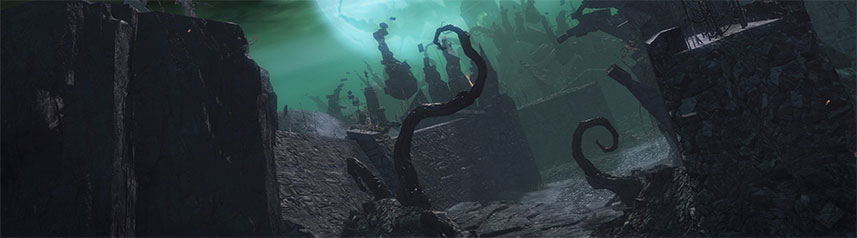
Dirty Bomb was a 3D, team-focused first-person shooter set in a ruined, post-crisis London. Instead of pure deathmatch priorities, it pushed squads to coordinate around objectives, with a roster of distinct mercenaries who each brought different weapons, roles, and active abilities to the fight.
 | Publisher: Dirty Bomb Type: Shooter Release Date: June 2, 2015 Shut Down: December 18, 2019 Pros: +Wide selection of Mercenaries with different roles. +Fast, smooth gunplay and movement. +Unlocked Mercs and bought loadout cards stay permanently. +Strong focus on coordinated team play. Cons: -Occasional balance rough spots. -Matchmaking can produce lopsided games. |
Dirty Bomb Overview
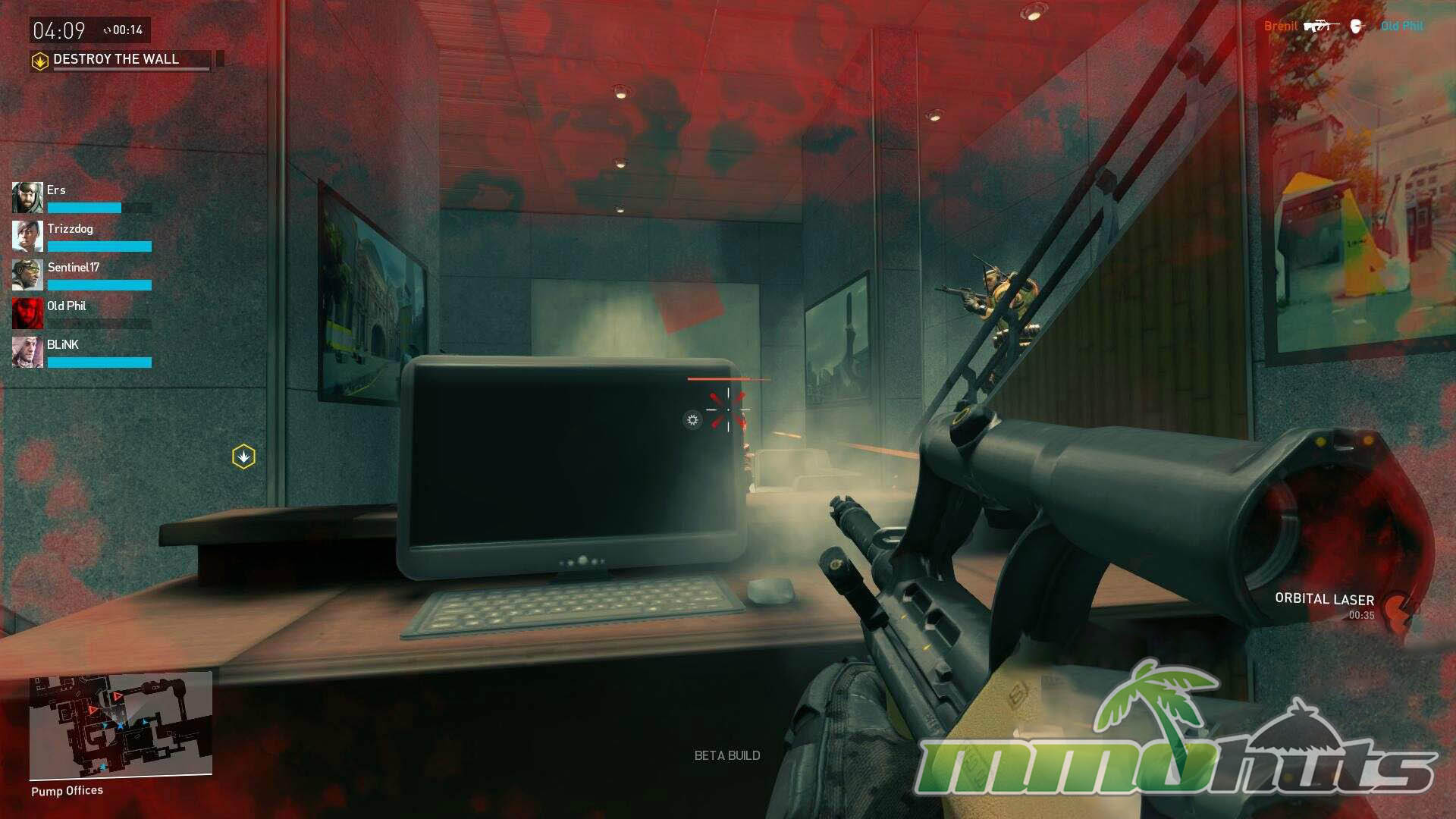
Dirty Bomb was an objective-driven FPS from Splash Damage, the studio also known for Brink. In practice, it sat somewhere between the readable class identity of Team Fortress 2 and the snappy, modern gunfeel you would expect from a more mainstream shooter. Rather than locking you into a single class for an entire session, you built a small “squad” of up to three mercenaries, then swapped between them on respawn depending on what the next push required.
Each mercenary came with their own weapons and a signature ability, and you further tuned them through loadout cards. The core modes leaned heavily on objectives, so efficient revives, ammo support, and coordinated timing mattered more than padding a kill count, especially in Objective and Stopwatch.
Dirty Bomb Key Features:
- Team-Based Gameplay – objective completion decides matches, with clear role-based Mercenary kits reminiscent of classic class shooters.
- Lobby-Based Gameplay – includes casual and ranked queues alongside a server browser for manual selection.
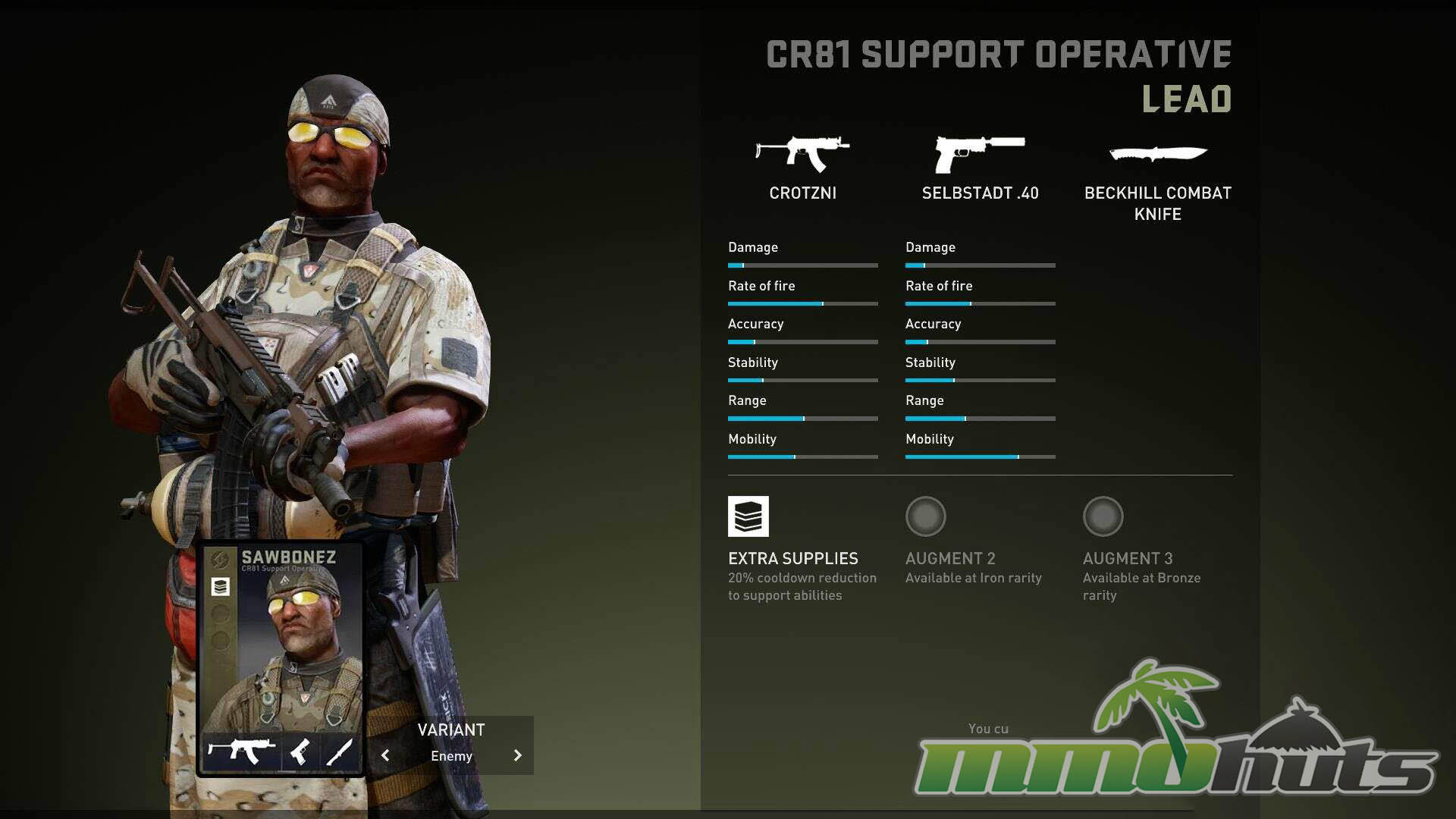
- Seventeen Playable Mercenaries – a roster of distinct characters, each with a defined kit and active ability.
- Loadout Cards – multiple loadout options per mercenary, affecting weapons and stat augments.
- Cooperative Gameplay – teamwork is rewarded, and built in voice chat supports coordination.
- Varied Game Modes – Objective, Stopwatch, and Execution offer different pacing and win conditions.
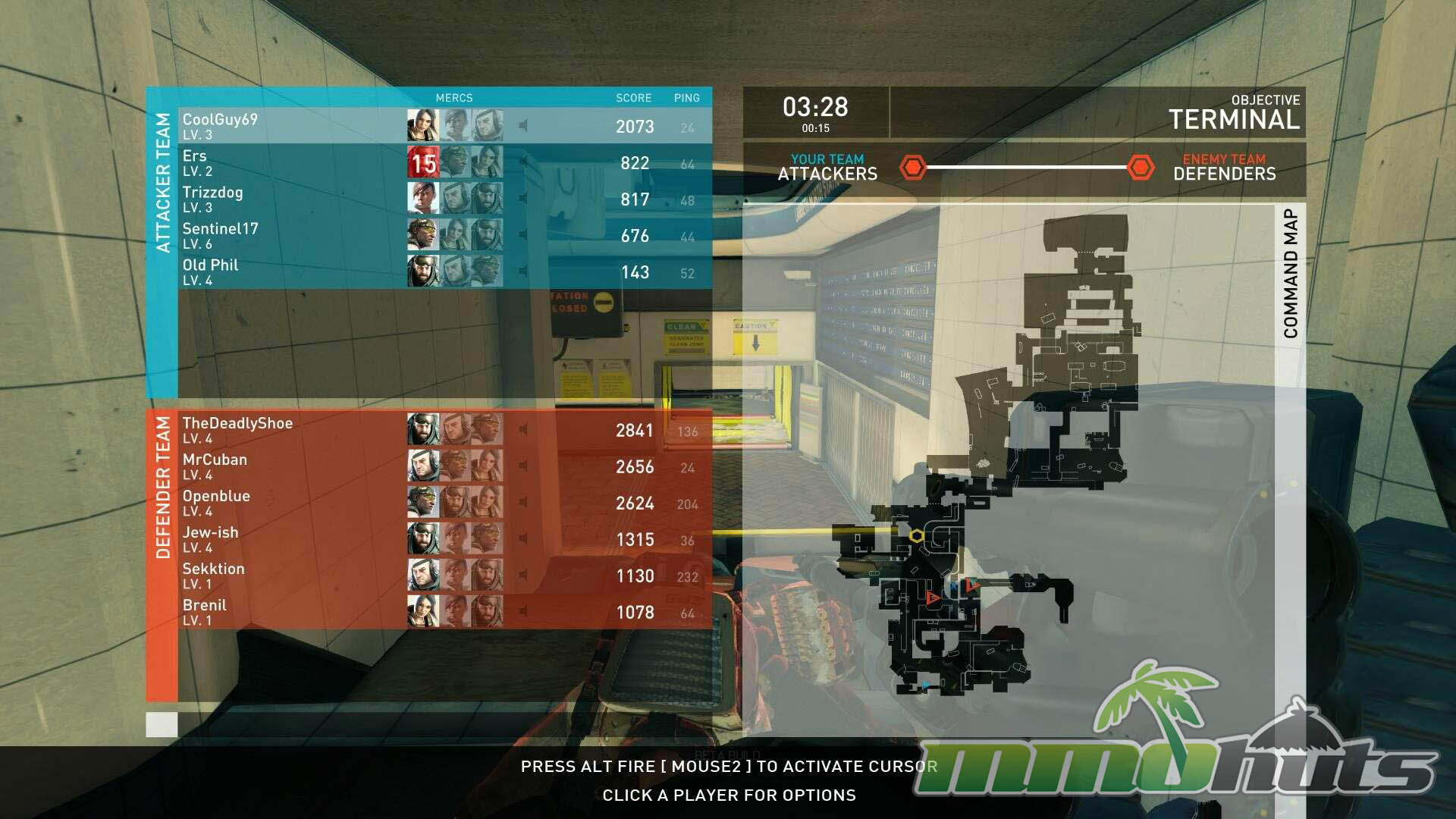
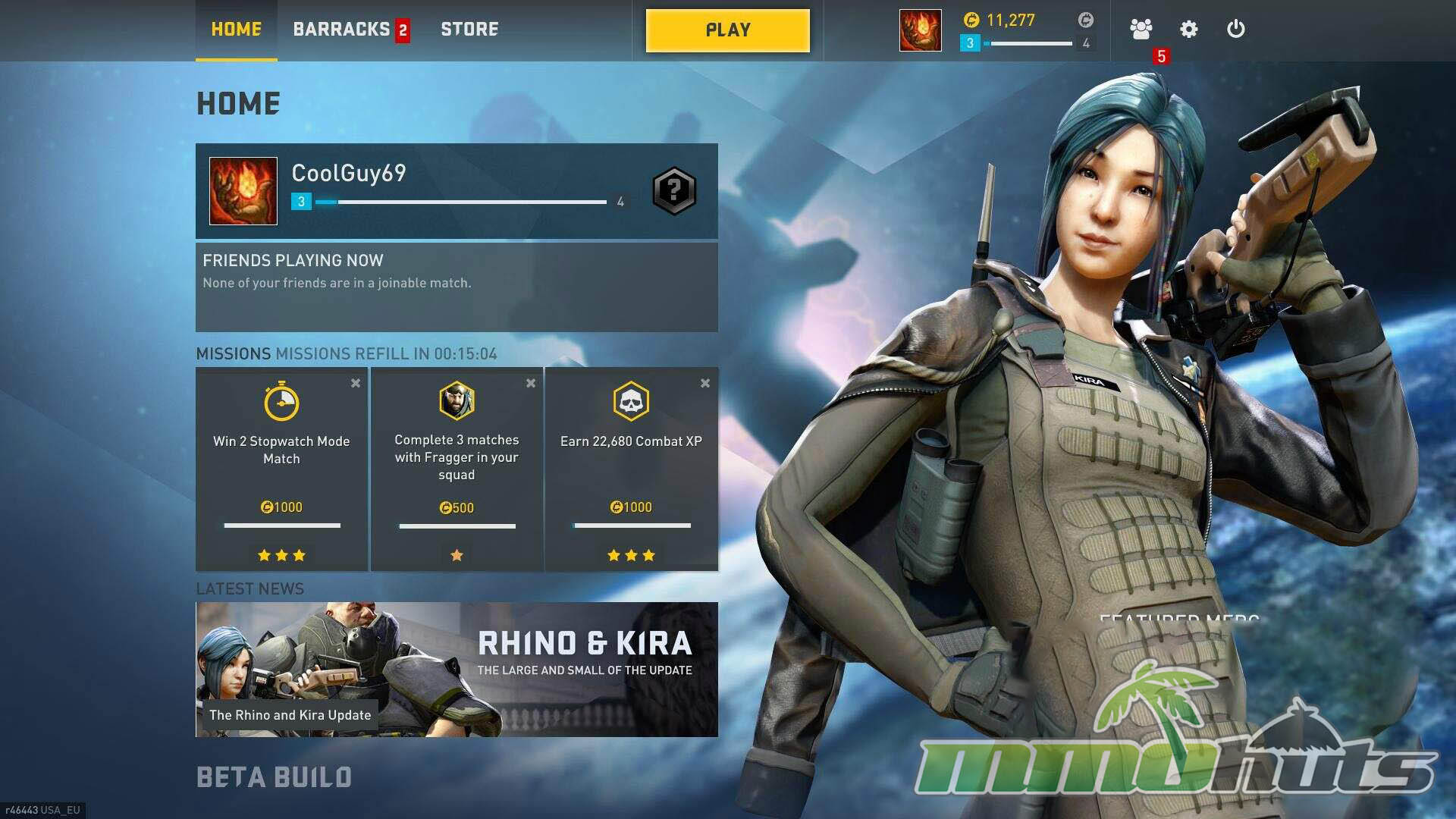
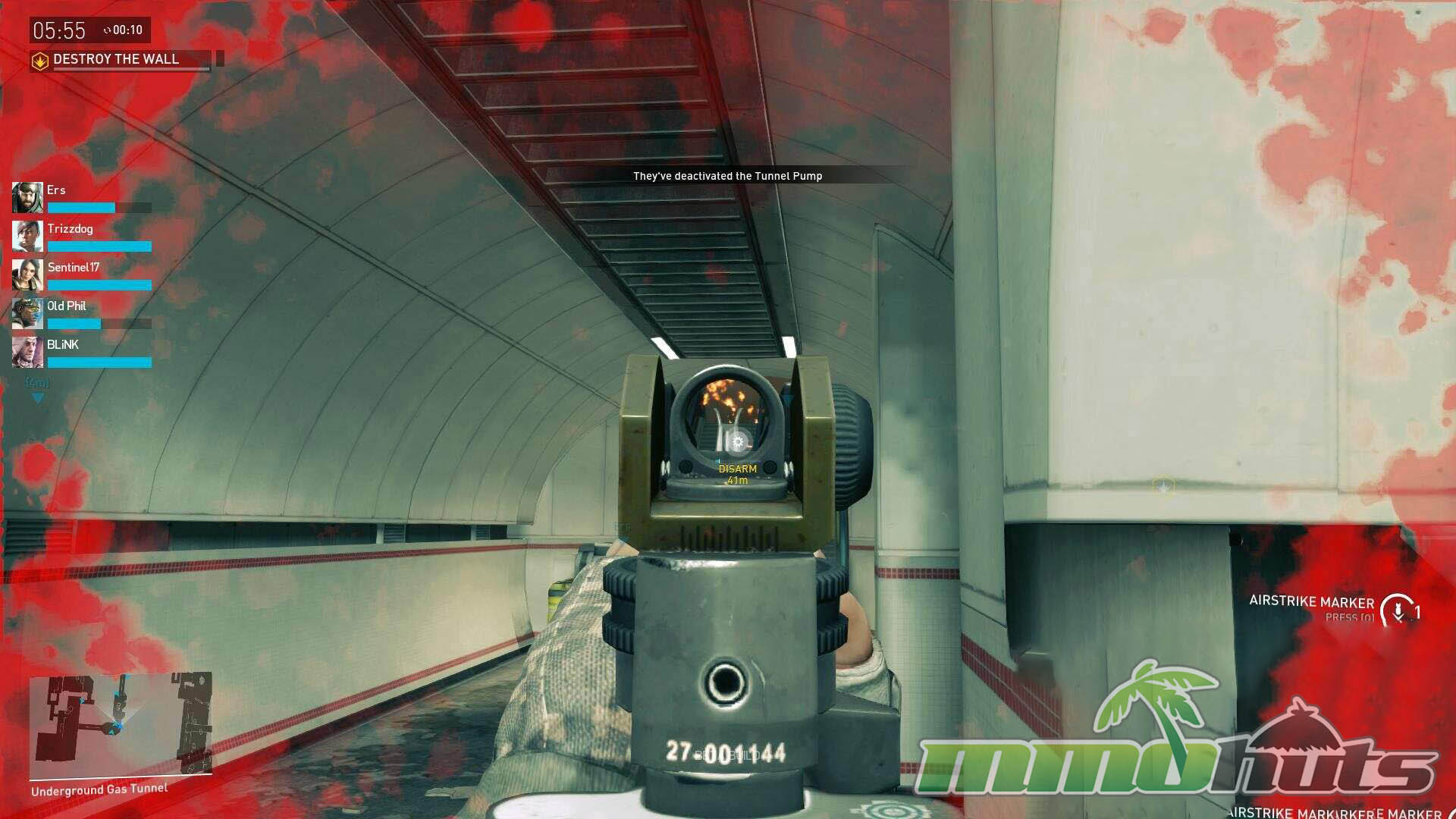
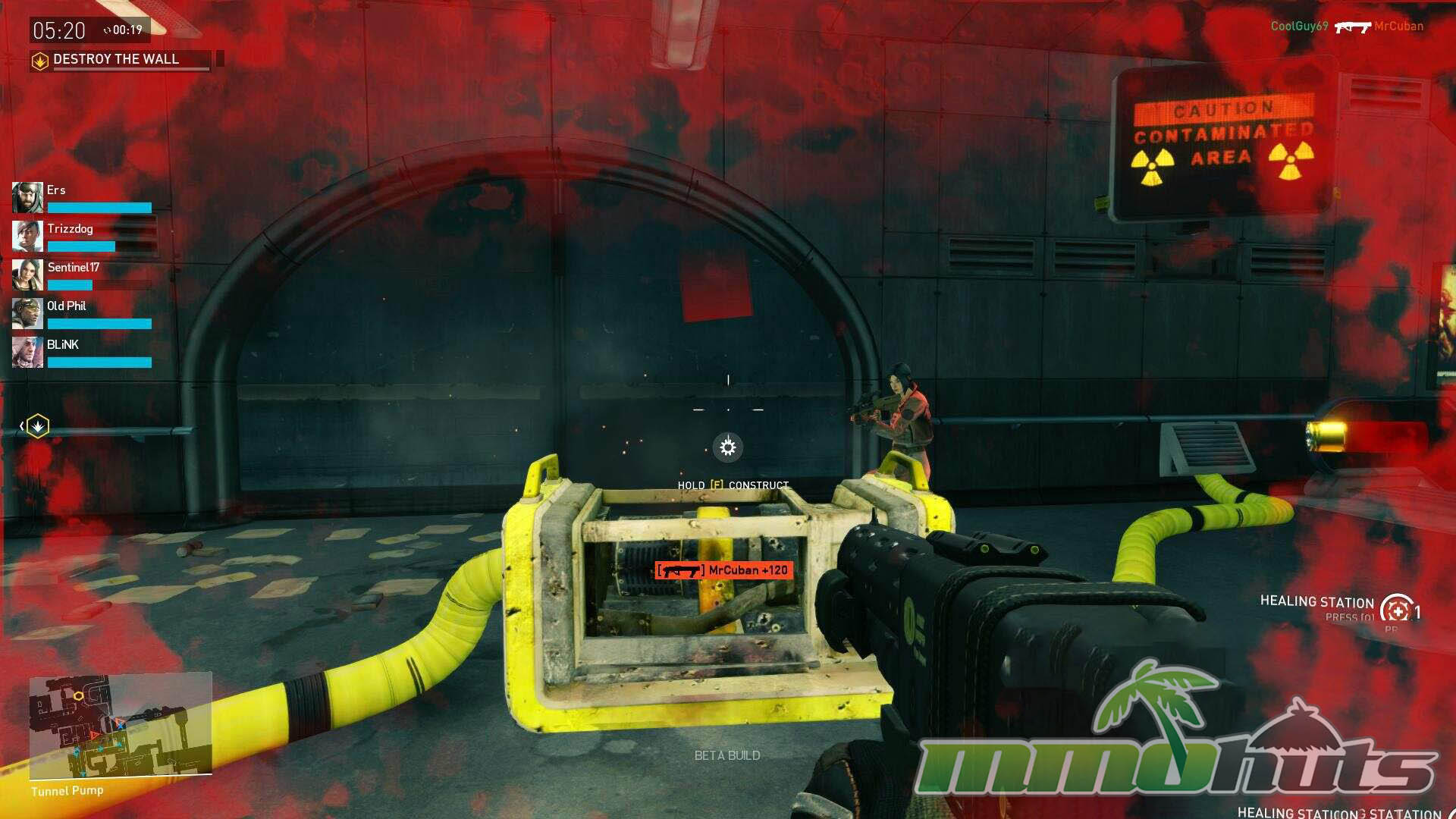
Dirty Bomb Screenshots


Dirty Bomb Featured Video

Dirty Bomb Review
Dirty Bomb is a free-to-play, objective-first shooter developed by Splash Damage and published by Nexon. It entered open beta on June 2, 2015 and was distributed through Nexon’s site and Steam. Where many shooters lean on pure eliminations as the primary measure of success, Dirty Bomb instead framed most of its experience around attacking and defending map objectives, with a roster of seventeen mercenaries functioning as its class system.
That class structure is the game’s defining trait. Each mercenary carries a specific job and an active ability that can swing a push, which gives the game a rhythm closer to a coordinated team shooter than a traditional arena frag-fest.
First Steps and Core Rules
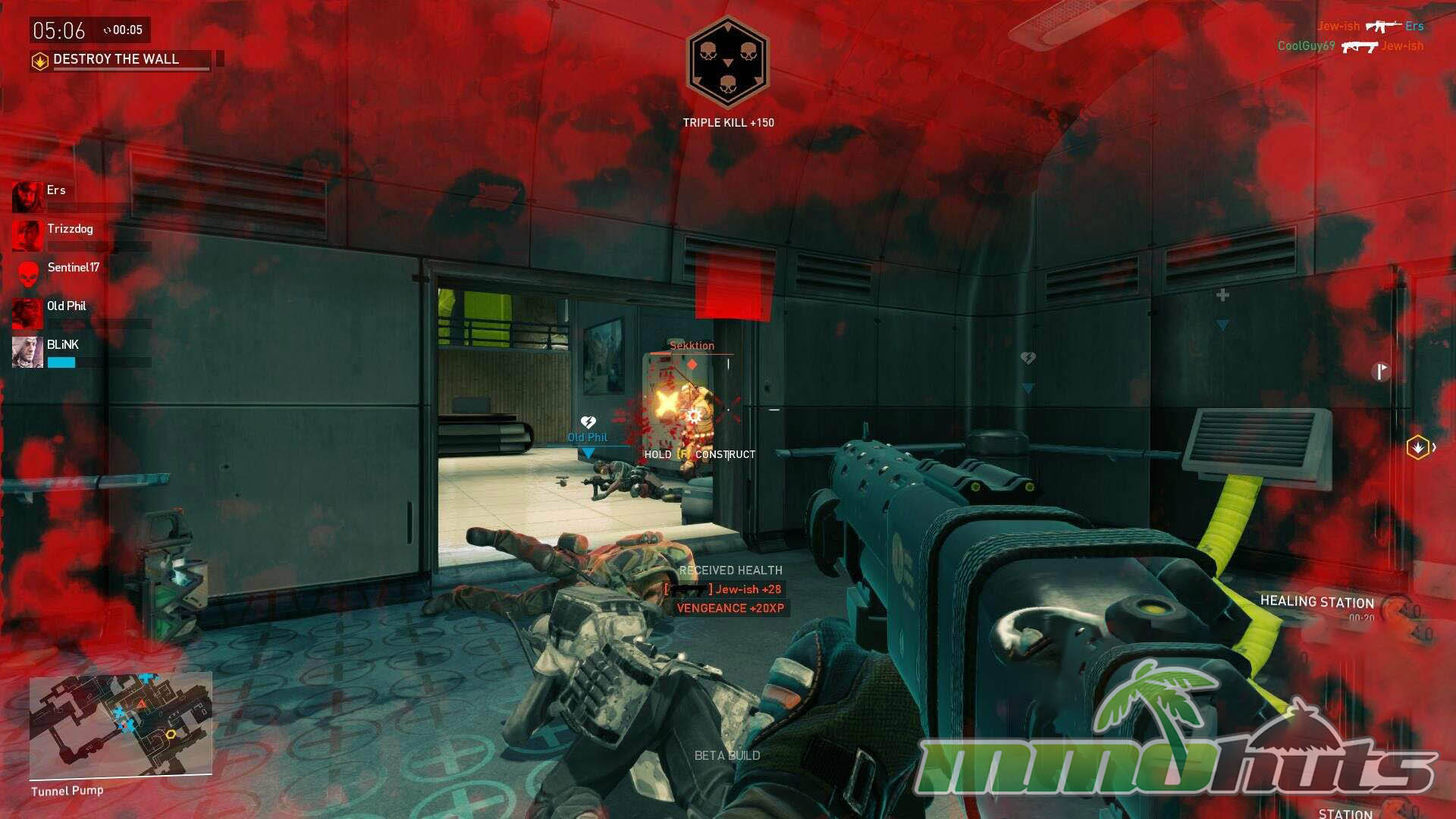
New players are guided through a short tutorial that covers the basics without overstaying its welcome. Even if you are familiar with FPS fundamentals, it is useful for understanding the game’s support mechanics and the tempo of objective play. One of the most notable design choices is that reviving is broadly accessible, anyone can help a downed teammate back up by holding the “F” key nearby. That alone changes how fights play out, because winning a skirmish is often about controlling space long enough to secure revives, not only landing the first pick.
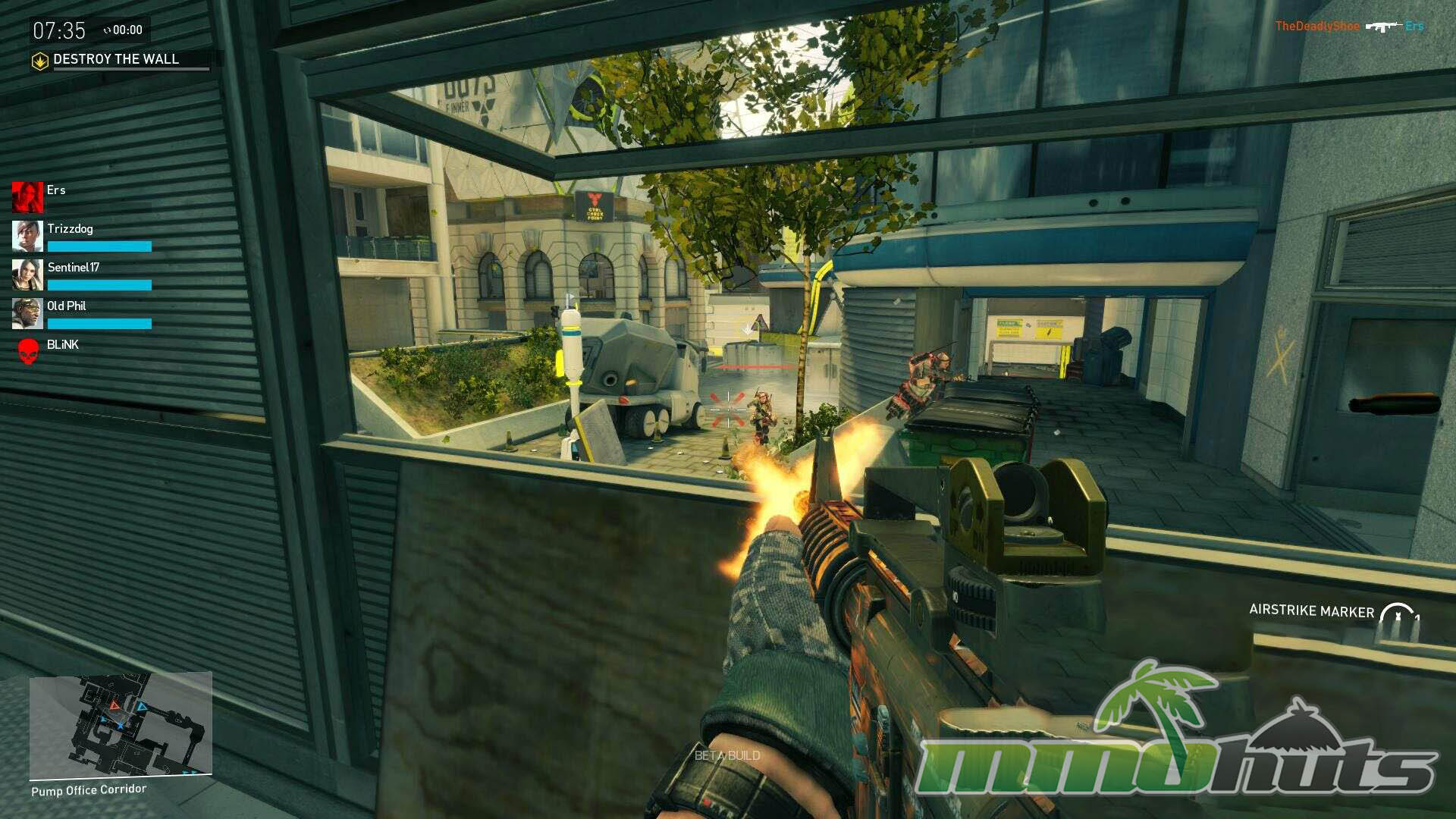
The mercenary abilities add another layer on top of that. Skyhammer can resupply teammates with ammo and call in airstrikes, while Aura plays the combat medic role with rapid revives and a healing station that sustains a hold. Kits like these create natural synergies and make coordinated squads feel meaningfully stronger than a set of lone wolves.
Match Flow and Modes
Dirty Bomb offered both matchmaking queues and a server browser, which made it easy to either jump in quickly or search for a specific environment. Competitive matches (ranked) unlock at level 5, acting as a soft onboarding period before players step into higher-stakes games.
The main modes are Objective, Stopwatch, and Execution. Objective mode pits attackers against defenders under a timer, with the attacking side progressing through a sequence of tasks while defenders try to stall them. Stopwatch uses the same structure but adds a second half where teams swap sides, and the winner is determined by who completes the objectives faster. Execution is closer to a classic bomb-plant format where teams win by wiping the enemy team or by successfully planting and defending the objective. Matches support up to 16 players (8vs8), which is enough to create layered team fights without making maps feel like chaos.
On the mechanical side, Dirty Bomb can feel lethal and decisive. Headshots are punishing and short bursts can drop targets quickly, so positioning and peeking discipline matter. However, the game’s identity comes from how it rewards grouping up and playing the objective. Charging in alone tends to be a bad trade because it rarely advances the win condition, and it often leaves you downed in a spot nobody can safely revive.
Getting eliminated near teammates is far less costly because a quick revive keeps momentum on your side. Going down in isolation usually means a full respawn and a long run back, which can be the difference between stopping a plant and arriving too late. The health regeneration while out of combat also encourages smart disengages, resetting behind cover, then re-entering with support rather than repeatedly taking unfavorable duels.
Building a Three-Merc Squad
Although the roster includes seventeen mercenaries, you only bring three into a match as your selectable lineup. You can switch between those three on respawn, but you cannot rebuild the squad mid-match. That constraint forces planning, you need enough flexibility to attack, defend, and recover from setbacks without having every tool available at all times. In more serious play, that pre-match selection becomes a meaningful strategic decision rather than a cosmetic preference.
Credits, Missions, and Loadout Cards
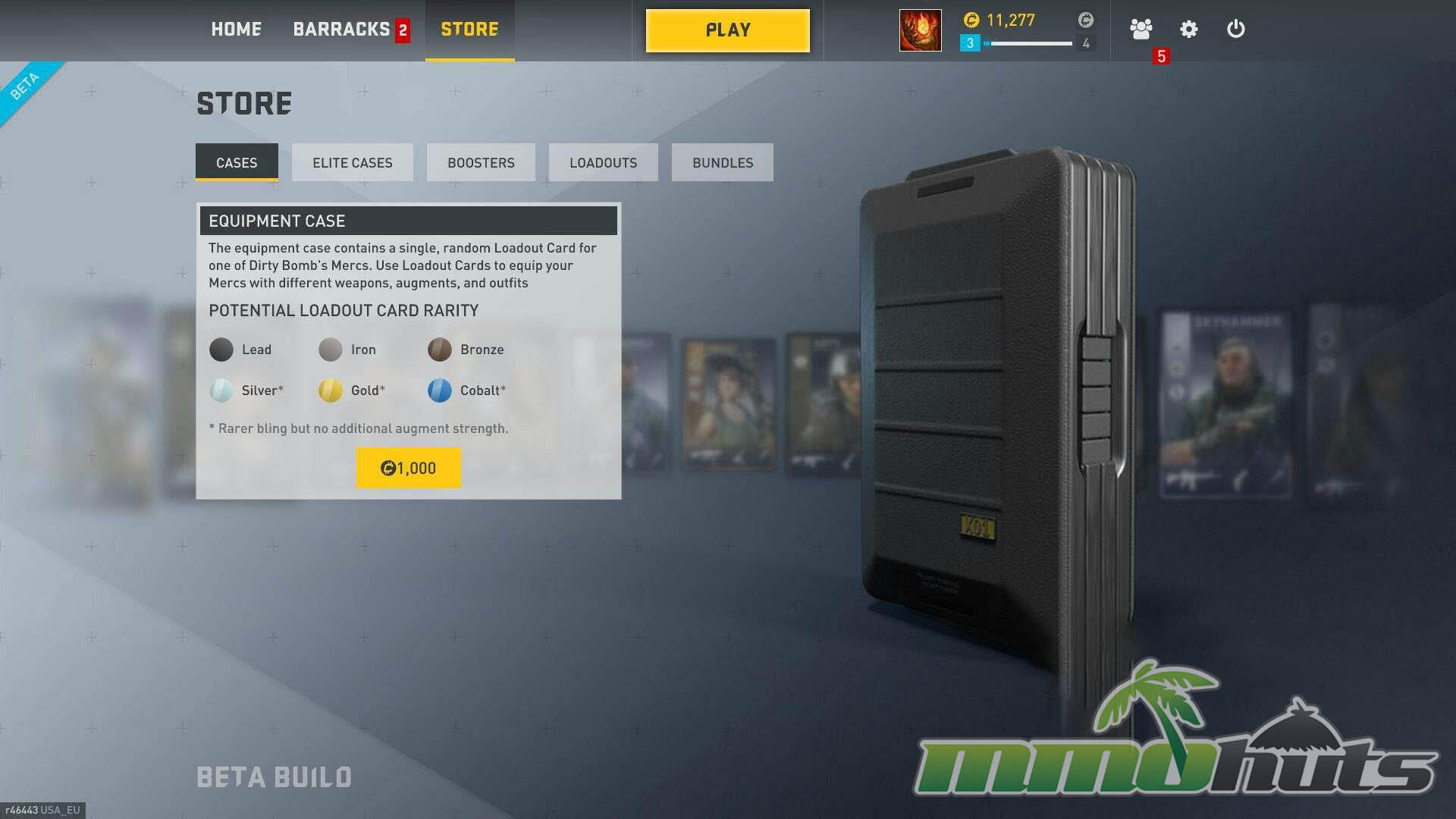
Progression revolves around earning credits via missions and general play. You can hold up to three missions at once, and they refresh every 3 hours, offering tasks such as winning specific modes or completing matches with a particular mercenary in your squad. Credits can then be spent to permanently unlock mercenaries or to buy equipment cases that award a random loadout card.
Loadout cards are the game’s main customization system. A card determines your weapon setup and the augments attached to that loadout, functioning as a packaged build rather than a fully modular kit. This approach avoids the common free-to-play “weapon rental” treadmill and makes unlocks feel lasting.
Cards come in tiers from Lead up to Cobalt (Lead, Iron, Bronze, Silver, Gold, and Cobalt). The practical power differences are most noticeable up through Bronze, while Silver, Gold, and Cobalt lean more toward cosmetic enhancements. As a system, it is easy to understand and satisfying to collect, but it can create awkward balance moments, because Bronze options are simply stronger than Lead and Iron equivalents. The random nature of equipment cases also means you cannot always pair the exact weapon set you want with the exact augments you prefer, you take the full package that the card provides. With each mercenary having their own pool of cards, completion can become a long-term grind. Even the presentation of case opening leans into that familiar “rolling” suspense seen in other popular shooters.
Monetization and Fairness
Dirty Bomb’s store is largely structured around convenience rather than raw power. Mercenaries can be obtained with credits or with cash, so paying mainly accelerates access instead of locking content behind a paywall. Players who spend money can also reach more loadout cards faster, but the same cards are obtainable through regular play if you are willing to farm credits and open cases over time. Boosters that increase credit gain are another optional shortcut.
The biggest drawback is simply the time investment. Building out a broad roster and collecting a deep set of cards can take a long while, and finishing a single mercenary’s card collection can still be a lengthy process due to the random drops.
Final Verdict – Great
Dirty Bomb stood out by putting objectives and synergy ahead of aim-only scoreboards. Its movement and gunplay feel quick, and the mercenary kits give teams clear ways to support, break holds, and recover momentum. While balance quirks and uneven matchmaking could get in the way, the core design delivered a strong, teamwork-centric shooter that felt distinct in a crowded genre.
Dirty Bomb Links
Dirty Bomb Official Site
Dirty Bomb Steam
Dirty Bomb Reddit
Evaczone (Dirty Bomb News & Community)
Dirty Bomb Gamepedia [Database / Guides]
Dirty Bomb System Requirements
Minimum Requirements:
Operating System: Windows XP / Vista / 7 / 8 / 10
CPU: Intel Dual Core 2.33 GHz
Video Card: Nvidia GeForce 7800 GTX or better
RAM: 3 GB
Hard Disk Space: 5GB
Recommended Requirements:
Operating System: Windows XP / Vista / 7 / 8 / 10
CPU: 2 GHz Quad Core CPU
Video Card: Nvidia GeForce 7800 GTX or better
RAM: 3 GB
Hard Disk Space: 5 GB
Dirty Bomb Music & Soundtrack
Dirty Bomb Additional Information
Developer: Splash Damage
Game Engine: Unreal
Closed Beta Date: 2014
Open Beta Date: June 2015
Shut Down: December 18, 2019
Development History / Background:
Dirty Bomb was developed by London-based game studio Splash Damage, the same studio behind Brink, a objective-based FPS game. Dirty Bomb is powered by the Unreal game engine and launched into closed beta in 2014 and released into open beta on June 2, 2015 through Valve’s Steam service. The official servers were shut down on December 18, 2019 but the game files remain free to download with third party server hosting options available.