
Mabinogi Duel is a mobile-friendly online trading card game that blends RPG structure with tactical, turn-based duels. It stands out with polished 2D art, a surprisingly substantial solo campaign, a large card library to chase, and social features like local card trading and face-to-face matches via Soul Link. Set in the same universe as the PC MMORPG Mabinogi, it aims to deliver that whimsical, storybook tone through card battles rather than traditional MMO questing.
  | Publisher: Nexon Playerbase: High Type: Mobile TCG/RPG Release Date: November 18, 2015 Shut Down Date: August 22, 2018 Pros: +Strong visual presentation. +Story campaign with personality. +Large card pool to build around. +Tactical, skill-forward duels. +Memorable music. Cons: -Monetization can create competitive gaps. –PVP is largely asynchronous. |
Mabinogi Duel Overview
Mabinogi Duel is a 2D TCG and RPG mashup developed by devCAT Studio (known for Mabinogi and Mabinogi Heroes/Vindictus) and published by NEXON, a major Korean publisher with mobile releases like Pocket MapleStory and Legion of Heroes. The game follows Remiel and Sarah as they travel toward First Man’s Lake, gathering allies and running into trouble along the way. Progression is delivered through a mission-based campaign, while the core gameplay revolves around turn-based card battles featuring creatures, spells, resources, and support cards that can swing the board in a single turn.
Deckbuilding is intentionally compact, and matches reward planning more than reflexes. Alongside the campaign, players can collect a huge range of cards, experiment with different resource combinations, and take their builds into Arena for asynchronous PVP. For players who want a more social angle, Soul Link lets nearby friends connect devices for direct duels and card trades. Daily Missions provide repeatable challenges and steady rewards, making it easier to keep opening packs and refining decks over time.
Mabinogi Duel Key Features
- No Card Draws – Every duel begins with the full 12-card deck in hand, so decision-making matters more than top-deck luck.
- 5 Resource Types – Build around up to 3 resource types from Gold, Mana, Light, Nature, and Dark.
- Level Up! – As you gain levels mid-match, turns become more flexible and cards scale, increasing the tension as the duel progresses.
- A New Generation – Content arrived in “Generations,” adding fresh cards and new scenarios to play through.
- Rich Story and Lore – A lengthy campaign supports the setting, and there are over 1000 cards to collect.
- Arena PVP – Climb the ladder through asynchronous battles and earn improved rewards as your rank increases.
Mabinogi Duel Screenshots


Mabinogi Duel Featured Video

Mabinogi Duel Review
Mabinogi Duel is a free-to-play card battler with RPG framing, created by devCAT Studio and published by NEXON. It launched globally on November 18, 2015, after debuting in South Korea earlier in 2015, and its popularity there even supported organized competitive events. What makes it notable among mobile card games is how much it tries to do at once, a full single player adventure with frequent dialogue and character beats, plus a tightly designed duel system that avoids automation and asks you to think through each turn.
Instead of feeling like a simplified companion app, the game leans into deliberate pacing and board control. It is approachable, but it rewards players who enjoy planning several turns ahead, managing limited actions, and learning how different resource colors shape a deck’s identity. Between campaign progression, daily modes, and PVP ladder play, it offers a lot to do, even if some design choices (and the cash shop) can be divisive.
A Story Mode With Real Momentum
The single player campaign is more than a tutorial wrapper, it is a long, mission-driven journey with plenty of dialogue and recurring characters. You play as Remiel, a half-elf traveling to First Man’s Lake in hopes of becoming fully human, guided and complicated by his relationship with Sarah. Along the route, the cast expands with allies and antagonists that give the adventure its tone, sometimes playful, sometimes tense, and occasionally surprisingly heartfelt.
The campaign structure keeps you moving through battles that are contextualized by conversations before and after matches, and it does a good job of making opponents feel like part of the story rather than random AI decks. It is also a practical part of progression, since it helps unlock cards, rewards, and cosmetics such as avatars. While some players may be tempted to treat it purely as a stepping stone to PVP, the writing and pacing make it worth playing on its own merits.
Turn-Based Duels Built Around Planning
Combat is played on a 5×2 grid, where each side can maintain up to five cards on the field. The most defining rule is deck size, every deck is exactly 12 cards, and every match starts with all 12 in your hand. That single decision changes the entire feel of the game, since the focus shifts from drawing into answers to sequencing your limited actions and choosing when to commit key cards.
Cards are gated by resources, and you spend turns either charging resources or deploying cards. There are five resource types (Gold, Mana, Light, Nature, Dark), and each deck can use up to three, which creates meaningful identity without making deckbuilding overwhelming. Charging generates a random resource type, so planning includes risk management, especially when you are trying to hit specific costs on curve.
Another signature mechanic is leveling during the duel. Actions generate experience, and when you level up (up to level 3), you gain more actions per turn and your cards scale up, but costs also increase. This creates a timing puzzle: leveling early can unlock tempo, but doing it at the wrong moment can leave you short on the resources needed to stabilize the board.
Win conditions are usually straightforward: reduce the opponent’s health to zero, though some PVE missions add alternate goals. Creatures generally attack the lane opposite them at the end of your turn after they have spent a turn on the field, unless their ability allows immediate attacks. Defense (armor) matters, absorbing damage before health is affected, which gives some cards a strong role as blockers or anchors for buff strategies.
Spells broaden the tactical space, covering direct damage, healing, resurrection, disruption, and targeted removal. Resource and buff cards can also occupy board slots, generating value over time but remaining vulnerable because they cannot attack. Finally, because there is no traditional card draw, you can choose to revive used and defeated cards back into your hand at any point, paying with an action and a portion of your health. That tradeoff is crucial, it prevents decks from “running out,” but it forces you to treat your life total as a resource.
A Large Collection With Distinct Roles
For a game with a compact deck size, Mabinogi Duel offers a huge number of cards to chase, and the variety does real work in keeping deck experimentation interesting. Cards come from booster packs (purchased with premium currency or earned through play), as well as rewards from campaign milestones, login bonuses, and leveling.
Creature cards form the backbone of most strategies, with stats, armor values, and abilities that can reshape matchups, such as lifesteal-like effects, targeting rules, death triggers that grant resources, or support skills that enhance allies. Spells fill in the gaps, from single-target removal to board-wide effects and resource manipulation. Support cards, including buffs and resource generators, occupy board slots and can dominate longer games if protected properly.
Because space on the grid is limited, positioning matters even when you are not directly “moving” units. Where you place a generator or a fragile buff source can decide whether it survives long enough to pay off. Some support tools also function as delayed threats (like bombs placed into opponent slots), adding another layer of prediction and counterplay.
Arena, Soul Link, and Repeatable Modes
Outside the campaign, the Arena is the main competitive outlet. Matches are asynchronous, you fight AI-controlled versions of other players’ decks. That will be a deal-breaker for anyone who wants real-time mind games and adaptation, but it does fit mobile play well, letting you queue whenever you have a few minutes. The AI is competent enough that matches can still feel like genuine tests of deck strength and sequencing, especially when ranks tighten.
For players who do want direct competition, Soul Link supports local, real-time duels and enables card trading between nearby devices. It is an unusual feature for a mobile card game and reinforces the “trading card” identity more than most digital competitors do.
Ranking tiers include Bronze, Silver, Gold, Platinum, and Champion. Arena seasons (tournaments) run for a short window and then reset, and rewards scale with placement, including booster packs, currency items, and other bonuses. Even with asynchronous play, variety in deck construction keeps the ladder from feeling completely repetitive.
Daily Missions and Random Draft Challenges add additional ways to earn gold and keep matches fresh. Daily Missions pit you against NPC sequences with multiple difficulty options, usually taking longer than a single duel but paying out worthwhile currency. Random Draft modes hand you a deck built from randomized cards, which is a strong way to learn the broader card pool and experience combinations you might not craft yourself. Both modes support long-term progression by feeding the gold economy that fuels pack purchases.
Cash Shop/In-App Purchases (IAP)
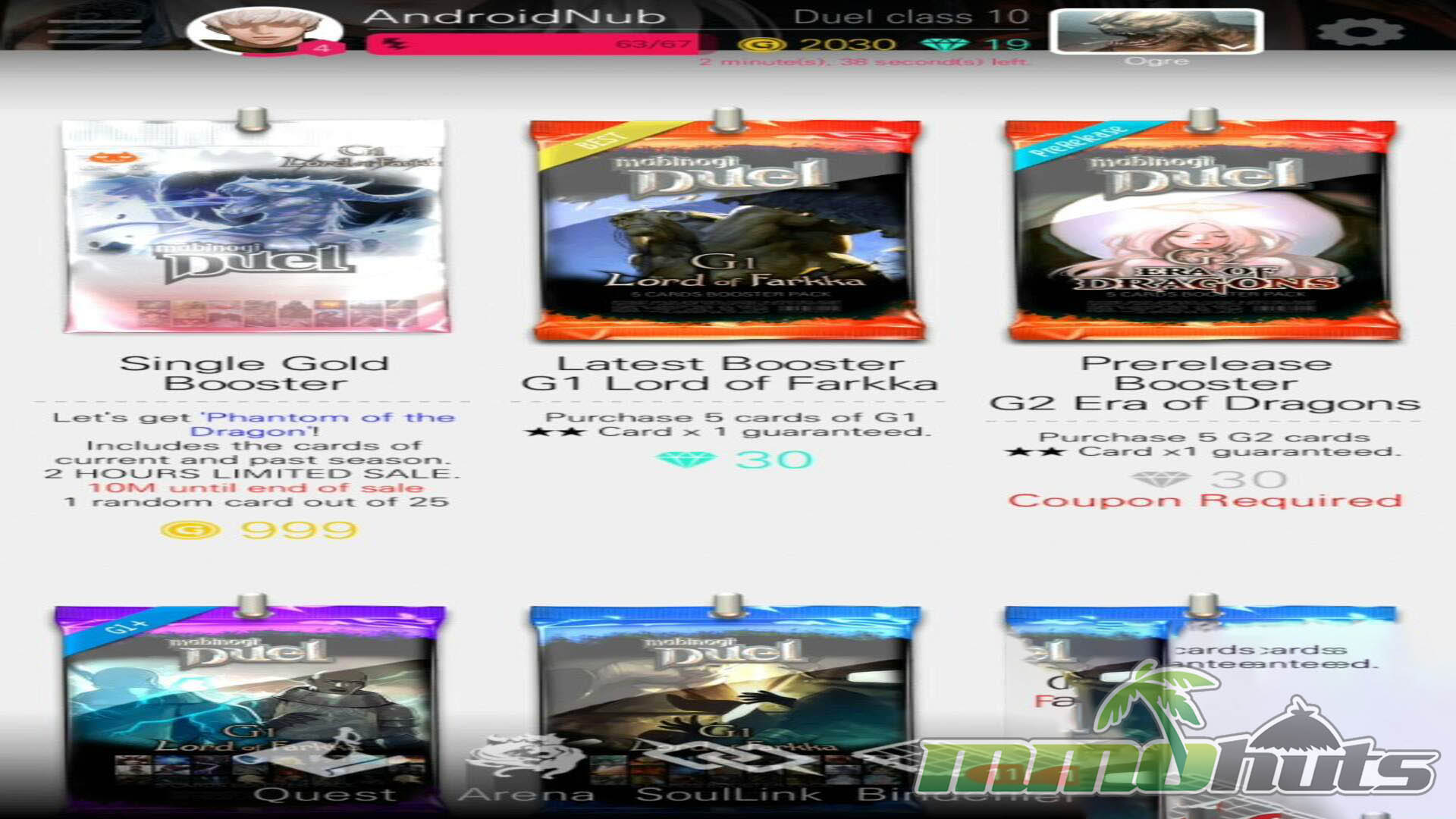
Monetization centers on booster packs and energy, with Gems serving as the premium currency. Packs typically contain five cards and guarantee at least one 2-star card, and there are also occasional gold-purchasable packs that appear for limited periods. Membership options are available for $9.99 or $23.99, providing daily Gems for a month and discounts tied to new pack releases.
In practice, the economy can feel pay-to-win for players focused on high-end PVP deckbuilding, since opening more packs speeds up access to stronger options and better synergies. That said, the game is fairly generous with free packs through story progression, login rewards, and level-up incentives, and the separation between Story and PVP decks helps keep the campaign from turning into a hard paywall. The trading aspect complicates things further, since PVP cards carry a sort of player-driven value, and frequent card additions naturally favor players willing to spend to keep up.
Final Verdict – Great
Mabinogi Duel delivers a distinctive take on mobile card combat, pairing a strong campaign with a duel system that emphasizes sequencing, resource management, and board control rather than draw luck. The card variety, presentation, and soundtrack help it stand out, and the compact 12-card deck structure creates matches that feel tactical and focused. Its weaknesses are also clear: monetization can tilt competitive balance, and asynchronous Arena will not satisfy everyone. For players who enjoy strategic card play with a meaningful solo component, it remains one of the more memorable mobile TCG/RPG hybrids from its era.
Mabinogi Duel Links
Mabinogi Duel Official Site
Mabinogi Duel Google Play
Mabinogi Duel iOS
Mabinogi Duel Reddit
Mabinogi Duel System Requirements
Minimum Requirements:
Operating System:
Android 3.0 and up / iOS 6.0 or later.
Mabinogi Duel Music & Soundtrack
Coming Soon!
Mabinogi Duel Additional Information
Developer: devCAT
Publisher: Nexon
Original Release Date: June 9, 2015 (Korea)
Closed Beta Date: May 2015 (North America)
Global Release Date: November 18, 2015
Shut Down Date: August 22, 2018
Development History / Background:
Mabinogi Duel was devCAT’s first title positioned specifically to appeal to a Western mobile audience. The studio was already recognized for the anime-inspired MMO Mabinogi and the action-oriented Vindictus, and it had begun expanding into mobile projects such as Ring Toss, Bubble Ring, and Vampire Princess.
The design clearly takes cues from modern digital card games, including Blizzard’s Hearthstone, but it also tries to differentiate itself with features that emphasize in-person play. Soul Link, in particular, encourages local duels and card trading between nearby players, reinforcing the “TCG” part of its identity. On top of that, the game offers a significant amount of solo content through a campaign with quests and narrative progression.
Mabinogi Duel shut down on August 22, 2018. Nexon shut the game down after it failed to attract enough players to keep the service viable. The official closure announcement was made on August 1, 2018.