Vindictus is a free-to-play 3D fantasy MMORPG built around fast, hands-on combat and raid-style boss encounters. Instead of roaming a seamless open world, you tackle instanced missions with a small party (or solo if you are confident), picking from nine character-based “classes” with very different weapons and defensive tools.
 | Publisher: Nexon Playerbase: Medium Type: MMORPG Release Date: October 13, 2010 (NA) PvP: Duels / Arenas Pros: +Skill-driven, real-time action combat. +Flashy animations with strong character styling. +Multiple distinct characters with different approaches. Cons: -Gender-locked roster choices. -Mission structure encourages repeating stages often. -PvP exists, but feels uneven and not deeply supported. |

Vindictus Overview
Known as Mabinogi Heroes in parts of Asia, Vindictus is an instanced, boss-focused action MMORPG running on Valve’s Source engine. Players gather in shared towns, then launch into mission-based stages where the real game happens, coordinated fights against packs of enemies that culminate in heavy-hitting bosses. The overall structure will feel familiar to anyone who enjoys games that emphasize repeated hunts and mastery, with a flow that often resembles a lighter MMO take on Monster Hunter-style sessions.
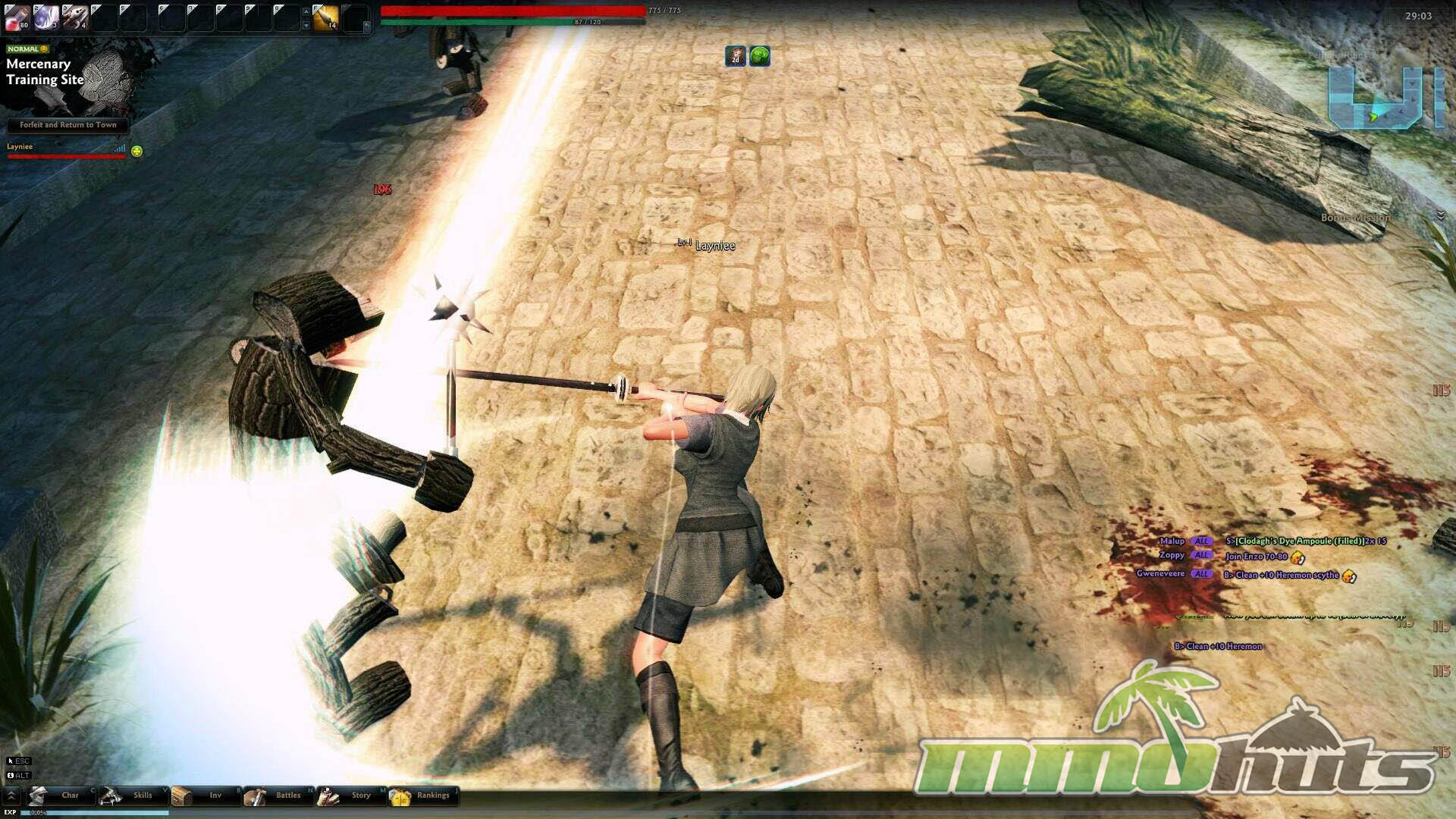
A big part of its identity is the combat model. Instead of tab targeting and cooldown rotations, Vindictus asks you to manage stamina, respect hitboxes, and react in real time. You are not expected to stand still and trade damage, many attacks will empty your health bar quickly if you mistime a dodge or block. Defensive play is active and deliberate, built around well-timed invulnerability windows, guards, counters, and positioning. That responsiveness, paired with strong animation work, is what makes the game stand out even among other “action” MMOs.
Another notable design choice is the absence of a traditional MMO role trinity. While different characters bring different utility and levels of safety, the expectation is that everyone contributes damage and can look after themselves. With practice and gear, most content can be pushed through solo on any character, although the effort required varies depending on kit and player comfort.
Vindictus Key Features
- Real-Time Combat – fights reward timing, spacing, and reading enemy animations, not just stats.
- Variety of Characters – 9 playable characters, each functioning like a distinct class with their own weapon style.
- Interactive Environments – pick up and throw objects like crates and barrels, and watch for stage hazards and traps.
- Strategic Boss Battles – targeted damage can break boss parts, sometimes changing behavior and influencing drops.
- Advance Alone or With Friends – the game supports solo progression for most content, while still feeling best with a group.
Vindictus Screenshots
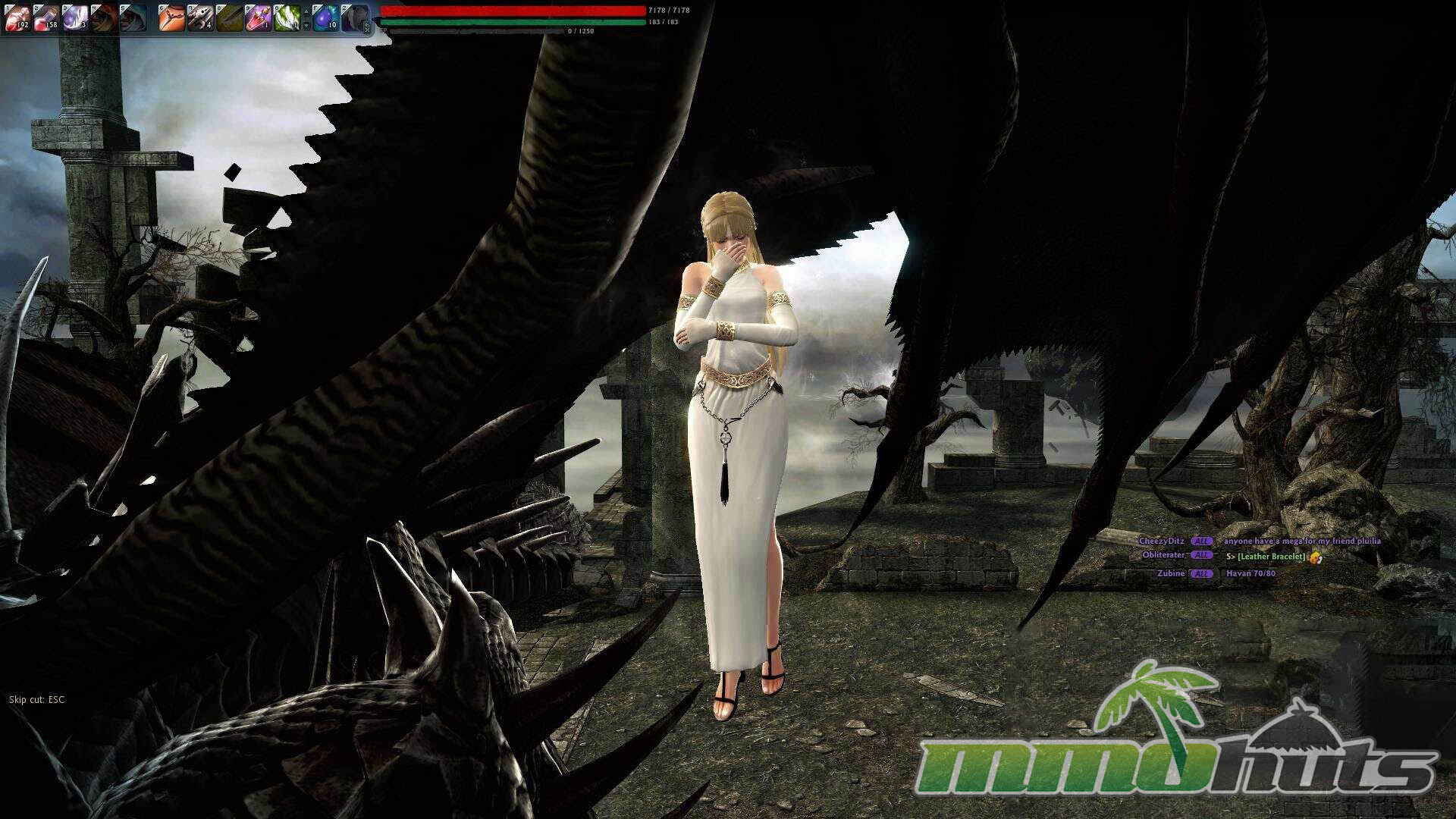
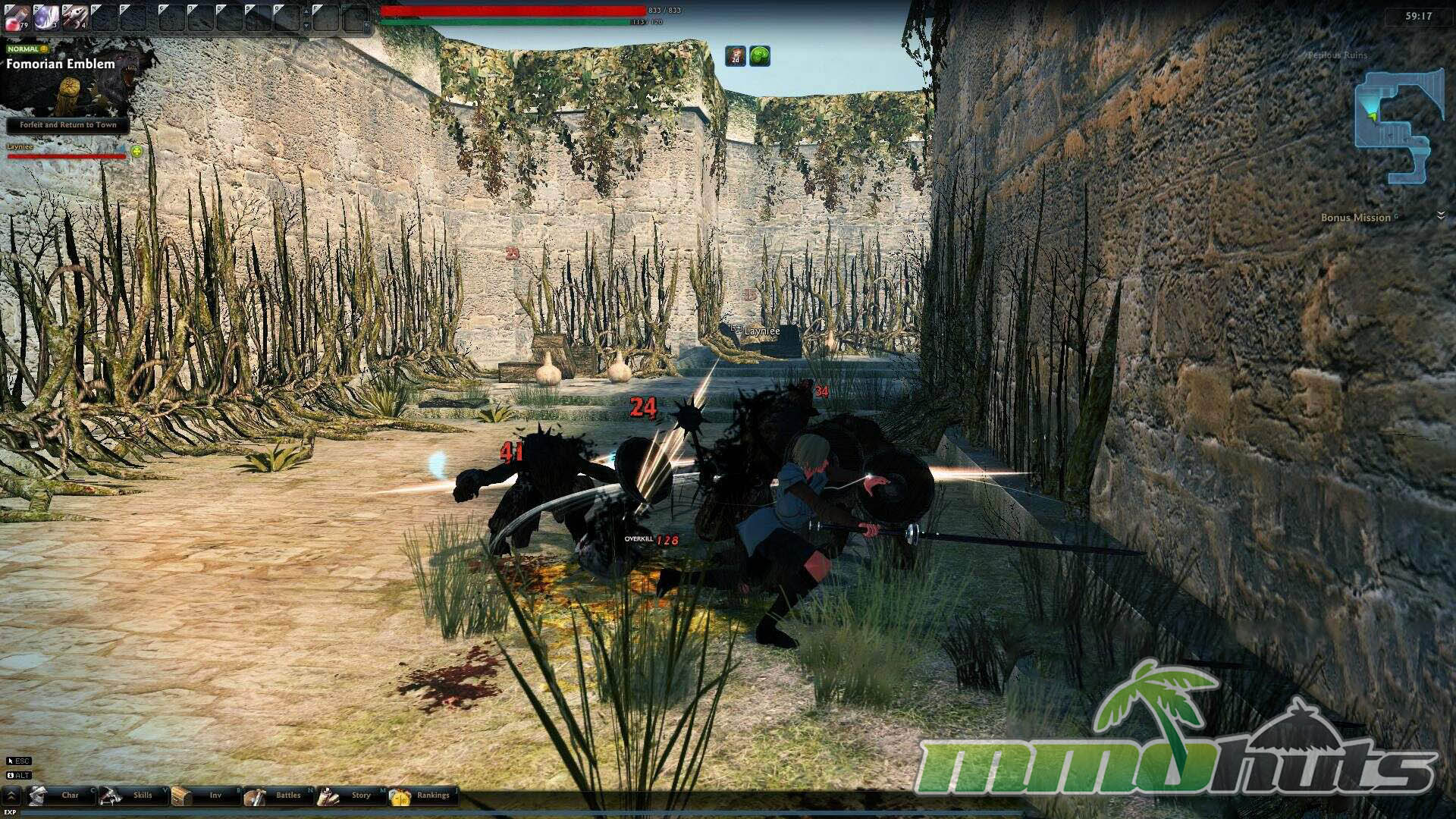

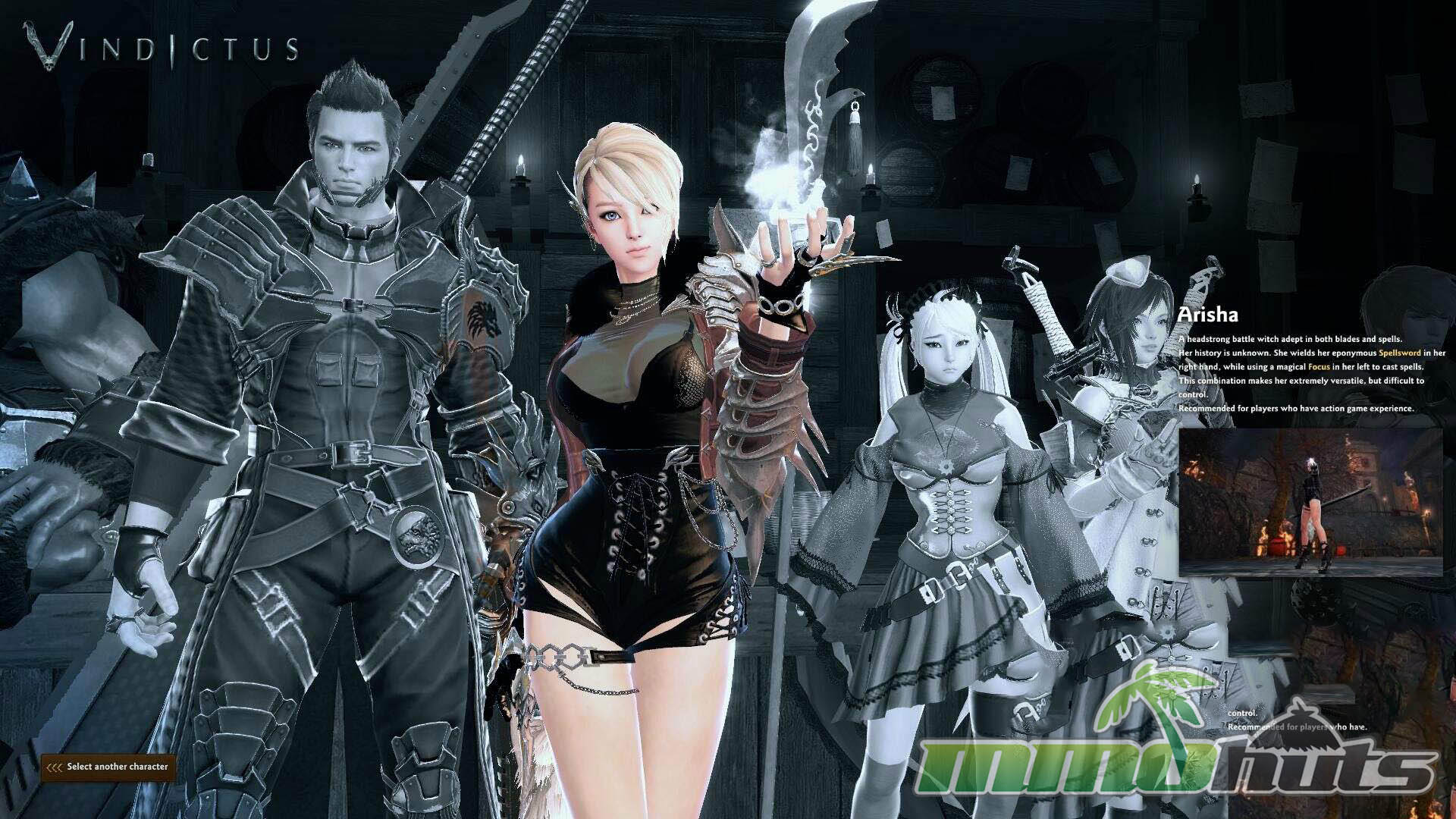


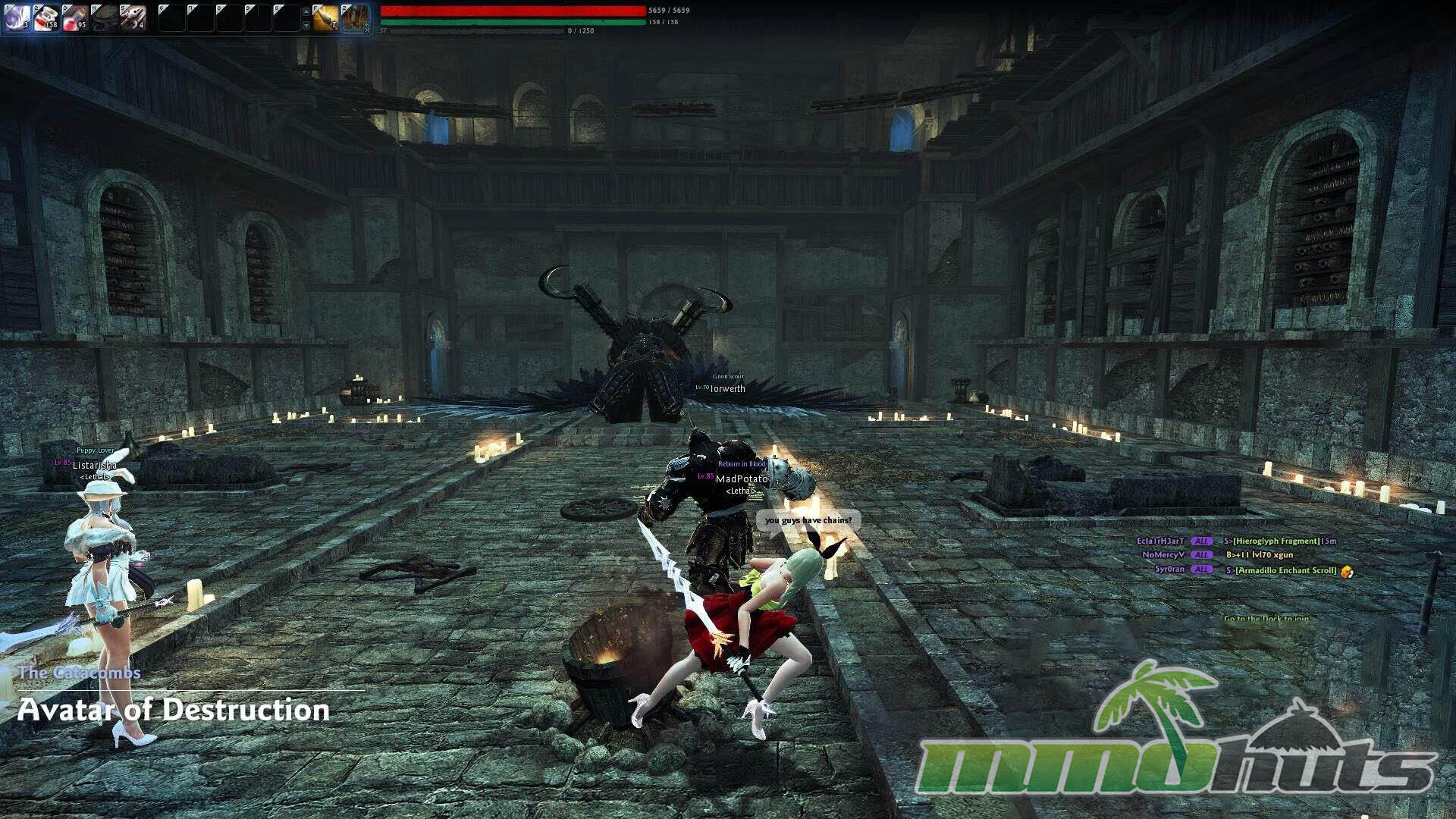

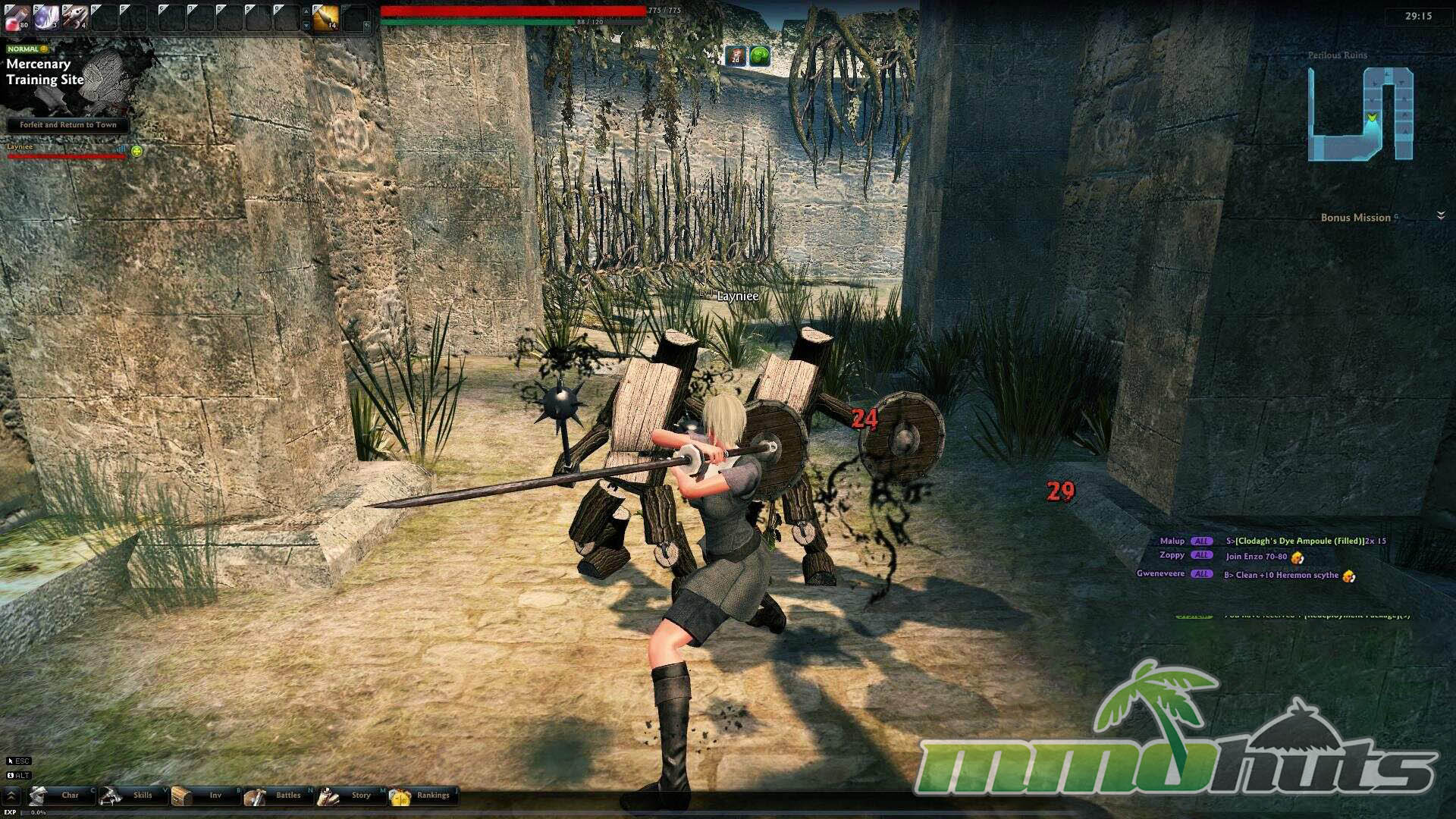


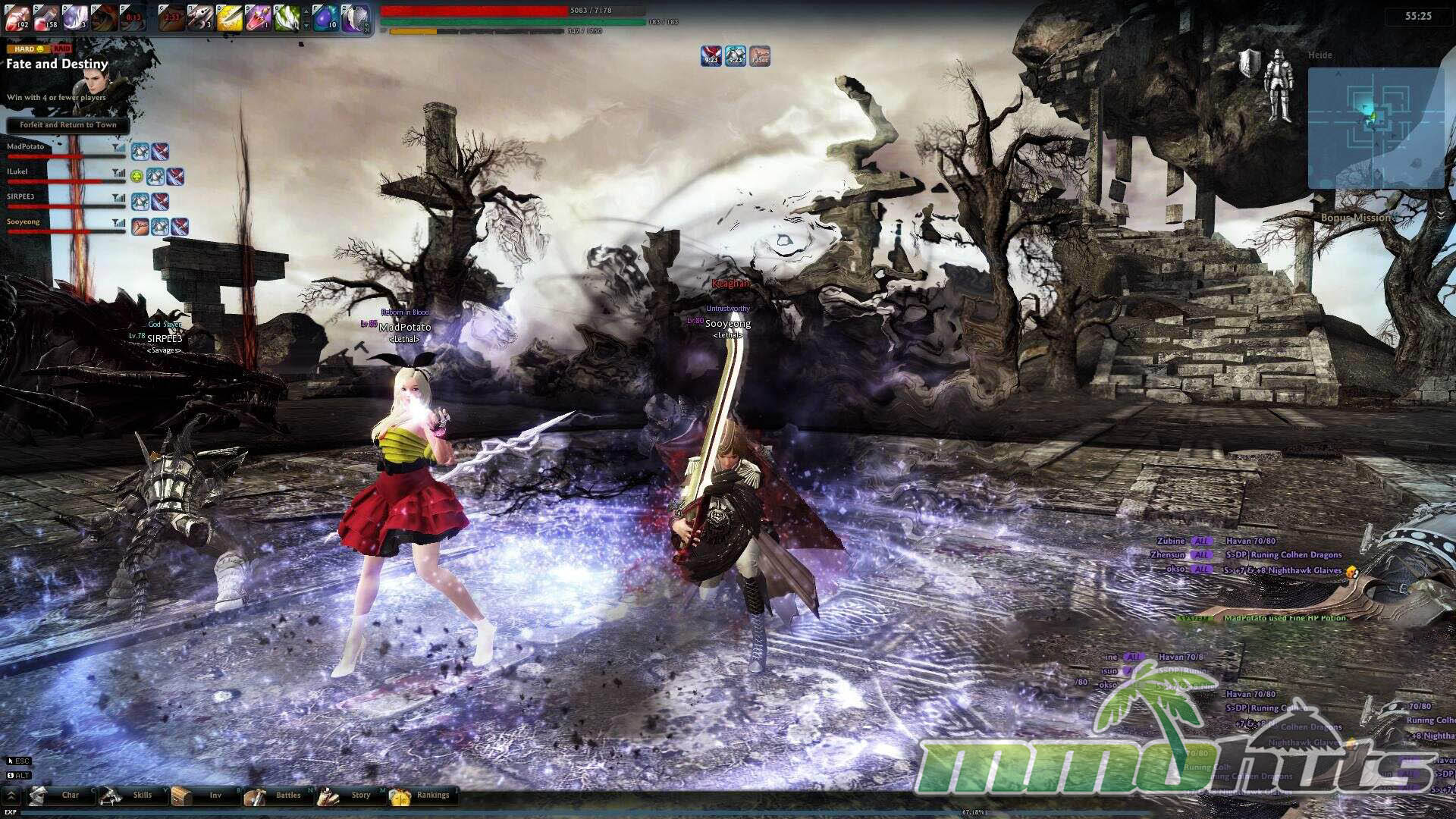
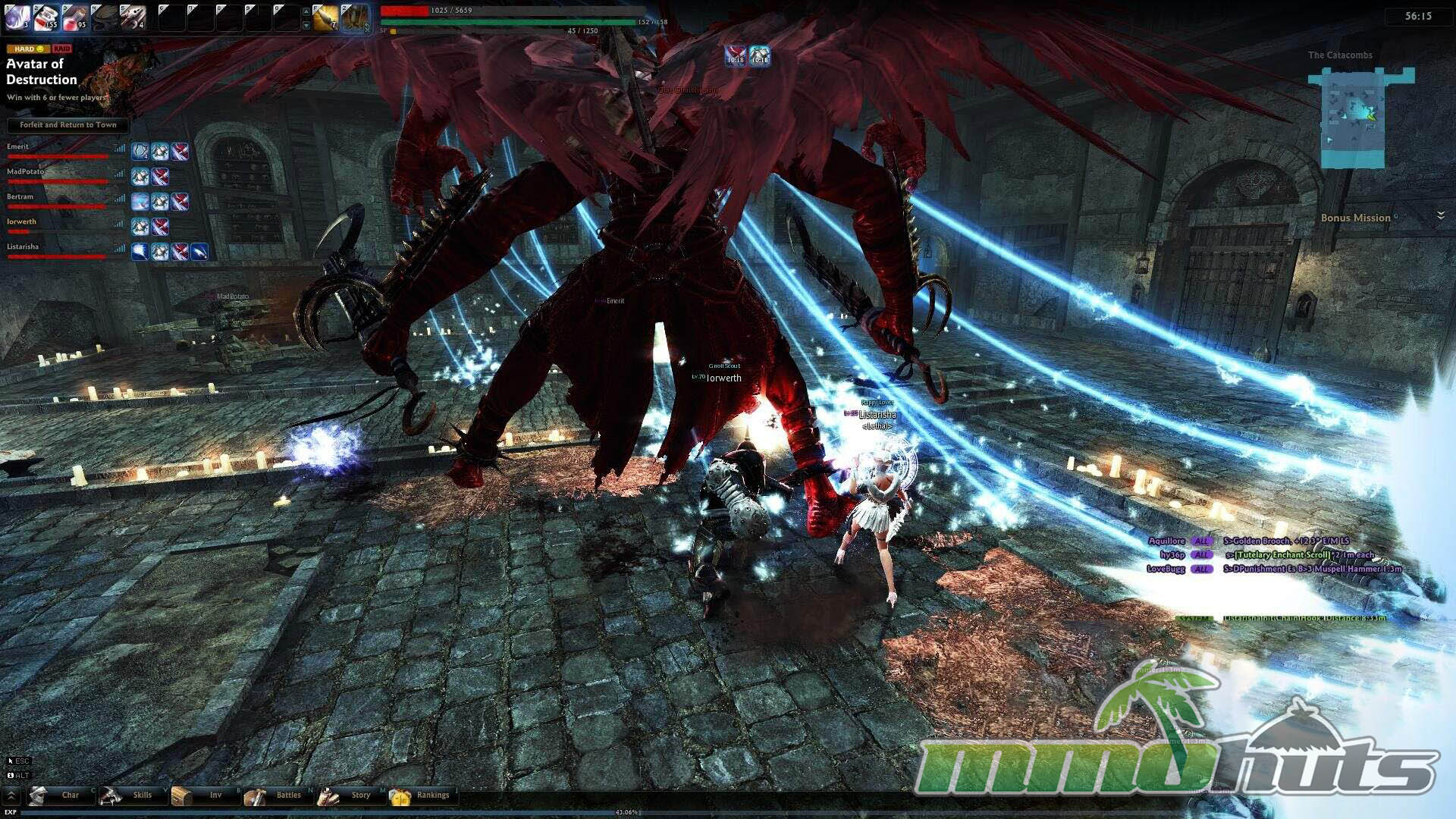
Vindictus Featured Video

Vindictus Characters
Vindictus uses characters as its class system. Each one has a fixed identity, including their core mechanics and signature defensive options, and in some cases a choice of weapons that changes how they play. In practice, picking a character is more like picking a full moveset than selecting a traditional MMO class.
- Lann – a fast dual-wield specialist who can also swap to twin short spears. Lann thrives on aggression, using quick dodges with invulnerability frames and rapid strings. His kit rewards confident positioning, especially when committing to high-damage moves like Gliding Fury.
- Fiona – a sword-and-shield defender with some of the most reliable protection in the roster. She can pair a longsword or one-handed hammer with either a tower shield or a smaller shield. Sword setups lean into blocks and shield counters, while hammer setups trade speed for heavier, charge-oriented hits.
- Evie – a caster-style character who can use staves or scythes. Staff Evie focuses on ranged elemental spells and can provide limited healing support. Scythe Evie plays more like a debuffing battlemage, applying curse-like effects and using short teleports to keep pressure while staying mobile.
- Karok – a powerhouse brawler designed to stand his ground. Karok can soak hits while continuing his offense, and his signature Clash mechanic can interrupt bosses mid-action, opening safer damage windows for the team and sometimes preventing a dangerous attack from completing.
- Kai – the closest thing to a ranged specialist. Kai uses bows and revolving crossbows to keep damage flowing from a safer distance. His bow stance can shift between a more assisted shortbow style and a manually aimed longbow approach that can cause bosses to flinch when timed well.
- Vella – a high-mobility fighter who can wield twin swords or twin chainblades. Sword Vella emphasizes swift movement and evasive play, backed by strong counterattacks against both melee and ranged threats. Chainblade Vella leans into ranged pressure, competing with Kai for consistent distance damage.
- Hurk – a greatsword bruiser whose rhythm is built around taking hits and converting that momentum into relentless offense. Hurk spends stamina and even health to keep attacks rolling, making him feel risky but rewarding for players who can control the chaos.
- Lynn – a quick polearm user focused on burst windows and active skills. She cannot grab enemies, but makes up for it with a hard-hitting Five Finger Death-style attack that can stun. While her boss control is limited, her damage tools are plentiful and impactful.
- Arisha – an INT-based spell-sword built around mana management. Her strongest sequences demand careful resource use. Although her passive durability is not a highlight, her active defenses are dependable, including a block, an invulnerability dodge, and a teleport that helps her stay safe while maintaining pressure.
Vindictus Review
Vindictus is a free-to-play action MMORPG from Nexon’s devCAT that serves as a darker-toned companion to Mabinogi, positioned as a prequel in the same broader setting. It first launched in Korea on January 21, 2010, and arrived in North America on October 13, 2010 (NA). Over time it also released in other regions including Europe, Japan, China, and Australia. Even years after release, its combat still feels unusually committed to “action game rules” compared to most MMOs.
Background
While the presentation and mood differ from Mabinogi, Vindictus pulls from the same general worldbuilding roots, drawing loosely from Celtic-inspired mythology and themes. You will see that influence in creature design, locations, and the general fantasy tone, even though the game’s pacing is driven more by missions and boss mechanics than by narrative exploration.
What You’re Fighting
Most of your time is spent cutting through packs of enemies on the way to large encounters that act as the “main event” of a run. Vindictus is at its best when it is asking your party to read tells, manage stamina, and survive punishing boss patterns, rather than when it is simply clearing routine mobs. Boss fights are the moments that define the game’s reputation.
How You’ll Do It
At the mechanical level, combat is built around chaining light attacks (often called “normals”) into heavier strikes (“smashes”) while managing three shared resources. HP determines how many mistakes you can survive, Stamina fuels both offense and defense, and SP accumulates through attacking and is spent on special moves. On top of that baseline, many characters add their own layers, such as mana systems, cooldown-driven tools, stance swaps, or buff management.
What makes these systems click is the emphasis on execution. Vindictus rewards players who learn animation timing, understand spacing, and know when to commit to long strings versus when to hold stamina for a defensive response. It is not enough to have good gear, you still need to play cleanly, especially in harder fights where a few hits can end a run.
What You’ll Fight With
Gear progression is straightforward in concept, even if optimization can get deep. Your core slots are weapons, armor, and accessories, each with their own upgrade paths and stat considerations.
Armor comes in weight categories such as cloth, light, heavy, and plate. Cloth typically offers the least protection and is commonly associated with INT-oriented characters, while plate is the most defensive. The tradeoffs become more meaningful later, as lighter sets tend to align with higher offensive output at the cost of survivability, and heavier sets do the opposite. Some armor pieces are character-specific, but many sets overlap across multiple characters.
Weapons are usually unique to a character (with twin swords being a notable exception shared by Lann and Vella), and they matter more than any other slot because they provide the bulk of your offensive stats. Accessories round out your build with additional bonuses and special effects, sometimes offering survivability tools (like resisting lethal damage), sustain effects (healing when you deal damage), or periodic SP gains.
Bang For Your Buck
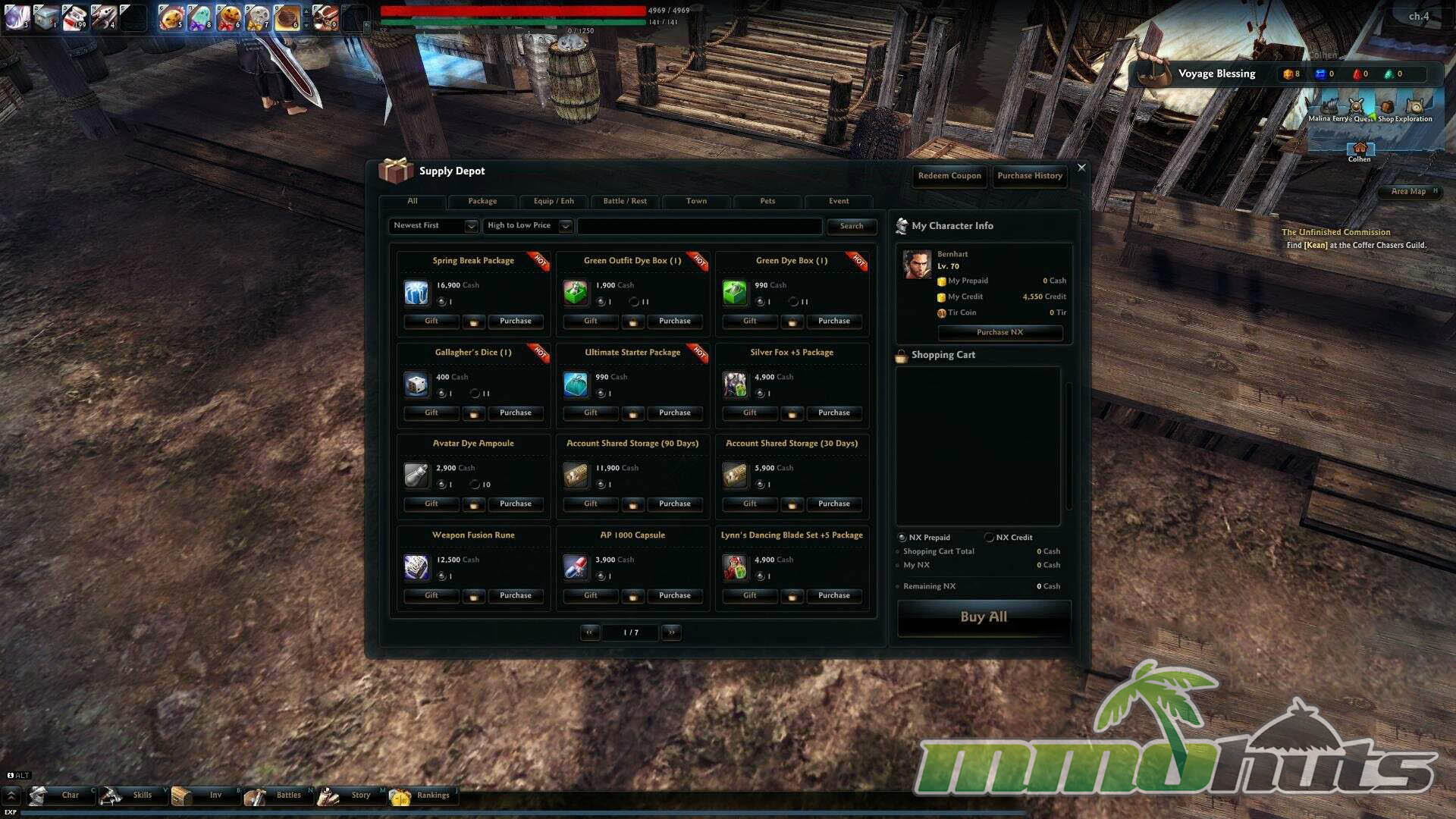
Vindictus uses Nexon’s NX currency for cash shop purchases. The store covers a wide range: cosmetic options like hairstyles, Inner Armor (clothing worn under your main set that can show when armor breaks), dyes (also obtainable with gold), and Outfitters that override the look of your equipped gear.
There are also items aimed at convenience or progression, such as pets that can provide buffs and automatically pick up drops, defensive badges, capsules that increase experience gains and provide extra battles, and runes that reduce the risk associated with enhancements and enchantments. None of this is strictly required to clear the game’s content, but it can smooth out friction points, particularly if you are pushing upgrades or speeding up leveling.
Final Verdict – Great
Vindictus remains easy to recommend to players who value action combat first and MMO structure second. Its best moments come from learning bosses, tightening execution, and feeling your own improvement, not just watching numbers climb. The mission repetition and uneven PvP support can be drawbacks, and the character roster being gender-locked will be a dealbreaker for some. Still, if the combat style clicks for you, Vindictus offers a kind of skill-driven MMO experience that is still rare in the NA region.
Vindictus Links
Vindictus Official Site
Vindictus Steam Page
Vindictus Wikipedia Entry
Vindictus Gamepedia Wiki [Database / Guides]
Vindictus Subreddit
Vindictus Metacritic Page
Vindictus System Requirements
Minimum Requirements:
Operating System: Windows XP / Vista / 7 / 8
CPU: Intel Core 2 Duo E4600 2.4 GHz / AMD Athlon 64 X2 5000+
Video Card: GeForce 7800 GTX / Radeon X800 XT
RAM: 1 GB
Hard Disk Space: 10 GB
Recommended Requirements:
Operating System: Windows 7 / 8
CPU: Intel Core i3 540 / AMD Phenom 2 X4 or better
Video Card: Nvidia GeForce GTS 250 / ATI Radeon HD 4850 or better
RAM: 4 GB or more
Hard Disk Space: 10 GB or more
Vindictus Music & Soundtrack
Vindictus Information
Developer: devCAT
Engine: Source
Composer: Shin Dong Hyuc
Closed Beta Date: August 10, 2010 – August 24, 2010 (NA)
Early Access Open Beta: September 15, 2010 – October 5, 2010 (NA)
Open Beta Date: October 13, 2010 – October 27, 2010 (NA)
Foreign Release:
Korea: January 21, 2010
Europe: October 5, 2011
Japan: November 30, 2011
Taiwan: December 23, 2011
China: December, 23, 2011 (TitanCity)
Australia: November 15, 2012
Development History / Background:
Despite looking and playing very differently, Vindictus is set as a prequel to the anime-styled MMORPG Mabinogi, taking place several hundred years earlier in the timeline. During development and in certain regions it carried the title Mabinogi Heroes, but the North American and European releases adopted the name Vindictus as part of a push to better fit Western market expectations.
A separate build was revealed on July 15, 2010 under the name eXtreme Edition. This version adjusted the feel of combat with changes like a combo system, slower boss behavior, and higher player stamina, among other tweaks intended to make the pacing snappier. Nexon shut down the eXtreme Edition servers in Korea on April 24, 2014, while servers in Taiwan, China, and Europe continued operating.