MapleStory is a long-running free-to-play MMORPG that plays out in a charming 2D, side-scrolling world. Its bright, cartoon-like presentation hides a surprisingly deep game built around leveling, bossing, collecting, and experimenting with an enormous roster of classes, which is a big reason it has stayed relevant for so many years.
 | Publisher: Nexon Playerbase: High Type: MMORPG Release Date: May 11, 2005 (NA) PvP: Arenas Pros: +A massive class roster (40+). +Big, varied world to explore. +Combat loop is genuinely enjoyable. +Questing content is extensive. +Memorable platforming-style stages. +Frequent seasonal events. +Storylines that stay engaging. Cons: -Class balance can feel uneven. -Looting is awkward (manual pickup feels painfully slow). -Performance and client stability problems. |

MapleStory Overview
In MapleStory, you journey across Maple World as dark forces tied to the Black Mage threaten to overturn the fragile peace. The game is free-to-play and built around classic MMO progression, but delivered through snappy 2D side-scrolling action, platforming maps, and a steady flow of quests. One of MapleStory’s defining traits is its class variety, with more than 40 options ranging from traditional fantasy archetypes to more unusual picks like samurai-inspired warriors and legendary hero characters, each with distinct skills and a different flavor of story presentation.
Exploration and progression are paced through a mixture of quest lines, grind-friendly hunting maps, mini-games, and special activities that break up the routine. It is also one of the few MMORPGs where platforming is not just a movement gimmick, it is a real part of the content, especially in jump-focused challenge maps that can be equal parts satisfying and infuriating.
MapleStory Key Features:
- Accessible 2D Action Combat – straightforward side-scrolling battles that are easy to read, but still rewarding once you start chaining skills and movement.
- Over 40 Unique Classes – choose from 40+ classes with different mechanics, identities, and play patterns, plus their own narrative framing.
- Fashion and Customization Options – mix equipment and cosmetics to tailor both your power progression and your character’s look.
- Platform Quests – take on jump- and timing-based stages that offer a different challenge than standard monster hunting.
- Constant Updates – the world keeps changing through regular additions, events, and ongoing improvements.
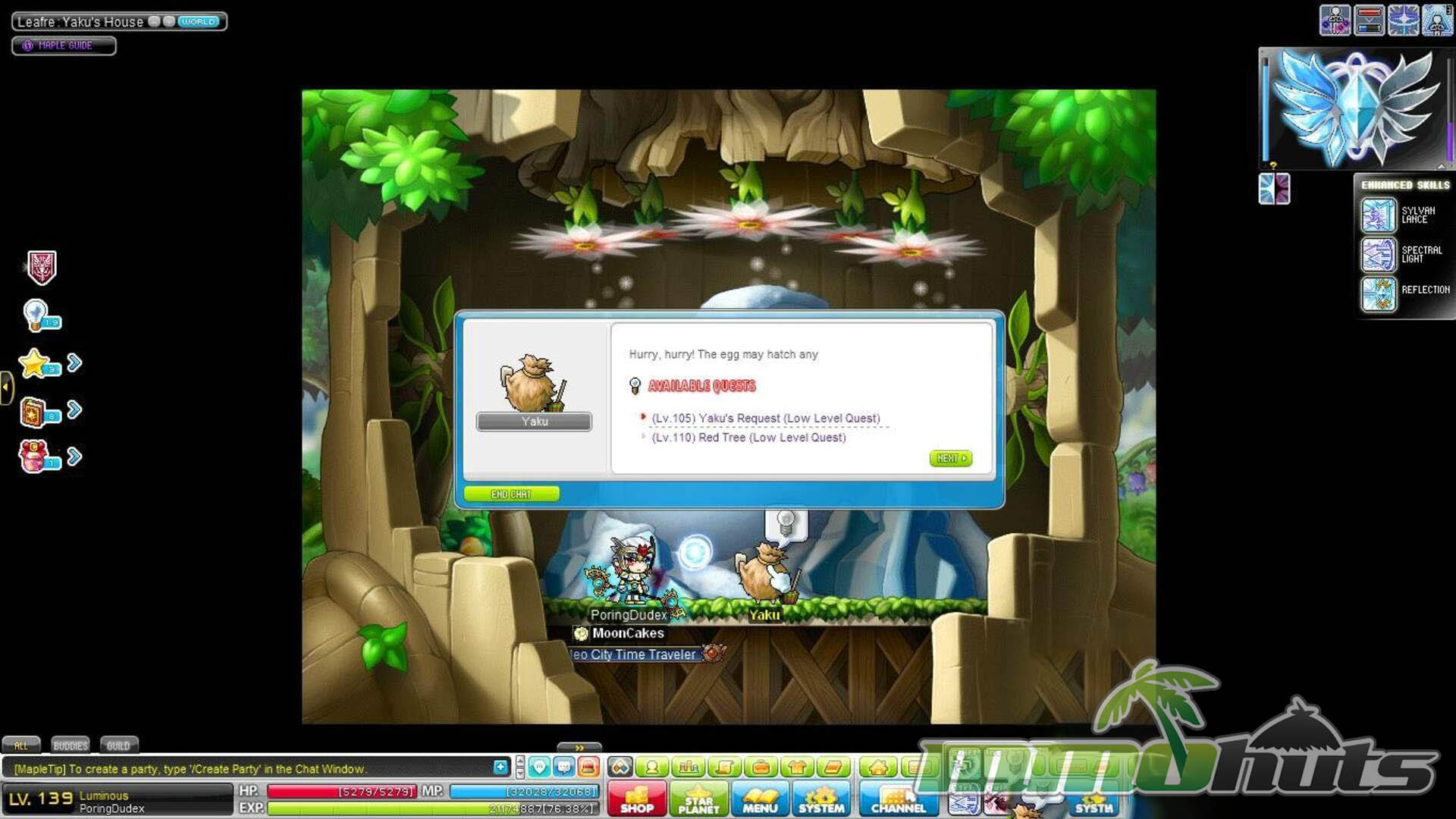
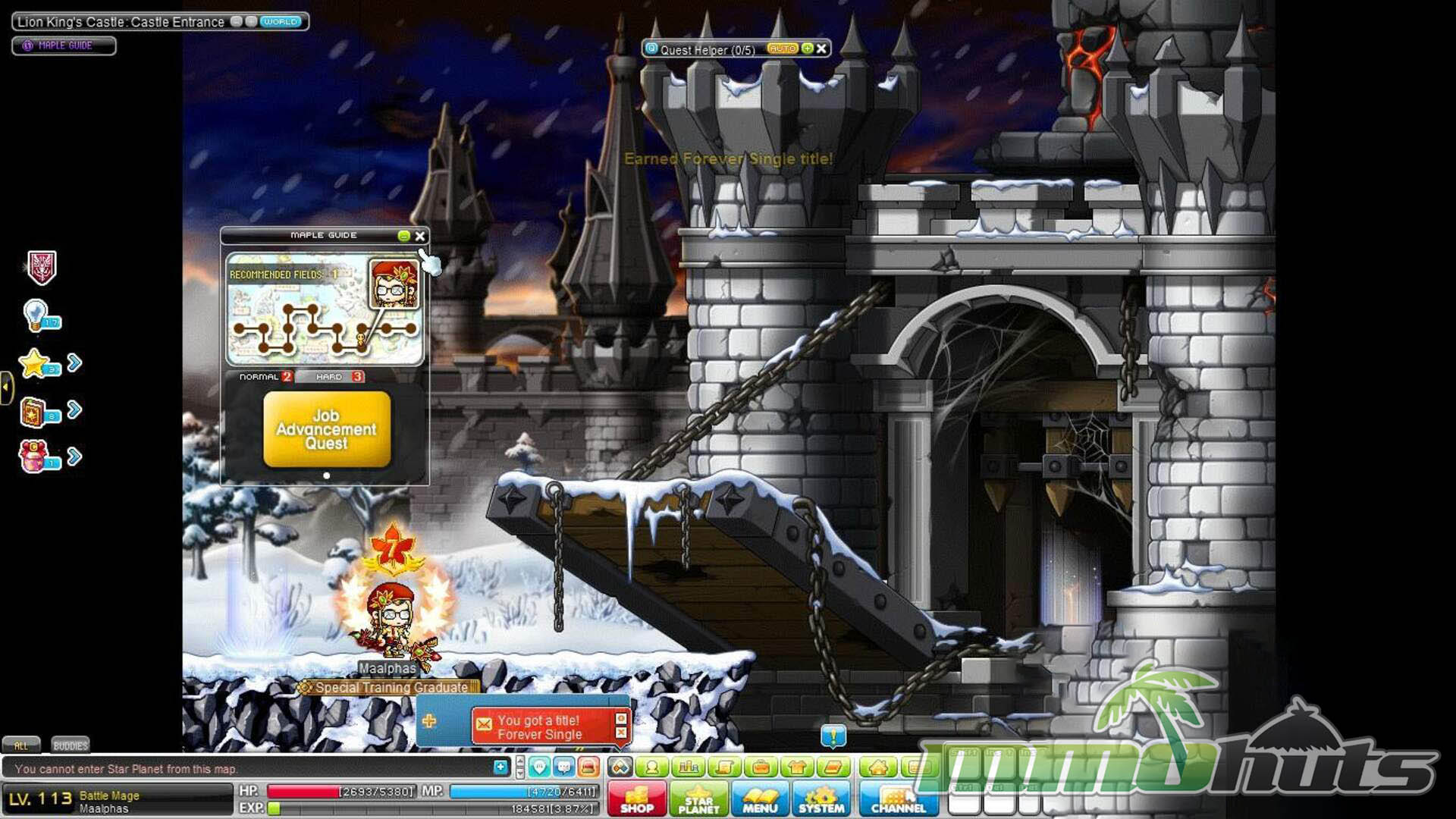
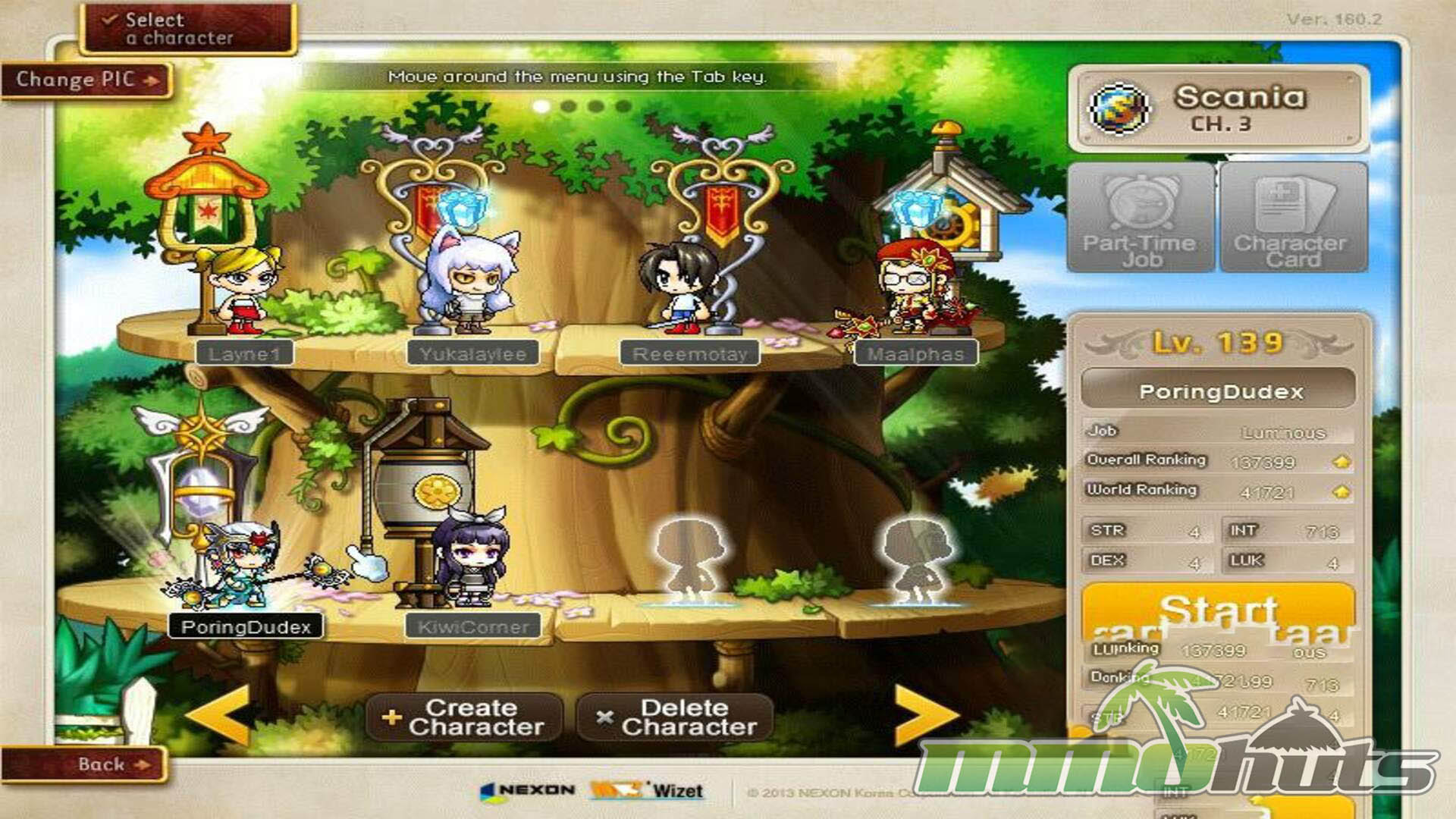
MapleStory Screenshots


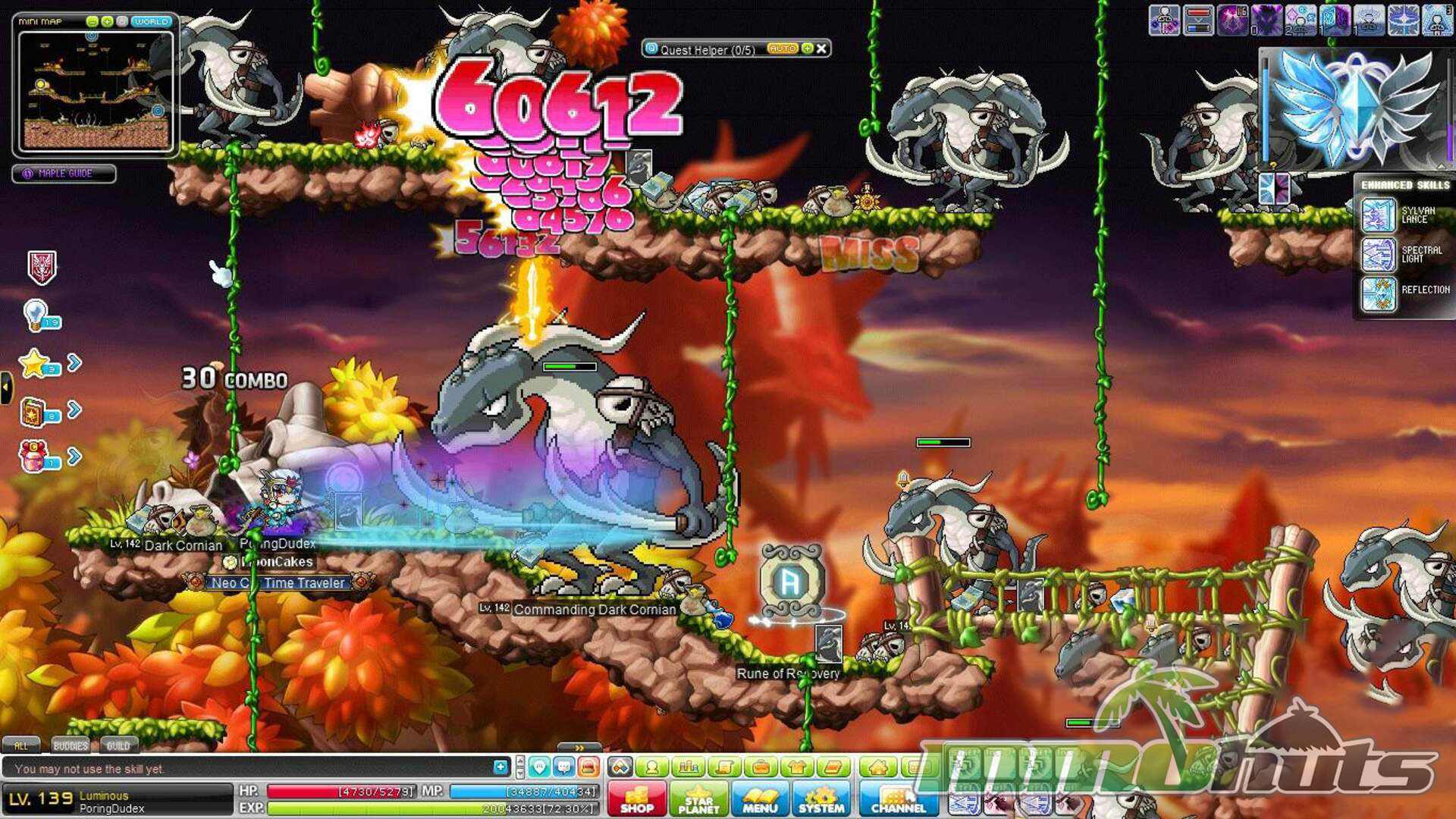
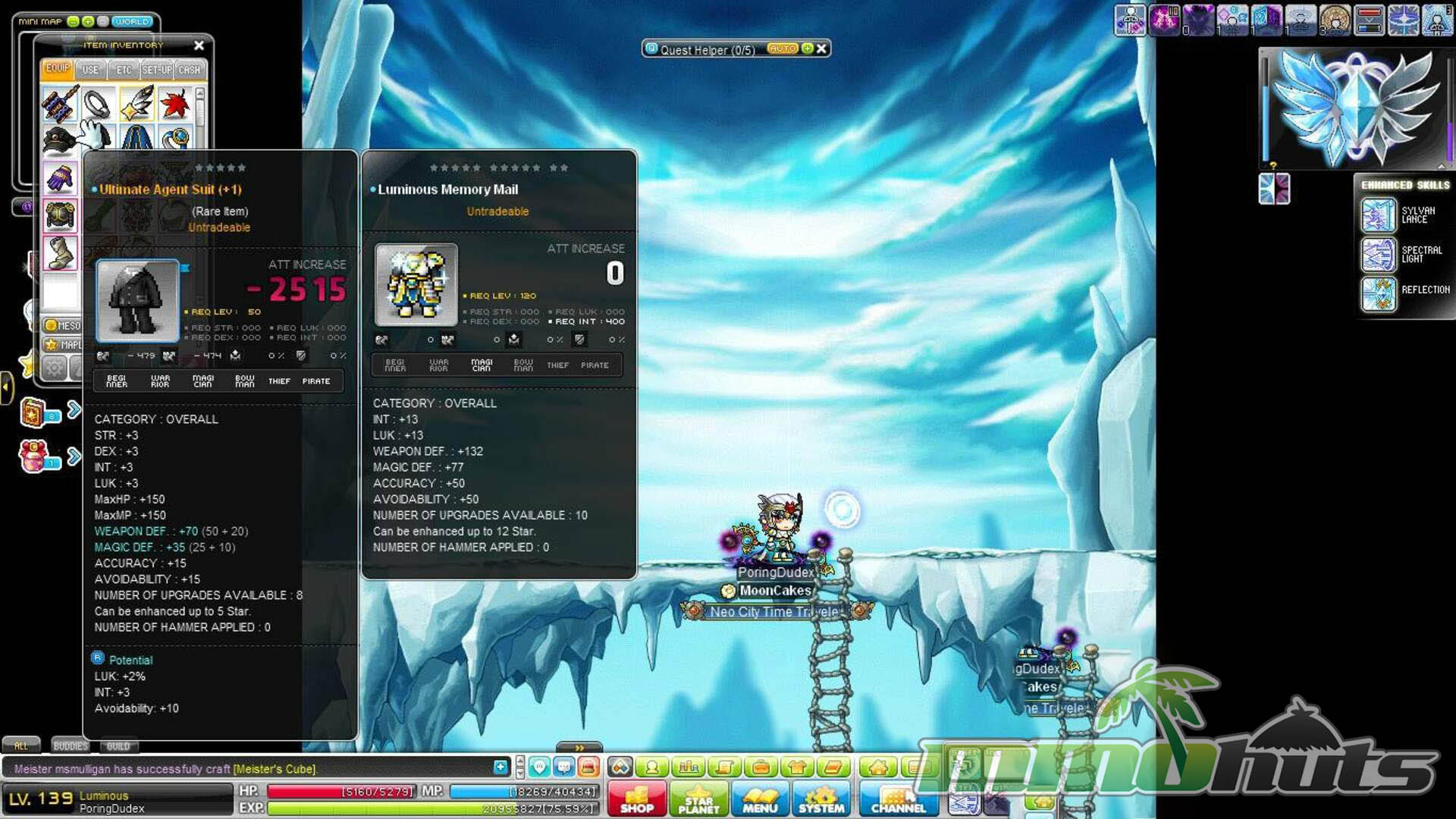








MapleStory Featured Video

MapleStory Classes
MapleStory Classes:
Warrior – Aran, Adele, Blaster, Dawn Warrior, Demon Avenger, Demon Slayer, Hayato, Kaiser, Mihile, Warrior, and Zero
Magician – Battle Mage, Beast Tamer, Blaze Wizard, Evan, Kanna, Luminous, Magician, Kinesis, Illium, Lara
Bowman – Bowman, Kain, Mercedes, Pathfinder, Wild Hunter, and Wind Archer
Thief – Dual Blade, Night Walker, Phantom, Thief, Xenon, Cadena, Hoyoung, and Khali
Pirate – Angelic Buster, Cannoneer, Mechanic, Pirate, Shade, Thunder Breaker, and Ark
For an updated list of classes in MapleStory along with descriptions check out their official class page.
MapleStory Review
MapleStory is a free-to-play 2D side-scrolling fantasy MMORPG developed by Wizet and published by Nexon. It first launched in South Korea in 2003, then arrived in North America on May 11, 2005. It has been a major name in the genre for a long time, and its longevity is not an accident, it is the result of constant iteration, a steady pipeline of new content, and a progression loop that still works well for players who enjoy long-term character building.
The setting revolves around Maple World, a bright fantasy realm that has repeatedly been pulled into conflicts connected to the Black Mage. Over the years, updates have expanded the playable roster, refined systems, and pushed the overarching narrative forward, including content that branches into characters from different origins and locations, such as Grandis. The practical effect for players is simple: even if you have played before, the game rarely feels frozen in time, because there is almost always a new event, zone, or boss ladder to aim for.
A 2D MMO That Still Holds Up
MapleStory’s visuals have aged better than many older 3D MMORPGs, largely because its style was never chasing realism. The animations are expressive, enemies are readable at a glance, and maps are built to support movement and verticality in a way that still feels distinct today. Audio is similarly memorable, with upbeat tracks that help define each area, although extended sessions can make the higher-energy tunes feel repetitive unless you adjust your settings.
Control-wise, the game is primarily keyboard-driven and becomes comfortable after a short acclimation period, especially once you start binding skills in a way that fits your class. That said, interaction often pulls you back to mouse clicks for NPCs and objects, which can feel clunky when you are in a rhythm of movement and combat.
Early Onboarding and First Hours
The opening experience varies a lot depending on the class you pick. Some characters ease you in with light prompts and quick explanations, while others begin with longer story scenes that function like a prologue. Those longer intros can take a while, but they are usually skippable if you are returning and want to get into the action quickly.
Where MapleStory can be less friendly is in how far those tutorials go. They cover the basics (movement, attacking, using skills), but the game’s deeper expectations, such as gearing decisions, efficient progression routes, and what to prioritize in the mid-game, are not always explained clearly. New players who want to optimize often end up relying on external resources.
Navigation, Quests, and Getting Around
Questing is the main backbone of MapleStory’s moment-to-moment structure, but it does not always force you into a strict sequence. You can usually choose where to quest as long as you meet level requirements, which makes the world feel more open than many theme park MMOs.
The navigation tools are much better than they were in the early years. The game frequently points you toward objectives, suggests suitable quests, and sometimes offers a way to move you closer to where you need to be. It is helpful, but it is not perfect, especially for brand new players who can still end up in unfamiliar areas, separated from their usual leveling route, or accidentally stepping into a map where enemies are far above their current power.
Platforming Challenges and Party Content
MapleStory has long offered activities beyond standard monster grinding. Platform Quests (commonly called Jump Quests) are a signature piece of content, built around precise movement, timing, and avoiding hazards that can knock you off course. They can be a refreshing change of pace, but the more demanding ones can also test patience, particularly when a frustrating segment is tied to progression.
Party Quests (PQs) are MapleStory’s answer to instanced dungeon-style content, adapted to a 2D format. Some are cooperative, asking a group to clear objectives, solve simple tasks, and take down bosses. Others are competitive, where teams or individuals push for better performance and rankings in exchange for stronger rewards. The format shines most when you can run it with friends, but participation depends heavily on server activity and time of day, which can make finding groups inconsistent.
Character Growth and Build Decisions
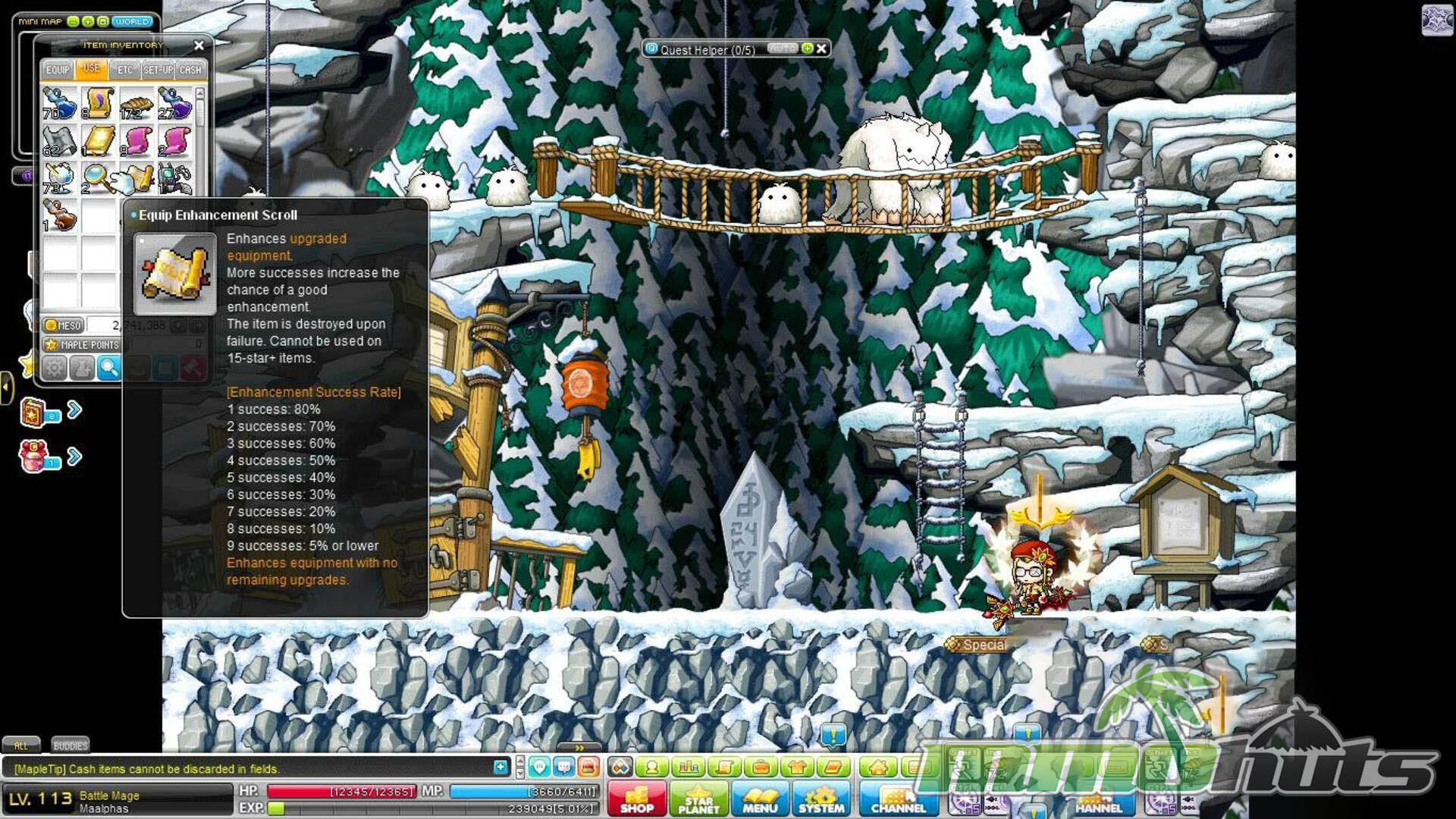
Progression uses a classic stat and skill point approach that will feel familiar to players of older MMORPGs. You level up, earn points, and then decide how to allocate them. MapleStory includes an auto-assign option for stats that helps players who do not want to micromanage early decisions, typically steering you toward the expected main stat for your archetype (for example STR for warriors, INT for mages, DEX for archers). Skill points still require manual choices, which gives each class a sense of ownership as you shape your kit over time.
The level cap is currently 250, and reaching meaningful power thresholds is more about a combination of leveling, skill development, and equipment progression than any single system on its own.
Faster Leveling After Big Bang
MapleStory’s pacing changed dramatically after the Big Bang update, and leveling is far quicker than it used to be. The Burn feature accelerates early growth by granting two extra levels each time you level, up through Level 99. There are limitations, notably that only one character per account can be marked for Burning, and moving that status requires deleting the Burning character.
This shift has pros and cons. It reduces the old-school grind and gets players to later-game systems sooner, which is especially helpful for newcomers who want to see bosses and broader progression. At the same time, it can make earlier milestones feel less significant compared to how they once were. For players who prefer spending time on varied content rather than repeating the same maps for weeks, the modern pace is generally an improvement.
Cash Shop Pressure and Convenience Purchases
Like many free-to-play MMOs, MapleStory relies on a cash shop that offers both cosmetics and convenience. The issue is less that it exists and more that it is ever-present. Pets, experience boosts, and other quality-of-life purchases are frequently positioned as solutions to friction points in the base experience.
Cosmetics are also a major part of the economy, and MapleStory is known for expensive fashion options, including time-limited rentals that can add up quickly if you want to maintain a particular look. The game is still playable without spending money, but doing so requires patience and a willingness to accept slower progress or fewer conveniences than players who pay.
The Reboot Option for a Different Rule Set
To keep the experience varied, Nexon introduced a major “reboot” update with MapleStory v.168. It added a separate server environment with a different ruleset, including tougher enemies paired with improved rewards, a Hyper Stat point system, and tools like a damage analyzer. Importantly, this alternative is not forced on the entire playerbase, it exists as a parallel way to play.
For veterans who want to re-experience MapleStory with a different progression feel, the reboot servers can provide a meaningful change of pace without replacing the core game.
The Final Verdict – Excellent
MapleStory is hands down one of the best free-to-play MMORPGs of all time. It remains popular because its fundamentals still work: fast, readable combat, a huge selection of classes, and an enormous amount of content to chew through. The platforming quests and distinctive 2D format help it stand apart from more typical MMO designs, and regular updates keep it from feeling stagnant. It is not without frustrations, particularly performance quirks, balance gaps, and the pressure of cash shop convenience, but if you enjoy long-term progression and experimenting with different characters, it is still one of the strongest free-to-play MMORPGs available.
MapleStory Links
MapleStory Official Site
MapleStory Wikipedia
MapleStory Steam Page
MapleStory Wikia [Database / Guides]
MapleWiki [Database / Guides]
MapleStory Subreddit
MapleStory System Requirements
Minimum Requirements:
Operating System: Windows 8.1 or higher (64 bit required)
CPU: Intel Core 2 Duo 3.0Ghz / AMD Athlon 64 x2 3.0Ghz
Video Card: GeForce 9600 GT / ATI Radeon HD 5670
RAM: 4 GB
Hard Disk Space: 50 GB
Recommended Requirements:
Operating System: Windows 10 or above (64 bit required)
CPU: Intel Core i3 4 GHz / AMD Ryzen 3 3.5 GHz and above
Video Card: GeForce® GTX 1050 or AMD Radeon™ RX 570 and better
RAM: 8 GB
Hard Disk Space: 50 GB or more
MapleStory was originally released back in 2003. The game’s system requirements aren’t too demanding. Most PCs should be able to run the game easily. Official system requirements can be seen here too.
MapleStory Music & Soundtrack
MapleStory Additional Information
Developer: Wizet (Owned by Nexon)
Release Date: May 11, 2005 (North America)
Foreign Release:
South Korea: April 29, 2003 (Nexon)
Taiwan / Hong Kong: June 1, 2005 (Gamania)
Europe: April 12, 2007 (Nexon)
China: Published as Adventure Island by Shanda Games
Development History / Background:
MapleStory was created by South Korean studio Wizet and released under Nexon, a partnership that proved so successful that Nexon later acquired Wizet and now operates it as a subsidiary. The game debuted in South Korea in 2003, placing it among the longest-running MMORPGs still actively supported. At a time when many competitors were chasing 3D presentation, MapleStory leaned into colorful, side-scrolling visuals that helped it stand out and, in hindsight, helped it age gracefully.
Since launch, MapleStory has been a major financial success and a long-term pillar for Nexon, with particularly strong performance in China as well. Its popularity also helped justify experiments like a 3D follow-up, MapleStory 2. MapleStory is widely recognized as one of the top 10 most profitable MMORPGs in the world, and despite its age, it continued to be extremely relevant well into 2021.
Even in 2024 MapleStory remains enormously popular and one of Nexon’s most successful MMORPGs. It’s their #2 biggest franchise after Dungeon Fighter Online. The game boasts over 200 million registered players worldwide and is still setting new records in South Korea, it’s home market.