Arknights: Endfield is a free-to-play 3D action RPG with semi-open world exploration, real-time squad combat, and a deep factory-building layer set in the post-Originium future of the Arknights universe. You play as the Endministrator of Endfield Industries on the moon of Talos-II, leading a team of Operators across hostile frontier regions while constructing sprawling automated supply chains that feed your character progression.
 | Publisher: Hypergryph / Gryphline (Global) Playerbase: High Type: Mobile / PC / Console Action RPG Release Date: January 22, 2026 (Global) Pros: +Striking industrial-anime art direction and strong soundtrack. +AIC factory system is genuinely novel for the gacha space. +Solid PC and PS5 optimization with reasonable hardware demands. +Cross-platform progression across PC, PS5, and mobile. Cons: -Combat is flashy upfront but loses depth in the long run. -Story leans on tired amnesiac-protagonist gacha tropes. -Heavy tutorialization and dense UI in the early hours. -Standard gacha pulls and grind-heavy daily structure. |

Arknights: Endfield Overview
Unlike the original Arknights, which features tower defense mechanics, Endfield introduces a semi-open world experience with base-building and strategic management elements. Endfield features a base-building system that combines exploration with resource management and aspects of a factory simulation, similar to those found in games like Factorio or Satisfactory. The setting is Talos-II, a frontier moon being colonized by humanity well after the events of the original Arknights, and you play the Endministrator, a slightly amnesiac executive who can wake up the planet’s automated infrastructure where nobody else can.
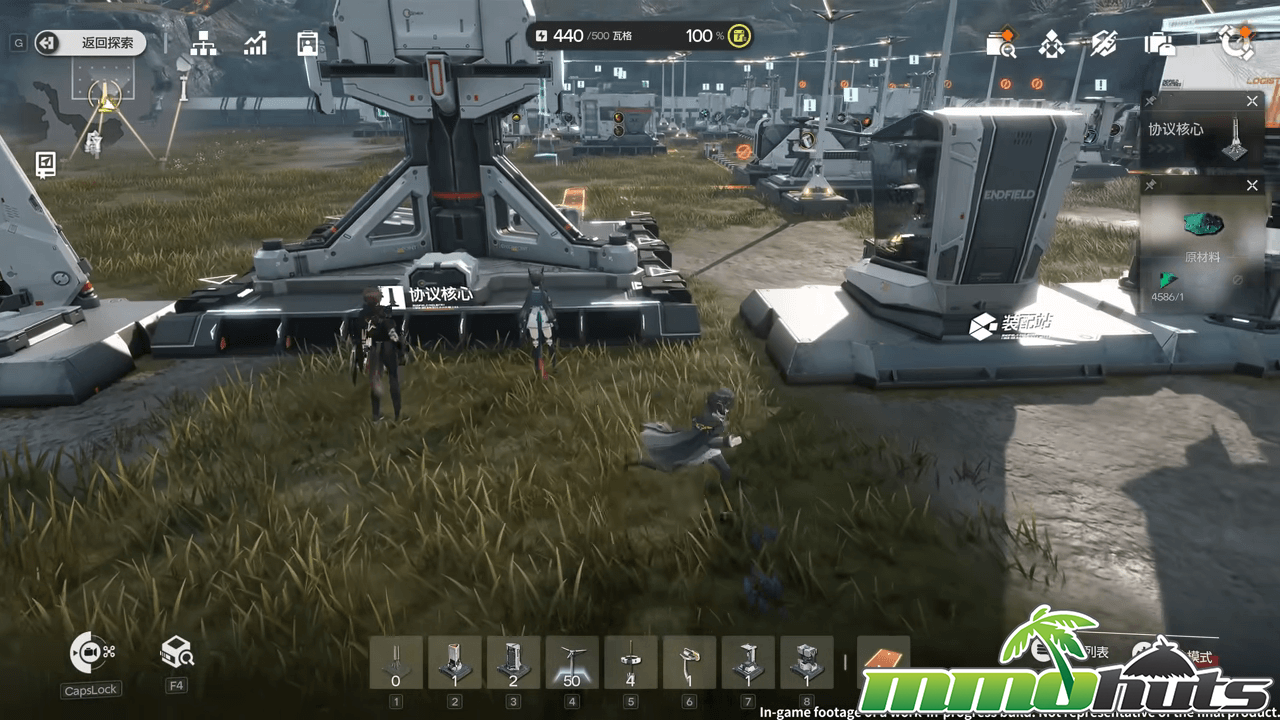
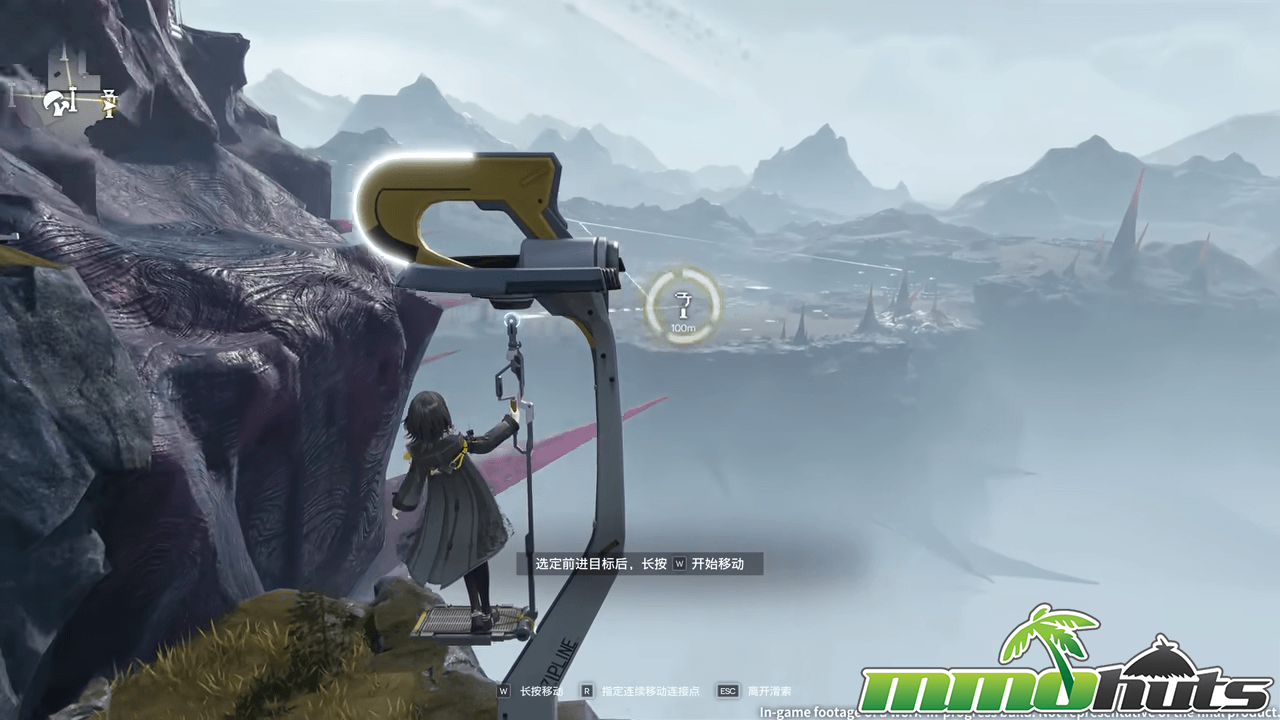
Players harvest resources from remote mining nodes connected by custom ziplines, refine and process materials at specific machines, and route them through conveyor belts for crafting. The system requires budgeting and routing electricity, assigning inputs and outputs, and managing various ore types. Combat sits on top of all that as a real-time squad action layer with four-Operator teams, swap mechanics, dodges, and ultimates. It is a strange and ambitious mix, and it works better than it has any right to, even if the seams show.
Arknights: Endfield Key Features:
- Automated Industry Complex (AIC) – Build sprawling factories across regions of Talos-II with conveyor belts, power lines, refineries, and ziplines that ship materials between outposts automatically.
- Real-Time Squad Combat – Control a four-Operator team in semi-real-time fights with character swapping, basic and heavy attacks, perfect dodges, and ultimates.
- Semi-Open World Exploration – Travel across distinct regions of Talos-II, from frontier wastes to the troubled Wuling area, climbing, gliding, and zipping between mining sites and outposts.
- Operator Gacha – Standard and limited banners for Operators and weapons, with a pity system and separate weapon track in the style of modern open world gachas.
- Cross-Platform Progression – Play and continue the same account on PC, PlayStation 5, iOS, and Android with shared progress.
Arknights: Endfield Screenshots




Arknights: Endfield Featured Video

Arknights: Endfield Review
Arknights: Endfield is an action role-playing game developed and published by Hypergryph. It is a spinoff of Hypergryph’s 2019 tower defense game Arknights. The studio’s internal team Mountain Contour led development, with Gryphline handling global publishing. Endfield’s released date was officially revealed at The Game Awards 2025 and was released on 22 January 2026. Endfield uses a modified version of the Unity engine. It launched simultaneously on PC, PlayStation 5, iOS, and Android, which is impressive scope for a free-to-play title from a studio whose only prior major release was a 2D mobile game.
First Impressions and Setting
The opening hours are a lot. Endfield throws systems at you in waves: combat tutorials, factory tutorials, exploration tutorials, gacha tutorials, ration management for outposts, then more factory tutorials. It is dense, and not always in a good way. The early UI is busy, the jargon is thick (Endministrator, Endfield Industries, AIC, Aggeloi, Stock Bills, Chartered Permits), and the story takes its sweet time before any of it starts feeling earned.
The premise itself is interesting on paper. Talos-II is a moon being colonized by humans long after the original Arknights timeline, where Originium has been tamed and the Cosmic Gate connects the worlds. You play the Endministrator, an amnesiac who used to run Endfield Industries before being put in stasis, and the supporting cast is built around your return. The plot eventually picks up, especially in the Wuling region, but it leans hard on familiar gacha tropes: the silent or near-silent protagonist, the cast that adores you for reasons not yet revealed, and antagonists who tend toward cardboard villainy. The Wuling arc has the most narrative weight, and that is also where the writing finally feels like it has stakes.
Visually the game is a real showcase. The character art and animation work are top-shelf, the environments have a distinct industrial-anime look, and the soundtrack, released under Hypergryph’s Metal Scar Radio banner, is excellent. In a similar vein to Arknights’s Monster Siren Records, Hypergryph releases all Endfield music under the Metal Scar Radio banner, presented as a pirate radio station in-universe; the naming is intentional so both Metal Scar and Monster Siren shares the “MSR” acronym. Performance is also notably good, with the PC build comfortably hitting high settings on five-year-old hardware and the PS5 version supporting ray tracing and 4K output.
Combat and the Squad System
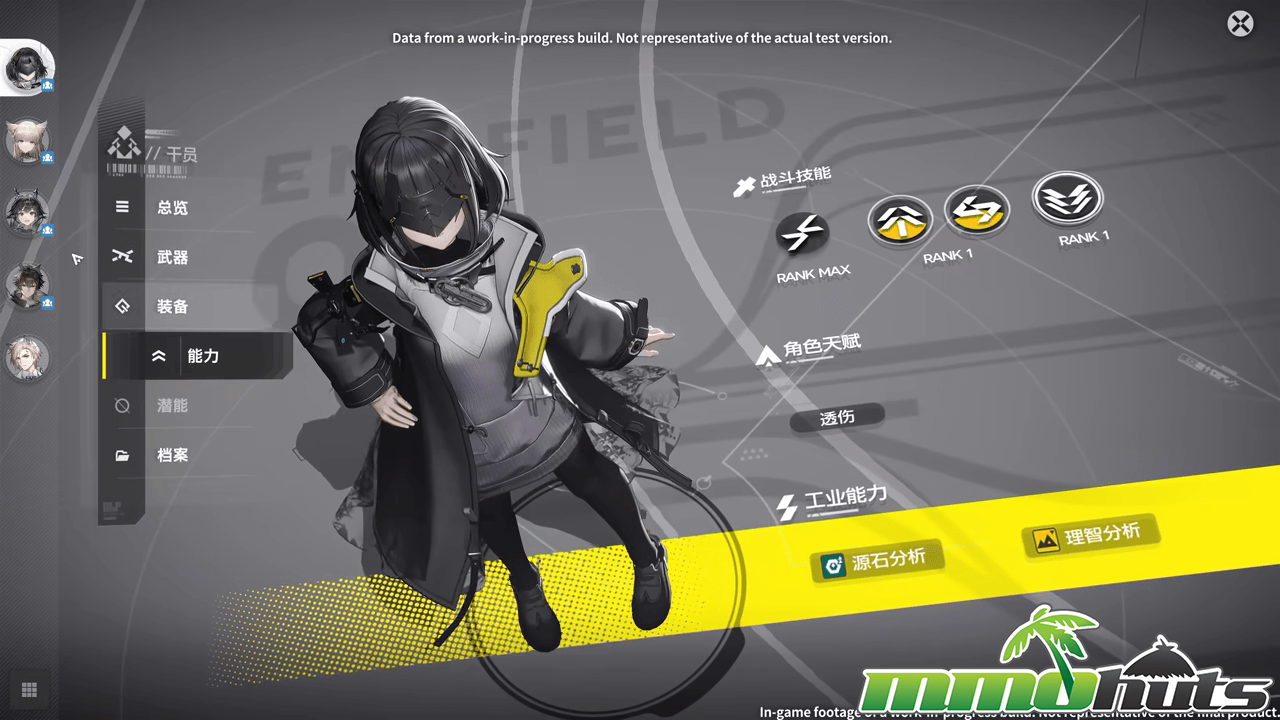
The core mechanism of combat is the combo skill system. Players control a four-member team simultaneously, with the ability to switch between characters during battle, each of which posses unique skills and abilities. Combat operates through a semi-real-time system where players can switch control between different characters, utilizing skill combinations and tactical coordination to defeat enemies. Each Operator brings a weapon class, a set of skills, an ultimate, and synergy with the rest of the squad. There is also a perfect dodge mechanic and a quick swap that lets you cancel animations into another Operator’s burst.
It feels good for the first dozen hours. Snappy hits, clean animations, satisfying ultimate cinematics. The trouble is depth. Once you have your rotation down, most regular fights collapse into the same pattern: hold the attack button, dodge when the indicator pops, drop ults when they are off cooldown, swap. Boss fights ask a little more out of you, demanding pattern reading and positioning, but even those run out of new ideas before too long. There is no real combo grammar to master, no meaningful elemental system on the level of Genshin’s reactions or Wuthering Waves’ concerto energy, and the dodge roll itself feels a bit clunky compared to the smooth swap-cancel of its peers.
That is not necessarily a deal-breaker. Plenty of players will be fine with combat that looks great and asks for moderate engagement, especially since the rest of the game is doing so much. But anyone hoping for a more in depth action ceiling like the one some Wuthering Waves Resonators offer will leave disappointed.
The AIC and Factory Building
The Automated Industry Complex is what actually sets Endfield apart. Each region you unlock has its own outpost, and you can extend power lines, conveyor belts, mining drills, refineries, and processing buildings out from that hub to harvest and convert resources from the surrounding map. Materials gathered in one region can be teleported into the depot of another to feed the next stage of production. It is a real factory builder, not just a cosmetic minigame, and you can sink hours into routing throughput and balancing power budgets if that is the part of your brain that needs scratching.
The hook is that the AIC actually feeds your RPG progression. Operator upgrades, weapon materials, gear, and trade currencies all come through the supply chain. Outposts give better Stock Bill returns when you ship them resources matching their preferred lists, which gives meaningful direction to where you build what. Developers have stated they aim for an 50:50 ratio between RPG elements and factory building portions, but players may customize their gameplay balance according to their personal preferences. The base builder supplies progression items quickly, encouraging players to learn and develop their industrial complexes.
The downside is that the system is intimidating, the tutorials are long, and the late-game complexity can become a second job if you let it. The good news is that engaging with every wrinkle is not mandatory. You can run a modest little setup, hit your daily yields, and still progress. But the players who fall in love with it will be the ones rebuilding their factories every couple of patches just because they can.
Gacha and Monetization
This is the part that always matters. The gacha system is similar to that of Genshin Impact and Wuthering Waves by featuring separate banners for Operators and weapons, down to the drop rates which are much lower than in Arknights. Despite so, 5-star and 4-star Operators remain viable to the late game when built and used correctly like in Arknights, and the gacha is built to ensure that players won’t lose too much from being less fortunate, such as better odds for high-rarity weapons in weapon banners and pity systems that pays off over time.
In practice the rates feel a bit stingier than Wuthering Waves but in the same ballpark as most modern open-world gachas. The currency economy at 1.0 launch is on the tight side, especially compared to what veterans of the original Arknights are used to, and the daily and weekly task structure is built to keep you logging in. There are recycling stations, outpost orders, factory check-ins, banner pulls, and a Protocol Pass battle pass on top of all that. The Protocol Pass is Arknight: Endfield’s battle pass system. The pass has free and paid tiers that provide various rewards.
To Hypergryph’s credit, the game is not aggressively paywalled. F2P players can absolutely get through the main story with mostly 4-star Operators and a thoughtful build, and the launch handed out generous pre-registration rewards including a 5-star Operator. But the gacha is undeniably the engine of long-term progression, and anyone who hates that loop is not going to be converted by Endfield.
Exploration and World Design
Exploration is genuinely good. Movement is grounded compared to the airborne anime gachas, with one jump and a dash rather than long glides or wall-running, but the environments are designed around that limitation. You actually have to think about how to reach a chest, and the placement is rarely lazy. Ziplines you build yourself add a satisfying traversal layer, and the OMV Dijian vehicle helps you cross the bigger spaces.
Region design varies. The early frontier areas can feel a bit sparse and empty, with gameplay loops that lean too hard on respawning resource nodes. Wuling, by contrast, is denser and more memorable, with stronger story integration. The chest count is high, exploration ranks pay out useful rewards, and side content, while not always inspired, is at least consistent.
Cross-Platform and Performance
Cross-platform progression is one of the better parts of the launch package. You can play the same account on PC, PS5, iOS, or Android, with full progress carry-over. The PC build is well-optimized and runs comfortably on mid-range hardware, the PS5 version targets 4K with ray tracing, and the mobile version actually scales reasonably well on modern flagship phones.
The launch had some rough patches. PayPal billing bugs, a few preload hiccups on PS5, server stress on day one, and the usual mountain of feedback about UI density. None of that is unusual for a global free-to-play debut at this scale. Hypergryph has been quick with hotfixes and version 1.1 brought meaningful quality-of-life improvements.
Endfield vs Genshin Impact and Wuthering Waves
The comparison is unavoidable. Endfield sits in the same category as Genshin Impact and Wuthering Waves: open-zone anime action gacha with elemental combat. Where it differentiates itself is the AIC factory layer, which neither competitor has anything resembling. If the idea of running a Satisfactory-lite supply chain to fund your RPG progression sounds great, Endfield is the only game in town.
The trade-off is that Endfield’s combat ceiling is lower than Wuthering Waves’ and its world design is less tightly authored than Genshin’s. The story is also a step behind both at this stage of their lifecycles, though that is partly a 1.0 problem and could shift as the game matures. If you want the best pure action gacha, Wuthering Waves still wins. If you want the most polished exploration-and-puzzle gacha, Genshin still wins. Endfield’s pitch is the unique combination, and that pitch lands for the right kind of player.
Final Verdict – Good
Arknights: Endfield is an ambitious, occasionally awkward, often impressive entry into a crowded genre. The factory system is a real differentiator, the audiovisual production is excellent, the cross-platform performance is solid, and Hypergryph clearly wanted to ship something more than just another Genshin-clone. It also has real shortcomings: combat that flattens out, a story that takes too long to find itself, dense early-game tutorials, and a gacha-driven progression loop that asks for more daily attention than some players will want to give. It is not a knockout at launch, but it is a confident foundation, and the kind of game where the next year of patches matters as much as the version 1.0 verdict. If you like factory builders, anime gachas, or both, this is an easy recommendation. If neither of those describe you, there are better fits elsewhere.
Arknights: Endfield Links
Arknights: Endfield Official Site
Arknights: Endfield Google Play
Arknights: Endfield App Store
Arknights: Endfield Epic Games Store
Arknights: Endfield Twitter
Arknights: Endfield Facebook
Arknights: Endfield Reddit
Arknights: Endfield Discord
Arknights: Endfield YouTube
Arknights: Endfield System Requirements
PC Minimum Requirements:
Operating System: Windows 10 64-bit
CPU: Intel Core i5-9400F or equivalent
Video Card: Nvidia GeForce GTX 1060 6GB / AMD Radeon RX 580 or equivalent
RAM: 16 GB
Hard Disk: 60 GB (SSD required, plus ~45 GB temporary unpacking space)
PC Recommended Requirements:
Operating System: Windows 10 / 11 64-bit
CPU: Intel Core i7-10700K or equivalent
Video Card: Nvidia GeForce RTX 2060 / AMD Radeon RX 5600 XT or better
RAM: 16 GB
Hard Disk: 60 GB SSD (plus unpacking space)
Android Minimum Requirements:
Operating System: Android 11 or above (HarmonyOS NEXT not supported at launch)
CPU: Snapdragon 865 / Dimensity 1200 or equivalent
RAM: 6 GB
Storage: 30 GB
Android Recommended Requirements:
Operating System: Android 12 or above
CPU: Snapdragon 8+ Gen 1 / Dimensity 9000 / Kirin 9000S or better
RAM: 8 GB or more
Storage: 30 GB
iOS Requirements:
Operating System: iOS 15 or above
Storage: 30 GB
Supported Devices: iPhone 13 Pro / iPad with A15 chip or newer (iPhone 14 Pro or newer recommended)
PlayStation 5:
Native PS5 build with up to 4K output, ray tracing support for shadows and reflections, and DualSense haptic and adaptive trigger integration.
Arknights: Endfield Music & Soundtrack
Coming soon!
Arknights: Endfield Additional Information
Developer: Hypergryph (Mountain Contour studio)
Publisher: Hypergryph (China) / Gryphline (Global)
Engine: Modified Unity
Global Release Date: January 22, 2026 (PC, PlayStation 5, iOS, Android)
Platforms: Microsoft Windows (dedicated launcher and Epic Games Store), Android (including Google Play Games on PC), iOS, PlayStation 5
Development History / Background:
On 10 March 2022, Hypergryph opened official accounts for Arknights: Endfield on various social media platforms. In 2022, Hypergryph opened user accounts for Arknights: Endfield and released a pilot trailer. The project was Hypergryph’s bid to expand the Arknights universe from a 2D tower defense mobile game into a full 3D action RPG, developed internally by the studio’s Mountain Contour team. A first technical test of the game on PC by prospective players took place in January 2024. Another limited beta test took place in January 2025. A third beta on PC, iOS, and Android ran in late 2025 ahead of launch.
In September 2025, Apple showcased the gameplay of the mobile version of Arknights: Endfield at its iPhone 17 Pro launch event and revealed in a press release after the event that the game would be launched in early 2026. On 12 December 2025, Hypergryph officially announced that the game would launch its global open beta on 22 January 2026, confirming the expected release date previously revealed by Apple, and it was launched on PS5, PC, iOS, Android and other platforms on the same day. Pre-registration crossed 35 million players before launch, making it one of the largest free-to-play debuts of 2026. The 1.0 release shipped with three limited Operators (Laevatain, Gilberta, and Yvonne), the full AIC factory system, and the Wuling story arc, with version 1.1 and the version 1.2 ‘At the Wake of Spring’ update following on a roughly six-to-eight-week patch cadence.