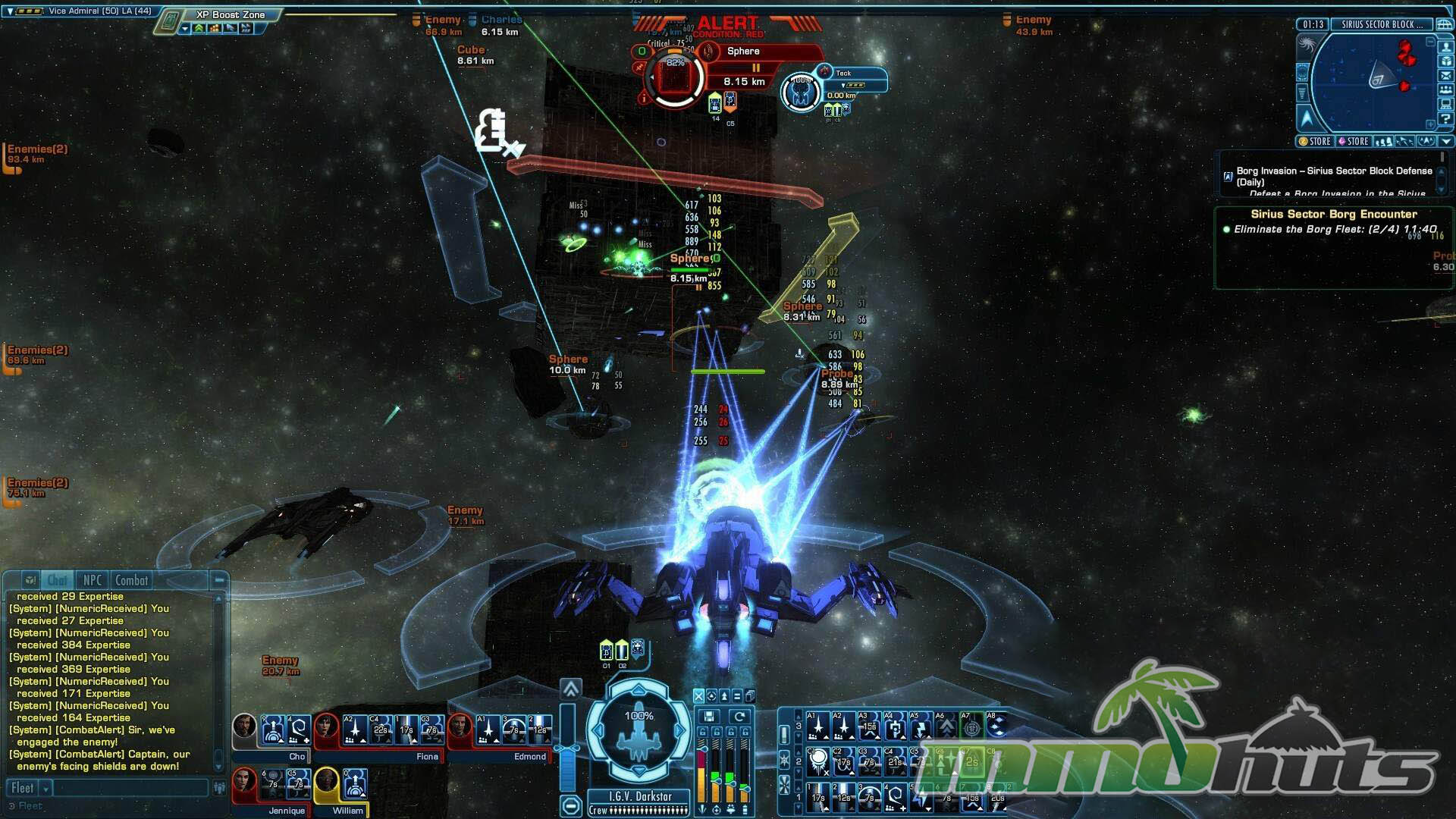
Star Trek Online (often shortened to STO) is a 3D sci-fi MMORPG that lets you step into the Star Trek universe as both a starship captain and an away-team leader. It leans heavily into narrative missions that echo the tone of the shows and films, then backs that up with instanced space battles, ground firefights, and a steady stream of progression systems to tinker with.
 | Publisher: Arc Games Playerbase: High Type: MMORPG PvP: Duels / Factions Release Date: Feb 2, 2010 (NA/EU) Pros: +Robust Foundry tools for community missions. +Strong episodic storytelling. +Deep character creator. +Rewarding reputation progression. +Huge amount of things to do. Cons: -UI and controls can feel dated and awkward. -Cash shop power can be hard to ignore. |

Star Trek Online Overview
Star Trek Online is built around the fantasy of commanding your own ship and representing your faction across a galaxy full of trouble spots. You pick one of three major factions, choose from a wide list of playable races (or use the tools to assemble your own custom species), then climb the command ladder as missions push you deeper into the setting. The moment-to-moment loop mixes two distinct styles of play: starship encounters in space and away missions on the ground, with story arcs that aim to feel like interactive episodes.
Progression is closely tied to your ship and crew. As you rank up, you expand your roster of officers, gain access to new vessels, and start shaping your build through gear upgrades like shields, engines, and weapon loadouts. Space combat is the headline feature for most players, but STO regularly breaks things up with ground objectives, dialogue-driven scenes, and mission variety that goes beyond simple combat.
For anyone who enjoys Star Trek’s style of adventure, the writing and presentation do a lot of work to sell the setting, even if the game occasionally takes liberties with canon to keep the MMO plot moving.
Star Trek Online Key Features:
- Step Into Star Trek – take the captain’s chair and explore familiar species, ships, and locations from the franchise.
- Lots of Character Options – choose from three factions and a large roster of races, with extensive customization tools.
- Top-Tier Foundry Tools – community-built missions can add a huge amount of extra content and reasons to return.
- Story-Focused Structure – missions are designed to be narrative-forward, with writing that will resonate with many fans.
- PvP Modes Available – queue into instanced PvP that supports both ground and space engagements.
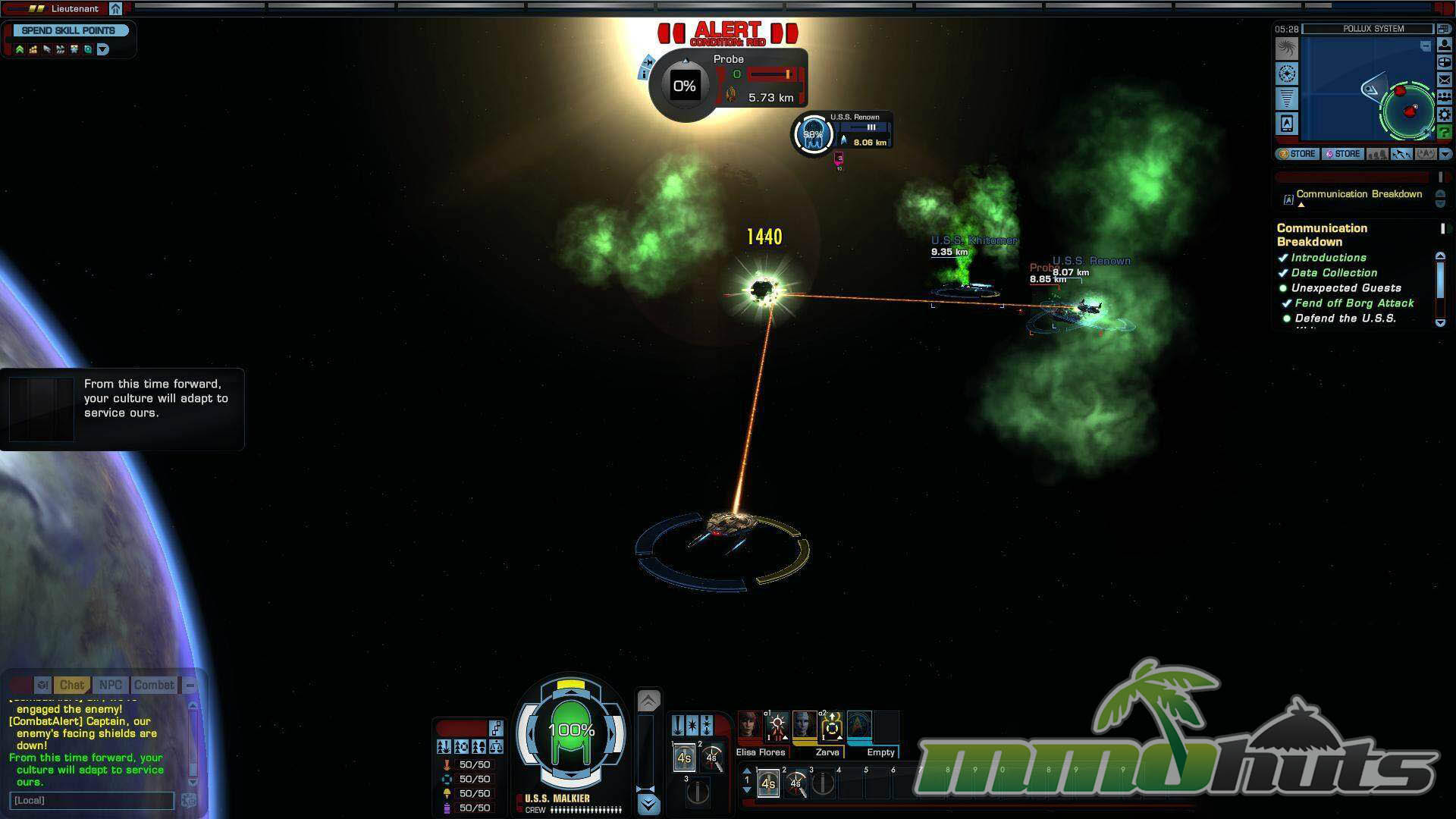
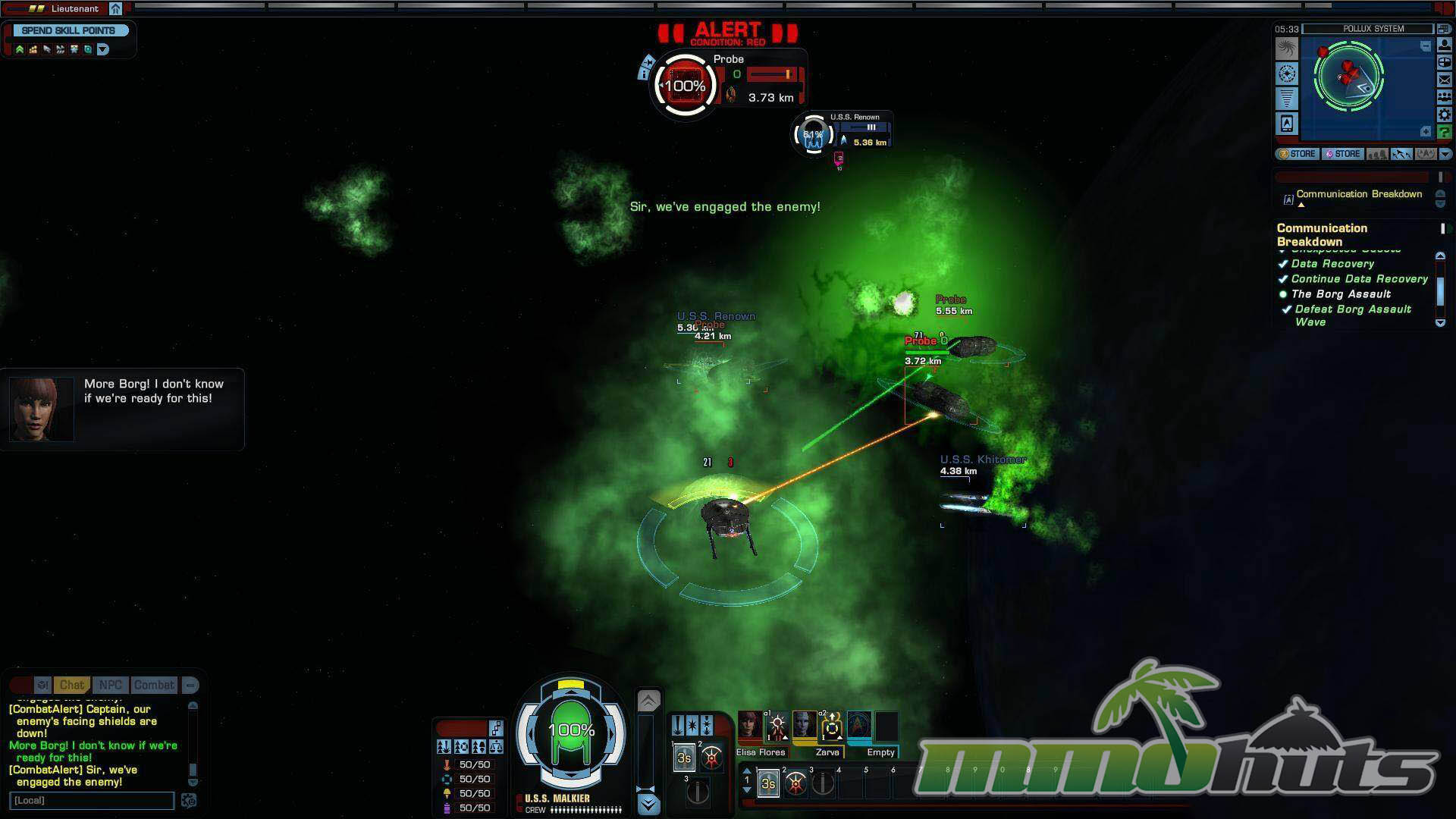
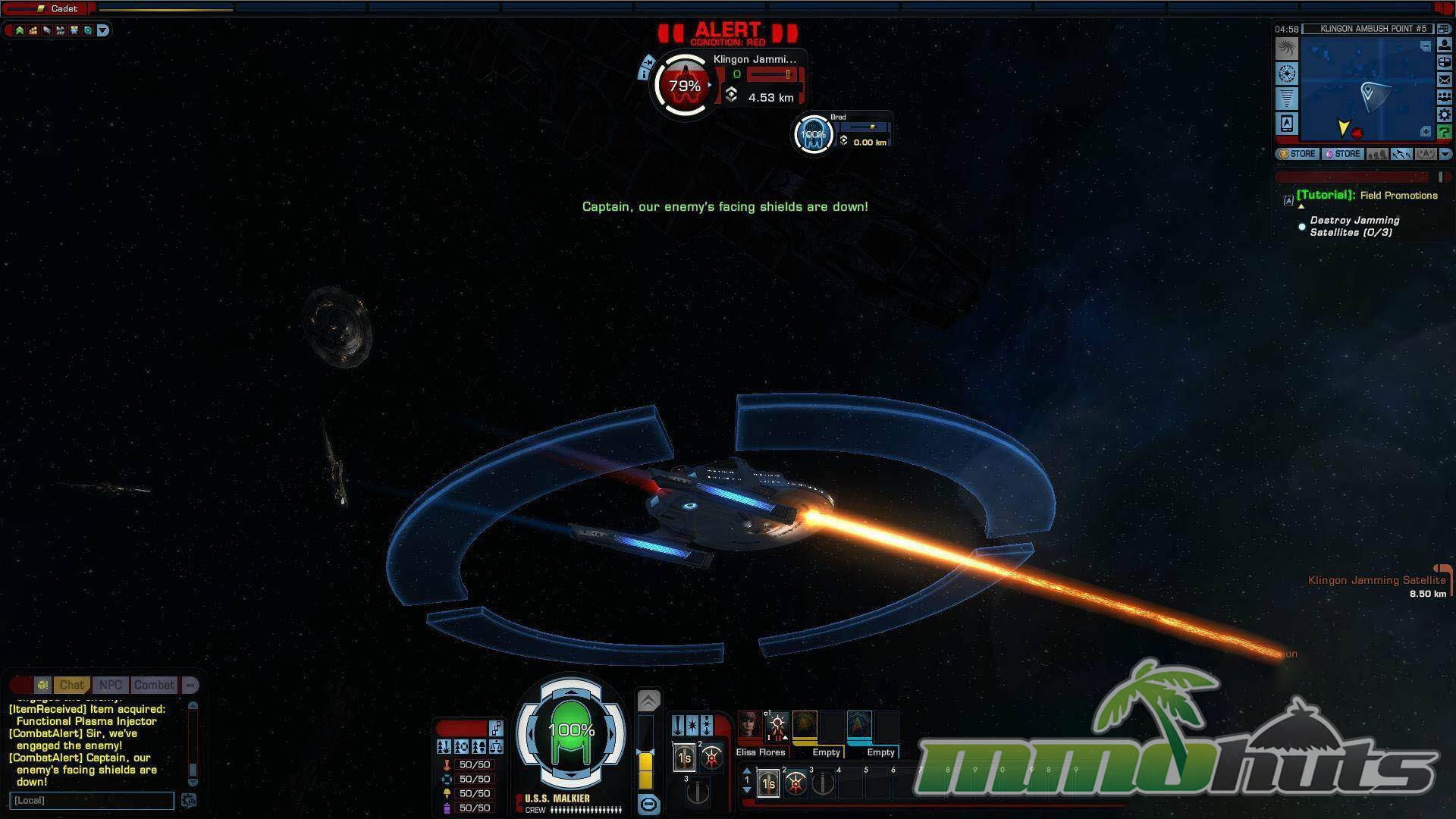
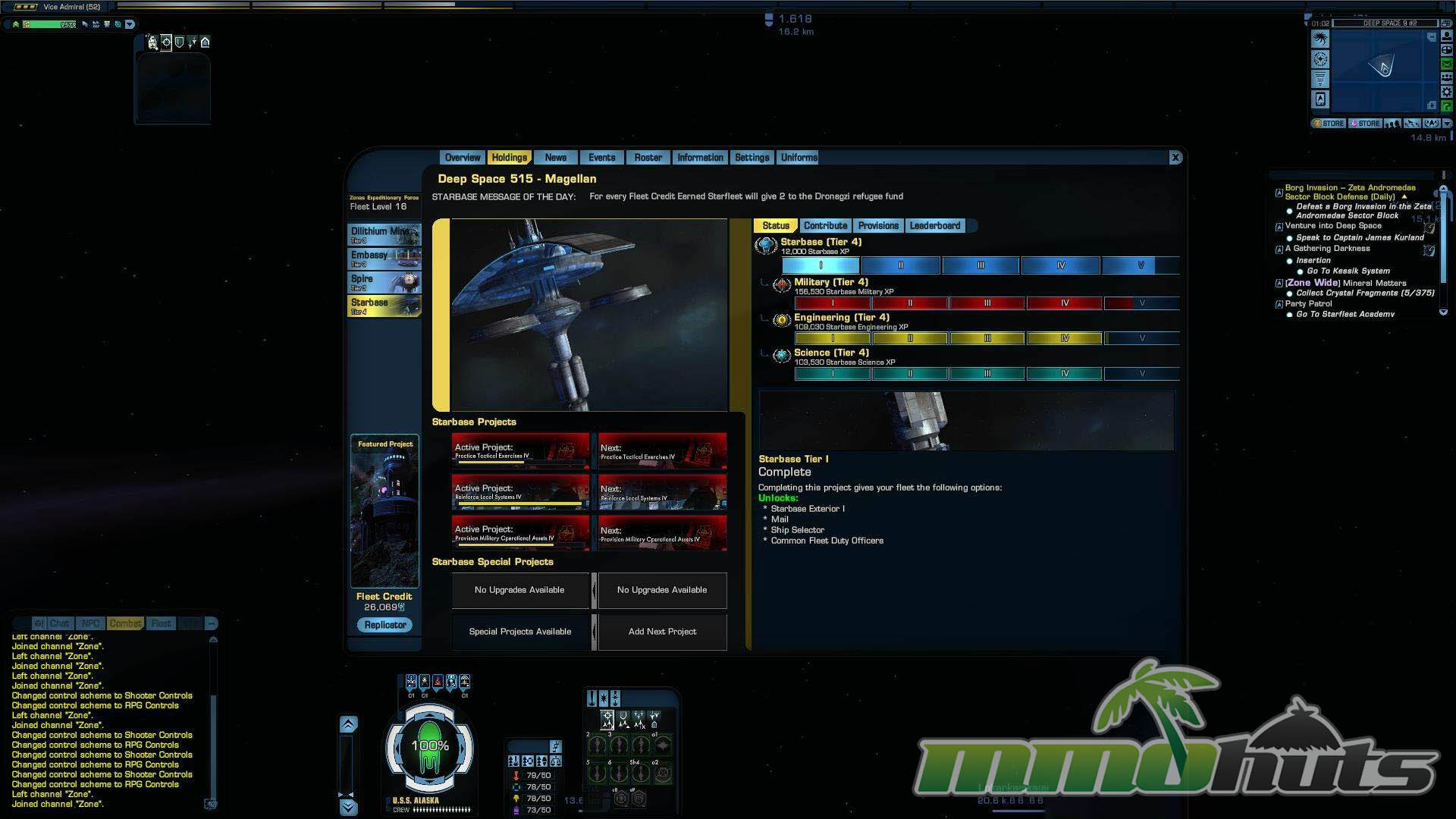
Star Trek Online Screenshots
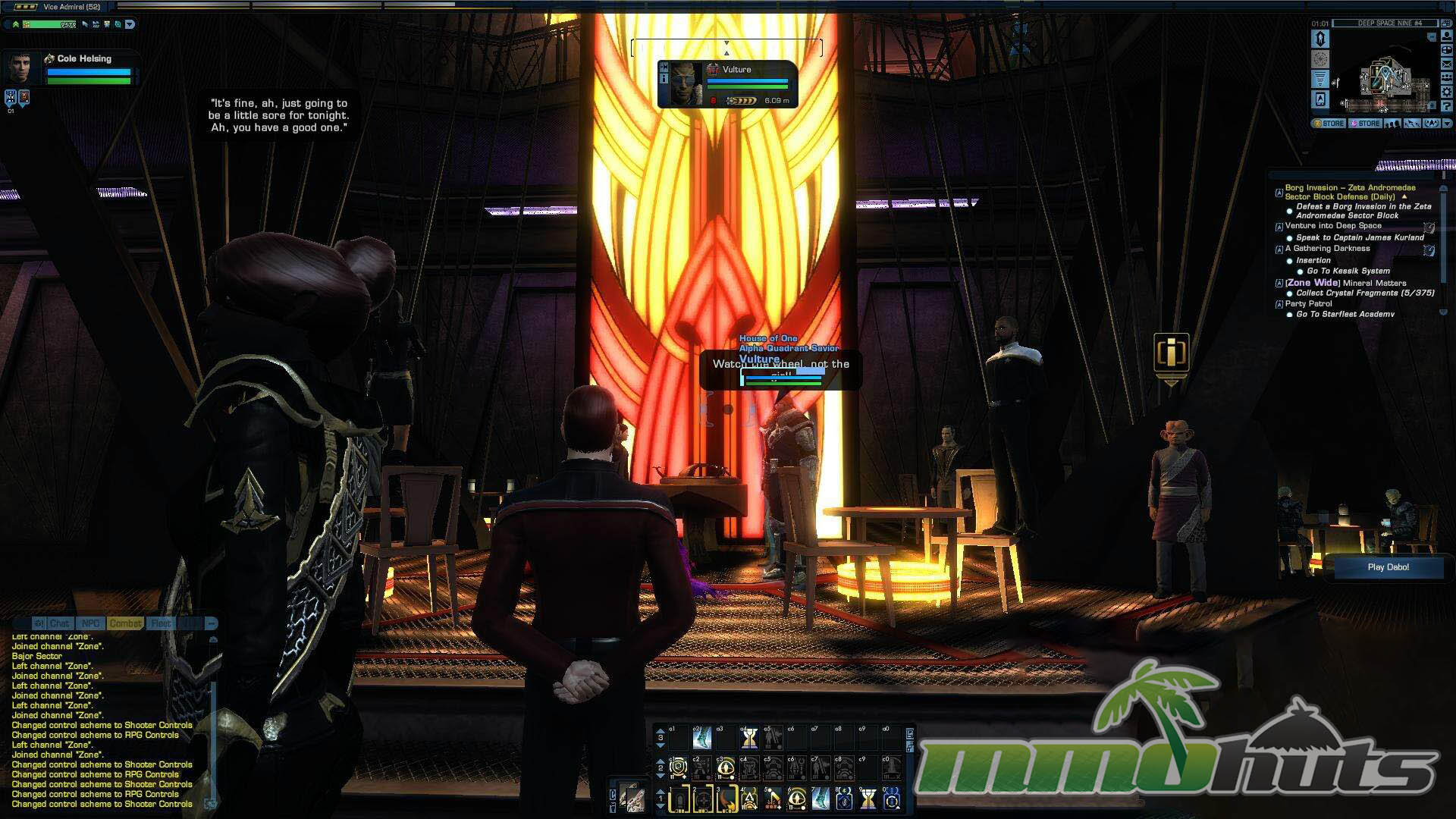
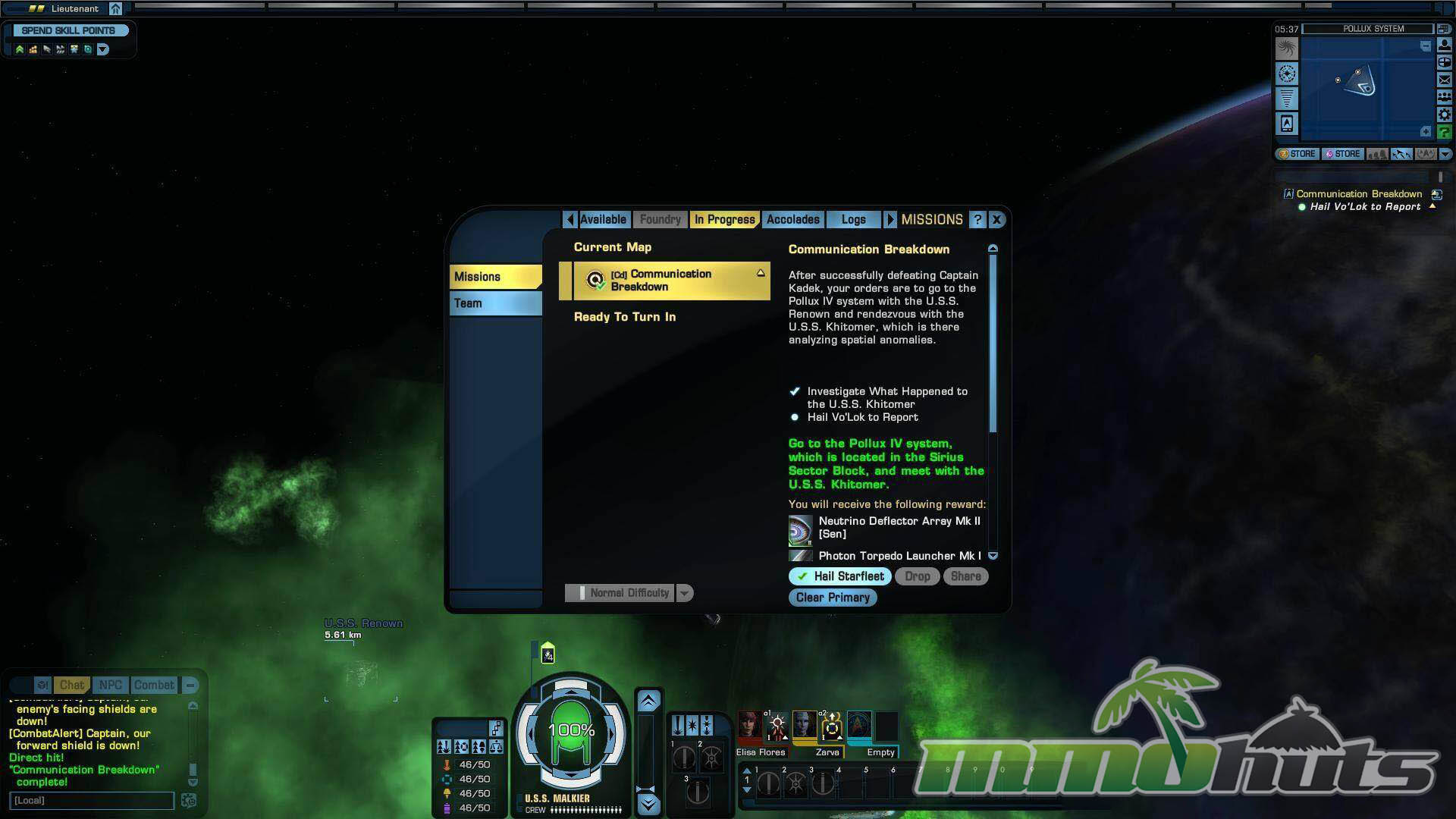
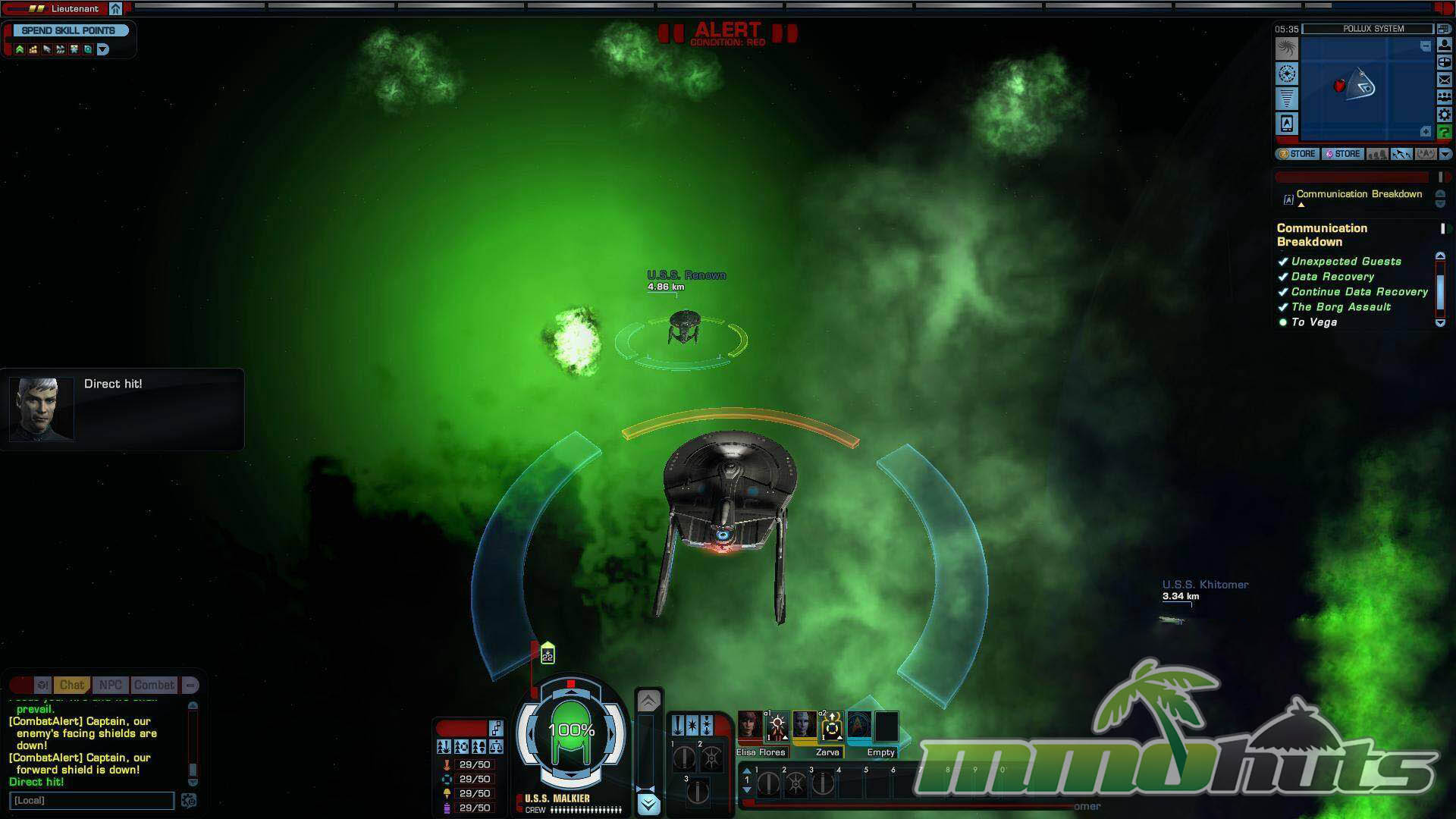
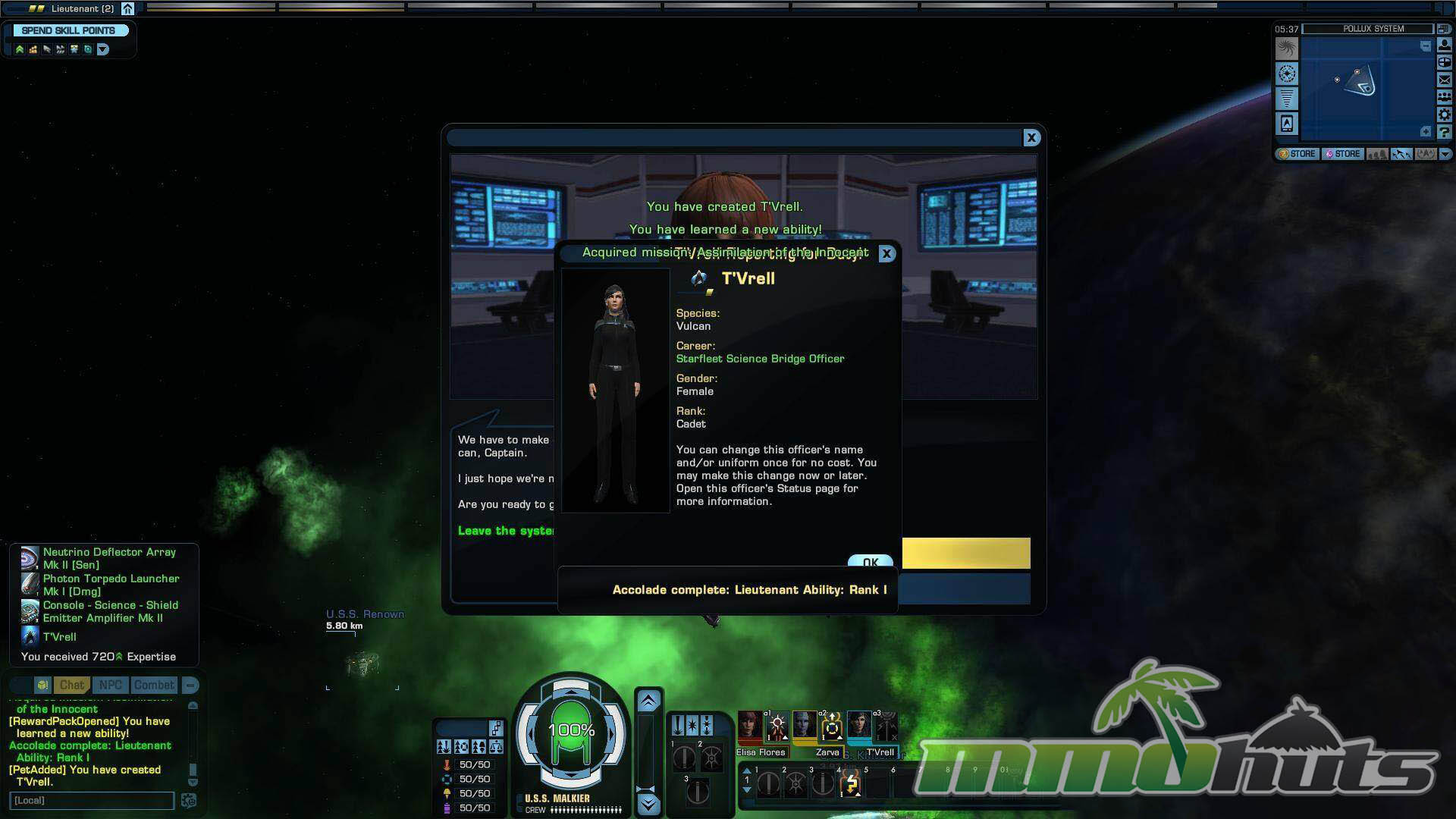


Star Trek Online Featured Video

Factions:
- Federation – the coalition of over 150 planetary governments, with Starfleet serving as its exploratory and military arm.
- Klingon Empire – the state of the Klingon people, whose primary force is the Klingon Defense Force.
- Romulan Republic – a Romulan and Reman alliance formed from reunification and resistance movements. Romulans do not have Fleet bases, and must align with either the Federation or the Klingon Empire at Level 10.
Classes:
- Tactical Officer – the damage-focused option. On the ground they specialize in higher weapon damage and bursts, plus team firepower boosts. In space they emphasize maximizing weapon output, and they pair well with Escort Vessels, Raiders, and Raptor ships.
- Science Officer – the support specialist, leaning into healing plus buffs and debuffs. They keep teams stable on the ground, and in space they fit naturally with Science Vessels and Warships.
- Engineering Officer – the most durable choice, often filling tanky support roles. On the ground they can soak damage and hold attention, while in space they bring repairs and utility such as mines and turrets, along with stronger shield regeneration. They are a natural match for Cruiser and Battlecruiser style ships.
Star Trek Online Review
Star Trek Online (STO) is a free-to-play 3D sci-fi MMORPG developed by Cryptic Studios and published by Perfect World Entertainment. It launched on Microsoft Windows on February 2, 2010, originally with a subscription model, before switching to free-to-play on January 17, 2012. A Mac version arrived on March 11, 2014. You can play via Perfect World Entertainment’s Arc Games launcher or through Steam, and Mac users can also grab a standalone client from Perfect World Entertainment’s site.
The timeline sits 30 years after Star Trek: Nemesis, with the galaxy in a familiar kind of instability. The Federation and Klingon Empire are back in open conflict, the Romulans are still dealing with the destruction of their homeworld, and threats like the Borg loom large again. STO generally aims to feel compatible with Star Trek’s canon, although dedicated lore purists should expect occasional deviations in service of the MMO’s ongoing story.
Starting Your Command
Character creation is where STO immediately shows one of its biggest strengths. After selecting a faction (Federation, Klingon Empire, or Romulan Republic), you choose a species from the options available to that faction, then build your captain with a highly flexible editor. The Federation offers the widest selection by default, while Klingons and Romulans have fewer baseline choices. Some additional races are offered through the C-store, and the Liberated Borg option is tied to the Lifetime Subscription.
In practice, racial traits exist but rarely dictate your success, so most players can pick based on aesthetics and roleplay. The editor is deep enough that many players use it to approximate species that are not officially selectable, which speaks to how much control the system gives you.
After your captain is set, you pick a class that defines your toolkit in both ground and space scenarios: Tactical for damage, Science for support, and Engineering for durability and utility. You also name your ship, and because STO allows duplicate names for characters and vessels, you can usually claim the name you want without fighting the entire server for it. If you prefer speed, the built-in name generators do the job.
Early Missions and First Impressions
The opening hours guide you through the basics with a straightforward tutorial sequence, moving you between NPC interactions, simple objectives, and your first taste of combat. It is paced like a typical MMO onboarding, but it quickly pivots into a “you are now in command” moment that puts you on a starship and introduces the fundamentals of space encounters.
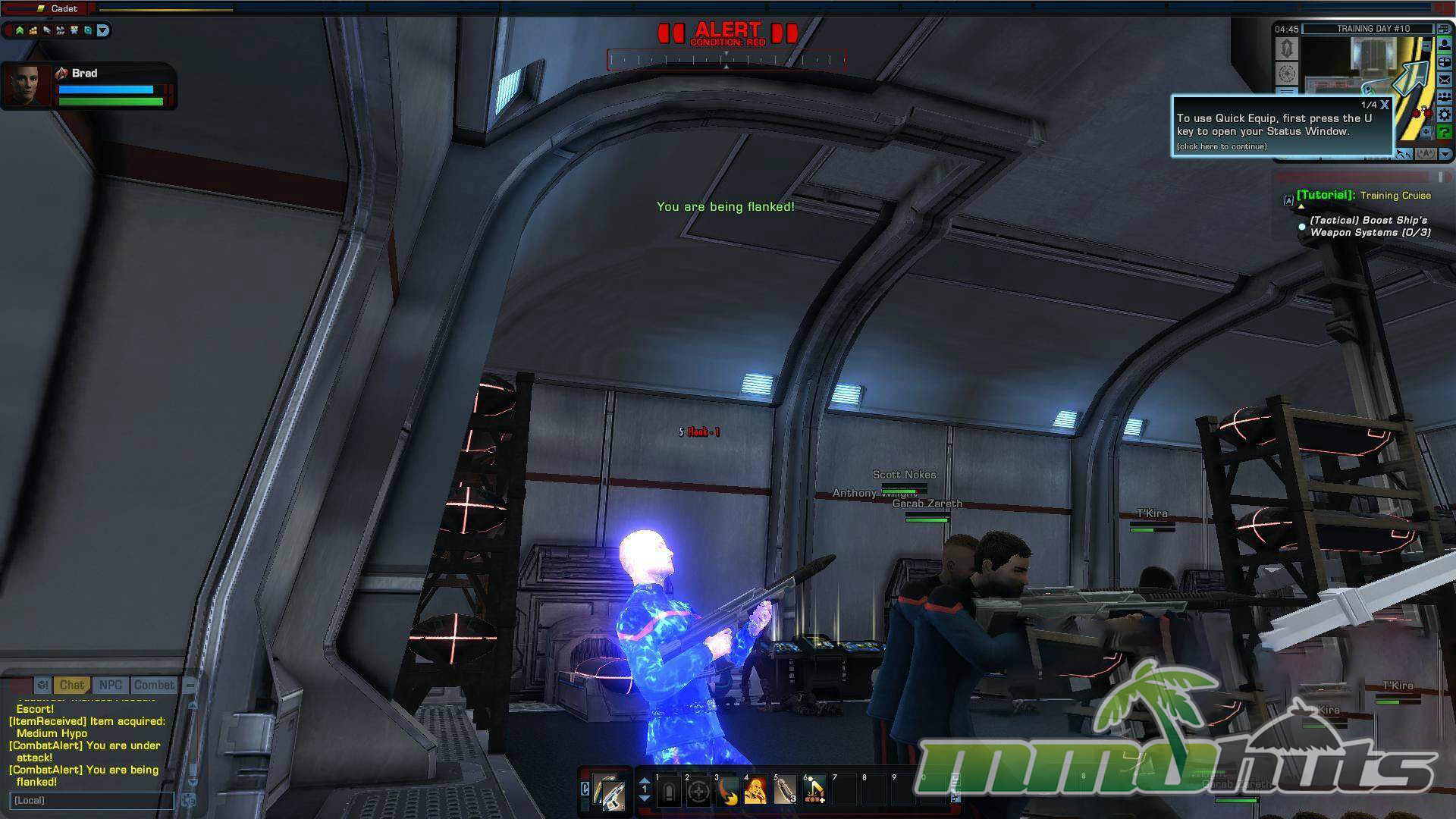
Mechanics like scanning, interacting with mission objects, and using weapon systems are introduced gradually, and bridge officers provide frequent prompts so you are rarely lost. Where the experience can stumble is in the feel of the controls, particularly on the ground. The default setup can be awkward, with camera handling and firing competing for the same inputs, and the interface tends to put a lot of information on screen at once. You can mitigate some of this by using hotkeys and adjusting your layout, but it still has a slightly old-school MMO stiffness.
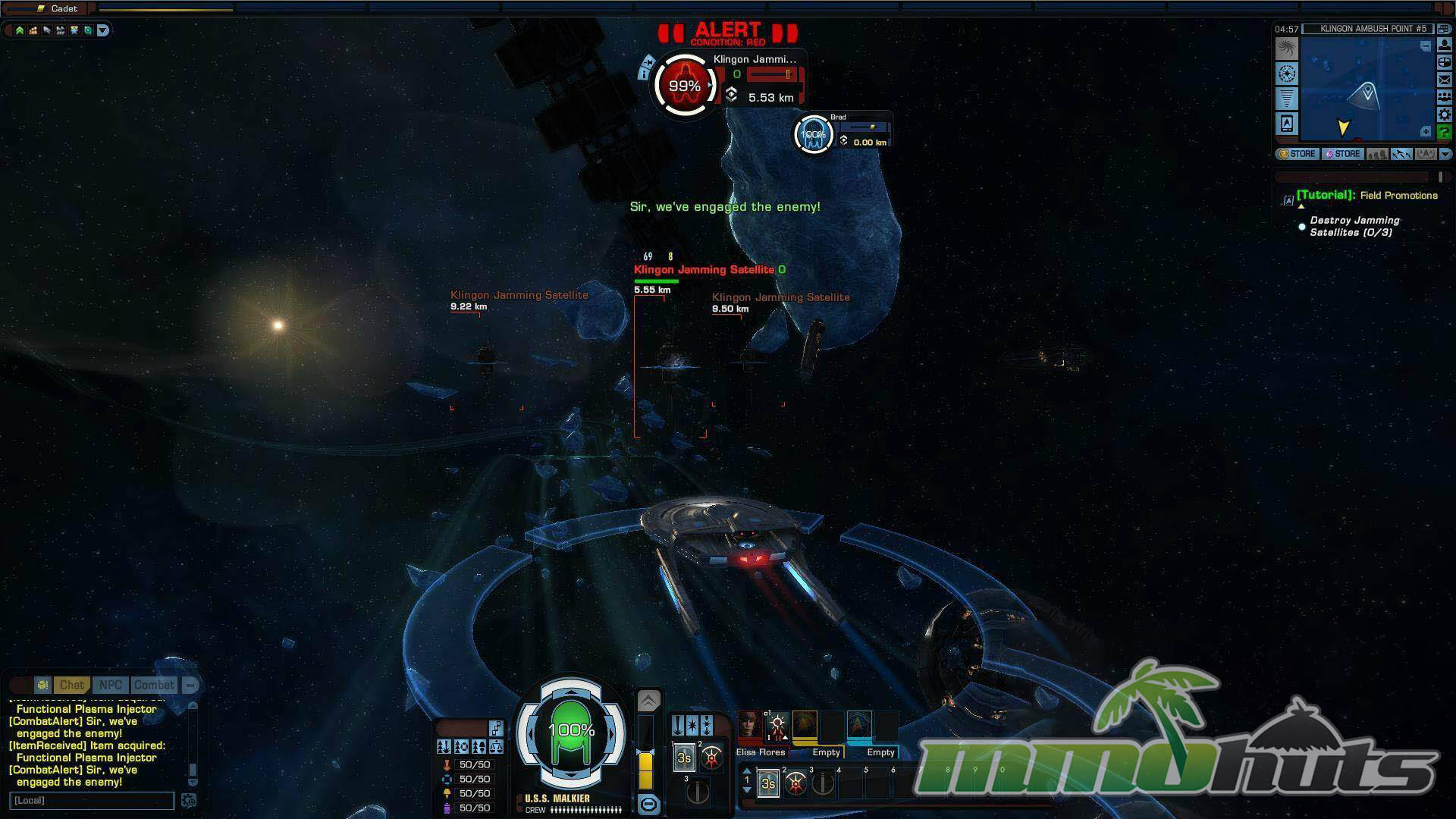
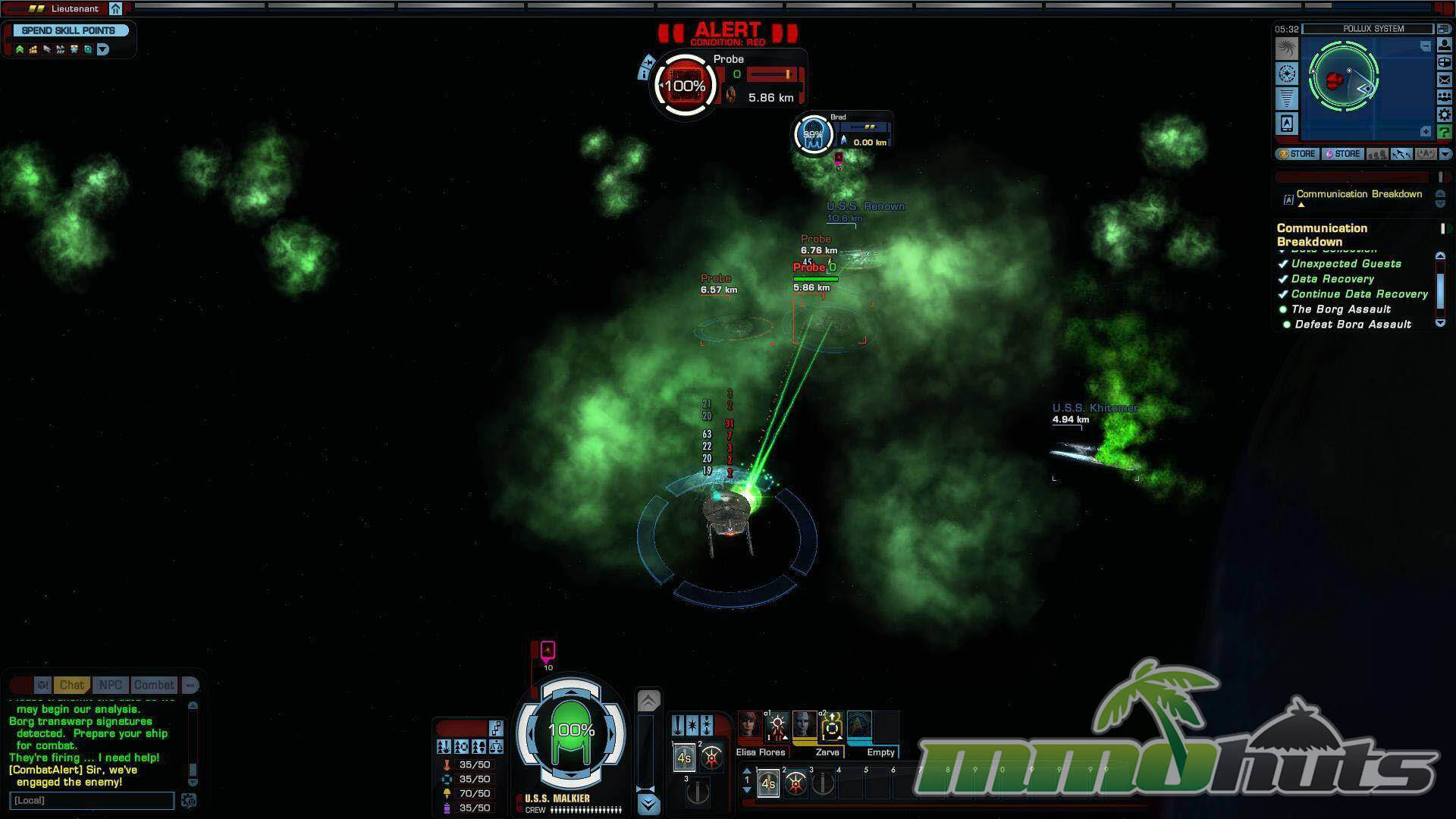
Space combat tends to feel more comfortable because movement is less twitchy and the pacing is generally slower, letting you focus on positioning, firing arcs, and cooldown management instead of constant strafing and jumping. Even so, the overall control scheme can feel a bit unwieldy until you have customized it to your preferences.
Presentation and Atmosphere
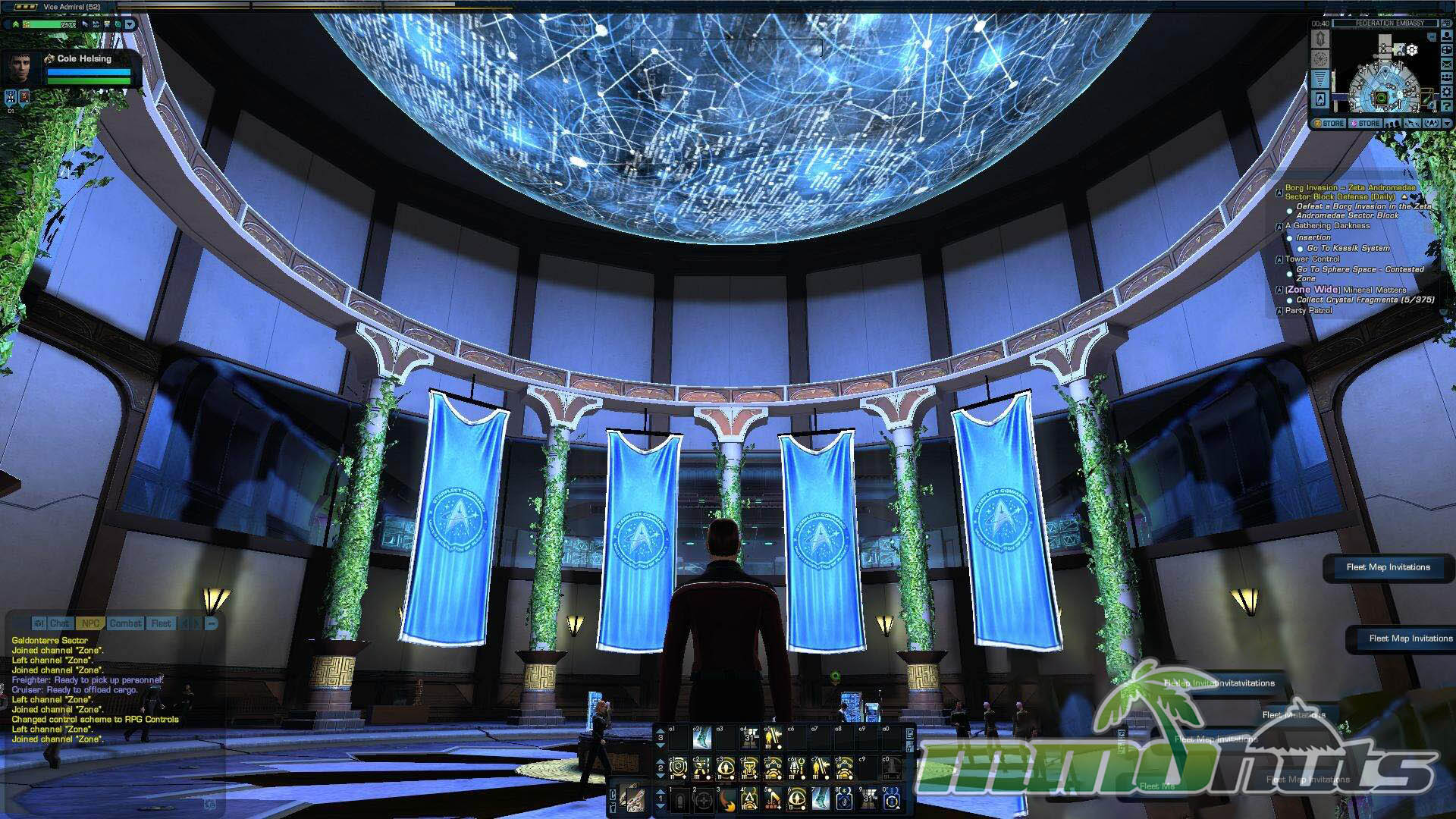
STO does a strong job capturing the look and sound of Star Trek. Ships, uniforms, and iconic locations are instantly recognizable, and the game’s visual design holds up well in space, where weapon effects and warp travel provide the kind of spectacle fans expect. The audio work also helps sell the fantasy, with music that feels appropriately “Trek” and sound effects that make ship combat feel weighty.
In terms of overall vibe, it shares some of the same appeal as other sci-fi MMOs such as EVE Online or Star Wars: The Old Republic, but STO’s identity is more about episodic storytelling and recognizable franchise imagery than sandbox economics or cinematic cutscenes.
Space and Ground Gameplay Loop
Much of your time is spent warping between systems, picking up assignments, and completing mission chains that move the narrative forward. Missions often follow a breadcrumb structure, sending you from one objective to the next, but STO keeps things engaging by mixing space engagements, ground encounters, and story beats across multiple arcs.
Because each faction has its own storyline and starting path, STO has a natural reason to replay if you enjoy leveling alts. Missions also support multiple difficulty settings, and pushing higher difficulties generally improves rewards, which adds a light challenge layer for players who want more than a casual cruise through the story.
Outfitting Your Ship
Ships are a core part of progression, and STO ties them directly to rank. As you climb, your faction awards starship tokens that you can use to claim new ships through Rear Admiral, Lower Half. Beyond that point, new ships are typically obtained through the game’s currencies: Dilithium, Lobi Crystals, Energy Credits, or Zen.
Ship availability and style vary by faction, and the roster ranges from nimble, weapon-forward designs to sturdier cruisers built to take punishment. Ships also come in multiple versions, including Standard, Refit, Retrofit, Mirror Version, and Fleet Ship, with Retrofit positioned as the most powerful and costly option.
Customization is where STO’s ship gameplay becomes genuinely compelling. You can swap and upgrade weapons, shields, warp cores, deflectors, consoles, hangar bays, and more, and the differences are meaningful in combat. Like traditional MMO gear, components have rarity tiers (color-coded) and can be earned through loot, purchased from NPCs, or traded with other players. The C-store also sells ship gear and various account boosts using Zen, which is purchased with real money, and that monetization layer can create a noticeable advantage for paying players in certain contexts.
Ranking Up and Skill Growth
Leveling is presented through faction-themed ranks, but the functional rewards are consistent across factions. You begin at an entry rank (Cadet, Warrior, or Citizen) and advance until you reach level 60, where Federation and Romulan Republic captains hold the rank of Fleet Admiral.
As you rank up you earn skill points for your class skill tree, unlocking abilities that influence both ground and space combat. These skills cover everything from tactical team-oriented bursts to engineering utility and defensive options such as Brace for Impact. The steady cadence of new abilities and ship access does a good job keeping progression feeling tangible.
Bridge Officers and Crew Building
STO treats your bridge officers as a functional extension of your build. You recruit them through missions such as “New Officer” or via the Exchange (the game’s auction house), and they come in varying rarities that reflect their potential and traits. A bridge officer with a particularly useful innate ability can be significantly more desirable than a similar officer without it.
You can expand a bridge officer’s capabilities through training manuals or by training them directly, with the available options depending on your captain class and the skills you have developed. Over time, the officer system becomes a satisfying layer for players who enjoy optimizing team composition rather than only focusing on personal gear.
The Foundry
One of STO’s standout systems is the Foundry, a content creation toolset in the same spirit as Neverwinter. From the character selection screen, you can access “Create Content” and build your own missions and story sequences for other players to run.
The quality range is wide, but the best Foundry missions feel like bonus episodes created by enthusiastic fans, and they can be a great way to break up routine leveling. Because these missions provide rewards and keep arriving as long as the community continues to create, the Foundry is a major reason STO can remain engaging even after you have seen the main faction storylines.
PvP
STO includes PvP through queues in the Mission Journal, supporting both ground and space formats. War Zones are built as larger, continuous maps where faction conflict overlaps with threats like the Borg, creating a more chaotic, ongoing battle environment. In ground War Zones, teams attempt objectives while also watching for opposing players doing the same.
Battlegrounds are more traditional instanced matches, with two teams competing toward map-specific goals. PvP can be fun as a change of pace, particularly if you enjoy testing ship builds against other players, but the experience can be heavily influenced by gear, ship choices, and the broader power curve created by progression systems.
Final Verdict – Good
Star Trek Online stands apart from many fantasy-focused MMORPGs by leaning into starship combat and a mission structure that feels closer to serialized sci-fi storytelling. Its presentation, music, and faithful recreation of Star Trek aesthetics make it easy to recommend to franchise fans, and the Foundry adds a long tail of community-driven content that keeps the game lively.
The main drawbacks are the somewhat clunky controls and interface, plus the way premium items can translate into real power. If you can tolerate those rough edges, STO remains a strong pick for players who want a Trek-flavored MMO with plenty of systems to explore.
Star Trek Online Links
Star Trek Online Official Site
Star Trek Online Steam Page
Star Trek Online Wikipedia
Star Trek Online Gamepedia [Database / Guides]
Star Trek Online Wikia [Database / Guides]
Star Trek Online Subreddit
Star Trek Online System Requirements
Minimum Requirements:
Operating System: Windows XP / Vista / 7 / 8
CPU: Core 2 Duo 1.8 Ghz / AMD Athlon X 3800+
Video Card: GeForce 7950 / ATI Radeon X1800
RAM: 2 GB
Hard Disk Space: 10 GB
Recommended Requirements:
Operating System: Windows XP / Vista / 7 / 8
CPU: Core 2 Duo 1.8 Ghz / AMD Athlon X 3800+
Video Card: GeForce 7950 / ATI Radeon X1800
RAM: 2 GB
Hard Disk Space: 10 GB
Mac OS X System Requirements
Operating System: Max OS X 10.7.5 or later
CPU: Intel Core 2 Duo
RAM: 4 GB+
Hard Disk: 10 GB
Video Card: Intel HD3000 / Nvidia 9600M / AMD HD2600
Star Trek Online Music & Soundtrack
Star Trek Online Additional Information
Developer: Cryptic Studios
Other Platforms: Mac OS X Compatible
Game Engine: Cryptic Engine (Proprietary game engine)
Closed Beta Date: October 22, 2009
Open Beta: January 12, 2010
Foreign Release(s):
Australia: February 11, 2010
The version available through Arc Games is the global version of Star Trek Online with no IP restrictions.
Development History / Background:
Star Trek Online was created by U.S.-based Cryptic Studios, the team also known for Champions Online and Neverwinter. Development first began in 2004 under Perpetual Entertainment, but that studio collapsed in 2008. Cryptic acquired the incomplete project and the Star Trek license, then officially announced the MMO on July 28, 2008. STO remains the only MMORPG built around the Star Trek franchise, and it runs on Cryptic’s proprietary Cryptic Engine, also used in other studio titles. The game originally released with a subscription, but after Perfect World Entertainment acquired Cryptic Studios, it publicly confirmed plans to adopt a free-to-play model on September 1, 2011. The subscription was formally removed on January 17, 2012.