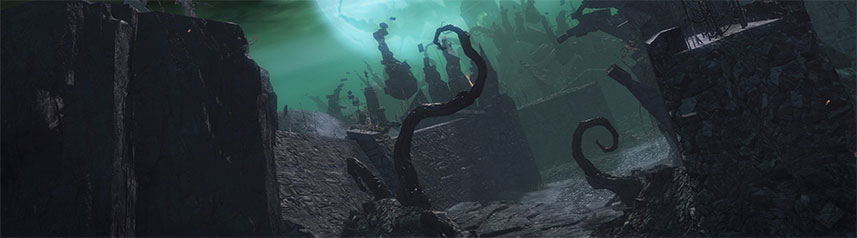
WildStar: Reloaded is a free-to-play 3D fantasy MMORPG that blends sci-fi and fantasy in a bright, stylized universe. The action unfolds on the distant world of Nexus, a planet once ruled by the enigmatic Eldan, a powerful civilization that vanished without explanation.
 | Publisher: NCSoft Playerbase: Medium Type: F2P MMORPG Release Date: Jun 3, 2014 (Global) Shut Down Date: November 28, 2018 PvP: Open World / Duels / Arenas / Battlegrounds / Warplots Pros: +Smooth, responsive gameplay. +Distinctive, memorable classes. +Action-based combat that requires aiming. +Stylized, eye-catching visuals. +Multiple PvP formats and modes. Cons: -Questing can feel grindy over time. -Limited long-term end-game progression. |
WildStar Reloaded Shut Down on November 28, 2018
WildStar Overview
WildStar is a free-to-play MMORPG that leans heavily into fantasy and sci-fi in equal measure. Visually, it sits somewhere between Borderlands and Ratchet & Clank, with chunky character designs, bold colors, and exaggerated animations. Combat is firmly in the action camp, similar to titles like Tera and Neverwinter, where you manually aim skills and attacks instead of relying purely on tab-targeting, which gives every fight a more tactile, skill-driven feel.
The game sends players to Nexus, a hazardous and mysterious planet that once served as the home of the Eldan, an advanced race that has suddenly disappeared. Almost everything on Nexus wants you dead, from hostile wildlife to rival factions. You start by choosing one of two sides, each with its own goals and flavor. From there, you pick a class and then a “Path” that defines your personal playstyle focus.
As you carve out a life on one of the most dangerous worlds in the galaxy, you follow one of four Paths, acting as a Soldier, Settler, Scientist, or Explorer, each with special perks, activities, and side missions layered on top of your class. The overarching story takes you through a variety of hostile zones, from dense forests to fortified prisons, facing monsters, alien threats, and mechanical constructs while you hunt for the truth behind the Eldan’s disappearance.
WildStar originally launched as a subscription MMORPG, then later transitioned to a free-to-play model on September 29, 2015, relaunching under the “WildStar: Reloaded” banner.
WildStar Features:
- Action-Packed Combat – real-time battles that require aiming, movement, and dodging, keeping you active and engaged rather than standing still trading blows.
- Path System – choose from four Paths in addition to your class, offering different roles, perks, and mission types to support various playstyles such as combat, exploration, building, or lore hunting.
- 6 Unique Classes – play as Warrior, Spellslinger, Esper, Engineer, Stalker, and Medic, each with distinct mechanics and roles.
- Dynamic Quests – certain missions trigger contextually when you are in the right place with the right Path, making the world feel more reactive and alive.
- Player Housing – claim and decorate your own floating plot of land, turning it into a functional hub and personal base after tough sessions on Nexus.
- Storytelling – narrative-focused questlines and humorous writing that give the world and characters a strong sense of personality.
WildStar Screenshots




WildStar Featured Video

WildStar Classes
Factions & Races:
Dominion – an authoritarian interstellar empire that aims to dominate the galaxy through intimidation, political power, and overwhelming military strength.
- Cassian – proud humans from the world of Cassus, who see themselves as natural leaders of the Dominion and speak with an aristocratic British accent.
- Draken – brutal, reptilian-like warriors who live for the thrill of combat and serve as the Dominion’s primary shock troops.
- Mechari – advanced robotic operatives engineered by the Eldan, acting as elite assassins, spies, and enforcers for the Dominion.
- Chua – small, rodent-like tinkerers who relish building dangerous gadgets and weapons designed to annihilate their enemies with ruthless efficiency.
Exile – a loose coalition of outcasts, mercenaries, rebels, and refugees from various worlds who have banded together to resist the Dominion.
- Exile Humans – defiant humans from Cassus who refused to submit to Dominion rule, known for their stubbornness and distinct Southern US accent.
- Granok – tough, stone-skinned beings who enjoy drinking and brawling, often using their massive bodies and resilience to smash foes.
- Aurin – agile humanoids with animal-like ears and tails, devoted to protecting nature and highly skilled in research and science after their forced exile.
- Mordesh – grim, undead-like survivors afflicted with a degenerative plague, who have journeyed to Nexus in search of a cure and redemption.
Classes:
- Warrior – a heavily armed melee powerhouse wielding broadswords and arm cannons. Warriors excel at soaking up damage and can specialize as durable tanks or brutal front-line damage dealers. Their primary attributes are Brutality and Technology.
- Esper – a psychic caster similar to mages in other MMORPGs, using illusions and mental constructs to harm enemies and mend allies. They fight with Psyblades and manipulate psychic energy, capable of both ranged DPS and supportive healing roles. Their primary attributes are Moxie and Insight.
- Spellslinger – a nimble gunslinger who fights at range with dual magical pistols. Spellslingers focus on ranged DPS but can also provide healing support. They rely on Dual Mag pistols in combat, with Finesse and Insight as their primary attributes.
- Stalker – a stealthy assassin that uses invisibility and dual claws to ambush unsuspecting foes. Stalkers fill the classic rogue-style niche, dealing high burst melee damage while darting in and out of danger. Their primary attributes are Brutality and Technology.
- Medic – a battlefield specialist who wields resonators capable of both shattering bones and restoring health. Despite the name, Medics can be built as strong DPS or focused healers, offering support with high mobility. Their primary attributes are Technology and Insight.
- Engineer – a ranged hybrid class that commands robotic pets while firing from a massive gun. Engineers can act as tanky front-liners or ranged damage dealers, relying on heavy armor and a squad of automatons. Their primary attributes are Finesse and Technology.
Paths:
- Soldier – the combat-focused Path, representing front-line troops tasked with safeguarding their faction’s interests. Soldier missions feature activities like assassinations, holding off waves of enemies, and testing experimental weaponry.
- Settler – the builders and community-focused pioneers responsible for making Nexus more livable. Settlers construct useful structures, buffs, and outposts across the world to assist allies and support their faction.
- Scientist – lore and discovery enthusiasts charged with studying Nexus. Scientists scan and catalogue flora, fauna, and artifacts, uncovering more about the world’s history and the Eldan’s technology.
- Explorer – the path for those who love traversal and discovery, assigned to chart uncharted regions of Nexus. Explorer missions send players climbing mountains, scaling trees, and delving into ancient structures to reveal hidden areas.
WildStar Review
WildStar is a free-to-play 3D MMORPG with a hybrid fantasy/sci-fi setting, developed by Carbine Studios and published by NCSoft. It was first revealed to the public at Gamescom on August 17, 2011, later entered open beta on May 8, 2014, and officially launched on June 3, 2014. Like several other high-profile MMOs of its era, WildStar debuted as a subscription-based game and eventually shifted to a free-to-play model in response to a shrinking playerbase. The free-to-play relaunch, branded as WildStar: Reloaded, arrived on September 29, 2015, putting it alongside games like Guild Wars 2 and Tera that moved away from mandatory subs.
The story unfolds on the ancient world of Nexus, once ruled by the Eldan, an advanced alien civilization that mysteriously vanished. The planet has become a battleground between two opposing factions: the Dominion, a powerful empire intent on galactic domination, and the Exiles, a coalition of refugees and misfits determined to stop them. Players arrive in the middle of this conflict and gradually uncover the secrets of Nexus and the fate of the Eldan as they progress through the game’s zones and story arcs.
An Unforgiving Planet
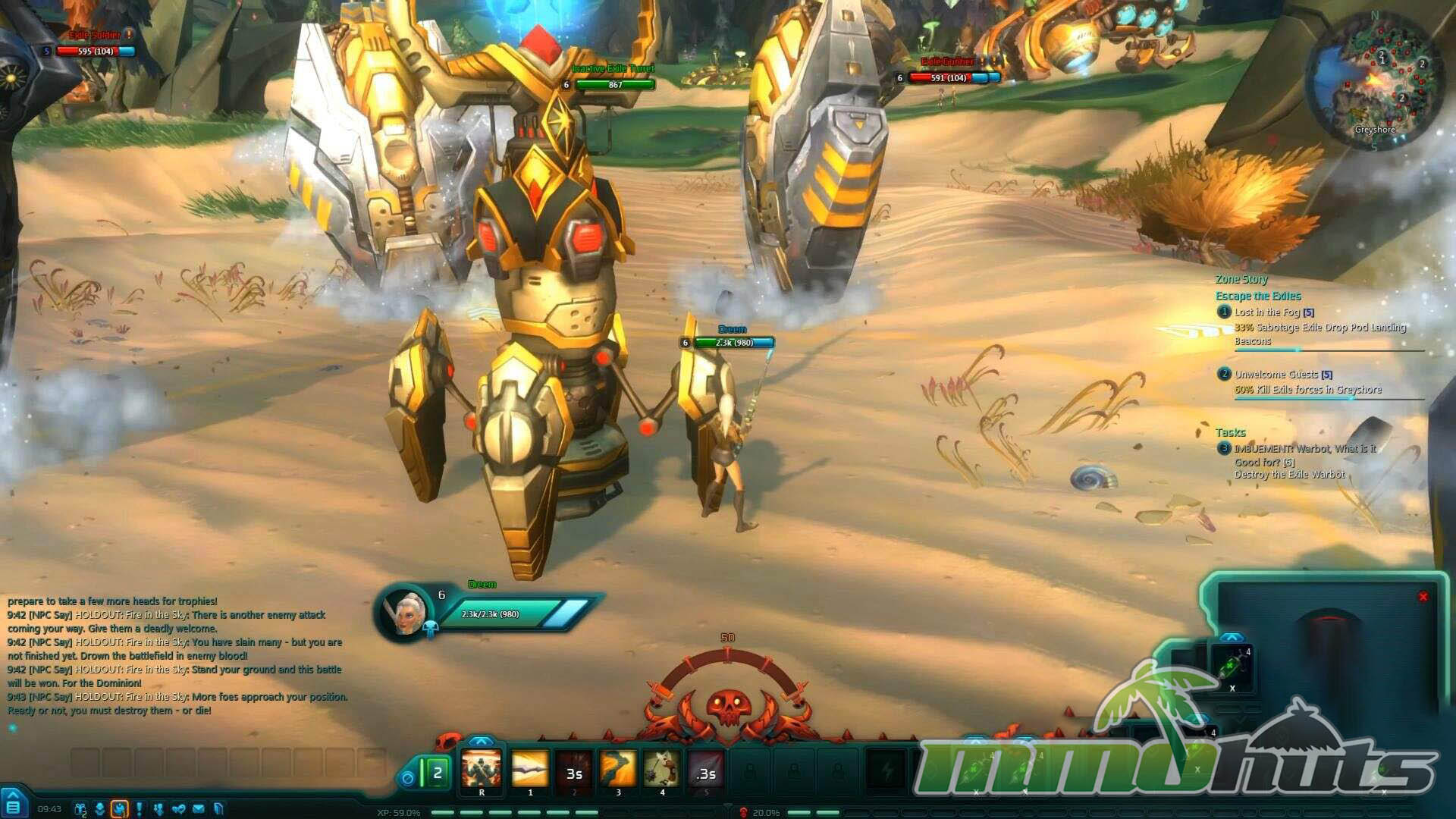
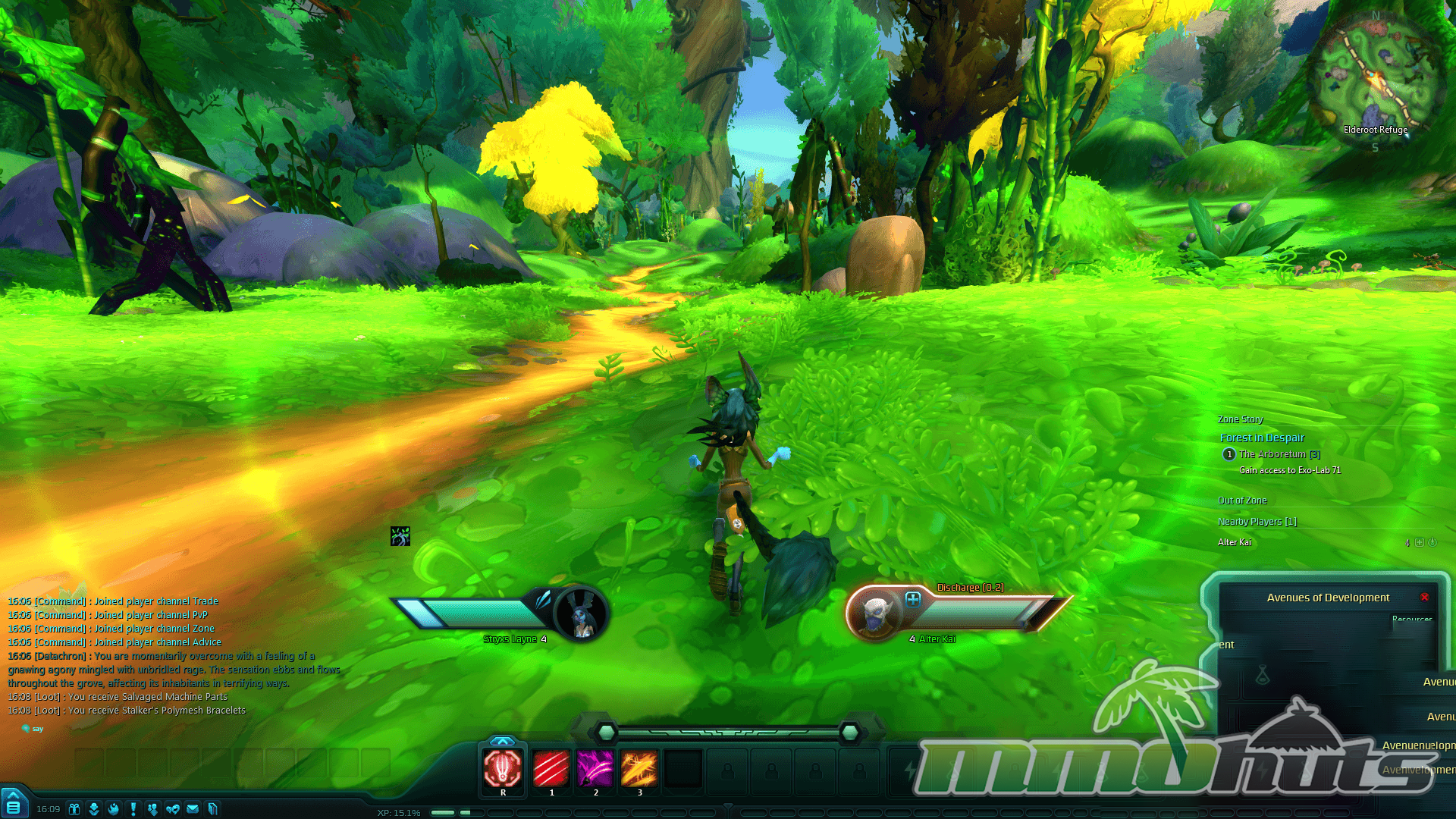
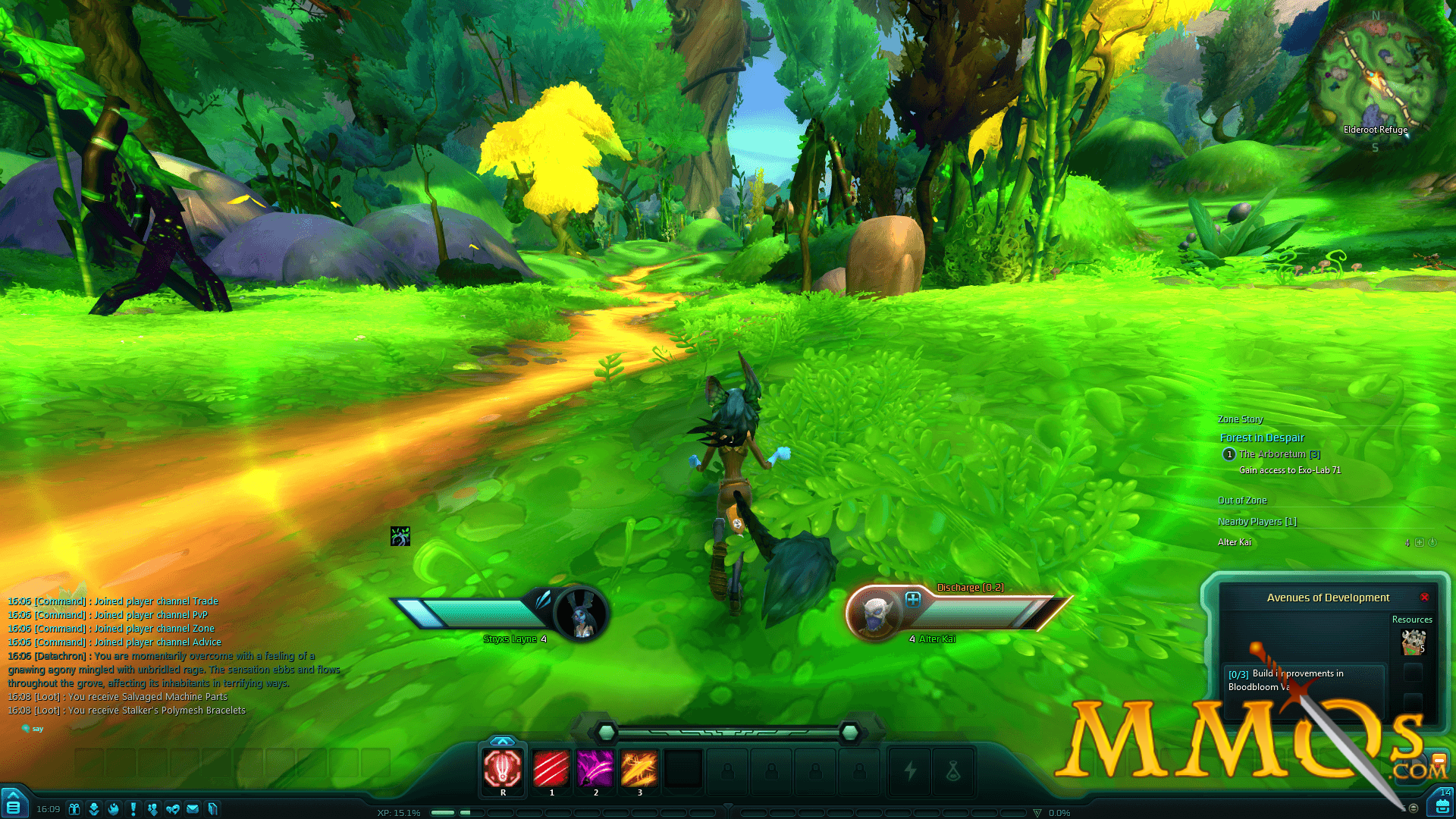
Visually, WildStar leans into bold, stylized aesthetics with flashy combat effects and vibrant environments. From sun-baked savannahs and dense forests to crumbling ruins and high-tech facilities, each zone feels distinct and packed with detail. Movement through these spaces is fluid and satisfying, and the exaggerated style keeps everything readable even when battles get chaotic.
One of the more interesting touches is the use of Environmental Hazards. Random events like stampedes or lightning storms can damage or even kill players who are not paying attention. These hazards are not just obstacles, they can be turned into tools, such as baiting enemies into areas where lightning is about to strike. It adds another tactical layer beyond simply dodging telegraphs.
The game’s artwork, over-the-top voice acting, and tongue-in-cheek dialogue give the world a playful tone, while the soundtrack delivers a grand, space opera feel. The overall presentation is energetic and slightly cartoony, similar in spirit to shows like Star Wars Rebels, which fits well with the game’s mix of humor and high stakes.
The Mother Ship
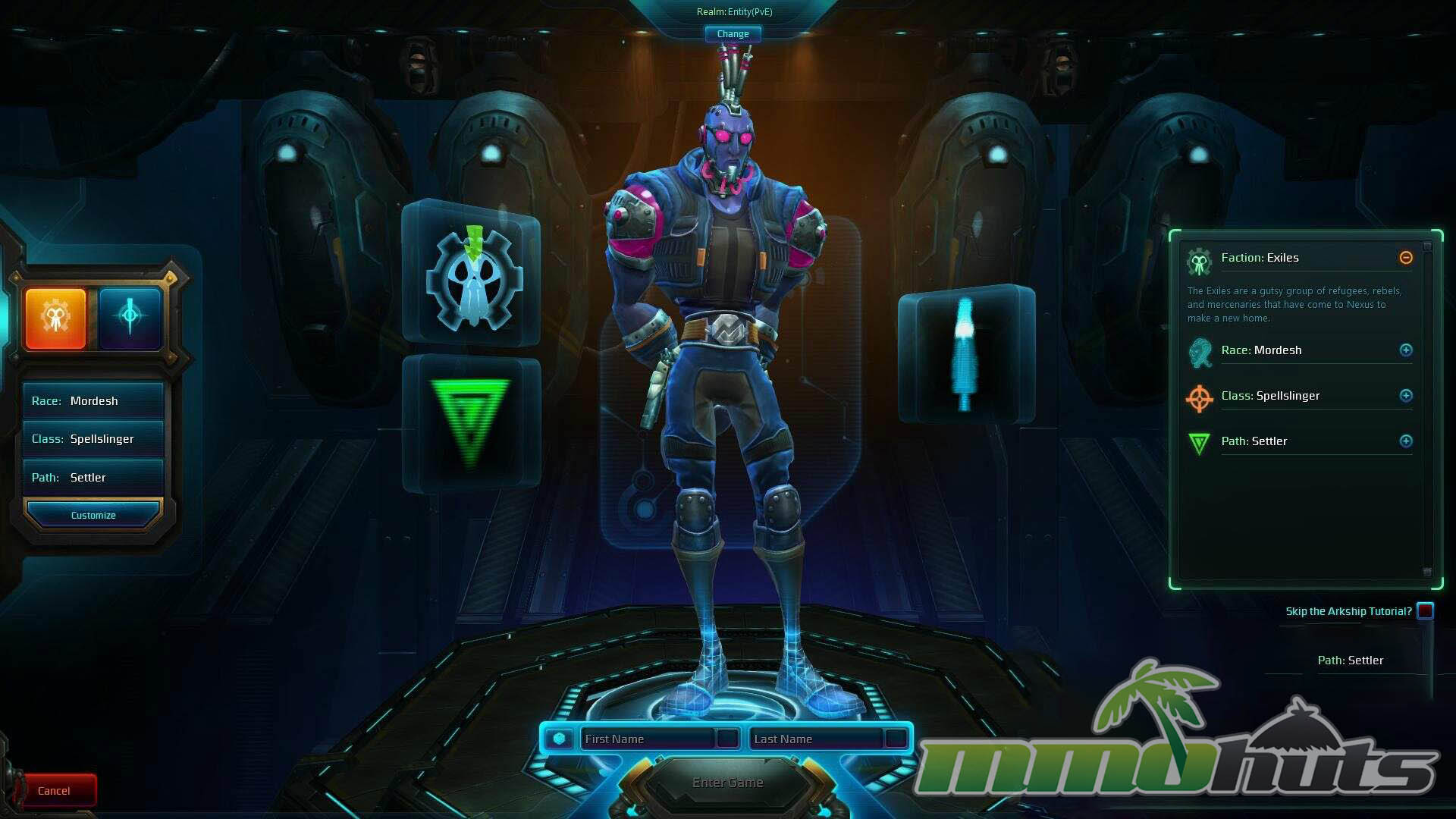
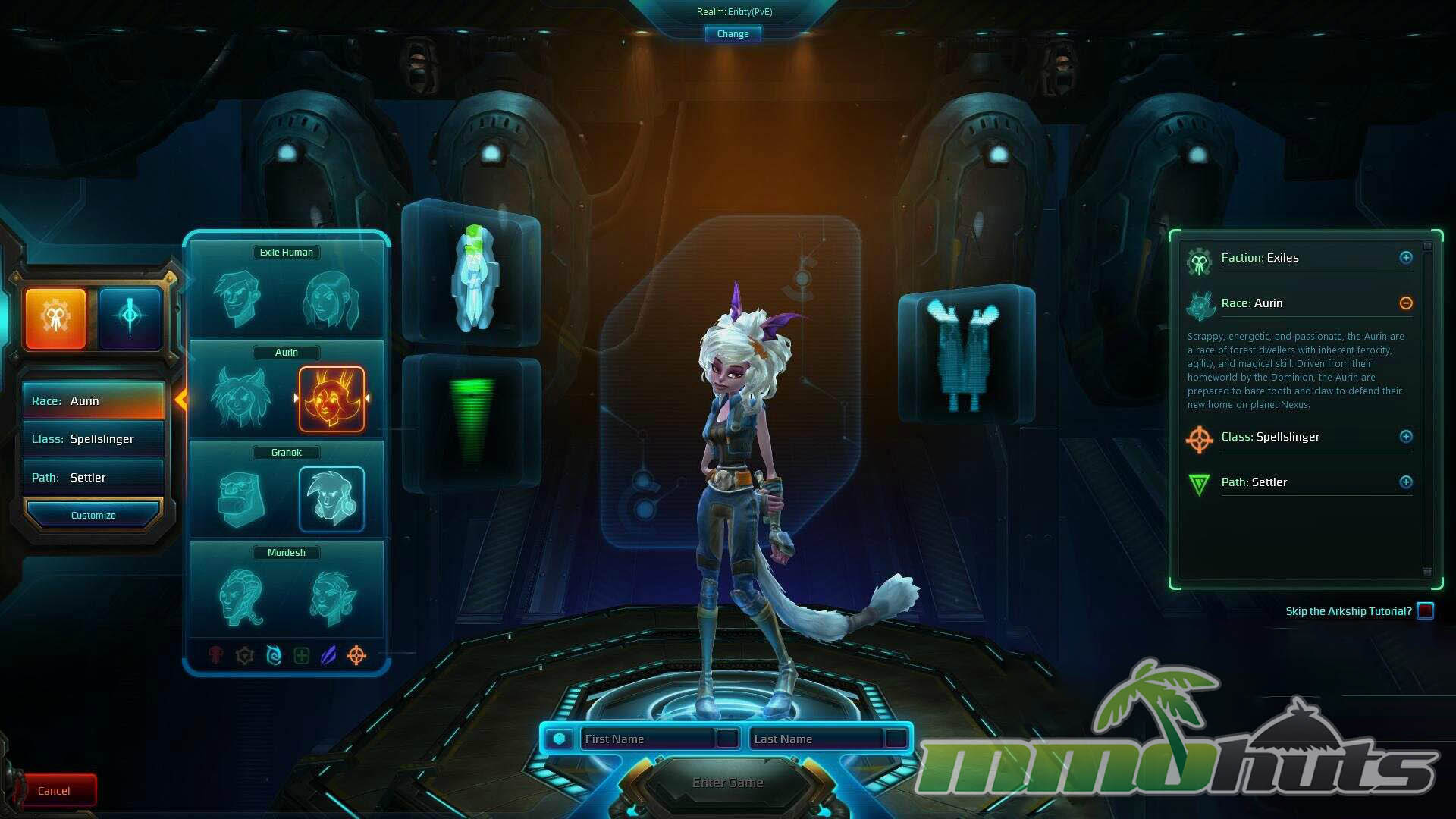
Before landing on Nexus, players create their character aboard their faction’s mothership. Character creation involves choosing a faction, race, class, and Path, then customizing appearance. Each faction offers four race options, and there are six total classes and four Paths to combine in different ways (see the Classes tab for a detailed breakdown).
Customization includes a good variety of hair and face presets, plus sliders for fine-tuning features such as eye size or nose height. While there are plenty of options on paper, the exaggerated art style means characters can still end up looking somewhat similar, especially within the same race.
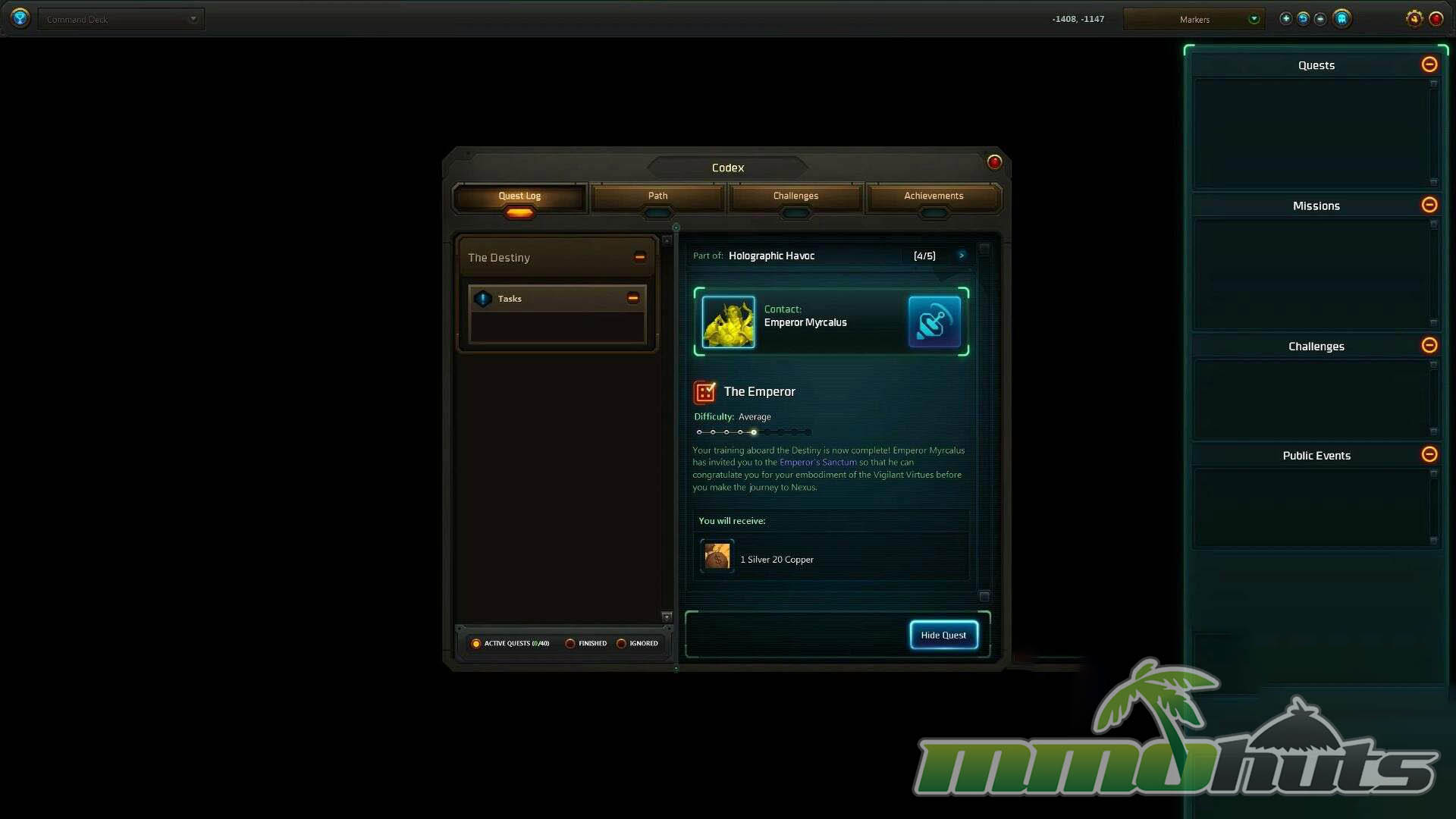
New characters begin in separate tutorial zones based on faction, though the structure of these starting experiences mirrors each other closely. Both sides kick off with the player awakening from cryostasis, then running through a chain of introductory quests that ends with a boss encounter. Along the way, tutorial pop-ups explain movement, camera controls, quest types, and other basics. These contextual tips keep appearing as you encounter new systems. Veterans leveling alts can skip the tutorial segment entirely via a simple option toggle. After completing this opening scenario, characters from both factions drop down to Nexus, where the leveling experience opens up and the game starts to feel more like a traditional MMORPG.
Running Errands
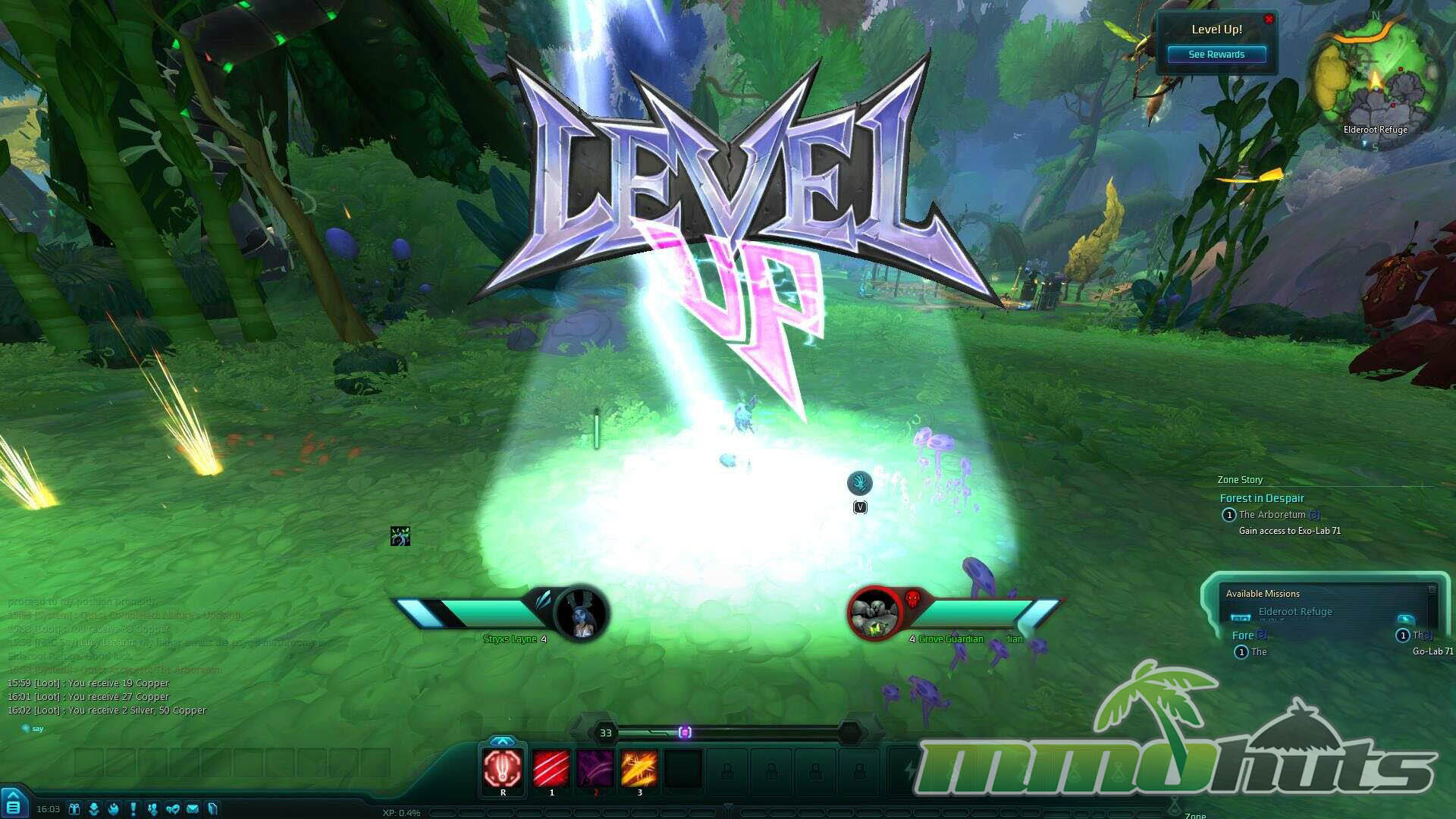
Once you crash-land on Nexus, the real adventuring begins. WildStar’s quest structure follows the familiar breadcrumb approach seen in many MMOs, guiding players from hub to hub while completing tasks for NPCs. You can expect the usual mix of “kill X enemies,” “collect Y items,” and interactive objectives scattered through each zone.
The sci-fi theme helps streamline some of the busywork. Many quests can be accepted and turned in remotely using in-world communicators, reducing the amount of running back to NPCs just to hand in objectives. This keeps the pacing brisk, particularly in the early game, and makes it easier to stay out in the field longer.
Main story quests flesh out each faction’s reasons for coming to Nexus, with a tone that jumps between serious plot beats and lighthearted humor. Your chosen Path also adds layered content on top of standard missions. Soldiers might be called into extra combat scenarios, Settlers might receive tasks about building structures, Scientists scan points of interest, and Explorers seek out hidden locations. These Path quests arrive through your communicator as you enter relevant areas, providing side content that supports your preferred style of play.

Fighting for Survival
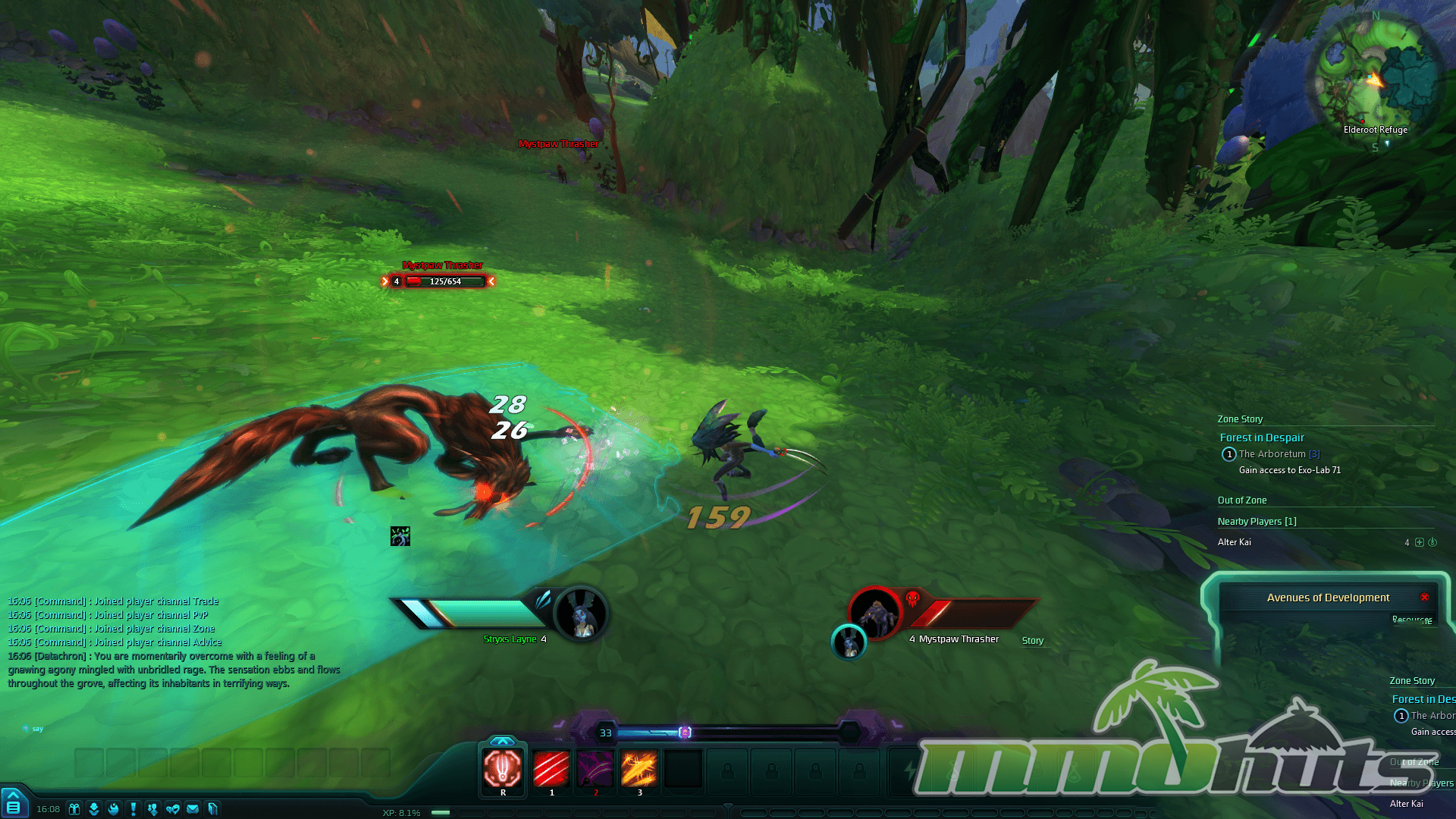
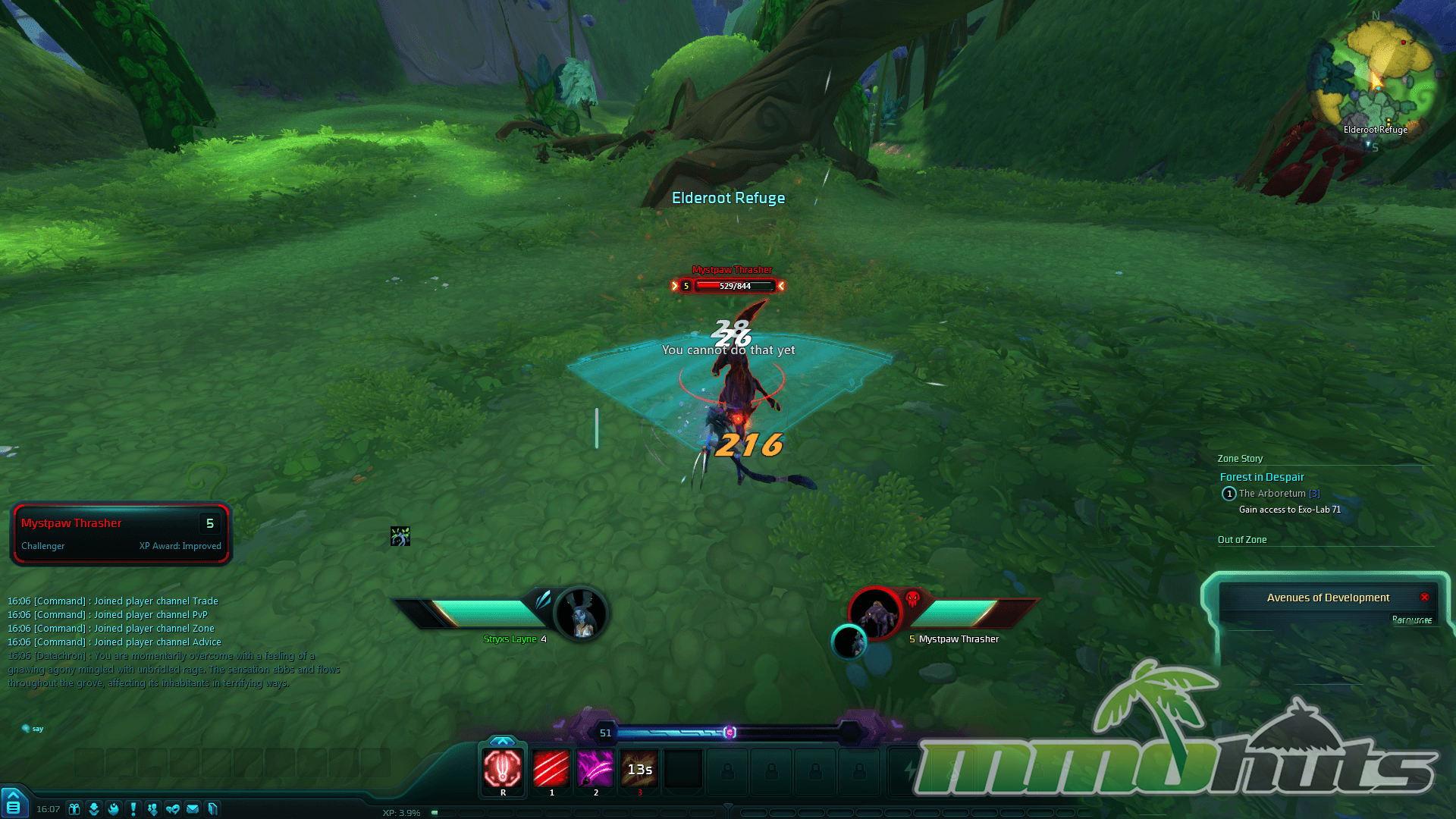
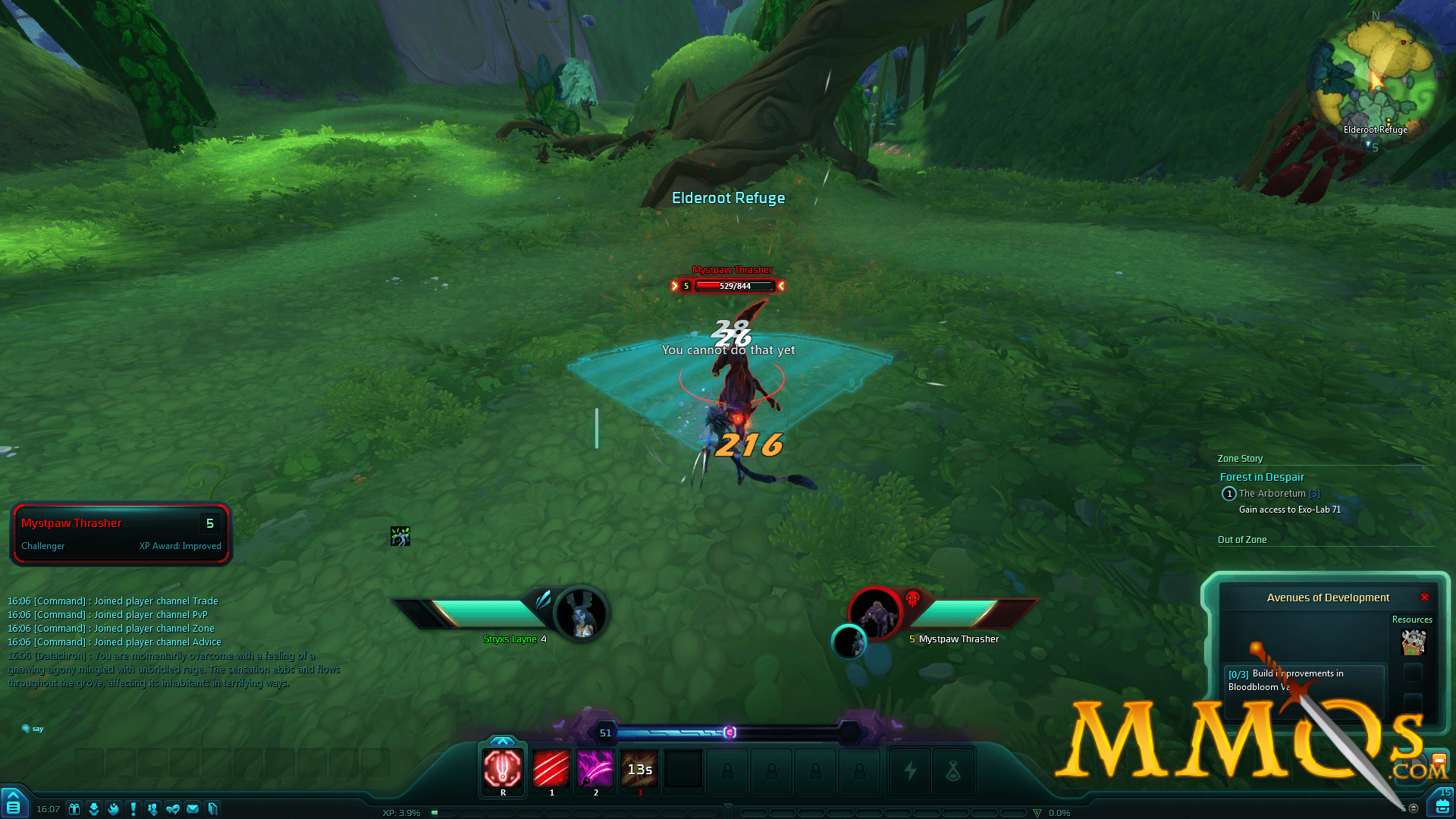
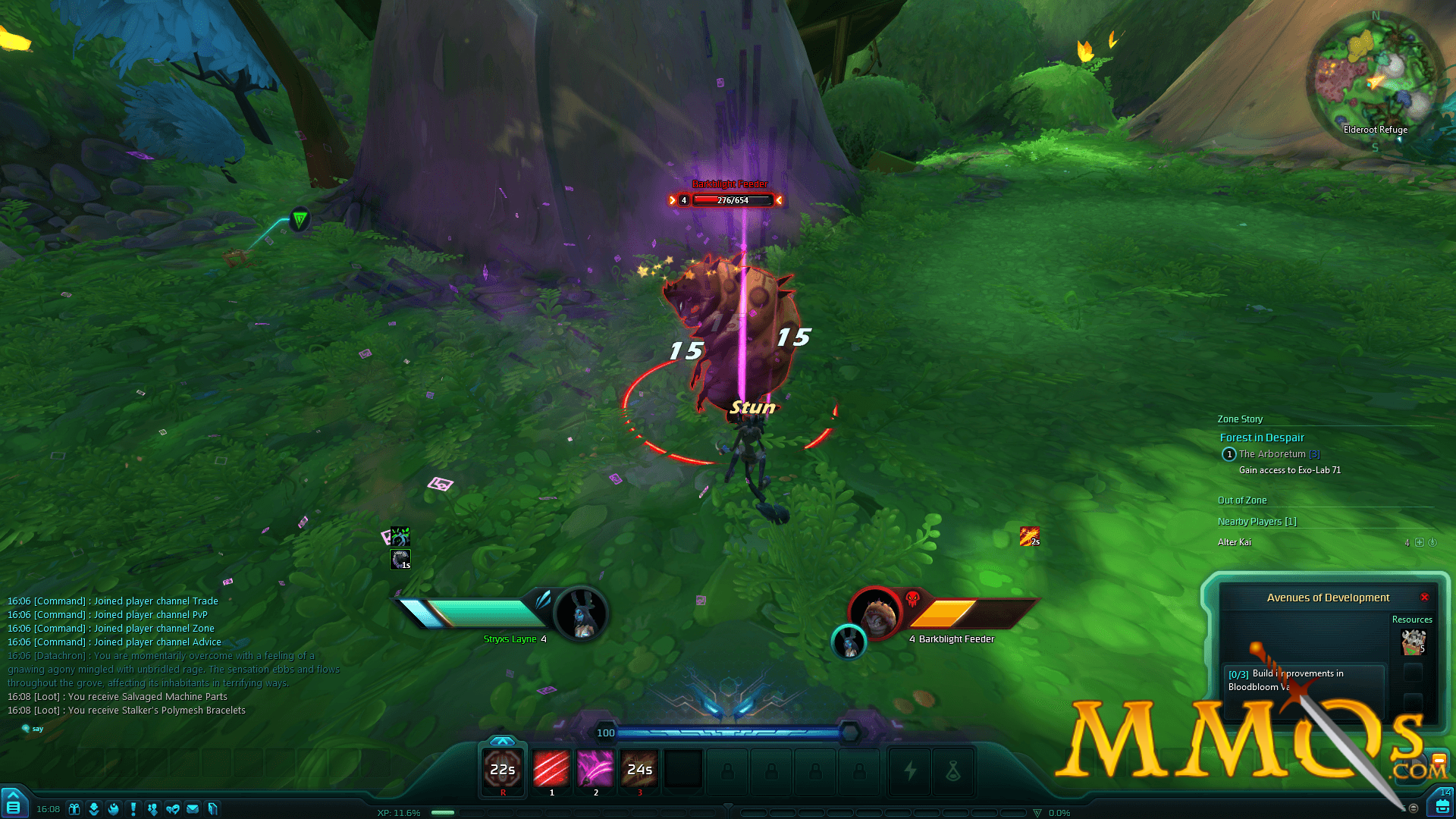
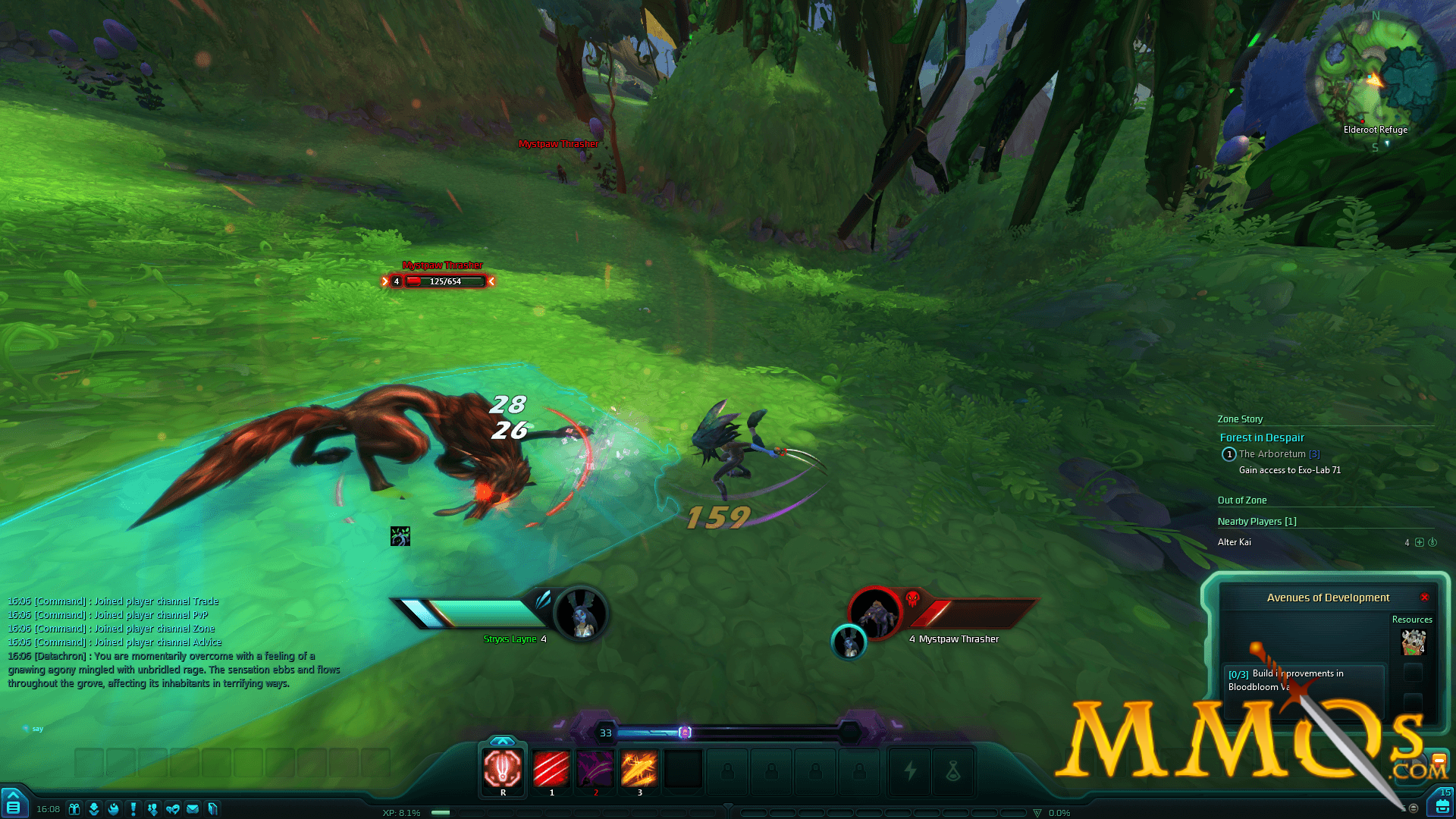
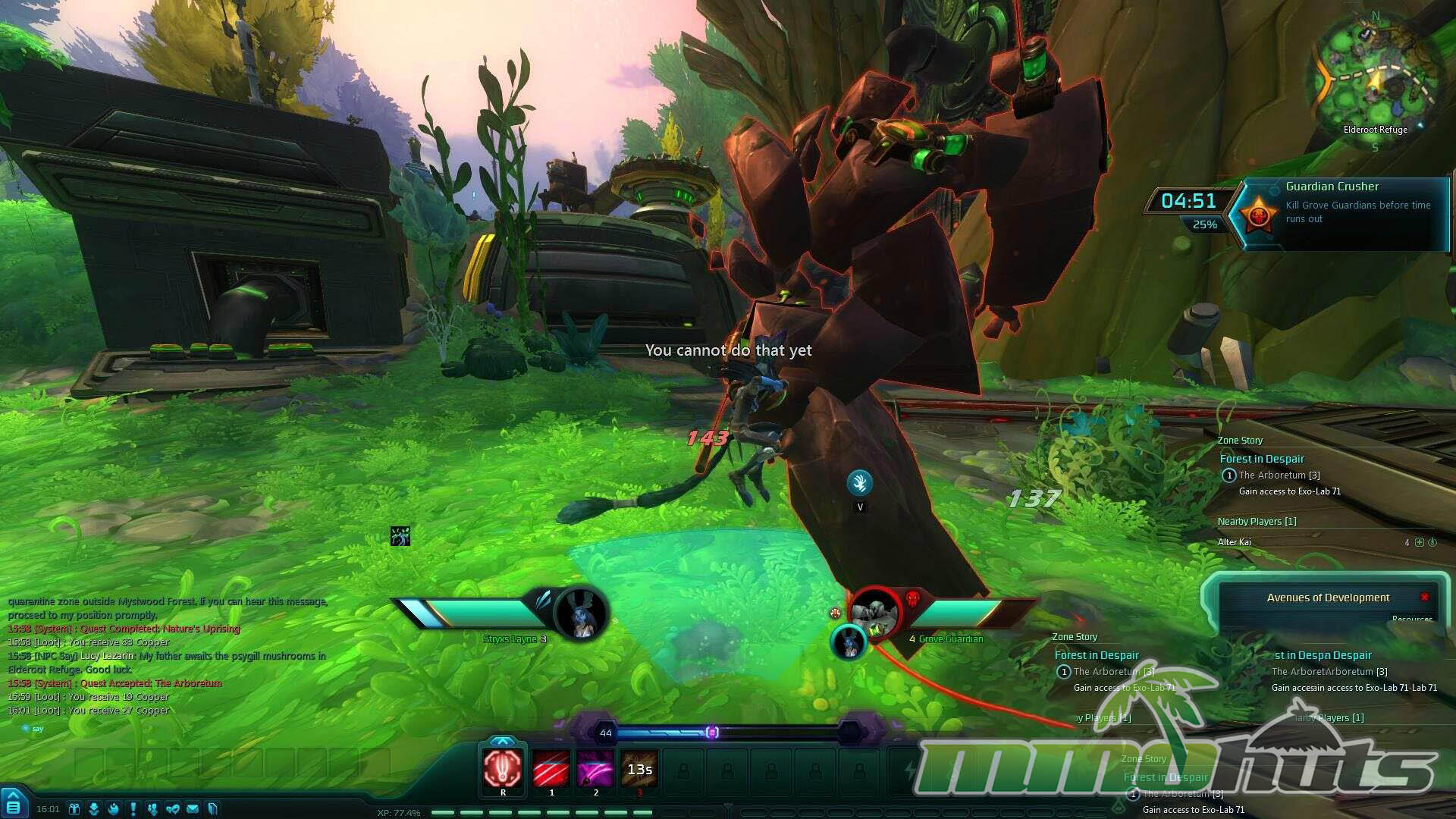
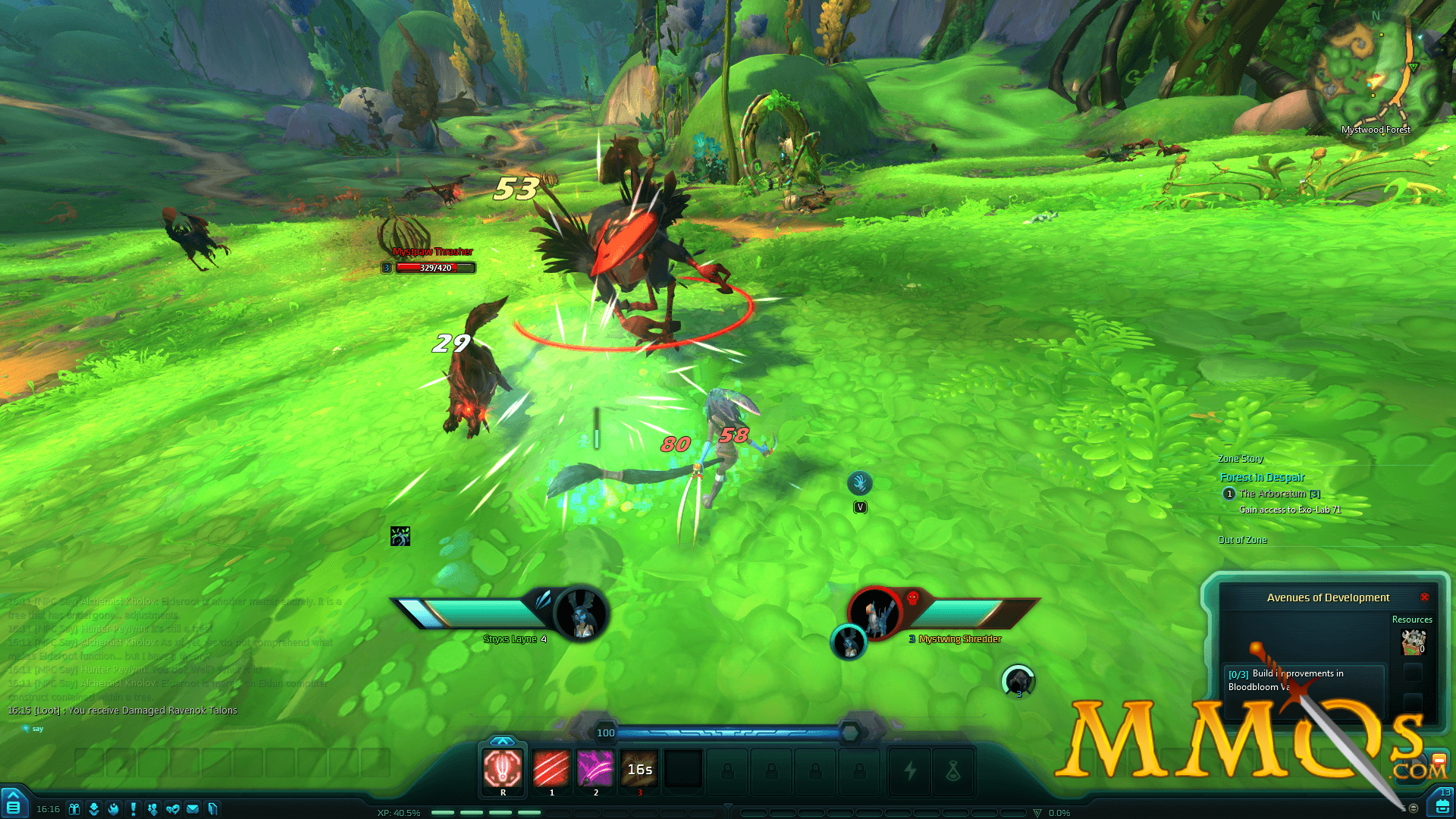
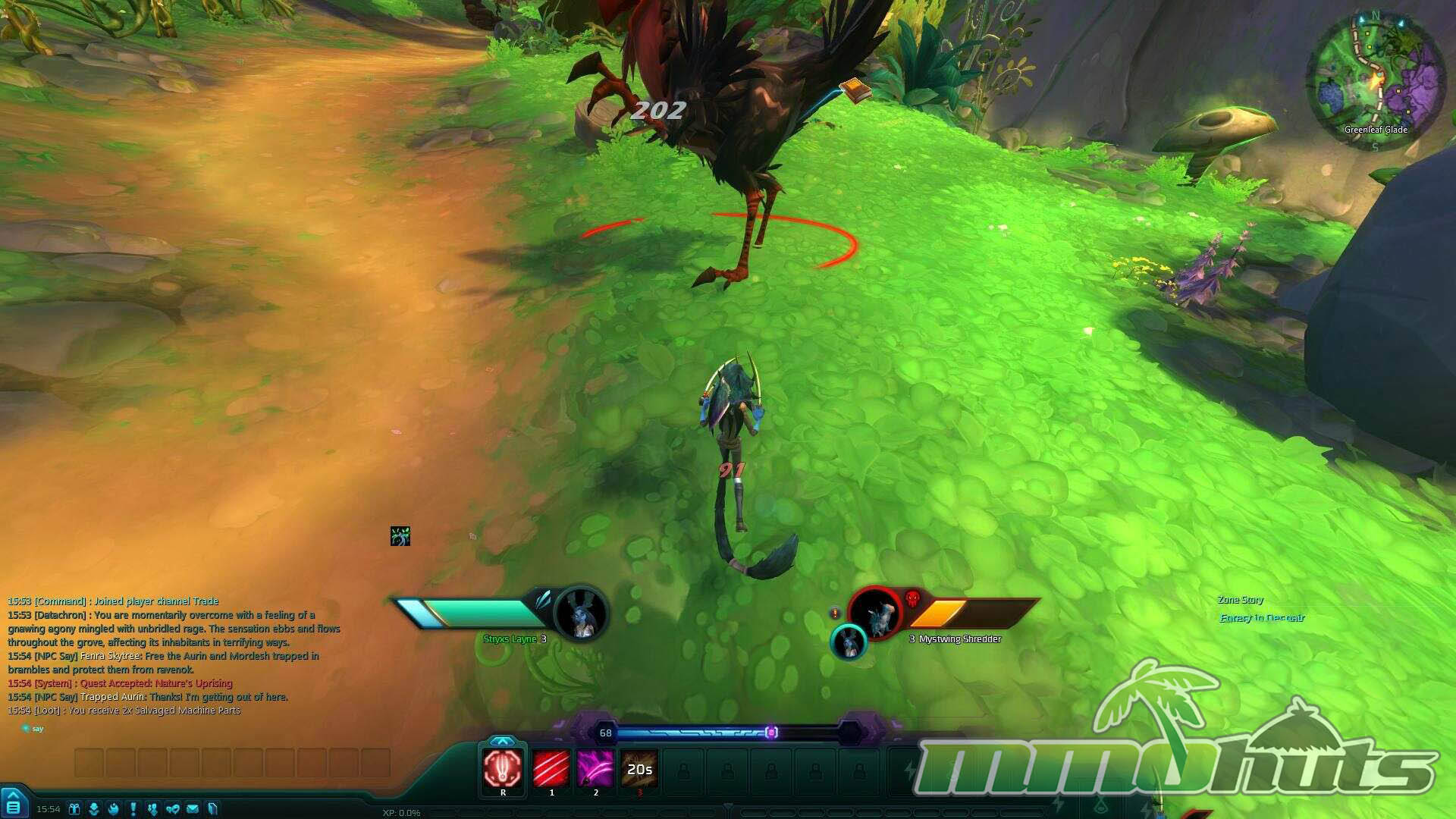
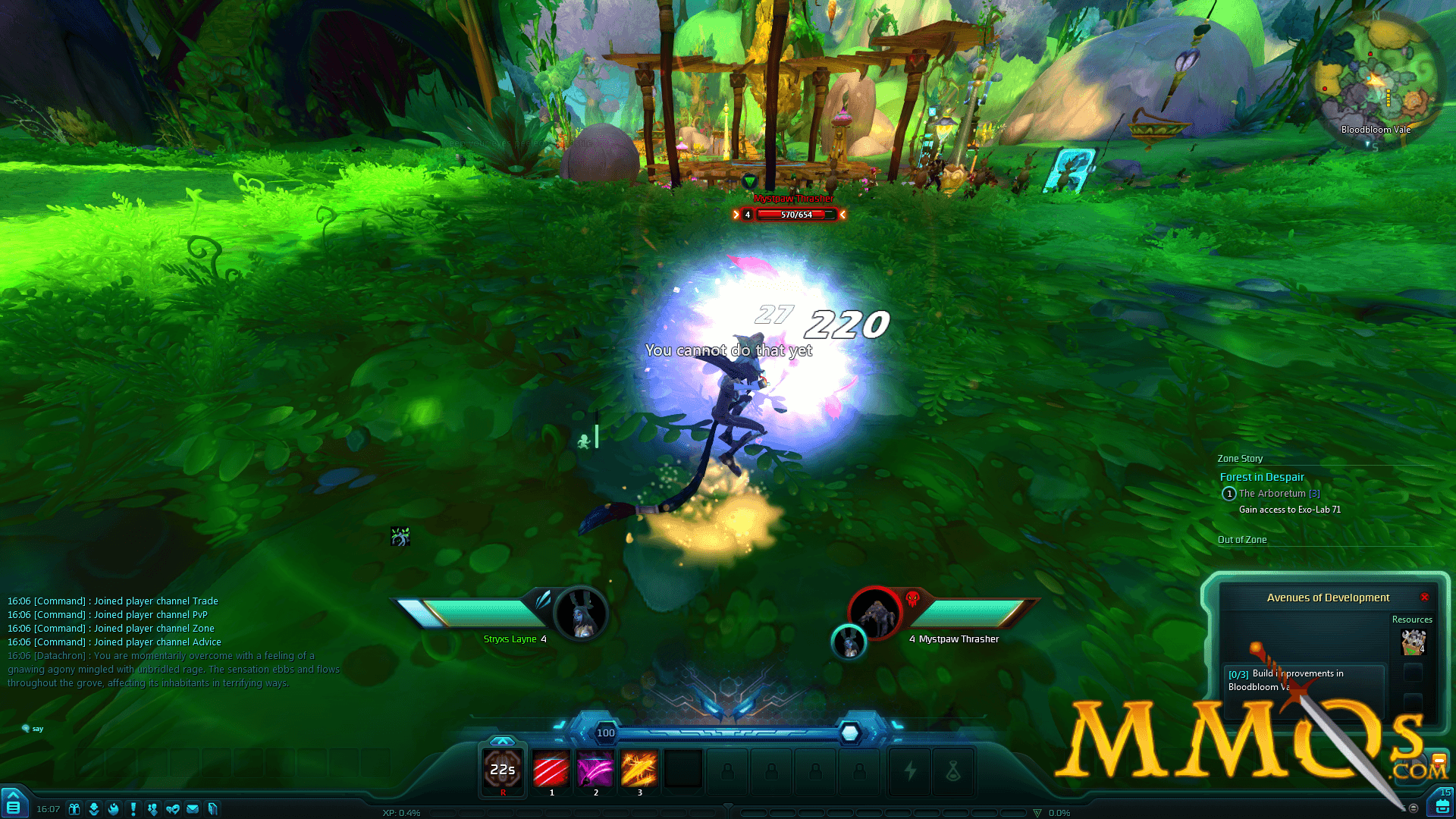
Combat in WildStar is one of the game’s standout elements. Movement is controlled with WASD, while abilities are mapped to number keys and other hotkeys. Most skills use telegraphed areas or directional fields that need to be carefully aimed, and enemies respond in kind, broadcasting their attacks so you can dodge or double-jump out of harm’s way. The result is a quick, reactive combat system where positioning and timing matter just as much as stats.
Platforming mechanics are woven into quest design and exploration. Many objectives require jumping between platforms, scaling structures, or navigating vertical spaces, which keeps traversal more active than in many traditional point-and-click MMOs.
Ability progression is straightforward but allows for fine tuning. New skills unlock automatically at certain level thresholds. As you level up, you earn Tier Points that can be invested into your abilities, upgrading their effects and tailoring your loadout. On top of that, the AMP system acts as a network of passive bonuses. AMP Points, gained by leveling, let you unlock and chain adjacent nodes in AMP trees. Different configurations of skills and AMPs enable diverse builds, supporting everything from pure DPS to tougher hybrid setups or more dedicated support roles, depending on class.
Kicking Ass
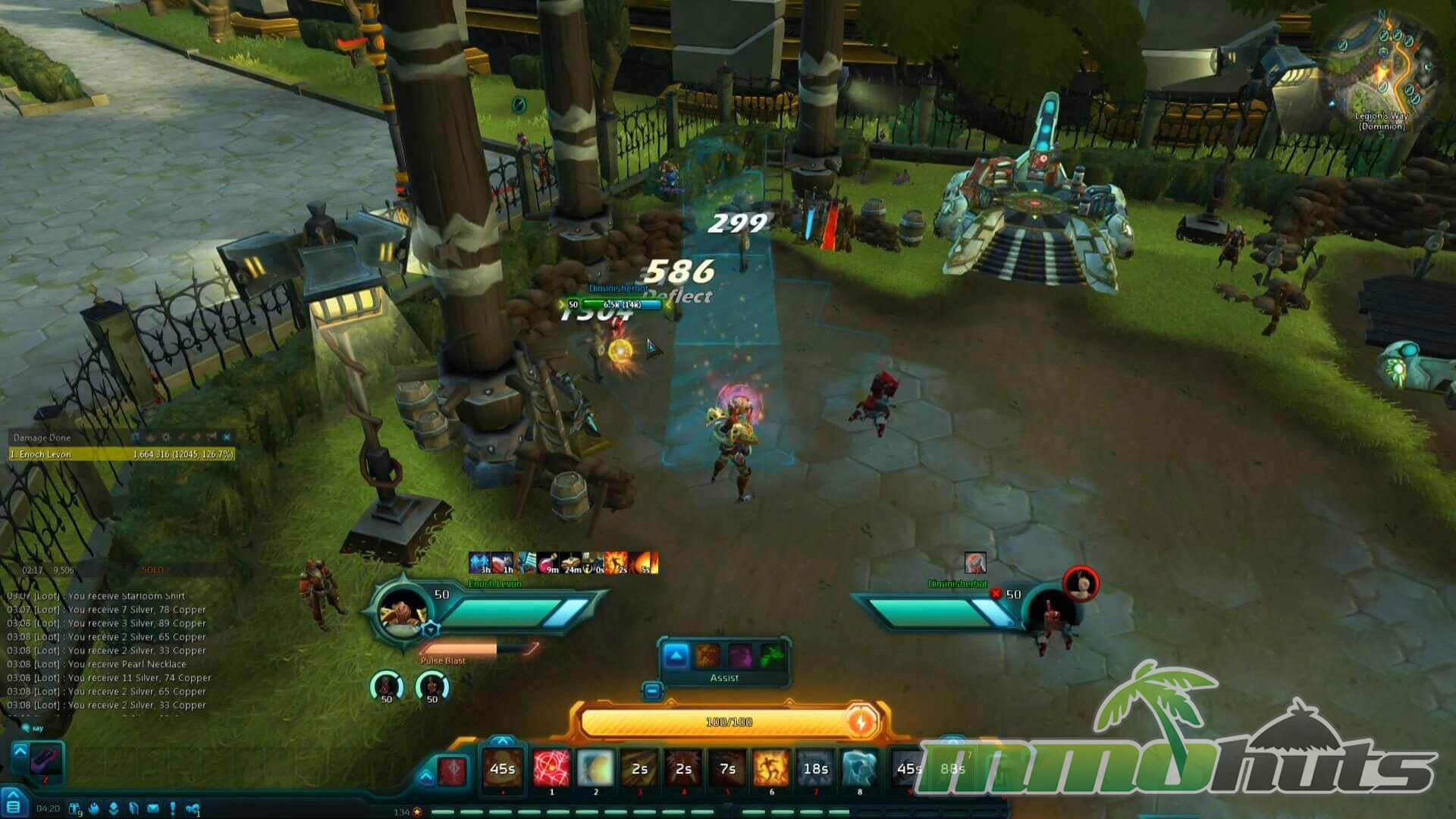
WildStar offers a robust set of PvP options for players who prefer fighting other players instead of monsters. You can challenge others to 1v1 Duels out in the world, queue for structured Arenas and Battlegrounds, or enter open PvP zones where both factions can clash while questing.
Arenas come in 2v2, 3v3, and 5v5 formats, focusing on team deathmatch rules where victory goes to the last team standing. Battlegrounds pit two teams of 10 against each other with objective-based gameplay, such as racing to grab a flag from the center of the map and bringing it safely back to your base.
PvP participation rewards players with gear and items that improve their effectiveness in competitive modes. At max level (currently Level 50), players gain access to WarPlots, which are essentially customizable PvP battlegrounds owned by players. WarPlots can be filled with structures, traps, and assets obtained through adventuring and raiding. Battles are initiated through matchmaking, but the WarPlot owner must accept a challenge. These matches play out as large-scale confrontations between two personalized arenas. Victors earn rewards based on the result, while the losing side sees their WarPlot damaged or destroyed, requiring effort to rebuild.
Welcome to My Crib
Player housing is one of WildStar’s most celebrated systems. Instead of endlessly camping in the wilderness, you can secure your own home once you meet an appropriate NPC and can afford the cost. Your house sits on a floating plot and serves both as a personal retreat and a functional gameplay hub.
Owning a home provides several benefits. Logging out inside grants Rested XP, which speeds up experience gain when you return. Housing plots can also host special plugs such as instanced dungeons you can run with friends, or resource nodes like farms and mines that yield materials over time. You start with fairly simple housing layouts, but you can purchase more elaborate designs and decorative items as you progress.
Furniture and decor can be obtained through quests, crafting, and monster drops, letting you gradually turn your plot into a unique space. The housing editor supports playful creativity, allowing players to arrange, stack, and rotate objects to create anything from practical layouts to elaborate themed builds.
The Cash Shop
Because WildStar launched as a subscription title, it did not initially rely on a cash shop. With the transition to free-to-play, an in-game store was introduced to support the game financially. At the time of the change, Carbine Studios and NCSoft focused the shop on cosmetic goods and convenience items, avoiding direct power advantages.
This approach helped maintain a fair playing field and kept the free-to-play model from overwhelming the core gameplay. The long-term health of any free-to-play title depends heavily on how its cash shop evolves, and WildStar’s model aimed closer to the style of games like Tera, where cosmetic purchases and optional boosts are the norm rather than pay-to-win items.
Final Verdict – Great
WildStar: Reloaded delivered a fast, energetic MMORPG experience with a strong sense of style. Its action combat feels smooth and responsive, and the telegraph-based system keeps fights engaging from start to finish. The combination of striking visuals, lively voice work, and a humorous, character-driven story gives Nexus a distinct identity compared to more traditional, grounded MMOs.
While the game had issues with repetitive quest design and long-term end-game depth, the moment-to-moment gameplay is exciting, and the class and Path systems provide plenty of room to experiment with different roles. For players who enjoy action-heavy combat, customizable housing, and a playful sci-fi/fantasy mix, WildStar stood out as a very enjoyable MMO. The move to free-to-play opened the doors for more players to experience Nexus, and at its best, the game offered a memorable and entertaining journey.
WildStar Links
WildStar Official Site
WildStar Wikipedia
WildStar Wikia [Database / Guides]
WildStar Gamepedia [Database / Guides]
WildStar Subreddit
WildStar System Requirements
Minimum Requirements:
Operating System: XP / Vista / 7 / 8
CPU: Intel Core 2 Duo 2.4 GHz / AMD Phenom X3 2.3 GHz
Video Card: GeForce 8800 GT / ATI Radeon HD 3850
RAM: 4 GB
Hard Disk Space: 30 GB
Recommended Requirements:
Operating System: XP / Vista / 7 / 8
CPU: Intel Core i5 Quad Core 2.66 GHz / AMD Phenom II X4 3 GHz or better
Video Card: GeForce 4 / Radeon 9200 or better
RAM: 8 GB
Hard Disk Space: 30 GB
Wildstar runs best on a 64 bit operating system but is compatible with 32 bit systems as well.
WildStar Music & Soundtrack
WildStar Additional Information
Developer: Carbine Studios (Owned by NCSoft)
Game Engine: Proprietary
Director(s): Mike Donatelli and Matt Mocarski
Composer(s): Jeff Kurtenacker
Closed Beta Date: April 10, 2013 (first closed beta)
Open Beta Date: May 8, 2014
Shut Down Date: November 28, 2018
Development History / Background:
WildStar was developed by American game studio Carbine Studios, a team originally founded by former Blizzard Entertainment developers. The MMO was built using a proprietary engine created specifically for WildStar rather than relying on existing technology. The game was publicly announced at Gamescom on August 17, 2011, although development had already been underway since 2005.
In 2007, NCSoft acquired Carbine Studios, whose only project at the time was WildStar, still far from completion. After reviewing other engines, the studio chose to continue building its own technology, a decision that contributed to the lengthy development cycle but allowed for greater customization tailored to WildStar’s design goals.
Following multiple closed beta phases starting on April 10, 2013, WildStar officially launched on June 3, 2014. After several years of operation and a later free-to-play transition, WildStar ultimately shut down on November 28, 2018.