Guild Wars 2 is a free-to-play, fantasy MMORPG from ArenaNet, published by NCSOFT, and designed as a true follow-up to the original Guild Wars. Its biggest hook is how the world pushes back, with public events and shifting objectives that react to what players do in the moment rather than funneling everyone through the same static quest chain.
 | Publisher: NCSOFT Playerbase: High Type: F2P MMORPG (paid expansions) Release Date: August 28, 2012 PvP: Arenas / Large scale World vs World Pros: +Strong narrative focus and personal story beats. +Dynamic events make zones feel alive. +Plenty of professions and races to experiment with. +Memorable music and audio. Cons: -Core gameplay loops can start to feel samey over time. |

Guild Wars 2 Overview
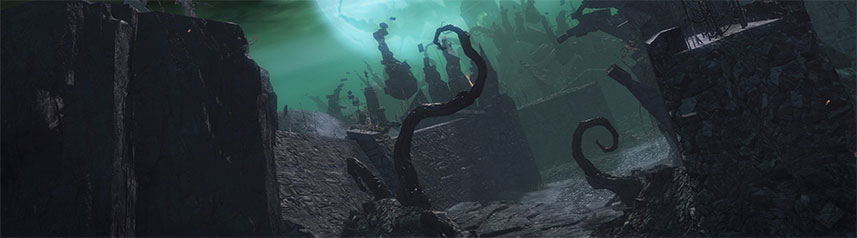
Guild Wars 2 drops you into Tyria, a high fantasy continent scarred by the return of the Elder Dragons and the chaos that follows in their wake. You create a character from five playable races and pick a profession that defines your combat toolkit, then spend most of your time exploring large zones built around open-world objectives, story chapters, and constantly cycling public events. While the game launched as buy-to-play, ArenaNet later converted the core game to free-to-play on August 29, 2015. Expansions remain paid, but free accounts can still access a substantial portion of Tyria with only a handful of limitations.
Guild Wars 2 Key Features:
- Narrative Focus – personal story steps and events that shape what happens around you.
- Professions and Races – over nine playable classes (professions) alongside five distinct races.
- Polished Presentation – strong art direction, a clean UI, and a standout musical score.
- Skill Aiming Matters – many attacks are targeted and benefit from positioning and timing.
- Multiple PvP Styles – structured arenas plus massive World vs World battles.
- Normalized PvP Stats – competitive modes equalize levels and attributes to keep matches skill-driven.
Guild Wars 2 Screenshots

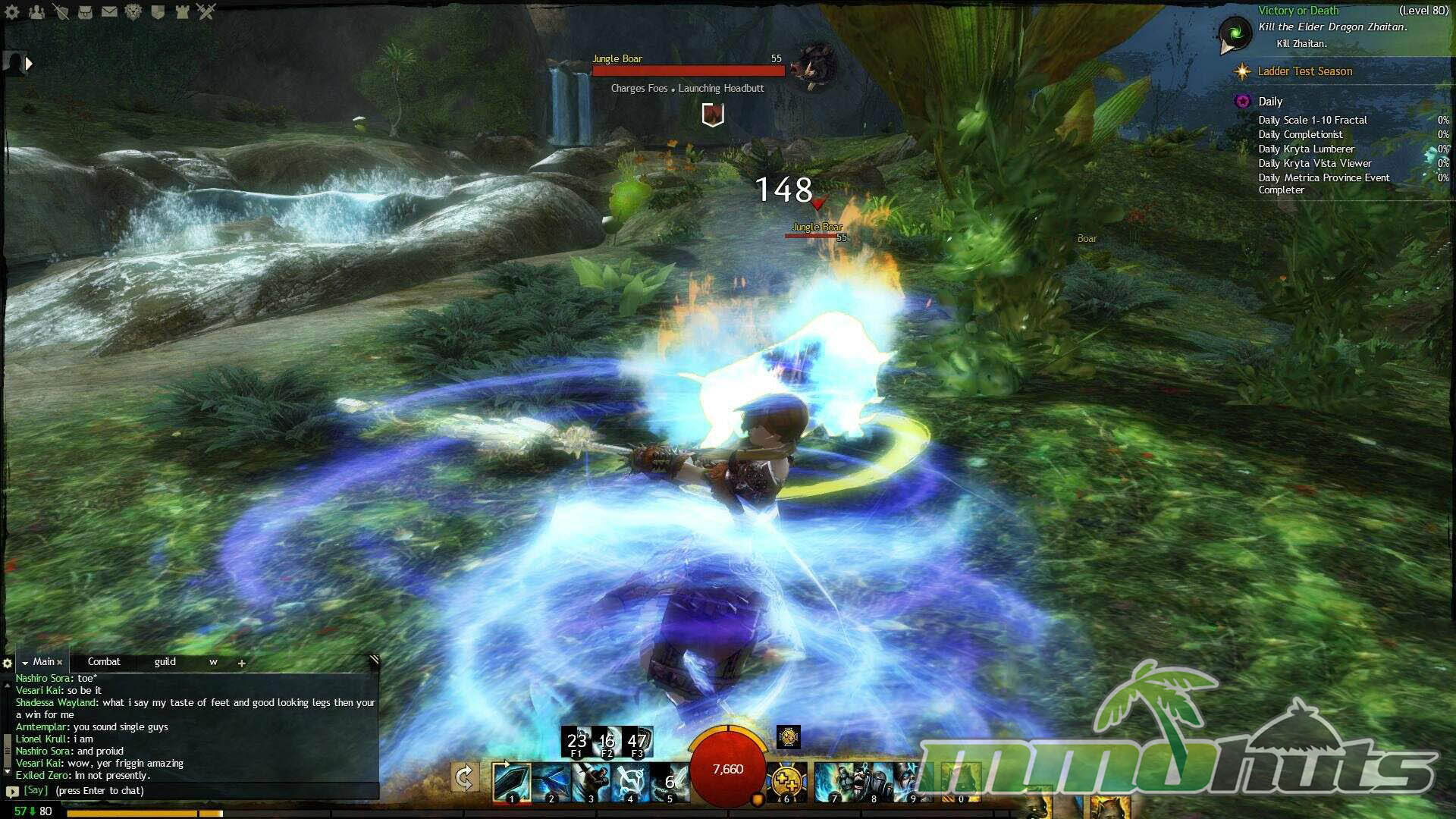

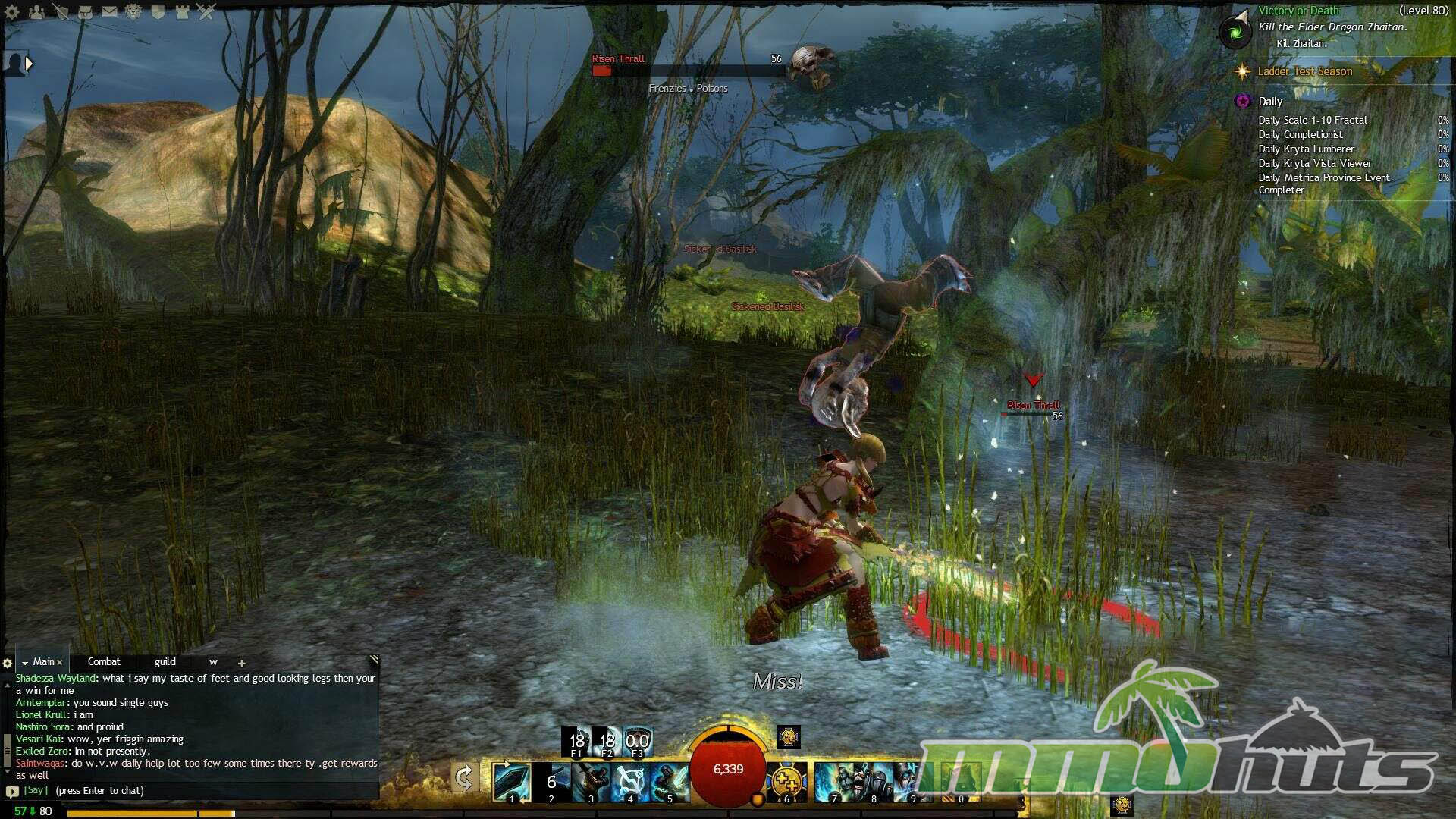
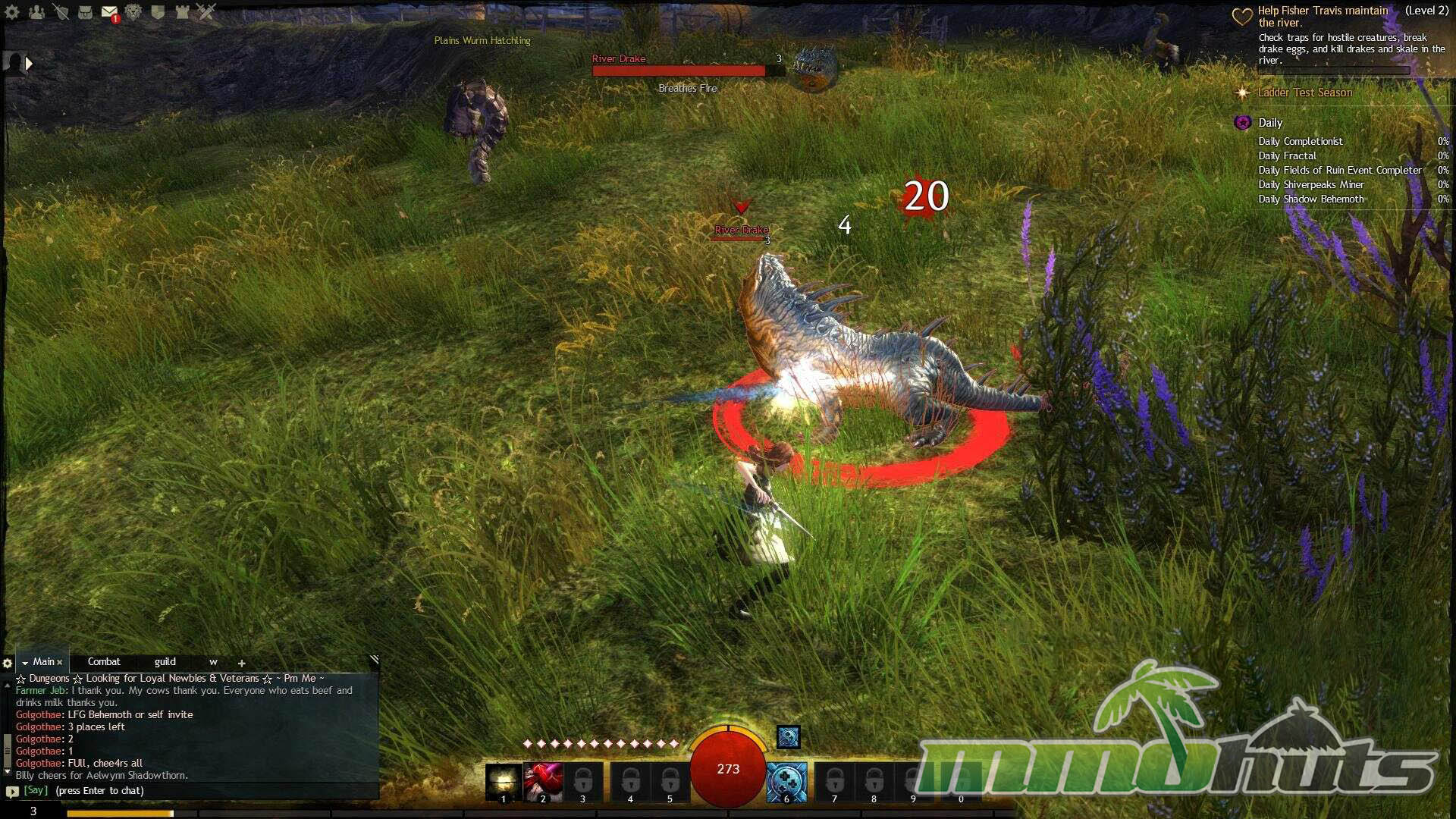
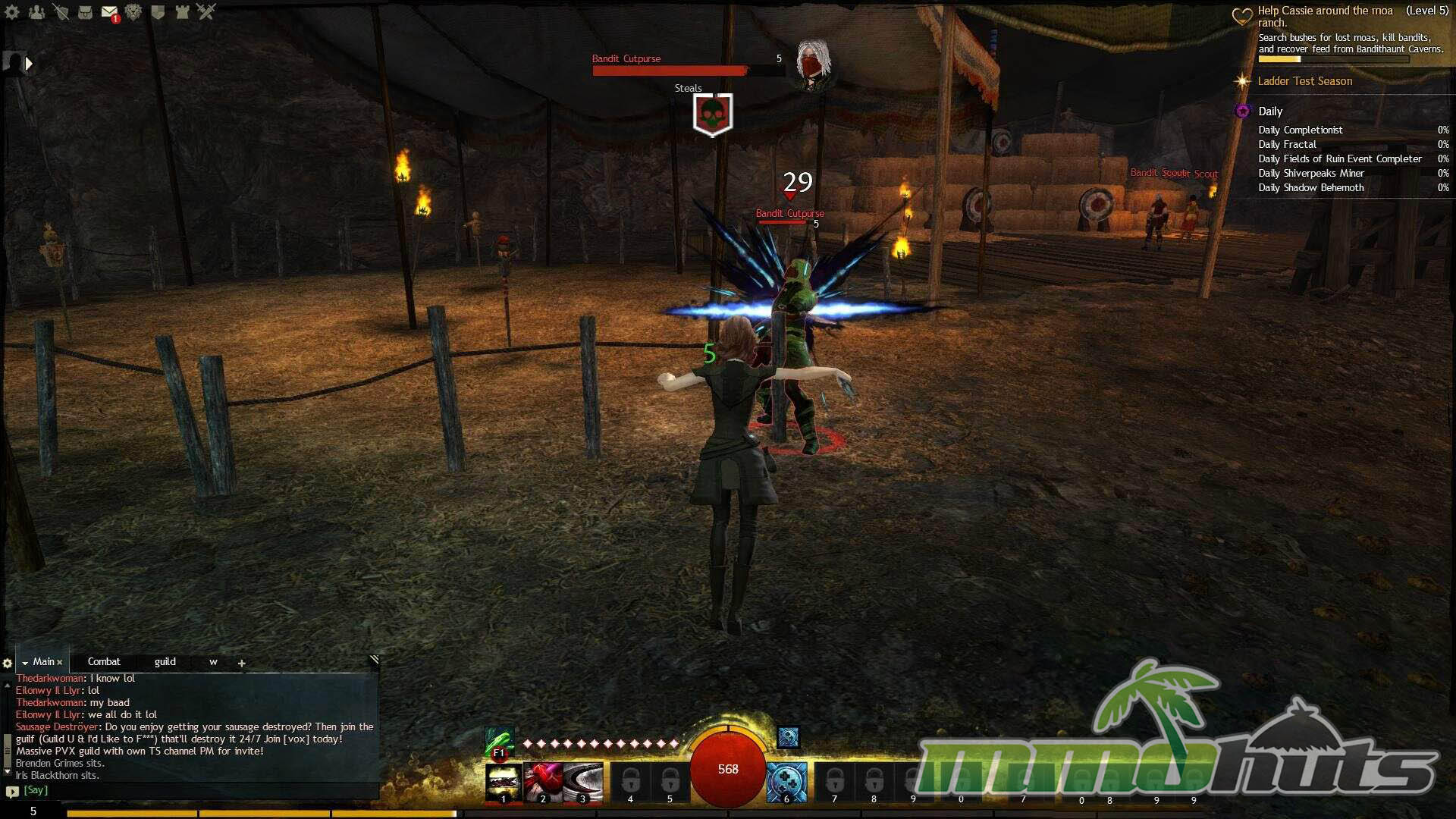
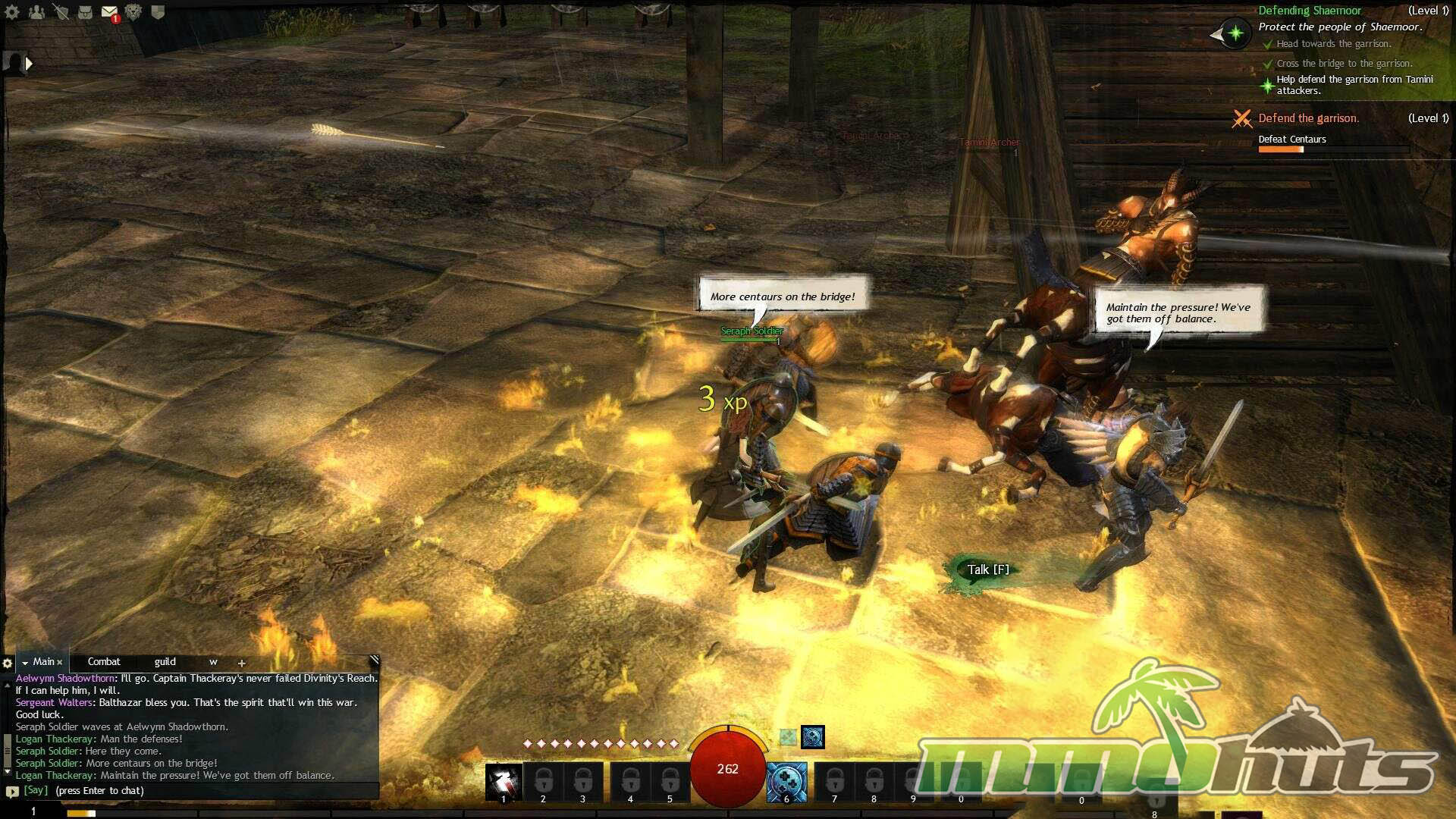
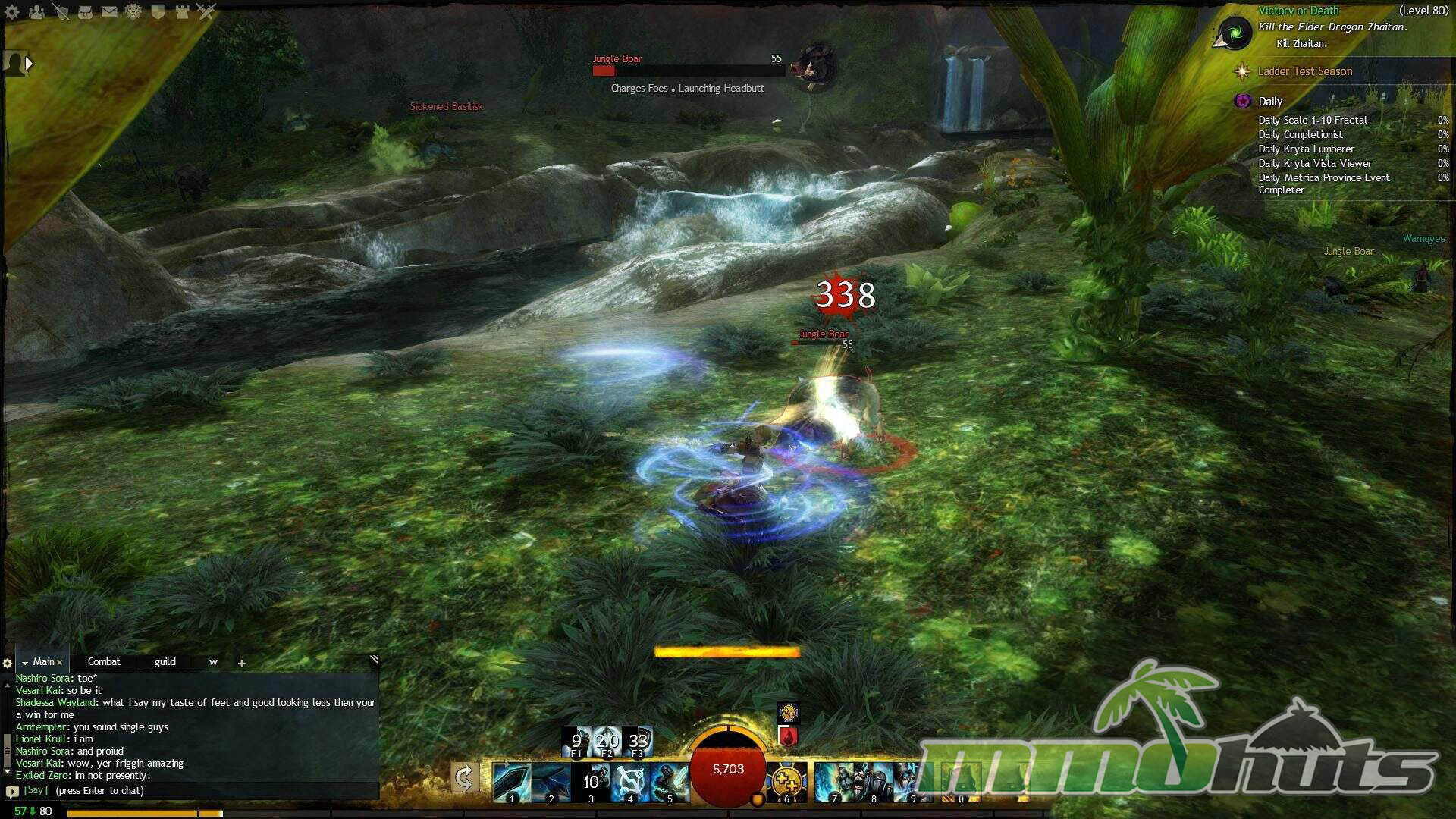
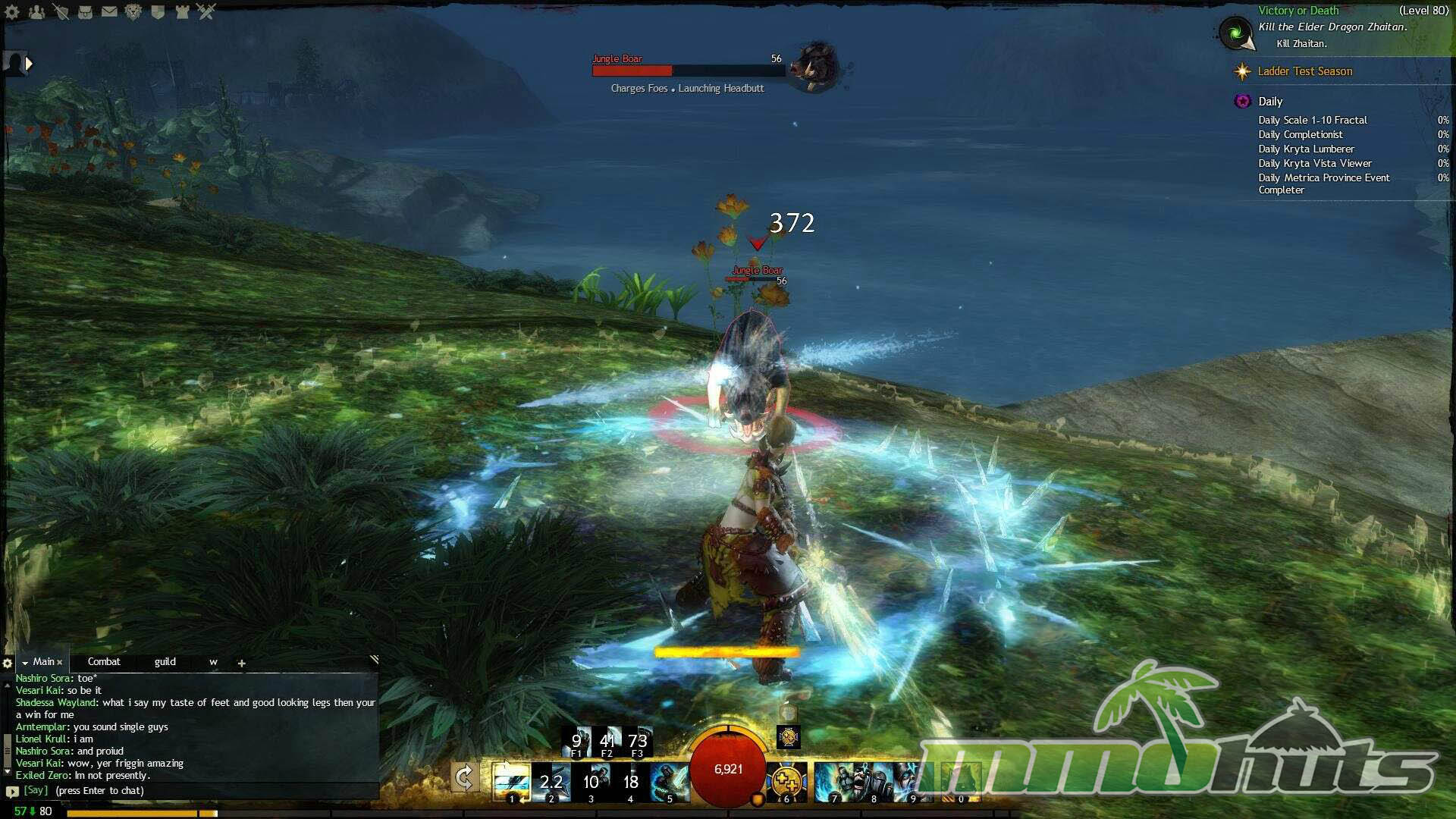
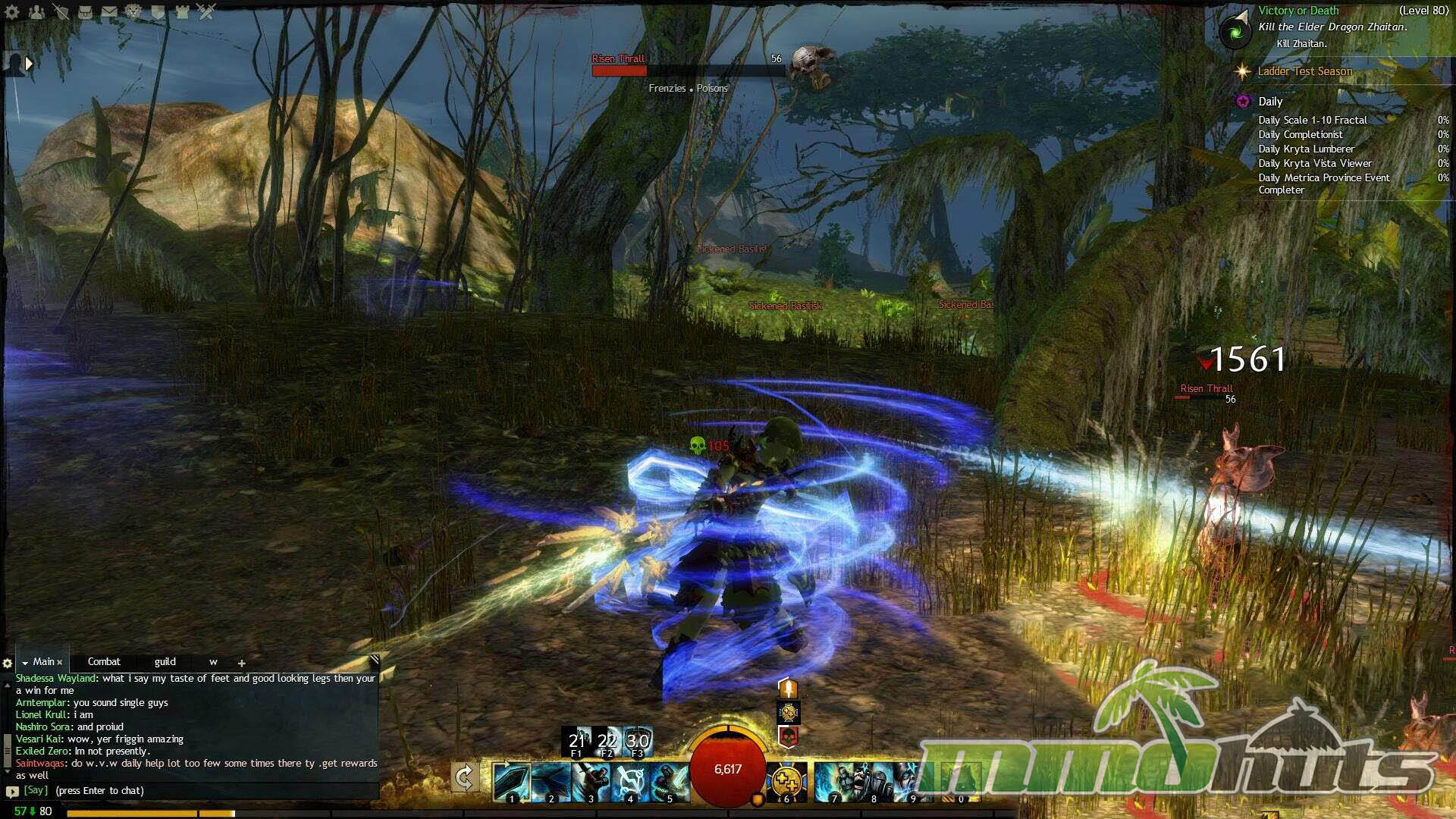

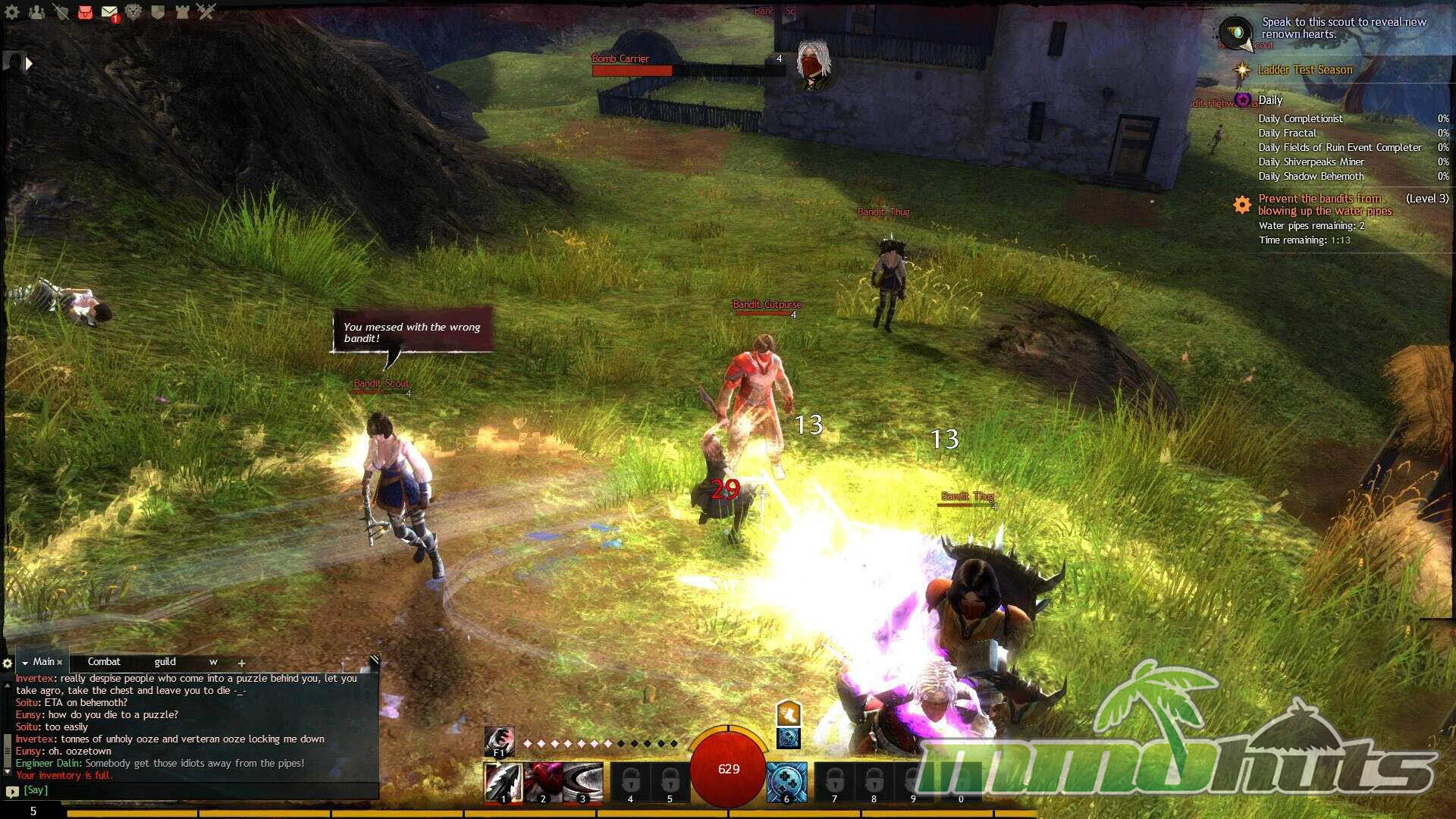
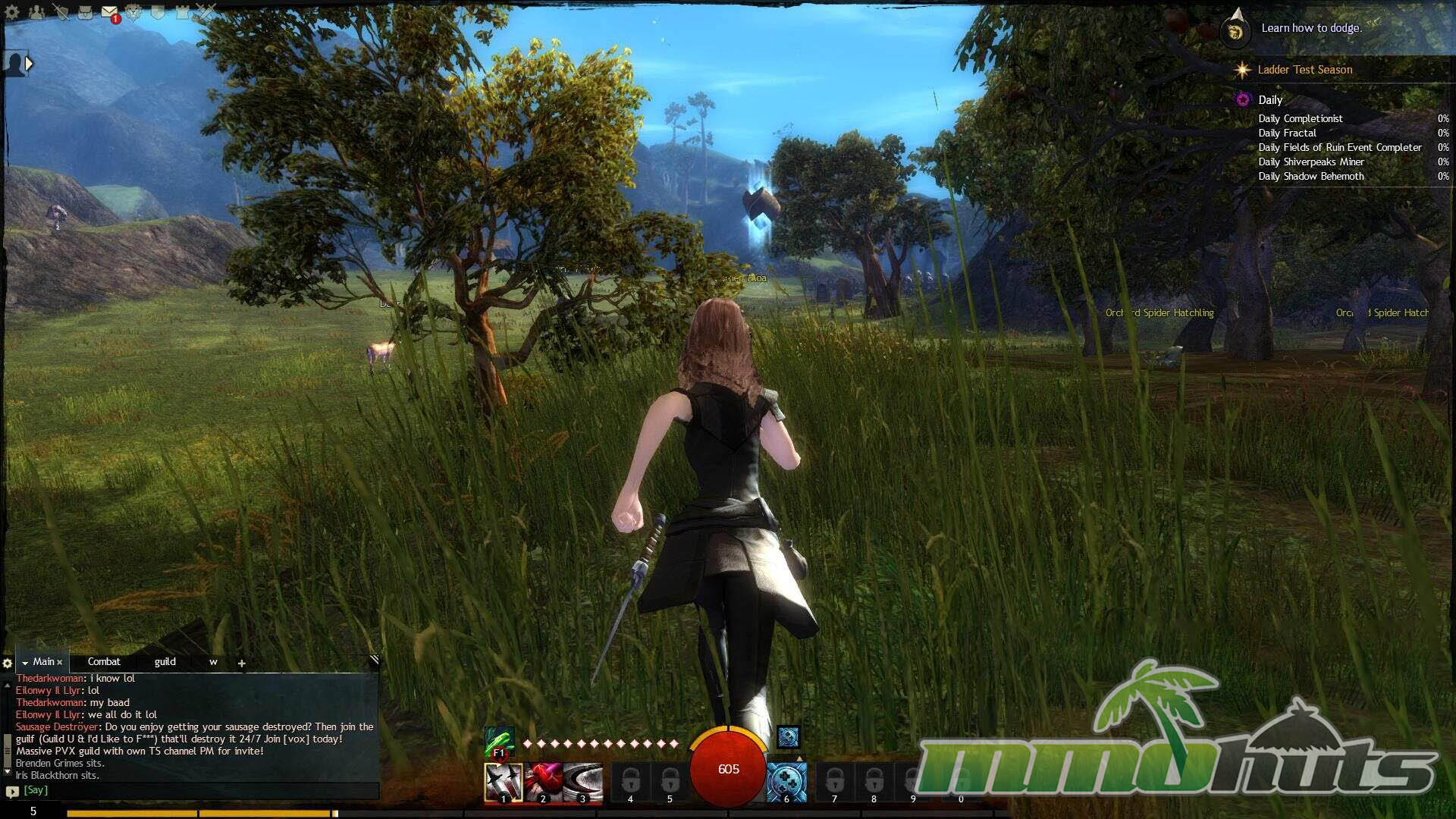
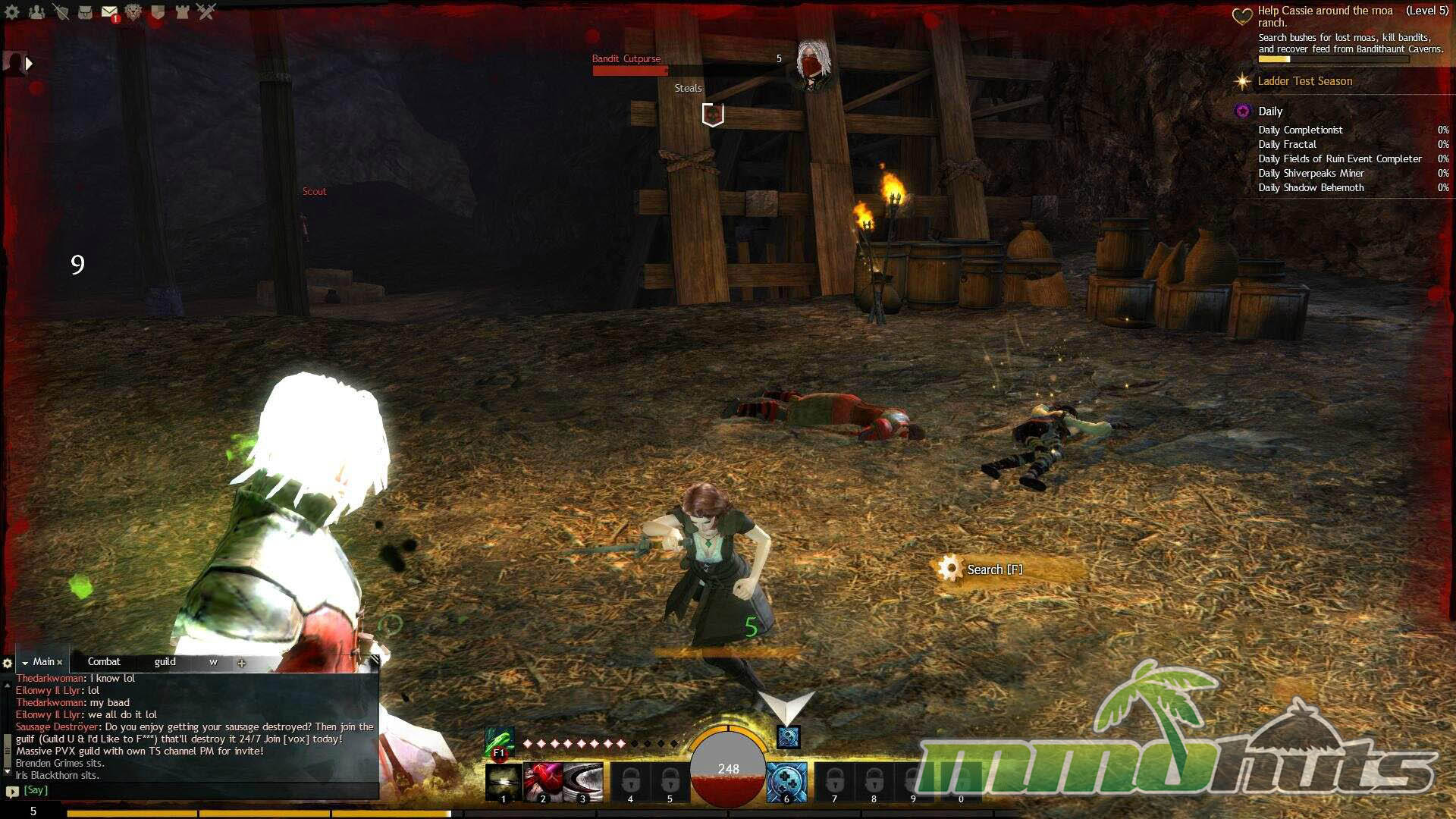
Guild Wars 2 Featured Video

Guild Wars 2 Classes
Professions:
- Guardian – defensive, supportive front-liners who mix protective magic with heavy armor and flexible weapon choices.
- Warrior – durable fighters built around raw power, mobility, and a solid spread of offensive and defensive tools.
- Thief – stealth-oriented duelists that thrive on burst damage, repositioning, and punishing isolated targets.
- Ranger – ranged specialists who use bows and rely on animal companions to pressure enemies and control space.
- Elementalist – masters of elemental attunements, swapping between fire, water, air, and earth to adapt on the fly.
- Mesmer – illusionists that confuse opponents with clones and misdirection, then detonate setups for spikes of damage.
- Necromancer – dark casters who manipulate life force, summon minions, and wear opponents down through attrition.
- Engineer – gadget users who lean on kits, turrets, grenades, and elixirs to solve fights in creative ways.
- Revenant – Released alongside the Heart of Thorns expansion, Revenants are heavy-armored melee combatants empowered by supernatural forces.
Races:
- Asura – brilliant, small-stature inventors who value intellect above brute strength and thrive on experimentation.
- Sylvari – curious, idealistic adventurers with a strong pull toward purpose, exploration, and defending Tyria.
- Human – survivors of a diminished empire who continue to fight for their future despite losing much of their old world.
- Norn – towering hunters forced from their homeland by the Ice Dragon, now chasing glory and legendary challenges.
- Charr – militaristic conquerors who prize victory and discipline, with little patience for weakness or hesitation.
Guild Wars 2 Review
Guild Wars 2 (often shortened to GW2) is a 3D fantasy MMORPG developed by ArenaNet and published by NCSOFT. It officially launched on August 28, 2012, with a three day head-start for players who pre-purchased access. For its first years it operated as a one-time purchase MMO rather than a subscription game, then the core version switched to free-to-play on August 29, 2015. The overall model is straightforward today, the base game is free, while expansions are paid.
The setting is Tyria, roughly 250 years after the events of Guild Wars: Eye of the North. The world is in crisis as Elder Dragons awaken and reshape civilizations, forcing the major factions into uneasy alliances. Your character is drawn into that conflict and eventually works to reunite Destiny’s Edge, a disbanded guild whose members become central figures in the broader story. Importantly, a lot of the moment-to-moment content is built around events that can change based on what you and other nearby players do, which gives zones a more reactive feel than traditional quest hubs.
Creating Your Character and Personal Story
Character creation in Guild Wars 2 is more involved than many MMOs, especially if you care about role-play and narrative flavor. It is presented as a multi-step process, but it is easy to speed through thanks to a “Skip to End” option that randomizes choices and takes you directly to naming. If you do take the time, you pick from five races with distinct aesthetics and starting areas, plus small race-specific skills. Those racial skills can be situationally useful, but for most players they are not the deciding factor, it is generally smarter to choose the race you actually want to look at for dozens of hours.
After race selection you choose your profession. At launch there were eight, with a ninth introduced alongside the first expansion, Heart of Thorns. Visual customization is robust, with enough sliders and options to avoid the “same face” problem common in older MMOs. The standout step is the biography section, a set of multiple-choice prompts that define parts of your background. Those answers feed into your personal story chapters and can affect dialogue and how certain NPC interactions are framed, which helps your character feel less generic than the average MMO hero template.
First Steps in Tyria
Your opening minutes are guided by a race-specific prologue that doubles as a tutorial. It introduces movement, combat basics, interacting with NPCs, and the core UI, then continues to surface tooltips as new systems appear. The onboarding is fairly friendly, even for players who have not touched an MMO in years.
Presentation is one of Guild Wars 2’s consistent strengths. The environments are varied and densely detailed, and the art direction makes zones memorable even when you are simply traveling between objectives. Spell effects are flashy without completely drowning the battlefield, and the soundtrack does excellent work carrying tone, from calm exploration to large-scale fights. Voice acting appears frequently in major dialogue, and while the writing generally lands, there are occasional lines that feel stiff or uneven. The game also uses stylized, hand-drawn artwork in a way that complements the world’s identity.
Questing Without the Old Checklist
Guild Wars 2 does not rely on a constant chain of “talk to NPC, accept quest, return to NPC” loops. Outside of personal story steps, most zone progress comes from hearts (local task lists) and dynamic events that trigger in the open world. You usually do not need to formally accept anything, you show up, participate, and get credit. This design makes it easy to roam and still feel productive, and it reduces downtime when you are playing casually.
That said, freedom does not automatically eliminate repetition. Hearts and events still boil down to familiar MMO actions such as clearing enemies, interacting with objects, escorting NPCs, or defending locations. The difference is in how smoothly they flow into each other and how often the world gives you something to do without requiring a return trip to a quest giver.
Dynamic events are the system most players associate with GW2. They can escalate into chains that end in large encounters, sometimes with bosses that draw a crowd. When the timing works out and enough players are around, these moments are some of the best content in the game, they feel communal and spontaneous, like the zone is actually responding to a crisis.
The downside is that this same system can be messy. Because events can start automatically, you can join an objective midstream without much narrative context, and it is not always clear why you are doing what you are doing beyond “help because it is happening.” Events also depend on being in the right place at the right time, and certain fights are much harder to complete alone. Even with those drawbacks, the overall effect is positive, it supports multiple playstyles and lets you progress without being forced into a strict, linear leveling route.
Combat, Movement, and Build Flexibility
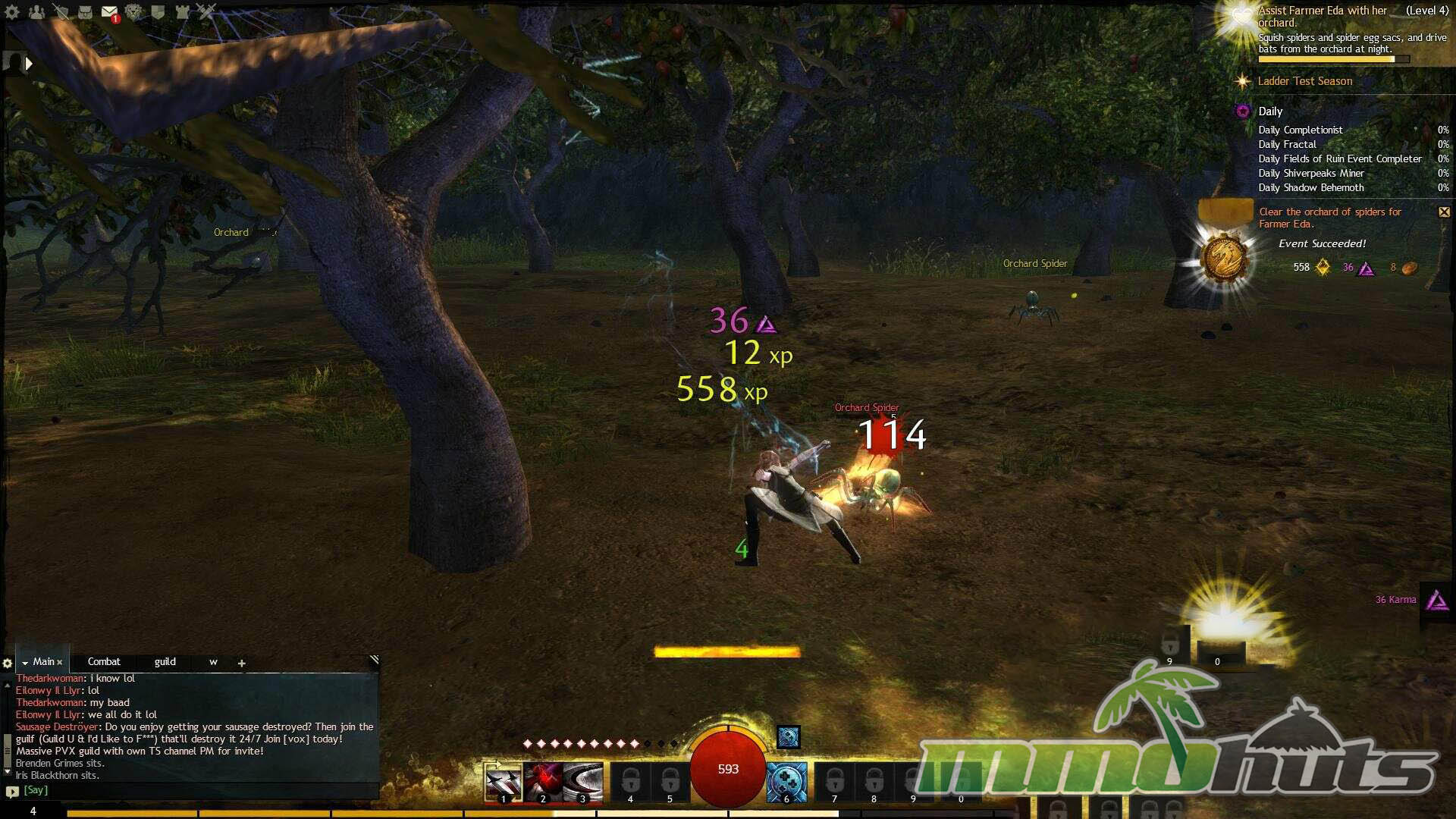
Combat leans toward an action MMO feel. You move freely with WASD, position matters, and many abilities require actual aiming rather than tab-targeting and firing off casts from a safe distance. Enemies react in ways that encourage movement, ranged foes reposition, groups can surround you, and avoiding damage often means dodging and adjusting your angle rather than simply out-gearing the threat.
Build customization is tied closely to weapon choice. Equipping a different weapon changes a portion of your skill bar, letting you shift roles and tactics without rerolling. Professions still have weapon restrictions, so it is not a full “everything can use everything” system, but it provides meaningful variety. As you level, skills improve automatically, and you can further shape your character through Traits, passive bonuses that enhance specific play patterns and stats. Traits can be unlocked by completing activities and tasks or purchased with coin. Skill points also accumulate as you progress, and by mid to late game you will typically have far more options than you can equip at once. That limitation is a feature, it forces choices, and it keeps two characters of the same profession from feeling identical in both PvE and PvP.
PvP Modes: From Competitive to Casual
Guild Wars 2 supports multiple PvP audiences. World vs World is the headline mode, pitting large groups against each other across dedicated maps with objectives that encourage long sessions and coordinated play. If you prefer a more structured format, the game also offers classic arena-style modes such as Conquest and Team Deathmatch through the PvP interface. For something lighter, “Activities” provide quick mini-games that act as palate cleansers between PvE sessions, including brawls and party-style diversions.
A key design choice is stat normalization in PvP, similar to the original Guild Wars. When you enter many competitive modes, levels and attributes are adjusted to maximum values for the match. That approach lowers the gear barrier and places more emphasis on build choices, coordination, and execution.
Monetization and the Gem Store
The core game is free-to-play, while expansions are sold separately. On top of that is the gem store, where gems purchased with real money can be used for cosmetics, convenience items, boosts, and account upgrades such as extra character slots. The shop’s focus is largely cosmetic, and it avoids the worst pay-to-win pitfalls seen in some free MMOs. Gems can also be exchanged for gold, which means players who prefer to grind in-game can still access premium items without paying, while spenders can trade money for currency in a controlled, official way.
Final Verdict – Excellent
Guild Wars 2 stands out for how it structures open-world play. Dynamic events and zone-wide objectives reduce the friction of grouping up and make it easy to stumble into meaningful content without planning a schedule around it. The trade-off is that the constant event flow can sometimes feel context-light, and the underlying activities can become repetitive if you are chasing completion for long stretches. Even so, the combination of strong presentation, fluid combat, flexible builds, and varied PvP makes GW2 a compelling MMORPG, especially for players who want a large world to explore without a subscription hanging over every login.
Guild Wars 2 Links
Guild Wars 2 Official Site
Guild Wars 2 Official Wiki [Database / Guides]
Guild Wars 2 Wikipedia
Guild Wars 2 Subreddit
Guild Wars 2 Requirements
Minimum Requirements:
Operating System: Windows XP SP 2 or newer
CPU: Core 2 Duo 2 GHz, Core i3 OR Athlon 64 X2 or better
RAM: 2 GB RAM
Video Card: GeForce 7800, ATI X1800, or Intel HD 3000
Hard Disk Space: 25 GB available space
Mac Minimum Requirements:
Operating System: Mac OS X 10.7.X or later
CPU: Intel Core i5 or better
RAM: 4 GB RAM
Video Card: GeForce 320M, ATI Radeon HD 6630M, Intel HD 3000 or better
Hard Disk Space: 25 GB available space
Guild Wars 2 Music
Guild Wars 2 Additional Information
Developer: ArenaNet (Subsidiary of NCSOFT)
Publisher: NCSOFT
Game Engine: Guild Wars Engine, Havok, and Umbra Occlusion
Other Platforms: Mac OS X
Game Director(s): Mike O’Brien
Game Design(s): Colin Johanson and Eric Flannum
Composer(s): Jeremy Soule
Announcement Date: May, 08, 2014
Closed Beta Date: April 08, 2015
Closed Beta End Date: April 17, 2015
Launch Date: April 21, 2015
Steam Release Date: April 21, 2015
Expansion Release Dates:
Heart of Thorns: October 23, 2015
Path of Fire: September 22, 2017
End of Dragons: February 28, 2022
Secrets of the Obscure: August 22, 2023
Development History / Background:
Guild Wars 2 was created by ArenaNet in Bellevue, Washington, built on the Guild Wars engine. Work on the sequel began in 2007 when the team concluded the original game could not be scaled to match their ambitions for a larger, more seamless world. The project was revealed on March 27, 2007 at the same time as the announcement of the final Guild Wars expansion, which served as a bridge in both narrative and design philosophy. Although the initial target was a 2011 release, development continued until the eventual launch on August 28, 2012, with pre-purchasers receiving early access on August 25. A Mac OS X client followed on September 18, 2012. A console version was discussed earlier in development, but there is still no official confirmation, and it appears unlikely.