Savage Lands is a fantasy-themed sandbox survival game that drops you onto an icebound island with nothing but your wits. Starting with no gear, you are expected to scavenge, craft, and adapt to freezing nights, dangerous wildlife, mythical monsters, and the unpredictable threat of other players.
 | Publisher: Signal Studios Playerbase: Low Type: B2P Survival Game Release Date: March 05, 2015 PvP: Open World Pros: +Fantasy survival premise. +Deep crafting and harvesting loops. +Villages and loot appear in randomized locations. Cons: -Rough, unintuitive interface. -Melee combat lacks polish. -Performance issues, may not run well on some PCs. |

Savage Lands Overview
Savage Lands blends classic survival routines with a colder, darker fantasy spin. You roam a wind-beaten island that is constantly hit by snowstorms, while tracking basic vitals and trying to stay alive long enough to turn a few scraps into real equipment. The early game revolves around scavenging and harvesting, you will be gathering wood and ore by felling trees and breaking rocks, then turning those materials into tools, weapons, clothing, and shelter.
Hunting and creature-slaying feed directly into progression. Deer provide meat and leather, wolves and other threats can be harvested for crafting components, and eventually you are expected to gear up for larger encounters with creatures like Forest Giants and Kur Dragons. The environment itself is an enemy, especially after dark, when temperatures plummet and exposure becomes a constant problem. Fires, shelter, and better armor are not optional, they are the difference between stabilizing for the next day or dying in the snow.
You can play solo or group up, but the island is not yours alone. PvP is open world, and not every survivor is interested in cooperation. Even if the wildlife and weather leave you alone for a moment, another player might not.
Savage Lands Key Features:
- Procedurally Generated – Key points of interest like villages and loot can appear in different places, keeping routes and starts less predictable.
- Dynamic Night And Day – Long day and night cycles combine with punishing weather, making nighttime warmth and visibility a real concern.
- Extensive Crafting – Build up from crude gear to useful weapons, armor, items, and structures by gathering materials and harvesting enemies.
- Fantastical World – Instead of only animals, you also contend with fairy-tale threats like skeleton soldiers, giants, and dragons.
- Survival Focused – Managing meters and status effects is central, the island’s cold and its inhabitants will punish careless play.
Savage Lands Screenshots


Savage Lands Featured Video

Savage Lands Review
Savage Lands opens with a familiar survival-game humiliation: you wake up stranded on a frozen shoreline with no gear and no safety net. The island’s mood is immediately hostile, the wind and snow create constant pressure to find something useful before your meters start sliding into danger. It is the kind of start that teaches you quickly that “exploring later” is not a plan, you need tools, warmth, and a basic routine right away.
First Steps on the Shore
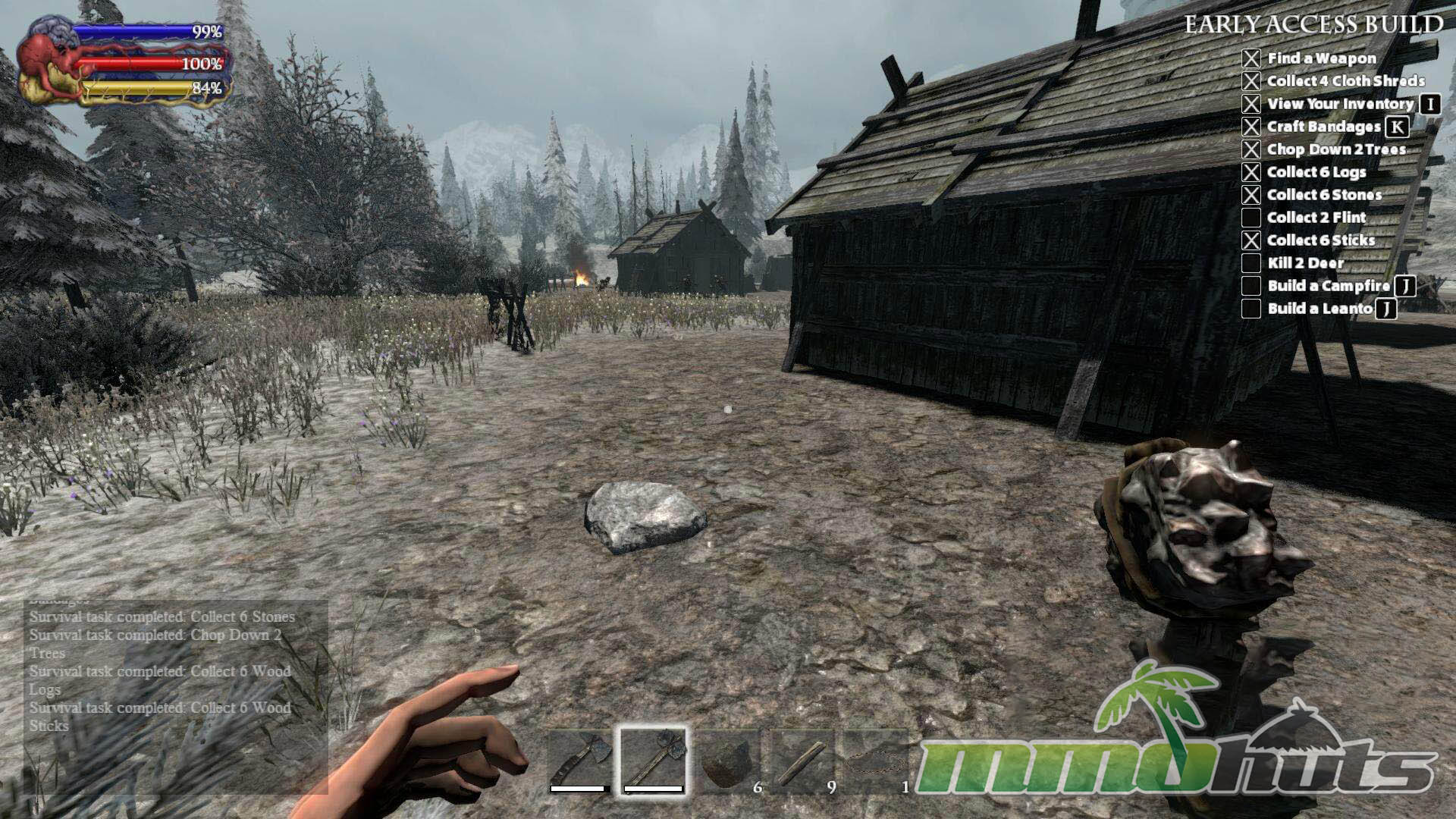
One of the earliest lessons is that harvesting is tool-driven. You are not going to brute-force your way through trees and boulders with your bare hands, the game expects you to locate starter tools first. A hatchet is required for trees and a hammer is needed for stone, which means your opening minutes are often spent checking nearby shelters and spawn-area clutter for the essentials.
Spawns generally put you near a coastline where basic supplies can be found if you search intelligently. Wandering too far down the beach without a plan can leave you under-equipped and exposed, and the island does not give you much time before cold becomes lethal. Once you do get a hatchet in hand, the gathering loop becomes more satisfying. Cutting a pine down and then processing the trunk into usable logs feels like a clear, readable step-by-step action, even if the overall handling can be a bit stiff.
Movement and Inputs
Moment-to-moment control is close to a standard first-person setup, but it lacks a few conveniences that survival fans usually rely on. Sprinting exists, though it can feel subdued, you notice the stamina drain more than the burst of speed. That would be fine if the rest of movement offered more options, but the absence of crouching is a real limitation in a game built around hunting and avoiding threats.
Jumping is present, yet it rarely feels like a meaningful traversal tool, more like a baseline expectation being met. In practice, the combination of limited mobility and harsh exposure can make early survival feel more punishing than it needs to be, not because the island is smart, but because the player toolkit is a bit thin.
Vitals and Debuffs
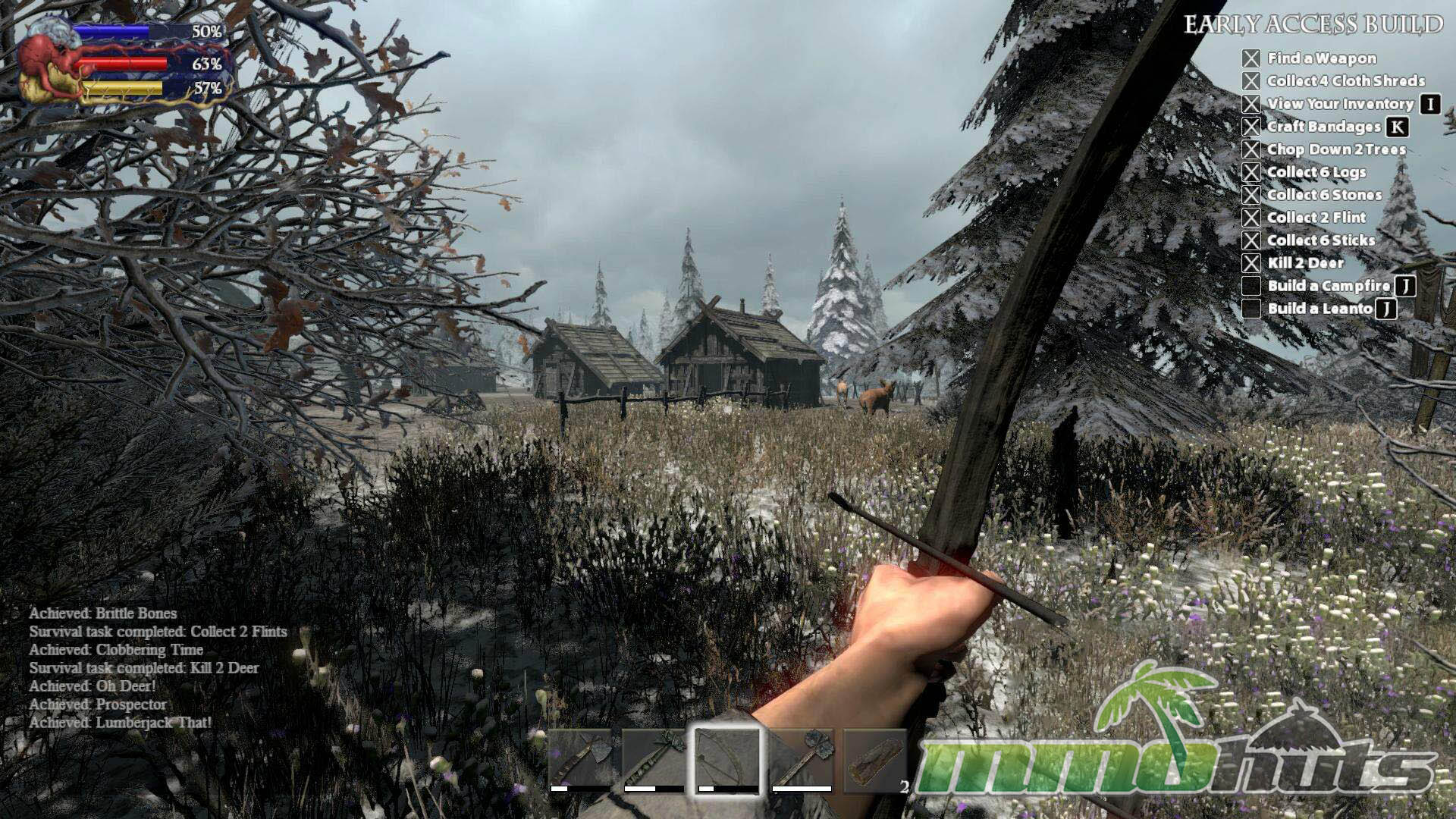
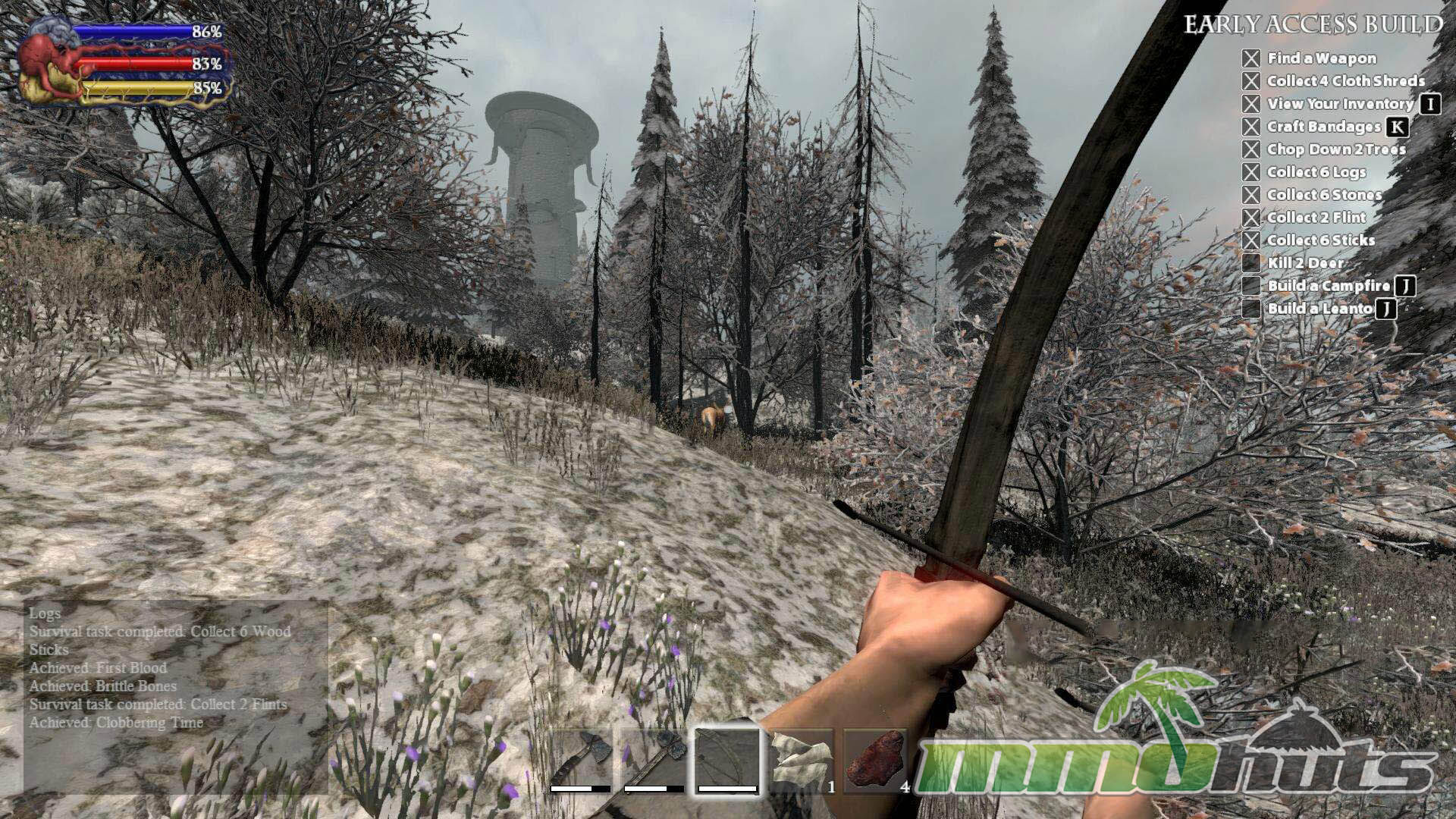
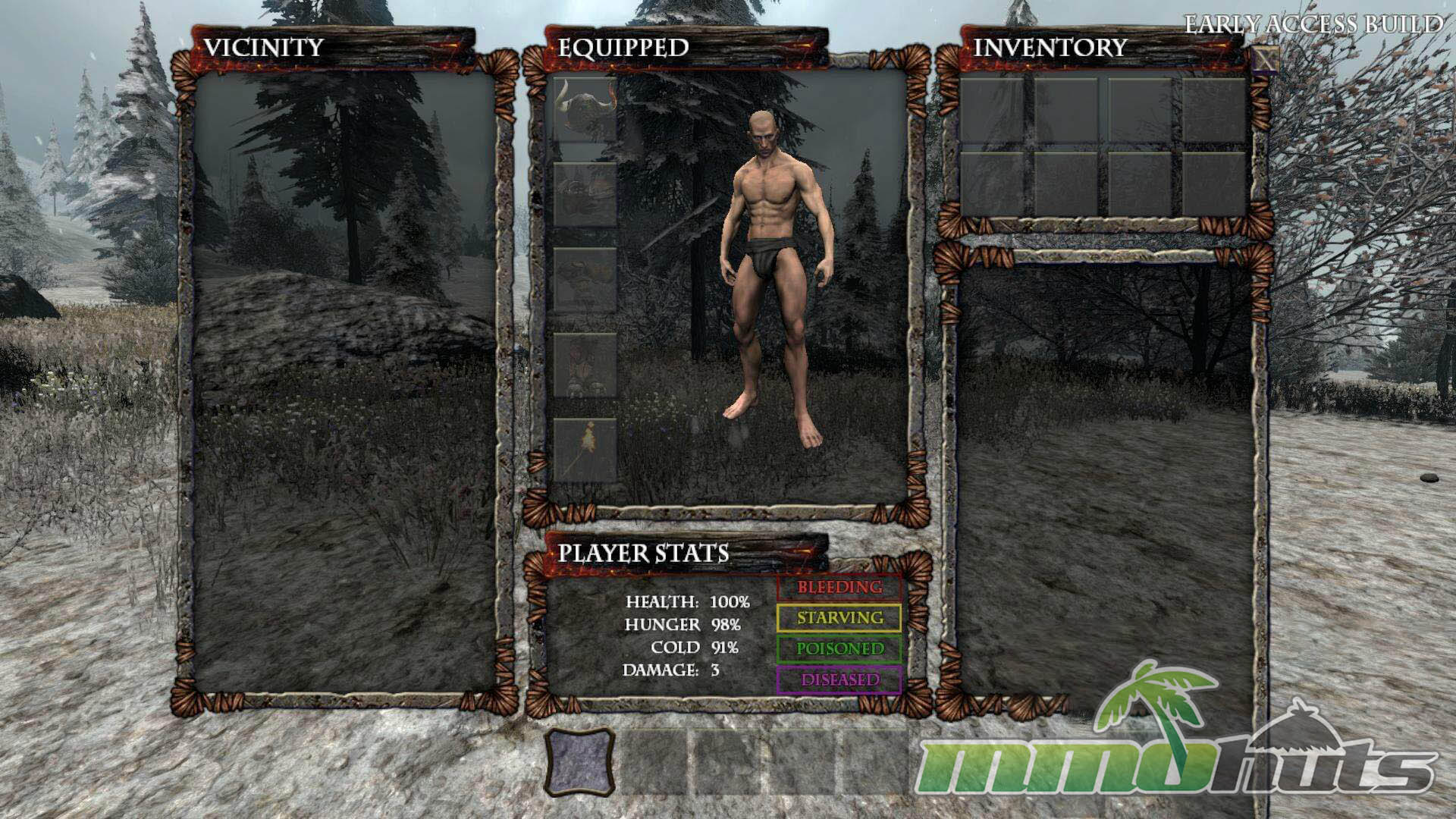
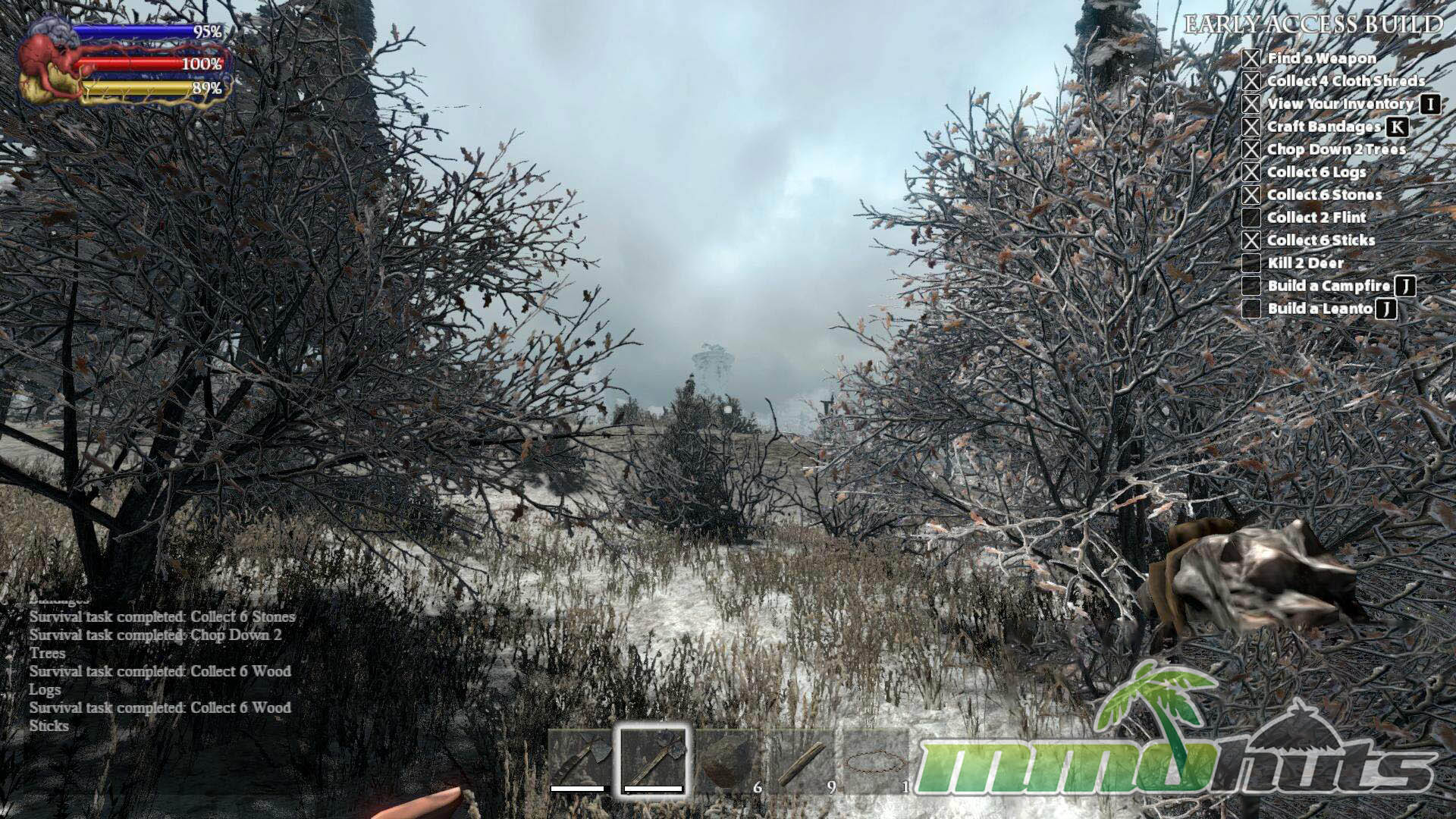
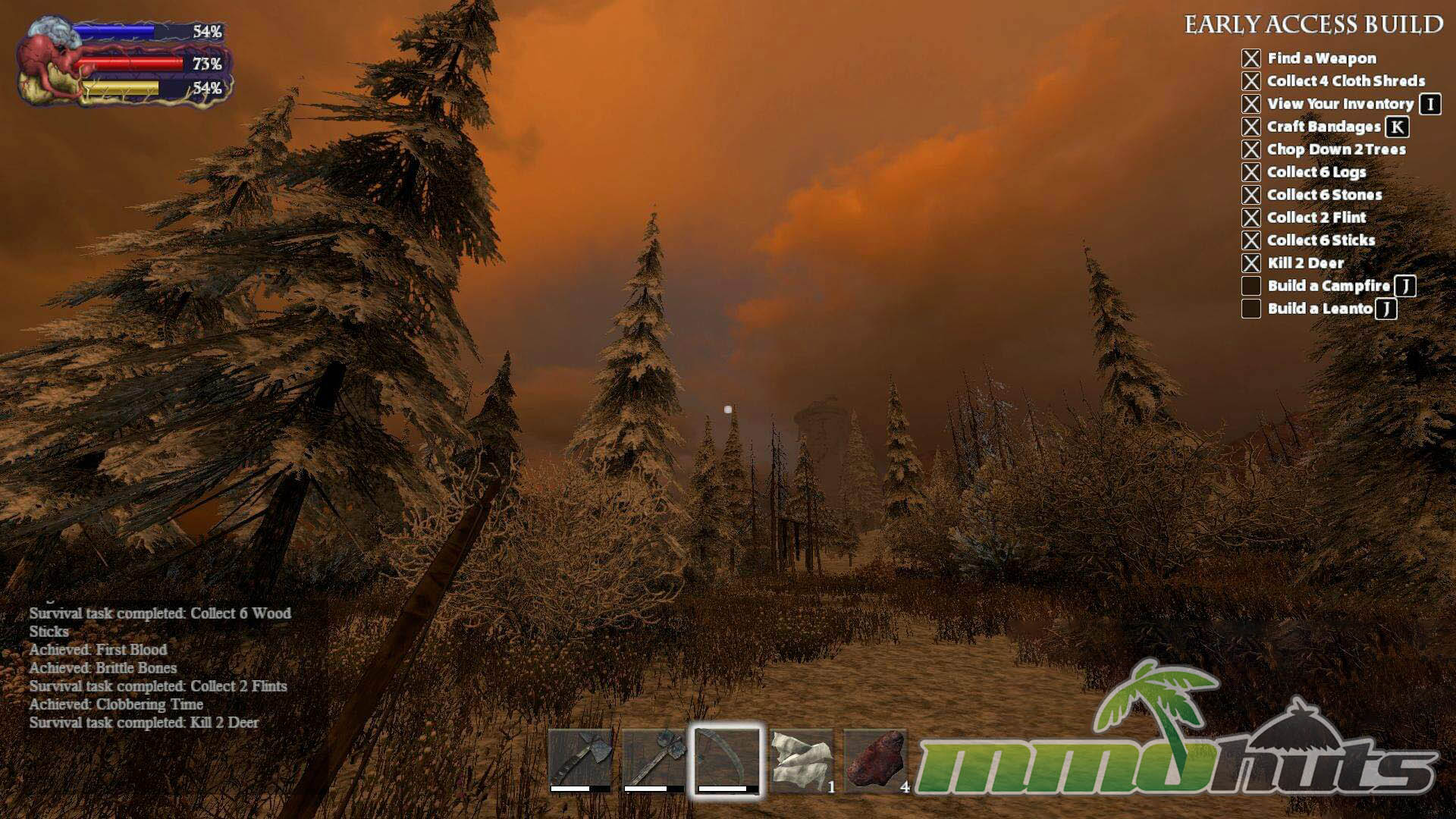
Savage Lands leans hard into meter management. You are watching three primary bars: body temperature (blue), health (red), and stamina (yellow). Temperature is the one that defines the game’s identity, in the early hours it is usually the first meter to hit zero, and once it does, your health starts dropping quickly. Learning how to get a fire going and how to keep warm through the night is the real tutorial.
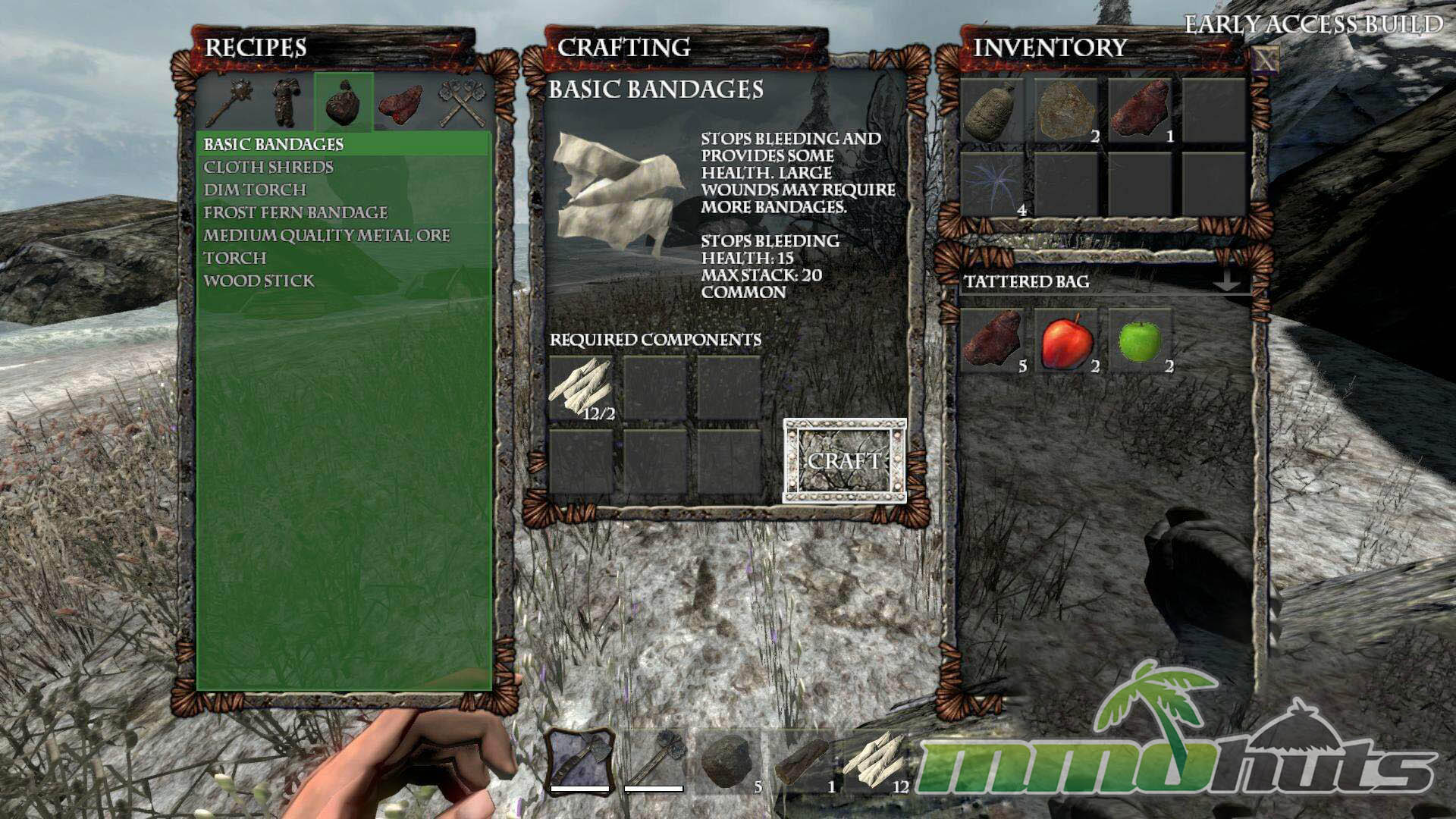
On top of that, combat can apply serious negative effects: Bleeding, Poisoned, Diseased, and Starving. These conditions push you toward crafting and foraging even when you would rather be exploring. Bandages matter, certain gathered items can counter poison, and some effects simply force you to play cautiously until they fade. It adds tension, although it can also pull your attention away from the world itself when you feel like you are constantly checking UI elements.
Visual Style
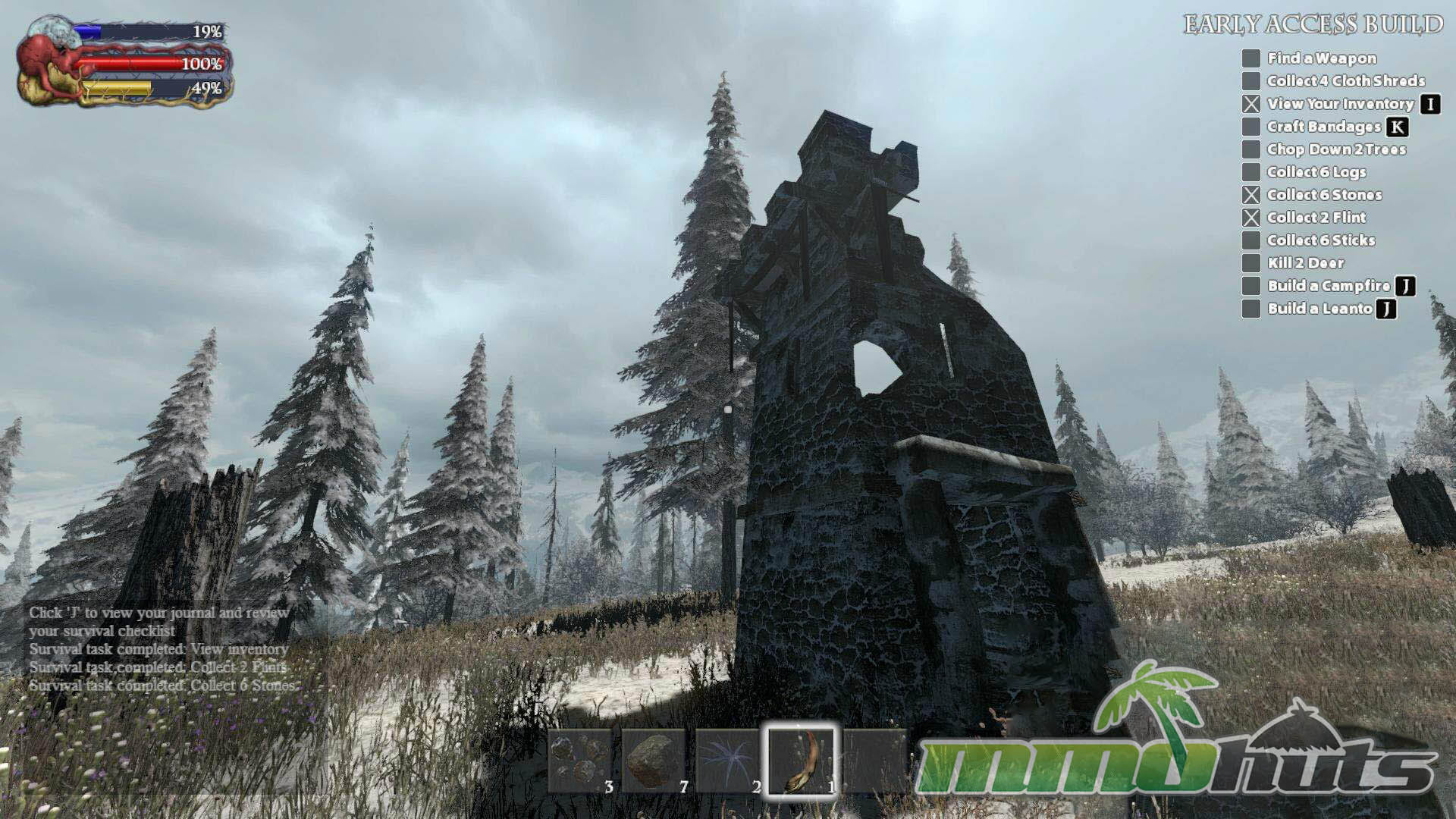
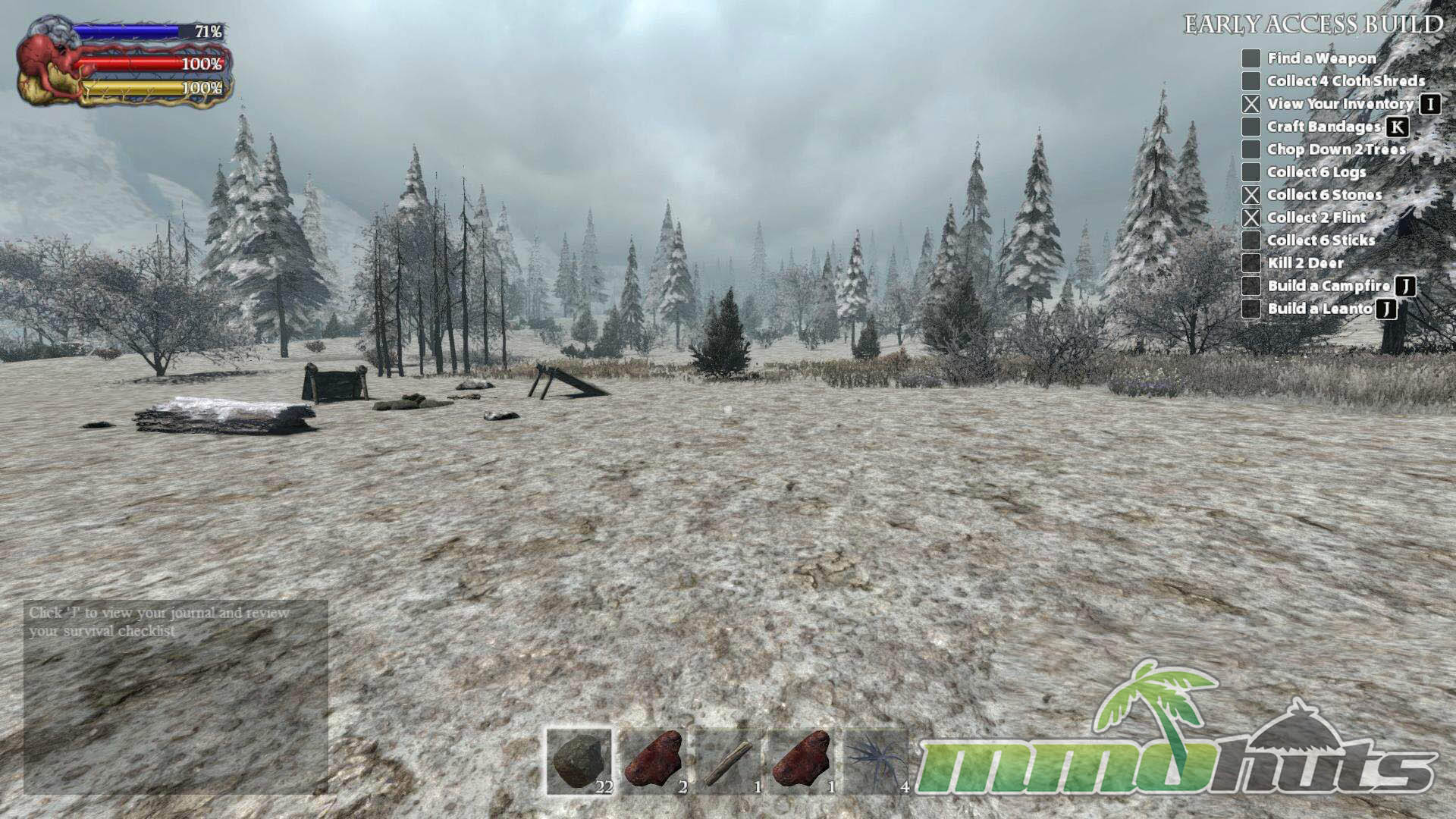
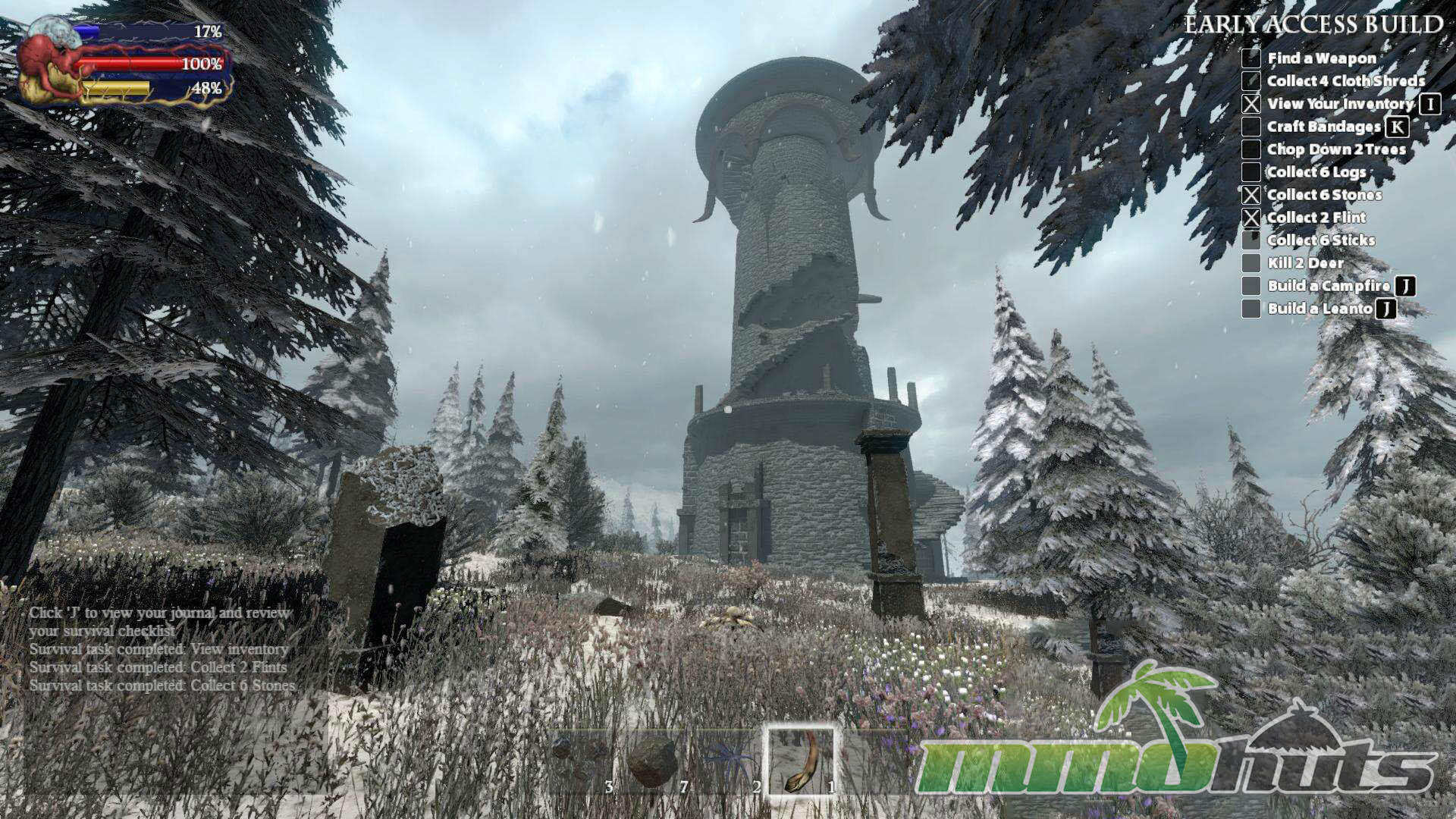
Built in Unity, Savage Lands looks respectable rather than cutting-edge. The atmosphere is dominated by grey skies and a cold palette that fits the premise of being marooned on an arctic island. Store images can make the world look more dramatic than it appears in regular play, but there is still a strong sense of place once you settle into it.
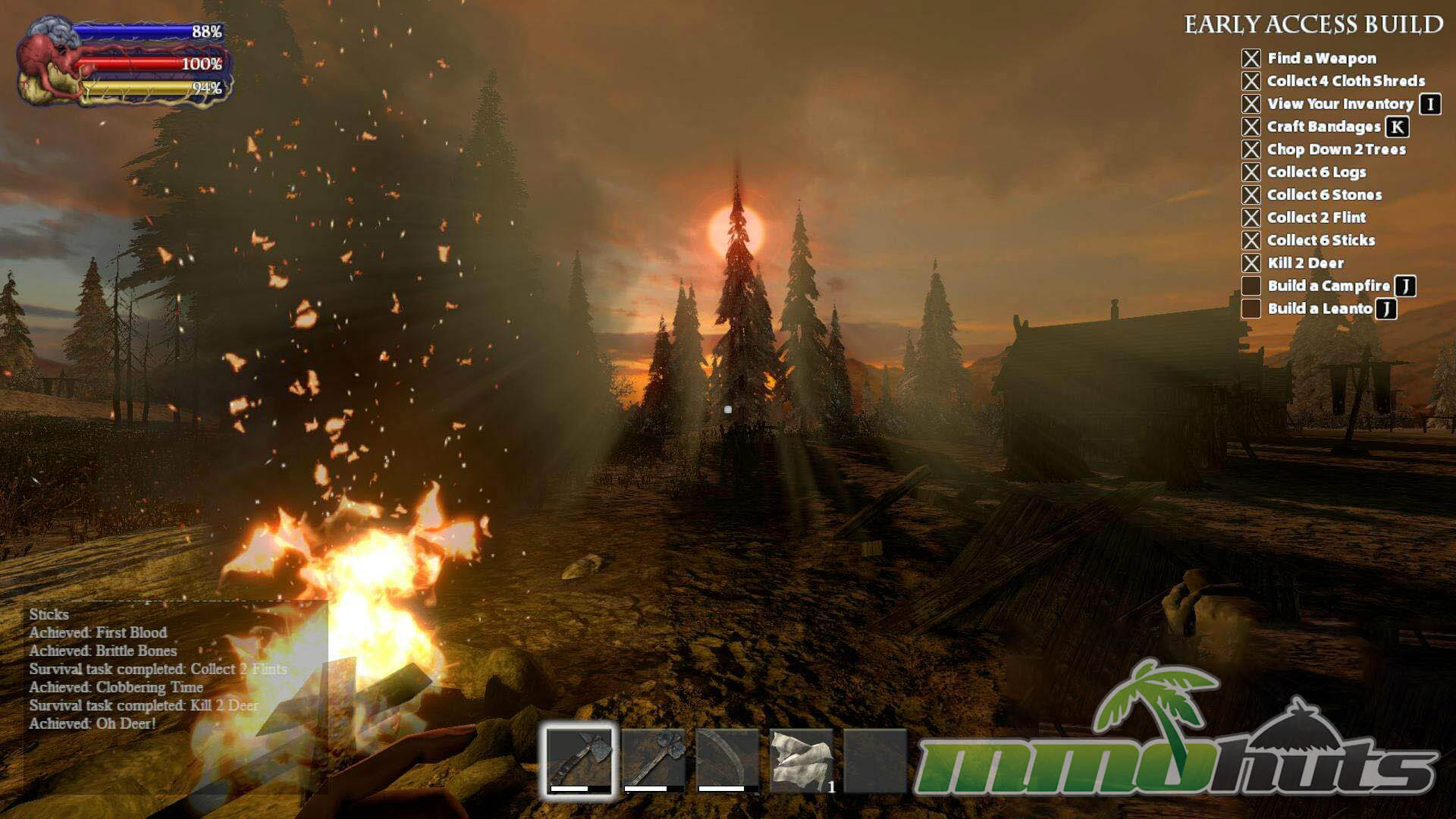
Forests can be dense enough to hide animals and even basic resources, which creates natural “survival stories” where you lose prey in brush or stumble into danger because visibility is poor. Where the game consistently shines is at dusk. Sunset colors can be striking, and when night arrives, the combination of darkness, distant howls, and the glow of a campfire sells the fantasy survival mood. The sky can feel static, like a backdrop rather than a dynamic world system, but it is still visually pleasing when the stars are out.
Crafting and Progression
Crafting is the backbone of the experience, and it is broad enough to keep you working toward new goals. With early stone tools you can start gathering wood, stone, flint, and ore, then open the recipe list (K) to see what you can build. Recipes are organized into five groups: weapons, armor, miscellaneous, food, and tools.
The game encourages you to harvest almost everything. Deer and wolves are not only threats or food sources, they are also stepping stones to better gear via pelts, sinew, and other components. A forge becomes important as you move beyond the basics, and the crafting web expands quickly once you start chasing stronger equipment.
One practical issue is inventory pressure. You will collect a lot of different materials, and it becomes clear that bag space is a priority. That forces meaningful choices about what to carry and what to leave behind, but it can also create frustrating moments where you are “ready to craft” yet lack room to bring everything home.
Fighting Creatures and Players
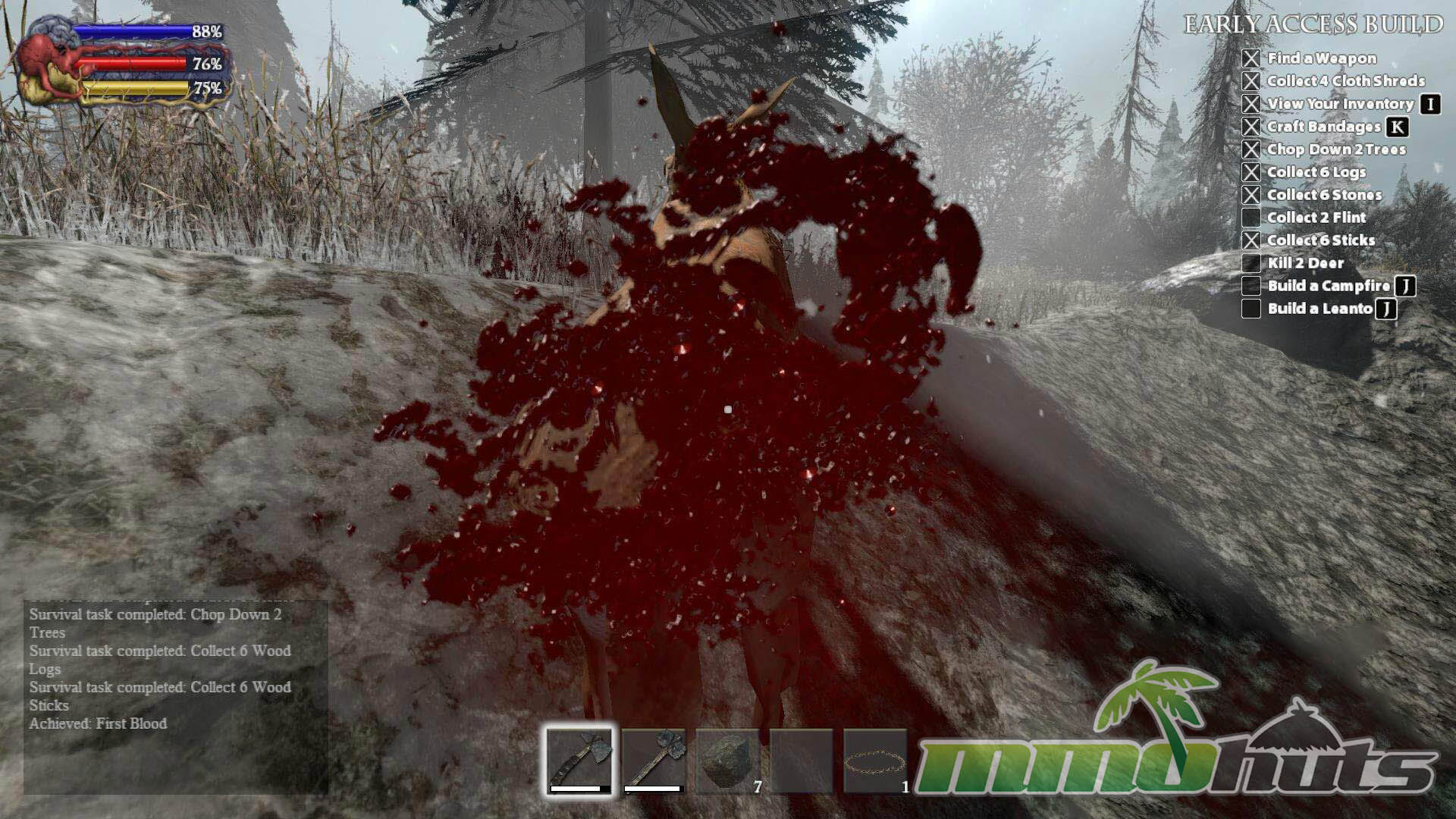
Combat is currently the weakest part of Savage Lands. Encounters can feel odd and under-communicated, sometimes hits do not have the feedback you expect, and fights can turn unintentionally comedic. In a survival game where close-range combat is common, that lack of impact matters.
Mechanically, combat is straightforward to a fault. Attacking is largely a matter of swinging, and without a satisfying defensive layer (like a reliable block) most confrontations come down to gear checks, health totals, and who can keep landing hits. That simplicity also limits PvP, because the best strategy often becomes “out-equip and out-swing,” rather than outplay. The fantasy setting feels like it could support more variety, but as it stands, melee needs more depth and responsiveness to carry the game long-term.
Final Verdict – Good
Savage Lands is an enjoyable survival sandbox with a distinctive fantasy angle, but it also feels like a game that still needs refinement. The crafting system and the island’s atmosphere do a lot of heavy lifting, and when you are in the loop of gathering, building, and preparing for nightfall, it captures the tense rhythm that makes the genre appealing. Exploration is rewarding, and the creature roster gives it a different flavor than more strictly realistic survival games.
At the same time, the interface, combat feel, and technical performance can get in the way. Unless you are comfortable backing a work-in-progress experience, the price may be a tougher sell. For players who want survival mechanics with mythical threats and a strong emphasis on crafting, Savage Lands is worth a close look, especially if you enjoy discovering systems through trial and error and can tolerate some rough edges.
Savage Lands Links
Savage Lands Official Site
Savage Lands Developer Site
Savage Lands Reddit
Savage Lands Gamepedia [Database/Guides]
Savage Lands Wikia [Database/Guides]
Savage Lands System Requirements
Minimum Requirements:
Operating System: Windows XP, Windows Vista, or Windows 7
CPU: Core 2 Duo E4400 2.0GHz or Athlon 64 X2 Dual Core 3800+
Video Card: GeForce GTX 460 or Radeon HD 7750 1GB GDDR5
RAM: 4 GB
Hard Disk Space: 2 GB
Minimum Requirements:
Operating System: Windows XP, Windows Vista, or Windows 7
CPU: Core i5-2300 2.8GHz or Phenom II X4 940
Video Card: GeForce GTX 560 or Radeon HD 6870
RAM: 4 GB
Hard Disk Space: 2 GB
Savage Lands is also available on Mac OS X, Linux, and SteamOS.
Savage Lands Music & Soundtrack
Coming Soon…
Savage Lands Additional Information
Developer(s): DigitalDNA Games LLC, Signal Studios
Game Engine: Unity
Alpha Release Date: February 06, 2015
Release Date: March 05, 2015
Steam Release Date (Early Access): March 05, 2015
Development History / Background:
Savage Lands is a survival project developed by Signal Studios, a Washington-based video game and interactive software company formed in 2008 by industry veterans. The team’s earlier releases include Toy Soldiers (2010) on Xbox 360 and PC, followed by Ascend: Hand of Kul (2013), a free-to-play title released on Xbox 360 and Windows. Signal Studios revealed Savage Lands on January 13, 2015 with a trailer, then distributed Alpha access codes on February 06, 2015. The game later launched on Steam Early Access on March 05, 2015.