Gear Up
 (No Ratings Yet)
Gear Up is a fast, arcade-minded vehicle shooter built around short arena matches where you dismantle rival robots and use your winnings to tweak your own machine. The hook is simple: jump into a brawl, earn currency, swap parts, then return with a new loadout that changes how you move and fight.
 | Publisher: Doctor Entertainment AB Playerbase: Medium Type: Vehicle Shooter Release Date: January 28, 2015 Pros: +Straightforward controls that click quickly. +Clean, polished map visuals. +Lots of build and loadout options. Cons: -Occasional random crashes. -Lag spikes that can ruin fights. -Spawn pressure and spawn-killing on small maps. |

Gear Up Overview
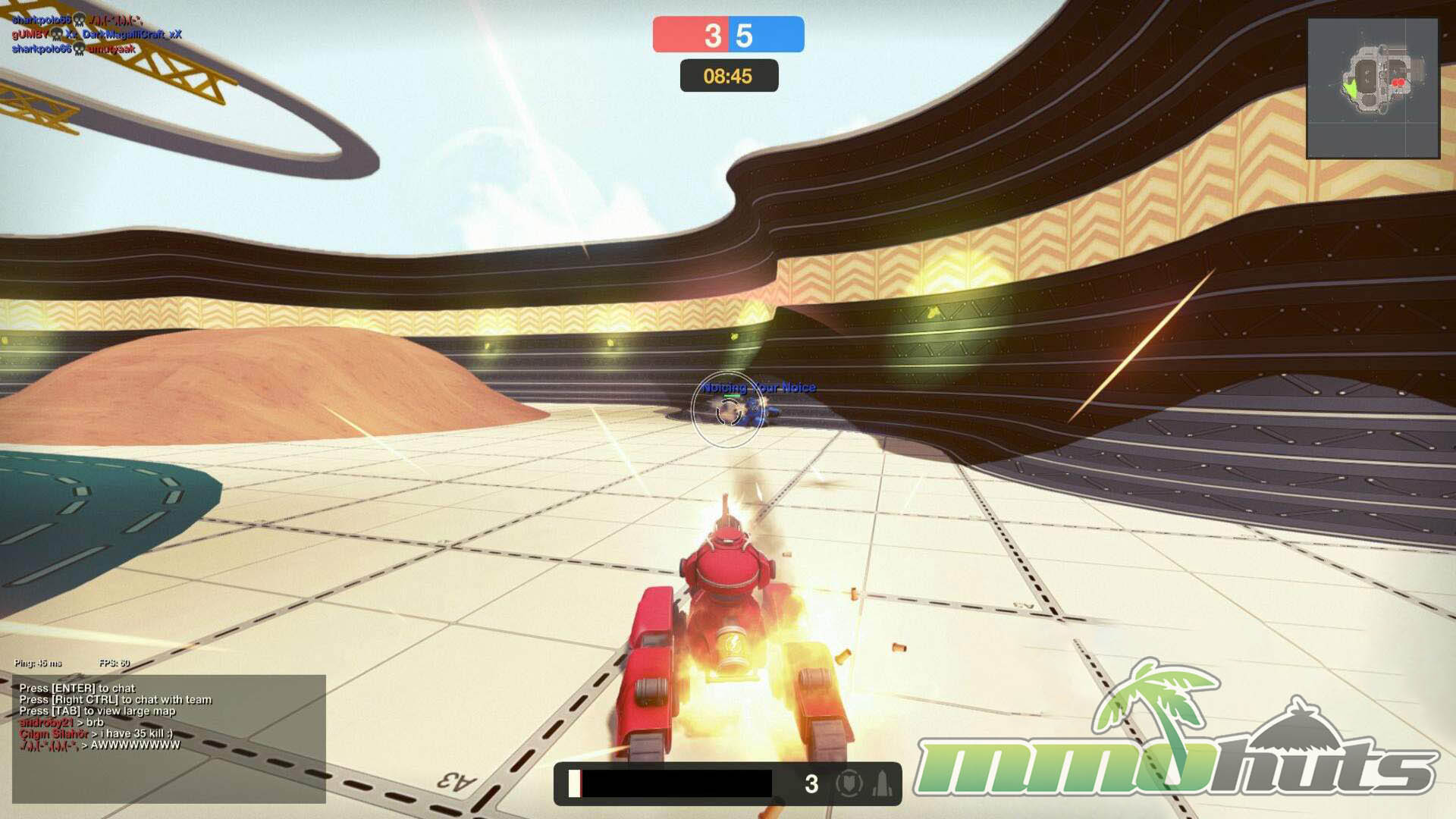
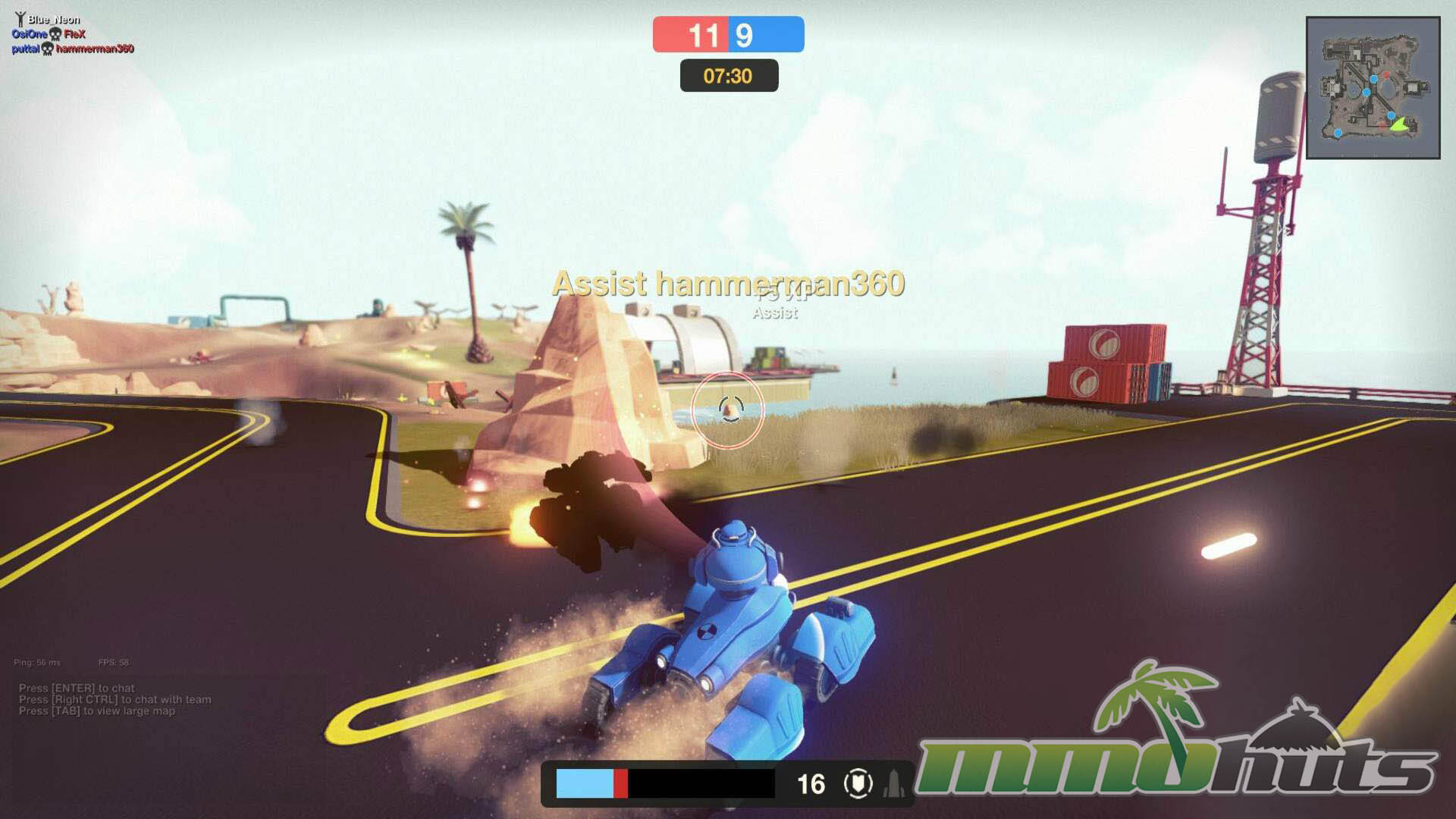
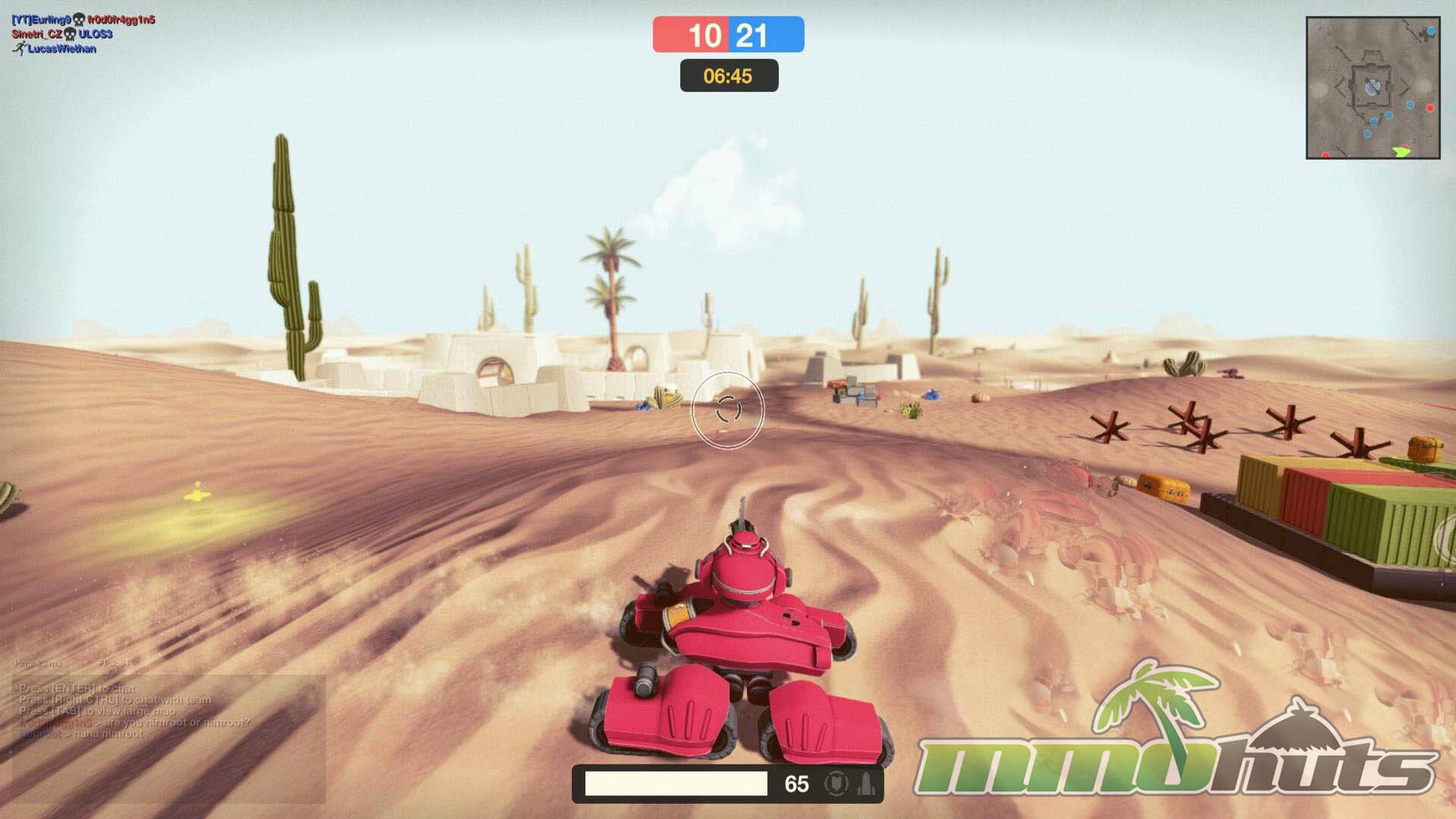
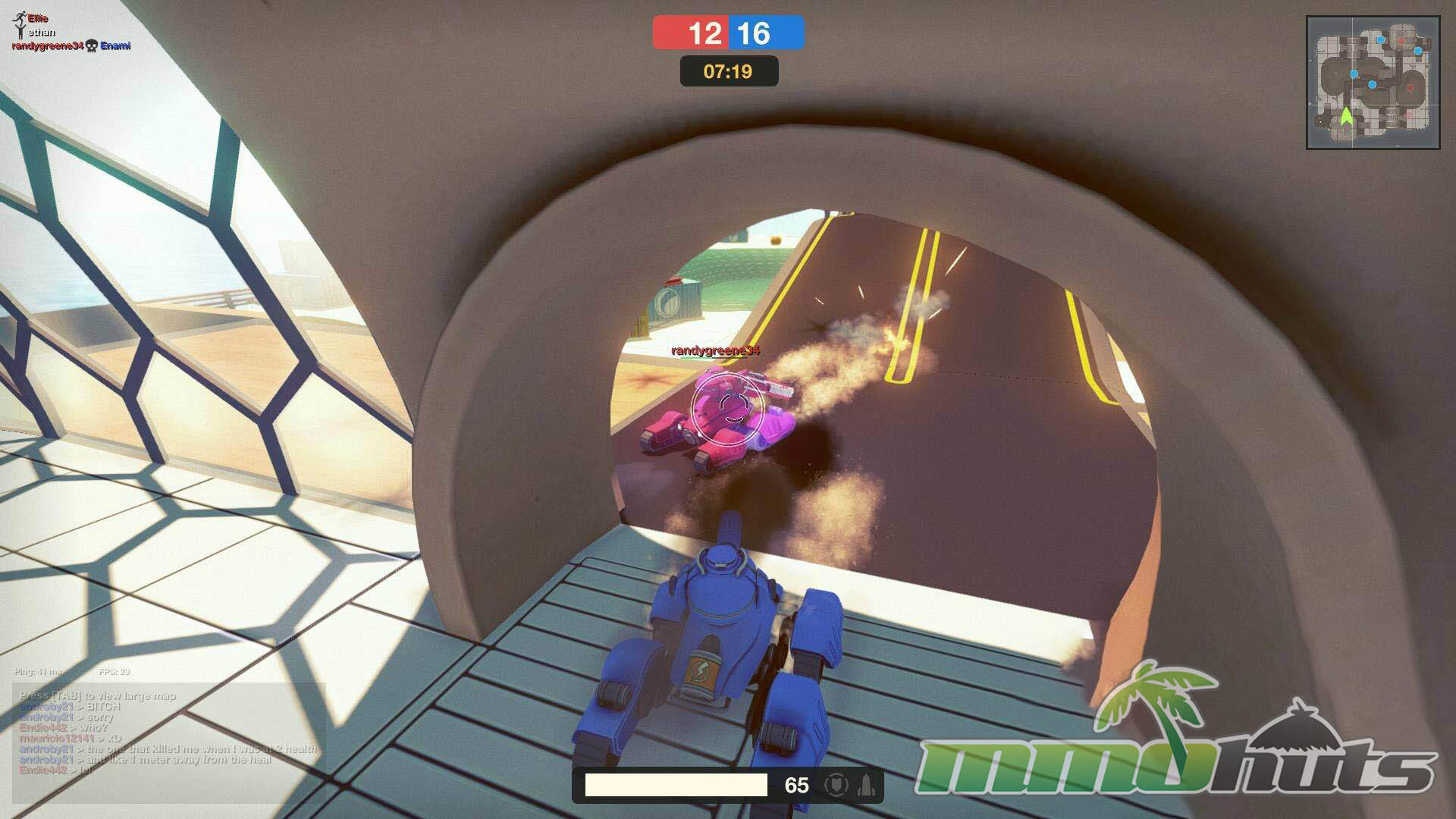
Gear Up drops you into compact, stylized arenas where robots on wheels, tracks, fans, or legs trade explosives and bullets for quick wins. Blowing up opponents rewards you with money, and that money is the backbone of progression, because it lets you buy new components and rebuild your bot into something that fits your playstyle. Matches support up to 16 players, spread across 4 modes, and the action tends to be unforgiving, with vehicles melting fast when focus-fired or caught out of position.
Customization is broad without turning into a full construction sandbox. You pick from a library of parts and combine modules to create different roles, like a bulky brawler with close-range weapons, a long-range turret platform, or a sneaky build that relies on positioning and surprise. Weapon choices cover a familiar spread for the genre, including things like flamethrowers, mines, and sniper-style options, and movement changes the feel of combat as much as your guns do. Between matches, you cash out, shop for upgrades, and gradually build a roster of parts that makes experimenting easy.
Gear Up Key Features:
- 4 Game Modes – jump into arenas built for Team Deathmatch, Deathmatch, Conquest, and Tag, with matches designed to be quick and decisive.
- Customize Your Bot – earn in-game currency from play, then spend it on parts to shape a robot that matches your preferred role.
- Weapon Variety – run anything from trap-heavy builds with mines to precision setups focused on long-range picks.
- Arcade Gameplay – the pacing is snappy, the arenas are tight, and mistakes are punished quickly, which suits short sessions.
- Various Movement Schemes – choose how your machine gets around, including tracks, hover-style propulsion, go-kart wheels, and more, which changes handling and tactics.
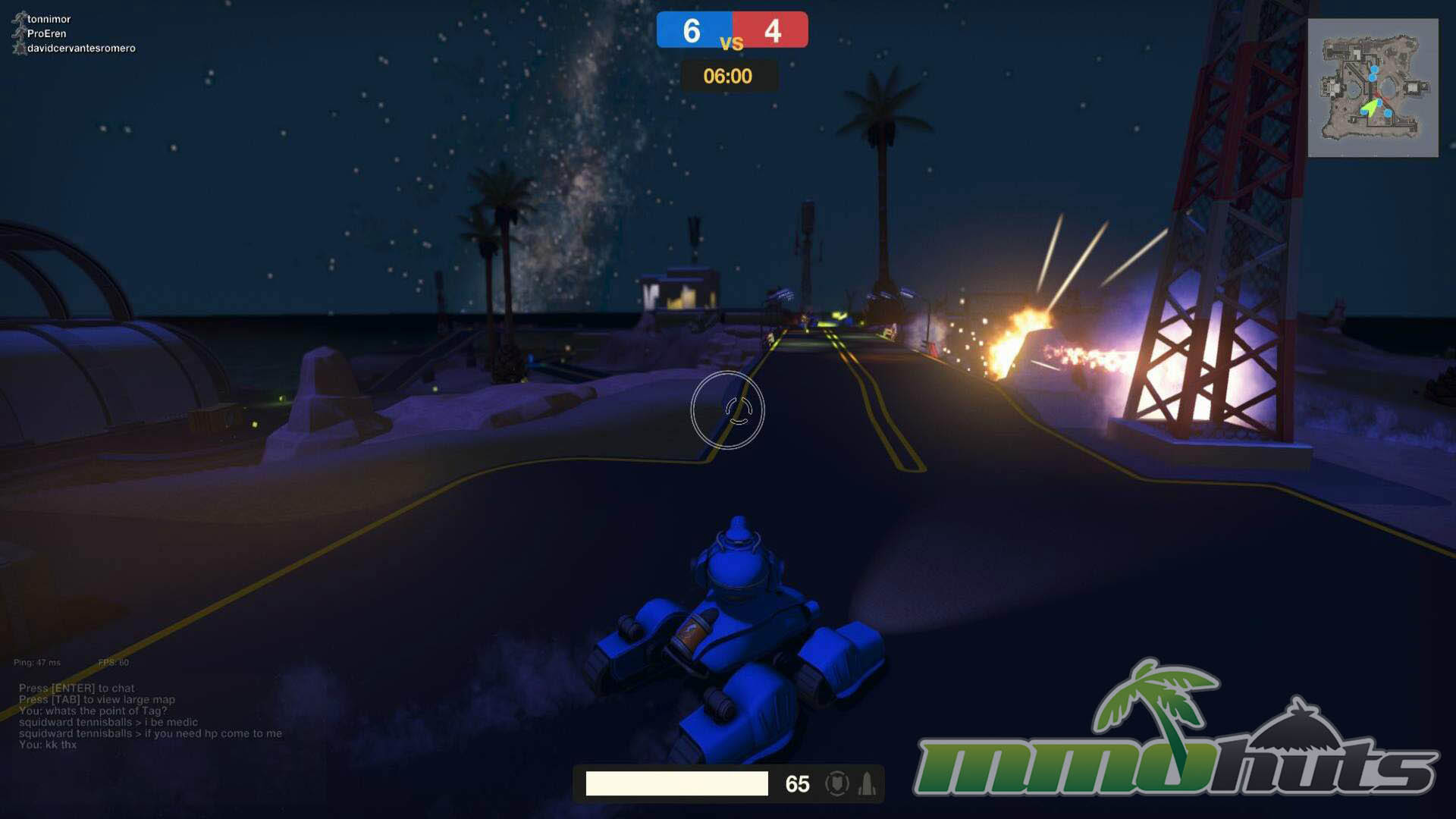
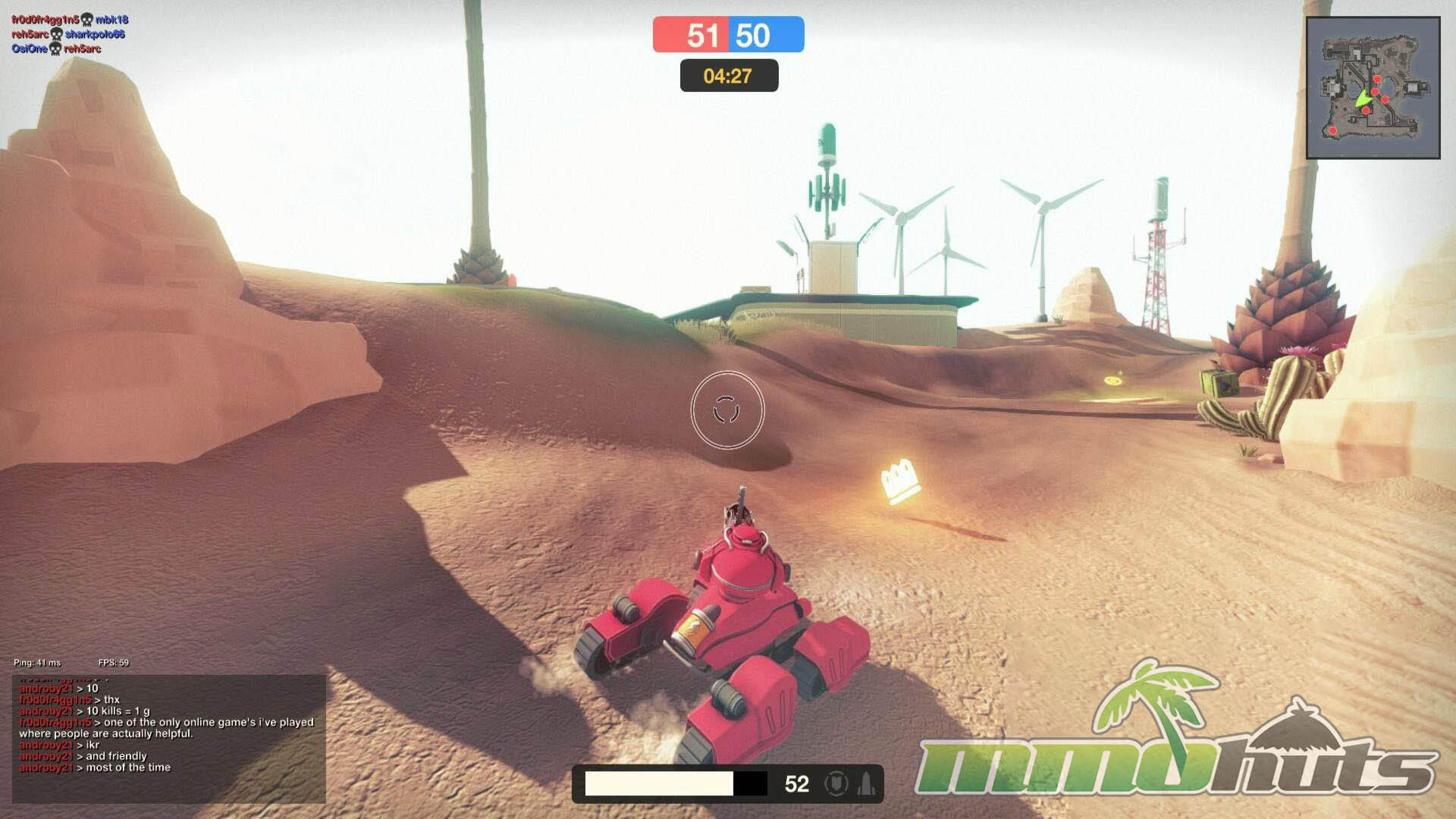
Gear Up Screenshots


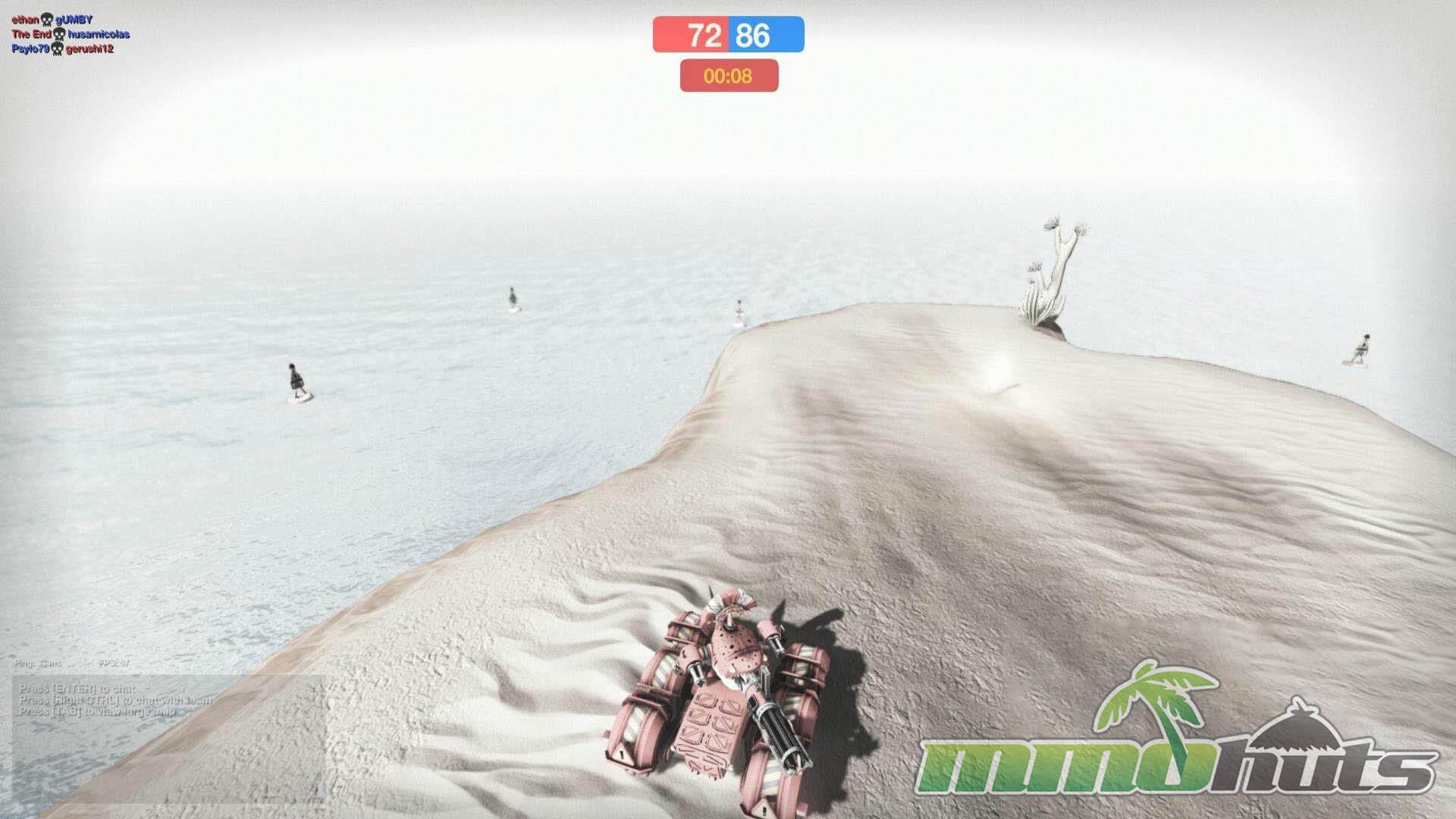

Gear Up Featured Video

Gear Up Review
Gear Up is often compared to other build-and-battle vehicle games, and the resemblance is understandable, but it leans harder into clean presentation and immediate firefights than into deep construction tools. The overall package feels like it was made for players who want to spend most of their time fighting, then do their tinkering between matches. Under that surface, there is enough variety in weapons and movement to keep the moment-to-moment gameplay from feeling one-note, even if the game has a few rough technical edges.
First Matches and Early Progress
It is tempting to assume you need a tricked-out garage to compete, but the early experience is surprisingly approachable. Even rolling out with a basic starter setup, you can contribute quickly if you aim well and pick fights intelligently. The time-to-kill is short enough that awareness and positioning matter as much as raw loadout strength, so early matches can still feel competitive while you learn the maps and start building a parts collection.
The control scheme is deliberately simple. Movement is standard WASD driving, turret aiming follows the mouse, and firing is immediate. If your bot carries multiple weapons, they map cleanly to number keys. The result is a game that is easy to understand within minutes, which fits the arcade structure and encourages quick drop-in sessions without a long learning ramp.
Combat Feel and Map Resources
Gear Up’s fights are built around straightforward weapon roles: sustained-fire guns for shredding at mid-range, heavy hits for burst damage, area denial tools like mines, and specialist options for players who prefer range or ambushes. Some weapons reward prediction more than tracking, especially projectile-style shots where leading a moving target becomes the difference between a clean kill and wasted ammo. When it clicks, firefights have a satisfying rhythm, because good movement and smart angles matter as much as raw damage.
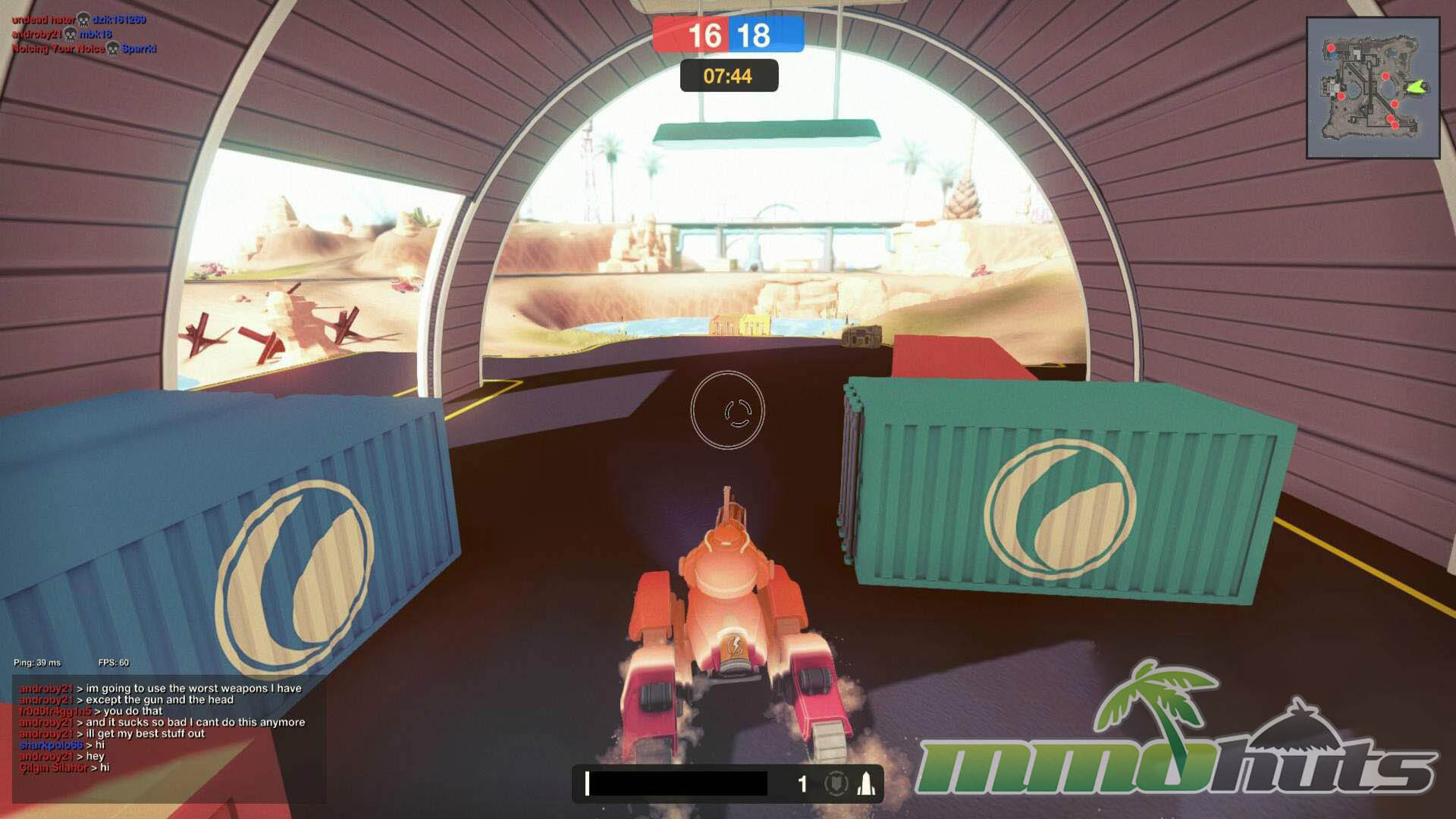
Maps also place ammo and health pickups around common routes, and learning those locations is a real advantage. Running dry mid-duel is a common way to lose a fight you were otherwise winning, and topping off health at the right moment lets you stay active instead of retreating to safety. Because arenas are not huge, these pickup patterns become familiar quickly, which rewards repeated play without requiring a massive time investment.
One recurring problem is spawn pressure. With small maps and fast travel, enemies can sometimes capitalize on radar information and nearby spawn options to catch players before they fully re-enter the flow of a match. It is not constant, but it is frequent enough to be noticeable, and it can sour the pacing when a team gets pinned down.
Game Modes and Match Flow
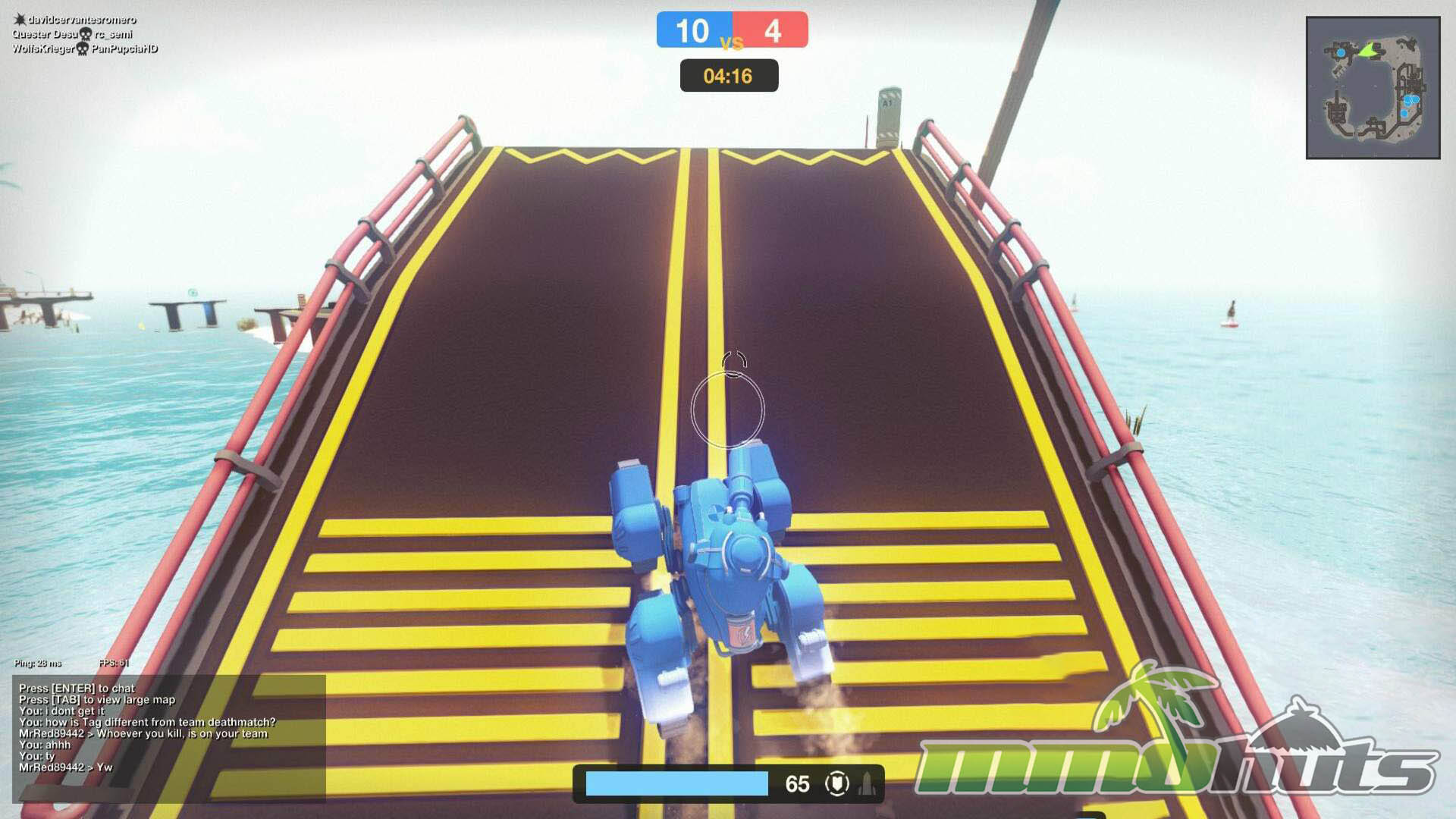
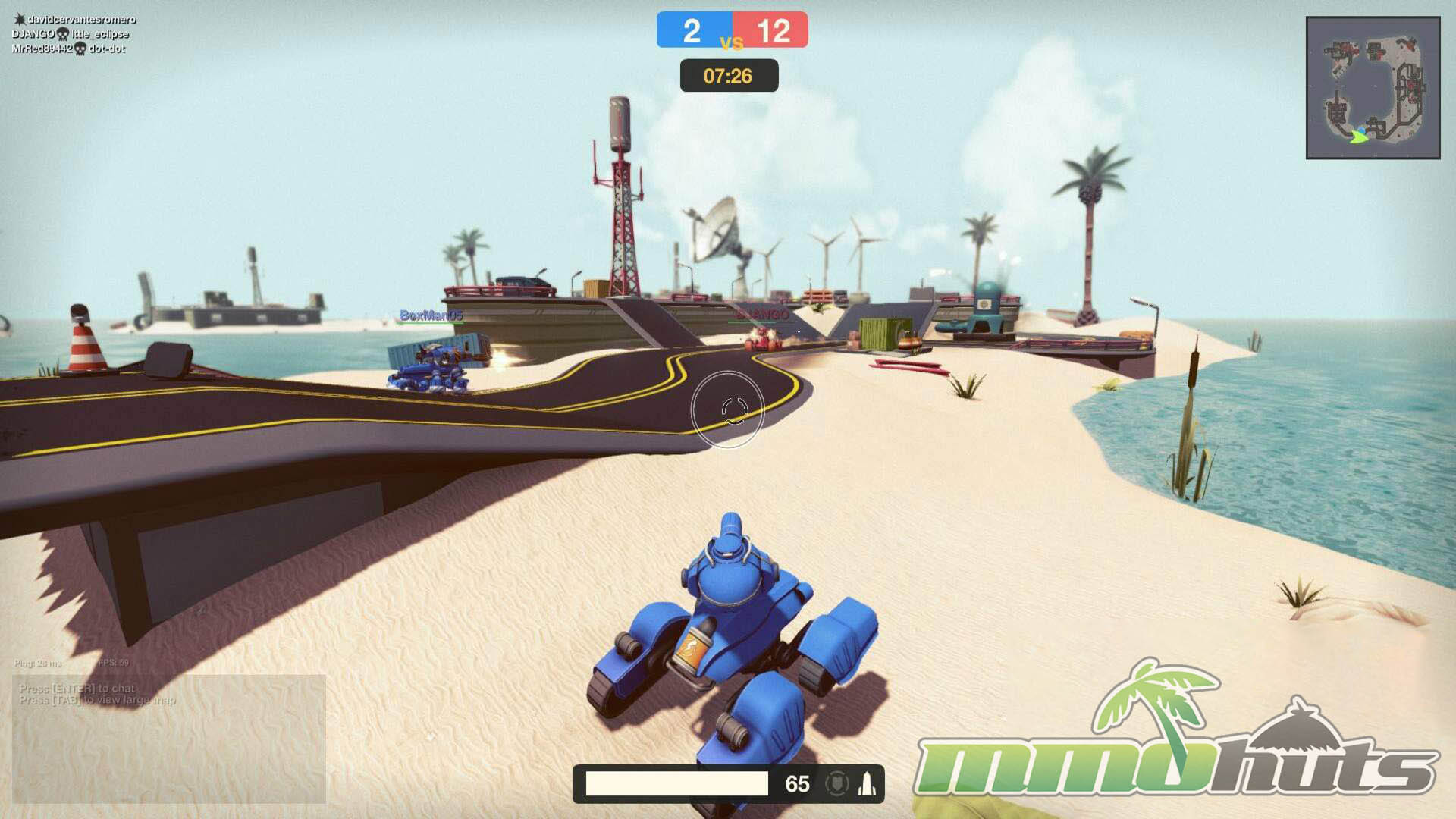
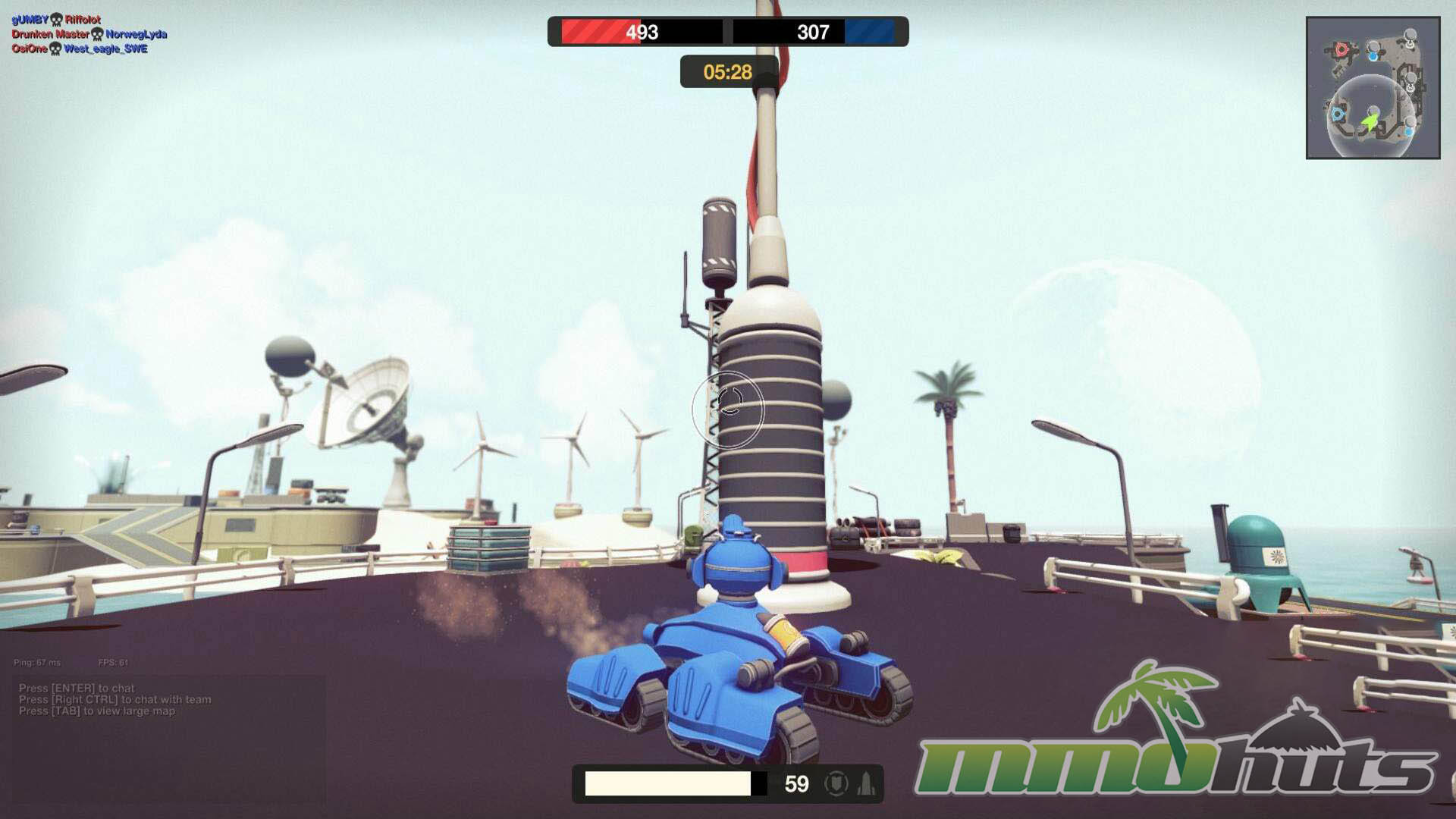
Matches support up to 16 players, commonly in 8v8, and rotate through Team Deathmatch, Deathmatch, Conquest, and Tag. The first three modes behave largely as expected, emphasizing kills, personal survival, or objective control. Conquest tends to highlight movement choices and map knowledge, because fast rotations and clever flanks can swing points quickly on compact arenas.
Tag is the odd one out, and it is also the mode that benefits most from an in-game explanation, which the game does not really provide. The basic idea is that defeated opponents convert to the other team, and the match ends when everyone has been pulled onto one side or time expires. It is a fun twist in theory, but in practice it can be undermined by level layouts where driving into surrounding water becomes a simple way to deny the other team progress. When players abuse that option, Tag can drag, even if the rest of the game is at its best when matches end briskly.
Vehicle Building and Customization Depth
Progression is tied to earning currency from matches and spending it on new parts. Customization matters, but it is framed as loadout building rather than true freeform construction. If you are looking for a pure building sandbox where the structure itself is the main game, Gear Up is more limited by design. Instead, it offers a curated set of components that are easy to mix and match, keeping the focus on getting back into combat.
There is still a lot to work with. The parts library spans 7 categories: Hulls, Supports, Flags, Decorations, Turrets, Propulsion’s, and Weapons. The number of combinations is large, even if only a subset will feel optimal in competitive play. Propulsion choices are the most immediately noticeable in moment-to-moment gameplay, because swapping tracks for hover-style movement or lighter wheels changes how you corner, how you escape, and how you approach objectives. Experimenting is part of the appeal, and the game makes it relatively painless to try new builds as your inventory grows.
Visual Style, Audio, and Stability
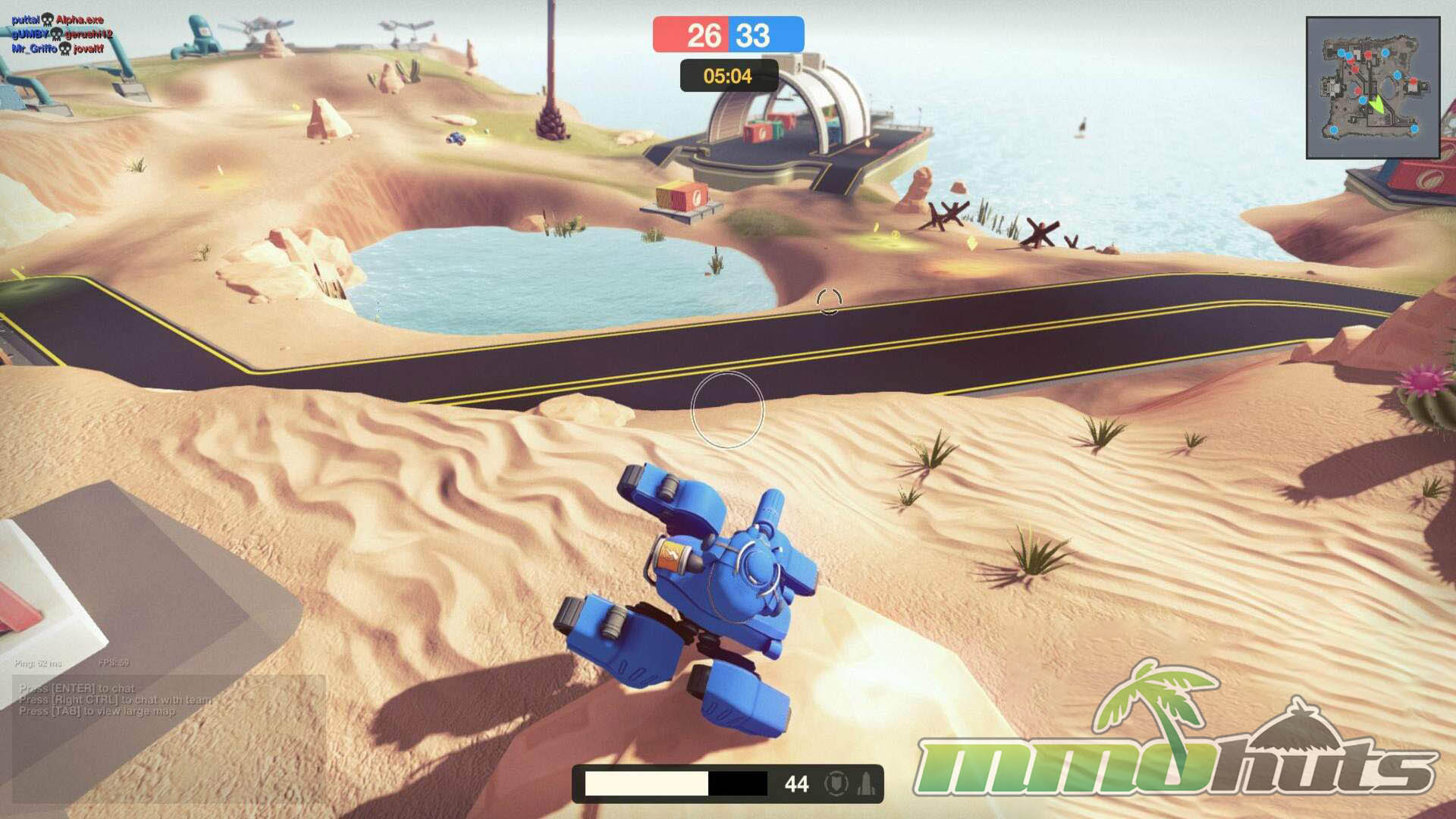
Gear Up’s presentation is one of its biggest strengths. The art direction is bright and clean, with readable silhouettes and environments that look more polished than many free-to-play arena titles from the same era. The tone is playful on the surface, but the fights are still explosive and chaotic, which creates an enjoyable contrast that keeps the action from feeling overly grim. Doctor Entertainment AB’s Traktor (in-house engine) delivers smooth performance in general, and the maps are visually coherent without being cluttered.
Sound design supports the arcade feel well, with punchy impacts when metal collapses and distinct weapon audio that makes it easy to tell what is being fired nearby. Some effects lean into a slightly quirky, “toy-box” vibe, which matches the visuals and keeps the overall mood light.
The downside is technical reliability. Crashes can occur without much warning, and when combined with occasional network issues, the experience can feel inconsistent from session to session. It is the kind of problem that stands out more in short matches, because one crash or severe lag spike can waste an entire round.
Monetization and Storage Limits
Gear Up uses a single earnable currency called “G,” and you gain it by playing matches, then spend it on parts. There is no separate paid currency for directly buying power, which helps the game avoid the worst pay-to-win pitfalls. The pressure point is inventory management: players start with 8 extra item slots, and leveling adds one additional slot each time. As you collect more components, storage can become tight, especially if you like keeping multiple builds ready.
To address that, the game offers paid options like the $10 Basic pack for additional space, which can feel reasonable if you plan to stick with the game and experiment often. There is also a $20 Premium edition that unlocks all parts immediately. That option is convenient for players who want to skip the unlock loop, though it also removes some of the long-term chase that keeps many free-to-play games engaging. Importantly, it is still possible to earn everything through play, and matches generally do not feel like they are decided purely by who has the biggest collection.
Final Verdict – Great
Gear Up succeeds as a free-to-play arena vehicle shooter because it prioritizes quick matches, responsive controls, and a customization system that is deep enough to encourage experimentation without turning into a full-time building project. The strongest moments come when teams clash around objectives and you can feel your build choices, weapons, and movement style shaping how you approach each engagement. Technical hiccups, lag, and occasional spawn-killing keep it from being as consistent as it should be, but the core combat loop remains satisfying.
This is best suited for players who want immediate action and like tweaking loadouts between rounds, not for those seeking a true construction sandbox. If you enjoy fast robot brawls, short sessions, and the satisfaction of refining a build over time, Gear Up is still an easy recommendation within its niche.
Gear Up Links
Gear Up Official Site
Gear Up Steam Store
Gear Up Reddit
Gear Up Wikia [Database/Guides]
Gear Up System Requirements
Minimum Requirements:
Operating System: Windows Vista SP2 / Windows 7 / Windows 8
CPU: Pentium 4 3.46GHz or Athlon 64 3800+
Video Card: GeForce GT 120 or Radeon HD 4550
RAM: 2GB
Hard Disk Space: 1 GB
Recommended Requirements:
Operating System: Windows XP, Windows Vista, or Windows 7
CPU: Intel Core 2 Duo 2.4 GHz or Athlon X2 2.7 GHz
Video Card: ATI Radeon 6950 or Nvidia GeForce GTX 560
RAM: 4GB
Hard Disk Space: 1 GB
Gear Up is Max OS X and SteamOS + Linux compatible.
Gear Up Music & Soundtrack
Coming Soon…
Gear Up Additional Information
Developer(s): Doctor Entertainment AB
Engine: Traktor (in-house engine).
Steam Greenlight : August 30, 2012
Open Beta: July 24, 2014
Release Date: January 28, 2015
Steam Release Date: January 28, 2015
Development History / Background:
Gear Up was created by Swedish indie studio Doctor Entertainment AB. Before it, the team released Puzzle Dimension, which launched on Steam in 2010 and later arrived on PS3/PSN in 2011. In 2011, Doctor Entertainment AB also contributed work on Starbreeze’s The Syndicate. Gear Up appeared on Steam Greenlight on August 30, 2012, and early plans aimed for 32-player multiplayer. At the time, the studio reportedly had only four people working in the office. The game moved into Open Beta on July 24, 2014, reached full release on January 28, 2015, and has continued receiving updates since launch.