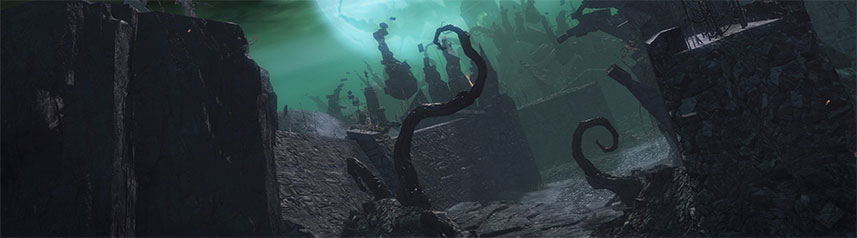
Ascend: Hand of Kul is an action RPG that blends real time brawling with light online elements, asking you to swear allegiance to one of three divine paths and spread your god’s influence by taking over altars. As you roam a bleak fantasy world you gather souls, outfit your towering warrior with new gear, and push back rival forces, all while converting humans into followers that fight at your side.
 | Publisher: Signal Studios Playerbase: Shut Down Type: MRPG Release Date: May 20, 2014 Pros: +Responsive, satisfying combat handling. +Clever invasion concept using player created avatars. +Deep gear choices that meaningfully change builds. Cons: -Online features feel shallow and incomplete. -No ongoing updates or support. -No option to create a female character. |
Ascend: Hand of Kul Overview
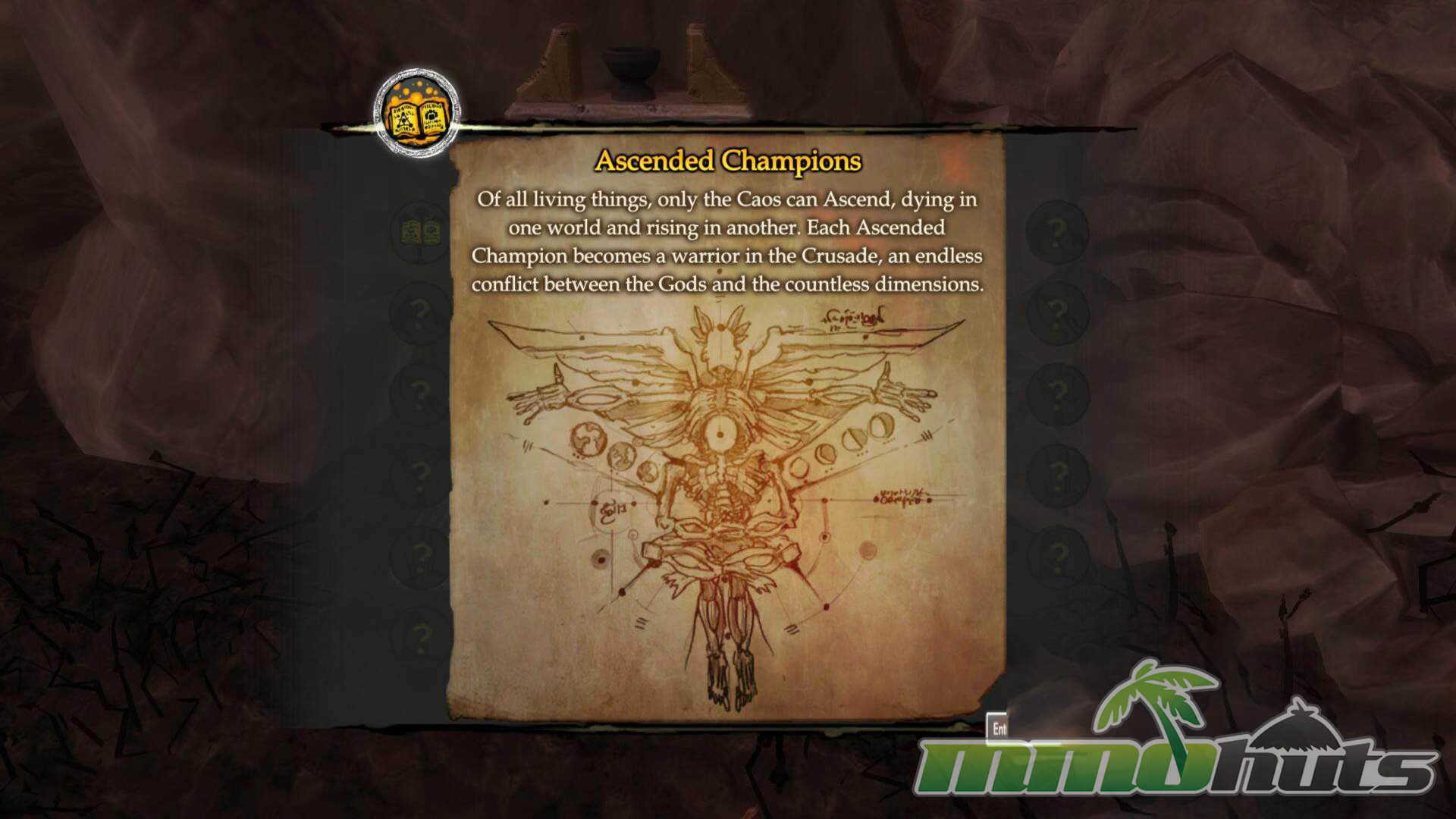
Ascend: Hand of Kul is a hybrid action RPG that casts you as a Caos, a colossal creature positioned somewhere between mortal and deity. After shaping your character, you pledge yourself to one of three alignments, Dark, Void, or Light, which influences your bonuses and the kinds of abilities you lean on in combat. From there the game drops you into a grim, monster filled world where the core loop is straightforward: hunt enemies, collect souls and experience, and steadily improve your Caos with new equipment.
The twist is that power is not only personal, it is religious. Altars scattered throughout each region can be claimed in your god’s name, flipping the local population into your followers. Those humans can swarm around you, assist in fights, and visually reinforce the idea that you are carving out a divine territory. On top of that, the game experiments with asynchronous multiplayer, letting you “sacrifice” yourself to create a homunculus that can threaten other players’ realms and contest their altars. Between altar control, gear driven build crafting, and invasion style encounters, Ascend aims to feel like a smaller scale, faster action RPG with MMO flavored systems layered on top.
Ascend: Hand of Kul Key Features:
- 3 factions – choose between Light, Dark and Void, each with their own play style and skillset.
- Equipment – customize your Caos with a huge arsenal of gear , unlocking new equipment as you play.
- Player invasion – Sacrifice yourself to the gods and send a homunculus in your image to attack other player’s realms.
- Recruit Followers – claim religious altars scattered through the world, recruiting human followers to aid you on your journey.
- Active Combat – fight in real time, chaining attacks to rack up combos and earn more souls.
Ascend: Hand of Kul Screenshots



Ascend: Hand of Kul Featured Video

Ascend: Hand of Kul Review
Ascend: Hand of Kul is one of those free to play experiments that is easy to miss unless it shows up in a recommendation list. It arrived in the era when big name online RPGs and action MMOs were dominating attention, and Signal Studios, best known for Toy Soldiers, took a swing at an accessible action RPG with persistent style progression. The result is a game with genuinely enjoyable moment to moment combat and some creative online ideas, but also a clear sense of features that never fully matured before support faded.
Mythic scale, limited character options
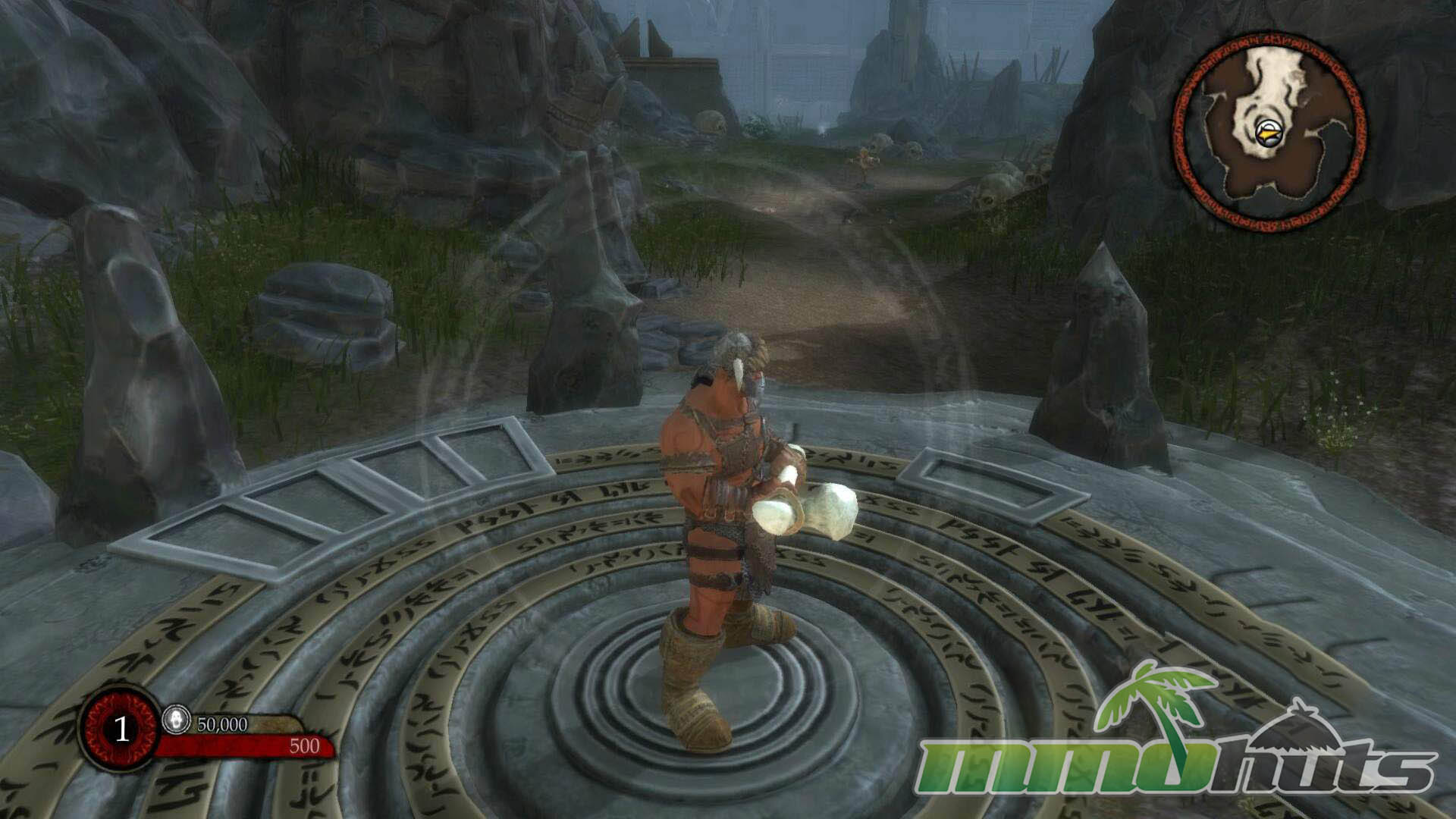
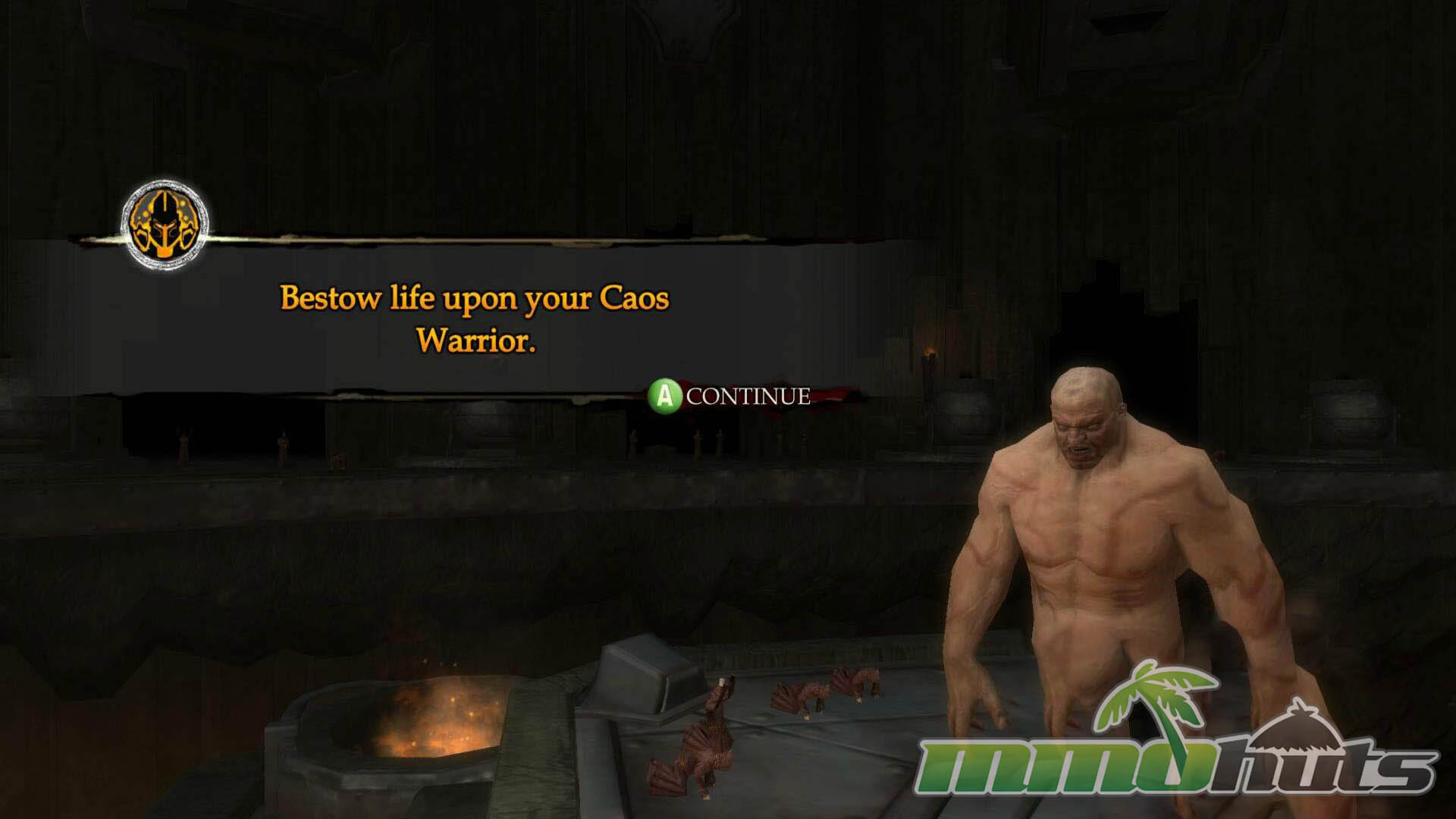
Character creation introduces the Caos concept immediately, you are huge, intimidating, and meant to feel above the fragile humans around you. There are plenty of presets and cosmetic choices to help you stand out, but customization is not completely open ended. Some appearance options are tied to the game’s currency, souls. You begin with a stockpile (50,000 souls), yet some of the pricier cosmetics sit far above that, creating an early nudge toward spending if you want a particular look from the start.
That push is awkwardly timed. Before you have even tested how the combat feels or what kind of gear you will naturally earn, the menus already highlight upgrades and paid options. Ignoring the storefront makes for a cleaner introduction, and the early game is perfectly playable with basic equipment, but the presentation still communicates that the economy is a major part of the design.
One limitation stands out even more than monetization: you cannot select a female model for your Caos. Given the game’s premise, there is no strong gameplay reason for that restriction, and it leaves the roster feeling incomplete. Discussion about adding female models existed at one point, but with development no longer active, the absence is effectively permanent.
After that, you pick an alignment that defines the flavor of your build. Dark tends to emphasize sturdiness and raw damage at the cost of mobility, Void leans toward spell focused play, and Light is built around crit oriented offense. It is a simple choice, but it helps establish identity, especially once gear begins reinforcing your preferred approach.
Zones and atmosphere
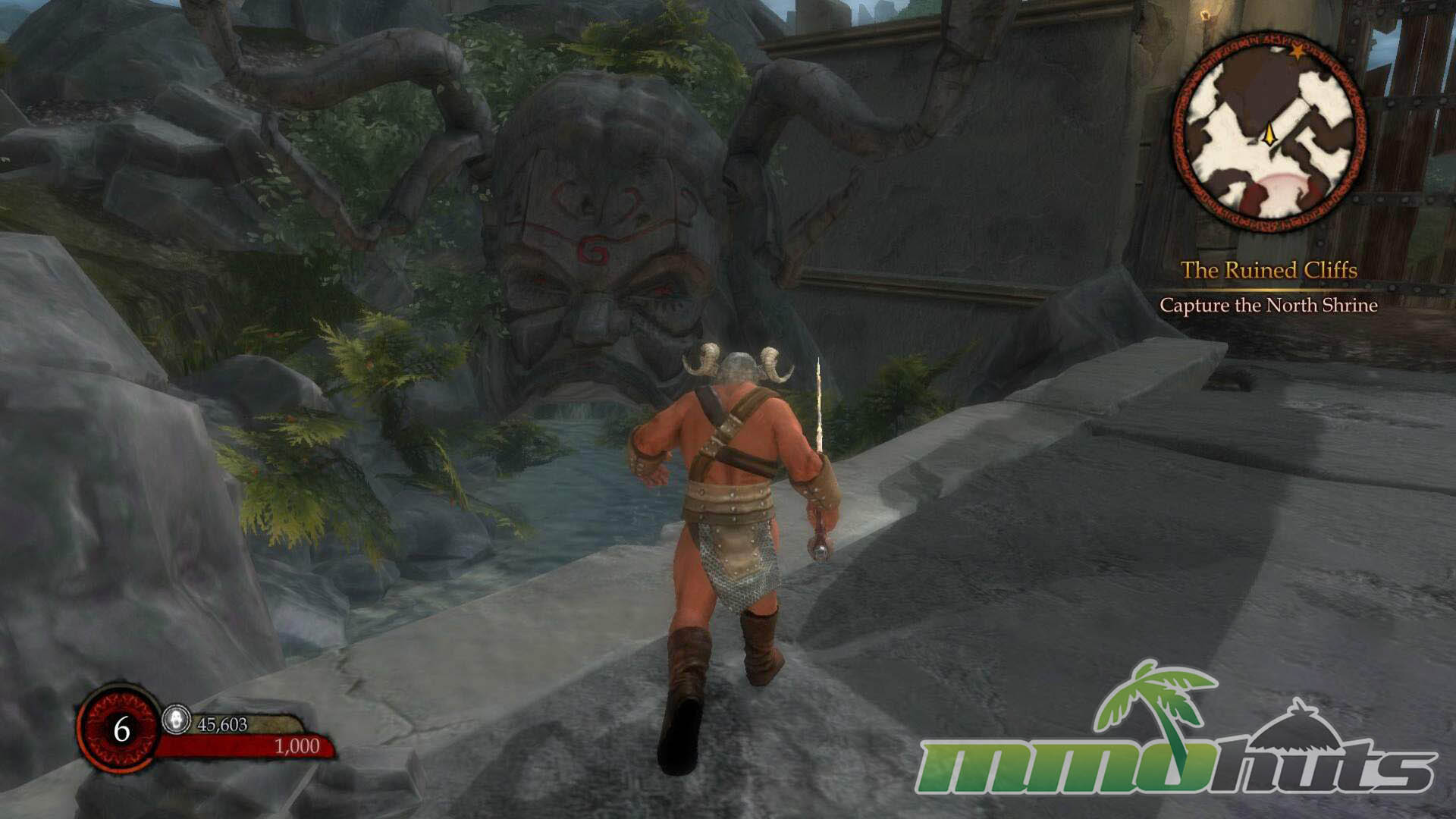
Ascend’s world is structured as a set of instanced zones rather than a continuous overworld. You drop into corridors and arenas that funnel you forward, fighting enemies and pushing toward objectives. The environments share a muted, oppressive tone, and while that supports the game’s theme of a broken land ruled by monsters, it also means locations can blur together over longer sessions.
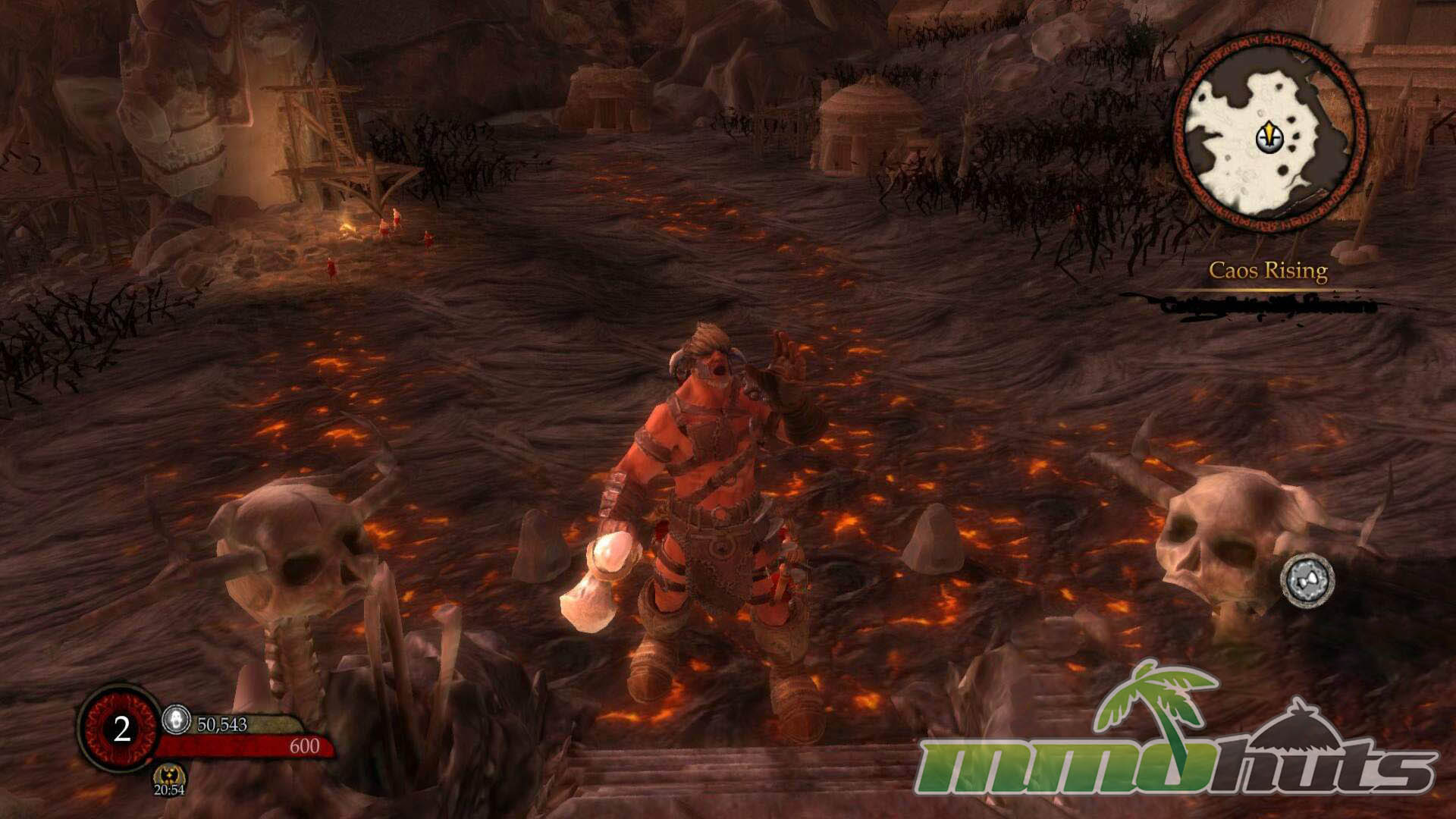
The scale contrast is one of the game’s strongest visual ideas. As a towering Caos you stride past human sized details that reinforce your power fantasy, and the world is framed less as a place to live in and more as a hunting ground to conquer. It is effective for the mood, even if it does not provide much variety.
Combat feel and combo chasing
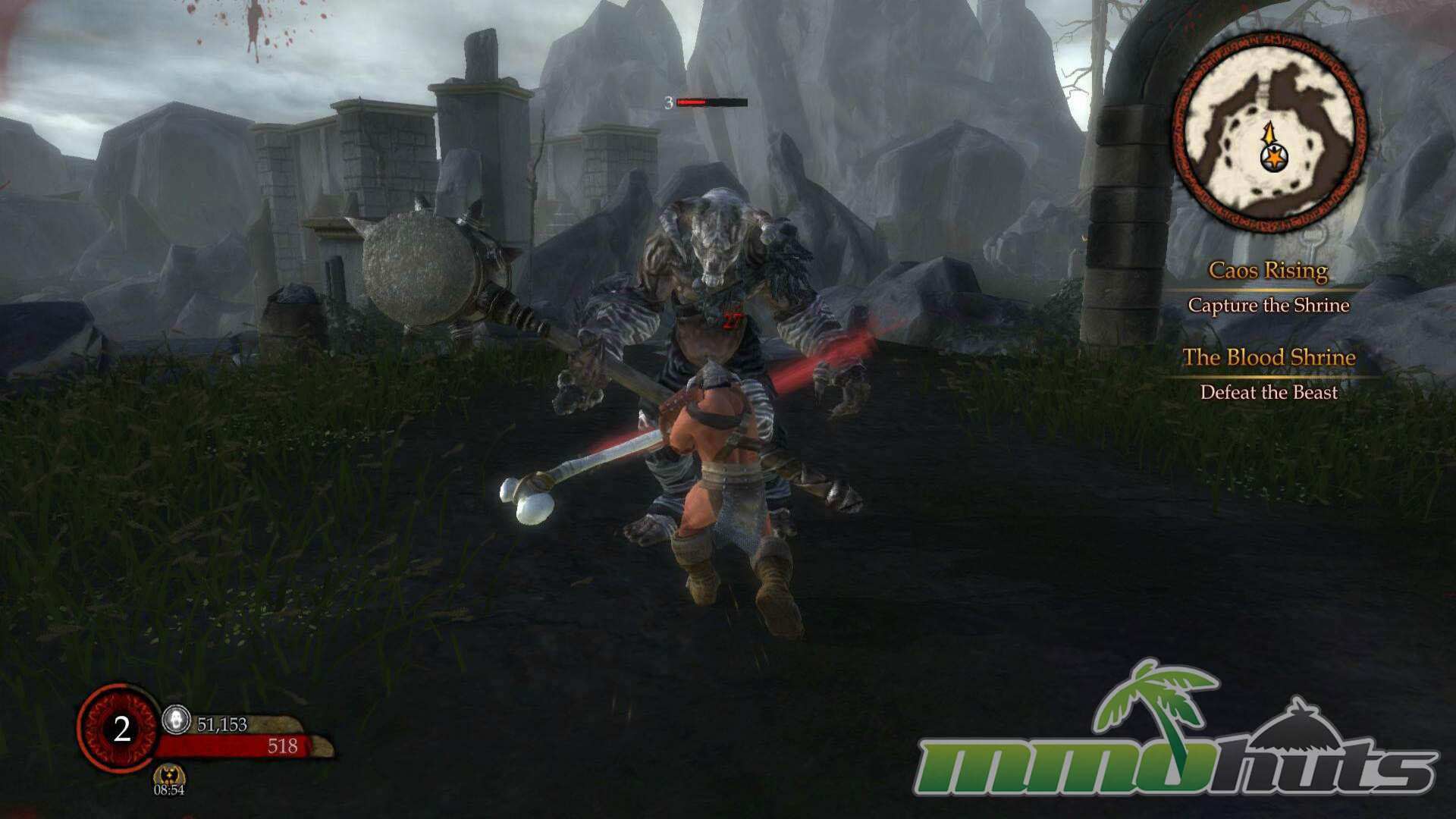
Combat is built around real time melee with straightforward inputs. Basic attacks are mapped to left click, while right click charges a heavier strike. When an enemy is sufficiently weakened, the game prompts a finisher on “E,” giving fights a rhythm of building pressure and cashing out. Abilities sit on other keys (such as “F”), and defensive movement is tied to left shift, letting you negate incoming hits when timed well.
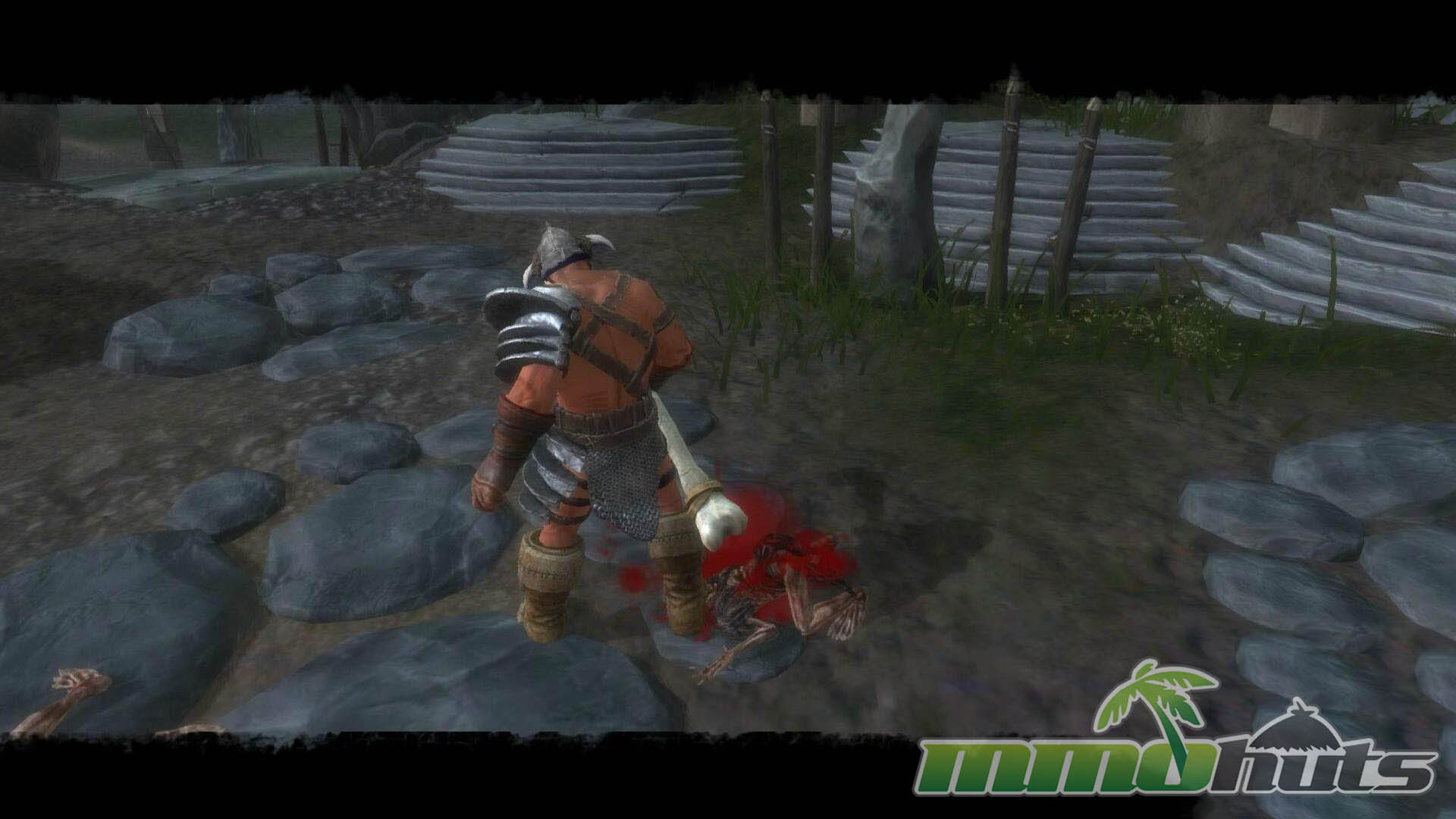
The controls are smooth and the impact is satisfying, helped by strong audio cues and camera feedback. However, hit detection can look strange. Attacks sometimes connect with targets that do not visually line up with the swing, and it can appear as if enemies are being struck from angles your weapon never reached. Whether that is generous hit boxes or quirks in animation timing, it occasionally breaks the illusion even when the underlying mechanics remain functional.
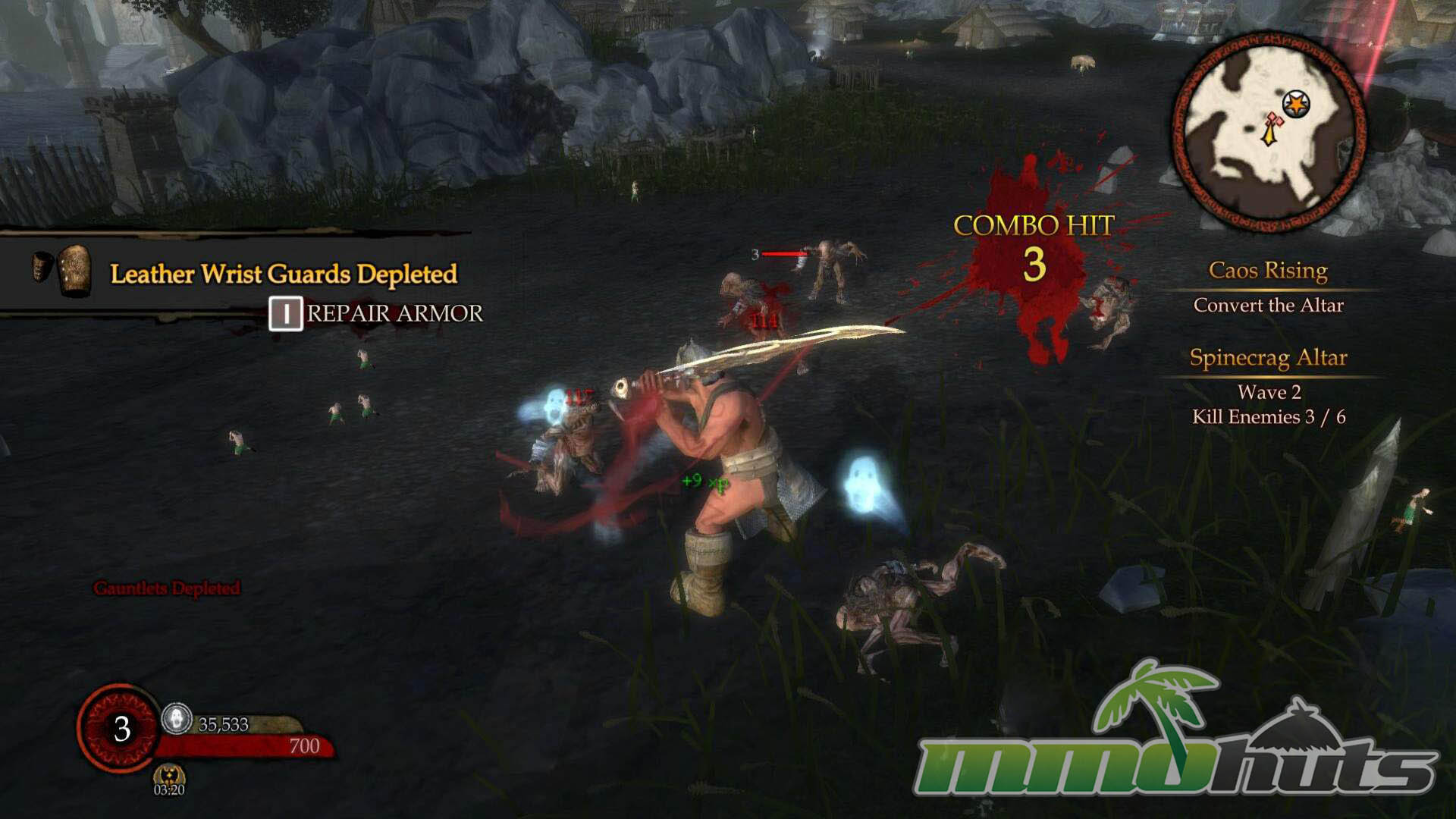
A big part of the loop is combo maintenance. Sustained offense builds a combo chain that increases soul gains, pushing you to stay aggressive and clean. Taking damage drops the chain, so the system rewards careful play and learning enemy patterns. It is a familiar idea for action games, but it fits Ascend well and provides a reason to refine your approach rather than simply mash through encounters.
Altars, followers, and the “god” fantasy
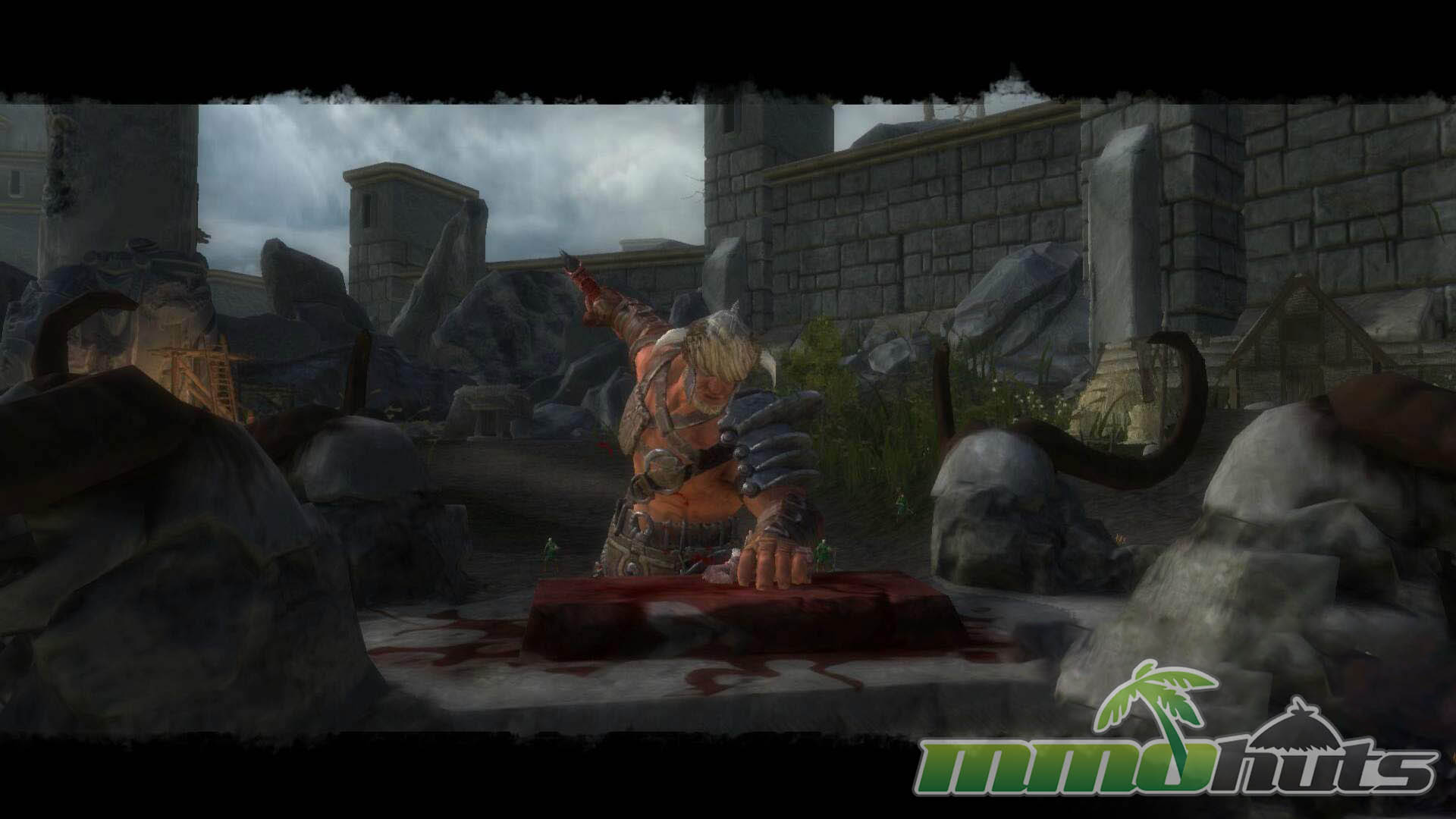
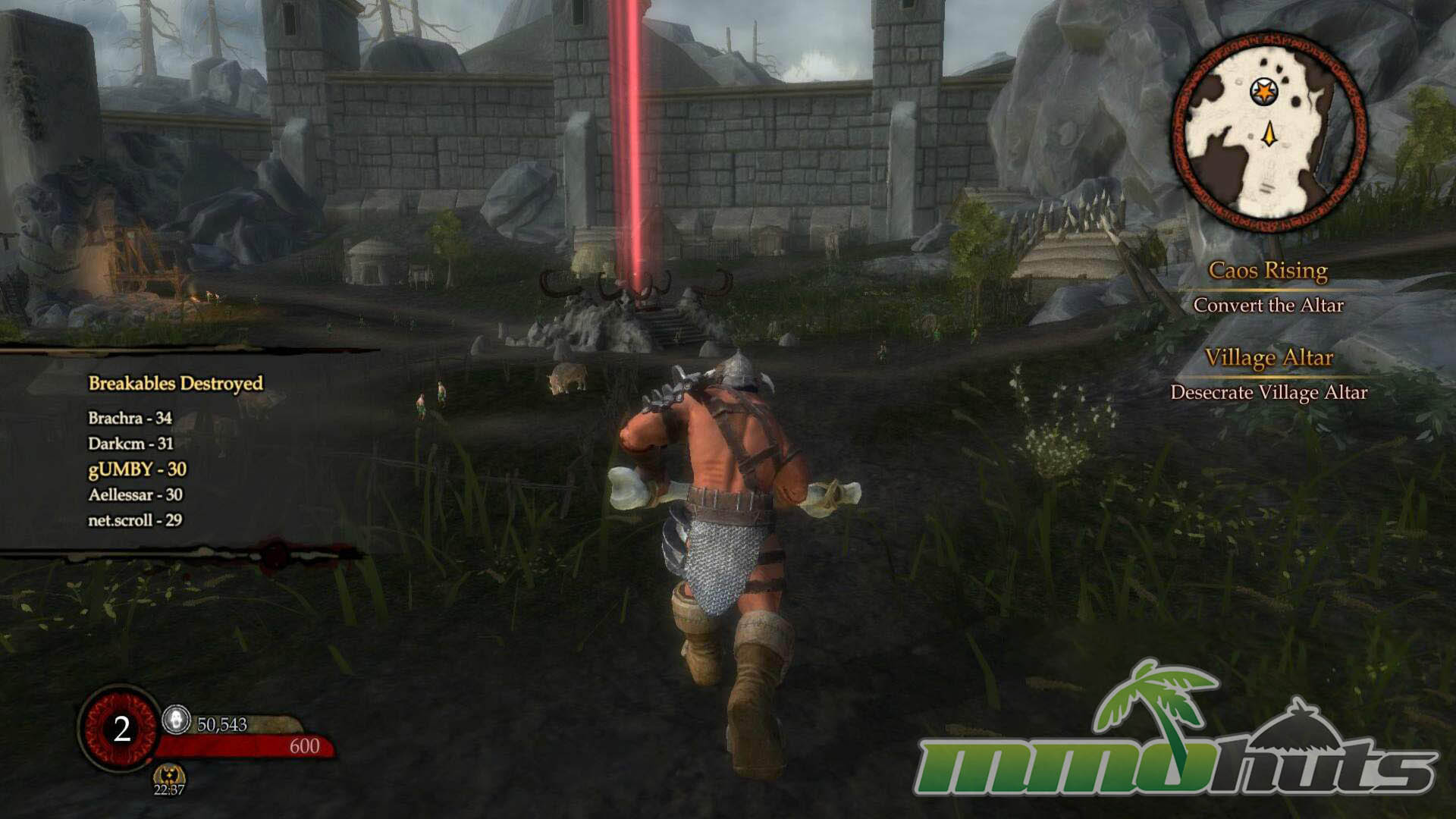
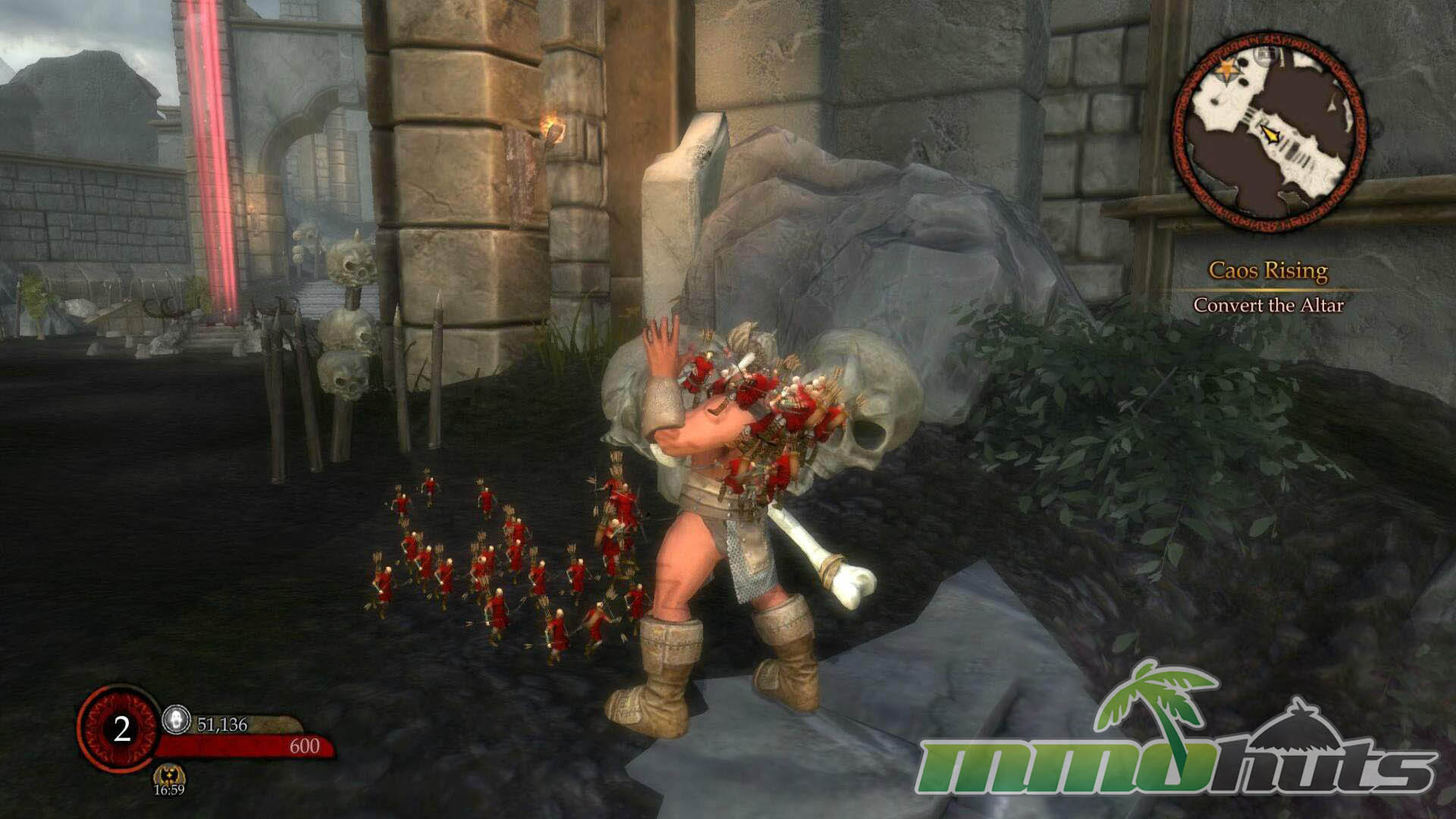
Altars are the key thematic mechanic. Claiming them flips the nearby humans into your worshipers, changing the feel of the space and adding small practical benefits. You can call followers to cling to you and support fights (for example, by firing arrows), or even consume them to restore health. It is a darkly funny touch that suits the game’s “aspiring god” concept.
In practice, followers are more flavor than power. Their damage contribution is modest, and most fights are still decided by your own weapon, timing, and gear. Still, altars provide a sense of territory, and they tie neatly into the invasion mechanics that revolve around stealing influence rather than simply clearing rooms.
Online systems without full co-op
Ascend borrows the idea of shared presence from games like Dark Souls. You can see other players as spectral figures, and the game constantly surfaces their accomplishments while you play. It creates a sense that you are part of a larger population even when you are effectively solo. The catch is that interaction is limited. You cannot directly attack other players, and the systems revolve more around indirect influence than true PvP.
Tools like banish let you send enemies from your world to trouble another player, earning rewards if those monsters cause harm. Conversely, blessings allow for minor supportive interactions. The most interesting feature is the homunculus concept. Rather than actively controlling an invader, you sacrifice your current character to generate an AI driven version that can raid other realms. Likewise, AI homunculi representing other players can appear to contest your altars, forcing you to defend your territory or let it be converted.
It is a clever compromise that suggests what Ascend could have become with more robust multiplayer, including the direct PvP that was discussed but never truly arrived. As it stands, the online layer adds spice and occasional tension, but it does not replace the feeling of proper co-op or competitive play.
Storefront pressure and balance
Ascend is not strictly pay to win, but its menus keep the store close at hand. Weapons and gear offers are frequently presented, and the overall layout makes it clear the economy is meant to drive purchases of souls. The good news is that you do not need paid items to progress, and the baseline difficulty is forgiving with standard drops.
Buying power can still distort the experience. Strong gear acquired early can flatten encounters, turning fights into quick deletions rather than learning opportunities. The game is more enjoyable when upgrades come gradually through play, because the combo system and defensive timing matter more when enemies survive long enough to fight back.
Final Verdict – Good
Ascend: Hand of Kul remains an interesting action RPG with a few standout ideas, even if it never reached its full potential. Its real time combat is easy to pick up and consistently enjoyable, the combo based soul rewards encourage cleaner play, and the altar and homunculus systems add a distinctive identity compared to more straightforward dungeon crawlers.
The downside is that several big ambitions, such as deeper multiplayer and broader character options, did not materialize, and the lack of ongoing development leaves the game feeling frozen in an unfinished state. For players who enjoy simpler, arcade leaning action RPG combat with a hint of Dark Souls style asynchronous interaction, Ascend was worth a look in its time, and it is a shame it did not receive the polish and longevity its core concepts deserved.
Ascend: Hand of Kul Links
Ascend: Hand of Kul Official Site
Ascend: Hand of Kul Steam Page
Ascend: Hand of Kul Wikipedia
Ascend: Hand of Kul Wikia [Database/Guides]
Ascend: Hand of Kul Gamepedia [Database/Guides]
Ascend: Hand of Kul Requirements
Minimum Requirements:
Operating System: Windows XP 32 bit
CPU: Core 2 Quad Q6400 2.13GHz or Phenom 9600 Quad-Core
RAM: 4 GB GB RAM
Video Card: GeForce GTS 450 or Radeon HD 6750
Hard Disk Space: 15 GB Free Space
Recommended Requirements:
Operating System: Windows 7 64 bit
CPU: Core i5-2300 2.8GHz or Phenom II X4 940
RAM: 4 GB RAM
Video Card: GeForce GTX 560 or Radeon HD 7750 1GB GDDR5
Hard Disk Space: 15 GB Free Space
Ascend: Hand of Kul Music
Coming Soon…
Ascend: Hand of Kul Additional Information
Developer(s): Signal Studios
Publisher(s): Signal Studios
Engine: SigE
Other Platforms: Xbox 360 (shut down)
Xbox Release Date: September 25, 2013
PC Release Date: May 20, 2014
Steam Release Date: May 20, 2014
Xbox Shut Down: November 18, 2014
PC Shut Down: June 20, 2016
Ascend: Hand of Kul was developed by the Washington based studio Signal Studios, an interactive entertainment company founded in 2008 by industry veterans. After launching Toy Soldiers in 2010 on Xbox 360 and PC, the team aimed to branch out with a free to play action RPG, releasing Ascend in 2013 for Xbox 360 and Windows. The project was revealed during Microsoft’s press conference at the Electronic Entertainment Expo 2012, and it originally carried the title Ascend: New Gods before being renamed.
On Xbox Live Arcade the game could be downloaded for free by Gold members, but it was later removed from the Xbox marketplace on August 18, 2014, followed by the Xbox server closure on November 18, 2014. The PC version remained available longer, with servers eventually shutting down on June 20, 2016, marking the end of the game’s online functionality.