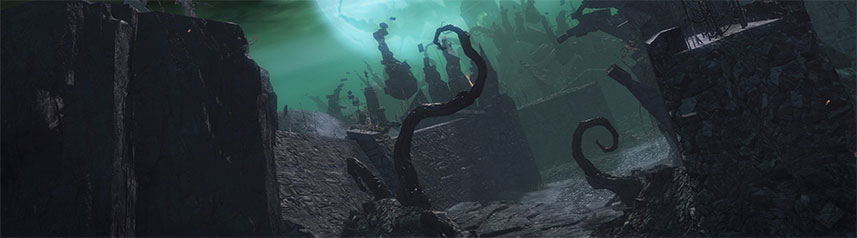
Livelock is a top-down sci-fi shooter built around three-player co-op, where you pilot a cybernetic “chassis” and tear through machine armies in a ruined future that has forgotten how to stop fighting.
 | Publisher: Arc Games Playerbase: Low Type: Buy to Play Shooter Release Date: August 30, 2016 Pros: +Sharp visuals and strong effects work. +Combat is relentlessly explosive and satisfying. +Movement and shooting feel quick and responsive. +Loadouts offer meaningful skill variety per chassis. Cons: -Narrative and characters do not land. -Score-first design makes dying feel trivial. -Inputs can swap unpredictably between control schemes. -PS4 performance and optimization are uneven. |

Livelock Overview
Livelock is a co-op focused, post-apocalyptic top-down shooter framed around the idea of ending a perpetual machine conflict. In its setting, humanity’s legacy persists through AI and consciousness transfers, with players stepping into combat-ready robotic bodies and pushing back hostile systems that have turned the planet into a battlefield. You pick from three distinct chassis and tackle missions solo or with up to two allies, leaning on weapon swaps, abilities, and flashy ultimates to control crowded arenas.
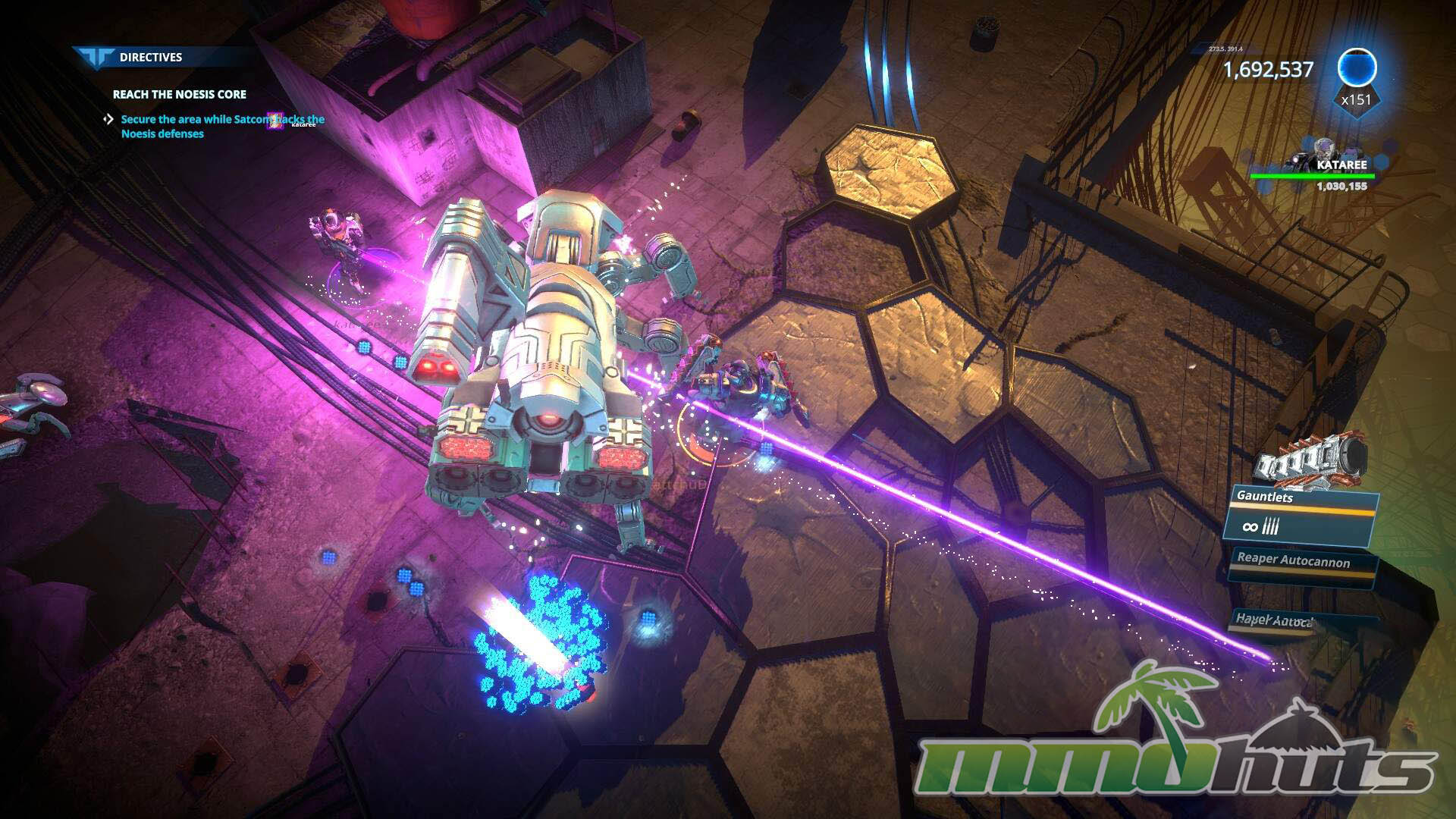
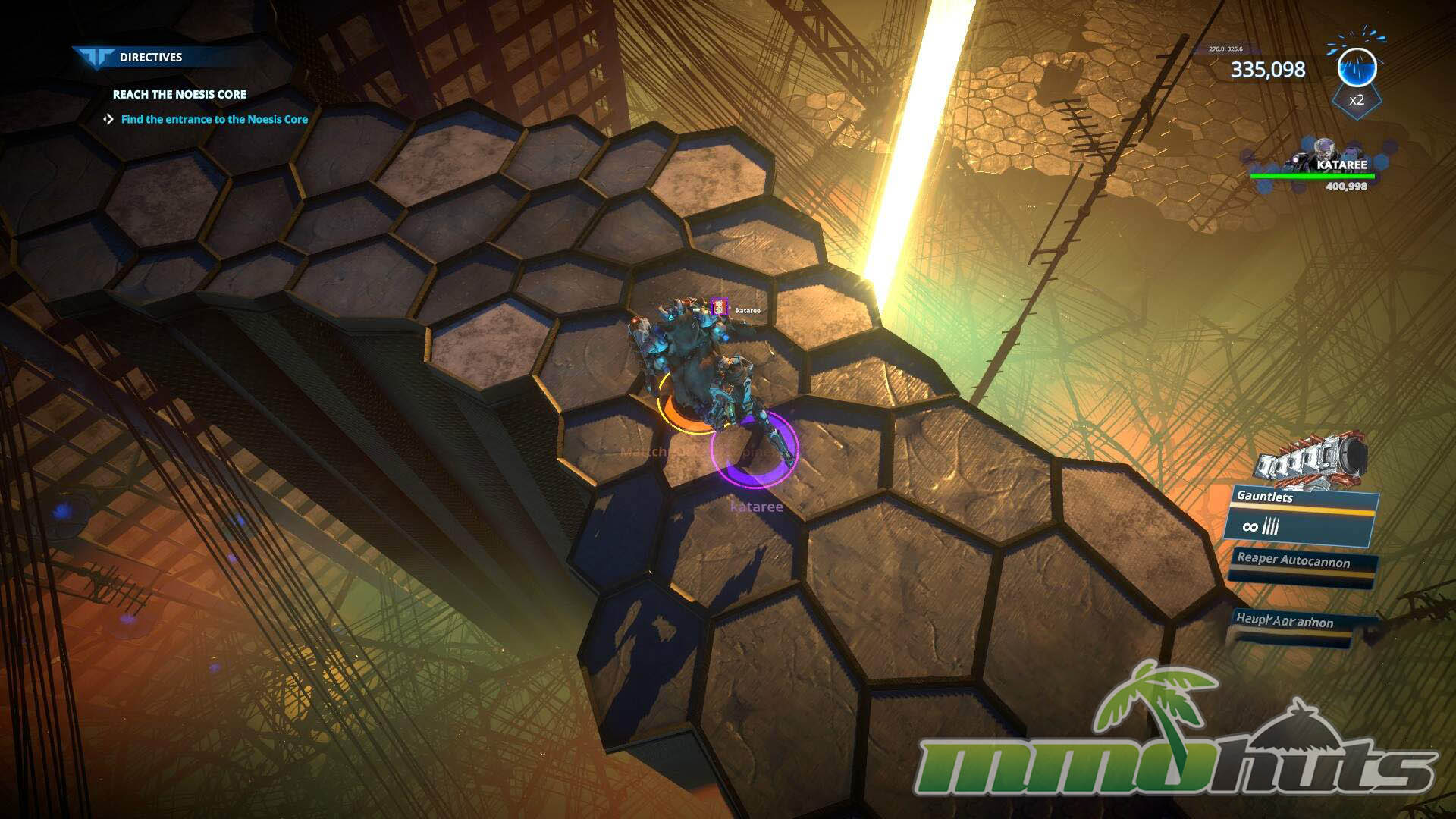
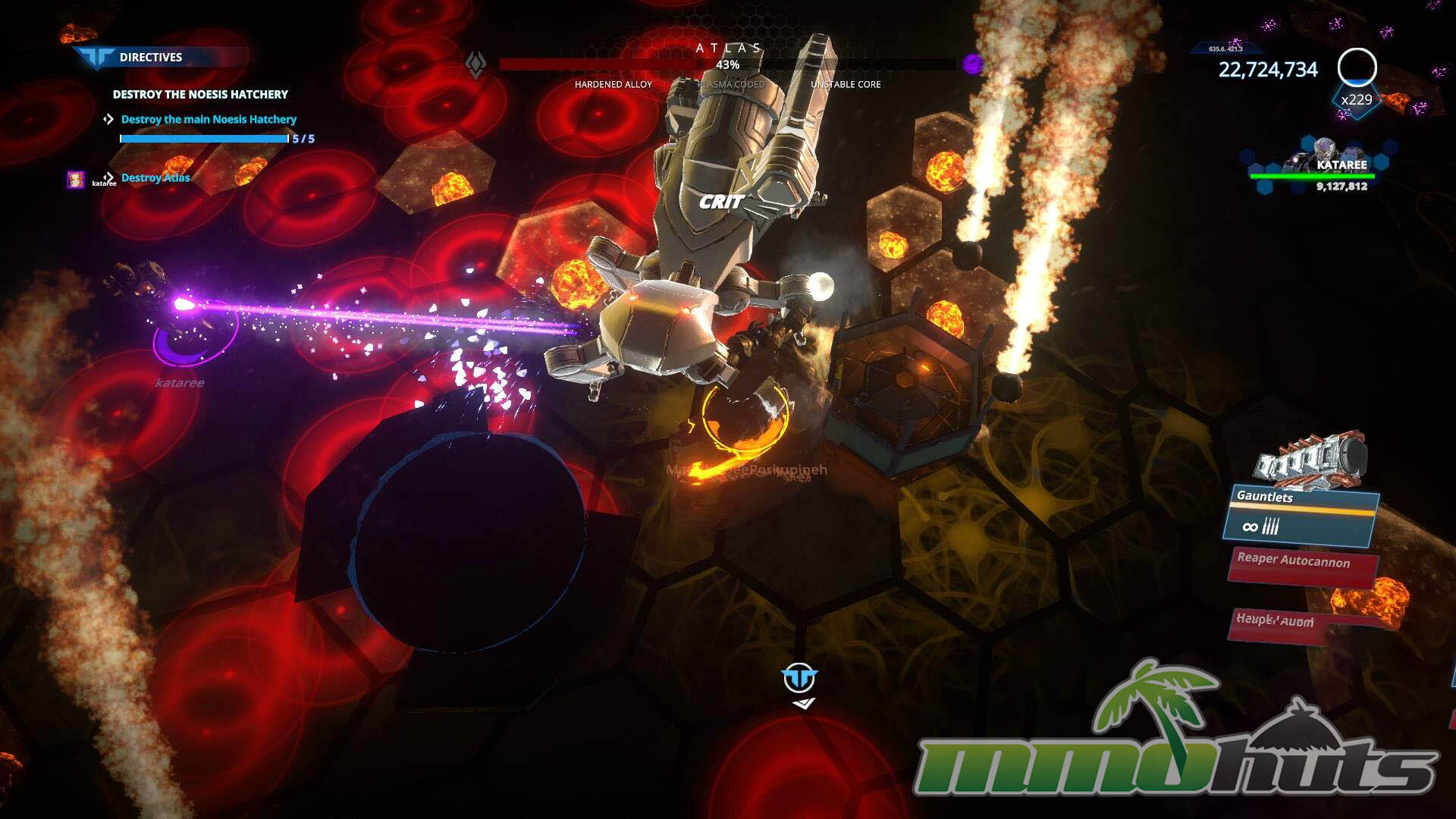
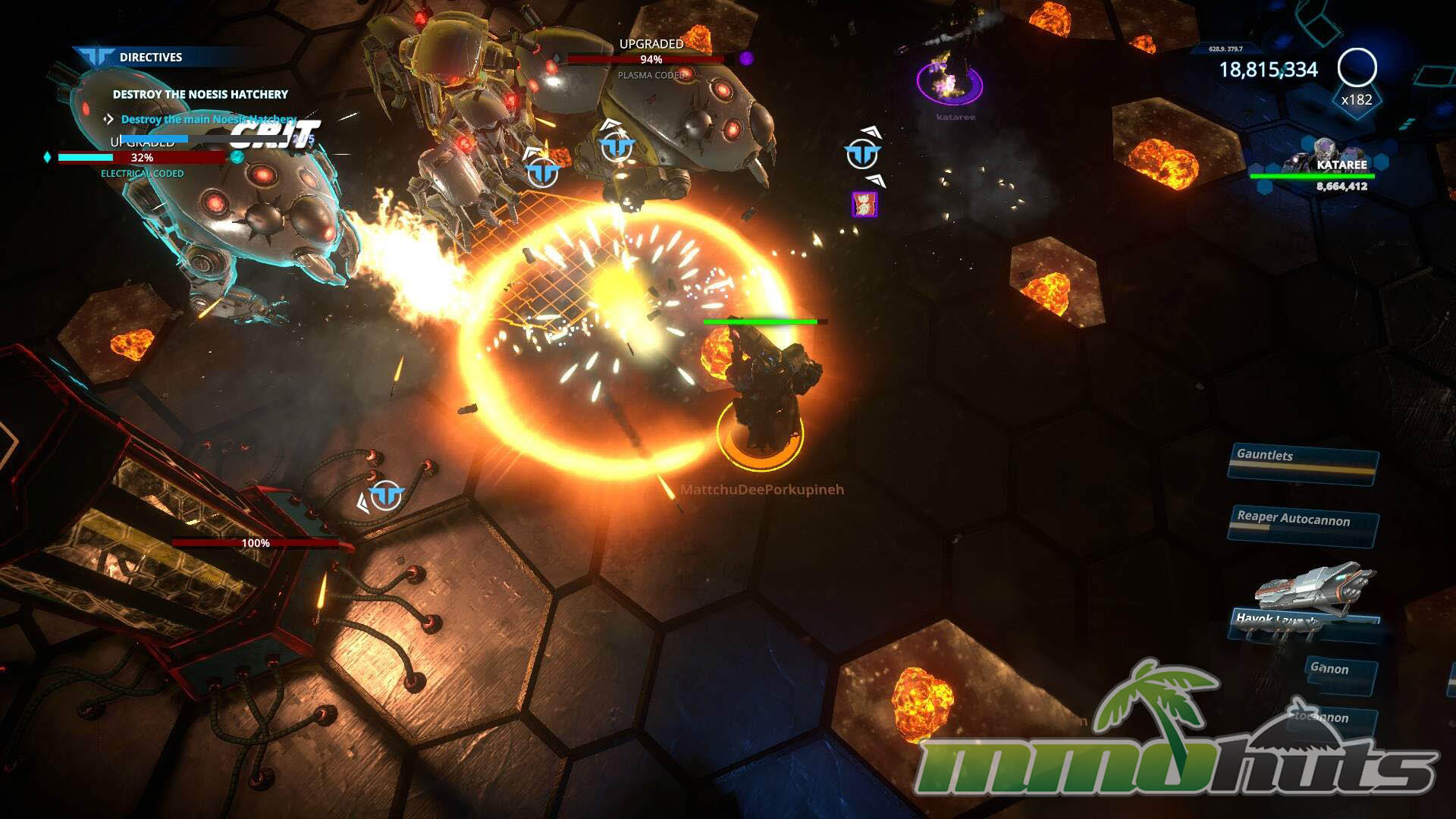
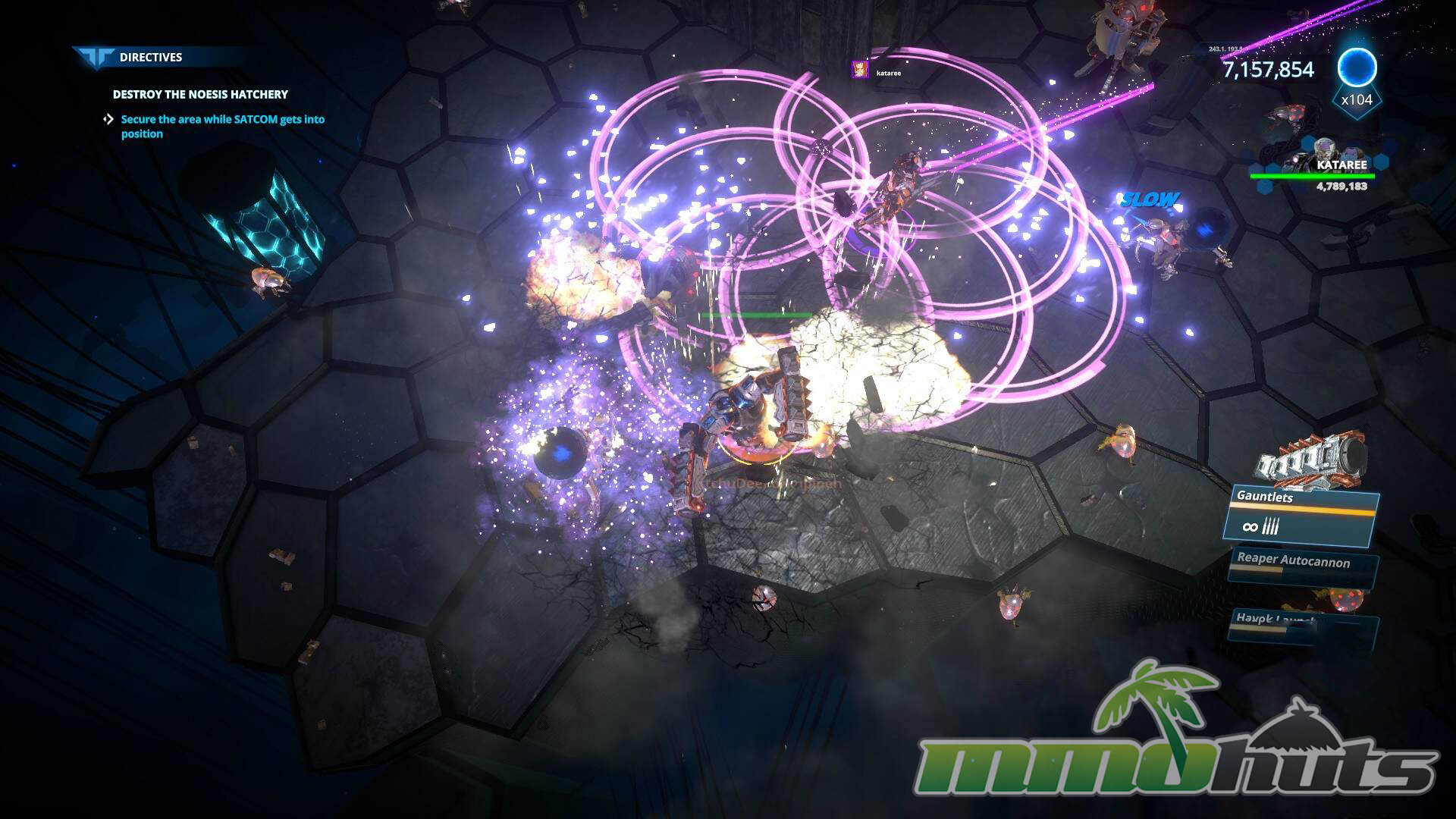
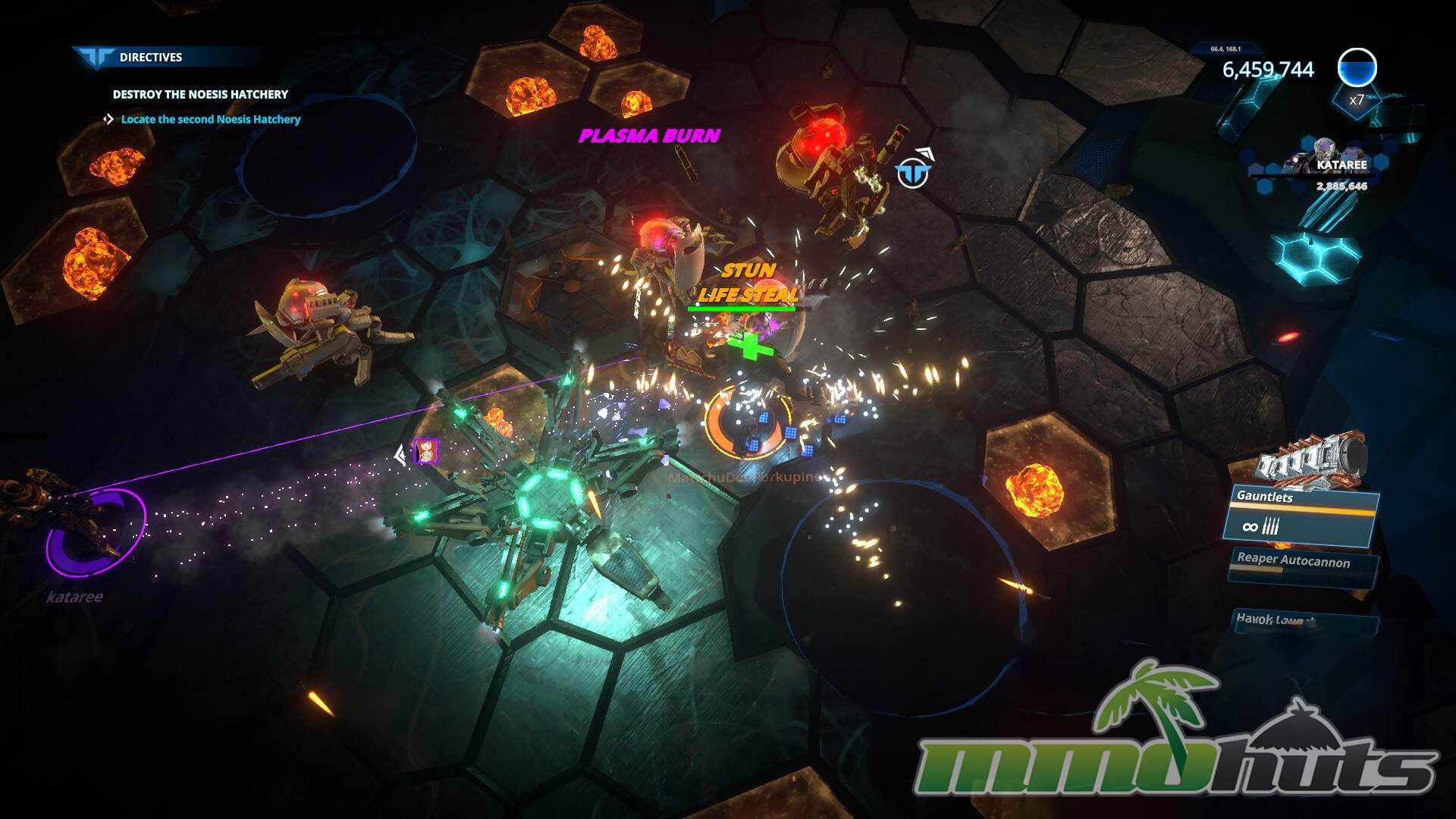
Moment to moment, the game is about managing space and timing while the screen fills with bright sci-fi effects. Weapons are deliberately dramatic and stylized, with options that range from sustained beams to multi-target missile salvos. Between objectives and enemy waves, you will move through irradiated wastelands and ruined facilities, scavenging resources and upgrades while dismantling anything that refuses to power down.
Livelock Key Features:
- 3 Person Co-op – team up as a group of three and clear missions together, with combat tuned to feel best alongside allies.
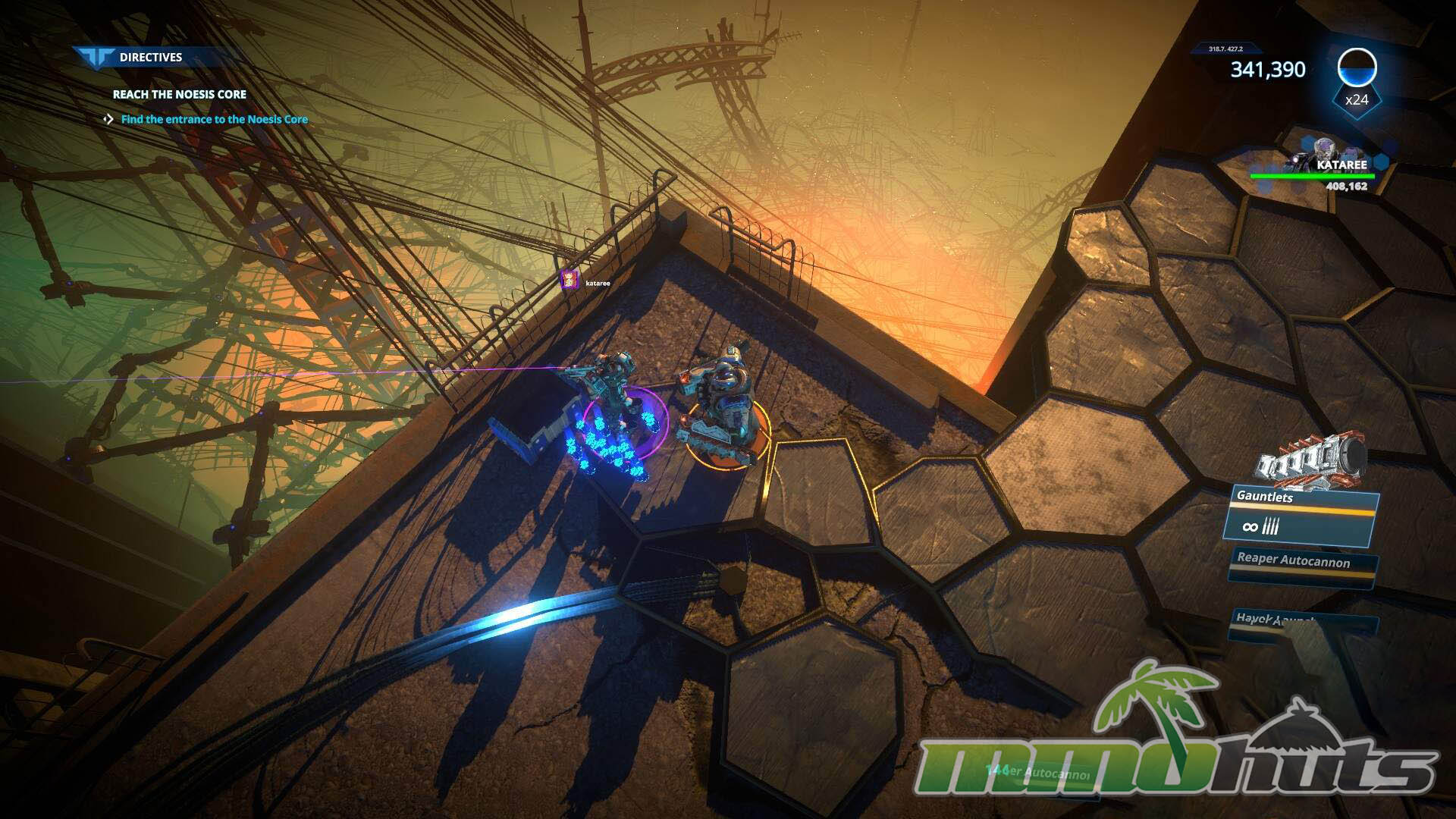
- Sci-Fi Aesthetic – fight across a shattered Earth filled with machines, neon weapon effects, and heavy industrial ruins.
- Multiple Platforms – available to play on PC, Xbox One, and PS4.
- Chaotic Firefights – fast encounters that emphasize crowd control, ability timing, and overwhelming visual spectacle.
- Multiple weapons – bring different weapon types into battle and swap between distinct firing styles, including explosive barrages.
Livelock Screenshots


Livelock Featured Video

Livelock Review
Livelock opens with a straightforward hook, the world is stuck in automated conflict, and the only way to break it is to send combat chassis into the worst zones and shut the system down. It is the first title from Tuque Games, and its priorities are immediately clear. This is an arcade-leaning top-down shooter that wants you to chase stylish clears, big ability combos, and co-op coordination more than it wants you to sink into deep roleplaying.
Pick a Chassis, Define a Role
At the start you choose between three chassis, each designed to fill a familiar co-op niche. Vanguard is the front-line brawler, Hex is the damage-focused ranged option, and Catalyst plays more of a supportive ranged role. Even though the game is largely built around shooting, Vanguard can run melee primaries (gauntlets or a hammer) alongside ranged tools, which gives it a hybrid feel and changes how you approach waves and elites.
The game is flexible about experimentation. You can create multiple chassis on the same account, so trying different roles is encouraged rather than punished. Customization is split between looks and combat kit, and the core progression loop is simple: play missions, gain experience, level up, and unlock new weapons, abilities, and modifiers that reshape how those abilities behave.
Unlocked weapons can be improved up to five times using Carbon. Carbon is gathered from typical sources as you play, including chests, environmental robot remains you can scavenge, and boss rewards. It is not a complicated upgrade economy, but it does a good job of making your favorite tools feel stronger without forcing constant replacement.
Loadouts are built around three weapon slots and three skill slots. Each weapon slot supports two weapons you can swap between during combat, which helps keep the pace high and encourages you to rotate tools rather than rely on a single gun. Two of the skill slots pull from a set of five swappable skills, while the third slot is reserved for an ultimate that stays locked to that chassis.
Cosmetic customization comes from “Firmware,” which drops randomly from chests and bosses. The concept is fine, but the presentation is confusing, especially early on. Firmware occupies three slots (head, color scheme, and cape), and the interface communicates unlocks with a numbering system that is easy to misread as a stat hierarchy rather than simply a cosmetic index. The game does little to clarify this during the onboarding portion, which makes the first few unlocks more puzzling than exciting.
There is also a limitation to the color scheme firmware that may bother players who like strict visual themes, weapon colors do not fully follow your selected scheme. You can still assemble a look that works, but some chassis weapon accents remain fixed, so perfect matching is not always possible.
Combat First, Always
Once you deploy, the campaign structure mixes a handful of mission types across mostly linear spaces. Some stages push you forward through objectives, others revolve around holding a node against waves, and a few combine tasks with repeated boss pressure over the course of a level. There are also occasional environmental wrinkles that make certain arenas stand out, even if the general flow remains focused on clearing enemies efficiently.
Livelock also leans into an old-school scoring mindset. Enemies drop blue orbs that feed a score multiplier, and the timer on maintaining that multiplier becomes stricter the longer you keep it alive. If you want to play “well” by the game’s standards, you are constantly moving, collecting, and keeping momentum, rather than slowly sweeping an area for safety.
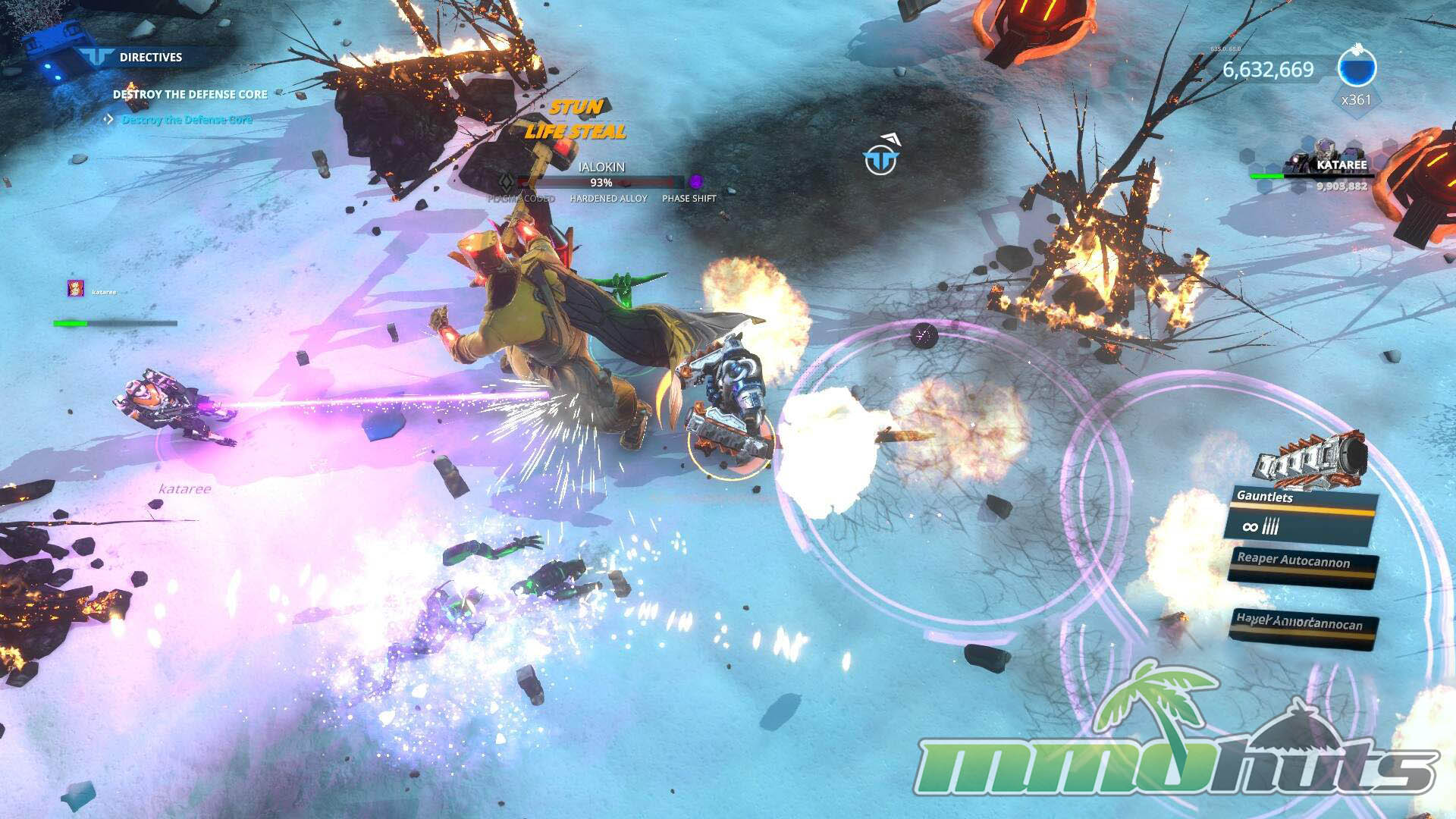
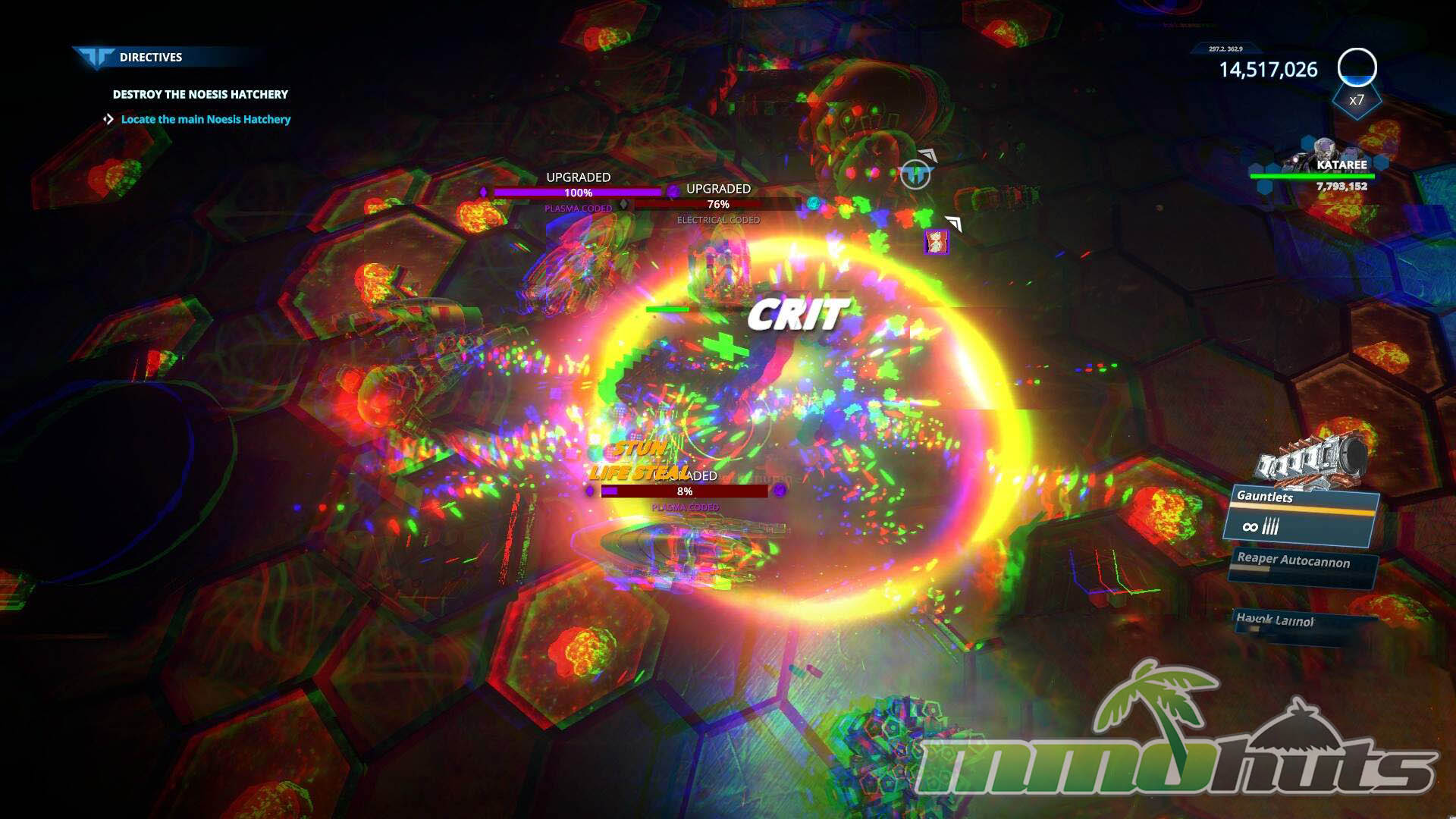
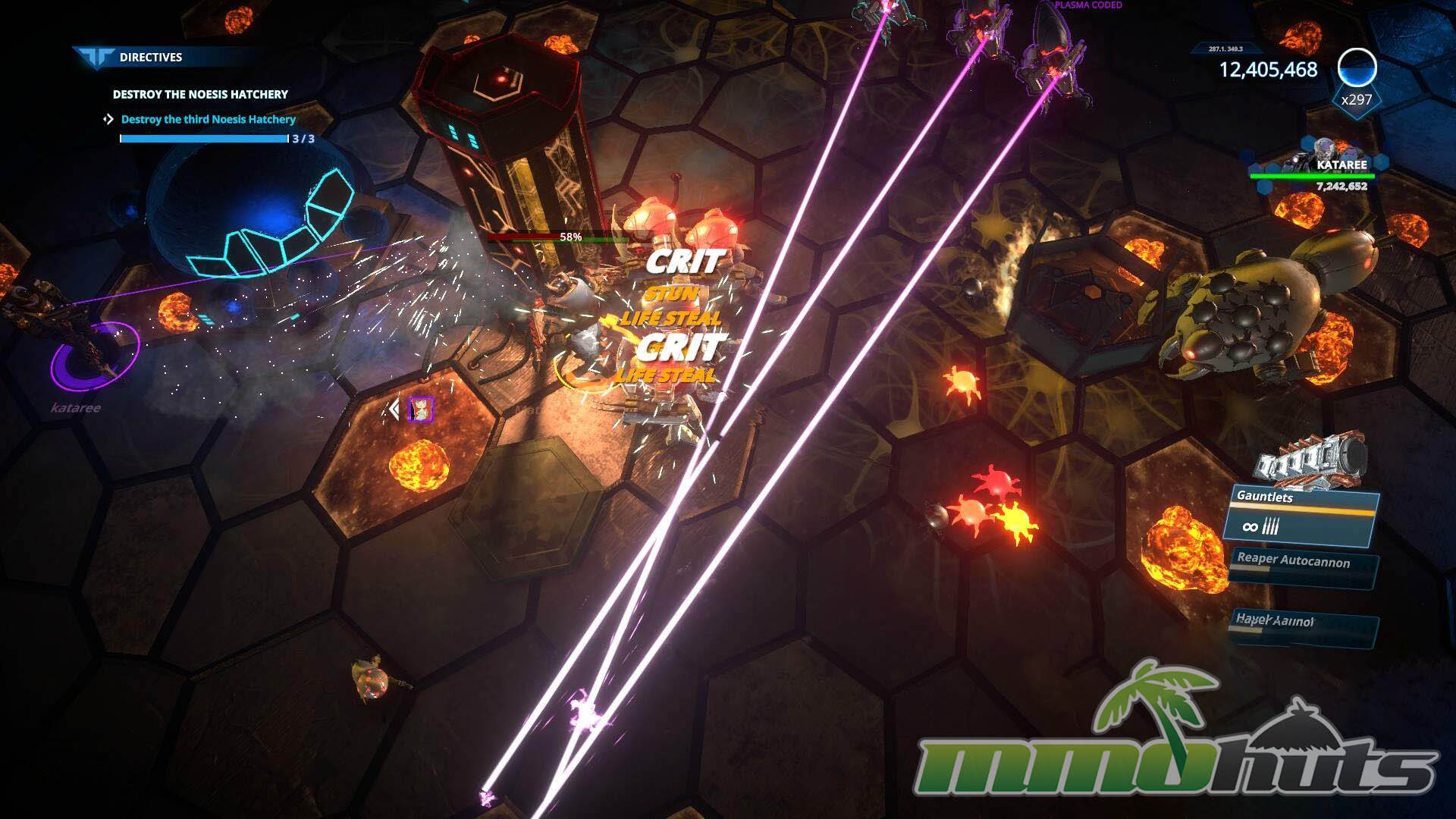
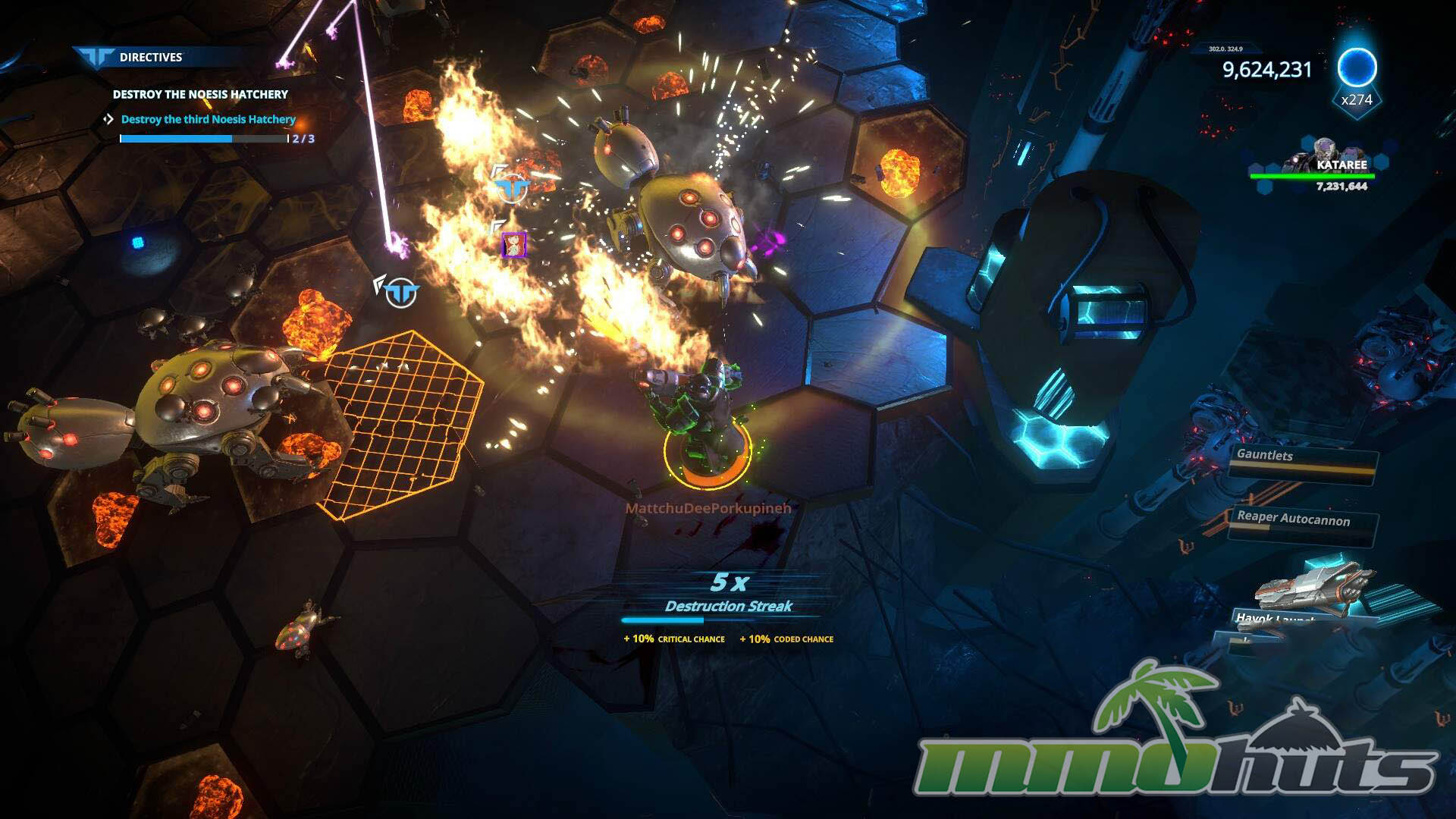
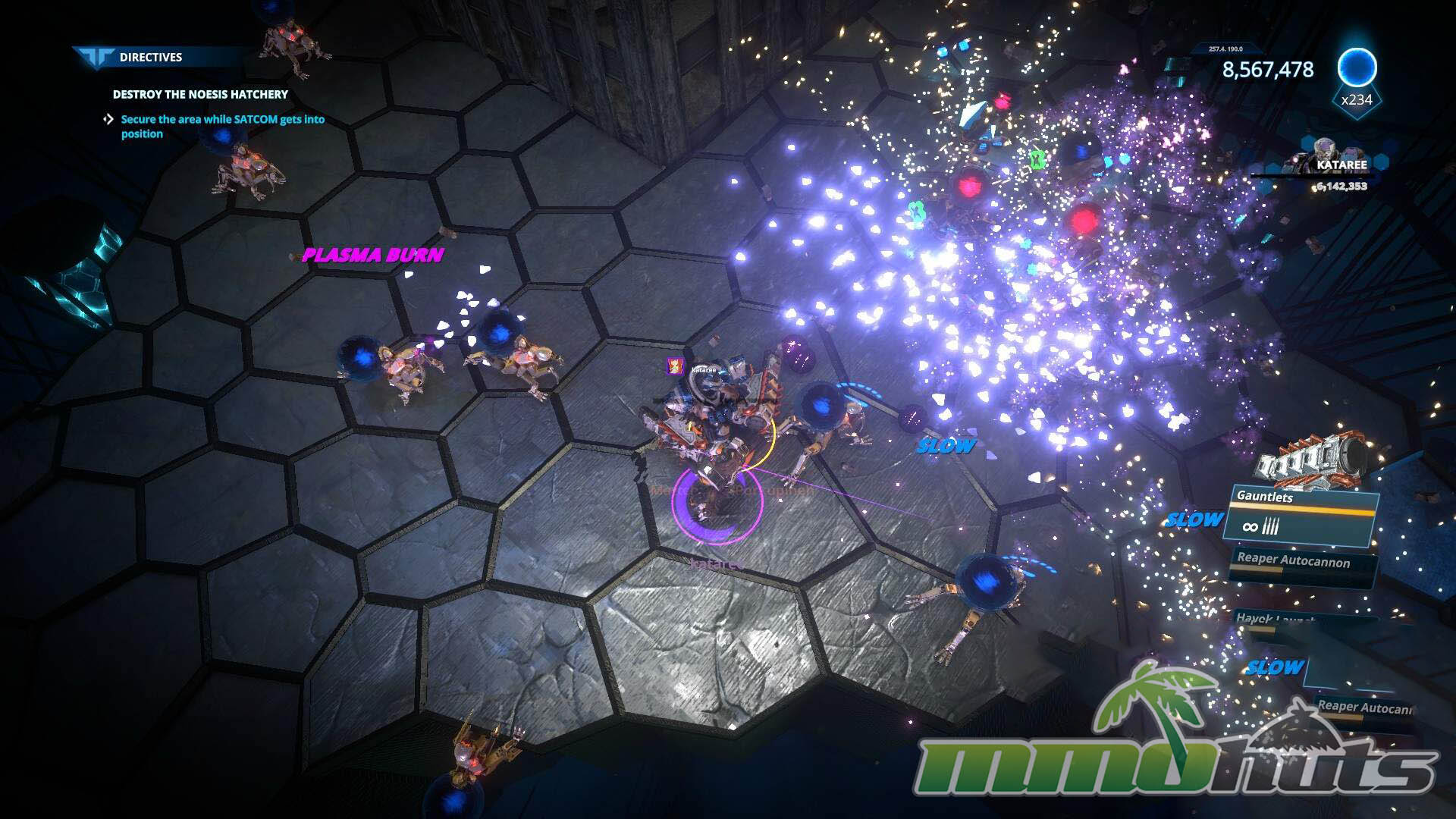
The best part is how the shooting and abilities feel in motion. Attacks are loud, colorful, and often screen-filling. Explosions, sparks, and impact effects sell the power fantasy, and the destructible clutter in the environment helps, too. Smashing through walls, kicking cars, and watching debris fly makes encounters feel more physical than many top-down shooters that keep arenas static.
As modifiers unlock, the combat gains more personality. Upgrades that alter skill behavior can meaningfully change how you control crowds or set up damage windows, and some of them are visually impressive in a way that reads clearly even amid chaos. This is where co-op starts to shine, because a well-timed stun or area control tool can let another player safely unload an ultimate or burst down a priority target.
Playing melee-leaning Vanguard highlights both the strengths and the friction. Closing distance becomes riskier later on, so survival starts depending on precise dodges, smart ability use, and quick weapon swapping. When it clicks, intense waves feel earned rather than random, and finishing a rough sequence without losing an objective is genuinely satisfying.
That said, difficulty sometimes reads as blunt rather than carefully tuned. Death does not carry much campaign-level consequence because you re-enter via a drop pod with a new clone chassis, and the biggest punishment is a harsh hit to your score multiplier. If you are not chasing leaderboards, dying can feel more like a brief interruption than a meaningful setback.
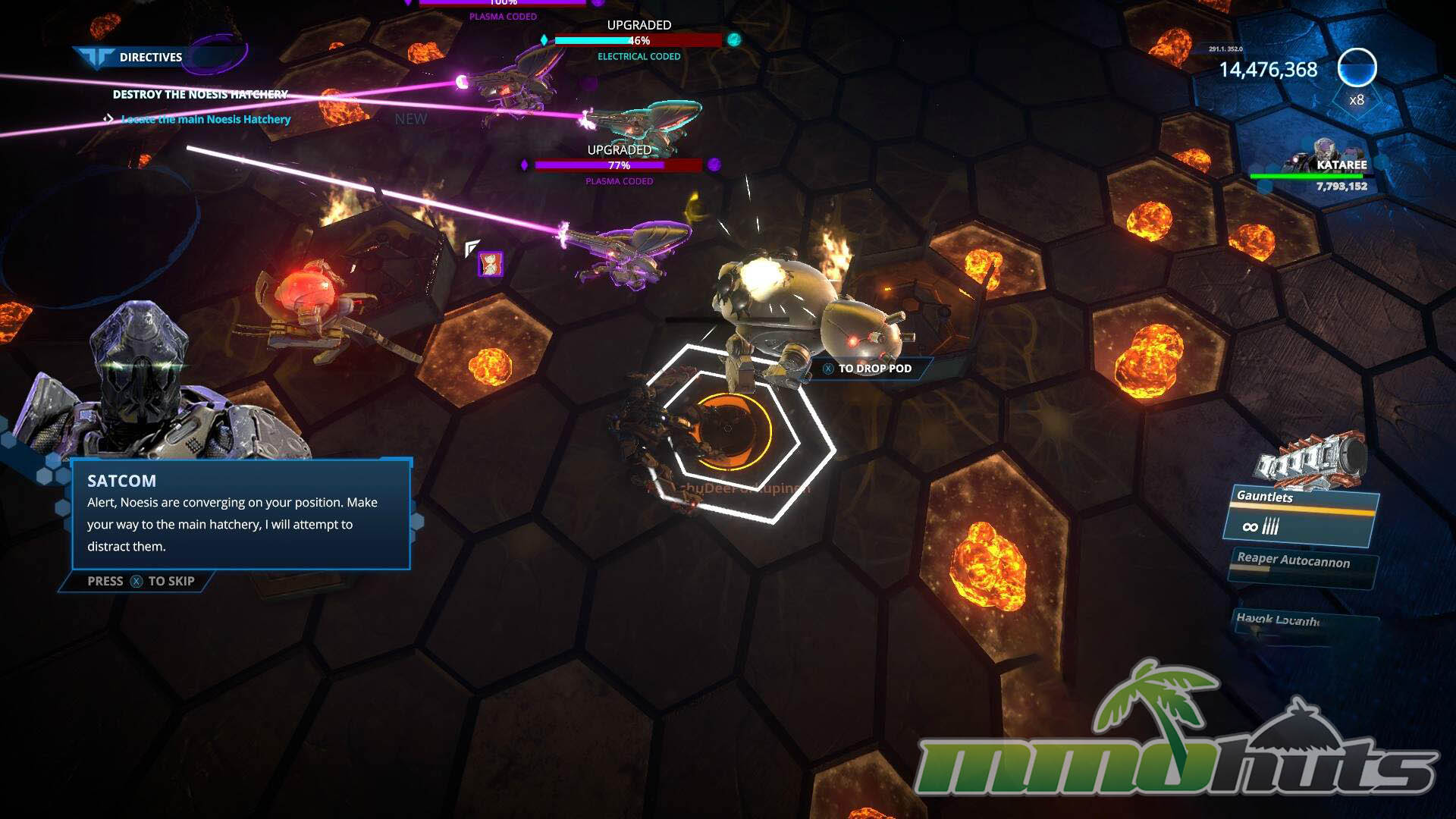
The respawn system is at least entertaining, because the drop pod itself can be used as a weapon. Choosing a landing spot within range and crushing nearby enemies can turn a death into a quick revenge play, and using that impact to eliminate the threat that just took you out is one of the game’s more memorable little joys.
Enemy Design: Peaks and Flat Spots
Enemy variety starts off conservative, with familiar melee and ranged units and then tougher versions of the same silhouettes. As you progress through later portions of the campaign, the roster becomes more interesting and forces more deliberate positioning. Certain combinations create real pressure, especially when explosive death effects and spawning enemies overlap in tight spaces.
Those same moments can also become frustrating depending on your chassis and your role in the group. Close-range play, in particular, can get punished hard by enemies that detonate, spawn swarms, or apply slows. When you are trying to peel for an ally, the “right” answer sometimes becomes backing off and shooting, which is not always what a melee-forward kit wants to do.
Boss encounters, by comparison, are the area where the design feels least ambitious. Patterns are readable and limited, and even when a boss has a few threatening moves, the fight often settles into a repeatable routine after the first minute or two. Adds appear at set points, but they do not add much complexity beyond extending the time to completion.
A teleporting boss is a good example of this unevenness. The opening moments can feel hectic as it jumps positions, throws out high-damage projectiles, and mixes in melee pressure. Once you identify the simple response loop (dodge when it reappears, punish, repeat), the encounter loses most of its bite. Defensive tools can trivialize certain attacks, and by late stages it can feel like the boss is going through motions rather than adapting to your play.
Story and Characters Fall Short
Livelock’s narrative aims for big sci-fi themes, but it rarely delivers the connective tissue needed to make them resonate. The pacing lurches between moments that drag and moments that feel rushed, and the supporting cast is thinly sketched. It gives the impression of a larger concept that was condensed without enough time to build character motivation or believable stakes.
The most consistent issue is that the game does not give you enough reasons to invest emotionally. Background details are mostly tucked into optional audio logs scattered through levels, and even those primarily add context for the three playable characters. On the critical path, dialogue tends to be functional, with personalities leaning into broad archetypes rather than developing in a way that makes the journey feel personal. The result is a campaign that you play for the action rather than the plot payoff.
Small Frustrations That Chip Away
Outside of the main pillars, several minor problems accumulate. Loot behavior in co-op is one of the most aggravating. Loot is instanced, but the despawn window is extremely short, roughly ten to fifteen seconds. If one player opens a chest while another is fighting or slightly out of position, it is easy to lose rewards simply because you could not physically reach the drop in time. It is a strange choice for a co-op game where splitting up, even briefly, is common.
The physics system is fun when it is working in your favor, but it can also create odd, immersion-breaking moments. Seeing environmental objects behave unpredictably, including debris appearing in awkward ways, can pull you out of the otherwise strong visual presentation.
Interface design is another mixed point. The in-mission HUD does the job, but the broader menus feel dated and uneven. Most screens seem clearly designed with a controller in mind, yet the lobby layout in particular can feel clumsy without a mouse, which is an awkward inconsistency.
That inconsistency is amplified by the game’s real-time switching between controller and mouse and keyboard inputs. In practice, it can be unreliable and tends to favor mouse and keyboard. If you prefer a controller for melee-heavy play, you may find the game unexpectedly reverting prompts or control focus, especially around deaths or menu transitions. At its worst, the UI can display the wrong button prompts mid-session, and menu navigation may stop accepting analog input until you “wake up” the mouse again.
The PS4 Version
Most of the impressions above align more with the PC experience, but the PS4 version introduces its own concerns. Visual quality appears lower than what you can push on PC at high settings, and physics updates feel less responsive. Performance is the larger issue, firefights can dip under 30 FPS even when the action is not at its most extreme. Although the framerate seems intended to cap at 60, it does not remain stable, and screen tearing is noticeable. On the plus side, menu navigation on PS4 feels more natural because the interface is clearly built around a controller-first flow.
Final Verdict – Good
Livelock is easy to recommend for one specific reason, the core combat is simply enjoyable. It is fast, loud, and mechanically satisfying, especially once your chassis has a full kit and your group starts chaining crowd control and ultimates together. The best moments come when co-op synergy turns a messy wave into a clean execution, with one player locking enemies down and another erasing them in a burst of color and debris.
Its weaknesses are real, though. The story does little with its premise, boss fights do not match the creativity of standard encounters, and the score-centric death penalty can make failure feel inconsequential unless you care about leaderboards. Replay value is mostly tied to increasing difficulty, improving scores, or leveling all three chassis. With a first run clocking around five hours, the campaign can also feel brief relative to its $19.99 price point. Still, for players who want a polished-feeling top-down shooter that is markedly better with a friend or two, Livelock earns its “good” verdict on the strength of its moment-to-moment action.
Livelock System Requirements
Minimum Requirements:
Operating System: Windows XP 32 bit
CPU: Pentium D 820 2.8GHz or Athlon 64 X2 Dual Core 4400+
RAM: 1 GB GB RAM
Video Card: GeForce 315 512MB or Radeon HD 4550
Hard Disk Space: 12 GB Free Space
Official system requirements have not yet been released for Livelock. The requirements above our based on our experience and will be updated when official numbers become available.
Livelock Music & Soundtrack
Coming Soon!
Livelock Additional Information
Developer: Tuque Games, Perfect World Entertainment
Other Platforms: PS4, Xbox One
Announcement Date: January 26, 2016.
Release Date: TBA
Development History / Background:
Livelock is primarily developed by Canadian-based game studio Tuque Games. The game was announced on January 26, 2016. Tuque Games was formed in 2012 by industry veterans. The studio is working in conjunction with Perfect World Entertainment, publishers of Neverwinter, Jade Dynasty, and Forsaken World.