Heroes Wanted is a free-to-play mobile social RPG that leans into the hero-collector formula, pairing anime-styled 3D characters with quick, stage-based battles. It mixes largely hands-off movement and basic attacks with a more involved skill system where you can drag abilities to line up area damage, which gives each run a bit more decision-making than the typical auto-battler. With a long PvE campaign, bounty-style missions, asynchronous PVP, and several side modes built around upgrading your roster, it was designed for steady daily progression and a lot of repeat runs.
 | Publisher: NHN Studio629 Type: Mobile RPG Release Date: March 10, 2016 Shut Down: 2017 Pros: +Clean, anime-inspired 3D presentation. +Skill dragging/targeting adds real input. +Large roster of Heroes to recruit. +Simple to learn and comfortable for short sessions. Cons: -Battles can feel overly hands-off. -Content loop becomes repetitive over time. -Monetization can tilt power toward spenders. |
Heroes Wanted Shut Down in 2017
Heroes Wanted Overview
Heroes Wanted is a 3D, party-based hero collection RPG developed by TOAST and published by NHN Studio629, a pairing known for titles like Guardian Hunter and Crusaders Quest. The premise puts you in a fantasy setting where protecting the Sage’s Stone becomes the backbone for a long sequence of missions and side activities. Progress is built around recruiting mercenaries, forming a three-Hero squad (plus support), and pushing through a sizable set of stages while constantly improving your roster through leveling, upgrades, and evolution.
Structurally, it is a stage-driven mobile RPG with a strong grind-and-growth loop. You clear short missions for experience and materials, then reinvest those rewards into strengthening Heroes so you can handle tougher encounters, special dungeons, and raid-like fights. Outside of the main campaign, the game adds variety with bounty missions for targeted farming, time-limited dungeons for specific resources, and asynchronous PVP for players who want a competitive layer.
Heroes Wanted Features:
- Stage-based Levels – Work through over 300 stages with escalating enemy packs, boss encounters, and themed environments.
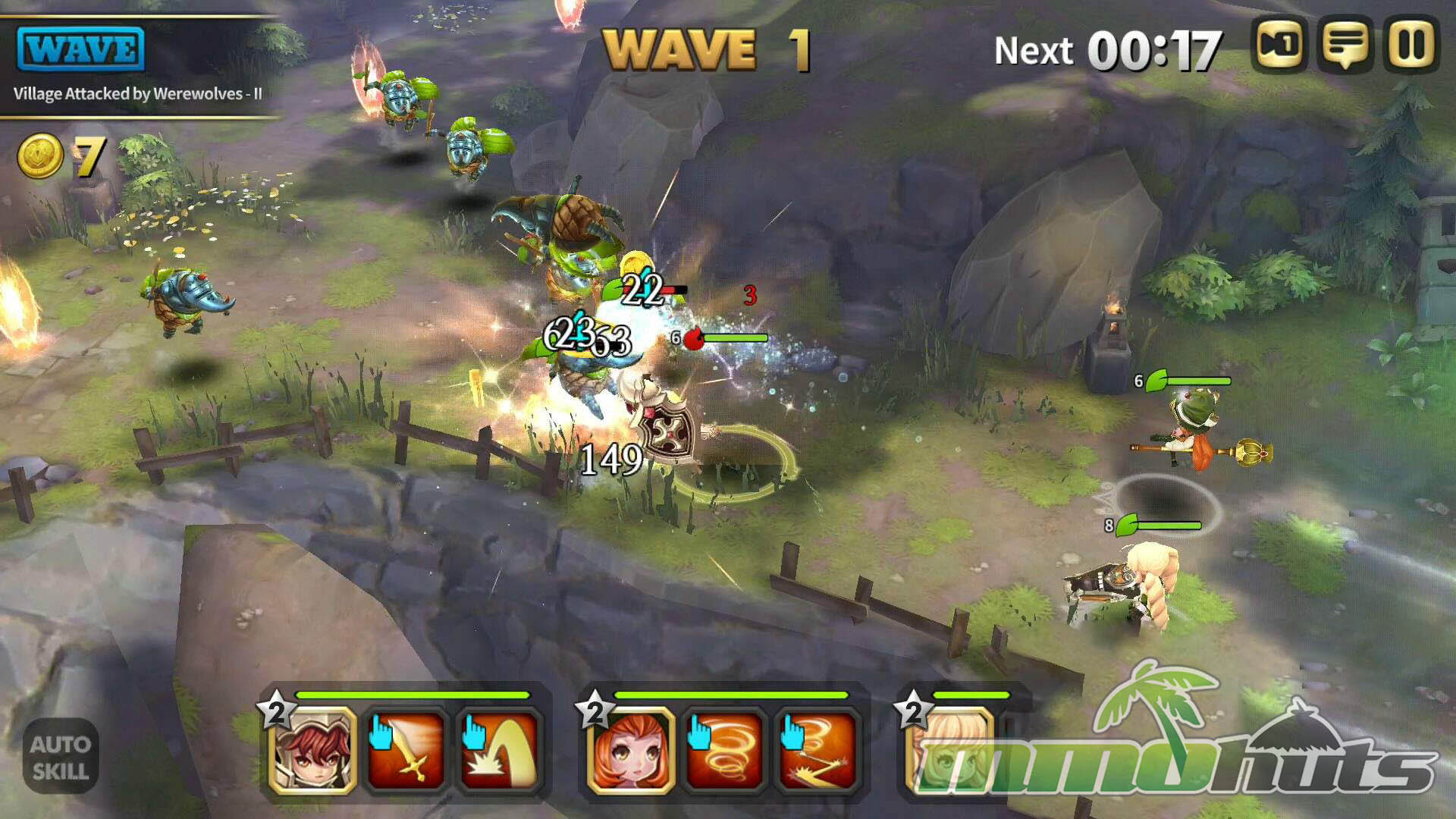
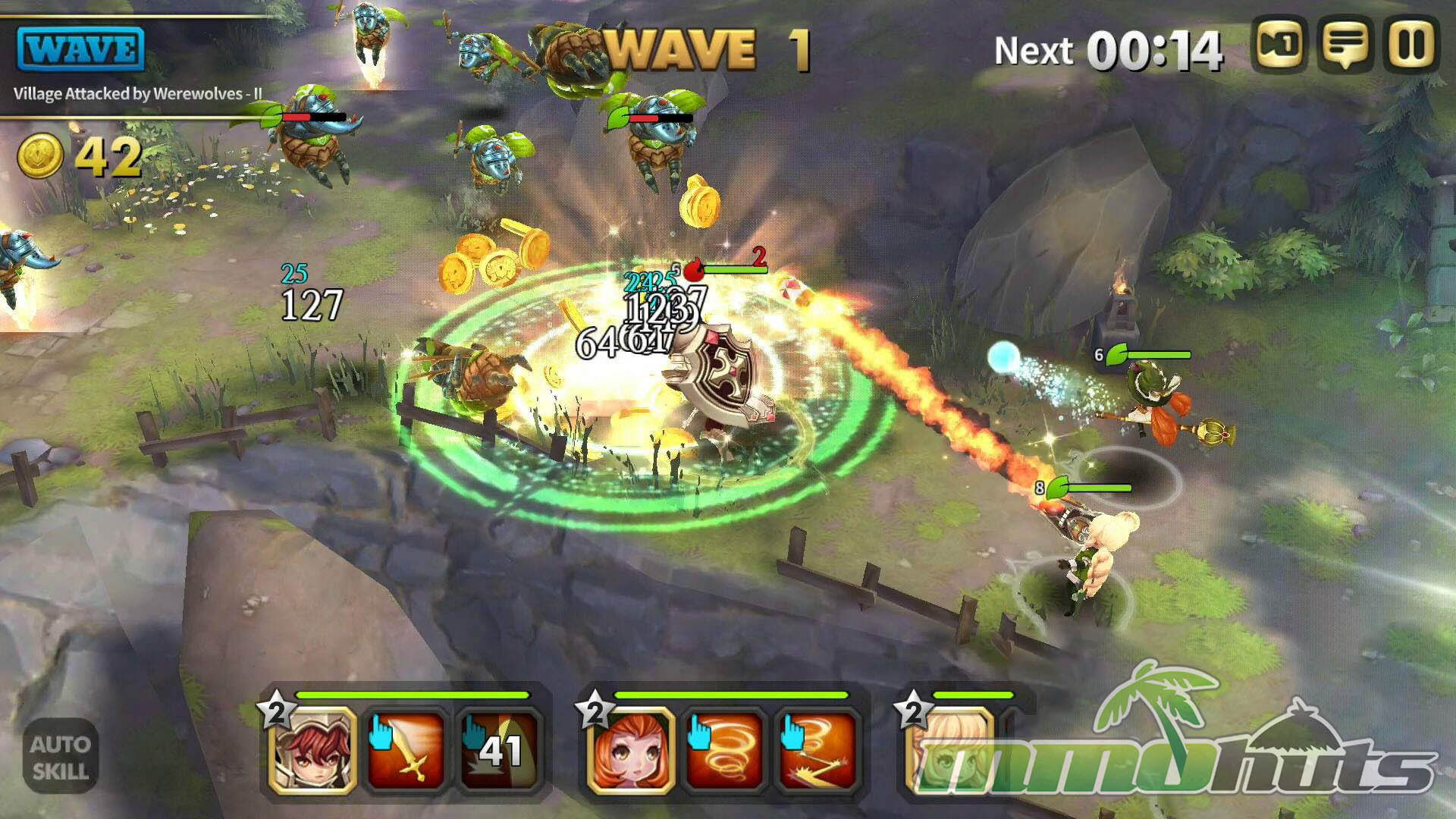
- 3D Anime Graphics – Bright, character-focused visuals with lively animations and effects that sell the “mobile action RPG” feel.
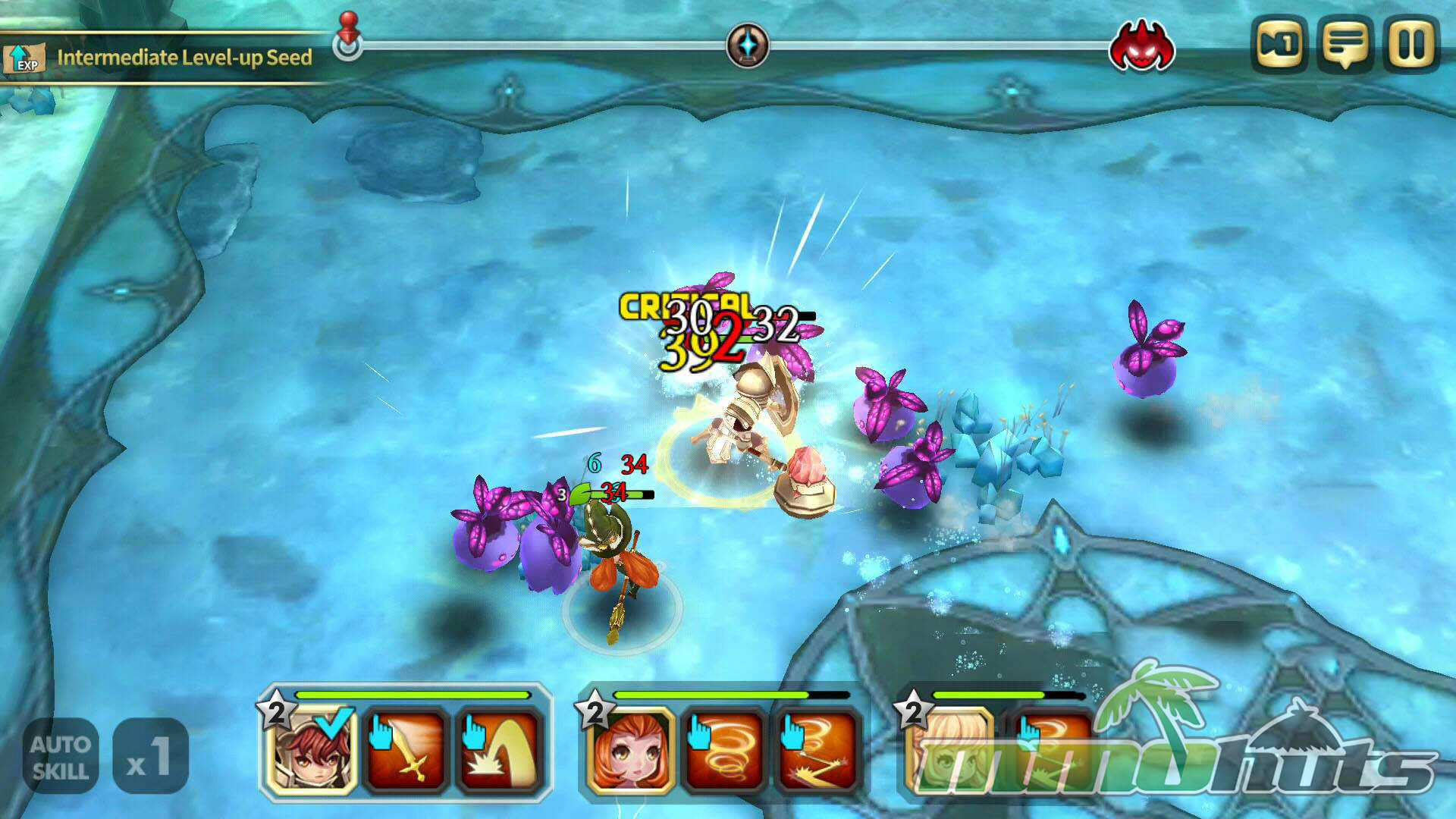
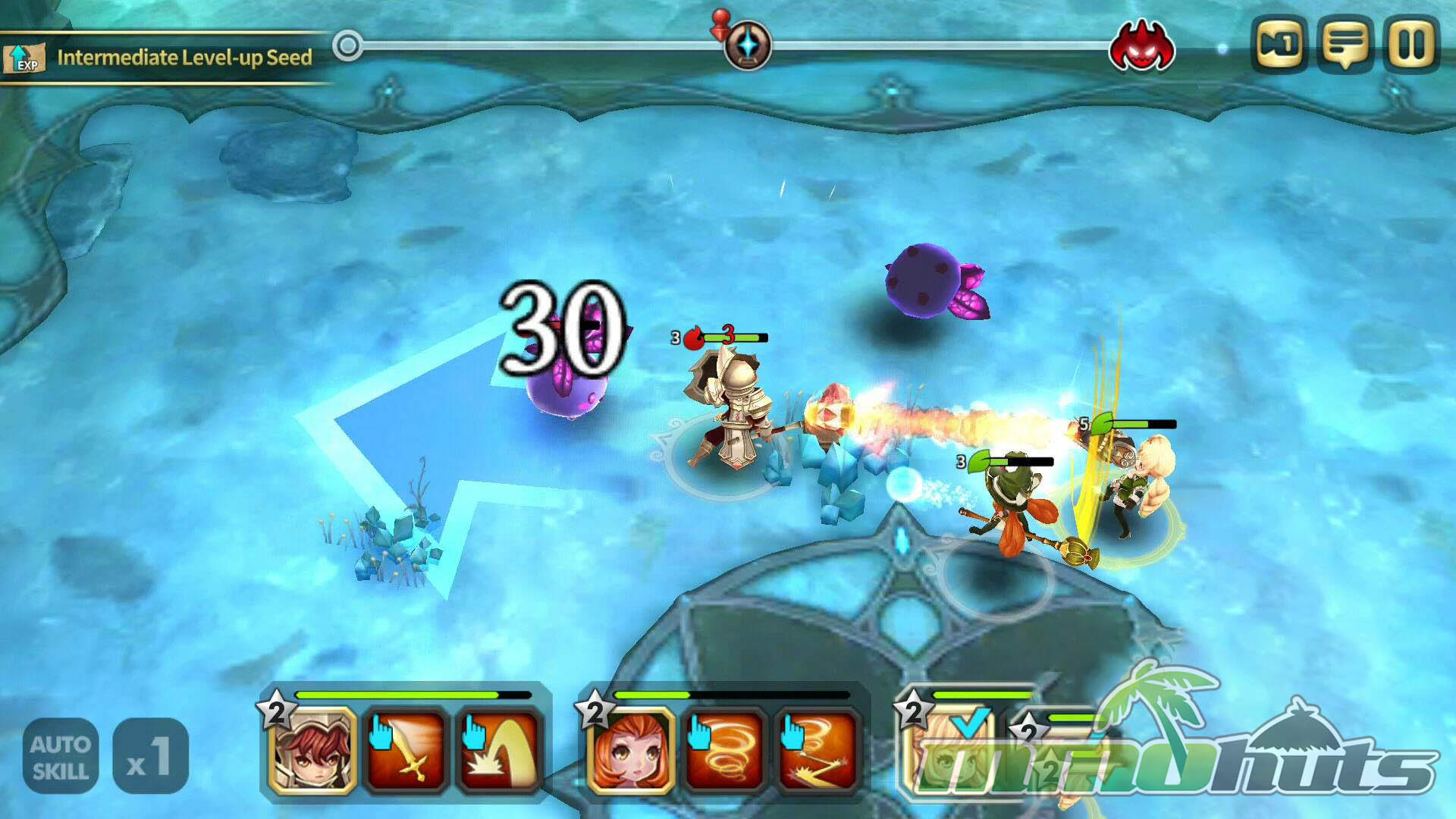
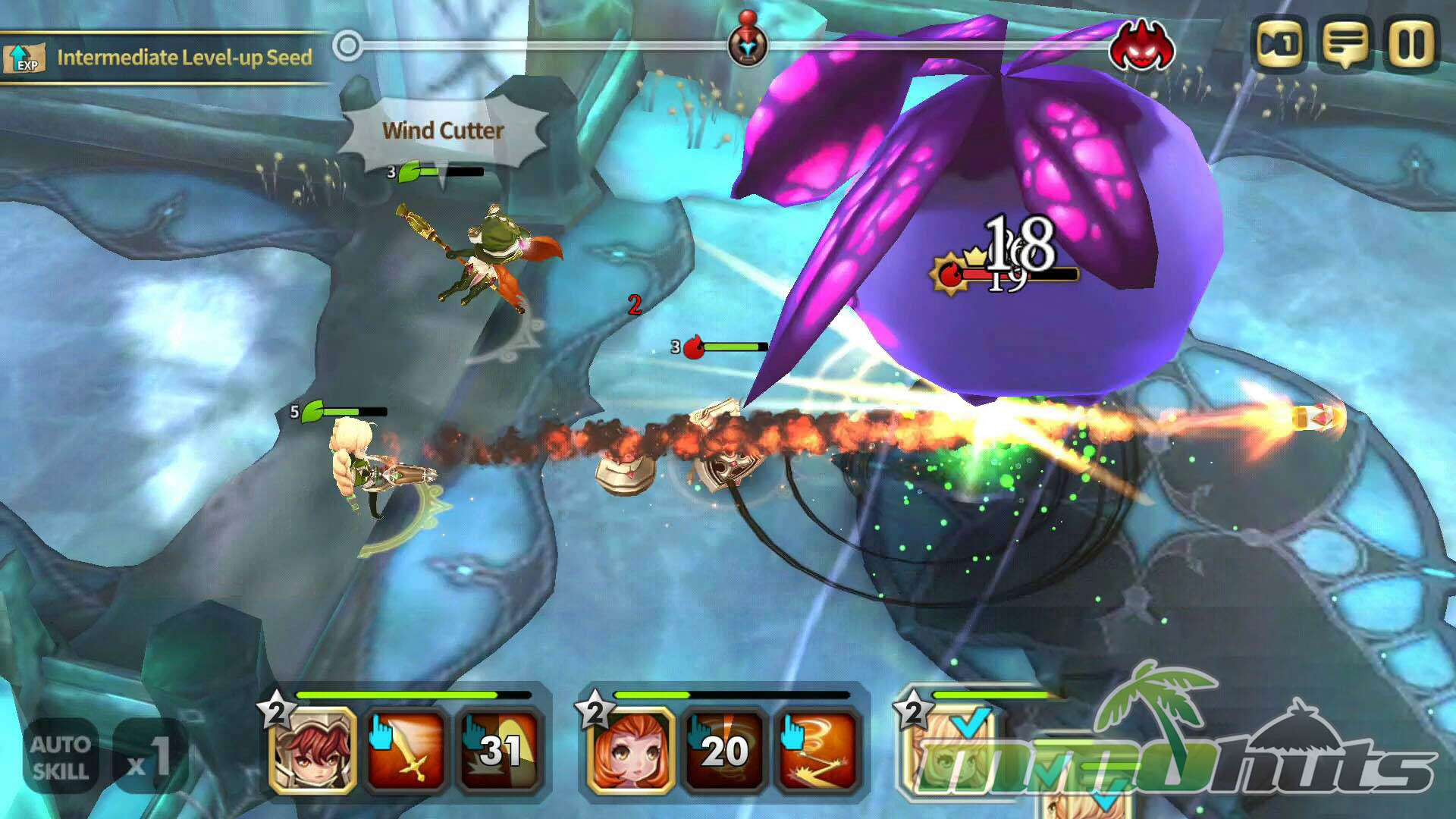
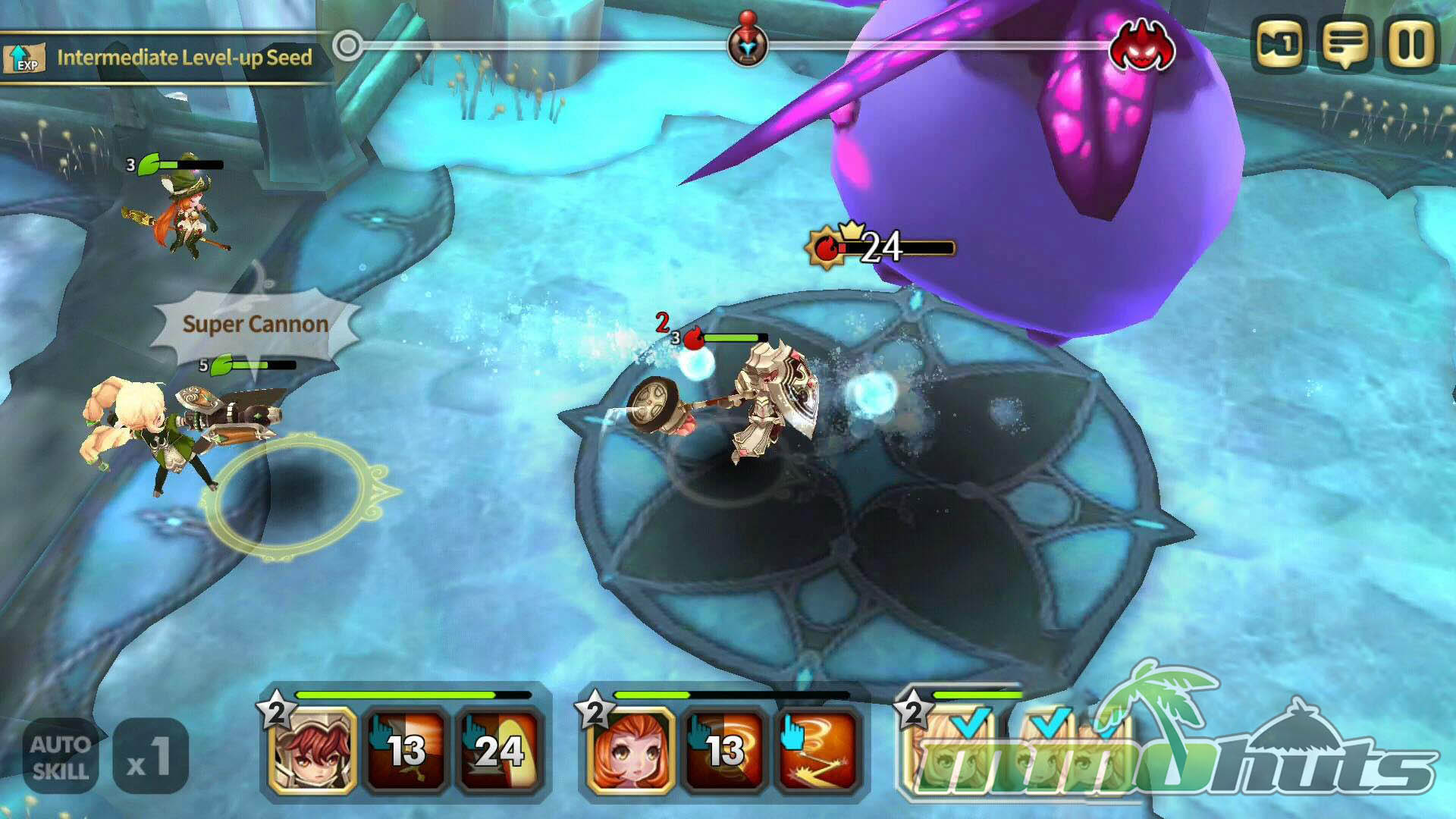
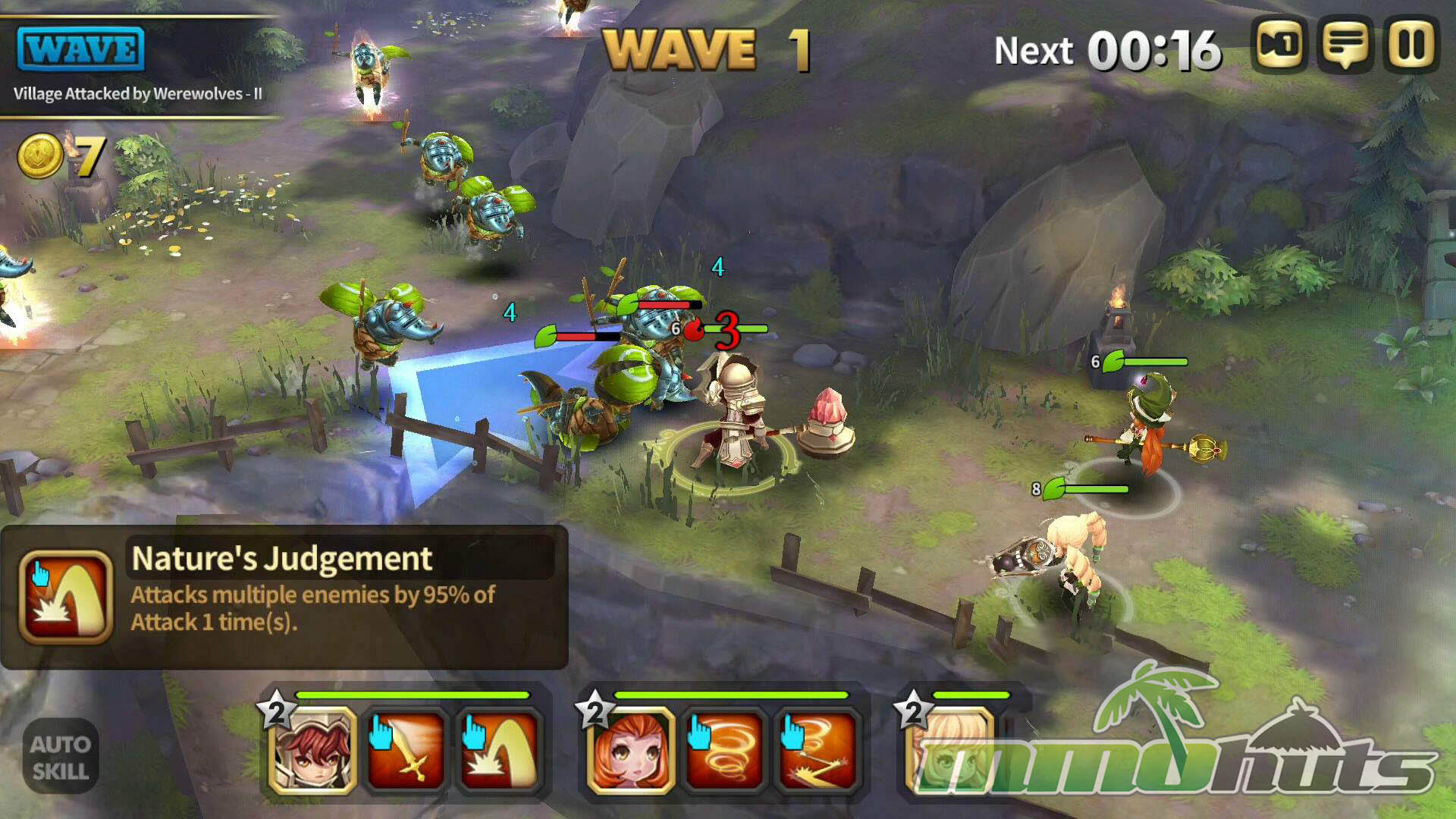
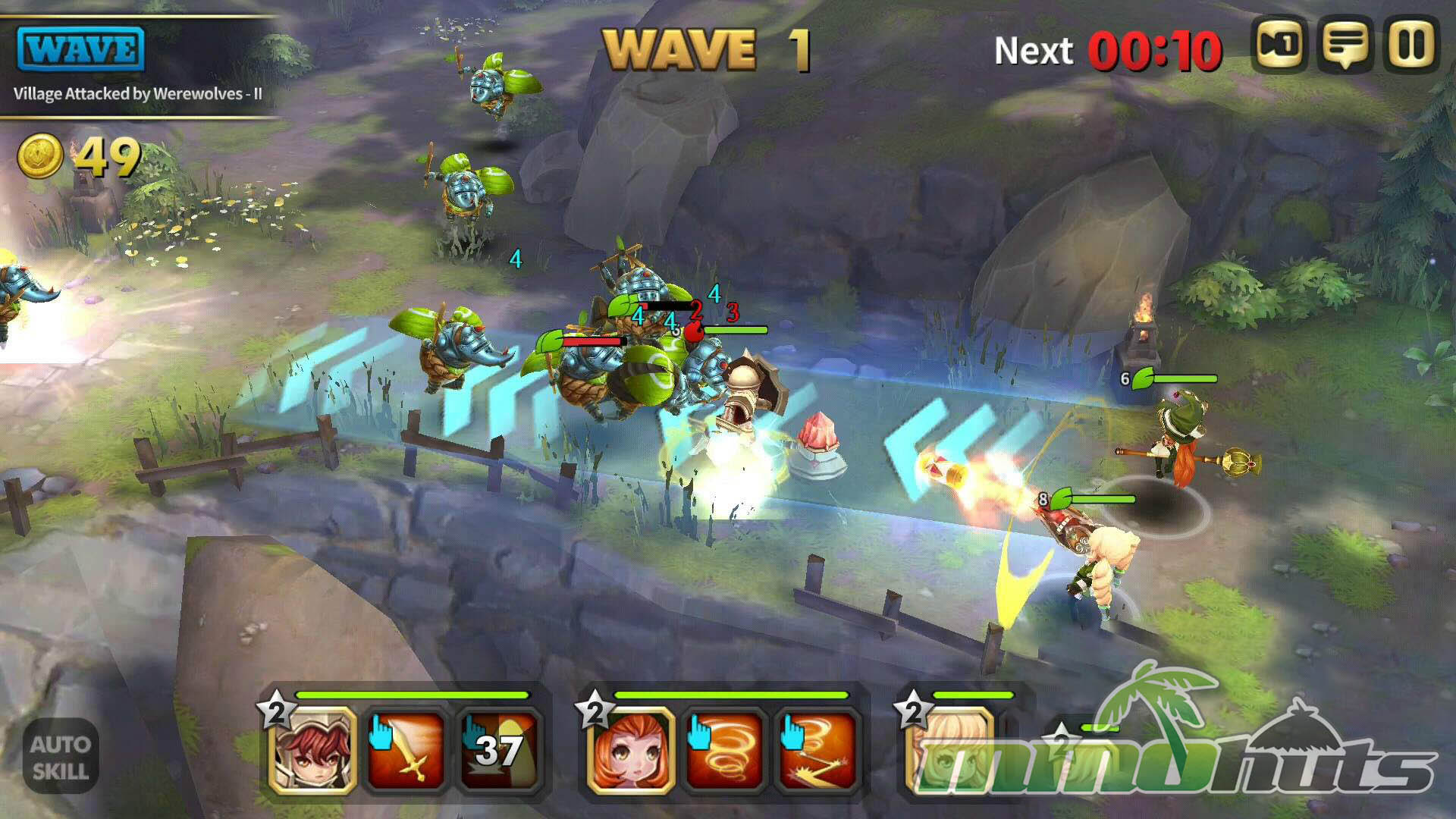
- Semi-Automated Combat – Movement and basic attacks largely play out automatically, while a drag-to-aim skill system lets you place key abilities.
- Many Heroes to Collect – Recruit over 100 Heroes spanning multiple roles and elements, then develop them through upgrades and evolution.
- Additional Modes – Asynchronous Arena battles, Time Space Criminal dungeons, and Most Wanted boss content provide alternate progression paths.
Heroes Wanted Screenshots

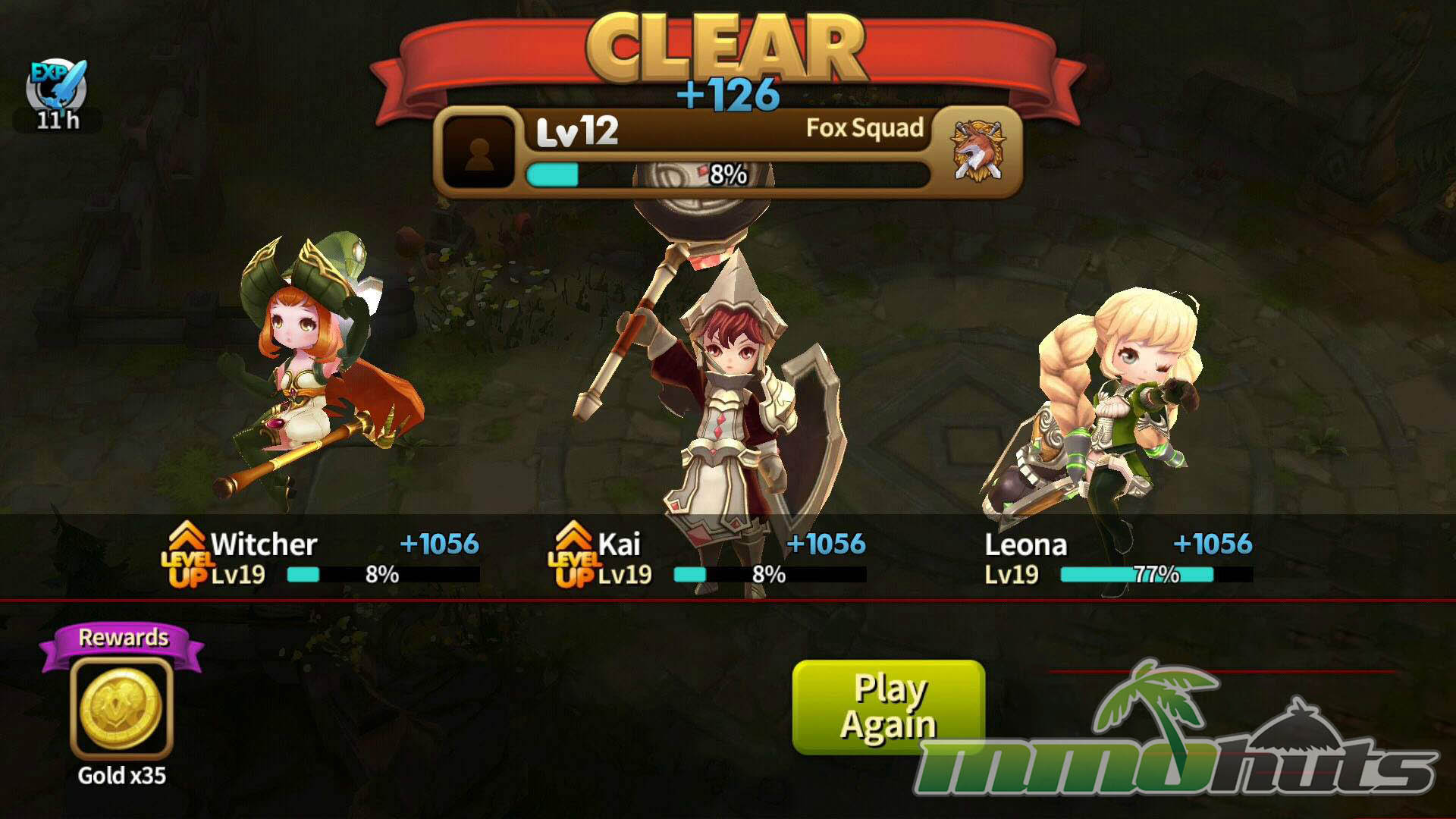
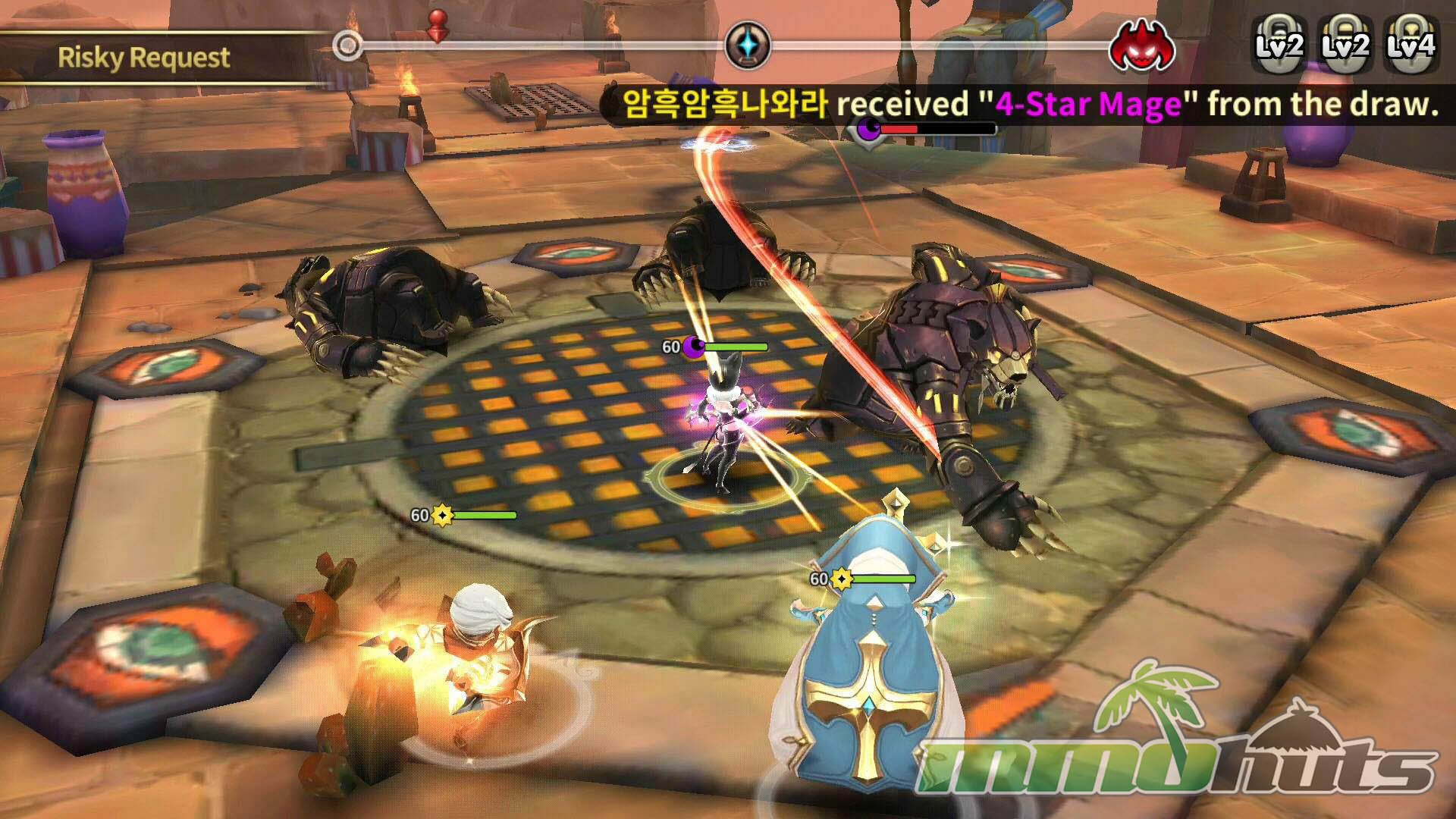
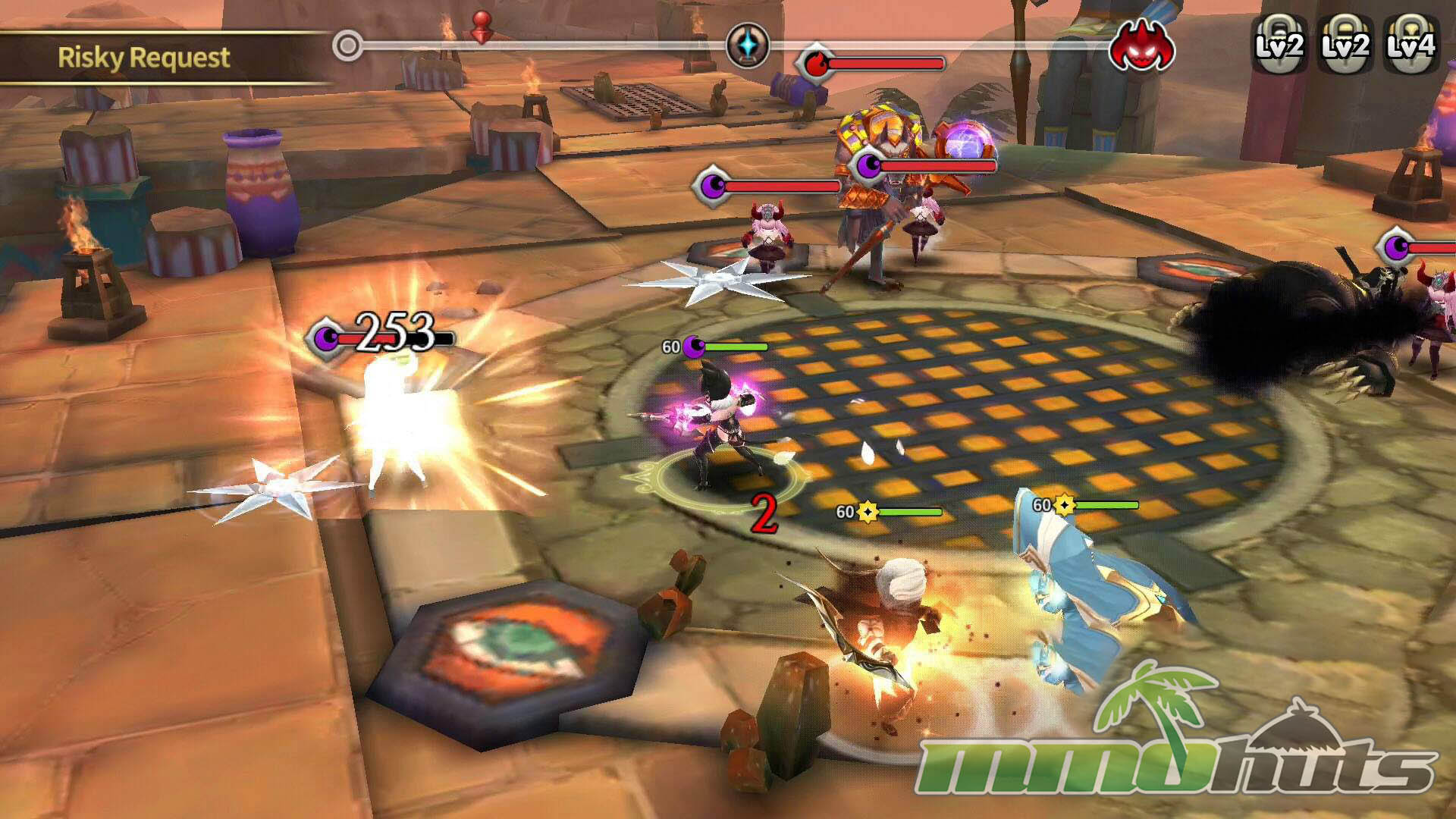
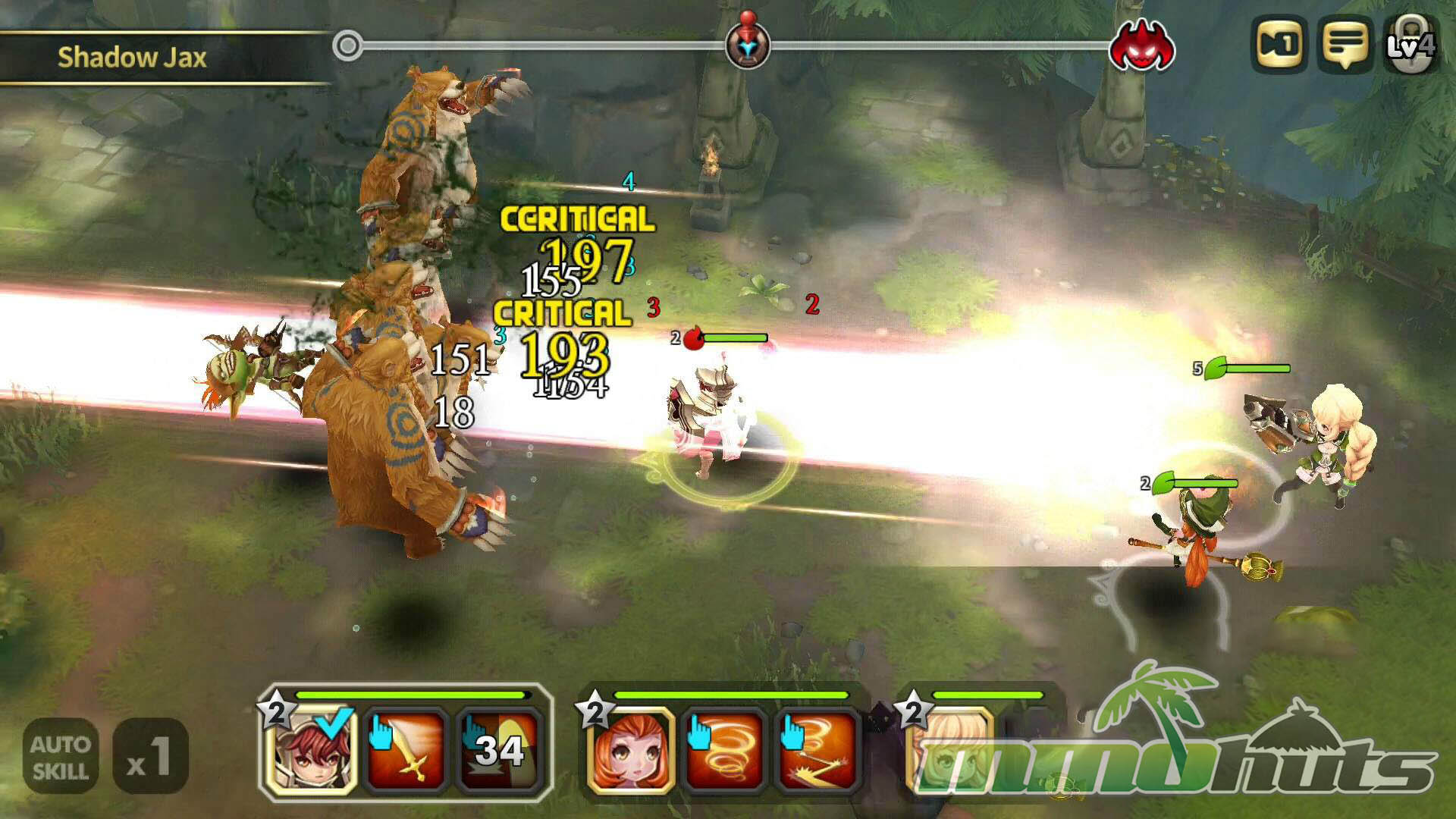

Heroes Wanted Featured Video

Heroes Wanted Review
Heroes Wanted fits squarely into the mobile hero-collector space: quick missions, constant character progression, and a lot of repeated runs to gather what you need for the next upgrade. What separates it from many similar games is presentation and usability. The 3D anime look is polished, the interface is easy to navigate, and the skill targeting mechanic gives you something meaningful to do during fights, even when most of the action is automated. At the same time, the broader gameplay loop remains familiar, and the grind plus gacha structure can make progress feel uneven, especially for players who want steady access to higher-rarity Heroes.
A Campaign That Prioritizes Progression Over Plot
The single-player content is organized into episodes, chapters, and individual stages, built to be consumed in short bursts. An episode contains four chapters, each chapter contains 10 stages, which makes each episode a 40-stage stretch with a consistent visual theme. That consistency helps the world feel cohesive, but it also means you can spend a long time in similar scenery before the next big change of environment.
Individual stages are typically brief, often only a few minutes, and most follow a straightforward pattern: move through segments of a map, clear enemy groups, and finish with a boss. Rewards feed the usual mobile RPG economy, including experience for both player and Heroes, gold, and assorted drops (including low-rarity Heroes). Stamina gates attempts, and there is an optional speed-up choice before runs for players who want to compress farming sessions. Difficulty ramps gradually, and the game expects you to keep pace by leveling and improving your team.
While the core loop is consistent, the campaign does introduce alternate stage types to break up repetition. Some missions focus on defending the Sage Stone against waves, others shift toward survival-style encounters where enemies approach from multiple directions, and chapter finales include more straightforward boss fights without the usual running segments. These variations do not reinvent the formula, but they help the campaign feel less like the exact same mission repeated hundreds of times.
Combat That Plays Itself, Until It Matters
In moment-to-moment play, Heroes Wanted uses semi-automated combat. Your party consists of up to three Heroes, plus an additional friend Hero, and they handle movement between fights and basic attacks with minimal input. You can intervene by selecting a Hero icon and tapping the ground to reposition temporarily, but the game quickly returns to its automated flow once a wave is cleared, so it never becomes a full manual action RPG.
The most engaging piece is the skill system. Abilities are largely area-based, such as cones, lines, or targeted zones, and you can drag a skill onto the battlefield to aim it precisely. That small layer of placement creates real tactical value, especially when you are trying to catch multiple enemies, avoid wasting damage on the wrong target, or line up hits during tougher fights. If you prefer a more hands-off approach, you can also tap skills to have them fire toward nearby enemies automatically. Target focus is another helpful tool, since tapping an enemy can direct your team’s attention in situations where priority targets matter.
Roster Building: Classes, Elements, and Team Synergy
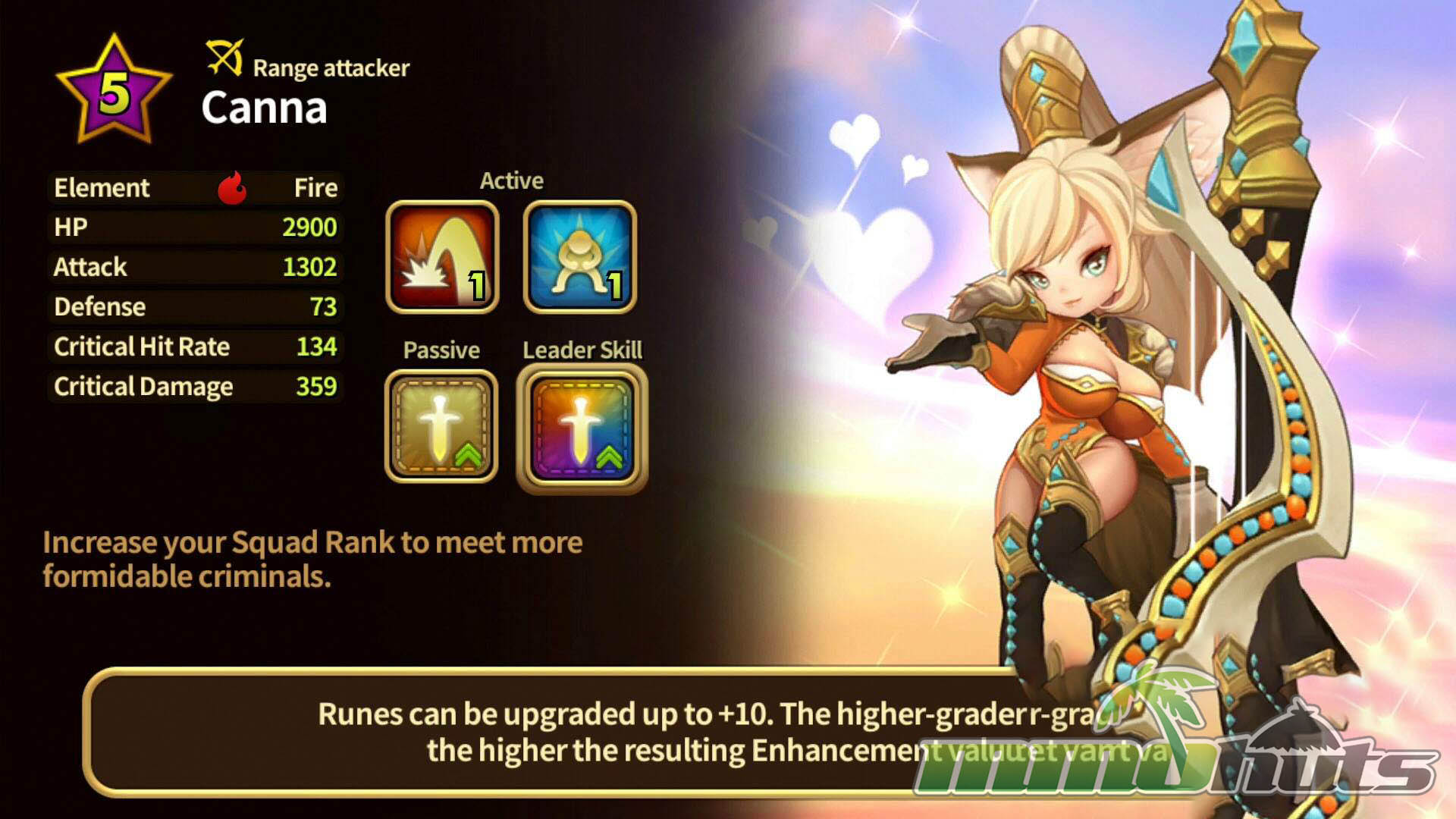
Collection is a major draw here, with over 100 Heroes available across four classes and five elements. The class lineup covers familiar party roles: Defender, Melee Attacker, Range Attacker, and Support. Defenders trade damage for durability, melee units serve as balanced frontliners, ranged attackers provide strong damage from a safer position (including both archer and mage archetypes), and supports focus on healing and buffs.
Elements add a simple rock-paper-scissors dynamic (Water > Fire > Forest > Water, with Light and Dark opposing each other). Notably, elements are not strictly tied to a single character identity, since some Heroes can appear in different elemental versions. Each Hero brings two active skills, a passive, and in some cases a leader skill, which encourages experimenting with team combinations rather than only chasing raw stats.
Progression follows established hero-collector rules. Heroes range from 1 to 6 stars, and you begin with three 2-star units. Leveling comes from gameplay or by feeding other Heroes, and higher star ranks allow higher level caps. Separate from leveling, Heroes can be enhanced using materials like Sage’s Fruit up to +5, and then evolved once they are maxed and fully upgraded. Evolution requires sacrificing three Heroes of the same star rank, and it increases stats, raises star level, may unlock additional skills, and can update the character’s appearance.
This is also where the game’s time commitment shows. Building a roster beyond your initial team takes a lot of repeat play, since you need experience, enhancement materials, and enough duplicate-rank Heroes to use as evolution fodder. The system is satisfying when a planned upgrade comes together, but it is also the main source of the game’s long-term grind.
Arena and Side Activities
The Arena provides asynchronous PVP, but it is not the most interactive part of the package. You select from available opponents, although matchups can feel inconsistent and sometimes skew toward stronger teams. Once a fight begins, combat plays out automatically: you cannot reposition, you cannot manually aim skills, and you do not decide when abilities trigger. Your main influence is target focus by tapping enemies, which still matters in close matches but does not fully solve the “watch rather than play” feeling.
Victories award rank points and PVP badges, and those badges can be exchanged for items through the Arena Shop, giving PVP a functional role in progression even if the battles themselves are fairly passive.
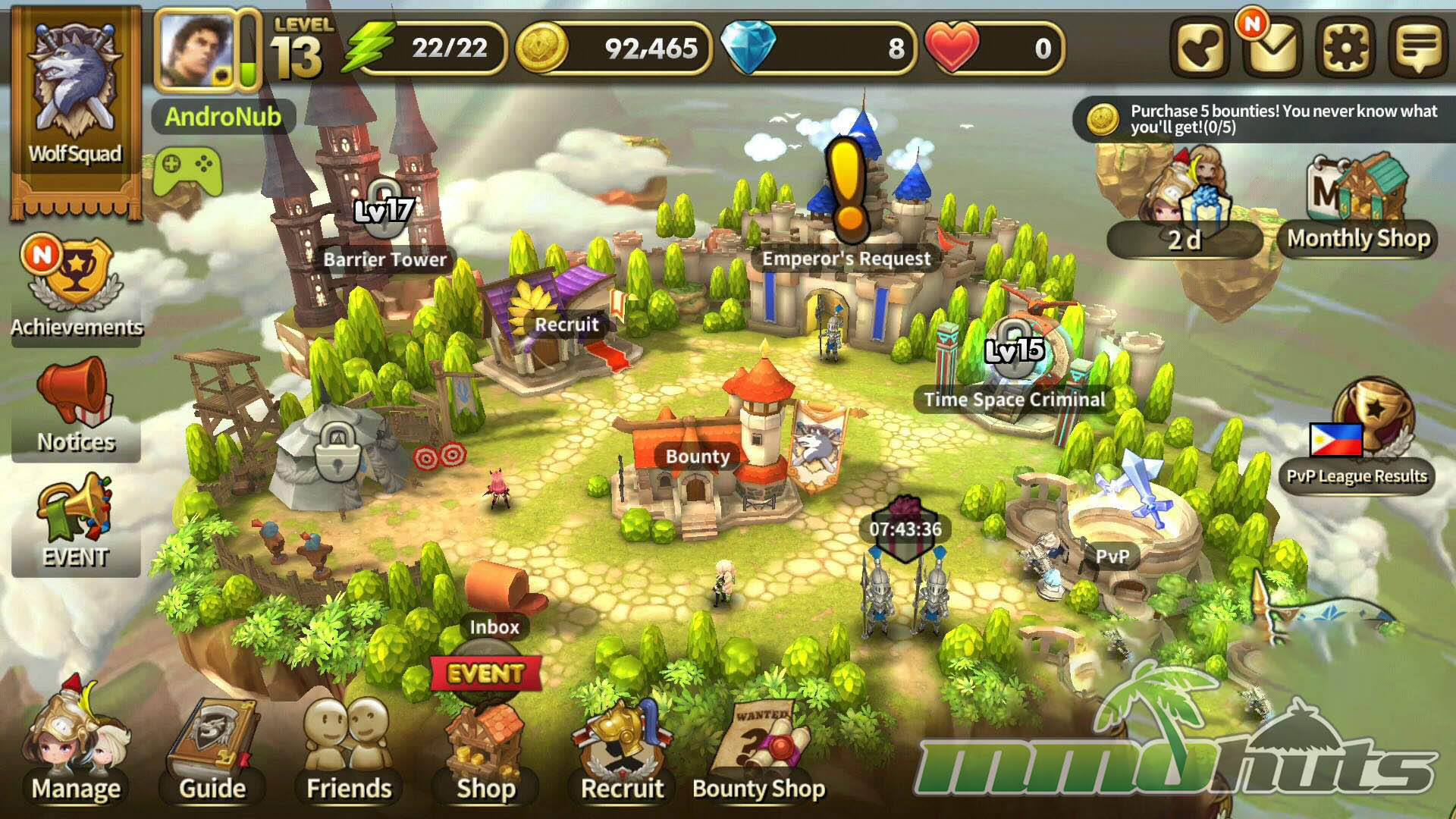
On the PVE side, the game offers several additional modes that mostly serve as alternate farming routes. Bounties are a central system, letting you spend gold or Gems to access missions with specific reward profiles, useful for gathering currency, low-rank Heroes, and upgrade materials. Time Space Criminal revolves around limited dungeons where you can earn Elemental Shards used to awaken Heroes. Most Wanted is presented as a shared bounty concept, essentially boss-focused content that encourages teaming up with friends. Together, these modes help the game avoid being only a straight campaign ladder, even though the underlying purpose remains resource acquisition for upgrades.
Cash Shop/In-App Purchases (IAP)
As expected for the genre, Heroes Wanted sells advantages through premium currency. Gems can be used for summoning (with 3 to 5-star outcomes), purchasing gold, refilling energy, and buying boosters or premium bounty options. The friction point is the summoning experience, because player feedback has often centered on low gacha rates, making high-rarity pulls feel inconsistent and expensive.
That design creates a familiar tension. Spending can accelerate progression by reducing the time needed to gather resources and by increasing your chances of stronger Heroes, which can translate into early PVP advantages. At the same time, if higher-rarity pulls are hard to secure even with paid currency, the system can feel unrewarding for both free players and spenders, and it highlights just how much grinding is baked into leveling, enhancing, and evolving a full team.
Final Verdict – Good
Heroes Wanted delivers a well-produced take on the hero-collecting RPG template, with appealing 3D anime visuals, a large roster, and a skill aiming mechanic that adds more involvement than many semi-automated competitors. Its weaknesses are also genre staples: a progression loop built on heavy farming, combat that often runs on autopilot, and monetization pressures that can make the power curve feel pay-influenced. Even with those drawbacks, it stands out as a polished entry with enough modes and quality-of-life touches to justify a look for fans of mobile squad RPGs (even though it later shut down).
Heroes Wanted Links
Heroes Wanted Official Site
Heroes Wanted Google Play
Heroes Wanted iOS
Heroes Wanted Requirements
Minimum Requirements:
Android 2.3 and up / iOS 7.1 or later
Heroes Wanted Music & Soundtrack
Coming Soon!
Heroes Wanted Additional Information
Developer: TOAST
Publisher: NHN Studio629
Platforms: Android, iOS
Release Date: March 10, 2016
Shut Down: 2017
Heroes Wanted was developed by TOAST and published by NHN Studio629, the same NHN-connected teams associated with Guardian Hunter and Crusaders Quest. NHN Studio629 operated as a newer label under the larger NHN Entertainment umbrella, while TOAST brought longer-term development experience within that ecosystem. The game ran a pre-registration period and a soft launch in November 2015, then launched globally on March 10, 2016. TOAST and NHN Entertainment have also been credited with mobile releases such as Guardian Stone and Drift Girls. Support did not last long-term, and by 2017 the game had effectively been left behind and shut down.