Crusaders Quest is a free-to-play, online hero-collecting RPG for mobile that blends charming 16-bit pixel art with a real-time, Match-3-inspired skill system. With hundreds of stages, a huge roster of Heroes, upgradeable gear, asynchronous PVP, and a steady stream of side modes, it is built for players who enjoy long-term progression, team building, and plenty of grinding between big power spikes.
 | Publisher: NHN Entertainment Playerbase: High Type: Mobile RPG Release Date: December 11, 2014 Pros: +Adorable retro pixel presentation. +Huge roster of Heroes to recruit. +Story and dialogue are more engaging than expected. +Distinctive, puzzle-like combat pacing. Cons: -Can feel repetitive over long sessions. -Progression leans heavily on farming and grind. |


Crusaders Quest Overview
Crusaders Quest is a 2D online, social hero-collecting RPG developed by TOAST and published by NHN Entertainment, the studio and publisher associated with Guardian Hunter and Drift Girls. You play as a Mercenary Captain assembling a squad of Heroes and pushing through a long, stage-driven campaign as you work to free five captured Goddesses from the schemes of a sinister witch.
What makes Crusaders Quest easy to recognize is its bright, anime-leaning pixel art and its combat system, which turns skill use into a quick decision-making puzzle. Instead of manually moving characters, you manage ability “blocks” in real time, chaining matching blocks to trigger stronger effects while your party auto-attacks. Between stages you recruit and improve a large roster of Heroes, evolve them upward, and strengthen their weapons to keep up with harder bosses, dungeons, and PVP opponents.
Crusaders Quest Features:
- Many Stages to Complete – Progress through a massive number of short, bite-sized stages spread across multiple chapters, each filled with waves of enemies and frequent boss fights.
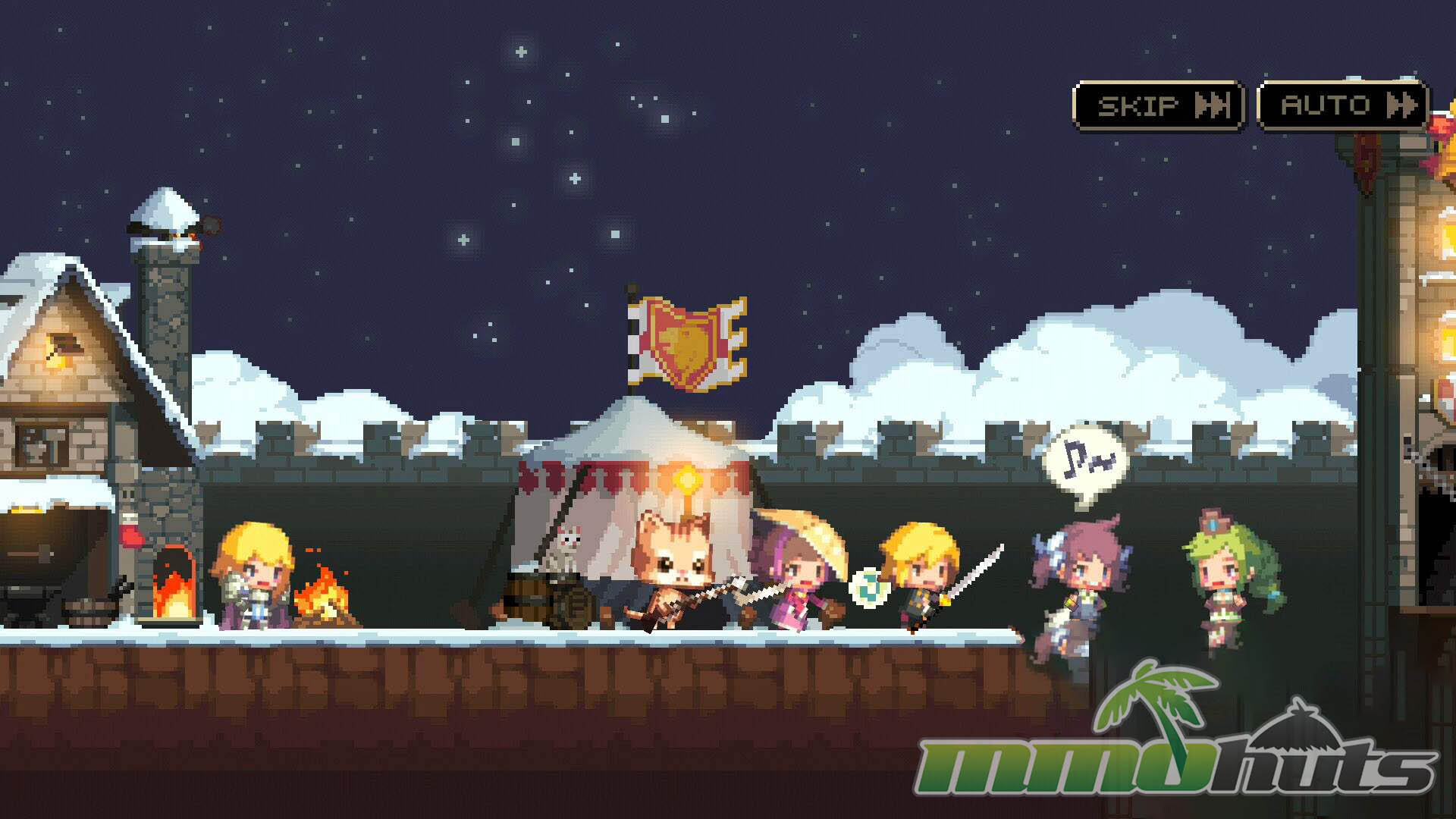
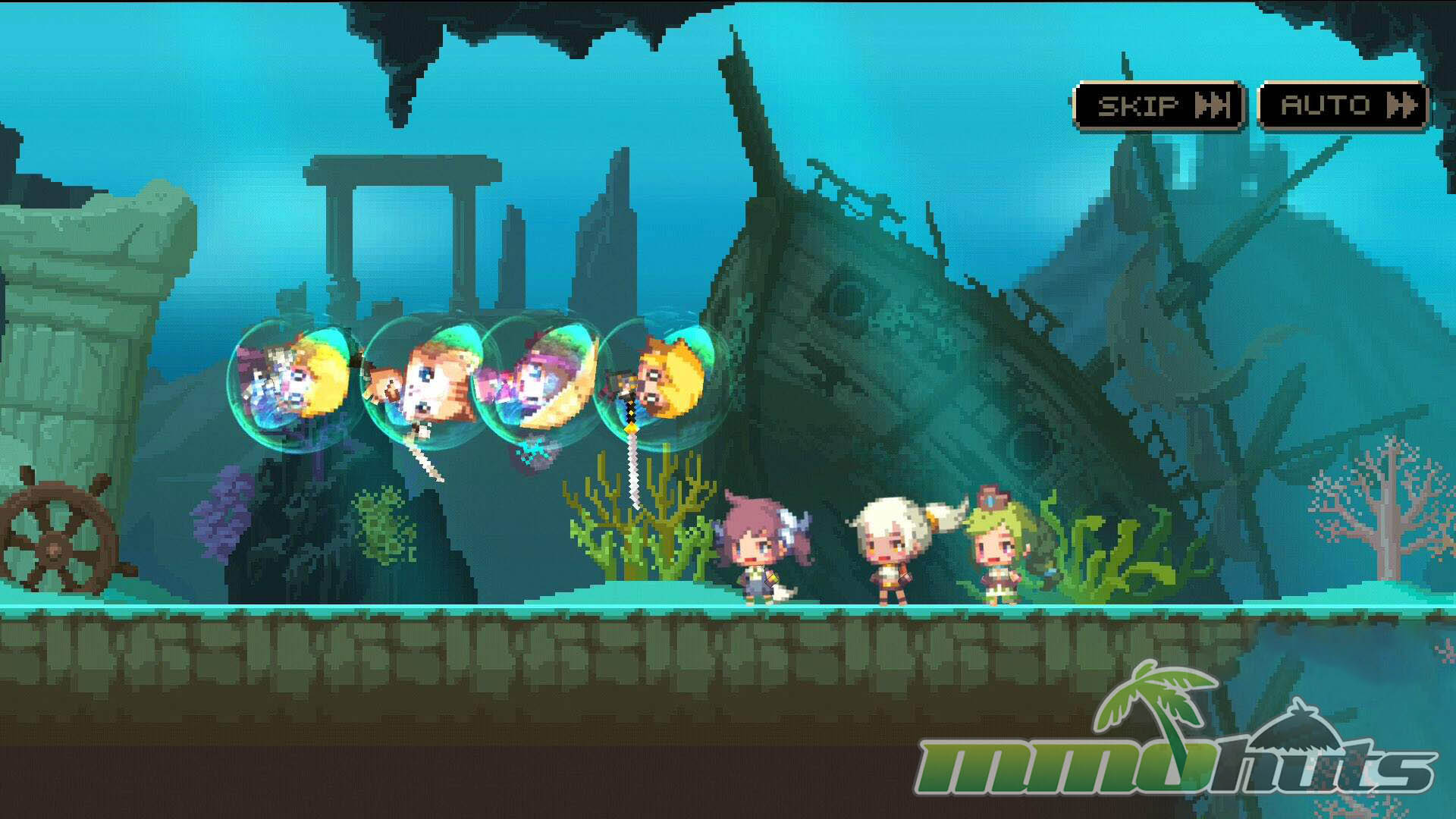
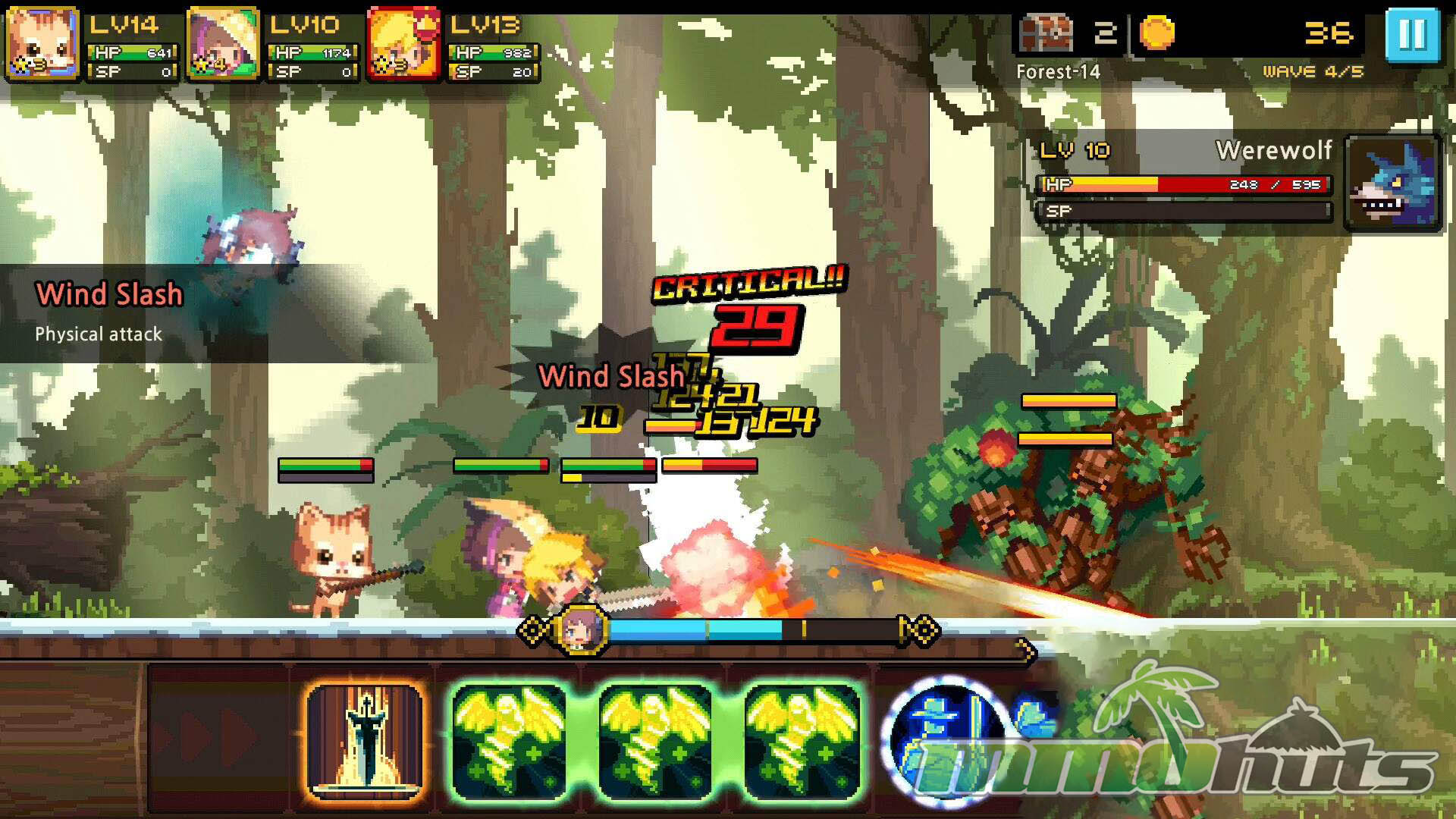
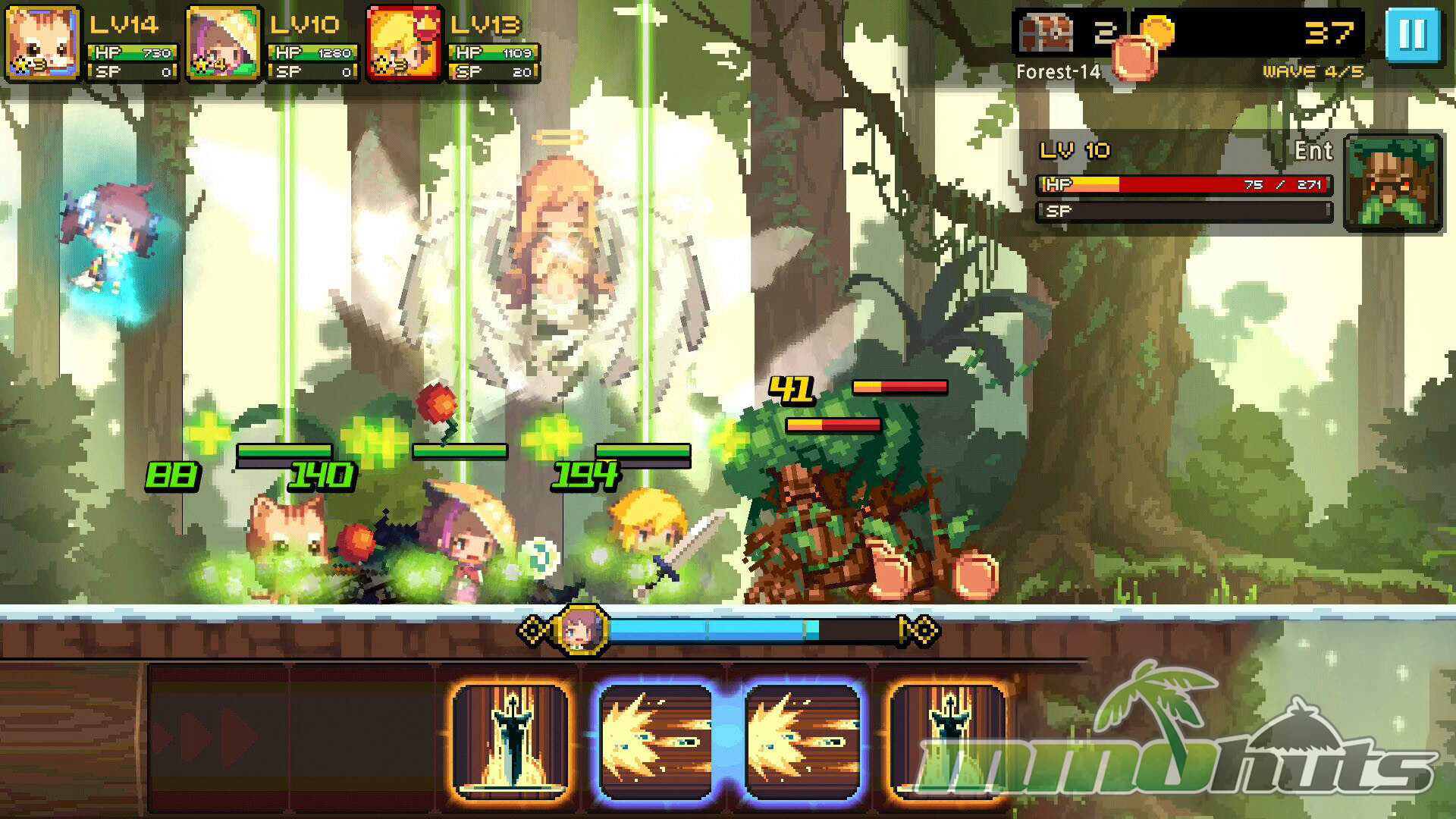
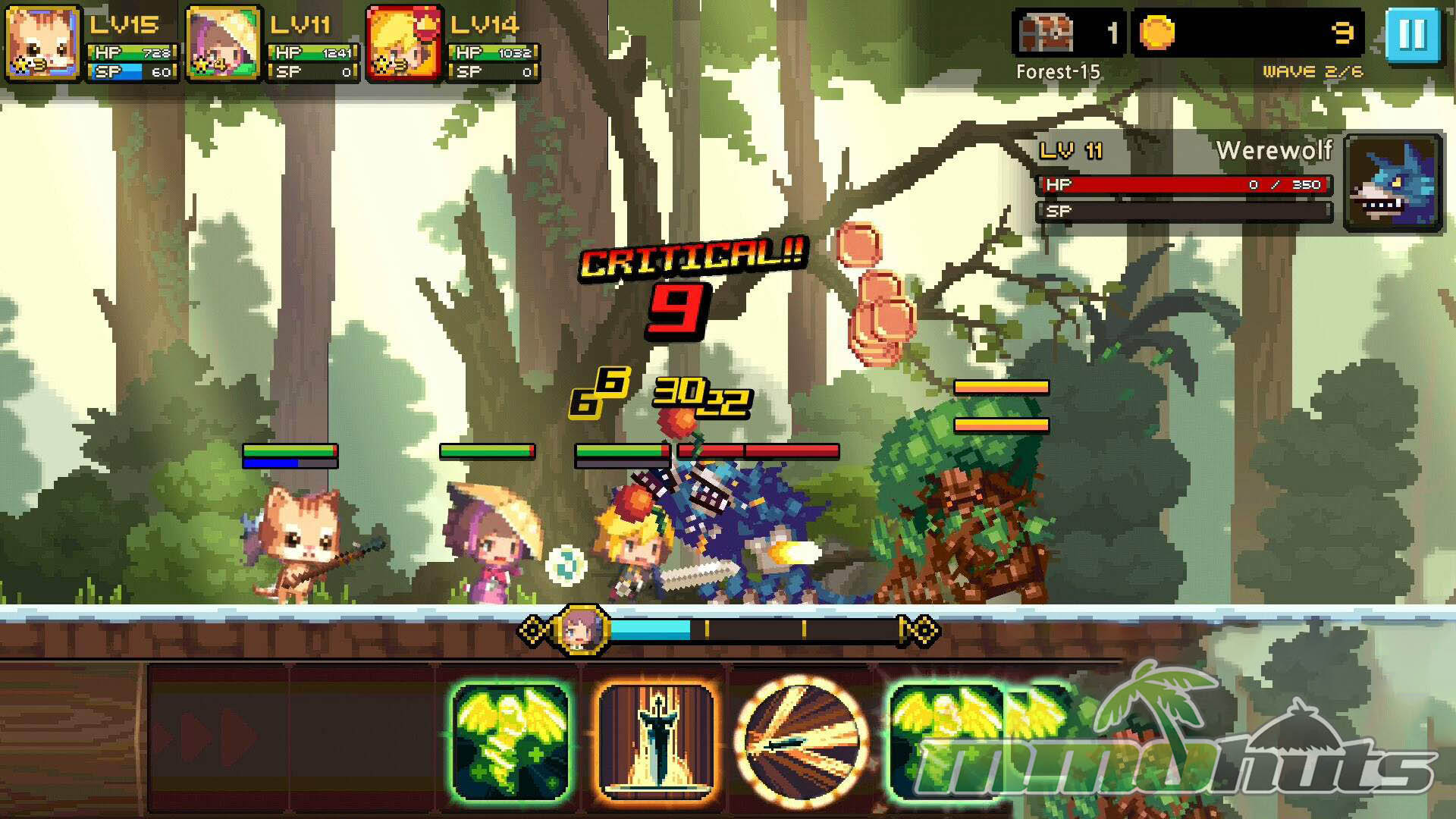
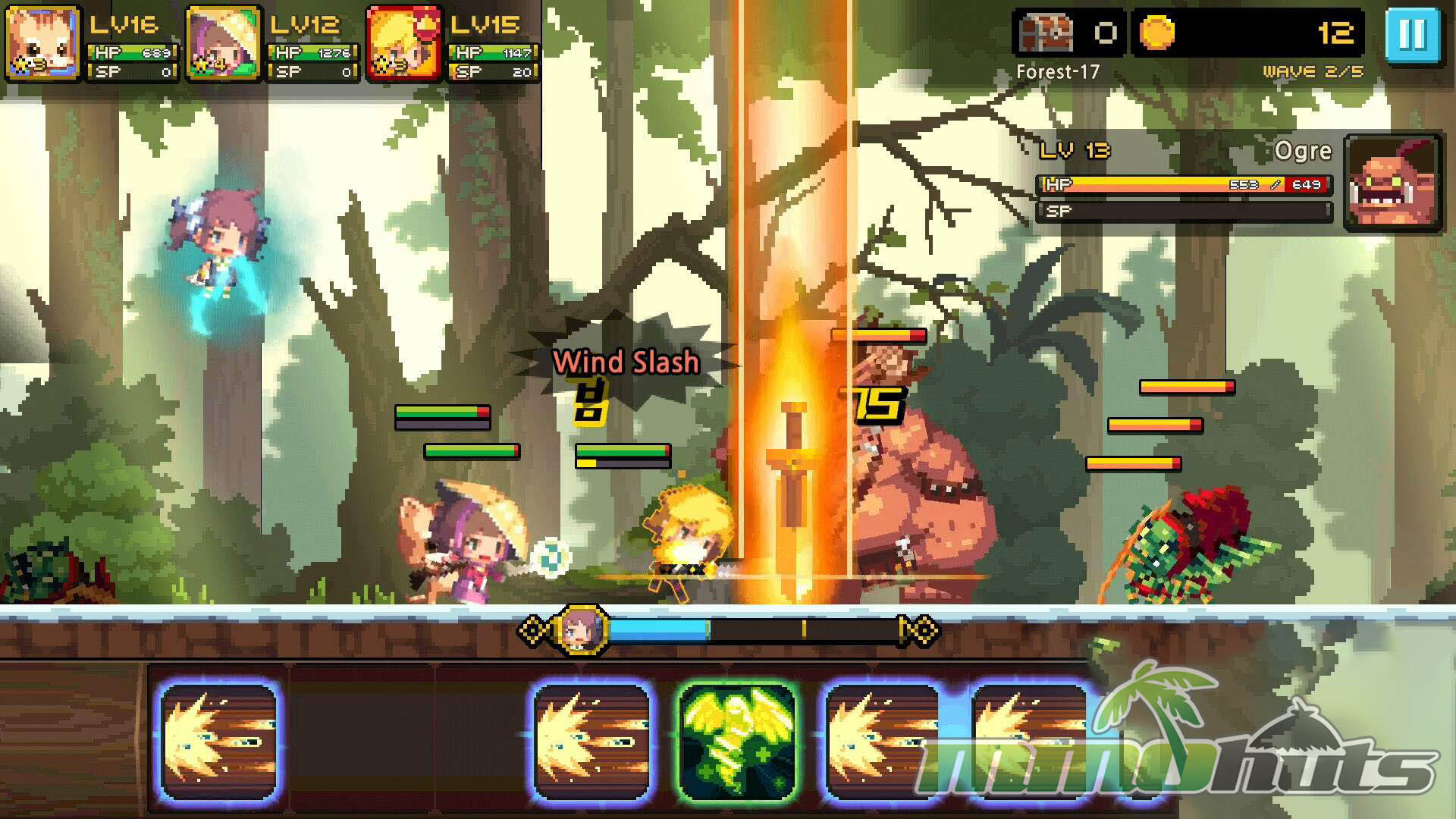
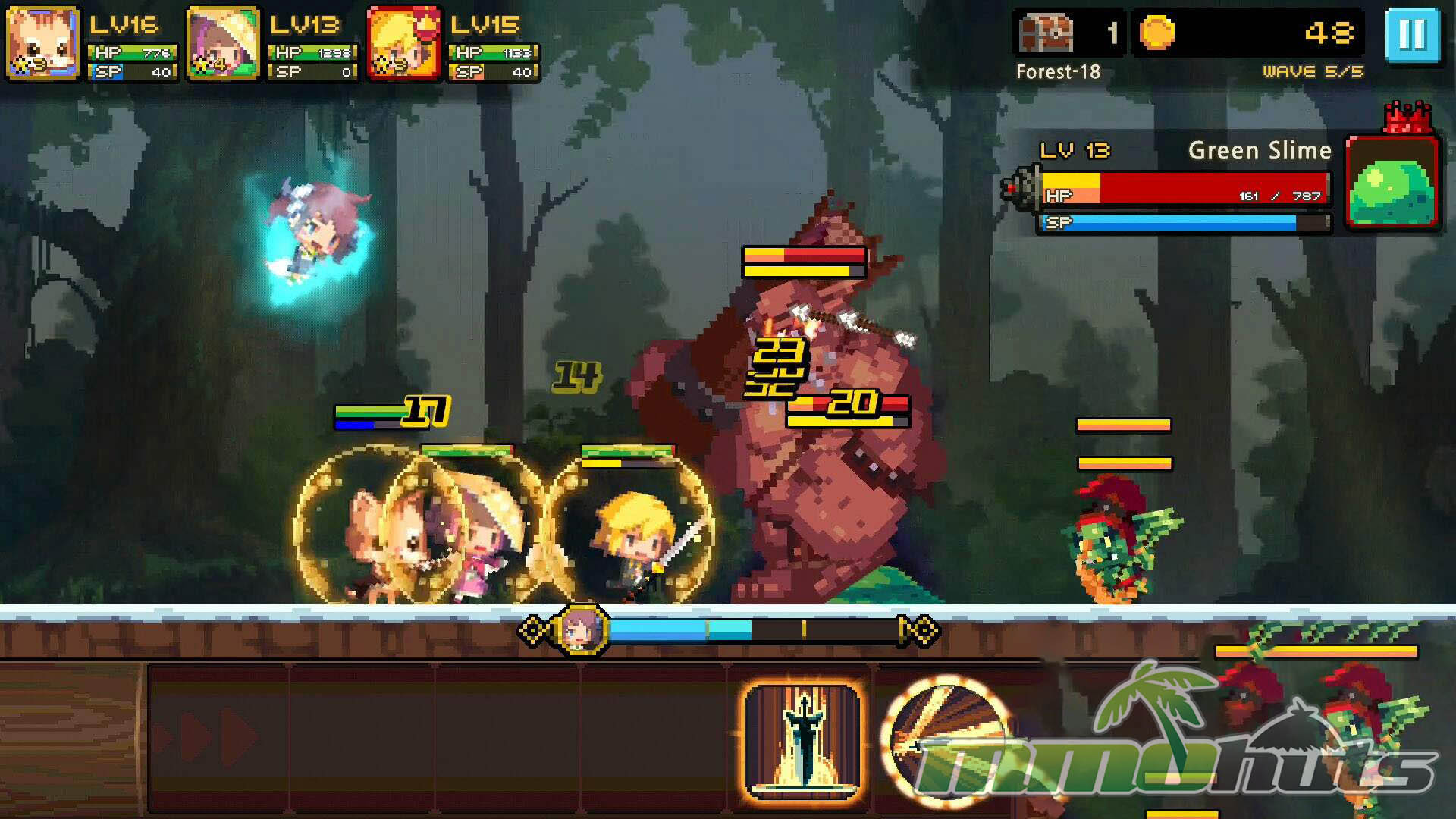
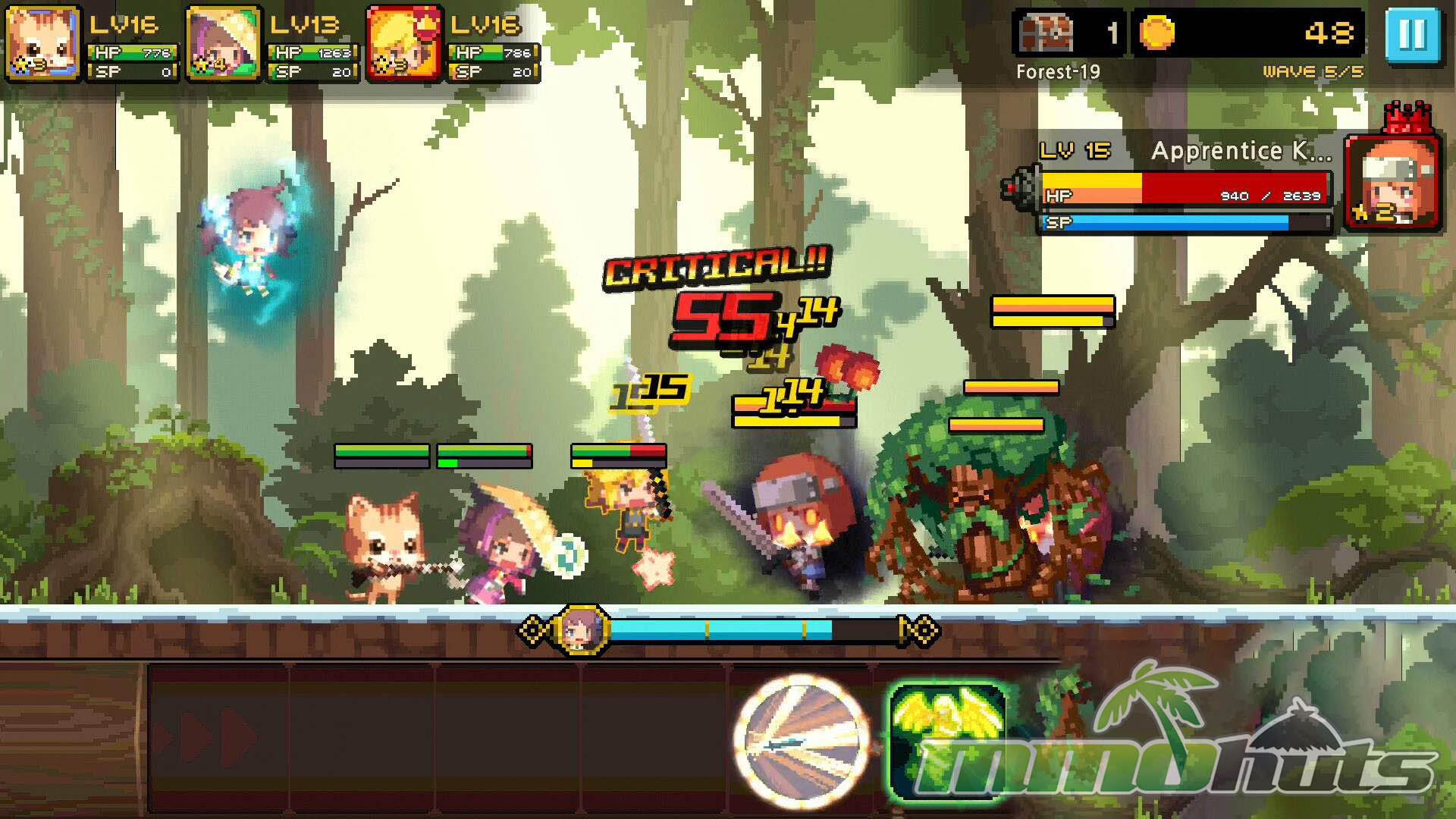
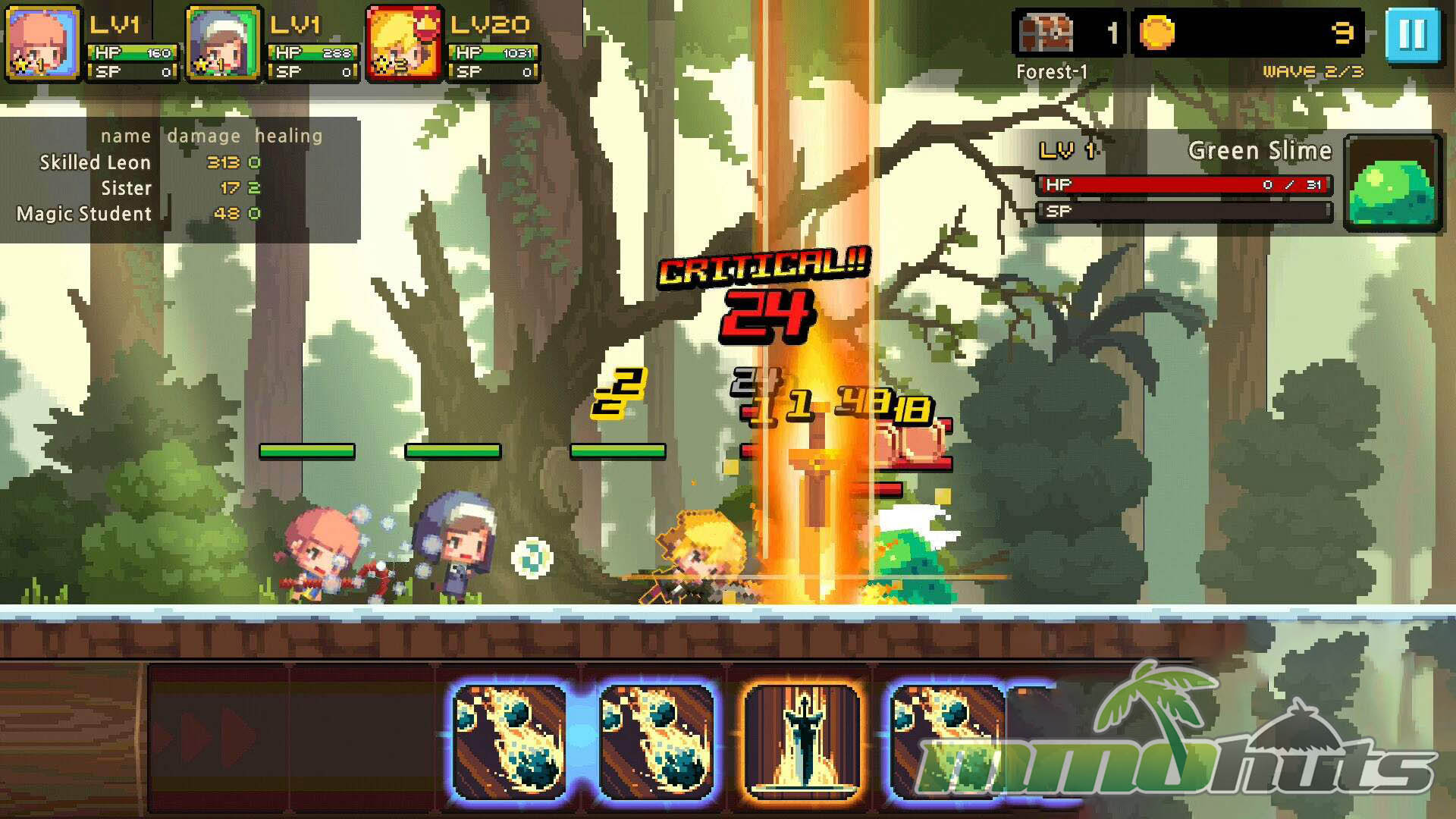
- 16-Bit Pixel Graphics – Enjoy colorful retro visuals with expressive sprites, flashy skill effects, and a cohesive old-school style that fits the game’s lighthearted tone.
- Puzzle-Based Combat – Use a fast, Match-3-style skill block system while controlling a team of three Heroes at once, where timing and smart block usage matter.
- Many Heroes to Collect – Recruit over 200 Heroes across different roles, then equip, train, and promote them into stronger versions for tougher content.
- Engaging Story – Follow a surprisingly character-driven campaign built around rescuing five Goddesses, with plenty of dialogue and distinct personalities along the way.
- PVP and Additional Modes – Test your team in asynchronous Colosseum battles, clear rotating dungeons, and challenge high-difficulty modes like World Boss encounters.
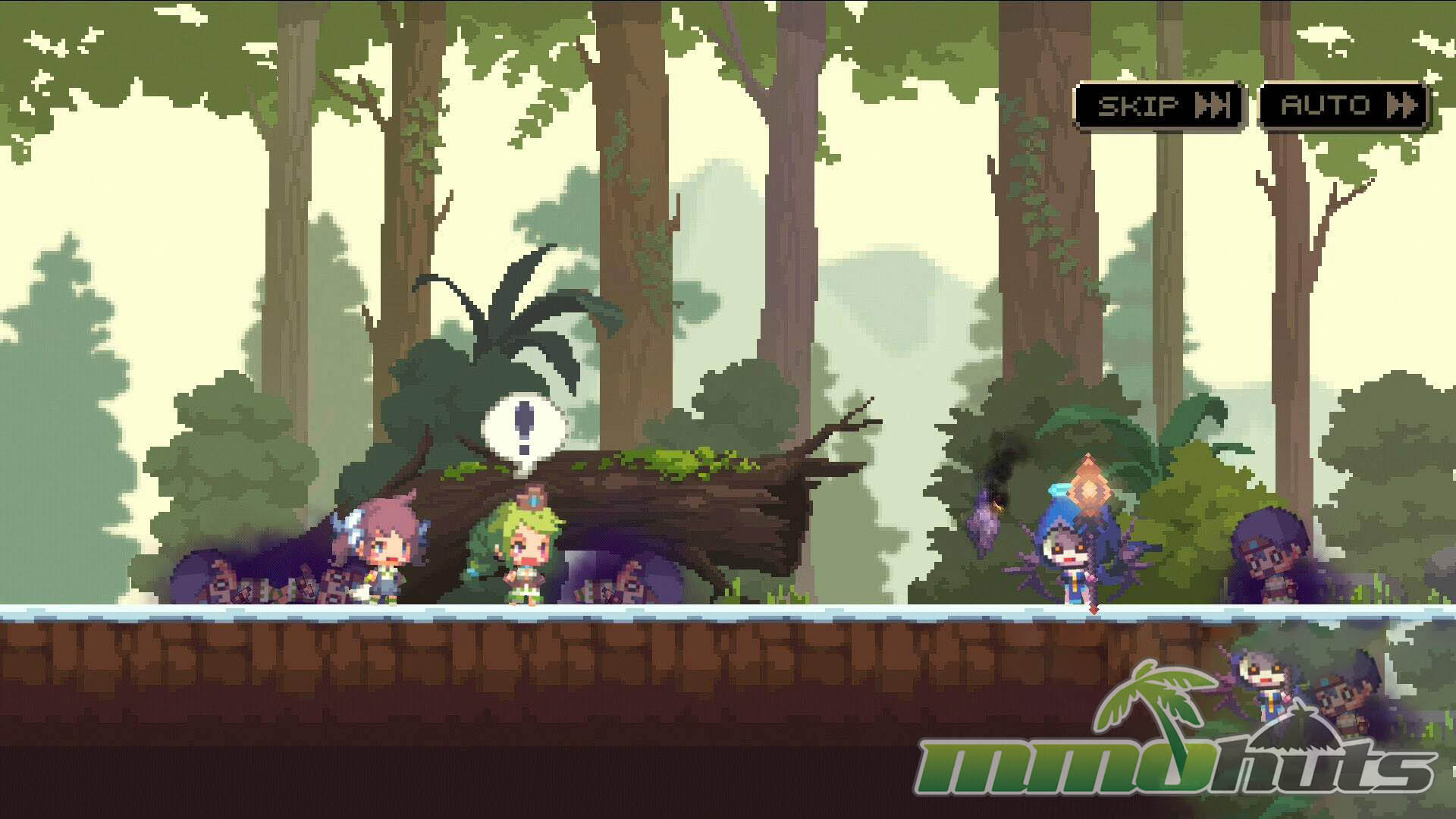
Crusaders Quest Screenshots


Crusaders Quest Featured Video

Crusaders Quest Review
Crusaders Quest is a free-to-play hero-collecting RPG from TOAST, published by NHN Entertainment (a Korean publisher under NAVER Corporation). Since its release on December 11, 2014, it has stood out in a crowded mobile RPG space by pairing an instantly recognizable pixel-art presentation with combat that feels more active than the typical “watch your team fight” format. It still delivers the familiar loop of clearing stages, improving units, and chasing better gear, but the moment-to-moment play is shaped by how you handle skill blocks under pressure.
There is also a lot here in terms of volume. The game is structured to be played over time, with a campaign that stretches for hundreds of stages and multiple side activities that encourage daily play. If you enjoy collecting characters, experimenting with party synergies, and steadily optimizing builds, Crusaders Quest offers a deeper system than its cute visuals might suggest.
Saving the Five Goddesses
The central premise is straightforward, a witch has taken five Goddesses who protect the world, and your Mercenary Captain is pulled into the effort to bring them back. The campaign is broken into six chapters, and each chapter contains 96 stages, which puts the total well beyond 500 stages overall.
Story is not just window dressing here. Dialogue is frequent, and the cast is easy to remember, including characters like Sera (a spirited Forest Goddess in training) and Lednas (a stern but fair Captain of the Guard). The narrative is presented in short bursts between fights, and it becomes more interesting as you push deeper into later chapters rather than peaking only at the start.
Stages are designed for mobile pacing, most runs take only a few minutes, usually somewhere between 1 and 5 minutes depending on your power level and the boss. You fight through several waves and then finish with a boss encounter, sometimes with multiple bosses on screen at once. Rewards typically include gold and experience, with chances at equipment and occasionally Heroes.
Each chapter is divided into four maps of 24 stages apiece. That structure helps the game feel substantial, though it also means you will stare at the same backgrounds for a while before moving to the next environment. Enemy variety and boss designs help reduce the sameness, and the final stage of each map (stage 24) acts as a bigger challenge and, in early chapters, ties into unlocking the next Goddess.
Graphics
Crusaders Quest’s biggest strength at first glance is its presentation. The retro, 16-bit style is colorful and expressive, and the sprite work gives Heroes and enemies a lot of personality despite the pixel scale. Costumes and silhouettes are distinct enough that you can quickly recognize roles, from armored front-liners to robed casters, and the game leans into anime-inspired charm without becoming visually noisy.
Animations also do a lot of work. Attacks have satisfying motion, skills burst with effects, and knockbacks make combat feel physical rather than purely statistical. Weapon visuals vary, and Hero appearance changes as you climb ranks, which is a small detail that makes progression feel more tangible. The soundtrack supports the theme with a chiptune-like vibe that fits the retro look and keeps the overall tone upbeat.
Real-Time Match-3 Skill Combat
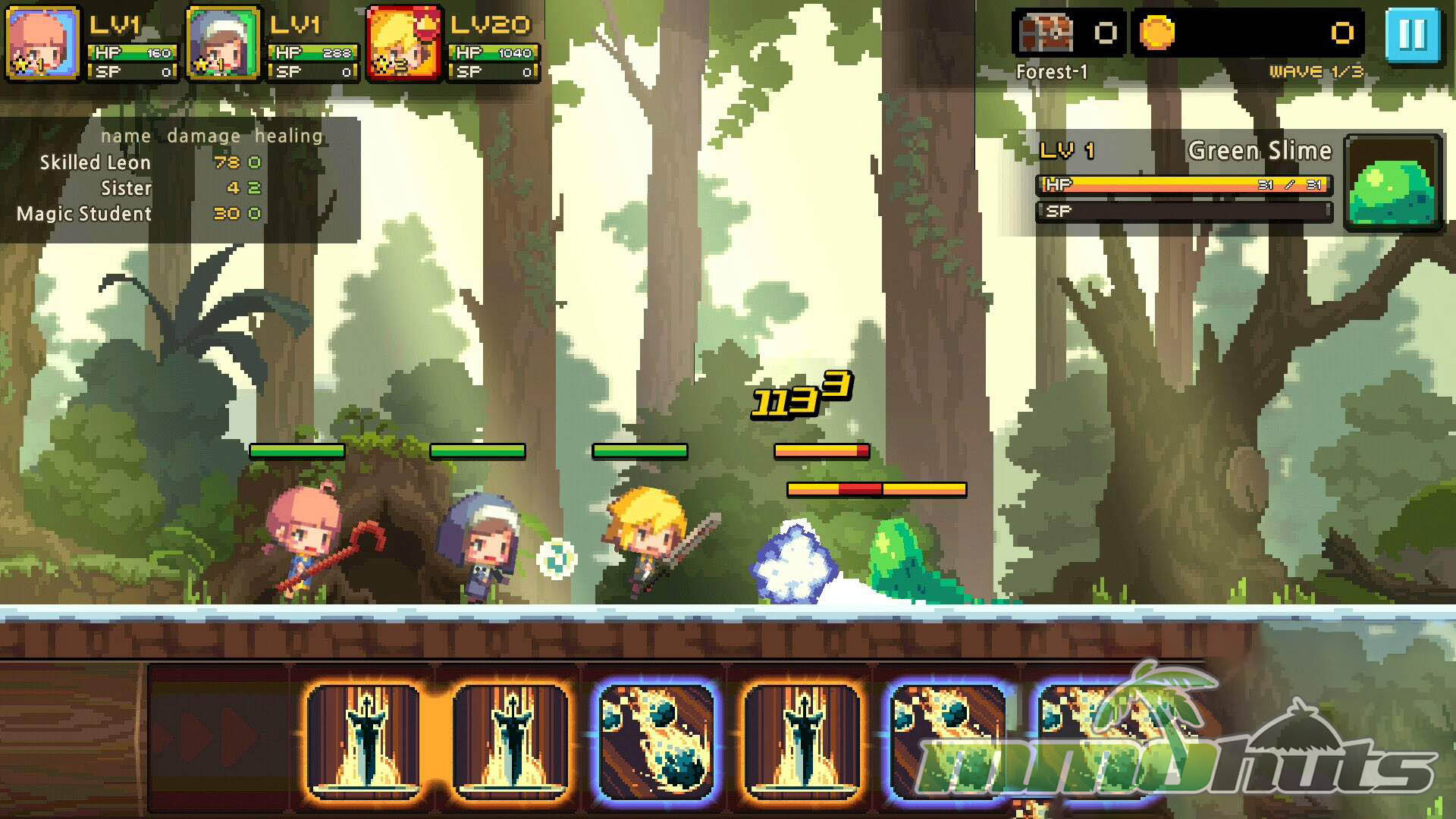
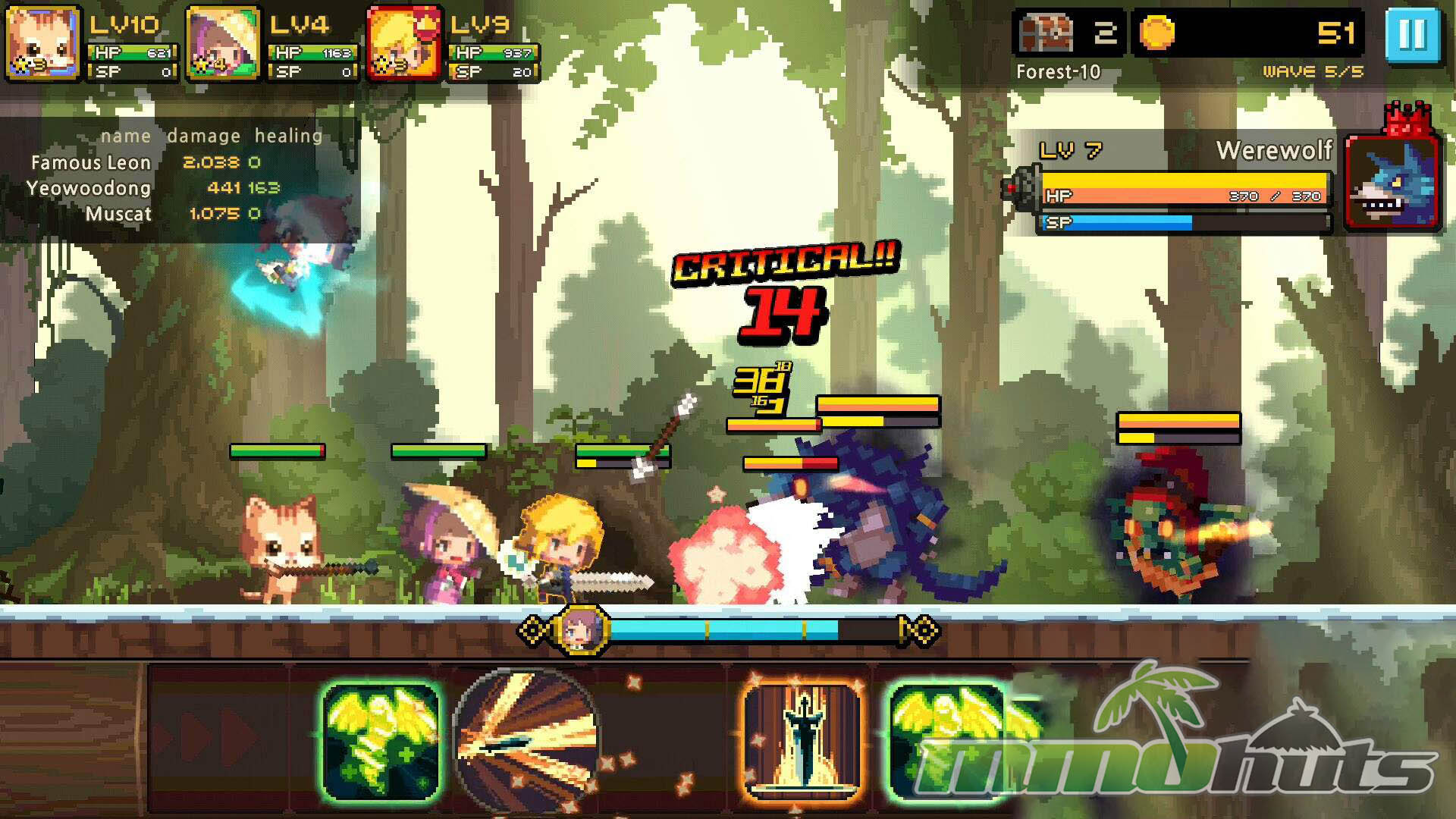
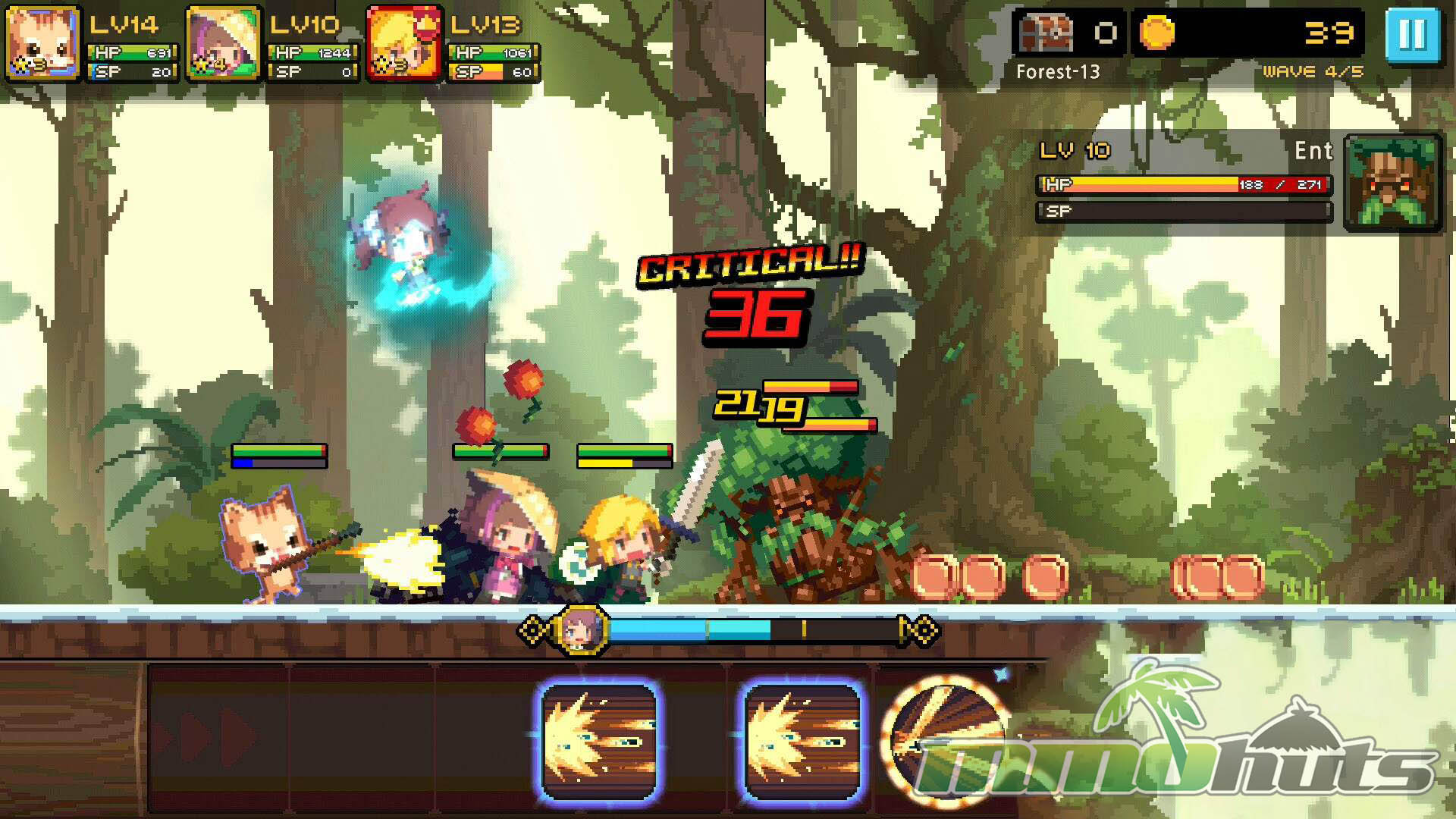
Combat is where Crusaders Quest separates itself from many hero collectors. You field up to three Heroes, and they handle basic movement and attacks on their own. Your job is to activate skills through blocks that appear along the bottom of the screen. Using one block triggers the associated skill at a baseline power, while chaining two or three matching blocks results in stronger output, which encourages planning and quick reactions. Healing abilities follow the same logic, scaling with the chain length.
Because blocks cannot be rearranged, you often need to “spend” inconvenient blocks to reach a better chain, which adds a real-time resource management layer. Special skill blocks also appear, powered by Hero SP, and these do not require matching, they fire at full strength when used and tend to represent signature abilities.
The result is combat that feels active without becoming mechanically complicated. In harder fights, the screen pressure ramps up quickly, blocks keep coming, and choosing between immediate safety and setting up a bigger chain becomes the core decision. You can also bring a Goddess companion and trigger her ability once her meter fills, adding another timed tool for survival or burst damage depending on which Goddess you select.
A Large Roster and Party Building
Collecting and developing Heroes is the long-term hook. The game features over 200 Heroes, split across six classes: Warrior, Paladin, Archer, Hunter, Wizard, and Priest. Each class has a clear role identity. Warriors act as balanced melee fighters (high physical resistance and lower magical resistance), Paladins are sturdier tanks (high defense and health, with stronger magical resistance but weaker physical resistance), Archers and Hunters fill the ranged damage role (both fragile and hard-hitting, with Hunters leaning more toward armor and Archers being more balanced between armor and resistance), Wizards bring ranged spell damage and wide area attacks, and Priests provide support through healing and mitigation.
Within those categories, individual Heroes still feel distinct due to different skills and stat profiles, which matters because the combat system rewards synergy and timing. Progression includes training (using pastries through the baking system), equipping weapons appropriate to each class, and promoting Heroes using Honor, earned through quests and by retiring unwanted Heroes. Weapons can also be upgraded, and special weapons can be created through recipes, giving gear progression a parallel track alongside Hero growth.
PVP, Dungeons, and Other Activities
Beyond the campaign, Crusaders Quest offers a suite of modes that help break up the stage grind. The Colosseum is asynchronous PVP, you fight other players’ parties based on rank, using the same real-time block system as PVE. Because you still actively control skill usage, battles can feel tense even though you are not fighting a live opponent. Matchups that are close in power often come down to decision-making and block management rather than raw stats alone.
Dungeons add more variety and typically require Dungeon Keys. These are single-player challenges with rotating themes and rule twists, such as restrictions that change how skill chaining works or survival-focused objectives. Many dungeons also use a multi-floor structure, where pushing further tends to improve rewards.
On top of that, there are additional modes aimed at longer-term play. Nest of the Divine Beasts pushes difficulty significantly higher with dangerous bosses, Fortress of Souls offers a more extended, floor-based experience that is generally less punishing than Nest, and World Boss encounters serve as endgame targets that reward careful team building and execution. Collectively, these modes give you reasons to keep developing Heroes even after the main story is largely cleared.
Cash Shop and In-App Purchases
Crusaders Quest uses a familiar gacha approach for monetization. Jewels (premium currency) can be spent to summon random Heroes in various star ranges (including 3 to 6 Star options), summon class-specific pools, or roll for weapons (including 4 to 6 Star weapons). Jewels can also be used for convenience purchases like gold and 2x Hero experience boosts.
As with many gacha systems, the odds tend to skew toward lower-rarity results, with the best outcomes being comparatively rare. That said, the game does not lock core progression behind payment. With enough time and effort, you can work toward upgrading Heroes to 6-Star without spending, although doing so involves plenty of farming. Honor provides an additional summoning path through random 2 to 5 Star Heroes, earned via quests and by retiring Heroes, and free summons also show up through events, login incentives, and certain quest rewards.
Overall, paying is not mandatory, but it can shorten the climb by improving access to stronger Heroes and gear and by smoothing out leveling. Players who dislike repetitive grinding will feel the game’s economy more sharply, while players comfortable with steady daily progress will likely find the pace manageable.
Final Verdict – Great
Crusaders Quest succeeds because it combines a genuinely charming pixel-art style with a combat system that asks you to stay engaged, even during routine farming. The roster depth, the number of stages, and the range of side modes provide a lot to do, and the story has more personality than many mobile RPG campaigns. The biggest drawback is that meaningful upgrades often require repeated runs and long-term resource grinding. For players who enjoy collecting Heroes and optimizing teams over time, Crusaders Quest remains a standout mobile RPG thanks to its unique pacing and surprisingly deep gameplay loop.
Crusaders Quest Links
Crusaders Quest Official Site
Crusaders Quest Google Play
Crusaders Quest iOS
Crusaders Quest Wikia
Crusaders Quest Requirements
Minimum Requirements:
Android 3.0 and up / iOS 7.1 or later
Crusaders Quest Music & Soundtrack
Crusaders Quest Additional Information
Developer: TOAST
Publisher: NHN Entertainment
Platforms: Android, iOS
Release Date: December 11, 2014
Crusaders Quest was developed by TOAST and published by NHN Entertainment, the team behind Guardian Hunter and Drift Girls. Crusaders Quest launched globally on December 11, 2014, and its popularity grew quickly, reaching 10 million downloads within 9 months (September 2015). On December 8, 2015, the game earned a Google Play Editor’s Choice Award and received a major update that added a new story chapter, 6 new weapons, and 36 new Heroes. Crusaders Quest is also TOAST’s top grossing game. NHN Entertainment has published other mobile titles as well, including Battle for the Throne and Derby King.