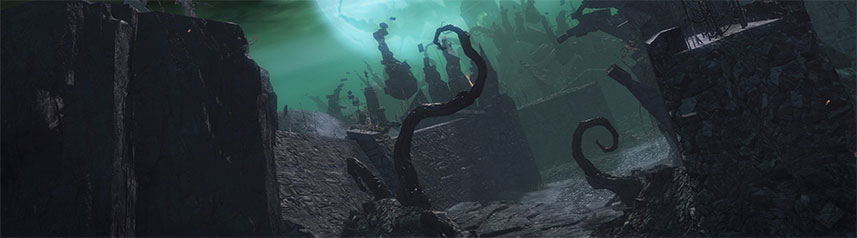
Forsaken World Mobile is a free-to-play fantasy MMORPG built for mobile, featuring a large open world, vibrant 3D visuals, and a combat style that blends tap-to-move convenience with skill-based action. It draws inspiration from the PC MMORPG Forsaken World, but it runs as its own standalone title with separate servers and a different overall experience. New players will also notice the game’s heavy emphasis on convenience features such as auto-pathing and optional auto-combat, which makes progression easy to follow on a phone or tablet.
 | Publisher: Fedeen Games Playerbase: Shut Down Type: Mobile MMORPG Release Date: July 23, 2015 Shut Down Date: July 31, 2018 Pros: +Sharp-looking visuals for mobile. +A seamless, genuinely open map. +A lot of quest content. +Deep gear upgrading and mount growth. Cons: -Monetization can translate into power advantages. -So much automation that it can feel hands-off. |
Forsaken World Mobile Overview
Forsaken World Mobile is a 3D open world MMORPG developed by Perfect World Entertainment and published by Fedeen Games, the same mobile label associated with titles like Dawn of the Immortals and Elemental Kingdoms. The game drops you into a persistent fantasy setting with populated towns, roaming enemies, and plenty of players moving through the same spaces. One of its standout travel touches is the built-in automated flight sequences, letting you soar between locations and take in the scenery rather than relying solely on instant teleports.
On the gameplay side, you can quest solo, group up for PvE activities, and jump into real-time PvP when you want something more competitive. The presentation leans colorful and high contrast, and the content loop is driven by a long chain of quests, dungeon runs, and character growth systems. You can also collect and train mounts, experiment with equipment upgrades, and pick from five classes: Warrior, Assassin, Kindred, Mage, and Cleric. Guild play and instanced dungeons round out the traditional MMORPG framework, giving the game more structure once you move past early leveling.
Forsaken World Mobile Key Features:
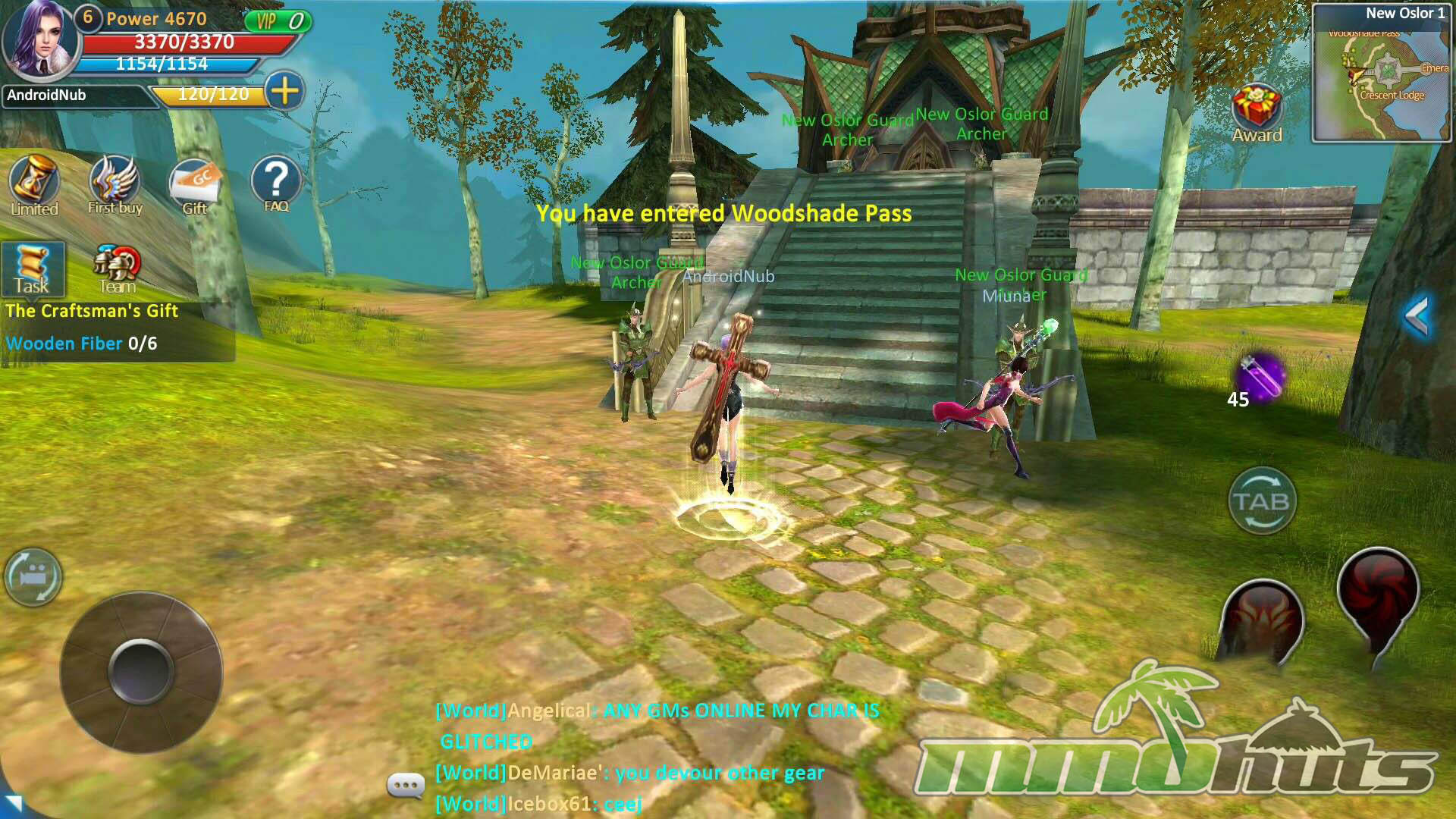
- Large Open World – Explore a continuous, persistent world with towns, NPCs, monsters, other players, and a range of different biomes.
- Five Classes to Choose From – Choose between Warrior, Assassin, Kindred, Mage, and Cleric, each with distinct skills, roles, and gear styles.
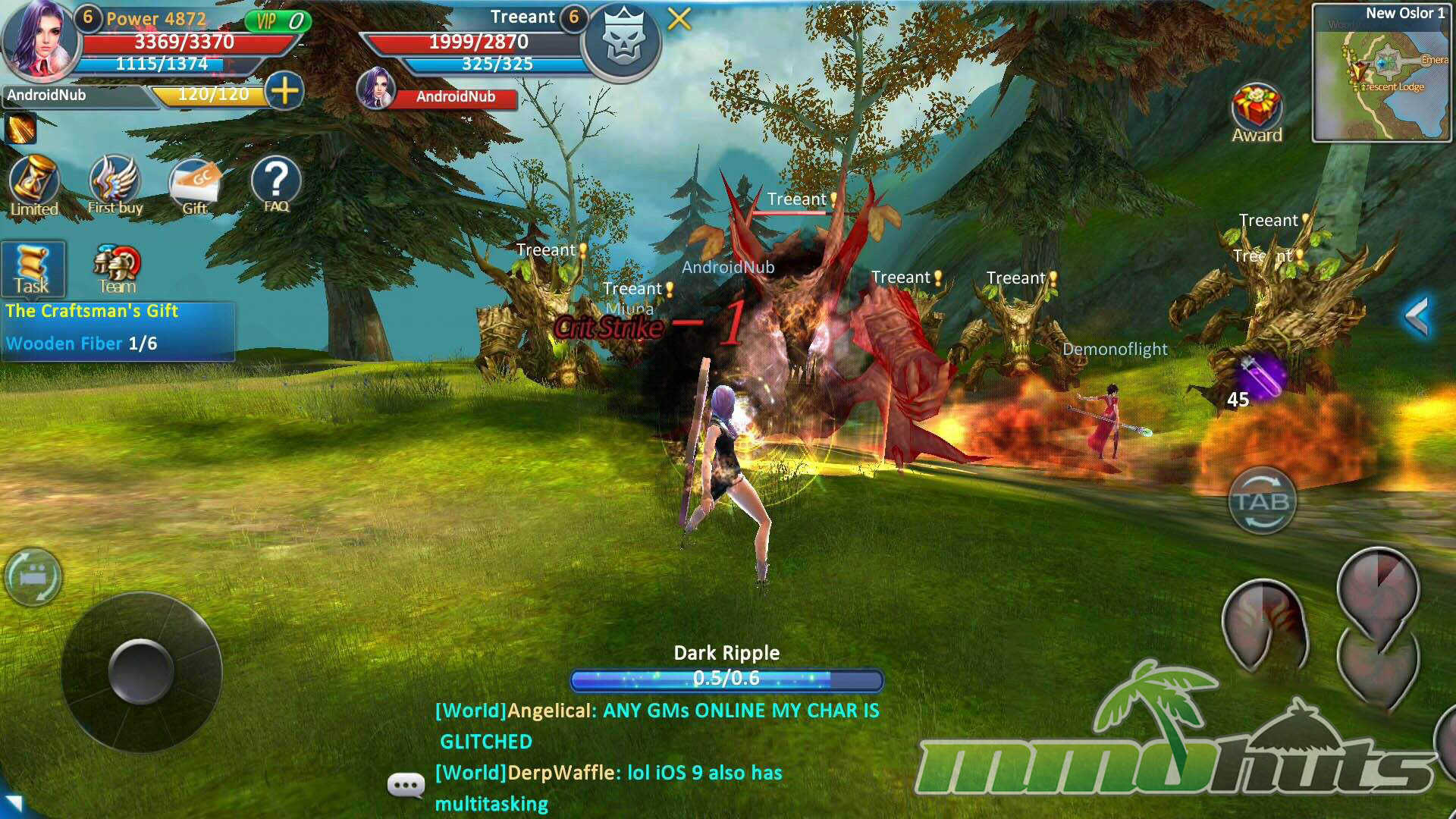
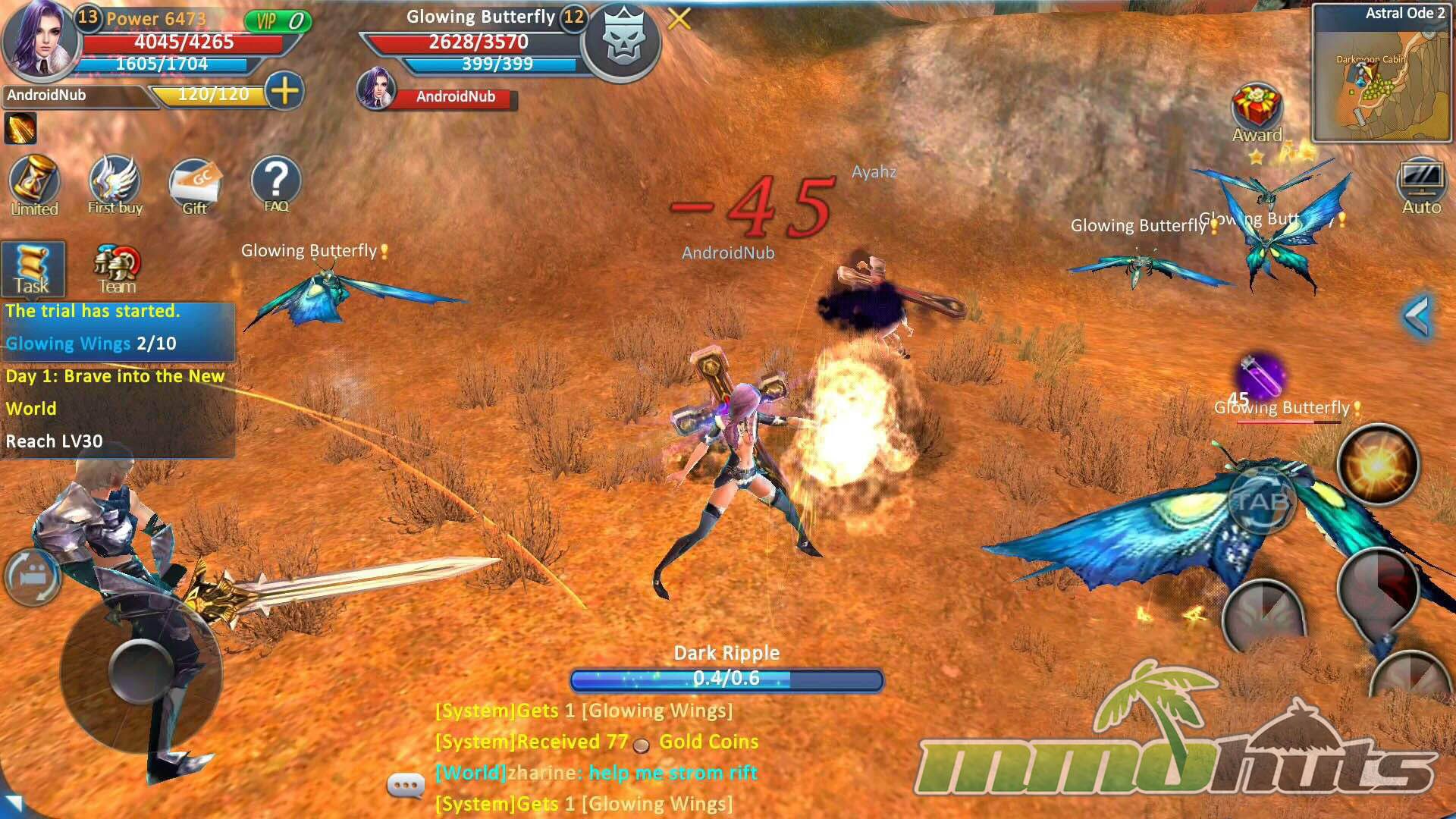
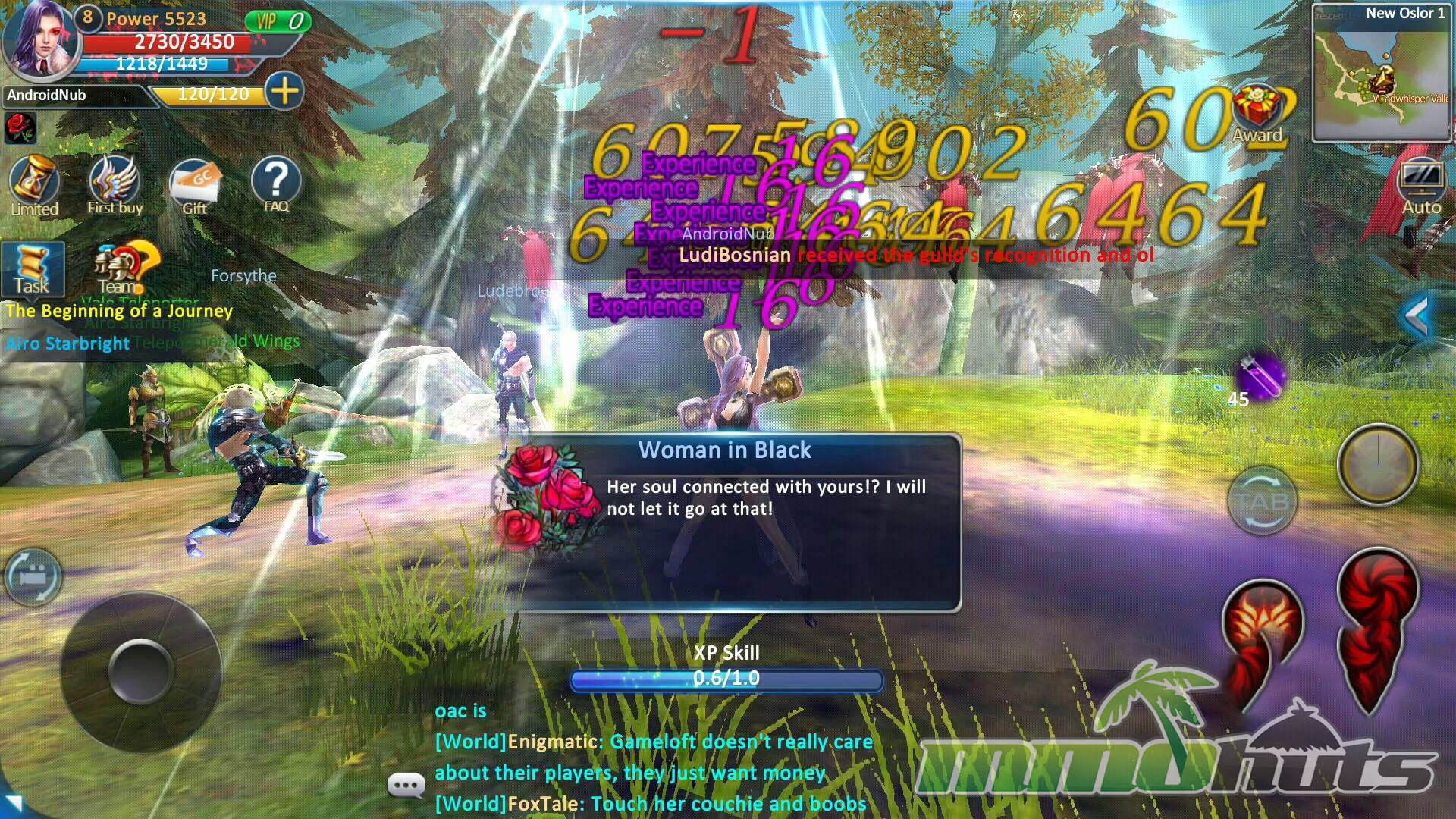
- High Quality Graphics – Enjoy strong mobile visuals with bright environments, flashy combat effects, and detailed creature and equipment designs.
- Mount System – Gather multiple mounts, improve them for attribute boosts, and use them for faster travel across the world.
- In-depth Equipment Enhancement – Strengthen your loadout using five upgrade routes: Enhance, Polish, Recharge, Gem Embed, and Transfer.
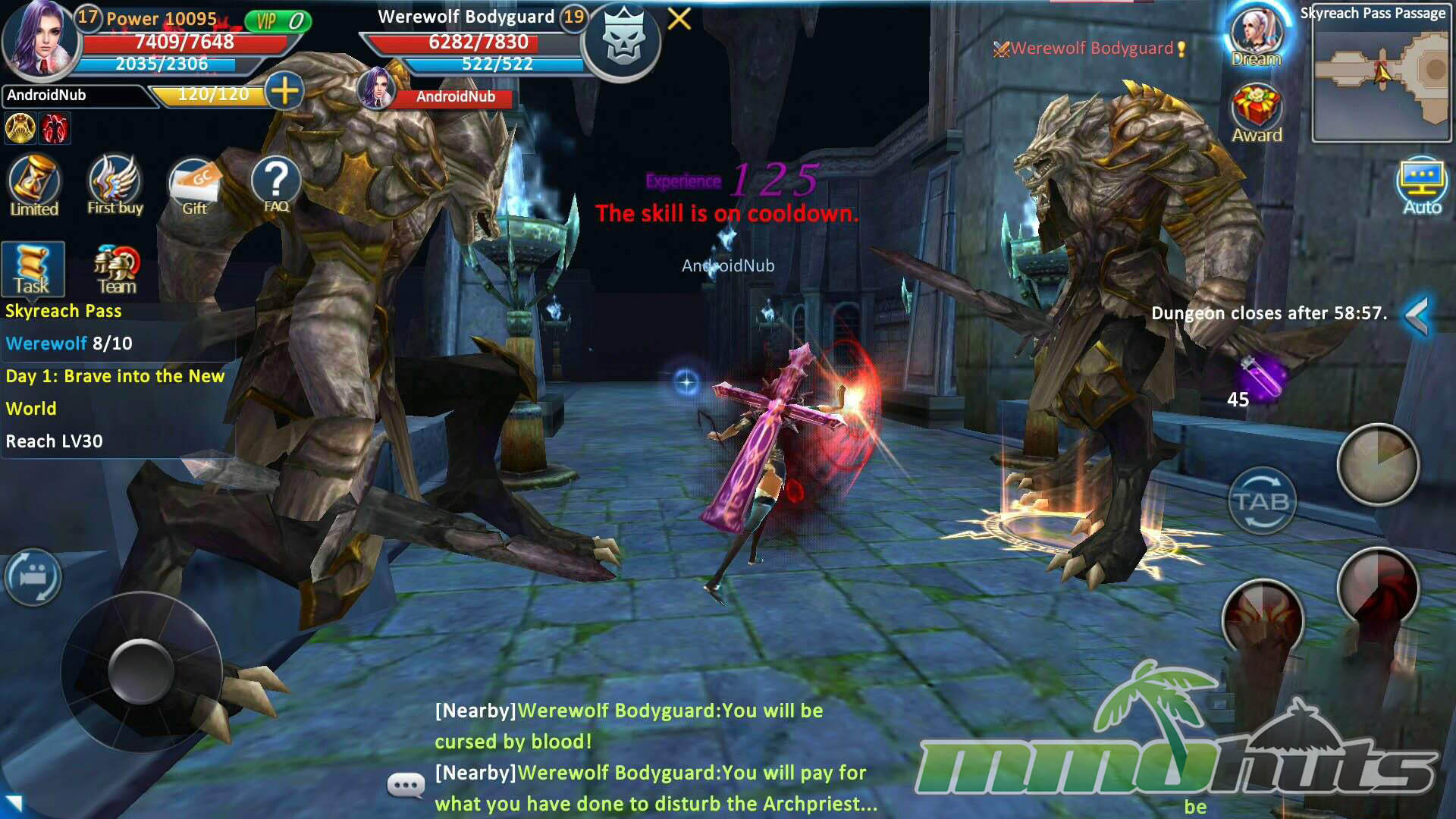
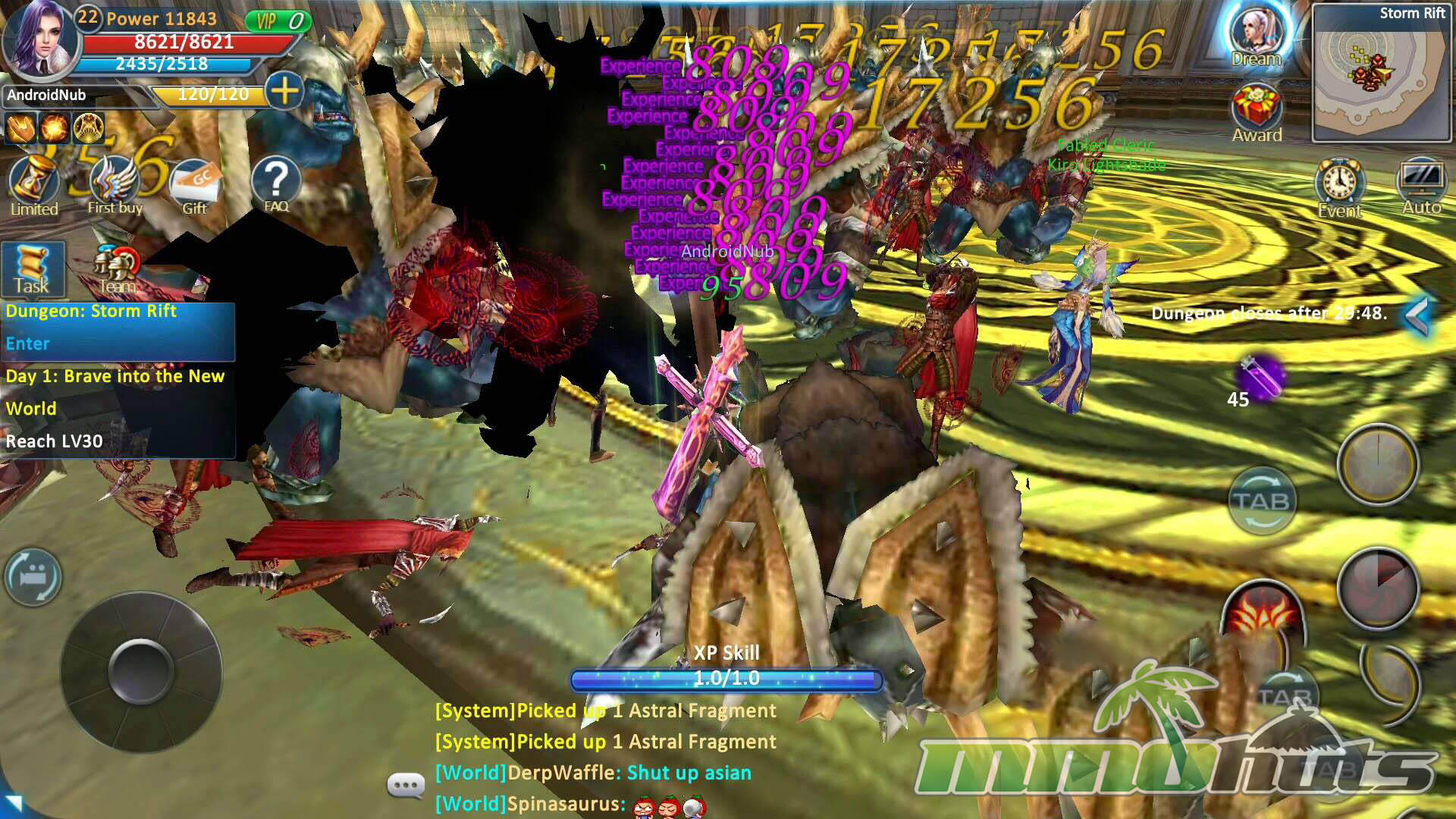
- Dungeons – Take on instanced challenges across four difficulty tiers (Normal, Hard, Heroic, and Hell) solo or with a party for rewards like gold, experience, and rarer gear drops.
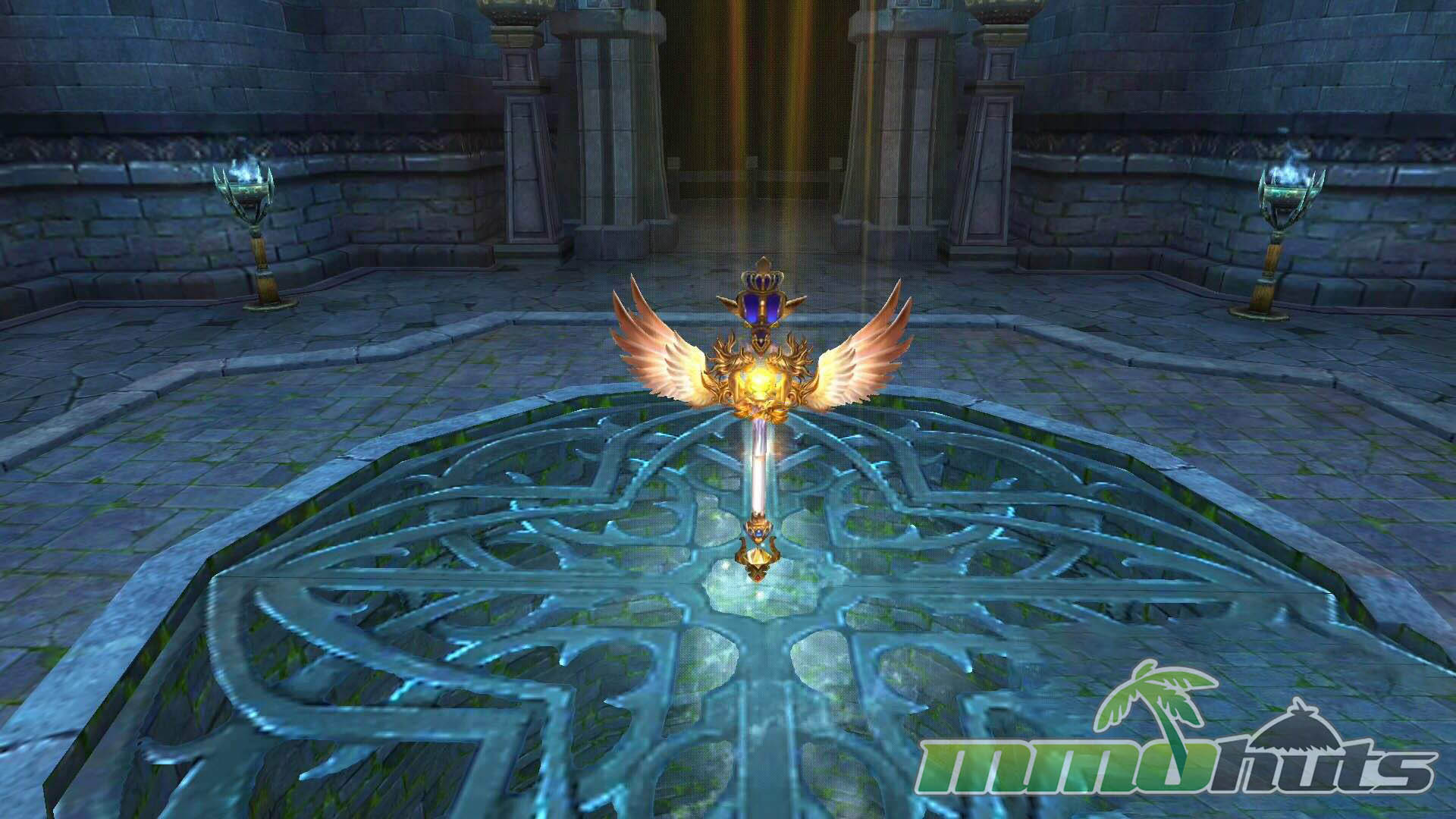
Forsaken World Mobile Screenshots
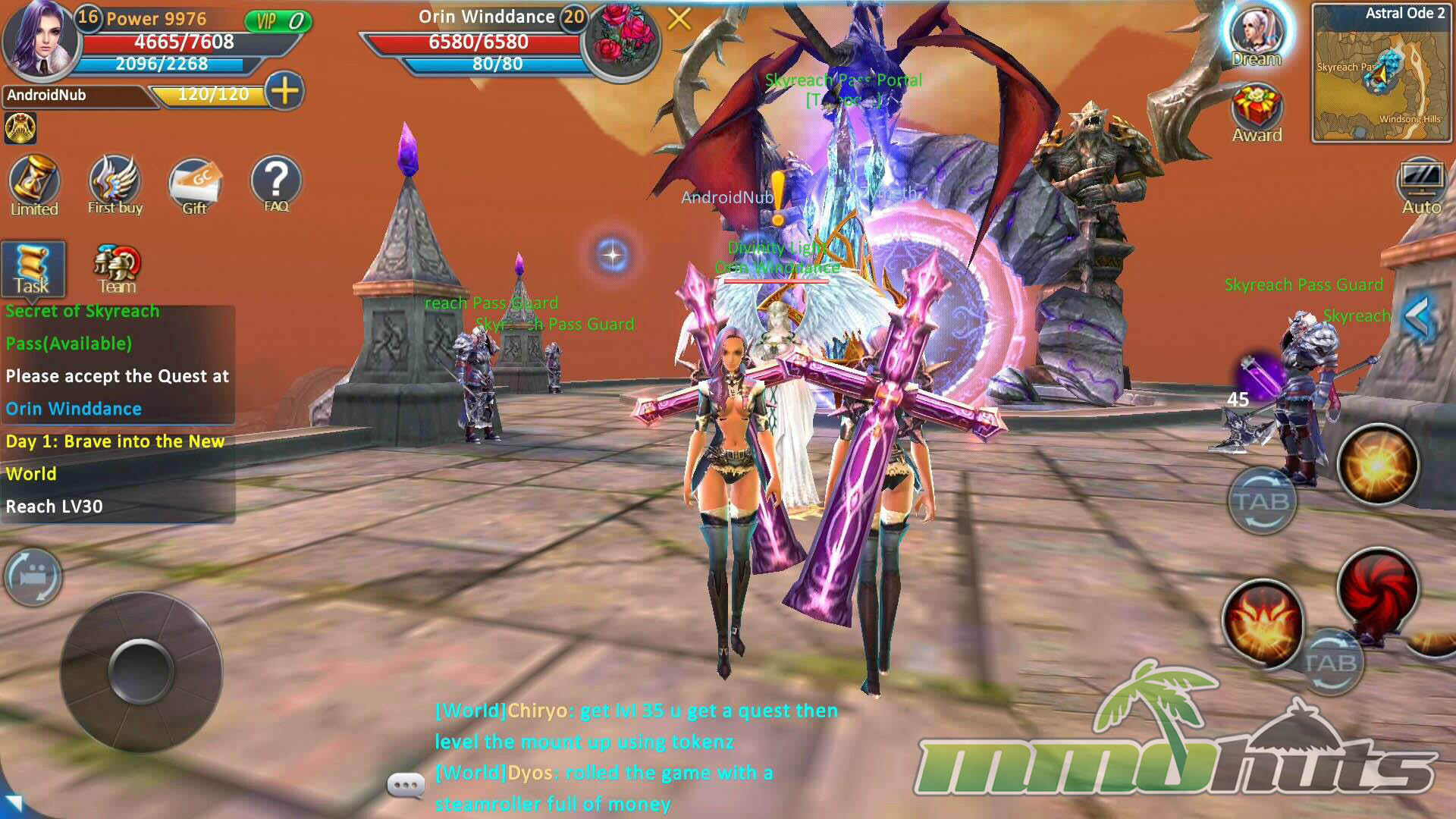
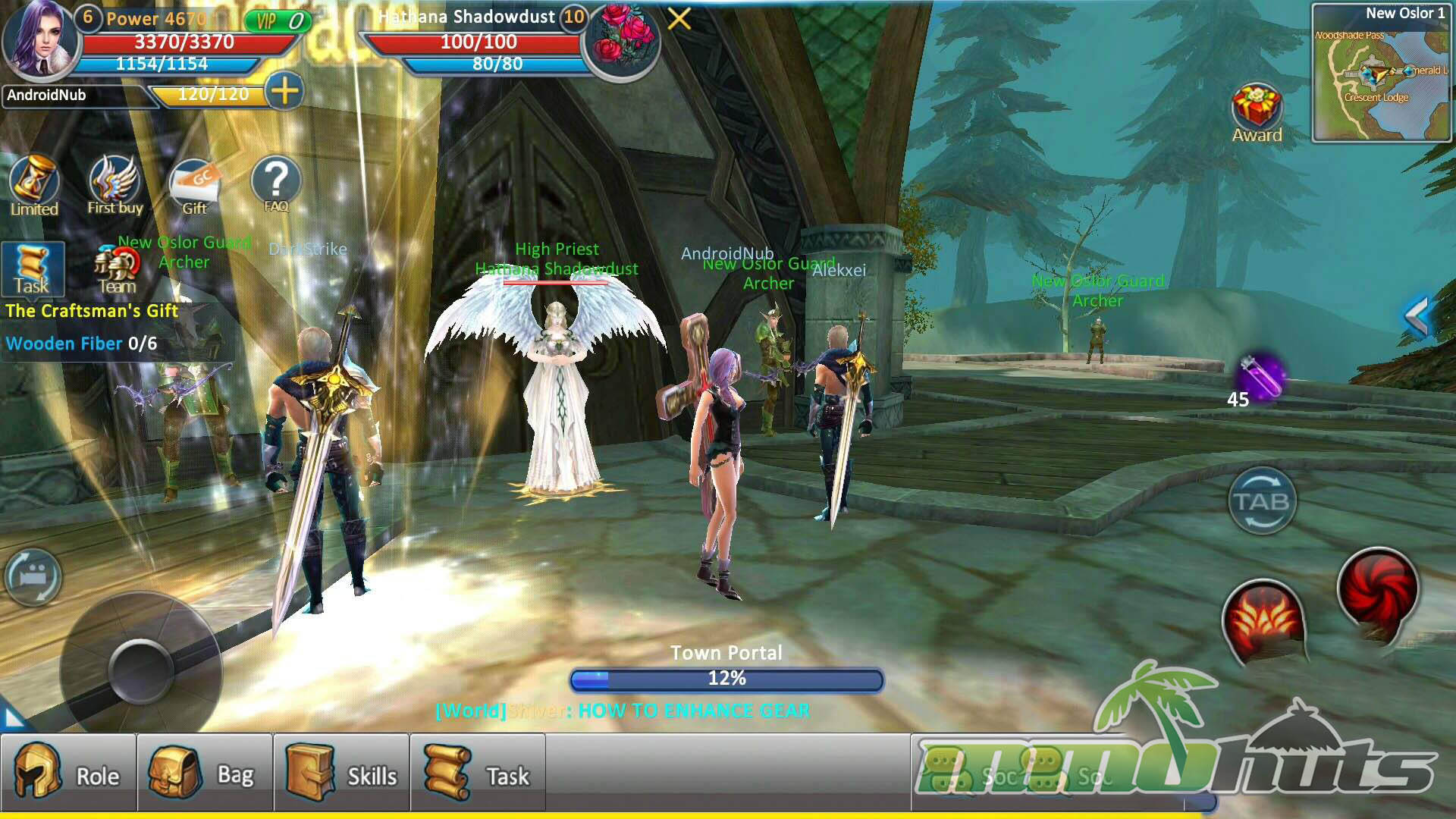
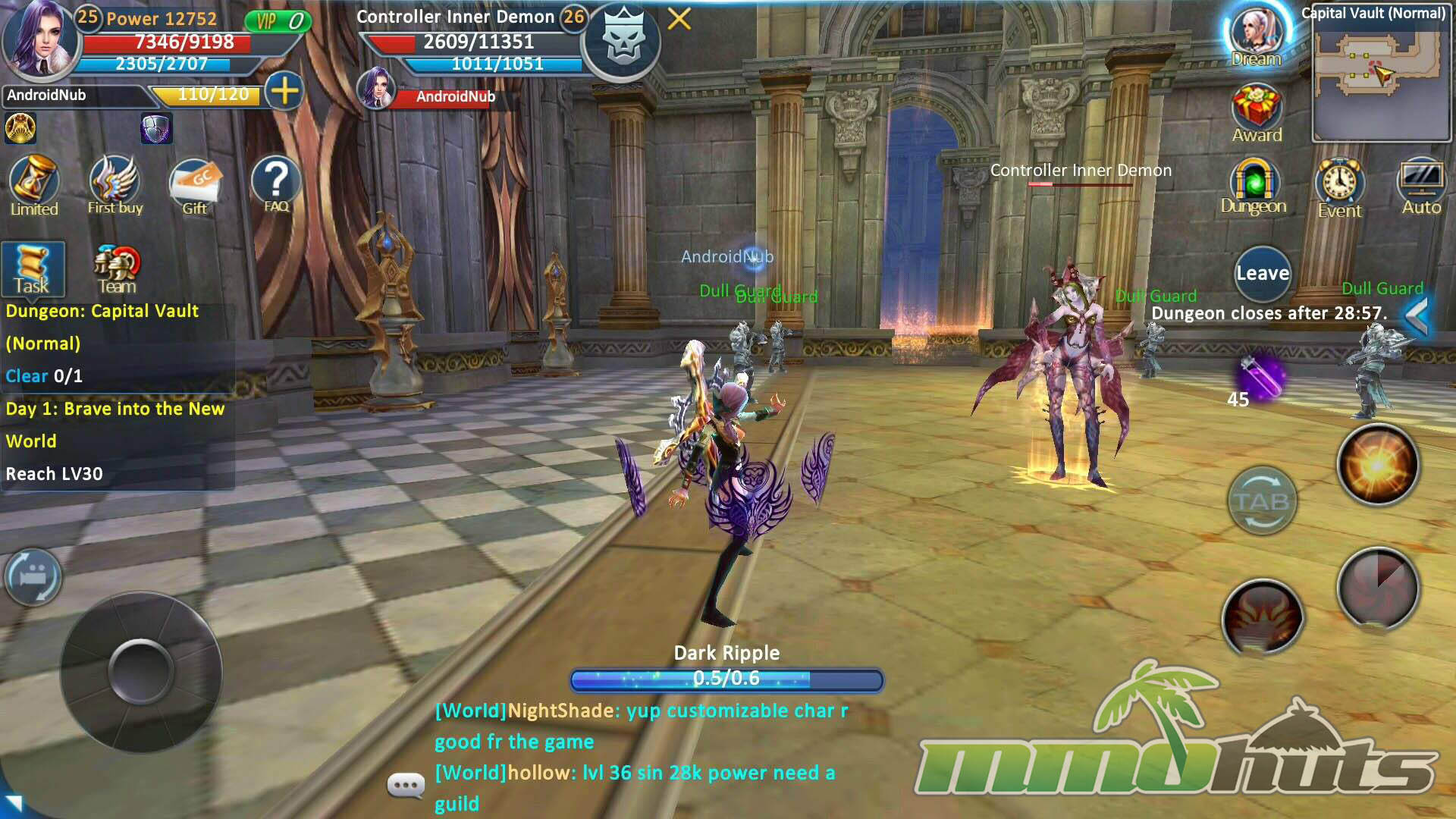
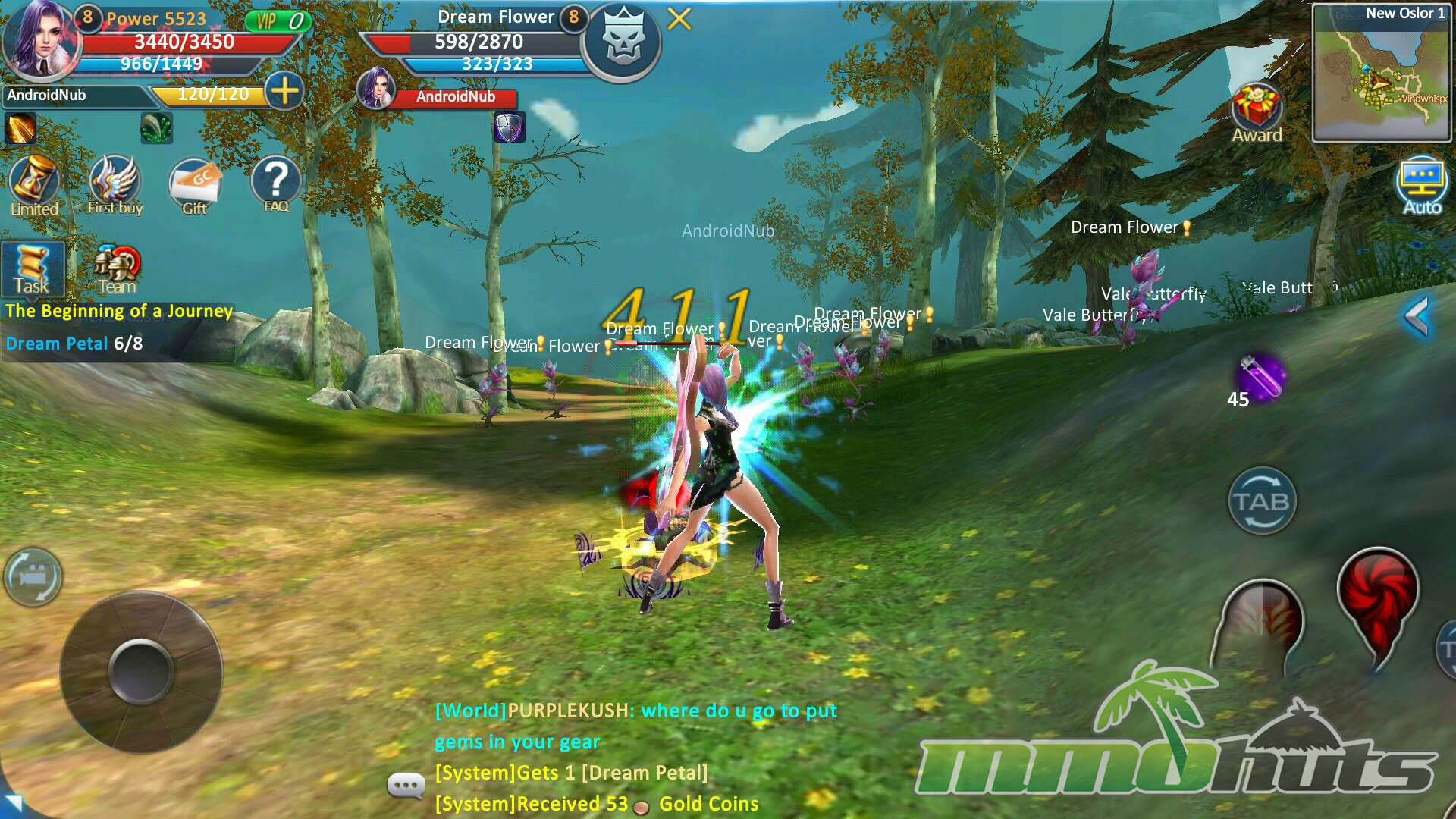
Forsaken World Mobile Featured Video

Forsaken World Mobile Review
Forsaken World Mobile is a free-to-play 3D fantasy MMORPG developed by Perfect World Entertainment and published by Fedeen Games, a mobile publisher owned by PWE. While it shares a name and some DNA with the PC MMORPG Forsaken World (released in December 2012), the mobile version stands on its own rather than acting as a direct port, with separate servers and mobile-first pacing. In the mobile MMORPG space, it is notable for offering a seamless open world on a scale closer to Order & Chaos Online than the many zone-based alternatives. It also had a brief soft launch period in Canada before its global release on July 23, 2015.
What you get is a polished, content-heavy mobile MMO that generally feels smooth to play, but it also comes with design choices that may not land with everyone, particularly the level of automation and the way spending can accelerate power.
Classes and Character Creation
At the start, you pick from five classes. The roster includes Warrior, Assassin, Kindred, Mage, and Cleric, and the class choices are gender-locked (male Warrior, male Assassin, female Kindred, female Mage, female Cleric). Each role is easy to understand within classic MMO party logic. Warriors are sturdy front-liners geared for soaking damage while still bringing a mix of single-target and area attacks, plus some debuff utility. Assassins focus on fast pressure and burst, with skills that lean into repeated strikes and strong critical potential, along with disruptive effects like silences.
Kindred is the most unusual option, functioning as a hybrid that mixes ranged and melee options while incorporating self-sustain through abilities that both hurt enemies and restore the user. Mages are the high-damage casters, relying on fire and ice themed AoE spells to clear groups quickly, but they pay for that output with low durability. Clerics fill the healing niche, offering the strongest recovery tools while still having some crowd control and basic damage to contribute when needed.
Where the opening experience stumbles is customization. Beyond selecting a class, there is essentially no appearance personalization, which feels restrictive, especially considering Perfect World’s reputation for character customization on PC.
The Open World of Forsaken World
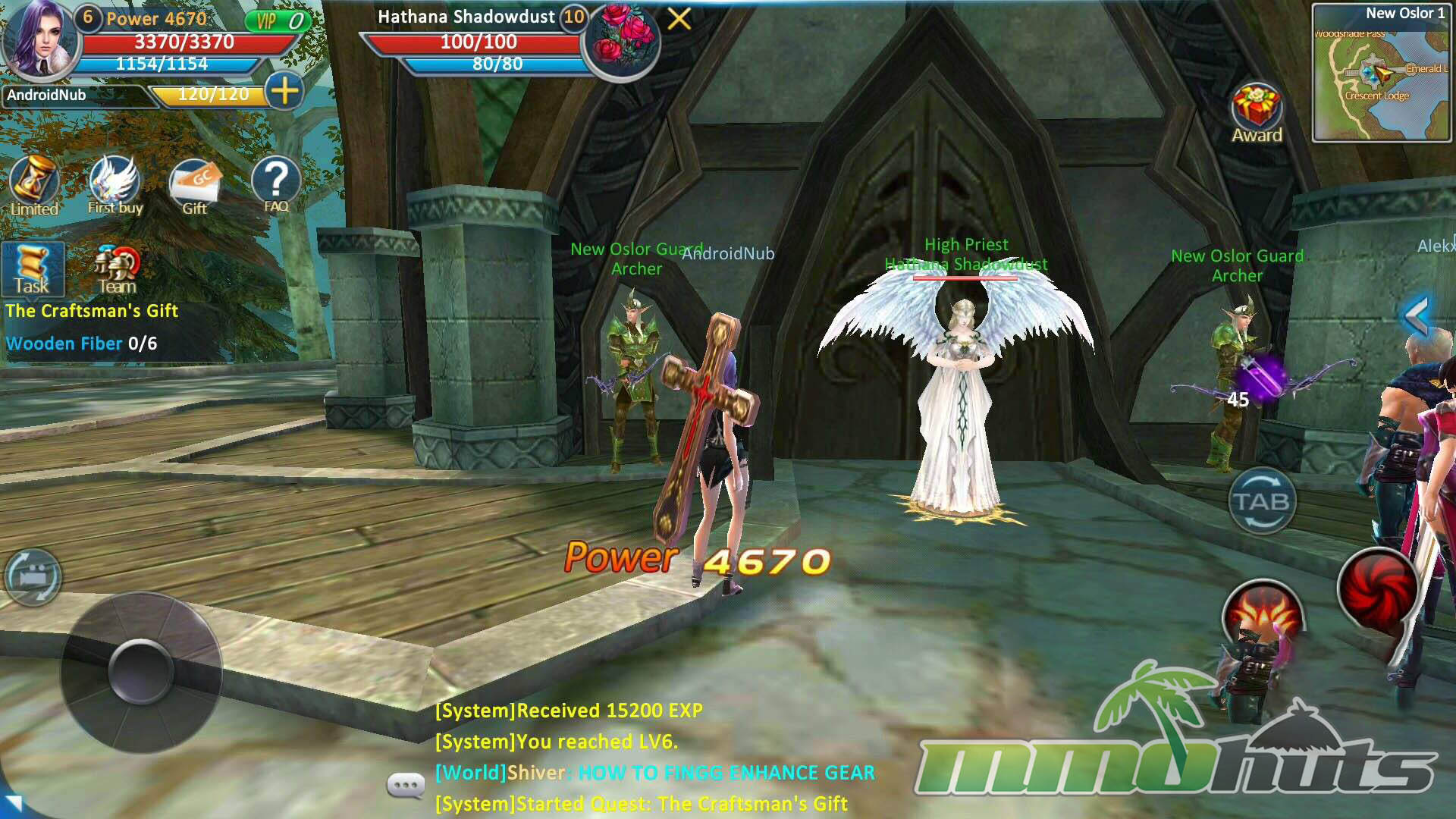
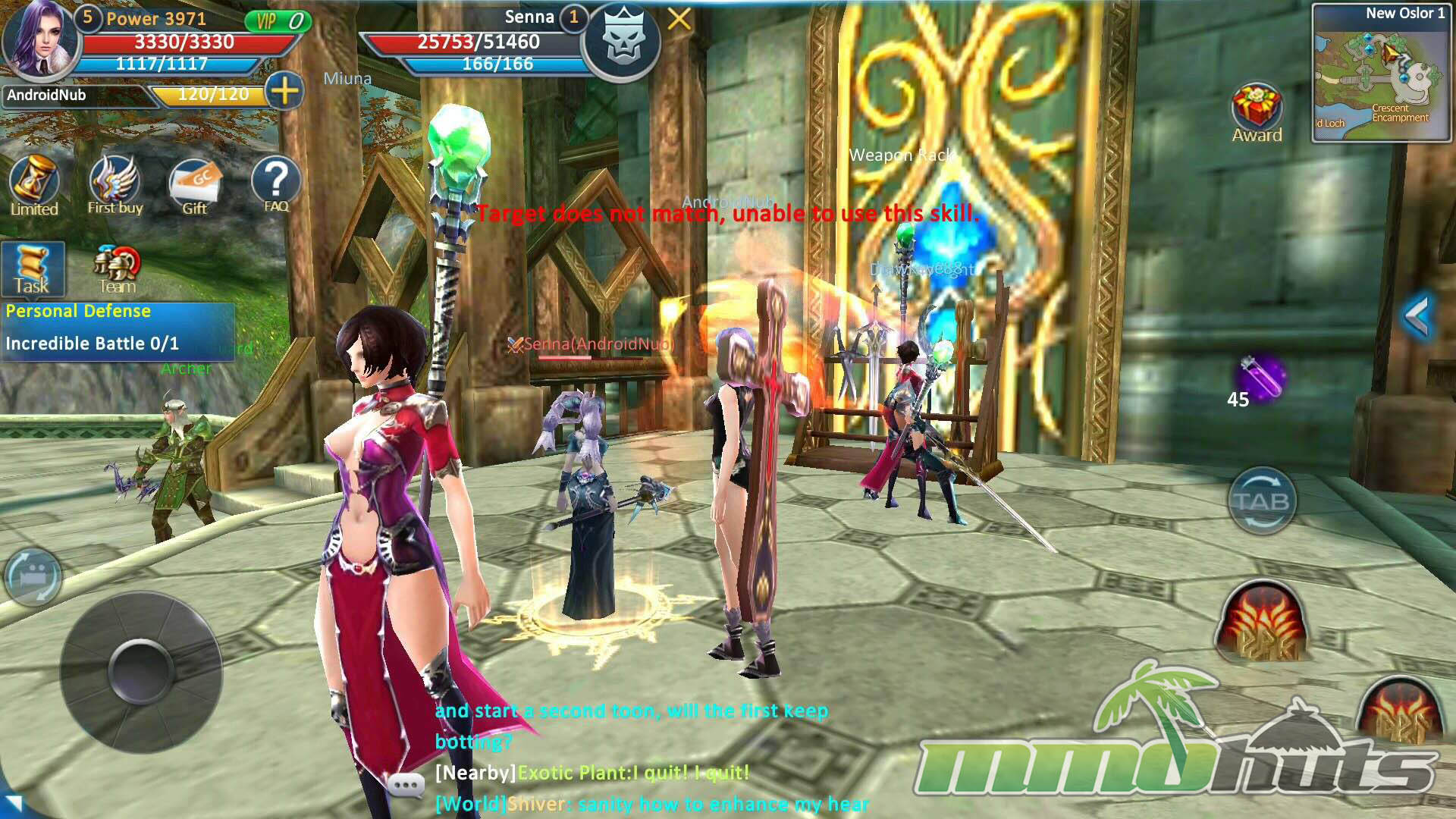
Forsaken World Mobile’s world design is one of its biggest selling points. Many mobile MMORPGs advertise “open worlds” but still rely on segmented zones and frequent transitions. Here, towns and surrounding wilderness areas connect more naturally, and you can move between populated hubs and outdoor hunting grounds without the constant stop-start feeling of loading screens. After the tutorial, you arrive in a busy city where it is immediately clear the game is built around shared spaces, with NPCs and players densely packed together.
Questing often reduces travel friction by teleporting you to relevant locations, which makes sense for mobile sessions. Even so, the game still makes room for travel as a visual showcase. The automated flight sequences between major points are a smart compromise, they preserve a sense of scale while keeping downtime low.
Impressive Graphics
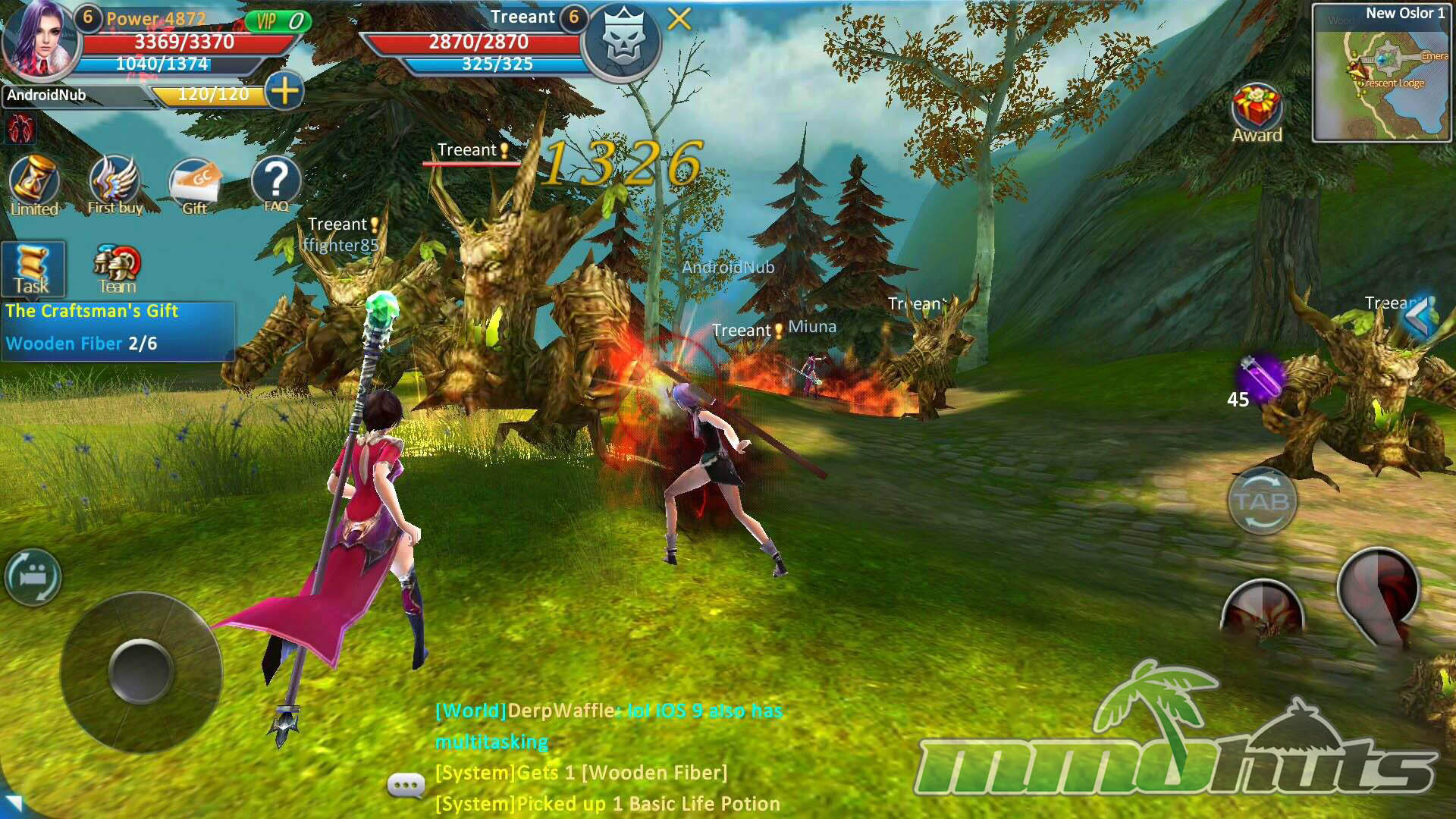
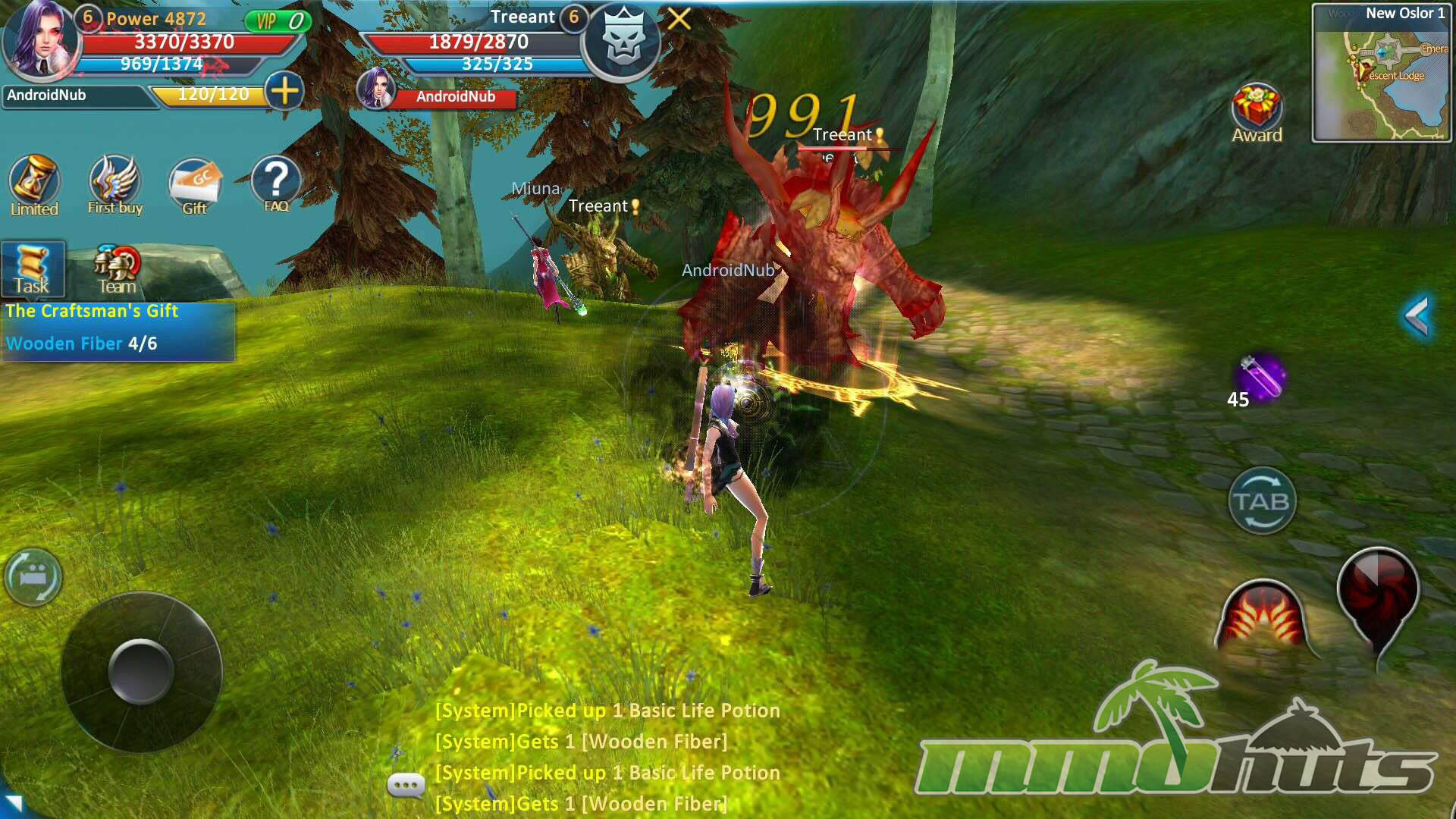
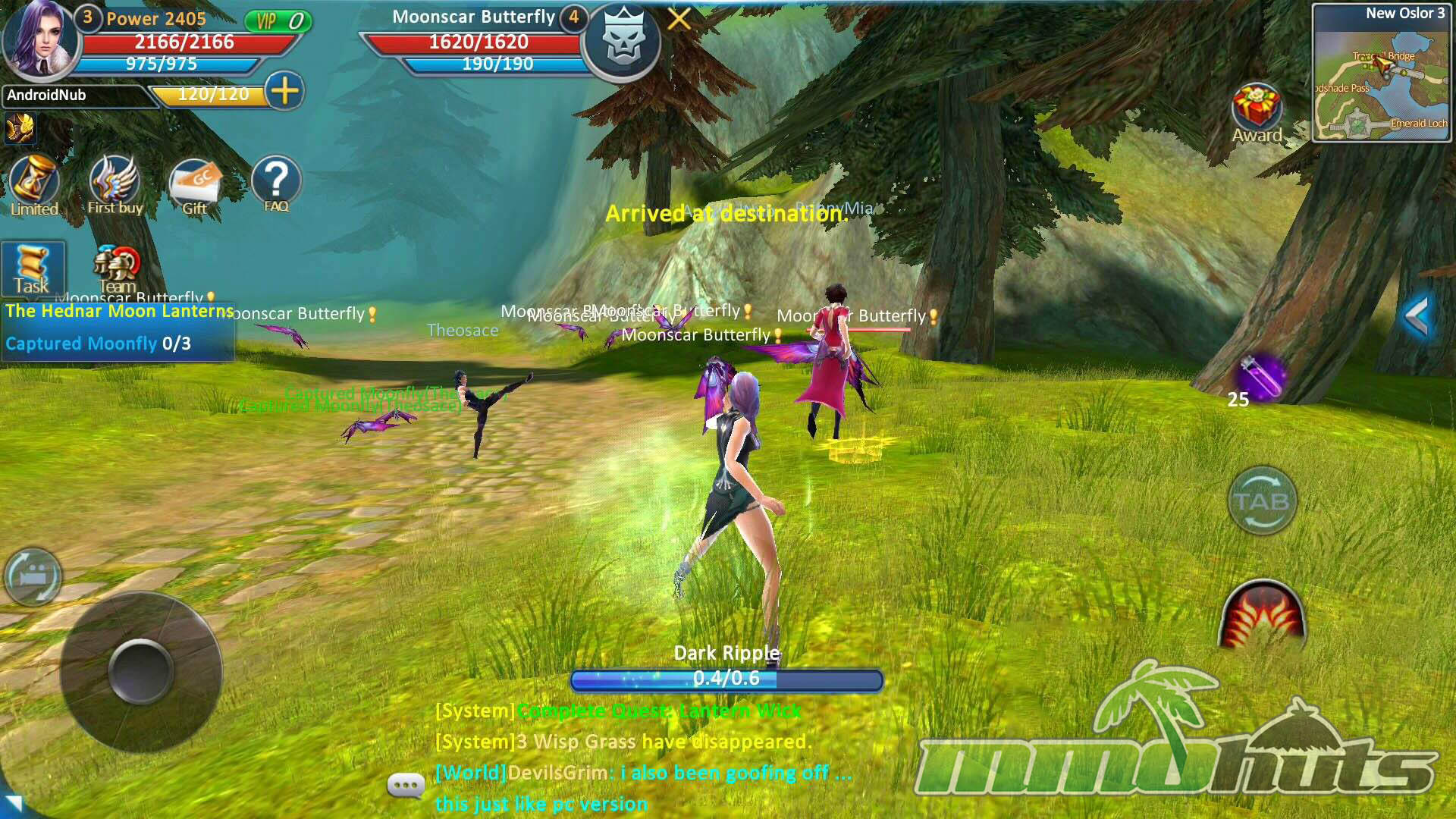
For a 2015 mobile MMORPG, the presentation is strong. It is not trying to match the PC version’s detail level, and it is obviously not competing with modern desktop MMOs, but within its platform the environments look lively and colorful. Outdoor areas are filled with vegetation and enemy variety, and towns are visually dense with buildings, props, and NPCs that prevent the world from feeling empty.
There are some limitations, textures can look softer up close, and fine detail does not always hold at maximum zoom. Still, the overall art direction does a lot of work, with flashy skill effects and readable enemy silhouettes. Camera controls are also better than many mobile peers; you can pinch to zoom and adjust your view to appreciate the fully 3D spaces.
Point-and-Click and Action Combat
Combat sits between traditional MMO targeting and mobile action controls. Movement can be handled by tapping the ground or by using a virtual joystick, while attacks and skills live on on-screen buttons. In practice, it often feels closer to a streamlined MMO style than a true dodge-heavy action RPG. Basic attacking can come across like an auto-attack rhythm because the animations and cadence do not demand constant inputs, and there is no dedicated dodge mechanic to make positioning feel as reactive as some action RPGs.
Skills add the most engagement, especially for AoE-heavy classes, and the ability to move while fighting helps with pulling groups or maintaining distance as a ranged character. A particularly memorable mechanic is occasional transformation into animals such as wolves, which changes your available attacks and gives combat a short burst of novelty.
Questing and Story
Progression is largely guided by a main quest line that continually points you toward the next objective, in the style of themepark MMORPGs. Leveling moves quickly, and most tasks follow familiar patterns: defeat a set number of enemies, take down a named target, collect materials, or run a dungeon. There are side activities, but the main quest is the core spine of the leveling experience, and it is designed to keep you moving forward with minimal confusion.
Narratively, the game tries to give context for your journey, but the story beats are fairly standard. Dialogue is often presented in large blocks of text, with occasional more conversational pop-up exchanges for major moments. The writing has some translation roughness, including grammar and spelling issues here and there, which can pull you out of the scene. The premise boils down to you being positioned as a fated hero opposing a recurring villain figure who repeatedly attempts to thwart your progress. It is serviceable for the genre and platform, but it is not the main reason most players will stick around.
A Game That Plays Itself
The most divisive part of Forsaken World Mobile is how strongly it leans into automation. Auto-move is common in mobile MMORPGs, and here it functions as expected, it will path you to quest NPCs and objectives, making the game approachable for quick play sessions. The bigger step is the built-in auto-combat feature, labeled “Botting,” which allows your character to fight nearby enemies without direct input until you turn it off.
You can even configure behaviors, such as potion usage and whether to prioritize AoE skills. While none of this is mandatory, the game’s fast leveling and quest structure naturally encourages players to use these tools, especially if they are trying to progress efficiently. The downside is that the loop can become passive: navigate automatically, auto-fight, collect rewards, repeat. Players who prefer hands-on control and moment-to-moment decision making may find the experience too detached.
Other Features
Beyond the core quest grind, Forsaken World Mobile packs in a number of systems meant to keep players busy. An auction house provides a straightforward way to buy and sell items, giving the economy a more organized structure than simple direct trading. Equipment upgrading is also a major pillar, with multiple enhancement tracks, including Enhance, Polish, Recharge, Gem Embed, and Transfer, which collectively create a long-term progression path for your gear.
The Faerie/Dreamscape interface adds a collection and bonus layer through Artifacts and other supportive features like blessings (buffs), periodic gold collection, and social actions such as sending flowers. Instanced dungeons come in four difficulties (Normal, Hard, Heroic, and Hell), and the reward structure pushes players toward grouping for smoother clears and better efficiency. PvP includes a team-focused mode with capture-the-flag style rules starting at level 30, limited to a set number of daily entries, and it rewards experience and Battle Meric that can be exchanged for items. Mounts unlock at level 35, and the mount system is more involved than simple cosmetics; training and evolution can alter appearance and provide meaningful stat gains, especially if you invest resources like Cultivation and Evolution Stones (earned from dungeons or obtained through the cash shop).
Cash Shop/In-App Purchases (IAP)
The cash shop is broad, and while it is not strictly required to reach endgame, it can make progression more efficient. Purchases include mount packs, mount growth materials, gear enhancement resources, instant revival items, dungeon speed-up consumables (such as Time Seeds and Feathers of Time), gems for embedding, fashion cosmetics, and VIP memberships. Notably, it does not sell raw equipment directly, but the availability of upgrade materials and gems still means spending can translate into power by accelerating how quickly you strengthen your character.
VIP is a significant part of the monetization structure, offering convenience perks like weekly items, portable services (auction access, skill learning, storage), and increased daily participation limits for dungeons and PvP. VIP levels range from 1 to 15, with higher tiers providing stronger benefits. Overall, the monetization feels more like a time-saver and advantage amplifier than a hard paywall, but competitive-minded players may still view it as edging into pay-to-win territory.
Final Verdict (Overall Impression)
Forsaken World Mobile aimed high for its time and largely delivers on the fundamentals: a seamless open world, strong mobile visuals, and a steady stream of quests, dungeons, and progression systems. Its biggest weakness is how easily the game can slip into “hands-off” play through auto-pathing and the “Botting” auto-combat option, which may not satisfy players looking for a more active MMO feel. For those who value convenience and a traditional themepark structure on mobile, it remains an impressive package in concept, even if its automation and monetization quirks keep it from being universally appealing.
Forsaken World Mobile Online Links
Forsaken World Mobile Official Site
Forsaken World Mobile Google Play
Forsaken World Mobile iOS
Forsaken World Mobile Wikia (Database / Guides)
Forsaken World Mobile System Requirements
Minimum Requirements:
Operating System: Android 4.0 and later, iOS 6.0 or later
Forsaken World Mobile Music & Soundtrack
Coming Soon…
Forsaken World Mobile Additional Information
Developer: Perfect World Entertainment
Publisher: Fedeen Games
Platforms: Android, iOS
Release Date: July 23, 2015
Shut Down Date: July 31, 2018
Forsaken World Mobile was developed by Perfect World Entertainment, a China-based game developer and publisher known for PC MMORPGs such as Perfect World Online, Forsaken World, and Jade Dynasty, and it was published by Fedeen Games, a mobile publisher owned by Perfect World Entertainment. The game was Perfect World Entertainment’s second mobile MMORPG and takes its foundation from the PC MMORPG Forsaken World, originally released in December 2012. Fedeen Games also published Elemental Kingdoms (a mobile card RPG) and Dawn of the Immortals (another mobile MMORPG), both of which surpassed 1 million downloads on Google Play. Forsaken World Mobile shut down on July 31, 2018.