Armored Warfare is a 3D MMO built around modern armored combat, mixing tactical positioning with accessible, arcade-leaning gunplay. It sits in the same general space as other tank battlers, but its contemporary vehicles, PvE co-op focus, and extra layers of crew and base management give it a slightly different flavor. Teamwork still matters most, because lone tanks rarely survive long once the enemy starts coordinating fire.
 | Publisher: Wishlist Games Playerbase: Low Type: Tank Shooter Release Date: October 8, 2015 Pros: +Modern-era vehicles and tone. +Both PvE missions and PvP battles. +Crew/base systems add extra depth. Cons: -Progression feels borrowed from similar games. -Occasional awkward collision/visual moments. -Onboarding does not teach key mechanics well. |

Armored Warfare Overview
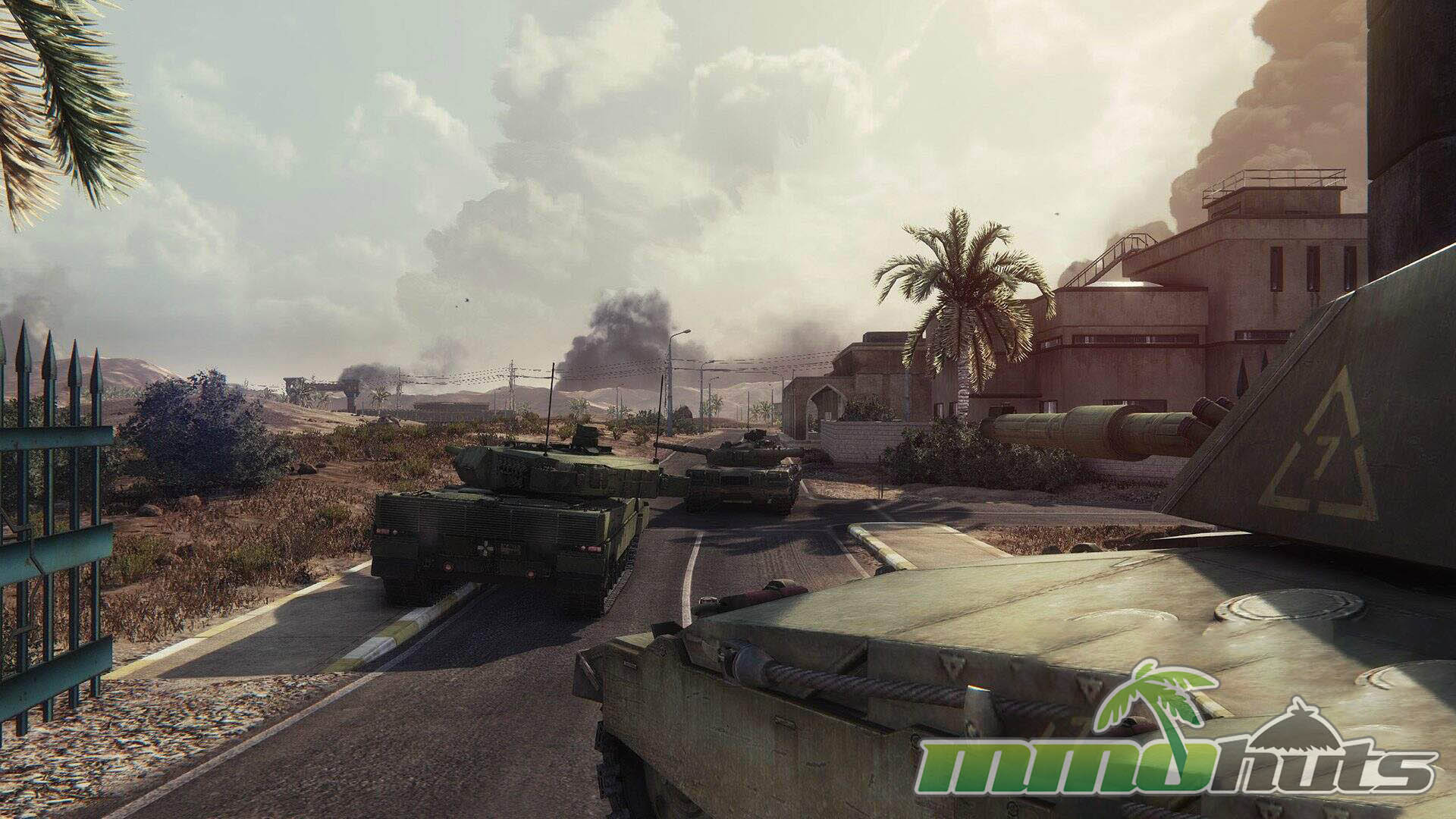
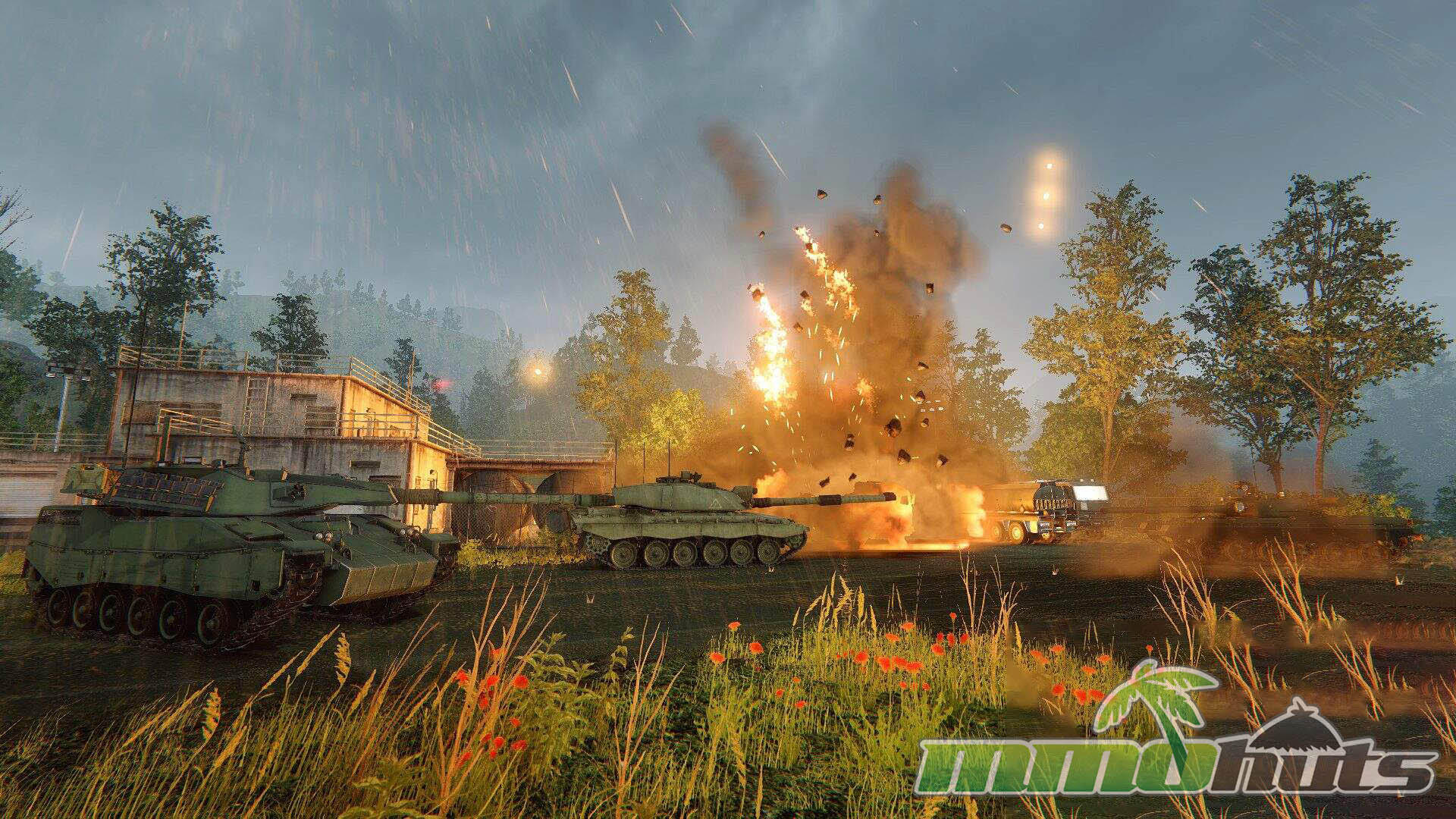
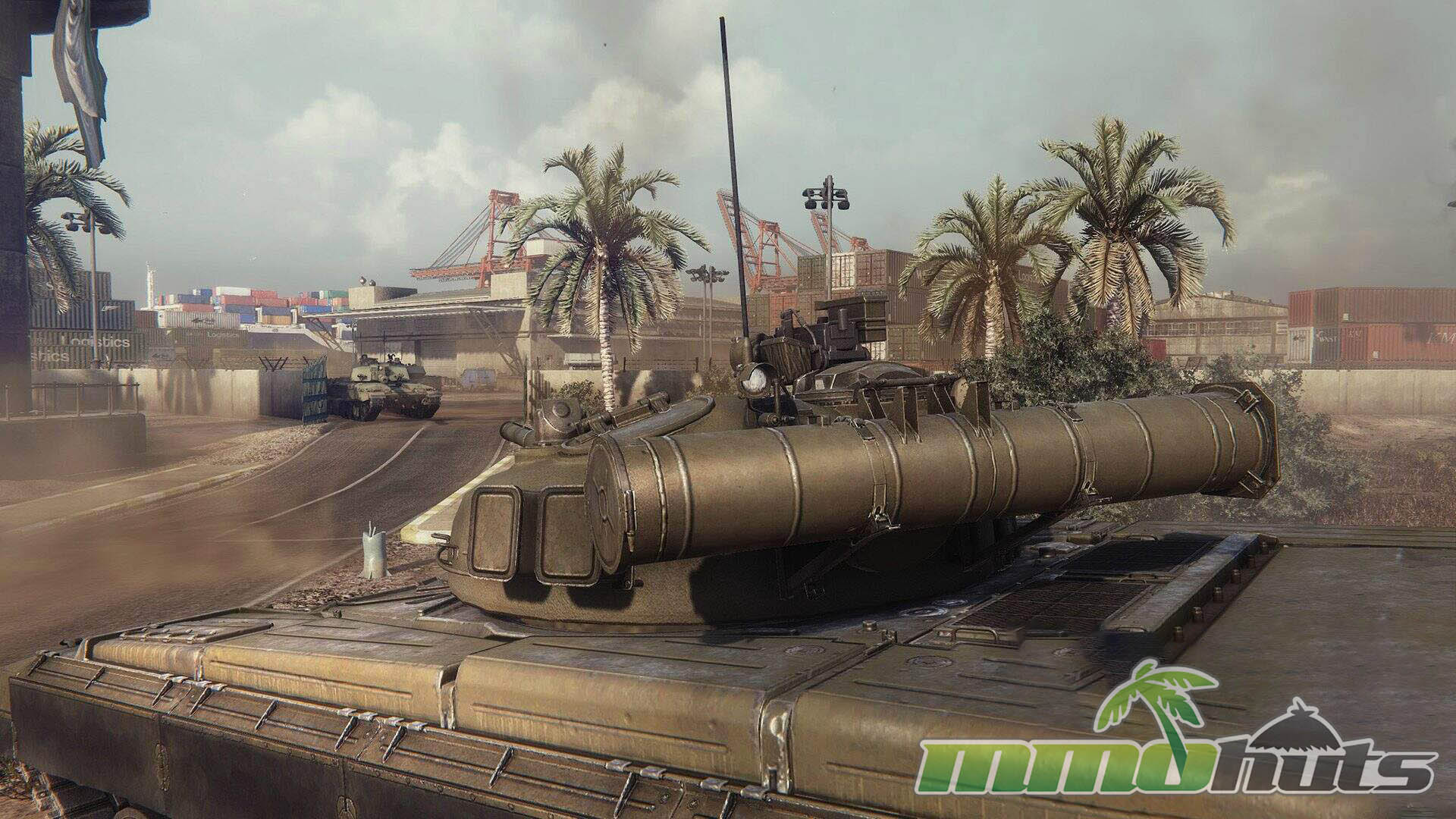
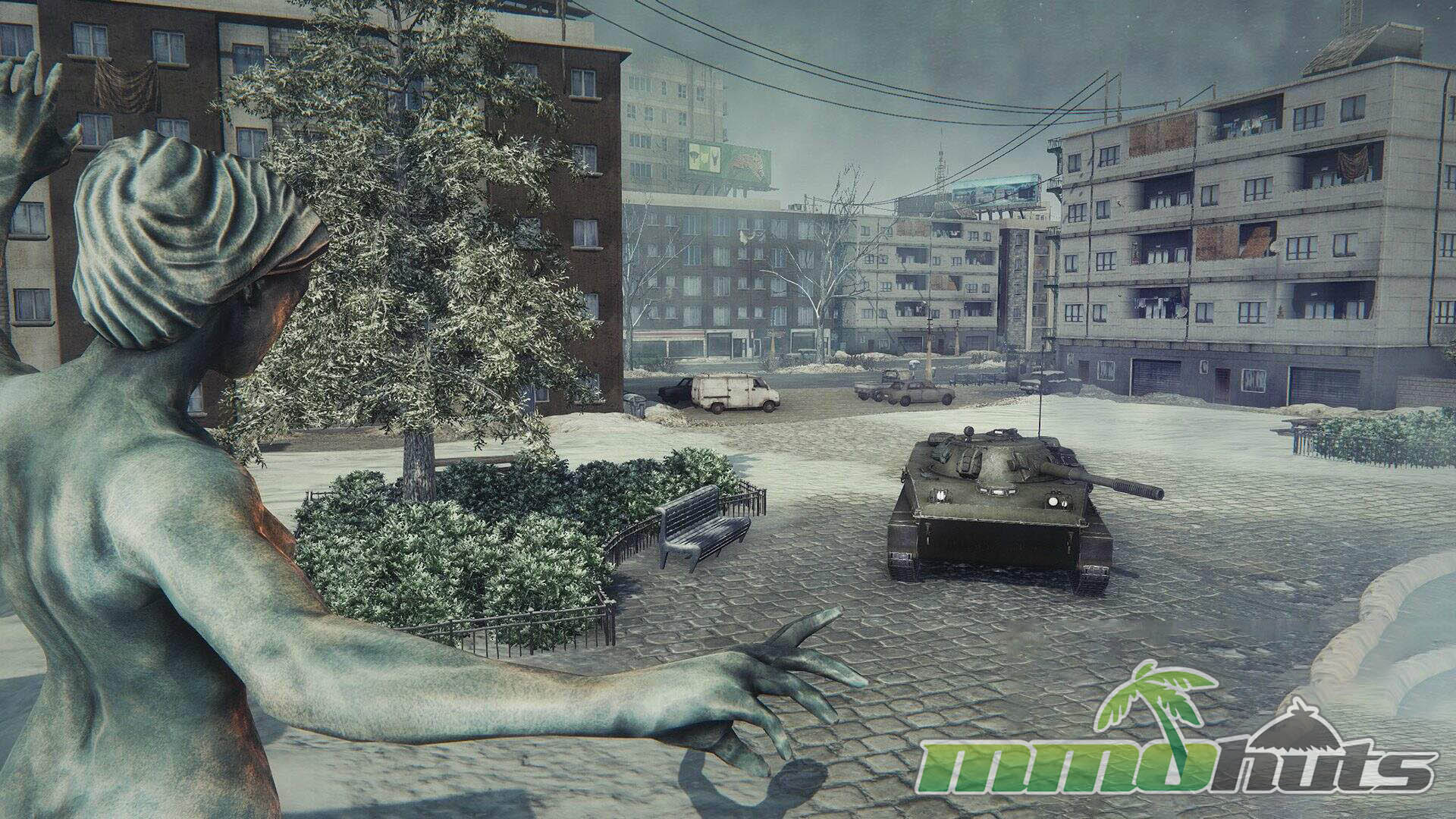
Armored Warfare is a modern-day armored combat MMO that aims for a grounded feel without becoming a full simulator. It clearly takes cues from the genre leaders, but shifts the timeline forward into post-1950s hardware and frames battles around contemporary battlefields and threats. Matches play out across varied maps, including arid deserts, dense forests, and icy regions, and terrain is not just visual dressing. Softer ground and uneven surfaces can influence how quickly you move and how comfortably you can reposition.
Damage modeling also pushes players to think beyond raw hit points. Getting your turret or key components compromised can reduce accuracy, and further punishment can temporarily prevent firing, which turns bad trades into real setbacks. The result is a game where spacing, cover, and timing matter, especially once teams start focusing targets.
Armored Warfare Key Features:
- Modern Setting – engage with modern military hardware such as the M1 Abrams Tank, with vehicles spanning from the 1950s through the present day.
- Destructible Environments – fight across a wide range of locations, from lush jungles to blazing deserts, where many map objects can be smashed or leveled.
- Micromanagement Features – level your crew to earn talents, and develop your base using Raw Materials to unlock helpful stat bonuses.
- Customization System – each vehicle class has its own distinct perk, and tanks can be tailored to fit your preferred role.
- Anti-Griefing System – friendly fire and ramming are not ignored, repeat offenders are punished.
- Five Vehicle Classes – Main Battle Tanks (MBTs), Armored Reconnaissance Vehicles (AFVs), Light Tanks, Tank Destroyers, and Artillery.
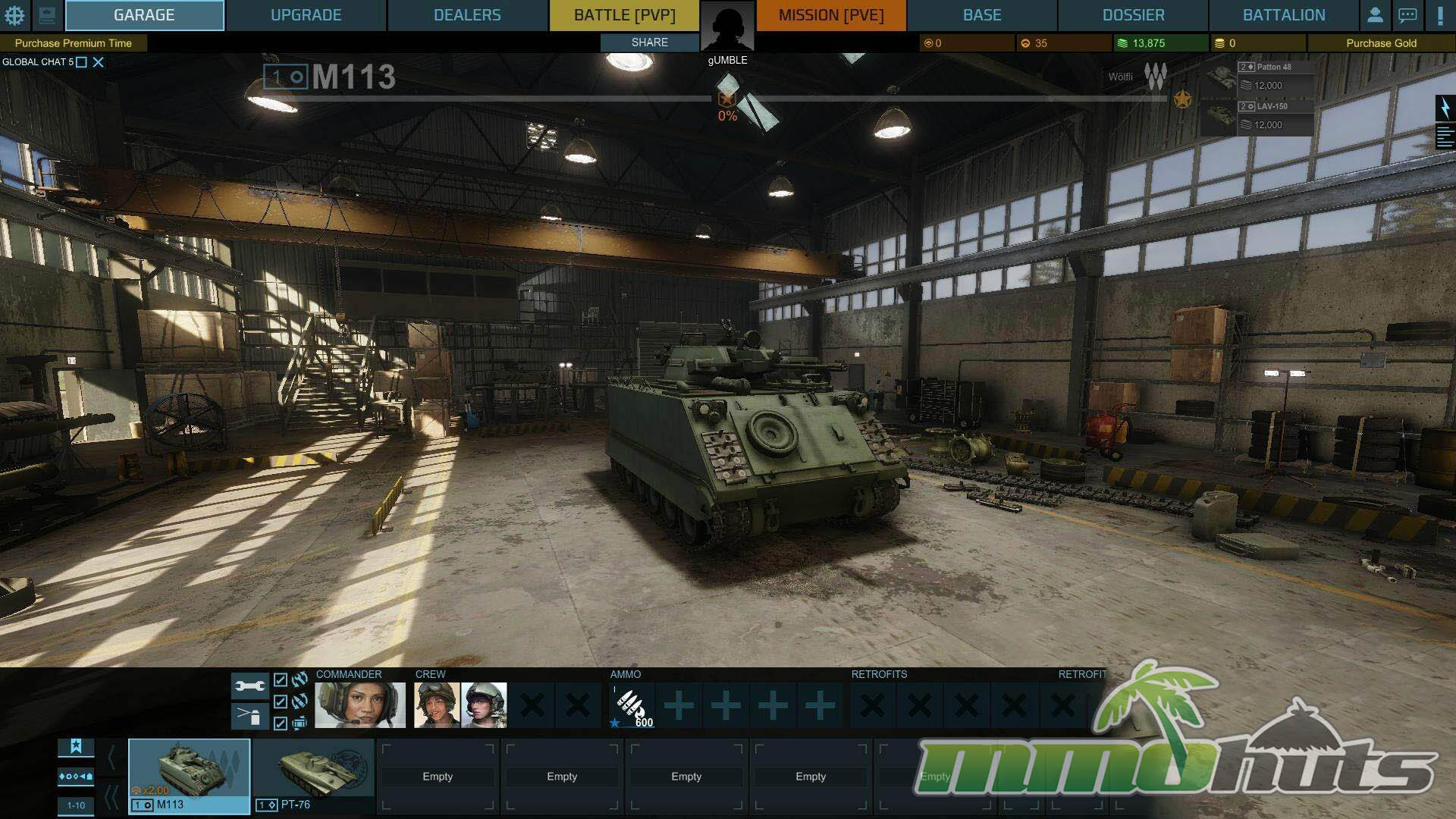
Armored Warfare Screenshots



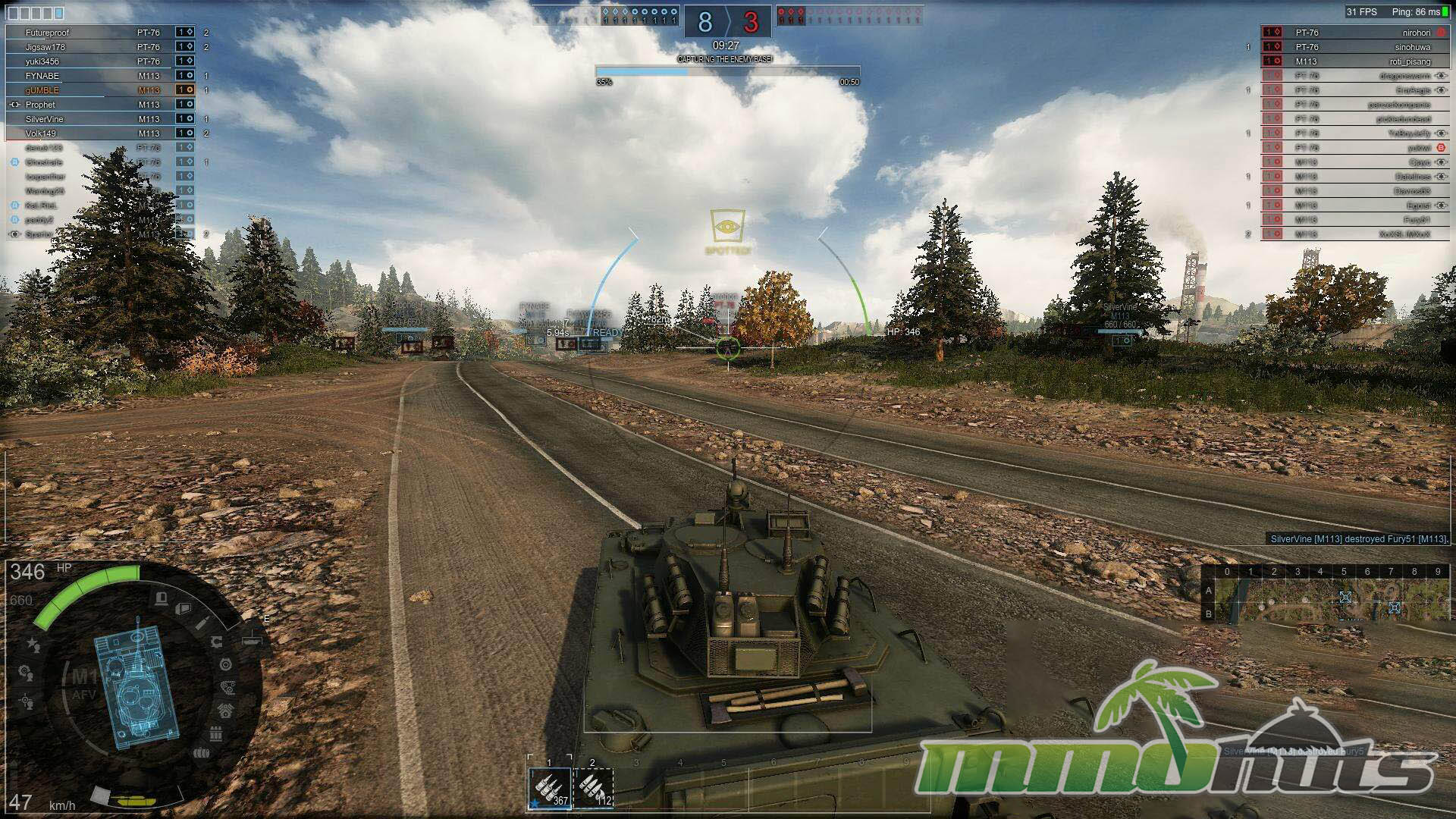
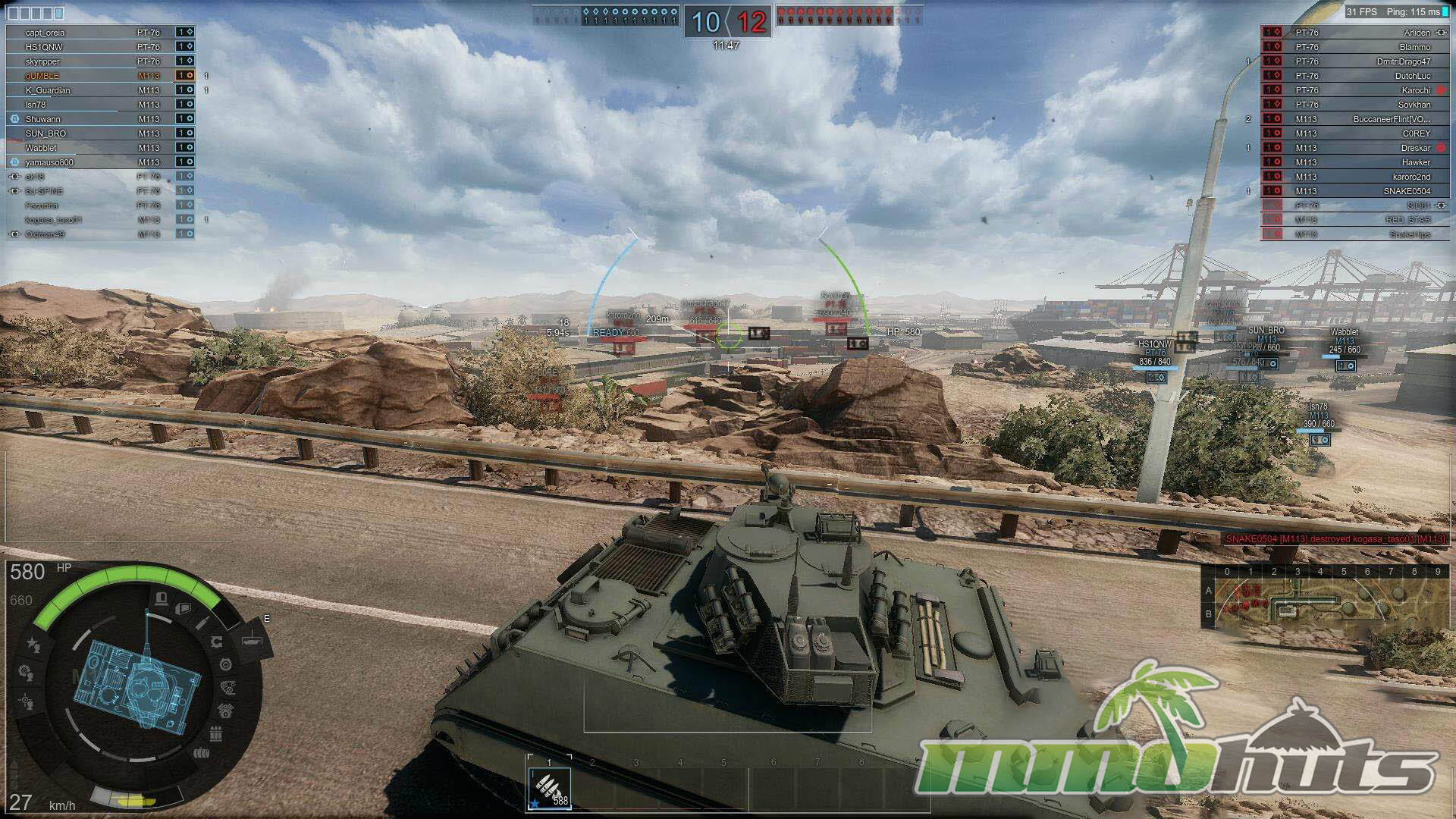
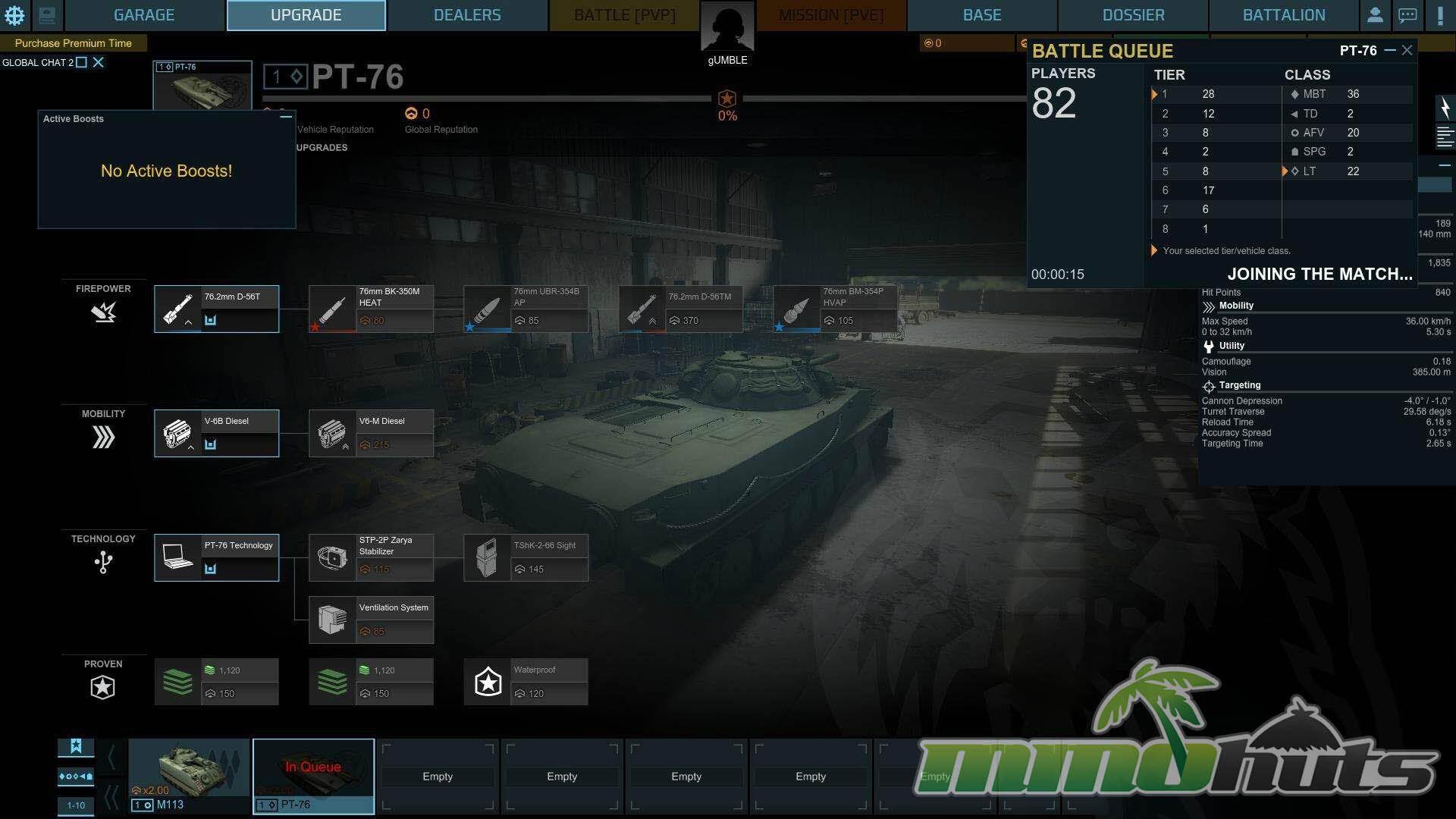
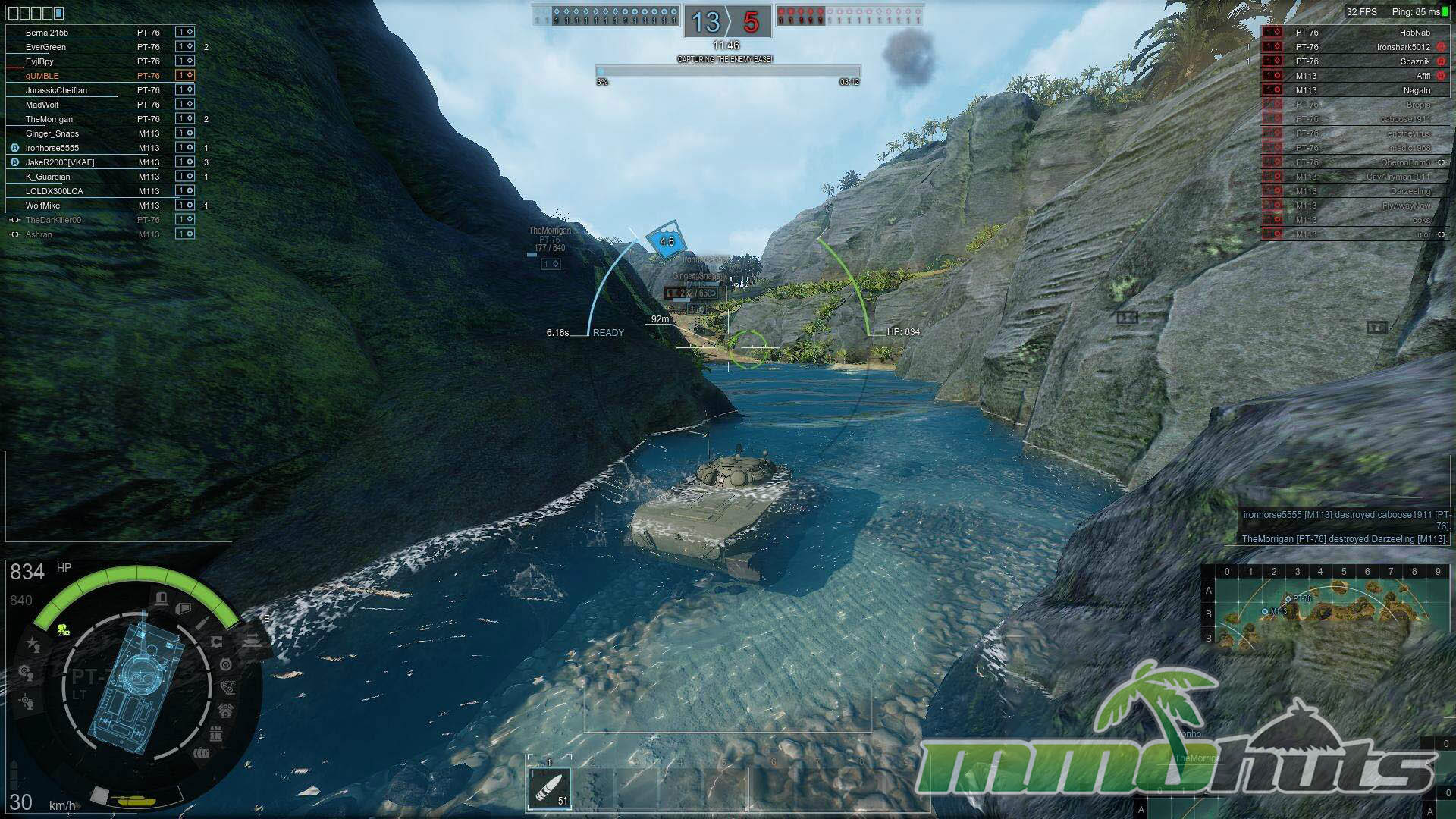
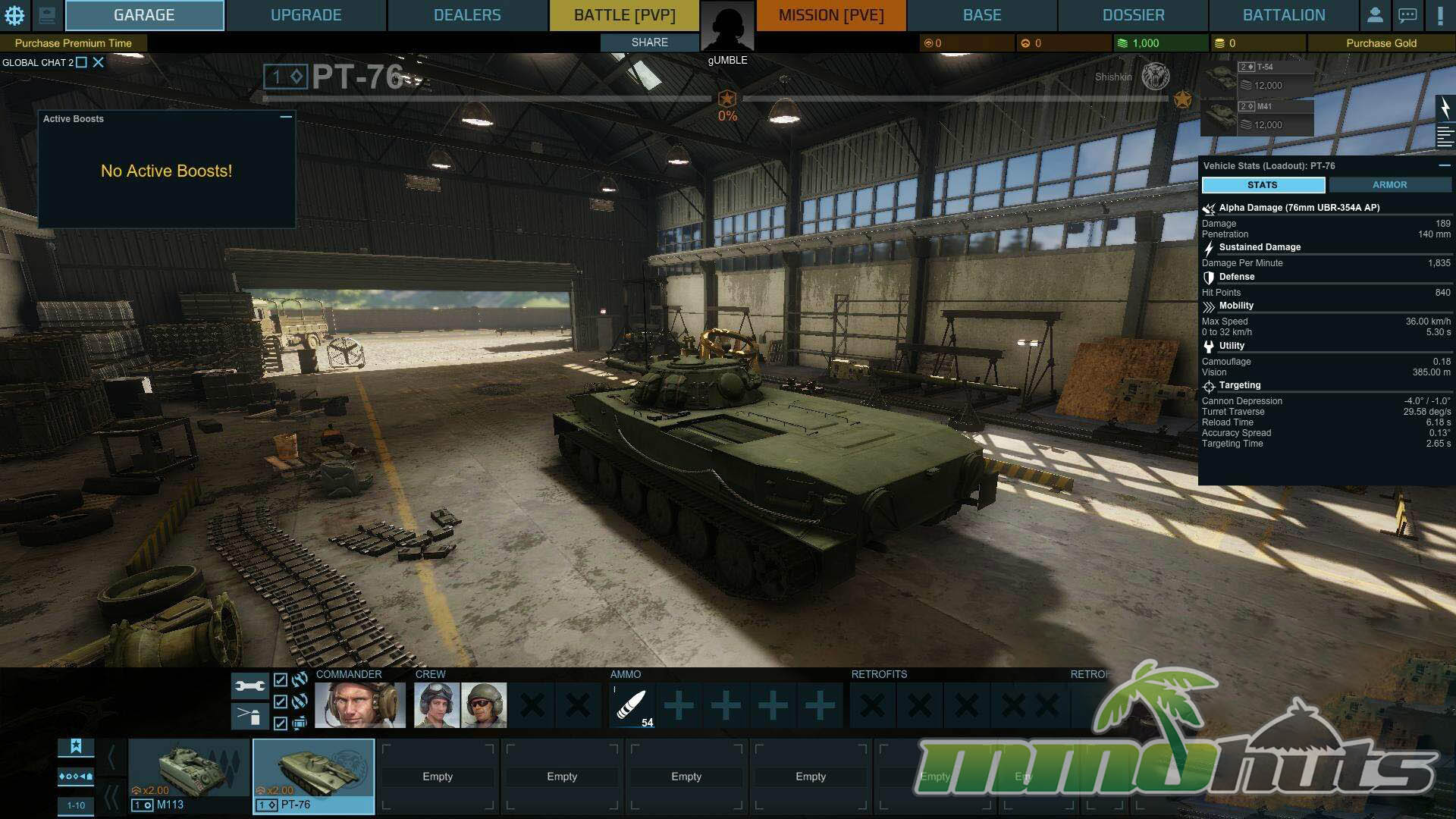
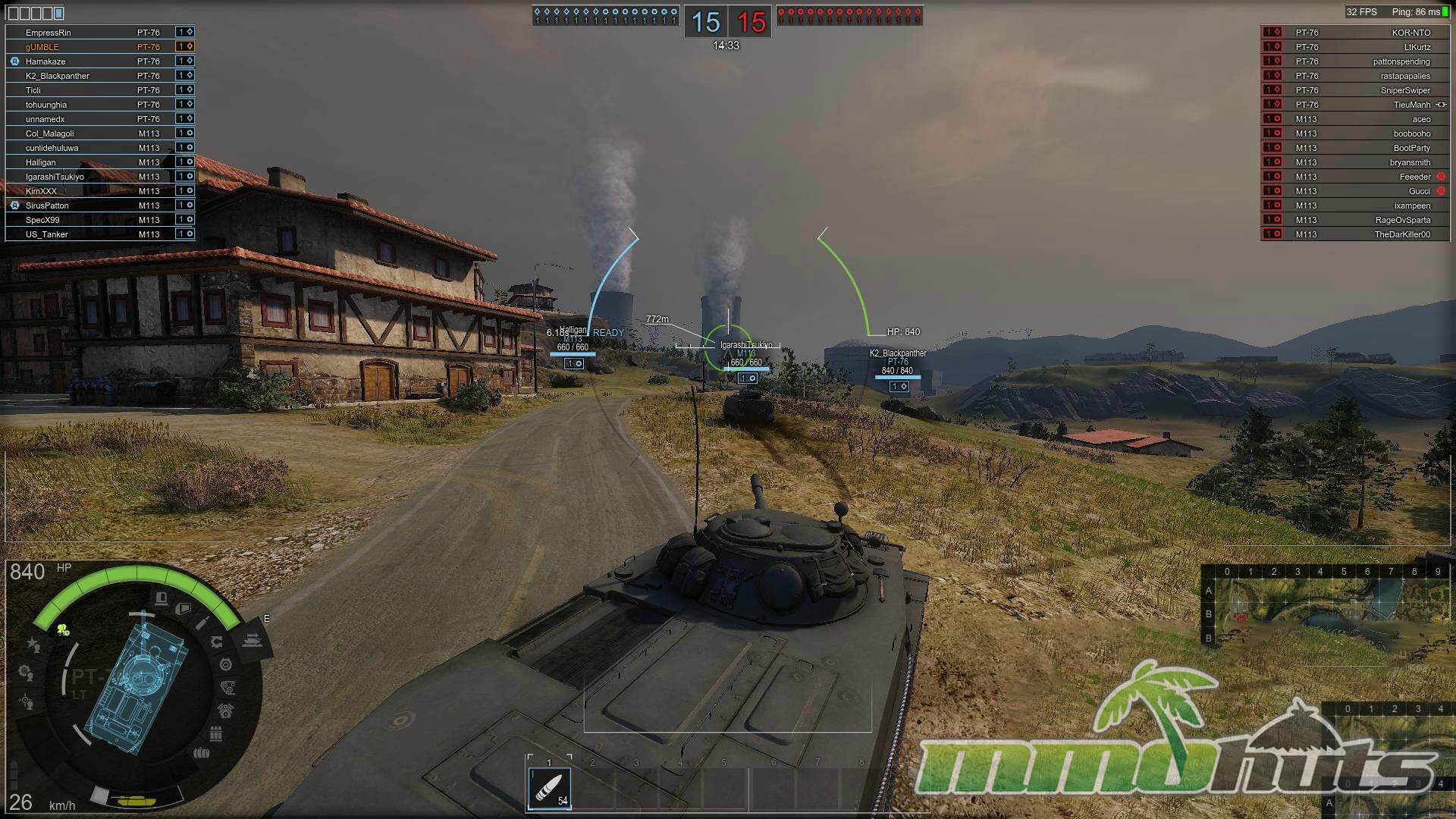

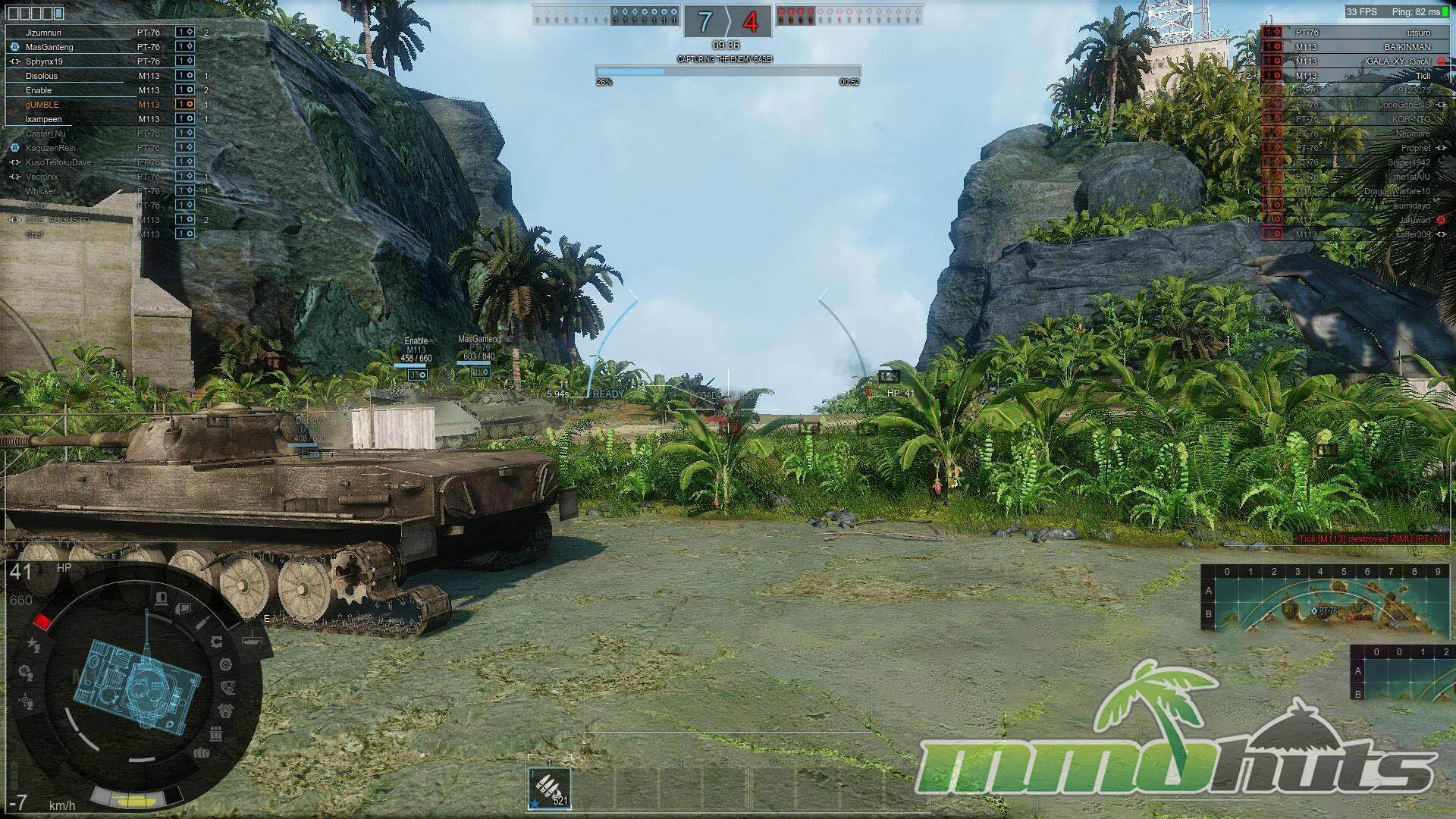

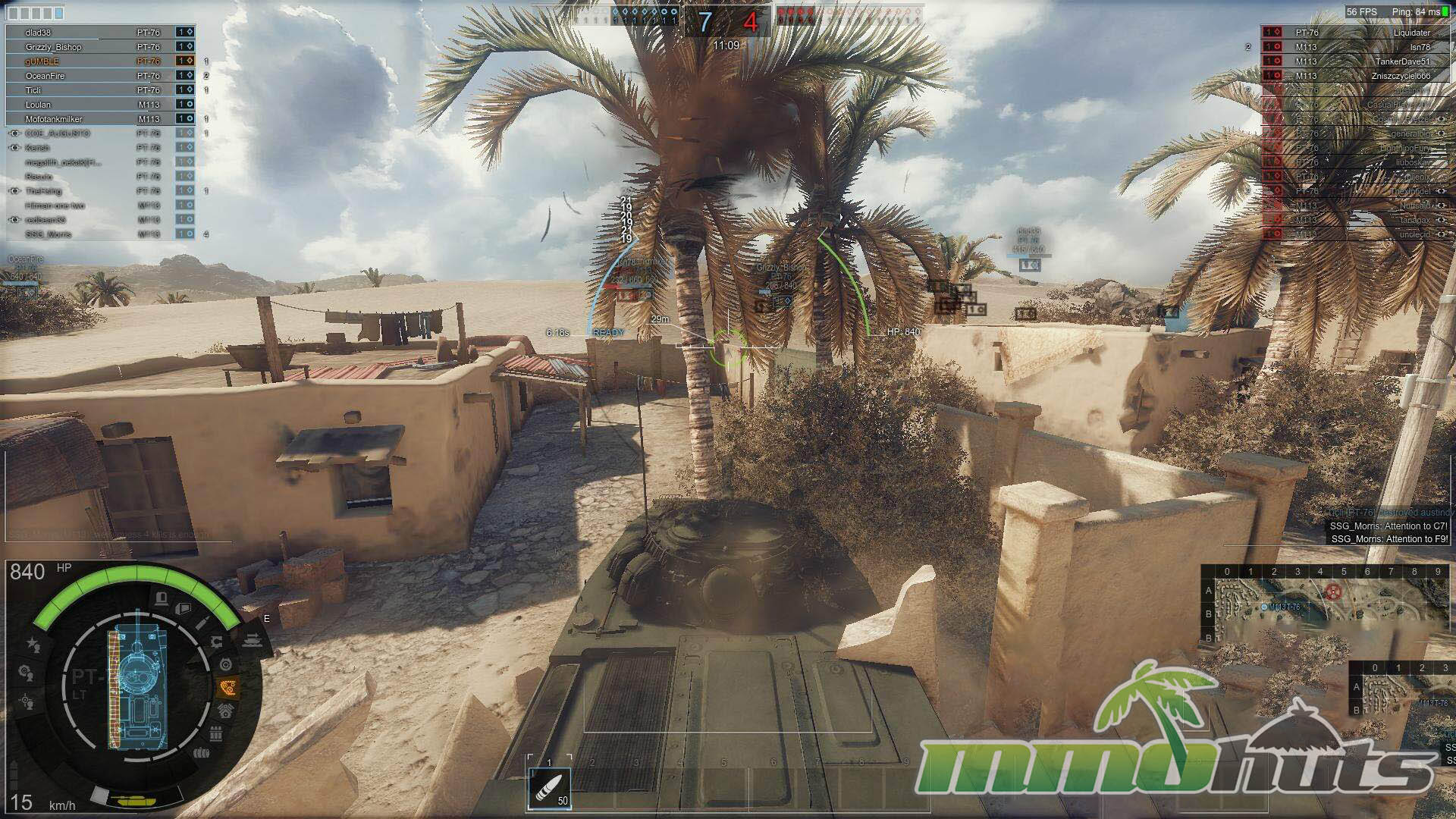
Armored Warfare Featured Video

Armored Warfare Review
Vehicle combat games have become their own niche, and tank shooters in particular tend to follow familiar patterns. Armored Warfare still uses many of those genre staples, but it distinguishes itself with a modern setting, CryEngine presentation, and a stronger emphasis on PvE content than most direct competitors. It can look like a close relative to other tank MMOs at a glance, yet the moment-to-moment flow has enough of its own identity to keep it from feeling like a pure imitation.
CryEngine Atmosphere on Display
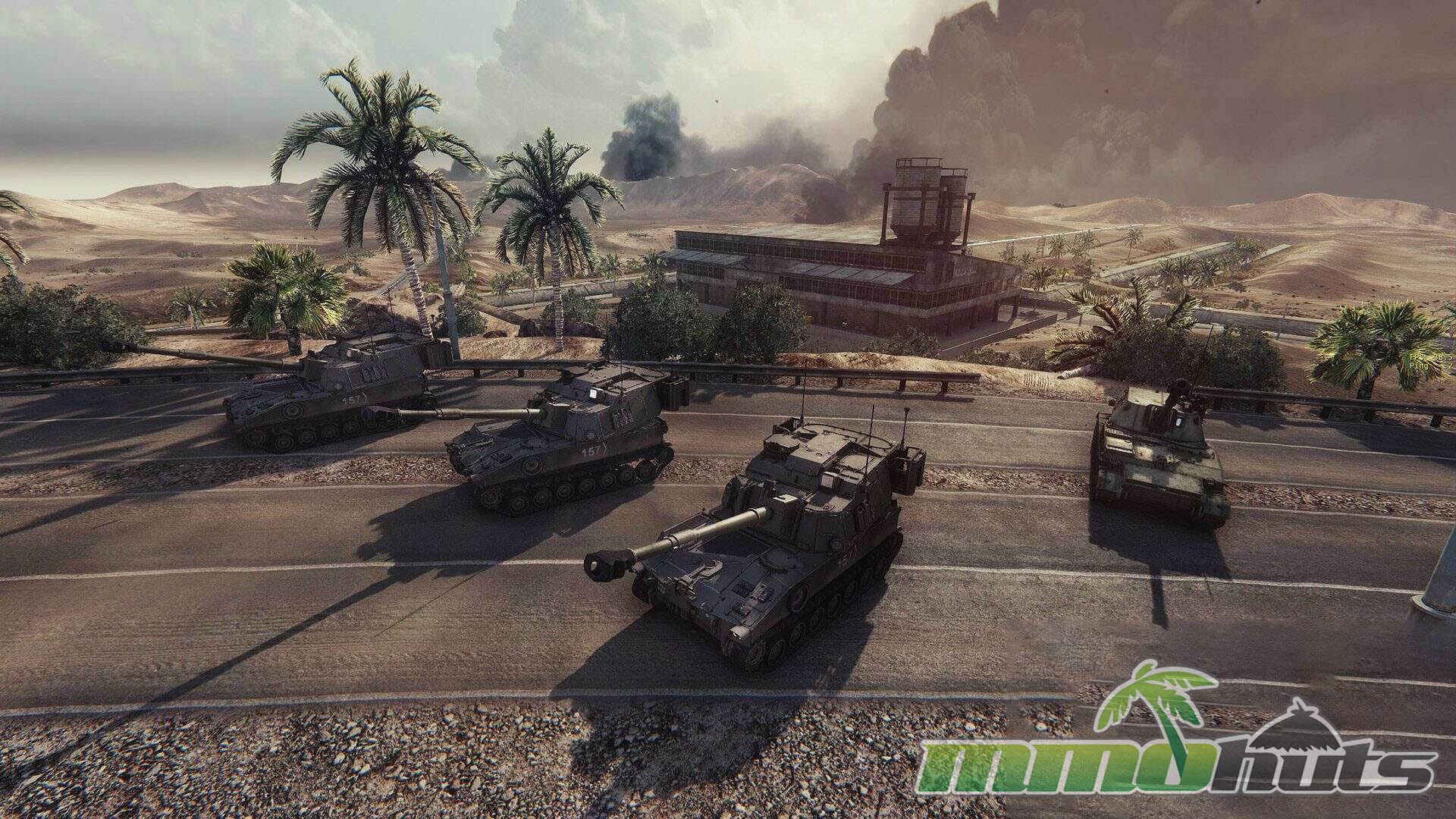
One of the first things you notice in a match is how active the battlefield feels. Even when you are waiting for the opening push, the sky and surrounding space often sell the idea of a larger conflict taking place around your squad. Lighting and foliage do a lot of work here, and the game frequently looks better in motion than in stills, especially during late-day scenes where the color grading and shadows come together. It is not the newest showpiece for CryEngine, but it remains a strong fit for armored combat.
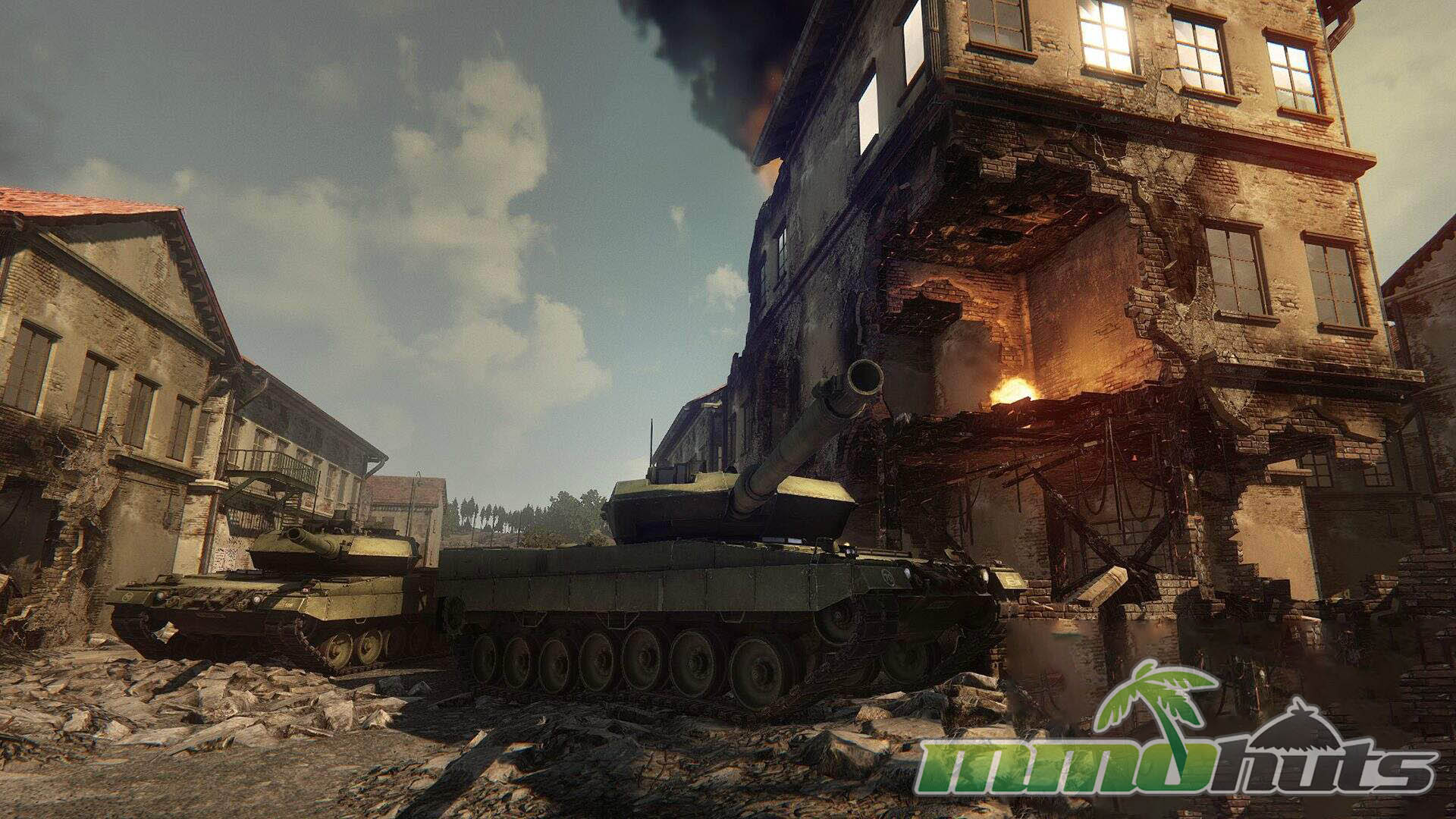
Destruction is another clear pillar. Rolling through trees, fences, and small structures reinforces the fantasy of driving a heavy vehicle, and it creates readable sightlines as cover disappears. That said, the physicality is not always consistent. Some objects collapse before your hull seems to touch them, and occasional collision oddities can make the destruction feel a bit “gamey” rather than convincingly simulated. Most players will shrug it off, but anyone sensitive to animation and hitbox quirks will notice.
Heavy Machines, Deliberate Movement
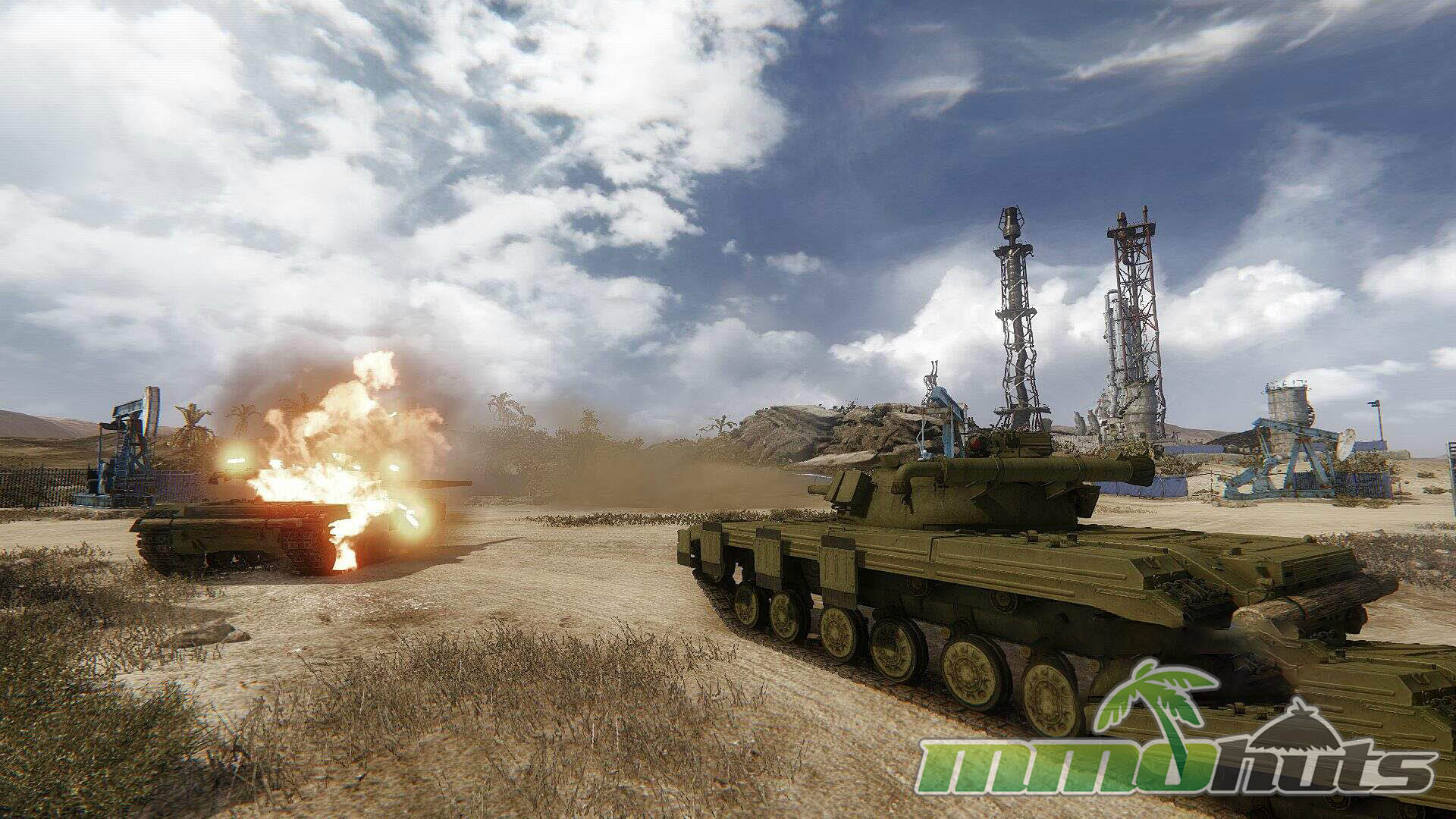
Armored Warfare’s tanks handle with a satisfying sense of weight. Turns are not snappy, stopping distance matters, and reversing out of trouble can feel tense because your vehicle does not instantly obey. This slower handling encourages smarter approaches to engagement, because committing to a lane without support is a quick way to get focused down. The pacing rewards players who plan their angles in advance, rather than those who rely on reflex movement.
How PvP Matches Typically Unfold
In PvP, matches often develop like controlled chaos. Teams spawn on opposite sides, then spread along the map’s natural routes until the first trades start. Even when the win condition involves capturing a base or completing an objective, the practical path to victory usually comes down to winning fights, maintaining vision, and rotating to punish isolated enemies.
Combat itself is straightforward to read, but it is not mindless. Once an enemy is visible, aiming is largely point-and-click, with the important caveat that your gun depression and terrain positioning can prevent shots you would otherwise take. Fire rates and reload windows define your rhythm, and different vehicles push distinct behaviors. Some tanks want to peek, fire, and retreat while reloading, while others are better at scouting and feeding information to the team. It is a role-driven ecosystem, and it works best when players lean into those roles instead of stacking into a single blob.
Spotting is an area where the game can feel overly generous at first. When one player identifies an enemy, allies receive a clear indicator, which can make flanking seem less effective than expected. The catch is that Armored Warfare relies on mechanics the game does not explain especially well early on, and without that context the visibility rules can feel unfair.
The key is understanding camouflage. Each vehicle has camouflage values that change depending on behavior, such as moving, firing, or sitting in cover. The Environmental Camouflage Indicator (ETI) in the lower-left helps you judge how well the nearby terrain is concealing your hull within a 30 meter radius. Segments illuminate based on what is obscuring you, and brighter coverage generally means better concealment. Once you start using foliage, ridgelines, and structures with ETI in mind, ambushes and surprise angles become much more reliable, and the “everyone sees everything” feeling fades.
PvE is the Stronger Hook
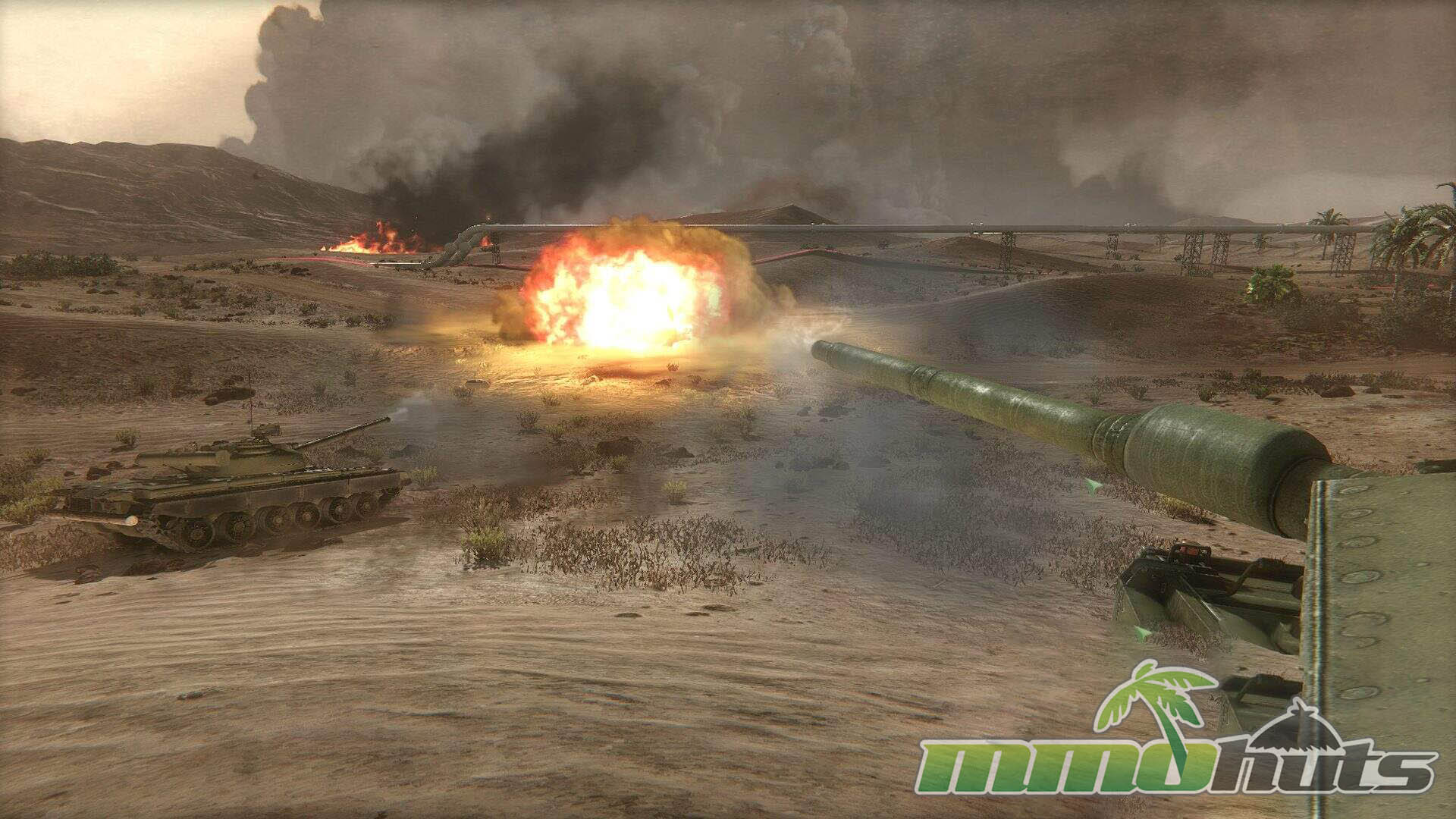
The most consistently enjoyable mode is the cooperative PvE. Teaming up with four other players to complete objectives against NPC armor offers a different kind of tension, and it is a welcome alternative in a genre that often focuses almost entirely on PvP. The missions include basic narrative framing and voice work, but the real appeal is how cleanly PvE supports learning maps, practicing positioning, and experimenting with vehicles without the same pressure as competitive matches.
PvE can still get repetitive over time, particularly when mission selection repeats. Even so, it remains a practical way to earn money and experience, build up Proven status, and prepare a tank with upgrades before returning to PvP. As a progression tool and as a casual mode, it does a lot of heavy lifting.
Progression That Feels Familiar
Advancement follows the blueprint tank MMO players will recognize. You earn Proven points from battles, then spend them on upgrades for a vehicle across multiple categories: Armor, Firepower, Mobility, Technology, and Proven. After unlocking an upgrade, you still need to pay in-game currency to actually buy and equip it, which keeps the economy relevant even when you are making steady XP progress.
Unlocking new vehicles is similarly conventional. Once a tank reaches Proven status, it opens the path to subsequent options in the line, and those vehicles must then be purchased. The five vehicle classes cover the standard roles (frontline brawlers, scouts, long-range damage, support fire), and while the structure is effective, it does not feel particularly novel. If you have spent time in War Thunder or World of Warships, the overall loop will feel immediately recognizable.
Where Armored Warfare adds some welcome texture is in its management layers. Crew progression gives you small but meaningful choices through talents that can support different playstyles, such as improving aim handling. Base-building adds another long-term track: you receive 100 Raw materials daily and can invest them into structures that provide stat bonuses. The academy, for instance, increases commander XP earned by 2%, while the Command Center increases Free XP earned. These systems do not radically change gameplay, but they add a sense of ownership and help break up the “match, upgrade, repeat” cadence.
In the early hours, the game avoids feeling like a grind. Frequent unlocks, varied maps, and the ability to bounce between PvP and PvE keep momentum up, and it is common to finish matches with enough currency to improve at least one module. Over time, however, the expected slowdown arrives. Higher progression tiers demand more matches, and players who lose patience with the longer climb may start looking for ways to accelerate it.
Monetization and Premium Options
Armored Warfare offers founder’s packs and a premium currency (gold). Gold can be converted into Global Reputation to unlock modules, used directly for Premium Vehicles (such as the T92 or LAV-150), or spent on premium time. Premium time increases earnings by 75% more gold and experience, which is a noticeable boost to efficiency.
Even with those advantages, the game does not immediately read as “pay to win” because matchmaking is tier-based. Paying players cannot simply bring high-tier vehicles into low-tier battles to farm newer tanks. Premium vehicles also tend to feel more like alternative options than outright superior picks, at least in terms of raw statistical dominance. The system still encourages spending for convenience, but it generally avoids the most frustrating forms of power imbalance.
Final Verdict – Good
Armored Warfare is a solid modern tank MMO that plays smoothly, looks strong for the genre, and offers a genuinely valuable PvE component alongside its PvP battles. Its camouflage tools and management systems provide depth that many players will appreciate, particularly those who enjoy optimizing crews and long-term progression. At the same time, its core structure and upgrade loop can feel like well-worn territory, and the game does not always do a great job teaching the mechanics that make combat feel fair. For dedicated tank shooter fans, it is an easy recommendation, for everyone else, it is good, but may not be distinct enough to become a long-term mainstay.
Armored Warfare Links
Armored Warfare Official Site
Armored Warfare Wikipedia Page
Armored Warfare Facebook Page
Armored Warfare Gamepedia (Database / Guides)
Armored Warfare System Requirements
Recommended Requirements:
Operating System: Windows Vista / 7 / 8 / 10 (64 Bit OS)
CPU: Core i5-4440 @ 3.1 GHz or better
Video Card: GeForce GTX 275 or better
RAM: 4 GB
Hard Disk Space: ~10 GB
Obsidian Entertainment only released recommended system requirements for Armored Warfare. Minimum system requirements will be added once available.
Armored Warfare Music & Soundtrack
Coming Soon!
Armored Warfare Additional Information
Developer: Obsidian Entertainment
Publisher: My.com
Game Engine: CryEngine
Beta Date: May 27, 2015 (Early Access Test)
Development History / Background:
Armored Warfare was created by Obsidian Entertainment, a studio based in Irvine, California, and it runs on CryEngine. Obsidian is best known for RPG work, including Neverwinter Nights 2, Fallout: New Vegas, Sungeon Siege 3, and more, which makes this project a notable shift in genre for the team. The game was first revealed on March 20, 2014, when Obsidian announced it was developing a modern, tank-focused military MMO. Armored Warfare also stands out as the first MMO produced by Obsidian Entertainment.