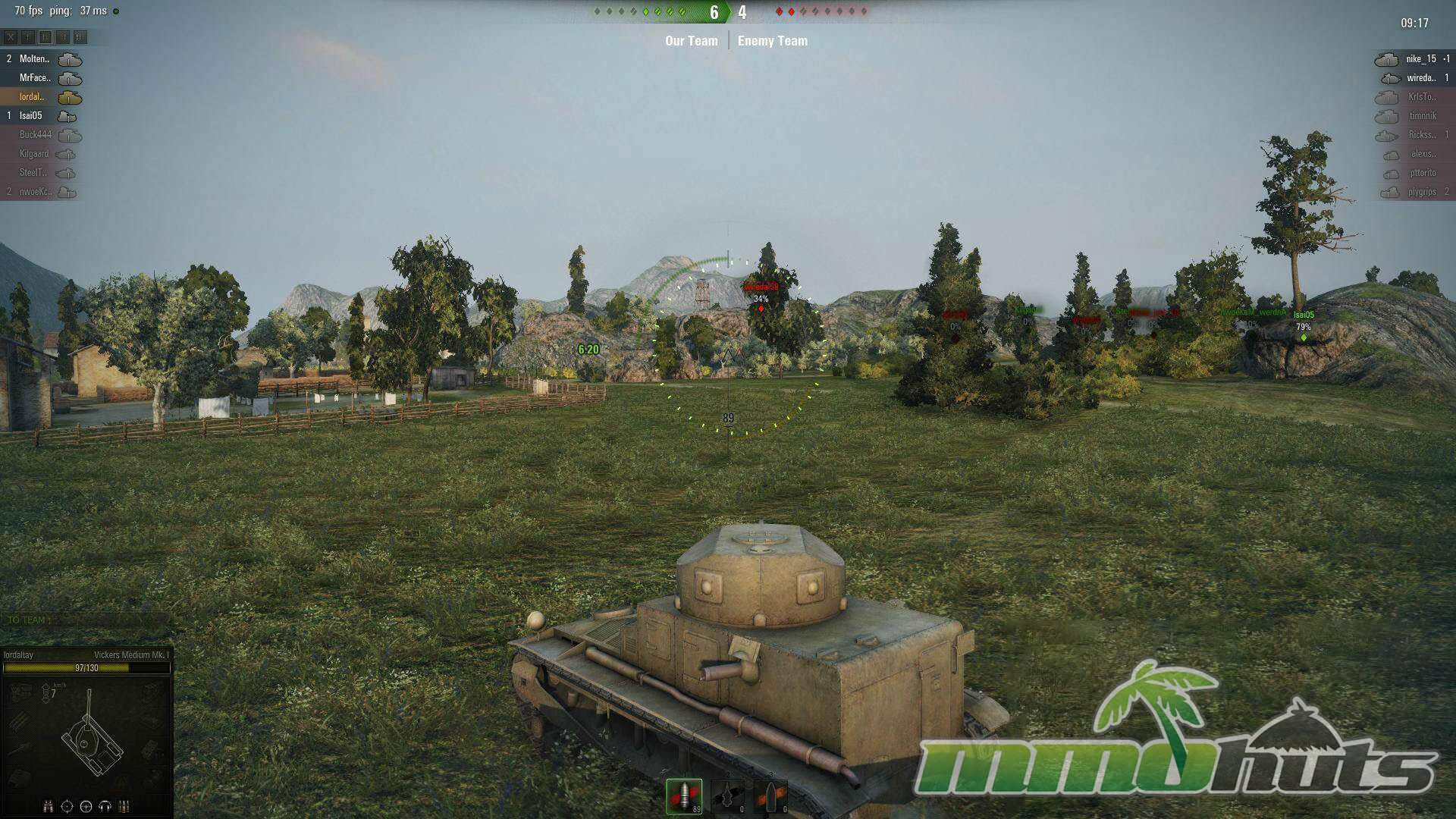
World of Tanks is a 3D World War II themed MMO shooter built around tactical, team-driven armored warfare. Matches pit two squads of tanks against one another in large-scale battles (up to 30 players), where positioning, vision control, and coordinated pushes matter as much as raw firepower.
 | Publisher: Wargaming Playerbase: High Type: Shooter PvP: Teams / Clan Wars Release Date: April 12, 2011 (NA/EU) Pros: +Massive vehicle roster with plenty to research and master. +Simple core controls with a high skill ceiling. +Strong competitive and clan-focused ecosystem. Cons: -Tough early learning period for new players. -Deliberate pacing can feel repetitive over long sessions. -Progression can demand significant grinding. |

World of Tanks Overview
World of Tanks is a PvP-focused, team shooter where armored vehicles clash across varied maps and objectives. Rather than treating WWII as a backdrop for arcade action, it leans into tank roles, map knowledge, and timing, offering a surprising amount of depth for a match-based game. Players work through national tech trees to unlock new vehicles and modules, gradually expanding their garage with tanks and artillery inspired by real designs.
A big part of the game’s staying power comes from ongoing updates that have expanded competitive options and strengthened the clan metagame, giving long-term players goals beyond the standard random queue.
Key Features
- Historically Accurate Tanks – grounded armored combat featuring vehicles from USSR, Germany, USA, France, China, UK, and Japan.
- Strategic Gameplay – no respawns, with distinct battlefield roles across Light, Medium, Heavy, Tank Destroyers, and SPGs.
- Competitive Scene – a lively competitive environment with organized tournament play.
- Varied Game Modes – multiple rule sets (Standard, Assault, Encounter Battles, etc.) built around 15v15 matches.
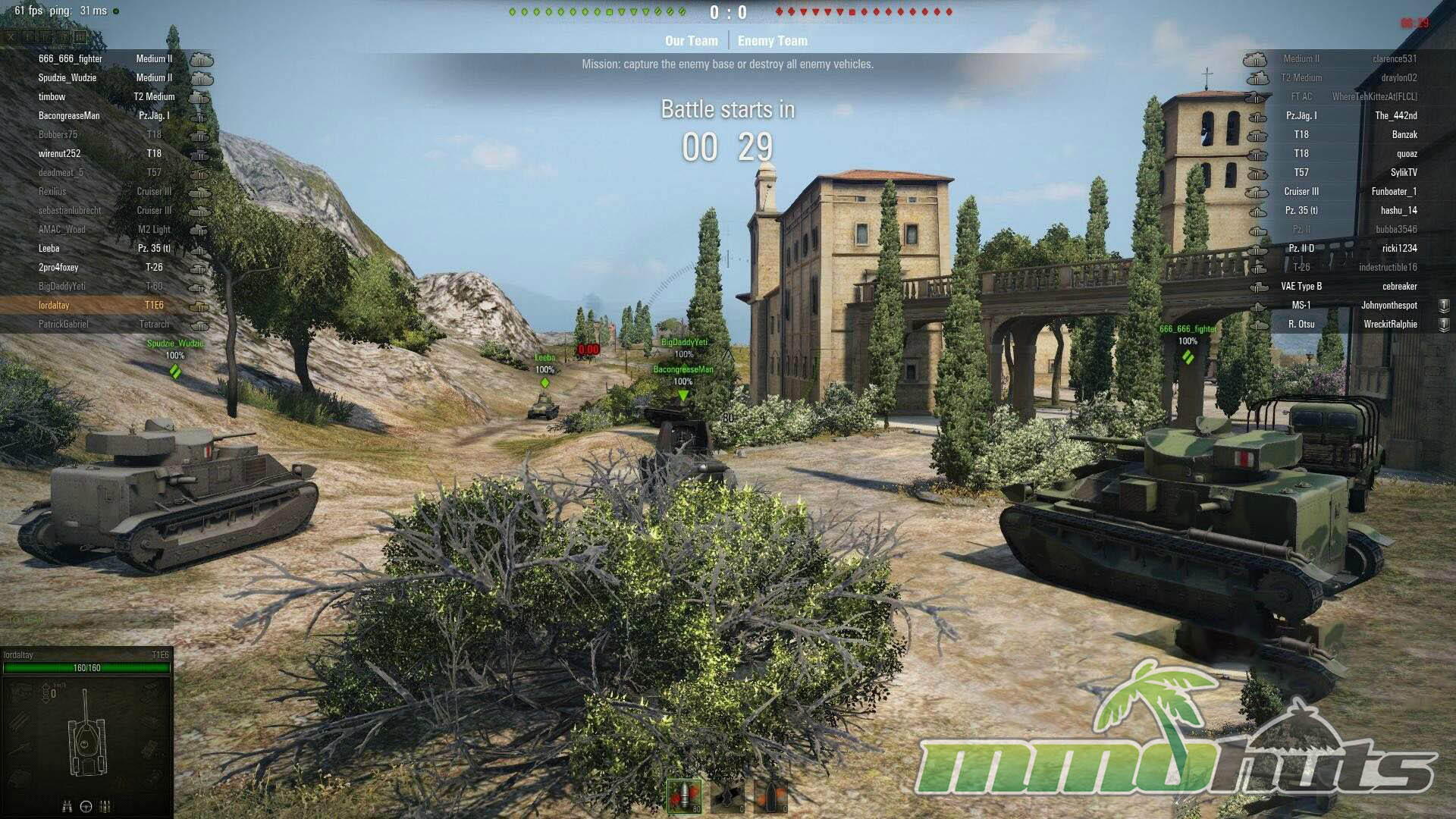
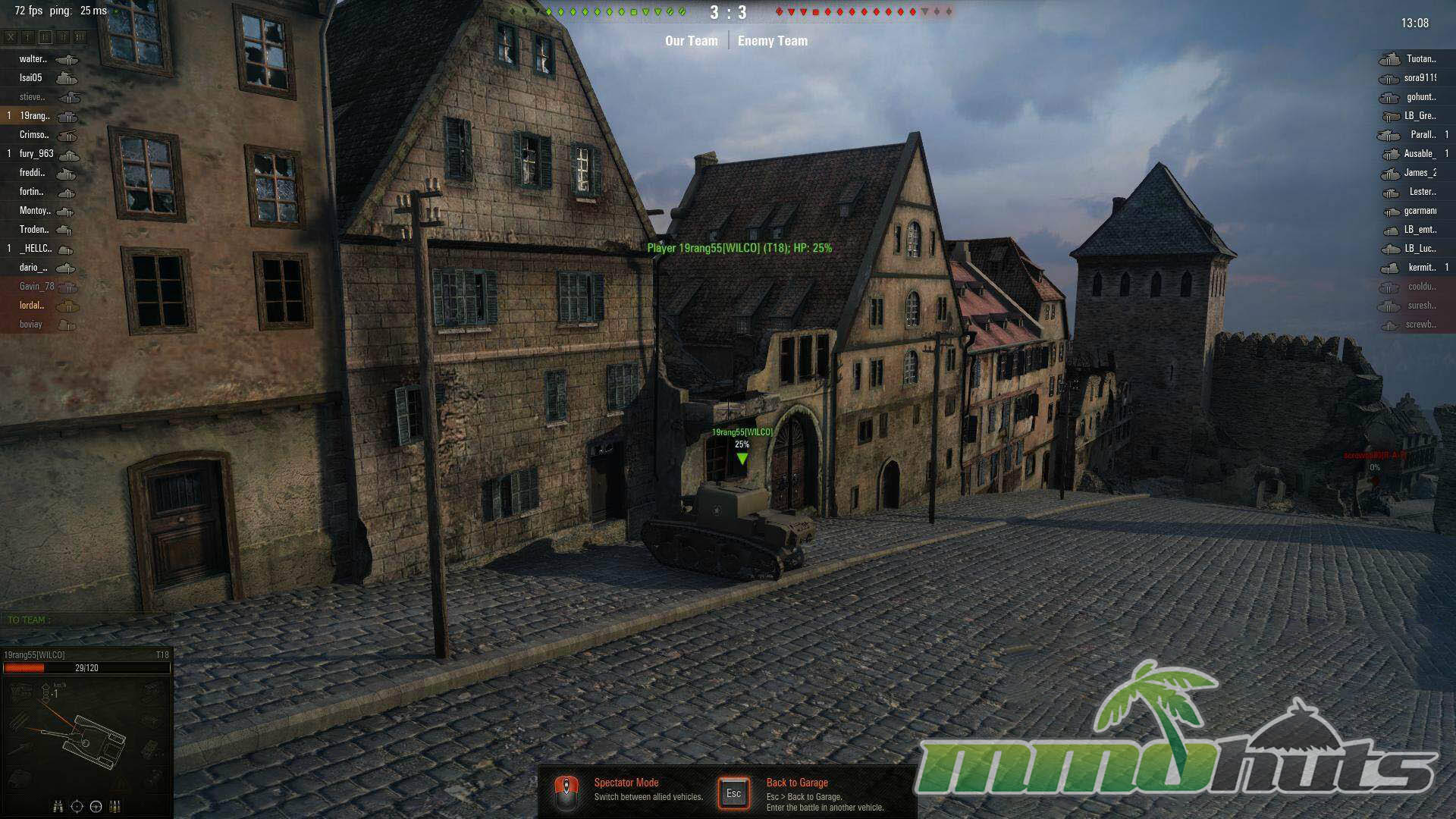
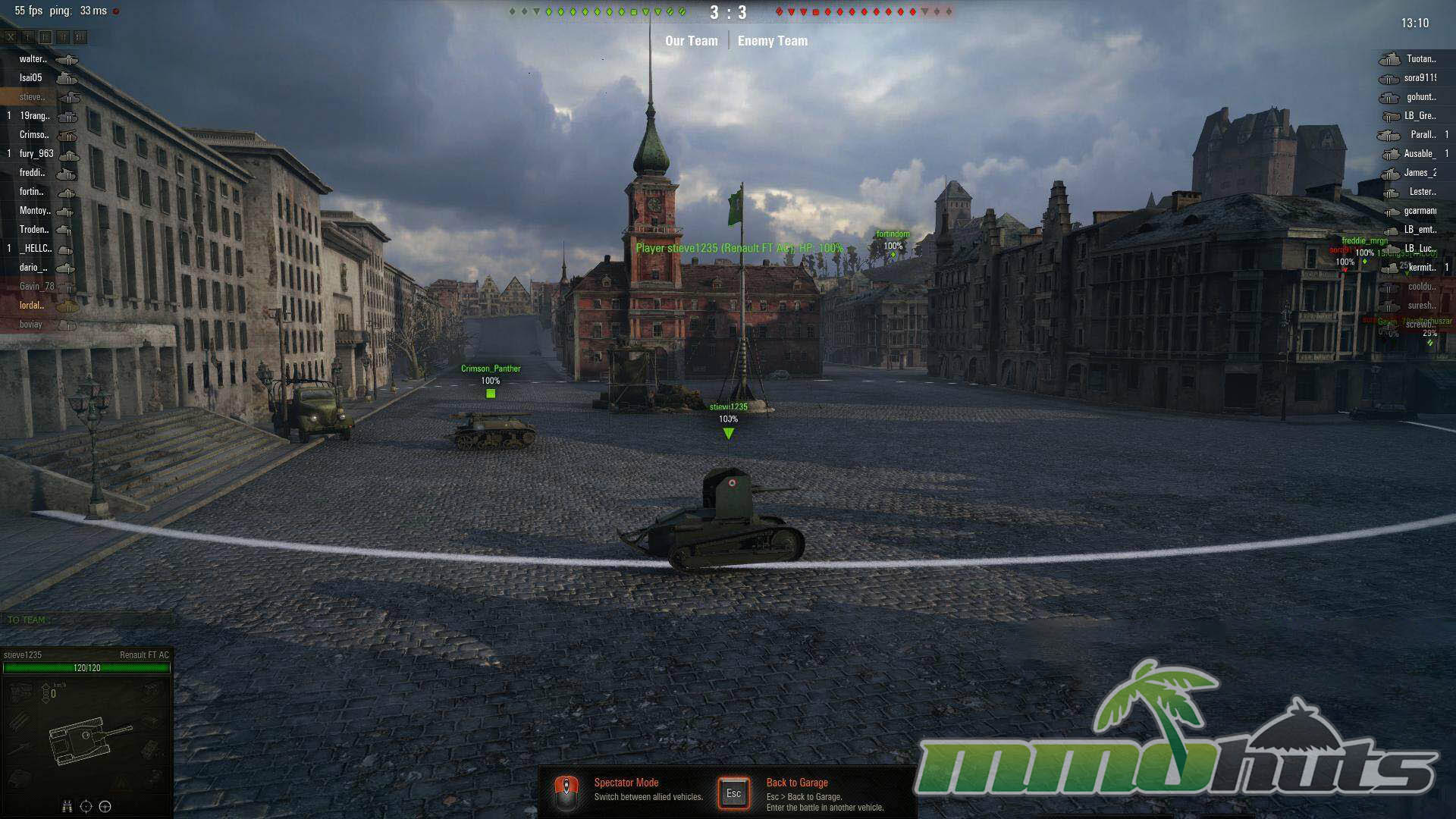
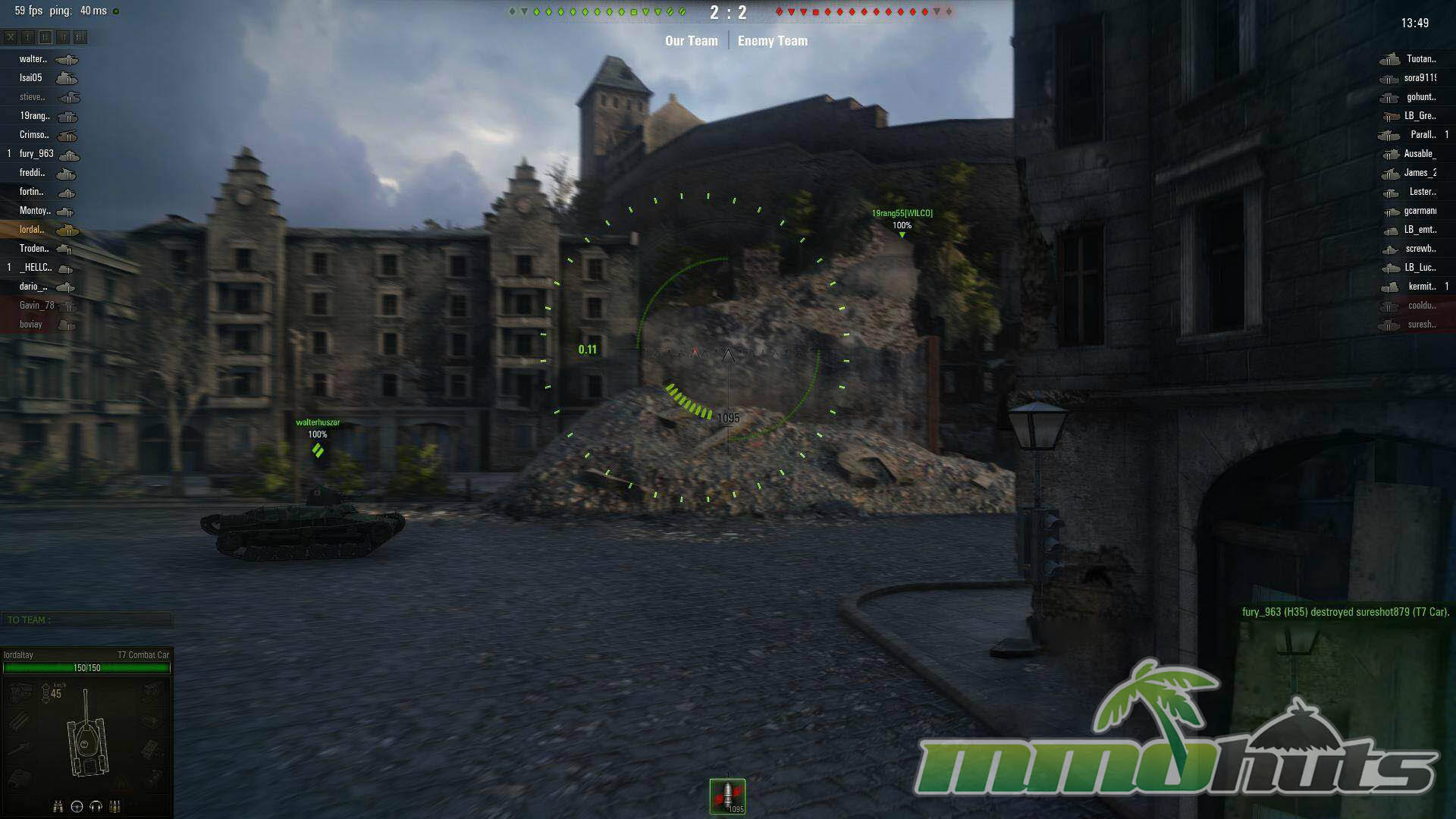
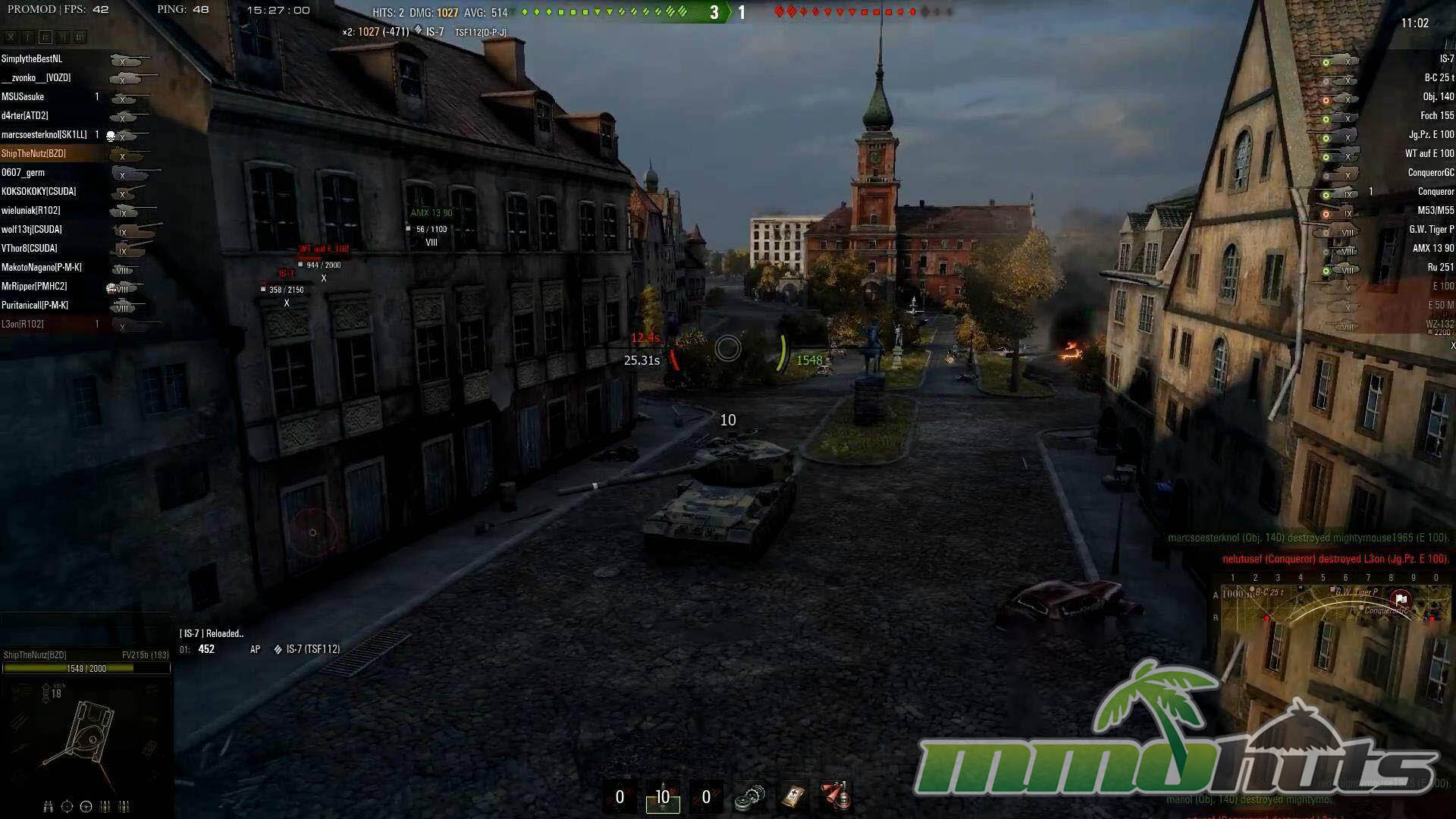
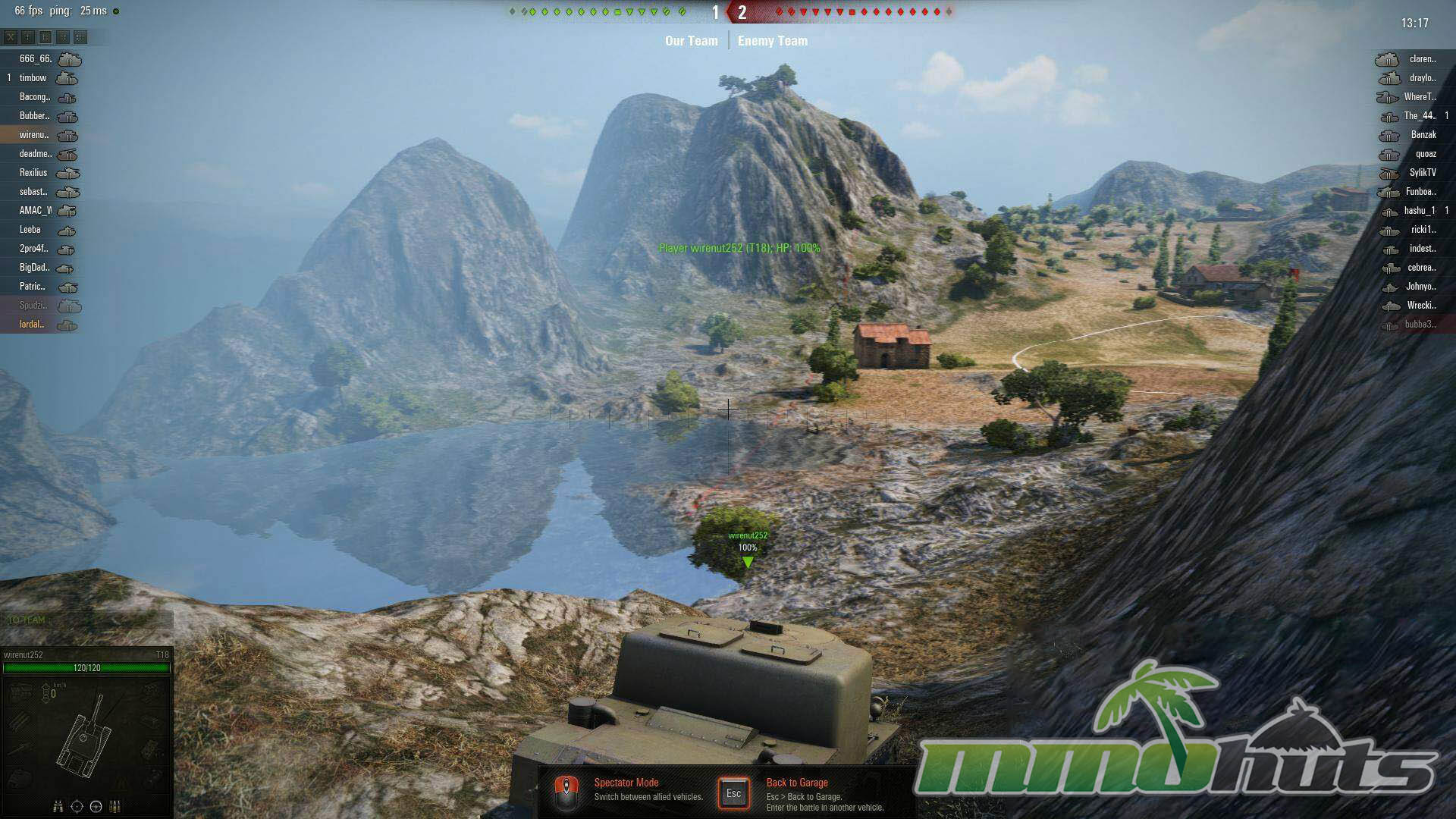
World of Tanks Screenshots
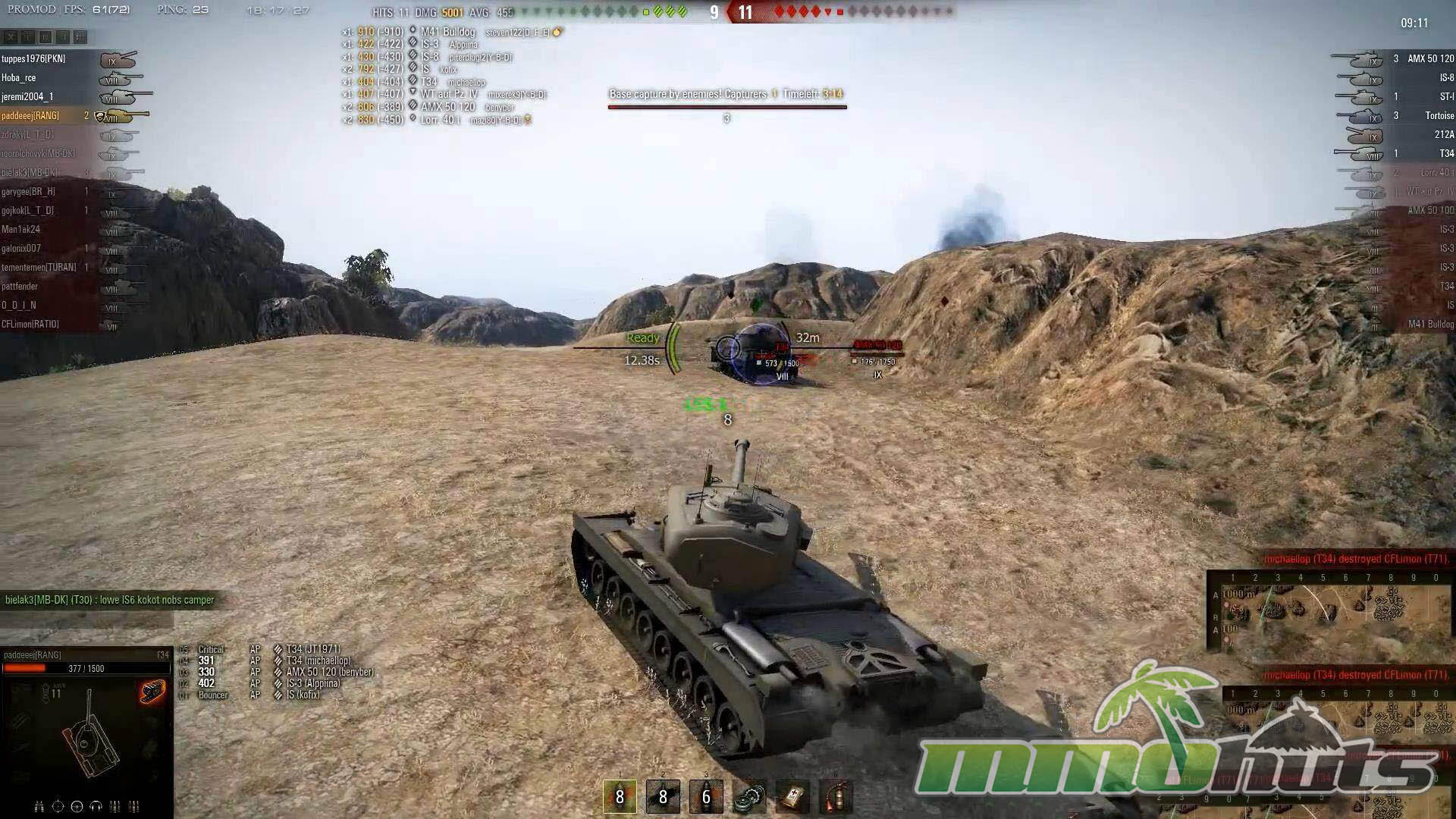
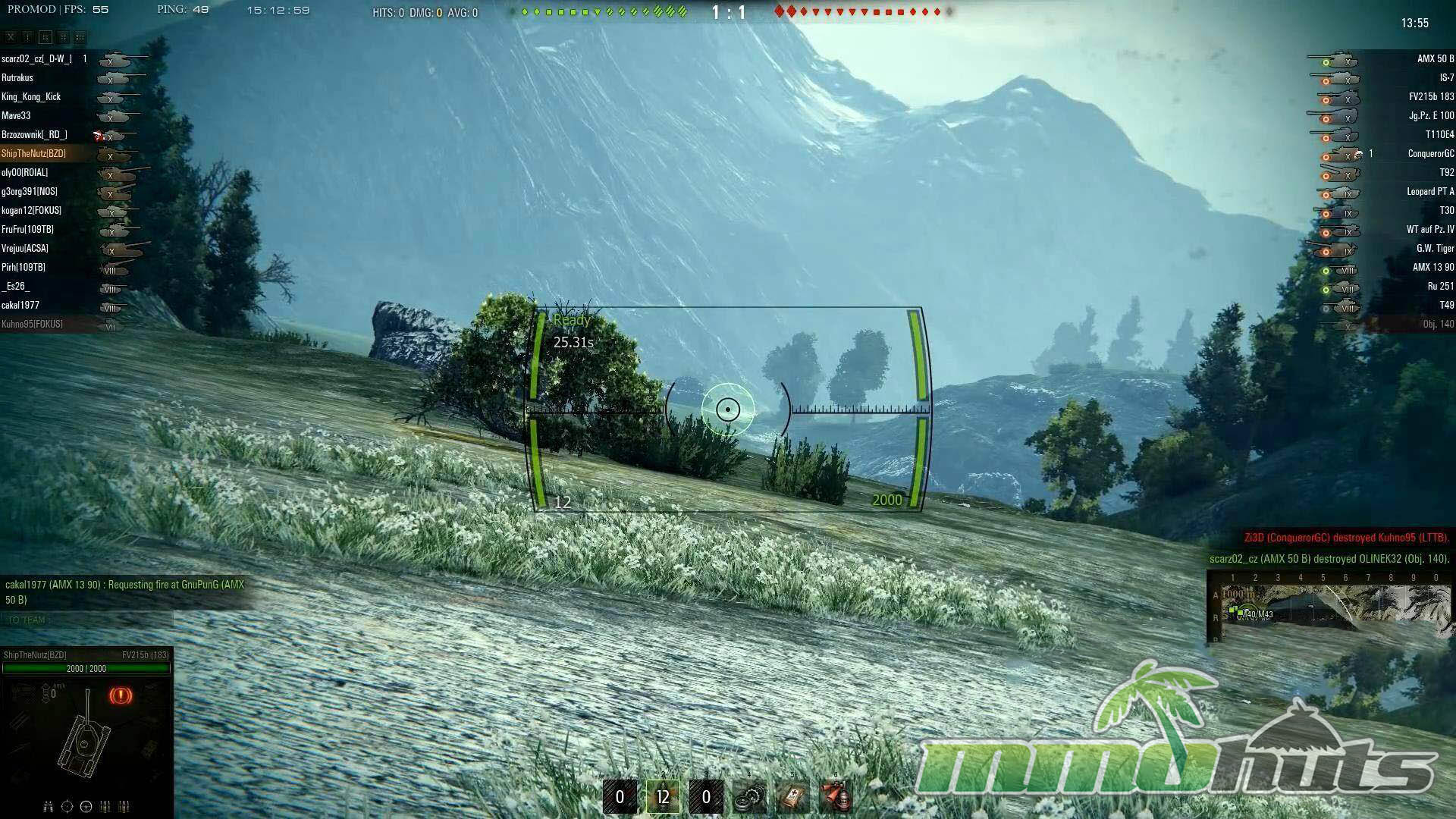
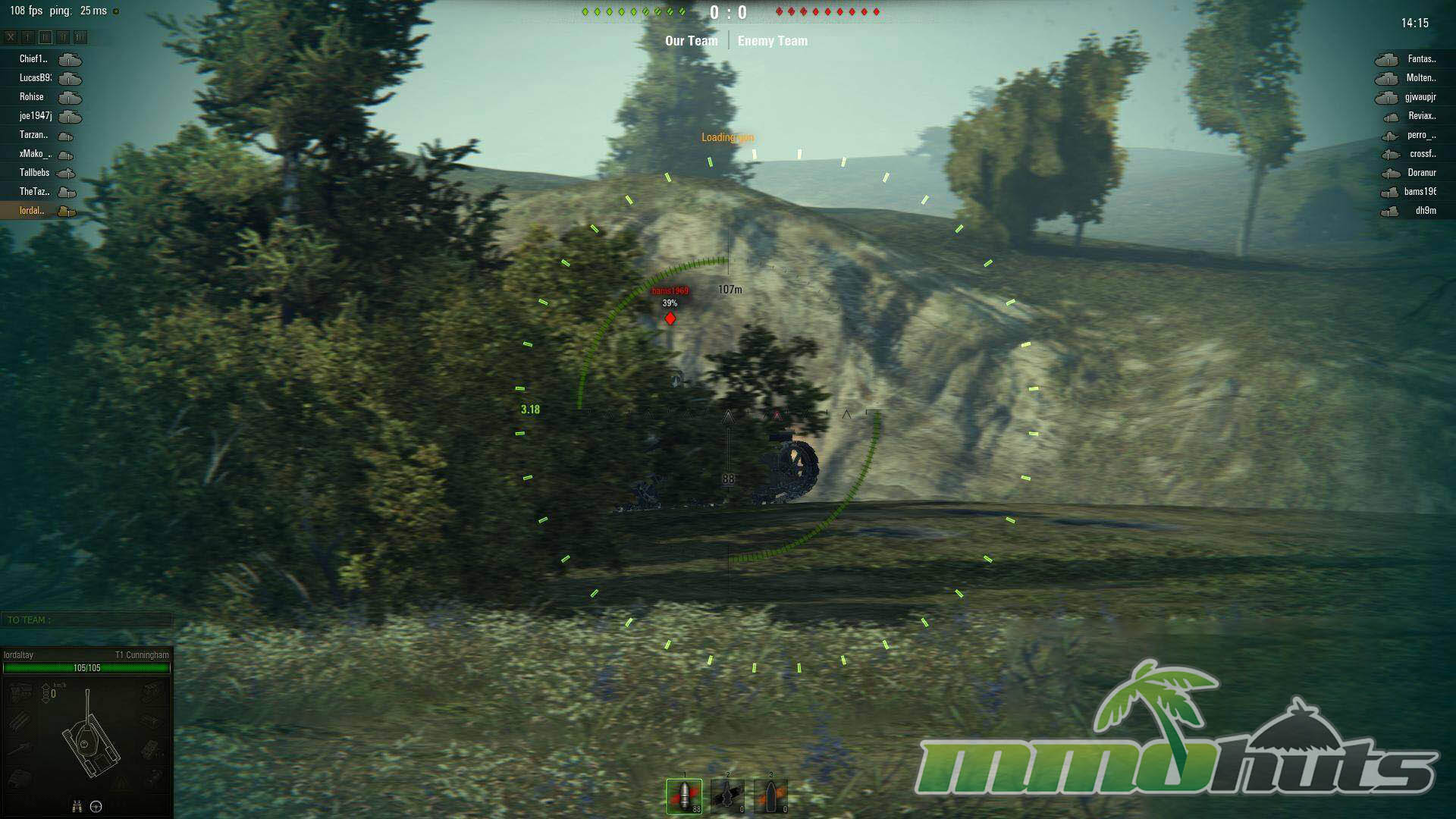
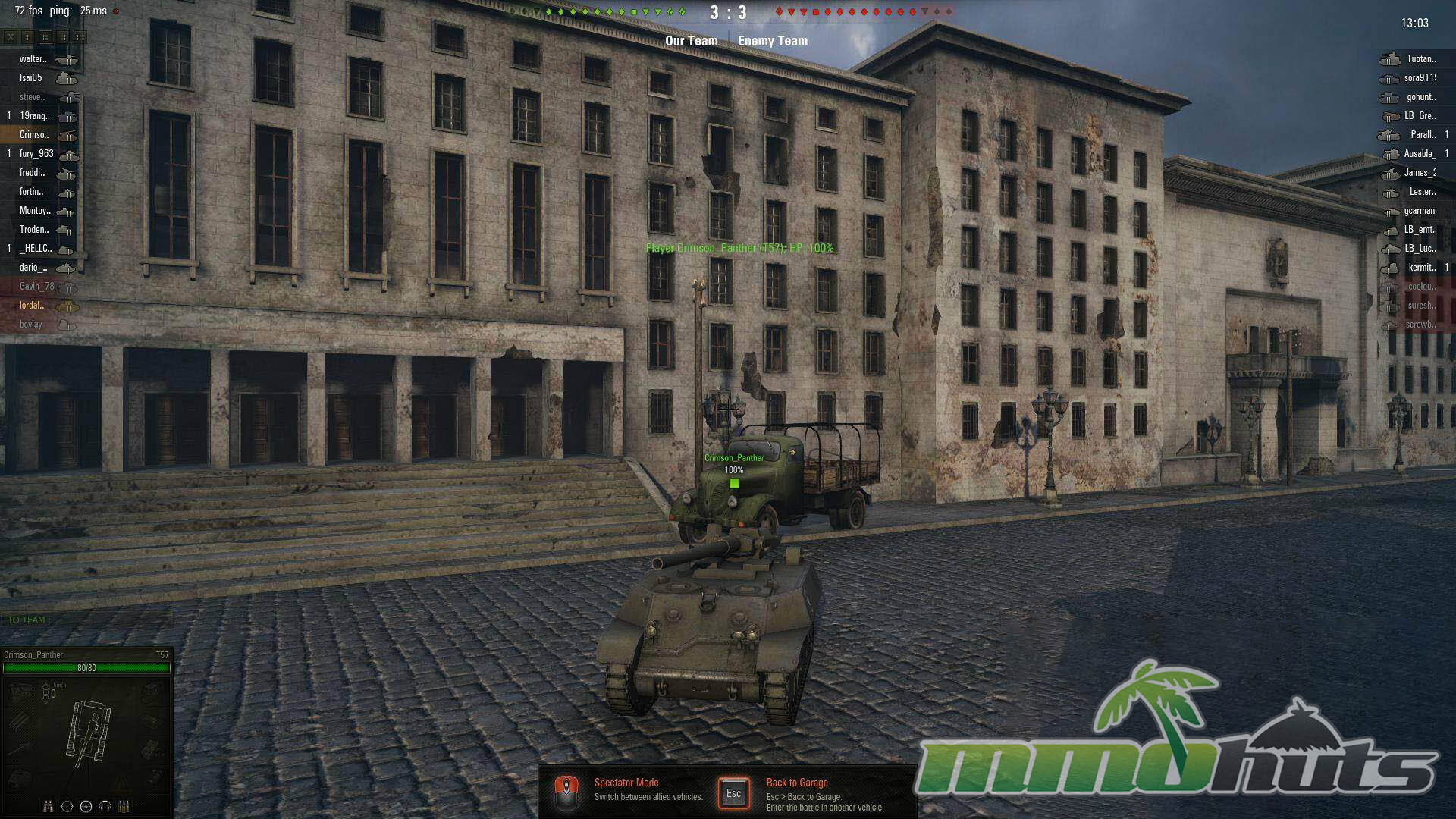

World of Tanks Featured Video

Nations – USSR, Germany, USA, France, China, United Kingdom, Japan
Tank Types:
- Light Tanks – fast spotters designed to scout lanes, reveal enemies, and punish isolated targets with flanks.
- Medium Tanks – flexible vehicles that can support pushes, relocate quickly, and take advantage of openings once the frontline shifts.
- Heavy Tanks – armored brawlers meant to anchor key positions, trade shots, and lead advances when the team commits.
- Tank Destroyers – high-damage specialists that often rely on positioning and firing angles, with turretless designs requiring careful hull movement to aim.
- SPGs – artillery units that provide long-range pressure and area denial, performing best when coordinated with scouts who keep targets lit.
Game Modes:
- Random Battle – the main matchmaking option, placing players into 15v15 fights on a random map. Random Battle includes:
- Standard Battle – both sides defend a base, victory comes from eliminating the enemy team or capturing their base within 15 minutes.
- Assault – attackers attempt to capture a single base while defenders hold them off, with a 10 minute timer.
- Encounter Battles – both teams race to control a neutral base while fighting for map control.
- Team Training – custom rooms for practice and testing, with no experience or credit rewards.
- Tank Company Battle – group-based matchmaking where teams build a lineup using a point budget.
- Clan Wars – a browser-driven strategic layer where clans fight for provinces across Europe, the Middle East, and North Africa.
- Strongholds – clan-oriented progression and battles, where skirmishes between detachments (7-15 players) generate Industrial Resources used to upgrade the clan base.
World of Tanks Review
World of Tanks is a realistic 3D tank MMO created and published by Wargaming. It launched first in Russia on August 12, 2010, then arrived in Europe and North America on April 12, 2011. At its heart it is World War II era PvP, built around large team battles and vehicle specialization. The game also has an Xbox 360 version, and it sits alongside Wargaming’s other combat titles like World of Warplanes and World of Warships. One of its defining traits is the attention paid to authentic silhouettes, map themes, and the general feel of armored warfare.
First Steps in the Garage
World of Tanks has a reputation for being popular, but it is not a game that hands out mastery quickly. The tutorial is useful for learning movement, aiming, and the basics of spotting, yet the real challenge starts once you enter live matches and discover how punishing positioning mistakes can be. Early on, new players often struggle with when to take a shot, when to stay hidden, and how quickly an exposed tank can be focused down.
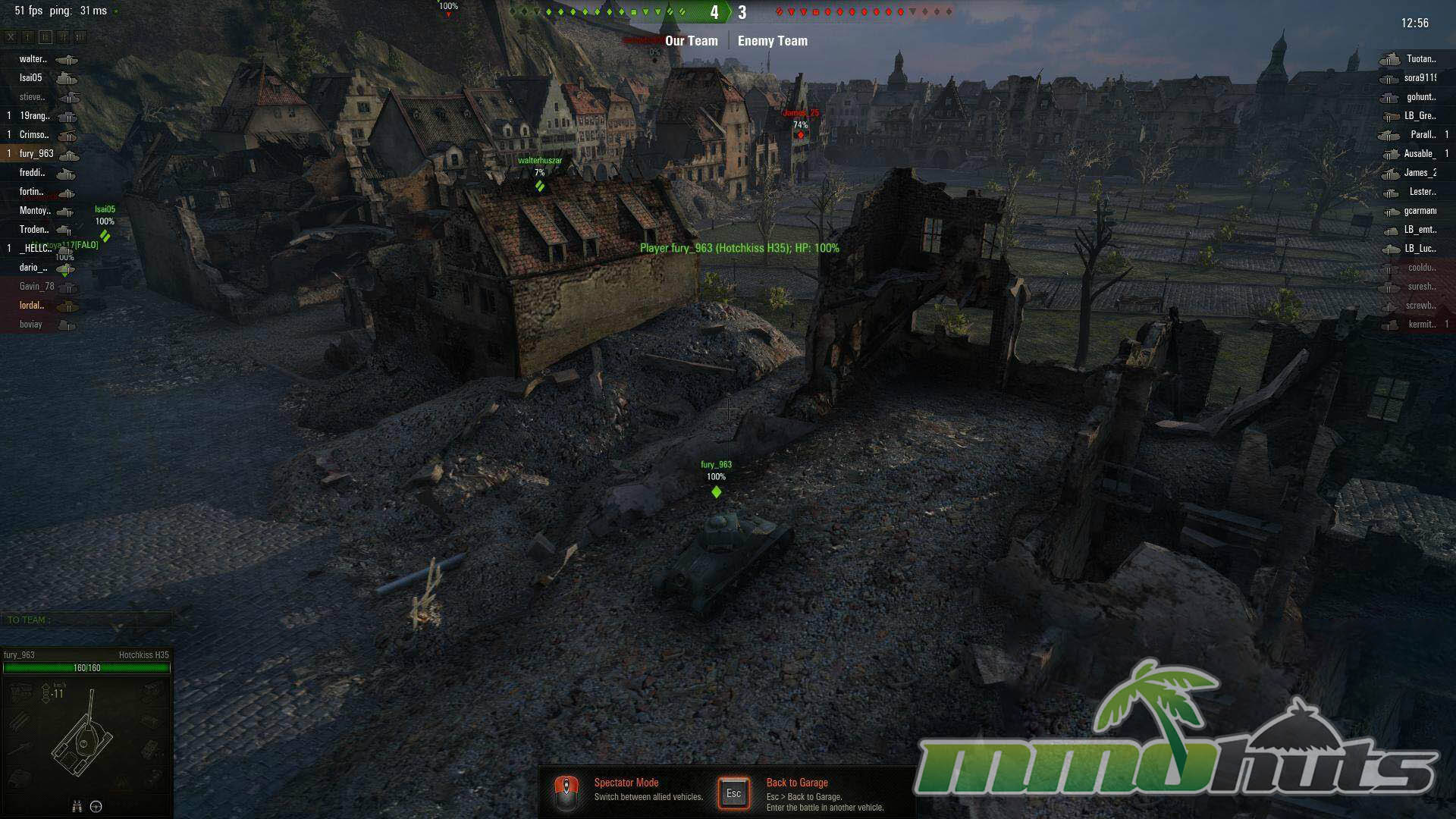
You begin with several starter vehicles, effectively giving you a foothold in each participating nation: USSR, Germany, USA, France, China, the UK, and Japan. From there you grow into different vehicle categories (Light, Medium, Heavy, Tank Destroyers, and SPGs). That variety is not just for collecting, it directly shapes how you contribute to a team. It also helps that destruction does not lock you into spectating for long, you can move on to another tank and keep playing while the match finishes.
Match Flow and Game Types
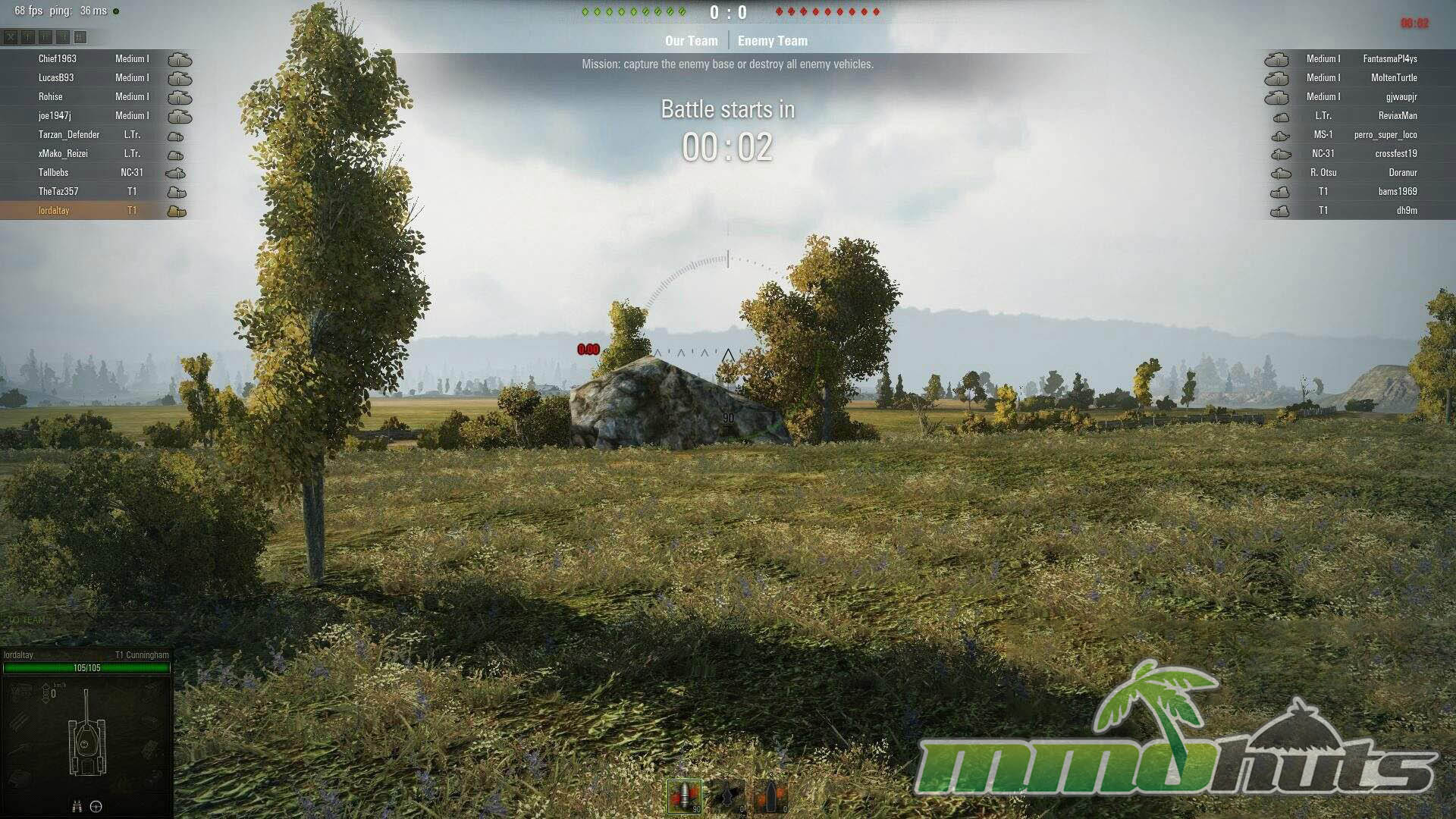
Queueing is straightforward, you hit the “Battle!” button and the system drops you into a 15v15 match. New players are typically funneled into Newcomer Battles with a limited map pool, but the rule set mirrors the standard format: win by base capture within the timer or by destroying the opposing team.
In regular rotation, Random Battles can become Standard, Assault, or Encounter. Standard uses two bases and rewards either a full wipe or a capture. Assault shifts the focus to a single base with clear attacking and defending roles and a shorter time limit. Encounter keeps one neutral base, forcing teams to balance fighting for terrain with the temptation to rush the objective.
Beyond Random Battles, the game offers several modes that cater to practice, organized play, and long-term clan goals. Team Battles are structured, smaller-scale fights (7v7) with strict roster limits measured in tier points and a maximum tier. That restriction creates a meta where composition and coordination matter as much as individual skill, which is why the mode became closely associated with competitive play. Team Training is the opposite, it is a sandbox lobby used for drilling tactics, learning maps, and testing vehicles without worrying about normal match rewards.
Tank Company Battles provide a party matchmaking option built around point budgets and divisions (junior, medium, champion, and absolute). For players who want a persistent group identity, Clan Wars and Strongholds become the real endgame. Clan Wars plays out on the Global Map, where clans fight over provinces across Europe, the Middle East, and parts of Africa. Strongholds focus on building up a clan base by earning Industrial Resources through skirmishes, which then unlock Reserves that boost experience and credit gains.
Battlefield Decision-Making
The strongest part of World of Tanks is how much it rewards thoughtful play. A reckless push across open ground usually ends quickly, but pure passivity is punished too, because it gives opponents map control and the freedom to set up crossfires. Winning teams tend to find a controlled tempo: gather information, trade intelligently, then collapse on a weakened flank with numbers.
Core fundamentals show up in nearly every match: using bushes and cover correctly, reading firing lanes, controlling ridgelines, and avoiding predictable routes. Armor use is also more nuanced than “bigger is better.” Front plates are typically the safest facing, weak points punish sloppy angling, and small adjustments in hull orientation can turn a penetration into a ricochet. Good players also learn when to use allies as moving cover and how to advance without exposing their sides.
Each class pushes you toward a different mindset. Light tanks live and die by information, spotting enemies without being spotted themselves and enabling artillery or long-range guns to work. Mediums thrive on mobility and timing, supporting heavies early and then shifting to flanks once the battlefield opens. Heavies are about holding key corridors and trading efficiently, acting as the front line when a team commits to a push.
Tank destroyers are the high-risk, high-reward damage dealers, often relying on positioning because many lack a turret and must rotate the hull to aim. SPGs operate as indirect fire support, applying pressure to entrenched positions and punishing tanks that stay in predictable cover, especially when scouts keep targets visible.
Progression, Economy, and the “Between Battles” Game
Outside of combat, there is a full layer of management that influences performance. Vehicles need repairs, ammunition restocks, and smart loadouts. Consumables like repair kits and fire extinguishers can swing engagements by keeping a tank mobile or preventing a burn from finishing you off. Equipment choices add another axis of customization, improving things like view range, camouflage, and repair speed, and those bonuses matter more as you face experienced opponents.
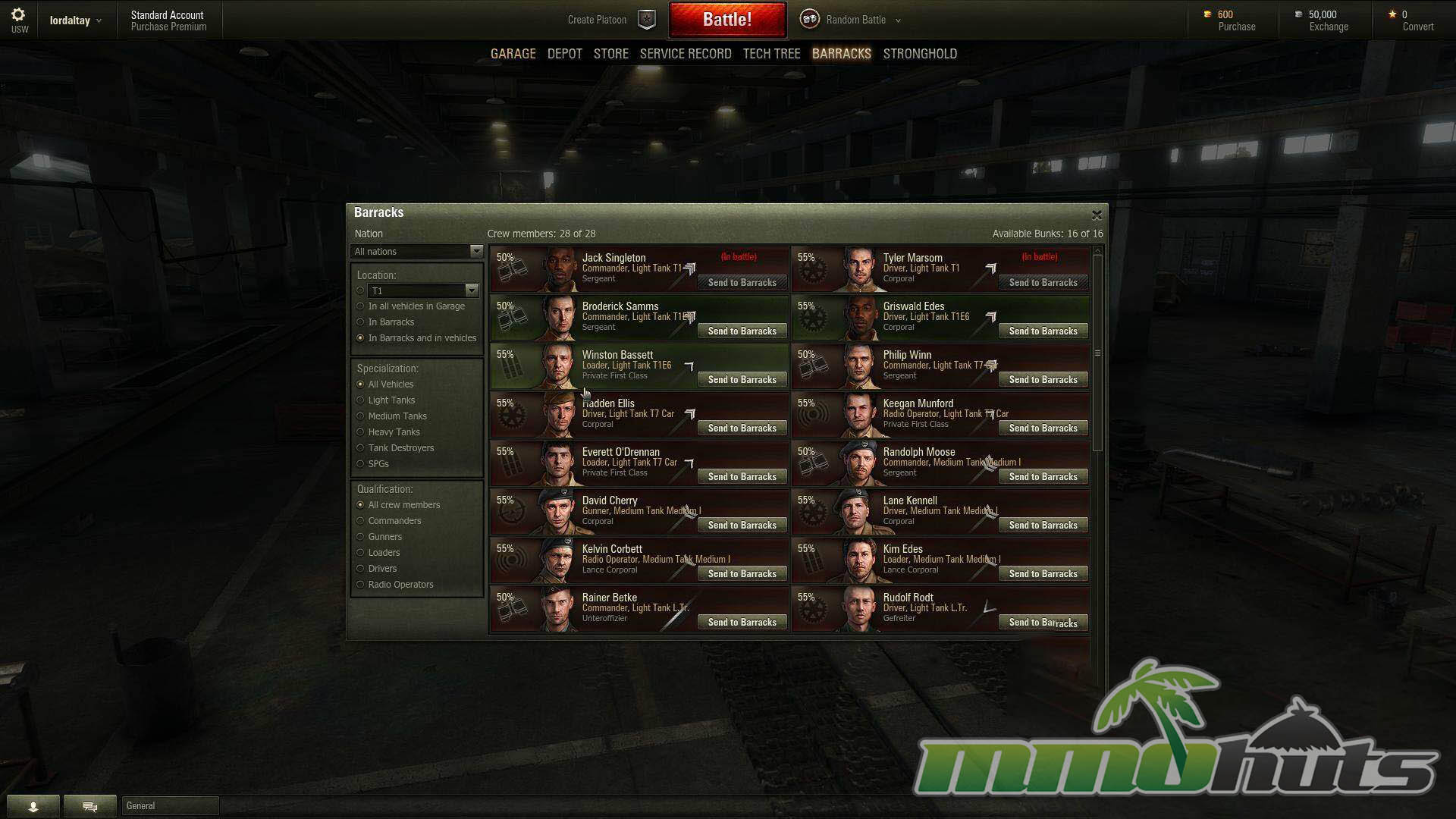
Crew progression is another long-term system. Crews gain experience through battles, and better-trained crews translate into smoother handling and stronger overall performance. Skills and perks add further specialization once a crew reaches maximum level.
The tech tree provides the primary sense of direction. You earn research points through matches, unlock modules and new tanks, and then purchase the researched vehicle to add it to your garage. Because each nation has its own lines and options, the game encourages experimenting rather than committing to a single vehicle forever.
The Competitive Scene
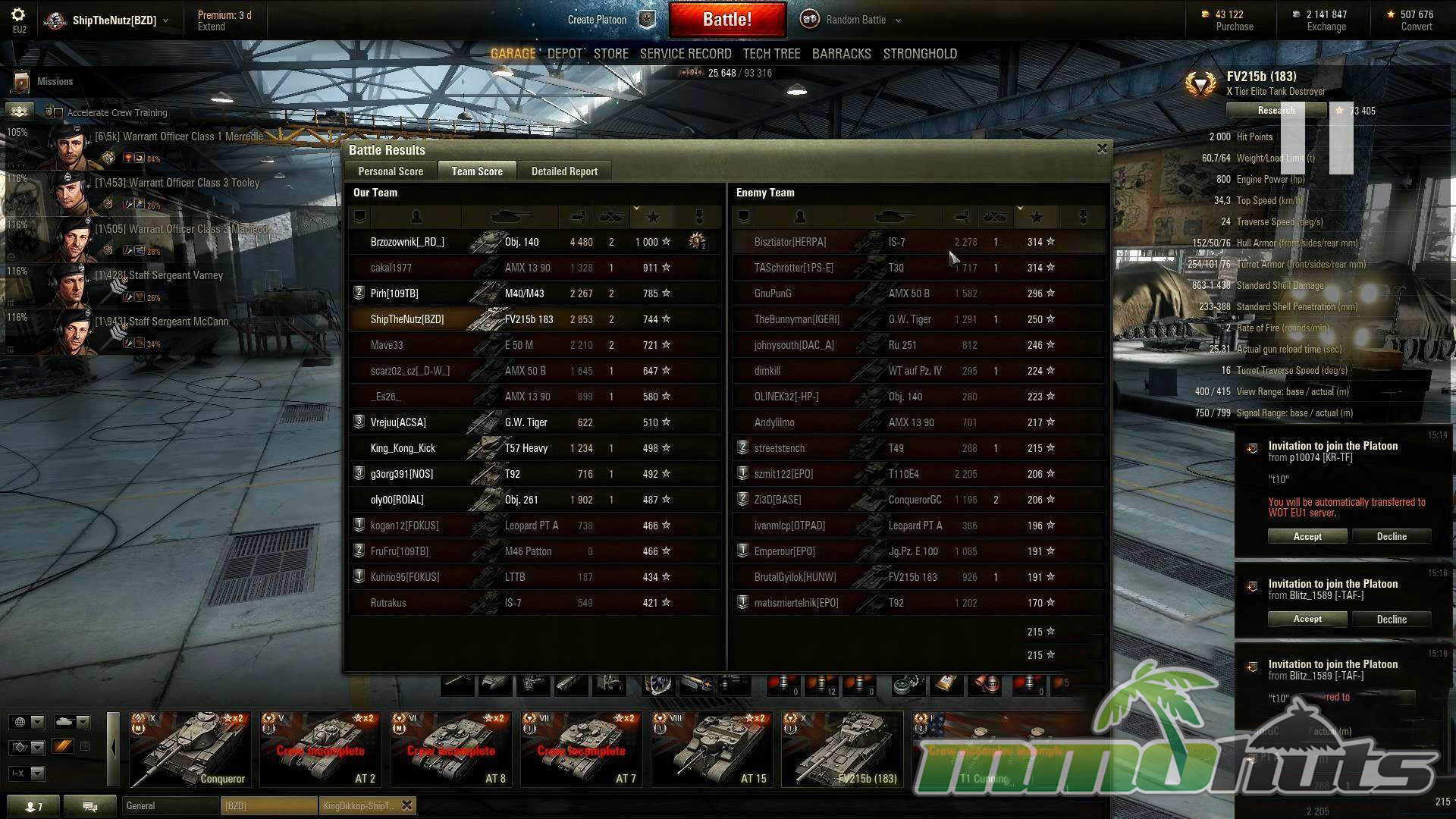
World of Tanks has had a notable presence in organized competition. In 2013, an official global tournament offered a 2.5 million dollar prize pool, and the game appeared as an eSport at the WCG 2012 Grand Finals in China. On top of marquee events, smaller tournaments have long offered rewards such as gold and occasional cash prize pools. The best-known circuits include the developer-backed WGL and third-party events hosted through ESL.
Cash Shop and Premium Accounts
The economy is split between credits (silver) earned through play and gold purchased with real money. Gold can also be obtained through tournaments, events, contests, and by clans participating in Clan Wars. It is primarily used for premium content such as premium vehicles, premium ammunition, and consumables, and it can also upgrade an account to premium status.
Premium accounts grant 50% more credits and experience per battle, which has a clear impact on progression speed. Gold also covers convenience and customization options like permanent camouflage patterns, equipment dismounts, crew training, extra garage slots, clan creation, and name changes. Paying players can gain practical advantages, but the game still allows free-to-play users to access the full matchmaking experience without hard locks.
Final Verdict – Excellent
World of Tanks remains an impressively layered PvP MMO, with meaningful choices in both moment-to-moment combat and long-term progression. It can be harsh on newcomers and the pace will not suit everyone, but players who enjoy tactical team play, vehicle mastery, and competitive systems will find a game with real longevity. For a free-to-play title with this much depth, it earns a strong recommendation.
World of Tanks Links
World of Tanks Official Site
World of Tanks Wiki [Database / Guides]
World of Tanks Subreddit
World of Tanks Wikipedia Entry
World of Tanks Metacritic Page
World of Tanks System Requirements
Minimum Requirements:
Operating System: Windows XP / Vista / 7 / 8
CPU: Intel Pentium 4 2.2 GHz
Video Card: Nvidia GeForce 6800 / ATI X1800 with 256 mb ram
RAM: 2 GB
Hard Disk Space: 16 GB
Recommended Requirements:
Operating System: Windows XP / Vista / 7 / 8
CPU: Intel Core i5-3330 or better
Video Card: Nvidia GeForce GTX660 / ATI Radeon HD 7850 or better
RAM: 4 GB or better
Hard Disk Space: 30 GB or more
World of Tanks Music & Soundtrack
World of Tanks Additional Information
Developer: Wargaming
Game Engine: Bigworld
Composer: Sergey Khmelevsky
Alpha Testing: September 2009 (Russia)
Closed Beta Testing: January 30, 2010 (Russia), July 8, 2010 (English)
Open Beta Testing: June 24, 2010 (Russia), January 27, 2011 (English)
Open Beta Date: August 21, 2008 – September 3, 2008 (North America)
Foreign Releases:
Russia: August 12, 2010
China: March, 15 2011
Europe: April 12, 2011
Singapore: March 8, 2012
Vietnam: March 16, 2012
Korea: December 27, 2012
Japan: September 5, 2013
Other Platforms:
Xbox 360: World of Tanks Xbox 360 Edition – released on February 12, 2014. Developed on a different engine (Despair), and requires seperate account to access. PC/Xbox players cannot play together.
Xbox One: 2015 release date announced.
Mobile: World of Tanks Blitz – released on February 24, 2015. Available on iTunes and Google Play store.
Development History / Background:
The initial idea for World of Tanks was outlined in December 2008 and the project was publicly announced on April 24, 2009. Wargaming is based in Cyprus, with Russian and Belorussian origins. Following the game’s early success, the studio expanded its reach with console support and later introduced a mobile version.
World of Tanks has proven to be enormously successful with over 75 million registered users and over 1.1 million peak concurrent players as of December 2013. World of Tanks earned $372 million in microtransaction revenue in 2013, making it the fourth highest grossing free-to-play title for the year.
Two companion games, titled World of Warplanes and World of Warships, allow players to use their same account to battle in the air or at sea.