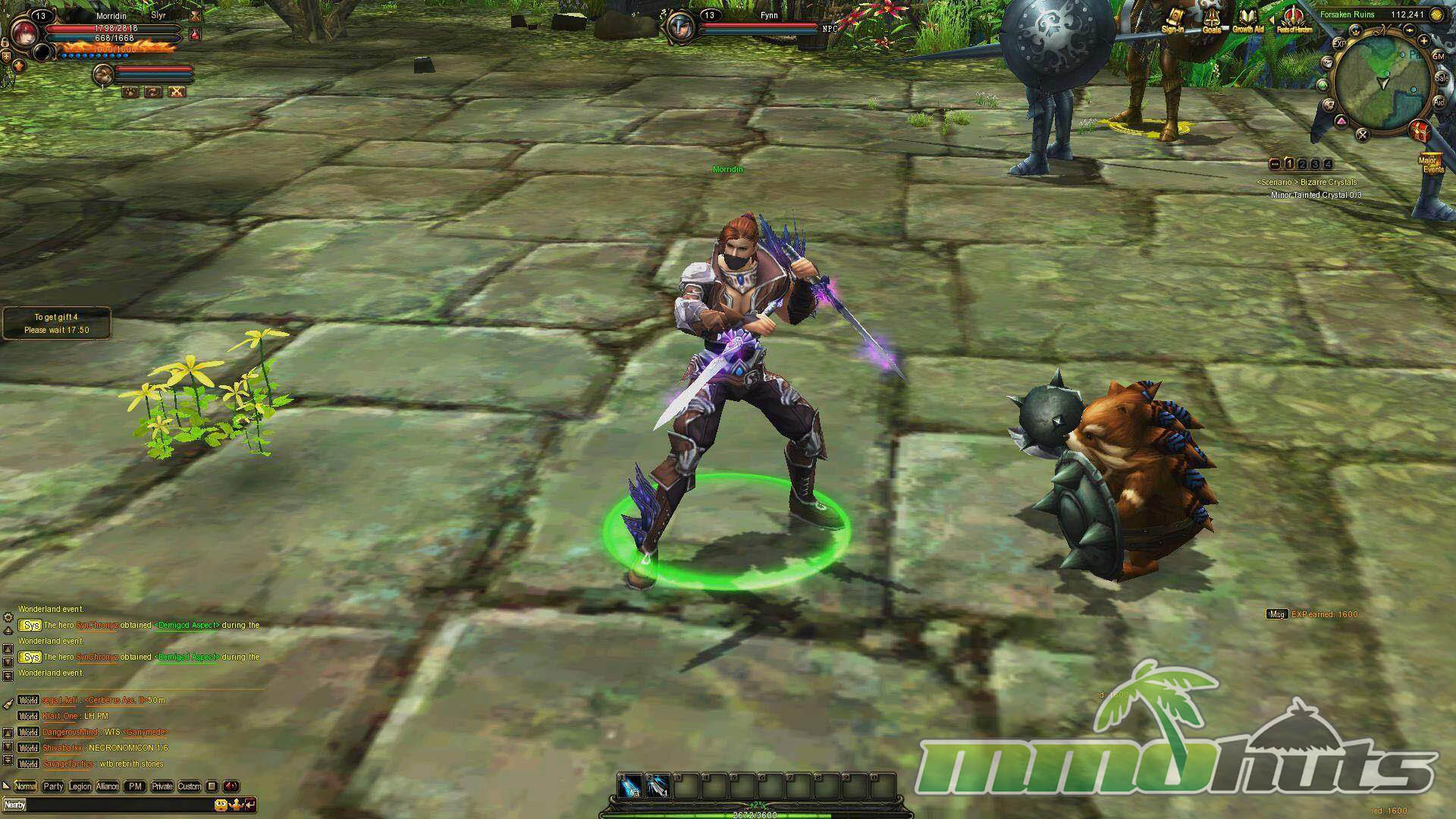
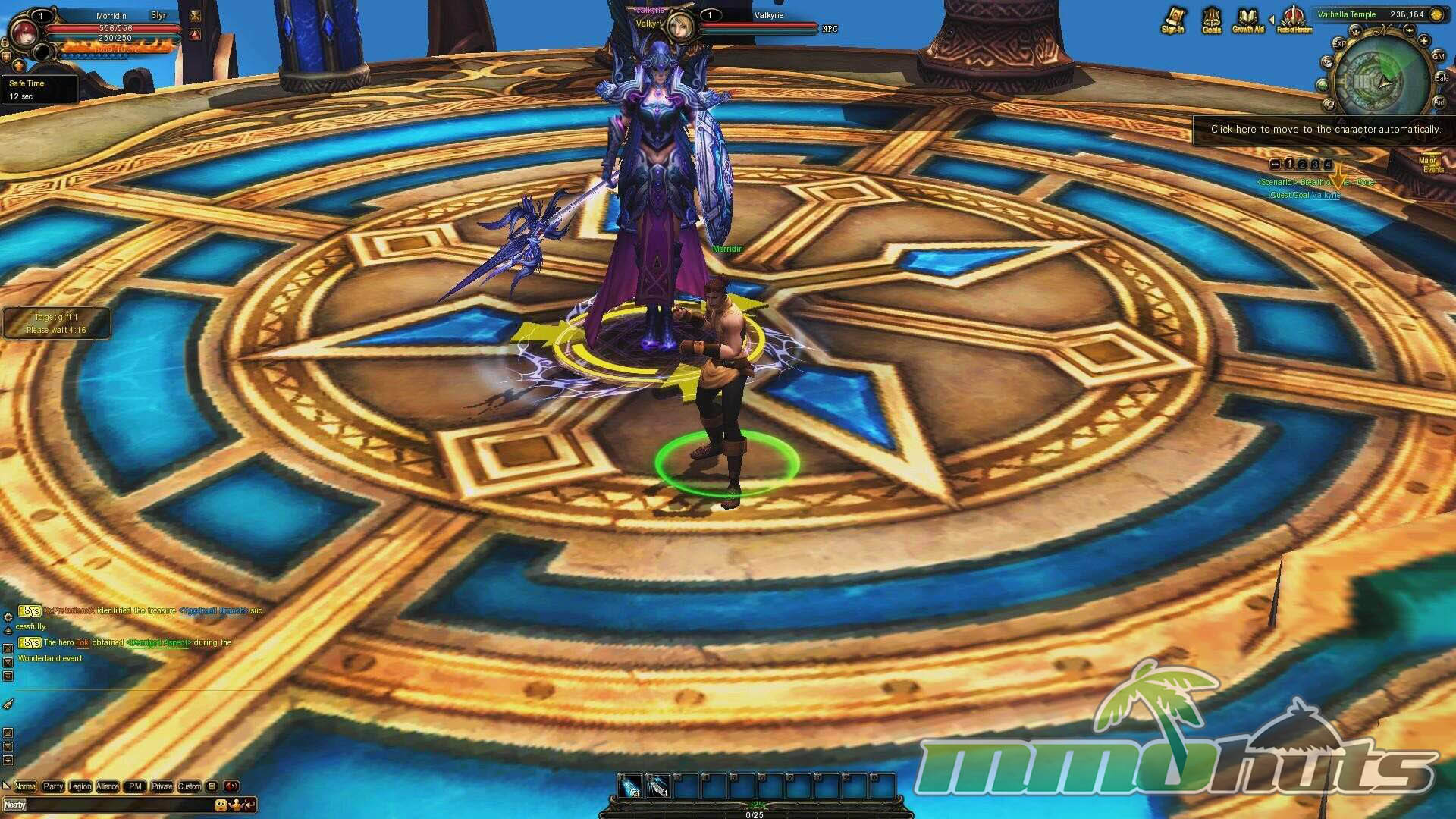
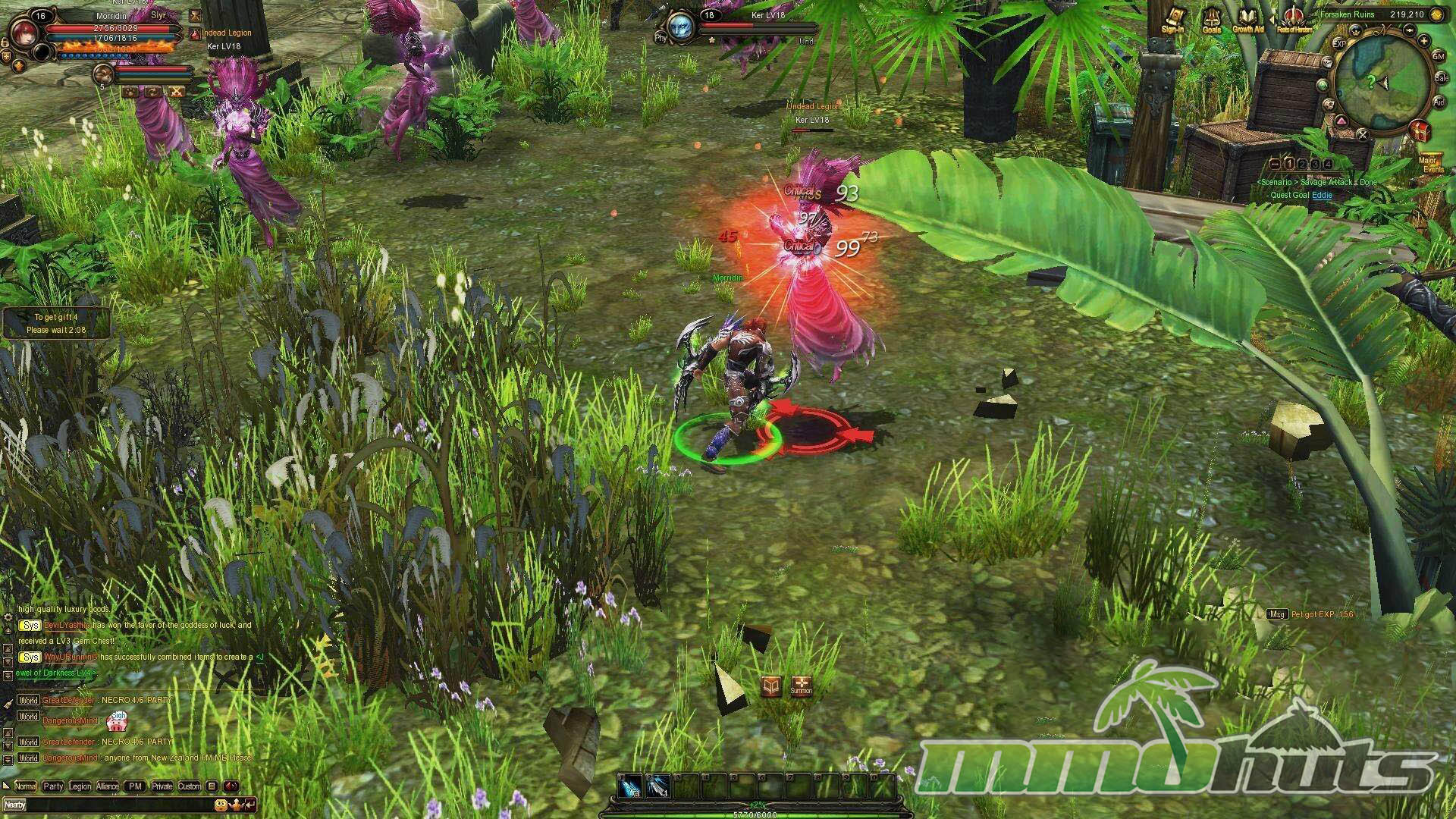
War of the Immortals (WoI) is a free-to-play 3D fantasy MMORPG set in Motenia, presented from an isometric, top-down perspective that clearly aims for a Diablo-style look and feel.
 | Publisher: Arc Games Playerbase: Shut Down Type: MMORPG PvP: Duels / Territory Control / Arena Release Date: Dec 19, 2011 (NA/EU) Shut Down Date: January 9, 2018 Pros: +Nine distinct classes with clear roles. +Deep, customizable pet companion system. Cons: -Combat rarely feels demanding. -Questing loop becomes repetitive. -Character creation options are sparse. |
War of the Immortals Shut Down on January 9, 2018
War of the Immortals Overview
War of the Immortals drops players into Motenia, a myth-steeped setting where divine conflicts spill into mortal lands. The central struggle revolves around Odin and Loki, with the world’s remaining strongholds caught in the crossfire. From Atlantis to Asgard, the game frames your journey as a defensive campaign against Loki’s returning armies, with Prince Roan positioned as a key figure in the resistance. You choose from nine classes, take on quest-driven zones, and gradually push deeper into the war-torn regions as the narrative expands through NPC conversations and in-game story text. The servers ultimately shut down on January 9, 2018.
War of the Immortals Key Features:
- Variety of Classes – play as one of nine options, each designed around a recognizable MMO role and combat approach.
- Cool Dual-Classing System – use the game’s lineage-based dual-class feature to swap between a primary and secondary class through a casted spell.
- Customize Your Pet – go beyond a simple companion by equipping pets with skills and abilities that meaningfully support your build.
- Great Writing – storytelling leans into a blend of Norse and Greek myth themes, with more lore emphasis than many grind-focused MMOs.
War of the Immortals Screenshots
War of the Immortals Featured Video

War of the Immortals Classes
Berzerker – a close-range brawler built to pressure targets with heavy hits and aggressive gap closing. Their armor is not ideal against magic, but snares and mobility tools help them stay on top of enemies, and they can function as a secondary frontline option in group content.
Champion – the game’s most traditional tank archetype, outfitted in heavy armor and designed to soak damage. Champions can reinforce their defenses and use taunts to keep enemies focused on them, giving the party room to deal damage safely.
Duelist – a sword specialist that mixes melee offense with darker magic. Duelists focus on damage plus debilitating effects, using debuffs to soften opponents and leveraging demonic power to swing fights in their favor.
Enchantress – a support-oriented class that uses a harp to deliver songs and musical effects. Their value comes from party buffs and enemy debuffs that shape encounters, making them a strong group pick. *This class is gender-locked to females only.
Heretic – the primary healer, combining restorative divine magic with offensive dark spells. Because healing is centralized here, the Heretic is a cornerstone class for parties that want smoother dungeon and raid runs.
Magus – an elemental caster focused on ranged damage and area control. Magi can output the highest damage among the classes and also bring useful AoE and snaring tools that help manage groups of enemies.
Ranger – a long-range attacker built around bow damage and battlefield utility. Rangers support teams with traps and area skills that hinder movement, letting them contribute control alongside steady DPS.
Slayer – an assassin-style damage dealer that aims to end fights quickly through burst windows. Slayers excel at rapid, lethal sequences that punish vulnerable targets and reward good timing.
Harbinger – a hybrid that blends melee presence with psychic magic. Harbingers can spike critical damage and use mana-based shielding to absorb hits, letting them operate as DPS or as an extra off-tank when needed.
War of the Immortals Review
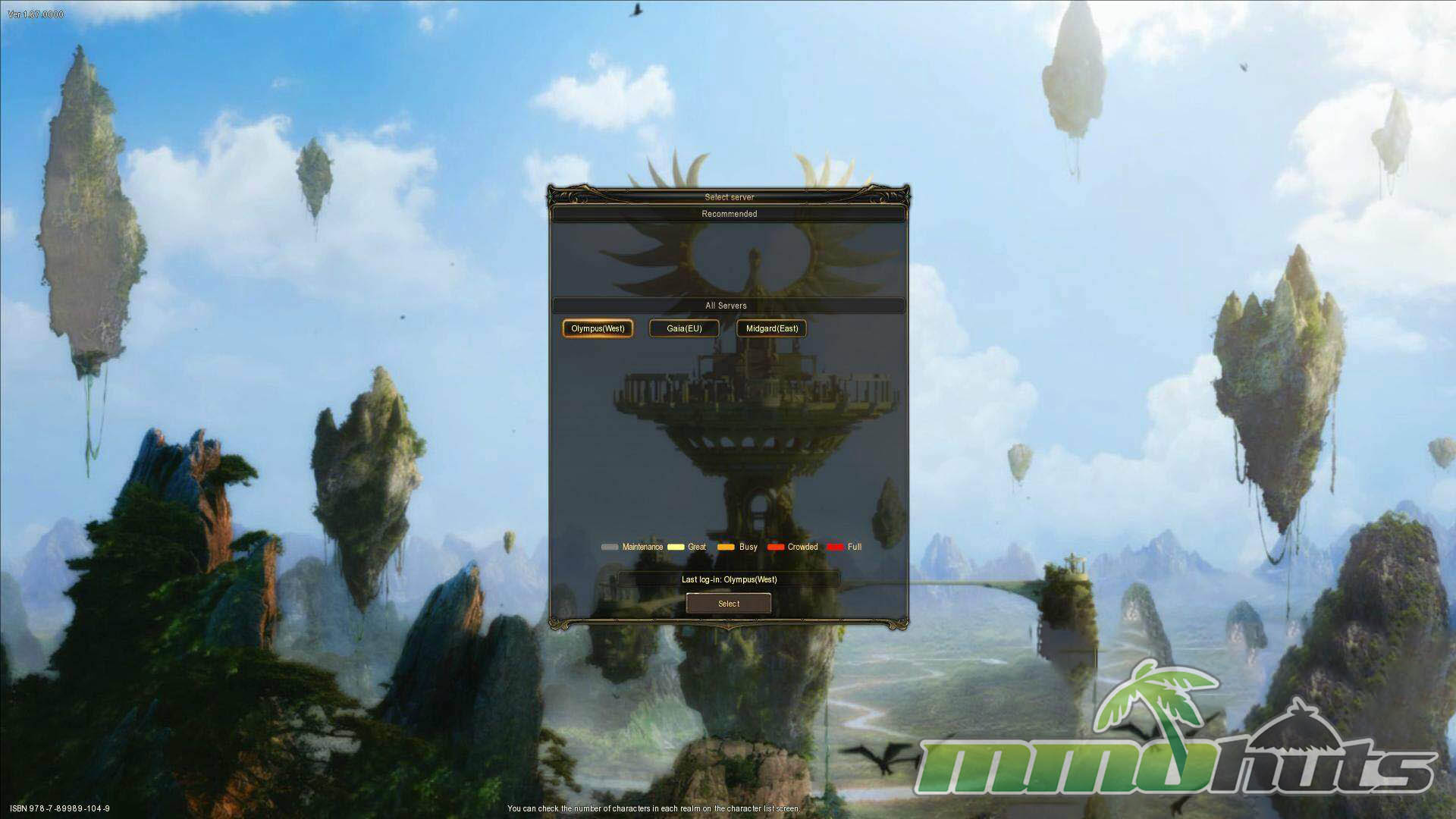
War of the Immortals is a free-to-play 3D fantasy MMORPG built around Norse mythology influences, with additional mythic elements woven into its world and questing. It was developed and published by Perfect World Entertainment, a studio best known for operating multiple F2P MMOs. The title entered open beta on December 1, 2011 and later launched on August 30, 2012, with distribution available through Arc and Steam.
Although it followed Battle of the Immortals, WoI occupies an unusual spot as a separate release that functions like a prequel. Its events are set 300 years before Battle of the Immortals, using that timeline to reframe familiar locations and conflicts while still leaning on the same overall style and presentation. Motenia remains the centerpiece, and the story pushes the return of Loki’s forces as they once again threaten Atlantis after a previous defeat at its walls.
Picking a Class First, Customizing Later
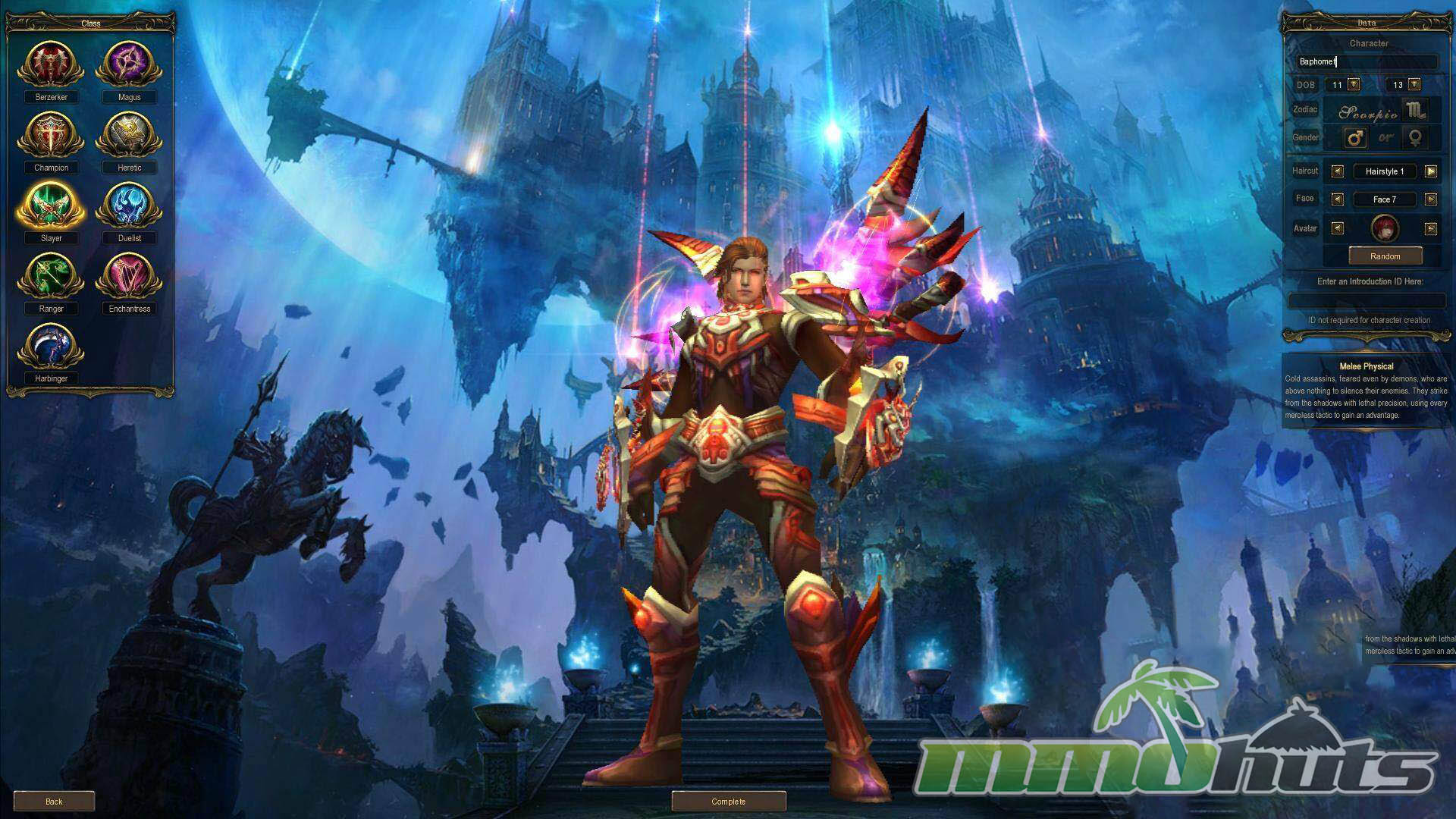
Character creation starts with choosing from nine classes, and that decision matters more than the cosmetic side of the creator. Each class has a clear identity, but the selection screen offers limited practical guidance beyond brief descriptions, so new players can easily pick based on theme rather than role. Broadly, Berzerker, Champion, Duelist, and Harbinger sit on the melee side (with Champion as the most tank-like), while Magus, Ranger, and Slayer cover the damage-focused ranged and burst options. Enchantress and Heretic fill support roles, with the Heretic standing out as the game’s dedicated healer.
On the visual side, customization is notably thin. You can select gender (with Enchantress restricted to female characters) and tweak a handful of basic options like faces and hair colors, but it never reaches the depth many MMO players expect. If you enjoy building a unique-looking avatar before committing dozens of hours, this is one of WoI’s most immediate disappointments.
An Introductory Chapter Before Atlantis
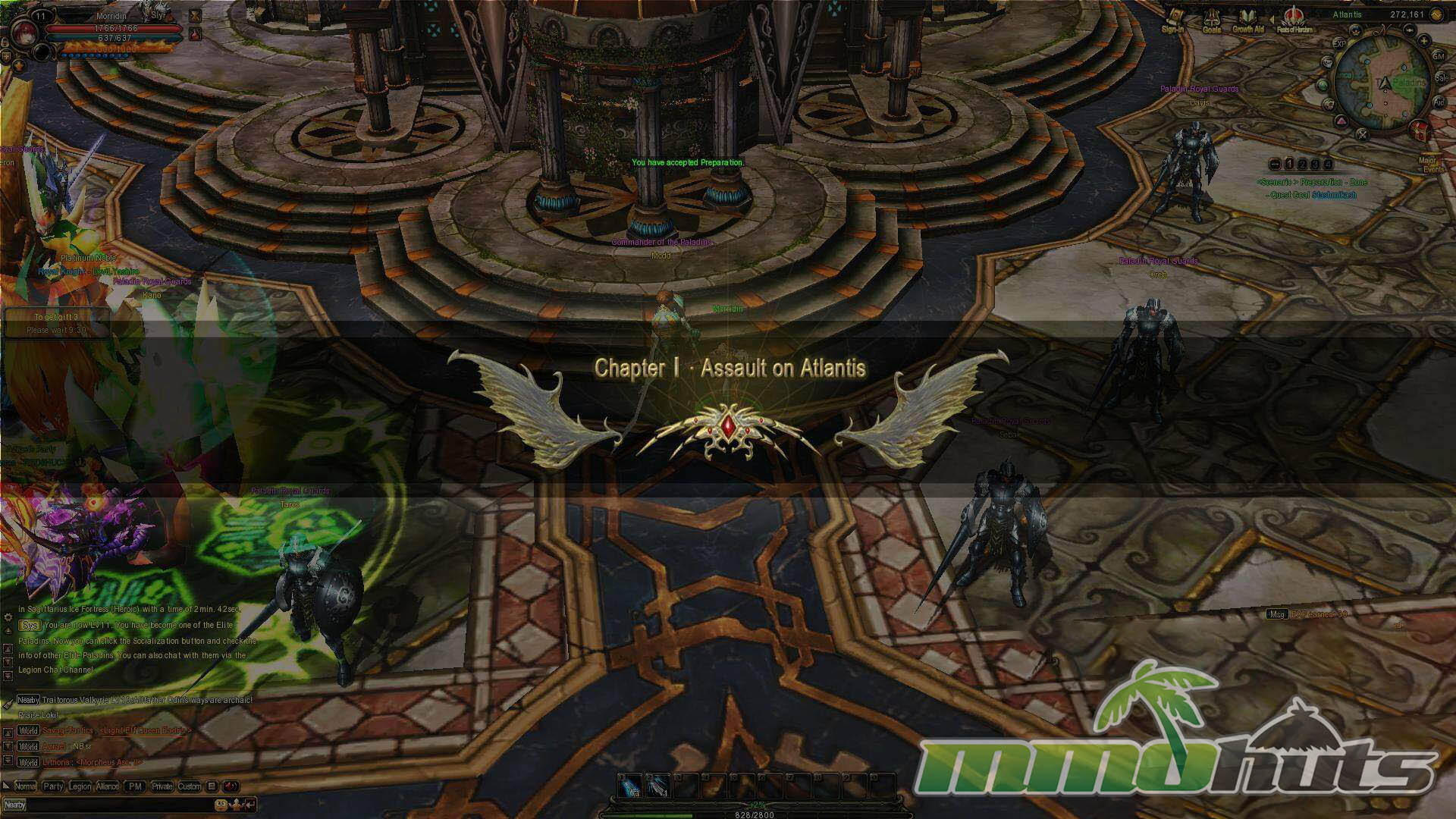
After creation, WoI runs you through a short prologue designed to teach core basics such as movement, quest interaction, and early combat. It also sets up the initial stakes of the larger conflict. Once that onboarding segment is complete, the game transitions you into Atlantis, which serves as a hub and the start of the main progression path.
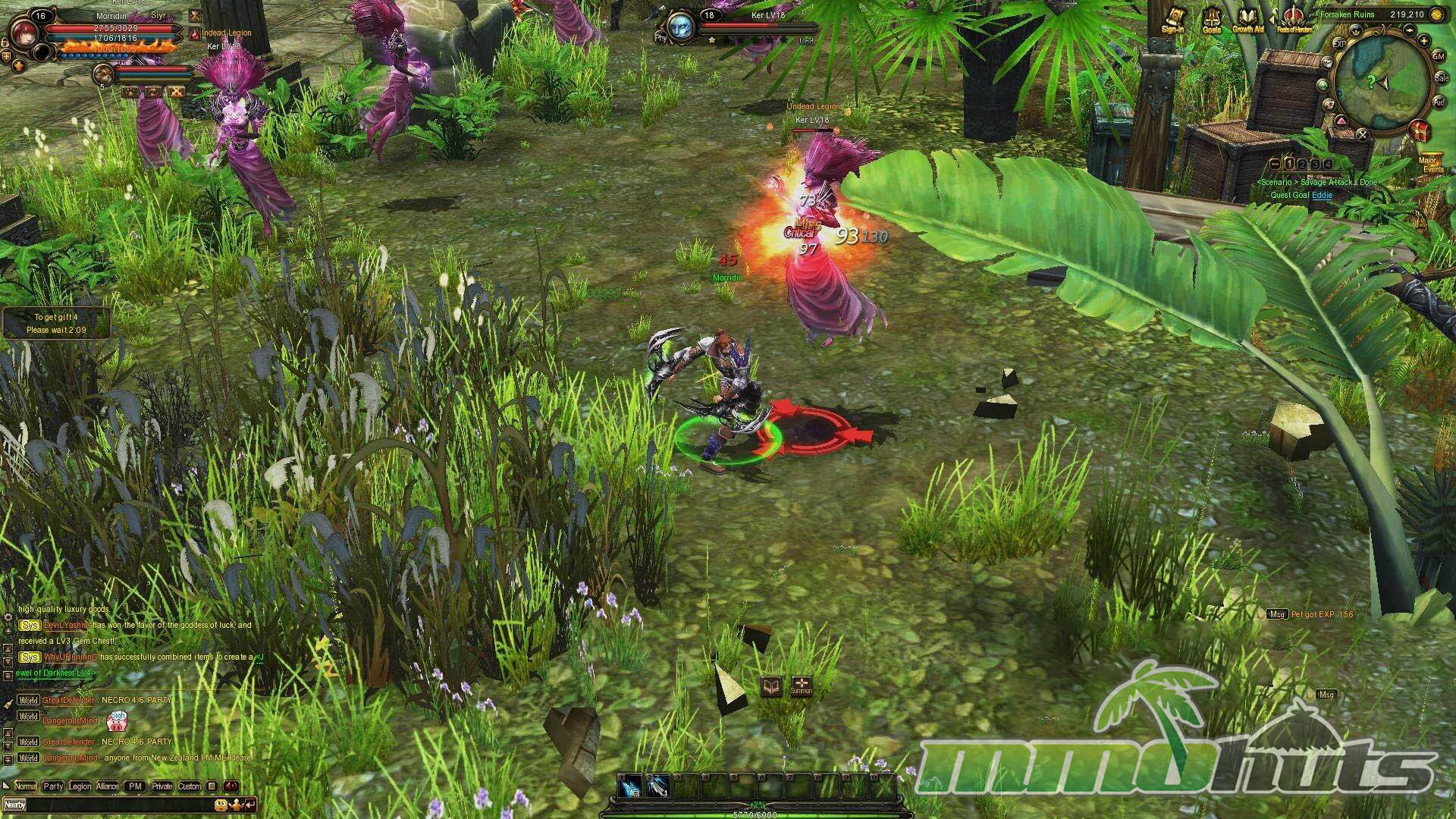
In terms of presentation, WoI closely resembles Battle of the Immortals, to the point where it can feel more iterative than transformative. The visuals and interface read as dated for a 2012 release, and the overall layout does not substantially modernize the look and feel compared to its predecessor. That said, armor and weapon designs are often elaborate, and character models and spell effects still show a level of detail that helps combat remain readable from the top-down camera.

The Familiar MMO Loop, with Training Wheels On
Progression is primarily quest-led, and the task design sticks to standard MMO patterns, kill targets, collect items, and move to the next region. Zones are structured in a linear way that naturally funnels you forward, and rewards come through experience, gold, and occasional gear upgrades.
Leveling pace is very fast early on. It is common to exit the prologue around level 10, and the game’s convenience tools reinforce that speed. Auto-pathing reduces travel friction, and auto-combat further lowers the effort needed to clear routine enemies. For players who like relaxed grinding and low-pressure advancement, that can be comfortable. For those looking for moment-to-moment challenge, it makes much of the early and midgame feel overly safe.
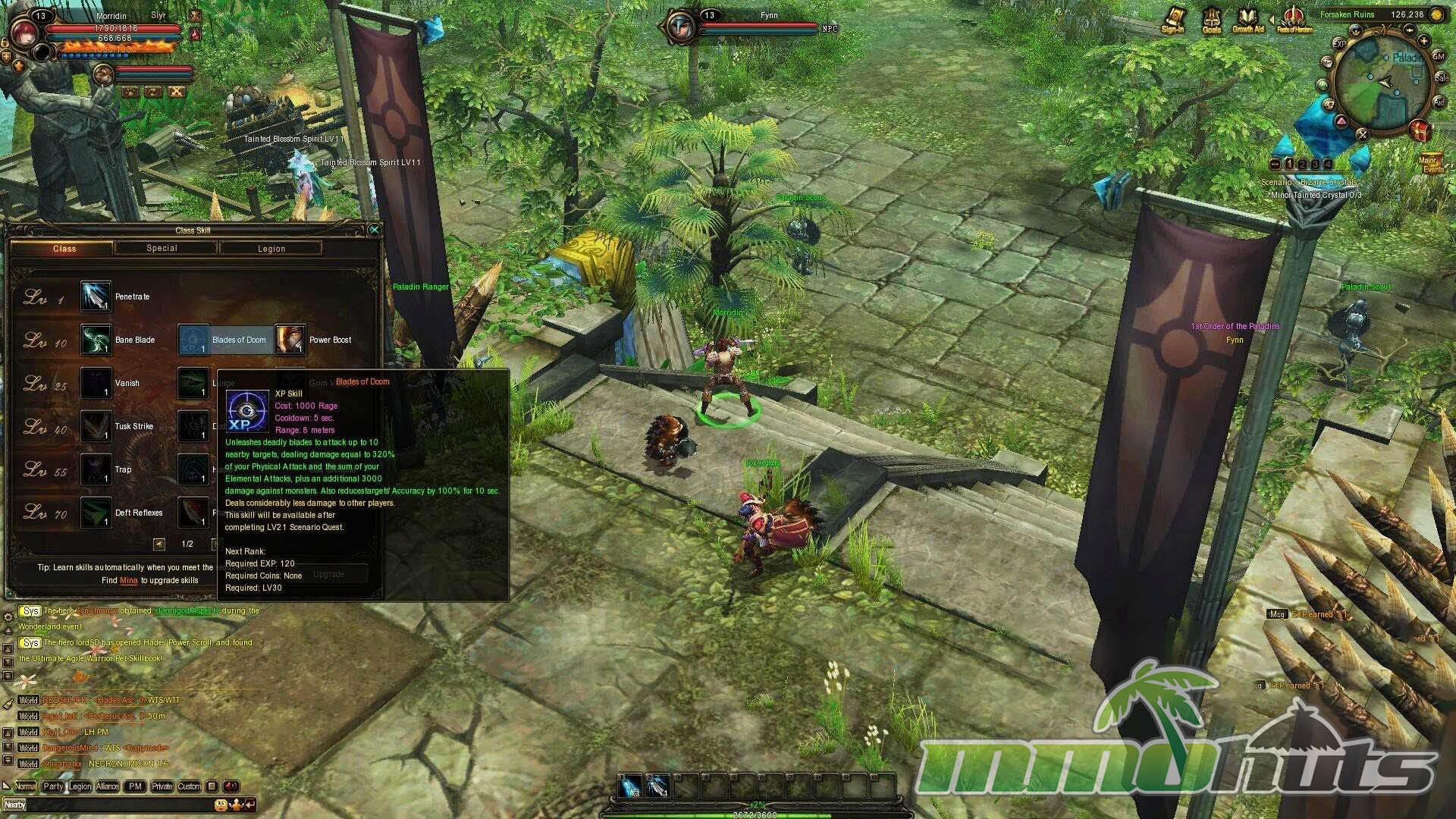
Character growth uses a straightforward, older-school approach. Once you reach level 20, you begin receiving stat points per level to distribute across VIT, SPR, STR, INT, and DEX. Skills unlock automatically at certain levels, then can be upgraded at a trainer for gold and experience. The system is functional, but without a true skill tree, build expression is limited, and many characters of the same class will feel broadly similar.
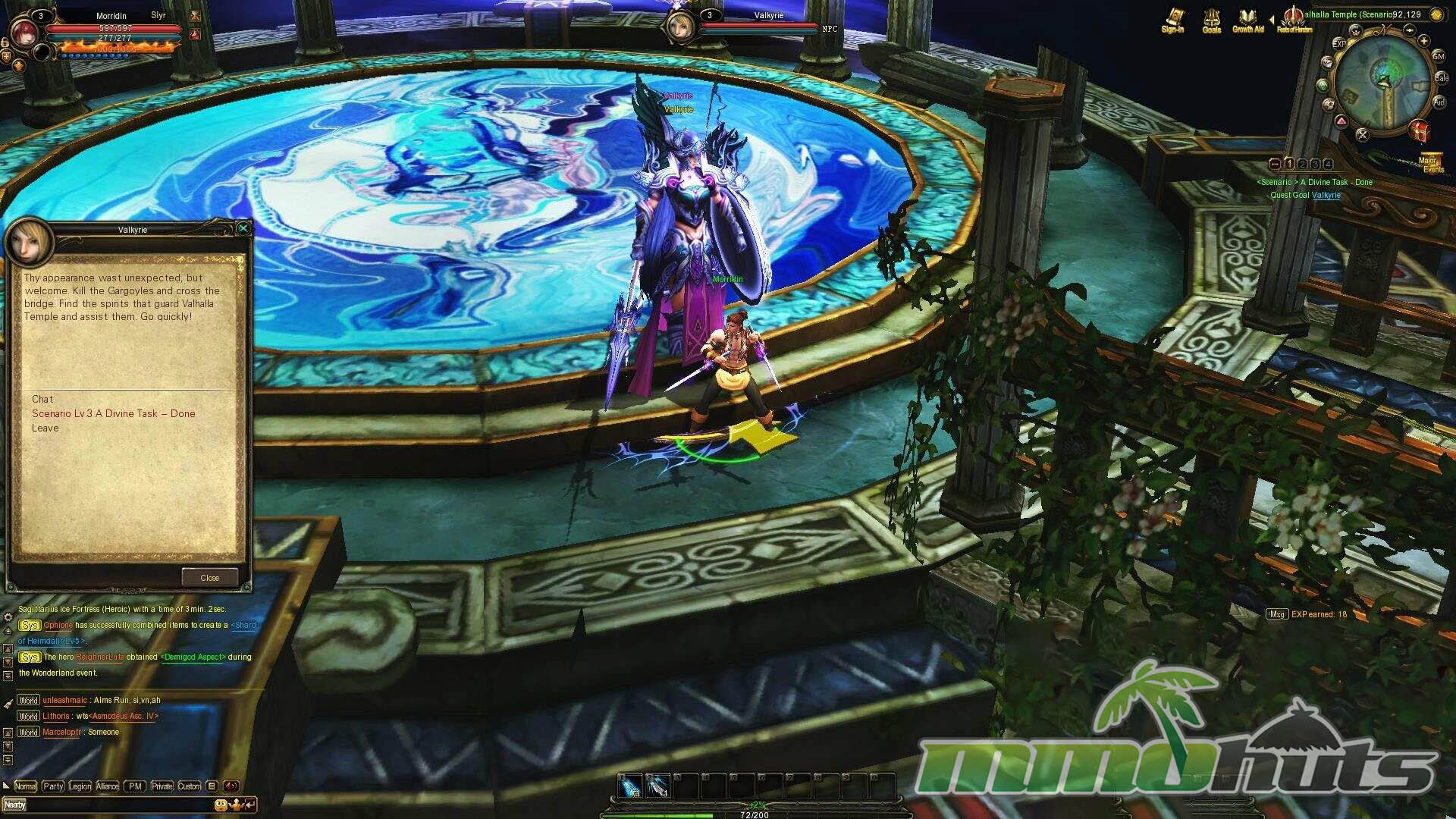
Narratively, WoI puts more effort into story delivery than many comparable grind-heavy MMOs. The writing leans into a mythological mash-up, and the game emphasizes lore through long NPC conversations and an in-game journal. That extra context is a welcome change of pace, even if the volume of dialogue can start to drag once you have seen the same structure repeated across many zones.
Dual-Class Lineage: Interesting, but Awkward
A standout system is the dual-class feature (Dual-Class Lineage), introduced with the Legendary Crusade expansion. At level 89, you can choose a secondary class. The secondary begins at level 60 and progresses separately from your main class. Stats, skills, and related attributes do not transfer between the two, and swapping is done by casting a spell that can be interrupted. You also cannot change classes during combat, which limits its tactical use and makes it feel more like a convenience feature than a core combat mechanic.
Even with those restrictions, it remains a compelling idea for players who want flexibility. The ability to reset your secondary class and experiment is valuable, though doing so drops the secondary back to level 60. As dual-class systems go, it is less seamless than what some other MMOs have offered, but it still provides a reason to keep playing once your primary class is well established.

Pet System
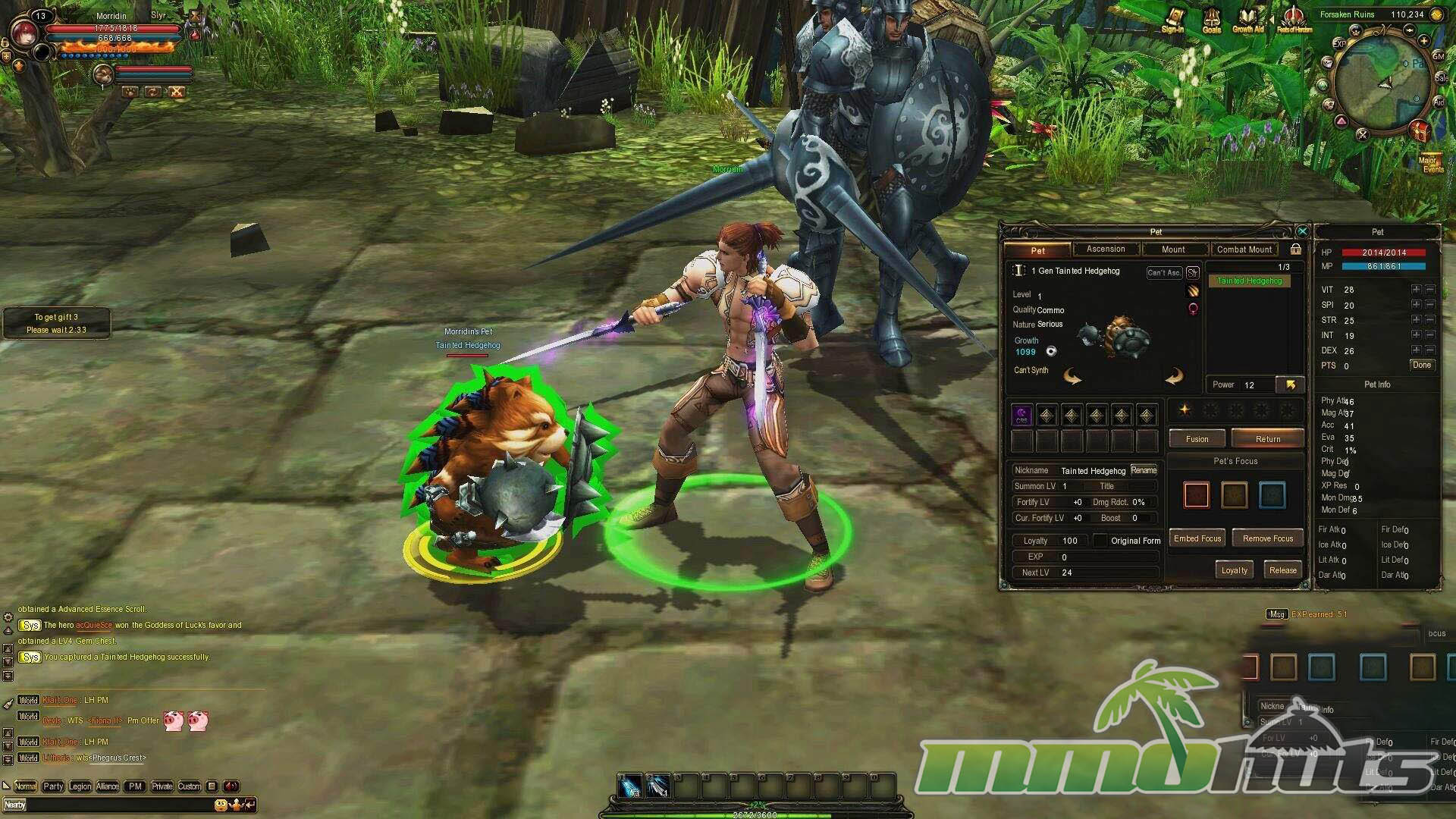
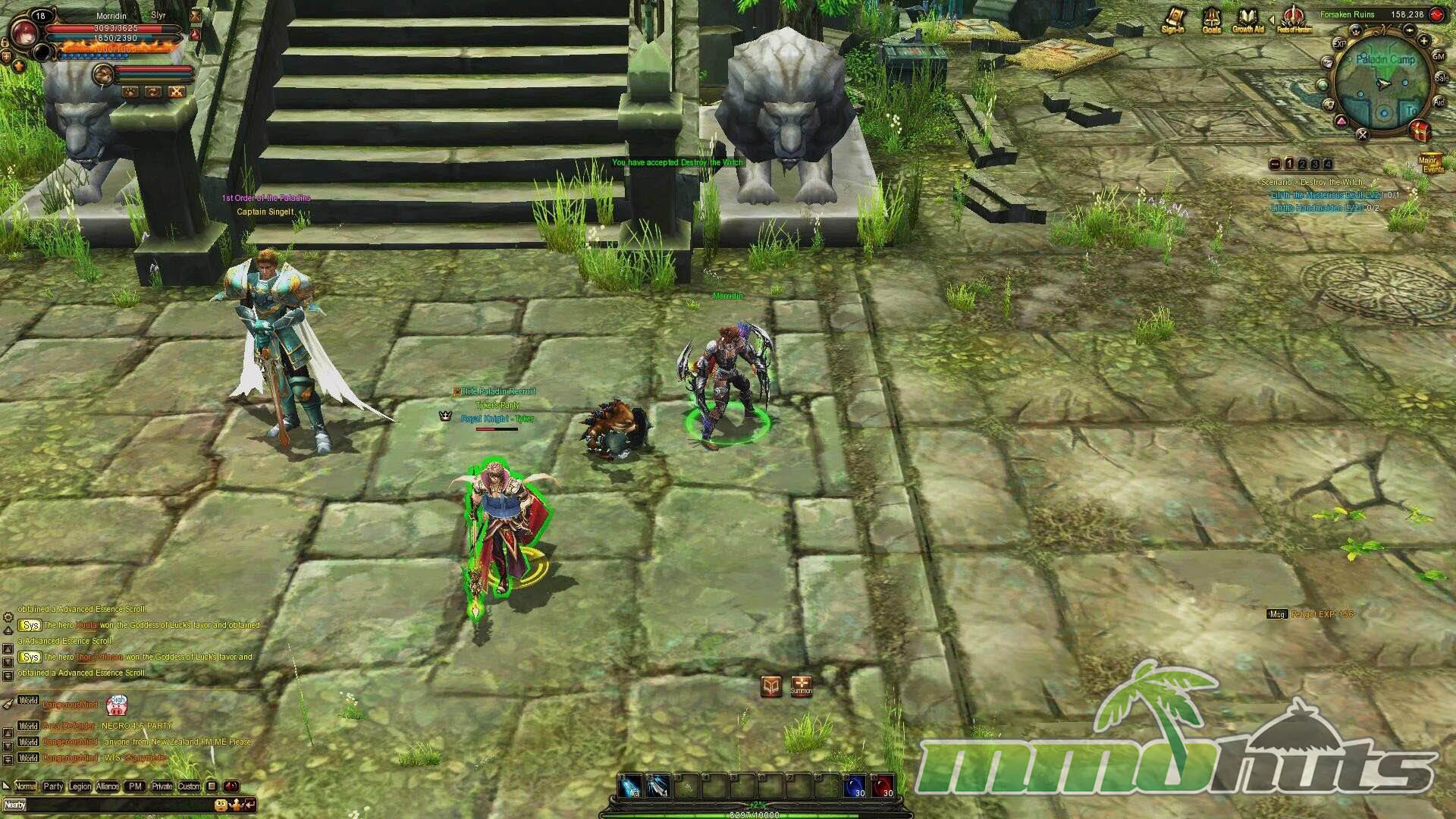
WoI’s pet design is one of its most distinctive strengths. Enemies can drop catchable versions of themselves, letting players tame a wide variety of creatures rather than being restricted to a small curated list. Pets can be summoned to assist in combat, as expected, but the system goes further by letting you purchase and equip pets with skills and abilities.
That customization makes pets feel like more than cosmetic companions. You can shape them into support tools that complement your class, whether that means extra utility, added damage, or situational help that smooths out your weaknesses. In practice, it is one of the few systems that encourages experimentation and personal expression within an otherwise straightforward progression model.
PvP
Player versus player content is offered in multiple forms, ranging from duels to structured arenas and territory-focused conflict. One of the headline modes is a large-scale, three-way 540-player arena, which signals the game’s interest in spectacle PvP. At level 50, players can join guilds and form alliances, feeding into territorial competition across Motenia.
Guilds can contest control of 30 territories, and holding them provides bonuses, turning map ownership into the primary long-term PvP objective. There are also PvP-enabled zones where flagged players can fight, which helps separate open conflict from players who would rather focus on PvE progression.
Final Verdict – Fair
War of the Immortals has several ideas that still read well on paper, including its pet customization, its myth-inspired narrative framing, large-scale PvP ambitions, and some impressively ornate gear designs. The problem is that the moment-to-moment experience rarely matches that promise. Combat and leveling are often too forgiving, the quest routine becomes repetitive, and the lack of meaningful character and skill customization reduces long-term build variety. With visuals and UI that already felt behind the curve at release, it is difficult to recommend WoI over stronger free-to-play MMORPG options, even though its best systems show genuine creativity.
War of the Immortals Links
War of the Immortals Official Site
War of the Immortals Steam Page
War of the Immortals Wikia [Database / Guides]
War of the Immortals System Requirements
Minimum Requirements:
Operating System: Windows XP / 2000
CPU: Pentium 4 1 GHz
Video Card: GeForce 4 Ti 4200 / ATI Radeon 8500 with 64 MB video ram
RAM: 1 GB
Hard Disk Space: 4 GB
Recommended Requirements:
Operating System: Windows XP / Vista / 7 / 8
CPU: Dual Core 2.5 GHz CPU or better
Video Card: GeForce FX 5200 or ATI Radeon 9500 with 128 MB video ram
RAM: 3 GB
Hard Disk Space: 8 GB
War of the Immortals Music & Soundtrack
War of the Immortals Additional Information
Developer: Perfect World Entertainment (Arc Games)
Game Engine: Cryptic Engine (Proprietary game engine)
Closed Beta Date: November 9, 2011
Open Beta: December 2, 2011
Shut Down: January 9, 2018
Development History / Background:
War of the Immortals was created by the Chinese studio Perfect World Entertainment, which is now branded as Arc Games in the US. The game was built using Perfect World’s proprietary Cube technology, the same underlying engine used for its predecessor, Battle of the Immortals. In terms of style, WoI aims to blend Eastern and Western influences while borrowing the top-down action-RPG sensibilities popularized by Blizzard’s Diablo series. Alongside its Norse mythology themes, the game also pulls from historical inspiration connected to China’s Qin Dynasty. While Battle of the Immortals continued operating in China through Perfect World’s Wanmei portal, War of the Immortals (and its related service) closed on January 9, 2018.