
Urban Rivals is a free-to-play, browser-driven collectible card MMO that plays out like a stylized comic book brawl. What sets it apart from most digital card games is its hidden “Pillz” wagering system, a secret attack multiplier that makes each round feel closer to a bluff-heavy card duel than a slow, numbers-first slugfest.
 | Publisher: Boostr Playerbase: High Type: Card Game Release Date: January 17, 2006 (International) Pros: +Enormous card pool (2000+). +25+ clans with distinct themes, bonuses, and play patterns. +Free-to-play friendly Cons: -The web UI feels old-fashioned compared to modern card clients. |



Urban Rivals Overview
Urban Rivals is a free-to-play collectible card MMO you can play in a web browser (and on mobile), built around short, decisive matches and a huge roster of characters. You assemble a deck from a wide range of clans, each with its own bonus and identity, then take that deck into PvP or PvE fights to earn currency, progress missions, and expand your collection.
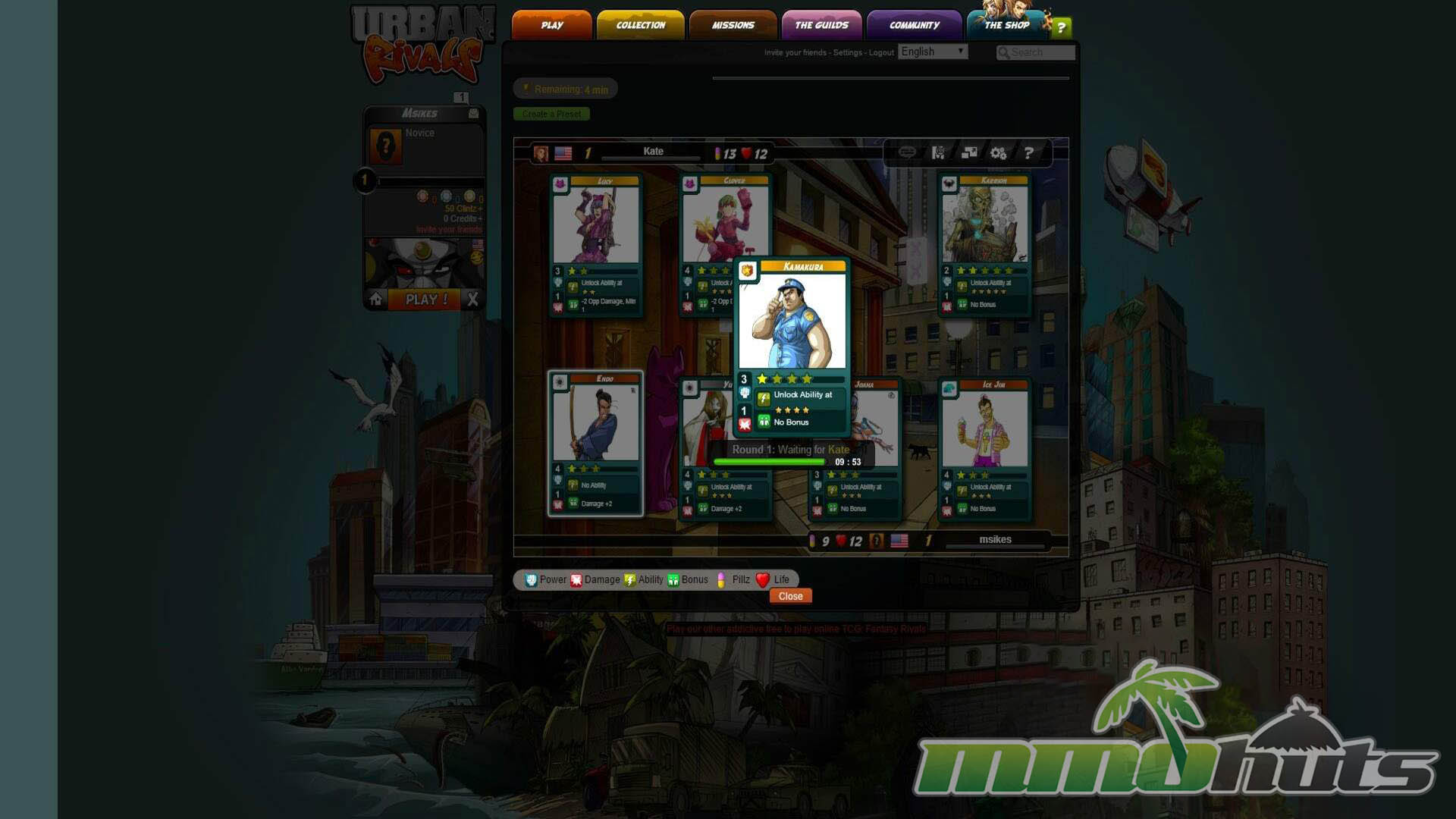
The signature twist is the Pillz system. Instead of simply playing a card and watching stats resolve, you secretly commit Pillz to multiply your attack, then reveal those commitments when both sides have locked in their choices. That hidden “bet” creates a steady mind-game where reading an opponent matters just as much as raw card power. It also helps explain why matches often feel more like a bluffing contest than a typical slow-build card battler. Urban Rivals also supports a genuinely accessible economy, you can build up over time through play, while spending mainly serves as a faster route to new cards rather than a mandatory power shortcut.
Urban Rivals Key Features:
- Card Variety – massive collectible card game over 1,200 cards and 25+ clans (Each clan has 50+ unique cards and a special bonus).
- Multiple Game Modes – such as Survival, Tournaments, and Missions.
- Polished Comic Book Inspired Art Style
- Fast-paced Gameplay – each game typically takes ~5 minutes.
- Multi Platform Play – game available on Web, Facebook, iOS, and Android.
Urban Rivals Screenshots



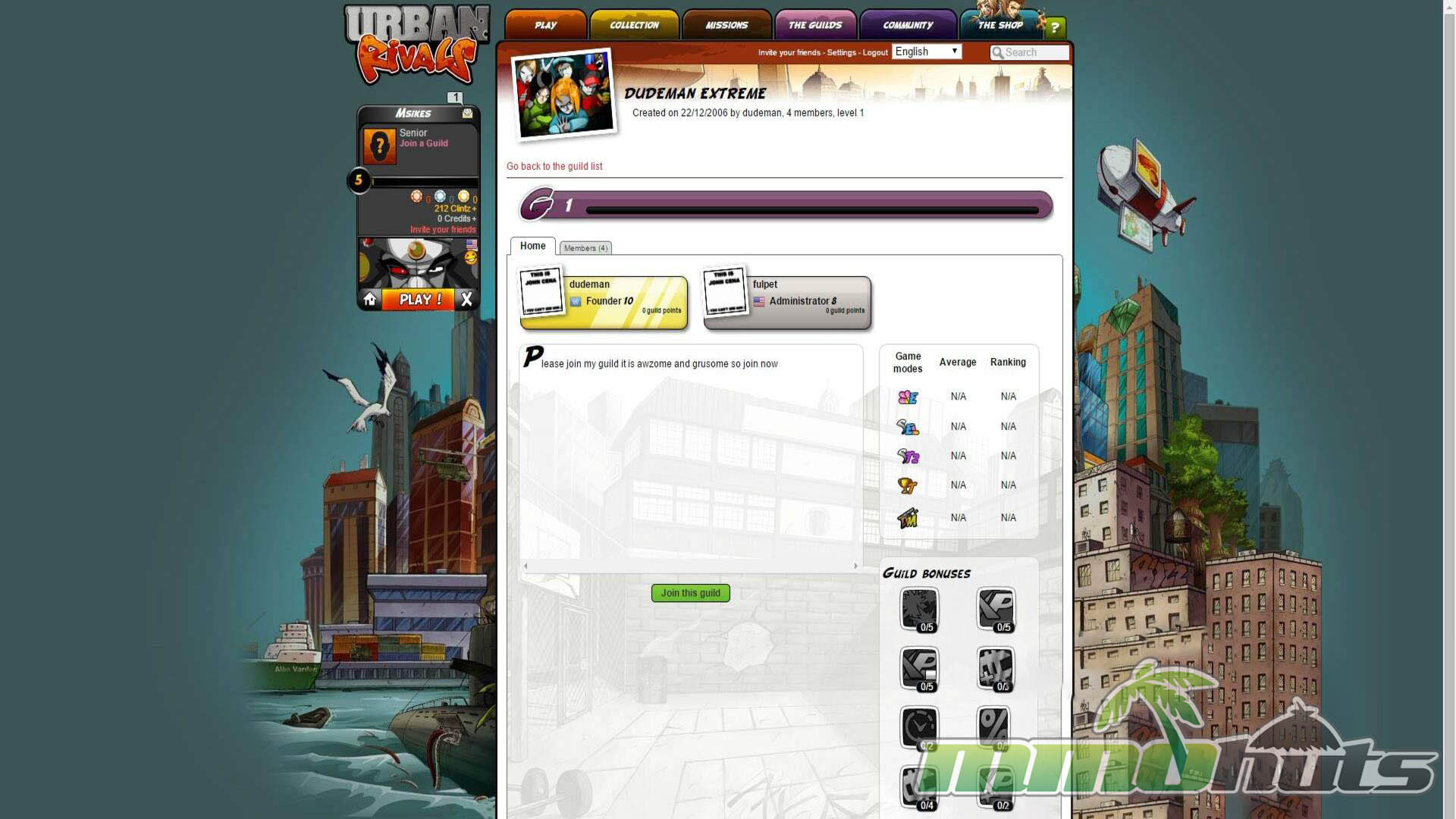
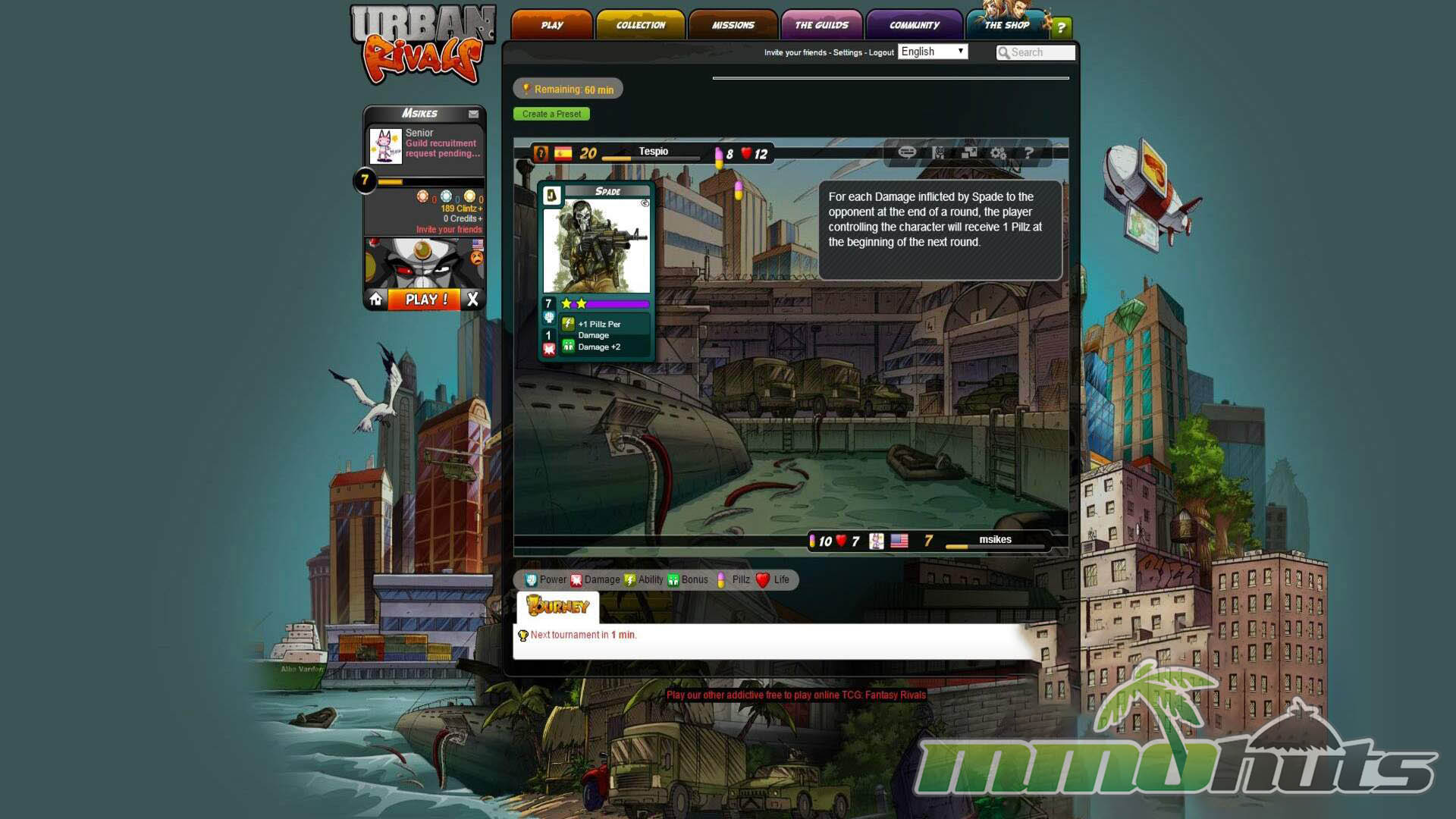


Urban Rivals Featured Video

Urban Rivals Review
Urban Rivals is a long-running collectible card MMO developed and published by Boostr, a French studio. It originally launched internationally on January 17, 2006, and it has stayed active through regular additions to its card pool and events. You can play it through its official site, and it has also been available on platforms like Facebook and mobile, with the iOS release arriving for free in 2009. In terms of pacing, it sits closer to a quick-fire duel game than a full-length card battler, most matches wrap up in minutes rather than stretching into extended turns.
Getting Into Your First Matches
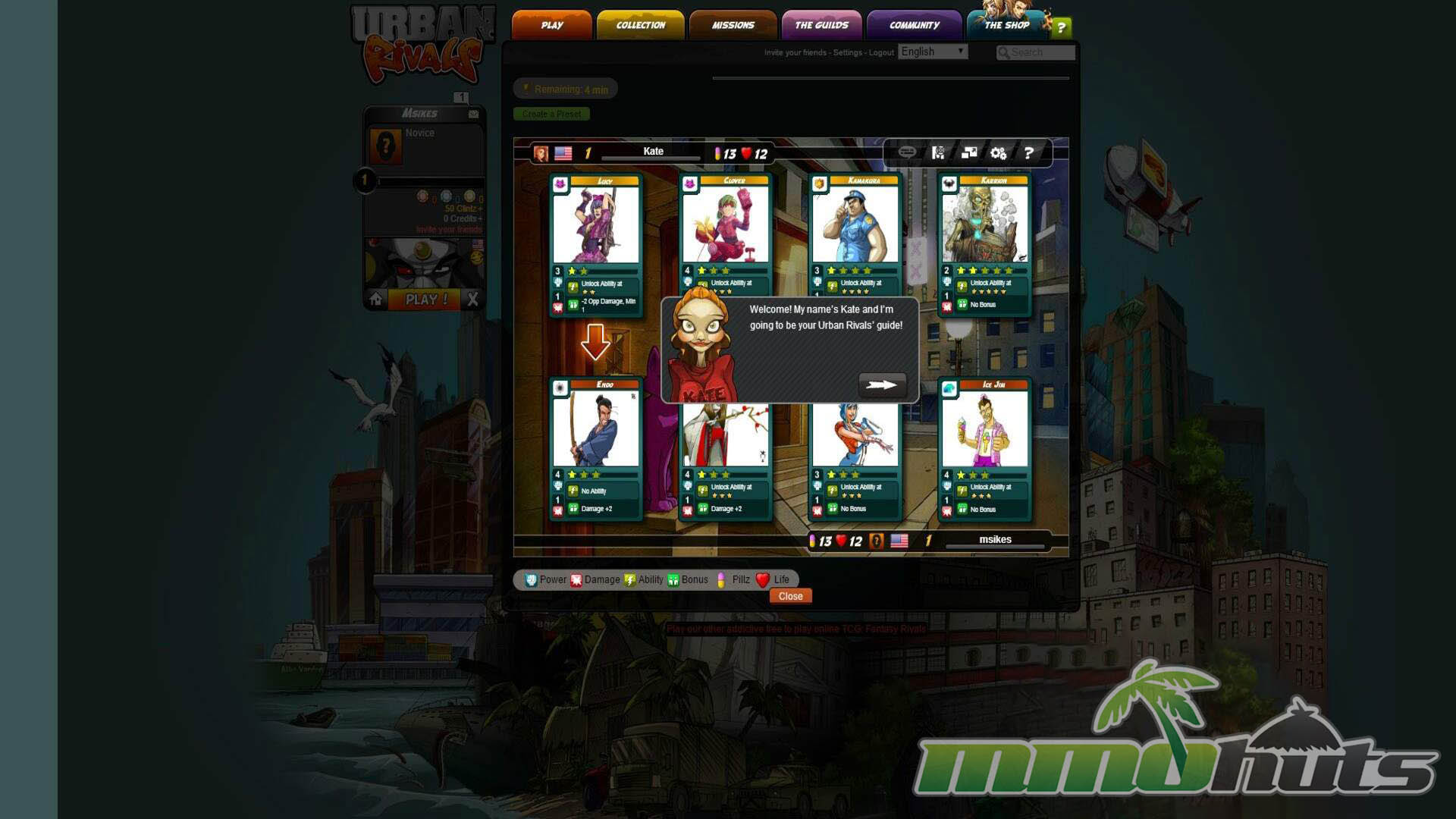
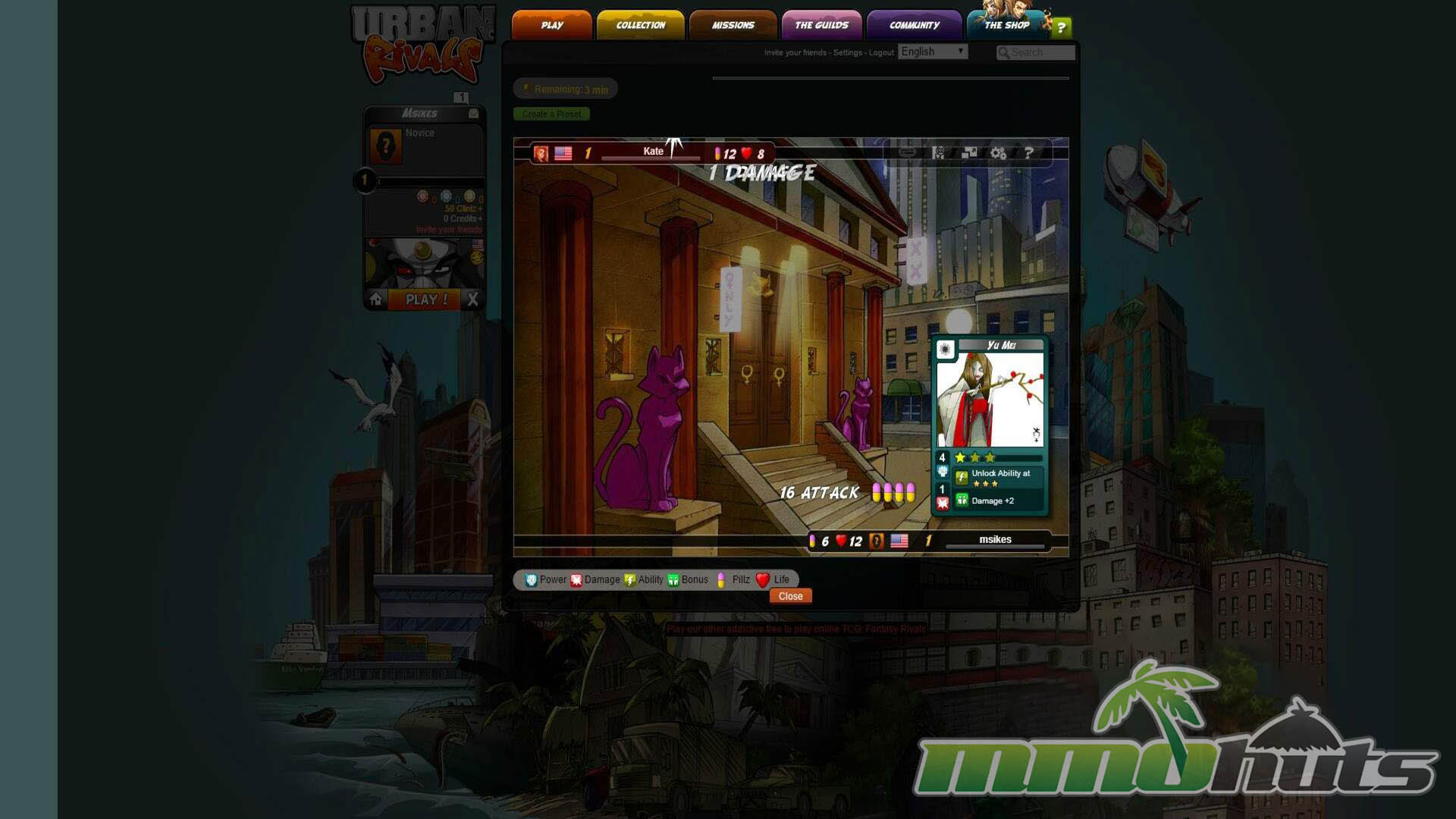
Your first step is choosing a starter direction, Brute Force, Slow Death, or Control. Each option gives you an opening set drawn from three clans, which is a practical way to introduce different styles without overwhelming new players with the full catalog. After that, the tutorial character Kate walks you through the basics using pop-ups during early fights, covering key ideas like Pillz, Fury, clan bonuses, and the overall win conditions.
Even early on, the game does a solid job of layering in progression. After battles you earn experience and Clintz (the standard currency), and you also see Mission progress. Missions act like an achievement track, awarding extra Clintz, cards, and Mission points, which serve as a long-term completion metric for players who enjoy checking off goals.
How Combat Actually Works
The core loop is compact: you enter a match, draw four cards from your deck, and those four characters become your “team” for the entire fight. Initiative is determined by hand star totals, with the player holding more stars acting first. Each round, you choose a character to send into the clash, and then secretly decide how many Pillz to spend to boost that card’s attack. Your opponent sees the character you selected but not the Pillz amount, then they respond with their own pick and hidden Pillz commitment.
That single design choice drives most of the strategy. Because both players are effectively wagering a limited resource behind a partial information screen, you constantly weigh whether to push for a guaranteed round win or attempt to bait an overcommit. Abilities and defensive effects also shape those decisions, since certain cards punish heavy spending or reward careful counterplay. On top of that, Fury provides another layer: you can burn three Pillz to add extra damage, which can convert a narrow advantage into a lethal swing, but it also makes your resource management tighter for later rounds.
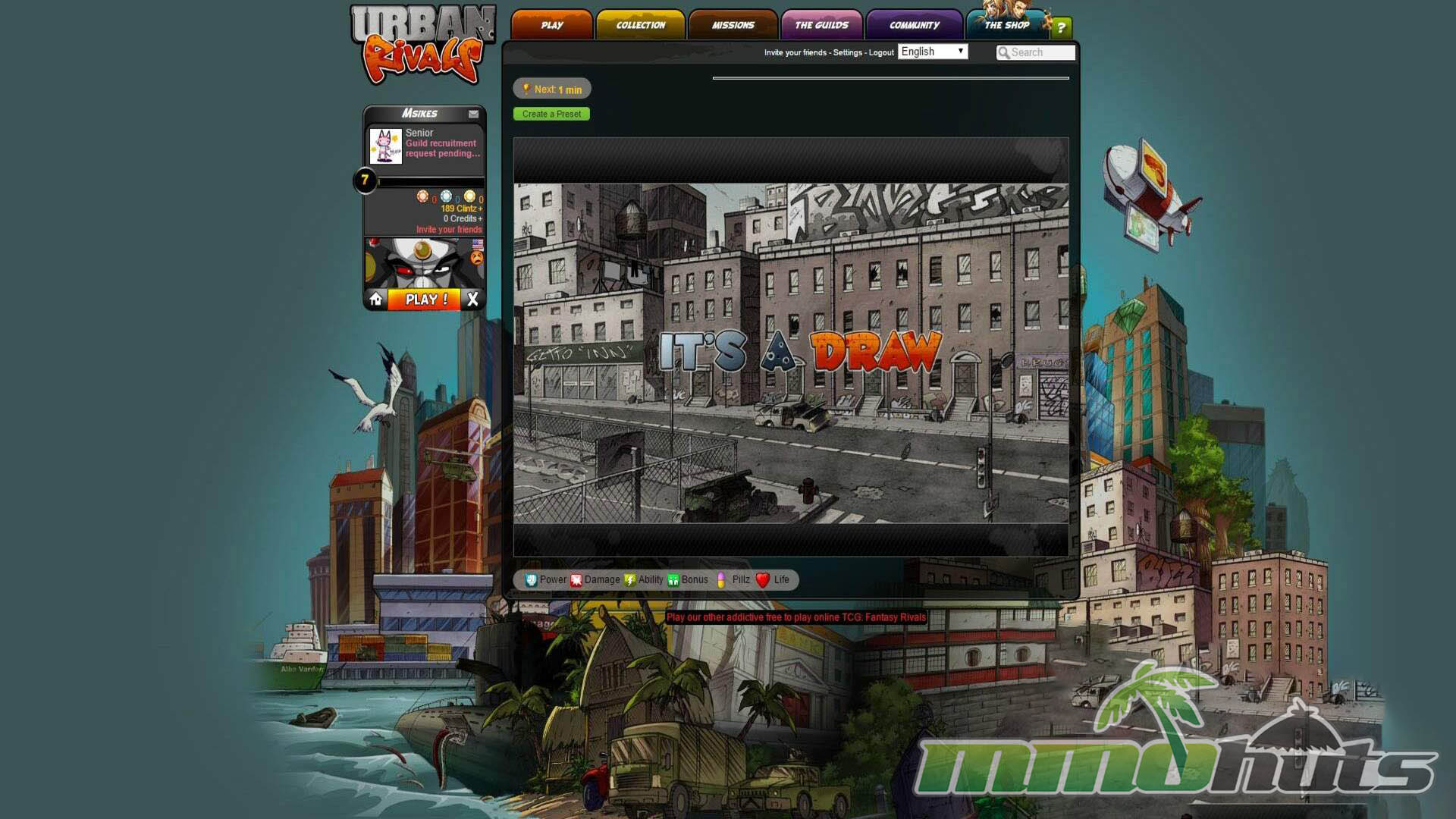
Once both attacks are revealed, totals are compared after factoring in bonuses and effects, and the winner deals damage equal to their card’s damage stat to the opponent’s life. Rounds continue until a player’s life is depleted or both sides have played all four cards. If the match ends with equal life totals, it simply resolves as a draw, there is no tie-break system to force a winner.
Leveling and Evolving Cards
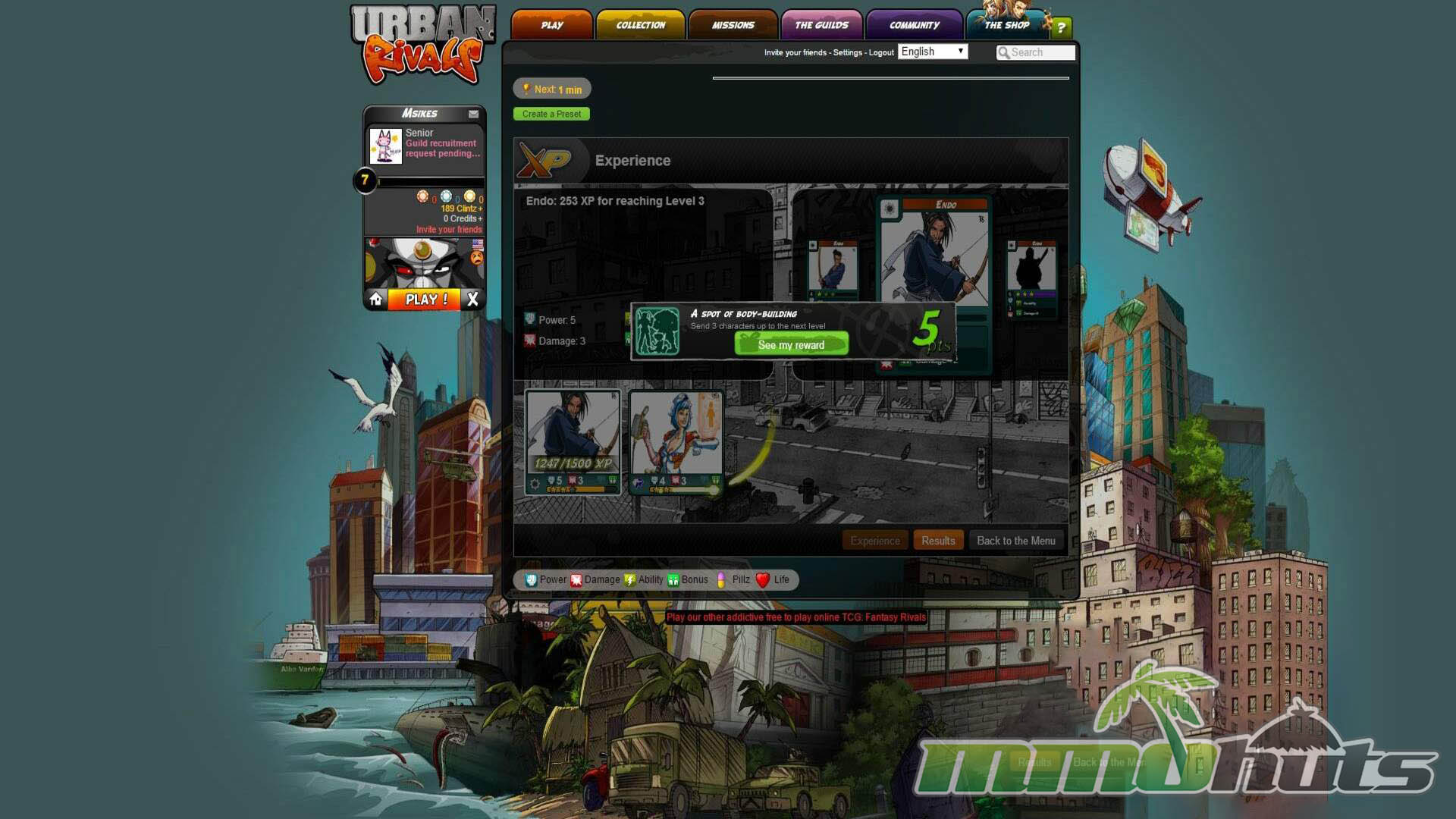
Cards gain experience after fights, and that experience pushes them through star levels. Most characters begin at one star and can grow up to five, depending on the card. When a star threshold is reached, the character evolves, which typically means updated artwork along with new or improved stats and abilities. This evolution system gives even early cards a sense of progression, and it rewards players who keep using a deck rather than constantly swapping cards.
If your current deck is already maxed, excess experience is not wasted. Instead, it is stored in a reserve pool that can be applied to lower-level cards in your collection, helping you bring new picks up to speed. You can also spend Clintz to accelerate experience gains, which is useful if you want to unlock a card’s full toolkit without waiting through many matches.
Modes and What They’re For
Urban Rivals offers a surprisingly broad set of modes, and several unlock as you level. Early on you will see Practice mode, which is designed for testing and learning without harsh penalties. Classic mode provides straightforward PvP matches and is generally welcoming for experimentation because it does not push a heavy ranked pressure. Solo mode is the PvE alternative, built around AI fights tied to Missions and specific challenges, and it can sometimes reward cards rather than only currency and experience.
As you gain levels, the game leans harder into competitive structures. Tournament mode unlocks at level 7 and runs on an hourly schedule every two hours, pushing you to rack up as many wins as possible inside the time window for better rewards. ELO opens at level 15 and emphasizes tighter deck construction and deeper decision-making; it operates weekly and includes stricter rules than the Daily Tournaments. Survivor also becomes available at level 15, focusing on long win streaks and escalating pressure, with a bigger payout the longer you stay alive. Finally, Duel unlocks at level 20 and offers a daily challenge against Kate for a new card.
Building a Collection
There are multiple ways to expand your roster. You can buy cards directly through the player-driven market using Clintz, you can open packs using the premium currency Credits, and you can earn rewards through modes and missions. Some of the most desirable additions come through special mission chains, including Legendary Cards that require completing a set of objectives within a limited timeframe.
This variety matters because it supports different play habits. Dedicated grinders can steadily grow a competitive pool through matches and smart market purchases, while spenders can skip ahead by targeting packs, without the game feeling like it locks progression behind a paywall.
Deck Construction and Clan Identity
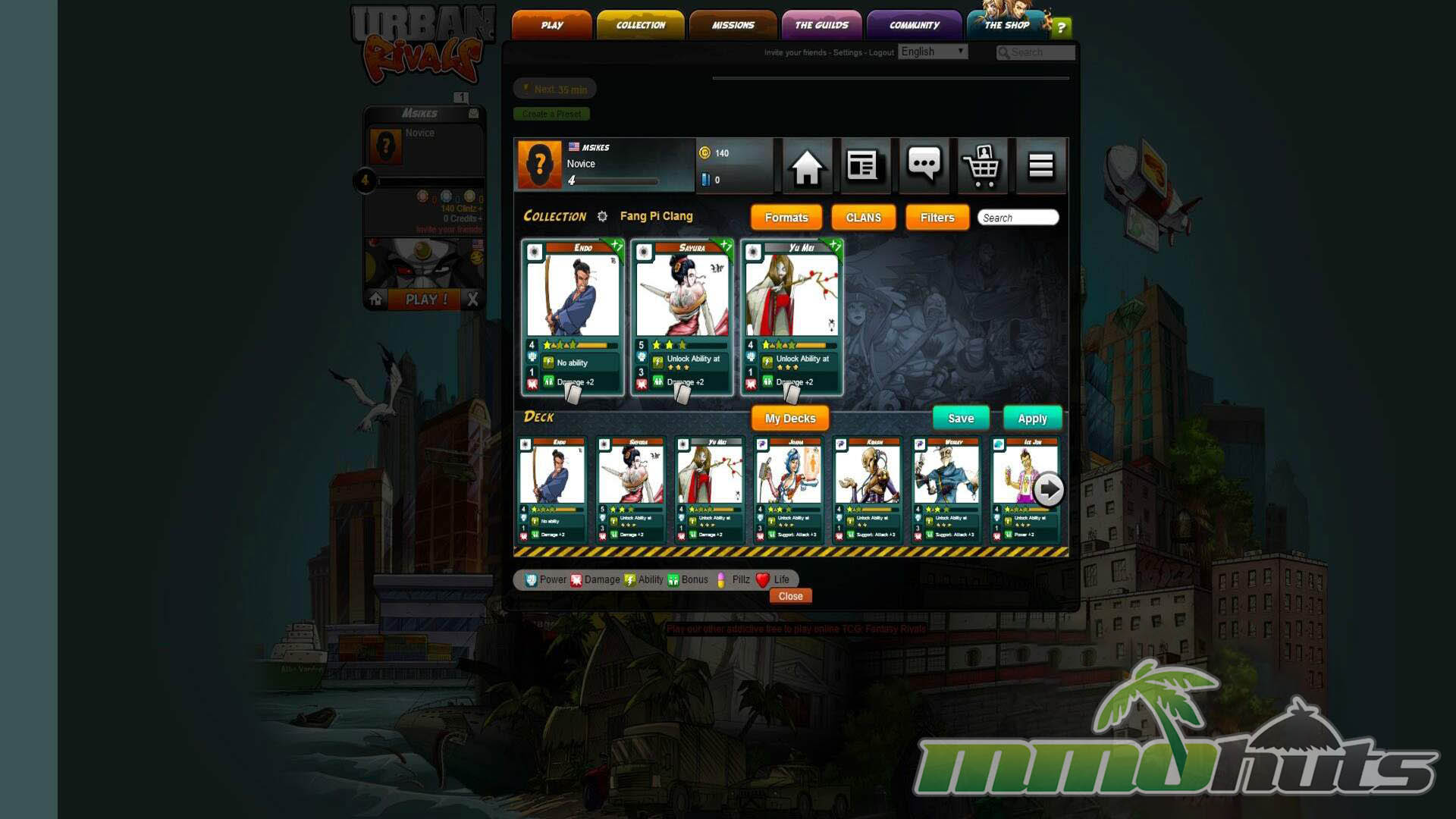
Deck building is where Urban Rivals starts to feel like an MMO rather than a purely self-contained card app. Early decks often develop slowly, especially if you are staying strictly free-to-play, because your starter clans can carry you for a while. Most functional decks tend to concentrate on one or two clans to maximize consistency and benefit from clan bonuses, but with 25 clans available, it takes time to assemble exactly what you want through drops alone.
The market helps keep that process reasonable. Many cards can be purchased for relatively modest Clintz costs, and you can also sell unwanted cards back into the economy. Compared with crafting-heavy systems in other card games, this approach encourages trading behavior and gives you a more direct path to specific pieces if you know what you are missing.
There is also a special category of clanless cards called Leaders. Leaders do not receive clan bonuses, but they bring unique abilities and stronger baseline stats. Only one Leader can be included in a deck at a time, since they cancel each other out. Deck rules also shift depending on mode, so optimizing a list means paying attention to restrictions like bans, card limits, or strength caps.
Monetization and the Cash Shop
Urban Rivals’ shop is primarily about convenience and access. Spending Credits can speed up deck construction and help you obtain newly released cards without waiting for market prices to settle. Importantly, the store is not structured around buying raw power boosts like permanent stat upgrades. Instead, it sells packs, and those packs can be filtered to focus on the clans you are interested in, which reduces the frustration of opening irrelevant cards.
Overall, it feels like a reasonable compromise: paying players can get into competitive builds faster, but committed free players can still progress through play, smart purchases, and the market.
Final Verdict – Great
Urban Rivals remains a strong example of a quick, strategic card MMO built around a clever hidden-resource mechanic. The Pillz system keeps every round tense, and the massive card library and clan variety give the game long-term depth that goes well beyond its simple interface. Its biggest weaknesses are mostly presentation-related, the web client can feel dated, and the overall visual consistency varies from card to card. Even with those drawbacks, the fast matches, strong mind-games, and extensive collection systems make it easy to see why the game has maintained a high playerbase for so long.
Urban Rivals Links
Urban Rivals Official Site
Urban Rivals Wikipedia
Urban Rivals Google Play Mobile
Urban Rivals Wikia [Database / Guides]
Urban Rivals System Requirements
Minimum Requirements:
Operating System: XP / Vista / 7 / 8
CPU: Intel Pentium 4 or AMD Equivalent
Video Card: Any Graphics Card (Integrated works well too)
RAM: 512 MB
Hard Disk Space: 100 MB (Cache)
Because Urban Rivals runs in a browser, it performs well on most PCs, including low-end systems. It has been tested on Internet Explorer, Opera, Firefox, and Chrome, and it should work smoothly in any up-to-date modern browser. Urban Rivals is also playable on mobile via the Apple iOS App Store and the Android Google Play Store.
Urban Rivals Music & Soundtrack
Urban Rivals Additional Information
Developer: Boostr
Publisher: Boostr
Platforms: Web (browser), Apple iOS, Android, and Facebook
Release Date: January 17, 2006 (Worldwide)
Development History / Background:
Urban Rivals was created by the French studio Boostr Acute Games and built for a web-based environment. It launched for browsers on January 17, 2006, and later broadened its audience through releases on Facebook and mobile platforms, arriving on iPhone and Android in 2010 and 2011. The original concept was developed by Simon Leloutre under the name Clint Fighting for iMode and Wap devices, before the project was moved to the web to reach more players. To support its international growth, Boostr translated Urban Rivals into more than a dozen languages.