Tiger Knight: Empire War is a free-to-play, PvP-driven action strategy MMO set in China around the third century BC. Instead of playing as a detached commander, you fight on the front line as a General while issuing orders to squads, turning each match into a blend of brawling and battlefield control across war-scarred maps.
 | Publisher: Oasis Games Type: MMO Strategy/Action Release Date: October 24, 2016 Shut Down: October 12, 2021 Pros: +Distinct directional melee system. +Several PvP playlists with different scales. +Real-time attacks and blocks mapped to four directions. Cons: -Spotty English localization. -Performance and optimization problems. -Network delay can impact fights. |
Tight Knight Empire War Shut Down on October 12, 2021
Tiger Knight: Empire War Overview
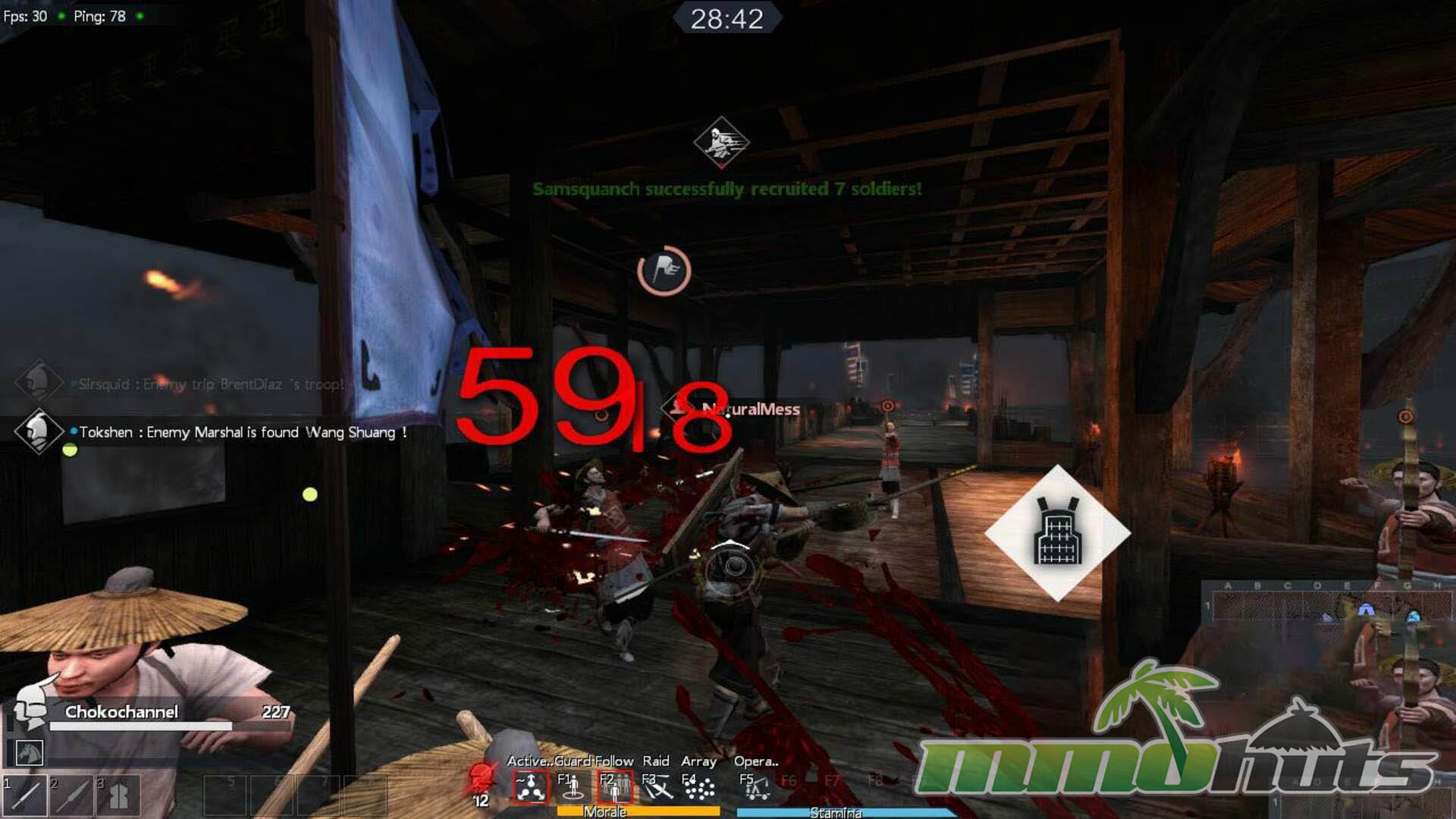
Tiger Knight: Empire War frames its battles as large-scale clashes where your personal skill matters, but so does how well you manage the unit under your banner. Combat revolves around directional inputs, letting you swing, guard, and parry from four angles rather than relying on simple button-mashing. Weapon choices cover familiar archetypes (blades, polearms, bows), and the game asks you to learn spacing and timing, especially when fights get messy around objectives.
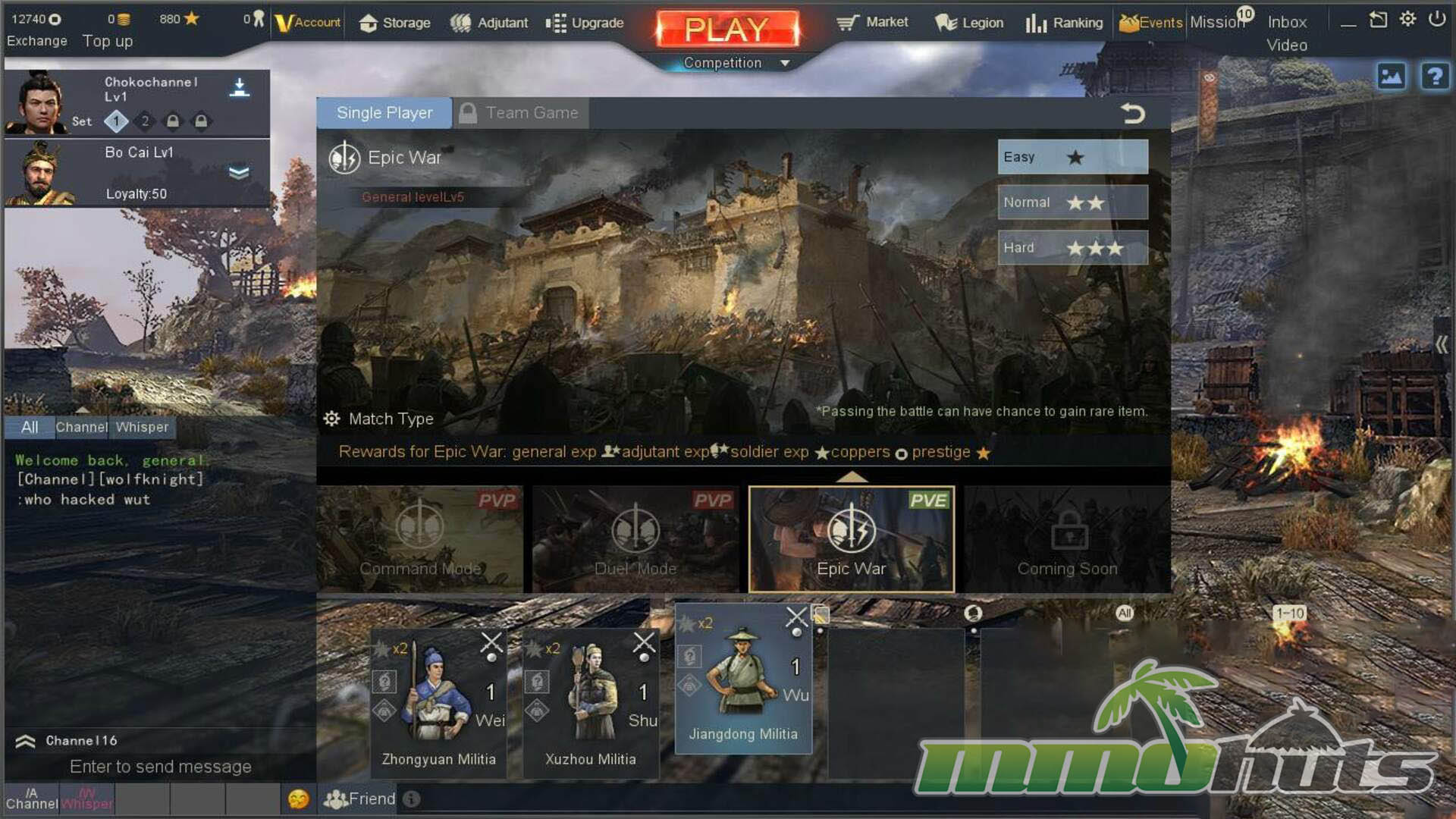
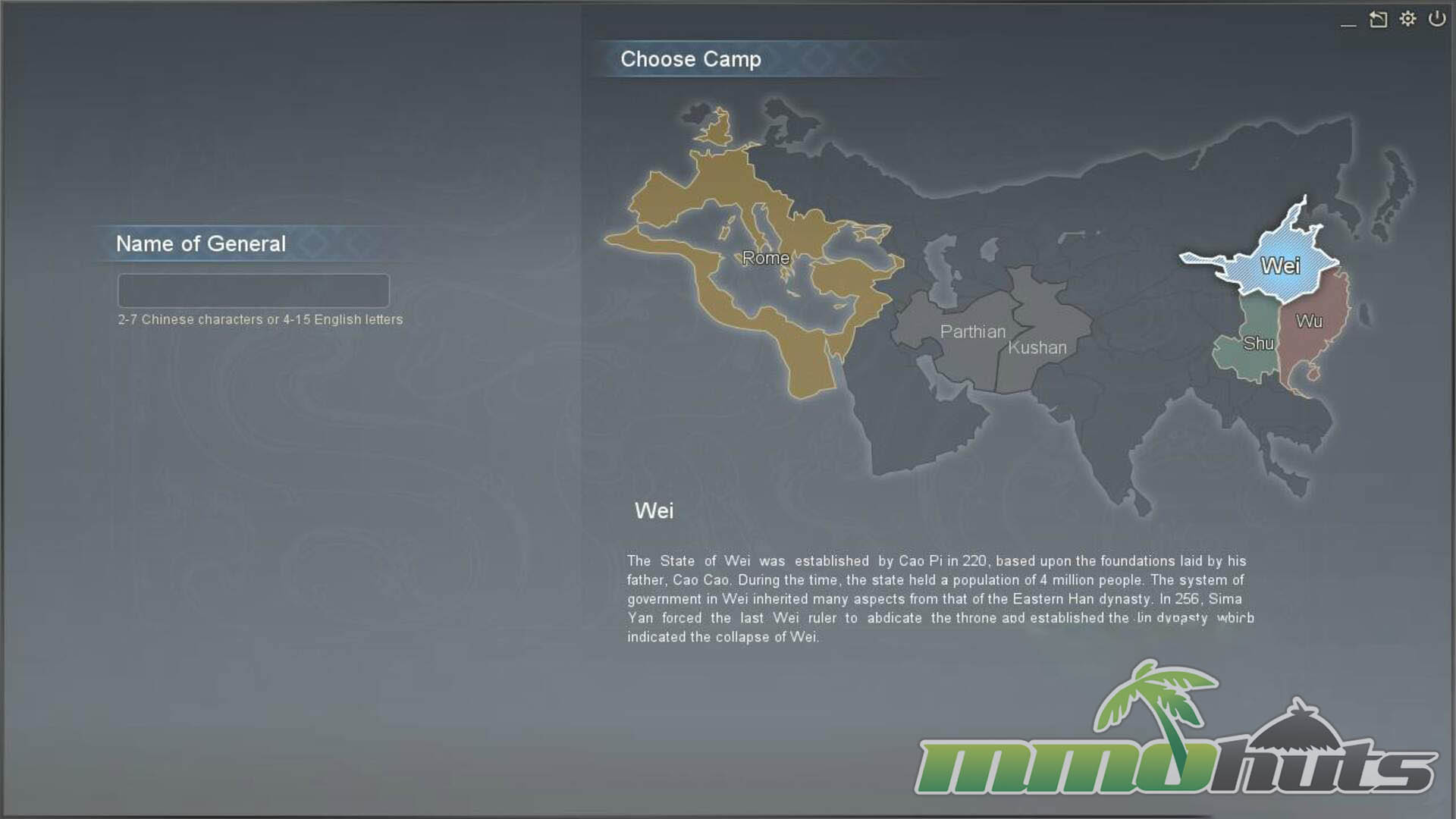
Outside of matches, you build a custom General using a fairly deep face editor, adjusting details like age, eye color, brow shape, and nose proportions. In combat you can issue orders to your soldiers, telling them to push a camp, defend a point, or stay close as an escort while you look for openings. Progression unlocks additional troops, gear, and adjutants (generals) tied to multiple nations and eras, including Rome as well as the Three Kingdoms factions (Wu, Shu, and Wei).
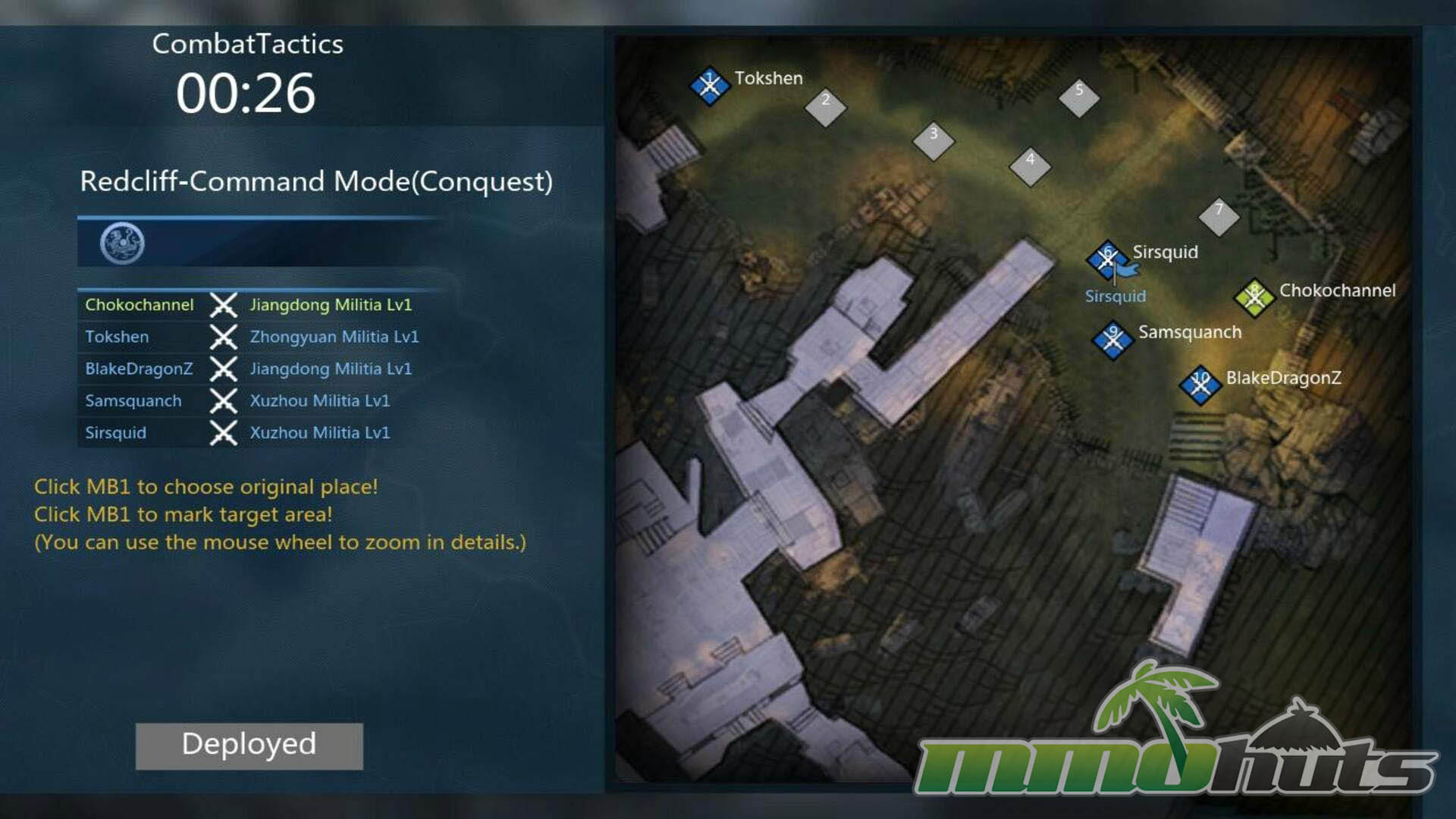
Modes cover both competitive and cooperative play. Epic War offers a team-based PvE scenario where a group assaults a heavily guarded fort, while PvP includes Command-style team matches and one-on-one Duel encounters between Generals. For players who enjoy ranked competition, matchmaking feeds into PvP ladders, and social play is supported through Legion groups, events, and an in-game shop offering equipment and cosmetics.
Tiger Knight: Empire War Key Features:
- Frontline Command Combat – lead a troop unit while personally fighting enemy player Generals in the middle of the formation.
- Four-Angle Melee System – attacks, blocks, and parries are performed using cardinal directions for more deliberate duels.
- Detailed Character Creator – shape a custom General with numerous facial and hair options.
- Progression Through Battle – earn Copper and Prestige from matches to unlock and buy new weapons, armor, and upgrades.
- PvP at Multiple Scales – fight in modes that range from duels to massive 200 vs 200 conflicts.
Tiger Knight: Empire War Screenshots
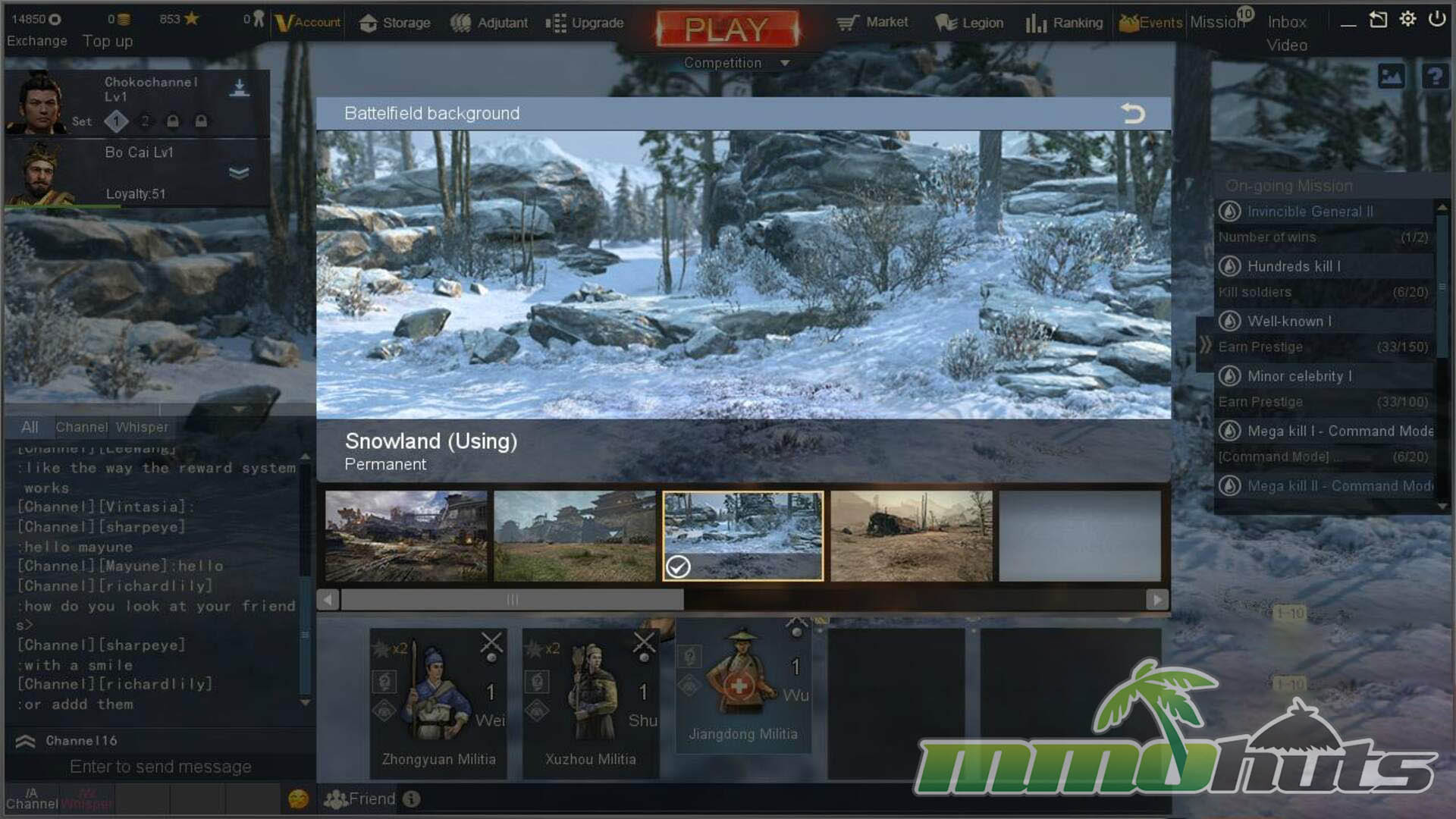
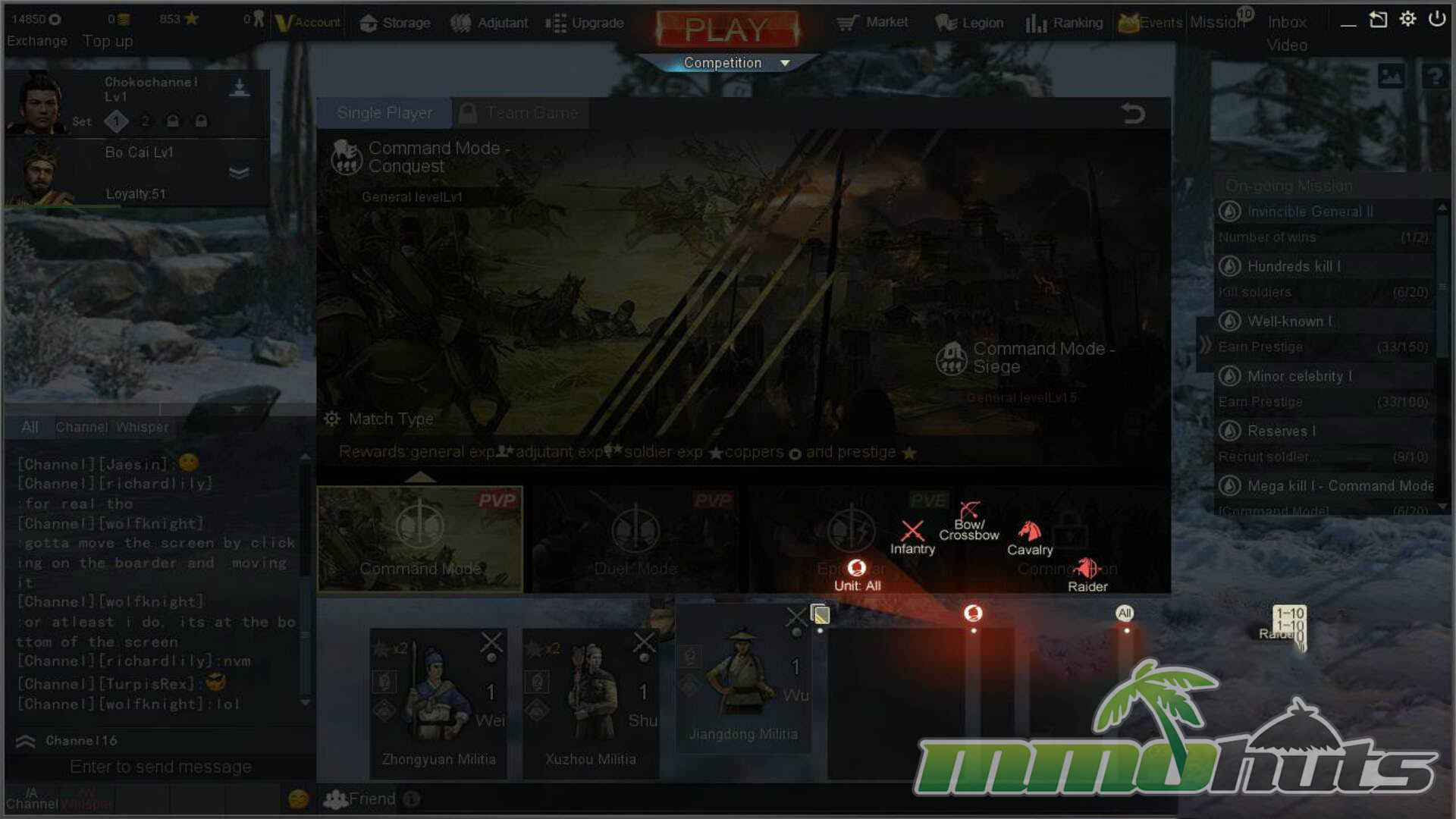
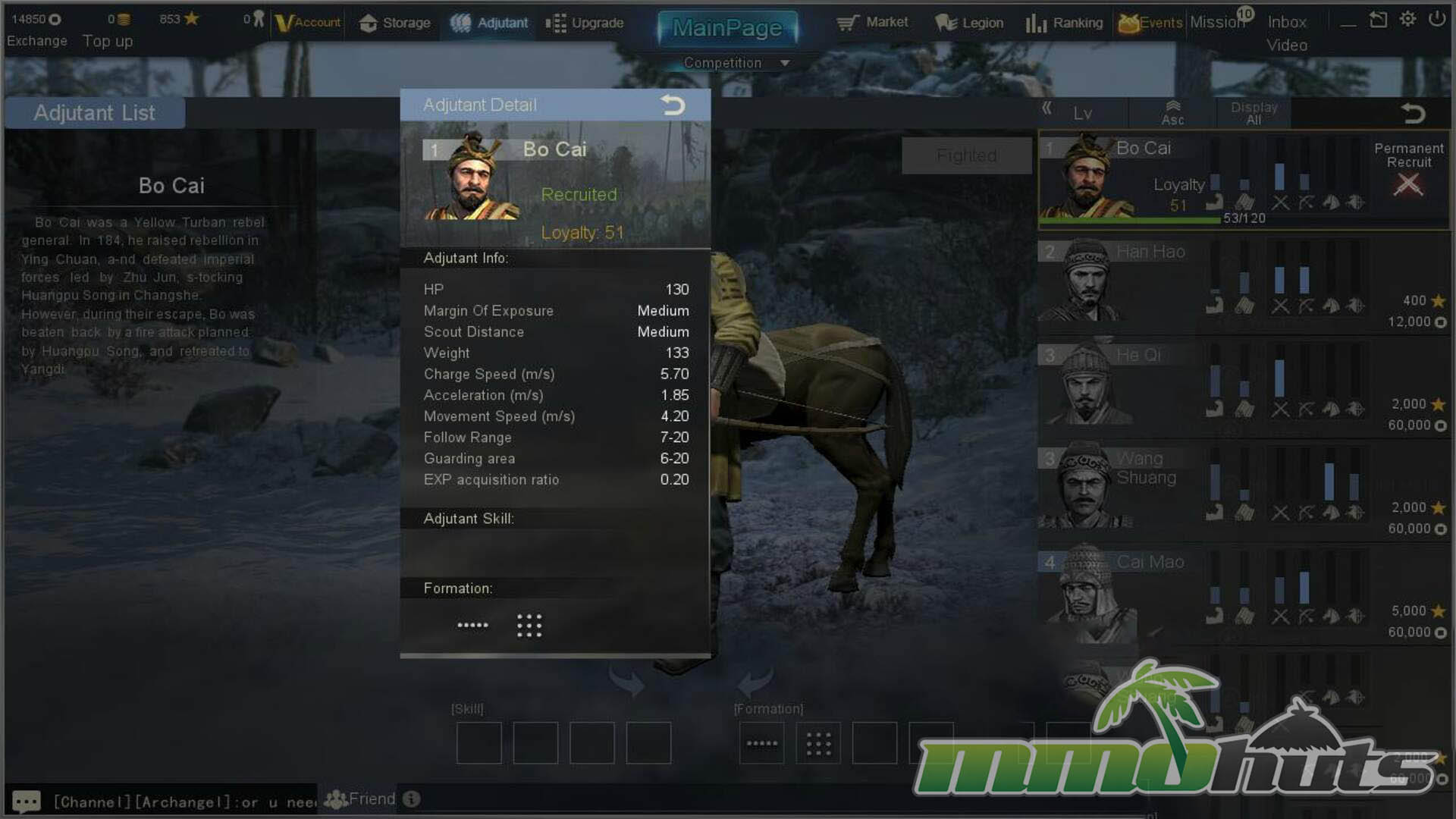
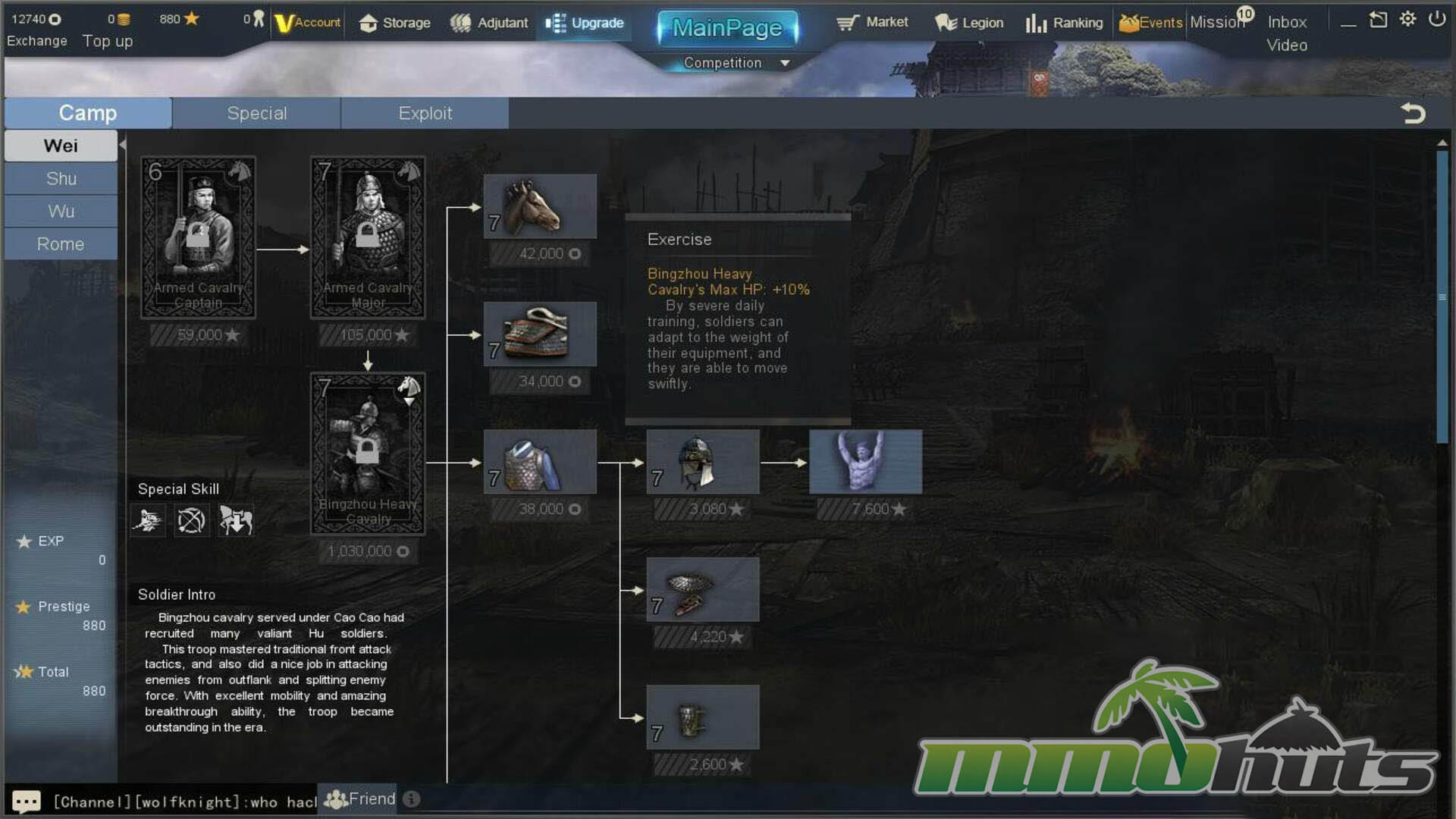




Tiger Knight: Empire War Featured Video

Tiger Knight: Empire War Review
Tiger Knight: Empire War aims for a particular fantasy, being the officer at the center of a chaotic ancient battlefield, cutting through infantry while trying to keep your formation from collapsing. Set in China around 300 BC, it leans heavily into PvP and match-based play, with battles framed as competitive scenarios rather than an open persistent world. Visually, it does not compete with newer medieval combat titles, but the art direction is serviceable and the game generally looks respectable for a free-to-play project built to run on mid-range PCs.
Where it stumbles is performance. When the screen fills with dozens of AI soldiers and multiple player-controlled Generals, frame rate dips can become a real factor in how fights play out. The hub-and-instance structure also makes the experience feel segmented, as you are frequently moving between menus, lobbies, and matches instead of living in a continuous world. Audio does its job, with period-appropriate music helping establish tone, although the heavier, arcade-like clash sounds tend to dominate once combat starts.
Localization That Trips You Up
New players are guided through two early tutorial missions. The first covers basic movement and the directional combat fundamentals, while the second introduces higher-level concepts like unit commands and capturing objectives. Skipping is possible, but it is worth completing at least once because the control scheme has more nuance than it first appears, and the early rewards help you get started. The biggest issue is that some instructions are awkwardly translated, so you may occasionally need to rely on context and experimentation to understand what the game is asking.
Building Your General
After the onboarding, the game moves into character creation. The editor offers a modern MMO-style set of sliders and presets, including fine adjustments for features such as brow thickness and nose width, along with hair and face options. Even with the available controls, many characters end up looking somewhat similar in practice, especially once helmets and armor enter the picture. Still, for players who like tuning a look before committing to progression, the system provides plenty to work with.
Directional Combat: Smart Idea, Uneven Payoff
The signature mechanic is the four-direction attack and defense system. Mouse movement paired with clicks determines the angle of your strike, with different directions producing different slashes and thrusts. This adds a layer of intent to each exchange, making timing and reads matter more than in typical hack-and-slash combat. Charged attacks and mounted engagements further emphasize spacing, and missing a committed swing can feel punishing when an opponent capitalizes.
In practice, the system shines most in General-versus-General duels, where the pace is slower and mind games matter. Unfortunately, Duel Mode can involve very long queue times, which makes it hard to treat as the main way to play. In the more common 5v5 Command matches, combat often turns into crowded skirmishes where wide swings and long-reach weapons can be effective simply because there are so many bodies in front of you. Friendly fire being disabled keeps team fights from becoming frustrating, but it also removes one tactical consideration that could have made positioning feel more meaningful.
Third-Person Battles With RTS Decisions
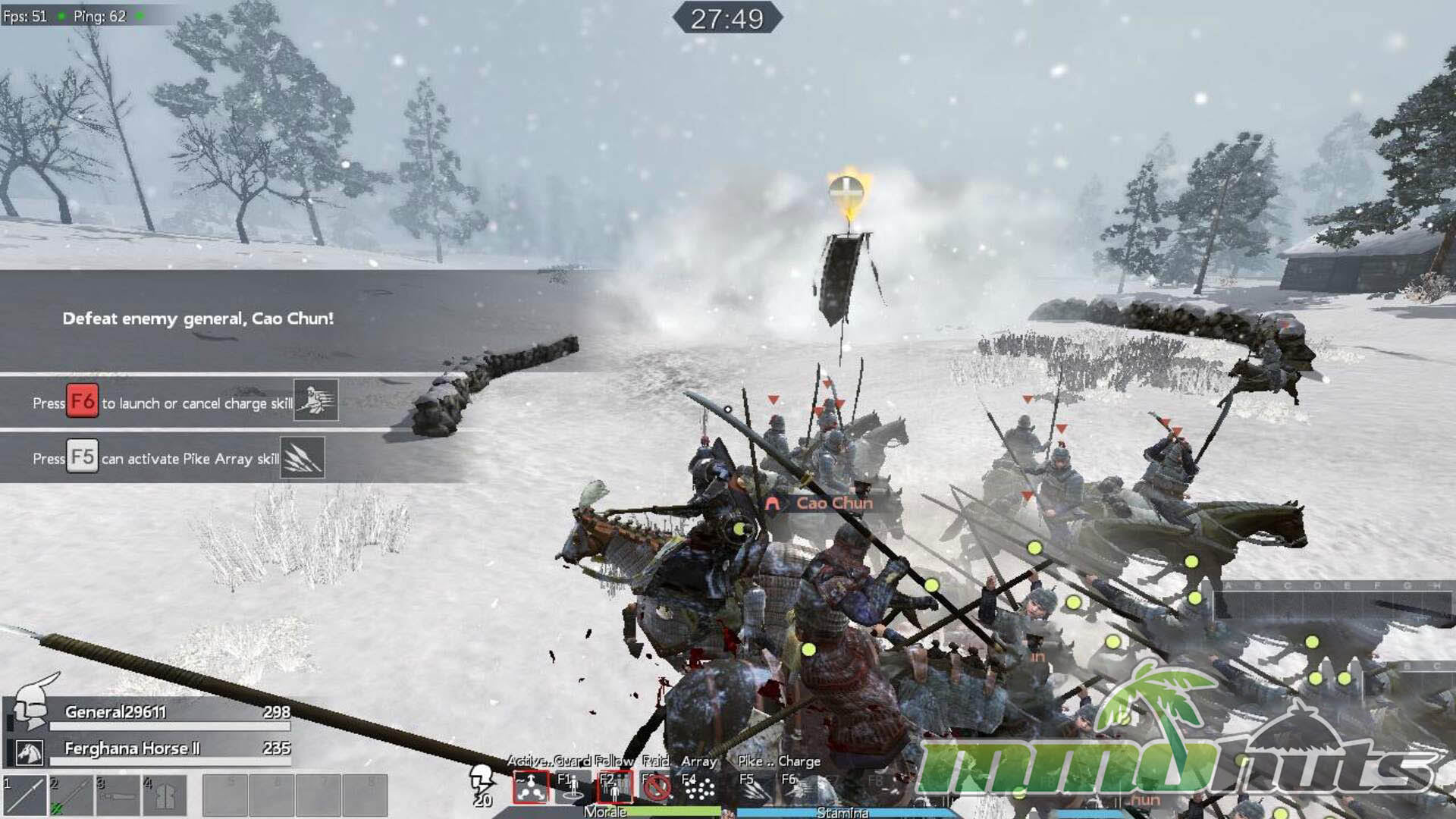
The most interesting part of Tiger Knight: Empire War is how it blends personal action with light real-time strategy. You are not just a hero unit, you are also responsible for a squad with strengths and weaknesses that matter. Unit types cover classic roles, including spear infantry, archers, and armored cavalry, and matchups are fairly intuitive. Cavalry can punish exposed ranged lines, pikes can blunt charges, and archers pressure infantry that lacks cover.
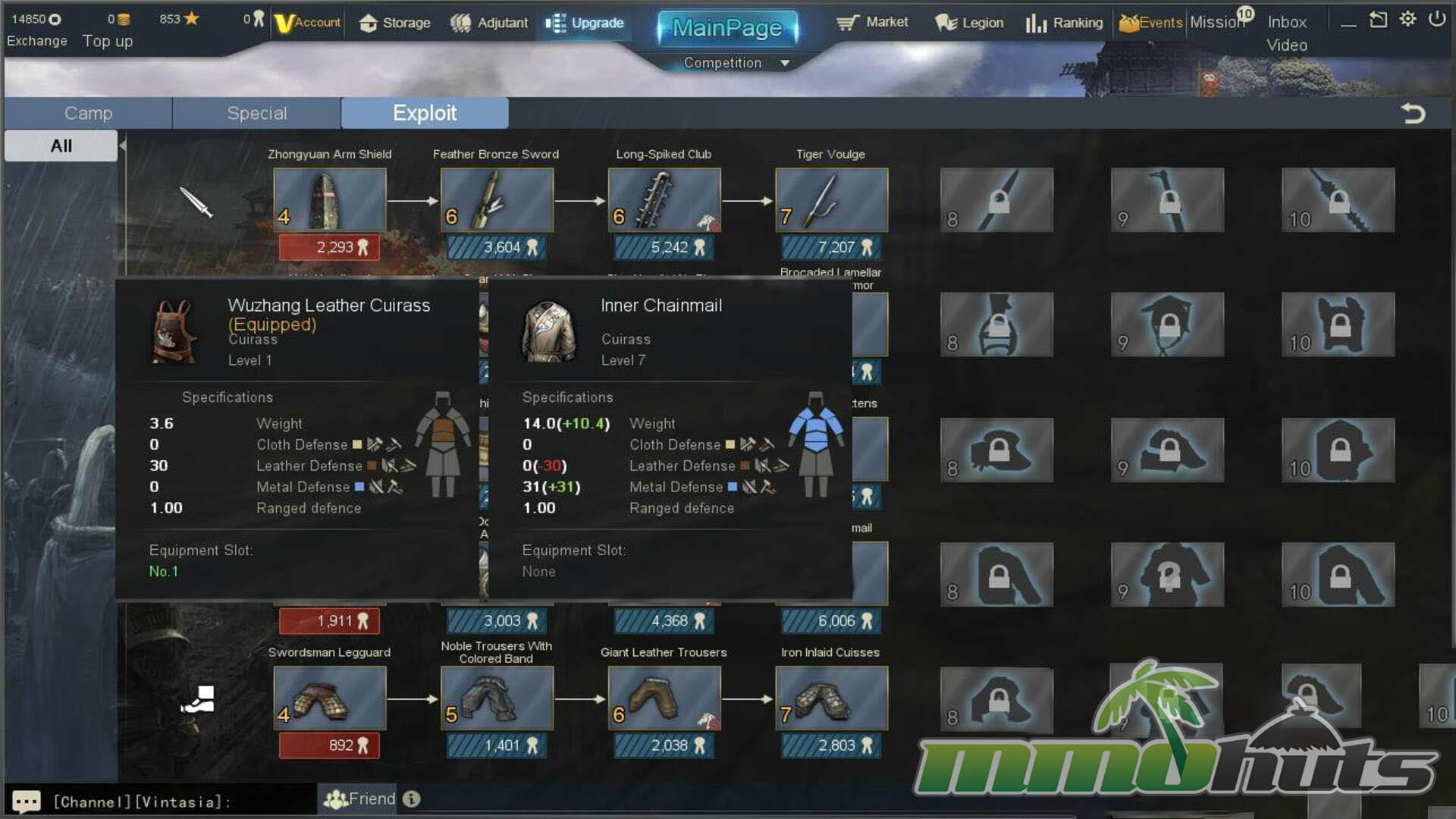
Between matches, you improve units and equipment using Copper and Prestige earned from play. The game supports both aggressive play and more measured tactics. Charging into the scrum can work, but smart decisions like placing archers on high ground, holding choke points, and disengaging from unfavorable fights often decide the outcome. True flanking is harder than it sounds because enemy proximity is easily tracked on the minimap, which reduces the value of stealthy repositioning.
Epic War and Fort Assaults
Alongside PvP, the co-op Epic War mode offers a change of pace. Five players team up to take down a fortified AI position across three difficulty levels. This mode tends to produce longer, more structured fights, with defenders, siege pressure, and a stronger need for coordination compared to standard competitive playlists. With large defending forces and environmental threats (including bombardment), Epic War is often the most satisfying option for players who want spectacle and teamwork without the volatility of PvP matchmaking.
VIP Bonuses and Store Oddities
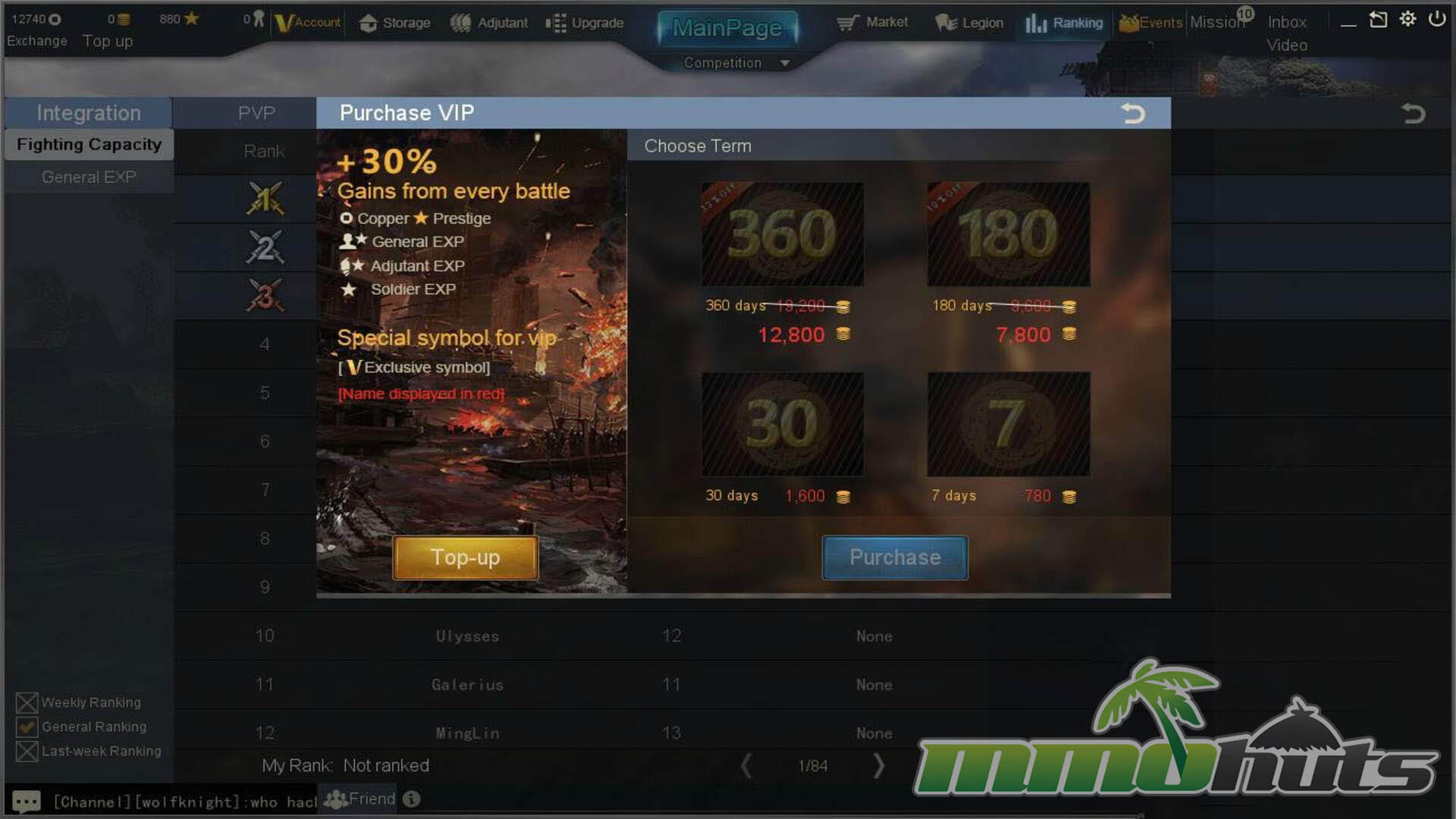
Monetization includes an optional VIP status that costs around $4 for 7 days and roughly $50 for a year, increasing match rewards by 30%. The store also sells convenience items such as medkits that provide healing during battles, plus a selection of cosmetics. Some of the cosmetic choices are intentionally strange, including novelty helmets like goat heads and fish heads, which stand out sharply against the otherwise grounded battlefield theme. Most other shop items are obtainable through normal play using in-game currency, although many still require unlocking through the tech tree before purchase.
Final Verdict – Good
Tiger Knight: Empire Wars delivers a compelling concept, being a third-person action fighter layered on top of formation tactics, and it offers enough variety in modes to keep matches from feeling identical. Its main problems are technical and structural: optimization issues during big engagements, a limited selection of maps, clunky-feeling combat at times, and Duel queues that can be unreasonably long. Even so, when everything clicks, the game captures the intensity and confusion of mass battles better than many peers, and Epic War in particular is an easy recommendation. Since it was free-to-play during its lifetime, it was an easy title to sample, and overall it lands as a good game with clear strengths held back by execution issues.
Tiger Knight: Empire War Links
Tiger Knight: Empire War Official Site
Tiger Knight: Empire War Steam Page
Tiger Knight: Empire War Steam Greenlight
Tiger Knight: Empire War Facebook Page
Tiger Knight: Empire War Steam Discussion Page
Tiger Knight: Empire War System Requirements
Minimum Requirements:
Operating System: Windows 7 / 8 / 10
CPU: 3.0 GHz Dual core or equivalent
Video Card: DirectX 9 compliant graphics card with 1024MB RAM
RAM: 4 GB
Hard Disk Space: 10 GB
Recommended Requirements:
Operating System: Windows 7 / 8 / 10
CPU: 3.7 GHz 4 core or equivalent
Video Card: DirectX 11 compliant graphics card with 2048MB RAM
RAM: 8 GB
Hard Disk Space: 10 GB
Tiger Knight: Empire War Music & Soundtrack
Coming soon!
Tiger Knight: Empire War Additional Information
Developer(s): NetDragon Websoft Holdings Limited
Publisher(s): Oasis Games
Platform(s): PC
Game Engine: Unreal Engine 3
Language(s): English, Chinese
Steam Greenlight Post Date: September 9, 2016
Steam Greenlight Award Date: September 20, 2016
Early Access Release Date: October 24, 2016
Release Date: Q4 2016
Shut Down Date: January 10, 2018 (Oasis Games)
Relaunch (Netdragon): January 11, 2018
Shut Down: October 12, 2021
Development History / Background:
Tiger Knight: Empire War is a free-to-play 3D action strategy MMO developed by NetDragon Websoft Holdings Limited, a China-based MMORPG and mobile game developer, and published by Oasis Games, also known for Naruto Online. It surfaced on Valve’s Steam Greenlight in September 2016 and was approved in under two weeks. The title then launched on Steam in Early Access on October 24, 2016.
Tiger Knight: Empire War shut down on January 10th, 2018. The shut down announcement was posted on Steam on December 20th, 2017. After Oasis Games ended service, the developer NetDragon Websoft brought the game back to Steam the next day. It was later removed from Steam and shut down on October 12, 2021.