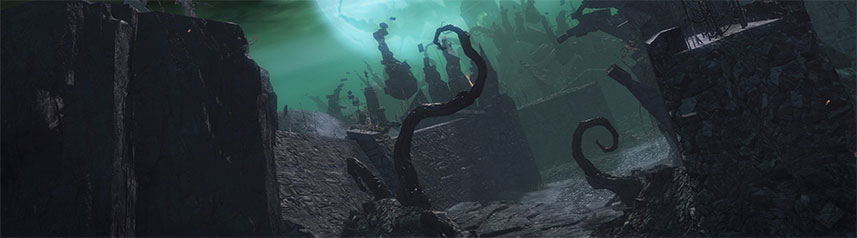
Summoner’s Legion is a free-to-play trading card MMO built around a simple hook that changes how matches play out, your cards are not just numbers on a board, they deploy onto lanes and become animated units that march forward and fight. That lane placement turns deckbuilding into only half the puzzle, because positioning, blocking, and protecting fragile backliners matters just as much as what you draw. In practice it feels like a Hearthstone-style ruleset filtered through a lightweight auto-battler battlefield, with both PvP arenas and PvE modes to support long-term play.
 | Publisher: R2 Games Playerbase: Medium Type: Browser Card Game Release Date: January 21, 2015 (International) Shut Down Date: February 28, 2017 PvP: Arenas Pros: +Lane-based summoning adds real tactical decisions. +Co-op dungeons for group PvE. +A sizeable solo campaign to learn and grind. Cons: -AFK-style automation makes outcomes feel less earned. -Monetization can create pay-to-win pressure. |
Summoner’s Legion Shut Down on February 28, 2017
Summoner’s Legion Overview
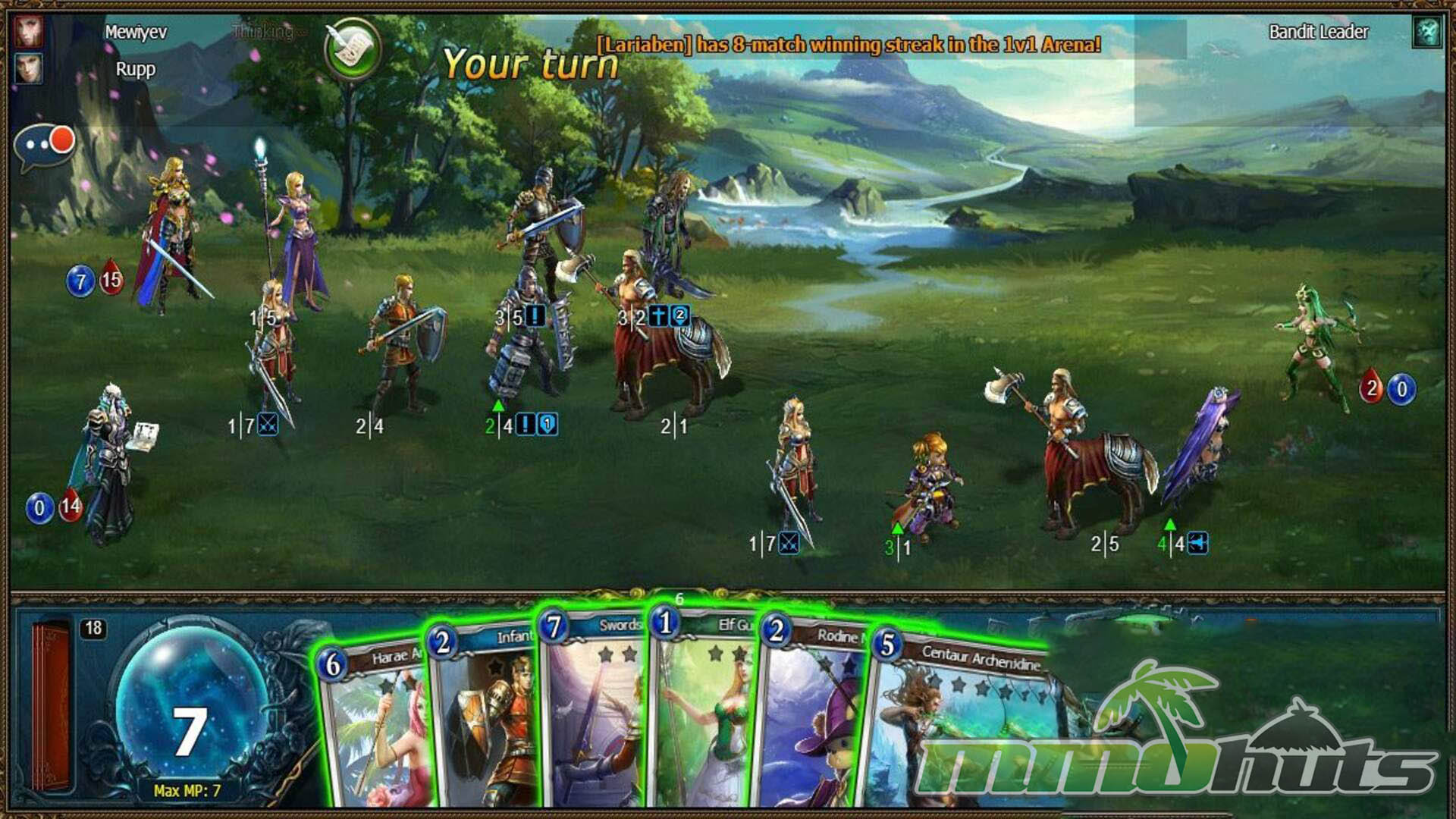
Summoner’s Legion blends collectible card game deckbuilding with a small-scale battlefield where units physically occupy lanes and advance toward the enemy. You play as a summoner, assemble a deck, and then spend mana to deploy creatures and effects across rows of tiles, aiming to break through and reduce the opposing hero’s health to zero. If you have experience with Hearthstone or Magic: The Gathering, the fundamentals will be familiar, but the lane placement layer changes how you value cards, tempo, and defensive bodies.
Summoner’s Legion Key Features:
- Four Playable Heroes – each with their own weapon and active abilities usable alongside any deck.
- Five Races – tied to the kinds of abilities and card themes you can lean into.
- Hundreds of Cards – a wide pool with different rarities and power levels to chase.
- Multiple Game Modes – including Arena PvP, Dungeons, and a Solo Campaign.
- Crafting System – upgrade your favorites and convert extras into useful materials.
Summoner’s Legion Screenshots


Summoner’s Legion Featured Video

Summoner’s Legion Review
Summoner’s Legion is a free-to-play collectible card MMO from R2 Games (also known for Stormthrone: Aeos Rising), released internationally on January 21, 2015 via the company’s own portal. It positions itself in the same broad space as Hearthstone, with streamlined turns, mana-based deployment, and readable card roles, but differentiates itself with a lane battlefield where summoned cards become units that move and attack automatically. During its lifetime, R2 Games also leaned into competition with championship events and showcased winning deck breakdowns, which helped reinforce the idea that, at its best, the game is about planning and synergy rather than raw randomness.
Getting Your Feet Under You
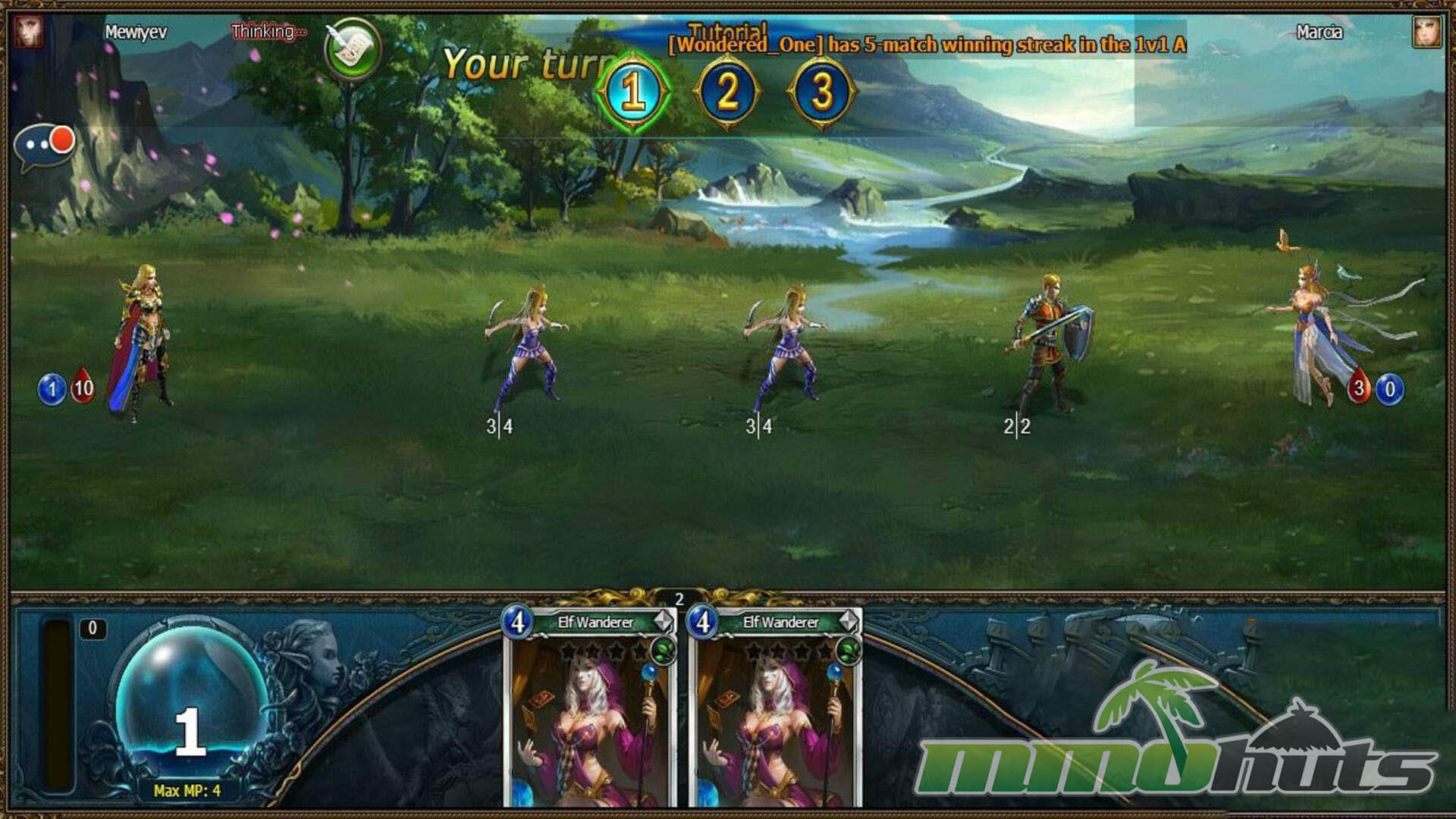
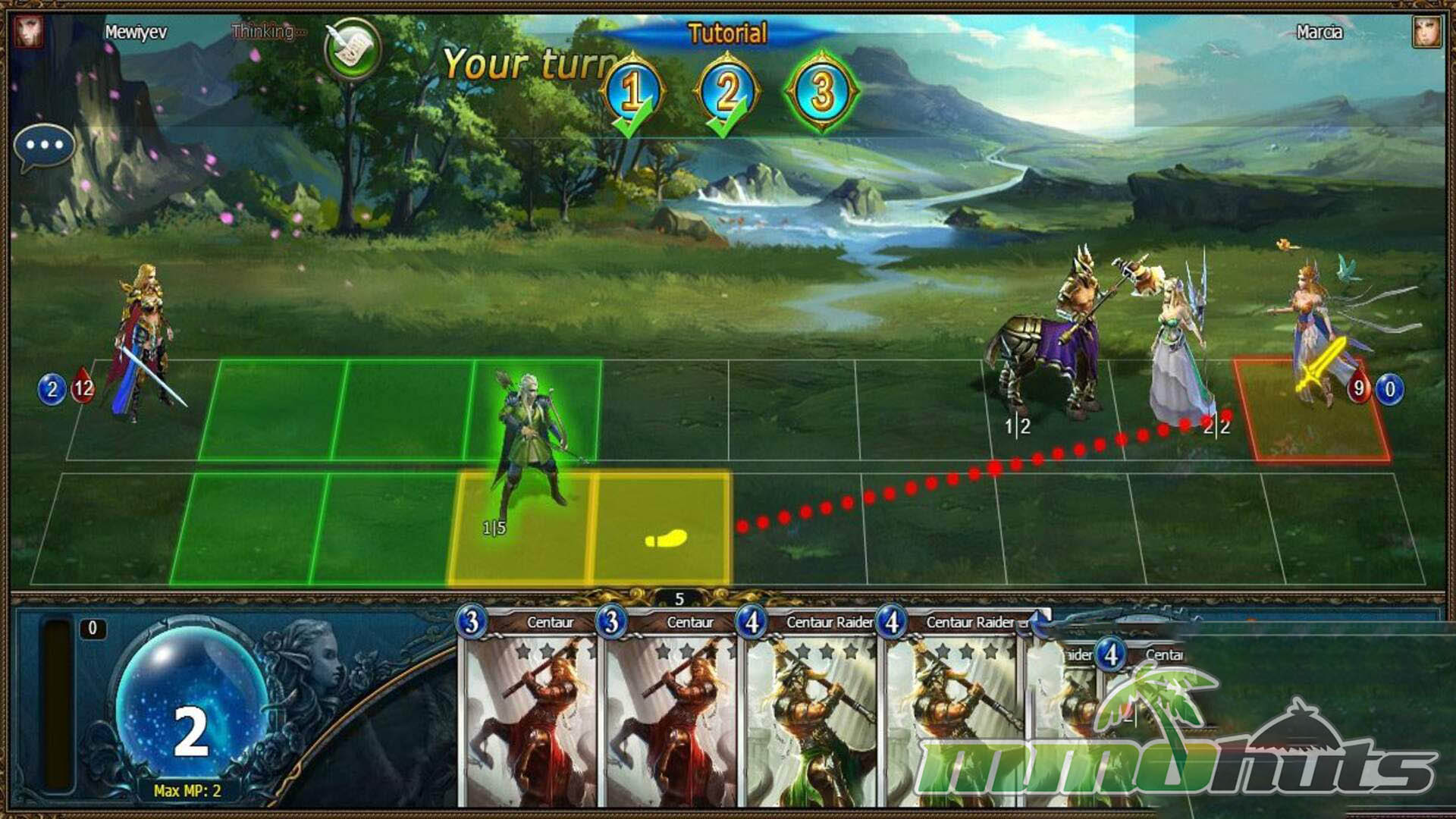
Early onboarding is quick and to the point. The opening tutorial sequence is split into three parts and introduces the basics first, then gradually layers in the more situational mechanics. Once you are through that, the game nudges you into the solo campaign, which continues teaching through match objectives and gentle tips rather than constant popups. The ruleset is not especially hard to learn, most of the nuance comes from how units interact on the lanes and how well your deck’s cards support each other.
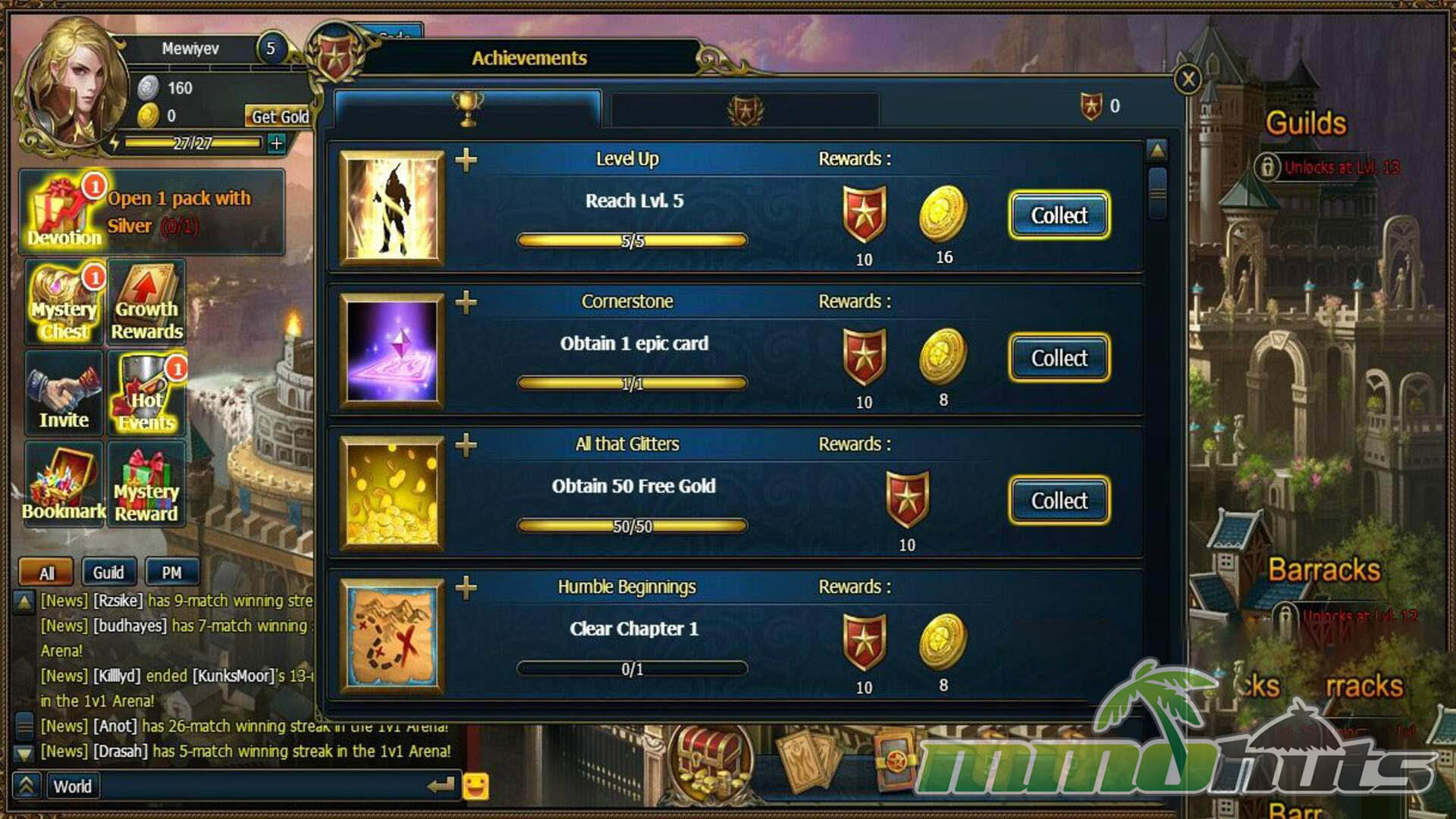
Like other R2 Games titles, Summoner’s Legion includes an AFK-style option that shifts it toward a more casual rhythm than many card battlers. You also start seeing the dual-currency economy early on: Silver as the everyday resource, and Gold as the premium currency that the campaign can occasionally drip-feed to give you a glimpse of the shop’s power.
Core Combat Loop
At a rules level, matches follow a familiar collectible card structure. You begin with four cards in hand and can swap out any number of them before the first turn, a mulligan system that reduces the number of non-games caused by bad opening draws. Each turn increases your mana by one, and you spend that mana to deploy units or trigger effects. Expensive cards generally bring stronger stats or more impactful abilities, but stacking too many high-cost cards makes you stumble early, so a sensible curve still matters.
Where the game stops feeling like a straight Hearthstone cousin is the moment you place your first unit.
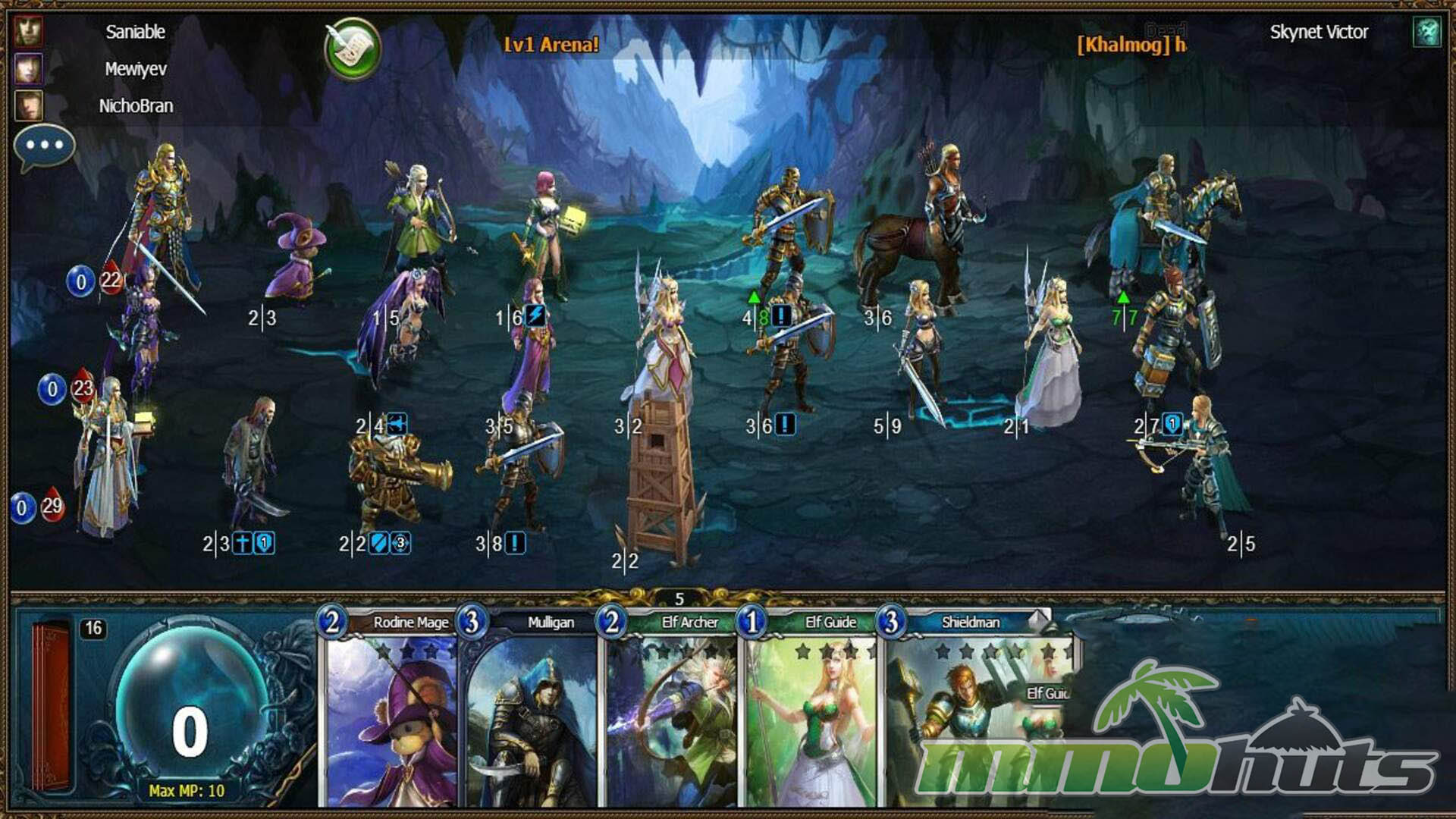
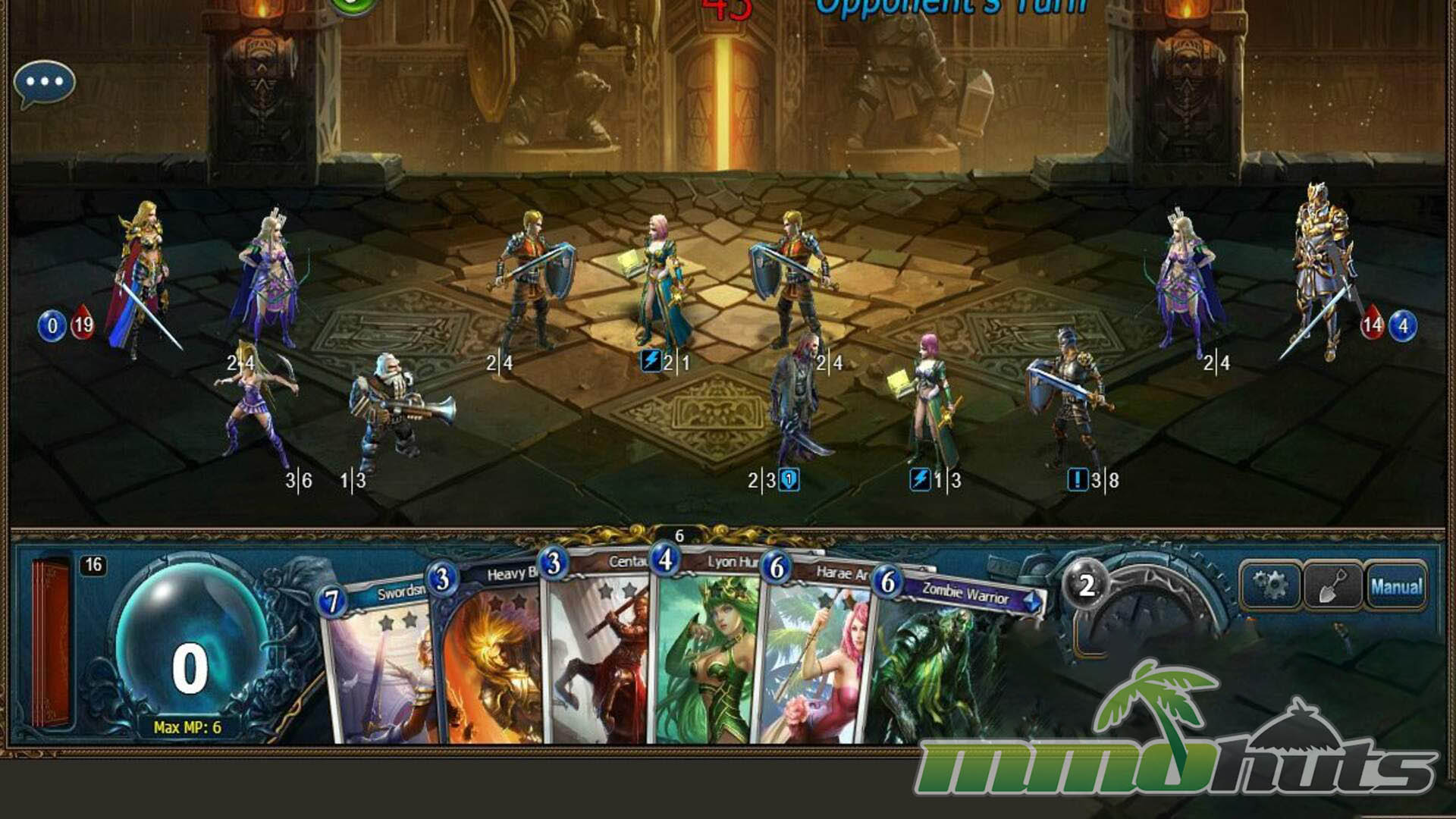
Instead of a static board, the fight takes place on rows of tiles between you and your opponent. When you summon a card, you choose one of the first three open tiles closest to your hero, in any lane. The number of lanes depends on mode: PvP typically uses two lanes, the campaign also uses two, and dungeons expand to three. Once deployed, units walk forward each turn and attack whatever is in front of them, with behavior influenced by their abilities and ranges.
That movement system makes formation a real tactical choice. Tougher bodies usually want to be positioned to absorb hits first, while fragile damage dealers or ranged threats benefit from being protected behind them. You can win only by navigating that spatial puzzle effectively, because misplacing a key unit can clog a lane, expose your backline, or allow the opponent’s push to slip through.
Heroes and Class Identity
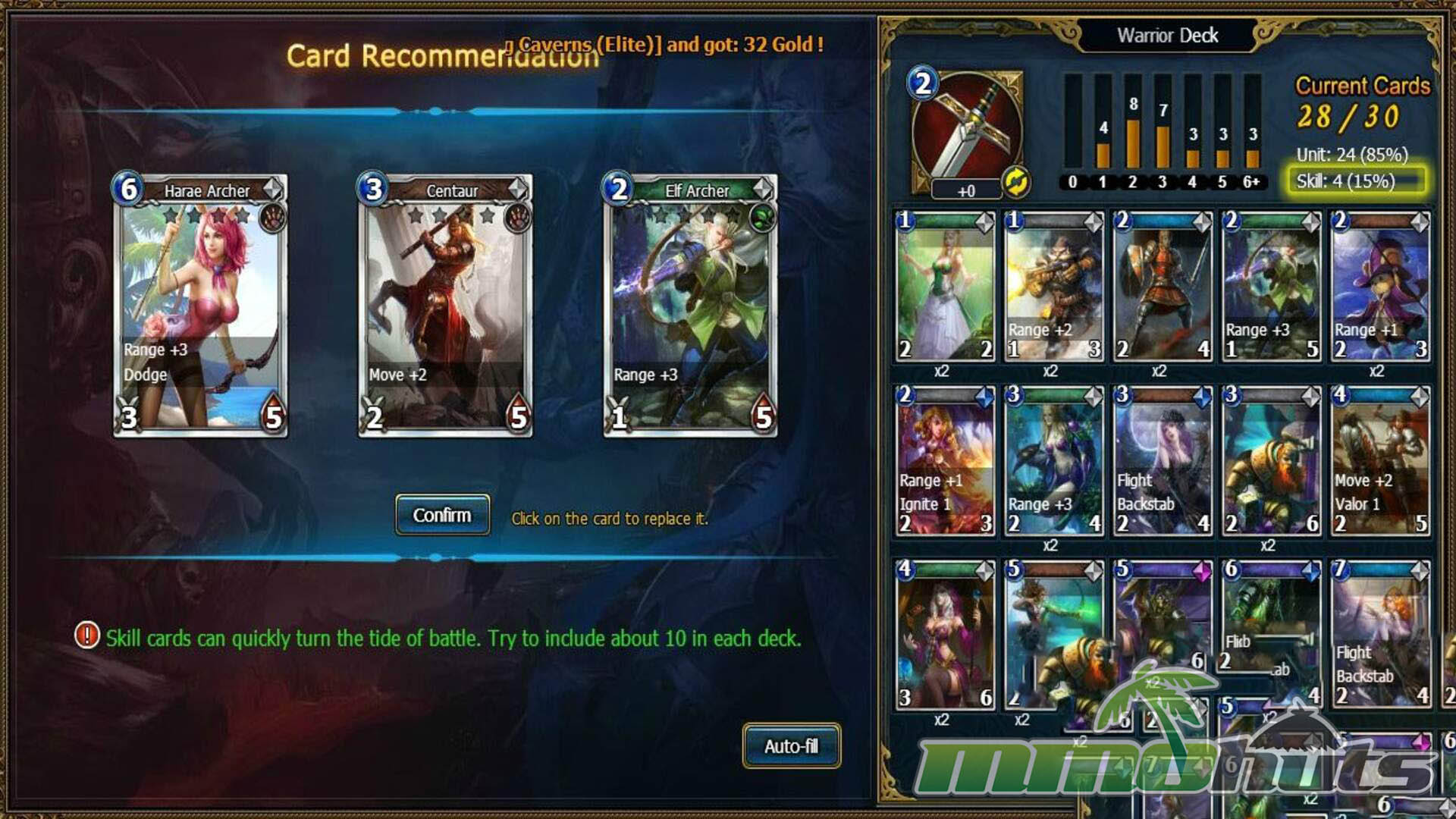
Deckbuilding starts by choosing one of four hero archetypes: Mage, Warrior, Priest, or Ranger. Each comes with an upgradable weapon and a distinct active ability that shapes how you trade and how you close out games. Mage focuses on damage over time, Ranger can directly damage units, Priest brings healing for allied troops, and Warrior boosts allied attack by +1. On top of that, each class has access to specific skill cards that reinforce its intended style.
In theory, the class lineup supports multiple viable approaches, and the variety seen in high-level decks during official tournament coverage suggested there was room for different builds. In practice, balance was uneven, and competitive play tended to skew toward Ranger and Priest, with Mage and Warrior showing up far less in later stages.
Deckbuilding and Card Variety
One of the game’s strongest points is that the card pool encourages experimentation. You are not locked into a narrow faction-only deck structure, so mixing different races and themes is straightforward. The roster ranges from classic fantasy staples to more stylized creature types, and even early collections can produce noticeably different decks because many cards fill specialized roles.
As with most mana-based card games, the curve is a constant concern. A well-built deck needs playable options across the entire match, not just a handful of late-game bombs. That said, certain strategies intentionally break the usual curve rules. For example, aggressive Ranger lists can aim to pressure the enemy hero quickly with low-cost units while leveraging the hero ability to push damage, while some Priest builds lean defensive, using bulkier high-cost units and healing to stabilize and punish rush strategies.
Getting Cards and Improving Them
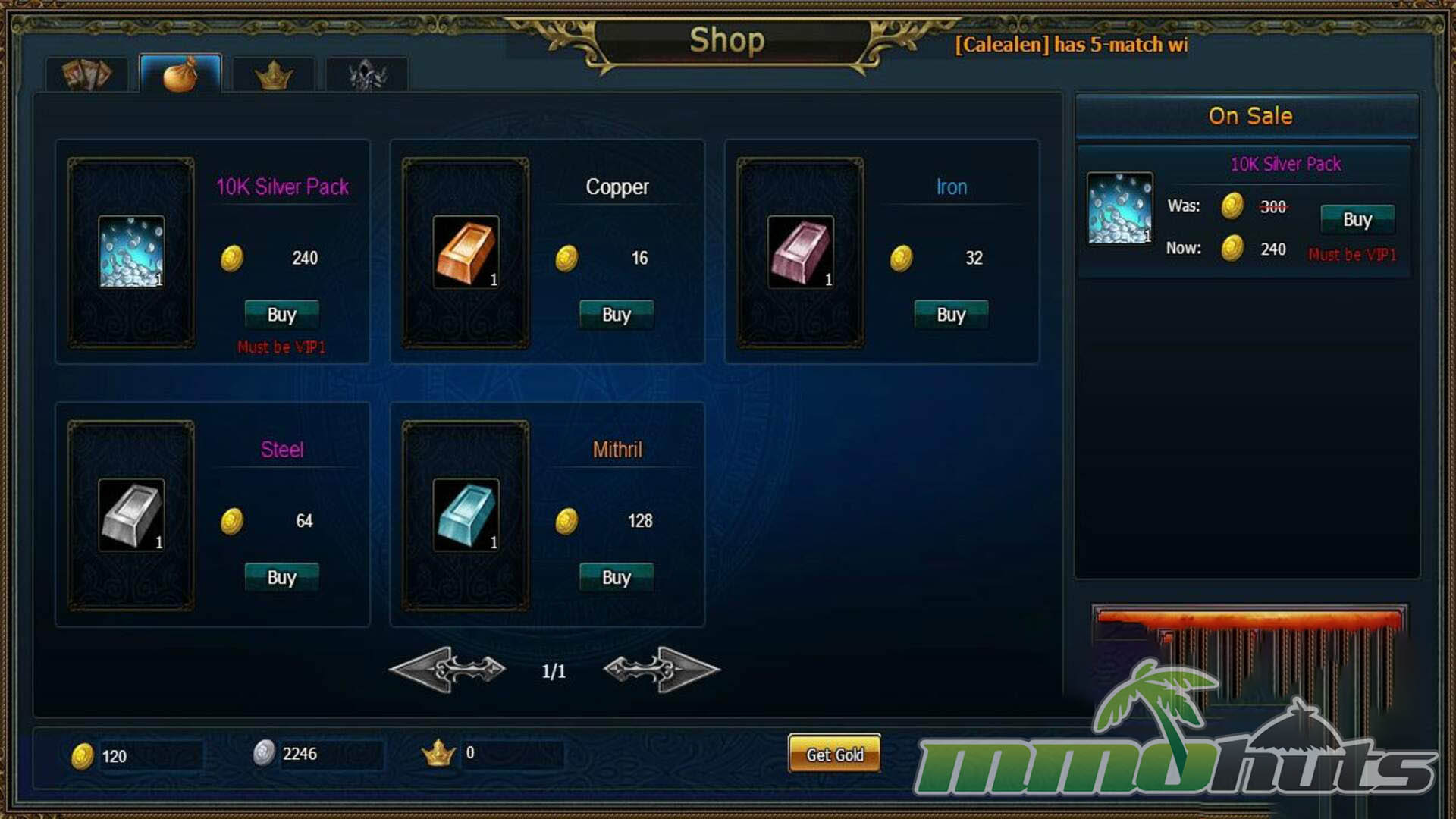
Progression offers multiple paths to expand your collection. Booster packs can be bought through the shop using either standard currency or premium currency, and packs award randomized cards. Beyond that, cards and resources are distributed across modes: campaign clears, dungeon rewards, achievements, and PvP currency all contribute to steady growth.
A notably “idle-friendly” system is the Barracks. Here, you recruit Mercenaries and send them out to train for a set amount of time, then collect the results later. Rewards commonly include experience and Silver, with occasional additional items such as cards. It fits the game’s overall theme of allowing advancement even when you are not actively playing matches.
Upgrades are handled through the Alchemist in the hub. Improving a card increases its stats while keeping the same mana cost, which means upgrades translate directly into power and become important for serious PvP. The materials involved are Magic Dust and Magic Shards, earned largely through PvE content, with the option to accelerate progress using premium currency. There are also level gates, so brand-new accounts cannot instantly max everything without first investing time.
The recycling system helps manage duplicates. Since decks are limited to two copies of a card, extra copies can be converted into the same materials needed for upgrades, which is especially useful once your collection grows.
Modes: PvP and PvE
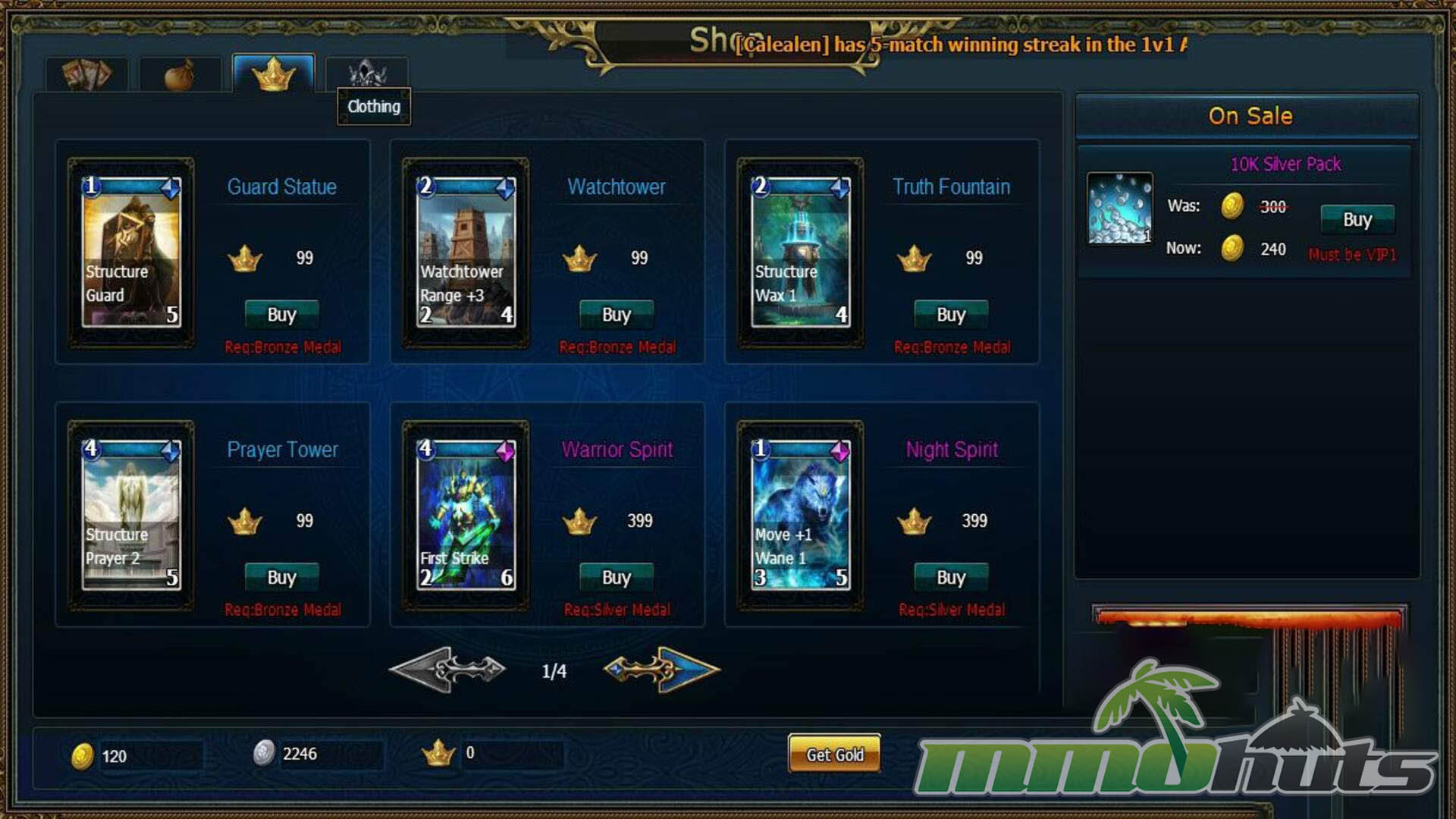
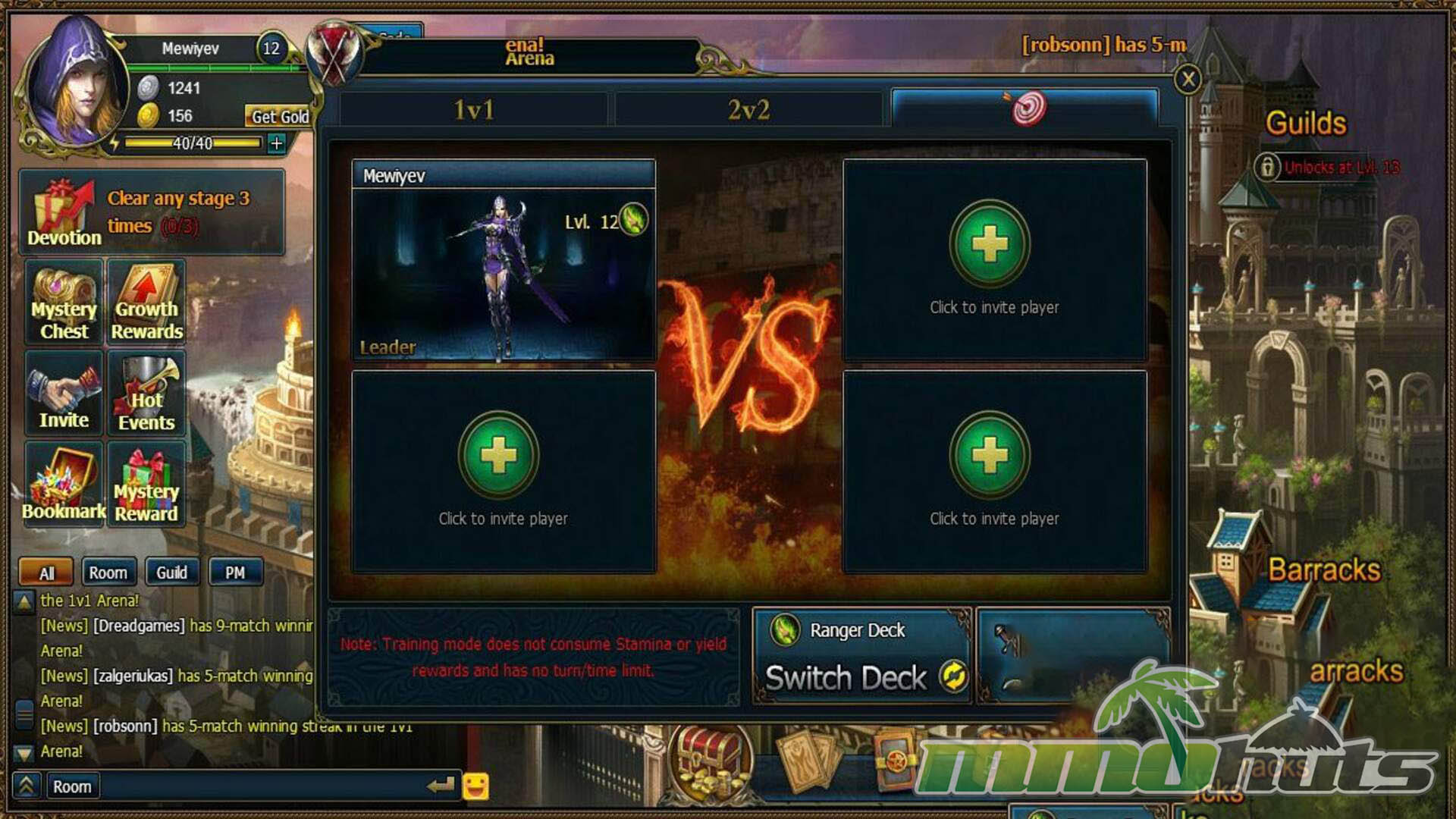
Competitive play centers on the Arena, featuring ranked progression and win-streak incentives. Both 1v1 and 2v2 ladders are available, and doing well earns Arena currency that can be spent on cards, with the shop selection unlocking as your rank improves. There is also a non-ranked training option that lets players test builds without risking their rating.
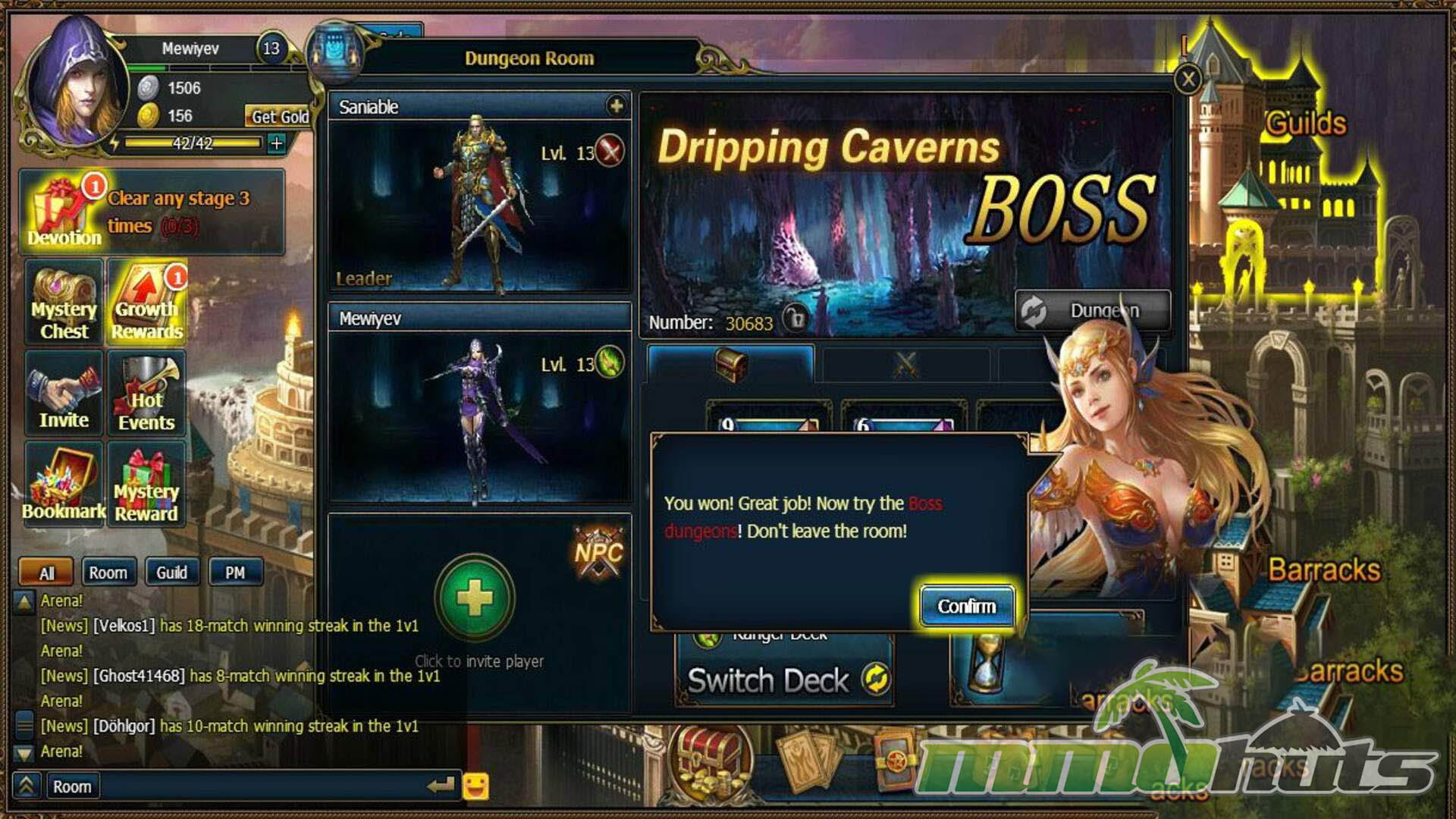
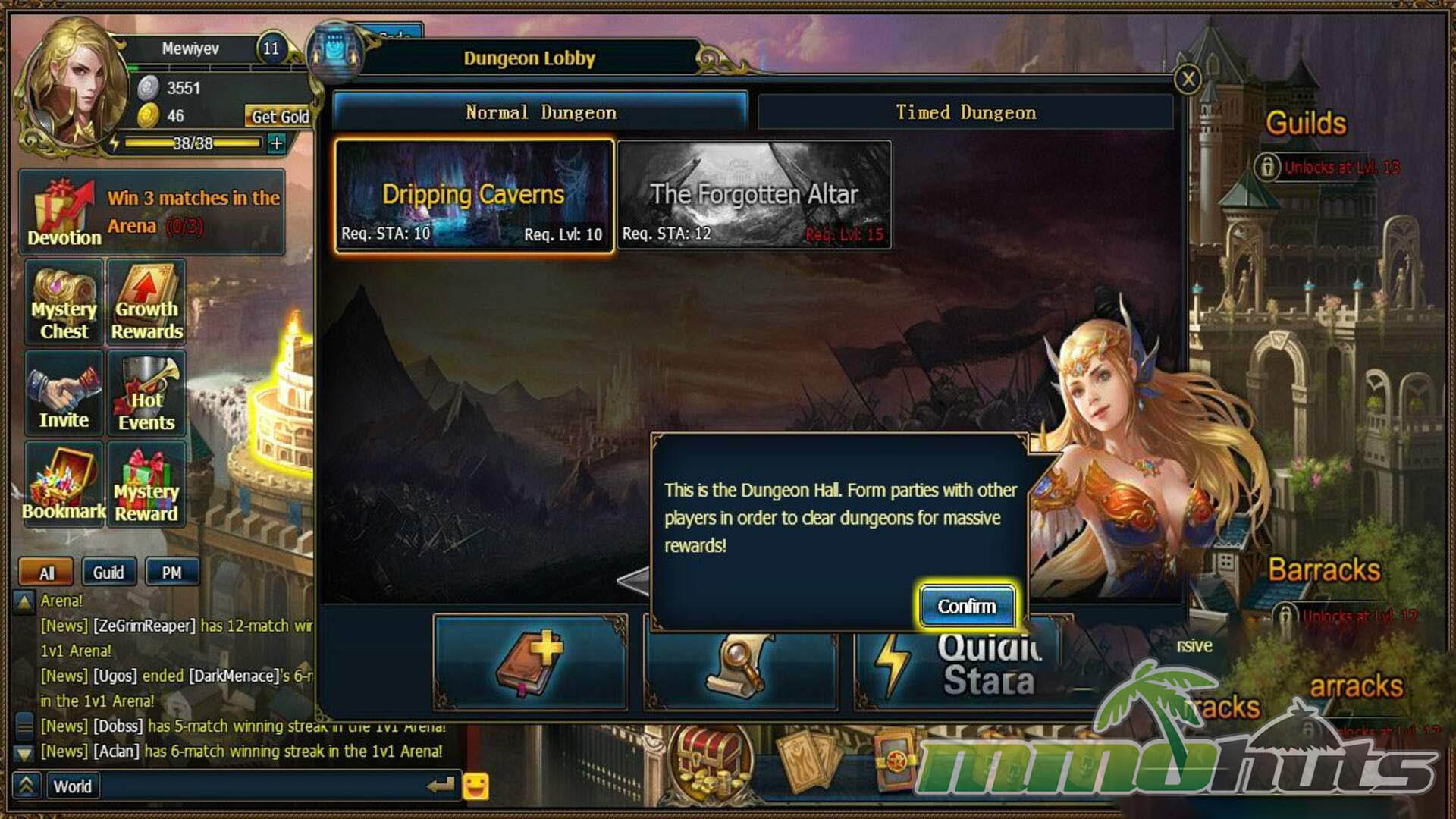
On the PvE side, the standout is the Dungeon mode, which supports three-player co-op against challenging NPC encounters. Dungeons can reward cards, upgrade resources, and even premium currency, giving them a meaningful role beyond simple practice. The solo Campaign provides a longer single-player path with first-clear rewards and a smoother difficulty curve, and it generally avoids some of the sharper balance frustrations that can show up in PvP.
Monetization and Competitive Pressure
The cash shop sells bundles and booster packs, including options that guarantee at least one rare card at a relatively low price point. While Gold can be earned through play, the rate is slow enough that paid users can progress faster and more consistently. Premium currency can also be used for conveniences and power, including card and weapon upgrades, instantly finishing single-player stages, and claiming recurring special rewards.
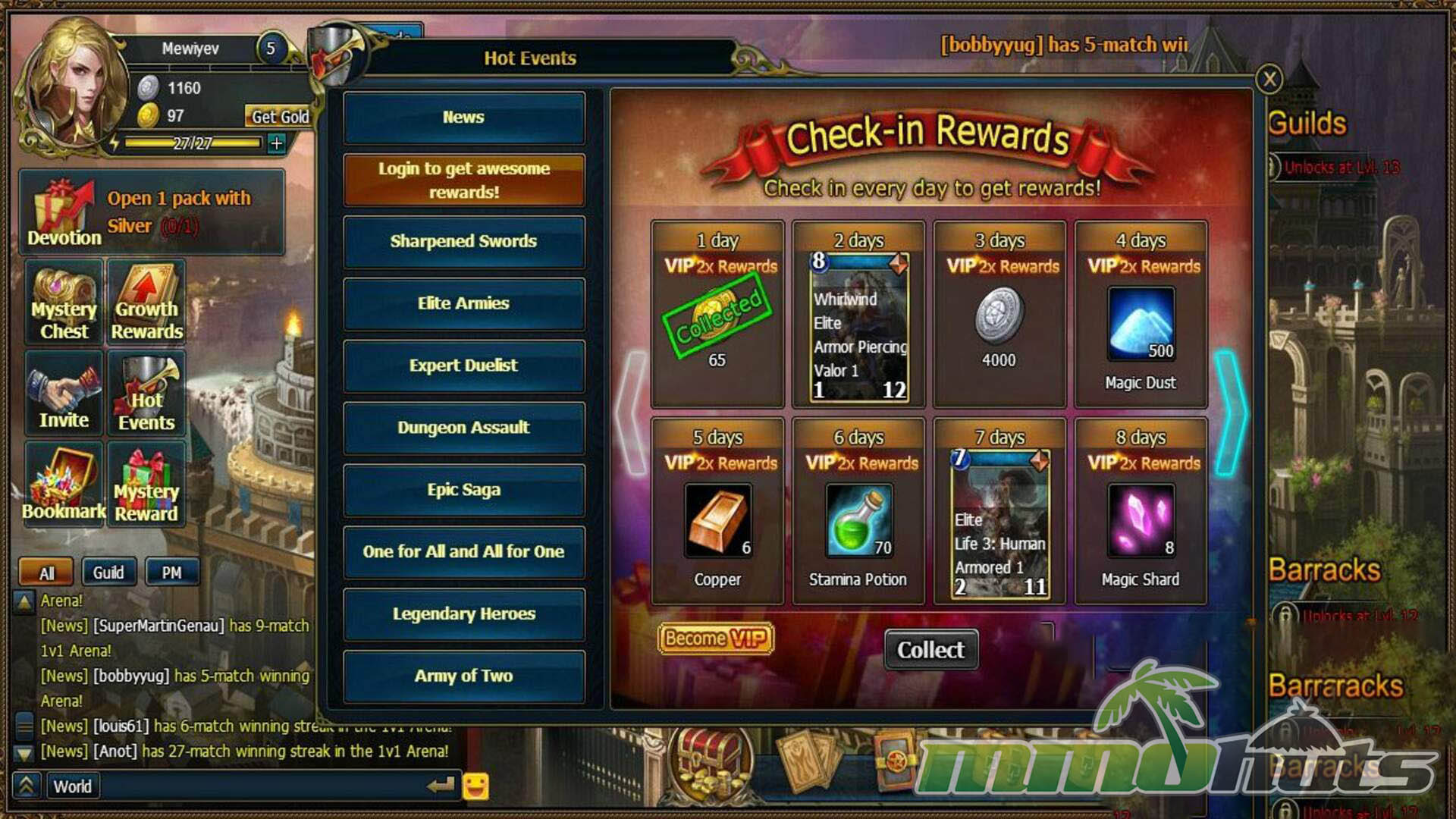
VIP status, offered via subscription, pushes the advantage further with additional benefits, a familiar model for the publisher. Players focused primarily on campaign and co-op can largely ignore the worst of it, but anyone trying to climb Arena rankings will feel how spending can tilt matchups and speed up access to stronger, upgraded collections.
Final Verdict – Fair
Summoner’s Legion had a genuinely interesting idea at its center. The lane-based battlefield makes card placement matter in a way most browser CCGs do not, and the co-op dungeon format is an appealing change of pace for players who want group PvE in a card-driven game. Unfortunately, several design choices undercut that potential. Allowing AFK-style play even in PvP and dungeons reduces the sense that decisions determine outcomes, and wins can feel less satisfying than they should in a strategy-focused genre.
Presentation also struggled, with a clunky interface and uneven art direction, including cases where different cards appear to reuse very similar visuals. Combined with pay-to-win pressure in competitive progression, Summoner’s Legion ends up as a clever concept that did not fully deliver on the strategic promise its battlefield system suggested.
Summoner’s Legion Links
Summoner’s Legion Official Site
Summoner’s Legion Official Game Guide
Summoner’s Legion Facebook Page
Summoner’s Legion System Requirements
Minimum Requirements:
Operating System: XP / Vista / 7 / 8
CPU: Intel Pentium 4 or AMD Equivalent
Video Card: Any Graphics Card (Integrated works well too)
RAM: 512 MB
Hard Disk Space: 100 MB (Cache)
Summoner’s Legion is a browser based MMO and will run smoothly on practically any PC. The game was tested and works well on Internet Explorer, Opera, Firefox and Chrome. Any modern web-browser should run the game smoothly.
Summoner’s Legion Additional Information
Developer: R2 Games
Platforms: Web (browser) and Facebook
Release Date: January 21, 2015 (Worldwide)
Shut Down Date: February 28, 2017
Development History / Background:
Summoner’s Legion was created by Chinese developer R2 Games and released worldwide through the R2 Games portal. Designed during the surge of interest that followed Hearthstone’s rise, it aimed to be an accessible CCG MMO with familiar foundations and a few distinctive twists, most notably its lane-based battlefield. The game launched for western audiences on January 21, 2015 and was available globally without IP restrictions.