Pirates: Tides of Fortune is a free-to-play browser MMORTS that puts you in command of a growing pirate haven on Isla Fortuna. From that headquarters you construct buildings, train crews and fleets, and launch raids across the sea to steal gold, rum, and lumber from rival captains. It plays like a classic base-builder with a PvP focus, encouraging you to join a Brotherhood for coordinated wars and larger map objectives, while still offering plenty to do as a solo raider.
 | Publisher: Plarium Games Playerbase: Low Type: Strategy Release Date: February 12, 2012 Pros: +Premium currency can be earned through progression. +Memorable music and audio presentation. +Pirate setting helps it stand out in the genre. Cons: -Monetization provides meaningful combat advantages. -Older 2D visuals will not click with everyone. |

Pirates: Tides of Fortune Overview
Pirates: Tides of Fortune is a 2D strategy MMO for web browsers and Facebook, developed and published by Plarium Games. You arrive on Isla Fortuna and gradually turn an empty stretch of land into a fortified pirate refuge, complete with production buildings, defensive structures, and facilities that unlock stronger crews and ships. The early experience is guided by Captain Anne O’Malley, a fully voiced narrator who walks you through the interface, construction, and the basics of combat in multiple languages.
Progress revolves around expanding your haven, unlocking new options through the game’s advancement systems, and taking resources from other captains to keep your economy moving. While you can raid on your own, the social side is built around Brotherhoods, which function as alliances for shared goals, reinforcements, and large-scale conflicts. Between base growth, unit recruitment, and long-term upgrades, the game is designed for steady, timer-based progression with PvP pressure as you climb.
Pirates: Tides of Fortune Key Features:
- Tactical PvP Raiding – scout enemy islands first, then choose when and how to strike for resources.
- Fully Voiced Guide – Captain Anne O’Malley provides a narrated tutorial and ongoing guidance.
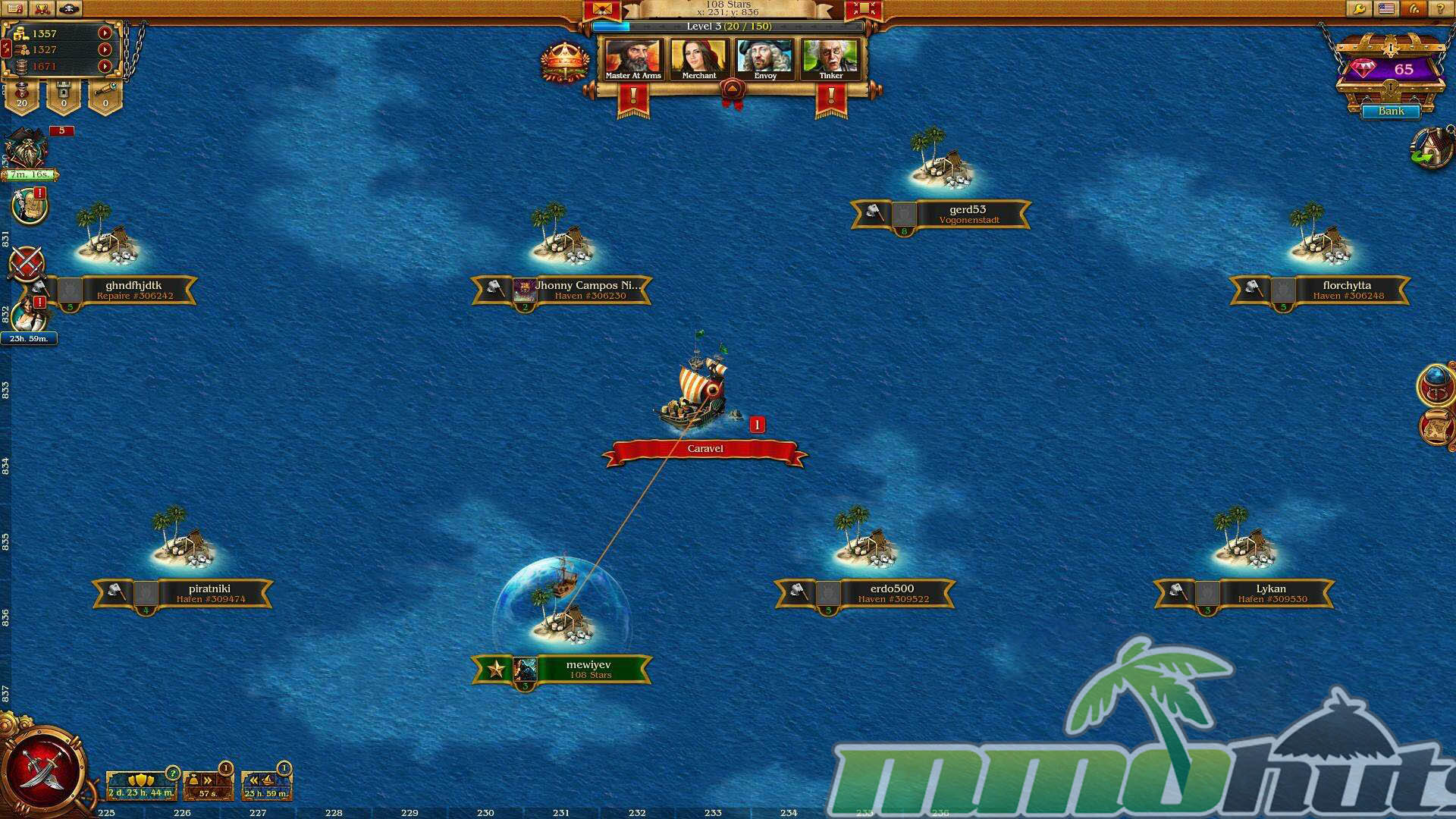
- Distinct 2D Presentation – top-down, retro-styled visuals with a colorful Caribbean theme.
- Multiple Unit Categories – build up crews and naval forces across several specialized unit groups.
- Brotherhood Alliances – team up for coordinated attacks, reinforcements, and broader strategic objectives.
Pirates: Tides of Fortune Screenshots
Pirates: Tides of Fortune Featured Video

Pirates: Tides of Fortune Review
Pirates: Tides of Fortune is a free-to-play, 2D browser strategy MMO from Plarium, the same studio behind Stormfall: Age of War and Soldiers Inc. The core loop will be familiar to anyone who has played a timer-driven base-builder: you develop a central hub, invest resources into upgrades, unlock better troops, and then use those troops to take even more resources from the map, especially from other players. The pirate theme does a lot of heavy lifting, giving the genre’s usual menus and upgrade chains a more flavorful coat of paint, even if the underlying structure follows Plarium’s established formula.
Early Hours and Onboarding
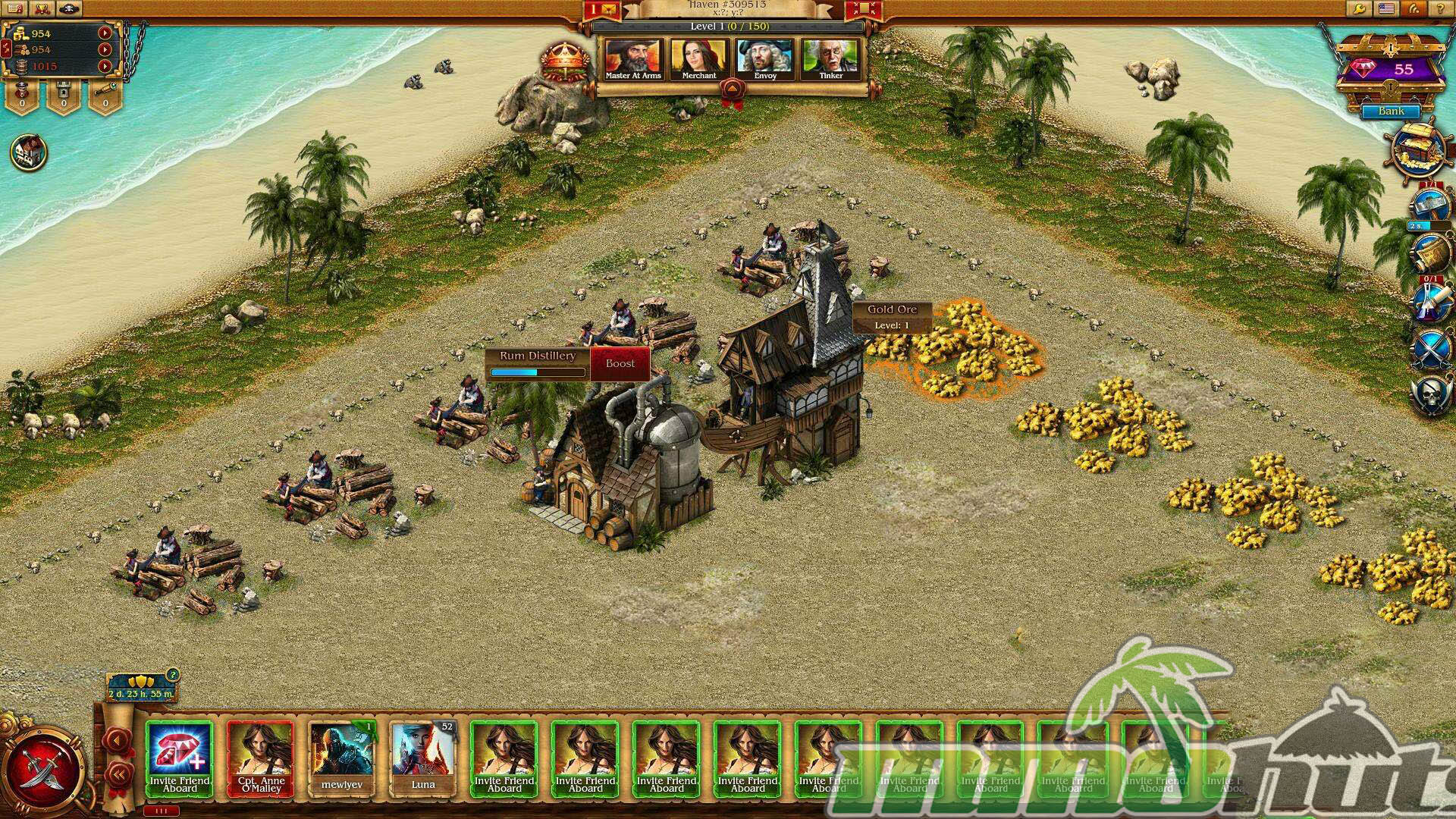
Your first sessions take place on Isla Fortuna with Captain Anne O’Malley acting as your constant point of contact. She explains what each screen does, nudges you toward the next building or upgrade, and generally keeps the opening from feeling like a wall of icons and timers. The tutorial is also one of the game’s more distinctive elements because it is fully voice-acted and written with a bit of pirate personality, which helps the game feel less sterile than many browser strategy titles.
The objective chain serves another purpose beyond teaching, it also hands out small rewards, including Rubies, to keep new players moving. PvP is introduced gradually and you are not immediately thrown to the wolves, thanks to a three day new player shield that prevents higher level players from attacking you until you hit level 30. It is a sensible setup for a genre that can otherwise punish newcomers quickly.
Managing the Haven
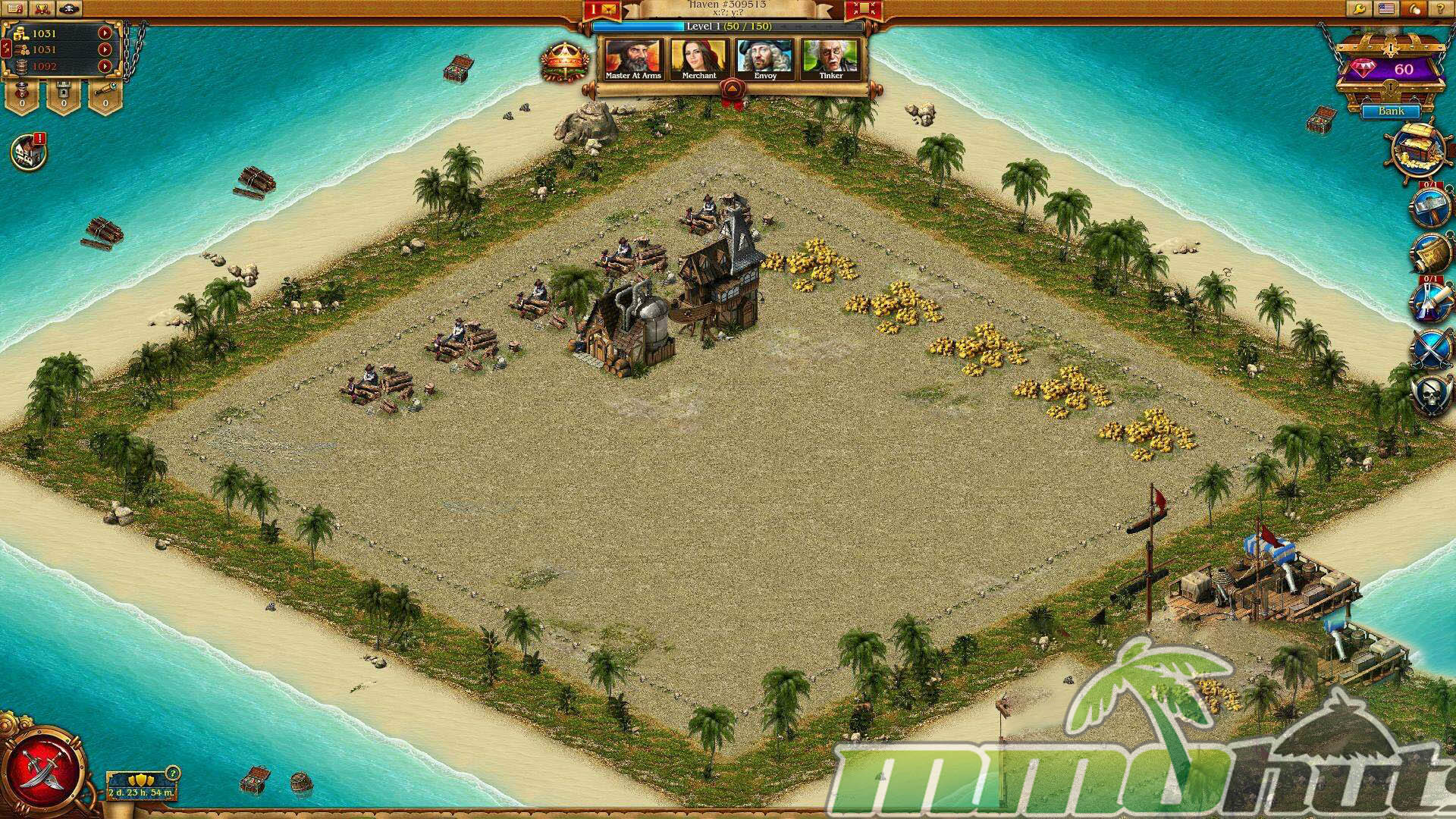
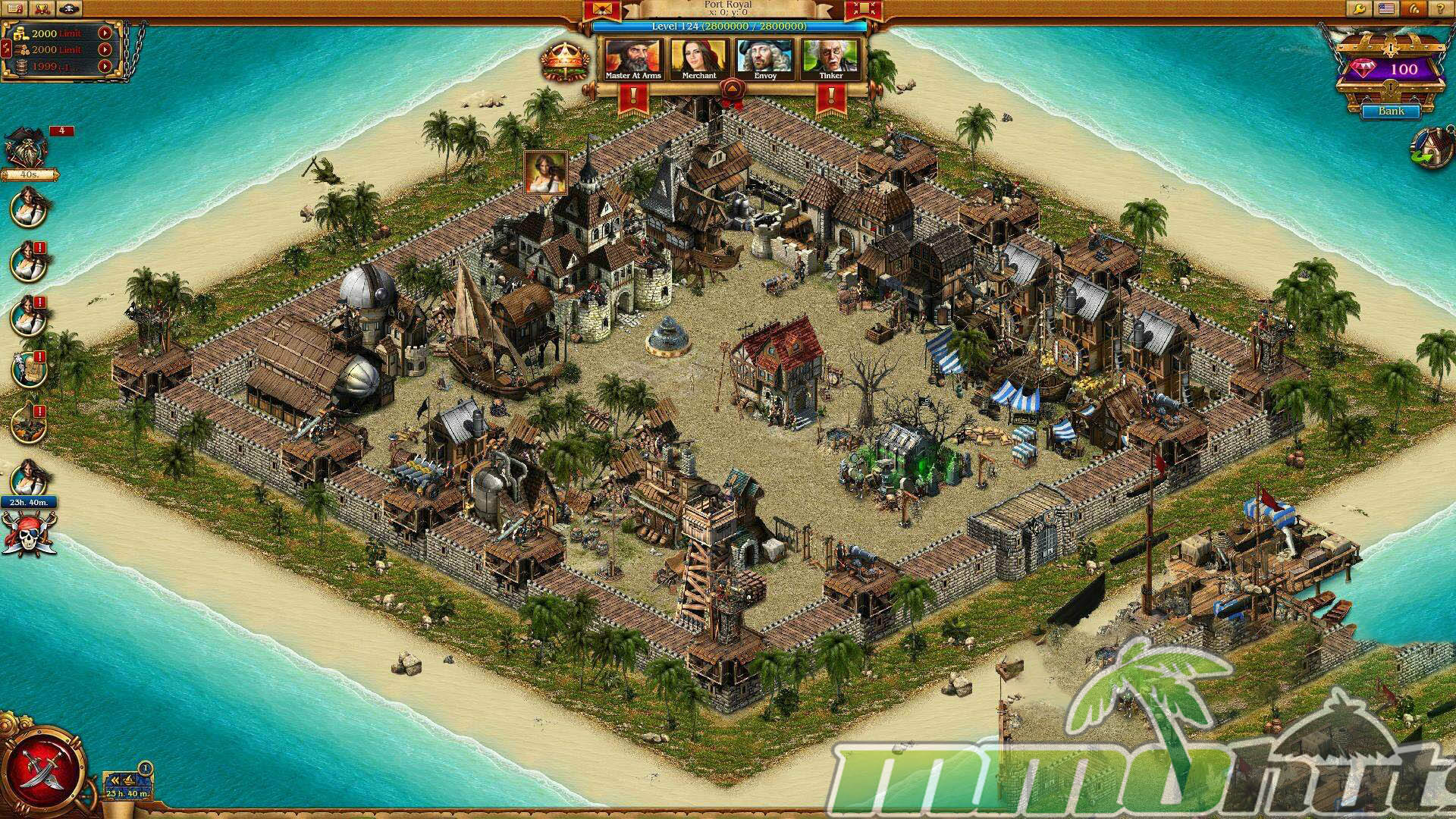
Your Haven is the center of everything, it is where you unlock functions, generate income, and determine how resilient you are when someone comes knocking. Much of your time is spent expanding the base with structures that fall into several categories (Resource, Command, Naval, Fortifications, Improvements, and Expansion). Each category supports a different part of the game, from economy and recruitment to defenses and quality-of-life upgrades.
One important thing to understand early is that many core interactions are gated behind specific buildings. Features like warfare, trading, and various forms of cooperation rely on having the right infrastructure in place. Long build and upgrade timers are also baked into the experience and scale upward as your Haven grows. That makes planning meaningful, because choosing what to upgrade next can affect both your short-term survival and long-term momentum.
Economy: Gold, Lumber, and Rum
Like most strategy MMOs, the economy is the real engine of progression. Gold, Lumber, and Rum are the primary resources, produced by the Gold Mine, Lumber Yard, and Rum Cellar. These are spent on construction, upgrades, recruitment, and research-style progression, so shortages often become the main bottleneck when you are trying to push forward.
Rum has an extra layer of importance because units consume it over time. If you expand your forces too quickly without supporting production, you can end up in a situation where upkeep becomes painful. Keeping your economy stable means upgrading your production buildings, pacing recruitment, and, when necessary, taking what you need from other islands through raids.
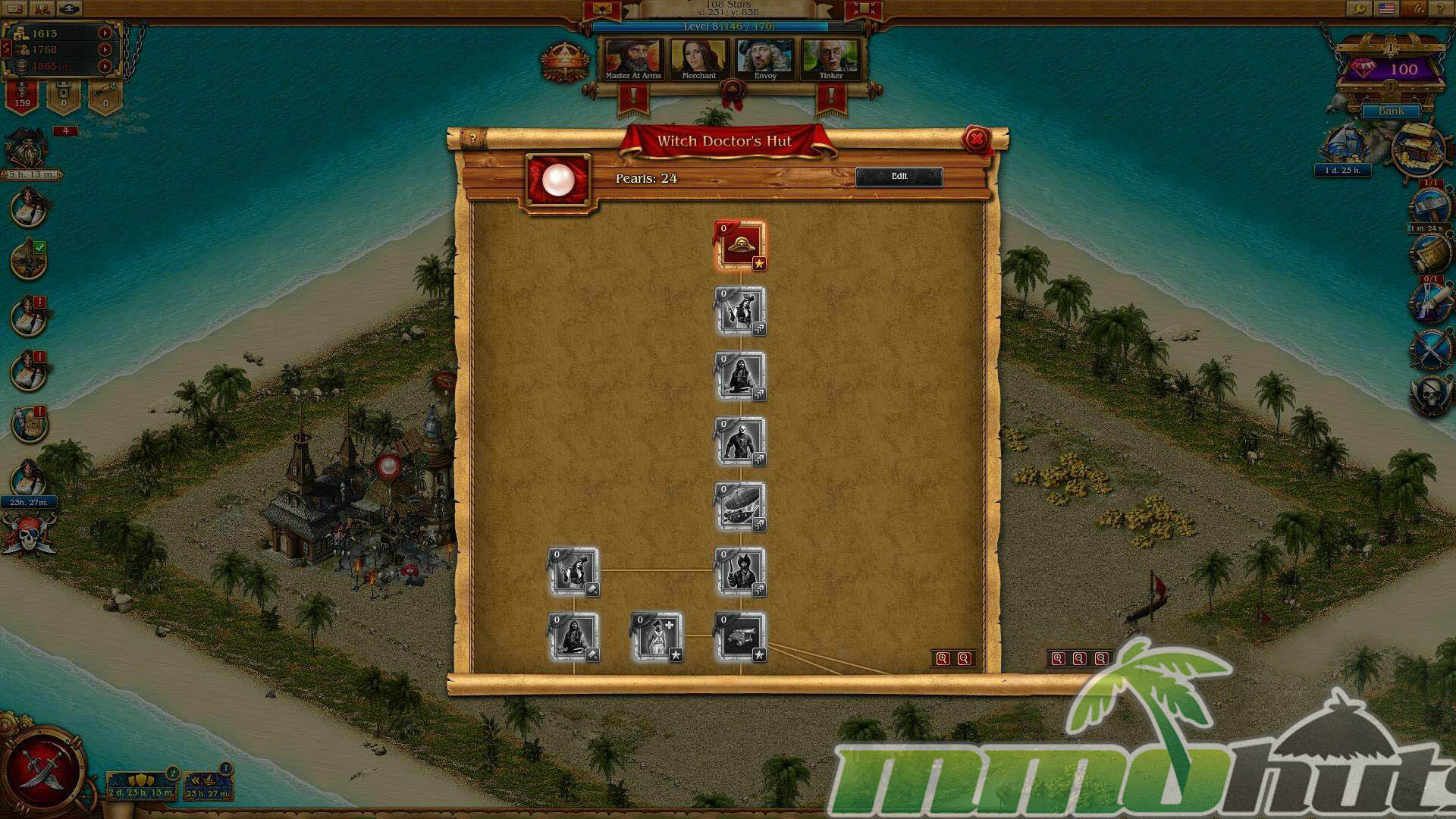
Beyond the basics, Pirates also uses secondary currencies: Gears, Idols, and Pearls. Gears come from the Manufactory after you invest resources, and they feed into Steam units for your fleet. Idols are tied to active Global Missions and are earned by participating in attacks and defenses during those events, they are not a normal purchase currency. Pearls are awarded on level-ups and are spent at the Witch Doctor’s Hut, where they support unit enhancement choices through a branching system.
Progression Choices: Discoveries and the Witch Doctor
Two systems shape how you specialize. The Witch Doctor’s Hut opens a progression tree fueled by Pearls, letting you improve preferred units and pick up boosts such as speed and build-time improvements. It is flexible enough to support different priorities, but it also asks you to commit, since resets are limited. You can reset the Witch Doctor tree once for free, and any additional reset requires premium currency.
Discoveries are unlocked after constructing the Observatory, which provides one Sketch per day. Sketches are the gateway to unlocking Discoveries, and you can also obtain them via buying or trading in the Market. After you have the required Sketches, you still need resources and time to master the Discovery, and only one can be progressed at once. In practice, this makes Discoveries feel like a long-term roadmap, you are always deciding what to unlock next and what to postpone.
Units and Combat Roles
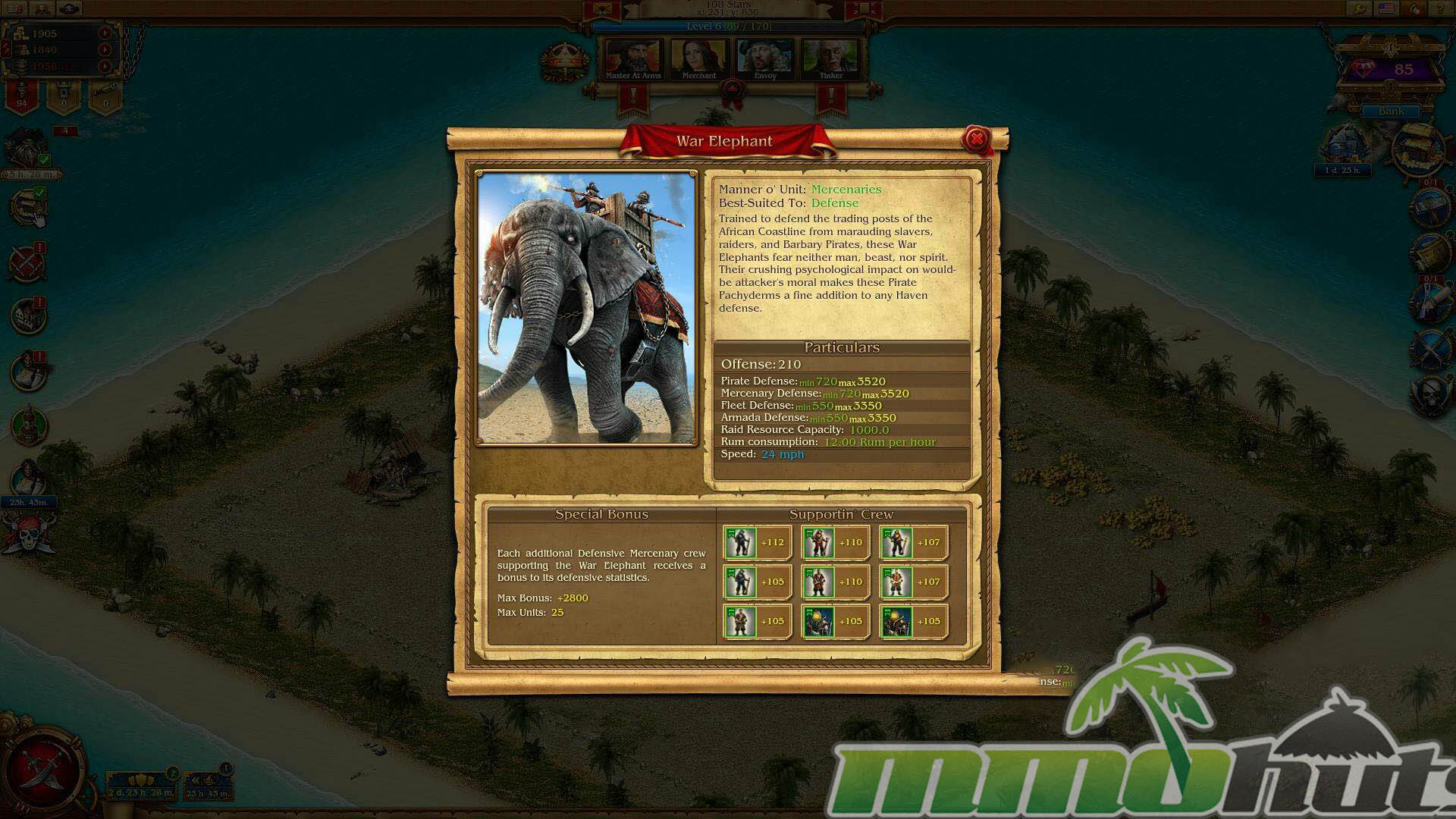
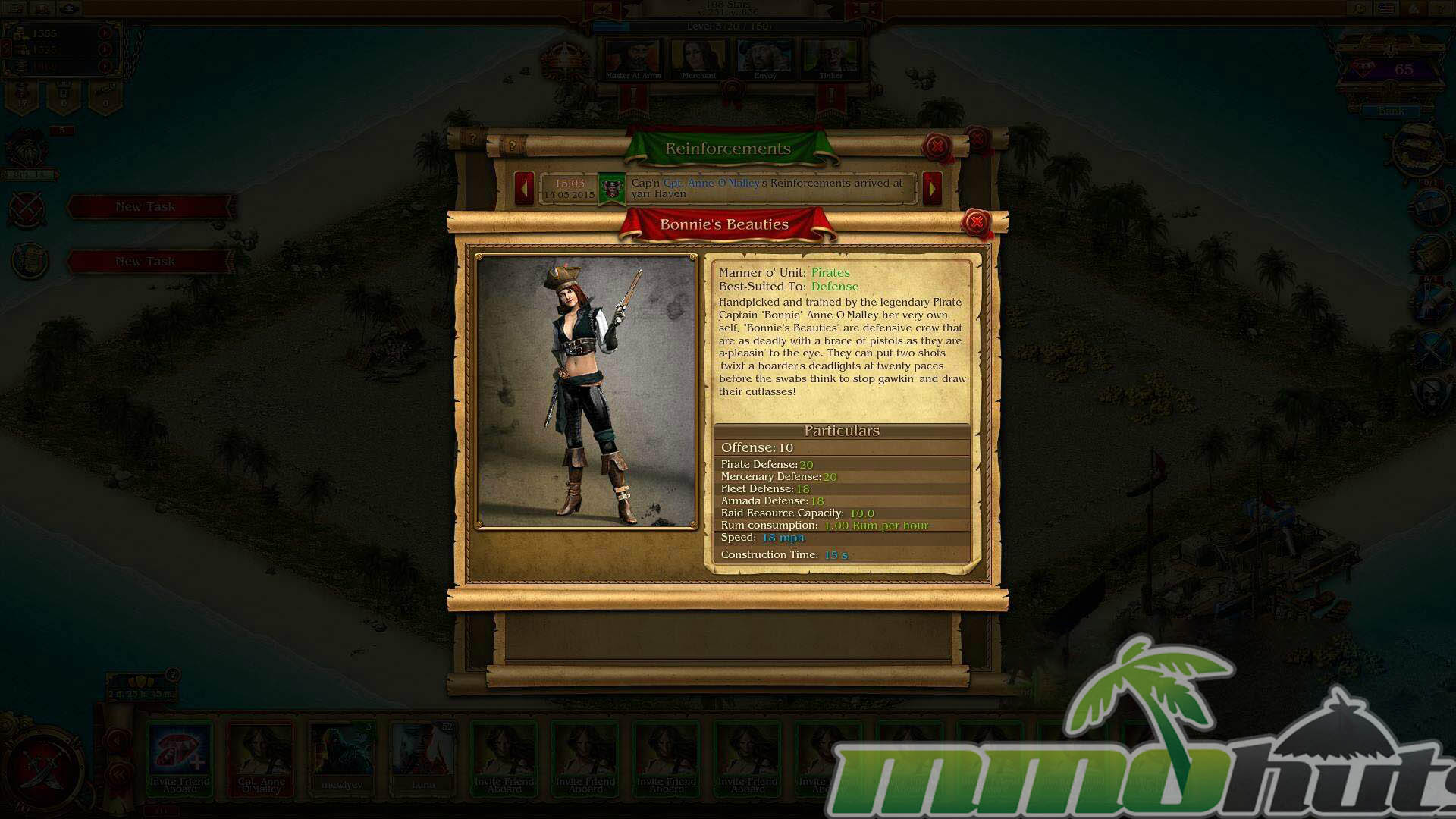
Army building is based around recruiting units that fall into familiar combat roles: offensive, defensive, and scouting. The general idea matches other Plarium strategy games, offensive forces are tuned for hitting targets efficiently, defensive forces are better suited to holding ground and protecting your assets, and scouts exist to reduce uncertainty before you commit to a fight.
The unit interaction layer is more than just attack versus defense totals. Each unit has different defensive values against different unit types, which makes composition matter, especially as you face better prepared opponents. Scouting becomes essential because it lets you see what is waiting at an enemy Haven, then tailor your attacking force to exploit weaknesses instead of blindly throwing troops into a meat grinder.
Brotherhood Play
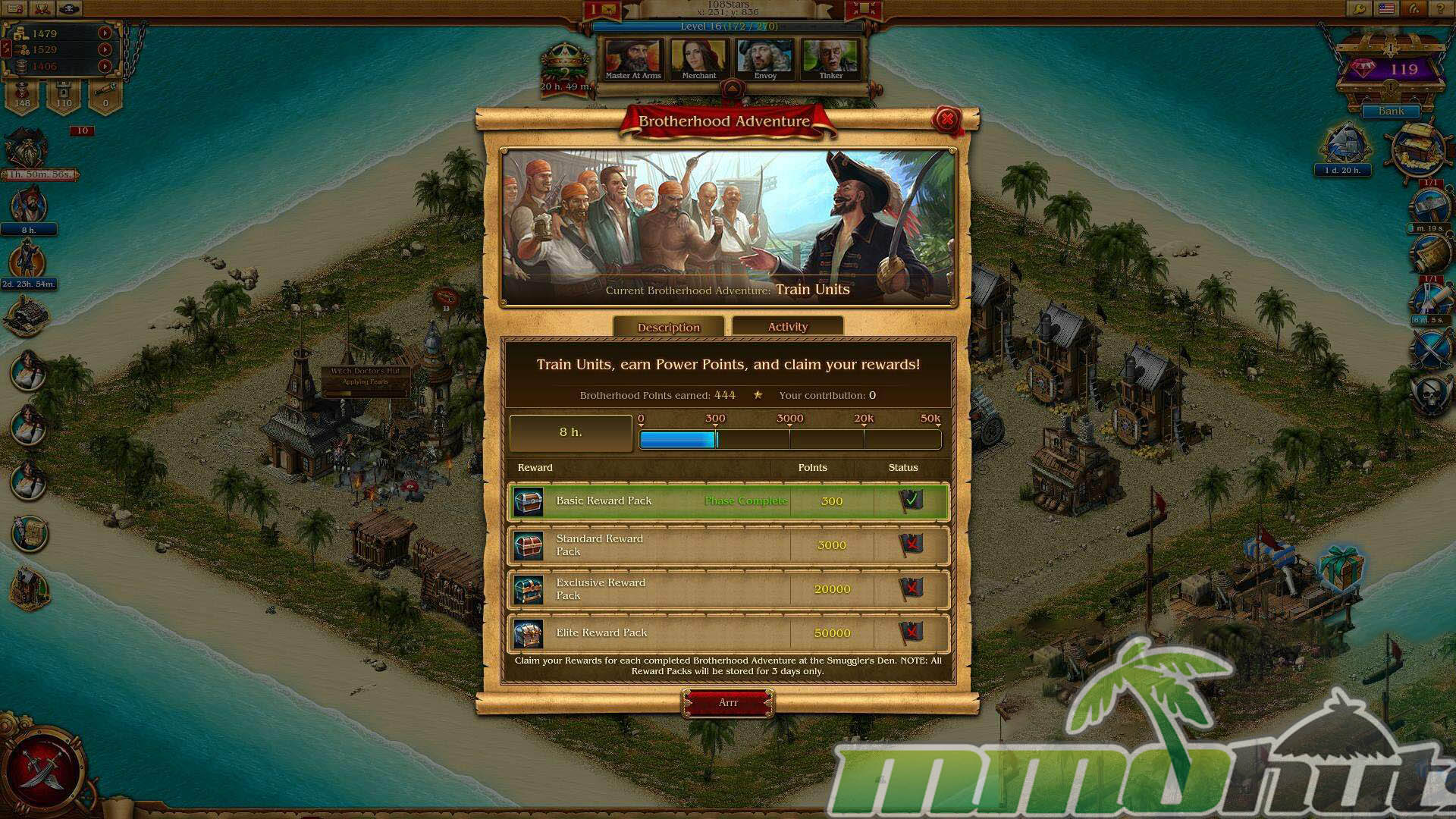
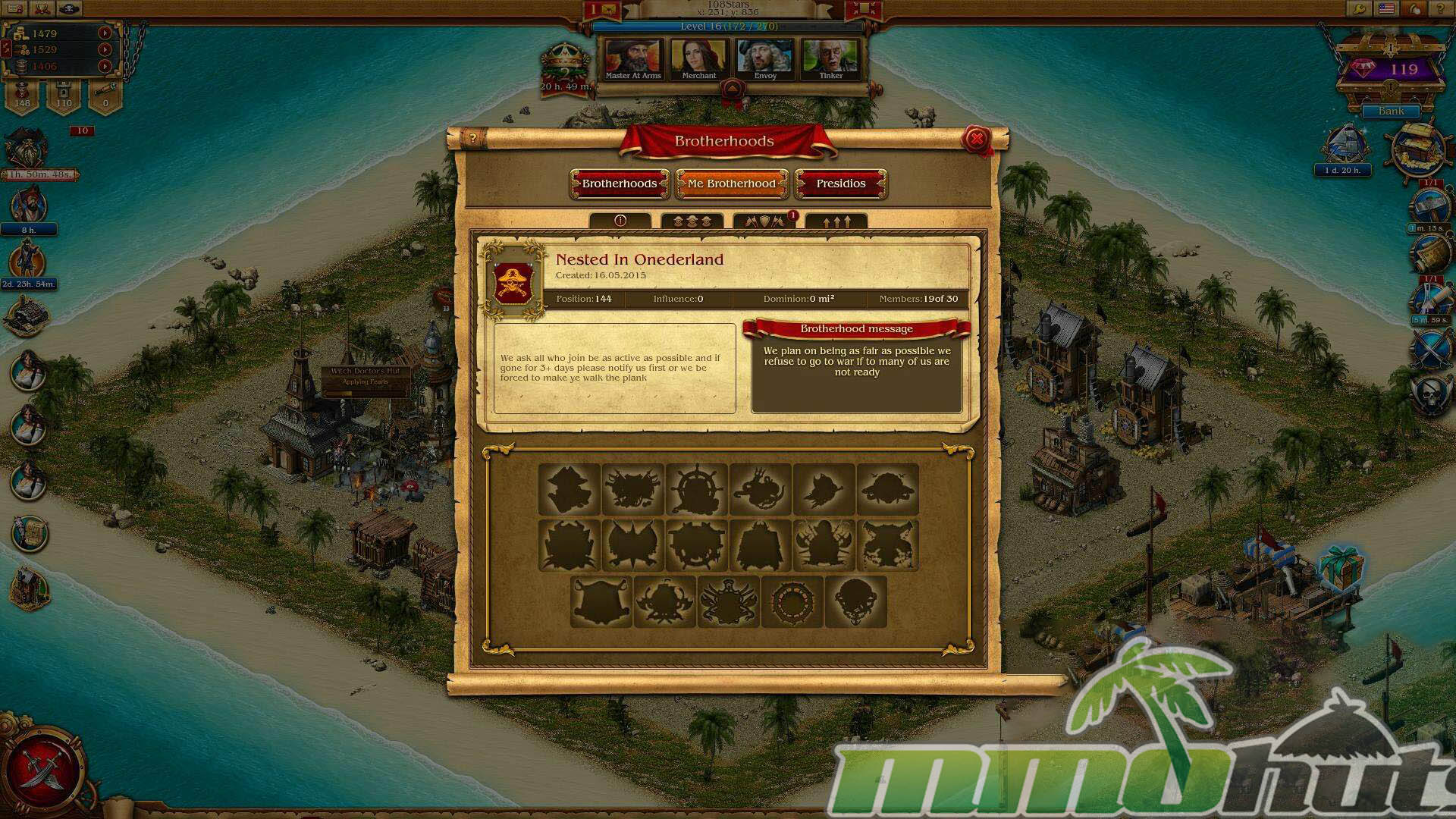
Brotherhoods are the game’s alliance system, and they are where the broader war-game side of Pirates starts to show. Joining a Brotherhood provides access to cooperative goals, group-oriented missions, and strategic map pressure that is hard to replicate alone. It also creates a support network, with reinforcements and coordination making it easier to defend against aggressive neighbors.
Brotherhoods can also coordinate with other Brotherhoods, which adds an extra political layer to the seas. This can help reduce vulnerability for members and enables larger ambitions, such as working toward capturing Presidios to exert control over major areas. For players who enjoy social strategy games, this is where the title has the most staying power.
PvP Options: Raids, Scouting, and Blockades
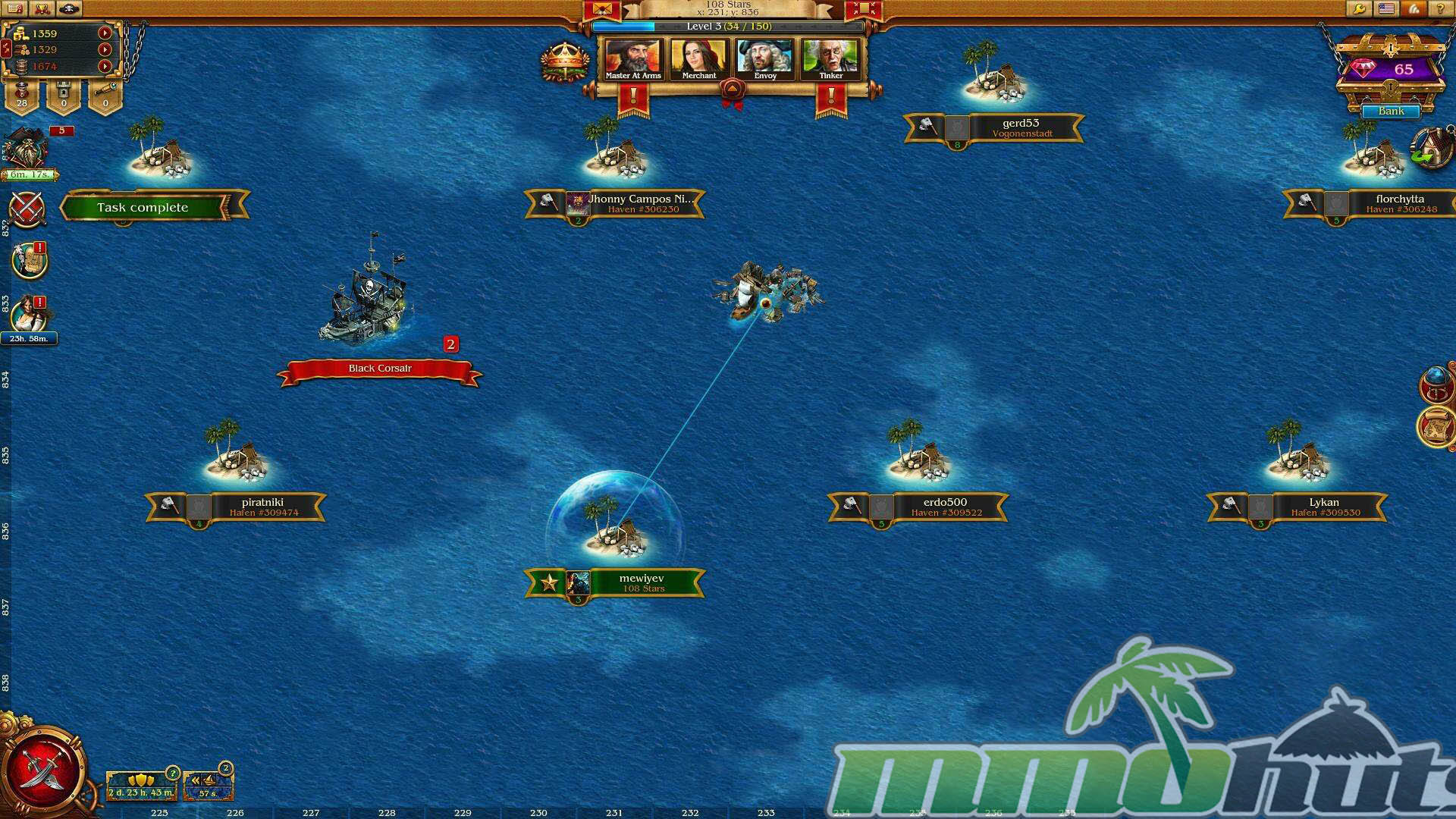
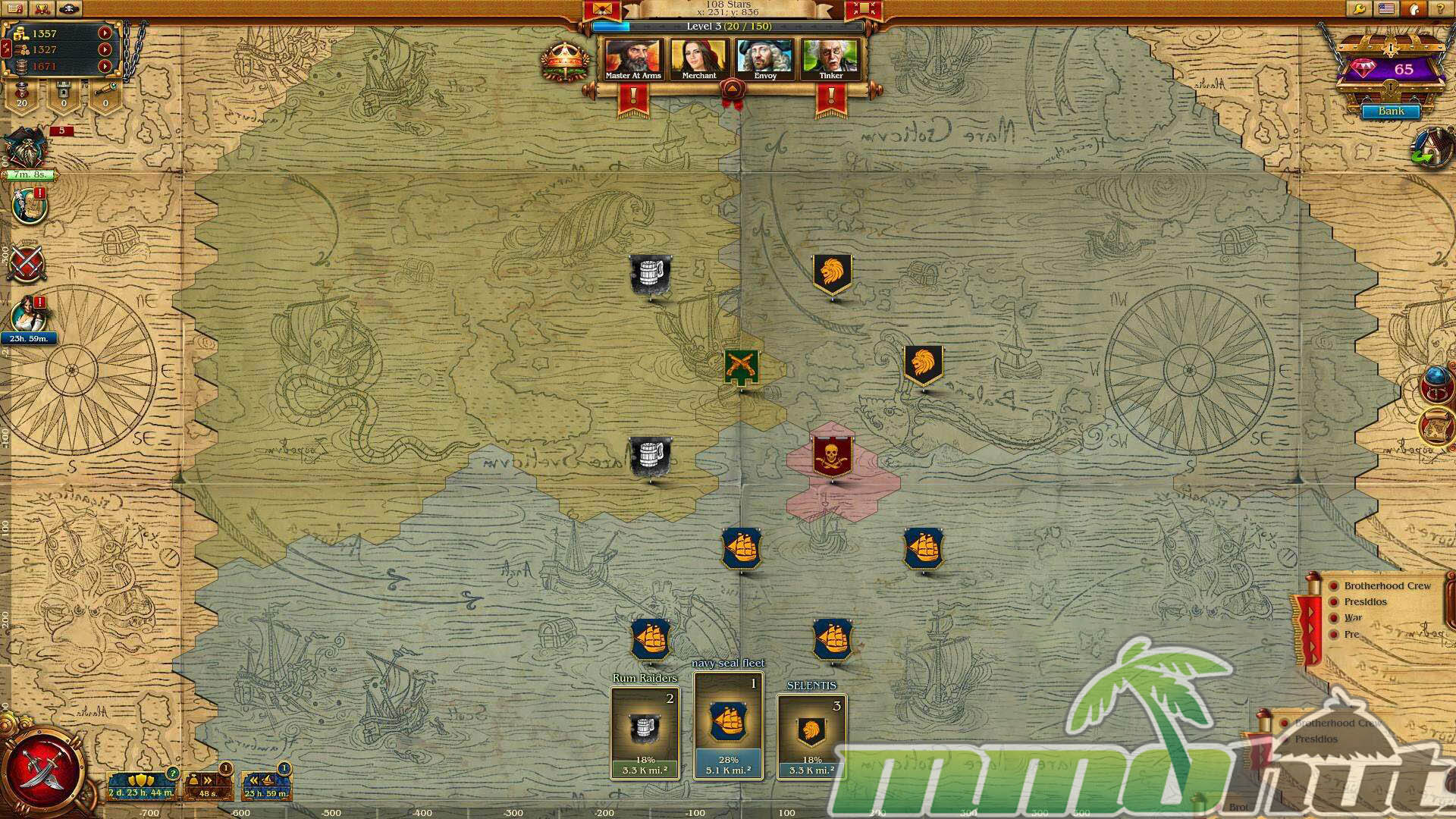
Pirates encourages conflict both through Brotherhood warfare and through everyday neighbor-versus-neighbor skirmishing. When your production cannot keep up with your needs, attacking other captains becomes the fastest way to refill your stores. The game supports several aggressive actions: Raid, Scout, and Blockade.
Raiding is the straightforward option, a quick strike intended to bring back resources. Scouting is the preparatory step, sending specialized units to gather information about defenses so you can pick the right force for the job. Blockade is the most strategic and most dangerous option, it lets you occupy an enemy base and siphon resources over time. The risk is that blockading exposes your units to counterattacks, either from the target or from their allies, so it is a tactic best used when you are confident in your ability to hold the position.
Cash Shop and Monetization
Rubies are the premium currency, and they influence the pace and power curve in a way that will be familiar to anyone who has spent time with free-to-play strategy MMOs. Paying players can accelerate upgrades, recover faster from losses, and generally reach key thresholds sooner, which can translate into a major advantage in a PvP-heavy environment.
That does not mean free players are completely locked out of progress. The game awards small amounts of Rubies for completing objectives, and careful planning can still carry you far. However, the experience slows down significantly after level 30, and the increasingly long timers make patience the primary resource unless you are willing to spend. Rubies also tie into Prestige Status (daily boosts), purchases in the Smuggler’s Den (including powerful units and buildings), and the Infirmary system used to resurrect or heal units lost in battle. Overall, the shop does cross into pay-to-win territory, even if it is not presented in an especially aggressive way.
Final Verdict – Good
Pirates: Tides of Fortune succeeds most as a solid example of Plarium’s browser strategy formula with a theme that feels less common than the usual medieval or sci-fi settings. The pirate presentation, voice work, and audio give it character, and the PvP systems (especially scouting and blockades) support meaningful planning rather than pure number checking.
At the same time, the game rarely breaks away from genre expectations, and the monetization can heavily influence competitive play. For players who enjoy long-term base development, alliance coordination, and opportunistic raiding, it is an easy recommendation within its niche. If you are looking for a fair PvP economy or modern visuals, it may be harder to stick with.
Pirates: Tides of Fortune Links
Pirates: Tides of Fortune Official Site
Pirates: Tides of Fortune Facebook
Pirates: Tides of Fortune Wikia [Database/Guides]
Pirates: Tides of Fortune Plarium Wiki [Database/Guides]
Pirates: Tides of Fortune Requirements
Operating System: XP / Vista / 7 / 8
CPU: Intel Pentium 4 or AMD Equivalent
Video Card: Any Graphics Card (Integrated works well too)
RAM: 512 MB
Hard Disk Space: 100 MB (Cache)
Pirates: Tides of Fortune is a browser based MMO and will run smoothly on practically any PC. The game was tested and works well on Internet Explorer, Opera, Firefox and Chrome. Any modern web-browser should run the game smoothly. Pirates: Tides of Fortune is also available on Facebook.
Pirates: Tides of Fortune Additional Info
Developer: Plarium Games
Publisher: Plarium Games
Platforms: Web browser and Facebook
Release Date: February 12, 2012
Pirates: Tides of Fortune was developed and published by Plarium, an Israeli gaming company responsible for many other games in the genre, including Total Domination, Sparta: War of Empires, Soldiers Inc. and Stormfall: Age of War. Plarium owns and operates the game worldwide, and, despite being headquartered in Israel, has development offices in Ukraine. The game released worldwide on February 12, 2012 and is also available on Facebook. Its tutorial narration and voice work are provided in multiple languages.