Lord of the Rings Online (often shortened to LOTRO) is a 3D fantasy MMORPG that lets you carve out your own tale in J.R.R. Tolkien’s Middle-earth. It leans heavily into questing and lore, pairing traditional MMO progression with a setting that is instantly recognizable, whether you came from the books, the films, or both.
 | Publisher: Turbine Playerbase: High Type: MMORPG Release Date: April 24, 2007 PvP: Duels / Monster Play Pros: +Huge Middle-earth to roam with strong atmosphere. +Narrative-focused questing that fits the setting. +Lots of side systems (housing, instruments, mounted combat, and more). +Memorable, high-quality musical score. Cons: -Many packs and conveniences still sit behind purchases or VIP. -Lower and mid-level regions can feel quiet. -Interface and some presentation elements show their age. |

Lord of the Rings Online Overview
Lord of the Rings Online began life as a subscription MMO, but it now offers a free-to-play entry point that allows newcomers to sample the world and its early journey. Over the years, Middle-earth has grown substantially through regular updates and expansion releases, bringing iconic destinations into the playable map, from Moria’s underground passages to the fields of Rohan and the shadowy reaches of Mirkwood. The game is at its best when it is letting you travel, read, and follow the Epic story line, because its pacing and structure were built around PvE adventuring rather than competitive play.
Even so, there is a distinct PvP option via Monster Play, which lets players step into the role of fearsome creatures for faction-based battles. And for players who would rather entertain a crowd in Bree than grind another camp of enemies, LOTRO also supports in-game music, including a music system that makes casual performances and organized concerts surprisingly viable. It is an older MMO in terms of presentation and UI, but the amount of content and the love for the source material are hard to miss.
Lord of the Rings Online Key Features:
- Welcome to Middle Earth – adventure across Tolkien’s famous lands, with familiar locations and characters woven into the journey.
- Variety Galore – 10+ playable classes, 5+ races, 10+ professions, and over 1,000 titles.
- No Money Necessary – free-to-play access is available, although major chunks of content still require buying packs.
- Need a House? – decorate a personal home (or a kinship home) through the housing feature.
- Great Story Writing – the main experience is guided by story-focused quest lines and strong worldbuilding.
Lord of the Rings Online Screenshots
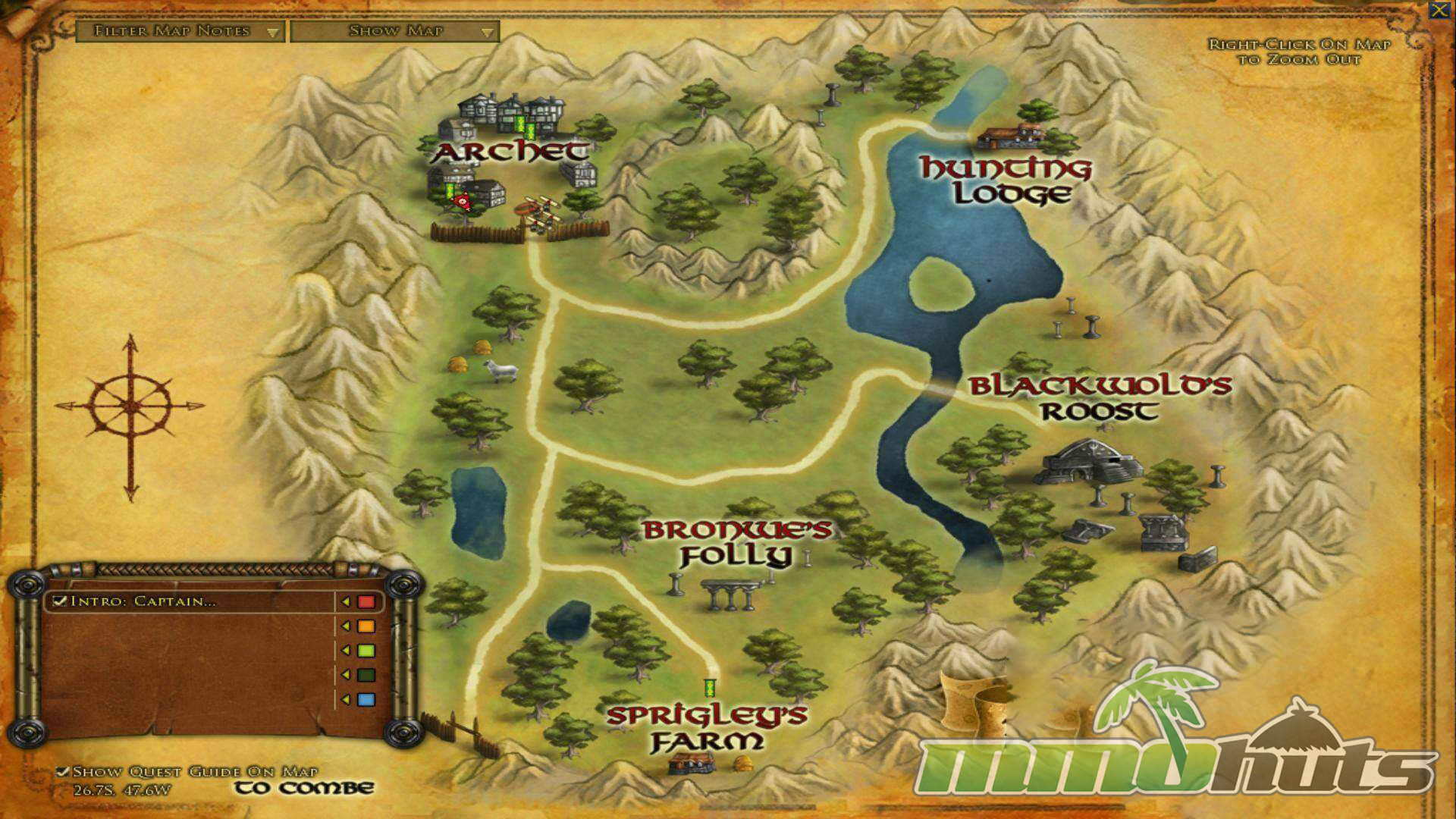
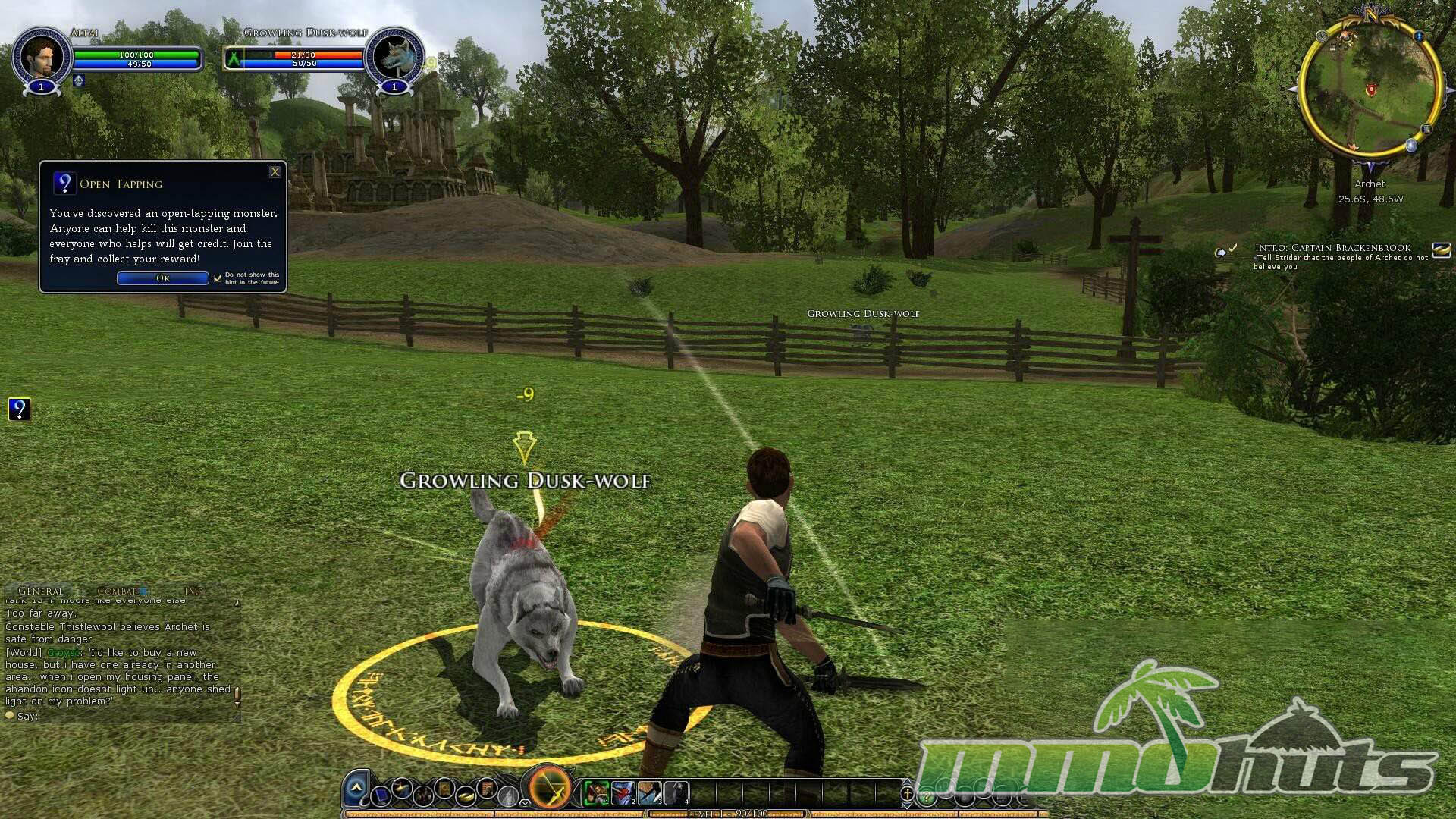
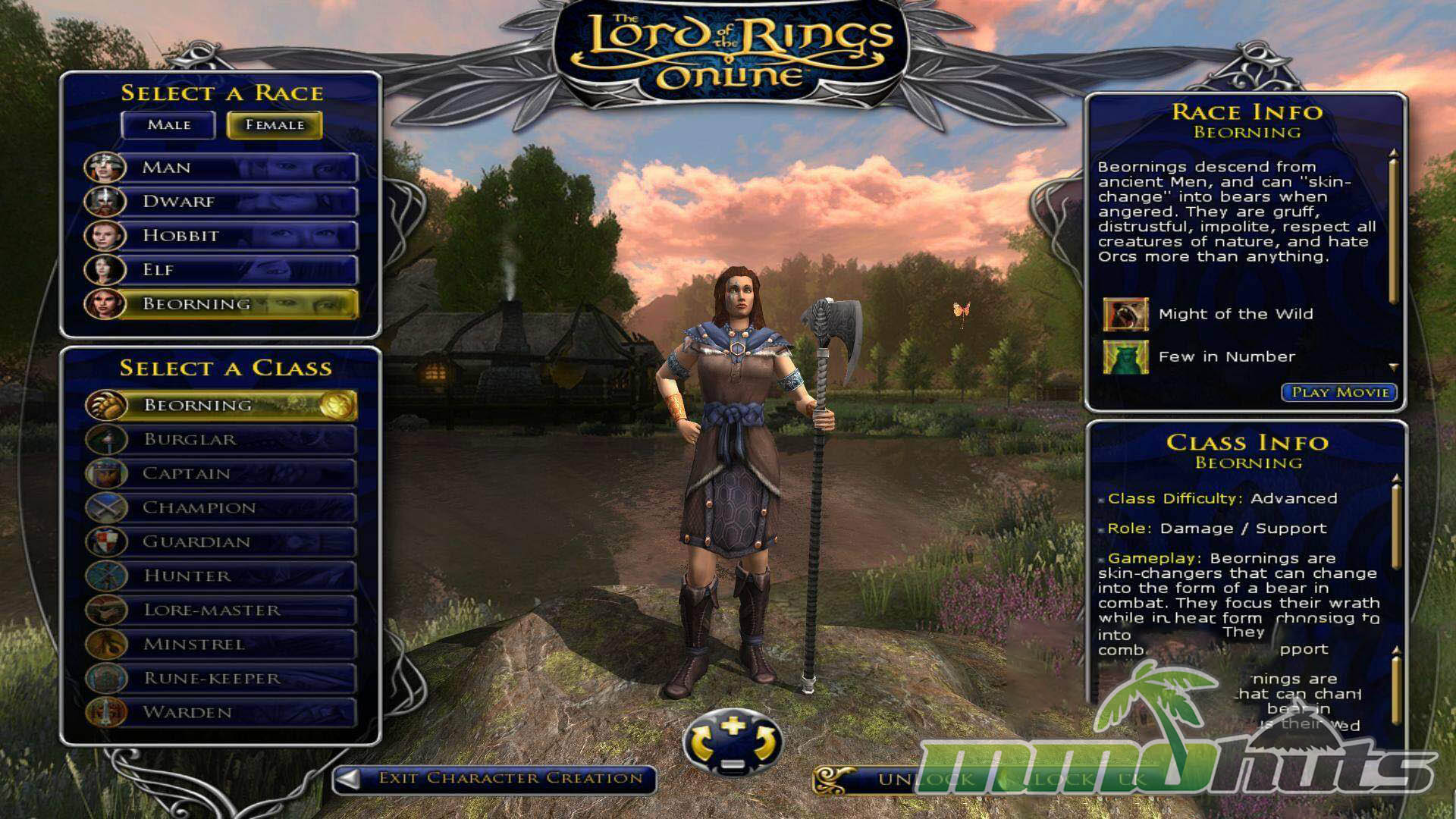
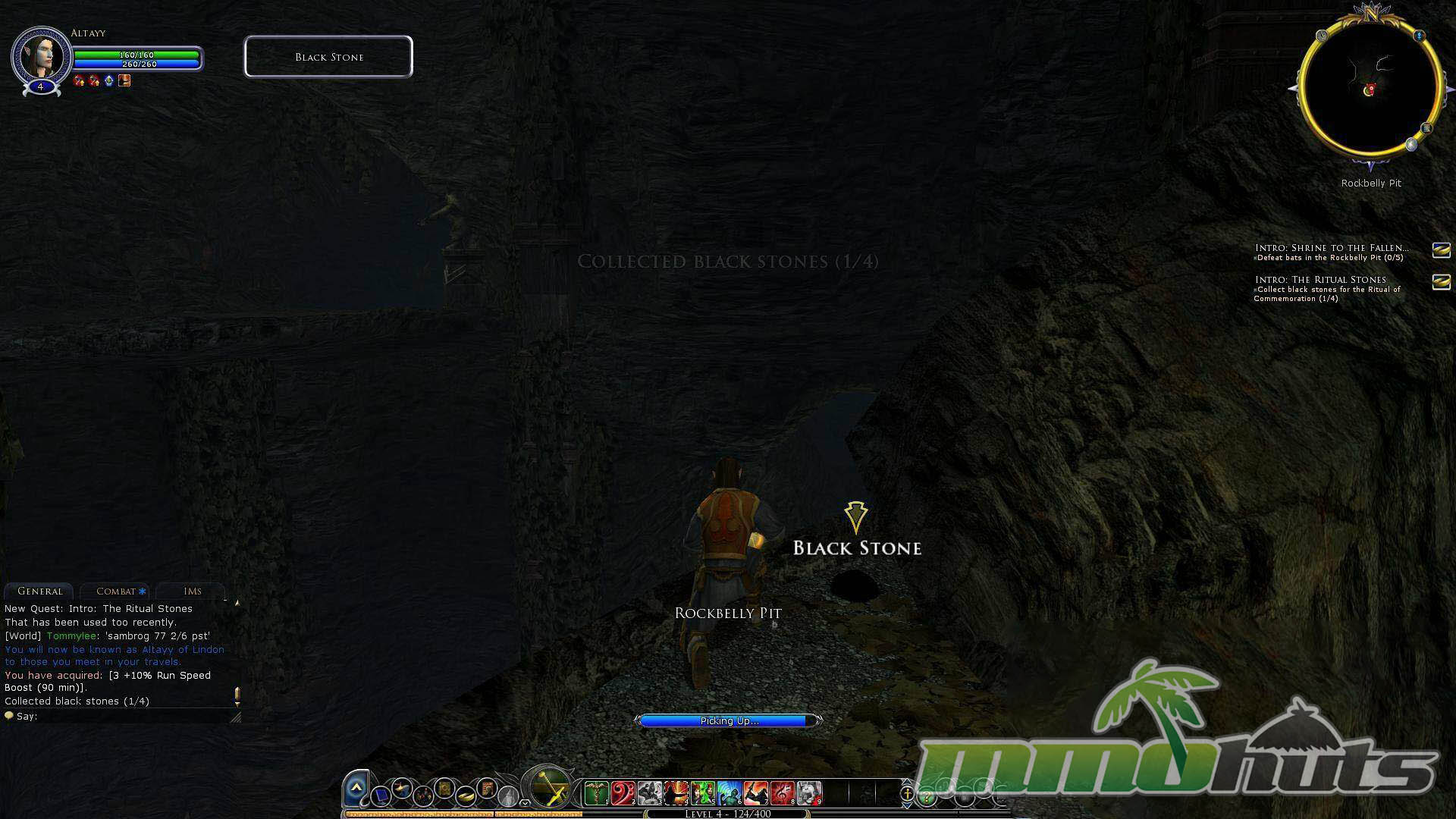
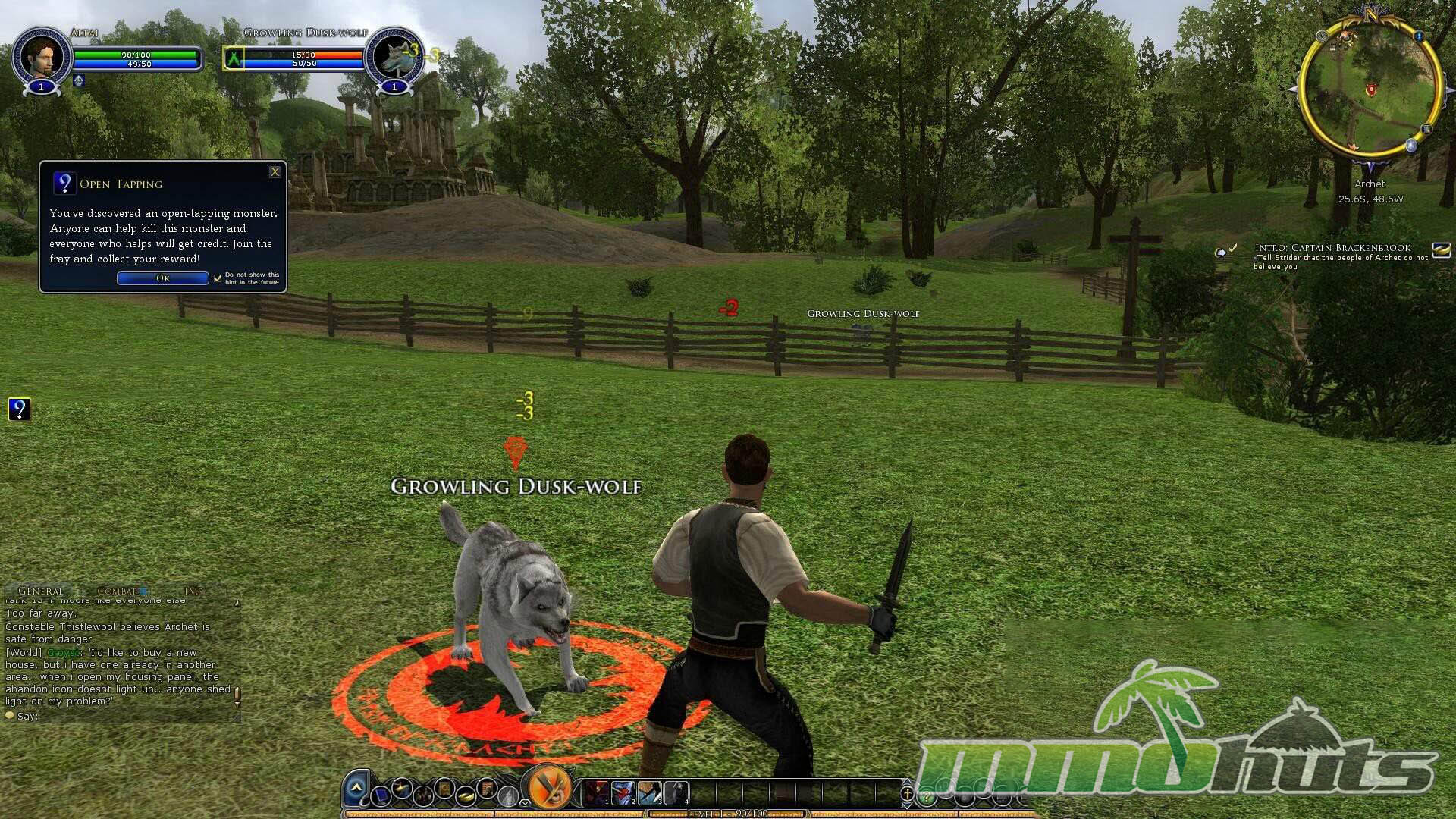
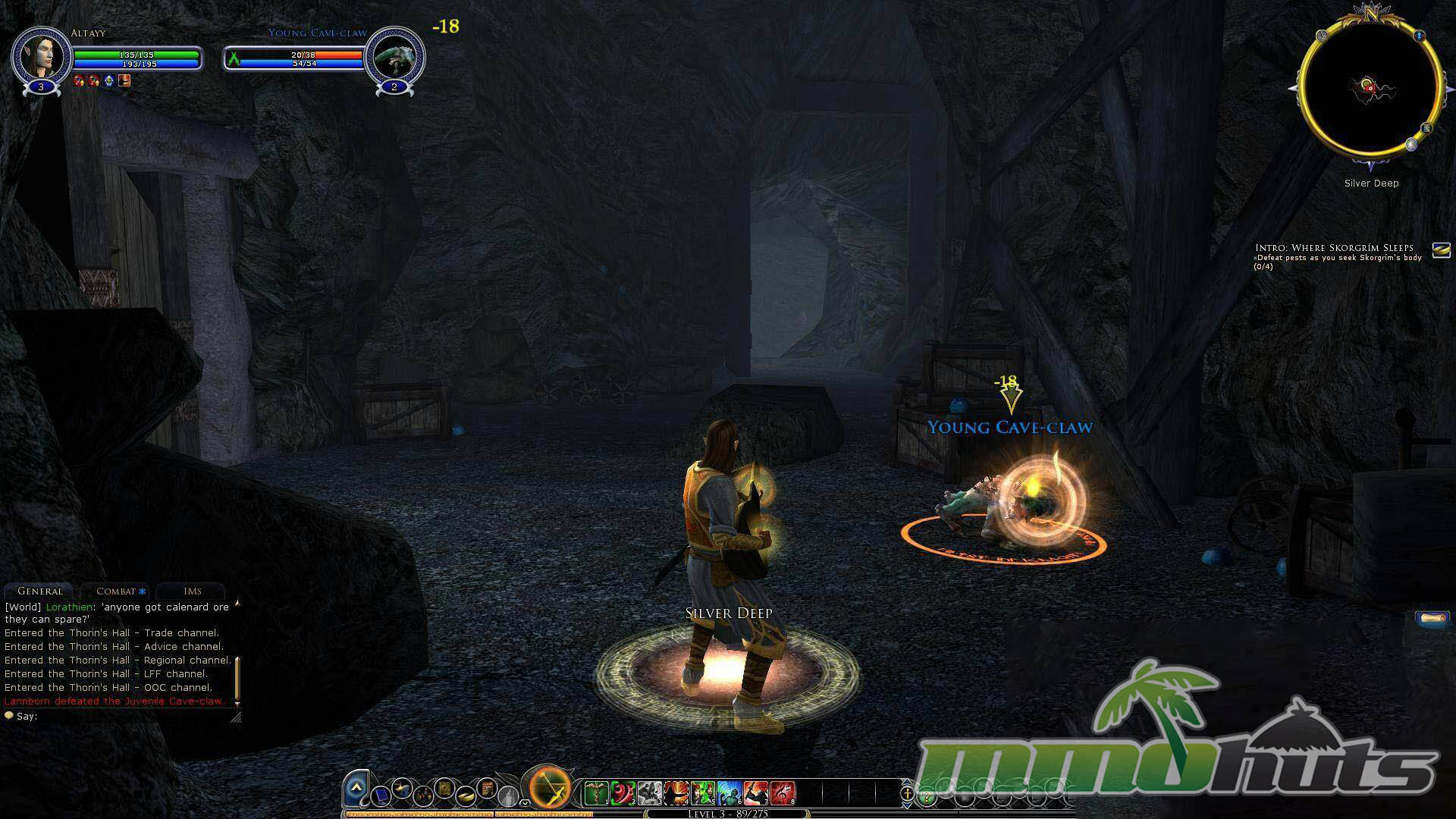
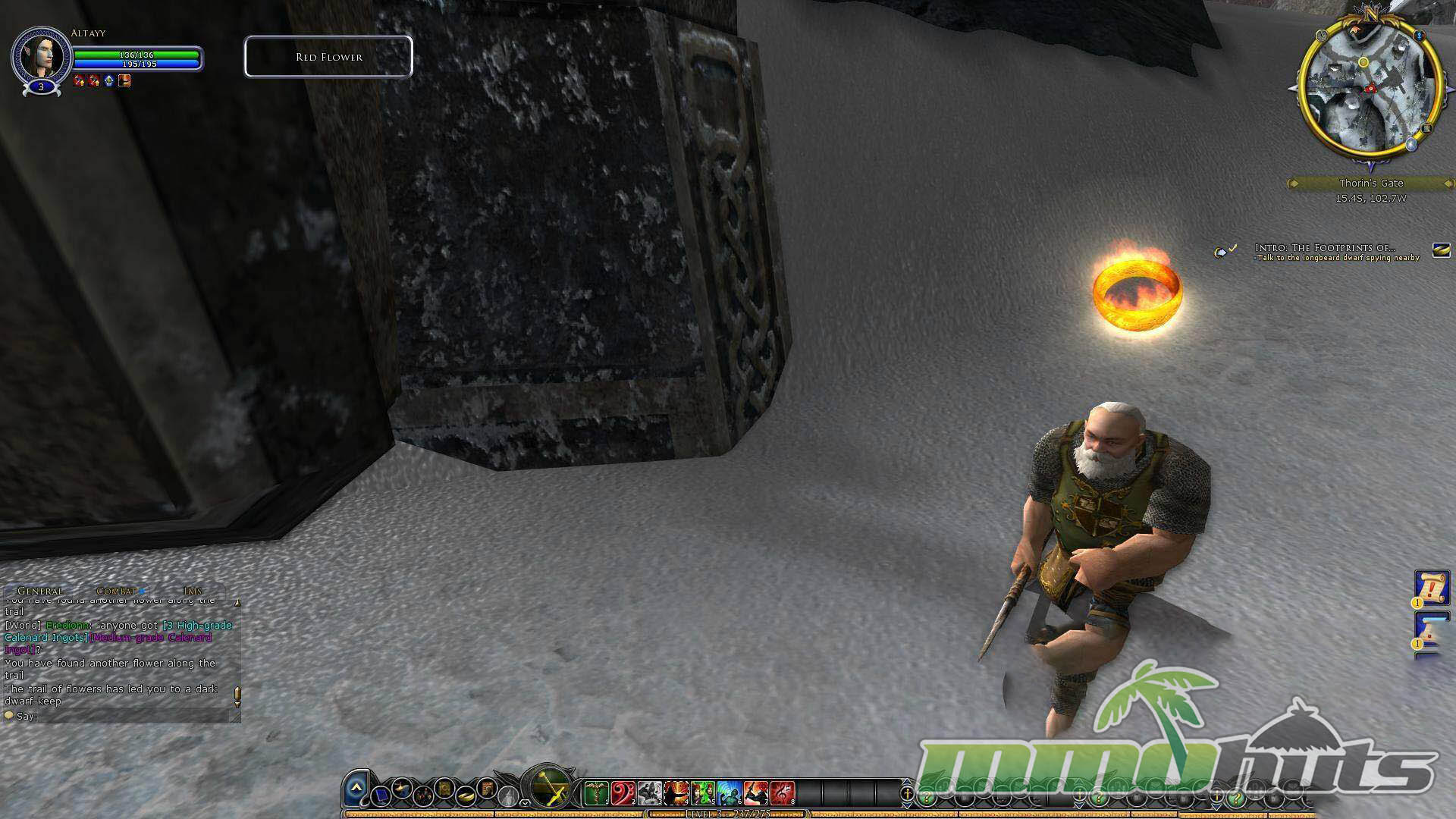
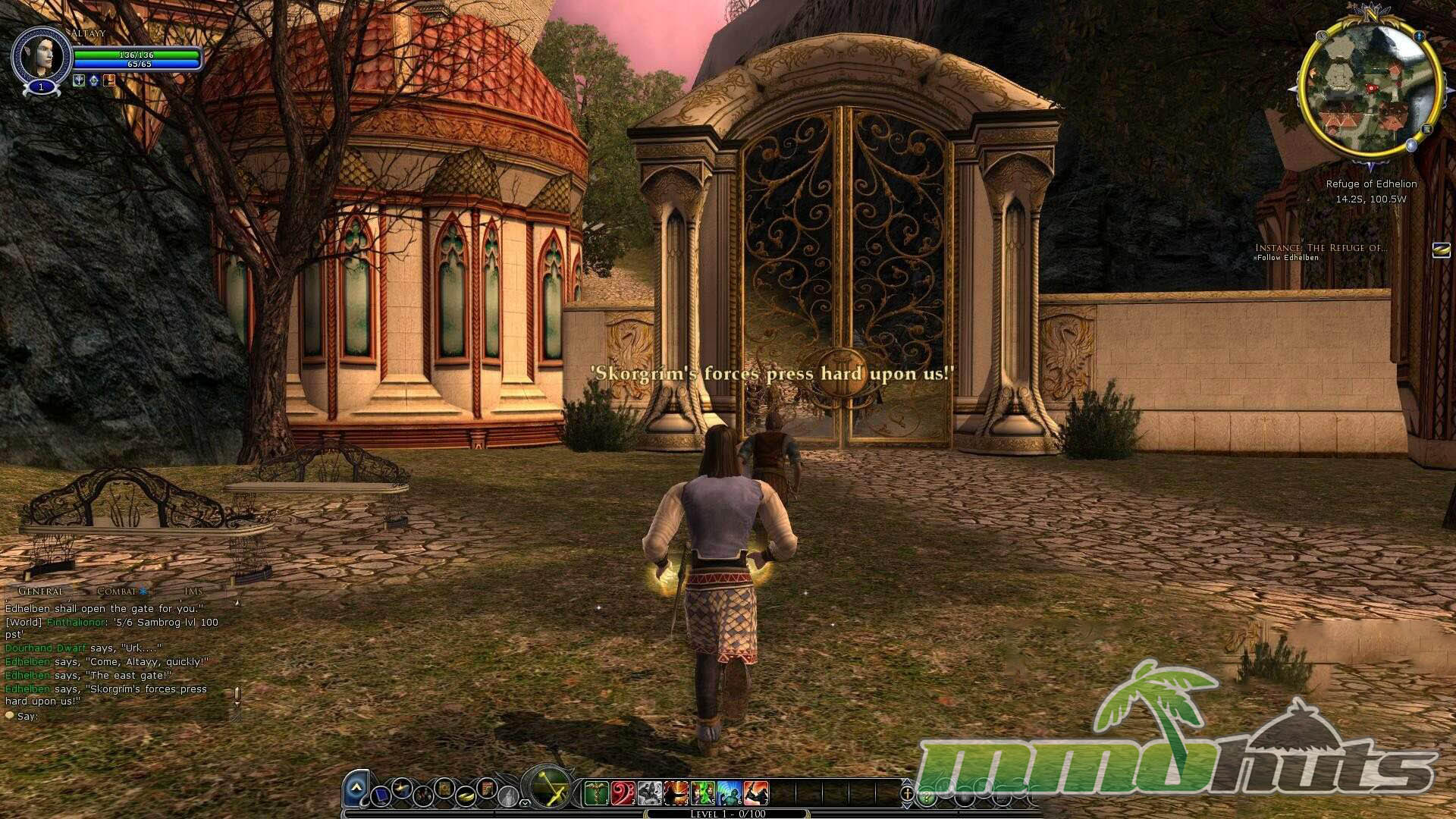
Lord of the Rings Online Featured Video

Lord of the Rings Online Classes and Races
Classes:
- Beorning – A Man-descended shapeshifter who can turn into a bear in combat. This class is tied to the Beorning race and is unlocked through the cash shop.
- Burglar – A stealth-oriented fighter focused on trickery, positioning, and disrupting opponents. Available to Hobbits and Humans.
- Captain – A battlefield leader who bolsters allies with commands, cries, and banners while hindering enemies. Available to Humans.
- Champion – A relentless melee specialist built to dish out heavy damage while still taking punishment when needed. Available to Dwarves, Elves, and Humans.
- Guardian – A defensive front-liner designed to protect allies and hold the line up close. Available to Dwarves, Elves, Hobbits, and Humans.
- Hunter – A ranged combatant who thrives with bows, traps, and strong open-world utility. Available to Dwarves, Elves, Hobbits, and Humans.
- Lore-Master – A support-minded scholar who uses knowledge and nature-aligned tools to empower allies and hamper foes. Available to Elves and Humans.
- Minstrel – A core group support class that uses music to inspire, heal, and keep a fellowship going through difficult fights. Available to Dwarves, Elves, Hobbits, and Humans.
- Rune-Keeper – A runic practitioner capable of shifting between destructive magic and healing. Unlocked through the cash shop and available to Dwarves and Elves.
- Warden – A shield-and-javelin melee fighter with tanking strengths. Unlocked through the cash shop and available to Elves, Hobbits, and Humans.
Lord of the Rings Online Review
LOTRO is a 3D fantasy MMORPG developed by Turbine and published by Turbine and Midway Games. It launched on April 24, 2007, and you can access it through the official site as well as Steam. The business model started as subscription-based, then shifted into a free-to-play structure with a cash shop and an optional VIP subscription on September 10, 2010. Despite its age, it has remained a recognizable name among long-running F2P MMORPGs, largely because it offers a distinctive “living Middle-earth” vibe that few games can replicate.
A journey through a familiar legend
The game is set in Middle-earth alongside the events of the Fellowship’s quest to carry the One Ring to Mount Doom. Rather than trying to replace that narrative, LOTRO generally positions your character as someone whose adventures run parallel to the famous story, often intersecting with key locations and notable figures. Exploring places like the Shire, Moria, Rohan, and Gondor is a major part of the appeal, and the worldbuilding does a solid job of making travel feel meaningful, not just like a path between quest hubs.
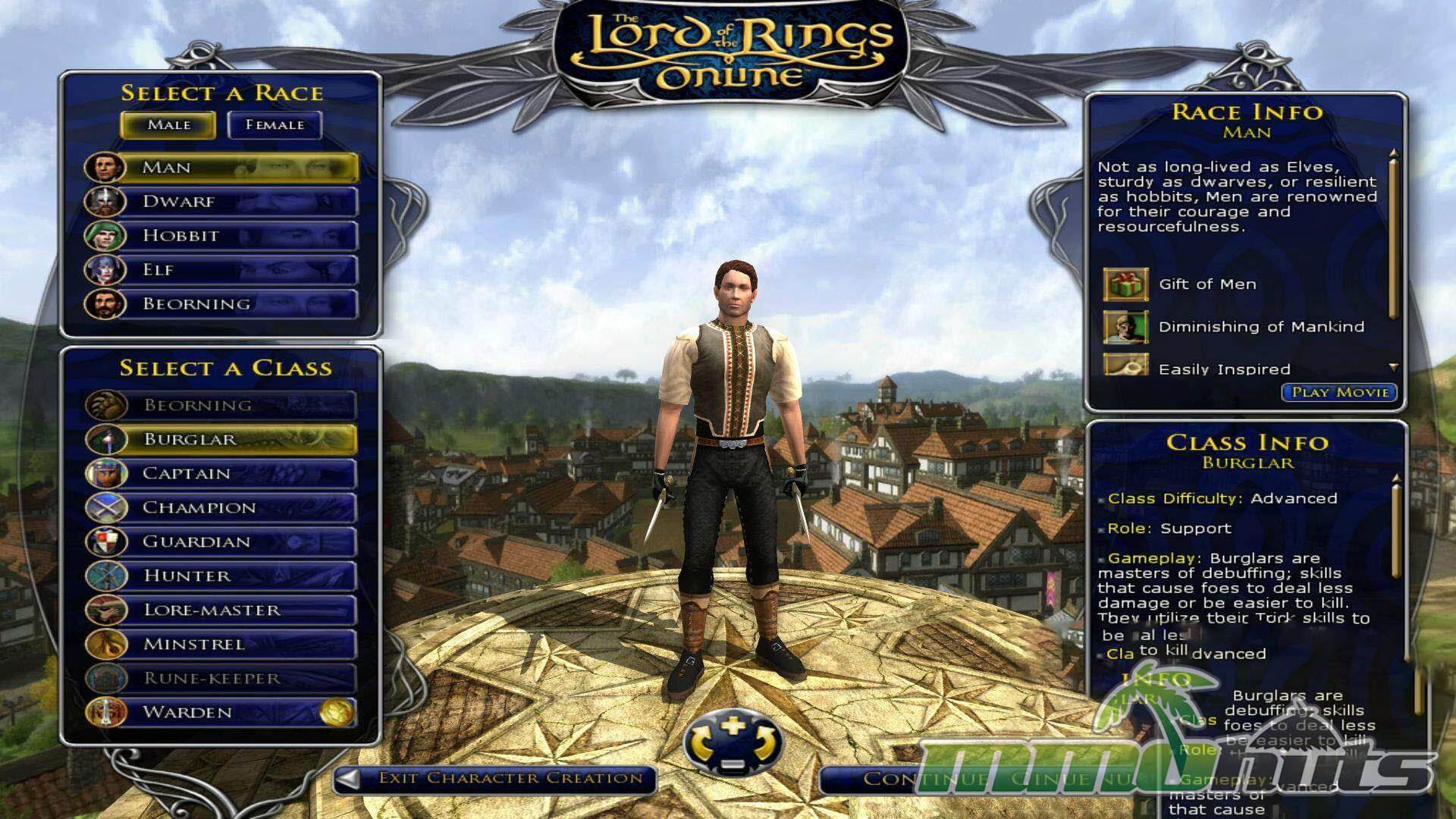
Character creation is straightforward and functional. You pick from five races (Man, Hobbit, Dwarf, Elf, and Beorning) and ten classes (Beorning, Burglar, Captain, Champion, Guardian, Hunter, Lore-master, Minstrel, Rune-keeper, and Warden). Visual customization is not especially deep by modern standards, but it gives enough flexibility for faces and general appearance. There is also a nationality choice that later pays off as a title, which is a small touch that fits the setting’s focus on identity and roleplay.
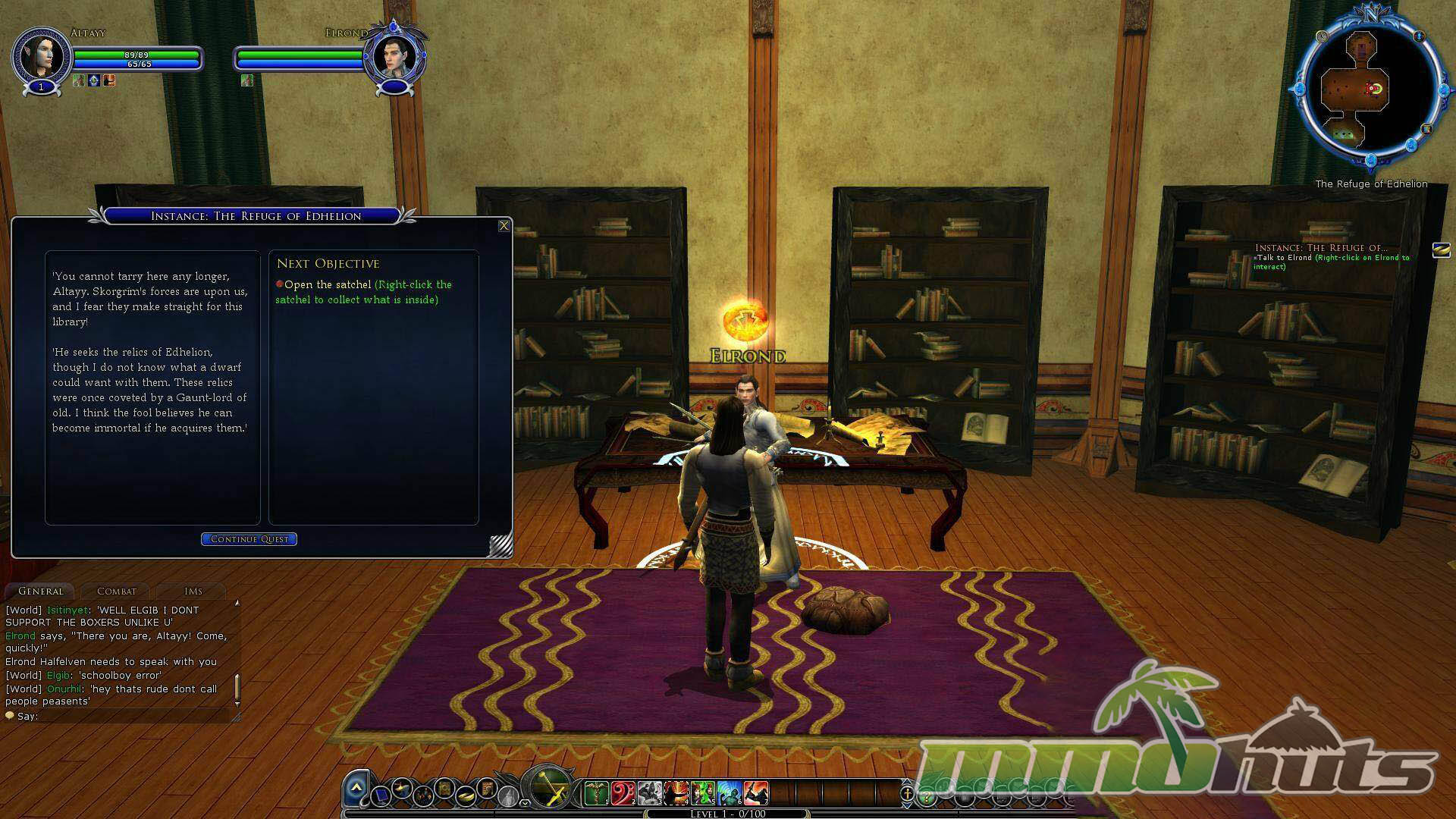
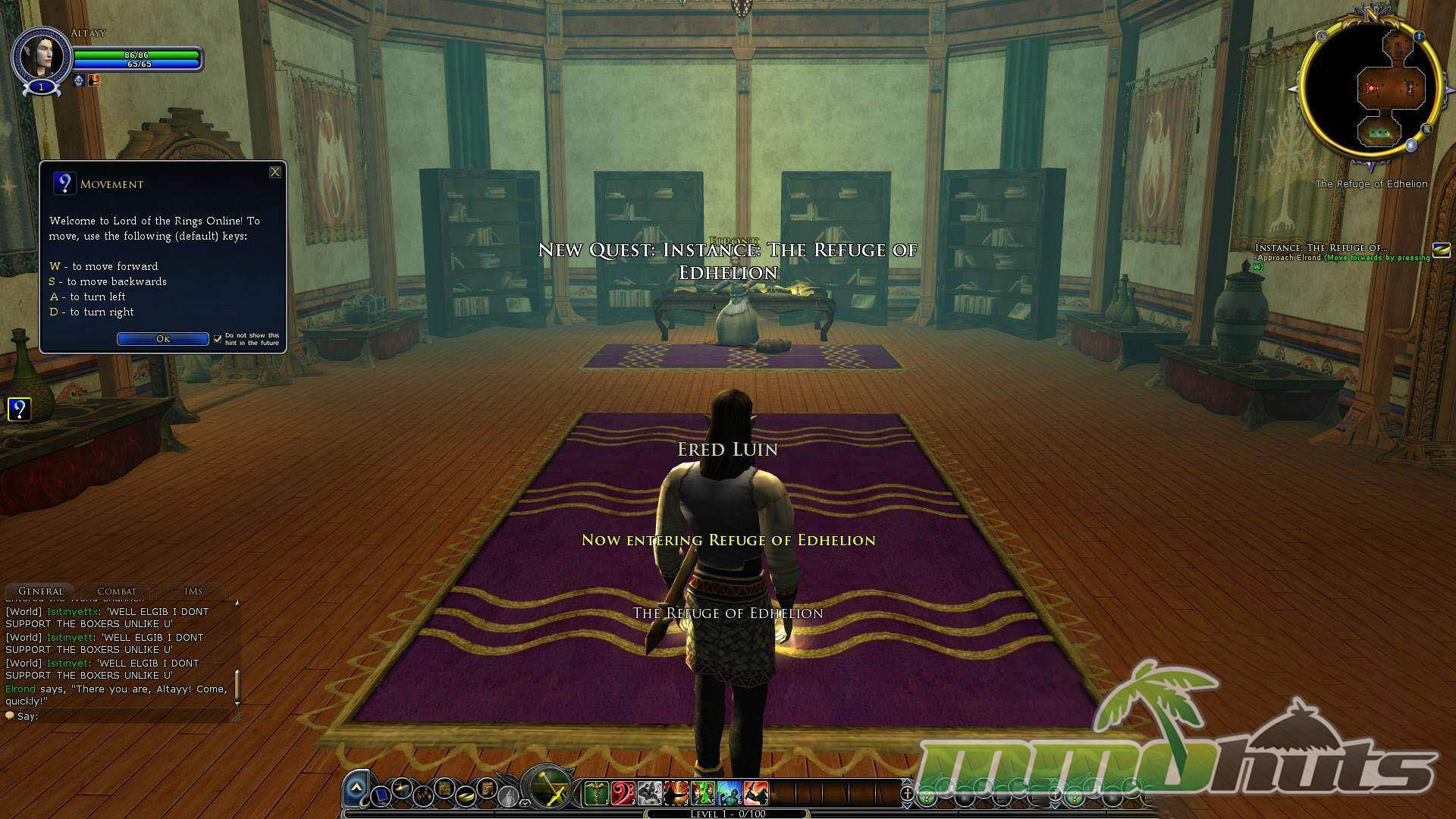
The opening tutorial is instanced and acts as a guided introduction to the world and controls, including early encounters with major characters depending on your race. After that initial set piece, the game settles into a classic tab-target MMO style with familiar inputs and pacing. Movement and targeting follow the genre standard, quests are clearly tracked, abilities are earned automatically as you level, and fights tend to be deliberate rather than action-heavy. If you like older-school MMO structure, it feels comfortable. If you are looking for modern, kinetic combat, it can come across as stiff.
Progression, builds, and the trait framework
Leveling hands you a steady stream of active and passive abilities, but LOTRO’s longer-term build crafting comes from its trait systems. Class trait points are earned as you gain levels and then spent in a trait tree to tune your role, whether you are leaning toward damage, defense, or support. On top of that, Virtue traits are awarded through deeds and provide combat-related boosts, giving completionists an extra reason to engage with the world beyond the main quest path.
Racial traits add another layer, tied to your chosen race and commonly unlocked by accomplishing specific goals, including slayer-style objectives. Some of these traits provide unique skills and travel conveniences, which matters in a game where distance and geography are part of the fantasy. Taken together, traits give LOTRO a satisfying sense of “my character is growing in multiple ways”, even when the moment-to-moment questing is conventional.
Deeds, titles, housing, and faction reputation
LOTRO is largely built around PvE, exploration, and story, and its Deed system reinforces that focus. Deeds function like achievements, but with more practical incentives, including rewards that can contribute to Turbine Points for the cash shop. Deeds fall into categories such as exploration, slayer objectives, lore discoveries, and reputation-related goals, which helps diversify what you do while traveling through each zone.
Titles are the cosmetic companion system to deeds and other accomplishments, sitting next to your character name as a badge of progress. Some titles are earned through quirky challenges or milestones, including survival-oriented goals like reaching an early level without dying, which encourages players to treat the world a bit more carefully.
Housing unlocks at Level 15 and places your home in an instanced neighborhood aligned with your race. There are multiple house sizes, including the larger kinship option intended for guild communities. The instanced approach keeps things organized, even if it also means you do not see player homes naturally scattered throughout the persistent world. Finally, the reputation system works much like other theme park MMOs, allowing you to gain standing with factions through activities such as quests, instance runs, and defeating enemies, then trade that standing for rewards and services.
PvE activities and group content
The PvE menu is broader than the questing might suggest at first glance. You will encounter quest instances used for story beats, plus world instances built for small groups that include bosses, deeds, and structured encounters. At the top end, raids are designed for two or three fellowships (12 to 18 players) and focus on taking down major enemies for high-quality loot.
Public dungeons offer a more open structure where players can enter without being specifically invited into a private group instance. Skirmishes are another notable system, because they can be launched from almost anywhere and scaled to different group sizes. Each skirmish pairs you with a Soldier NPC and typically runs for 30 to 90 minutes depending on the objective and chosen scale. In practice, this gives LOTRO a flexible option for players who want repeatable content without committing to a full raid schedule.
PvP via Monster Play
Competitive play exists, but it is not the game’s main identity, and it is delivered through a distinctive format. Instead of picking Orcs or other enemy factions as standard player races, LOTRO uses PvMP (Player vs. Monster Player), commonly referred to as Monster Play. This mode opens at Level 20 and lets players fight as Monsters, while the Free Peoples side is limited to VIP players.
Battles take place in the Ettenmoors, where both sides contest objectives including five keeps and four outposts. Control of these points influences access to additional areas like the Delving of Frór, a public dungeon beneath the zone. Participation awards ranks and commendations, with 15 ranks total, which steadily unlock improved equipment for heroes and better armor and stats for monster characters. Commendations can then be spent on progression upgrades, abilities, and cosmetic items, giving the mode its own long-term incentive track.
Cash shop and VIP considerations
The game’s monetization is split between the cash shop and the VIP subscription. VIP provides a large bundle of quality-of-life perks and access improvements, including all character trait slots, 500 Turbine Points per month, unlimited chat, additional inventory space, a custom portrait frame, access to quest packs and skirmishes, a daily 100% XP boost, access to all monster classes, removal of the currency cap, and higher auction house limits, among other benefits, for $14.99/month. The list is substantial, and it is designed to reduce friction for players who intend to stay for the long haul.
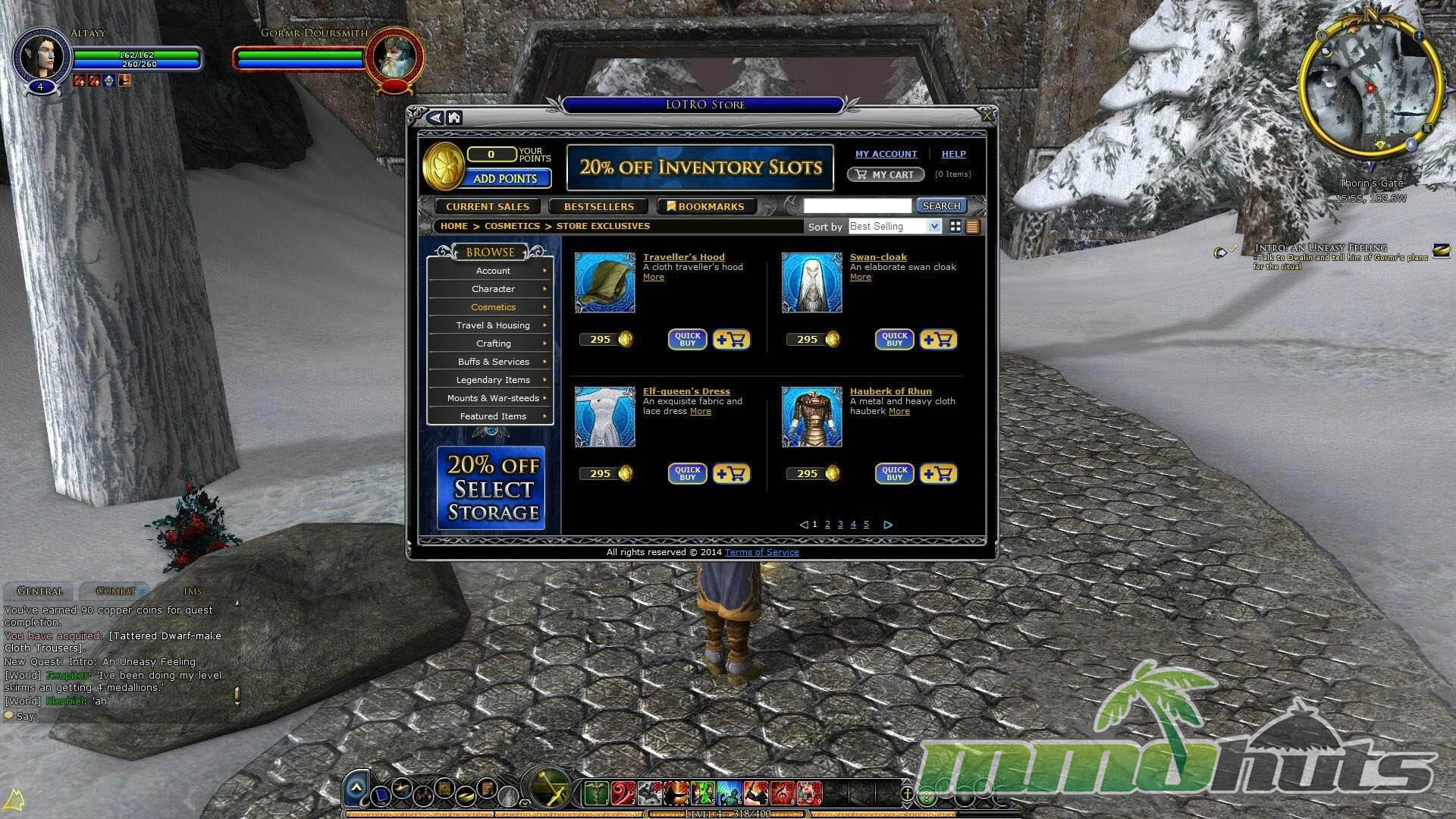
The cash shop itself sells a wide range of items and access, including quest packs and instanced content, character and storage slots, auction house features, class unlocks, currency cap removals, cosmetics, travel options, housing-related items, buffs, crafting materials, potions, dyes, mounts, and more. Importantly, Turbine Points are not only purchased, they can also be earned through deed completion, which makes the system feel more approachable than many F2P models, even if it still nudges players toward paying to avoid extensive grinding.
Final Verdict: Great
LOTRO delivers a warm, lore-heavy MMORPG experience that prioritizes exploration and narrative over flashy combat. Free players can absolutely get meaningful time out of it, but the paywalls around content and convenience can become noticeable if you plan to push far into the game without subscribing or buying packs. If Middle-earth is a setting you care about, LOTRO remains one of the best ways to inhabit it in game form, and even for MMO players without strong Tolkien attachment, it still stands as a solid, content-rich theme park MMO with unusually strong atmosphere.
Lord of the Rings Online Links
Lord of the Rings Online Official Site
Lord of the Rings Online Steam Page
Lord of the Rings Online Wikipedia
Lord of the Rings Online Wiki (guides, databases, and more)
Lord of the Rings Online Subreddit
Lord of the Rings Online System Requirements
Minimum Requirements:
Operating System: Windows XP / Vista / 7 / 8 / Mac OS X
CPU: Intel Pentium 4 1.3 GHz / AMD Athlon XP 1600+
Video Card: Nvidia GeForce 8300 GS / ATI Radeon HD 3200
RAM: 1 GB
Hard Disk Space: 2 GB
Recommended Requirements:
Operating System: Windows XP / Vista / 7 / 8 / MAC OS X
CPU: Intel Pentium 4 3.2 GHz or better / AMD Athlon 64 3500+
Video Card: Nvidia GeForce 7600 GT 256 MB / ATI Radeon X1800 Series 256 MB or better
RAM: 2 GB or more
Hard Disk Space: 10 GB
Lord of the Rings Online is Mac OS X compatible
Video card must support Dirext X 9.0 or above. Lord of the Rings Online supports 32-bit and 64-bit operating systems.
Lord of the Rings Online Music & Soundtrack
Lord of the Rings Online Additional Information
Developer: Turbine
Executive Producer: Aaron “Rowan” Campbell
Composer: Stephen Digregorio, Chance Thomas, Geoff Scott, Brad Spears, and Egan Budd
Game Engine: Turbine G3 with Havok
Closed Beta Date: September 8, 2006
Open Beta Date: April 6, 2007
Free to Play Date: September 10, 2010 (NA), November 2, 2010 (EU)
Steam Release Date: June 6, 2012
Expansions:
Mines of Moria (November 18, 2008) – Level cap raised to 60, added the Rune-Keeper and Warden classes, Legendary Item system, and two new areas: Moria and Lothlorien.
Siege of Mirkwood (December 1, 2009) – Level cap raised to 65, added skirmish feature, and two new areas: Southern Mirkwood and Enedwaith.
Rise of Isengard (September 27, 2011) – Level cap raised to 75, class revamps for Minstrels and Champions, added a 24-man raid, and three new areas: Dunland, Nan Curunir, Anduin.
Riders of Rohan (October 15, 2012) – Level cap raised to 85, added mounted combat, and six new areas comprising the Eastemnet: the Wold, the East Wall, the Norcofts, the Sutcrofts, the Entwash Vale, and the Eaves of Fangorn.
Helm’s Deep (November 20, 2013) – Level cap raised to 95, added epic battle feature, trait tree revamp, and added five new zones to Western Rohan: Broadacres, Stonedeans, Kingstead, Westfold, and Eastfold.
Development History / Background:
Building an MMORPG around The Lord of the Rings license took years of starts, stops, and shifting partnerships. An online LOTR project was first revealed in 1998 under Sierra, but it did not make it through development due to financial issues. The rights situation changed in 2001 when Vivendi Universal Games secured an eight-year agreement to produce games based on the franchise. In 2003, Vivendi and Turbine announced Middle-Earth Online with a target of 2004, but the plan evolved again. By 2005, Turbine chose to move forward independently and acquired the rights needed to develop and publish what ultimately became The Lord of the Rings Online, leading to the game’s release on April 24, 2007.