Landmark is a sandbox MMO built around player creativity, putting exploration and construction at the center of the experience. Instead of guiding you through a tightly scripted theme park, it encourages you to roam a stylized world, harvest resources, and shape terrain to build anything from small homes to ambitious showcase projects that other players can visit.
 | Publisher: Daybreak Game Company Playerbase: Low Type: Sandbox MMO Release Date: June 10, 2016 Pros: +Strong sense of discovery. +Attractive, distinctive environments. +Flexible, powerful building toolkit. Cons: -Did not fully meet its original ambitions. -Performance and optimization issues. -Limited ongoing support. |

Landmark Overview
Landmark is a sandbox MMO focused on building and world shaping, where the main progression comes from what you create rather than what you loot. It began life as a companion project for EverQuest Next, intended to showcase the tools and world tech behind that game. After EverQuest Next was cancelled, Landmark remained as its own standalone experience, letting players claim land, collect materials, sculpt terrain, and assemble detailed structures using an extensive construction suite.
Moment to moment, the loop is simple and creator-driven: explore for a location you like, gather resources from the surrounding environment, then use those materials to build, refine, and decorate. Creations are meant to be shared and shown off, turning the world into a gallery of player-made builds. For players who want more than peaceful construction, the game also allows you to bring combat into the mix by adding hostile creatures to your claim, creating a light action layer alongside the crafting and building. Landmark also includes the mega palette feature, which lets you adjust the time of day, a small but useful tool for setting mood, lighting, and screenshots.
Landmark Key Features:
- Beautiful Scenery – travel through varied zones with a memorable visual style and plenty of places worth scouting for a build site.
- Building Tools – a deep construction system that supports intricate architecture, with sharing and showcasing as a core part of the appeal.
- Resource Collection – harvest materials from the environment to fuel building projects and experimentation.
- Combat – introduce monsters to your claim and add a bit of risk and spectacle to an otherwise creator-first sandbox.
- Day/Night Cycle Controls – use the mega palette to pick the time of day, helping with atmosphere, lighting, and presentation.
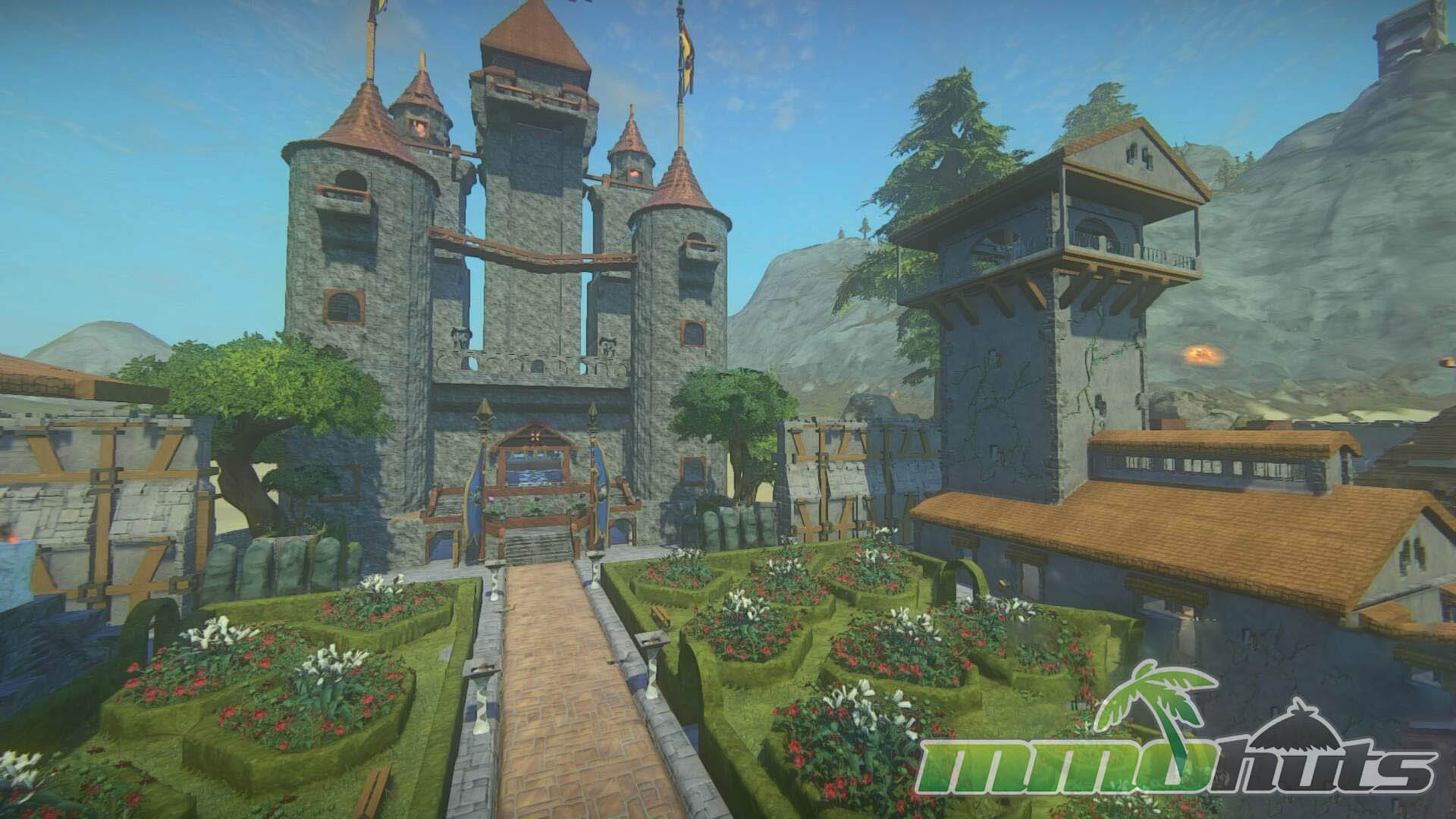
Landmark Screenshots




Landmark Featured Video

Landmark Review
Landmark’s biggest strength is that it treats building as the main event, not a side activity. The toolset is the reason to log in, and when it clicks, it can feel closer to a digital workshop than a traditional MMO. The ability to manipulate terrain and assemble detailed structures gives creative players room to iterate, improve, and develop a recognizable style over time. If your enjoyment comes from planning layouts, experimenting with shapes, and polishing a build until it feels “finished,” Landmark offers a satisfying canvas.
Exploration supports that creative loop well. The world has a distinct look, and scouting for the right location is part of the process, whether you are hunting for a scenic backdrop, convenient resources, or simply a spot that inspires a theme. Gathering is straightforward and primarily serves construction, which keeps the focus where it belongs. The social angle is also important, since sharing builds and visiting other claims helps the game feel like a community showcase rather than a purely solo builder.
Combat exists, but it is not the centerpiece. The option to add monsters to your claim can provide variety and a bit of spectacle, yet it generally feels like a secondary system compared to the depth of the construction tools. Players looking for robust MMO progression, tightly tuned encounters, or a content treadmill may find the experience light on direction. Landmark is more about self-set goals, personal projects, and creative motivation than about chasing gear tiers.
The game’s reputation is also shaped by its troubled development arc. Because it was once tied to EverQuest Next, expectations were high, and not all promised ideas translated into a fully realized product. Performance and optimization have been recurring complaints, and the sense of slowed development and limited support has been hard to ignore for long-term players. As a result, Landmark is easiest to recommend as a specialized sandbox for builders who can appreciate the tools and the world, while accepting that the broader MMO scaffolding and long-term backing are not as strong as the original vision suggested.
Landmark System Requirements
Minimum Requirements:
Operating System: Windows 7 64 bit
CPU: Intel i5 Quad Core or higher / AMD Phenom II X4 or higher
Video Card: 1,024 MB RAM
RAM: 4 GB
Hard Disk Space: 20 GB
Recommended Requirements:
Operating System: Windows 7 64 bit
CPU: Intel i5 Quad Core or higher / AMD Phenom II X6 or higher
Video Card: nVidia GeForce GTX 560 series or higher / AMD HD 6870 or higher
RAM: 8 GB
Hard Disk Space: 20 GB
Official system requirements have not yet been released for Landmark. The requirements above are what the developers are aiming for, but may not represent the final numbers.
Landmark Music & Soundtrack
Coming Soon…
Landmark Additional Information
Developer: Daybreak Game Company
Publisher: Daybreak Game Company
Game Engine: ForgeLight
Early Access: May 13, 2014
Release Date: June 10, 2016
Development History / Background:
Landmark started development under Sony Online Entertainment, before SOE was sole to private equity group Columbus Nova and the studio was renamed Daybreak Game Company. The project was built in parallel with EverQuest Next and was closely associated with that game’s technology and goals until EverQuest Next was cancelled in March, 2016. Early Access arrived on Steam on May 13, 2014, but progress slowed around June, 2015 after Daybreak stated it would be prioritizing EverQuest Next. Following EQ Next’s cancellation, Daybreak shifted attention back to Landmark and announced a Spring, 2016 launch window. Over time, the game drew significant criticism tied to slow development, performance problems, and the feeling that it had been left behind. In May 2016, Daybreak confirmed that Landmark would officially launch on June 10, 2016 after roughly two years in Early Access.