La Tale is a charming 2D side-scrolling fantasy MMORPG that leans hard into colorful, anime-style presentation and classic grind-friendly progression. You begin by picking one of six starter classes, then branch into more specialized paths as you climb levels. Whether you are grouping up for wave-based PvE in the Coliseum or testing your builds in Arena battles and duels, La Tale focuses on simple, arcade-like combat paired with deep character growth.
 | Publisher: PapayaPlay Playerbase: Low Type: MMORPG PvP: Arena / Duels Release Date: September 18, 2008 (NA) Pros: +Memorable music throughout. +Lots of class paths and skill options. +Season 2 update refreshed major systems. +Cash shop feels largely fair. Cons: -Population is small and trending downward. -Movement and inputs can feel awkward. -Questing and leveling can be repetitive and slow. |

La Tale Overview
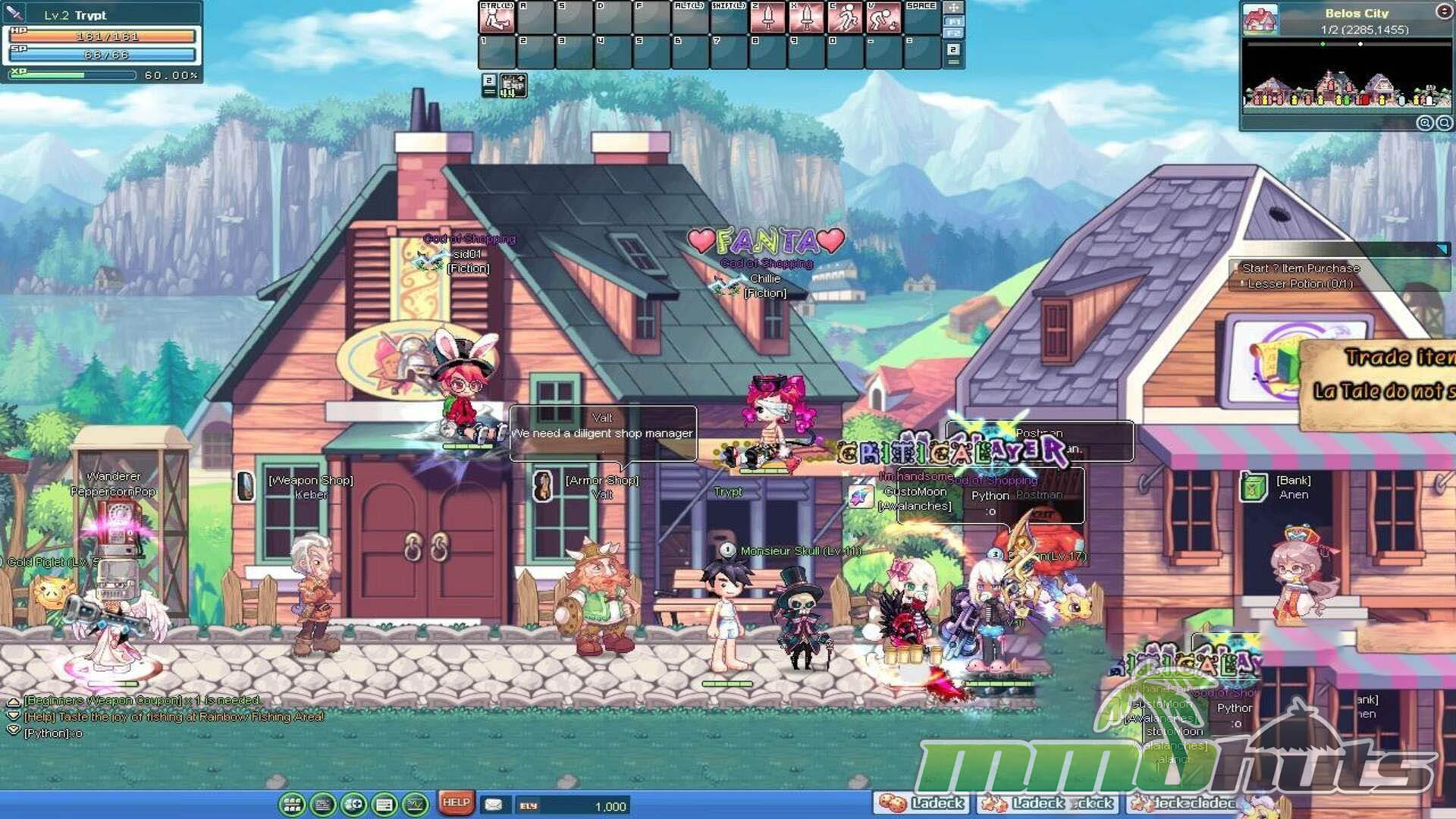
La Tale sits in a small niche of MMORPGs that play as 2D side-scrollers, putting it in the same broad category as games like MapleStory and Ghost Online. The visuals can look deceptively simple at first, but the game supports a surprisingly involved set of systems, including multi-step class progression, a dedicated PvP arena, pets you can raise, social features like marriage, and collectible monster cards that feed into character power.
A major refresh arrived with the “Season 2: STORM” update, which modernized parts of the experience through visual improvements, class tuning, and a smoother leveling curve. Even with those improvements, the core loop remains very traditional, you move from zone to zone completing quests and farming mobs to build out your character.
At the start, you choose from six base classes. Your character advances at Level 50 and again at Level 100, allowing you to specialize further as you approach endgame. The maximum level in La Tale is 200.
La Tale Key Features:
- Wide Class Selection – start with six archetypes, then refine your role via two advancement tiers.
- Side-Scrolling MMO – the platformer-style viewpoint gives combat and exploration a different rhythm than typical 3D MMOs.
- Fair Cash Shop – community feedback generally points to monetization that does not overwhelm normal progression.
- Build and Gear Tweaking – equipment and customization options encourage experimenting with how you want to play.
- Standout Music – the soundtrack is consistently strong and helps the world feel lively.
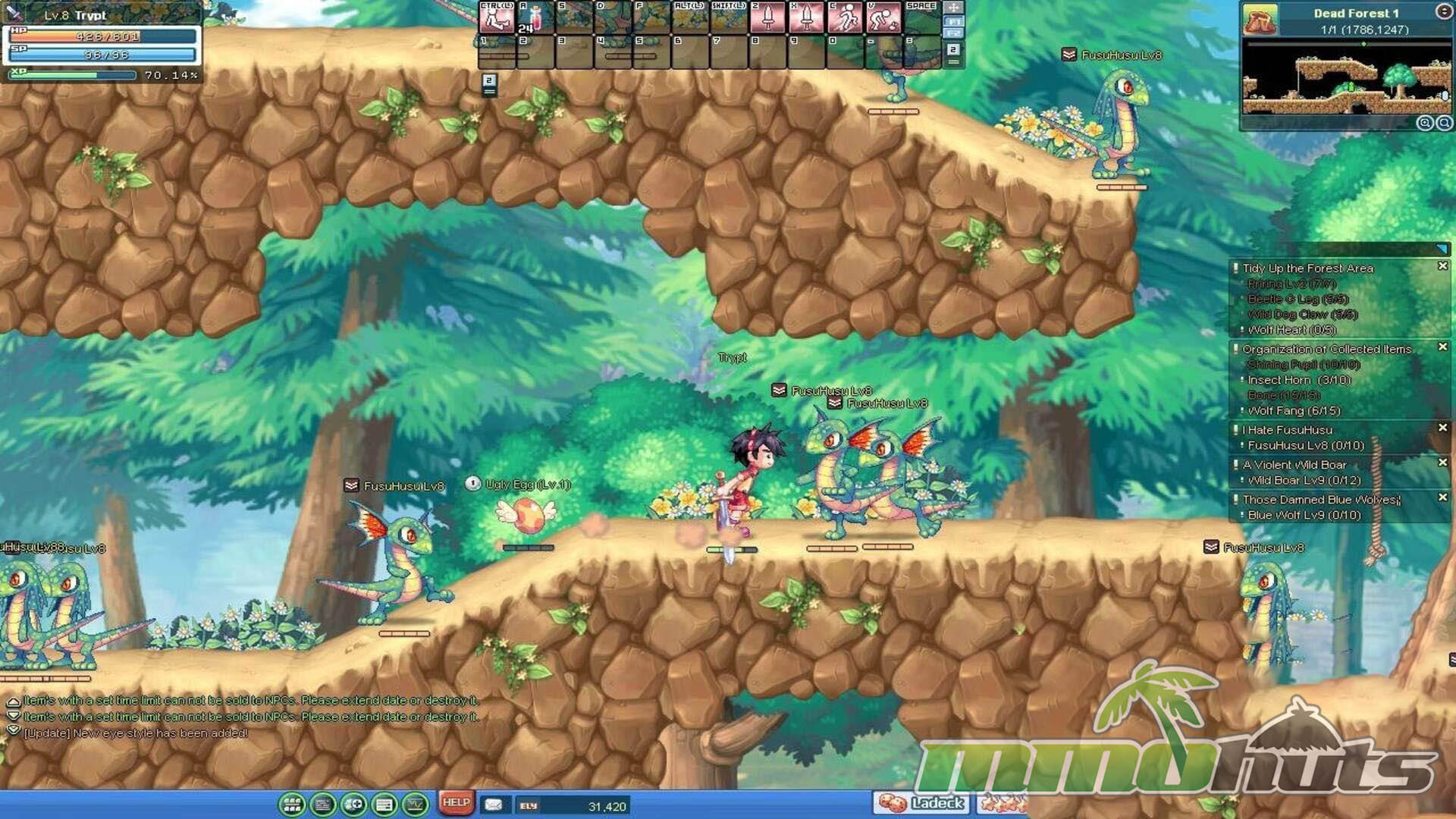
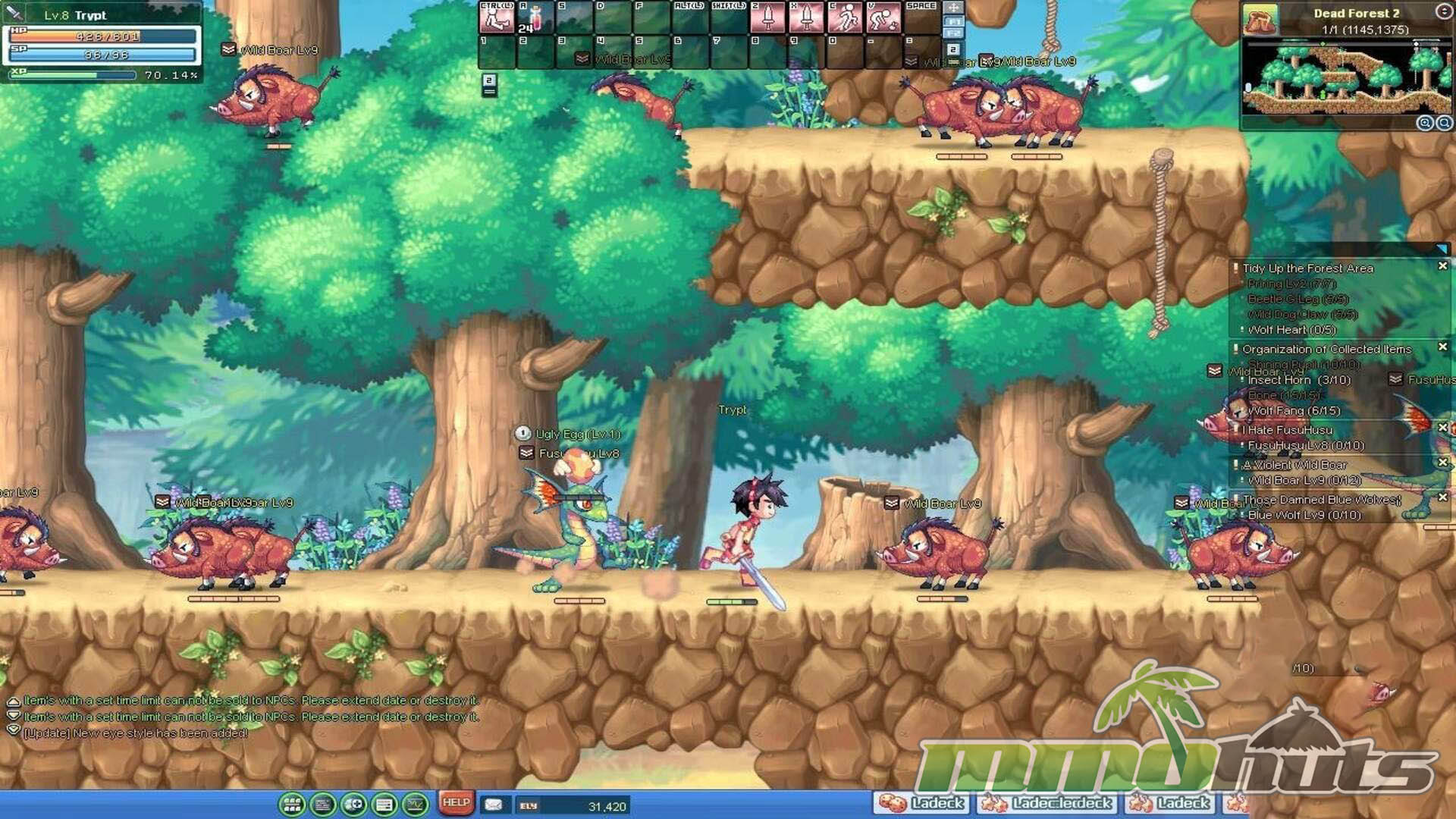
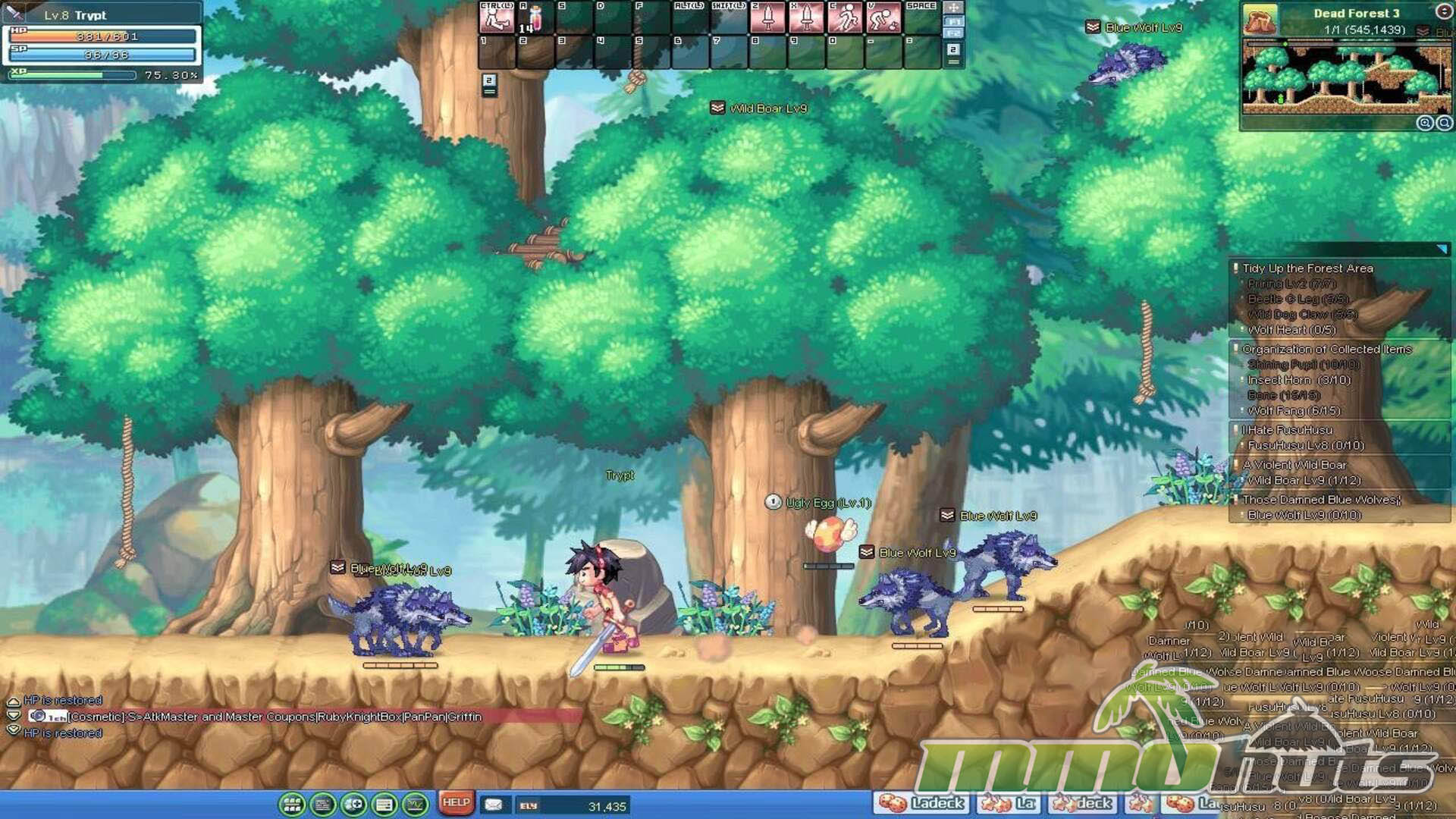
La Tale Screenshots





La Tale Featured Video

La Tale Classes
- Warrior – a close-range damage-focused fighter that prioritizes offense over staying power. Warriors commonly use two-handed swords, spears, and knuckles.
- Level 50 – Warlord, Blader
- Level 100 – Dragoon, Strider
- Knight – the defensive backbone of many parties, built to absorb hits while holding the line. Knights typically pair a shield with a sword or mace.
- Level 50 – Templar, Guardian
- Level 100 – Holy Order, Saint
- Wizard – a fragile but powerful caster who channels fire, water, earth, and wind. Wizards excel at area damage, trading durability for high output.
- Level 50 – Sorcerer, Bard
- Level 100 – Elemental Master, Minstrel
- Explorer – a fast-hitting ranged attacker that values speed and consistency over single heavy blows. Explorers use daggers, bows, crossbows, and knuckles.
- Level 50 – Treasure Hunter, Gunslinger
- Level 100 – Ruin Walker, Duelist
- Engineer – a hybrid style that blends technology with darker magical themes to produce high-impact abilities.
- Level 50 – Meister
- Level 100 – Engistar
- Soul Breaker – an aggressively destructive class themed around darkness, wielding the Soul Stone as its signature weapon.
- Level 50 – Soul Reaver
- Level 100 – Soul Lord
La Tale Review
La Tale is a 2D side-scrolling fantasy MMORPG developed and published by Actoz Soft in South Korea. It is published by OGPlanet in North America, Gamepot in Japan, and Shanda in China. It was released in February 2006 in South Korea, and in August 2008, it was released with an open beta in North America. Similar games include the popular Maple Story from Nexon, and perhaps Dragon Saga from WarpPortal. La Tale is available through OGPlanet as well as through Valve’s Steam service.
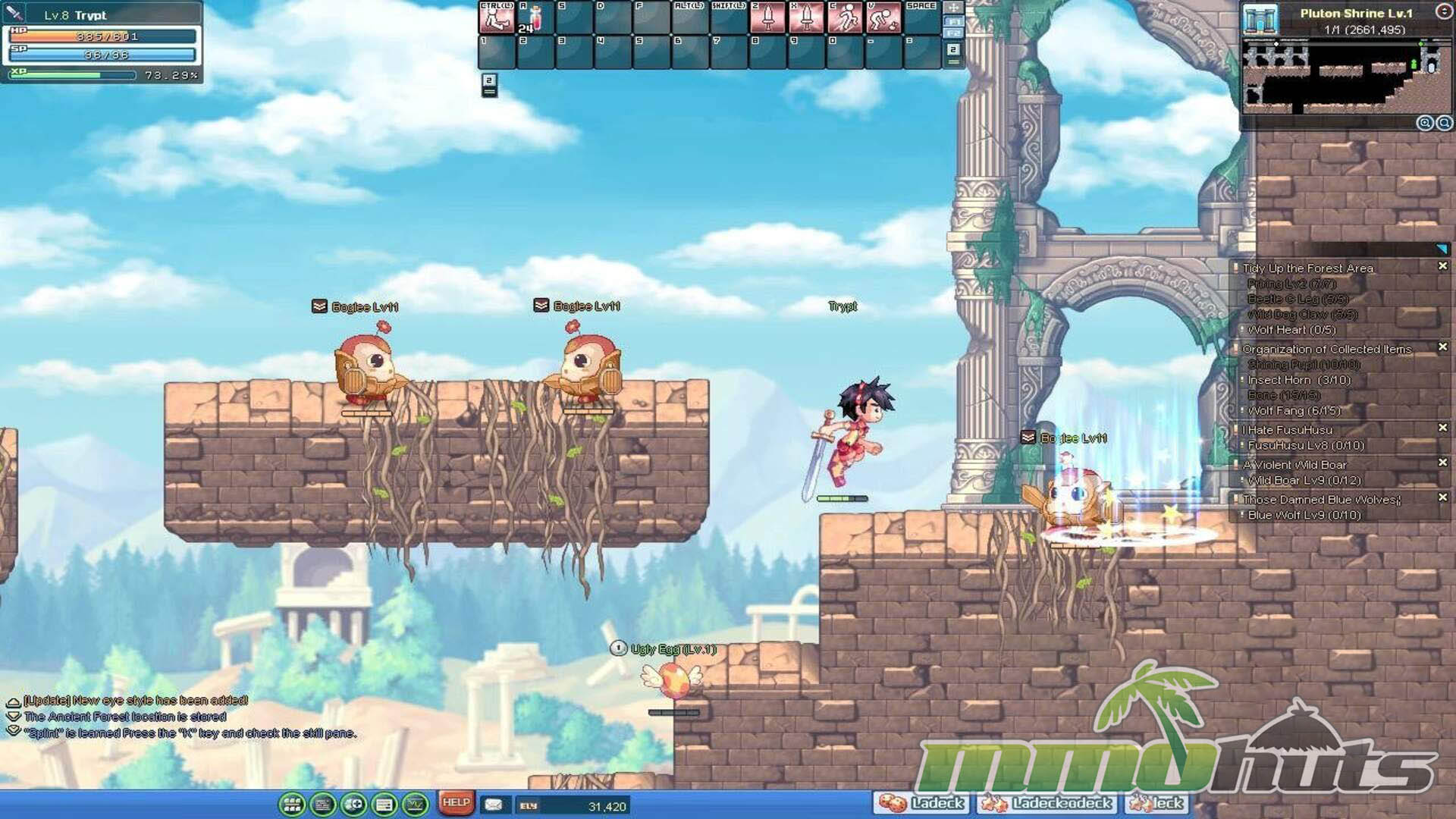
Light story, heavier worldbuilding
La Tale does not put its narrative front and center, especially early on, where the setting can initially read as a familiar anime fantasy backdrop. Over time, the game communicates more of its world through quests and exploration, but it is best approached as a progression-driven MMO rather than a story-first RPG.
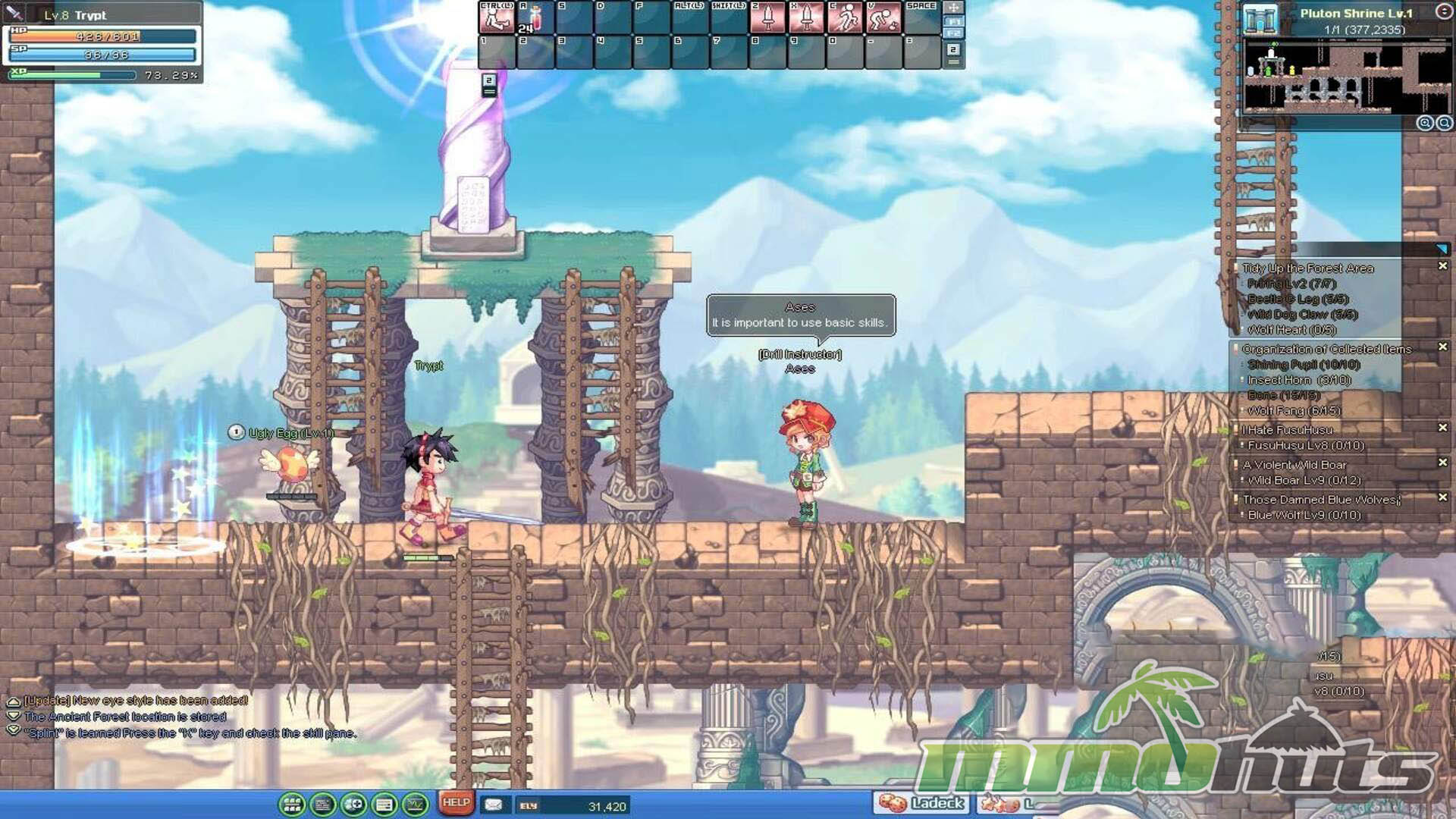
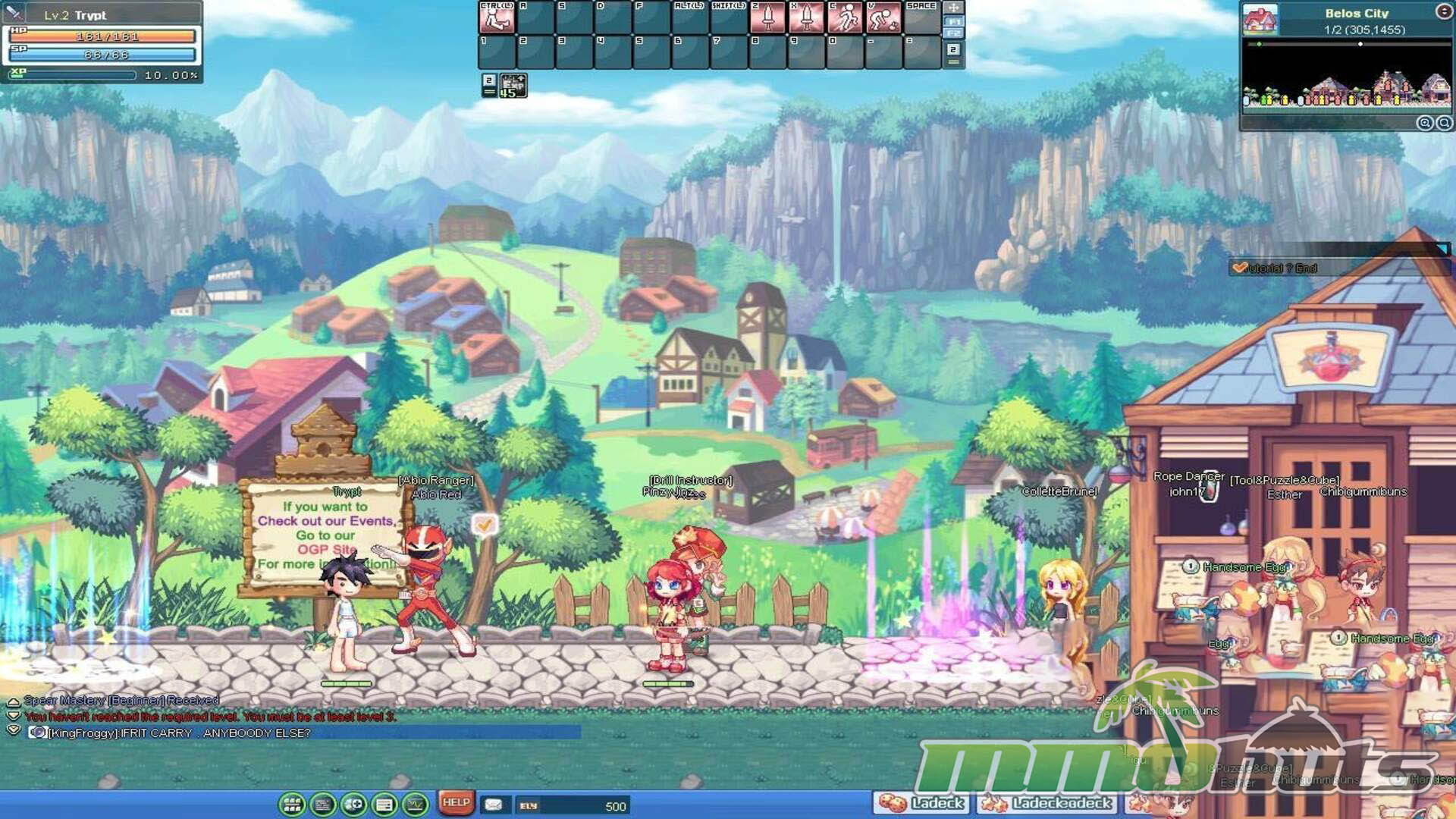
Character creation is fairly limited: you pick a male or female character, select from a small set of visual options such as hair and eyes, and adjust colors for hair, eyes, and starting outfit. In practice, the 2D sprite perspective reduces the impact of a robust creator anyway, and the real visual variety comes later from gear and fashion items.
Class choice is one of the strongest parts of the early game. You select from Warrior, Knight, Wizard, Explorer, Engineer, and Soul Breaker, then promote at Levels 50 and 100. Four of the base classes split into two options at Level 50, while Engineer and Soul Breaker follow a more direct advancement track.
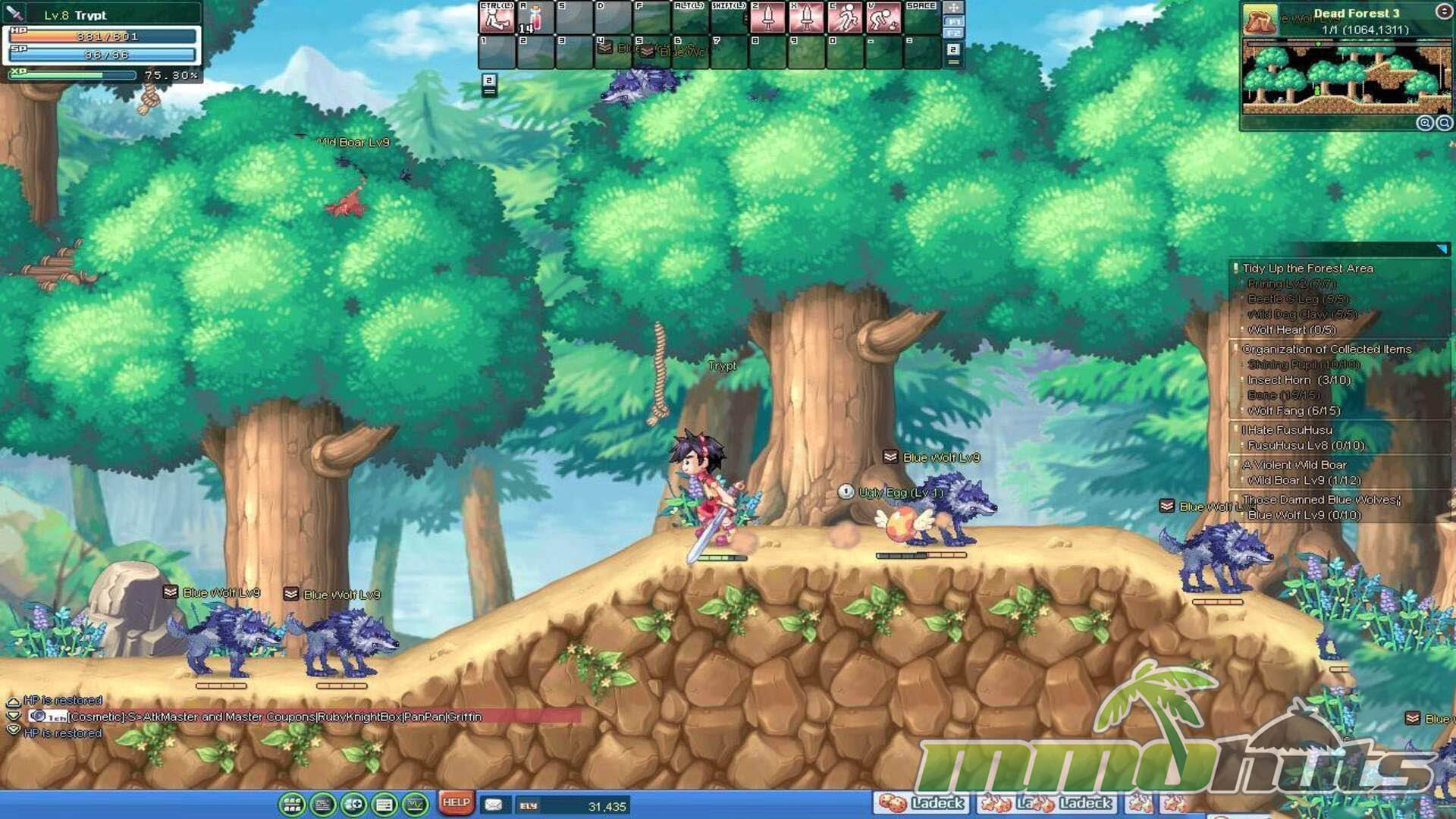
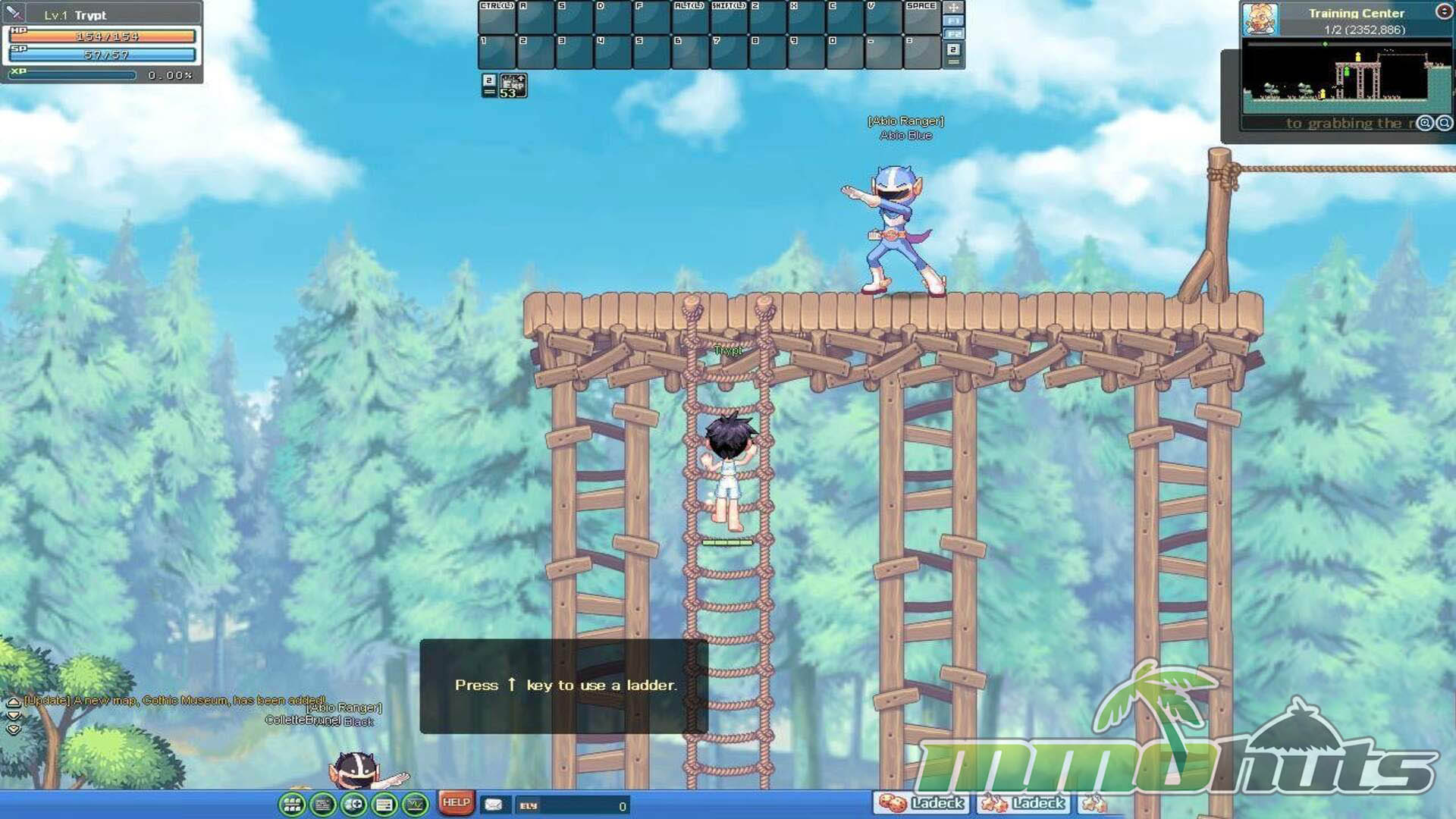
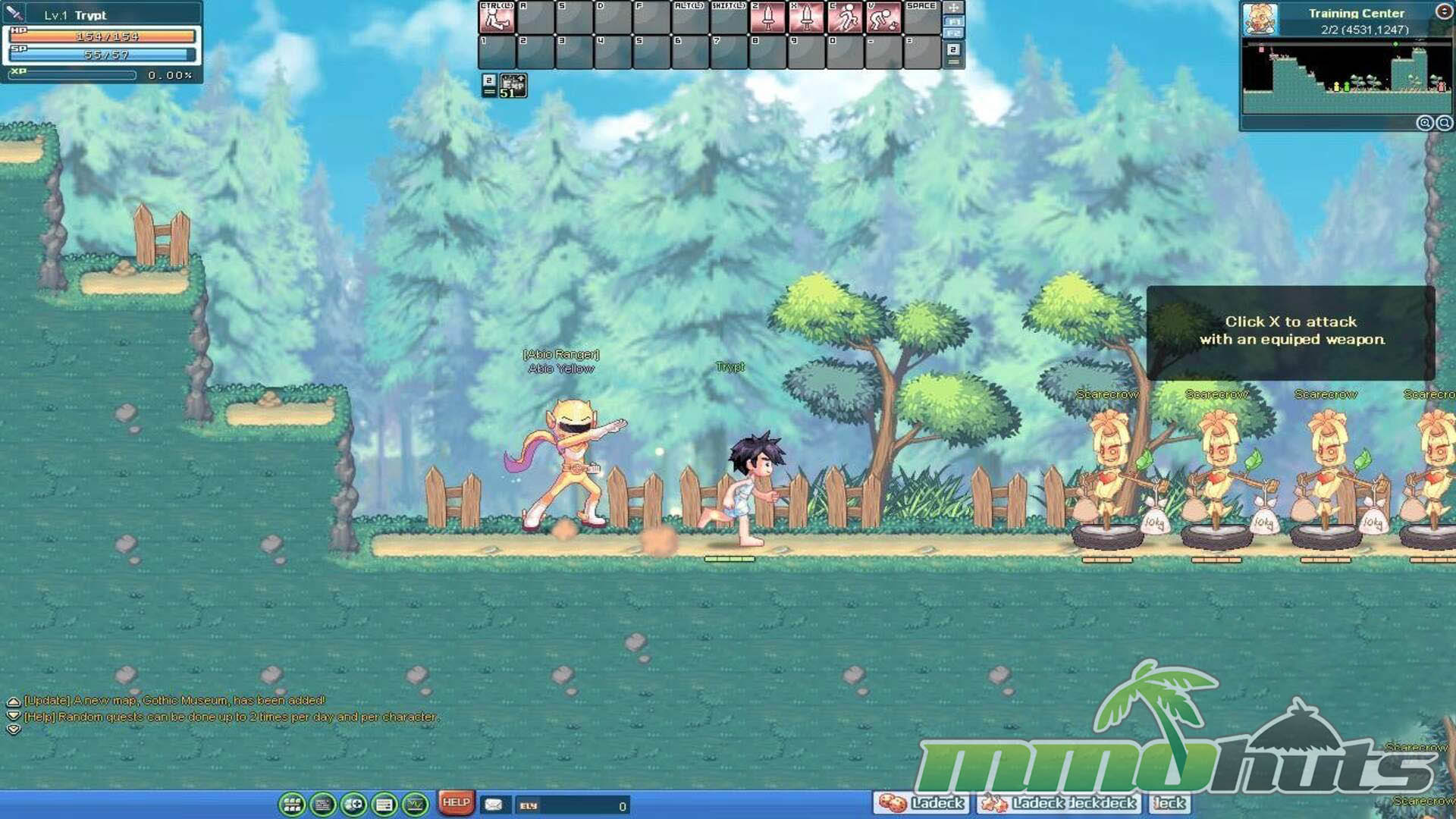
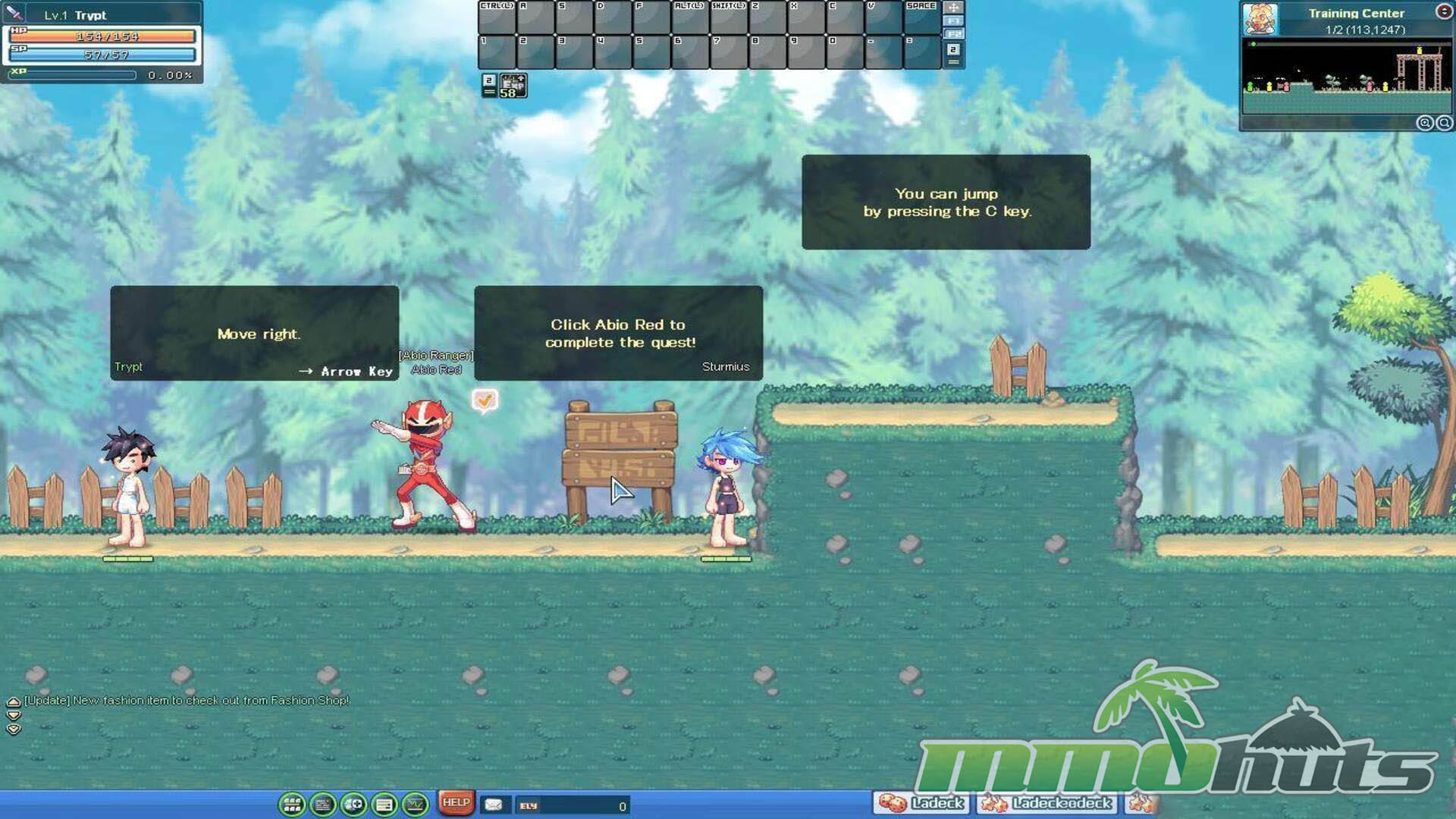
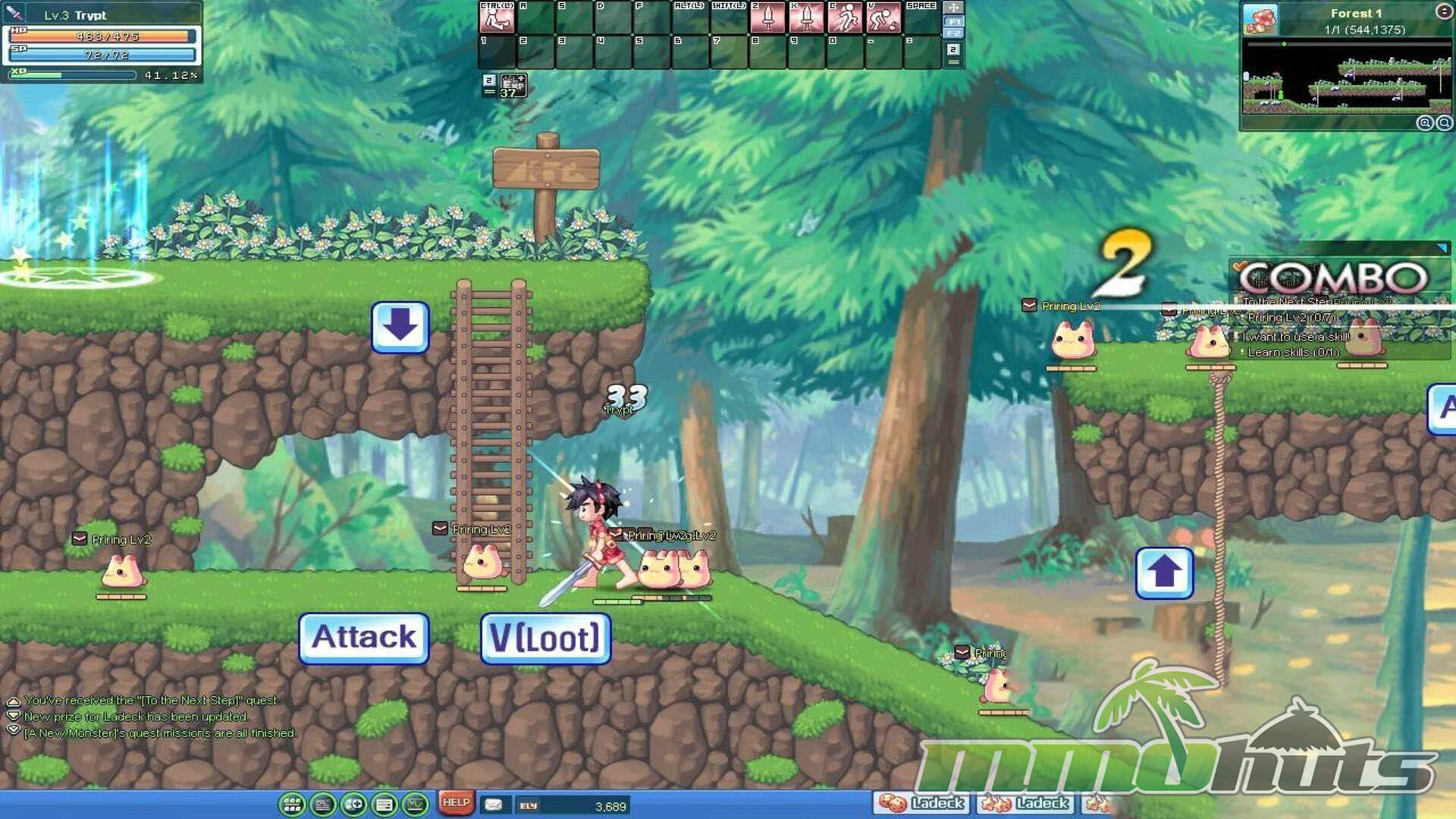
The opening hours include a guided tutorial that explains movement, combat, and basic interaction. Controls are keyboard-driven (arrow keys for movement, keys like Z and X for attacks, and additional hotkeys for skills and utility). The platformer foundations show up in small but important ways, including double jumps and using ropes to traverse gaps, which gives maps a bit of vertical texture compared to many older MMOs.
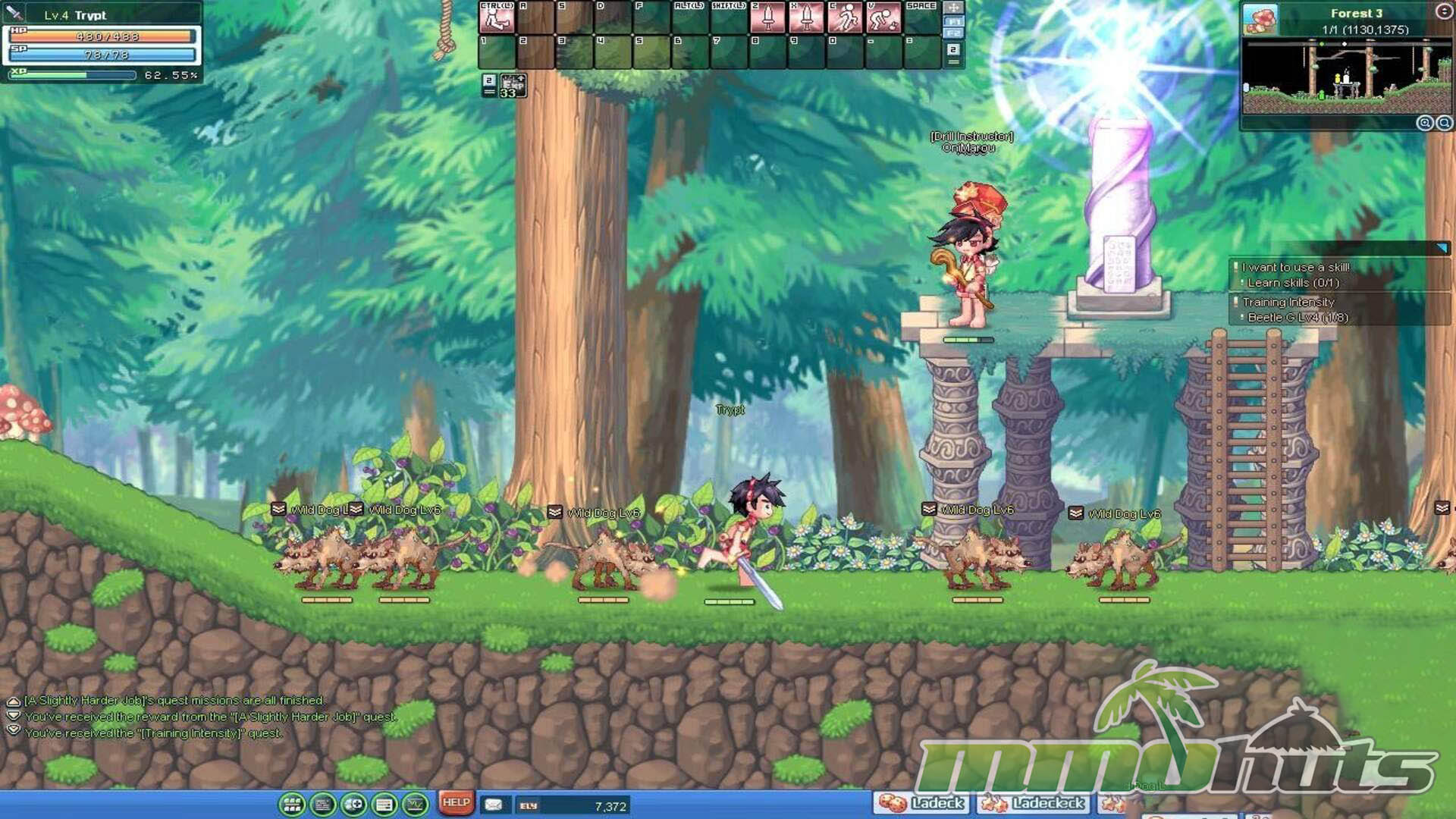
Progression revolves around quests and repeated monster hunting. Death carries a 3% experience penalty unless you have protections such as Iron Will or a Potion of Resurrection. The level cap is 200, and experience gain is affected by combo performance, rewarding players who can keep kills chained together.
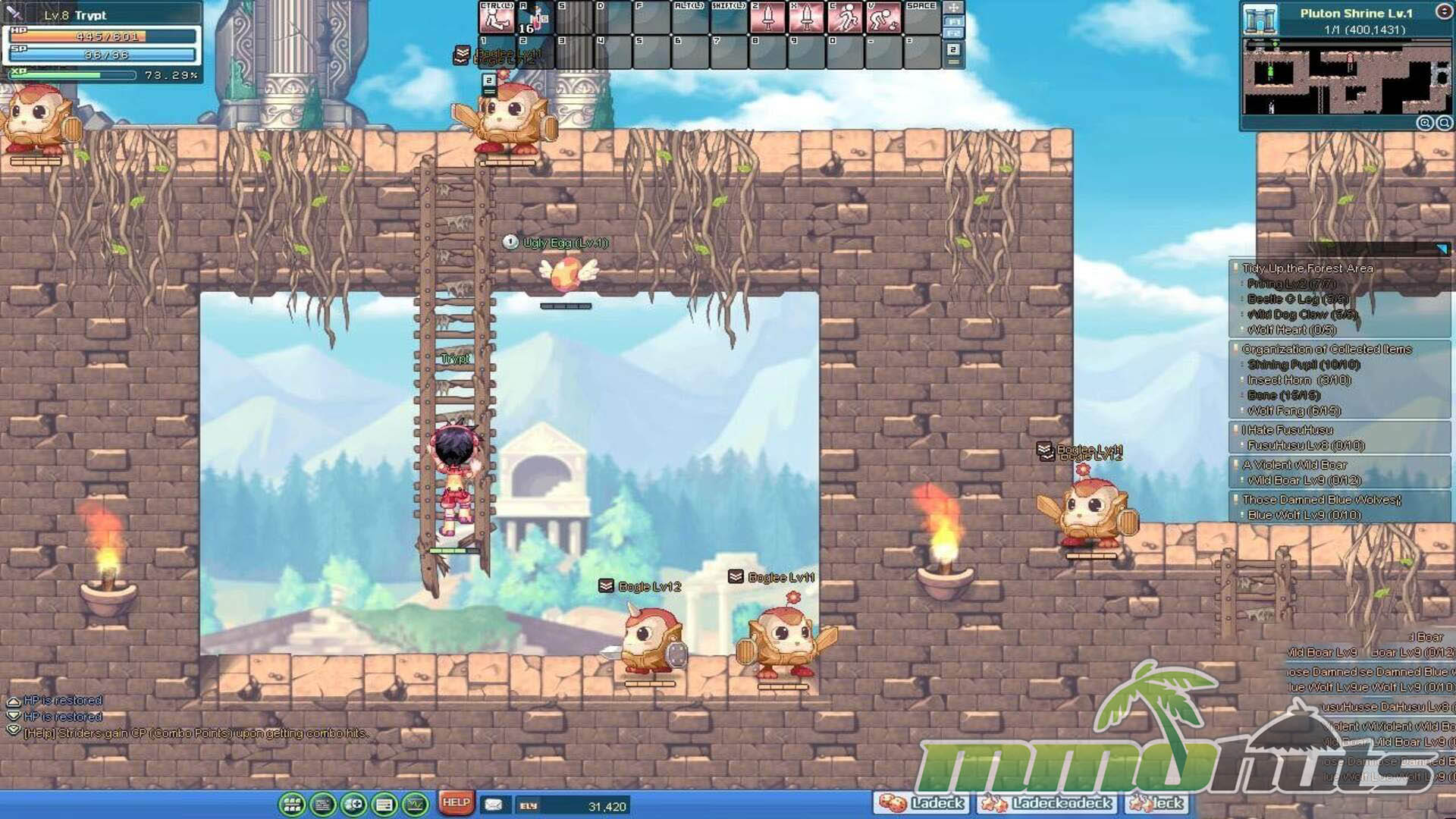
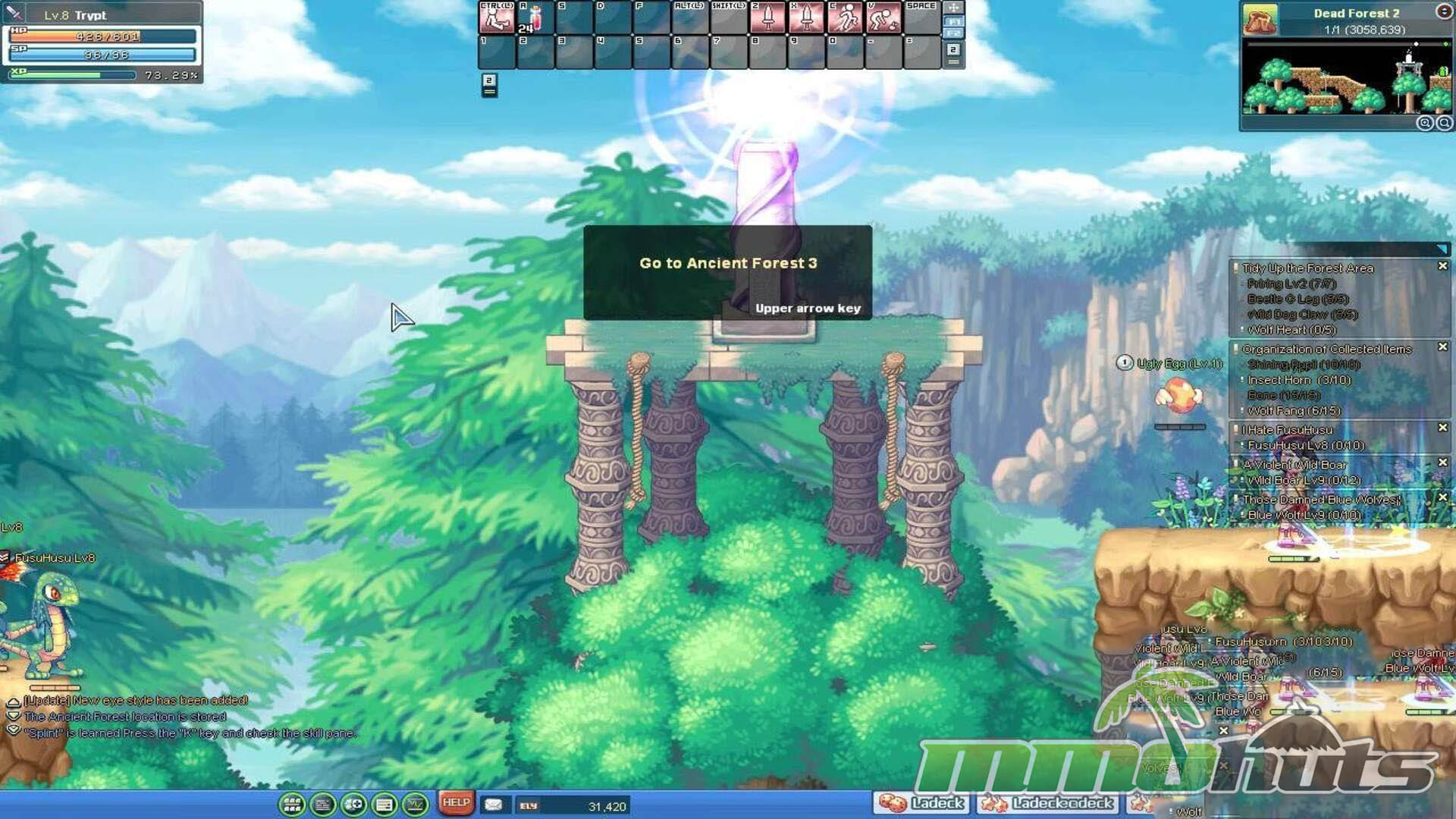
Once you are out of the initial tutorial area, you will still encounter instructional quests explaining tools like Returning Stones and Stones of Iris (used for travel and respawn points). Zone layouts tend to be compact, often roughly a couple screens in each direction, with enemy packs placed for efficient grinding. The downside is that quest design frequently falls back on familiar patterns, especially kill targets and item collection, which can make long sessions feel routine.
Skills
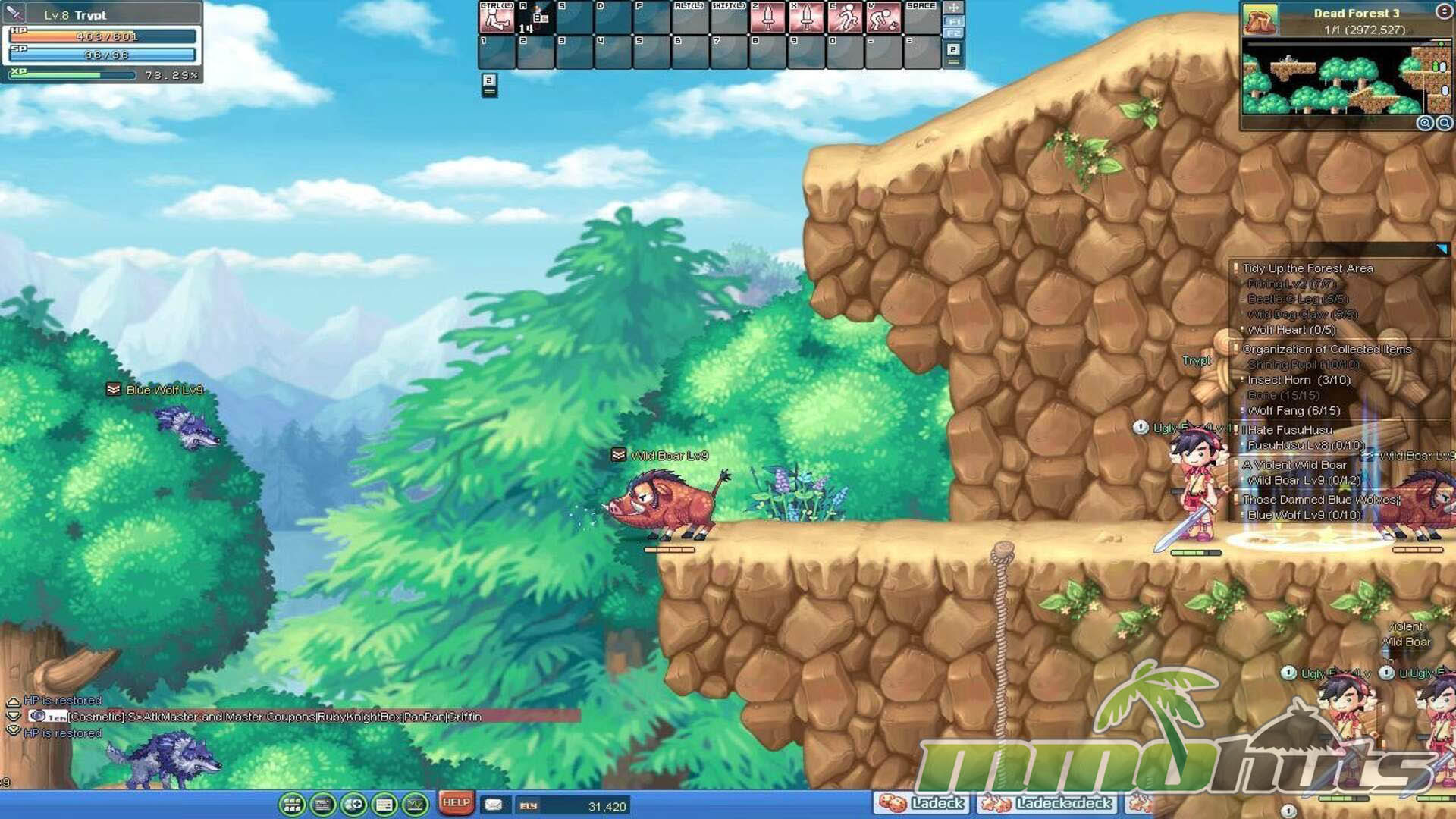
La Tale’s skill structure is broad, and it is not limited to pure combat talents. Skill categories include Weapon, Magic, Miscellaneous, Action, Emoticon, Craft, and Ely skills. You earn one skill point per level, and many skills become available only after you reach specific thresholds (for instance, some weapon skills are available immediately, while others unlock a few levels later). After unlocking a skill, you can invest points to improve it.
Weapon skills enhance damage or proficiency for particular weapon types. Magic skills primarily support the Wizard’s spellcasting and influence the effectiveness of elemental attacks. The Miscellaneous category covers utility and support options, with certain skills (such as Dig or Ignite) tied to quest unlocks. Action skills cover basic actions like jumping, sitting, and guarding. Emoticons are unlocked through guidebooks that drop randomly from enemies.
Notably, Action skills and Emoticons do not consume skill points. Craft skills feed into the crafting system, while Ely skills are used to raise the game’s four core stats: Power, Stamina, Magic, and Luck. Ely skills can be purchased without level restrictions. One important caveat is that promotion resets skill points, so investing heavily in Ely points before your final promotion can be an inefficient use of resources.

PvP
For a 2D side-scrolling MMO, La Tale offers a surprisingly complete PvP setup. PvP is divided into Official and Unofficial formats. Official matches are hosted in the Elias Fight Arena, matching players against random opponents. Both free-for-all and team modes exist, but in practice many fights happen in a 2v2 style.
Unofficial PvP is more informal and can be started by right-clicking another player and choosing “Challenge to PvP.” This mode does not enforce level restrictions. To keep fights more competitive, the game applies a stat adjustment to help lower-level characters better match higher-level opponents. The system attempts to account for gear and extra skills, but extreme level gaps can still favor the higher-level player.
Official PvP rewards include Honor Points and PvP Points for wins, and even losses grant smaller payouts, which keeps participation from feeling overly punishing. These points can be exchanged for PvP-focused items and skills, giving players a tangible reason to keep queueing beyond simple bragging rights.
Other Features
Outside of combat and leveling, La Tale includes a range of MMO staples: personal shops, mail, marriage, auctions, instances, the Coliseum, guilds, and pets. The Coliseum is essentially a PvE arena mode where parties take on waves of monsters, offering a more focused alternative to open-zone grinding.
Guilds are structured around three alignments (Order, Chaos, and Neutral). Membership provides a stat bonus that scales as the guild levels, making guild participation meaningfully beneficial rather than purely social.
Pets add another layer of long-term progression. They can gain levels and be enchanted, but they also come with time limits (for example, 60 days) and require revival when the timer expires, which is handled via cash shop items. It is a fun system with an obvious monetization hook attached.
Cash Shop
La Tale’s cash shop covers a familiar set of items: fashion sets, pets and pet support items, experience boosts, and convenience upgrades like inventory extensions and equipment gender switches. The overall perception among players is that you can remain competitive without spending, although paying can smooth out friction points and accelerate progress, especially if you value cosmetics and convenience.
Final Verdict – Good
La Tale succeeds at what many side-scrolling MMORPGs aim for: approachable action, a pleasant visual style, and a satisfying sense of character growth driven by classes, skills, and gear. Its strengths are helped by a cash shop that is generally viewed as reasonable and by major revamps such as the Season 2 update that improved the experience.
At the same time, the game can feel mechanically dated. Controls may not click for everyone, and the questing loop leans heavily on repetition. Combined with a smaller population, it can be difficult to recommend broadly. For players who specifically enjoy 2D MMO design and do not mind a grind-centric structure, La Tale remains worth trying, especially as a low-commitment free-to-play option.
La Tale System Requirements
Minimum Requirements:
Operating System: Windows XP / Vista / 7 / 8
CPU: Intel Pentium 4 2.0 GHz
Video Card: Nvidia GeForce4 MX / ATI Radeon 9000
RAM: 1 GB
Hard Disk Space: 2 GB
Recommended Requirements:
Operating System: Windows XP / Vista / 7 / 8
CPU: Intel Core i3 530 or better
Video Card: Nvidia GeForce 7 series / ATI Radeon HD or better
RAM: 2 GB or better
Hard Disk Space: 2 GB or more
La Tale Music & Soundtrack
La Tale Additional Information
Developer: Actoz Soft
Closed Beta Date: July 31, 2008 – August 6, 2008 (North America)
Open Beta Date: August 21, 2008 – September 3, 2008 (North America)
Foreign Releases:
Korea: February 2006 (Actoz Soft)
China: February 2007 (Shanda)
Europe: July 30, 2009 (Aeria Games) [Closed on October 21, 2010]
Japan: 2006 (Gamepot)
Development History / Background:
La Tale began life in South Korea, where Actoz Soft developed and published it, launching in February 2006. It later expanded to additional regions through different publishing partners, including OGPlanet for North America, Gamepot for Japan, and Shanda for China. North American players did not see the game until August 2008. In terms of comparable titles, it often gets mentioned alongside Maple Story from Nexon, and it shares some genre DNA with games like Dragon Saga from WarpPortal. La Tale was available through OGPlanet and also via Valve’s Steam service. After OGPlanet shut down, publishing shifted, and the game is now offered through PapayaPlay.