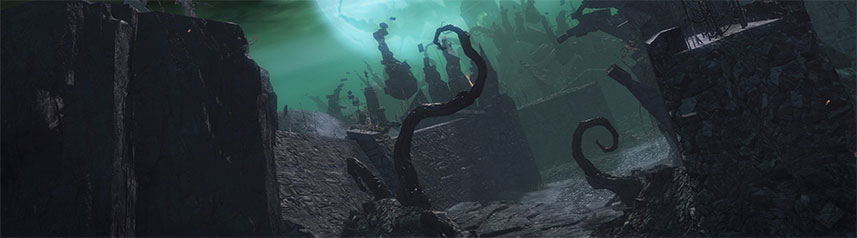
Kritika: The White Knights is a free-to-play mobile action RPG built around short, stage-driven dungeons and flashy, combo-heavy hack-and-slash combat. It aims for a console-like feel on touch controls, pairing anime-styled 3D visuals with quick skills, enemy juggling, and a constant loop of upgrading gear through fusing, transmuting, enhancing, and crafting. Alongside the main campaign stages, it offers multiple survival-focused modes for farming and an asynchronous, automated take on PVP.
 | Publisher: GAMEVIL Playerbase: High Type: Mobile RPG Release Date: July 15, 2014 Pros: +Sharp, high-end visuals for a mobile title. +Responsive, combo-friendly action combat. +Approachable, stage-based sessions. +Satisfying gear fusion and upgrade loops. Cons: -Core loop can become grindy over time. -Monetization can offer power advantages. –PVP is largely hands-off and automated. |


Kritika: The White Knights Overview
Kritika: The White Knights is a 3D, stage-based dungeon crawler action RPG developed by ALL-M and FunFlow and published by GAMEVIL. The structure is straightforward and mobile-friendly, you pick a class, clear bite-sized combat maps, then return to menus to manage gear, upgrades, and cosmetics before diving back in. Across hundreds of stages you will fight through a steady mix of environments, enemy groups, and boss encounters, with difficulty settings that encourage replaying content for better drops and materials.
Combat is the main attraction. Controls are simple (virtual stick and buttons), but the game leans into impact and spectacle, with knockdowns, launches, and skill chains that let you keep enemies in the air if you time your attacks well. Outside of fighting, progression is heavily tied to equipment, with systems for combining items into stronger tiers, enhancing favorites, and using crafting-style summons to roll for new pieces. For players who want more than the standard stage loop, there are four survival-oriented modes for farming and three PVP playlists that focus on automated battles and ranking.
Kritika: The White Knights Features:
- Stage-based Levels – Hundreds of stages spread across chapters, with three difficulty settings (Easy, Normal, Hard) plus four survival-style modes for extra rewards.
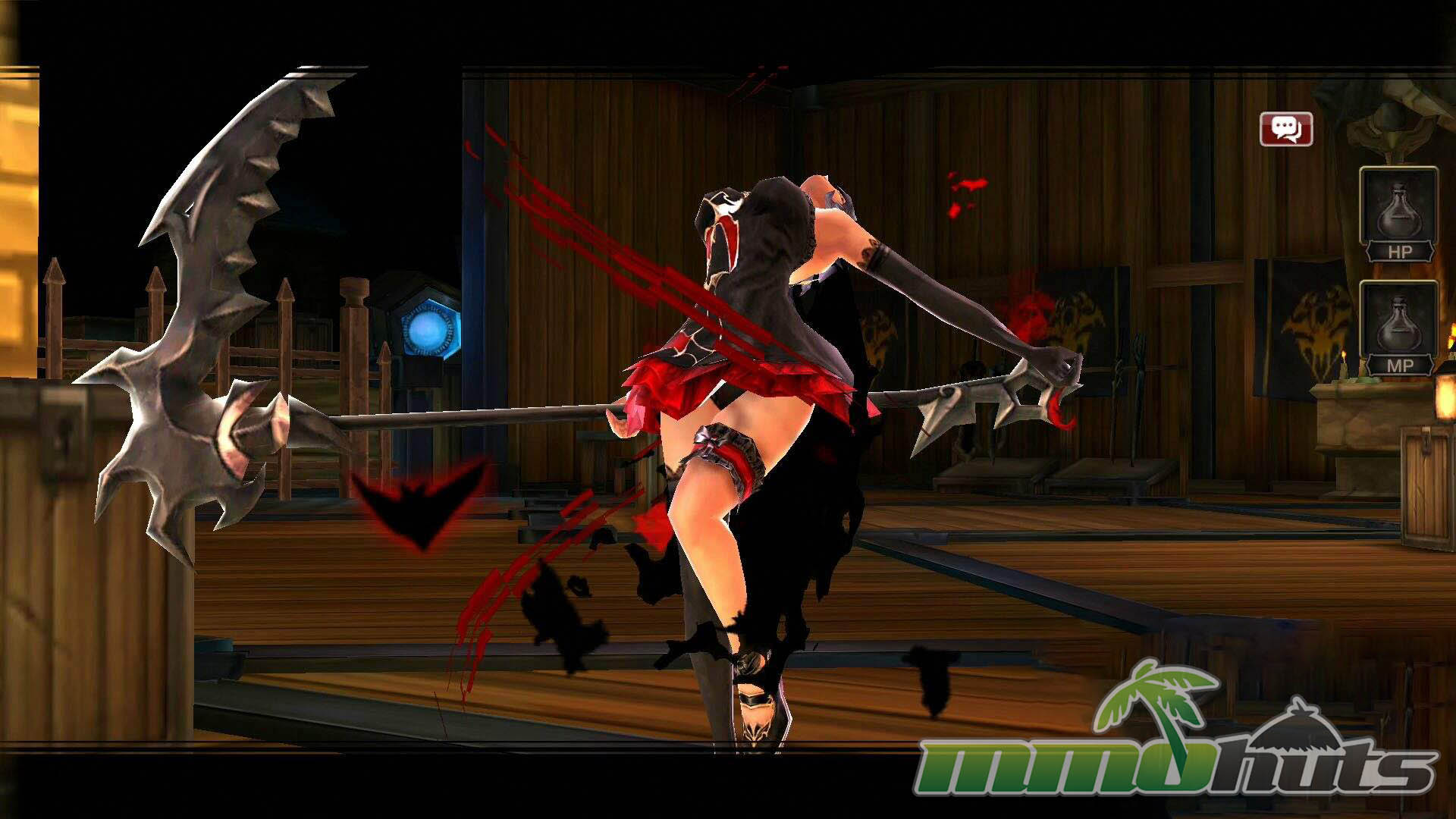
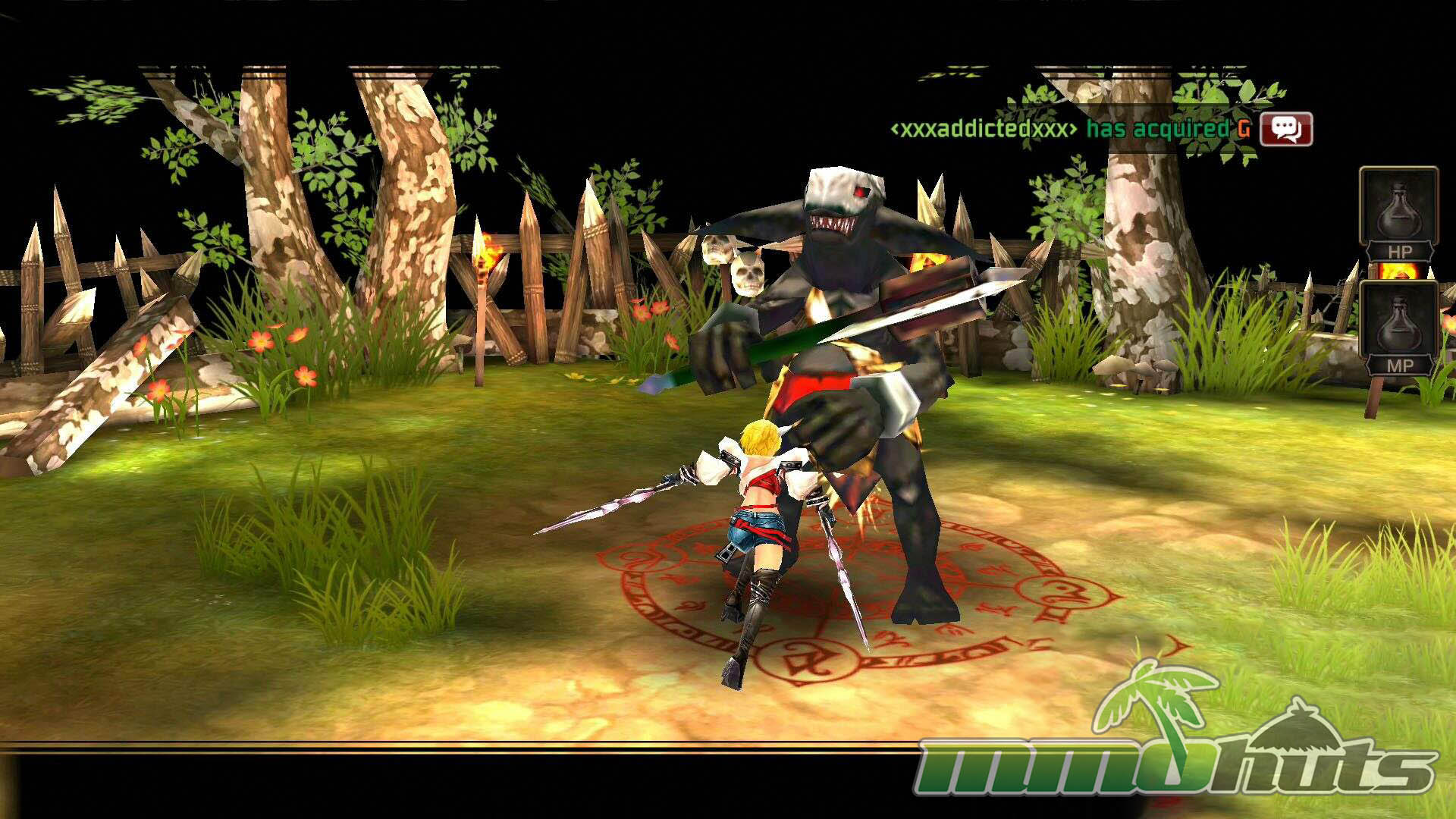
- High Quality Anime Graphics – Bright, anime-inspired 3D visuals with flashy skill effects, distinctive character designs, and varied maps and bosses.
- Action Combat – Fast hack-and-slash battles built around combos, crowd control, and the ability to launch and juggle many enemies.
- Eight Classes to Choose From – Eight different classes total, with five requiring unlocks, each offering a noticeably different kit and rhythm in combat.
- Survival Modes – Four dedicated survival modes (Monster Wave, Tower of Tribulation, Boss Raid, and Expedition) aimed at farming gear and upgrade resources.
- PVP Modes – Three PVP formats (Arena, Versus, and Melee) that run automated fights against other players, supported by leaderboards.
Kritika: The White Knights Screenshots

Kritika: The White Knights Featured Video

Kritika: The White Knights Review
Kritika: The White Knights is a free-to-play 3D action RPG co-developed by ALL-M and FunFlow, and published worldwide by GAMEVIL. It is effectively a mobile-focused adaptation of the Korean PC MMORPG Kritika Online (originally positioned under the name Kritika: Chaos Unleashed), trimmed down into a stage-and-menu format that suits short play sessions. The global Android and iOS launch landed on July 15, 2014, and the game has been widely downloaded, with the title passing 15 million downloads. The overall package is easy to recommend for anyone who values responsive combat and stylish presentation, even if some of its supporting systems lean into familiar free-to-play pressure points.
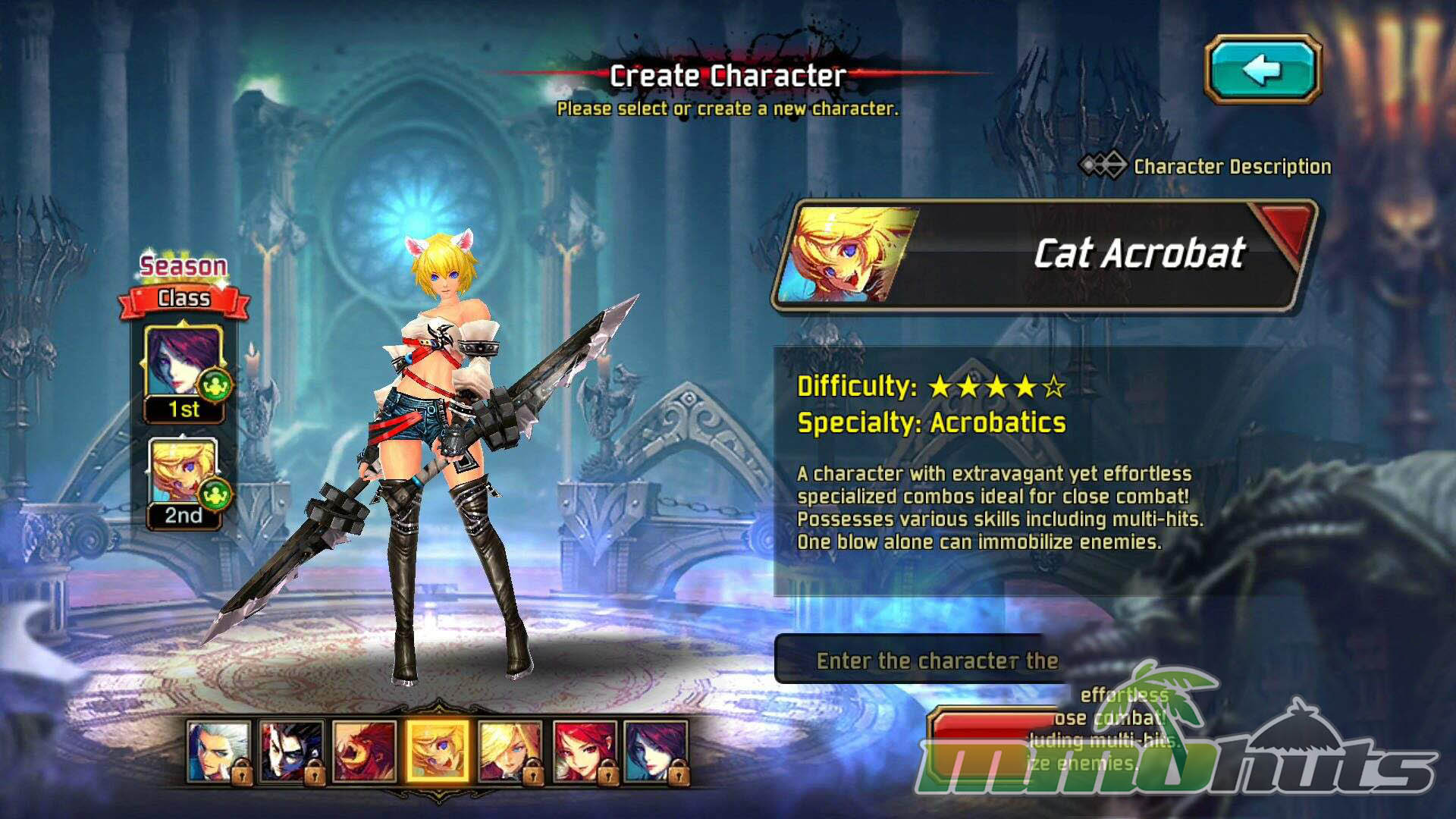
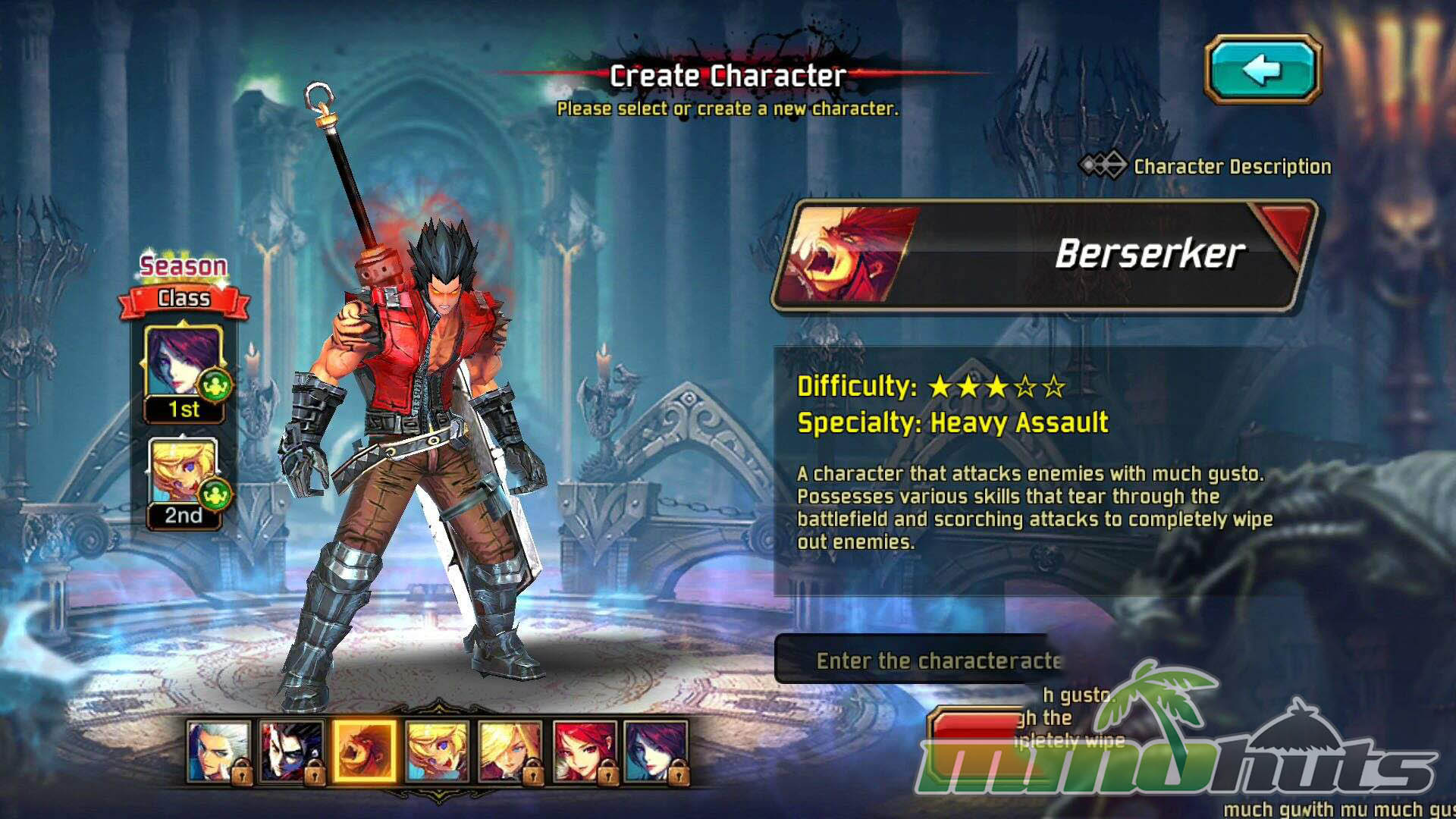
Character Creation and Classes
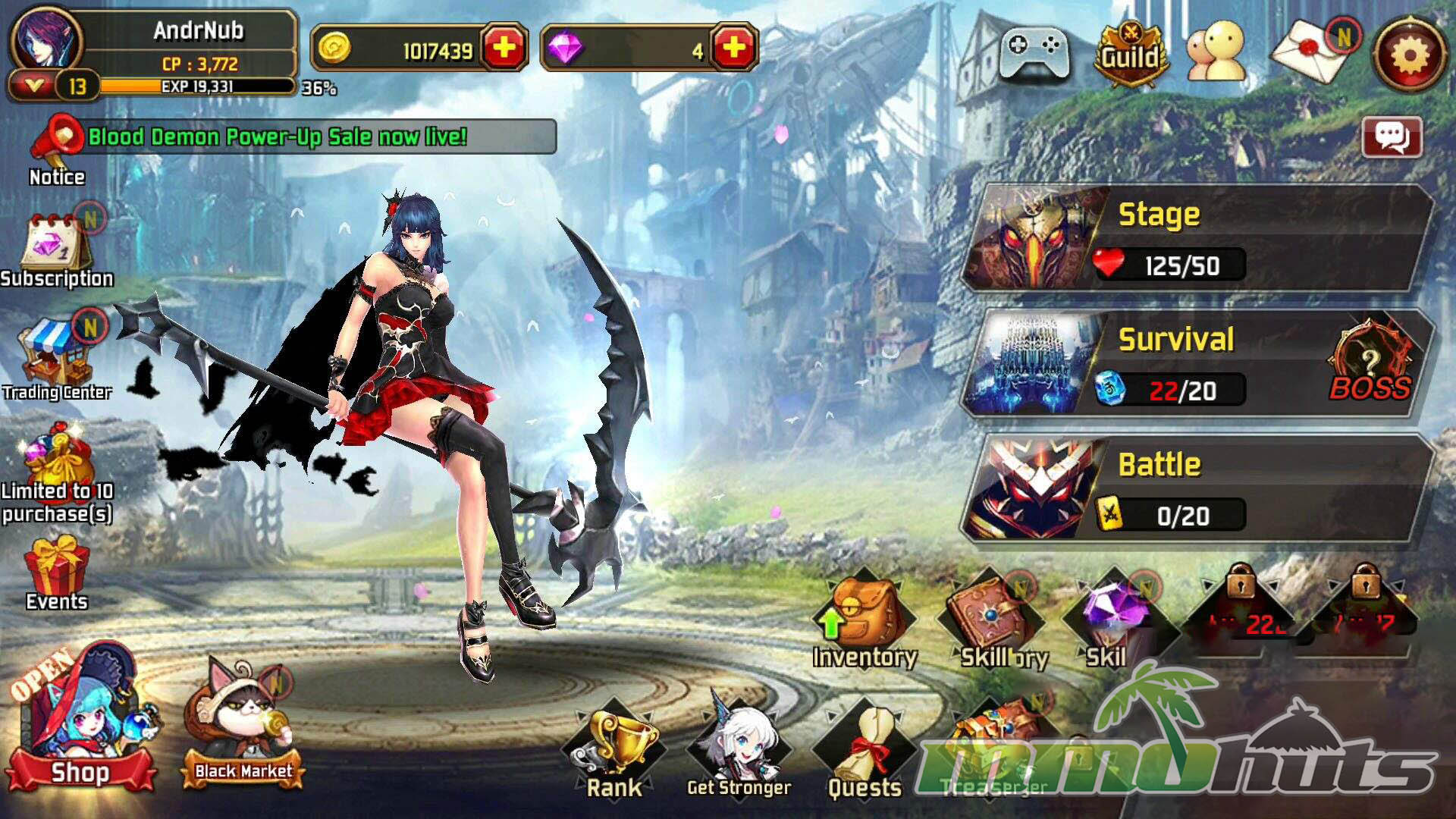
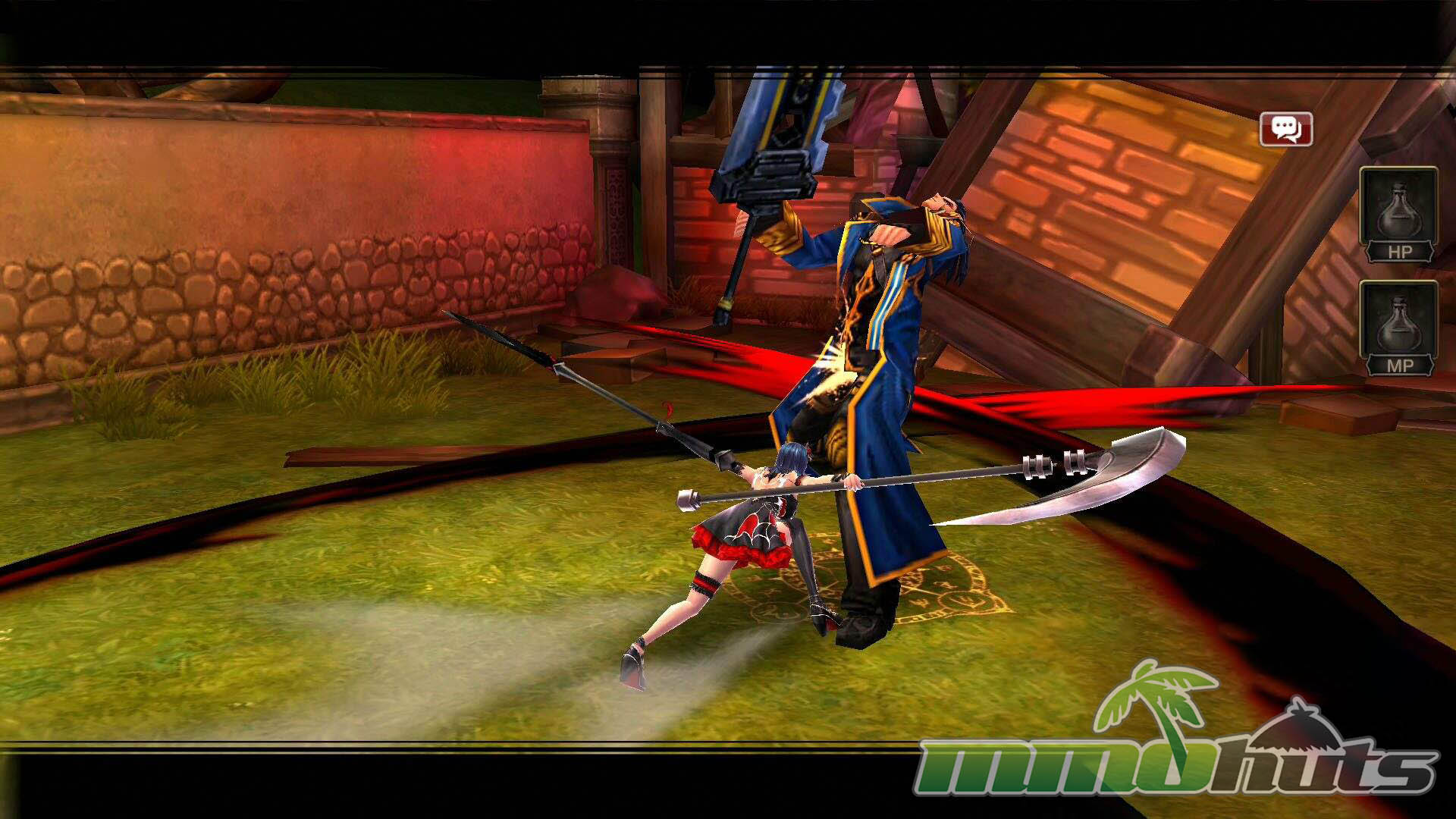
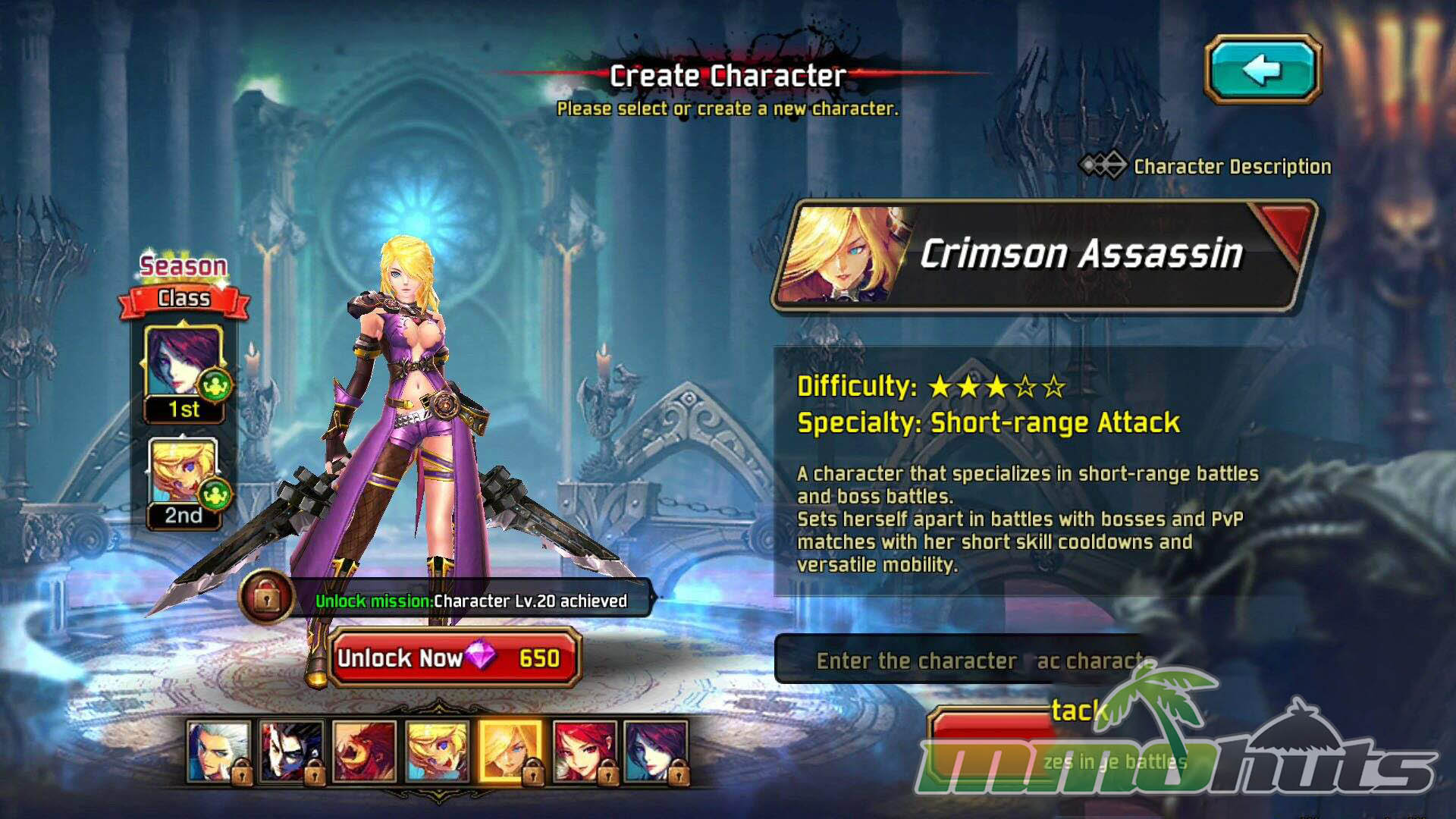
At the start, players choose from three immediately available classes, with five additional advanced classes tied to unlocking requirements or premium currency (Karats). The initial trio is well-rounded and each one has a clear identity. Berserker is the heavy hitter, slower but built to carve through groups with broad, forceful swings. Acrobat plays as the speed option, a dual-dagger style focused on rapid multi-hit strings and mobility, and it generally asks for more precision than the other starters. Blood Demon rounds out the free picks with a scythe-based kit and a vampiric theme, featuring reach and sustain that feels comfortable for players who prefer a safer mid-range approach.
The advanced lineup opens up later (level 15 or 20 depending on the class) unless you spend Karats to access them earlier. Shadow Mage stands out as a dedicated ranged option with dual pistols and control tools that can lock enemies down. The remaining advanced classes echo the starter archetypes while shifting pace and emphasis. Demon Blade is a more agile, dual-blade take on the Berserker concept, designed to stay on the front foot with faster melee pressure. Crimson Assassin builds on the Acrobat style with strong mobility and boss-oriented burst, often defined by shorter cooldowns and constant repositioning. Dark Valkyrie mirrors the Blood Demon theme as a scythe fighter with long-reaching attacks and a kit that balances offense with sturdier defensive play.
Stage-Based Progression
Progression is built around a chapter-and-stage ladder, with over 100 stages across 10 chapters. Each stage can be tackled on Easy, Normal, or Hard, and later difficulties stretch fights out by boosting enemy durability and damage. Despite the chapter framing, the experience is not particularly story-driven, it is more about clearing content efficiently to gain levels, gather materials, and cycle through better gear.
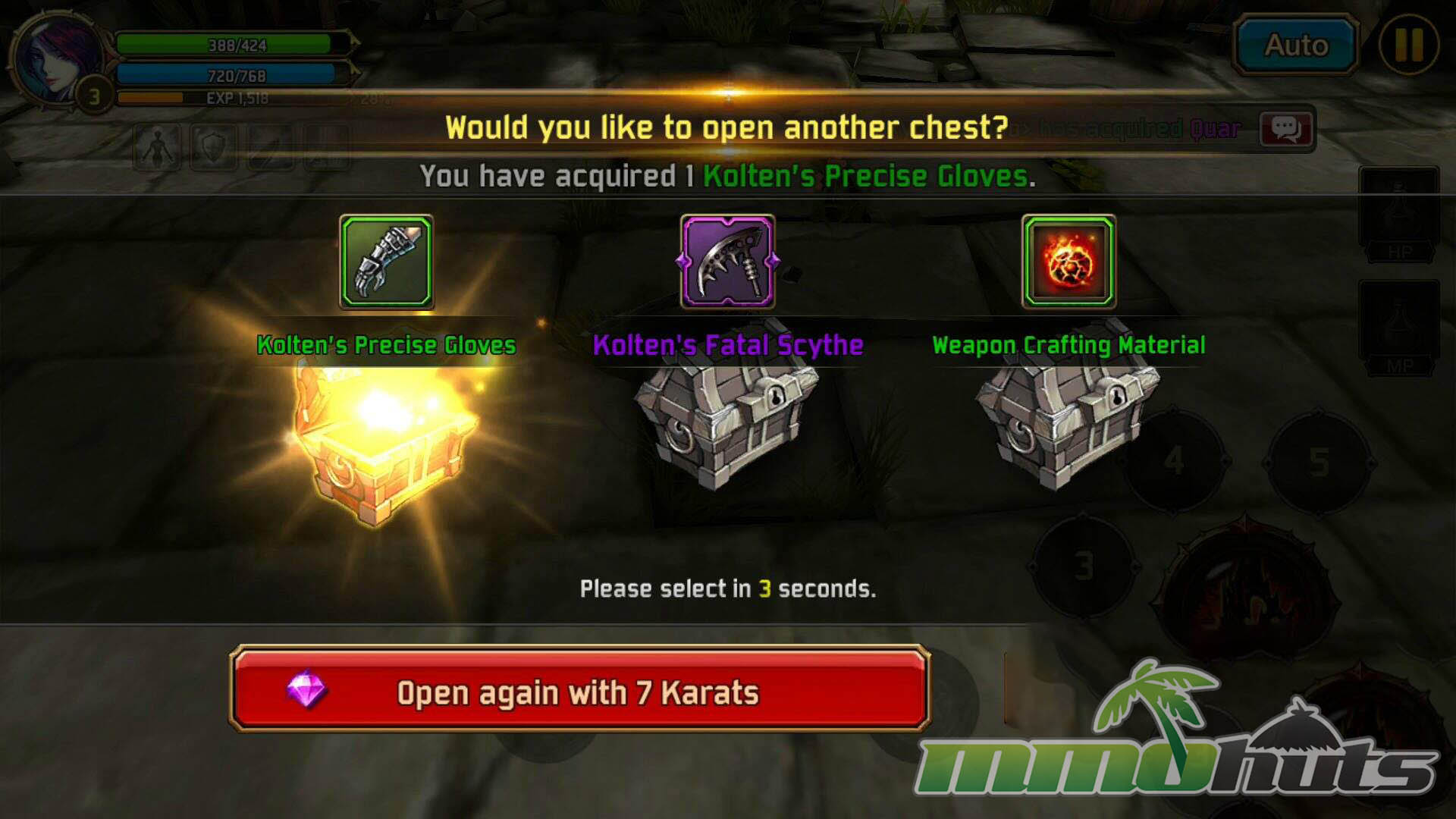
Individual stages are broken into small segments connected by gates. You clear one or two waves, move forward, and repeat until the stage ends. Early on, runs are quick (often a few minutes), but longer layouts and tougher mobs show up later. Rewards include gold, experience, equipment, and crafting materials, plus an end-of-stage chest selection that adds a light layer of randomness. Stamina limits attempts, but the game is generally generous with free stamina, which keeps the loop comfortable for casual and mid-core play without constant waiting.
High Quality Anime Graphics
For a 2014-era mobile release, Kritika: The White Knights still impresses in the visual department. Character models and enemy designs carry an anime influence with crisp colors, strong silhouettes, and effects that emphasize speed and impact. Environments vary from bright outdoor zones to darker dungeon-like areas, with enough background props and lighting changes to keep chapters distinct. Combat readability is also solid, skills are showy but typically clear about where the damage is landing.
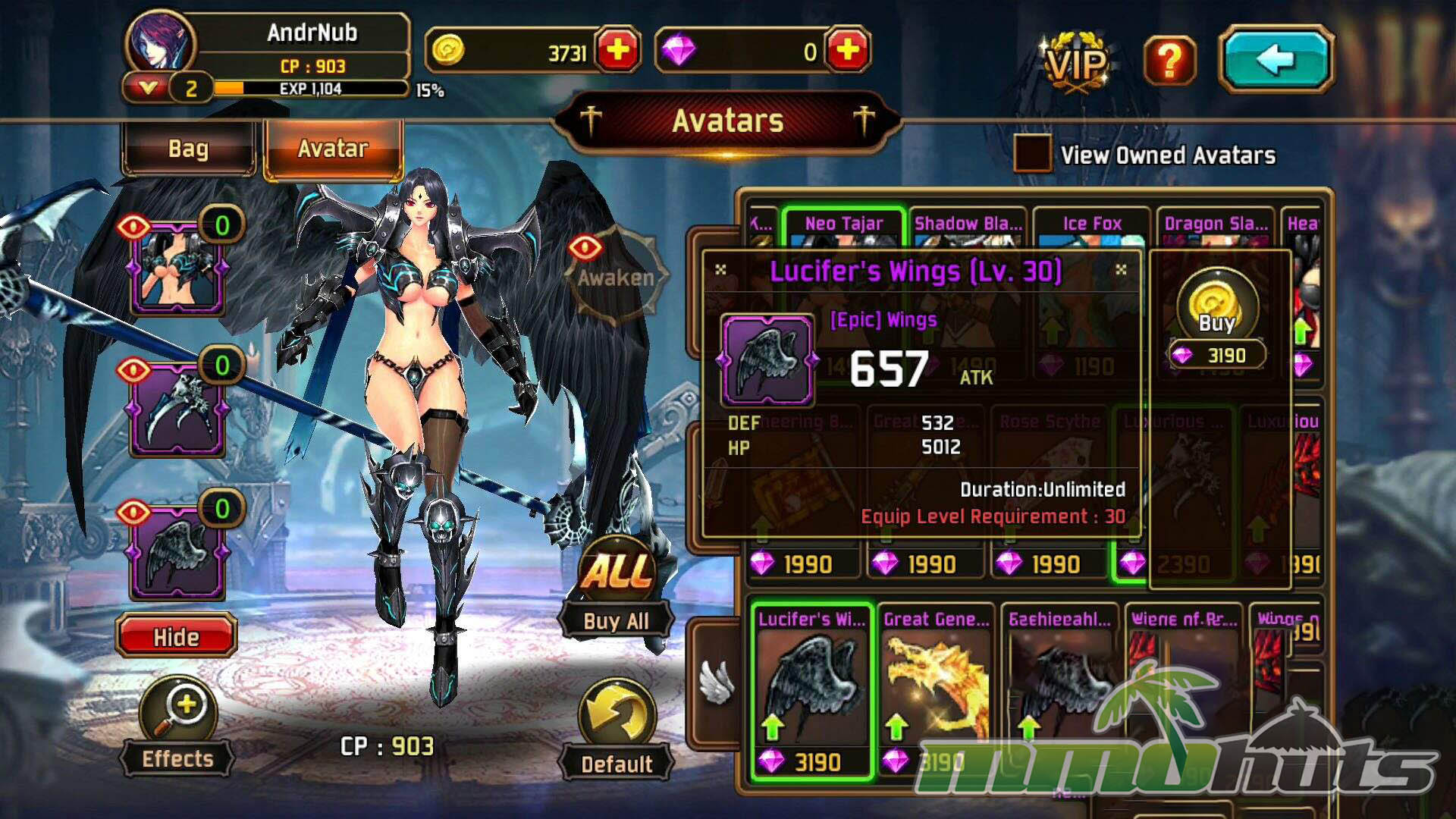
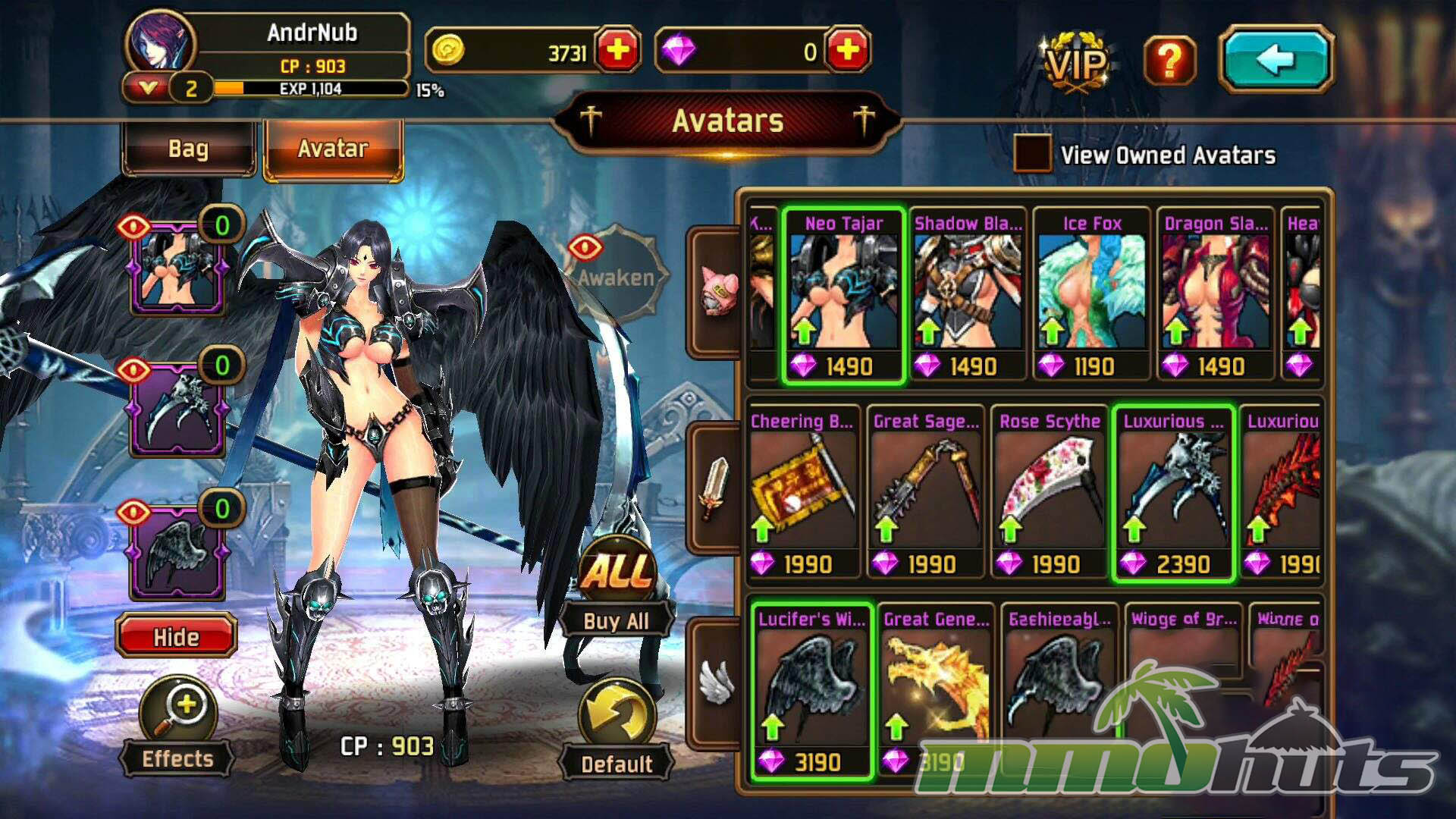
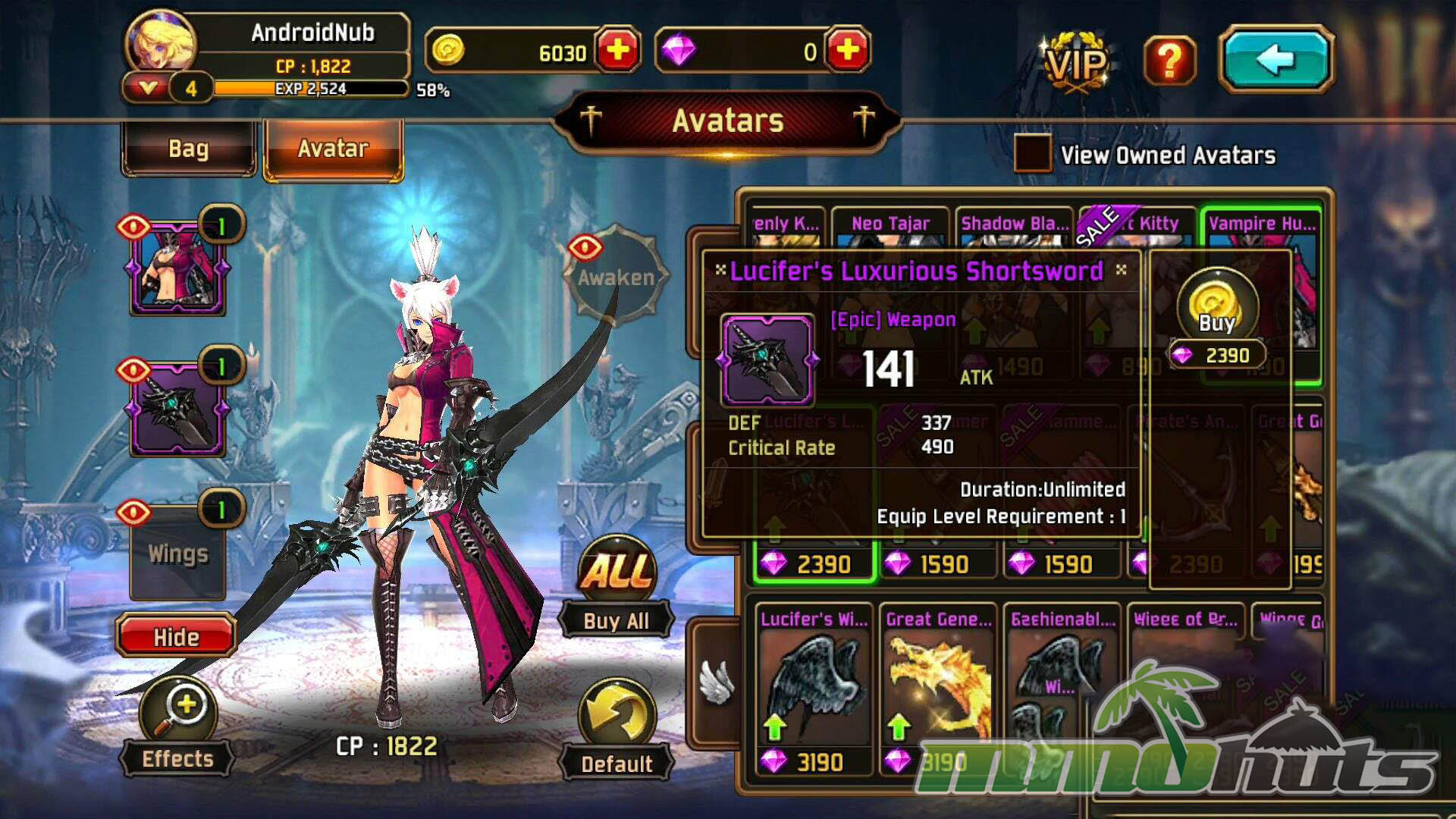
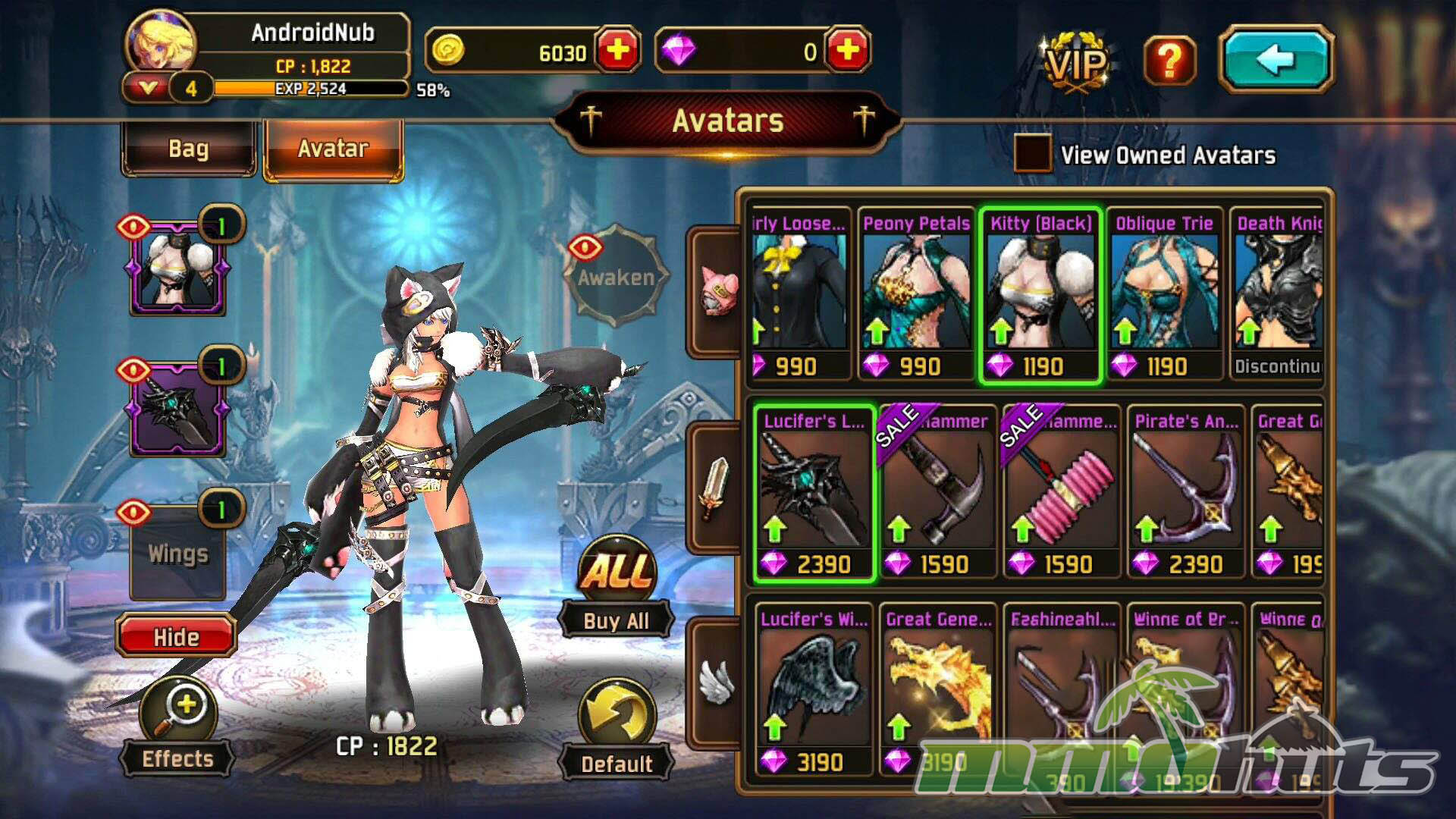
Cosmetics are a major part of the presentation. Each class has a large selection of Avatar items (costumes, weapon looks, wings) that sit on top of your functional gear, making it easy to personalize a character without sacrificing progression. Animation work is one of the game’s strongest points, attacks flow smoothly into skills, hit reactions are dramatic, and big abilities deliver the kind of visual payoff the genre depends on.
Fast-Paced, Action Combat
Moment-to-moment gameplay is built around quick inputs and constant pressure. Movement uses a virtual joystick, while basic attacks and skills are mapped to buttons, creating a control scheme that feels closer to an arcade brawler than a typical mobile RPG. Regular enemies are frequently knocked down or launched, and the game encourages you to chain hits into air juggles, then extend those strings with skills for bigger clears. This juggling system is a key differentiator, it adds a small but satisfying skill element that rewards timing rather than pure stat checks.
Enemy waves are designed to be cleared quickly, and many attacks hit multiple targets, which keeps the pace high. Boss fights slow things down in a good way, since bosses resist being pushed around by normal attacks and demand more attention to positioning. Telegraphing helps here, with highlighted areas warning you about incoming AOE attacks. There is no dedicated dodge or roll button, but animations are snappy enough that stepping out of danger usually works if you read the tells early.
The downside is that repetition can creep in at higher levels. As enemy health scales up, some fights become less about clever combo routing and more about sustained output, which can turn into extended button-heavy sequences. The class variety helps offset this, but the underlying structure remains a grind-first stage loop.
Combining Equipment
Gear progression is where Kritika: The White Knights separates itself from many similar mobile RPGs. Instead of relying only on linear upgrades, it pushes you toward combination systems that turn spare drops into new chances at improvement. The two main methods are Fuse and Transmute.
Fuse takes multiple pieces of equipment from a specific grade (the number required varies by grade, typically 4 to 6) and converts them into one random item of a higher grade. Because stages drop gear regularly, Fuse becomes a practical way to recycle unwanted items and steadily climb toward better tiers without needing perfect luck on a single drop.
Transmute works more like controlled crafting, though the result is still randomized. You can combine four craft equipment materials, or mix materials with gear of a matching grade, to produce a random item within that same grade. In practice, Transmute is an exchange system, it lets you turn surplus pieces into a new roll that might better fit your build.
Crafting and Enhancement
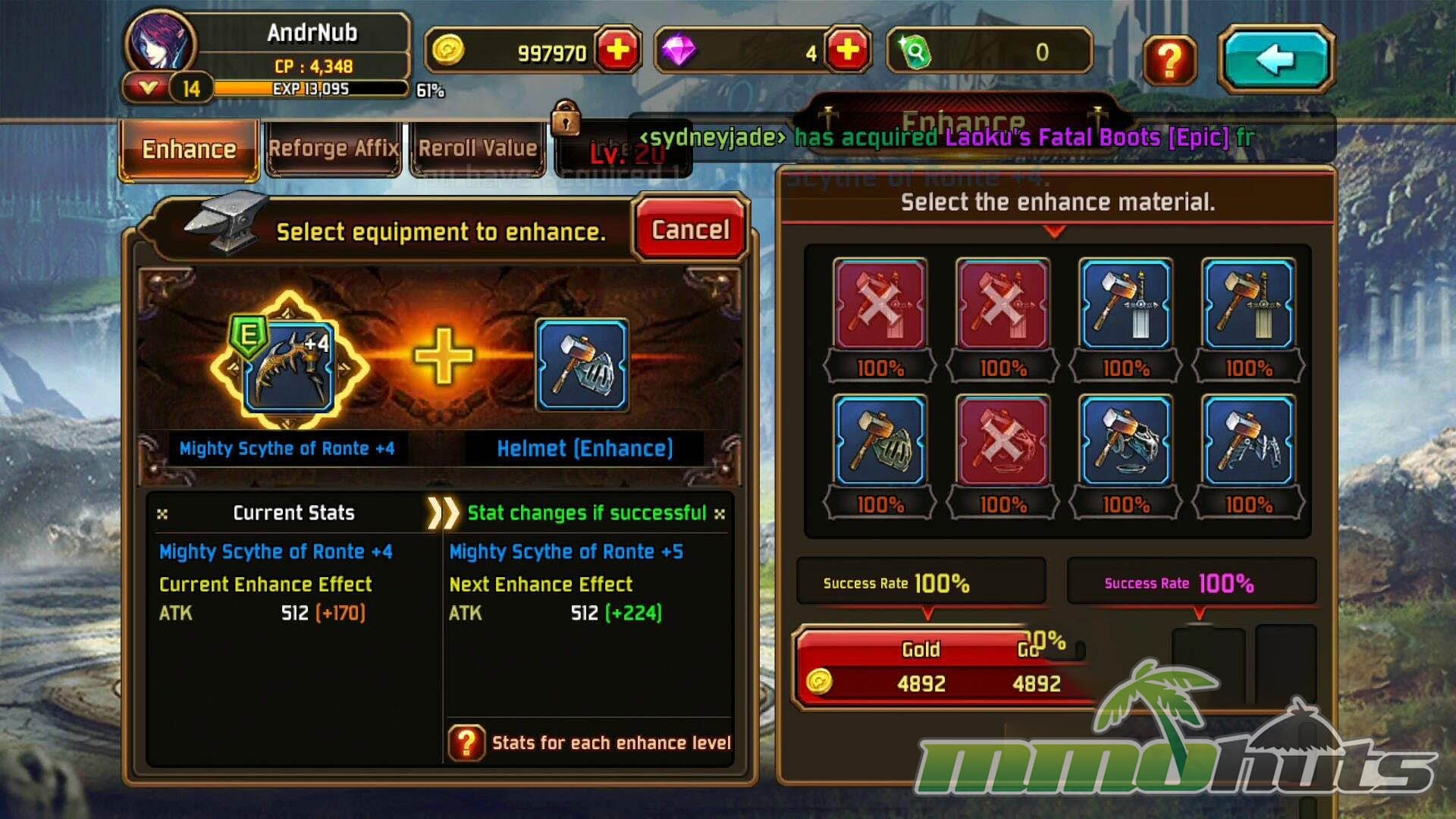
Enhancement follows a familiar mobile RPG pattern. You feed other equipment into a chosen piece to level it up and raise its stats, making it easy to focus power into a preferred weapon or armor set as you progress.
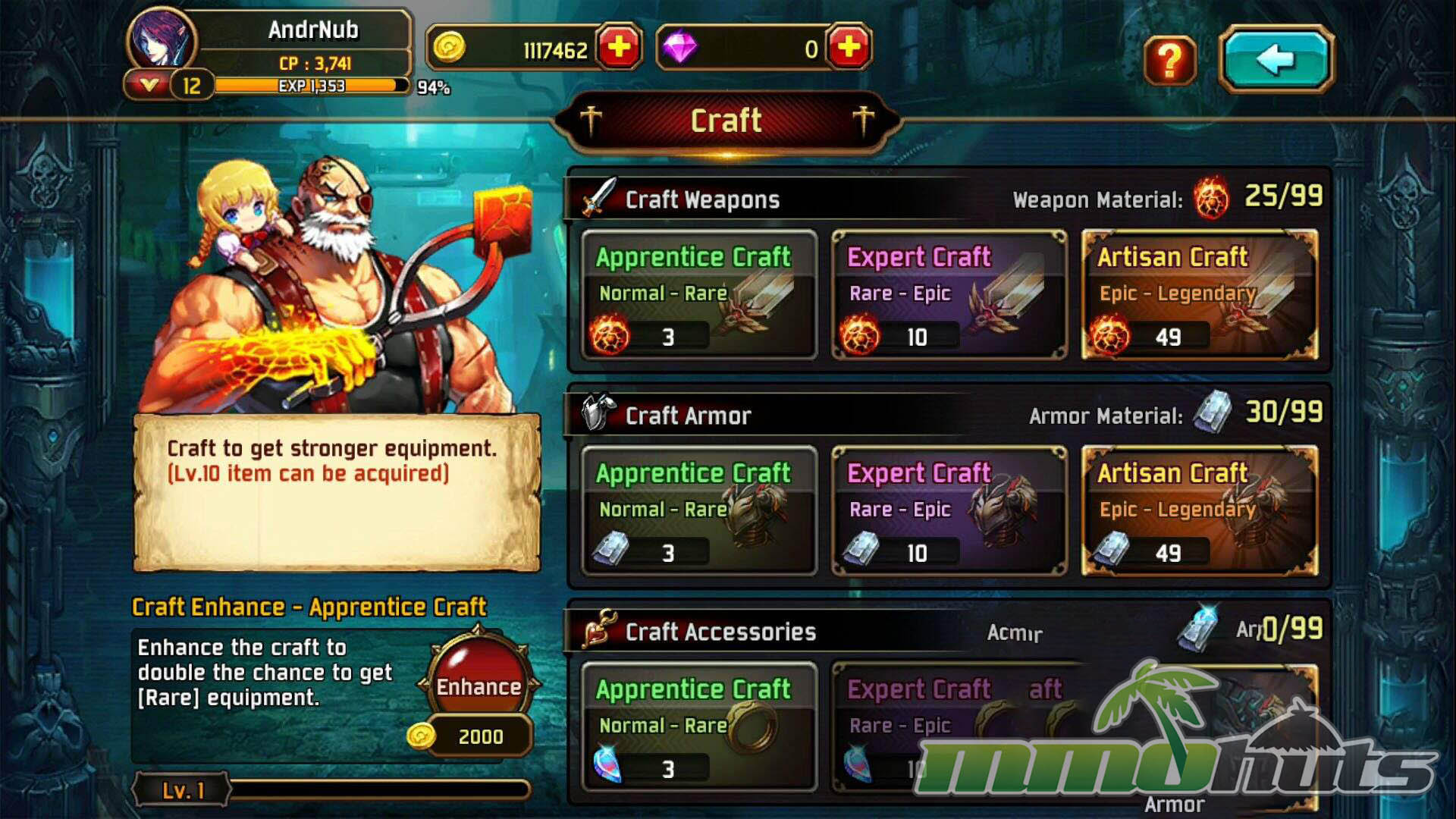
Crafting is presented more like a gacha-style summon. You collect Weapon Material, Armor Material, and Accessory Material, then spend them to receive a random item in the chosen category. The costs are tiered: 3 materials for a Normal-Rare roll, 10 materials for Rare-Epic, and 49 materials for Epic-Legandary. It is simple and fast to use, but the randomness means it works best as a long-term supplement to stage drops and fusion rather than a guaranteed path to a specific item.
Survival Mode
Beyond the main stage ladder, the game offers Survival Mode and Battle Mode, giving players alternate ways to farm resources and break up routine. Survival Mode includes four activities: Monster Wave, Tower of Tribulation, World Boss, and Expedition.
Monster Wave is a straightforward endurance challenge, you survive successive enemy waves for a set time, with selectable floors that are gated by level. Tower of Tribulation is similar, but framed as a climb, clearing waves moves you up through floor sets until you reach the end of the chosen bracket. World Boss is time-limited content where the community-style goal is to bring down a huge HP boss over a window of days. Each attempt is short (about 1.5 minutes) with limited daily entries, and the boss keeps its reduced health between fights, which makes repeated attempts meaningful. Expedition is the most hands-off mode, you assemble a team of four characters and watch them progress through regions via a simplified, turn-based menu presentation. Collectively, these modes are primarily about earning gold, materials, and equipment more efficiently than standard stages.
Automated PVP (Battle Mode)
Given how strong the manual combat feels in PVE, Battle Mode is the most noticeable letdown. PVP is asynchronous and fully automated, meaning you select opponents and then watch your character fight with no direct input. The three sub-modes are Arena, Versus, and Melee.
Arena has you pick from a small list of opponents and then observe an automated duel that plays out with rotating camera angles and frequent skill effects. Versus is essentially the same format but without the leaderboard emphasis. Melee expands the idea into three-on-three teams using your roster of characters, with a bit more movement on screen, but it remains non-interactive.
Matches require specific badges, which you can obtain through quests and login rewards or buy with Karats. While it does add competition and a sense of progression through rankings, it does not capitalize on the game’s best feature, which is hands-on action combat. Victories do provide 1 Karat each, giving even non-spenders a small incentive to participate.
Cash Shop/In-App Purchases (IAP)
Kritika: The White Knights can be played without spending, but the shop is designed to provide convenience and power boosts. Karats are used for a wide range of purchases, including Avatar items, pets, gold, stamina, stronger consumables, Battle Mode badges, and level-restricted gear. Avatar items are particularly important because they are not purely cosmetic, they also provide stats like Attack, Defense, and Health. With each class offering a very large selection of Avatars, customization is deep, but the stat bonuses mean paying players can gain an edge.
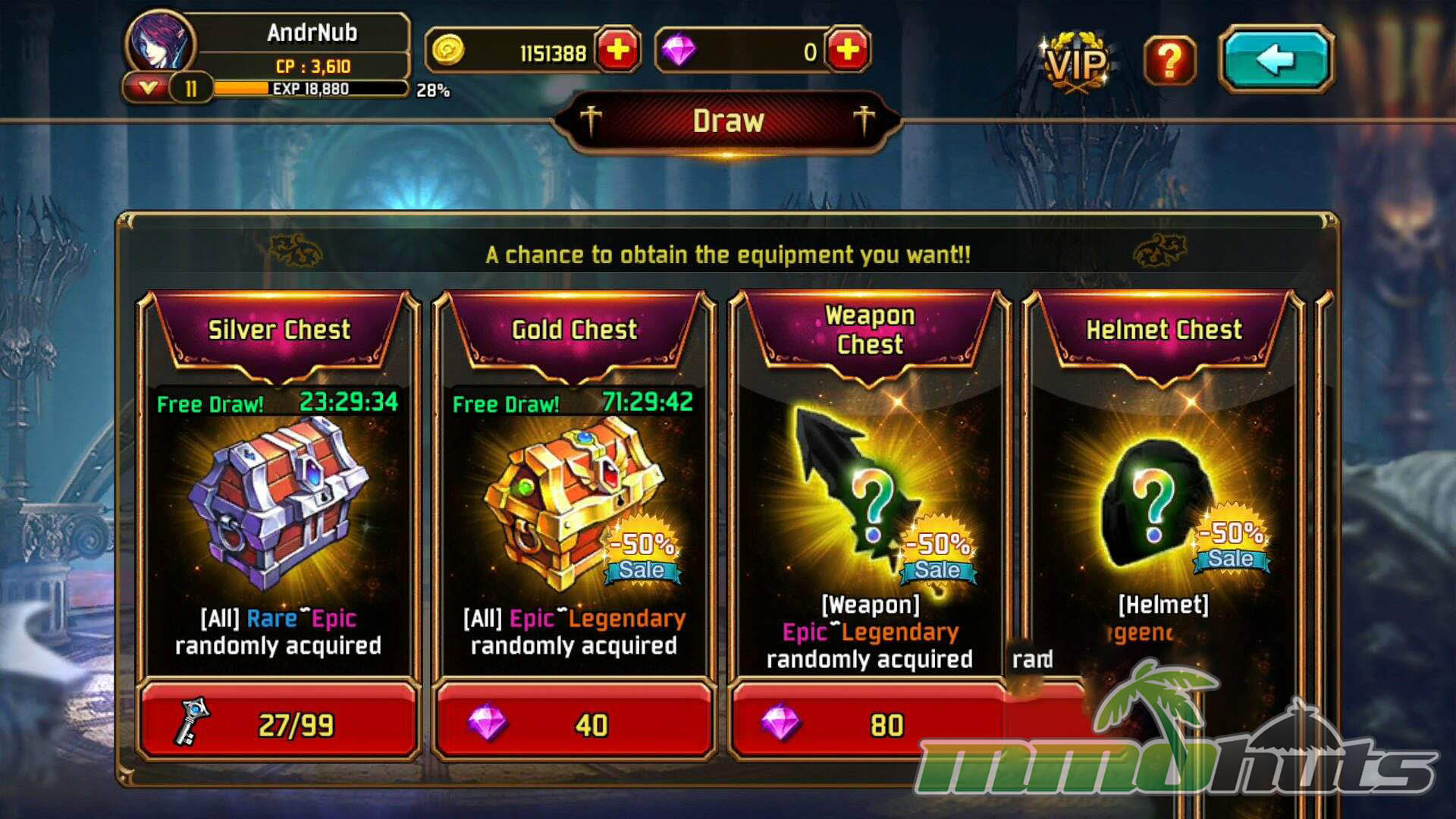
Karats can also be spent to open chests that award random Epic-Legendary equipment, and to unlock classes earlier than the level gates. As difficulty rises, the game increasingly pushes you toward repeating content for upgrades, and spending can reduce that grind by accelerating equipment acquisition and progression. The result is a familiar free-to-play balance: it is not mandatory to pay, but investing money can translate into smoother clears and stronger performance, particularly in competitive contexts.
Final Verdict – Great
Kritika: The White Knights delivers what many mobile action RPGs aim for but do not quite reach, sharp visuals, satisfying combo-driven combat, and upgrade systems that make constant loot drops feel useful rather than disposable. The experience does become repetitive as you climb and enemy scaling ramps up, and the automated PVP feels at odds with the game’s otherwise engaging action design. Even so, for players who want an arcade-like hack-and-slash on mobile that is easy to jump into and rewarding to optimize, it remains a strong option.
Kritika: The White Knights Links
Kritika: The White Knights Google Play
Kritika: The White Knights iOS
Kritika: The White Knights Official Facebook
Kritika: The White Knights Official Forums
Kritika: The White Knights System Requirements
Minimum Requirements:
Android 2.3.3 and up / iOS 6.0 or later.
Kritika: The White Knights Music & Soundtrack
Kritika: The White Knights Additional Information
Developer: ALL-M and FunFlow
Publisher: GAMEVIL
Platforms: Android, iOS, Windows
Release Date: July 15, 2014
Kritika: The White Knights was co-developed by ALL-M and FunFlow and published by GAMEVIL. The mobile release draws its foundations from the Korean MMORPG Kritika Online, adapting its characters and overall style into a stage-based format designed for phones and tablets. It launched worldwide on July 15, 2014, and by April 2015 it had surpassed 15 million downloads, an impressive milestone achieved within its first year. The game has continued to receive content updates over time, including additional characters, with the Blood Demon noted as the newest playable character. GAMEVIL, the publisher, is also known for other mobile RPG releases such as Darkness Reborn, Million Arthur, Spirit Stones, Dungeon Link, and the Zenonia series.