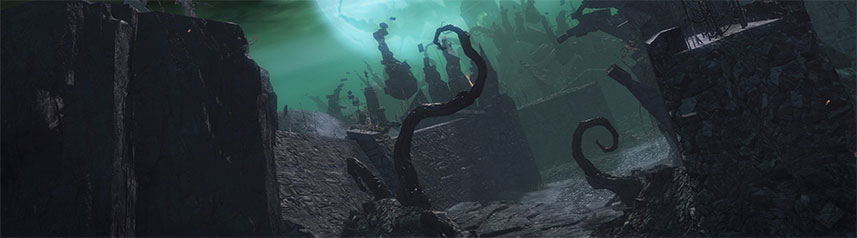
Hyper Universe is a 4v4 action MOBA presented as a side-scroller, mixing lane pressure with platforming movement. Matches revolve around pushing the central lane’s towers, grabbing jungle resources from the upper and lower layers of the map, and using item builds to swing team fights in your favor.
 | Publisher: Nexon Type: MOBA Release Date: August 24, 2017 (NA Early Access) PvP: Team-based Battlegrounds Pros: +Side-scrolling perspective makes fights feel different from standard MOBAs. +Large roster with distinct playstyles. +Comfortable controller support. Cons: -Requires AI matches at the start (around 2 hours). -Some equipment options are locked behind unlocks. |
Hyper Universe Overview
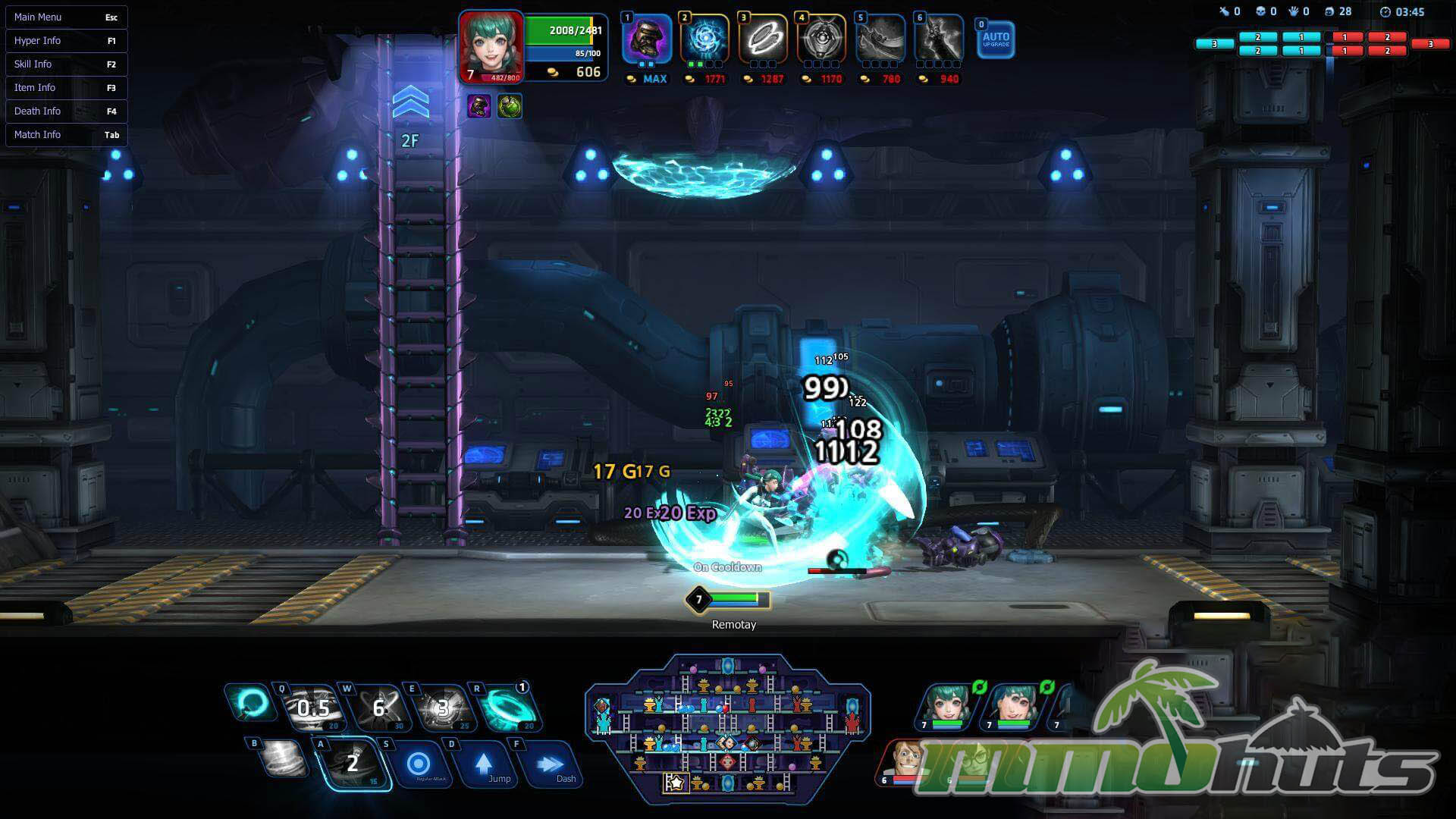
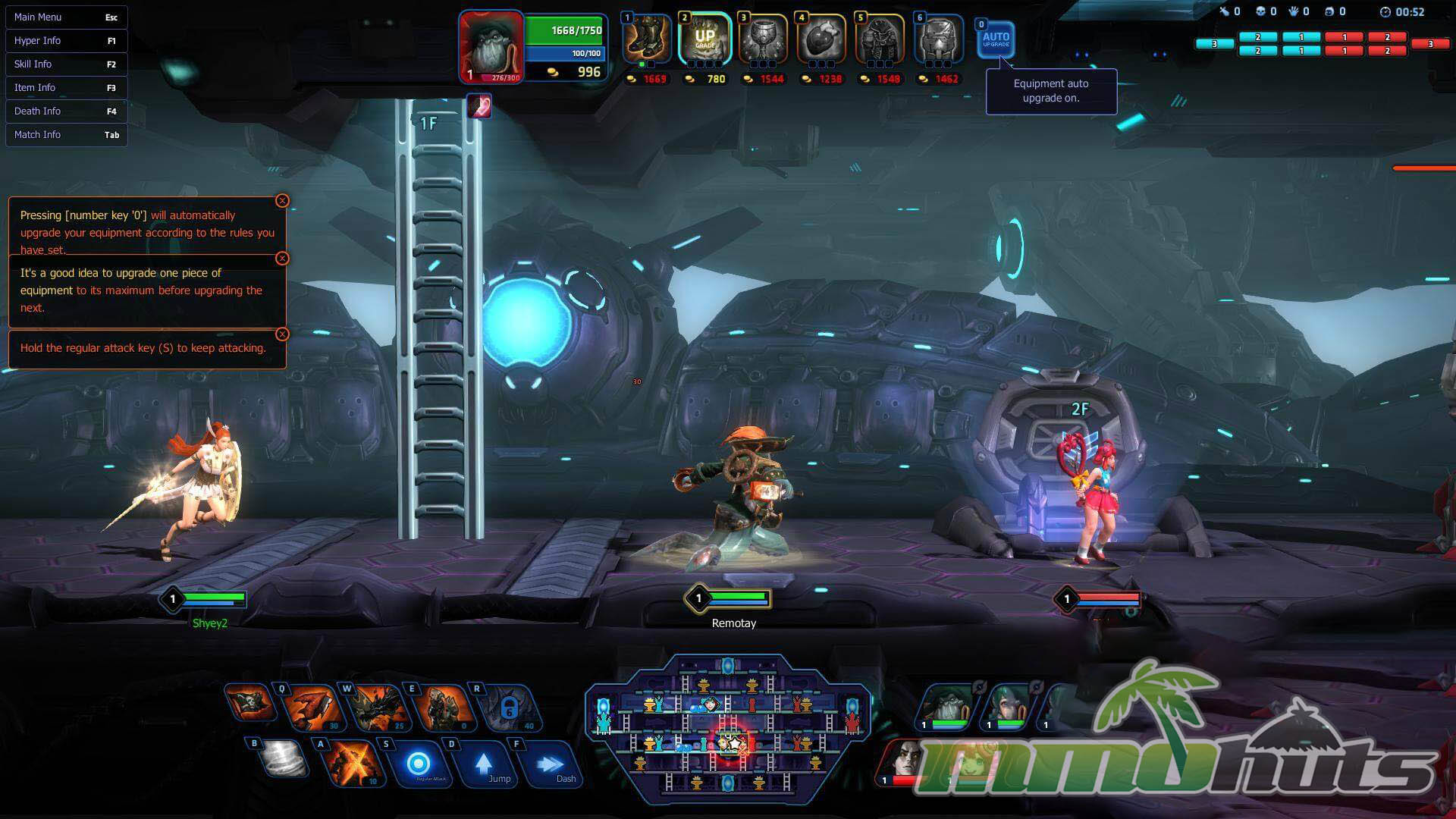
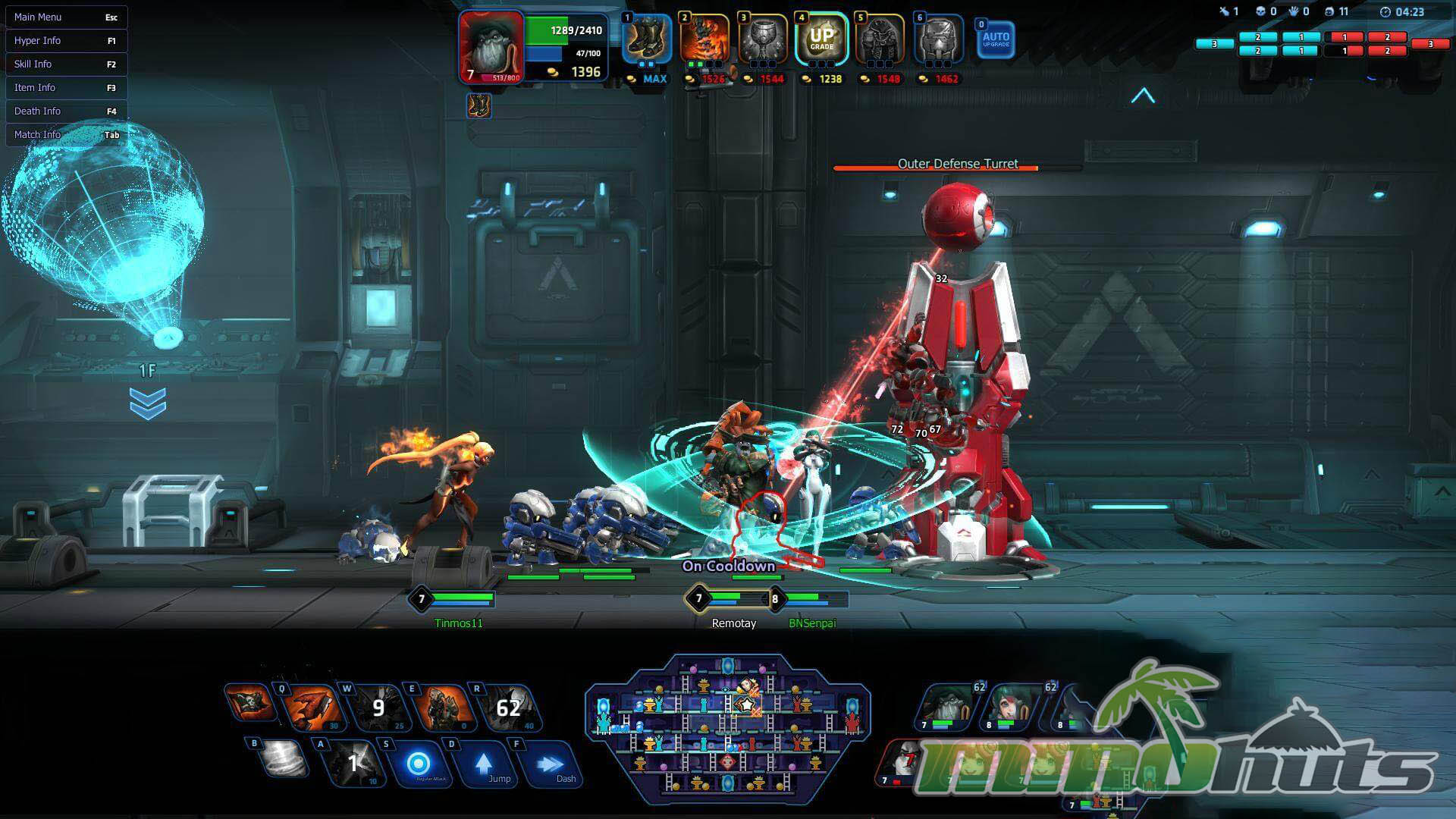
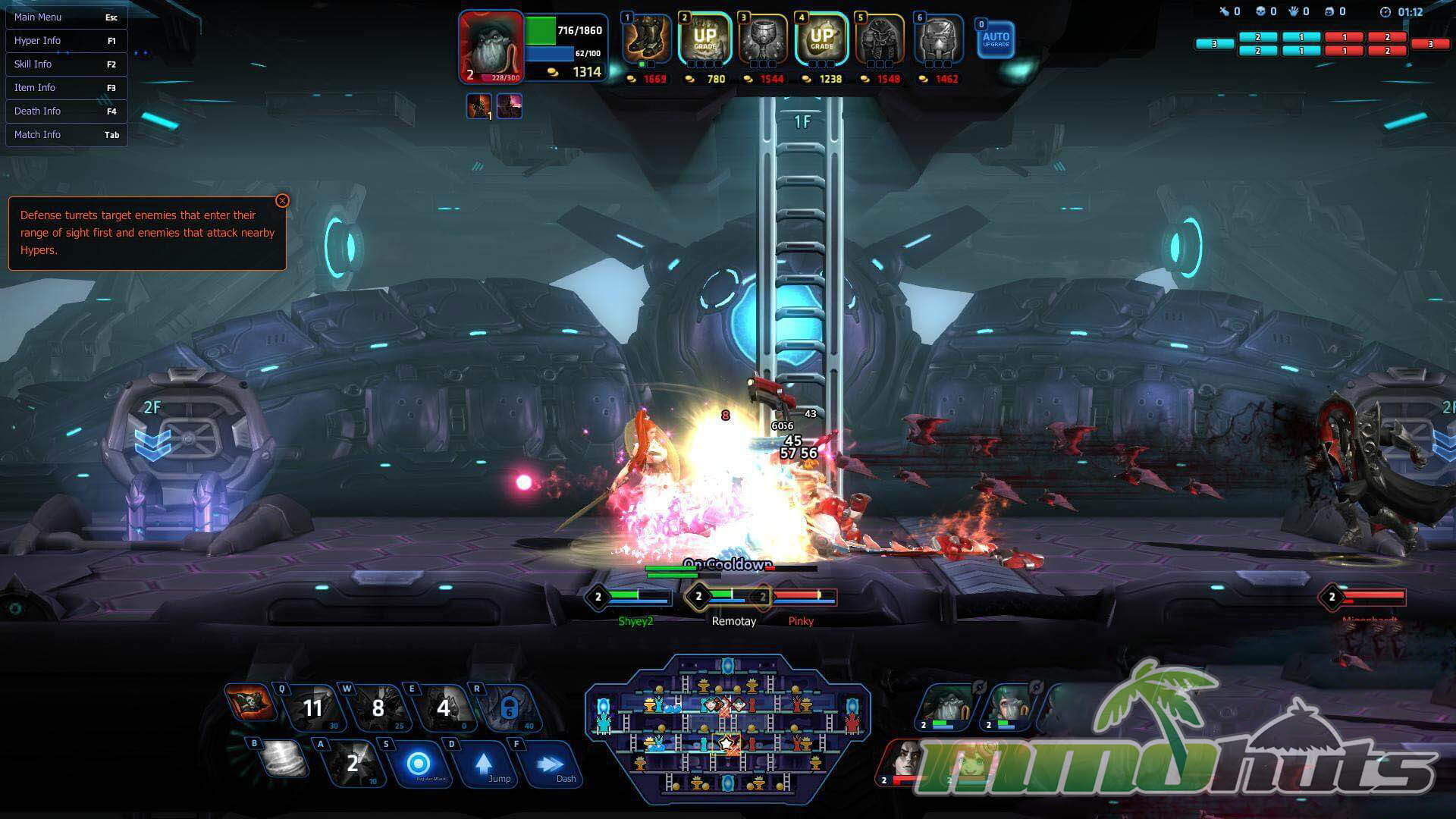
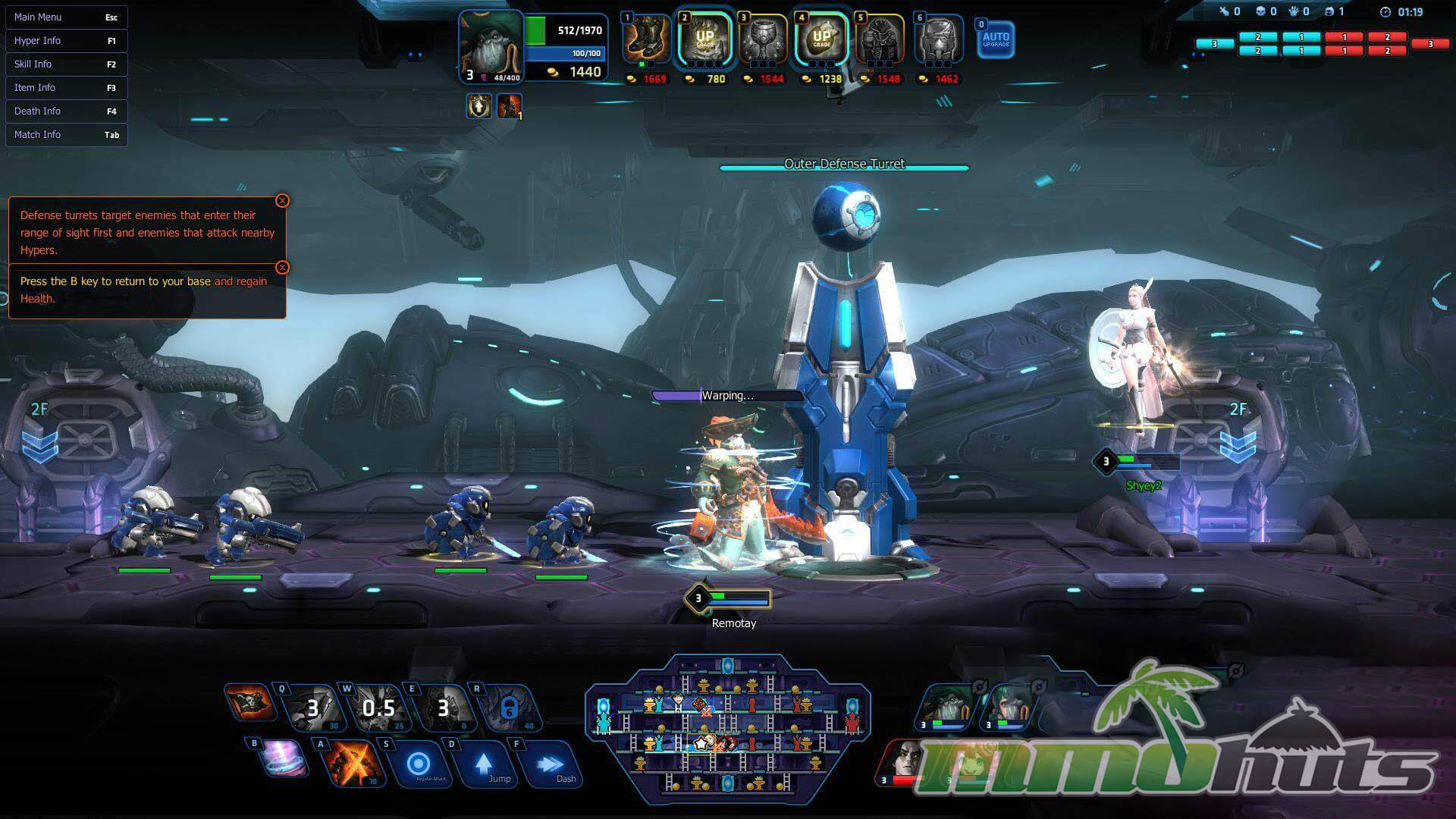
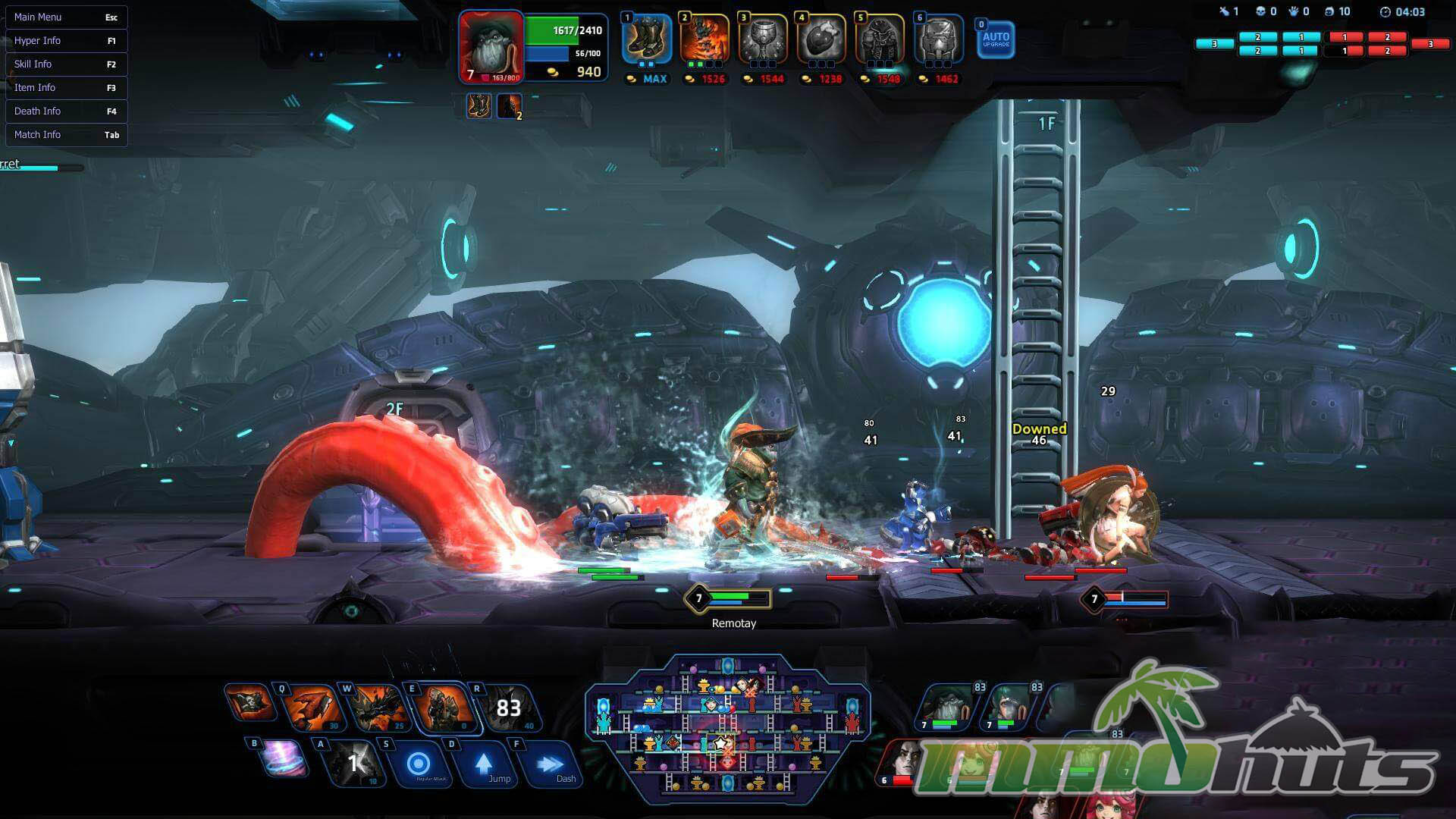
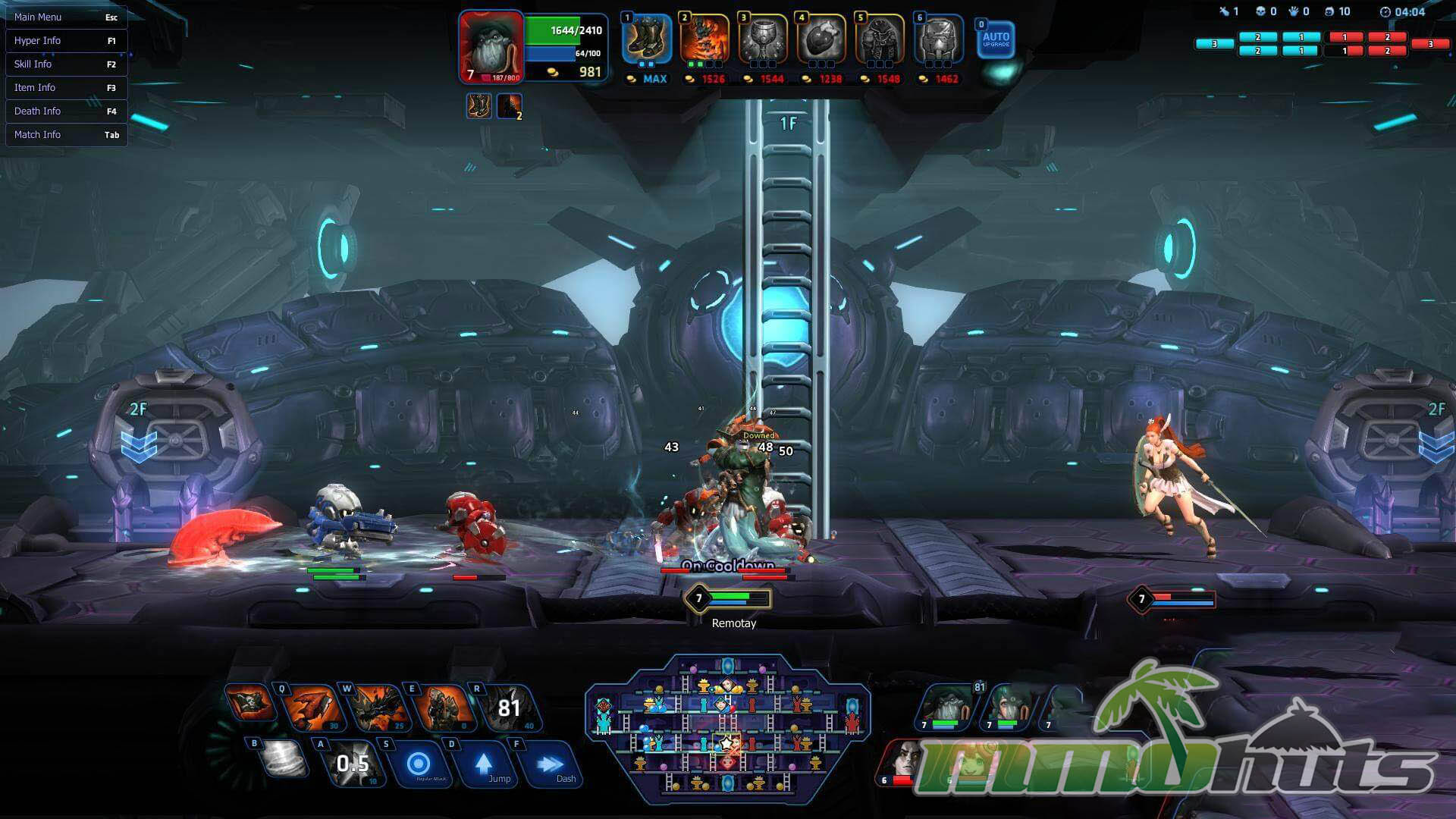
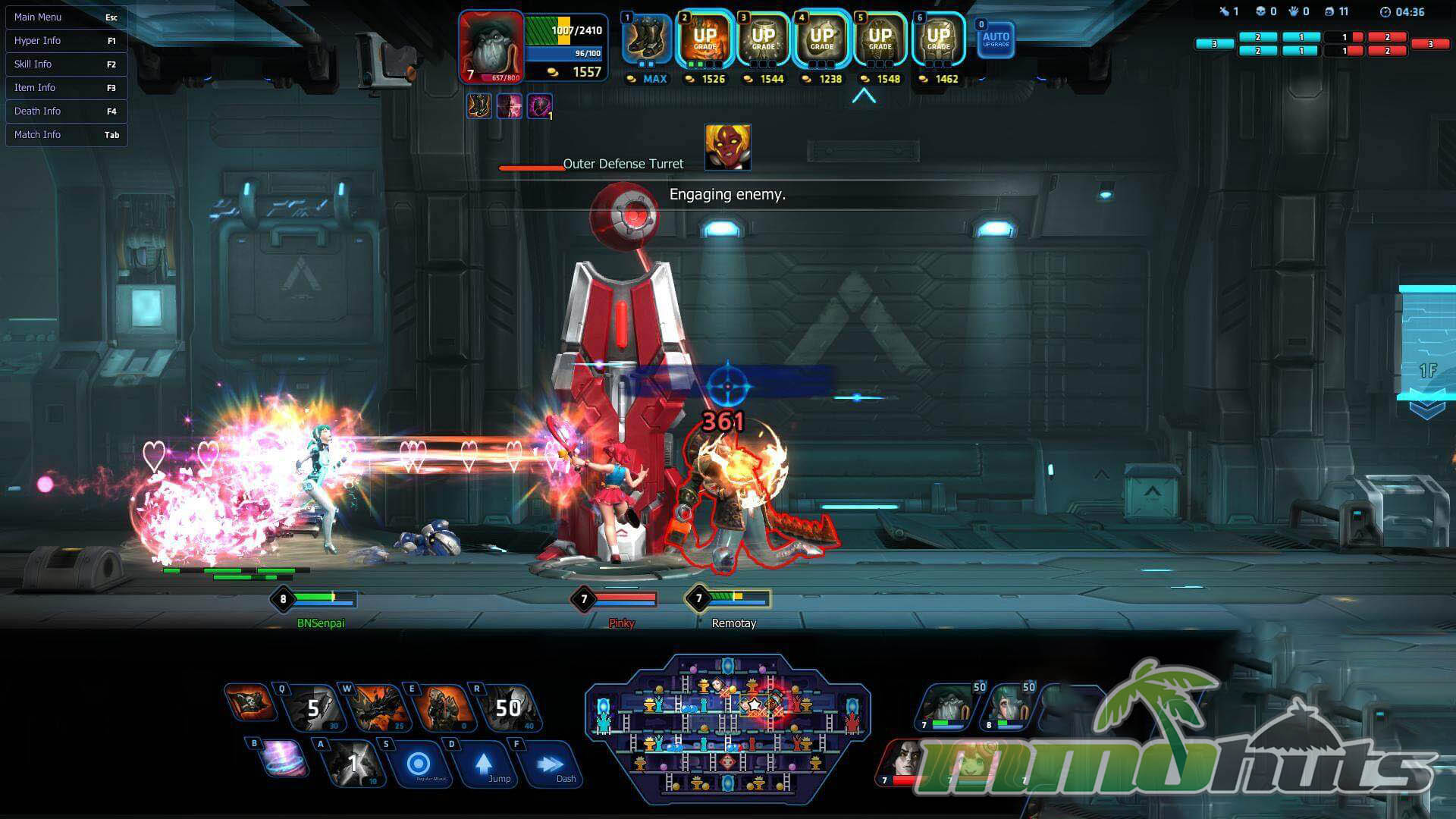
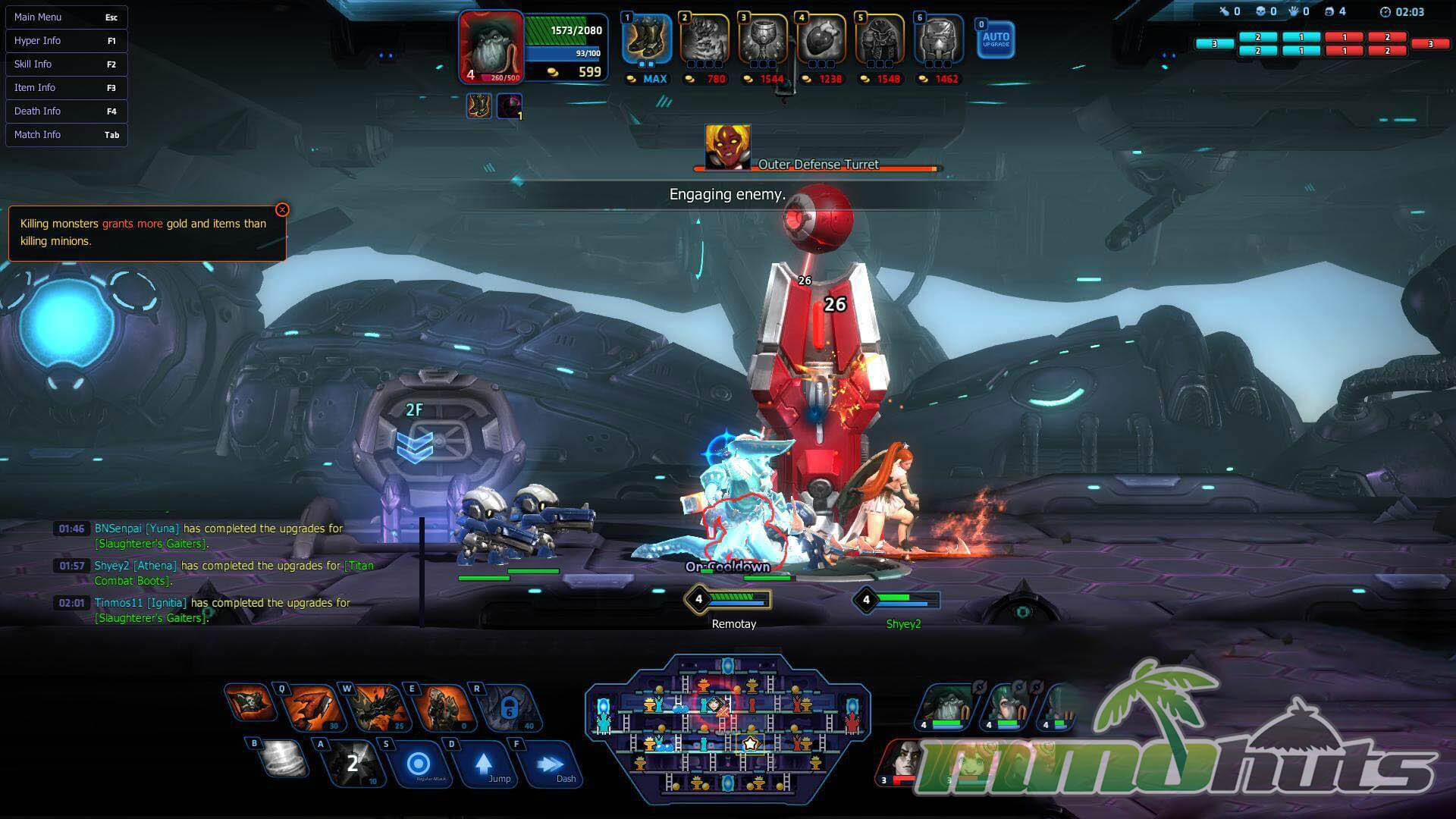
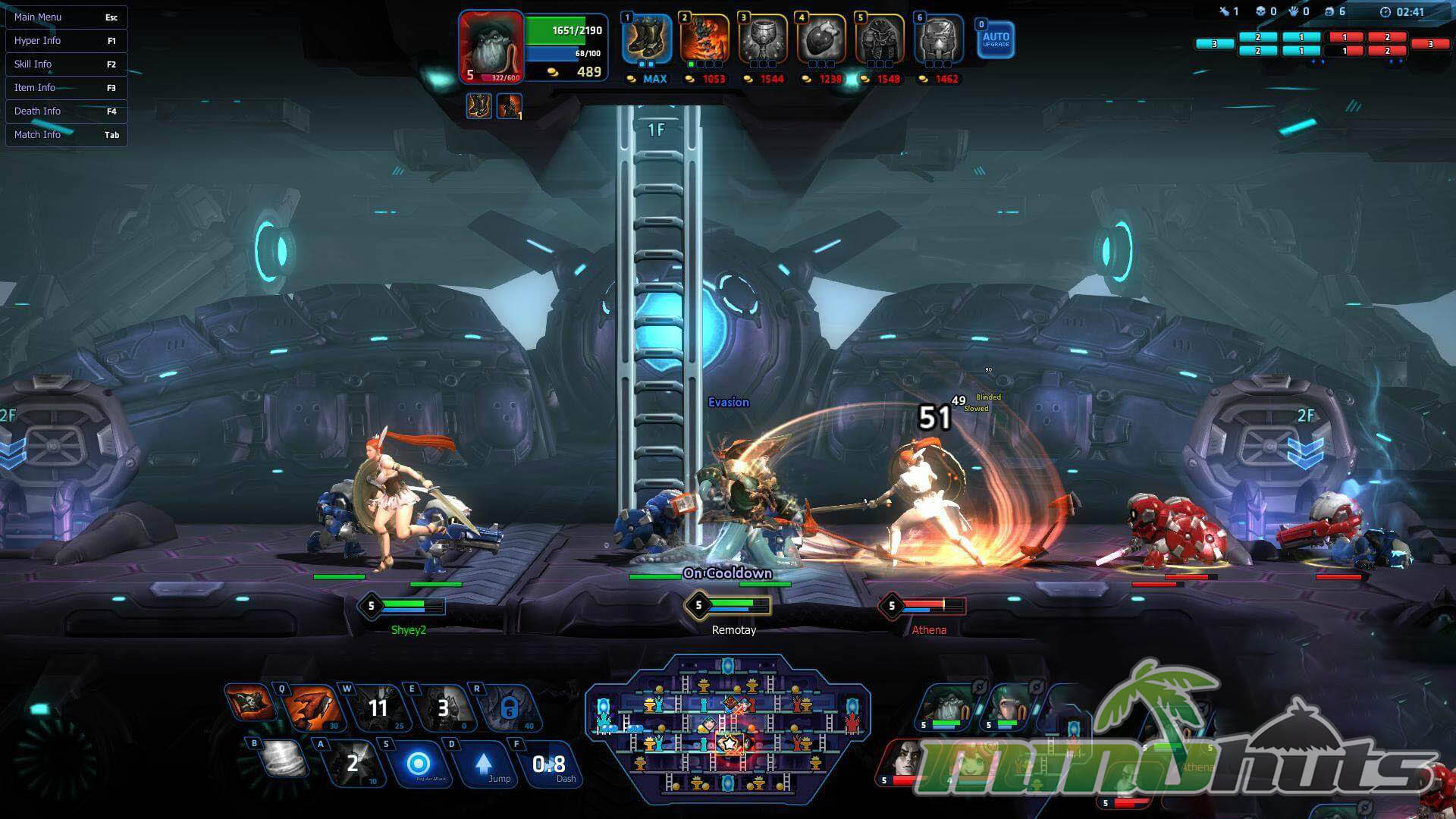
Hyper Universe is a 3D side-scrolling MOBA that aims to rethink familiar genre conventions by shifting the focus from mouse-driven commanding to direct character control. Instead of the classic top-down viewpoint and click-to-move pathing, you navigate with WASD, jump between platforms, and rely on tighter action inputs to engage, disengage, and reposition. The result feels closer to a brawler layered on top of MOBA fundamentals, especially once team fights break out around objectives.
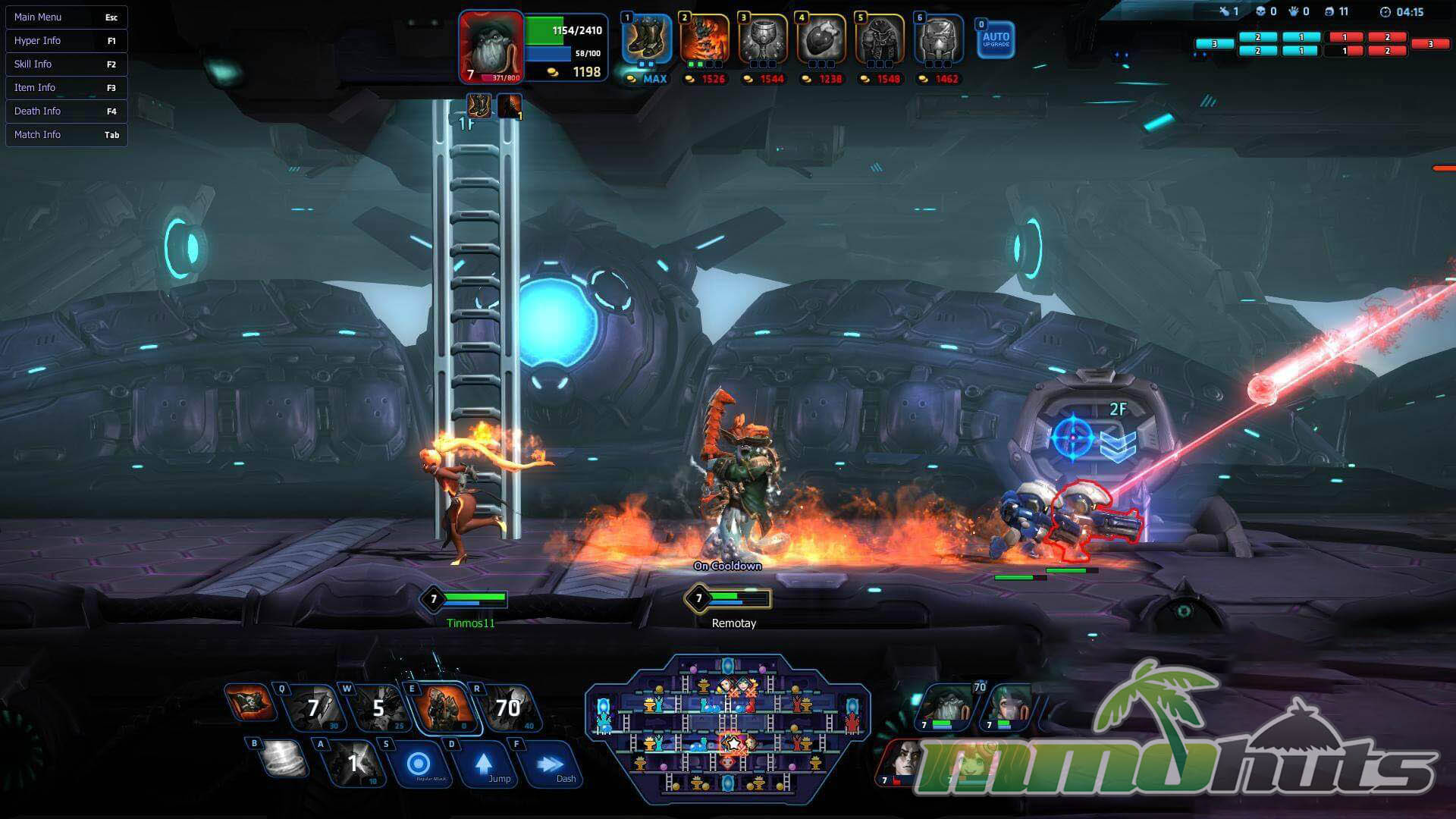
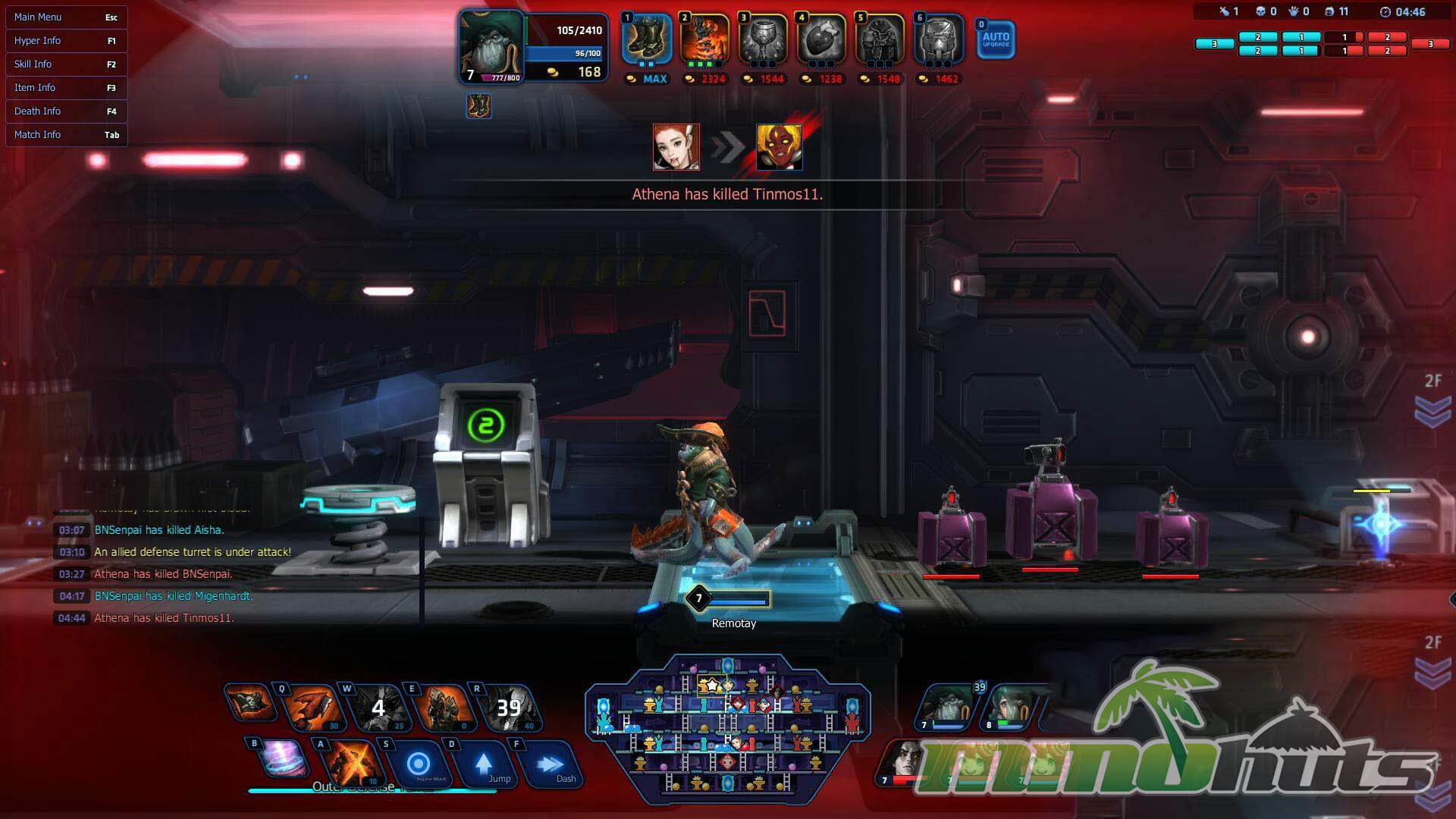
The primary battleground is structured around a center lane where the six towers reside, keeping the core push-and-defend loop concentrated and easy to read. Above and below that lane are additional levels containing farmable neutral enemies and a boss encounter, giving teams reasons to rotate vertically rather than only trading blows in a single corridor. This multi-tier layout helps the game stand apart, since map awareness is as much about height and access points as it is about typical lane timing.
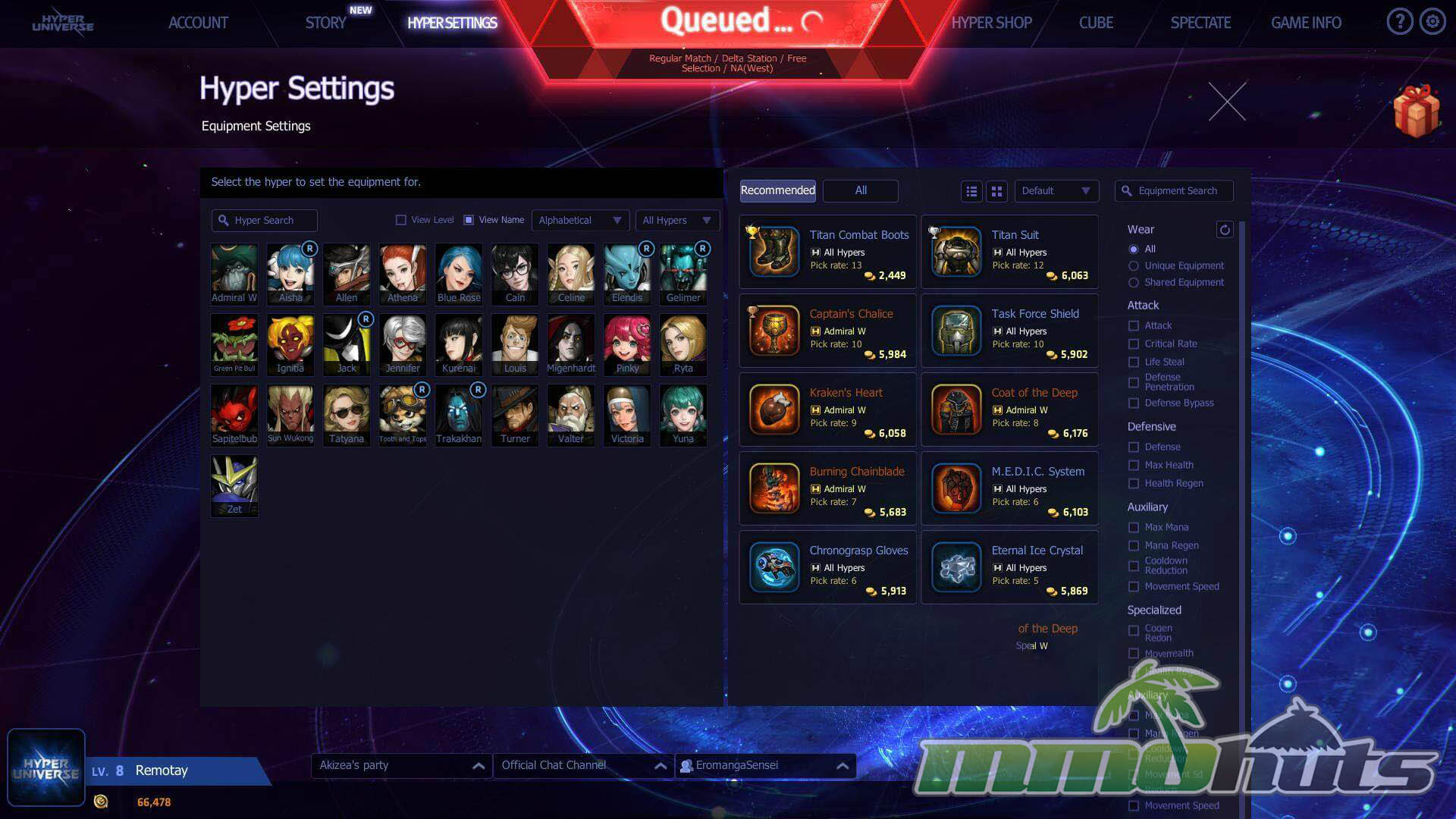
Character variety is another major pillar. The roster sits at 28+ playable characters, with designs that often nod to recognizable archetypes and pop culture inspirations. In practice, that means the lineup is broad enough to support multiple team compositions, from initiation-heavy brawls to poke, pick, or protect-the-carry setups, depending on what your squad drafts and how comfortable you are with the movement-heavy combat.
Hyper Universe Key Features:
- Six Character Types – choose between recognizable role categories, including Striker, Technician, Stalker, Bruiser, Tank, and Supporter.
- Side-Scrolling MOBA – a genre twist built around a seven-level side-scrolling battlefield and only six towers.
- Variety of Playable Characters – a roster of 28+ characters with distinct kits and strong visual themes influenced by pop culture.
- Action-Oriented Gameplay – movement matters, with dashes, jumps, and WASD controls shaping how fights start and how escapes happen.
- Detailed Character Models – combat supports multiple modes of play, from 1v1 duels in the RPG mode to larger-scale RTS-style battles where you command troops against another player’s army.
Hyper Universe Screenshots



Hyper Universe Featured Video

Hyper Universe Review
Hyper Universe’s biggest achievement is that it genuinely feels unlike most of its competitors, even though its win conditions are immediately recognizable to anyone who has played a lane-based MOBA. The side-scrolling camera and platform layers change how you approach everything, including vision, rotations, and even basic trading in lane. You are not simply spacing around skillshots, you are also managing vertical angles, jump timing, and the risk of getting caught mid-transition between levels.
Moment to moment, combat leans into action game instincts. Mobility skills are more than just gap closers, they are part of how you traverse the stage-like map and create unexpected angles. This makes skirmishes energetic, particularly when both teams start collapsing from different tiers. When it clicks, it produces fights that are readable but still chaotic in a good way, with flanks and counter-engages happening quickly.
The tower setup is also a meaningful departure. With only six towers concentrated on the central lane, matches tend to funnel pressure into a consistent hotspot, which reduces some of the downtime typical in slower MOBAs. The tradeoff is that teams can feel forced into frequent confrontations, especially once players learn optimal rotation paths to the jungle layers and the boss. If you prefer long laning phases and gradual macro play, Hyper Universe can feel like it is always trying to pull you into a scrap.
The roster does a lot of the heavy lifting for replay value. Characters are flashy, kits generally encourage a clear identity, and the different role types help new players understand what a pick is supposed to do in a composition. Still, balance and progression friction can influence first impressions, particularly because some gear requires unlocking. That kind of gating can make early experimentation feel constrained compared to games that let you freely test builds from the start.
Another early hurdle is onboarding. The requirement to play mandatory AI matches for roughly two hours can be a barrier for players who simply want to jump straight into PvP with friends. While learning the movement and map layers against bots has practical value, forcing it can feel like the game is holding the player back rather than guiding them forward.
Controller support is a welcome inclusion and fits the action-forward design. The inputs translate well to movement-heavy fights, and it helps Hyper Universe feel more approachable for players coming from brawlers or platform fighters rather than traditional PC-only MOBAs. That said, the overall experience still rewards MOBA fundamentals, including timing, itemization choices, and coordinated objective play.
Overall, Hyper Universe is best for players who enjoy MOBA structure but want the immediacy of an action game, with platforming movement and multi-level engagements shaping the flow of every match. It is an inventive take on the formula, even if some progression and onboarding decisions can slow the momentum for new or returning players.
Hyper Universe Online Links
Hyper Universe Official Site
Hyper Universe Steam
Hyper Universe Subreddit
Hyper Universe Korean Site
Hyper Universe System Requirements
Minimum Requirements:
Operating System: Windows 7 32-bit
CPU: Intel Dual Core or higher
Video Card: GeForce 9600 / AMD Equivalent
RAM: 3 GB
Hard Disk Space: 3 GB
Recommended Requirements:
Operating System: Windows 7 64-bit
CPU: Intel i3 or higher
Video Card: Nvidia GTX 650 / AMD Equivalent
RAM: 4 GB
Hard Disk Space: 3 GB
Hyper Universe Music & Soundtrack
Coming soon!
Hyper Universe Additional Information
Developer: CWAVESOFT
Publisher: NEXON Korea
Announcement Date: November 26, 2014
Closed Alpha Date: September 9, 2015 (South Korea)
Closed Alpha Date 2: September 12, 2015 (South Korea)
Closed Beta Date: December 15, 2015 (South Korea)
English Alpha Date: May 5th, 2017
English Closed Beta: June 23, 2017
English / Western Early Access: August 24, 2017
Open Beta / Full Launch: January 17, 2017
Shut Down: December 19, 2018 (PC), February 10, 2020 (Xbox)
Development History / Background:
Hyper Universe was developed by CWAVESOFT, a South Korean studio created with the specific intention of building the game, led by former NEXON head director Eun Do Chae. Publishing duties were handled by NEXON Korea. The project was first shown publicly at G-STAR 2015 on November 26, 2015, where it appeared with a trailer and early details that framed it as a different kind of MOBA.
Testing in South Korea started with a short closed alpha scheduled for September 9, 2015 and September 12, 2015, followed by a closed beta announced only a few months later, dated December 15, 2015. Later, on January 25th, Nexon stated that a Western release would arrive before the end of 2017. English-language testing began with an alpha on May 5th, 2017, and an English closed beta on June 23, 2017.
For Western players, paid early access on Steam (priced at $15.99) launched on August 24, 2017. The game then reached its free to play launch on January 17, 2017 via Steam and the Nexon launcher. Service later ended, with the PC version shutting down on December 19, 2018 and the Xbox version shutting down on February 10, 2020.