
Dragon Oath is a 3D, martial arts themed MMORPG with a top-down viewpoint set in a romanticized Ancient China. It offers nine playable classes inspired by classic kung fu schools, a deep pet collecting and training loop, and a surprisingly large set of community focused systems like marriage and mentorship.
 | Publisher: ChangYou Playerbase: Low Type: MMORPG PvP: Duels / Arenas / Open World Release Date: Nov 5, 2009 (NA/EU) Shut Down Date: 2016 Pros: +Robust pet collecting and training (250+ distinct pets). +Plenty of trade skills to level. +Community tools including marriage. Cons: -Questing and combat can feel repetitive over time. -Localization quality is inconsistent. -Camera freedom is fairly restricted. -Western version lagged behind in updates. |
Dragon Oath Overview
Dragon Oath is a free-to-play 3D MMORPG that first launched in China in 2007, then later received localized releases for regions including Malaysia, Vietnam, Turkey, Europe, and the United States. The game built a massive audience at home (the bulk of its active users were in China) and became one of the better-known Chinese MMO franchises in terms of revenue. Its narrative framework pulls from the wuxia novel Demi-Gods and Semi-Devils, blending martial arts drama with elements drawn from Buddhist cosmology. While the Western service never fully matched the content cadence of the Chinese version, the core loop still delivers a familiar, approachable MMO experience.
New characters begin as an unassigned recruit and only lock into a class at Level 10, which helps ease players into the systems before committing to a role. Dragon Oath shut down in the West, but the game continues in China under the name TLBB.
Dragon Oath Key Features:
- Great Class Variety – choose from nine distinct classes with different combat roles and build paths.
- Extensive Pet System – collect, raise, and customize hundreds of pets that can fight and support you with utility and buffs.
- Social Features – friend finding tools, marriage mechanics, and tutor style progression systems.
- Varied PvP Options – open world PKing alongside structured duels and arena style fights.
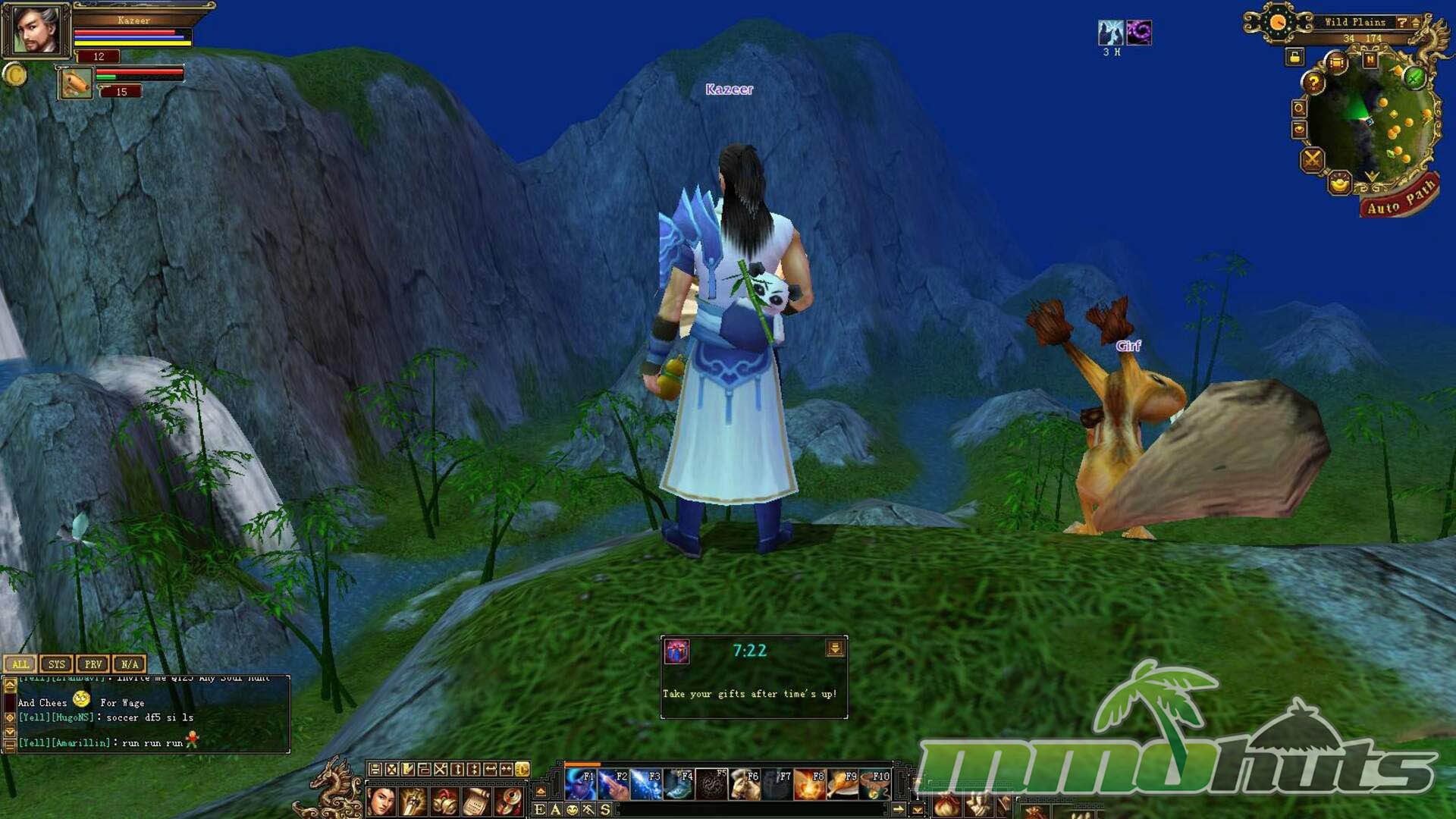
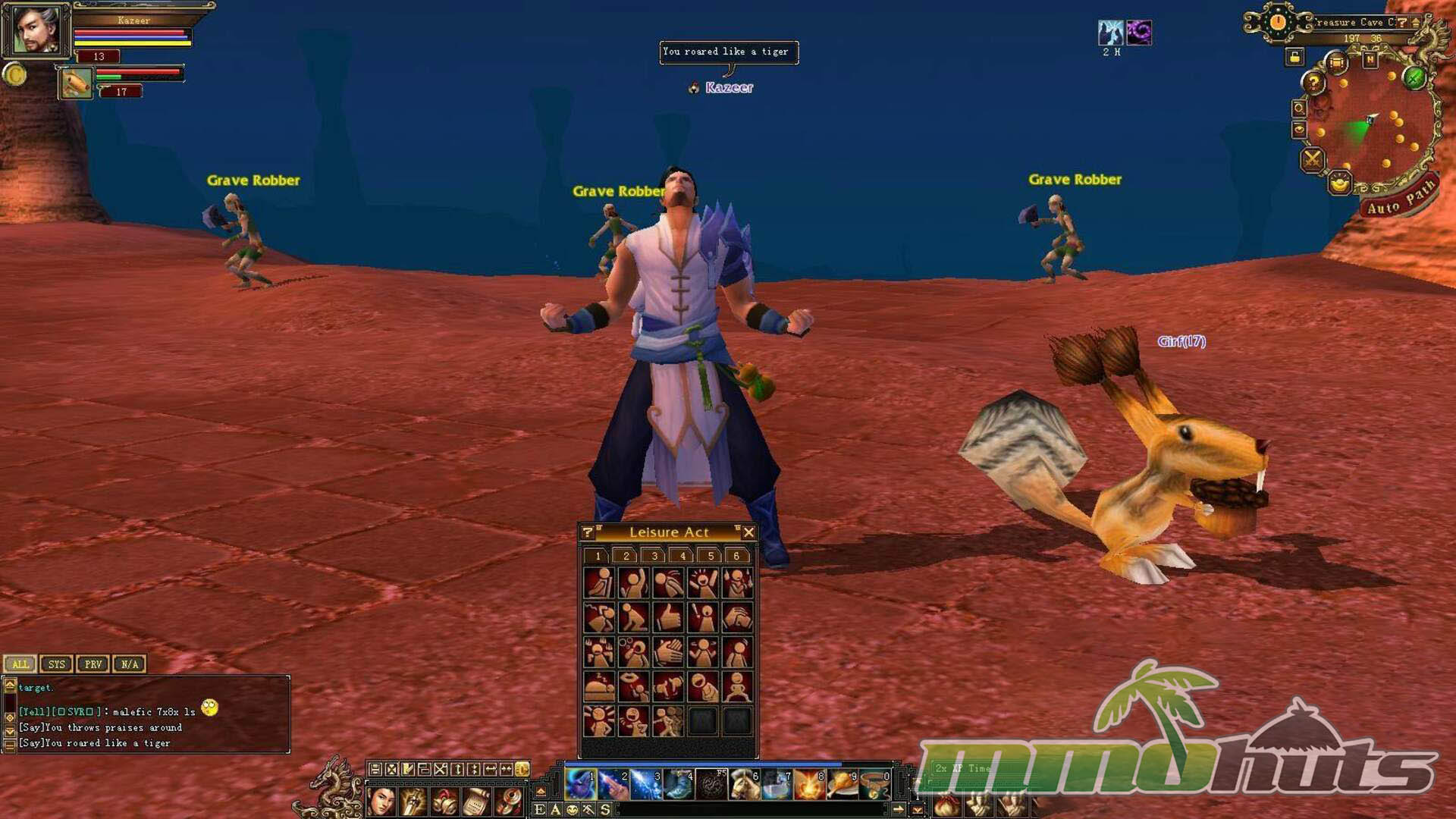
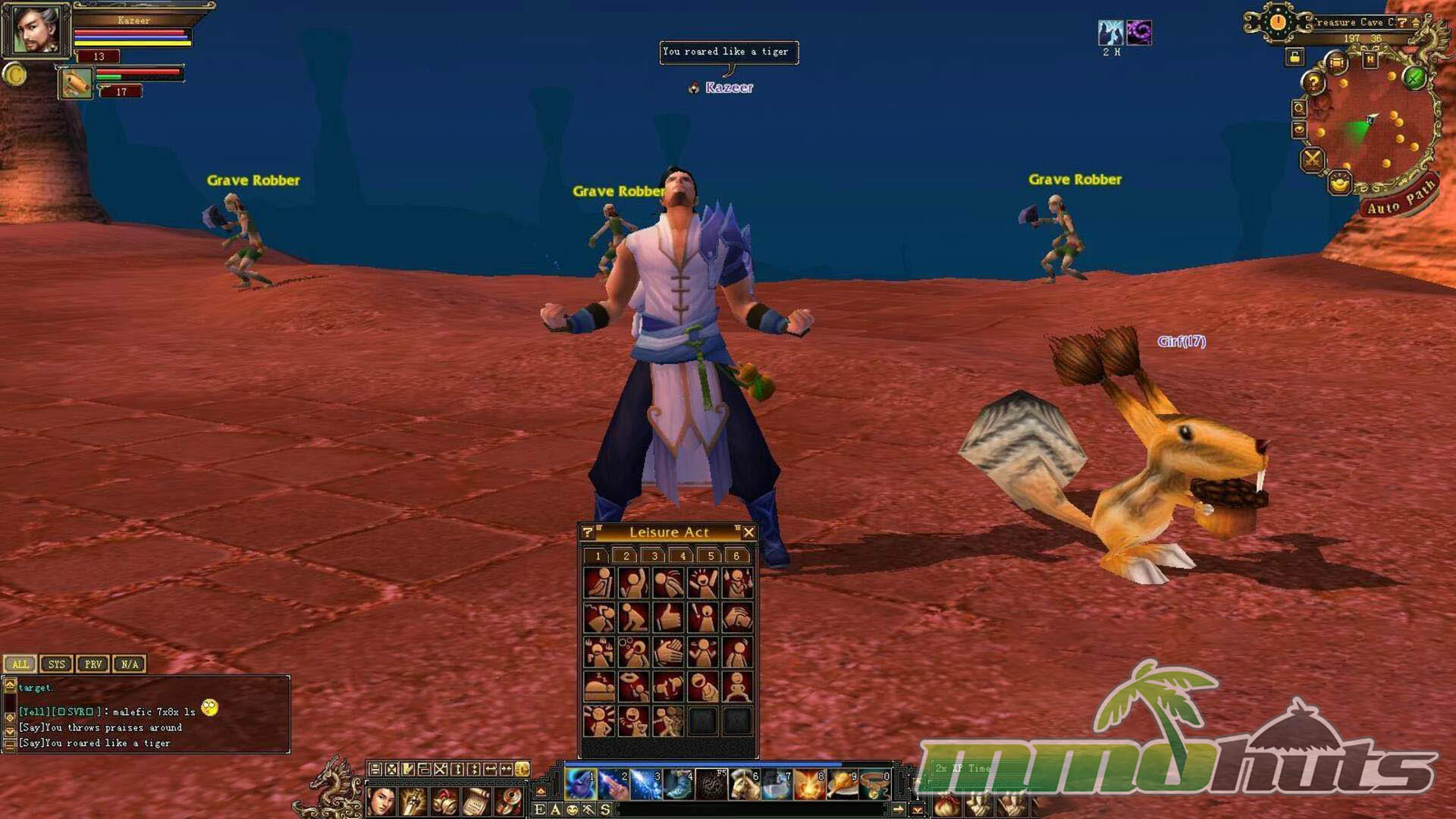
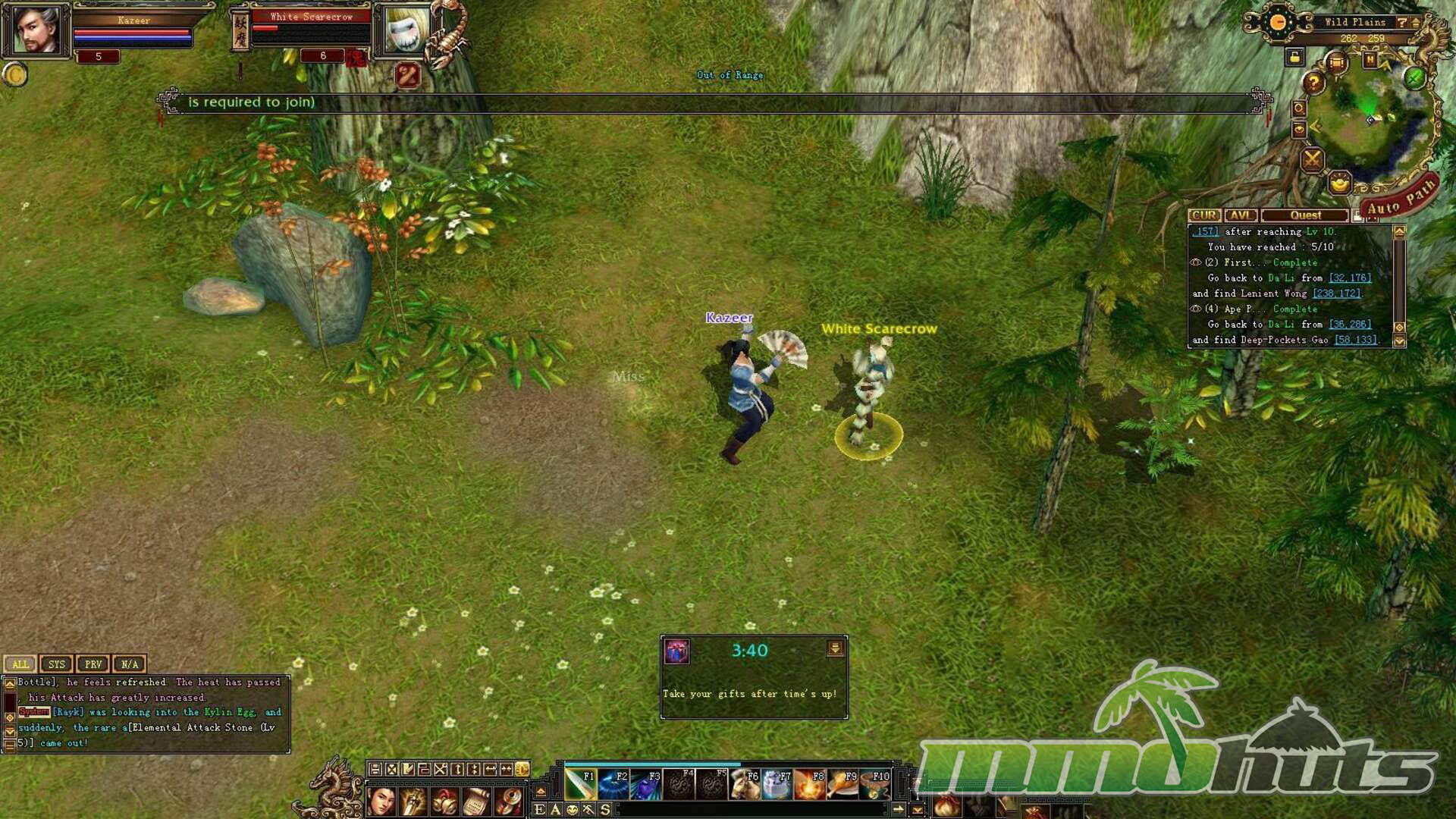
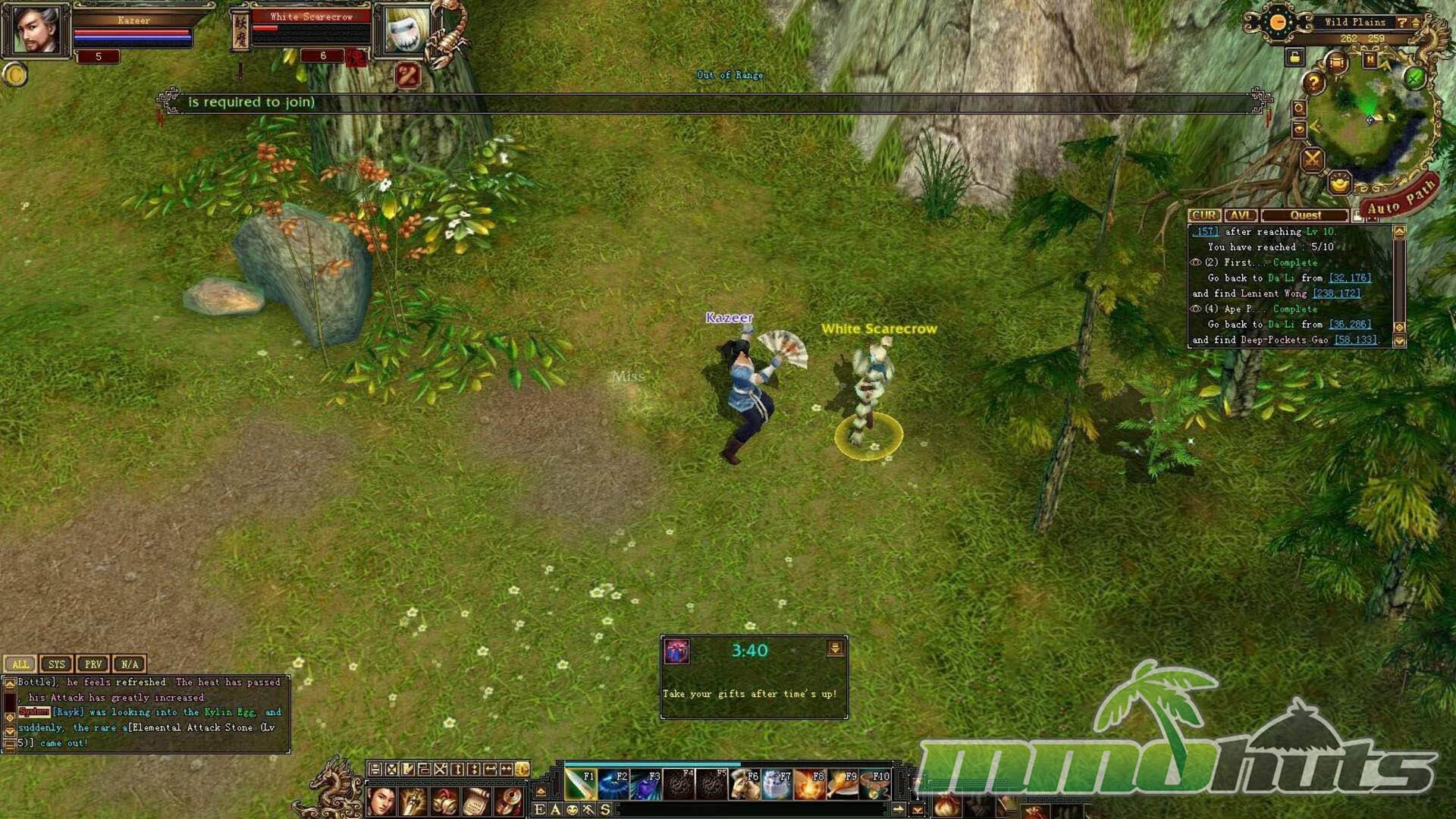
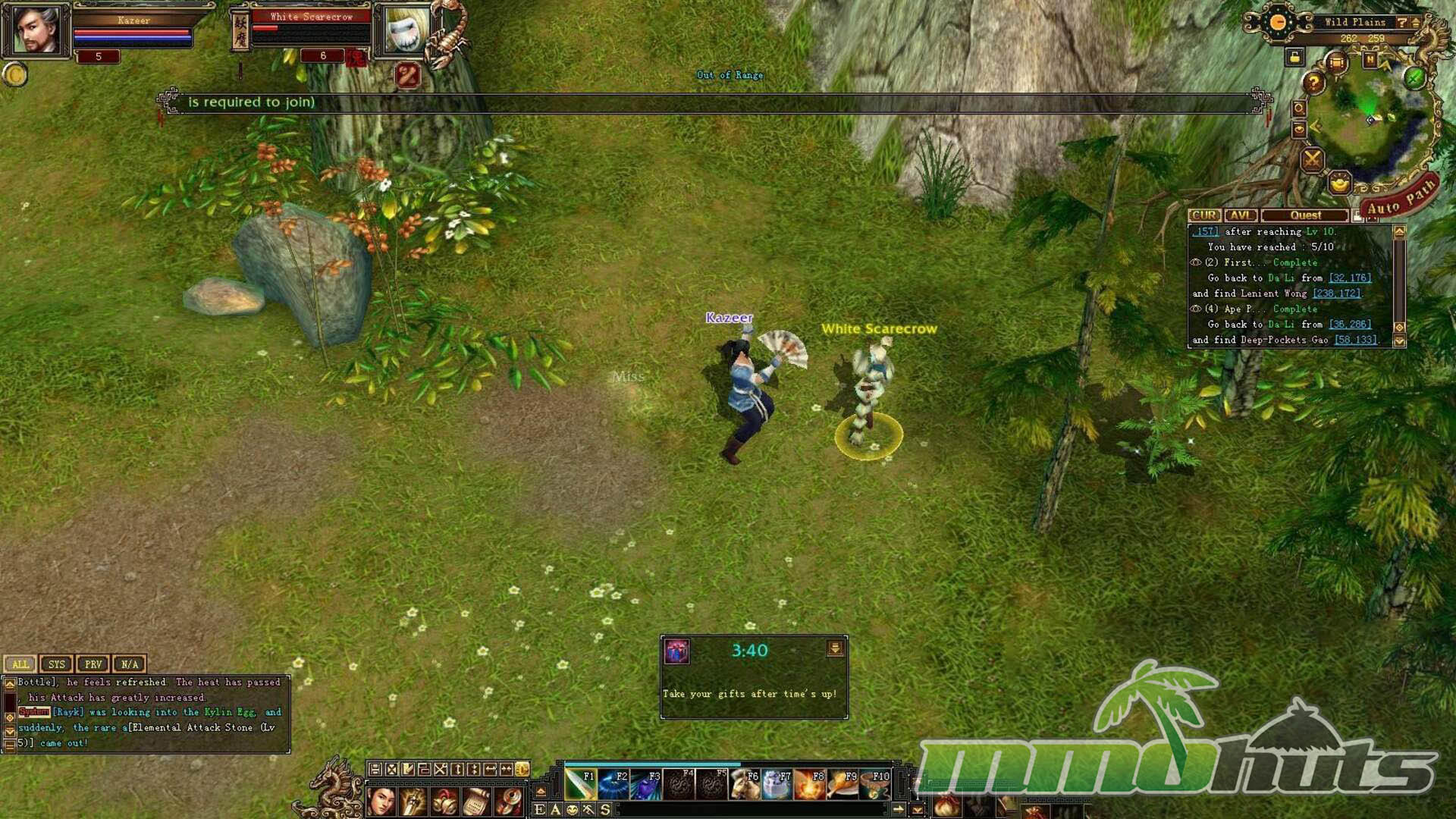
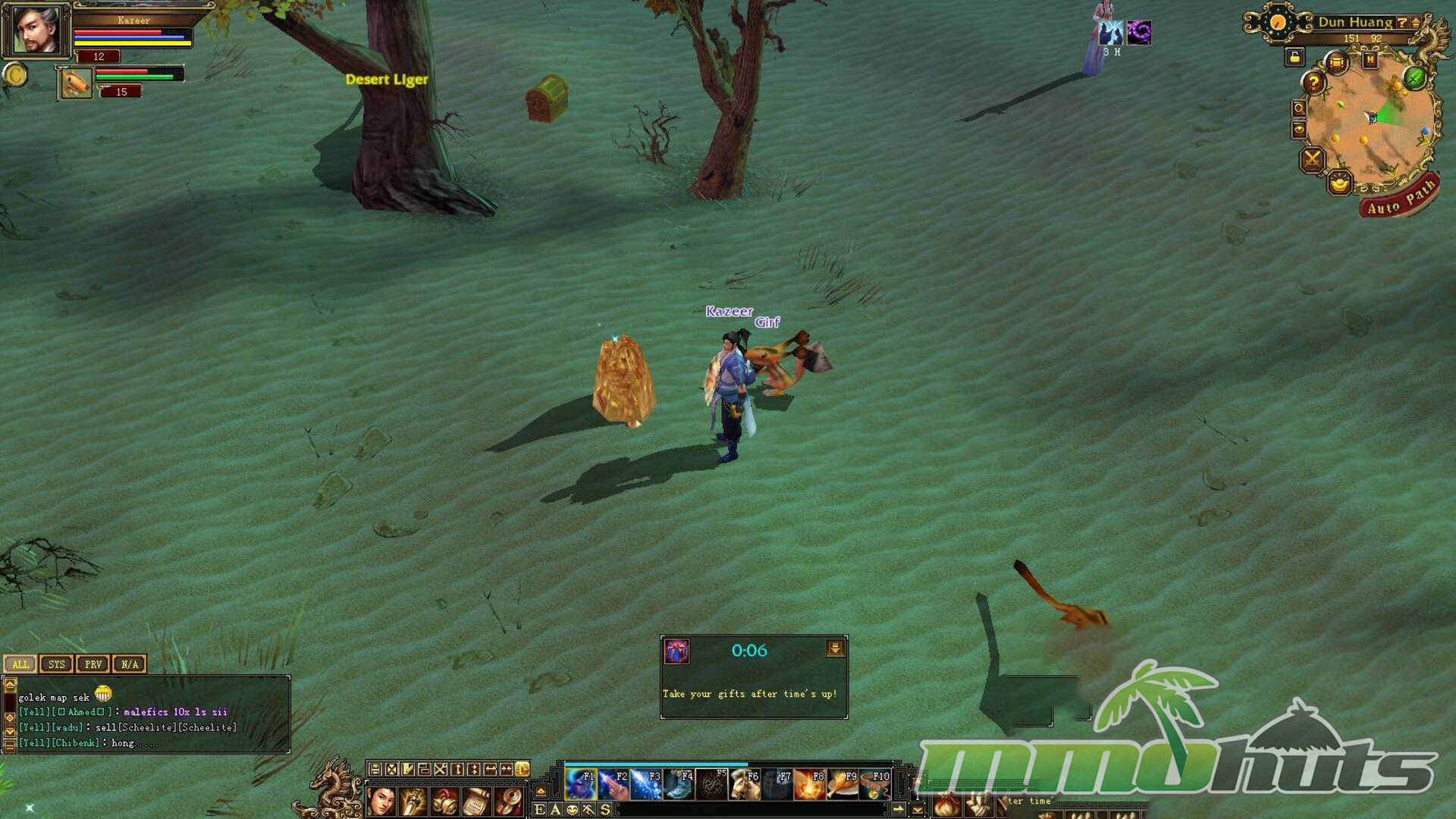
Dragon Oath Screenshots



Dragon Oath Featured Video

Dragon Oath Classes
- Assassins lean on stealth and burst damage, excelling at evasive hit-and-run play.
- Beggars Alliance specialize in poison and sustained pressure, with effective combo sequences being key to strong output.
- Lotus Order fill the support role, focusing on healing and revives rather than raw damage.
- Minstrels fight from range with traps and control tools, including mana draining options that matter a lot in PvP.
- Pyromancers bring some of the highest offensive potential, trading away survivability for power.
- Royalty emphasize debuffs and anti-magic strengths, with tools that resist spell users and bypass defenses.
- Shaolin are the front line tanks, built around durability and strong all-around stats via skills like Iron Body.
- Taoists have many direct attacks that chain smoothly, making them straightforward to pick up despite being fragile.
- Voodoo are more technical, relying on layered effects and synergy, with poison pressure baked into their kit.
Dragon Oath Review
Dragon Oath (known as Tian Long Ba Bu, or TLBB, in China) is a martial arts MMORPG developed and published by ChangYou, first released in China in 2007. ChangYou later pushed for overseas growth, and the NA and EU version entered open beta on November 5, 2009, which was roughly two years after the original release. Visually, it has the look of a late 2000s MMO: serviceable character models, readable effects, and environments that prioritize clarity over spectacle. What makes it stand out more than its graphics is how many interlocking systems it tries to support, especially pets and social progression.
One ongoing issue for the Western release was update parity. The US version did not keep pace with the Chinese build, so major shifts took longer to arrive. The last large update mentioned for the Western service was Dragon Oath 2: Soul of the Sphinx, released on September 27, 2012. Even so, the game leaned on frequent scheduled activities and daily events to keep players logging in. With a smaller server footprint, the community also tended to feel more familiar and consistent, which can be a real positive for players who prefer a tighter MMO scene.
no images were found
Getting into the game
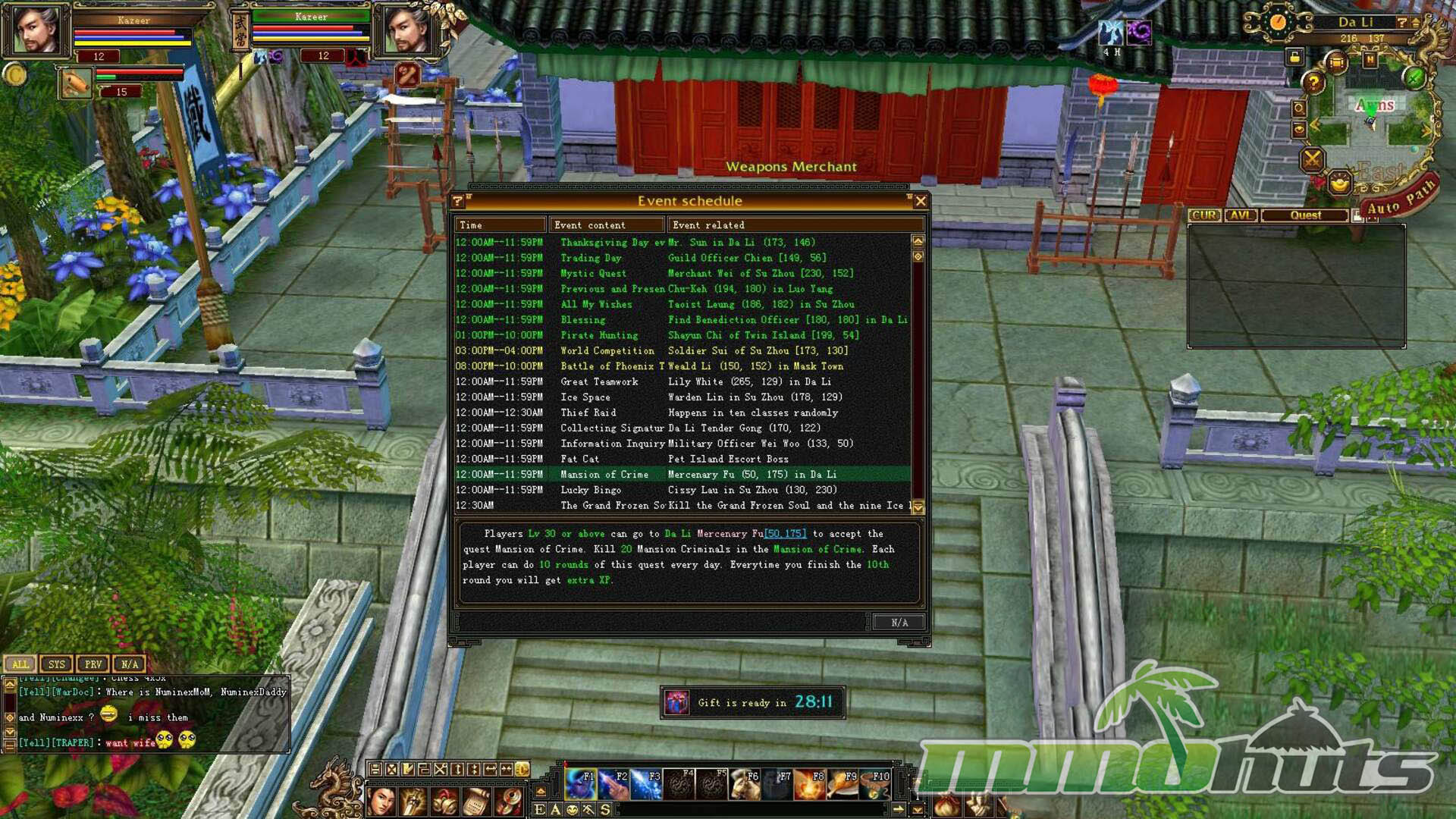
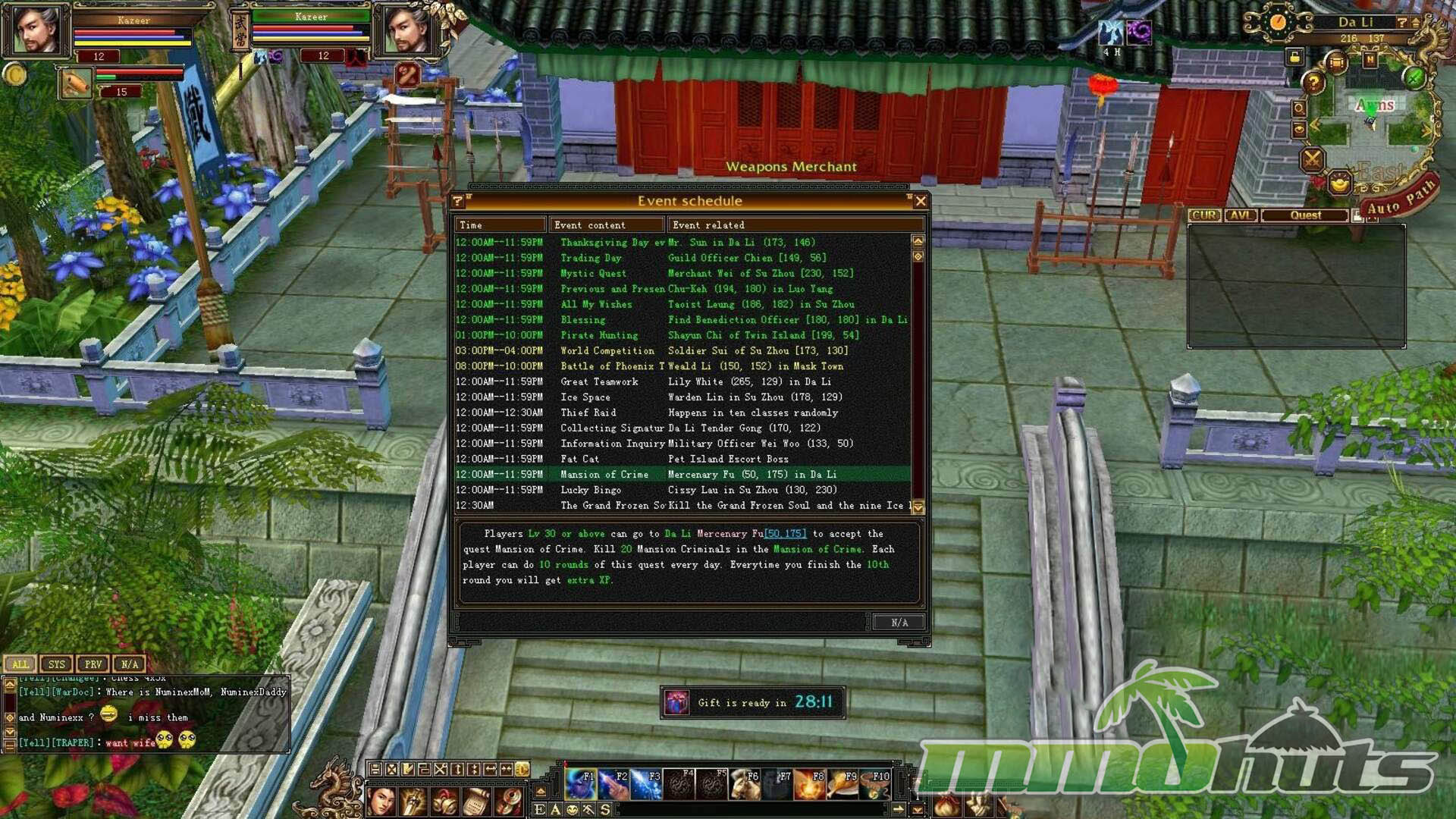
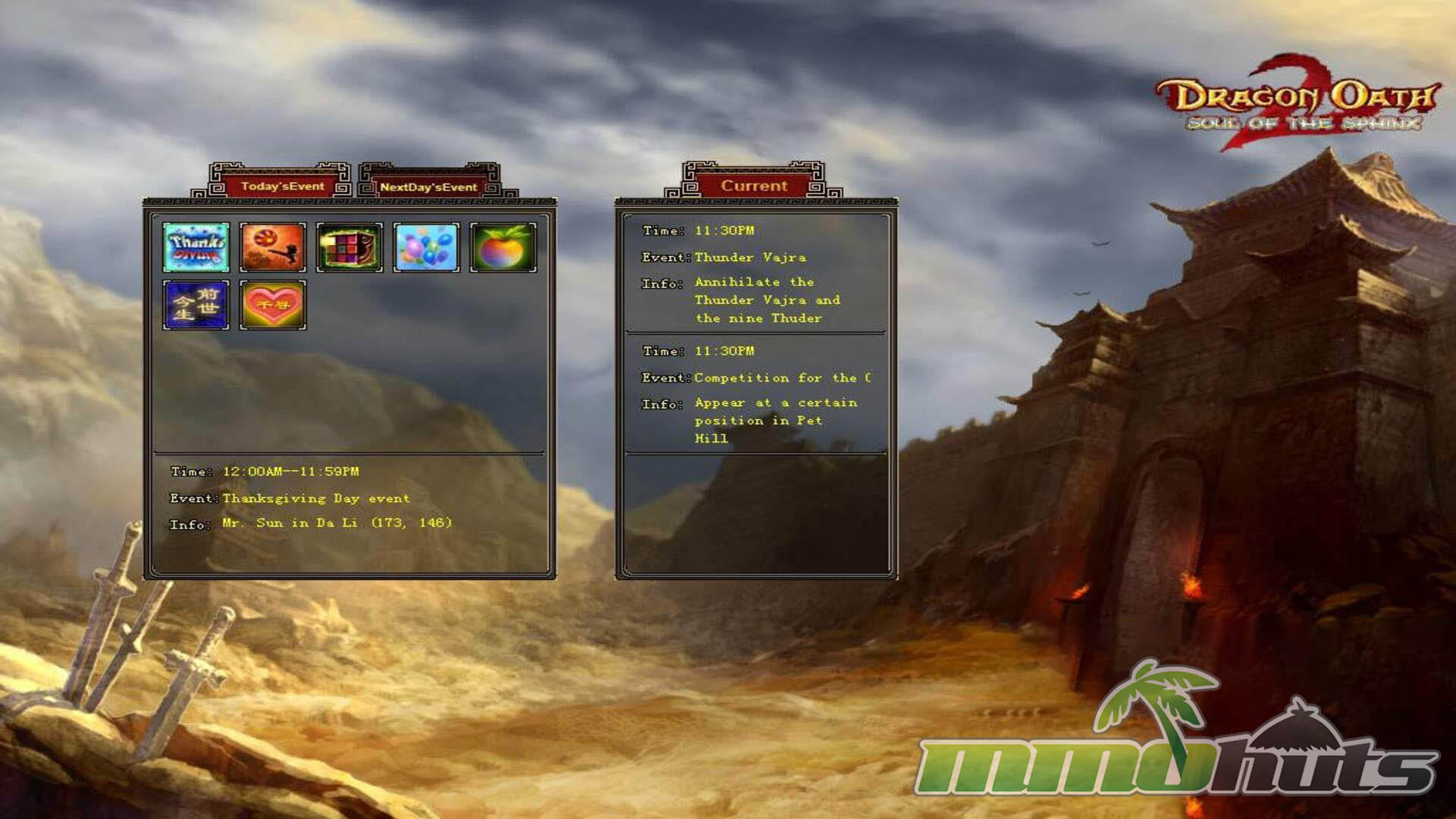
After launching, the client highlights the day’s event schedule with times and relevant NPC locations, and it also previews what is coming up the next day. That sort of built-in calendar sounds minor, but in an MMO that runs multiple events daily, it genuinely helps players plan sessions and avoid missing limited windows.
Login includes a virtual keyboard option, and Dragon Oath also uses a repeated four digit verification step to reduce automated play. It appears at sign-in and can reappear during normal gameplay. It is not always convenient, but it clearly signals that account protection and anti-bot measures were a priority. The game softens the annoyance by granting items after completing the check in-game, turning it into a small bonus rather than pure friction.
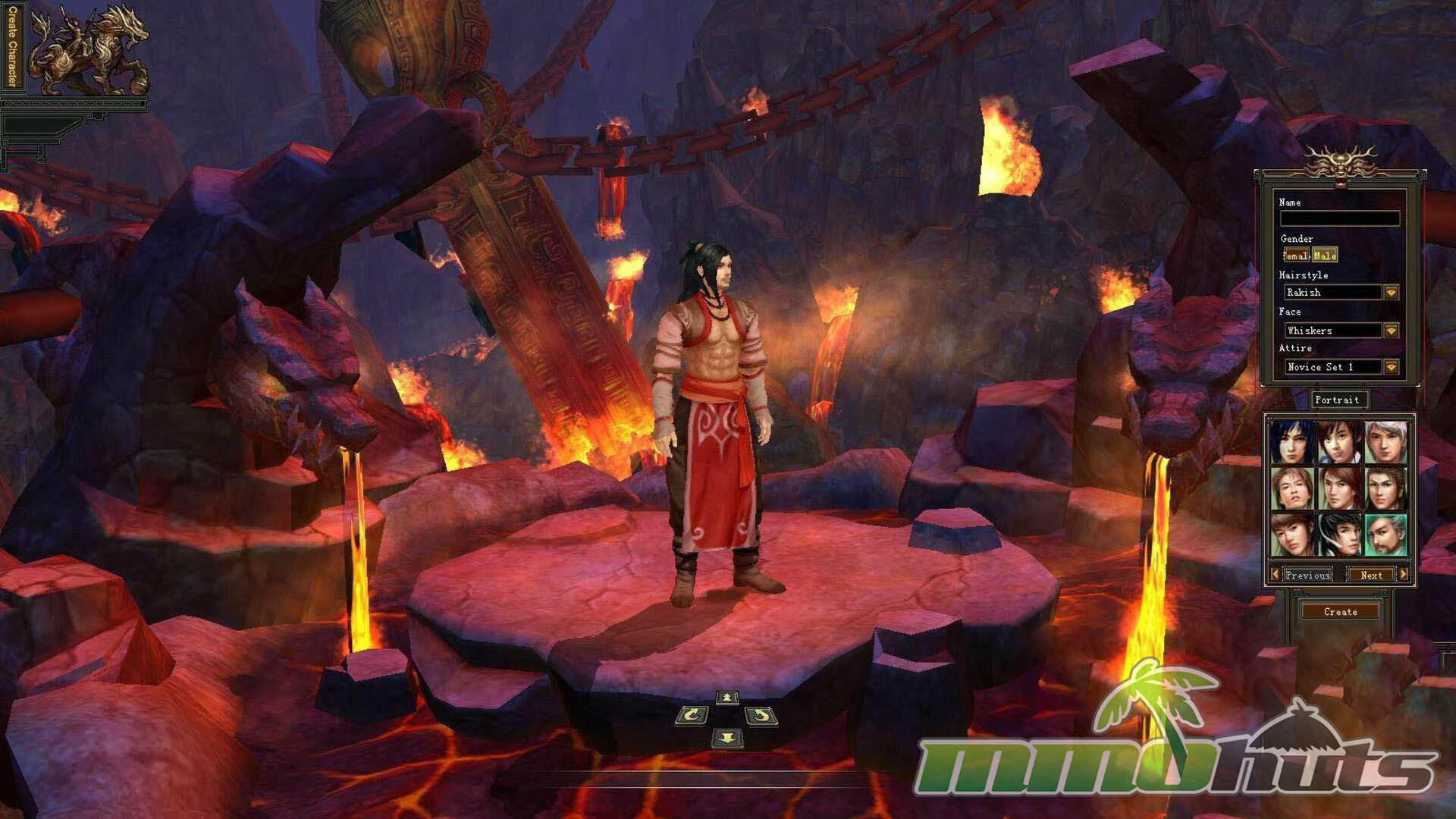
Character creation is simple: gender plus a few cosmetic selections (hairstyles, faces, and outfits) and a portrait that appears in the UI. The more unusual customization arrives through a profile page, where players can fill in personal details like age, blood type, city, occupation, and zodiac information, and control who can view it. It is not power progression, but it fits the game’s emphasis on social identity and community.
Early leveling and basic controls
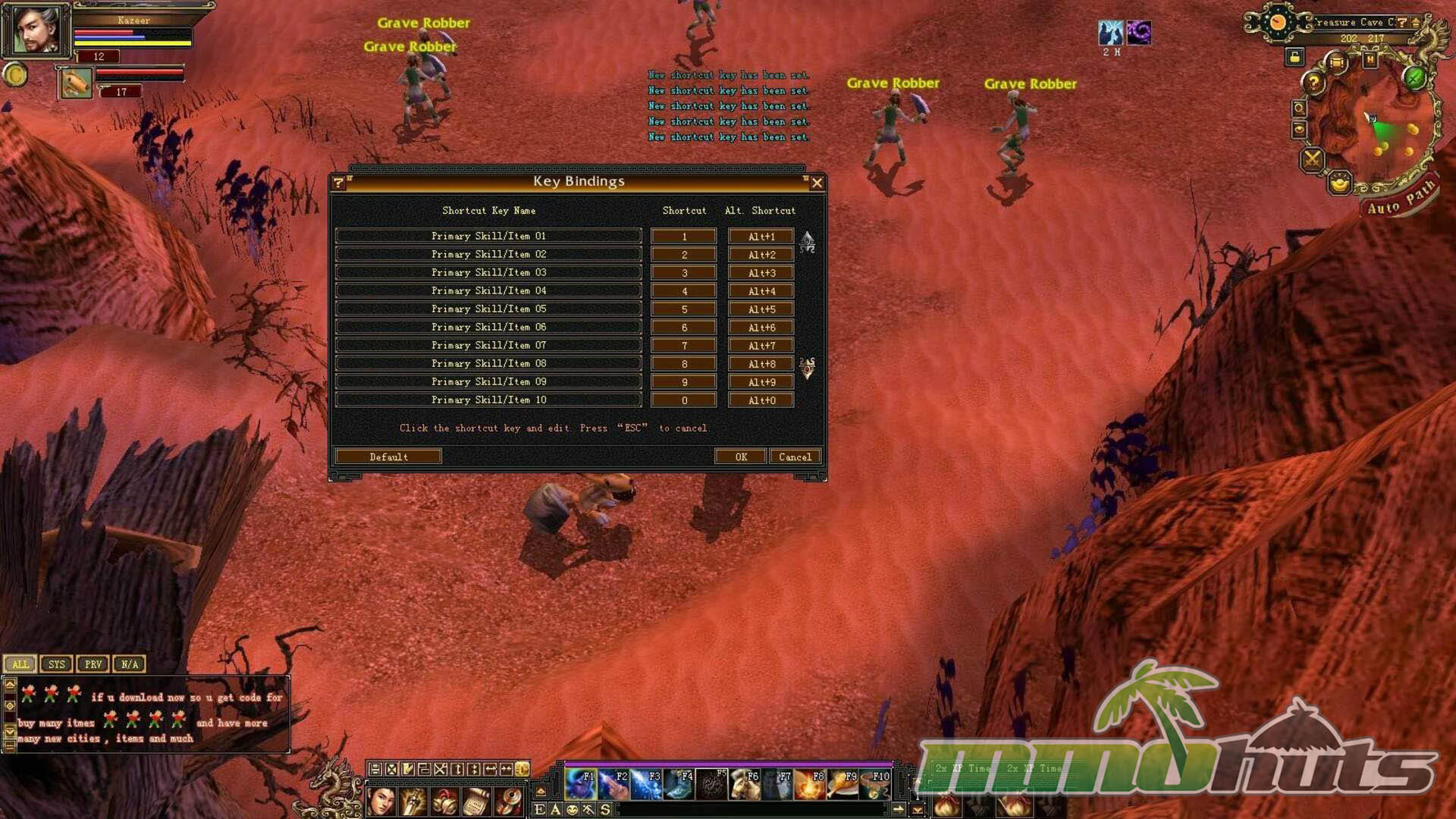
First-time players can opt into a tutorial quest chain that introduces movement, merchants, and key NPCs in the starter area. Movement is click-to-move only, and the default hotkey layout can feel unintuitive, especially with skills initially mapped to F1-F8. On many keyboards those keys overlap with system functions, so rebinding to number keys is almost mandatory for smooth combat. Once adjusted, the moment-to-moment loop becomes more comfortable, but the initial setup can be a hurdle.
A standout early feature is the in-game manual. Instead of pushing players to external databases, Dragon Oath provides a built-in reference for boss drops, level-appropriate quests, grinding suggestions, and general system explanations. For an older MMO, that kind of integrated guidance is surprisingly helpful and reduces the need for constant alt-tabbing. During the tutorial, players also receive their first pet (a white rabbit), and by the time the introductory chain wraps up most players are close to Level 10, which is when class selection opens.
no images were found
Pets and why they matter
Pets are one of Dragon Oath’s defining systems, and the game supports a large roster of collectible companions. Pet strength and growth vary by type. Young Pets begin at Level 1 and scale upward with the player, offering the most room for attribute customization. Wild Pets are typically captured at a higher level, but they tend to be less impressive than a well-developed Young Pet of the same level and allow fewer long-term adjustments. Rare Pets sit at the high end of the spectrum, showing up with strong baseline stats and sometimes different color variations, but with less flexibility than the most customizable options.
In practical play, pets do more than add damage. They can assist in combat, apply buffs, cleanse negative effects, and even help with mana sustain. Each pet can hold up to five skills, with four firing automatically and one reserved as a manually activated ability. Players can expand a pet’s toolkit by purchasing additional skills from an NPC in Luo Yang, which reinforces the idea that pets are a parallel progression track rather than a simple cosmetic companion.
Class choice and progression
Once you commit to a class, trainers in Da Li (the first city) can transport you directly to the class hub, essentially a home base for learning skills and taking class-specific quests. These hubs are also where players eventually earn class mounts at Level 40 and Level 60. Mounts improve travel speed, but combat remains strictly on foot, which keeps fights readable and avoids mounted PvP complications.
Classes also differ by preferred weapon style and damage type. Pyromancers, Assassins, Beggars Alliance, and Shaolin fight up close, while Lotus Order, Royalty, Minstrel, Taoist, and Voodoo generally operate from range. Damage orientation splits as well, with Pyromancer, Royalty, Assassin, Beggars Alliance, and Shaolin leaning physical, while Lotus Order, Minstrel, Taoist, and Voodoo focus on spiritual attacks. The net result is a roster that covers standard MMO roles (tank, healer, DPS) but also includes more system-driven archetypes like Voodoo, which depend on stacking effects and timing interactions.
Skill growth is organized through discipline sets that unlock as you level. A Taoist, for example, begins with disciplines such as Fist of Tai Chi, Sword of Tai Chi, and Lunisolar Secret, then selects individual skills within each discipline as prerequisites open up. Unlocking a skill is not automatic, you still purchase abilities using Ivory (the game’s currency) and spend experience, so your build is shaped by both leveling pace and resource planning.
Community systems that ask for commitment
Dragon Oath puts more weight on relationship systems than many MMOs of its era. Friendships, marriages, kinships, and similar bonds exist, but they are not just menu selections. Players typically need to participate together in combat to build friendship points, and only after reaching thresholds can they formalize certain relationships. In practice, this encourages players to actually play with the people they add, which can make friend lists feel more meaningful.
To support that ecosystem, the game includes a Classifieds style tool where players advertise what they are looking for, such as a guild with a specific class makeup, or a player seeking a Master or Apprentice arrangement. In a smaller community, that kind of matchmaking utility can be the difference between a lonely leveling experience and finding a consistent group.
Auto pathing and quality-of-life
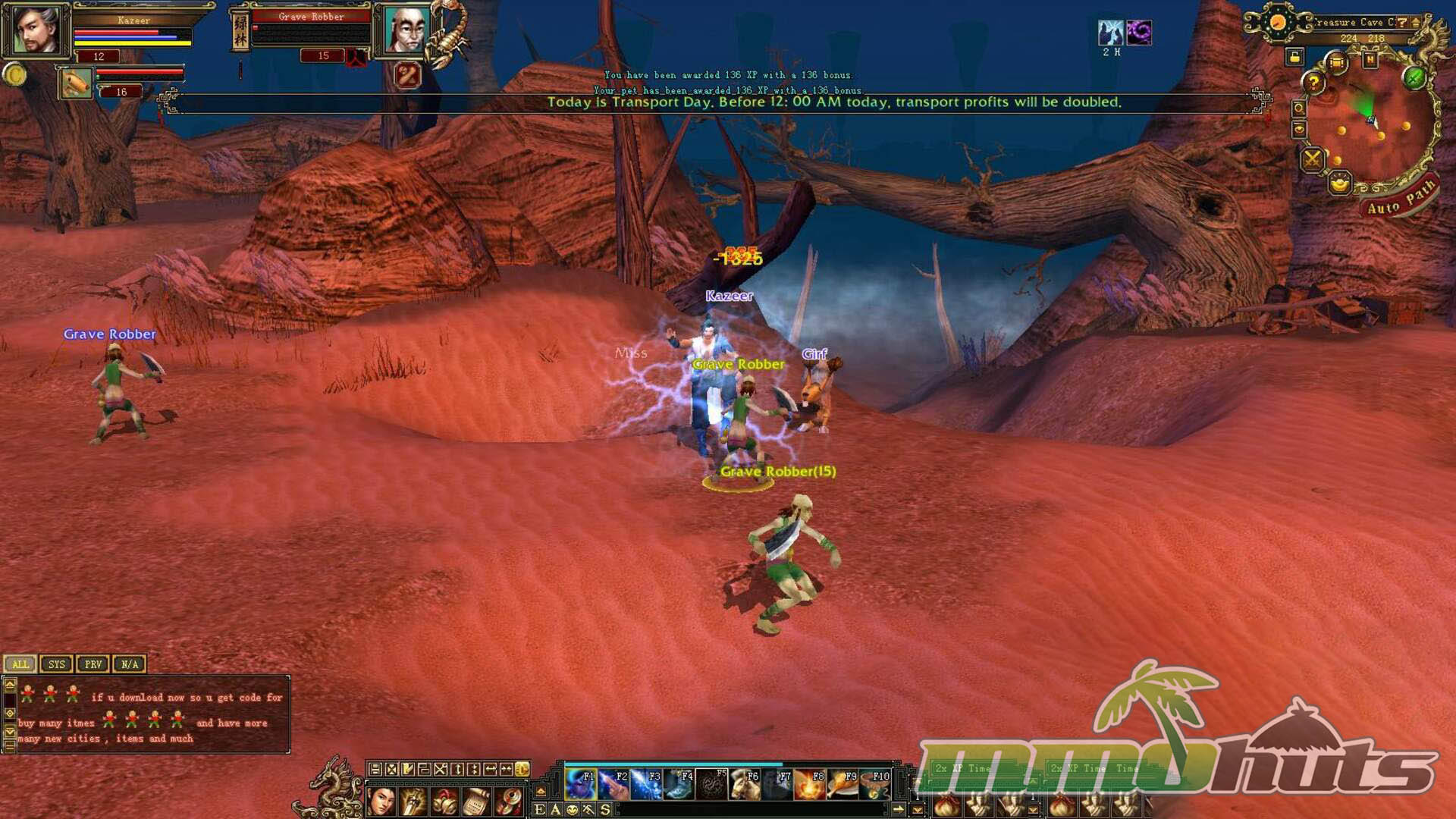
Travel convenience is another area where Dragon Oath shows its age in a good way. Auto pathing lets you input coordinates or select an NPC from a list, then the character walks there automatically. You can also click destinations on the map or click quest tracker entries to begin moving immediately. It is especially useful for players who do not want to learn coordinate navigation, and it supports multitasking during long runs.
The limitation is that auto pathing only plots routes within the current map, so it will not fully handle multi-zone journeys on its own. Still, for day-to-day questing and event participation, it makes the game feel much less time-consuming than some older MMOs.
PvP modes and the crime system
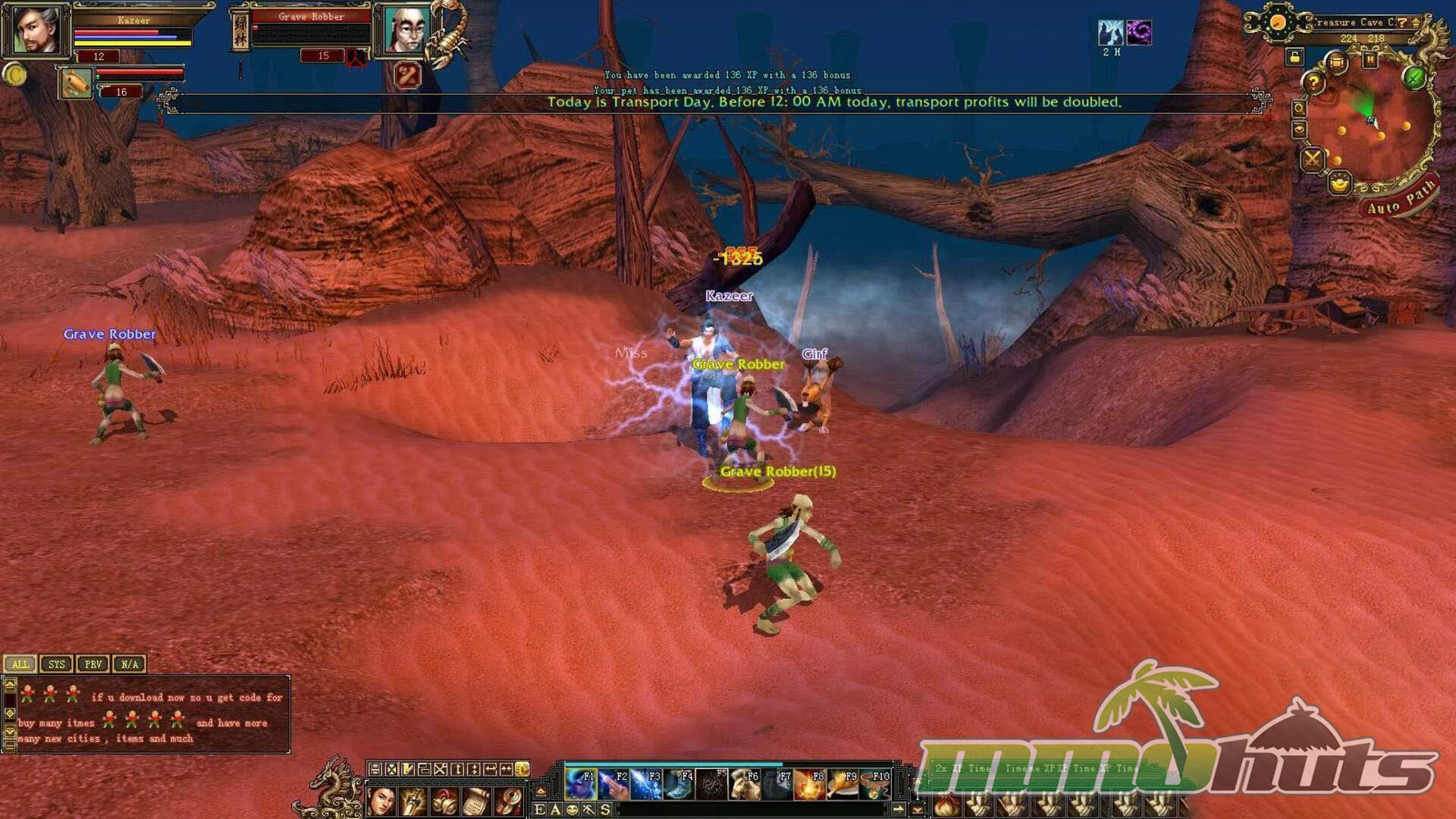
PvP comes in several flavors, including duels, group fights, tournaments, and the Class Arena. The game also supports open world PvP on its PvP server, where players can attack non-hostile targets and receive Crime Points based on their actions. Everyone begins at 0 crime points as a Common. Attacking and killing innocents pushes you into criminal status, while hunting criminals can reduce your crime score, even moving you toward a Hero status at -3 crime points. At the extreme end, Demon status begins at 4 or more crime points. This structure creates a risk-reward layer in open zones, with consequences that can shape how and where players choose to grind.
Class Arena, held on Thursdays and Sundays, leans into class identity by dividing participants by class and tracking performance through class points. Kills contribute to the class total, and the winning class earns rare crafting materials along with public recognition via system chat. It is a simple premise, but it gives PvP a recurring social storyline, especially on servers where rivalries form.
no images were found
Final Verdict – Good
Dragon Oath is not a genre redefiner. Its core questing and combat cadence can become routine, and the English localization quality varies from scene to scene. The restricted camera and the slower update cadence for the Western version also held it back outside China. Still, it has several systems that remain genuinely engaging, particularly its pet progression and the way it ties social relationships to shared play. For players interested in a wuxia flavored MMO with lots of side systems to explore, Dragon Oath was easy to get into and often more enjoyable than its surface level presentation suggests.
Dragon Oath Links
Dragon Oath Official Site
Dragon Oath Wikipedia
Dragon Oath Wiki [Database / Guides]
Dragon Oath System Requirements
Minimum Requirements:
Operating System: Windows 98 / ME / 2000 / XP
CPU: Pentium 3 800 MHz
Video Card: GeForce 2 MX 400 32 MB Video Ram
RAM: 256 MB
Hard Disk Space: 2 GB
Recommended Requirements:
Operating System: Windows 98 / ME / 2000 / XP
CPU: Intel Pentium 4 2 GHz
Video Card: GeForce 2 MX 400 64 MB Video Ram
RAM: 512 MB
Hard Disk Space: 2 GB
Dragon Oath Music & Soundtrack
Dragon Oath Additional Information
Developer: ChangYou
Closed Beta Date: July 9, 2009
Open Beta Date: November 5, 2009
Foreign Release(s):
China: May 9, 2007 (ChangYou)
Development History / Background:
Dragon Oath was created by Chinese developer ChangYou, a company partially owned by Sohu. In China the game is titled Tian Long Ba Bu (TLBB) and it became ChangYou’s flagship MMORPG. Since its 2007 debut, ChangYou produced more than 27 expansions for the title. Dragon Oath received multiple industry awards, including “Best Self Developed Online Game” in 2011 and “Most Liked Online Games by Players” in 2011 and 2013 from ChinaJoy. While it achieved major success in China, it never gained the same momentum in Western markets.