Dragomon Hunter (known as Dragon Slayer Online in parts of Asia) is an anime-styled fantasy MMORPG built around collecting monsters called Dragomons. Instead of relying purely on tab targeting, it leans into a more hands-on approach where you aim many attacks yourself, then farm creatures for eggs to expand your roster of pets and mounts.
 | Publisher: Aeria Games Type: MMORPG Release Date: Oct 28, 2015 Shut Down Date: June 29, 2017 PvP: Instanced Pros: +Stylish anime visuals. +Snappy, mobile combat flow. +Huge range of Dragomons to obtain. +Dragomon breeding and ranch management add extra goals. Cons: -Combat lands in an awkward middle ground between action and tab targeting. -Progression heavily depends on repetition and farming. -Standard class lineup with limited build variety. -Ranch systems can feel slow and choresome. |
Dragomon Hunter Shut Down on June 29, 2017
Dragomon Hunter Overview
Dragomon Hunter blends a familiar theme-park MMO loop with a monster collection layer that is meant to be the main hook. Most enemies you defeat have a small chance to drop an egg, and those eggs are the gateway to turning a creature into your companion. Over time, the game becomes as much about building a catalog of Dragomons as it is about leveling your character.
In moment-to-moment play, combat is presented as action-leaning: you position actively, line up hits, and step out of telegraphed danger zones. The overall feel is comparable to other anime MMORPGs of its era, with bright chibi character models and a light, arcade-like pace. It is also worth noting for anyone discovering the game years later, Aeria Games shut down Dragomon Hunter on June 29, 2017.
Dragomon Hunter Key Features
- Monster Collecting Focus – Defeat enemies for a chance at eggs and work toward collecting 200+ different Dragomons, with many usable as mounts.
- Crafting – Create equipment using materials gathered from the field and from Dragomon drops, making crafting part of your long-term gearing routine.
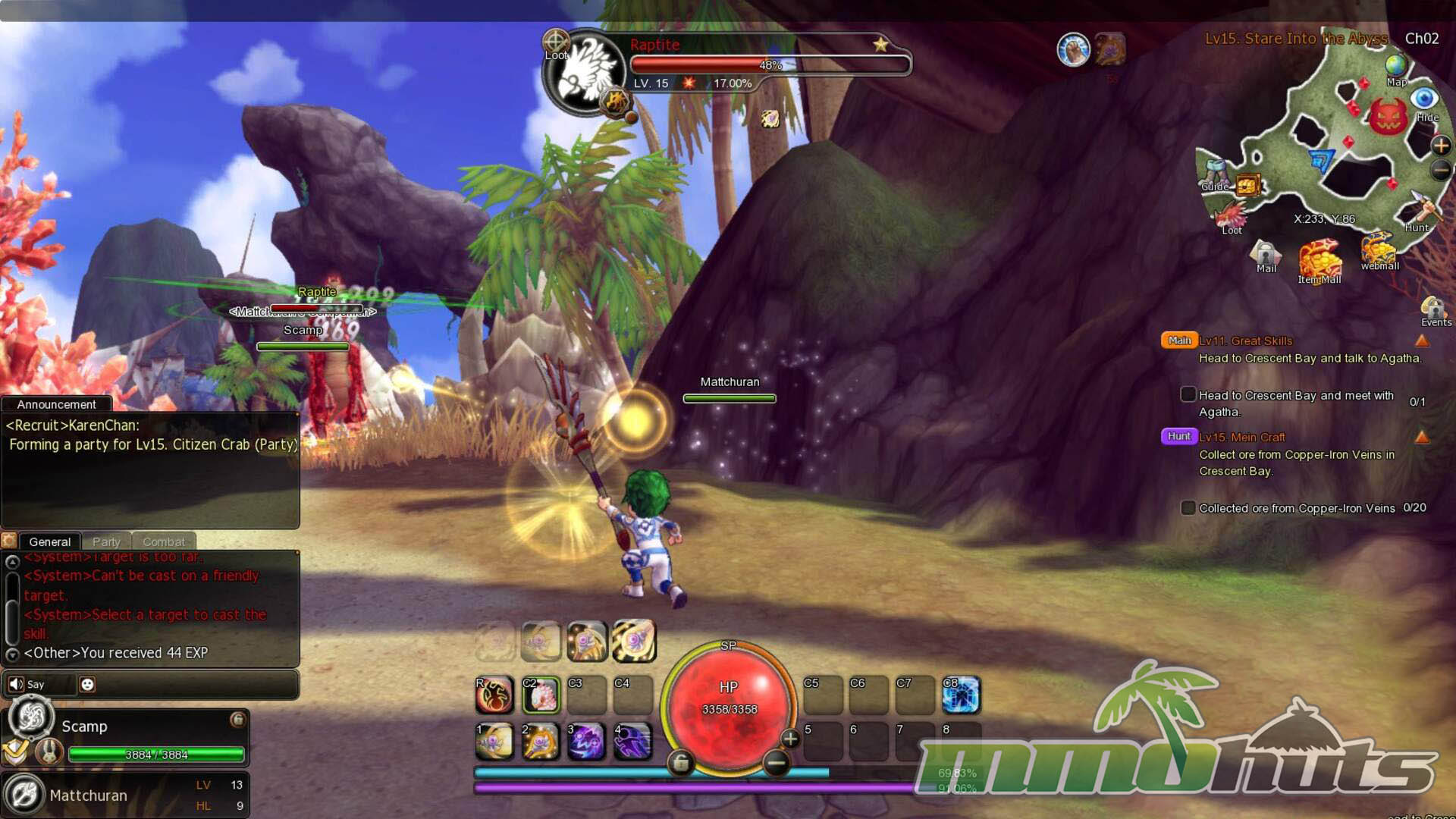
- Action-leaning Combat – Attacks are more manual than classic tab-target MMOs, with dodge-friendly enemy telegraphs and optional gamepad support.
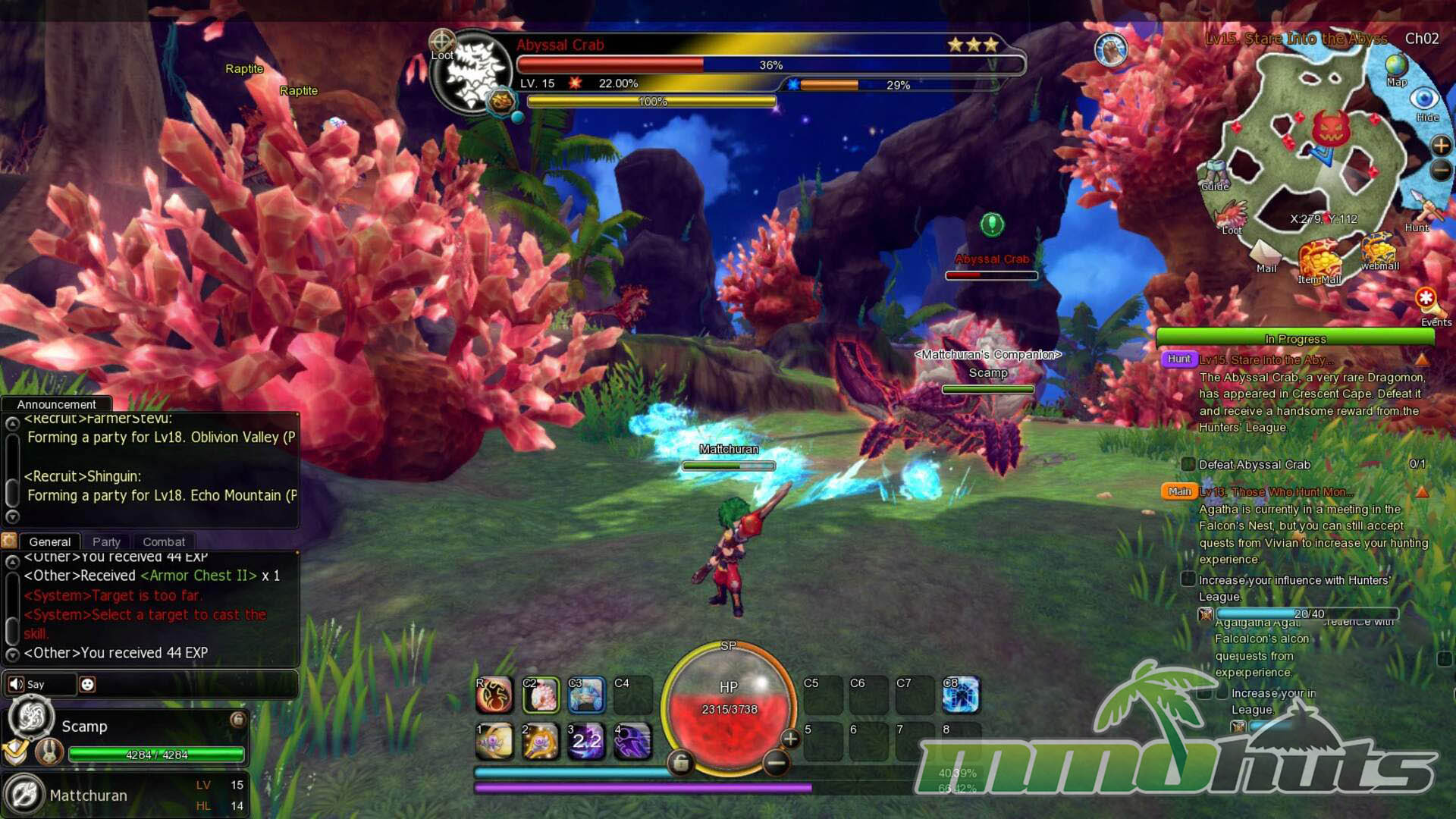
- Distinct Anime Presentation – A colorful, cel-shaded look that will be familiar to fans of X-Legend’s other chibi-styled games.
Dragomon Hunter Screenshots



Dragomon Hunter Featured Video

Dragomon Hunter Classes
Scout – A nimble damage dealer that begins as a dual-blade melee fighter built around quick burst windows. At level 20, Scouts gain access to a cannon and can transition into a more conventional ranged DPS style.
Mage – An elemental caster wielding a two-handed staff, with access to fire, ice, and lightning for both area damage and single-target pressure. At level 20, the magic flute opens up limited healing options.
Mercenary – The durable frontliner archetype, sporting the best baseline survivability through higher HP and Armor. Mercenaries use axes early on and unlock the Greatsword at level 20.
Cleric – A support-oriented class designed to heal and bolster allies while also controlling enemies with stuns. Clerics start with maces and gain fist weapons at level 20.
Dragomon Hunter Review
Dragomon Hunter is one of X-Legend’s many anime MMORPGs that made it to the West under Aeria Games. Its identity is easy to summarize: a bright, chibi fantasy MMO where the real long-term chase is collecting Dragomons. The marketing comparisons to monster hunting and creature collecting games are understandable, but the experience you actually get is still very much structured like a classic instanced MMO, with the pet system layered on top.
Familiar Foundations
Character creation is quick and limited, with only a handful of face and hair options, although some hairstyles use physics, which helps the models feel less static. Class selection is also straightforward, you are effectively choosing between warrior, rogue, mage, and healer equivalents (Mercenary, Scout, Mage, and Cleric).
Progression is built around five core stats: DMG, HP, DEF, PEN, and CRIT. Penetration (PEN) exists largely to offset Defense, and the system allows every class to invest points into any stat as they level. In practice, that flexibility does not translate into deep builds because the rest of the kit is fairly fixed.
Your active toolkit consists of four basic skills and six advanced skills, with advanced abilities unlocking at set level milestones. Later, “Masteries” offer some additional tweaking after level 30, with three options per skill, but there is no branching skill tree. The end result is that characters tend to develop in a predictable, linear way, which can make leveling feel a bit samey once the initial novelty wears off.
Instance-heavy Structure
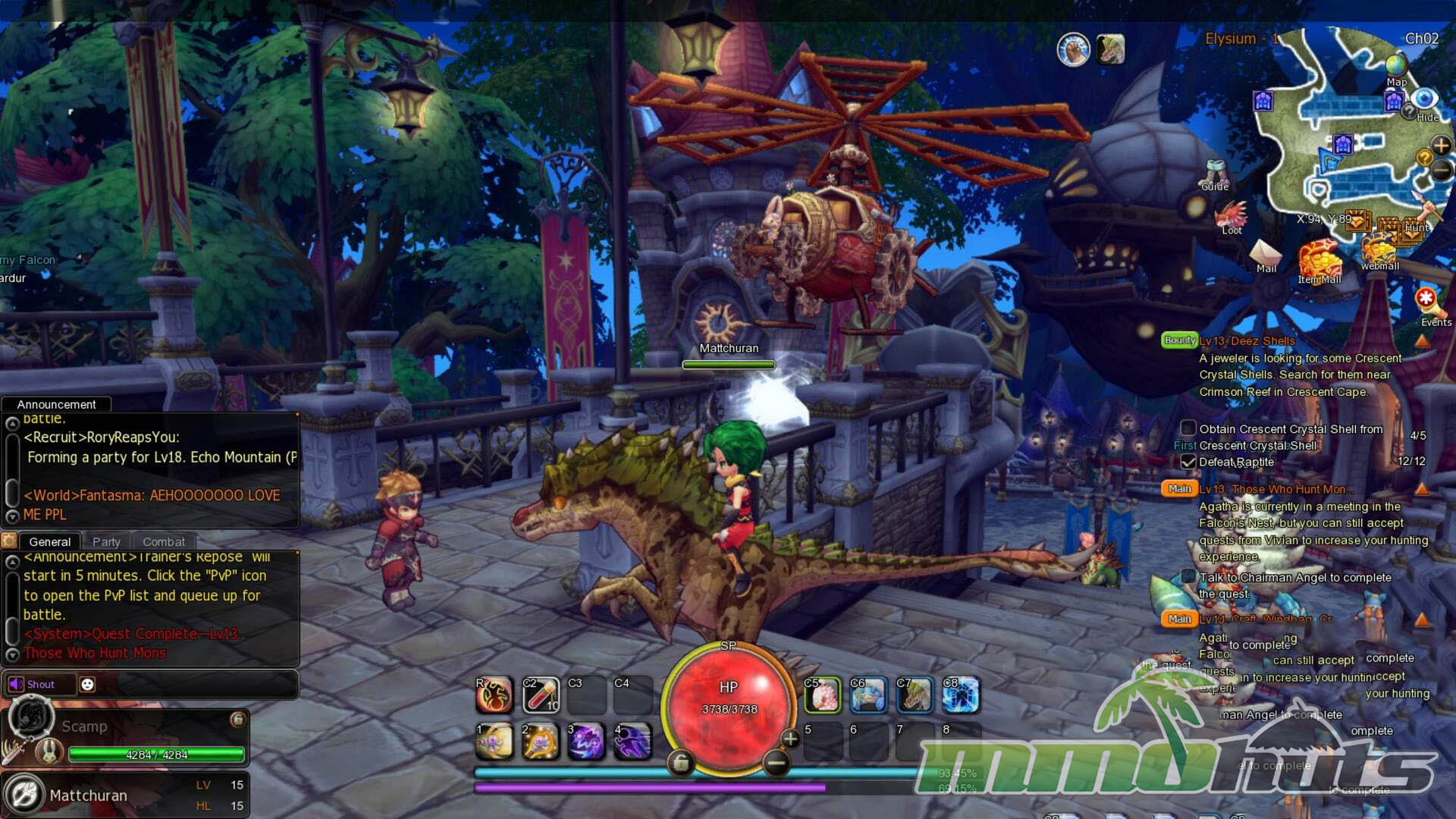
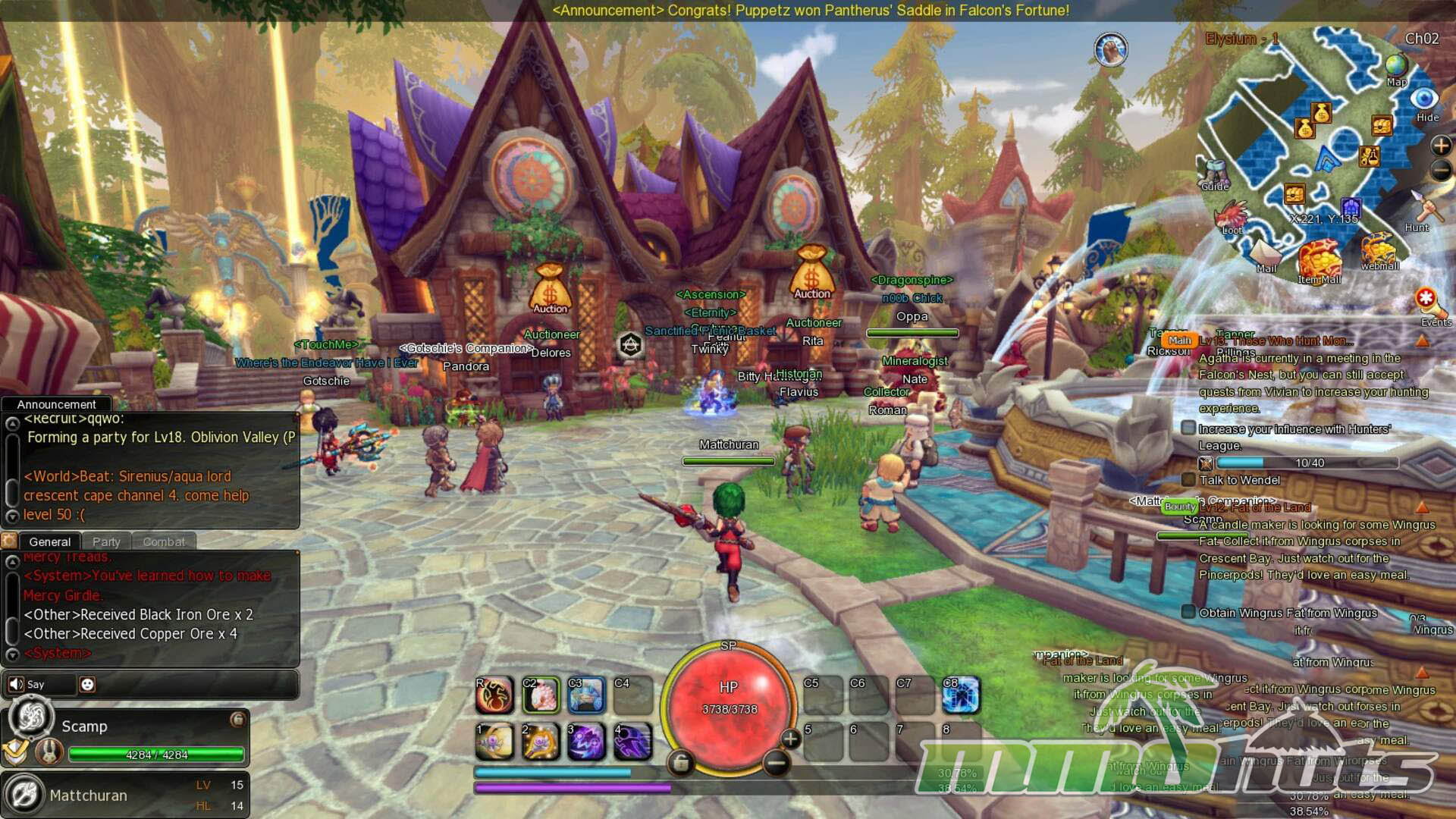
The game is built around Elysium as a central hub where you manage vendors, upgrades, and general housekeeping. From there, portals send you into mission spaces tied to quests, hunts, and guild objectives. Completing an objective frequently leads to an immediate prompt to return to the hub, so the rhythm becomes a loop of portal in, clear a small map, then warp back.
This design brings common problems with it. You revisit the same environments constantly with only minor variations in goals, and it is easy to feel like you are running a checklist rather than exploring a world. The mission types (main tasks, hunts, guild quests, and side missions) often reuse identical layouts, and sometimes even overlap in what they ask you to do.
What makes it more confusing is how many portals exist for similar content. Instead of consolidating activities, the game splits them by type and level bracket, so you can end up hopping between multiple portal options that all lead to zones that look and play nearly the same. The quest tracker helps by letting you click an objective and follow a guiding line, but the underlying structure still feels fragmented.
There are also non-instanced areas that resemble the instanced versions, just larger and populated by multiple players. The mixture can create odd labeling, including moments where what you would expect to be “main quests” appear as side content depending on where they are completed. It is a small UI and terminology problem, but it can briefly derail new players.
Combat encounters in these spaces also inherit typical MMO AI behavior. Enemies are tethered, and if you drag them too far they reset to their spawn with full health, which can make fights feel artificial, especially in tighter instanced maps.
Action, But Not Fully
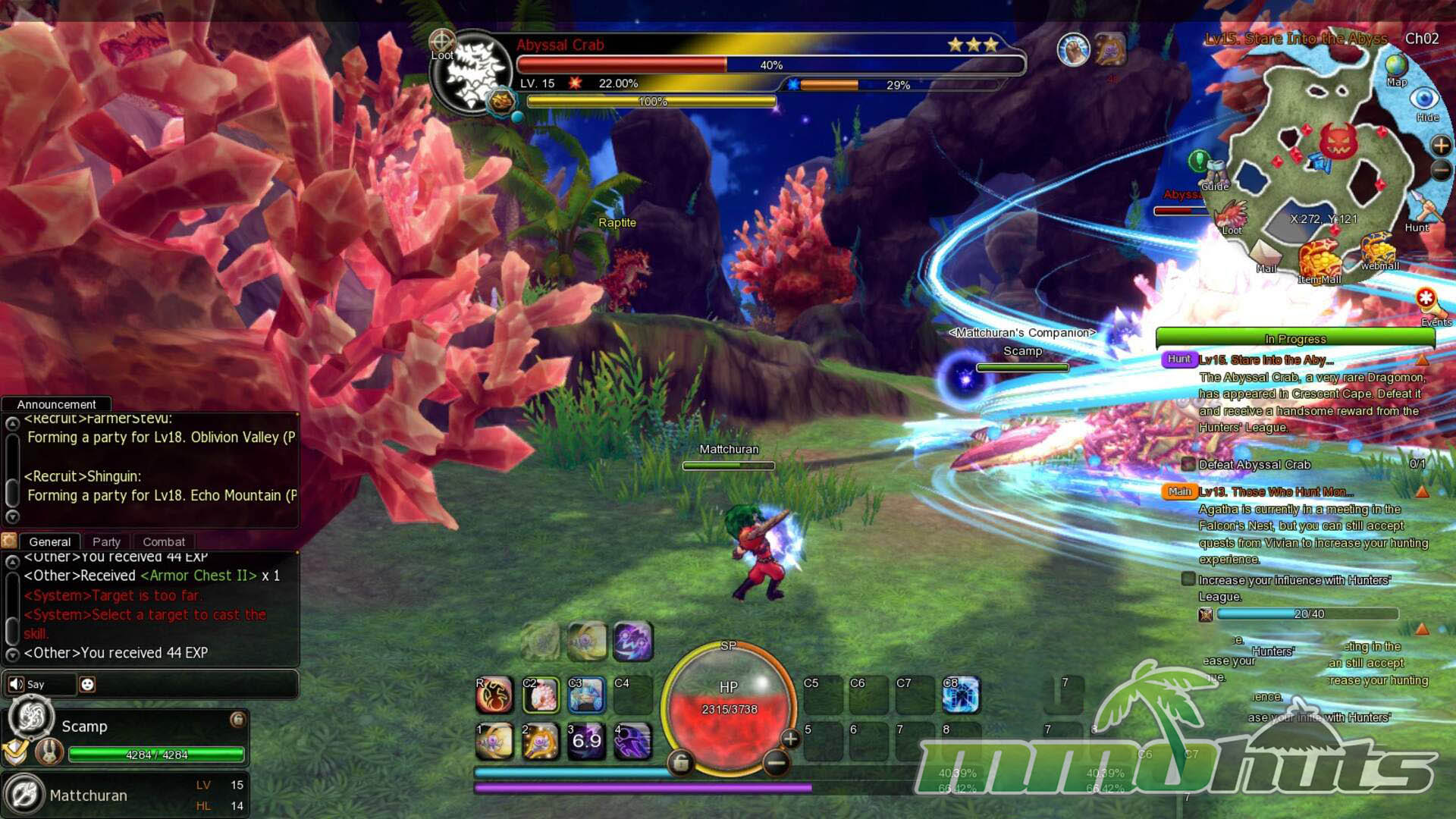
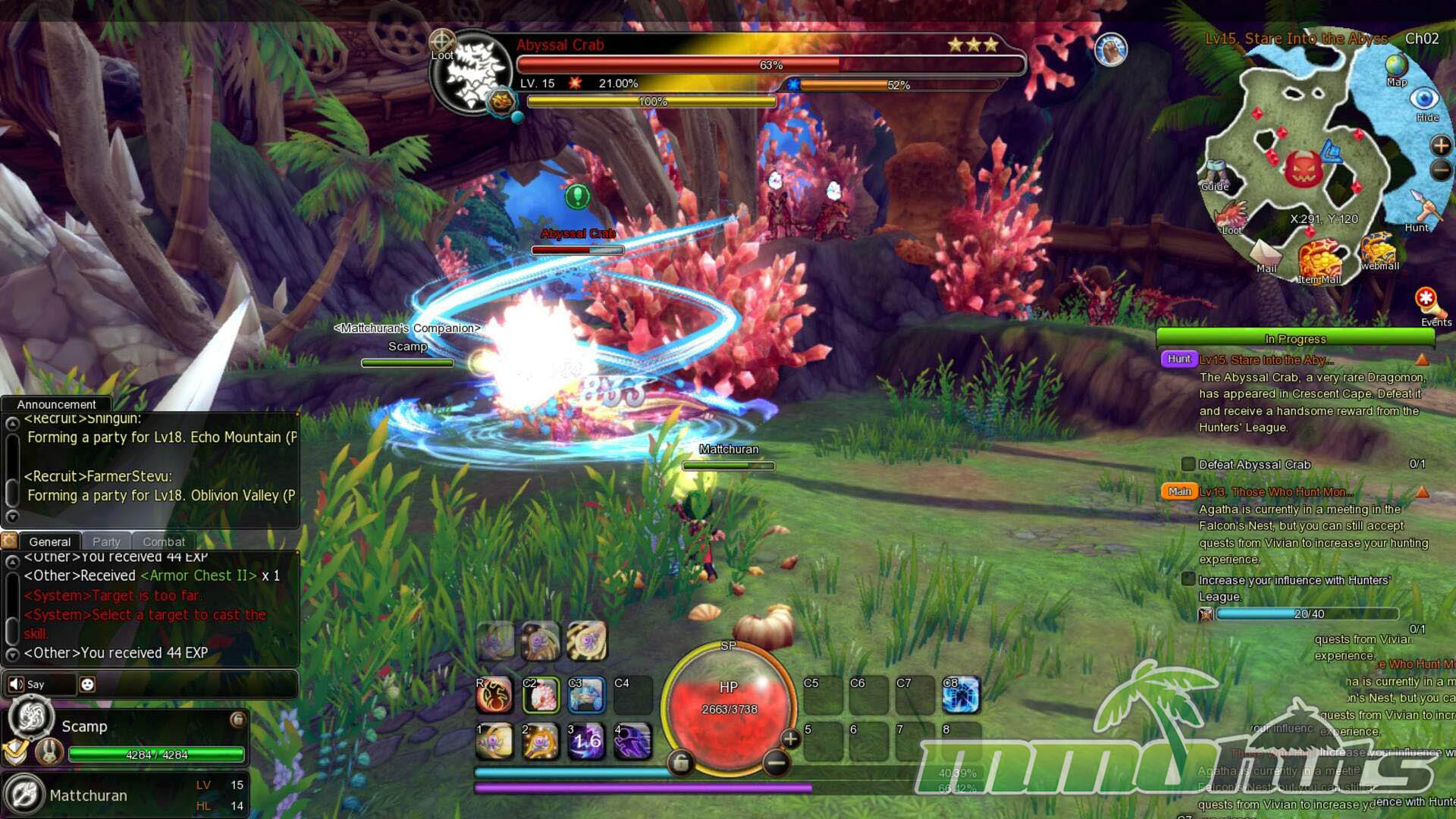
Dragomon Hunter advertises action combat, but it is more accurate to say it sits between action and tab targeting. You still select a target and activate skills from a hotbar, and if you are in range, attacks connect in a way that will feel familiar to tab-target MMO players. The game does not consistently deliver the “whiff if you miss” immediacy that players expect from full action systems.
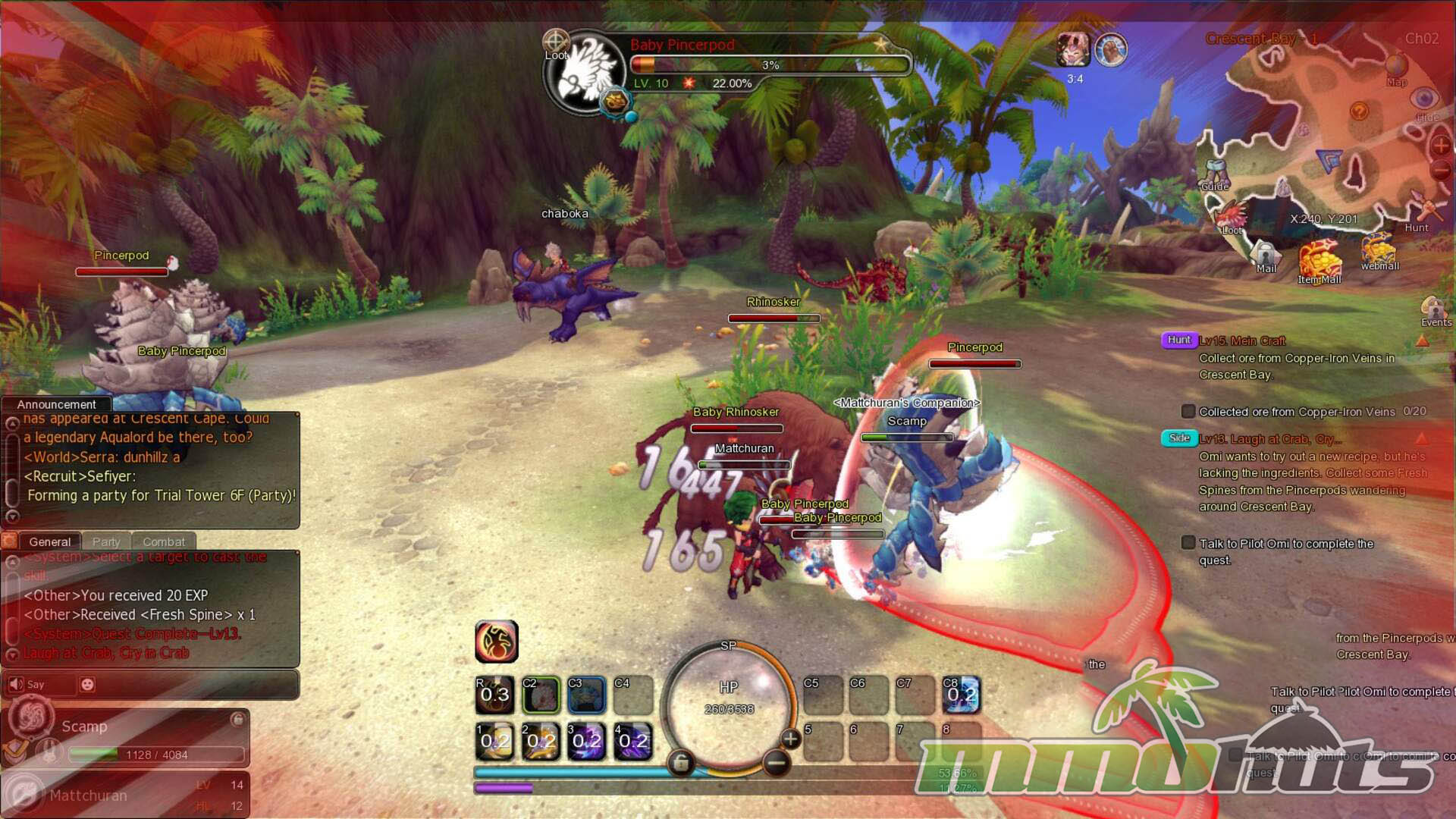
That said, enemy attacks are presented with clear telegraphs. Monsters frequently pause to charge an ability and mark its impact area on the ground. These cues are readable and usually generous, making it easy to step away and avoid damage. The downside is that this often lowers the challenge level for routine questing, especially for ranged classes that can keep dealing damage while simply sidestepping danger.
The overall difficulty curve reflects this, regular quests tend to be forgiving, while content labeled for groups can still punish solo attempts at the minimum level. The combat is rarely frustrating, but it also rarely demands much once you understand how telegraphs and tethering work.
Collecting Dragomons Means Grinding
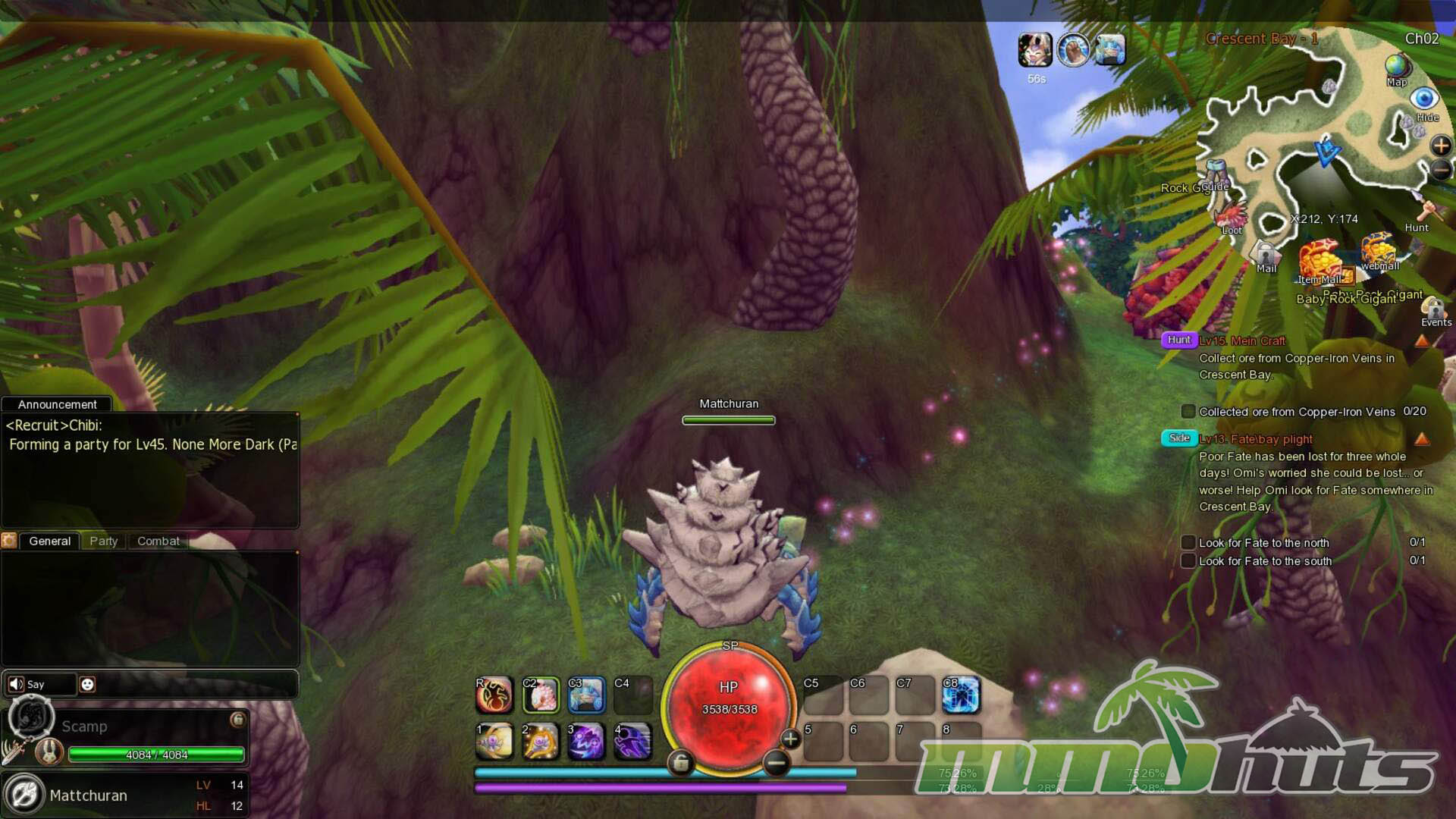
The strongest theme in Dragomon Hunter is collecting, but the method of acquisition is plain: you repeatedly defeat the same creature type until an egg finally drops. Even then, you are hoping for an outcome you want (a mount) rather than something less exciting. As a result, the collecting fantasy often turns into extended farming sessions.
The Ranch system unlocked at level 15 is meant to deepen the pet side of the game by letting you raise and breed Dragomons. It does provide another long-term set of goals, but it does not eliminate the core issue, you still need to obtain the Dragomons first, either by more farming or by paying steep NPC prices for region-based eggs with random results.
Breeding and raising also take patience. To breed, you need two Dragomons of the same species at 100% experience, and once you place Dragomons into the Ranch, you cannot take them back out. That design choice makes breeding feel like a permanent investment, and if you are not fully committed to the system, it can feel like you are sacrificing hard-earned captures for a gamble.
Crafting Fuels Repetition
Crafting is positioned as a major pillar, but in practice it reinforces the game’s reliance on repeated content. Recipes unlock gradually, and many pieces require drops tied to specific boss Dragomons. Since multiple items in a set can share the same boss material, the game often asks you to run the same fight again and again, once per piece of gear you want to make.
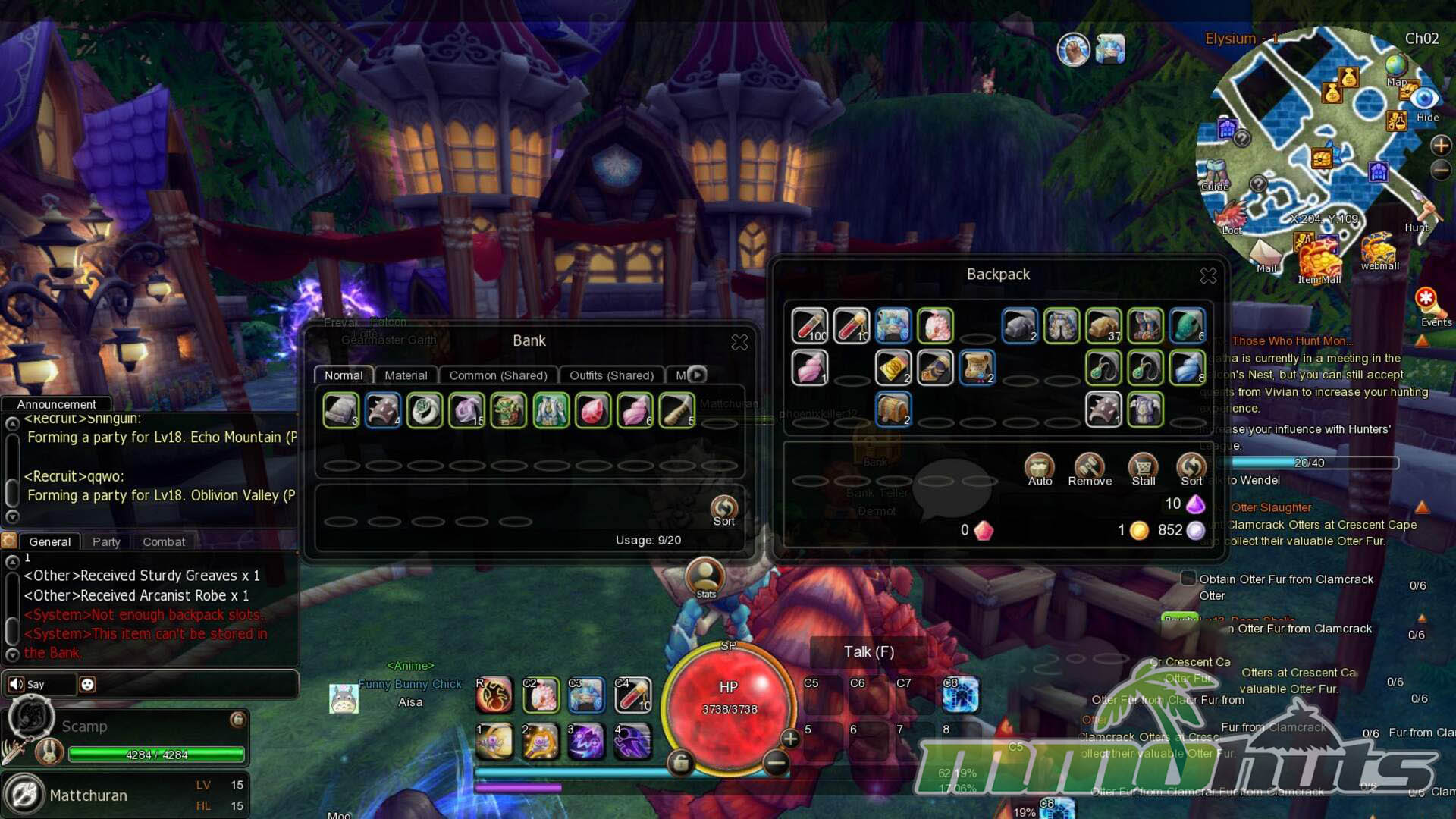
Crafting also costs a noticeable amount of currency per item, which turns it into a resource sink on top of the boss farming. Inventory management can become a problem too, because some monster drops are restricted: they cannot be traded, banked, sold, or discarded. If you are not ready to craft with them immediately, they can sit in your bag taking up space until you earn enough money and gather the remaining materials.
One thing that stands out is how dramatic early crafted upgrades can be compared to random drops. The first meaningful crafting push can deliver an outsized stat jump, which feels rewarding in the moment, but can also make loot drops feel less important for a while.
Visuals, UI, and Onboarding
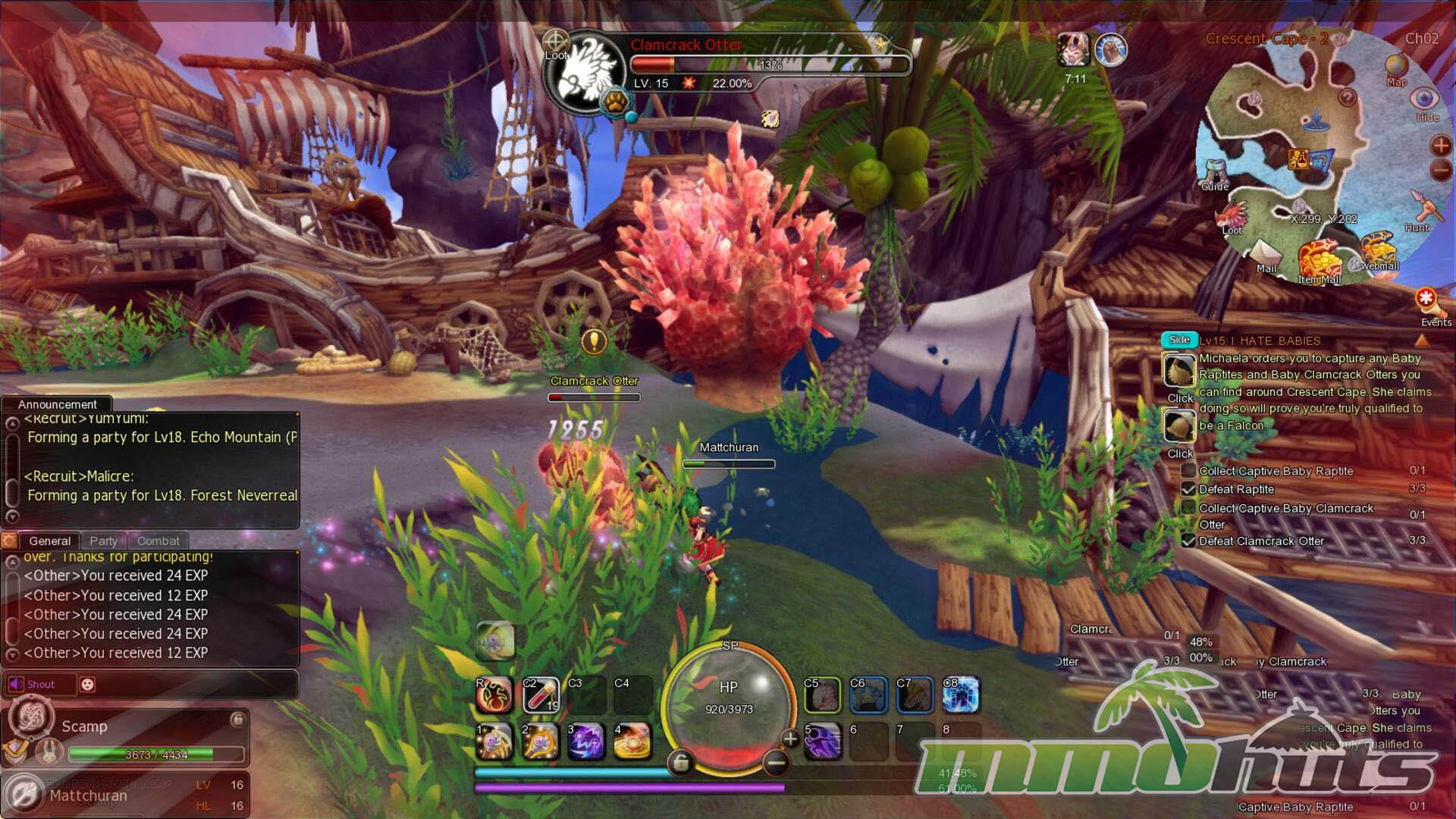
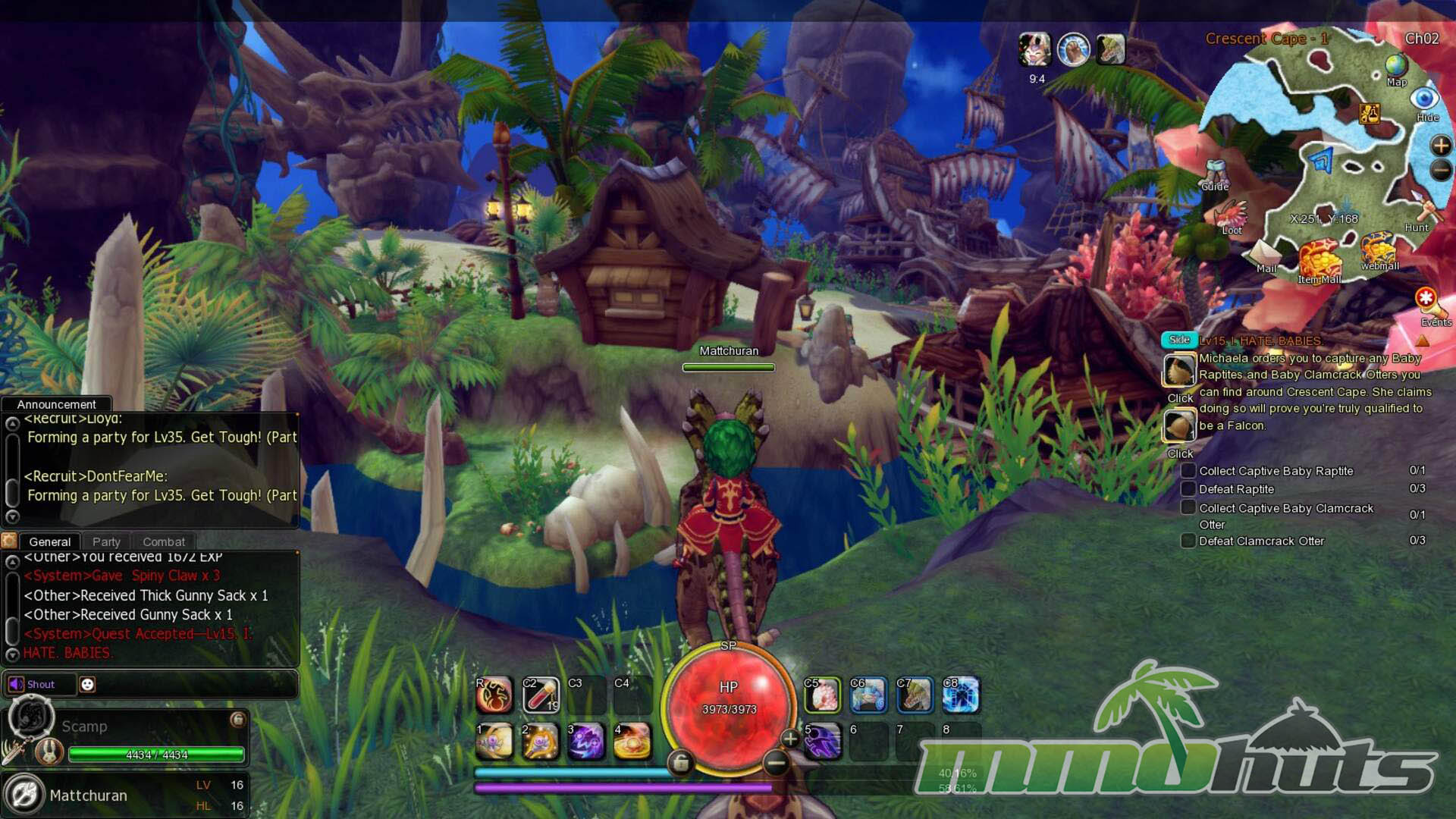
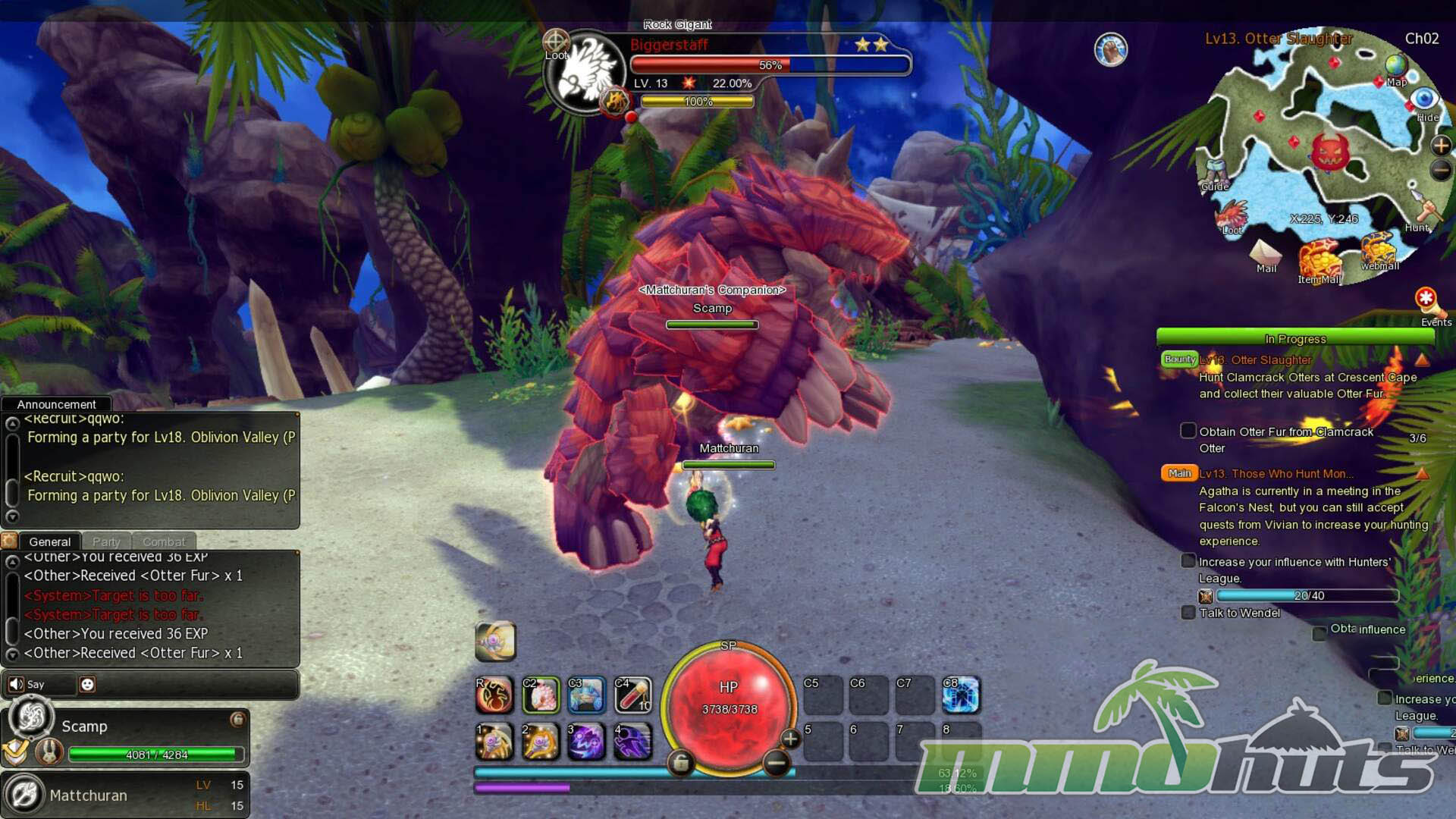
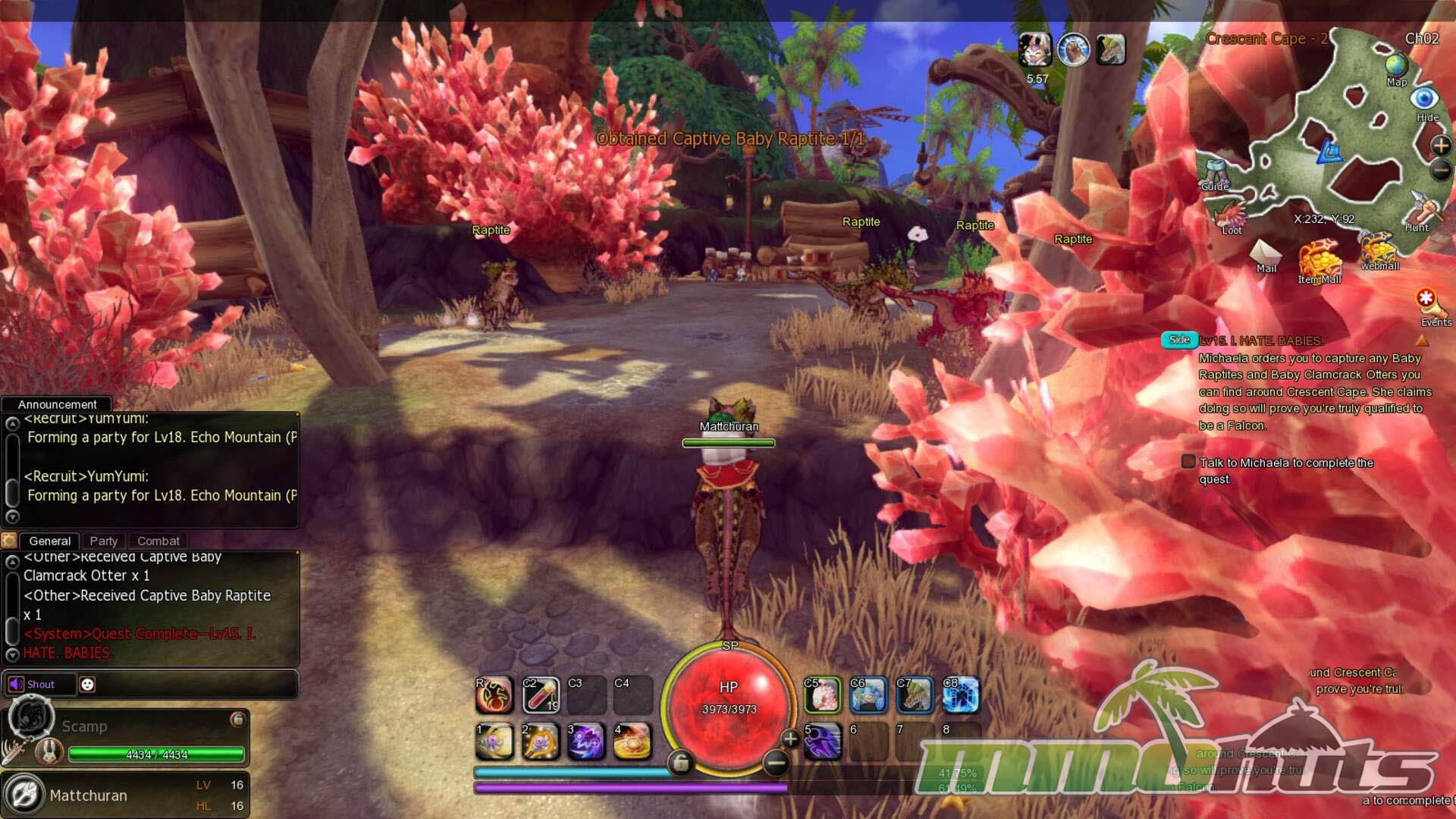
Dragomon Hunter’s presentation is one of its better qualities. The cel-shaded models and bright environments are clean and consistent, and the overall look holds up well for fans of anime MMOs. The HUD is functional and generally well organized, even if the game throws a lot of menus at you over time.
The UI theme itself is more subdued than the rest of the art direction, relying on dark, transparent panels with simple outlines. It works, but it does not match the colorful tone of the world, so the interface can feel oddly plain compared to the lively visuals behind it.
Voice work is mixed. Much of it comes through as short voice lines that are fine as background flavor, but a few repeated phrases are noticeably irritating, especially when tied to common menu actions.
The early-game onboarding can also drag. The game introduces systems slowly, with tutorials continuing until around level 20. Spreading information out can be helpful, but here it can feel like the game is constantly pausing to explain something you already understand.
Inventory and banking are handled in a relatively smart way given how quickly you accumulate materials and eggs. The default bag space is limited, and the initial bank is not huge either, but the dedicated Materials tab with a large capacity is a practical quality-of-life feature. Being able to store crafting materials separately, then still access them for crafting, reduces a lot of friction.
Cash Shop Considerations
Evaluating monetization is tricky in a game like this because cash shops often change over time. In its earlier state, Dragomon Hunter followed a pattern seen in other Aeria-published titles, a relatively tame store at the start, with an emphasis on packs, cosmetics, and convenience. The concern many players had was the possibility of power-affecting items appearing later, as has happened with other games in the publisher’s catalog.
Final Verdict – Good
Dragomon Hunter is an enjoyable, well-presented MMO with a genuinely appealing concept, building a collection of Dragomons and using them as companions and mounts. Where it stumbles is in how often that concept is supported primarily through repetitive farming, along with a structure that leans heavily on instanced content and relatively flat character progression.
It is at its best as a lighter, session-based MMO: run a handful of missions, make incremental progress on your collection, manage your Ranch, then log off. Players hoping for a true replacement for dedicated monster hunting or creature collecting franchises will likely find it too grind-centric and too MMO-structured, but for fans of anime MMORPGs, there is still a solid core here.
Dragomon Hunter System Requirements
Minimum Requirements:
Operating System: Windows Vista / 7 / 8 / 8.1 / 10
CPU: Pentium 4 2.8 GHz / AMD 2600+
RAM: 3 GB RAM
Video Card: NVIDIA GeForce8400 / Radeon X1600+
Hard Disk Space: 6 GB available space
Recommended Requirements:
Operating System: Windows Vista / 7 / 8 / 8.1 / 10
CPU: Intel Core 2 Duo 2.66 GHz / AMD Athlon 64 X2 6000+
RAM: 6 GB RAM
Video Card: NVIDIA GeForce 9500 / Radeon HD 4570+
Hard Disk Space: 6 GB available space
Dragomon Hunter Music & Soundtrack
Coming Soon
Dragomon Hunter Additional Information
Developer: X-Legend
Publisher: Aeria Games
Game Engine: Gamebryo
Closed Beta (TW): July 17, 2014
Closed Beta (NA): TBD
Open Beta Date (TW): August 27, 2014
Shut Down Date: June 29, 2017
Development History / Background:
Dragomon Hunter was created by Taiwanese developer X-Legend. In Asian regions it was released under the name “Dragon Slayer Online,” and later licensed to Aeria Games for the Western launch as “Dragomon Hunter.” Despite the naming difference, the underlying game content is the same. The Taiwan version entered open beta on August 27, 2014, and Aeria Games revealed the Western release to its audience on July 15, 2015. X-Legend is also known for other anime-inspired MMORPGs such as Eden Eternal, Aura Kingdom, Grand Fantasia, Astral Realm, and more. Dragomon Hunter’s North American service concluded with its shutdown on June 29th, 2017.