
Bloodline Champions is a 3D arena-style MOBA built almost entirely around short, round-based PvP. Instead of the familiar loop of lanes, minions, items, and late-game power spikes, it asks you to win fights with positioning and precision. There are no automatic hits here, every basic attack and ability is aimed manually, and when your character goes down you are typically out until the round ends. It is a stripped-back take on the genre that lives or dies on player execution and team coordination.
 | Publisher: Stunlock Studios Playerbase: Low Type: MOBA Release Date: Jan 13, 2011 (NA/EU) Shut Down: December, 2017 (Battlerite is the remake) Pros: +Arena-only PvP with zero minion clutter. +High skill ceiling with satisfying aim-based combat. +Quick rounds that are easy to jump into. Cons: -The streamlined formula can feel too bare for strategy-first MOBA fans. -Queues can be slow due to the small population. |
Bloodline Champions Overview
Bloodline Champions (often shortened to BLC) is a 3D, action-driven MOBA developed and published by Stunlock Studios. Matches take place in compact arenas and support 2v2, 3v3, and 5v5 play depending on the mode. While it gets grouped under the MOBA umbrella, its design is closer to a pure competitive arena brawler than a lane-pushing strategy game, with a heavy emphasis on mechanical accuracy and reading opponents. Bloodline Champions shut down in December, 2017.
Bloodline Champions Key Features:
- Character Variety – each Bloodline (the game’s equivalent of a hero) comes with 7 total abilities, 6 standard skills plus an ultimate.
- Pure Arena Combat – no creeps, no neutral camps, and no PvE distractions – the entire match is player versus player.
- Fast Sessions – rounds end quickly, and a full match (first team to 3 round wins) usually wraps up in about 10 minutes.
- No Match Power Curve – there is no in-match leveling, no mana management, and your toolkit is available immediately, with cooldowns doing most of the pacing.
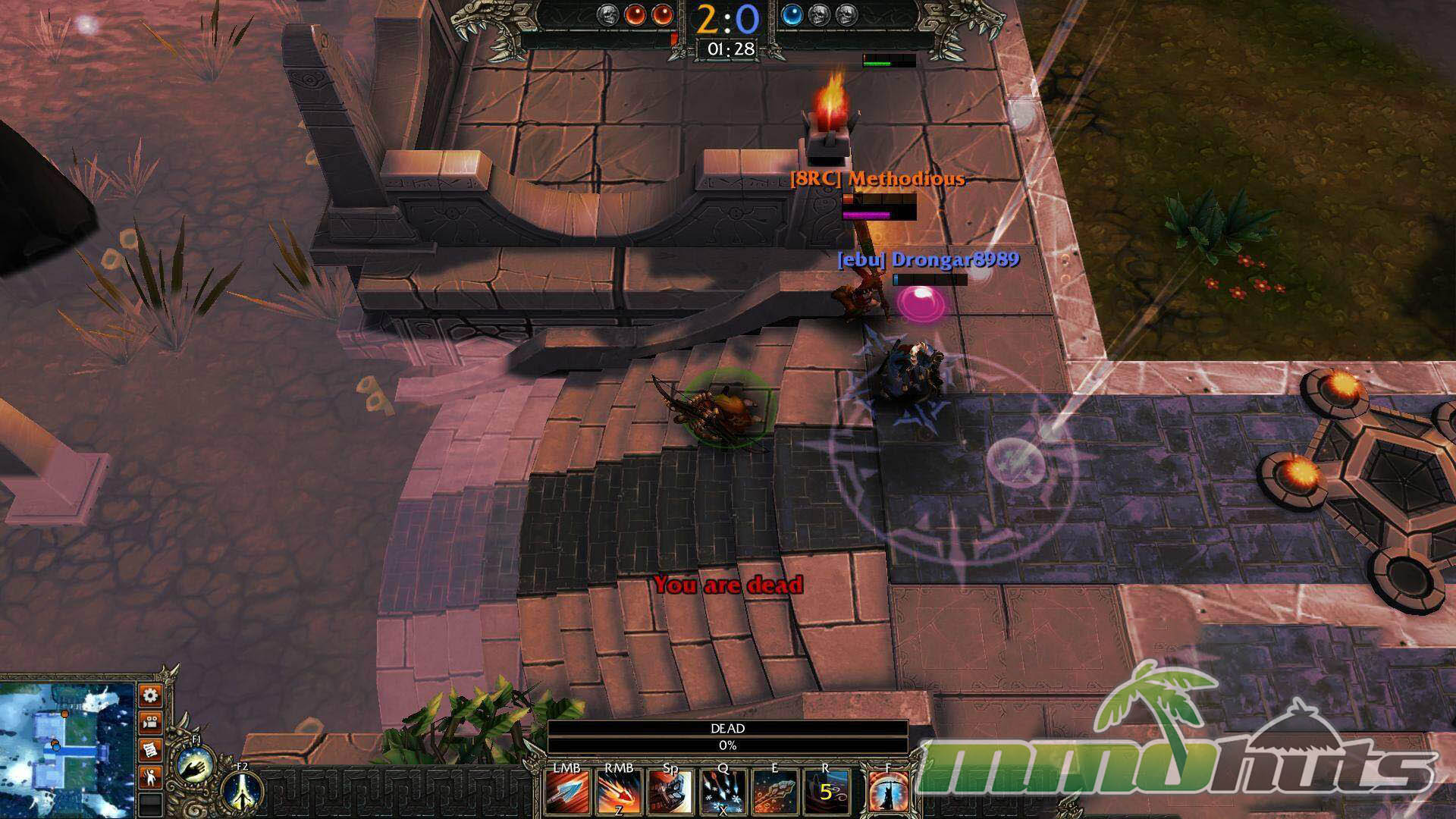
- Round-Based Elimination – getting knocked out typically means you sit the rest of that round, with resurrection being possible but uncommon due to the long cast time.
If there is one defining trait to understand, it is that Bloodline Champions rewards aim and timing above everything else. Even the most basic attacks are skillshots, so consistency and positioning matter in every exchange.
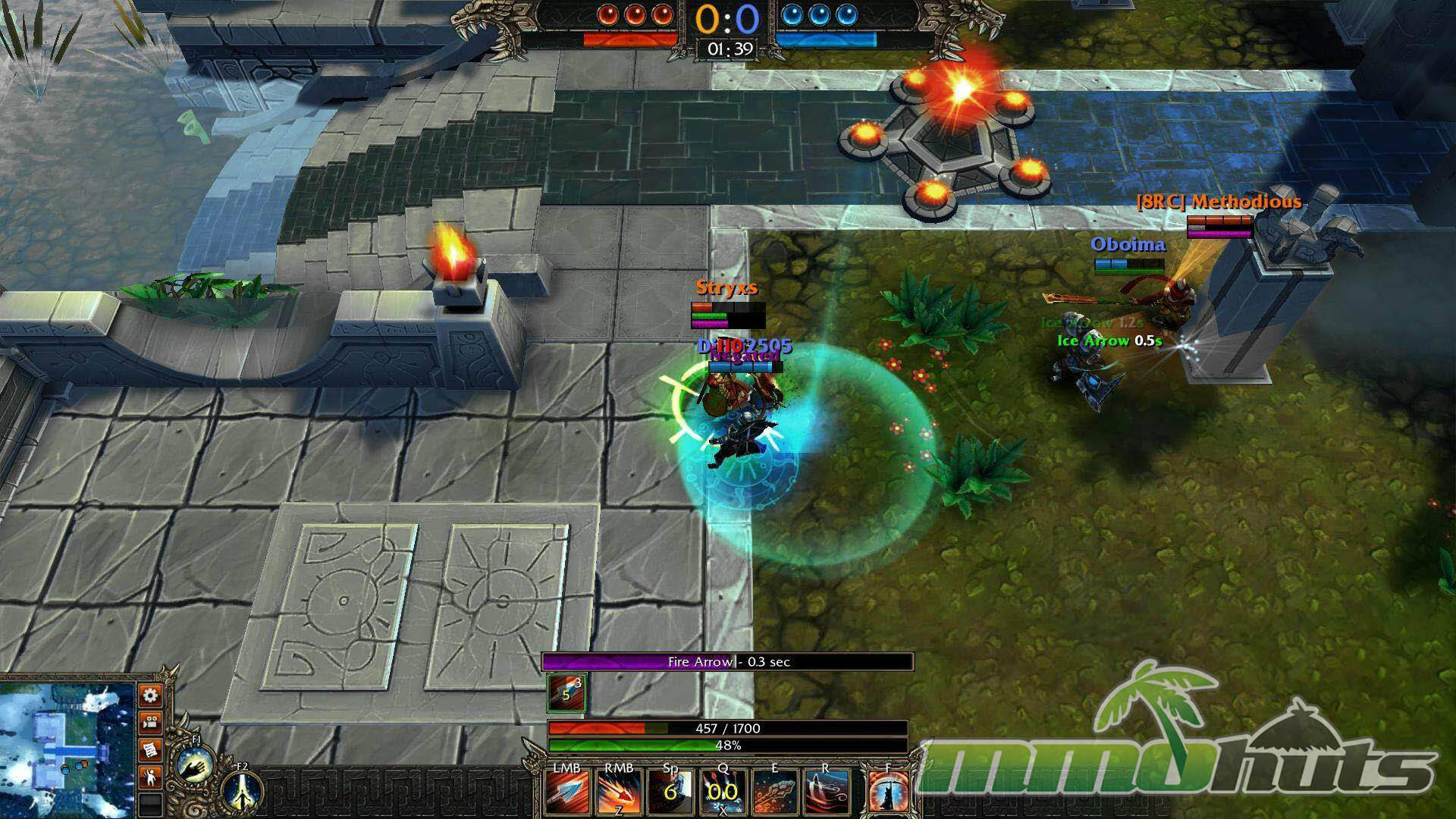
Bloodline Champions Screenshots
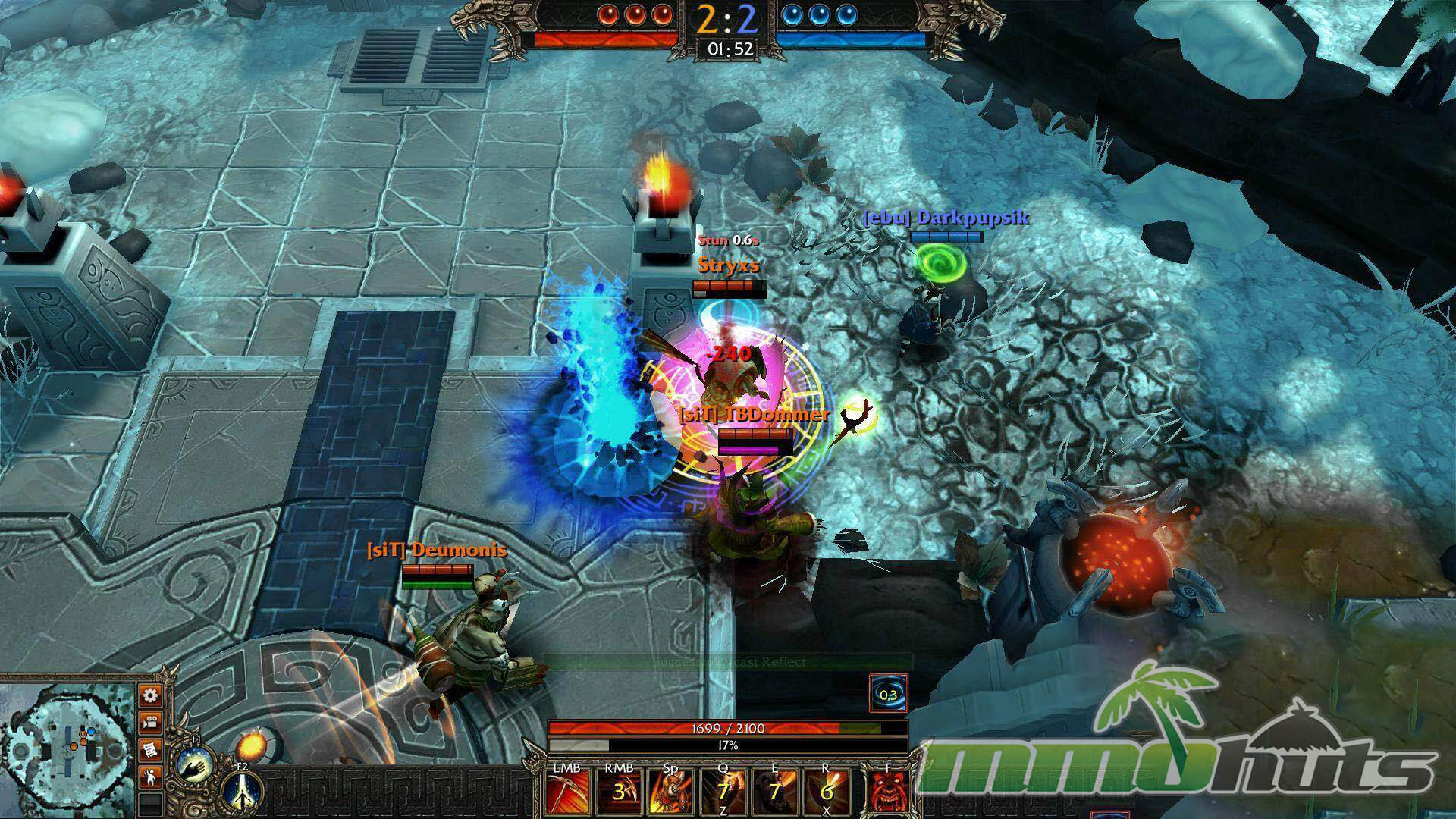

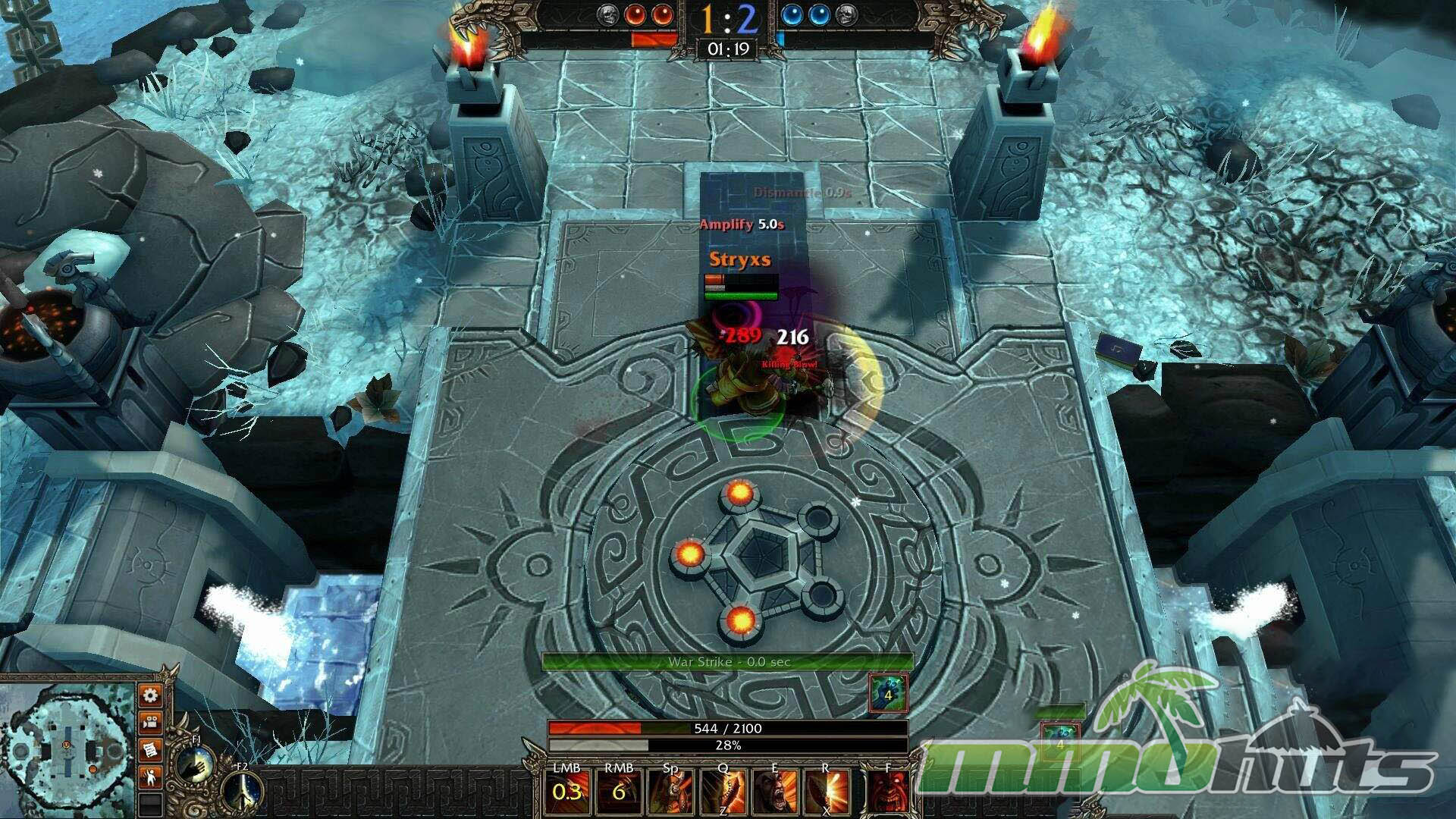
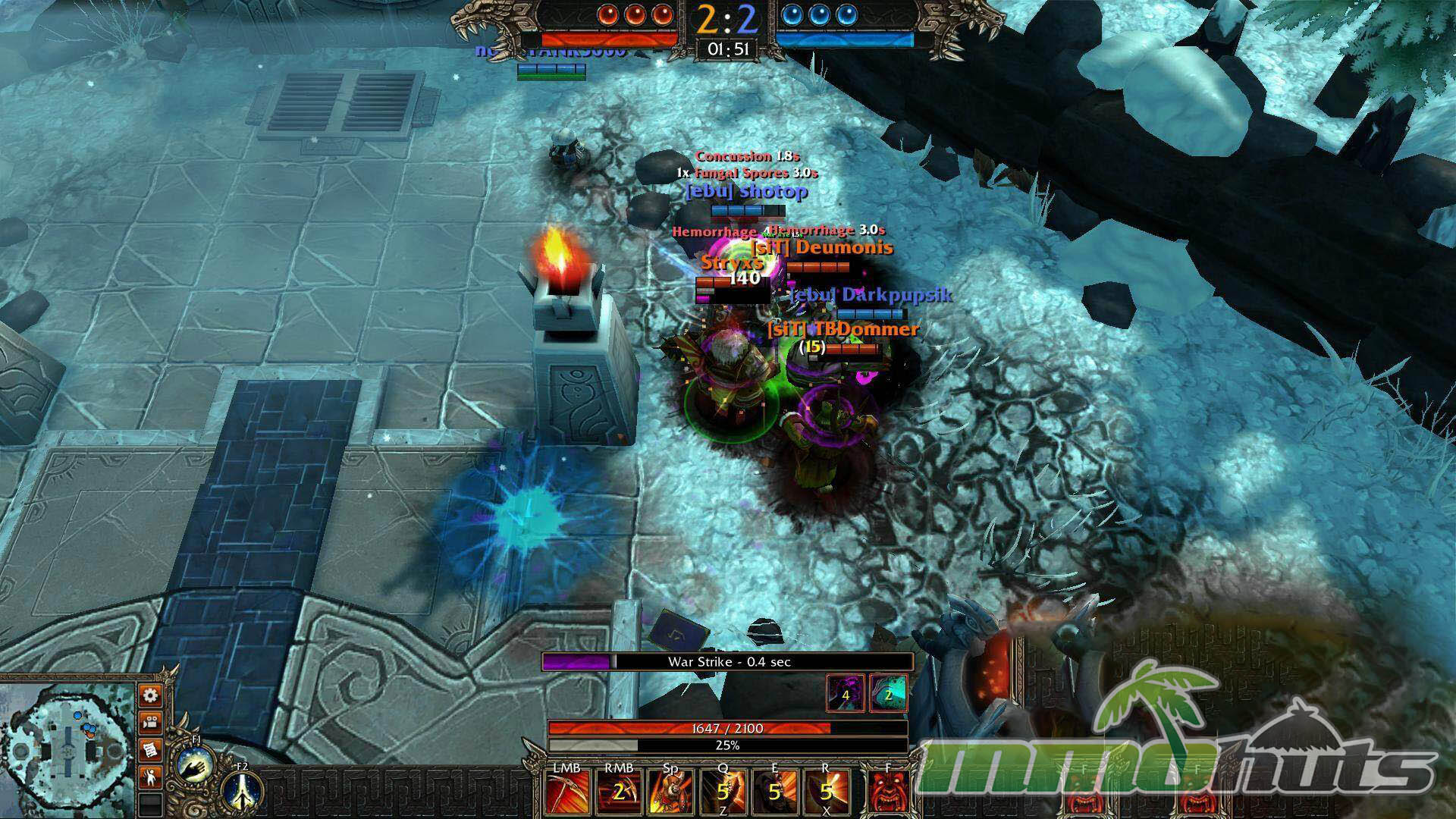
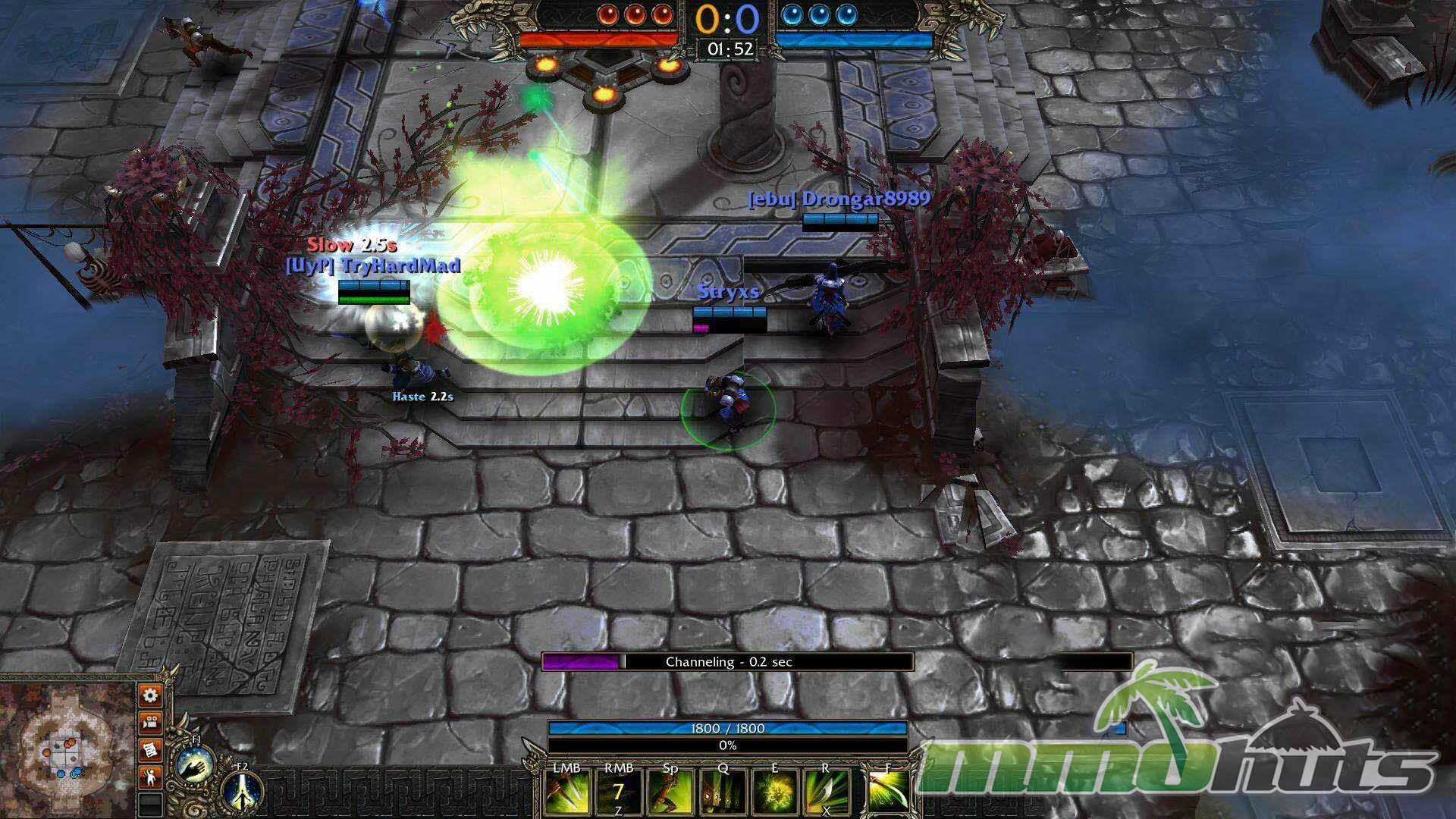
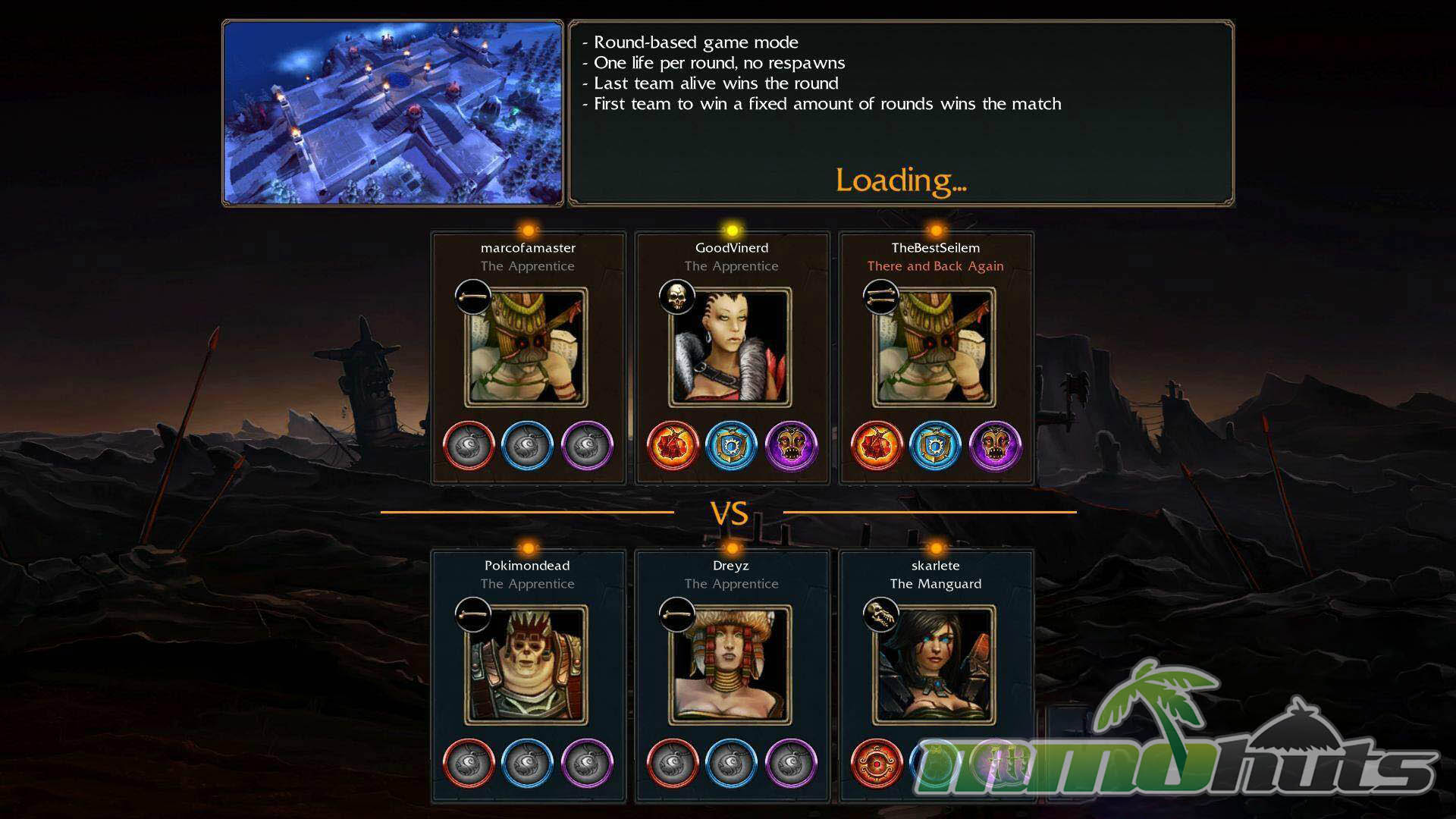
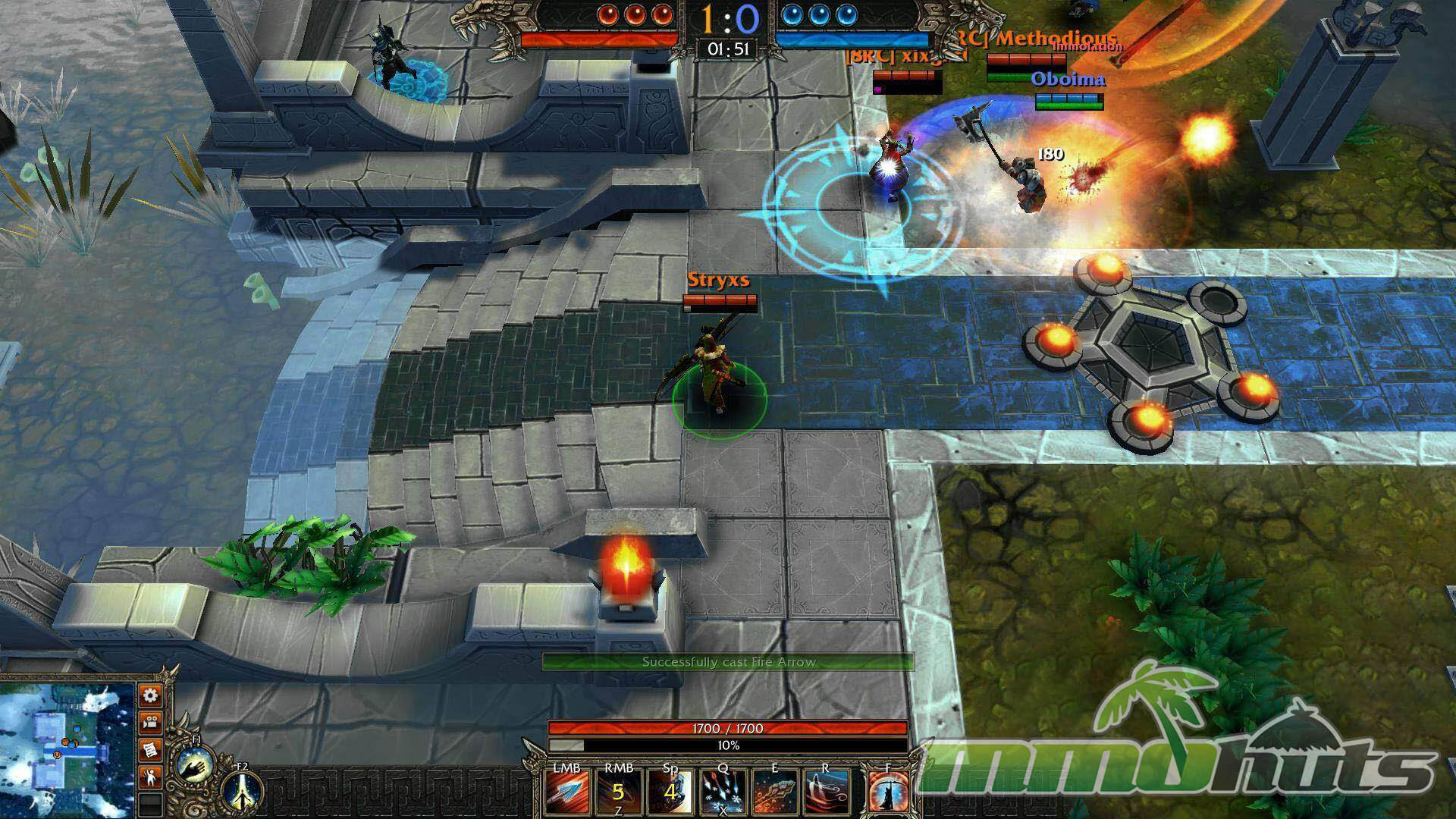
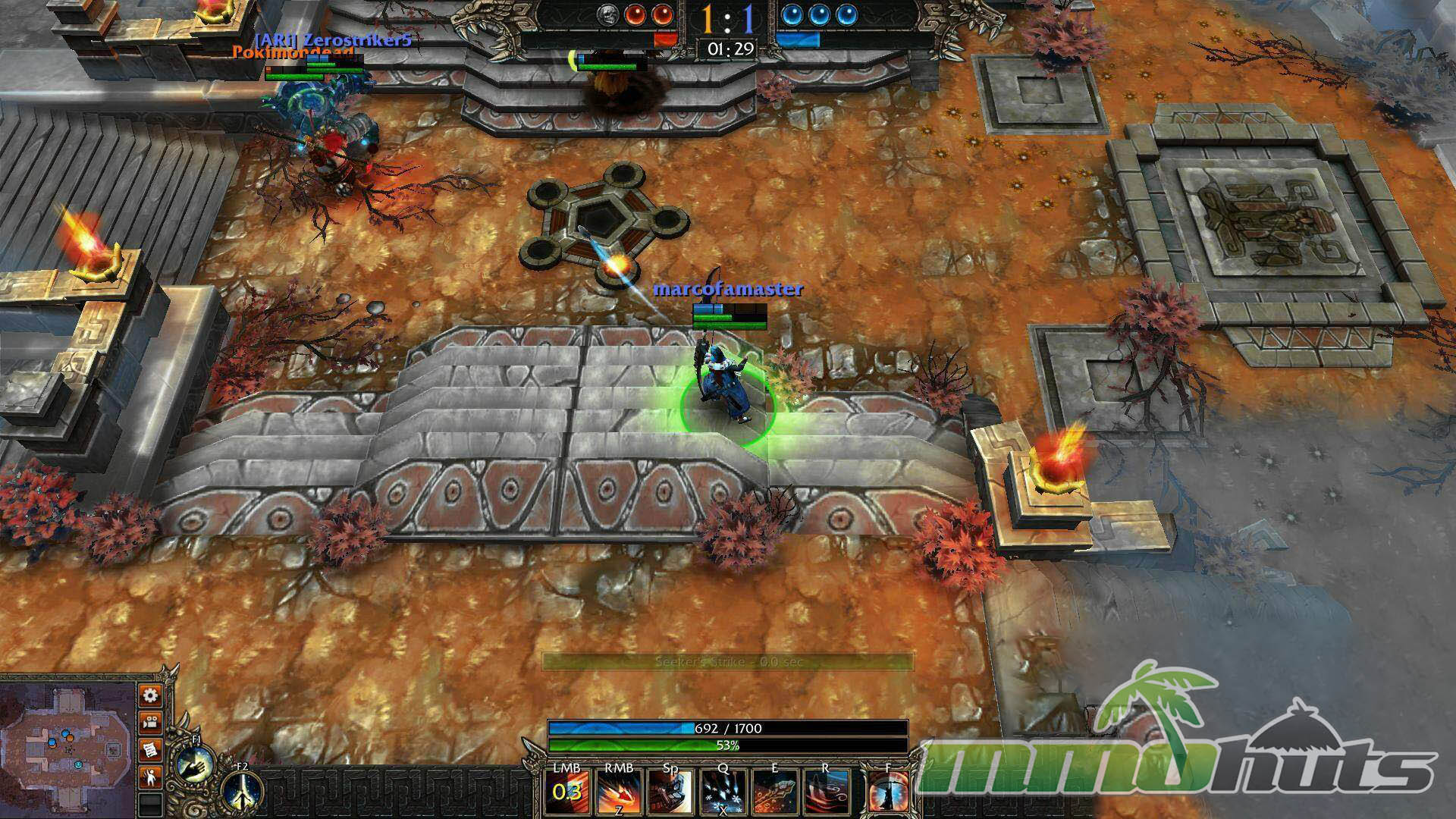
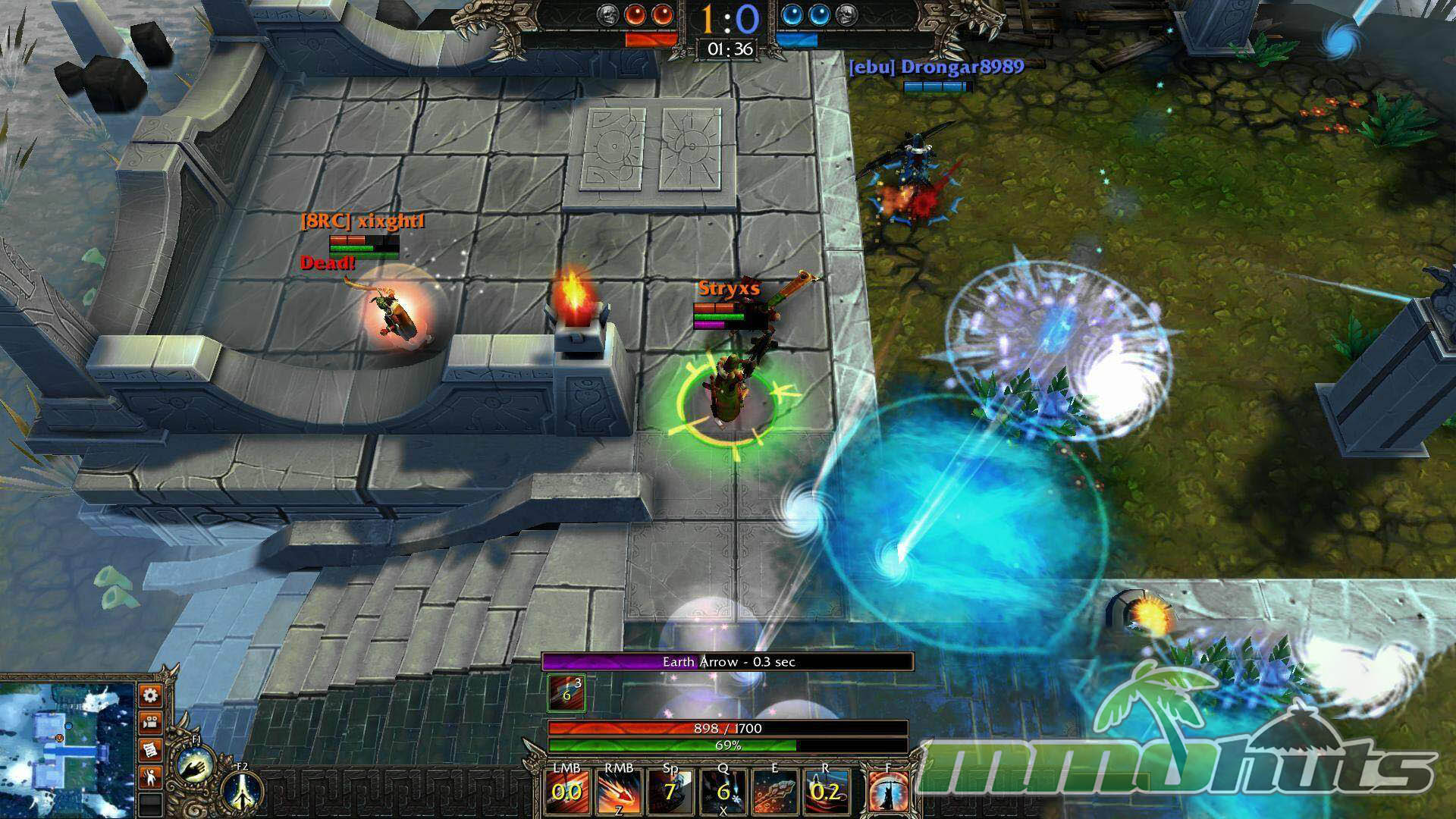
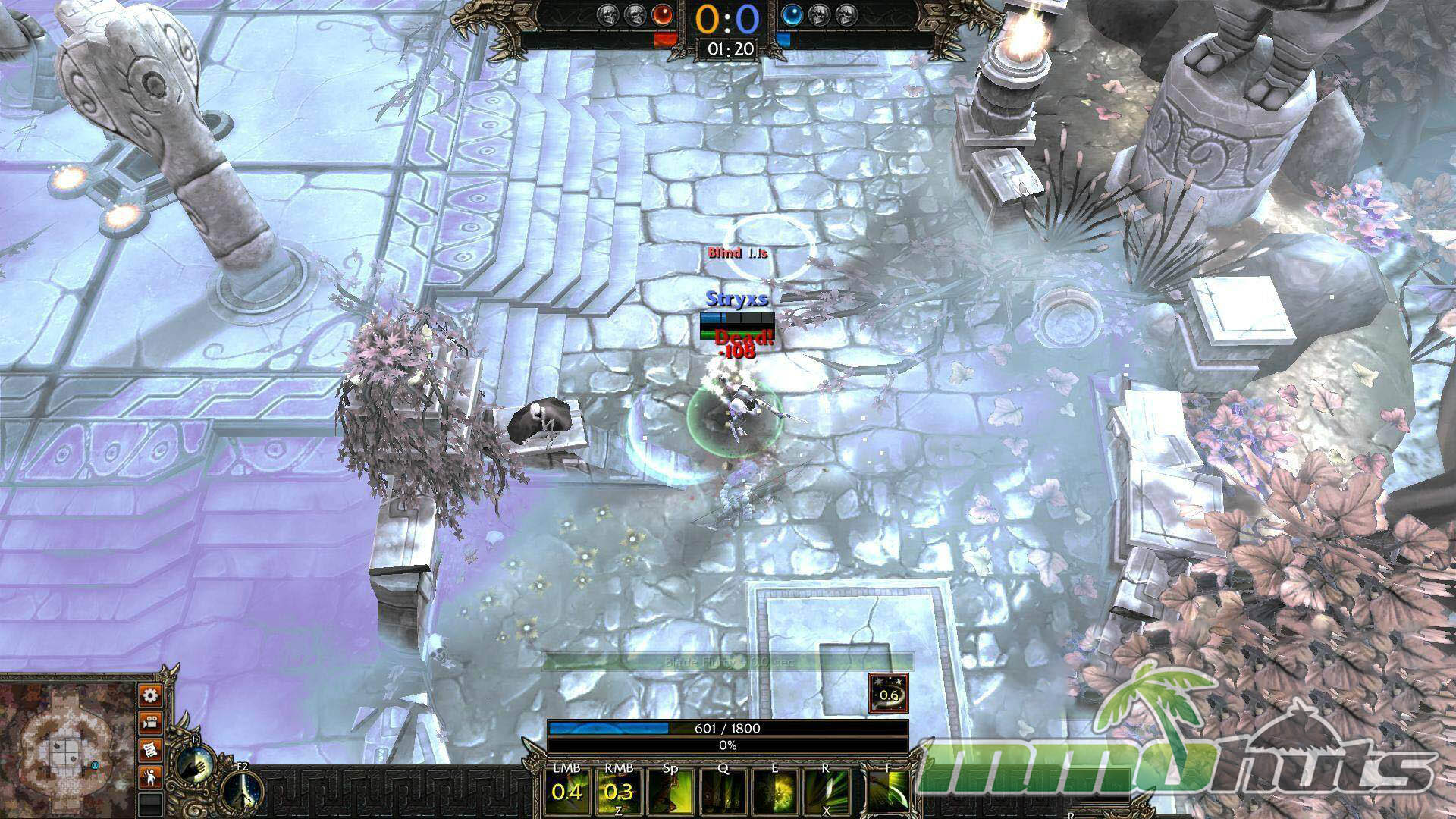
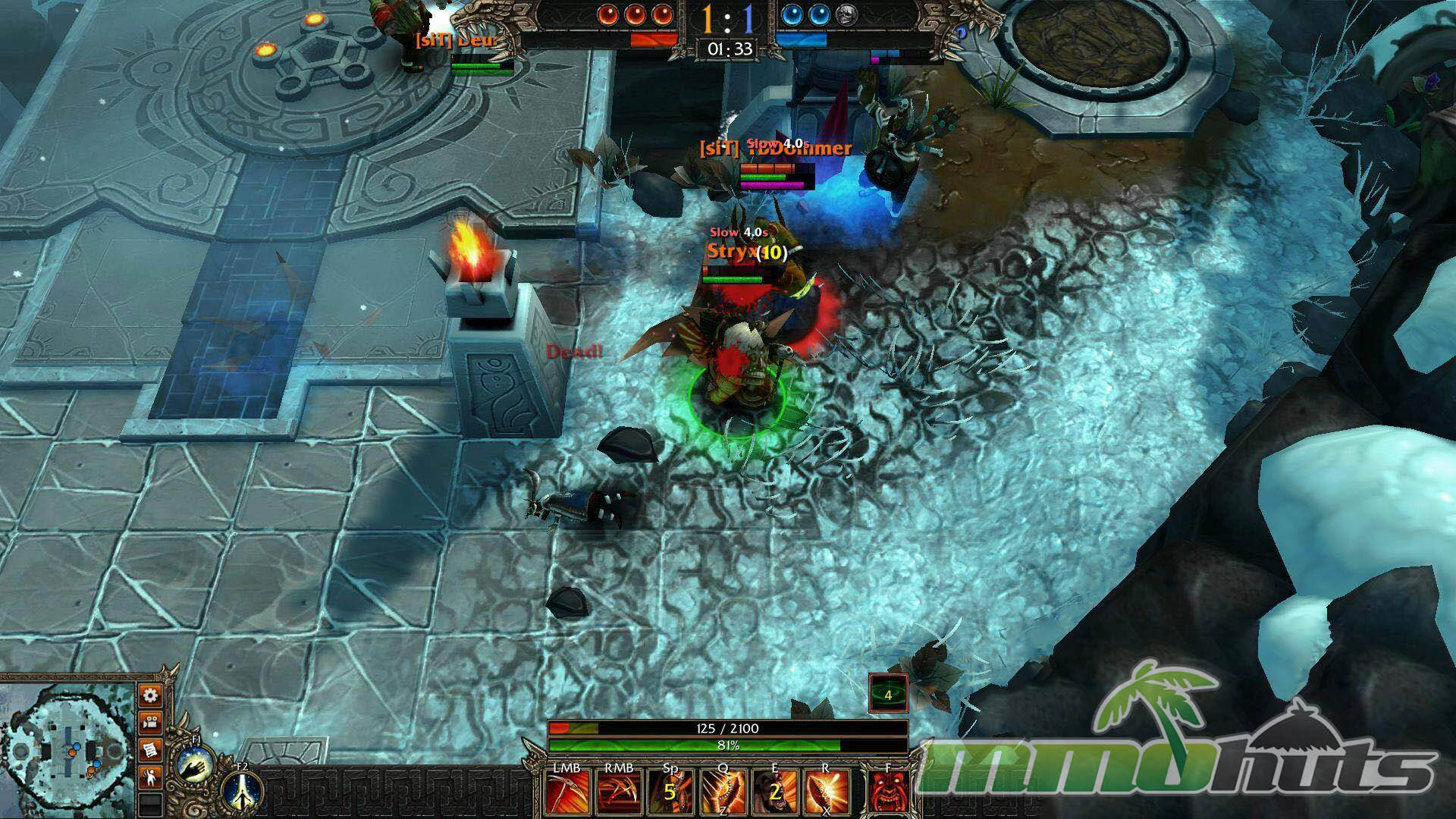
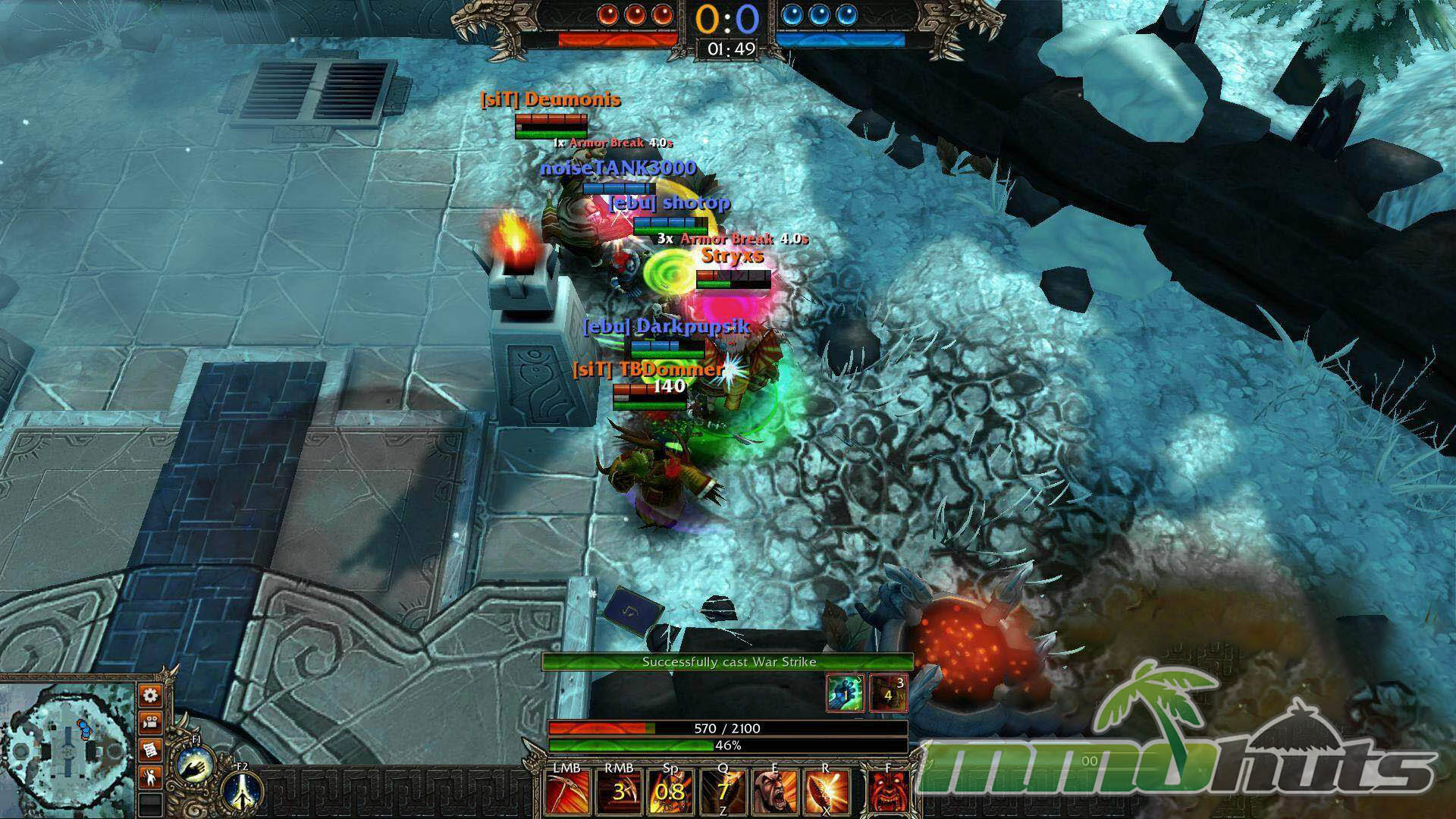
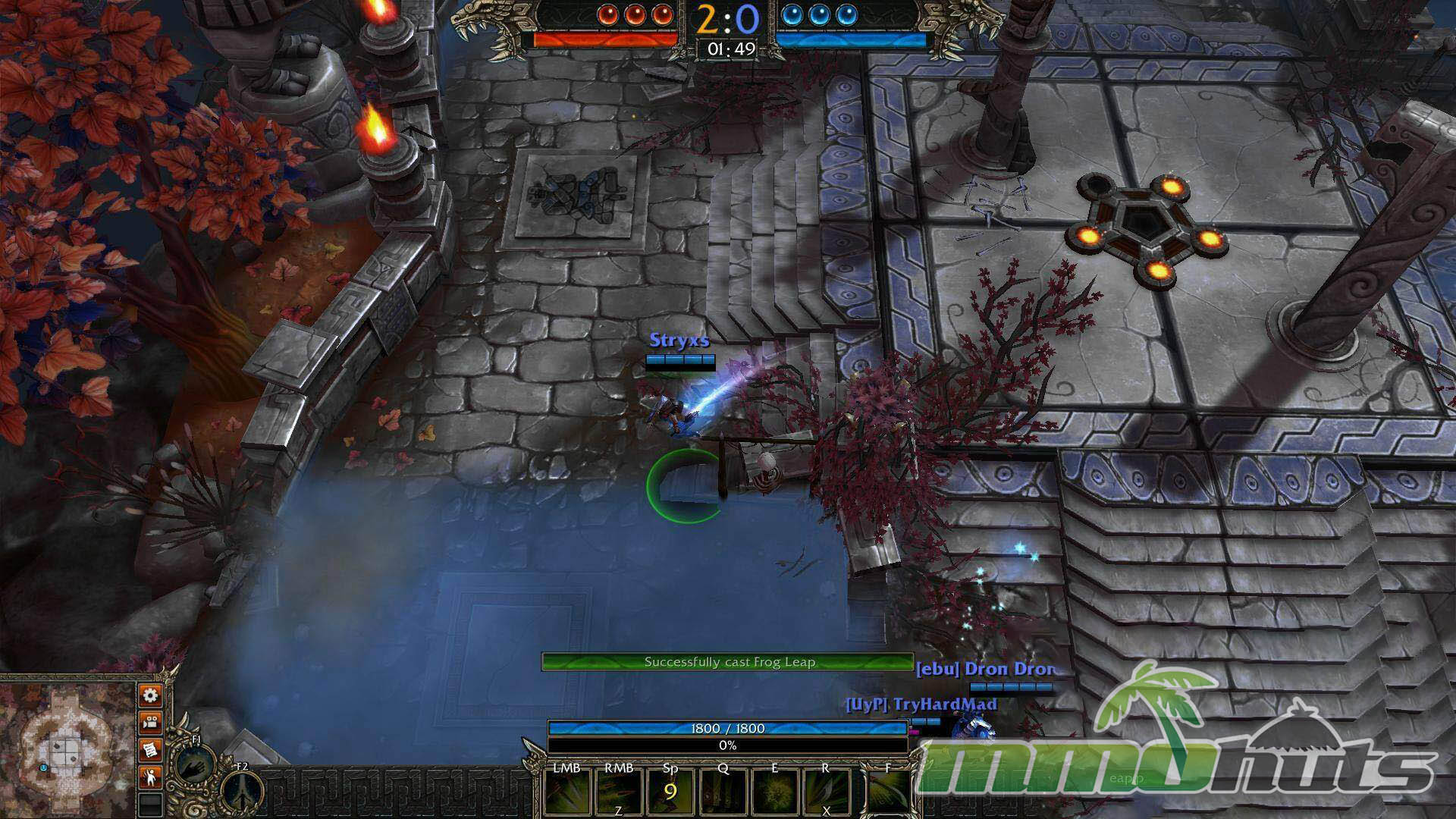
Bloodline Champions Featured Video

Bloodline Champions Review
Bloodline Champions is a free-to-play PvP-focused action game created by Swedish developer Stunlock Studios, with publishing handled by Funcom in the United States. It arrived in the wake of DOTA’s popularity, but instead of copying the lane formula, it reimagines the genre as a tight arena competition where mechanical execution is the main progression. The game entered open beta on December 17, 2010 and officially launched in the United States on January 13, 2011. It also earned “Game of the Year” at the 2009 Swedish Game Awards.
At a glance, Bloodline Champions can look like a simplified MOBA, but it is more accurate to call it a distilled one. There are no waves of minions to farm, no item builds to assemble mid-match, and no towers shaping the map’s flow. What you get instead are small arenas with line-of-sight blockers, corners, and chokepoints, plus teams of Bloodlines trying to outplay each other through cooldown usage and coordinated pressure. The pace is brisk, and fights resolve quickly, which puts a premium on decision-making in the moment.
Learning the Basics
New players are offered a tutorial path that does more than just explain controls. It walks through movement, aiming, and the fundamentals of common roles such as frontline tanks, ranged damage, melee damage, and healers. The exercises are goal-driven and ramp up in difficulty, which is important because Bloodline Champions does not give you many safety nets once you enter real matches. Skipping those lessons can leave you unprepared for how quickly you can be punished for a missed skill or poor positioning.
Match access is handled through a lobby and matchmaking approach. You can queue solo or alongside friends, then get placed into 2v2, 3v3, or 5v5 games depending on what you choose. The process is straightforward, but with a smaller community it can take time for teams to fill, particularly when queueing alone. Team balancing attempts to consider player levels and other factors to keep matches from feeling wildly uneven.
Visually, the game fits the MOBA era it launched in, readable character silhouettes, clear ability effects, and maps designed around visibility and cover. The camera stays in a top-down perspective with zoom options, and you can keep it centered on your character or use free-look. Free-look is especially useful for Bloodlines that can place abilities at range or want to control space beyond their immediate screen center.
Bloodlines, Gameplay, & Combat
Like many hero-based games, Bloodline Champions limits your immediate roster. Players typically begin with access to a small set of Bloodlines, with a rotating selection of free options changing weekly. Permanent unlocks can be purchased with Blood Coins earned through play, and additional Bloodlines can also be granted by completing in-game goals. For those who prefer to unlock content quickly, Funcom points purchased with real money can be used as an alternative. Both currencies also feed into cosmetic customization and various skill-related purchases.
Moment to moment, combat is built around mobility and precision. Movement uses WASD, while aiming and ability placement are controlled with the mouse. Because nearly every action requires manual targeting, the game feels closer to a twin-stick shooter translated into a MOBA camera than it does to traditional point-and-click ability systems. Each Bloodline has six standard abilities plus an ultimate, along with a basic left-click attack and a stronger right-click option with a short cooldown. The spacebar is commonly tied to evasive or escape tools, while Q, E, F, and R handle the heavier-impact skills with longer cooldowns.
Instead of mana, Bloodline Champions uses an energy system that rises and falls based on ability use and combat flow. Energy can be recovered by landing attacks and by securing map orbs that appear periodically. Ultimates require a full energy bar and consume it completely, which creates an interesting tension, using your ultimate at the wrong time can leave you without resources for follow-up pressure or defense.
Game Modes
Bloodline Champions includes three primary modes: Arena, Capture the Artifact, and Conquest. Arena is the mode supported by the matchmaking queue, and it plays as a round-based team deathmatch in 2v2, 3v3, or 5v5. The match winner is the first team to claim three rounds, so consistency and adaptation across rounds matters.
Capture the Artifact is the game’s take on capture-the-flag. Teams attempt to steal the enemy artifact and bring it back while protecting their own. Victory requires holding both artifacts for a set duration, and the objective can be interrupted because the artifact drops if the carrier is killed or hit by certain abilities. That creates frequent scrambles and sudden momentum swings around the pickup.
Conquest focuses on controlling points across the map to accumulate score. Capturing requires standing on a point for a period without using abilities or taking damage, which forces careful timing and coordinated cover. Unlike the elimination-heavy feel of Arena, Conquest allows infinite respawns unless the enemy team controls all capture points. A team can win by holding objectives long enough or by wiping opponents at a moment when they are unable to respawn.
Execution First Combat
The game’s biggest differentiator is how little it hides behind systems. With no farming phase and no itemization arms race, most advantages come from landing shots, tracking cooldowns, and creating favorable engagements. Skilled players can take over rounds through movement, prediction, and clean aim, especially against opponents who are still learning spacing and ability timing. The arenas are compact, so downtime is minimal, which also means mistakes are immediately tested.
Traits & Medallions
Outside of matches, Bloodlines can be tuned using Traits and Medallions. Traits function as passive stat allocations, letting you push your character toward more power, survivability, or utility depending on preference. The core trait categories are Power, Vitality, Expertise, Speed, Focus, and Swiftness. Trait points are earned through leveling (up to 400 points by Level 25), and each trait can be increased up to 400 points. As an example, investing all 400 points into Vitality provides +12% max HP and +8% max Recovery HP. The broader Traits tree also unlocks additional passive benefits and a small set of active abilities.
Medallions are purchased using Blood Coins and add extra abilities usable in matches. They are organized by purpose: Red medallions provide offensive tools, Blue medallions offer defensive options, Purple medallions grant passive effects, and Yellow medallions are cosmetic or novelty-focused. Yellow medallions are tied to Funcom points. Medallions can also be enhanced with socketed gems that grant additional attribute bonuses, also bought with Blood Coins. Since gem socketing is permanent, it is worth committing only when you are confident in that setup.
Final Verdict – Good
Bloodline Champions is best suited for players who want the thrill of competitive PvP without the long build-up and macro strategy associated with traditional MOBAs. Its controls are approachable and its match structure is easy to understand, but the game remains demanding because precision aiming and fast reactions decide most encounters. On the other hand, players who enjoy deep drafting, item builds, lane pressure, and broader strategic layers may find the overall formula too lean. The straightforward modes and repeated arena loops can also make the experience feel samey over time, which can reduce long-term replay value. Even with that simplicity, mastering the game is genuinely difficult, and success depends heavily on timing, awareness, and strong hand-eye coordination.
Bloodline Champions Links
Bloodline Champions Official Site
Bloodline Champions on Steam
Bloodline Champions Wikipedia
Bloodline Champions System Requirements
Minimum Requirements:
Operating System: Windows XP / Vista / 7 / 8
CPU: Pentium 4 3 GHz or AMD equivalent
Video Card: GeForce 6000 Series or ATI HD2000 Series
RAM: 2GB
Hard Disk Space: 1.2 GB
Recommended Requirements:
Operating System: Windows XP / Vista / 7 / 8
CPU: Core 2 Duo 2 GHz or better
Video Card: GeForce 8000 Series or ATI Equivalent
RAM: 2GB
Hard Disk Space: 1.2 GB
The official System Requirements for Bloodline Champions have not been updated since the game’s January 2011 release. The game supports 2560×1440 resolution and takes up a bit over 1 GB space on the hard disk.
Bloodline Champions Music & Soundtrack
Bloodline Champions Additional Information
Developer: Stunlock Studios
Lead Programmer: Martin ‘Shelt’ Magnusson
Closed Beta Date: October, 2010
Open Beta Date: December 16, 2010
Shut Down: December, 2017 (Battlerite is the remake)
Development Background
Development on Bloodline Champions began in 2008, with the stated goal of delivering a top-tier PvP-first multiplayer battle arena. The project drew strong attention at the 2009 Swedish Game Awards, where it received Game of the Year and Winner XNA. Funcom originally published the game worldwide, but ended its involvement in January, 2015. After that point, Stunlock Studios continued supporting the servers, with distribution handled through Valve’s Steam platform. The game shut down in December, 2017.