Battlerite is a skill-first team arena brawler where your decisions, aim, and teamwork matter far more than gear. Instead of item builds and long laning phases, you jump straight into tight, round-based gladiator fights using a roster of distinct champions.
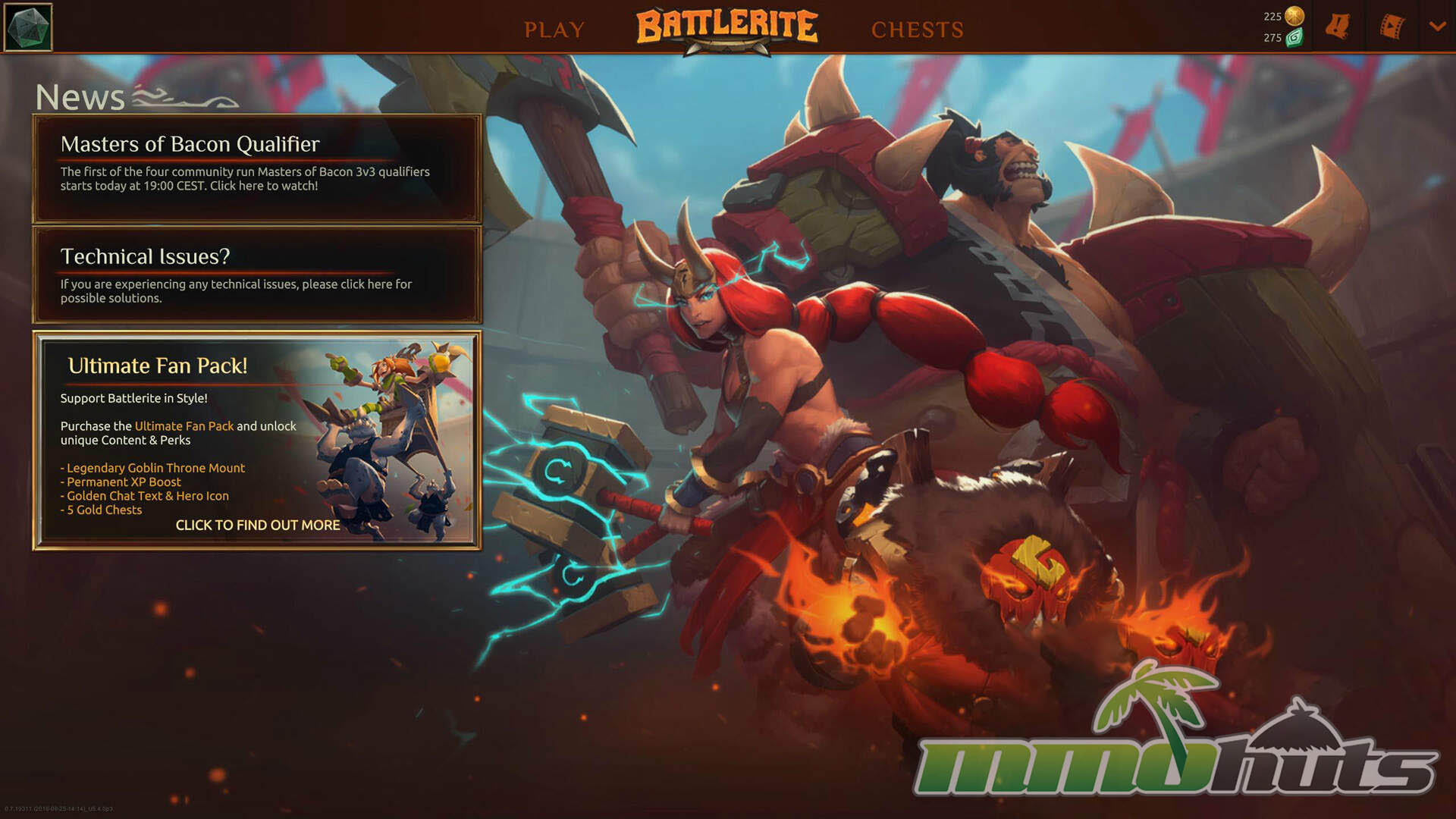 | Developer: Stunlock Studios Playerbase: Low Type: F2P Battle Arena Release Date: September 20, 2016 Pros: +Pure skill-shot combat with no item clutter. +Standout arena-brawler format. +Extremely deep mastery curve. Cons: -Takes time to learn positioning and cooldowns. -Cosmetic variety feels limited. |

Battlerite Overview
Battlerite is a free to play team arena brawler developed and published by Swedish studio Stunlock Studios. It focuses on compact 3v3 (and other) arena matches where every ability use counts, and there are no traditional item purchases to muddy the waters. The result is a clean, readable fight where spacing, cooldown tracking, and landing skillshots decide the outcome.
Champions are the heart of the experience, and each one pushes a clear playstyle. You can lean into bruiser pressure with characters like Freya, who thrives when she closes distance, or pick a slippery assassin such as Croak, who punishes mistakes with poison and burst. Teams win by combining these kits well, then executing under pressure, rather than by out-scaling through builds.
Battlerite Key Features:
- Distinct Champions and Silhouettes – a varied roster that ranges from stealthy killers to spellcasters and supports, each with a recognizable look and role.
- Constant, Arena-Style Fighting – matches are designed to keep players engaged, with little downtime and an emphasis on movement and timing.
- Clear, Polished 3D Presentation – crisp character readability and smooth animations that make hectic fights easier to parse.
- Skill Above Everything – no item shop to hide behind, wins come from execution, awareness, and coordination.
- Spectator Options – watch high-level matches to study rotations, cooldown usage, and team setups.
Battlerite Screenshots

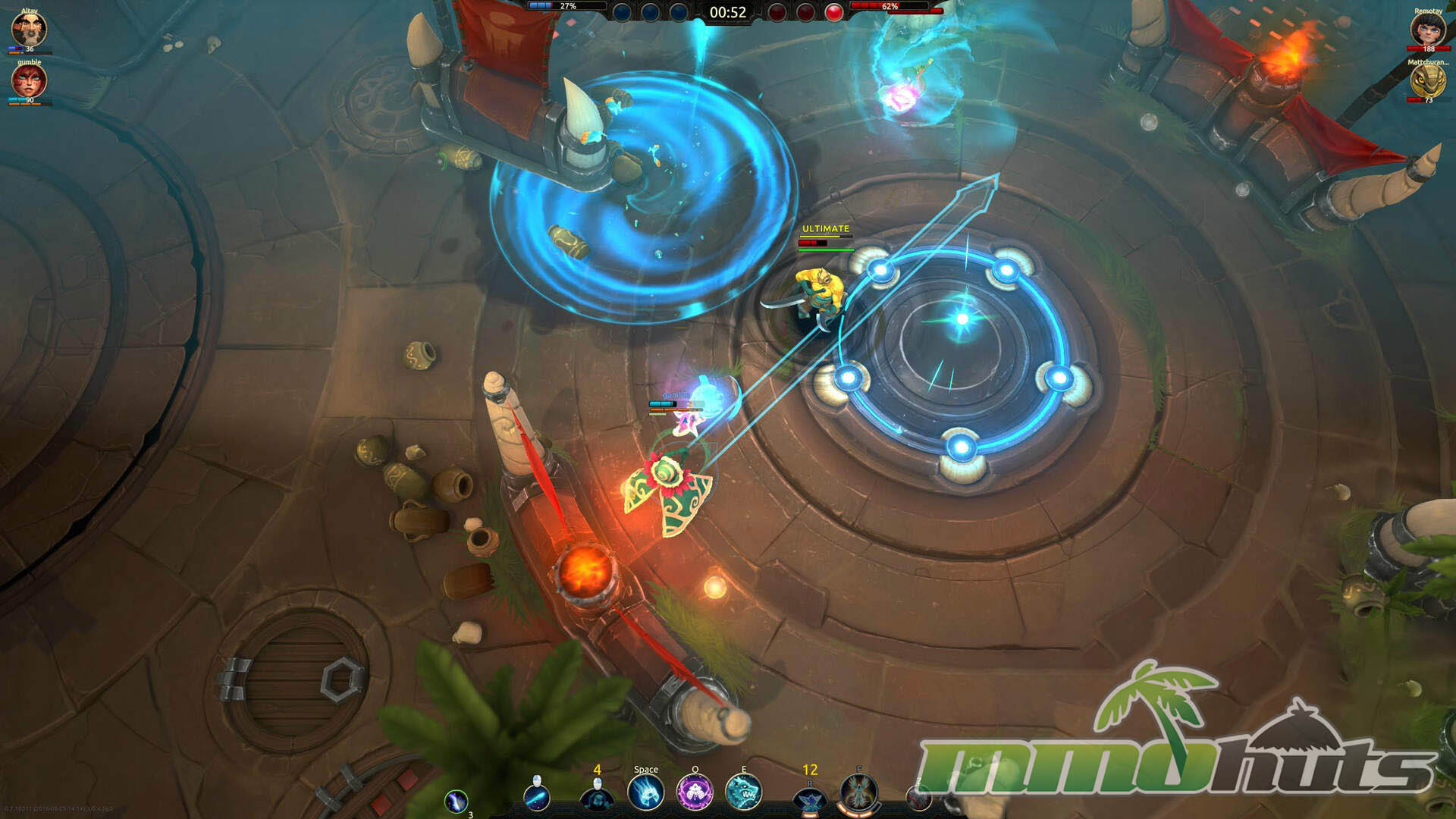



Battlerite Featured Video

Battlerite Review
Battlerite is the kind of competitive game that gets to the point immediately. If you have ever enjoyed the character-driven side of MOBAs but disliked the farming, itemization, and long buildup, this is the alternative. Matches are built around pure combat loops: pick a champion, coordinate with your team, and outplay the opposing trio through ability timing and positioning.
What stands out most is how little “extra” there is. You are not managing inventories or waiting for late-game spikes, you are managing cooldowns, reads, and the flow of a round. When it clicks, it feels closer to a fighting game’s neutral game translated into a top-down arena.
A Cast That Looks Built for a Show
Visually, Battlerite leans into bold, animated character designs that are easy to read at a glance. Champions look like they belong in a stylized action cartoon, with exaggerated shapes and clear effects that communicate what is happening without requiring you to memorize tiny icons.
More importantly, the roster encourages experimentation. There are fifteen champions, and they are different enough that trying a new pick does not feel like a minor variation of the same kit. They broadly fall into melee, ranged, and support archetypes, and it is worth learning at least one from each so you can adapt to whatever your team composition ends up being.
Team balance matters, but it is not everything. A durable frontliner paired with a strong damage dealer and a support generally makes life easier, yet individual skill and coordination can overturn a “better on paper” setup. Battlerite’s matchmaking also helps keep games competitive, so you are usually facing opponents near your own level once you have a handful of matches under your belt.
One notable design choice is how picks are handled when you queue solo. You are not building a counter-pick plan in a pre-match draft, you are committing to a champion and then playing the round as it comes. Some players will prefer a lobby-style draft for strategic depth, but in practice the game’s balance and the general viability of most combinations keep matches from feeling decided before the first ability is thrown.
And because combat is so direct, losses tend to be instructive. It is usually clear whether you mispositioned, missed a key skillshot, or used your escape at the wrong time.
Fast Rounds, Tight Arenas
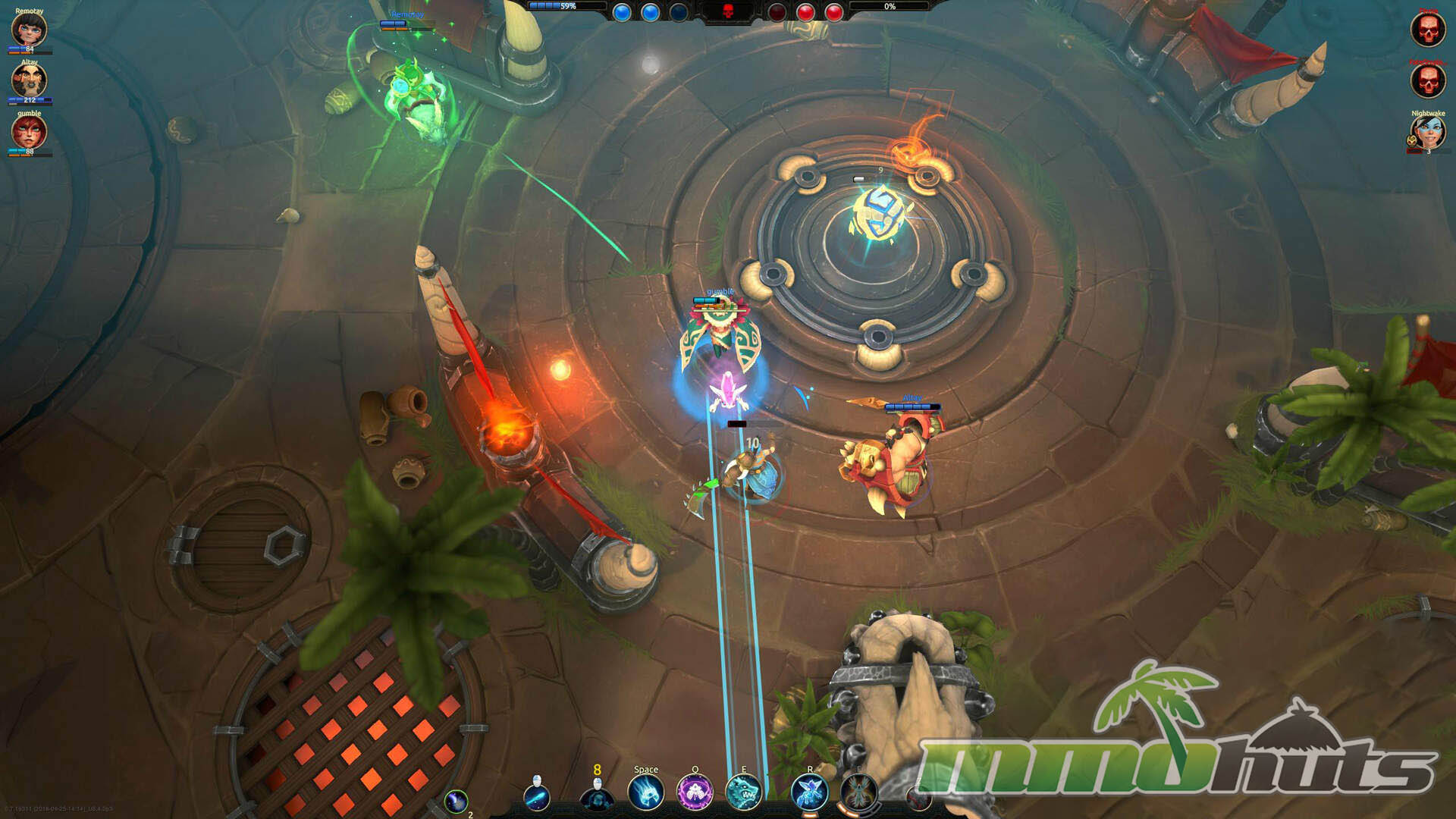
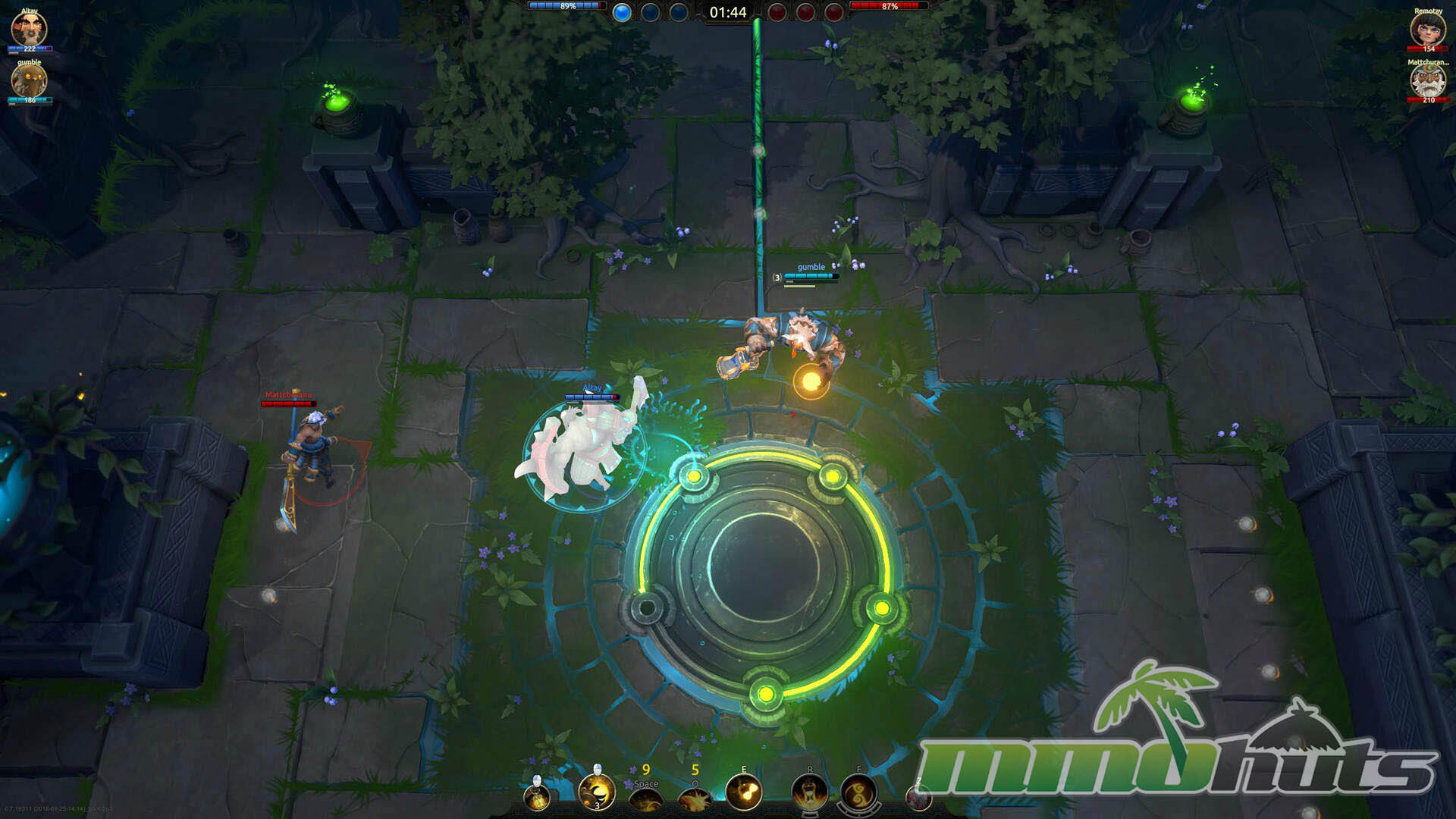
Battles play out primarily in 3v3 or 2v2, inside compact circular arenas. The staging is theatrical in a fun way: you begin in a waiting area with training dummies and then ride into the fight, which reinforces the “gladiator match” theme. It is a small presentation detail, but it gives each round a sense of occasion.
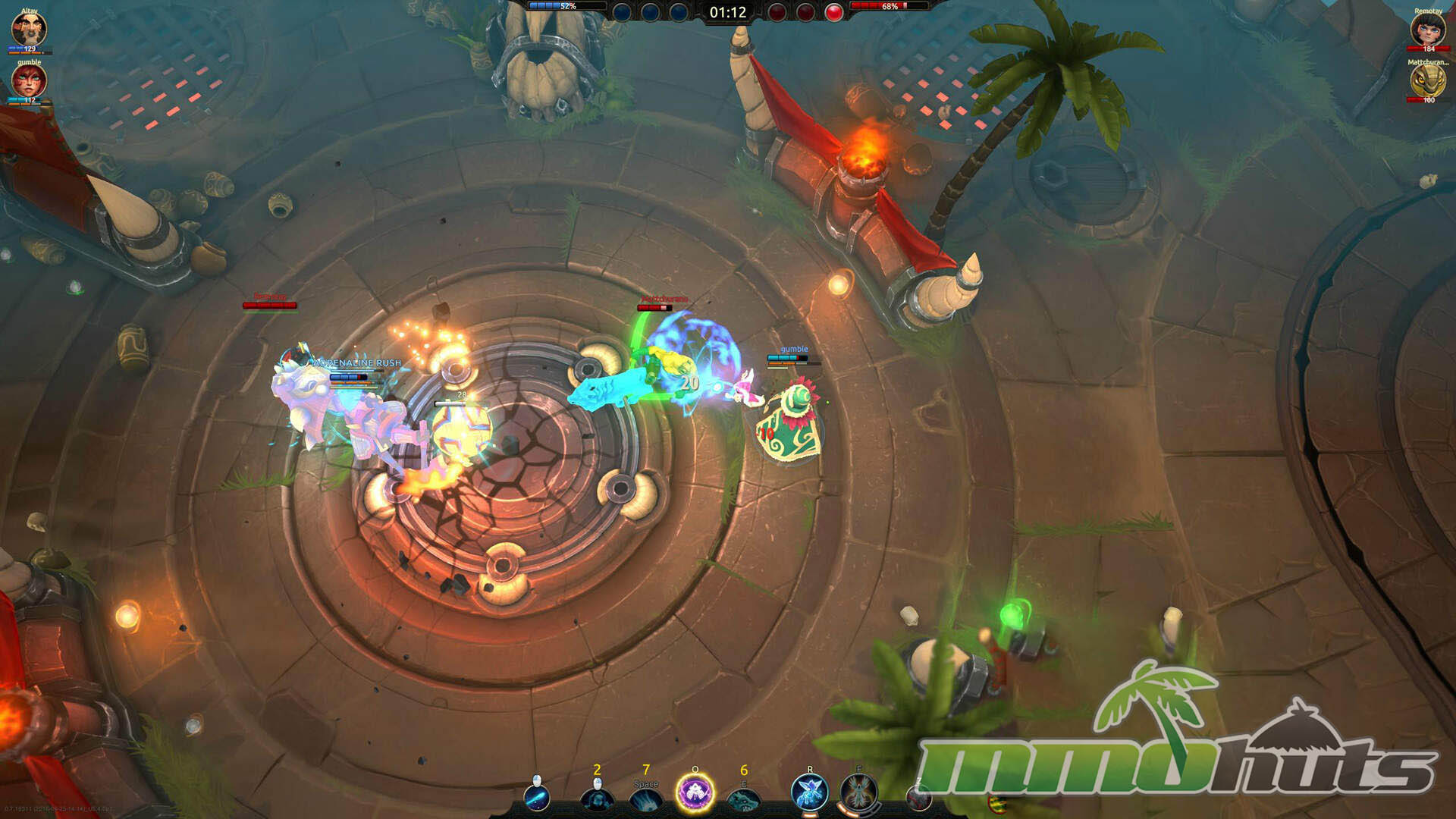
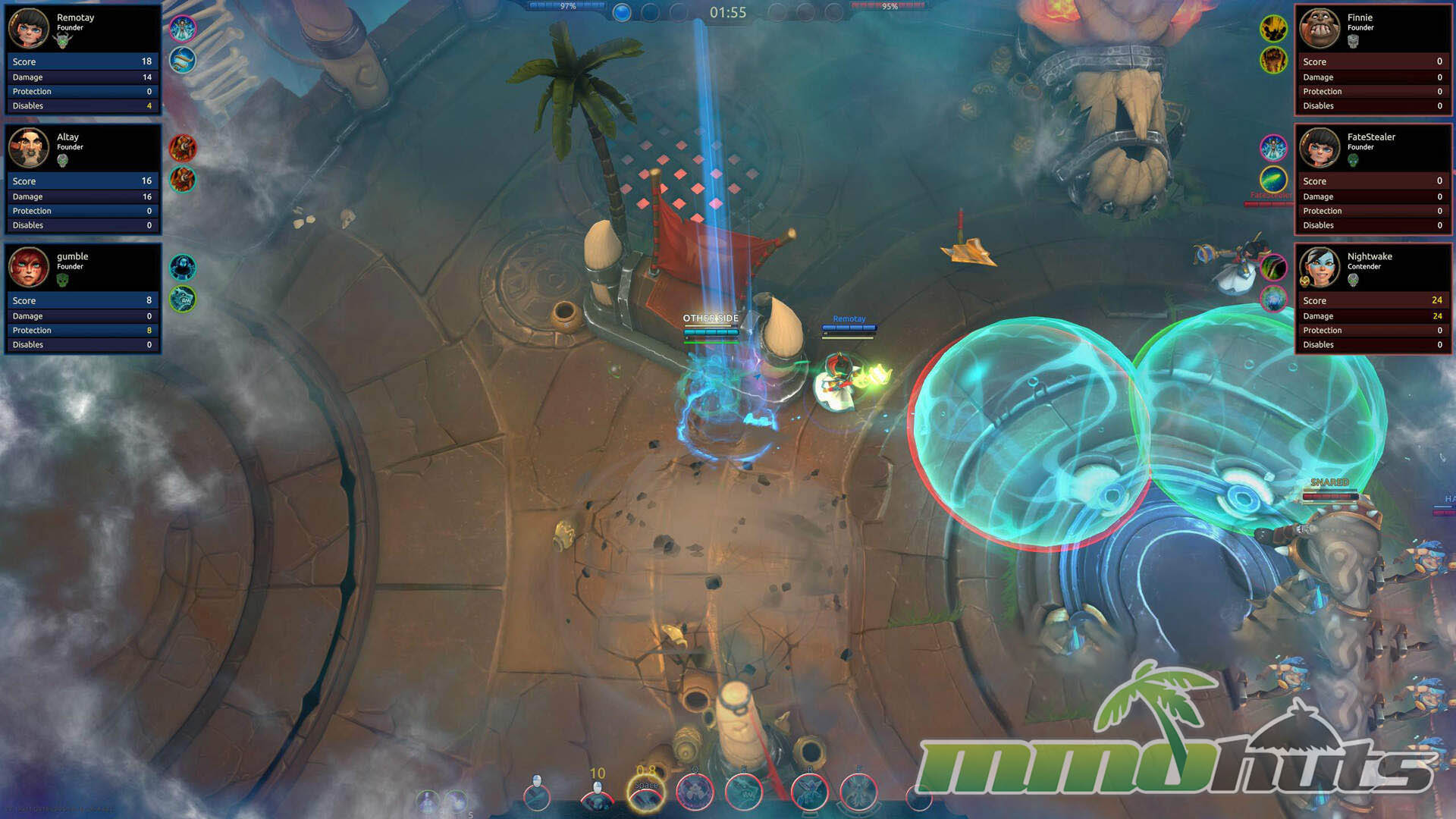
Once the gates open, the game becomes an exercise in controlled chaos. Most actions, including many heals and crowd control tools, function as skillshots. Early matches can feel overwhelming because you are seeing unfamiliar effects while trying to aim and dodge in real time. The learning curve is real, but it is the kind that improves quickly with repetition because the rules are consistent and the arenas are readable.
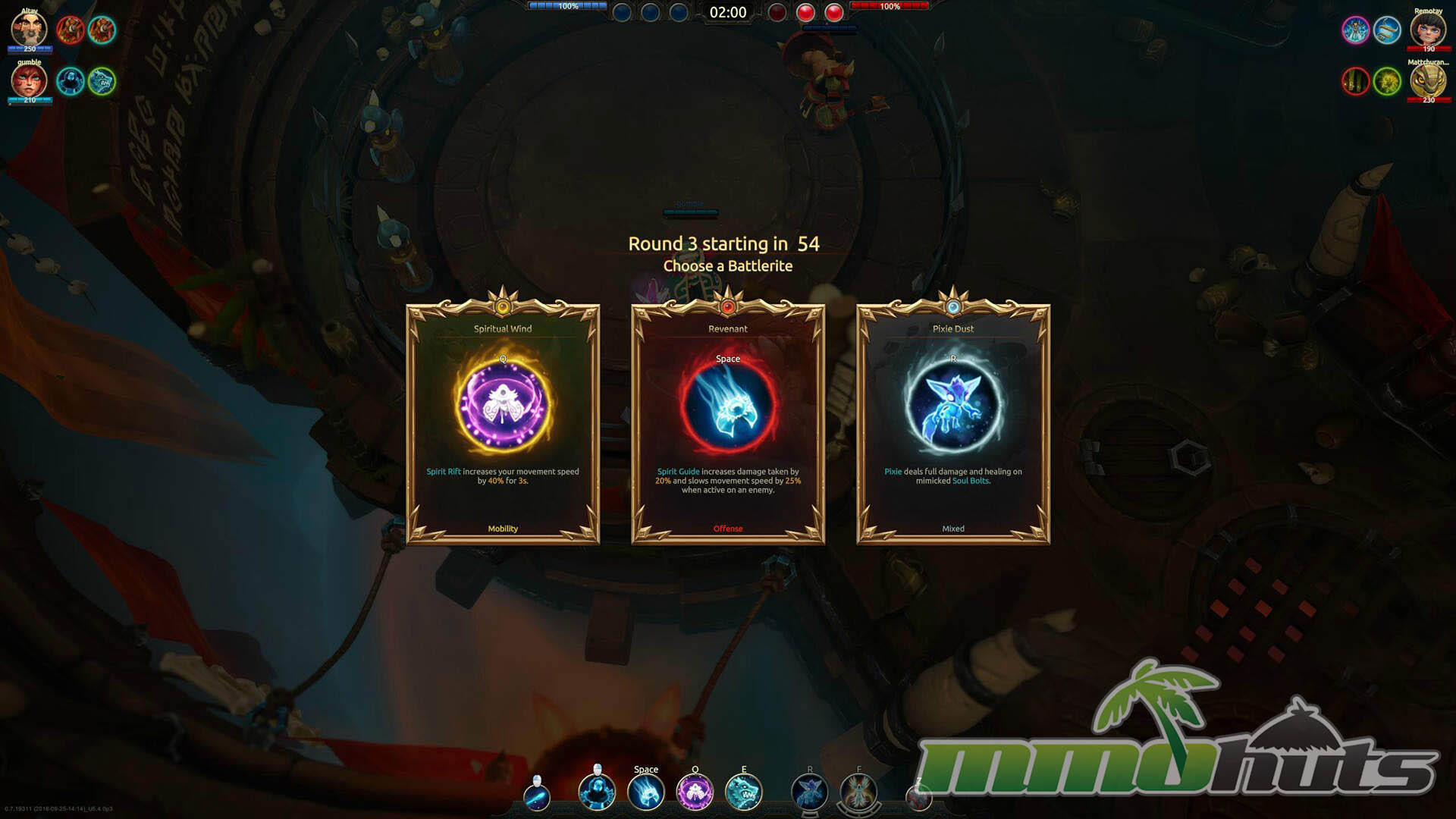
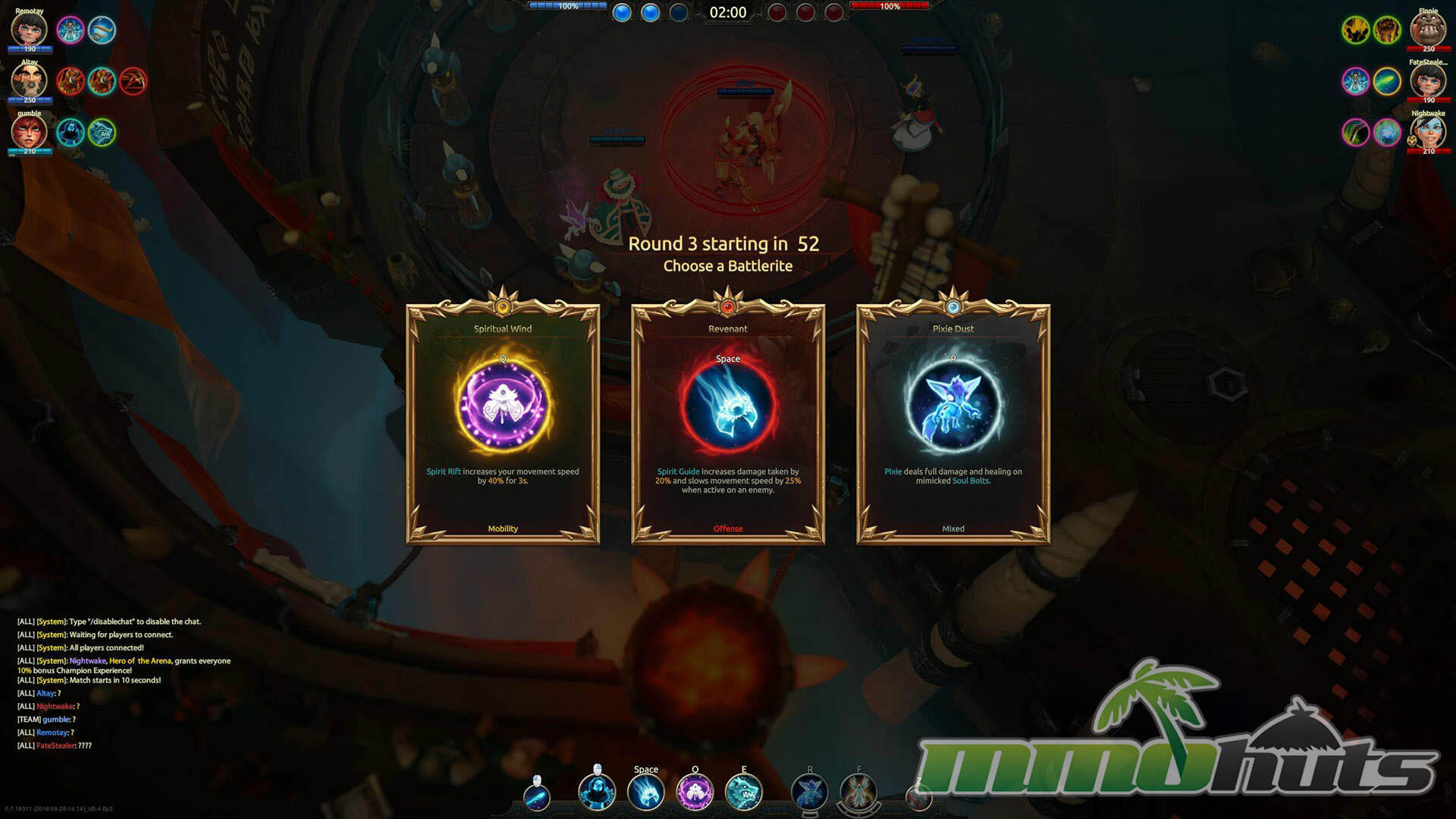
Between rounds you choose from three upgrade cards that modify your kit. This is Battlerite’s main form of match-to-match customization. It scratches the “adapt to the opponents” itch without turning into a complicated item economy, since you are making a focused decision rather than browsing a huge shop. Those small adjustments can matter, especially when deciding whether you need more control against melee pressure or more sustain for longer teamfights.
The Satisfaction of Getting Better
Battlerite rewards incremental improvement more than almost any arena brawler. At first you are simply trying to survive, then you start landing key abilities, then you begin to recognize patterns, bait defensive cooldowns, and set up team combos. Over time, fights slow down mentally even if they remain fast mechanically, because you understand what each champion is capable of and what to respect.
The best matches are the ones where you and your teammates begin anticipating each other. A well-timed peel, a coordinated burst window, or a clutch defensive ability can swing a round instantly. That feeling of “reading” the opponent and reacting before they commit is where the game shines.
Maps That Stay Out of the Way
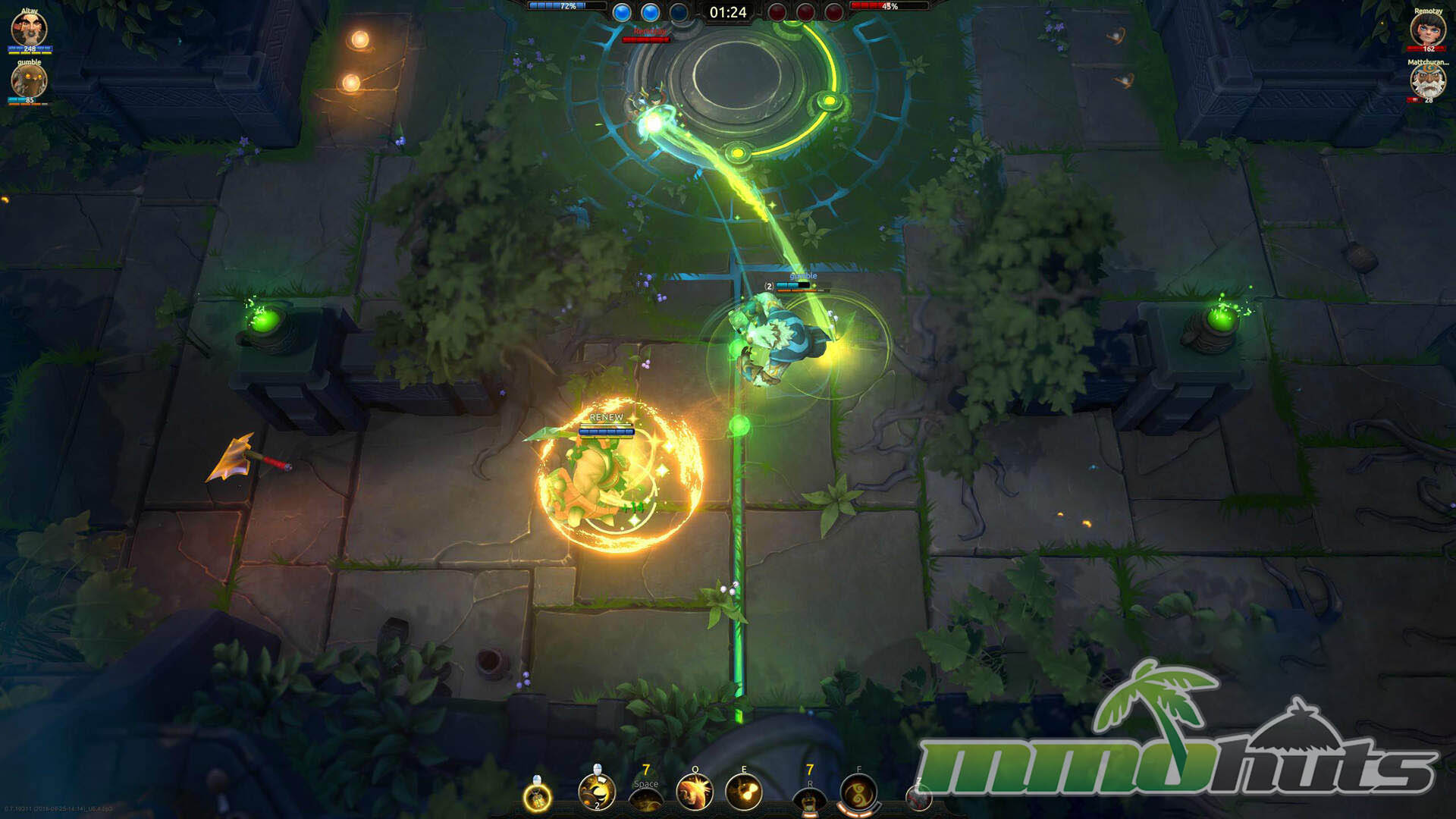
Arenas share a similar overall layout, generally circular with symmetrical obstacles, but each map has its own theme and visual dressing. The environment art adds personality without compromising clarity, which is important in a game where a single missed projectile can decide the round.
You will not have much time to admire the scenery mid-fight, because Battlerite punishes lapses in attention. Line-of-sight breaks, barrier placement, and spacing around the center all matter, especially when teams are looking for openings.
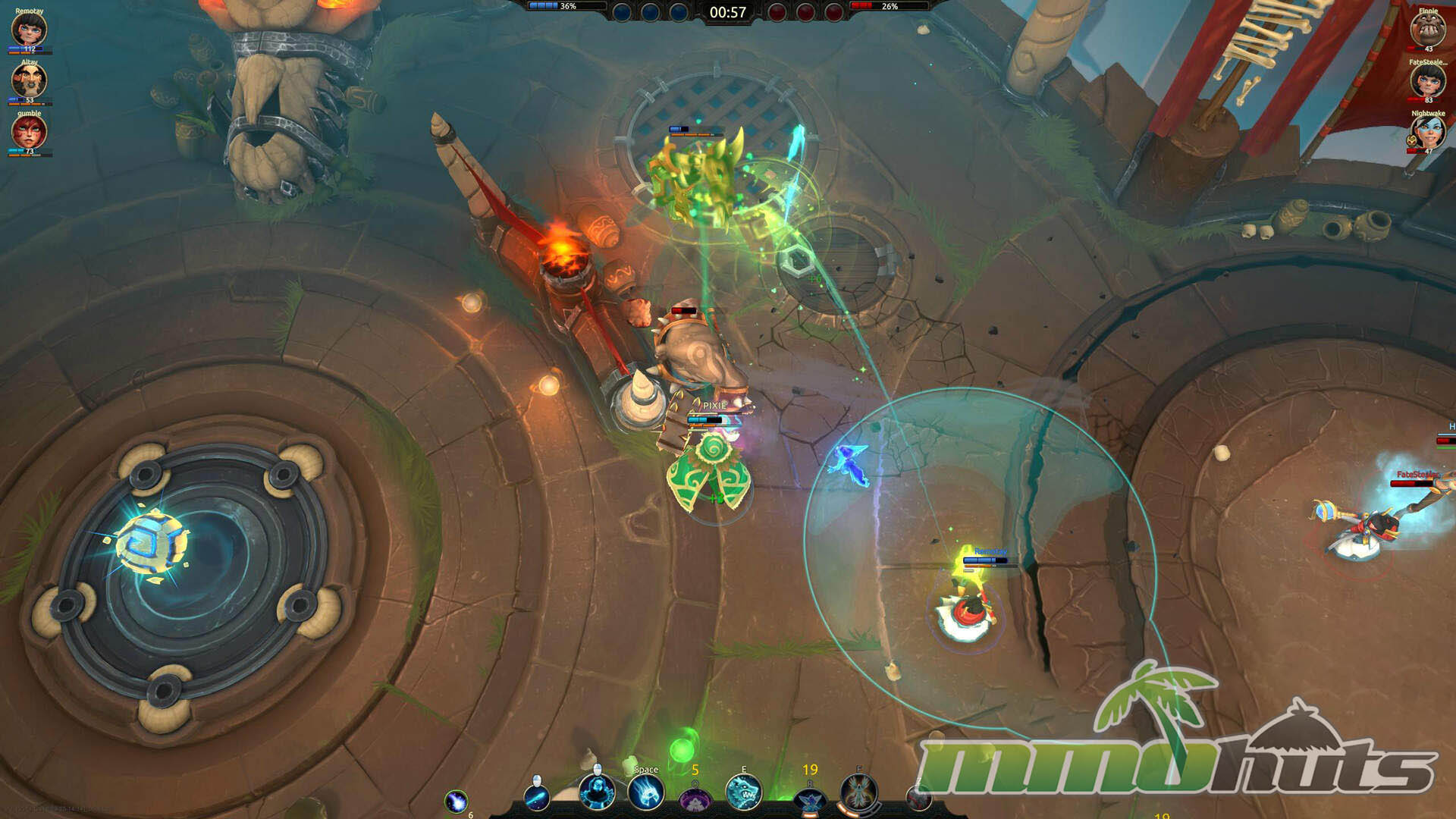
A key objective is the central orb that respawns, restoring health and providing a damage boost to the team that secures it. It also accelerates ult charge, so controlling that moment can decide the tempo of a round. The orb effectively pulls both teams toward the middle and prevents overly passive play, turning the center into a predictable flashpoint where mind games and positioning become crucial.
Attrition, Recovery, and the Endgame Squeeze
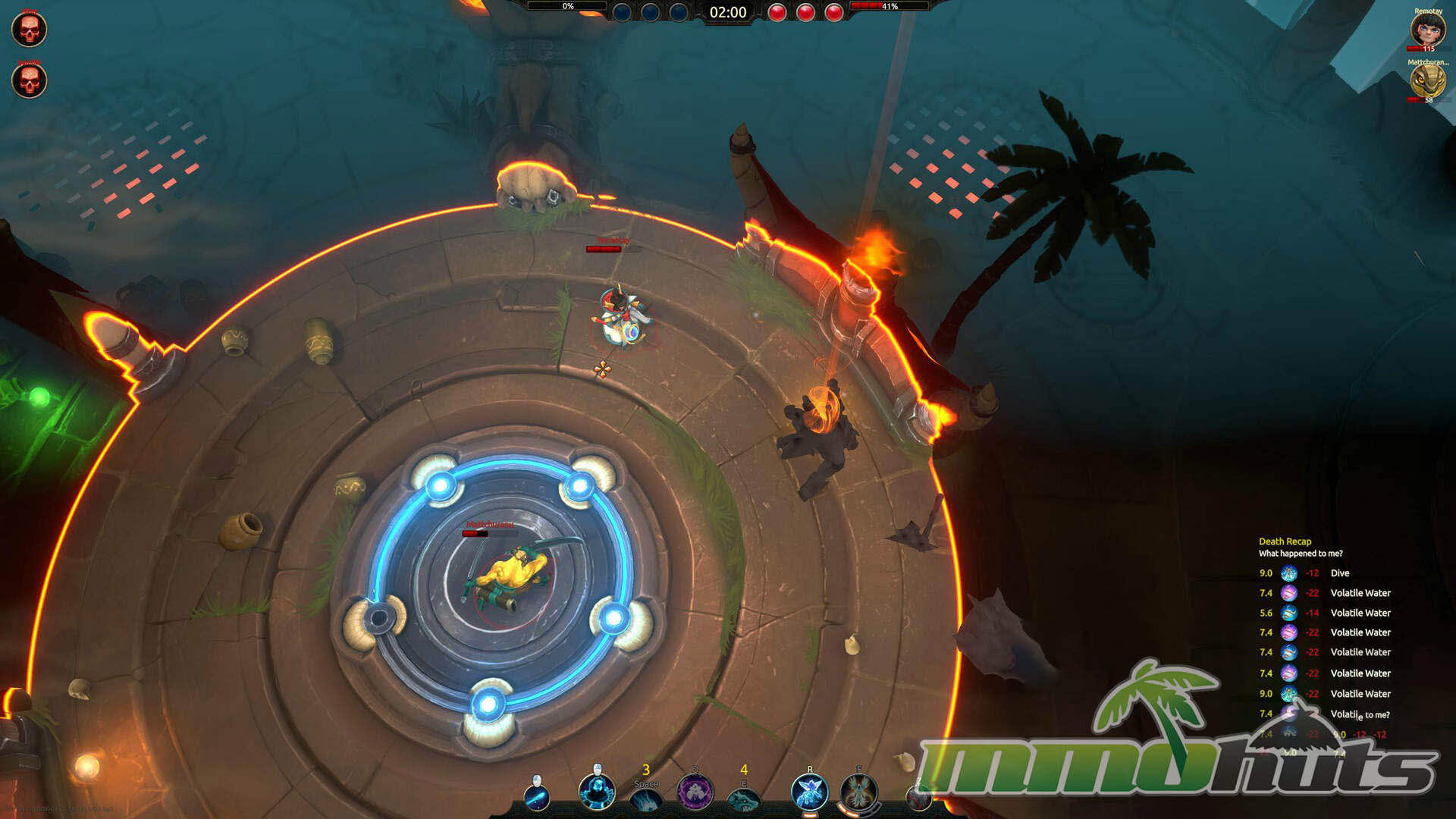
Sustain in Battlerite is intentionally limited. You can pick up green health drops placed around the arena’s outer edges, but damage reduces your maximum health, so you cannot simply reset to full and drag a duel out indefinitely. This creates a strong sense of momentum, once a team starts winning trades, the pressure increases because the losing side has fewer resources to stabilize.
As rounds continue, the playable space also tightens as a burning border closes in. This mechanic keeps matches from stalling and forces teams into decisive engagements. It also creates tactical moments, knockbacks and displacement become more threatening when being pushed outside the safe area means taking extra punishment.
Learning Against Bots Before Facing Players
For practice, AI matches are a useful stepping stone. The bots are capable enough to demand basic execution, but forgiving enough that you can focus on understanding ranges, timing, and how your abilities chain together. It is a practical way to test a champion’s kit without immediately being punished by experienced opponents.
That said, the AI primarily serves as a training tool rather than a true challenge mode. More difficulty tiers would make the path from “I know the buttons” to “I can compete online” smoother, especially for players who prefer to build confidence before jumping into ranked matchmaking.
A Ranked Mindset in Every Match
One of Battlerite’s most distinctive choices is that PvP matches are always tied to rating. There is no separate “casual queue” where players can completely ignore performance. The upside is that games tend to be taken seriously, and teammates are generally trying to win rather than experimenting recklessly.
The downside is psychological: if you are attached to your number, you may hesitate to try unfamiliar champions and end up one-tricking a comfort pick. Battlerite is at its best when you explore the roster and learn matchups, so players who can treat rank as feedback rather than identity will get more out of the game long-term.
Free-to-Play and Monetization
Battlerite’s model is straightforward. The game is free-to-play once it leaves Early Access, and buying into Early Access includes access to all current and future champions, which is a compelling value for anyone who knows they want to invest time into the roster.
There is a store that sells chests using purchased currency, but rewards are cosmetic only. Skins, outfits, mounts, and similar extras do not affect gameplay power. You can also earn chests through daily quests and by collecting in-game currency, so spending is optional rather than mandatory.
Final Verdict – Excellent
Battlerite delivers on its core promise: a focused, ability-driven arena brawler where mechanical skill and teamwork are the deciding factors. It is remarkably polished for an Early Access title and avoids many of the frustrations that come with longer-form competitive games by keeping matches short and concentrated.
Its main drawbacks are not deal-breakers, but they are worth noting, the onboarding is demanding, and the AI could benefit from more robust difficulty options. If you enjoy precise skillshots, coordinated teamfights, and a high mastery ceiling, Battlerite is an easy recommendation.
Battlerite Links
Battlerite Official Site
Battlerite Steam Page
Battlerite Facebook Page
Battlerite Twitter
Battlerite IG
Battlerite Requirements
Minimum Requirements:
Operating System: Windows XP/Vista/7
CPU: Dual Core from Intel or AMD at 2.8 GHz
Video Card: Intel HD 3000 or better
RAM: 2 GB
Hard Disk Space: 2 GB
Battlerite Music & Soundtrack
Coming Soon!
Battlerite Additional Information
Developer(s): Stunlock Studios
Publisher(s): Stunlock Studios
Engine: Unity
Beta Release Date: 2016
Steam Official Release Date (F2P): November 8th, 2017
Development History / Background:
Battlerite is a MOBA published and developed by the Swedish gaming company, Stunlock Studios. Stunlock Studios is known for also developing Bloodline Champions. They announced the release of Battlerite in early March. The game officially went free to play on Steam on November 8th, 2017.