
Age of Wushu
Age of Wushu is a 3D martial arts MMORPG that trades familiar fantasy tropes for wuxia style adventures set in Ming Dynasty China. Instead of locking you into a strict class and level treadmill, it pushes you toward learning new kung fu sets, managing cultivation, and navigating a sandbox world where other players can be allies, rivals, or opportunists. It is an unusual MMO that rewards patience, curiosity, and a willingness to learn its many interconnected systems.
|
Publisher: Snail Games Playerbase: Low Type: MMORPG Release Date: July 18, 2013 (NA/EU) PvP: Duels / Open World Pros: +Skill driven advancement with a fresh take on character growth. +Combo focused combat with counters and mind games. +Atmospheric world that feels distinct from standard fantasy MMOs. +Multiple narrative paths to experience. Cons: -High barrier to entry with lots of systems to absorb. -Pacing can feel sluggish, especially early on. -Sandbox freedom can be confusing without guidance. |

Age of Wushu Overview
Age of Wushu (released as Age of Wulin in some territories) is a martial arts themed sandbox MMORPG set in the Ming Dynasty era. Developed by Suzhou Snail Electronic and launched for NA/EU on July 18th, 2013, it stands out by stepping away from the usual class, level, and gear score formula. Progress is instead centered on learning skill sets, developing internal power, and participating in a living world where player choice drives much of your day-to-day direction.
At the same time, it is not a pure sandbox in the harshest sense. You still have familiar MMO staples like instanced content, crafting, and structured PvP, but they sit alongside stranger, more social systems. Offline progression, school politics, infiltration mechanics, and even player kidnapping are all part of the package, creating a world that can feel unpredictable in a way most theme park MMOs avoid.
Age of Wushu Key Features:
- Branching Narratives – pick from five different story paths and see how your choices shape your journey.
- Robust Crafting – produce gear and practical consumables through a variety of life skills.
- Infiltration Gameplay – spy on opposing schools to gather intel and stir up conflict.
- Kidnapping System – a risky social mechanic tied to offline activity and player interaction.
- Competitive Combat – challenge players in duels or fight over space in open-world PvP.
Age of Wushu Screenshots
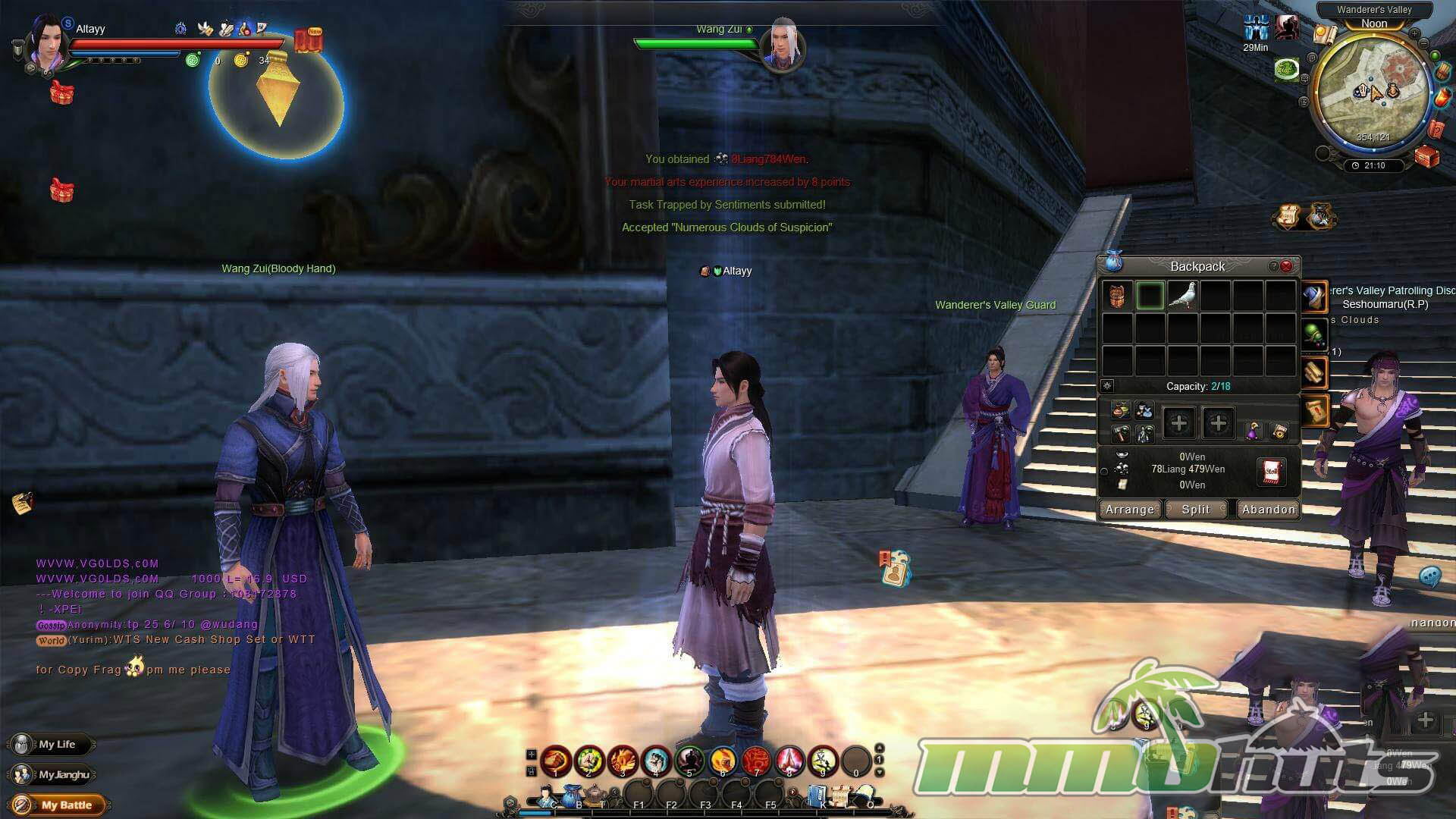

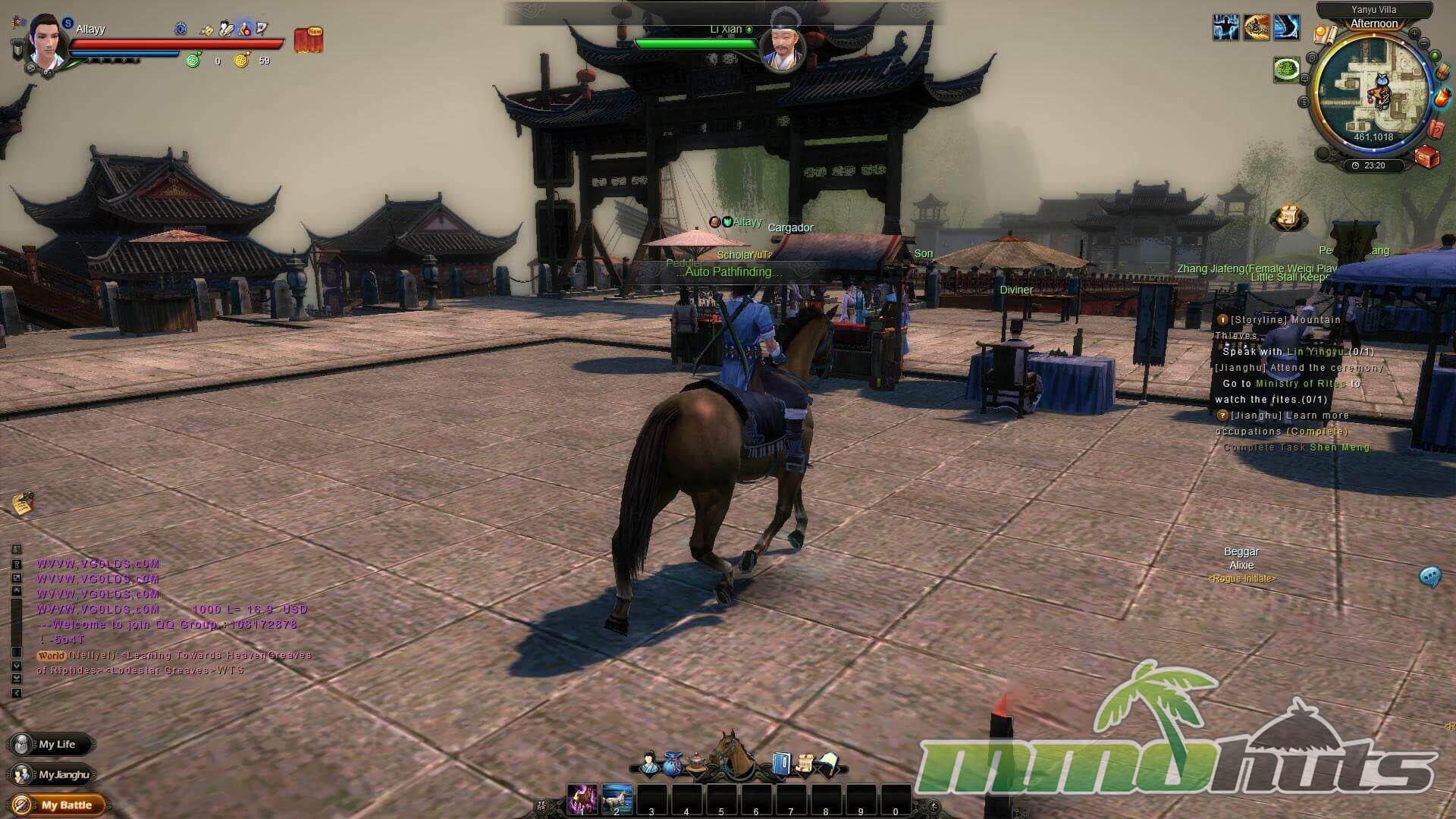

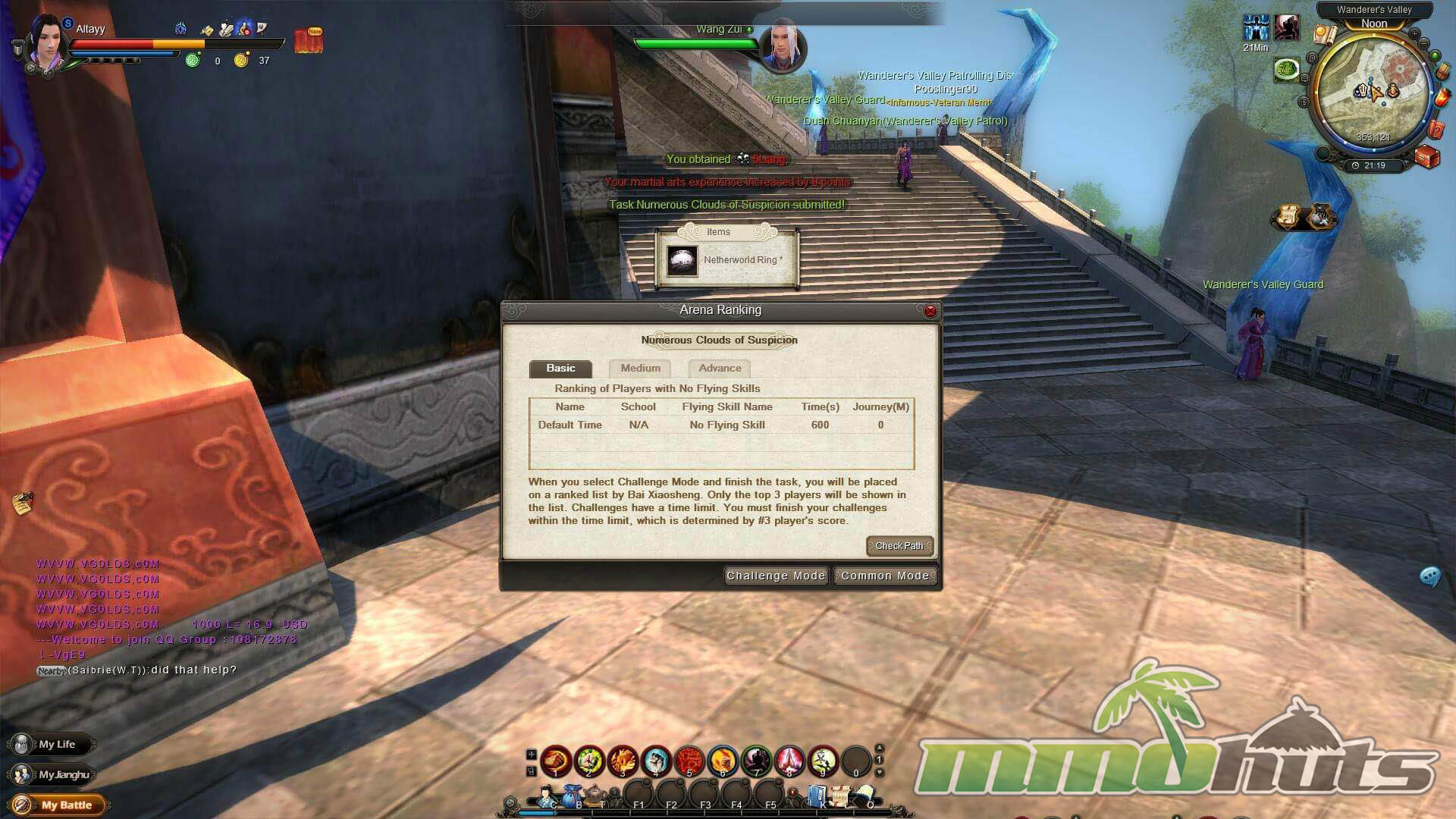


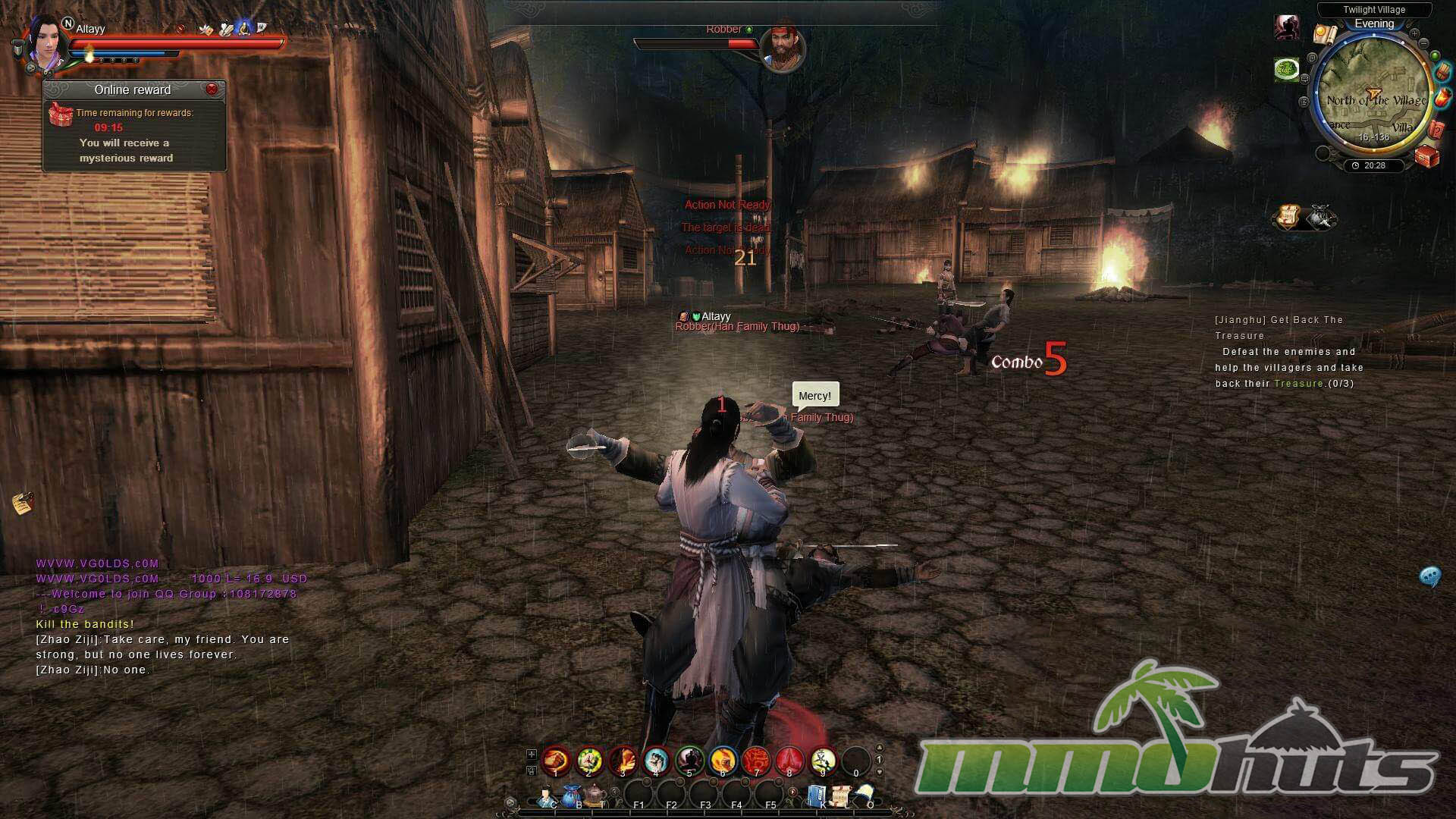

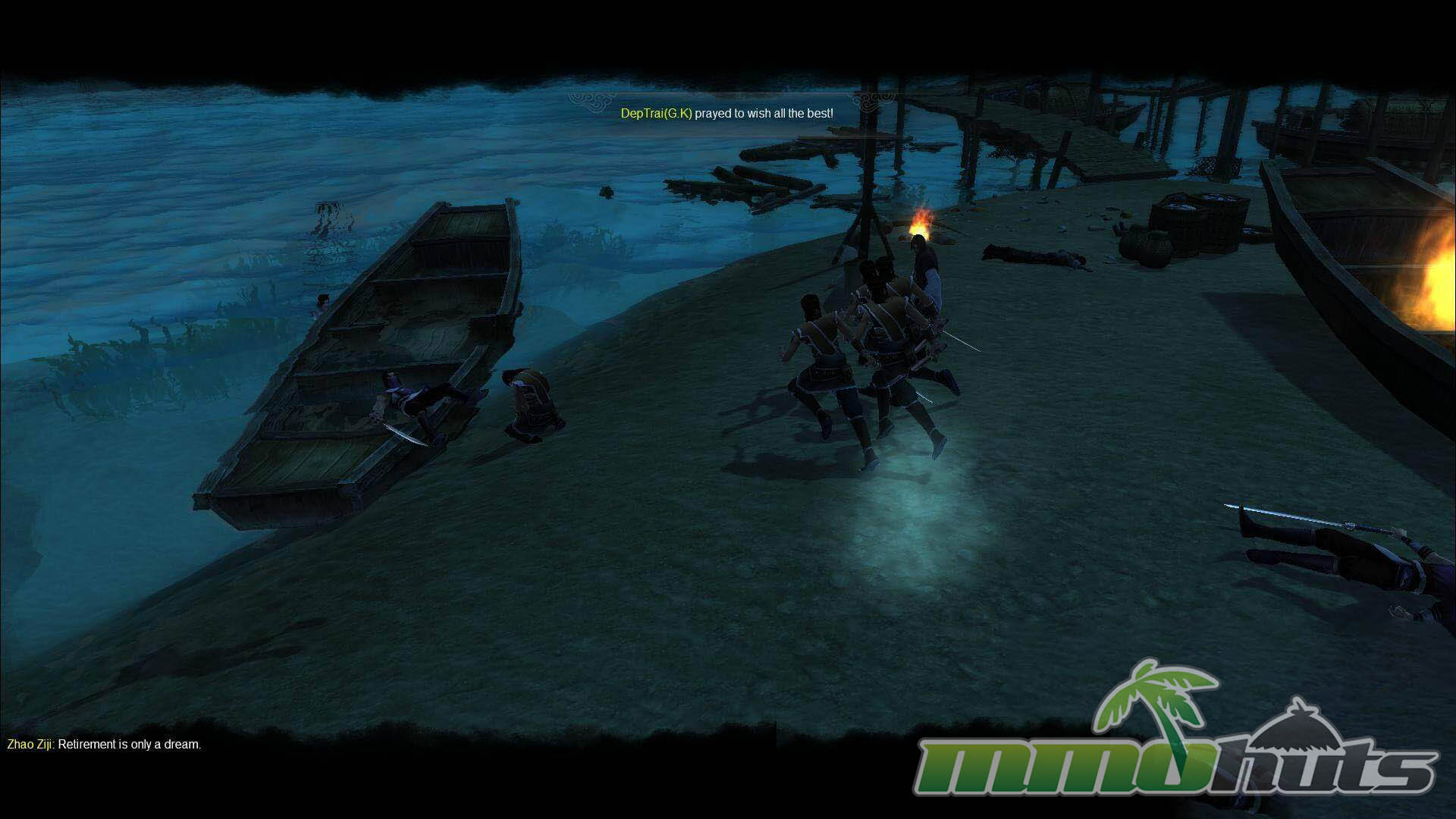
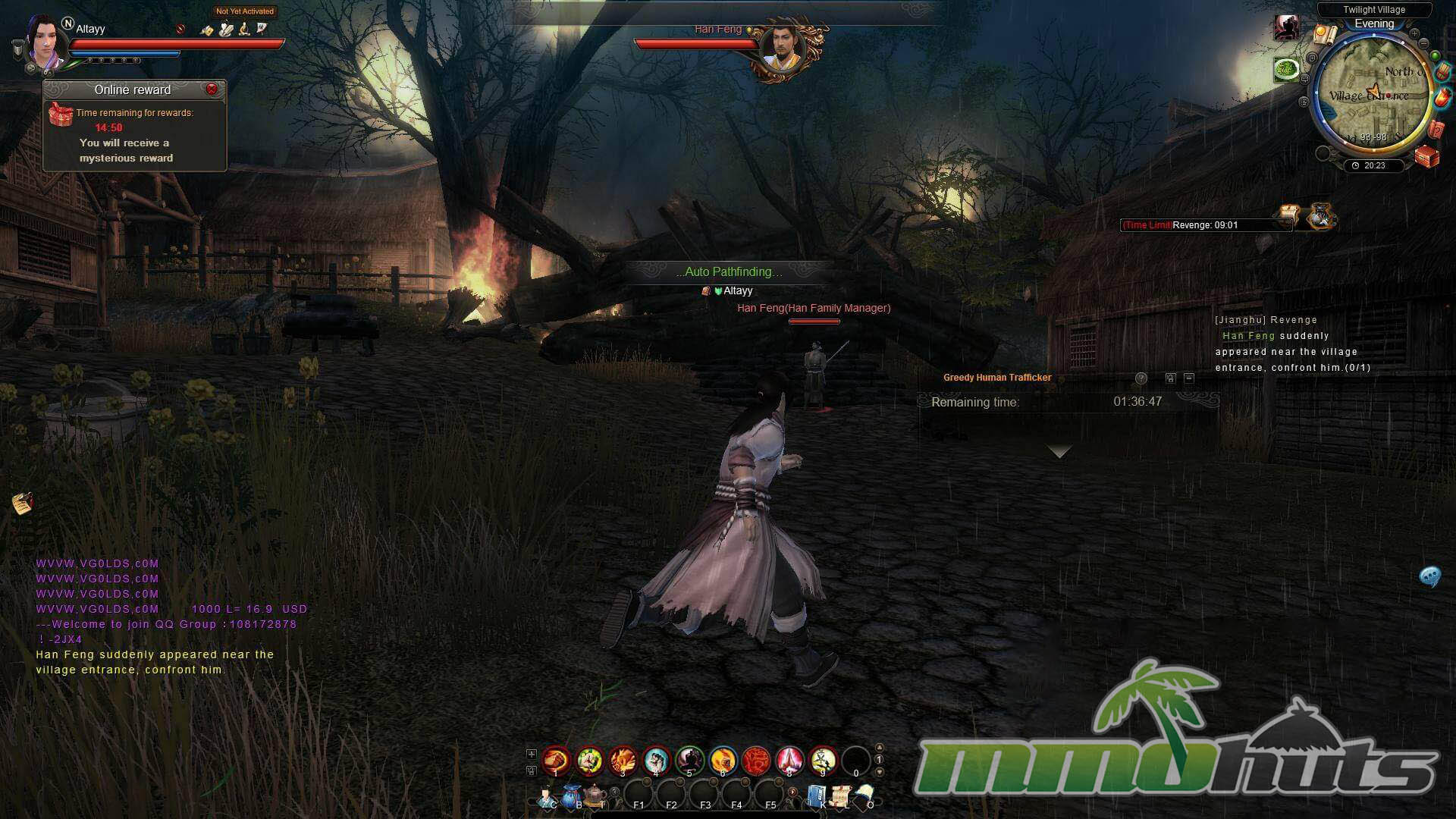
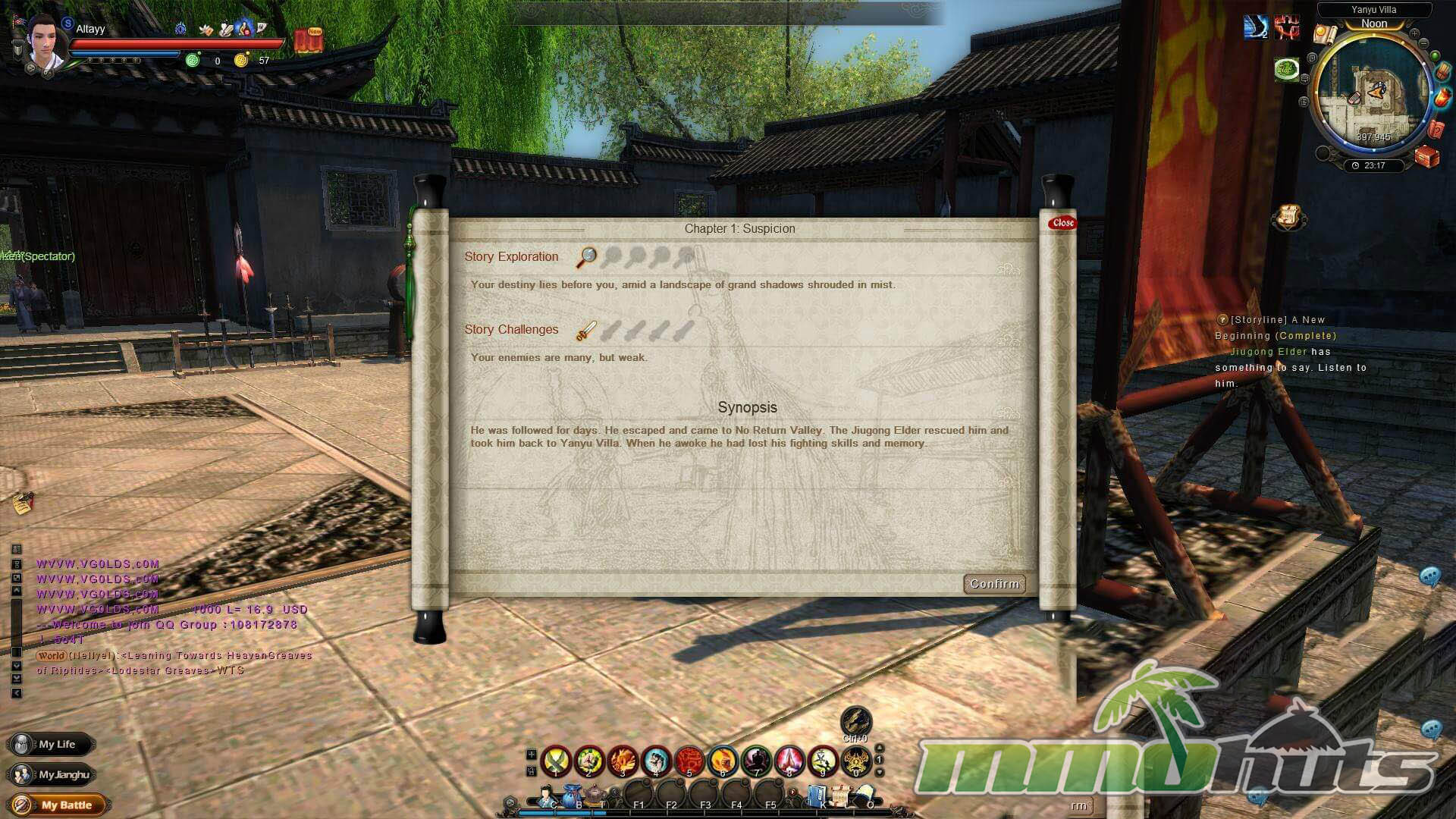
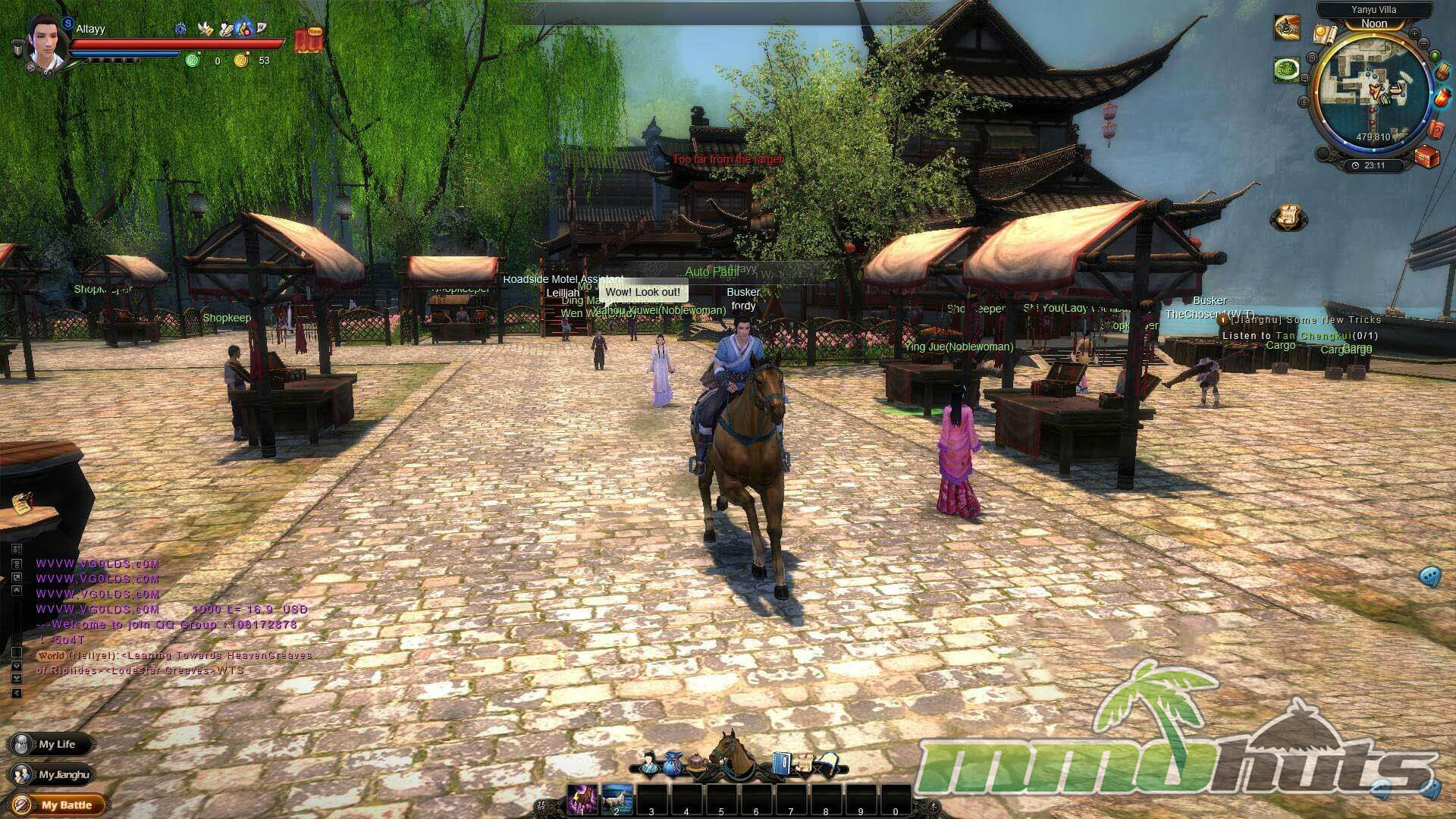
Age of Wushu Featured Video

Age of Wushu avoids traditional classes, but schools effectively fill that role by granting access to distinct martial arts sets and utility. Choosing a school shapes your combat options and, to a degree, how you fit into group play and PvP. Below is a quick snapshot of the eight schools available:
- Emei – A support focused school known for healing, protection, and the ability to bring allies back into the fight. Emei is restricted to female characters.
- Wudang – Strong area damage makes Wudang valuable in group engagements, although they can feel less dominant in straight 1v1 matchups.
- Shaolin – Durable front-liners that mix tanking and melee pressure, with tools geared toward controlling the flow of combat.
- Beggar’s Sect – A popular pick for players who want reliable damage output across both PvE encounters and PvP skirmishes.
- Scholars – A team oriented option combining offense with control and support utility, well suited for coordinated play.
- Tangmen – Specialists in poisons and hidden weapons, often fighting at range with a toolkit of buffs and debuffs. A good match for players who prefer solo playstyles.
- Royal Guards – A versatile school that brings damage, ranged control, and recovery tools, making them valuable in many PvE and PvP setups.
- Wanderer’s Valley – A demanding PvP choice built around quick finishes due to lower survivability, while PvE leans into control and draining health from targets.
Age of Wushu Review
Age of Wushu is a 3D wuxia MMORPG developed by Suzhou Snail Electronic and released on July 18, 2013. Depending on region, it is also known as Age of Wulin (Europe), Age of Kung Fu (South-East Asia), Legends of Kung Fu (Russia), and Nine Scroll Manual/Nine Scroll True Classic (China). Publishing varies by market as well, with Snail Games handling the USA release, Cubizone in South-East Asia, Mental Games in Russia, Webzen in Europe, and the Woniu portal in China.
Starting Out
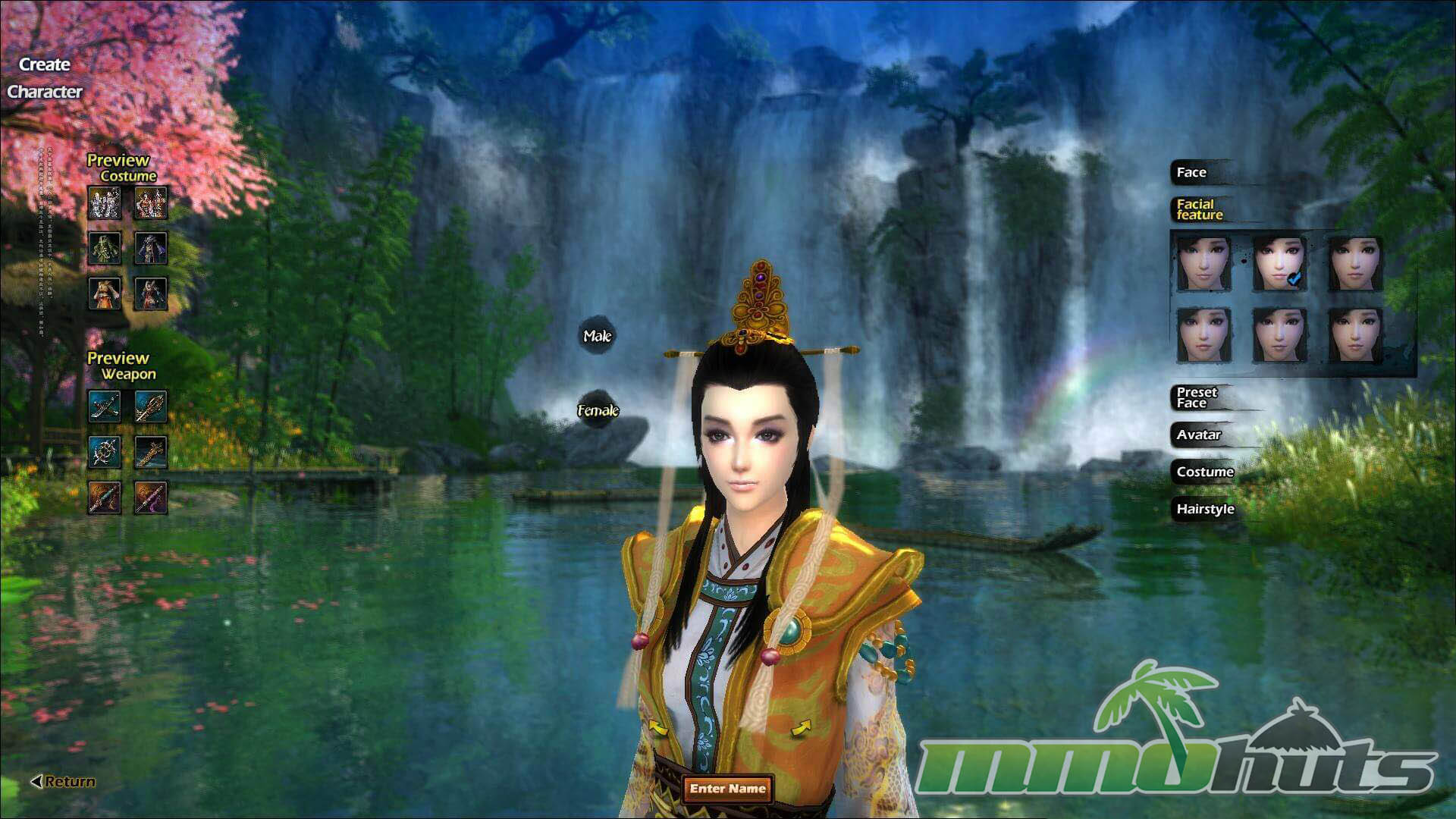
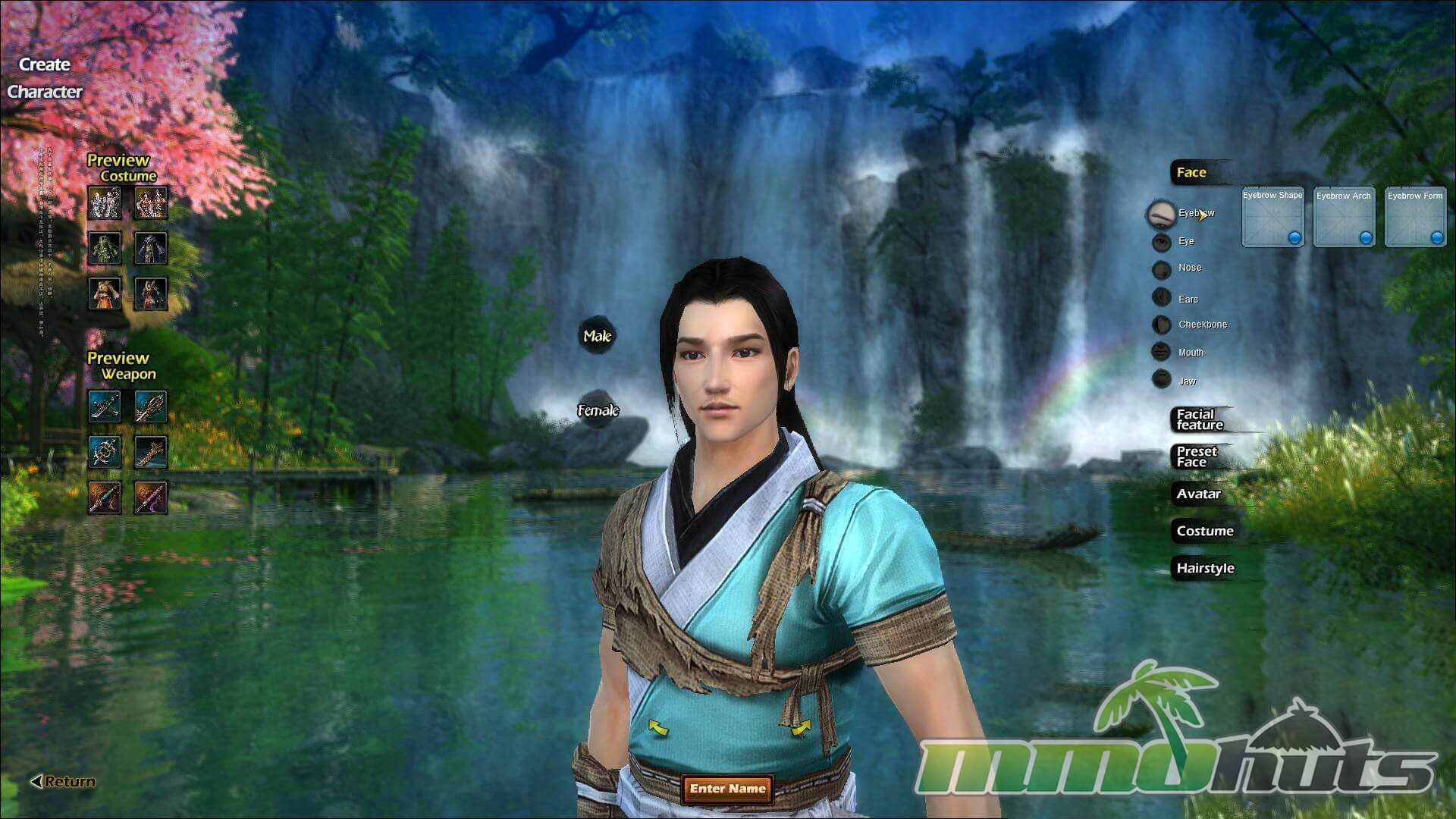
At present there are two servers available, and while getting the client installed can occasionally be a little finicky, it is generally manageable. Once you are in, character creation is one of the first places the game signals that it is doing things its own way. There is only a single race, but you can choose male or female and sculpt your face with a slider based system similar to what you might recognize from The Elder Scrolls style editors or life sim character creators. The end result tends to look distinct from other players, which helps in a world built on social interaction.
The customization suite is not perfect, though. Hairstyle options are limited, and the inability to pick hair color feels oddly restrictive considering how detailed the facial sliders can be.
Controls are also configurable. You can opt for a more standard MMO scheme with WASD movement and mouse driven camera control, or use an alternate setup that leans more into point-and-click navigation while keeping WASD available. It is worth experimenting early, because combat relies heavily on positioning and timing.
The setting is Ming Dynasty China, a time associated with cultural growth and the spread of martial arts traditions. The story’s central conflict is kicked off by the circulation of the Nin Yin Manual, a coveted martial arts text, and the factional struggle around it provides the backdrop for your school choice and many of the game’s early motivations.
Progression Without a Traditional Level Track
Age of Wushu is built on a progression model that will feel unfamiliar if you are coming from the standard quest, level, gear loop. In MMO design terms, it sits closer to a sandbox than a theme park. Theme park games tend to funnel you through a curated sequence toward an endgame, while sandboxes ask you to define your own priorities inside a broader system. Age of Wushu lands somewhere in between, but it clearly favors the sandbox mindset.
There are no character levels and no classic skill point allocations. Instead, completing activities grants experience that is converted into cultivation points. Those points are then used to improve martial abilities and internal skills (your underlying character development), and the process takes real time, sometimes a significant amount of it. In practice, this means your growth is less about hitting a level threshold and more about deciding what you want to train next and how to optimize the pace.
The game provides multiple ways to influence conversion and training rates, including PvP participation, in-game currency options, consumables like pills, divination, and group practice. It can look intimidating at first glance, but the early tutorial helps establish the basics, and the community has produced plenty of guides for players who want to dig deeper.
Story Paths and School Identity
Despite its sandbox leanings, Age of Wushu puts real effort into giving players a narrative framework. The game emphasizes role-playing through choices and consequences, where earlier actions can affect which quests and opportunities appear later. Character creation includes selecting one of four storylines, each beginning in a different starting location and leading you toward your eventual school decision.
Schools are effectively your class, and they come with expectations. The eight schools span good, evil, and neutral alignments, and each has behavioral rules that reflect its identity. Certain actions, such as kidnapping, may be discouraged or outright frowned upon depending on where you pledge allegiance. Ignoring these expectations increases your Discipline score, which can result in harsh debuffs when interacting with your school’s headquarters.
You can technically remain unaffiliated, but it is generally a poor trade, since schools unlock additional abilities and expand your available skill sets. For most players, joining a school is where the game truly opens up.
Unusual Systems That Define the Sandbox
One of the game’s most distinctive features is what happens when you log off. Your character remains in the world as an NPC, continuing routine activities that can generate money and experience. It is a clever way to keep the world populated and to reduce the feeling that progress only happens while actively playing.
That same system also creates risk. Other players can kidnap offline characters by incapacitating them and transporting them to specific NPCs for profit. Kidnapping is not universally accepted, and some schools penalize it culturally through their conduct rules. Kidnappers are also flagged while carrying a captive, allowing other players to attack them freely without punishment, which creates a natural counterbalance.
Being kidnapped does not delete your character or destroy your progress, but it does disrupt your offline earnings for six hours. It is a nuisance with teeth, and it is one of the clearest examples of how Age of Wushu uses social friction to create stories.
Outside of combat, the game also leans hard into professions. There are 17 in total, ranging from expected trades like blacksmithing and tailoring to more flavor-driven pursuits such as calligraphy, weiqi, hunting, woodcutting, fishing, and divination. Even begging is a viable path, supported by a school built around it, which is the kind of commitment to theme you rarely see in modern MMOs.
PvP and Consequences
PvP is a major pillar of Age of Wushu, and it is largely open-world with some guardrails. There are safe zones and protections for new players, but beyond that you should expect conflict to be part of the landscape. Importantly, the game tries to attach consequences to indiscriminate killing.
Player killing increases your Kill Value, and victims can place bounties on offenders. If you are taken down while carrying a high Kill Value or an active bounty, you can be sent to jail. For repeat or severe behavior, execution becomes a possibility. This risk-reward structure encourages players to think before picking fights, even in a game that allows plenty of aggression.
Players can also impose restrictions on their own PvP behavior. Peace Mode prevents you from initiating kills without provocation, and additional parameters can block attacks against certain groups such as friends, schoolmates, guild members, or “good citizens.”
A morality system adds another layer. Chivalry points are earned by taking down kidnappers and PK players, Wicked points come from kidnapping and PK activities, and Arrogance points are gained by associating with players across both ends of the spectrum. Your alignment is visible through an icon next to your name, which can influence how others treat you in the field.
A Lot to Learn, and That Is the Point
Age of Wushu is dense. Beyond the core loop, there are systems for spying on rival schools, organizing raids, running instances, participating in arenas, and tackling faction challenges. Many of these features have their own rules and social expectations, and the game rarely reduces them to a simple checklist.
For players who enjoy mastering layered mechanics and discovering how systems interact, this complexity is part of the appeal. The downside is that it can feel overwhelming, especially if you are used to modern MMOs that constantly direct you to the next objective.
Monetization
The game’s monetization is centered around VIP status. VIP players receive a long list of advantages, including improved cultivation speed, access to exclusive equipment, special rewards from random encounters, login queue priority, expanded money storage, a dedicated chatroom, gathering bonuses, and bonuses tied to school raids.
In practical terms, VIP mainly functions as a way to reduce grind and accelerate progression. Free players are not necessarily locked out of content, but they will feel the difference in how quickly they can develop. There is also a cash shop that unlocks after joining a school, offering items ranging from cosmetic accessories to skill sets.
Final Verdict, A Standout for the Right Audience
Age of Wushu remains one of the more distinctive MMORPGs of its era. It does not go as uncompromisingly sandbox as titles like EVE Online, but it introduces enough social systems and unconventional progression to feel meaningfully different from the genre’s typical formulas. Players who enjoy martial arts themes, community-driven stories, and long-term character development will find a lot to appreciate.
It is not without frustrations. The learning curve is steep, and some design choices, including restrictions like the one character per server rule, can make the experience less welcoming. Still, if you are looking for an MMO that feels like it is taking risks instead of following the standard blueprint, Age of Wushu is worth serious consideration.
Age of Wushu Links
Age of Wushu Official Website
Age of Wushu Wikipedia
Age of Wushu Wikia Database
Age of Wushu Subreddit
Age of Wushu Steam Page
Age of Wushu System Requirements
Minimum Requirements:
Operating System: Windows XP
CPU: Intel Pentium 4 2.4 Ghz or equivalent
Video Card: GeForce 6600 GT or equivalent
RAM: 1 GB
Hard Disk Space: 10 GB
Recommended Requirements:
Operating System: Windows 7 or Windows 8
CPU: Intel Pentium Dual-Core E6 series or equivalent
Video Card: GeForce 9600 GT or equivalent
RAM: 2 GB
Hard Disk Space: 10 GB
Age of Wushu Music & Soundtrack
Age of Wushu Additional Information
Developer: Snail Games (Suzhou Snail Electronic)
Closed Beta Date: November 15, 2012 (First closed beta in U.S.)
Open Beta Date: December 20, 2012
Foreign Releases:
China: Mid 2012 (Published as Age of Wulin by Snail Games on the Woniu portal. The game’s name translates into Human Resource Configurations through Google translate, though).
The U.S. version of the game is accessible globally with no IP restrictions. Age of Wushu is available in China on the OBOX console (Android-based custom console) and Mobile systems.
Development Background
Age of Wushu, also known as Age of Wulin, Age of Kung Fu, or Legends of Kung Fu, was developed by Chinese game developer Snail Games. Age of Wushu began development in 2011 and closed beta for the Chinese market launched in June 2012. Age of Wushu launched in China with enormous fan fare and remains one of Snail Game’s most popular MMORPGs, with over 80 million registered accounts in China alone. Age of Wushu is powered by Snail Games’ self developed “Flexi” engine.