
Tibia
Tibia is a classic 2D fantasy MMORPG that first arrived in 1997, and it still feels proudly old school today. Its simple presentation hides a surprisingly demanding game built around risk, player-driven progression, and a reputation for serious PvP. Even decades later, Tibia continues to pull strong numbers, often showing more than 15,000 players online during peak times, which is impressive for a title from the genre’s earliest era.
 | Publisher: Cipsoft Playerbase: High Type: MMORPG Release Date: January 7, 1997 (NA) PvP: Open PvP Pros: +Brutal, meaningful PvP stakes. +Decades of ongoing updates and content. Cons: -Visually dated by modern standards. -Botting remains a recurring problem. -Some features require a subscription. -Tough onboarding and learning curve. |

Tibia Overview
Tibia comes from a time when online games had to be engineered for slow connections and modest PCs. That history shows in its 2D visuals and fixed, angled viewpoint, but it is also the reason the game remains so accessible to run, even on very low-end machines. The style is unmistakably retro, and if you enjoy pixel-heavy RPGs or older online worlds, Tibia’s presentation can feel more like a deliberate aesthetic than a limitation.
What keeps Tibia relevant is not its graphics, it is the long-running, community-powered ecosystem built on exploration, trading, hunting, and conflict. The game still attracts a dedicated audience across regions, and it is not unusual to see peak concurrency exceed 15,000 online. In that sense, it shares some DNA with other long-lived MMORPGs like RuneScape, a persistent world that survives because its players treat it like a hobby rather than a one-and-done campaign.
Tibia Key Features:
- Hardcore PvP – if you opt into the Hardcore PvP worlds, you enter a rule set where player killing is largely unrestricted and consequences are minimal.
- Easily Accessible – built for low bandwidth and low specs, it is easy to log in from many setups that would struggle with modern MMOs.
- Loyal Playerbase – an active community that sustains the economy, guild politics, and the game’s long-term appeal.
- On Your Own – progression is not guided by constant tutorials, so discovery and self-direction are a major part of the experience.
- Tried and True – with many years of live updates behind it, Tibia offers the depth and history of a genuine MMO classic.
Tibia Screenshots

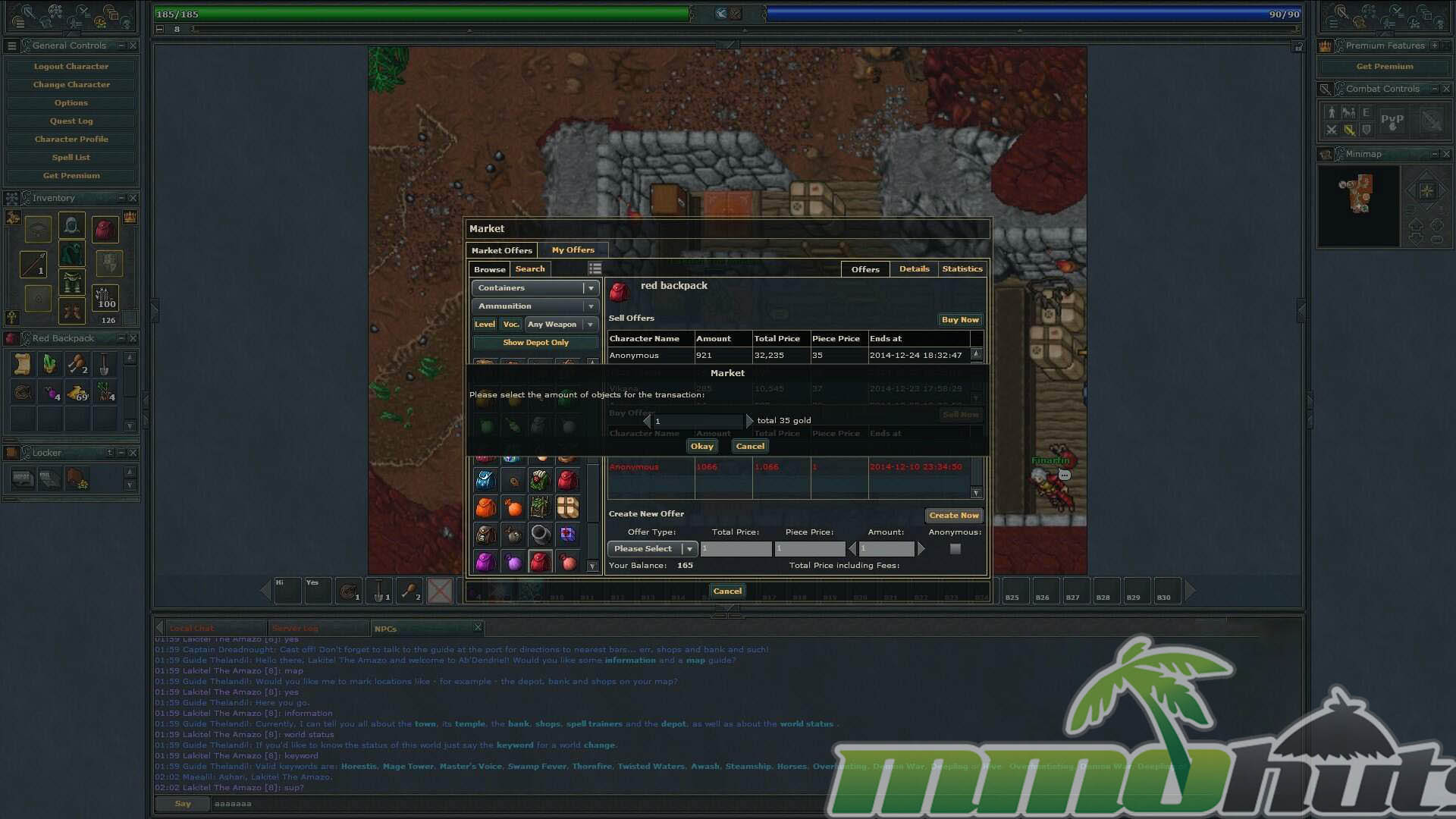

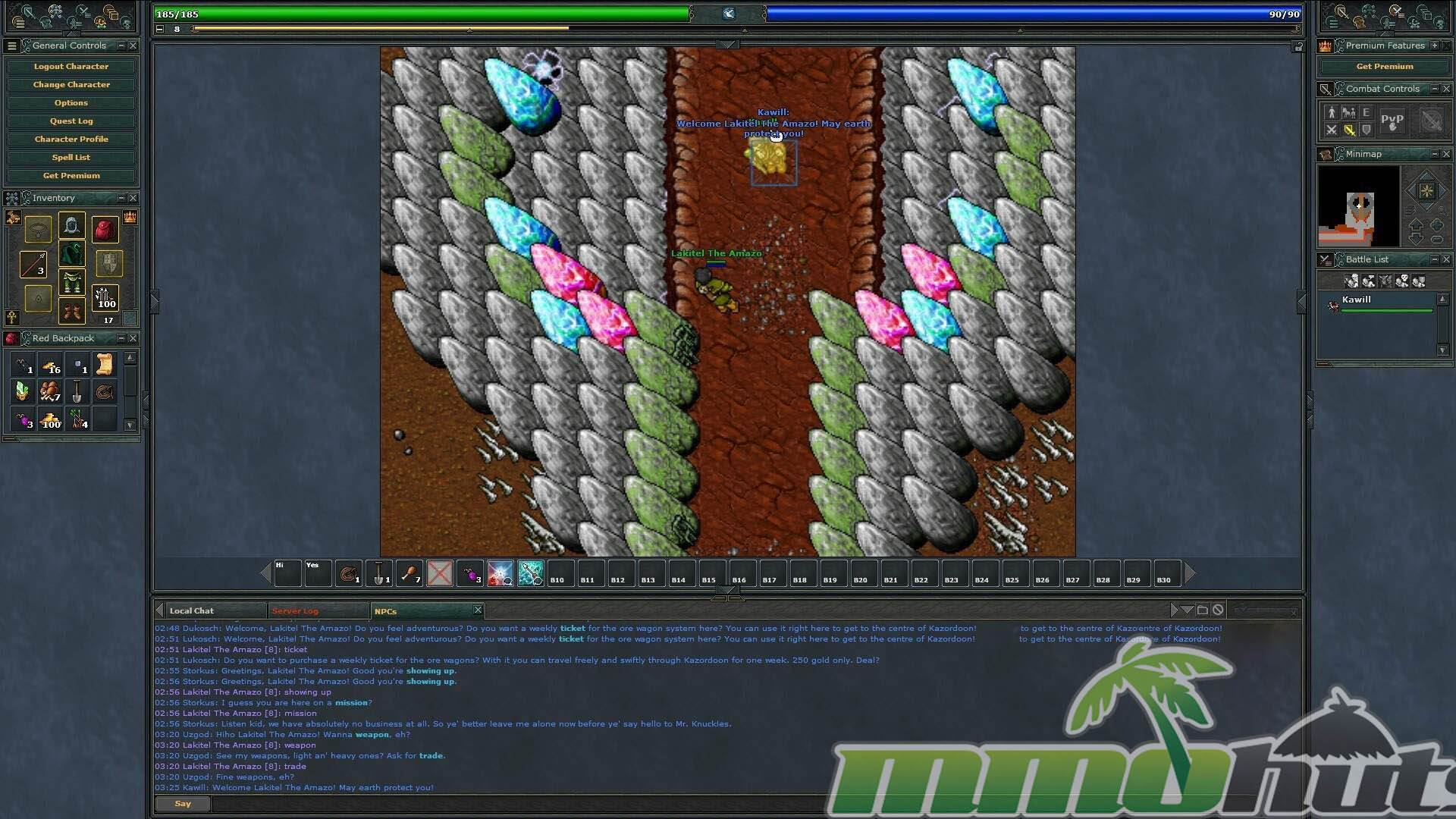


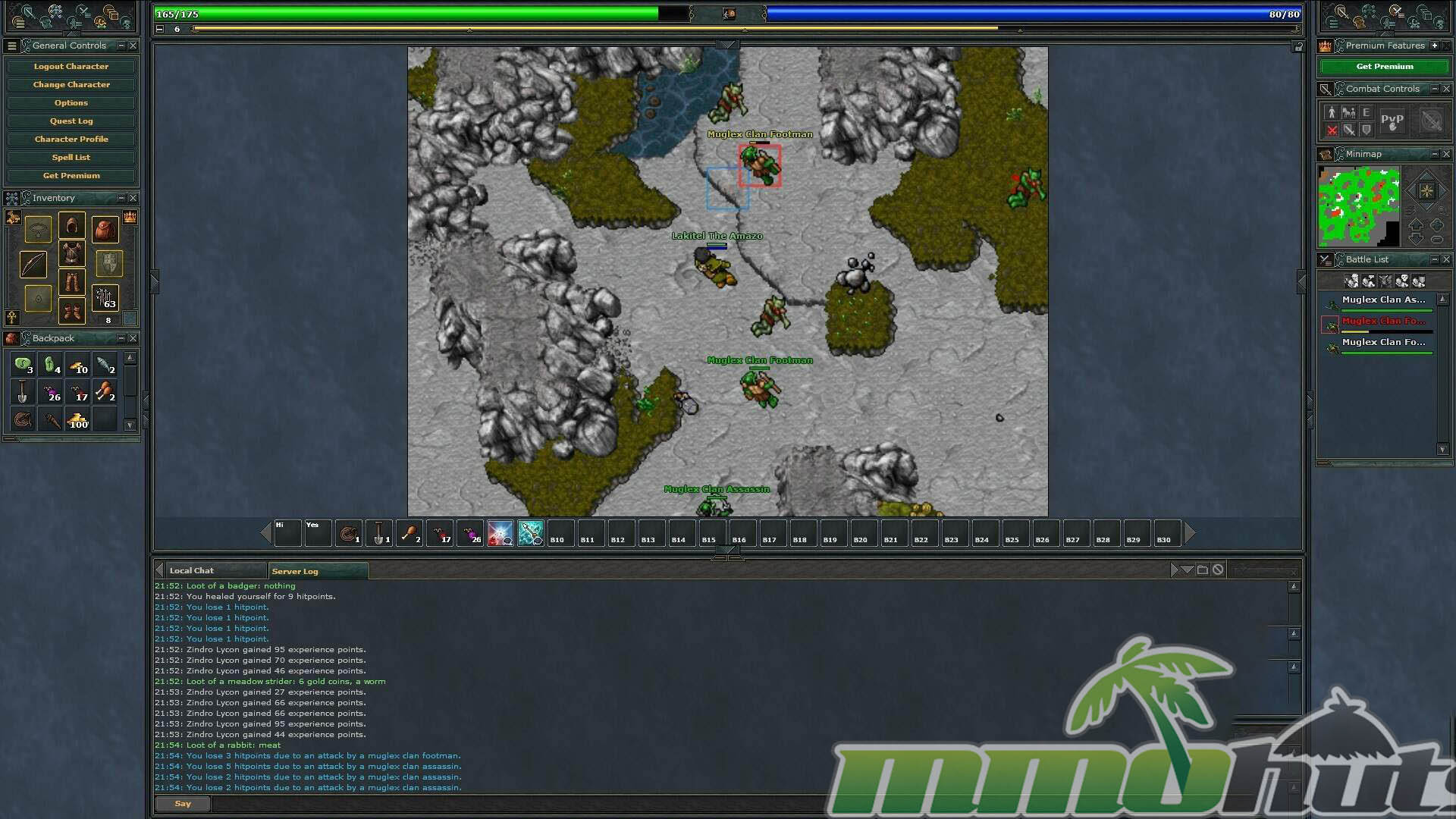

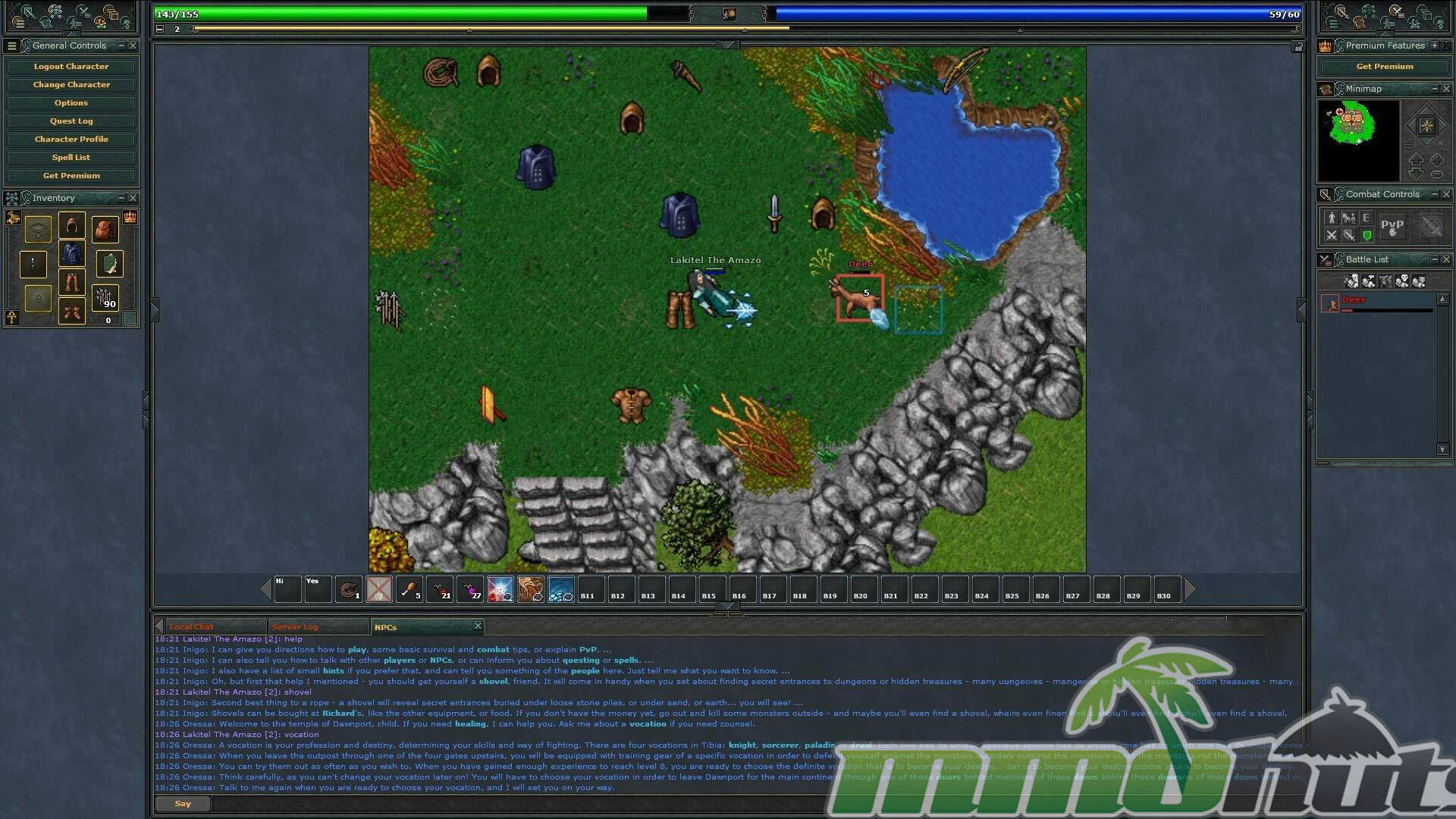

Tibia Featured Video

Tibia Classes
Tibia’s classes are called vocations, and they line up with familiar RPG archetypes. You do not lock one in immediately, since you must reach Level 8 before selecting a vocation.
- Knight – a front-line melee specialist built around weapons, armor, and strong physical skills, they can also haul more equipment and loot than the other vocations.
- Paladin – a ranged fighter using bows, crossbows, stars, and spears, with a hybrid kit that blends physical combat with useful magic.
- Sorcerer – focused on high offensive spell damage and a wide toolkit of attacks, they trade durability for raw magical output.
- Druid – a support-oriented vocation known for healing and nature magic, with access to strong spells such as Icicle and Avalanche.
Tibia Review
Tibia launched in January 1997 from CipSoft and belongs to the genre’s earliest wave, alongside names like Meridian 59, Ultima Online, and Lineage. The fundamentals are what you would expect from an old-school MMORPG: hunting monsters for experience, collecting treasure, and gradually learning where the world’s dangers and rewards are hidden. It also operates across a large network of worlds, 77 servers in total, split between London (38) and the United States (39). Because the game is light on bandwidth demands and offers a web-based option, it is generally easy to connect from a wide range of locations.
Getting Started and Choosing a Path
New characters begin on Dawnport, a starter zone that functions as a training ground rather than a long scripted tutorial. It is useful because it lets you sample the four vocations before committing at Level 8, but it does not explain everything in depth. In practice, that means you will learn Tibia the way older MMOs expected you to, through experimentation, advice from other players, and a fair amount of trial and error.
Controls are straightforward once you settle in, with point-and-click movement and optional WASD navigation. The angled view can occasionally make navigation feel a bit awkward in tight spaces, particularly if you are moving quickly and not watching corners. The interface includes the usual hotbar for actions and spells, plus a chat window that matters more than it would in many modern MMOs, since chatting is also how you interact with many NPCs. Early character customization is limited, and your first upgrades are mostly a matter of equipping whatever you can find or afford.
After a short stretch of beginner hunting (the early wildlife and low-threat monsters), hitting Level 8 arrives fairly quickly. Once you pick a vocation, you are set loose in the wider world and can choose from multiple cities as a base of operations.
Exploration First, Guidance Later
Tibia’s core structure is built around autonomy. The game rarely points you directly to objectives, and it does not attempt to constantly steer you toward an “optimal” path. That freedom is a major reason fans stick with it, but it is also why many new players bounce off. You are expected to figure out where to hunt, how to manage risk, and when to retreat, and the world often feels indifferent to whether you are prepared.
That indifference becomes most obvious through death penalties. Early on, deaths are common, and the cost can sting. With repeated failures, the game can send you back to the rookie area, effectively forcing you to rebuild momentum. That harshness is not a side feature, it is a pillar of Tibia’s identity, and it is something many newer MMOs have intentionally moved away from.
When you die, you lose experience and skill progress, and you also risk losing what you were carrying, especially what is stored in your backpack. Even your gold is vulnerable, since it is treated like an inventory item. The one small mercy is that your items remain where you fell, so in some cases you can return to recover them, assuming other players do not get there first.
Guilds are another long-term cornerstone. In a game where the economy and politics are heavily player-driven, being in a guild can dramatically change your day-to-day experience, from safer hunting to coordinated wars and better access to resources. The downside is that creating a guild is tied to having a Premium account.
Combat, Tension, and PvP Rulesets
Moment-to-moment combat in Tibia is functional rather than flashy. Attacks are largely driven by clicking to engage and letting your character auto-attack, while you manage positioning, consumables, and any spells or abilities you have available. Weapon options cover the expected range for an RPG of this type, including swords, spears, and bows, and you can adjust your approach by choosing a defensive, offensive, or balanced combat stance.
Magic exists across all vocations to some extent, and it comes in the form of spells and runes. Runes must be acquired and are consumed on use, which adds an additional layer of resource management. There are also elemental spells and runes alongside neutral options, but they behave like familiar RPG tools rather than a radically different combat system.
PvP is where Tibia’s reputation is earned, and your experience depends heavily on the server type you pick. There are three main rule sets: (1) Optional PvP, where attacking other players is limited to guild war contexts; (2) Open PvP, where players can fight, but repeated aggression results in a skull mark and associated penalties; and (3) Hardcore PvP, where player killing is essentially unrestricted and comes without penalties.
Premium and the Long Game
Premium status matters a lot if you plan to invest real time in Tibia. The good news is that it is not framed as pay-to-win, it is closer to paying for comfort and access. Premium can provide conveniences such as mounts, faster travel options, housing rentals, access to premium quests and zones, offline training, and additional quality-of-life perks.
You can still play without Premium, especially while learning the basics, but over months of play the limitations become more noticeable. It is also worth noting that Tibia’s difficulty and friction are part of what makes it memorable, and Premium can smooth off some of those rough edges. For some players that is a welcome improvement, for others it slightly dilutes the survival-like tension that makes the game stand out.
Final Verdict – Good
Tibia remains a landmark for players who enjoy older MMORPG design, high-stakes consequences, and a world that is shaped as much by its community as by official content. It is one of the most accessible MMOs from a technical standpoint, and it still offers a kind of danger and loss that many modern online games avoid.
At the same time, it demands patience. The onboarding is minimal, the rules are not always intuitive, and the punishment for mistakes can feel severe if you are used to more forgiving MMO systems. If you enjoy rogue-like tension, meaningful risk, and social dynamics that are not heavily curated, Tibia is still worth your time.
Tibia Links
Tibia Official Site
Tibia Wikipedia Page
Tibia Wikia (Database / Guides)
Tibia Subreddit
Tibia System Requirements
Minimum Requirements:
Operating System: Windows XP or newer. Linux Compatible
CPU: Any 500 MHz CPU or better
Video Card: Any GPU that supports at least DirectX 5.0
RAM: 128 MB
Hard Disk Space: 100 MB
Recommended Requirements:
Operating System: Windows XP or newer. Linux Compatible
CPU: Any 900 MHz CPU or better
Video Card: Any GPU that supports at least DirectX 5.0
RAM: 256 MB
Hard Disk Space: 100 MB
Tibia’s age works in your favor here. Since it originally launched in 1997, almost any functional PC should run it without trouble. If performance or launch issues pop up, running the client as administrator and using Windows XP SP3 compatibility settings can help. There is also an unofficial client that makes the game Mac compatible, search specifically for a Tibia for Mac client if you want that option.
Tibia Music & Soundtrack
Tibia has no in-game music.
Tibia Additional Information
Developer: CipSoft
Head Designer(s): Ulrich Schlott (Aka Durin), Guido Lübke, and Stephan Payer
Other Platforms: Adobe Flash, Windows, Linux, and an Unofficial Mac Client
Foreign Release(s):
Tibia’s current build on CipSoft’s official site is the worldwide version. There are no IP Resitrctions used to limit access by region.
Development History / Background:
Tibia is often cited as one of the earliest MMORPGs to reach broad popularity, and its timeline is notable, it arrived in January 1997, roughly nine months before Ultima Online. Like RuneScape, it is commonly described as “free-to-play,” but a monthly subscription is required to fully access the game’s features and content. Its design also echoes the older hardcore MMO mindset, where dying could mean losing items, and open world PvP created constant pressure and uncertainty while traveling or hunting.
The game was developed by the German studio CipSoft, which originally operated under the name CIP Productions. The studio name references the Cip-Pools program, a source of financial support for programmers in German universities. Tibia also has roots in the multi-user dungeon tradition, specifically as an early graphical interface multi-user dungeon-style game (GIMUD). The first public test server went live on January 7, 1997, and the original playable world was only 160 tiles by 160 tiles. Despite being far older than most active MMOs, Tibia continues to maintain thousands of concurrent players, and it also has an active scene across various private servers.