NosTale is a free-to-play fantasy MMORPG that mixes cute anime-inspired presentation with classic, grind-friendly progression. You start as an Adventurer, learn the basics through questing, and eventually unlock a branching class path, plus a surprisingly involved companion system built around pets and NosMates.
 | Publisher: Gameforge Playerbase: Medium Type: MMORPG Release Date: August 30, 2007 Pros: +Class progression that opens into specializations. +Robust pet and companion management. +Approachable controls and interface. Cons: -Visuals show their age. -Localization quality is inconsistent. -Meaningful class branching is gated behind early leveling. |

NosTale Overview
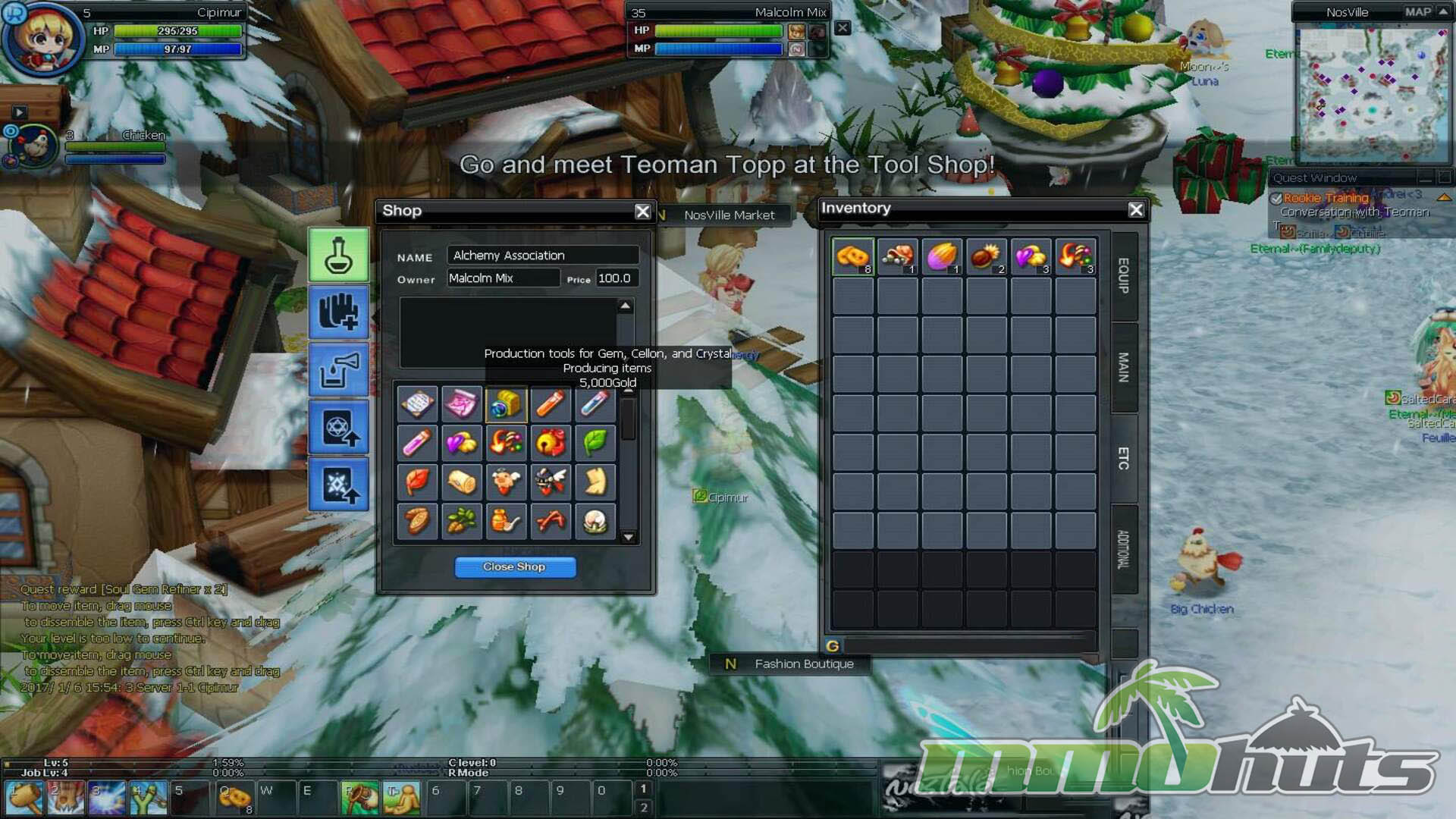
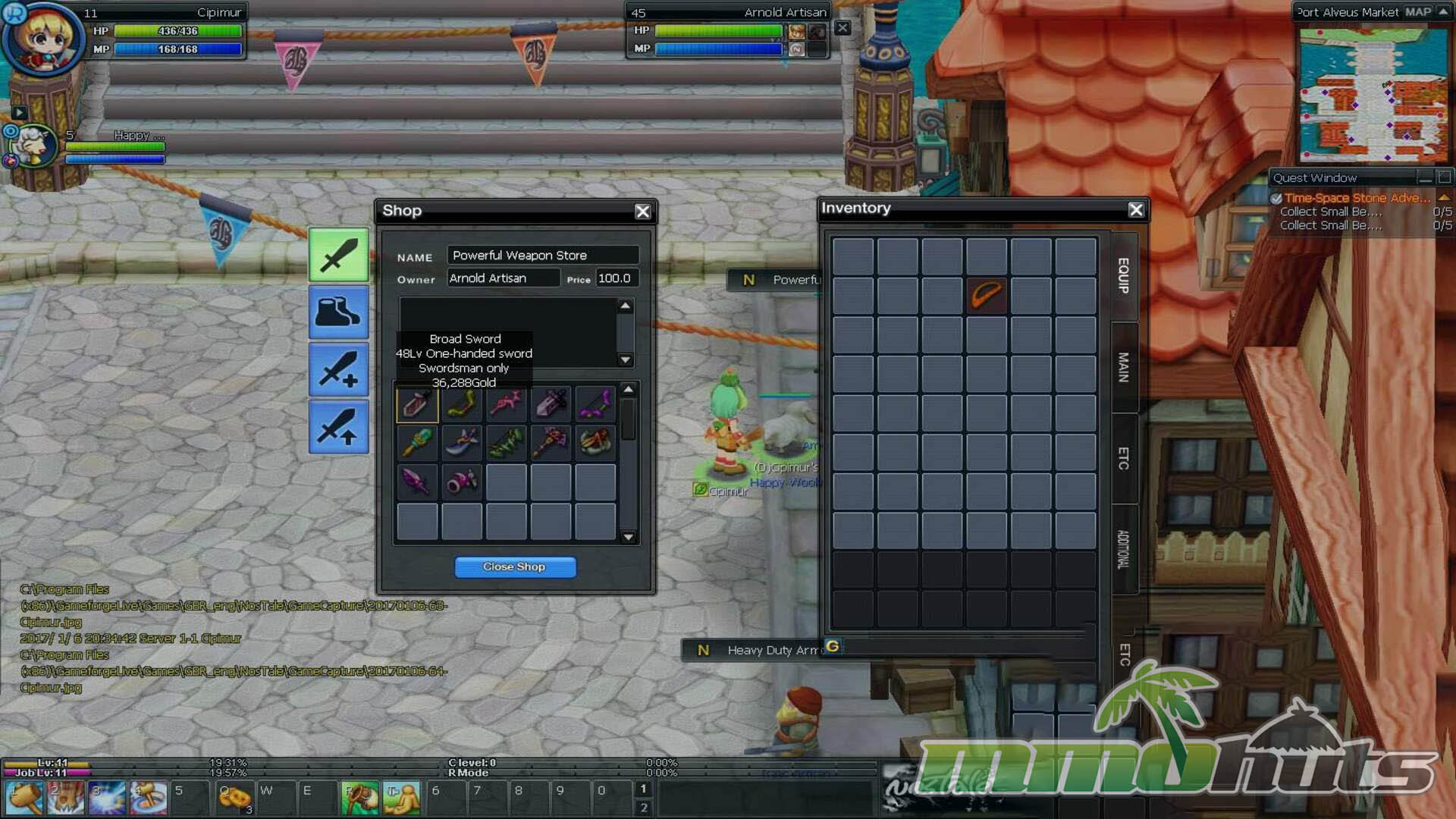
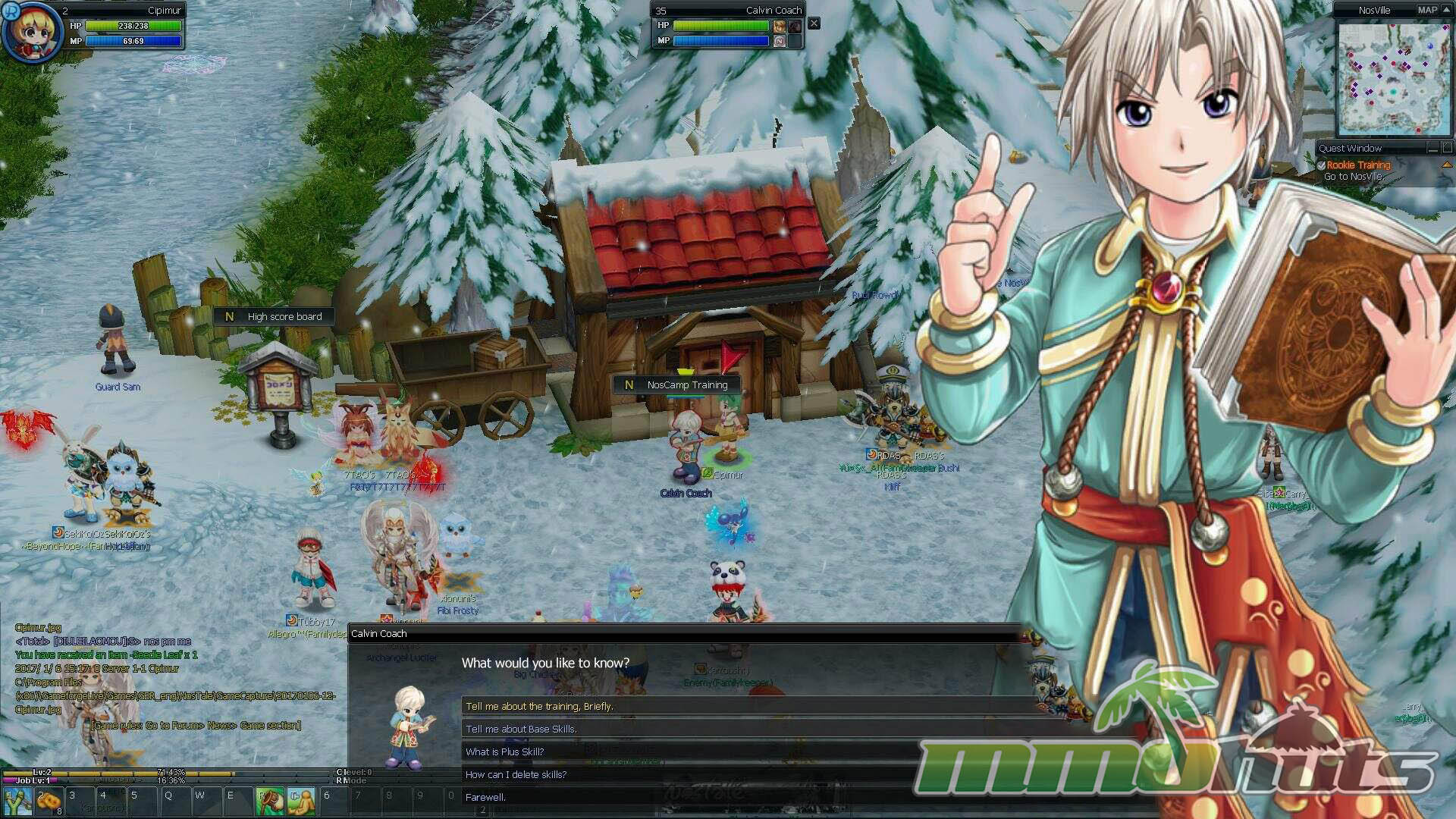
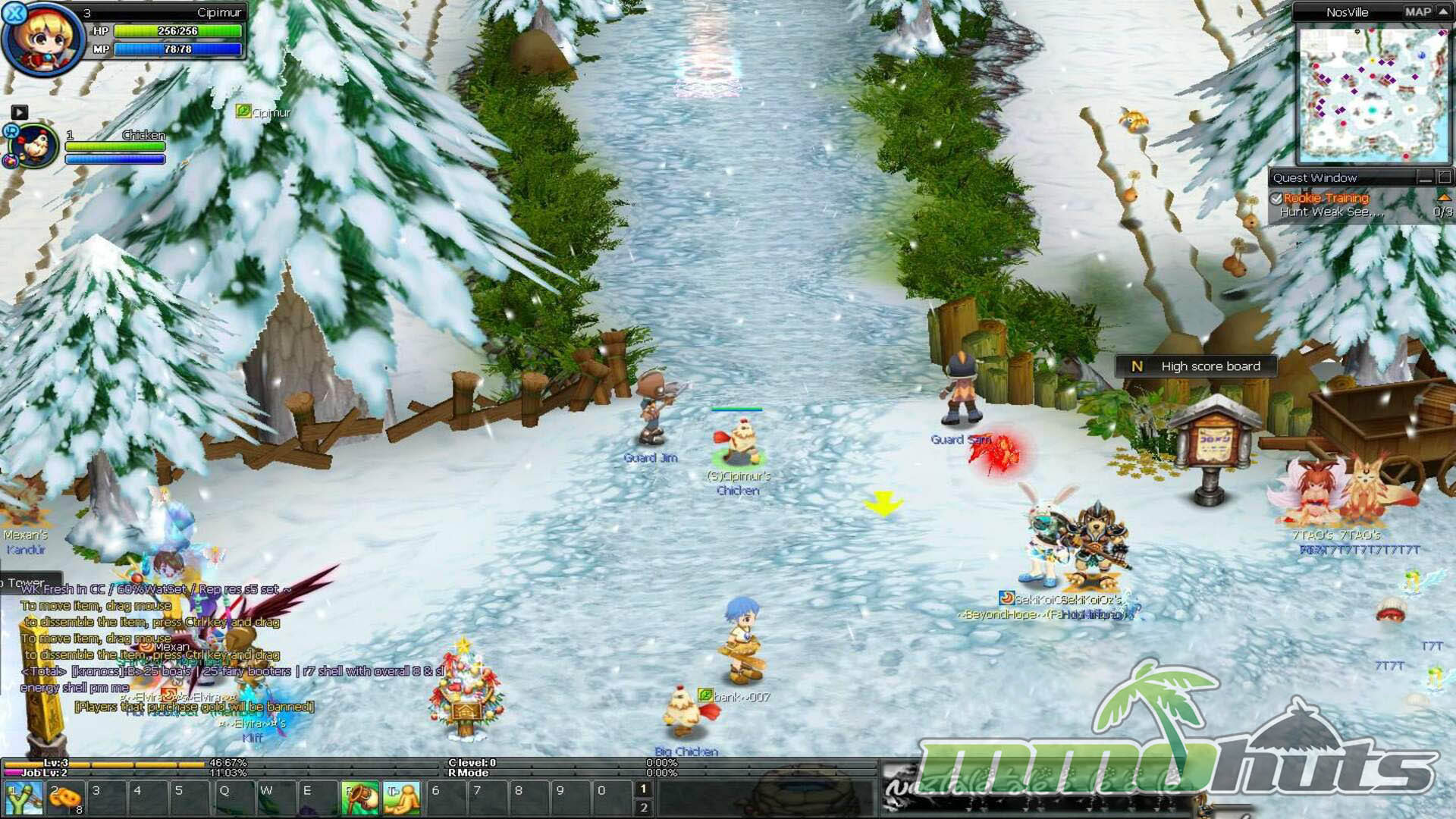
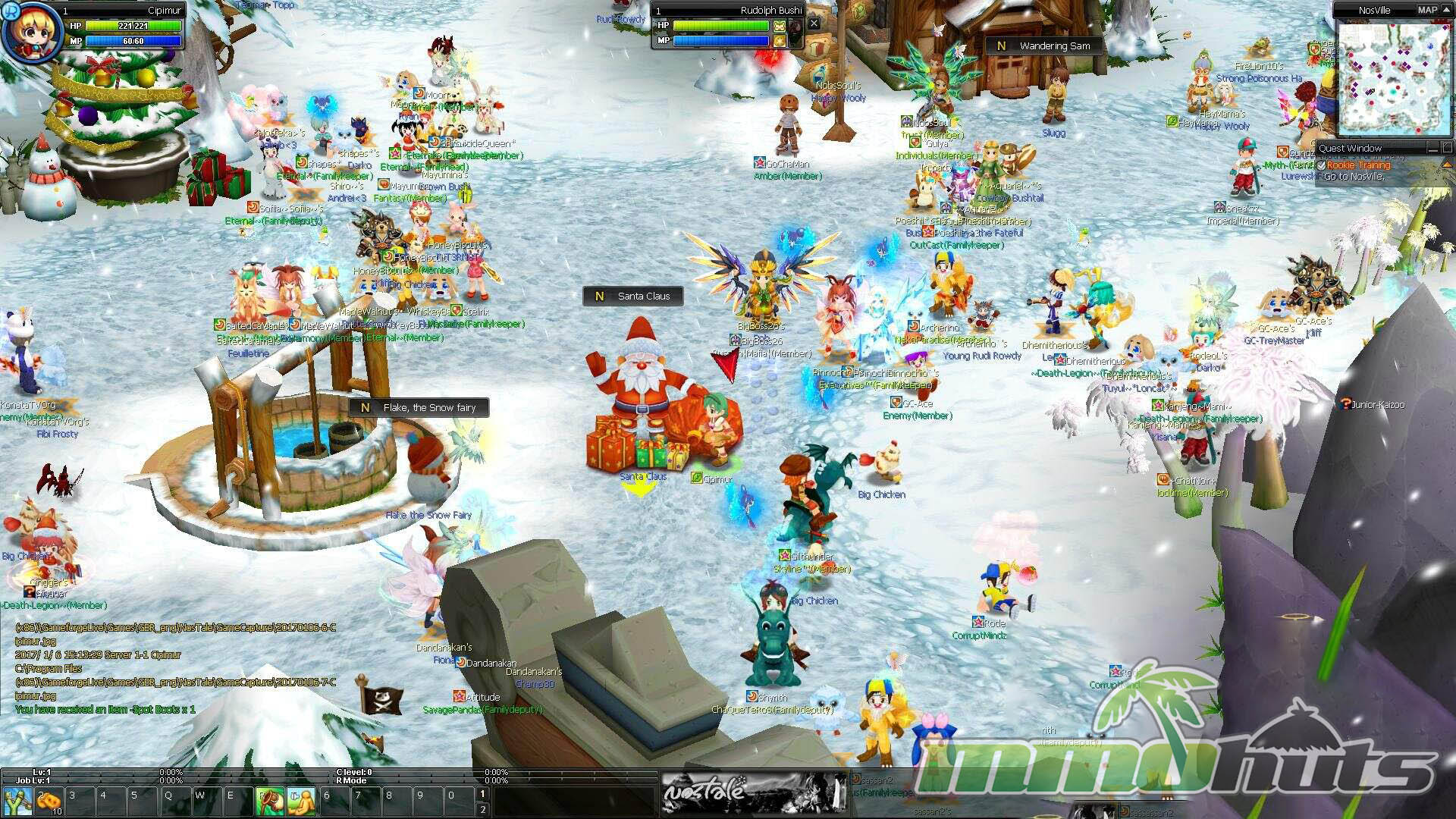
NosTale is a free-to-play, anime-styled fantasy MMORPG presented in an isometric view with 3D environments, a look that will feel familiar to anyone who spent time with older classics like Ragnarok Online or Secret of the Solstice. You create a character, push through the early levels as an Adventurer, and then work toward your first real class choice, Archer, Swordsman, or Mage. From there, the game’s signature twist is its specialist card system, which functions like a powerful overlay on top of your base class, adding new abilities and gear options and letting you tailor your role for tougher encounters.
The structure is built around questing, overworld grinding, and instanced challenges. Time-space stones (crystal worlds) act as timed missions with completion rewards, while raids and periodic events encourage grouping. Between combat activities, the game leans into collection and customization through pets and NosMates, companions you can bring into fights or keep at home in Miniland, your personal instance that doubles as storage and a small social space.
NosTale Key Features:
- Branching Class System – start as an Adventurer, then progress into core classes and expand your toolkit further through specialist cards that unlock more distinct playstyles.
- Variety of Pets to Capture – recruit pets and NosMates for combat support and to fill out Miniland, your personal home area.
- PvP Arenas –opt into public PvP or focus on dedicated PvP zones and matches with reward incentives.
- Dungeons and Raids – take on repeatable time-space challenges, join large-scale events, and coordinate for raid bosses with a group.
- Join a Family – play socially by joining a “Family” (guild equivalent) to organize raids, events, and general progression.
NosTale Screenshots




NosTale Featured Video

NosTale Review
NosTale began in Korea and later arrived in the West with a somewhat messy publishing trail. Earlier Western publishers have since disappeared (including Serverx and Uforia), and today the game is distributed under Gameforge, with global availability through Steam. That history shows up in places, but the core game remains a straightforward, comfort-food MMORPG built around simple combat, lots of small objectives, and long-term collecting.
A classic MMO pace with modern convenience
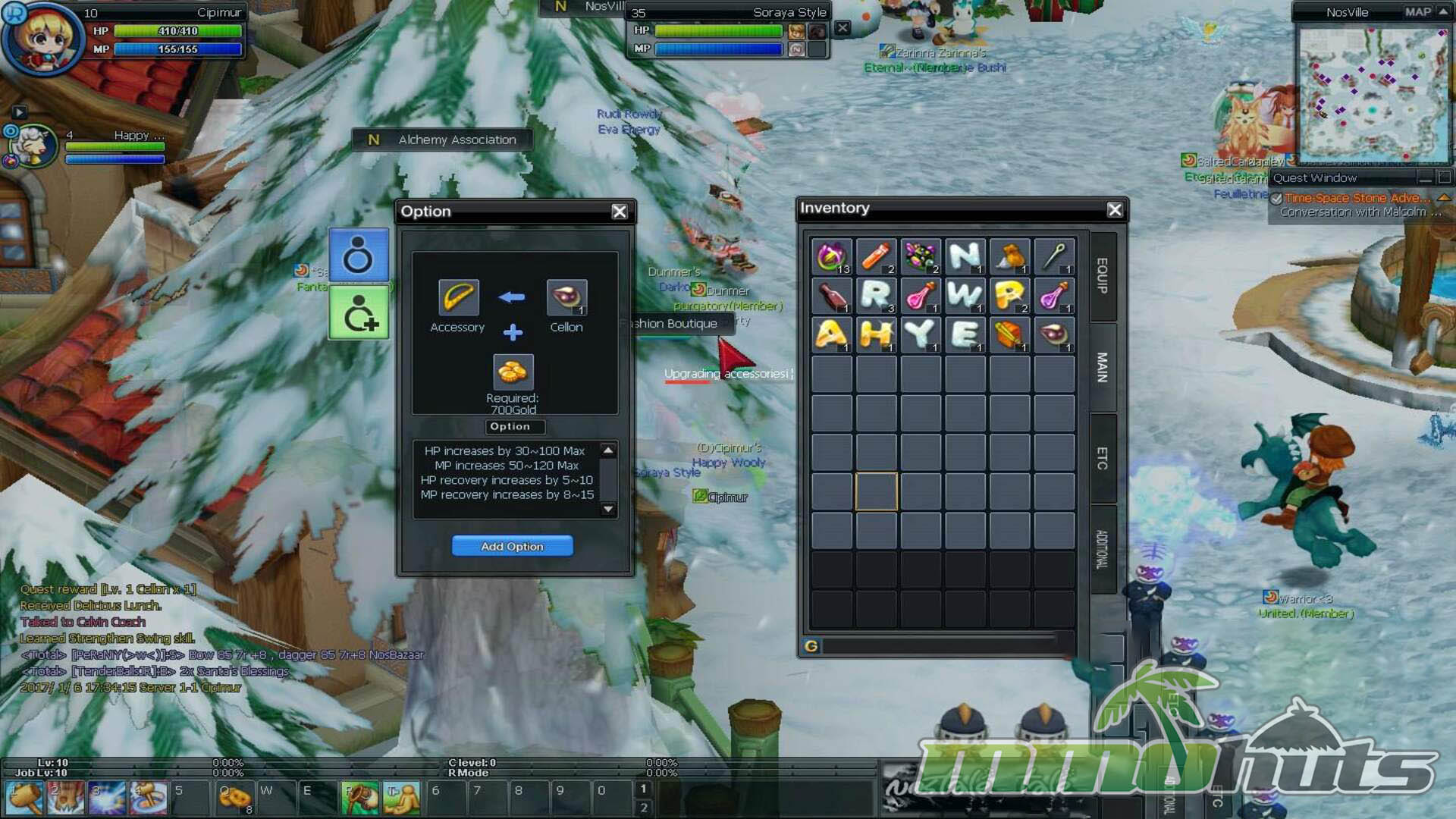
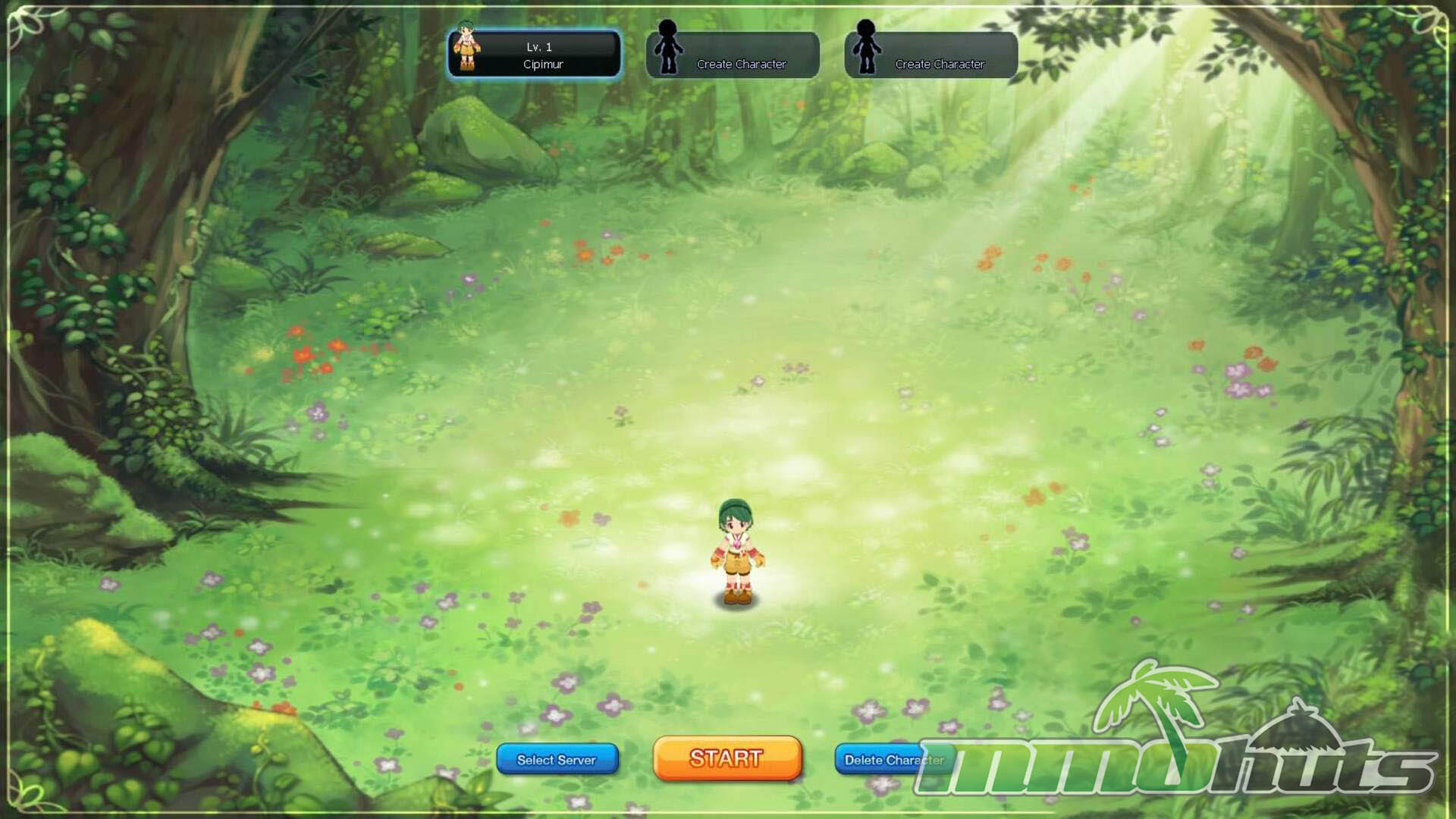
The first impression is how intentionally “old-school” NosTale feels. The art direction favors bright, chibi-styled characters and readable environments over technical spectacle, and the UI is designed to be easy to navigate even if you have not touched an MMO in years. Character creation is extremely light, you mainly pick gender and a small set of hair options, so the game clearly expects your identity to come more from gear, specialist cards, and companions than from sliders and face presets.
Progression early on is guided heavily by quests. The game nudges you along with clear direction markers, and if you follow that intended path, levels come quickly. It is also worth noting that NosTale tracks both Combat level and Job level. Your Combat level steadily rises through general play, while Job level is tied to your current job and resets when you swap, which reinforces the idea that experimenting with roles is part of the long-term loop.
Companions are not an afterthought
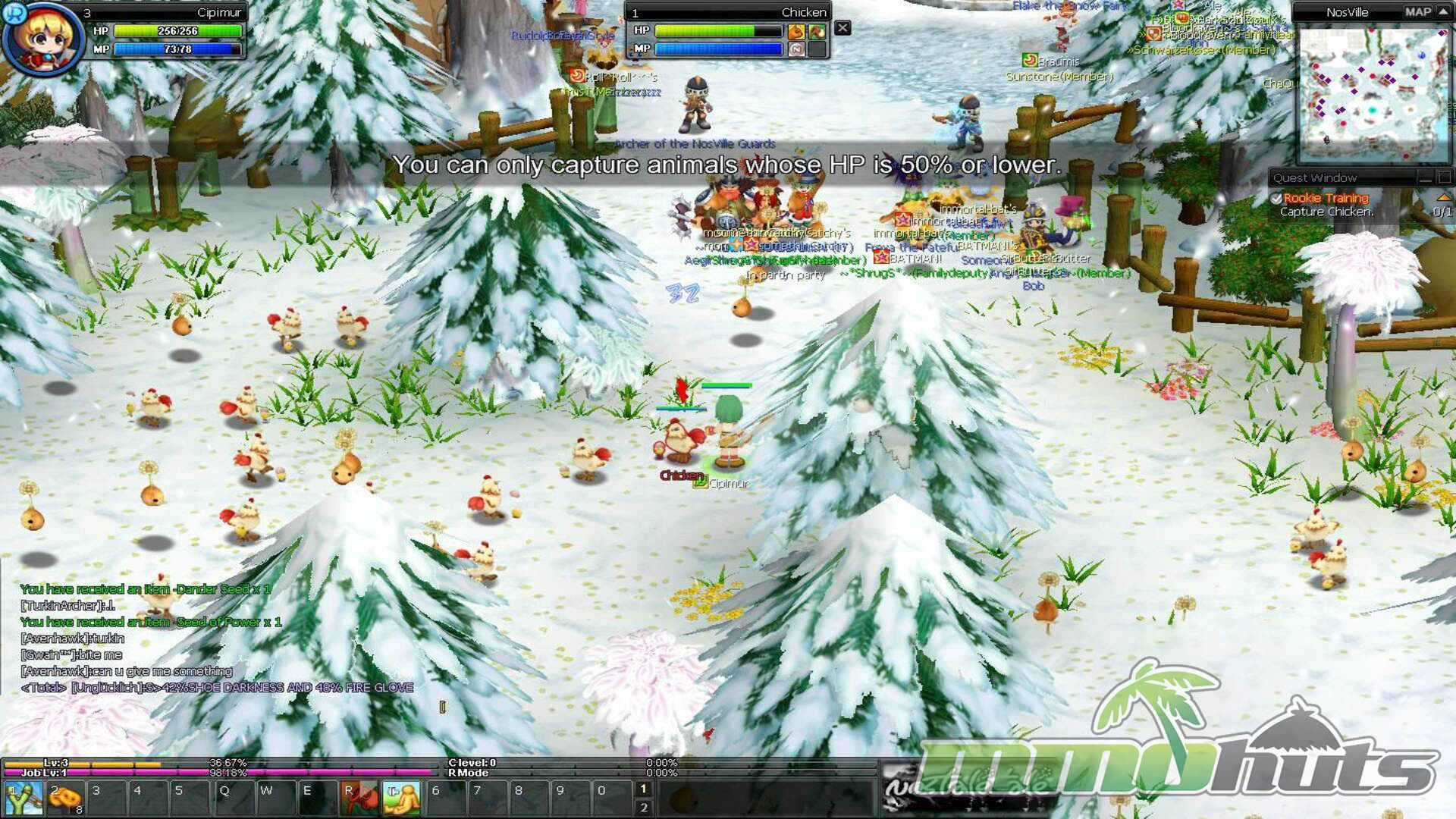
NosTale’s pet and companion systems are a major reason it still stands out among older free-to-play MMORPGs. As you move through the tutorial and early zones, you learn how to capture creatures and keep them as pets. Any extra pets you obtain are sent to Miniland automatically, which works as a personal home instance and a holding space for your growing collection.
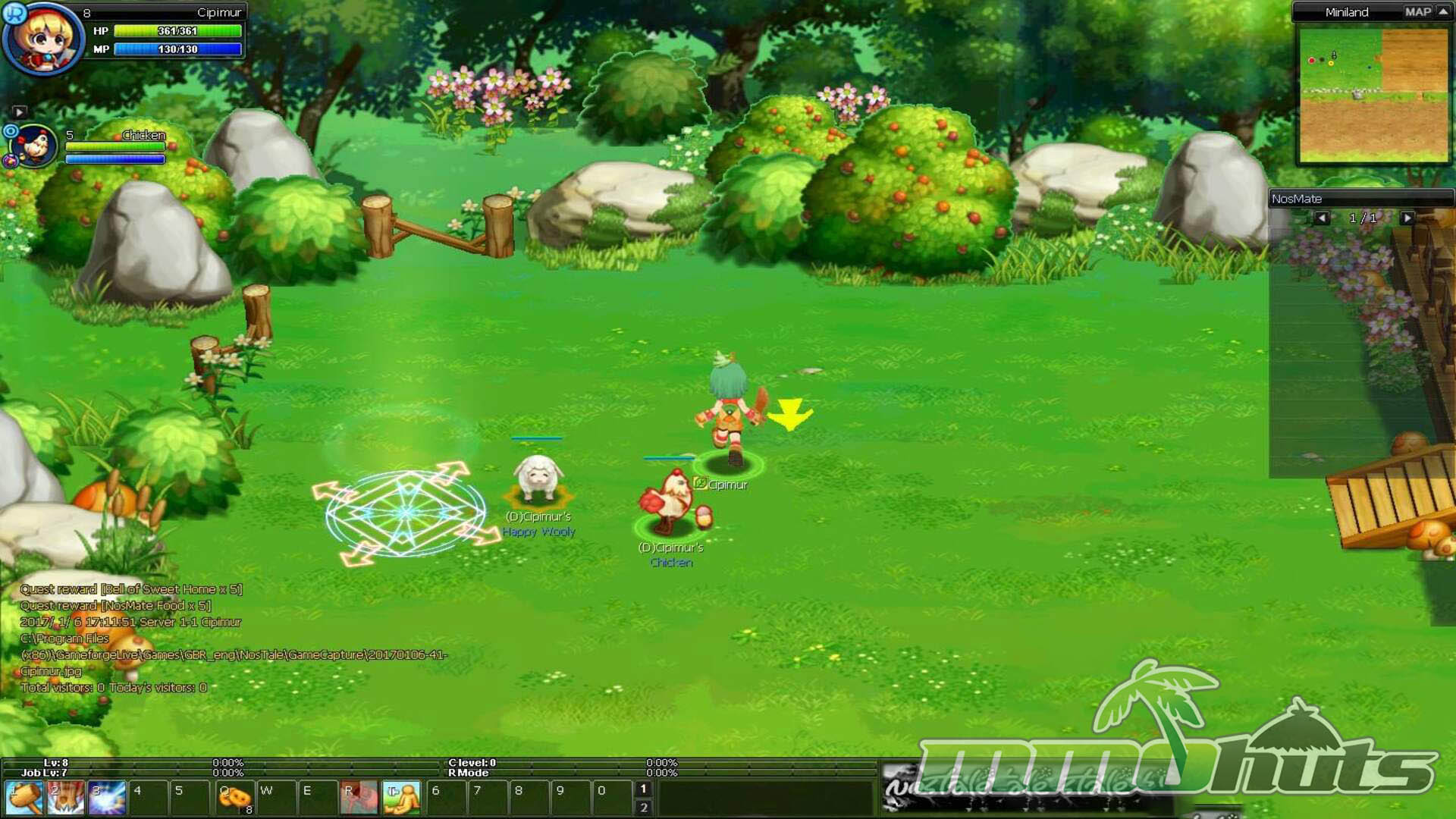
Pets can be leveled and trained, and they are not purely cosmetic. They can learn skills and contribute in fights, but they also come with upkeep expectations, such as feeding and maintaining loyalty, or they may stop cooperating. Alongside pets, you can also recruit a NosMate, essentially an NPC mercenary companion. NosMates can level, can be equipped with gear, and can be configured with simple behaviors like following and defending, or controlled more directly when needed. Early on you will mostly see modest creatures (farm animals and small critters), but the system is clearly built to keep scaling as you progress into higher-level areas.
Combat is simple, sometimes too simple
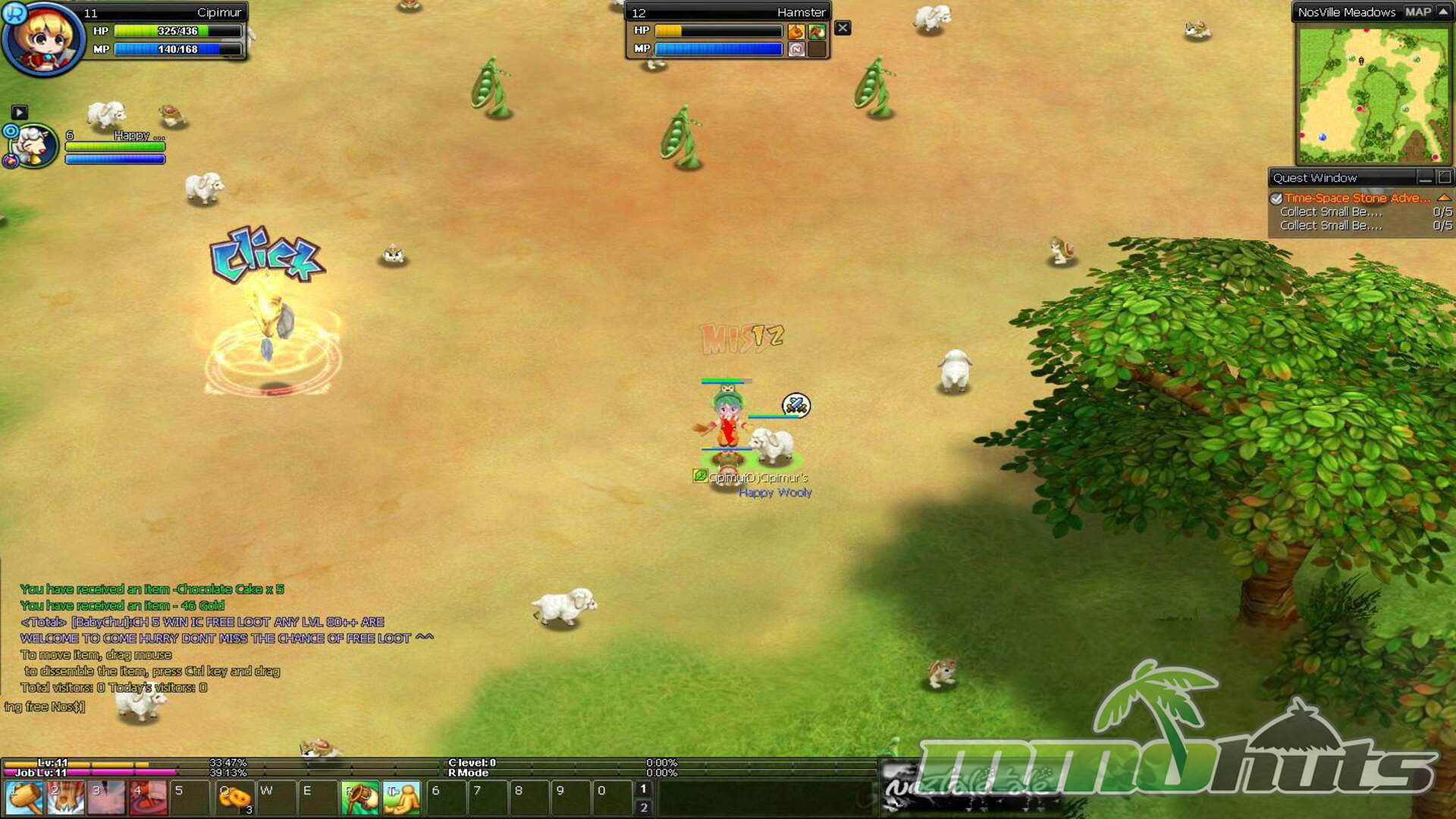
Moment-to-moment fighting is intentionally uncomplicated. You target an enemy and attack, then layer in skills as you unlock them, binding them to hotkeys for quicker use. It is responsive enough to be enjoyable, especially for players who prefer a more relaxed MMO rhythm rather than constant input-heavy rotations.
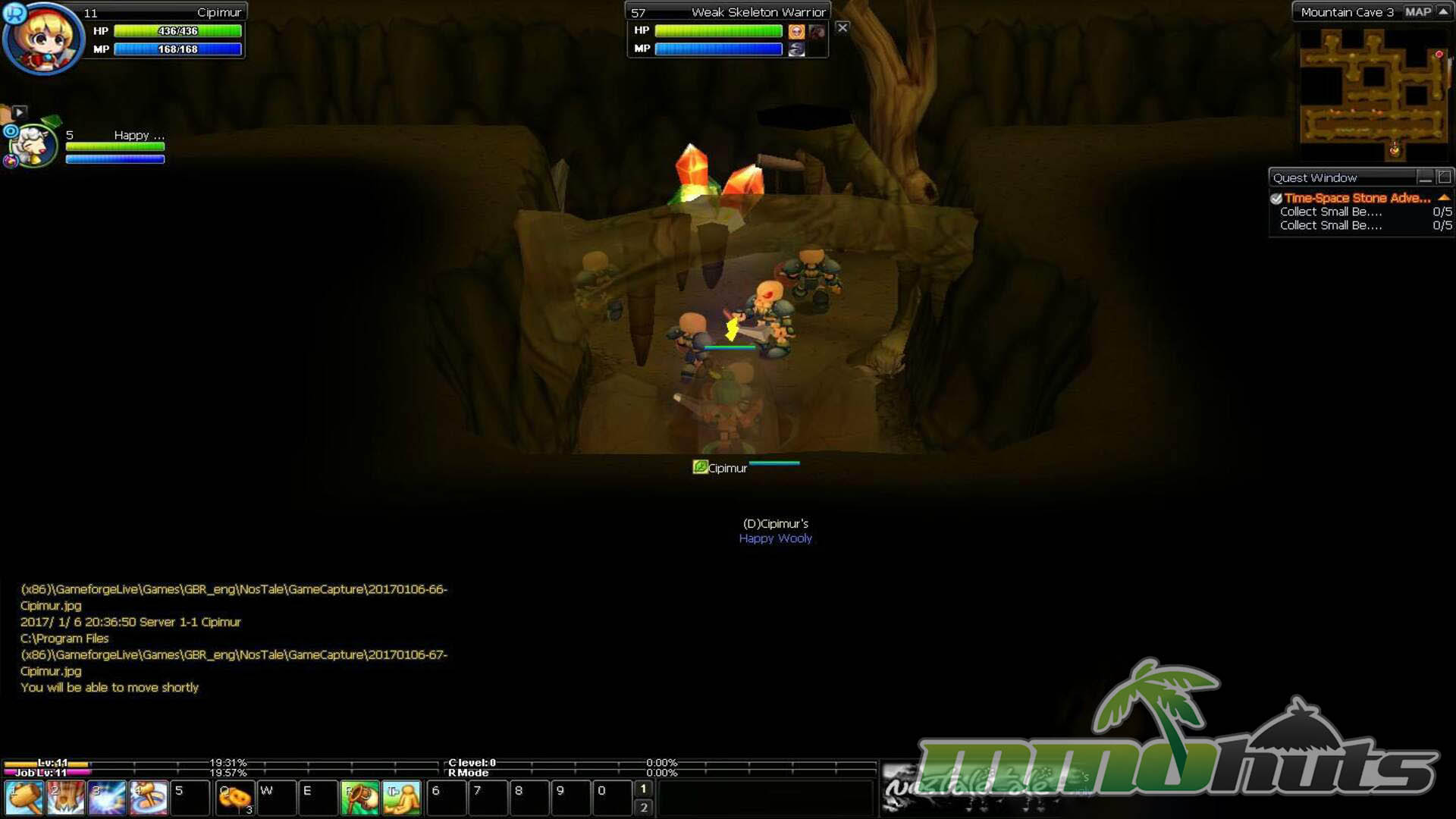
The downside is that some interactions can be finicky. In busy areas, especially around teleporters that connect maps, clicks can occasionally trigger travel instead of an attack, which is annoying when you are trying to maintain tempo during a fight. The game’s instanced missions, time-space stones, lean heavily on timed clears and repeated room layouts. They do provide structure and rewards, and they are often required to advance through each Act, but the repetition becomes noticeable if you are running many in a row.
Difficulty is also forgiving for a long stretch. Death is low-stakes while you are under level 20, and some instanced content allows multiple revives. NosMates can also return after a short wait if they go down. That accessibility helps new players get comfortable, but it also means the game can feel like it is coasting until the mid-teens, when leveling slows and the grind becomes more apparent.
Classes, Miniland, raids, and PvP
Once you hit level 15, you finally pick from Swordsman, Archer, or Sorcerer. The choice looks limited on paper, but specialist cards add the real variety, giving each base class multiple directions to grow into. It is a system that encourages planning, because your specialist setup impacts your skills and equipment options, and it becomes more relevant as group content ramps up.
Outside of combat, Miniland is a pleasant diversion. You can decorate it with objects like plants and furniture, and it serves as a functional space for managing your pets and companions. Socially, NosTale uses “Families” instead of guilds, and that structure ties into higher-level activities like raids that can involve up to 15 players. For competitive players, PvP exists in both opt-in open-world form (via a battle potion) and in more structured arena settings, which provides options depending on how much risk you want.
Where the age shows
Even if you enjoy the art style, NosTale is not a modern-looking MMORPG. The visuals are charming but dated, and you will notice heavy reuse in monsters and models as you climb levels. Palette swaps and minor tweaks are common across the genre, but here the repetition can feel especially obvious over long sessions.
The other persistent issue is localization. Some NPC dialogue reads awkwardly, and quest text can be unclear enough that you end up relying on the tracker and trial-and-error rather than the writing itself. The game does provide kill counts and objectives, but when the text fails to clearly describe where to go or what to expect, the experience becomes more mechanical than immersive.
Final Verdict: Good
NosTale succeeds as a lightweight, approachable MMORPG with a strong companion focus and a class system that becomes more interesting once specialist cards enter the picture. It is not a cutting-edge MMO, and its reused assets and uneven translation can wear on you, but the game offers a steady stream of quests, collectible companions, home customization, and group content that can keep both casual and more dedicated players occupied.
NosTale System Requirements
Minimum Requirements:
Operating System: Windows 2000 / XP / Vista / 7
CPU: Pentium 3 500 MHz
Video Card: ATI Radeon 7000 / NVIDIA RIVA TNT2
RAM: 256 MB
Hard Disk Space: 3 GB
Recommended Requirements:
Operating System: Windows 2000 / XP / Vista / 7
CPU: Pentium 3 800 MHz
Video Card: NVIDIA GeForce 2 MX
RAM: 512 MB
Hard Disk Space: 4 GB
NosTale Music & Soundtrack
Coming Soon…
NosTale Additional Information
Developer: Entwell
Publisher: Gameforge
Release Date (Korea): 2007
Release Date (UK): August 30, 2007
Open Beta Date (Global): March 25, 2008
Release Date (Global): 2009
Closure Date (Global): November 2010
Steam Launch: September, 2017
Development History / Background:
NosTale was created by Entwell, a South Korean studio also associated with Iron Knights and Core Online, and it is published in the West by Gameforge, the Karlsruhe-based publisher known for operating titles like OGame, Aion, and Dropzone. The game’s rollout outside Korea went through multiple phases: after its early release period, it reached the UK on August 30, 2007, then later received a global open beta on March 25, 2008, followed by a full global release in 2009. That global service closed in November 2010, which left the UK version as the primary English-language option for a time. NosTale later arrived on Steam in September, 2017.