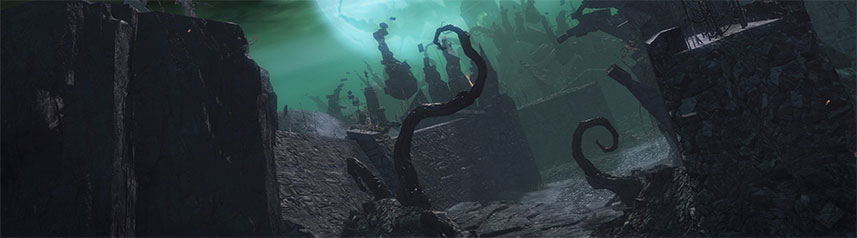
Trove is a colorful, voxel-styled sandbox MMORPG that mixes Minecraft-like block building with quick, arcade-like dungeon runs. You will hop between procedurally generated worlds, clear bite-sized dungeons for loot, harvest resources out in the open, and gradually assemble your own home, crafting stations, and decorative builds as you go.
 | Publisher: Trion Worlds Playerbase: High Type: Sandbox MMORPG Release Date: November 5, 2014 (Open Beta) Pros: +Easy-to-learn hack and slash combat loop. +Wide range of distinct classes to unlock. +Approachable housing and lots of creative freedom. +Reasonable cash shop for a free-to-play MMO. +Daily earnable secondary premium currency. +Player submissions can become official content. Cons: -Collecting and unlocking many building blocks is a heavy grind. -The core loop can feel like nonstop dungeon repeats. -Dungeon layouts and readability are often frustrating. |

Trove Overview
Trove is a bright, blocky online RPG that borrows the voxel freedom of games like Minecraft, then pushes you toward constant action and collectible progression. As you explore, you gather blocks and materials to craft decorations, furniture, and building pieces, but the game’s main engine is combat, loot drops, and rapid dungeon completion.
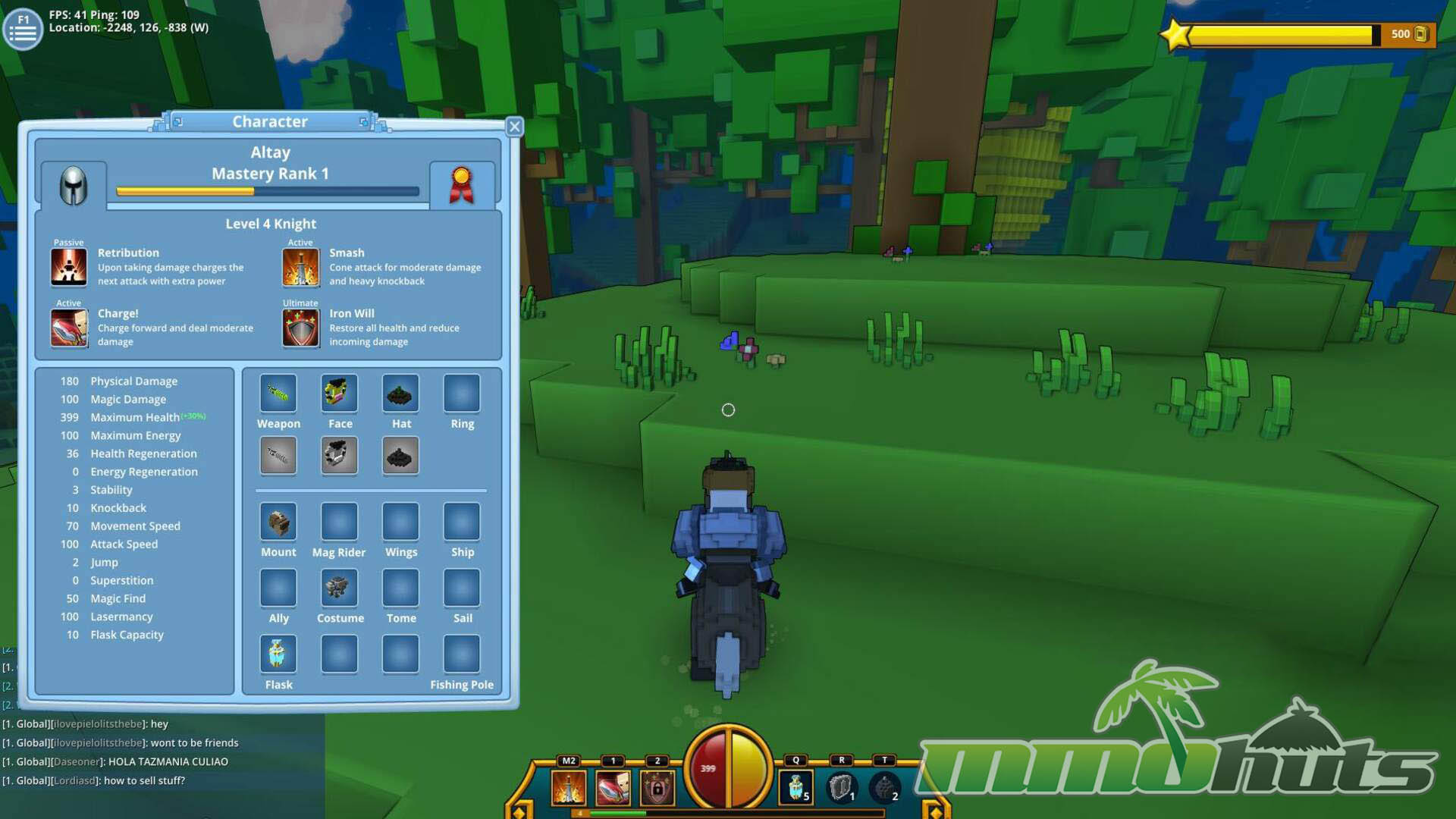
A key part of Trove’s structure is that each class is its own progression track. You unlock new classes over time, then level them separately, which encourages experimentation and gives the game a “try another build” rhythm even when you are repeating similar world content.
Trove Key Features:
- An Infinite Sandbox – travel through procedurally generated worlds and eventually shape spaces of your own.
- Multiple Classes to Level – unlock, swap, and progress through a growing roster of distinct playstyles.
- Dungeons to Explore – an endless supply of compact dungeons provides direction, rewards, and routine.
- Mobile Homes – build and customize a Cornerstone, then place it during your adventures for access to utilities.
- Community Created Content – design items or dungeon concepts with voxel tools and submit them for consideration.
Trove Screenshots
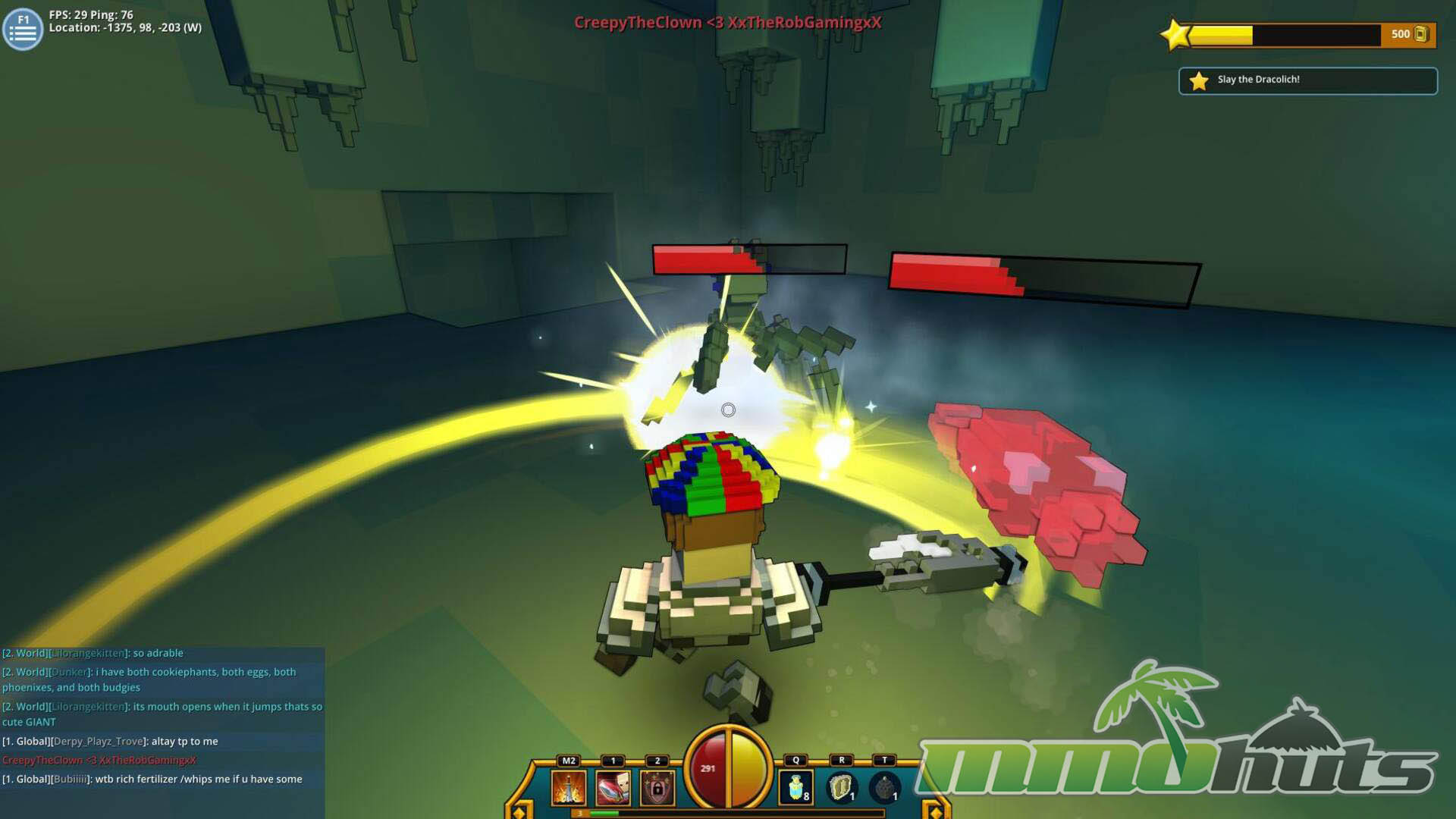
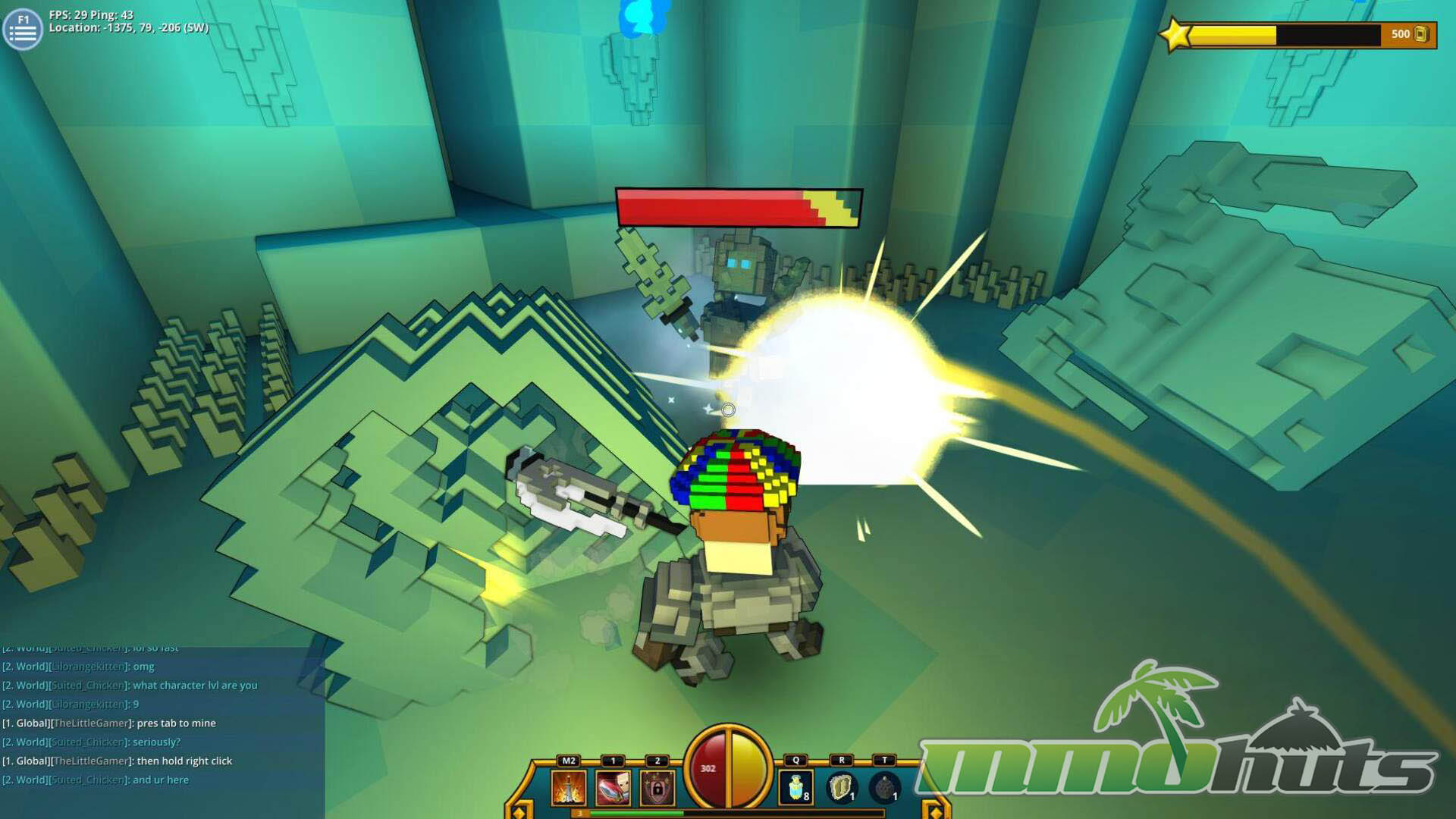
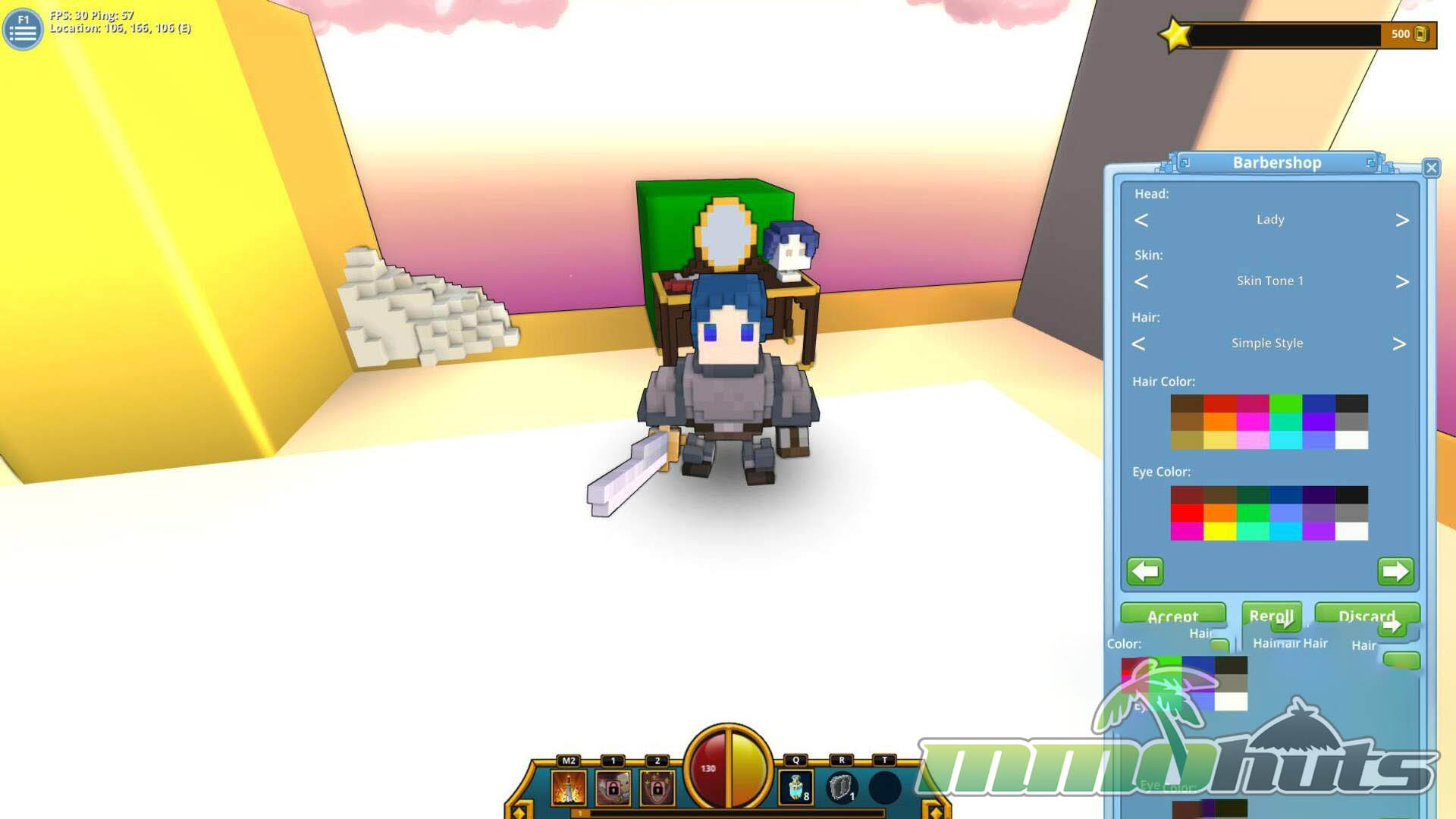
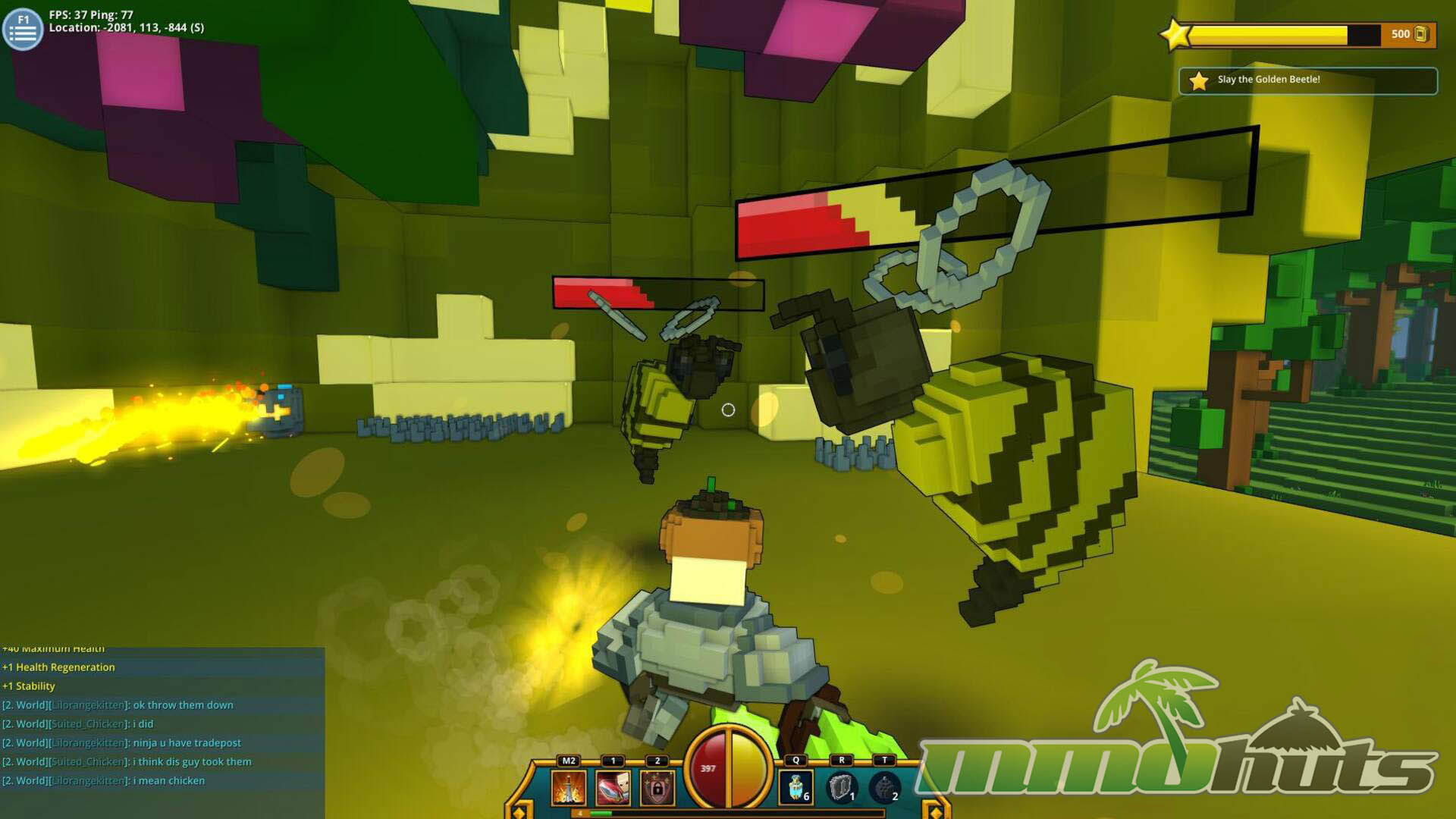


Trove Featured Video

Trove Classes
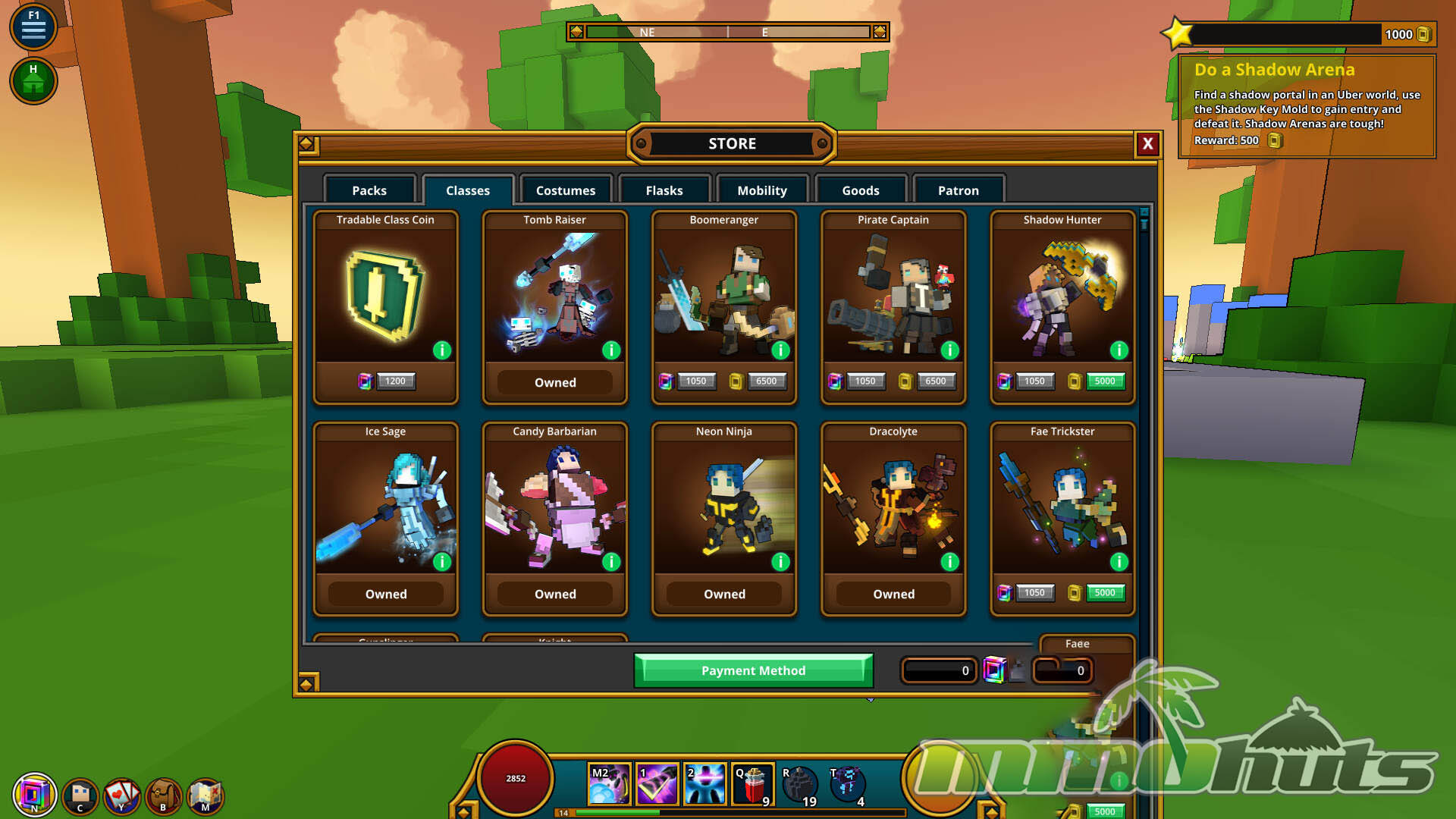
Once you have unlocked a class, you can change to it in the Hub World, or by using a crafted furniture item placed in your personal space. New classes can be opened up with in-game currency, or purchased with premium credits.
- Knight – the starting option for new players. Knights are sturdy frontliners built for melee brawling, with a charge to close distance and an ultimate that instantly restores health.
- Gunslinger – a dual-pistol ranged fighter that focuses on charged shots and sustained bullet pressure to shred targets from afar.
- Fae Trickster – a spellcaster built around mobility and misdirection, blinking away from danger and using illusions to avoid taking hits.
- Dracolyte – a fire-focused mage wielding a flamethrower-style attack and a dragonling companion, with an ultimate that briefly turns them into a dragon.
- Neon Ninja – a speedy melee class with stealth tools, acrobatic movement, shuriken pressure, and a hard-hitting “Final Technique” ultimate.
- Candy Barbarian – a brawler driven by close-range aggression, calling down thundercones to punish enemies while wading into fights.
- Ice Sage – a cold-themed caster that locks enemies down, then bombards them with conjured crystals and icicles.
- Shadow Hunter – a light-powered archer who peppers foes with Radiant Arrows and uses Sun Snares to keep threats at a safer distance.
- Pirate Captain – an explosives specialist using a blunderbuss and cannon, with the ability to call in Man o’ War ships to help finish tougher encounters.
Trove Review
Trove sits in a familiar family tree of block-based games, but its day-to-day feel is closer to a loot-driven action RPG than a pure builder. The destructible voxel look suggests slow, creative play, yet the game’s pacing keeps pulling you toward fast dungeon clears, steady item upgrades, and short sessions that end once you have checked off your rewards for the day.
Action-first combat
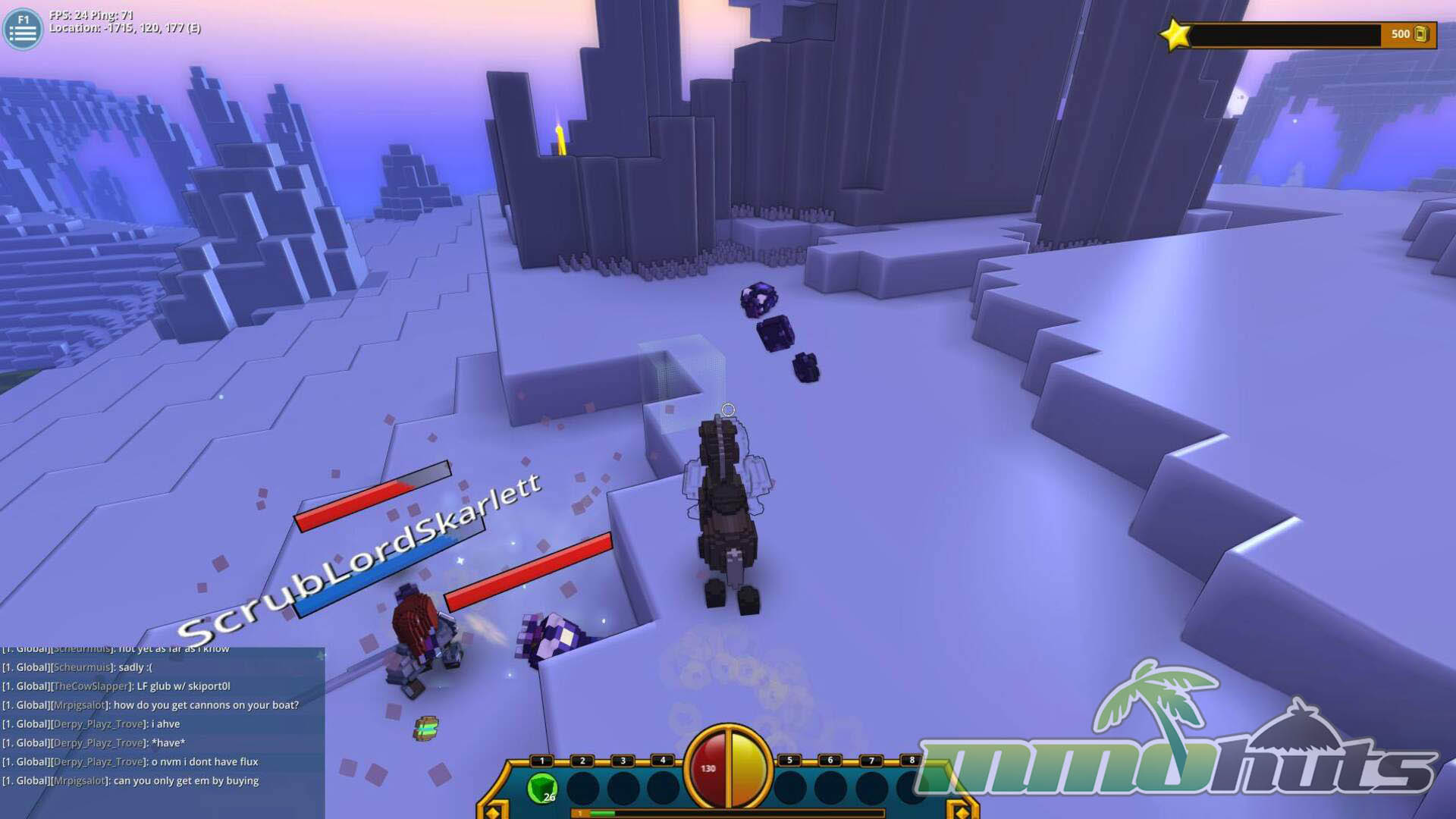
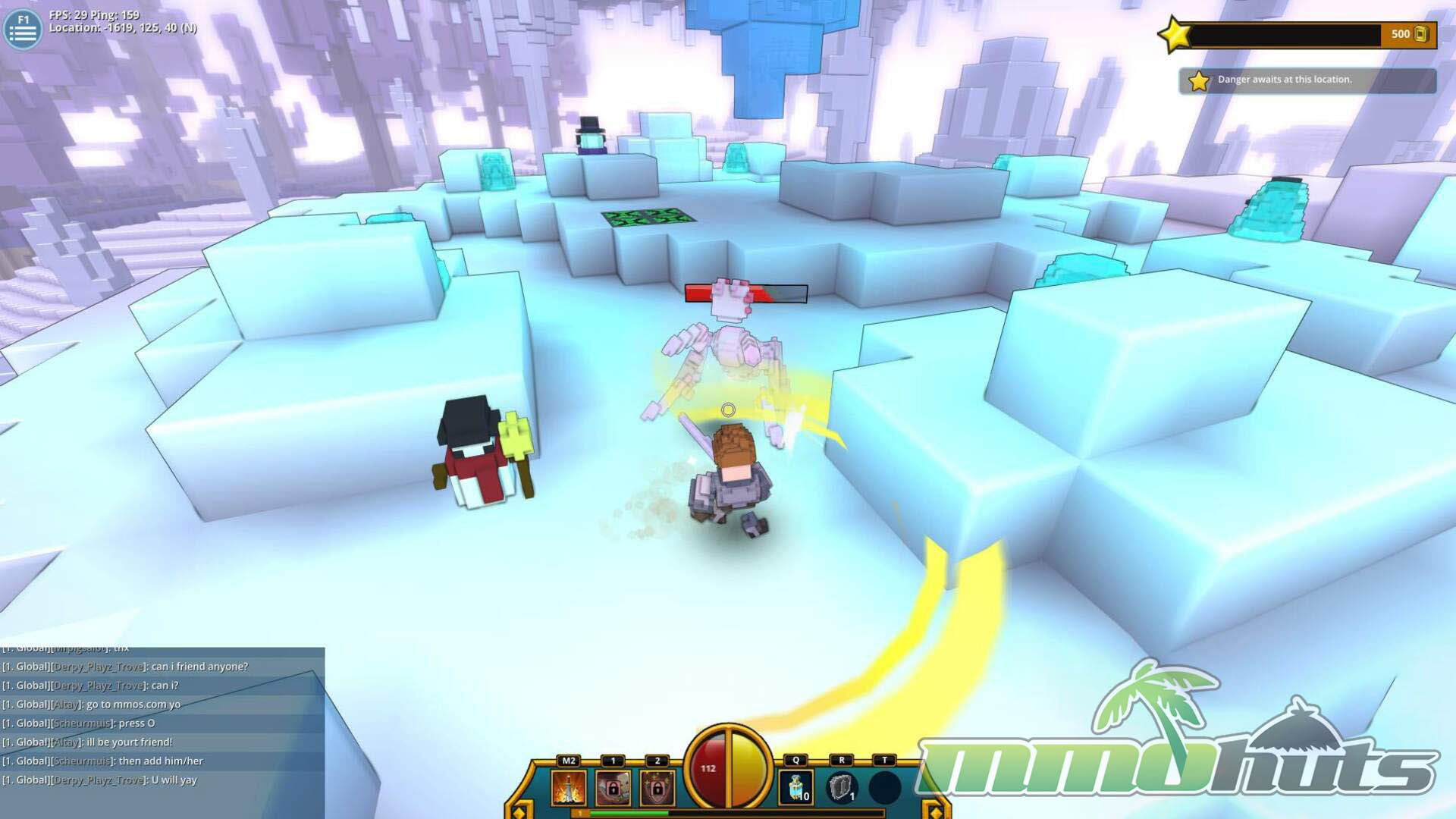
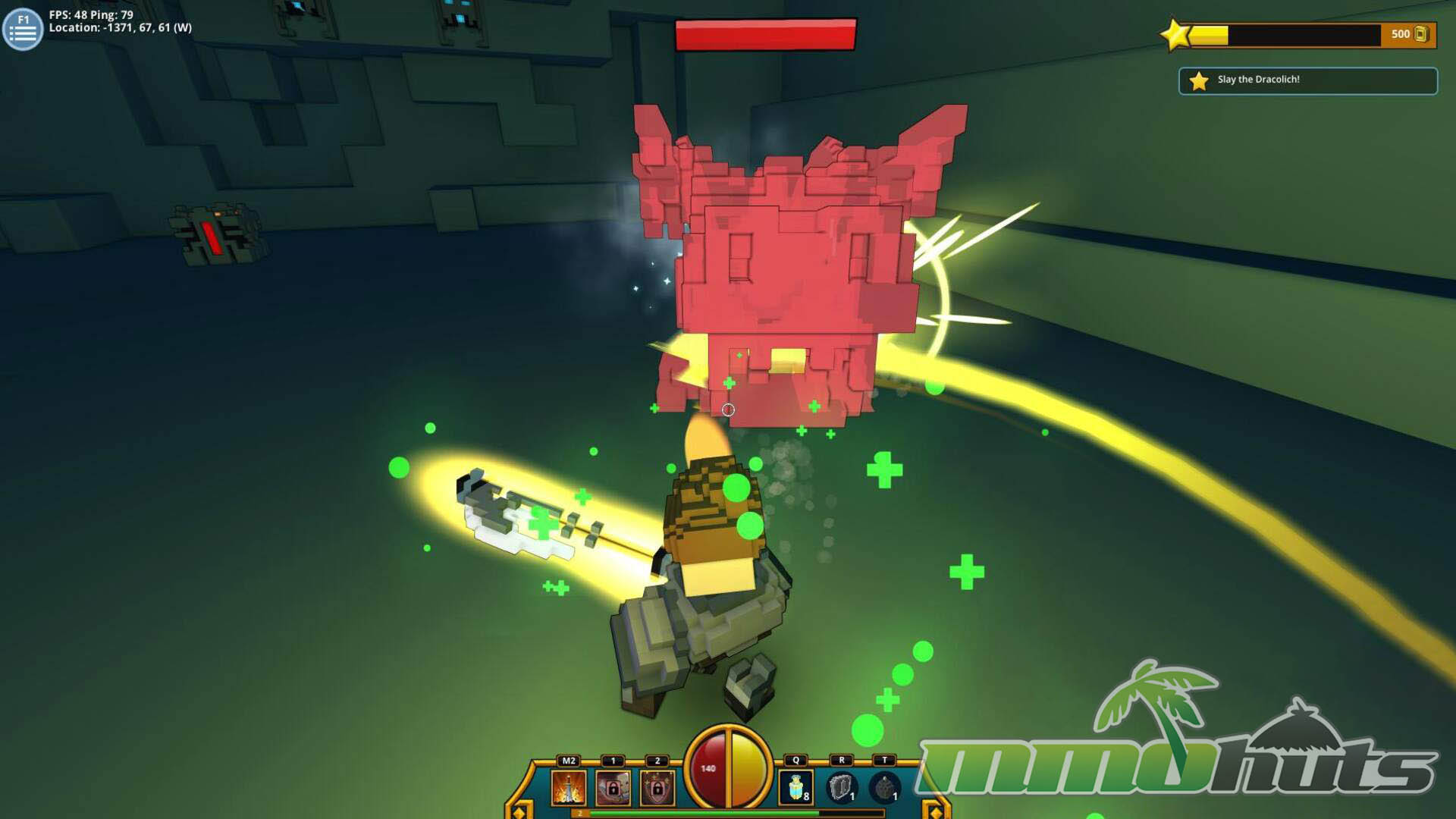
Despite the Minecraft and Terraria comparisons, Trove’s combat loop leans toward the Diablo 3 style of constant ability use and frequent loot drops. Every class has a basic attack plus a small set of active skills that define how it moves, survives, and deals damage. There is a dodge button, and some classes have escape tools, but the combat generally does not demand precise avoidance the way a dedicated action game would.
Instead, fights often come down to potion management and how quickly you can thin out groups, especially when enemies hit hard. Running dry on potions is a serious problem because refilling is tied to returning to the hub or placing your cornerstone to access replenishment. That limitation can feel harsh early on, although it also creates a clear “push your luck” boundary for longer runs.
Dungeons as the main activity
Adventure worlds in Trove are essentially collections of dungeons scattered across a biome. The game does not hand you a traditional quest chain, you pick a dungeon icon on the map, follow the compass marker, clear it, and then move on to the next one. The structure is straightforward and easy to drop into, which fits Trove’s emphasis on bite-sized play sessions.
The problem is that the dungeon layouts themselves can be surprisingly unpleasant. Navigation is frequently cluttered with traps and narrow passages, and the block color choices sometimes make important routes blend into the scenery. Since most dungeon blocks cannot be destroyed (outside of things like glass and decorations), getting lost is not something you can always solve by carving a shortcut. It is not rare to end up breaking through glass near a boss room simply because the intended path is hard to read.
Dungeon placement in the overworld can also be awkward. Entrances may be tucked into cliffs, perched high above the ground, or partially obscured by the environment, which turns some “find the portal” moments into unnecessary circling and platforming. Occasionally, you will even see dungeons positioned so far below the surface that they look like random terrain until you stumble onto the entrance.
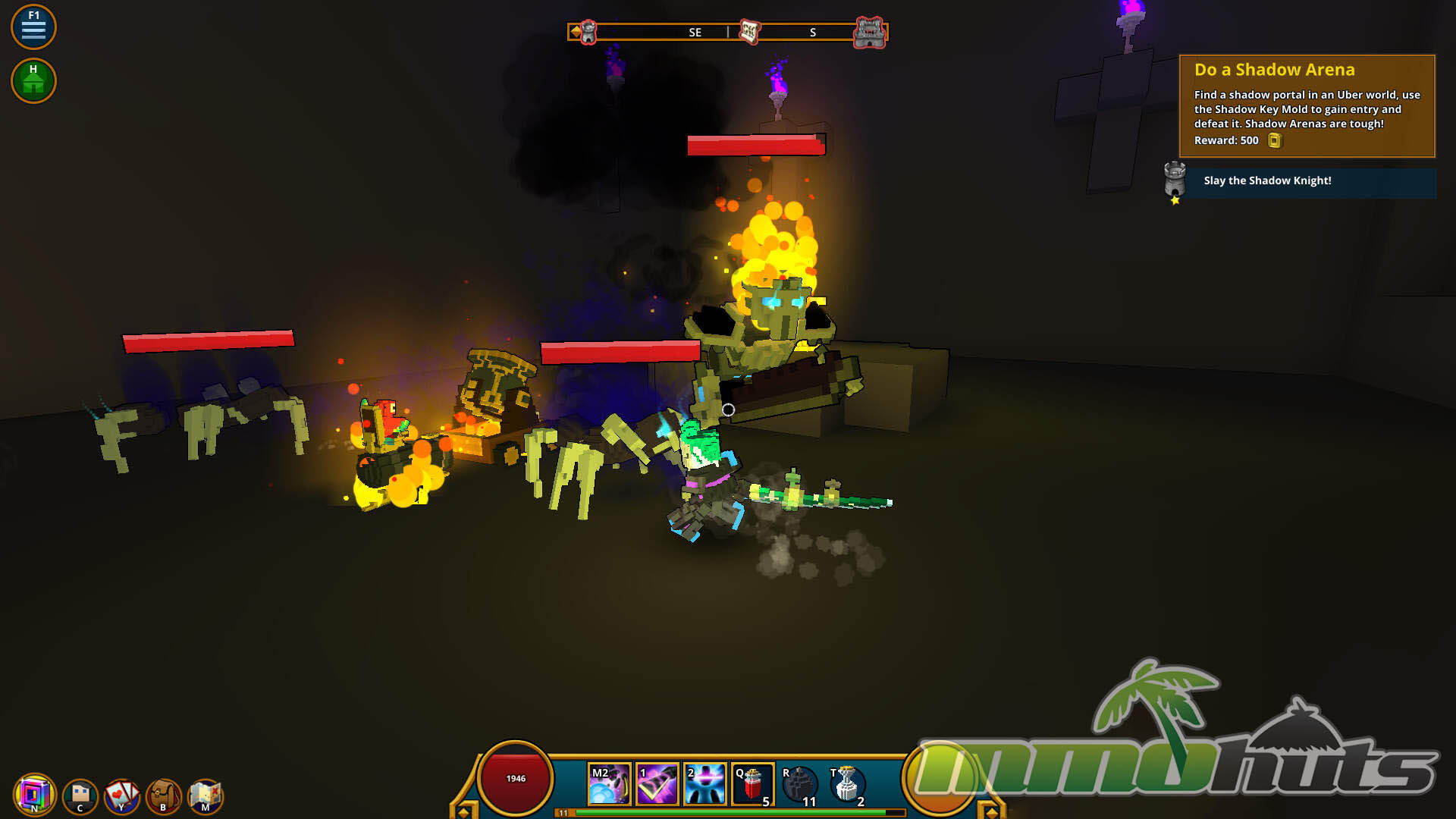
Objective variety is limited as well. Most dungeons boil down to defeating a boss (often categorized as one-star or three-star) or activating cursed skulls to survive waves while staying inside a ring. Shadow Arenas add difficulty, but they largely feel like an extension of the same wave-defense concept rather than a truly different activity. Over longer sessions, the repetition becomes hard to ignore.
Shared dungeons and open participation
Trove uses a public dungeon model where anyone who enters before completion effectively joins in and receives credit. On paper, this is convenient, you can wander into an active dungeon, help for a moment, and still get rewards without formal grouping.
In practice, the dungeon flow encourages sprinting. Since most dungeons do not require you to clear enemies on the way, players often rush straight to the boss room (sometimes using mounts), aiming to finish as quickly as possible. This turns many runs into a race rather than a cooperative crawl.
The other side effect is “piggybacking.” Because credit is granted so easily, it is common for a player to arrive at the last second and earn the same completion rewards as someone who spent the full run fighting, taking damage, and burning potions. You still get your loot and experience, but the system can feel discouraging when it happens repeatedly.
Loot as the central motivation
If there is a single thing Trove commits to, it is rewarding you with items. Whether you are dungeon running, roaming the overworld, or hunting specific materials, progression is driven by a steady stream of drops and craftables.
Loot tends to fall into three broad buckets. First is equipment, mainly for weapon, face, and hat slots. Regular enemies can drop gear, but the most valuable upgrades generally come from finishing dungeons and opening the end chests. A fun touch is the large volume of community-designed gear appearances, and deconstructing gear lets you reuse its look for cosmetic costume slots, which keeps collecting interesting even when the stats are not perfect.
Second is crafting materials. Trove’s gathering is not built around deep mining expeditions. Instead, resources often appear in visible veins mixed into common blocks, or inside specific surface-level structures that function like mini resource dungeons. Materials like sunlight bulbs, for example, are typically found around a large themed structure, with a few placed in more dangerous interior spaces that test your movement more than your combat. Many of these are located in peaceful zones, so the challenge is mostly platforming and navigation.
The third category is recipes. These are obtained from special recipe dungeons found across biomes, recognizable by a Shadow Knight guarding the reward. Completing one grants a scroll that teaches a random recipe you do not already know and awards two mastery points. The downside is that the random result can be extremely minor (down to oddly specific decorative parts), and the dungeons themselves are not always easy to find when you need pieces tied to a particular biome. It is a long-term system that pays off slowly.
Crafting systems
Crafting is not optional in Trove, it is the backbone of most progression outside of gear drops. Blocks, decorations, crafting stations, and club world upgrades are all made through crafting, and you will spend a lot of time collecting ingredients to expand what you can build.
The actual interface is simple and functional: known recipes are listed, required materials are shown, you can queue quantities, and then you craft with a timer. Most timers are short, but the process is not especially interactive, so the depth comes more from acquiring recipes and materials than from the act of crafting itself.
Housing and player creativity
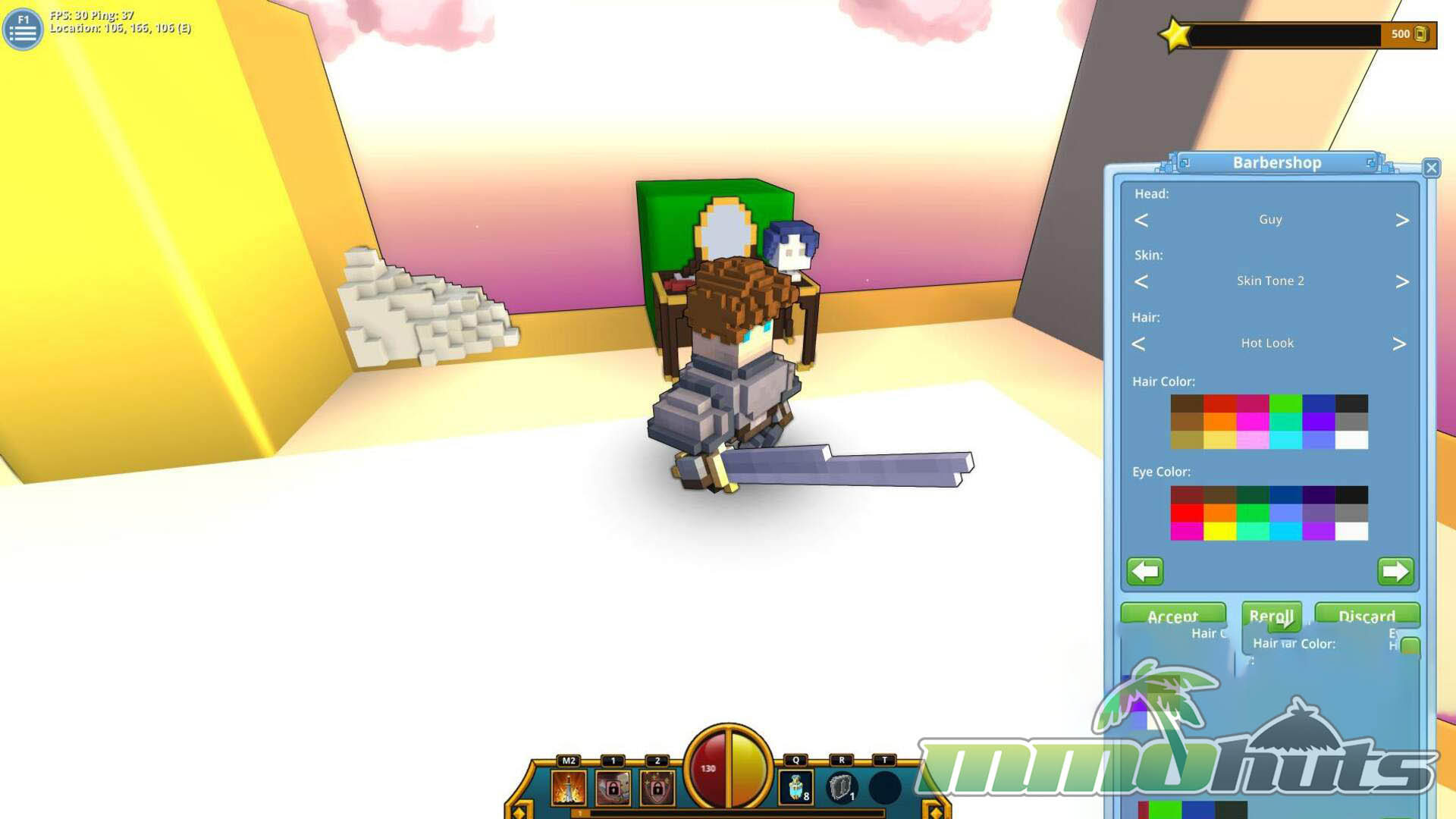
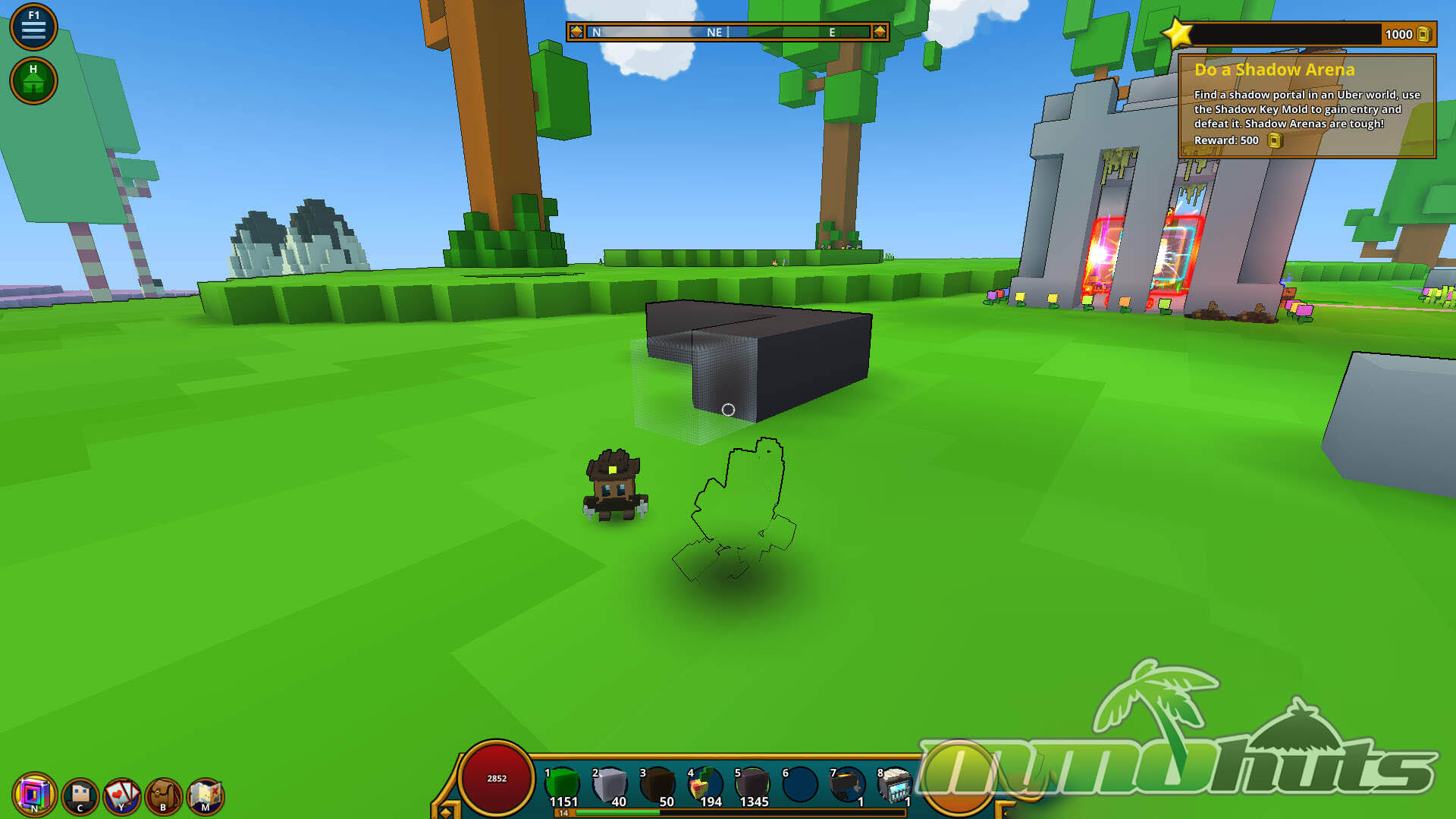
Trove’s building tools can be both impressive and oddly limiting, depending on what you want out of “housing.” Your personal home is the Cornerstone, a 16×16 plot that you can place in the hub or in adventure worlds. Alongside that, there are club worlds, which function more like a guild-owned private world than a single house.
Cornerstones benefit hugely from Trove’s art style and block scale. Even with a small footprint, the variety of decorative items and building options lets players create surprisingly elaborate designs. Seeing a cluster of player cornerstones in a busy area can be one of the game’s best showcases, it is a strong reminder that creativity is a major pillar here.
The drawback is the lack of a fixed address. Your Cornerstone is persistent as a design, but it is not permanently located anywhere. To work on it, you claim a plot in a world, place the cornerstone, and build there. Functionally it behaves like a portable base, which is convenient, but it can also make the “home” feel temporary, more like a deployable camp than a place you return to.
Club worlds provide the opposite experience. Your club gets an instanced space that can be expanded by crafting biome-specific items. Using these on the edge of an existing club biome generates a new plot of land, letting the club grow the world in the directions and themes it cares about rather than being forced into random expansion. It is a smart system for social building, and it supports club activities like opening the world for visitors via hub world parties. In day-to-day play, though, club worlds are mostly a shared creative space and a hangout.
The biggest building-related pain point is progression gating through recipes and block colors. Outside of a small set of basic colors, you need recipes for additional colors and then must craft them using core color blocks. With many colors to unlock and limited base resources, building even a simple structure in a specific palette can require a lot of farming and recipe hunting. The grind can feel disproportionately heavy compared to the game’s otherwise light, pick-up-and-play rhythm.
Cash Shop
When discussing monetization, it is important to note that Trove had no PvP at the time of writing, even though Trion has planned arena content. In the practical sense, the shop does not lean into strict pay-to-win design. Purchases focus on convenience and cosmetics, including mounts, lucky boxes, and direct access to certain classes, wings, and blocks.
A meaningful counterbalance is the daily “star bar,” which fills as you complete dungeons and awards cubits, a secondary premium-style currency used for things like classes, wings, and a limited set of mounts. The addition of one-time beginner quests also helps new players earn a substantial amount of cubits through early progression, making the starting experience feel less restrictive.
Final Verdict – Good
Trove is at its best when treated as a game you dip into regularly rather than a marathon MMO. The loop of jumping into an adventure world, clearing a batch of dungeons, filling your daily rewards, and then doing a bit of building works well, but longer sessions expose how repetitive the objectives and world flow can become.
If you enjoy bright visuals, simple action combat, constant loot drops, and the satisfaction of slowly expanding your building options, Trove offers a lot to like. Players who are sensitive to grind (especially for blocks and colors) or who want carefully designed dungeons may find its rough edges harder to overlook.
Trove Links
Trove Official Site
Trove Wikipedia
Trove Steam Page
Trove Wikia [Database / Guides]
Trove Subreddit [Community]
Trove System Requirements
Minimum Requirements:
Operating System: Windows Vista / 7 / 8 / 10
CPU: Intel Core 2 Duo 2.0 GHz
Video Card: Intel Integrated HD Graphics 3000
RAM: 2 GB
Hard Disk Space: 1 GB
Recommended Requirements:
Operating System: Windows 7 / 8 / 10
CPU: Intel Core 2 Duo 2.2 GHz or better
Video Card: Nvidia GTS 250 or better
RAM: 4 GB or more
Hard Disk Space: 2 GB or more
Trove Music & Soundtrack
The Trove Soundtrack – Vol 1 can be bought from the official soundtrack website:
https://trionworlds.bandcamp.com/album/trove-soundtrack-vol-1
Trove Additional Information
Developer: Trion Worlds
Alpha Testing Date: November 22, 2013
Closed Beta Date: September 25, 2014
Open Beta Date: November 5, 2014
Development History / Background:
Trove was revealed publicly on November 15, 2013, and shortly after that it moved into a limited alpha phase. Players without an invite key could also buy an Adventurer’s pack for $20 to receive immediate alpha access. While its core concept clearly echoes Minecraft, Trove’s character and world presentation is closer in spirit to Cube World’s bright, toy-like style.
From the beginning, Trove was built around community involvement. Beyond simply encouraging creative building in-game, the developers also supported player participation outside the client, letting users share item and dungeon concepts (including on reddit) and potentially see them become part of the official game if they met the team’s standards.