Torn City, often shortened to Torn, is a browser-based, text-driven MMORPG built around life in a crime-soaked metropolis where nearly every decision is tied to hustling, fighting, or climbing a social ladder. Rather than pushing you through a fixed storyline, Torn is designed as a slow-burn sandbox, letting you shape a long-term identity, whether that means becoming a ruthless street fighter, an organized-crime specialist, or a legitimate business owner operating in a city that rarely stays legitimate for long.
 | Publisher: Chedburn Networks Playerbase: High Type: Text-based MMORPG Release Date: November 15, 2004 Pros: +Huge breadth of activities and systems. +Excellent long-term progression. +Lively, helpful community. Cons: -Deliberate, time-gated pacing. -Steep learning curve for efficient play. |

Torn Overview
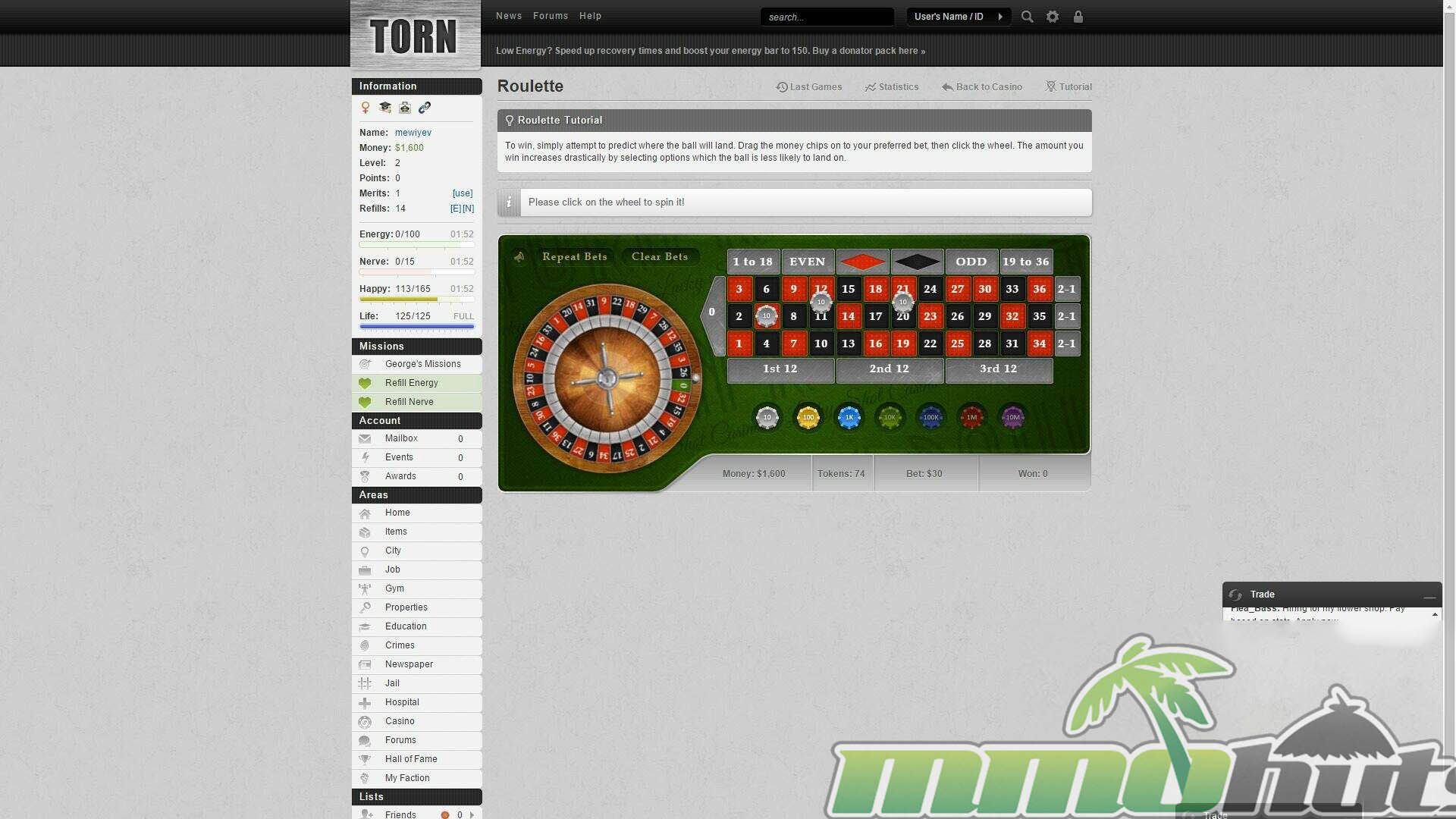
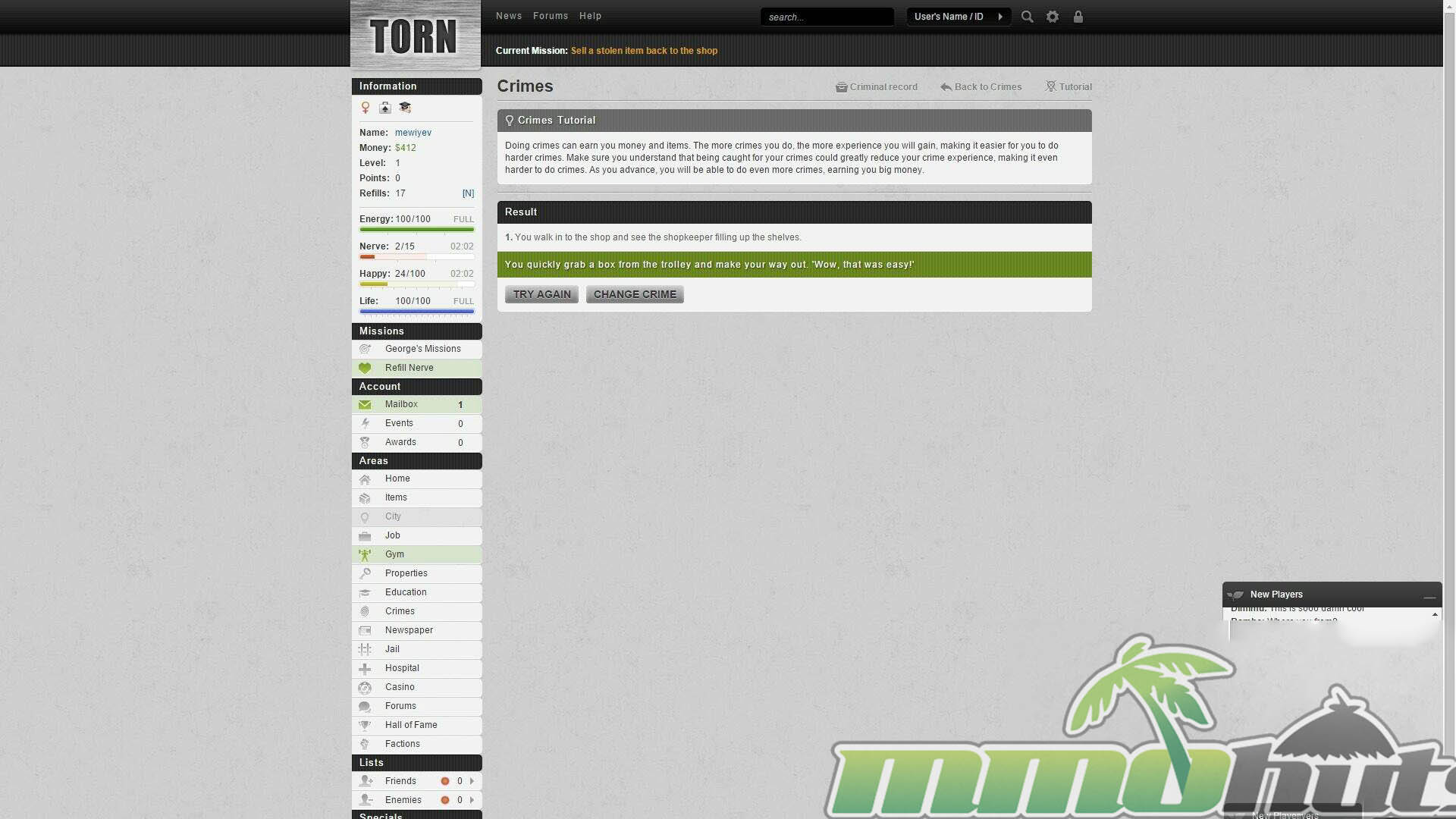
Torn (formerly branded as Torn City) is a free-to-play, text-based MMORPG set in the fictional Torn City, a place where crime, commerce, and reputation all intertwine. The main appeal is how open-ended your growth is: you are not locked into a strict class system, and most of your advancement comes from deciding what to spend your limited daily resources on. In practical terms, that means choosing between activities like studying to improve career options (subjects such as Law or Computer Science), working jobs ranging from everyday retail to casino employment, training at the gym to increase combat stats, or committing crimes for cash and notoriety, including small-time schemes like selling bootleg horror DVDs.
Torn is widely treated as a long-term progression game because it limits how many actions you can take before needing to wait for your Energy, Life, and Nerve to regenerate. Those bars refill over time, which naturally encourages shorter sessions spread across days, rather than marathon grinding. New players receive instant refills early on, and the game also offers premium currency that primarily speeds up resource refills rather than directly handing out unbeatable gear or instant levels. In a genre where monetization often undermines competition, Torn’s approach generally keeps the playing field more stable, and makes personal milestones (and faction achievements) feel earned.
Torn Key Features:
- Text-based Gameplay – Runs in a browser with no download required, making it easy to check in from nearly any device with internet access.
- Deep Systems to Learn – Success rewards planning and patience, with enough complexity to keep dedicated players engaged for the long haul.
- Choice-driven Progression – Small decisions and big commitments both matter, from where you scavenge for cash to how you invest stats and plan your career.
- Flexible Character Direction – Start along Fighter, Criminal, or Executive themes, but you are never truly boxed in by that initial identity.
- Join Factions – Team up in Factions to run organized crimes, compete in wars, and build respect to climb the social and leaderboard hierarchy.
Torn Screenshots





Torn Featured Video

Torn Review
Torn is a good reminder that “text-based” does not have to mean barebones. Beneath its simple presentation is a surprisingly modern sandbox MMO structure, where long-term planning, social dynamics, and economy-driven goals take center stage. The game’s high population makes that sandbox feel active, and the time-gated nature of Energy and Nerve creates a steady cadence, you do your actions, make your choices, then return later to continue building momentum.
George’s Missions
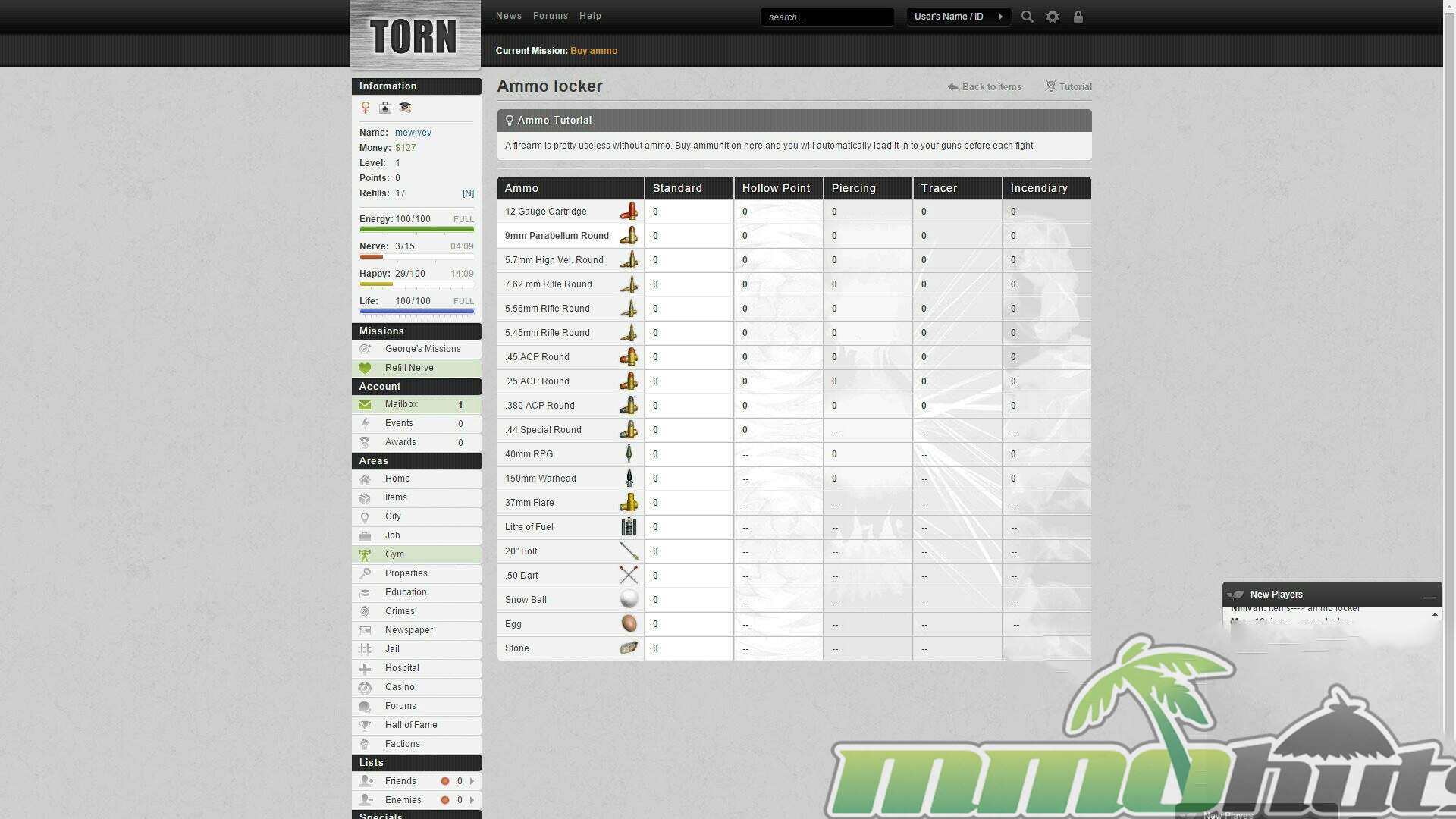
Your first steps are guided through a short intro and a tutorial chain led by George. After the initial splash screens, you arrive at Torn’s core interface, a left-hand navigation panel that acts as your command center. It tracks money and key stats, shows your current bar levels, and links out to the many locations and systems you will use constantly.
George’s missions do a solid job of teaching the essentials without dragging. Clear visual prompts help you learn where to click, what resources do, and how to start engaging with the city. Early on, the game also hands out free refills for newcomers, letting you top off Energy, Nerve, Happiness, or Life so you can experiment with several systems quickly before settling into the slower long-term rhythm.

Gaining Experience
Torn’s progression is driven by action, almost everything you do nudges your character forward in some way. Training increases stats, education expands options, jobs provide income, and crime or combat can generate money and influence. You can also attack other players to mug them, embarrass them, or send them to the hospital, and that tension between risk and reward is a big part of the game’s appeal.
The downside is that the “optimal path” is not always obvious. Resources regenerate slowly, many activities are expensive in terms of Energy or Nerve, and the game does not present a visible experience bar to make value comparisons easy. The tutorial explains what systems exist and how to access them, but it does not really coach you on efficiency, which can leave new players feeling uncertain about what to prioritize.
That uncertainty is amplified by the age of the game. With many veterans having years of progress, climbing competitive rankings quickly can be difficult without outside research. Time also plays a major role, with some rewards arriving on daily schedules (like job pay) and education courses taking more than a week to finish, which means Torn rewards consistency more than short bursts of grinding.

Unlimited Choices
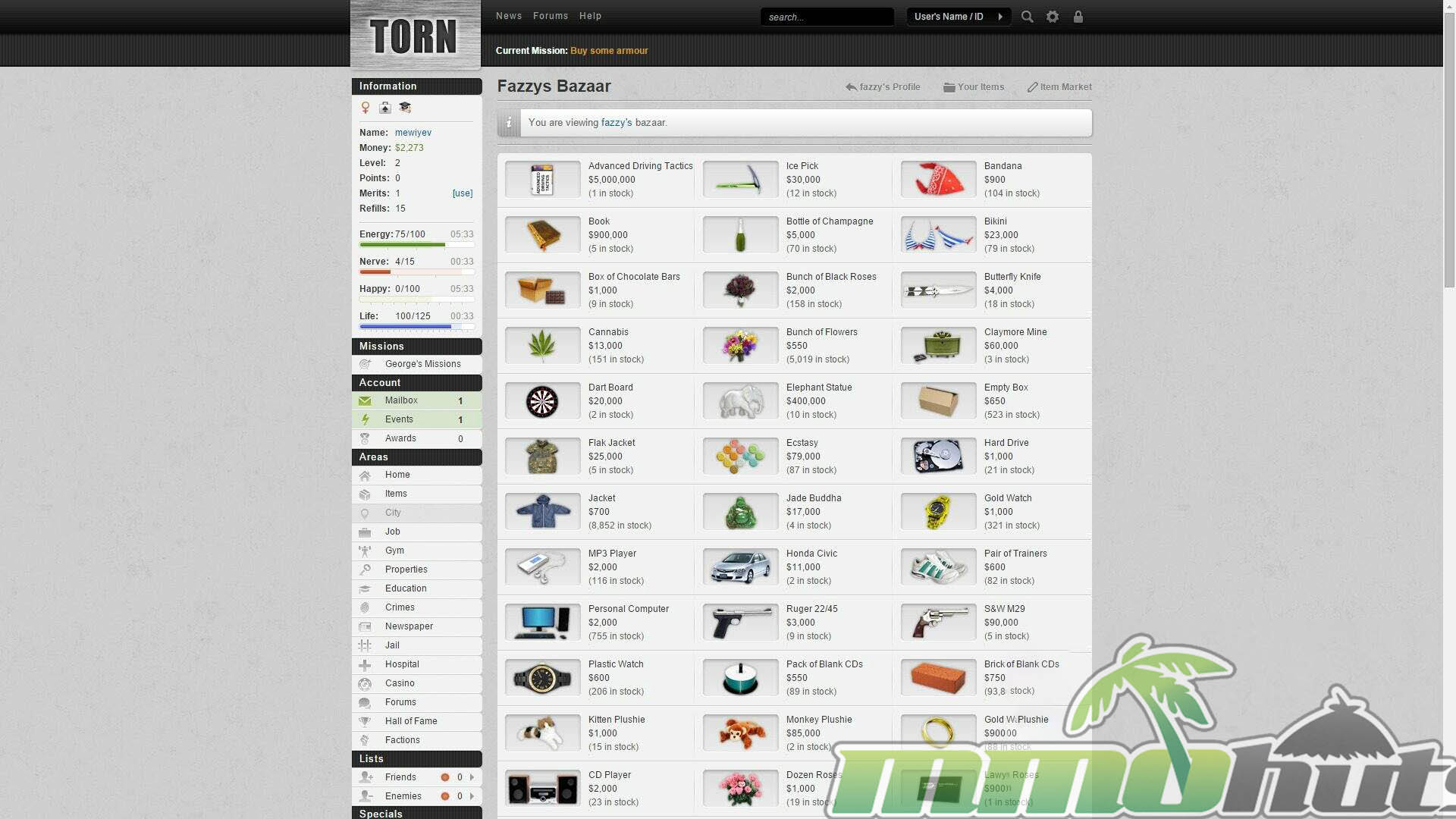
Once you understand the basics, Torn opens up in a way that feels genuinely sandbox. You can run a shop and employ other players, join player-owned companies for better pay, or invest in property and turn it into an income stream by upgrading and renting it out. As you complete education courses and build stats, additional crimes become available, which can feed back into stronger gear and more ambitious criminal opportunities.
What stands out is how many playstyles are supported. If you want a combat-focused identity, you can pursue bounties, gear up with a wide variety of weapons and armor, and make PvP a central routine. If you are more interested in the economy, you can treat Torn like a business simulator and grow wealth through companies, properties, and market activity. If you want to lean fully into crime, the game steadily escalates what you can attempt, and you can build a reputation as a specialist who supplies or supports other criminals rather than doing everything alone.

Organized Crime with Friends
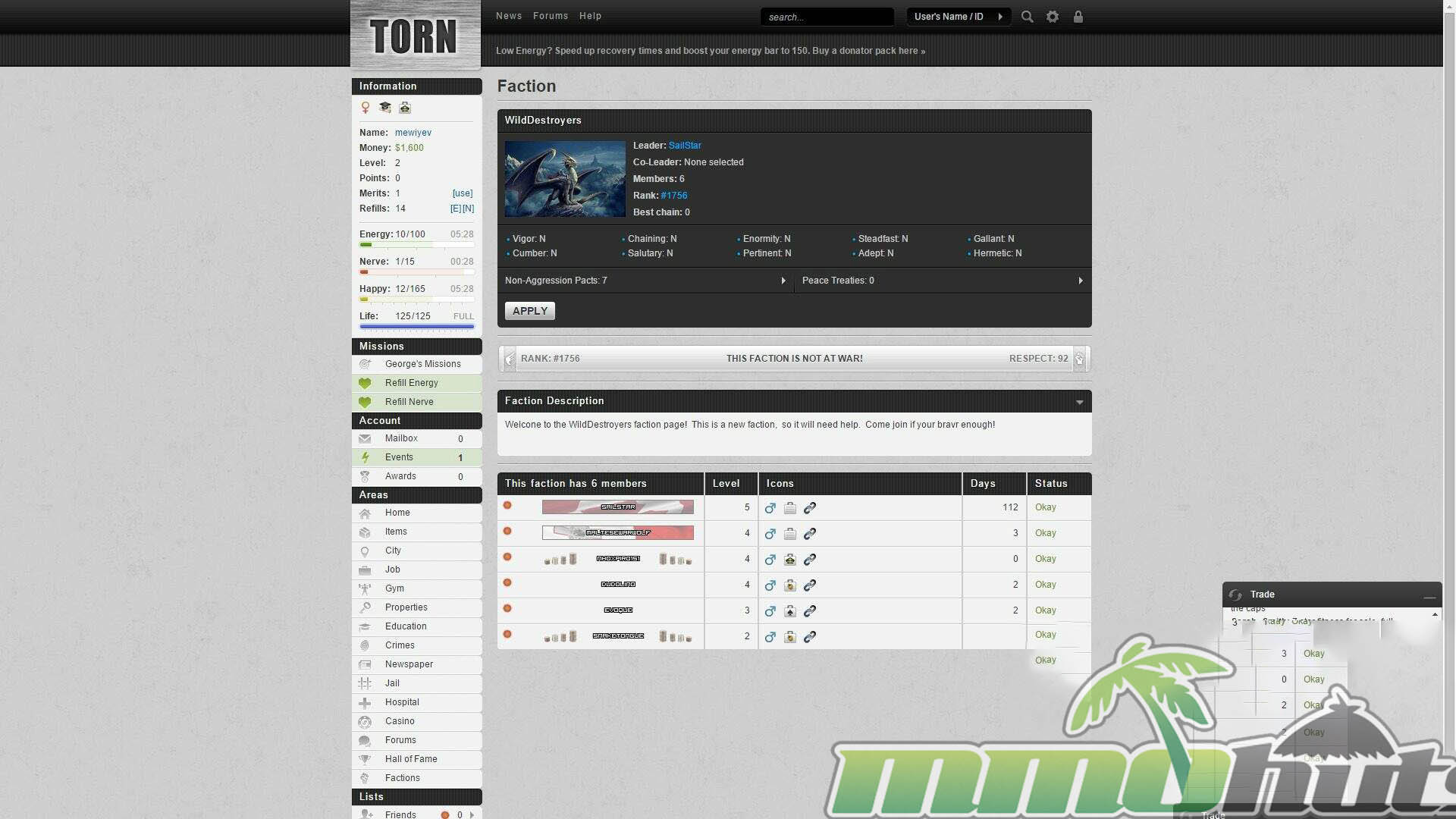
Factions are Torn’s version of guilds, and they are where the game’s social and competitive layers really take shape. For new players, a good faction can provide structure, advice, and a sense of direction in a game that otherwise offers a lot of freedom with minimal hand-holding. For established players, factions are about coordination and leverage, pooling efforts for organized crimes and preparing for conflicts with rivals.
Respect functions as a key faction progression metric, effectively determining what a faction can do and where it stands compared to others. The faction meta can feel similar to mobile strategy guild ecosystems (the leaderboard chase, the coordinated wars, the effort to knock rivals offline by putting them in the hospital), but with Torn’s slower tempo and more persistent character growth underneath it.
In my time with factions, the biggest takeaway was that recruitment choice matters. Some groups are well-run, with clear expectations and support for newcomers, while others may be mismatched in power or direction. If you care about wars and organized crimes early, it is worth browsing recruitment posts carefully and asking questions before committing.

Mug and Hospitalize Your Foes
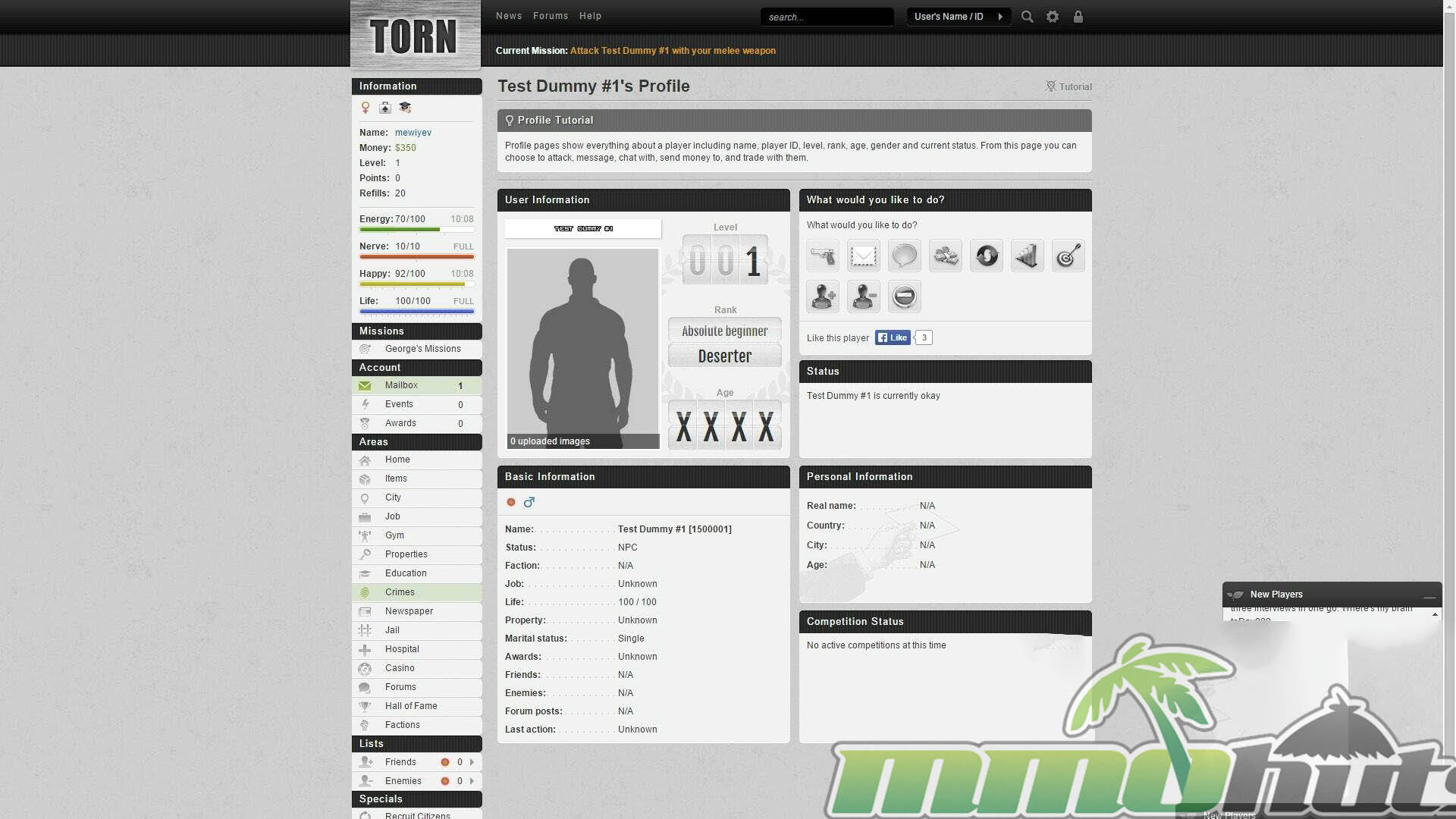
PvP in Torn can be approached casually or treated as a serious long-term discipline, and it exists both at the individual level and through faction conflict. You can initiate fights via search tools or by encountering players in various city locations. From a player profile, common actions include attacking, messaging, or placing a bounty.
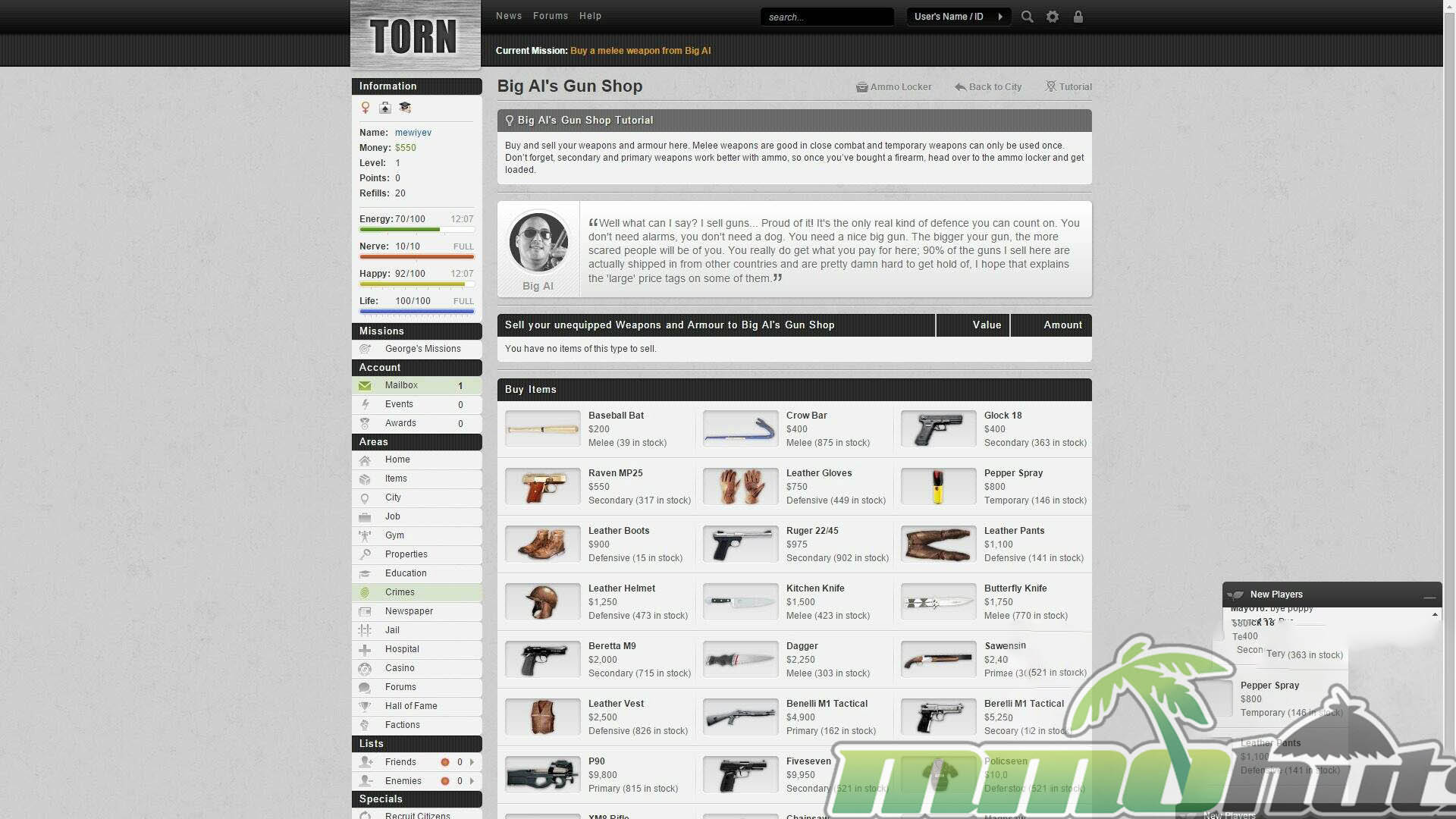
Combat plays out on a dedicated fight screen that displays both combatants and their equipment. You select your weapons to attack, and hits land on different body areas with varying damage outcomes. Stats matter, and gear choice is not purely about raw power. Weapon types and accuracy considerations change how fights play out, and ammunition management adds another practical layer for gun users, since bullets must be purchased and different weapons rely on different ammo types.
After winning, you choose how to resolve the fight. You can leave the opponent, mug them for a portion of their carried cash, or hospitalize them for a longer period. Mugging rewards a percentage of their on-hand money, and that percentage can be improved through Merits, which function as a form of character skill investment.
Donator Status
Torn’s monetization is notably restrained compared to many free-to-play MMORPGs. The premium currency, Points, is primarily used to refill your bars so you can take more actions per session. That can accelerate progress by increasing the number of things you can do in a day, but it does not simply let you purchase levels or instantly acquire best-in-slot equipment.
Premium items can also be traded for in-game cash, which gives paying players flexibility, but the core of Torn still demands planning and time investment. There is also a subscription option that provides a subscriber icon, daily prize draws, periodic gifts, character upgrades, and monthly point deposits. Overall, the shop feels more like a convenience and support system than a direct “buy power” shortcut, which helps keep competition healthier than in many comparable titles.
Final Verdict – Great
Torn is not trying to win over players looking for flashy visuals or rapid-fire leveling. It is a patient, persistent MMO where progress comes from routine, smart choices, and long-term social ties. For players who enjoy sandbox worlds, economy and reputation games, and a crime-themed setting with meaningful PvP and faction rivalry, Torn remains unusually compelling, especially given its age and its text-first presentation.
The main hurdle is the same thing that makes it work: it moves slowly, and learning to play efficiently can take time and research. If that pace sounds appealing rather than frustrating, Torn is a distinctive MMO worth investing in.
Torn Online Links
Torn Official Site
Torn Official Forums
Torn Wiki (Database / Guides)
Torn Reddit
Torn System Requirements
Minimum Requirements:
Operating System: Windows XP/Vista/7/8/10, Mac OSX
CPU: Intel Pentium 4 or AMD Equivalent
Video Card: Any Graphics Card (Integrated works well too)
RAM: 512 MB
Hard Disk Space: 100 MB (Cache)
Torn is a browser-based MMORPG and will run smoothly on practically any computer. Any modern web browser should run the game smoothly, as it is text-based and only requires images to load.
Torn Additional Information
Developer: Chedburn Networks
Publisher: Chedburn Networks
Designer: Joe Chedburn
Release Date: November 15, 2004
Development History / Background:
Torn was created and released by Chedburn Networks, the company founded by designer Joe Chedburn. The concept reportedly began when Chedburn was 16, and the project grew far beyond what many expected from a game without traditional graphics, eventually making him a millionaire by age 21. Torn earns around $80,000 dollars per month through subscriptions and premium purchases, and it has frequently been cited as an example of how a text-based game can still thrive commercially with the right community and long-term design.
The game is primarily aimed at an English-speaking audience, with official chat and forum spaces in English, though private faction forums are not moderated in the same way, which leaves room for groups to organize in other languages. Torn draws close to 20,000 daily players and continues to receive updates from its original developer, with regular announcements and coverage presented through the in-game newspaper, the Torn City Times.