Super Monday Night Combat is a free-to-play 3D MMO that blends third-person shooting with classic MOBA lane-pushing, acting as a more feature-rich follow-up to the original Monday Night Combat.
 | Publisher: Uber Entertainment Playerbase: Low Type: MOBA / Third-person Shooter Release Date: April 18, 2012 PvP: Battle Arenas Pros: +Distinct Pro roster with clear roles. +High-tempo, skill-driven firefights. +Strong visuals and effects for its era. +Playful, comedic presentation. +Polished arena atmosphere. +Memorable music selection. Cons: -Very low playerbase. –Hard to learn because onboarding is weak. +Few maps and limited mode variety. |

Super Monday Night Combat Overview
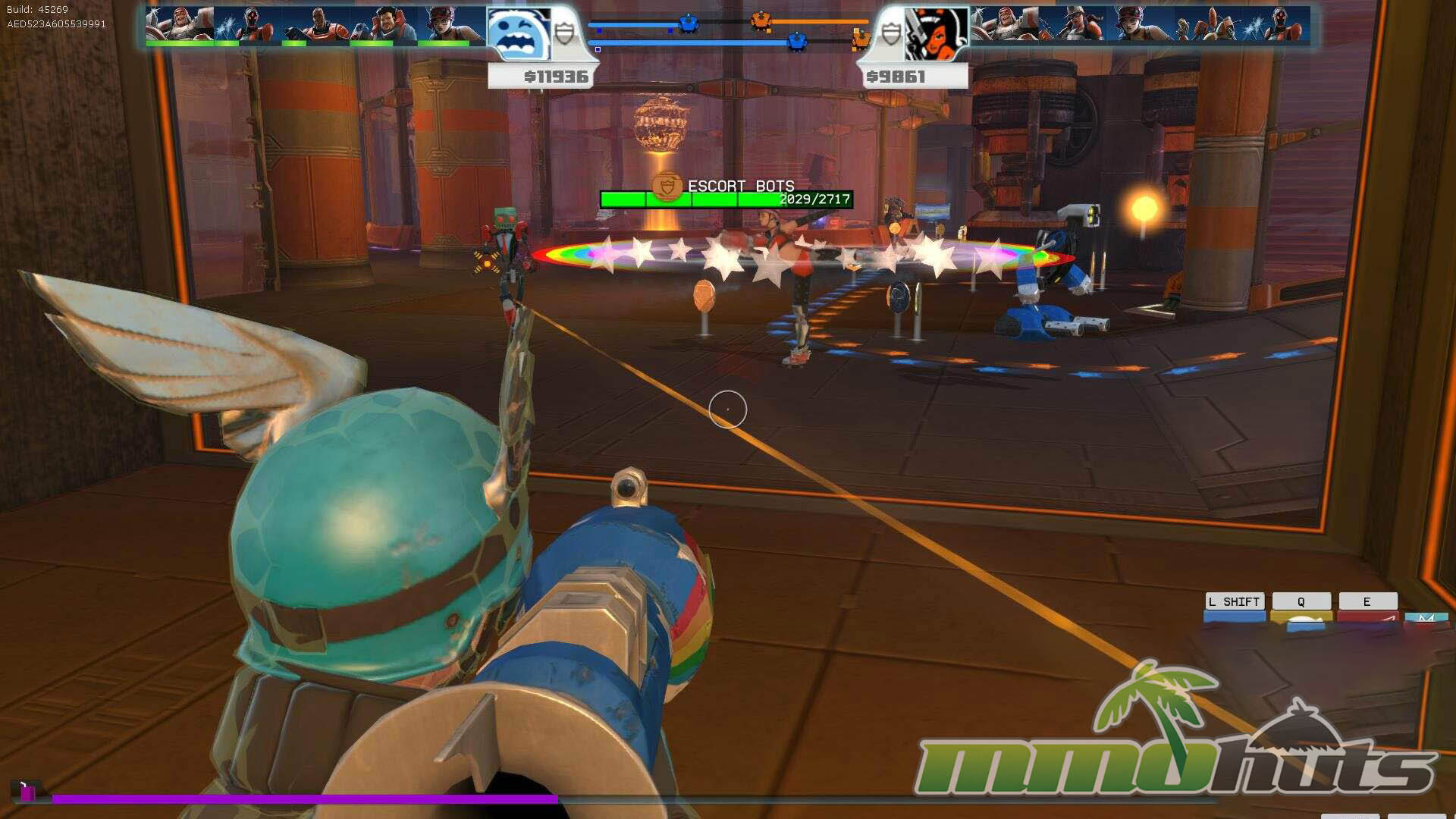
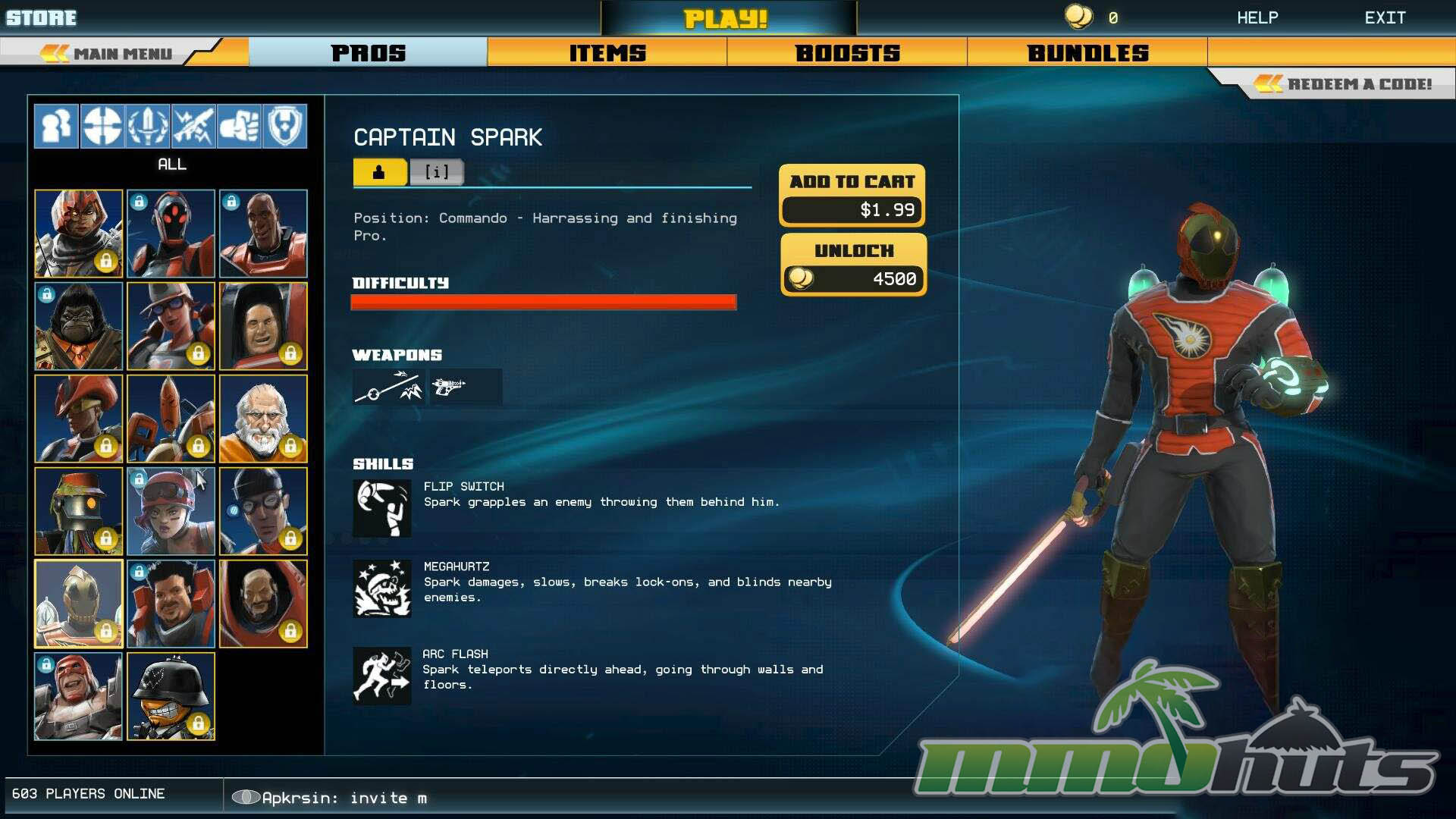
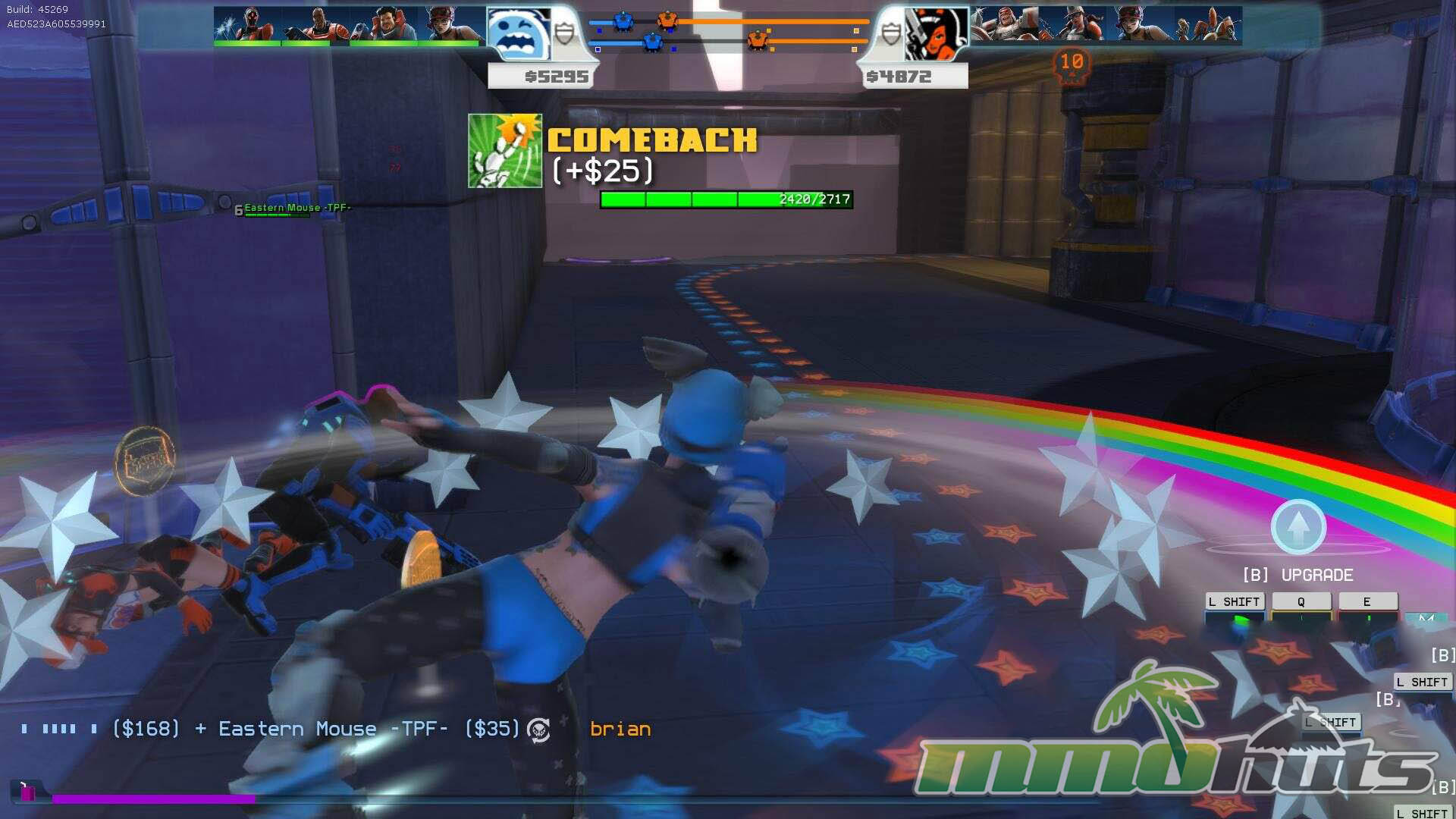
Super Monday Night Combat (often shortened to Super MNC) drops MOBA fundamentals into a third-person, arena-sport package. Two teams pick from a cast of “Pros”, each built around a recognizable job (damage, support, disruption, lane pressure) and a personality that matches the game’s tongue-in-cheek broadcast vibe. Matches play out in futuristic arenas with lanes, turrets, and constant bot waves, but the moment-to-moment feel is closer to an action shooter, with aiming, dodging, vertical movement, and ability timing all mattering at once.
Outside of raw mechanical skill, Super MNC asks players to build their Pros through Endorsements and Products, which function as loadout-style stat tuning. That system lets you push a character toward faster reloads, better sustain, or sharper burst damage, depending on how you like to approach fights. Whether you are fighting other players in arena matches or teaming up for bot-heavy survival, the game leans into spectacle, complete with energetic announcers calling the play-by-play and keeping the tone light even when matches get tense. As a fun extra for longtime Valve fans, leveling can also reward Team Fortress 2 hats.
Super Monday Night Combat Key Features:
- Lane-pushing with shooter movement – MOBA objectives meet third-person aiming, creating fights that can swing quickly as teams win a pick or secure a push.
- Teamplay-first objectives – success comes from coordinating pushes, clearing bots, controlling space, and taking smart fights rather than only chasing kills.
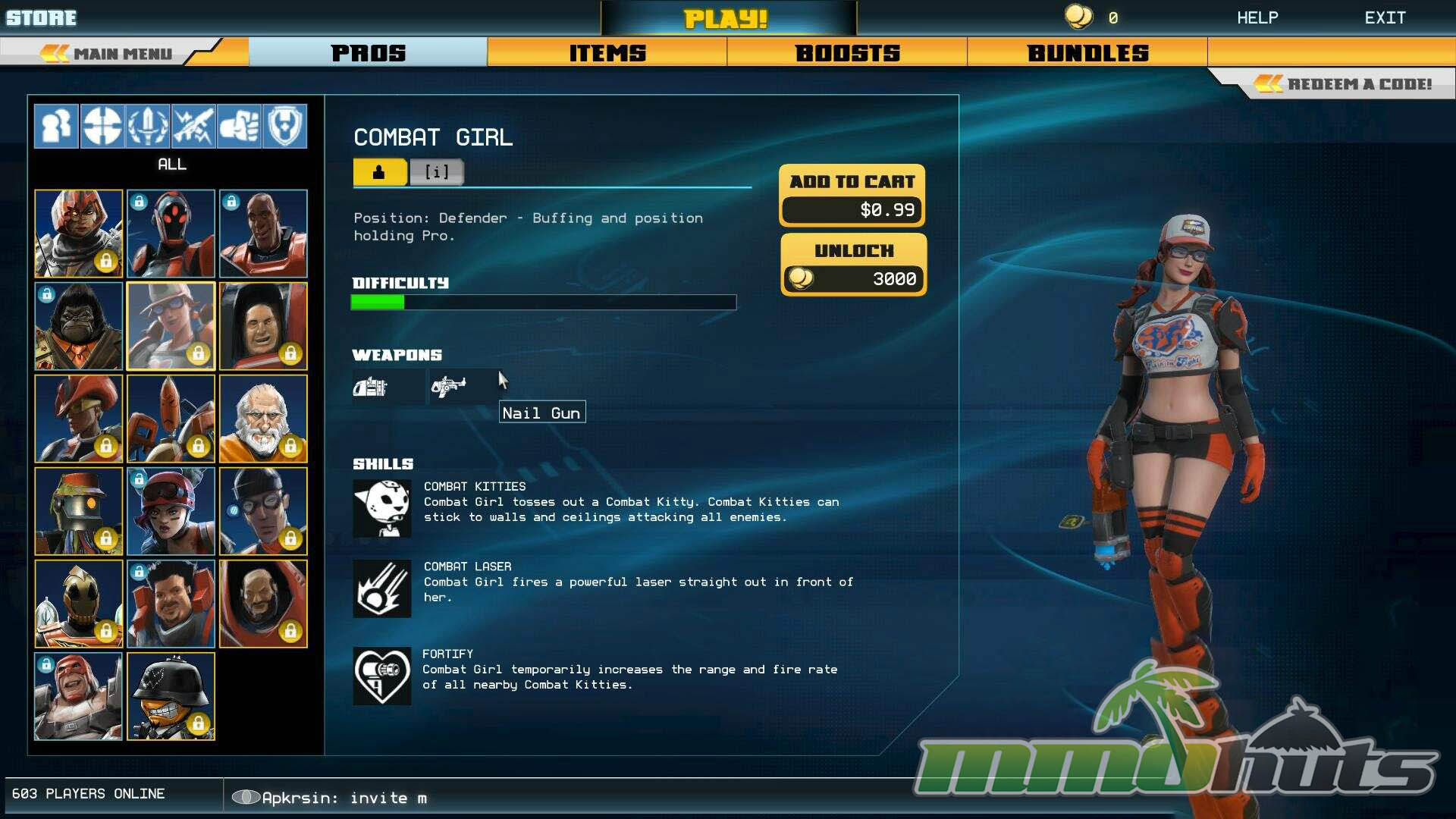
- Pros with personality – the roster is built around varied kits and strong visual identity, so picks feel meaningfully different from one another.
- Build customization – tweak performance through Products and Endorsements to better match your role, your weapon comfort, and your preferred tempo.
- Free TF2 Hats – earn Team Fortress 2 hats as you hit certain level milestones.
Super Monday Night Combat Screenshots
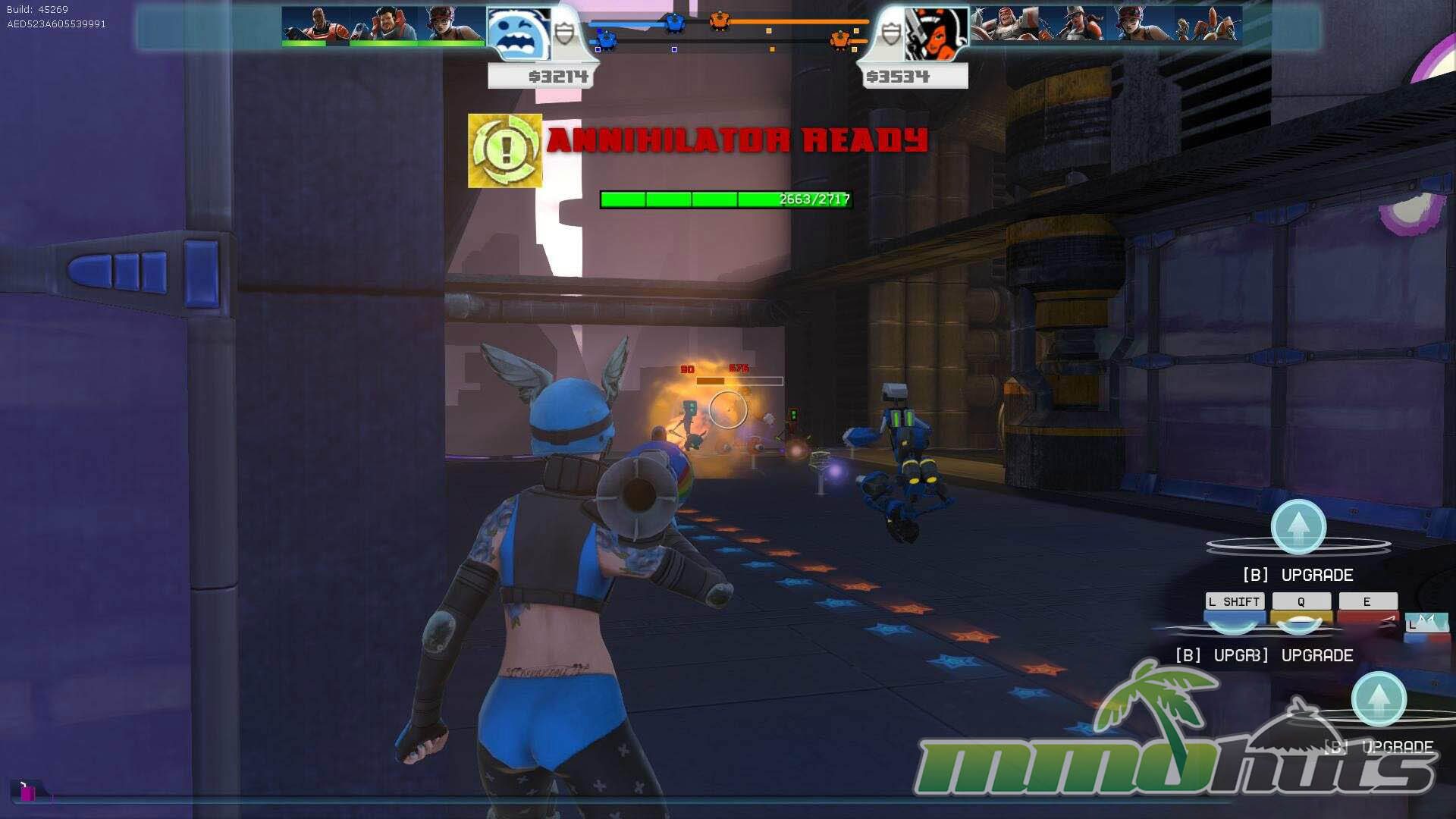
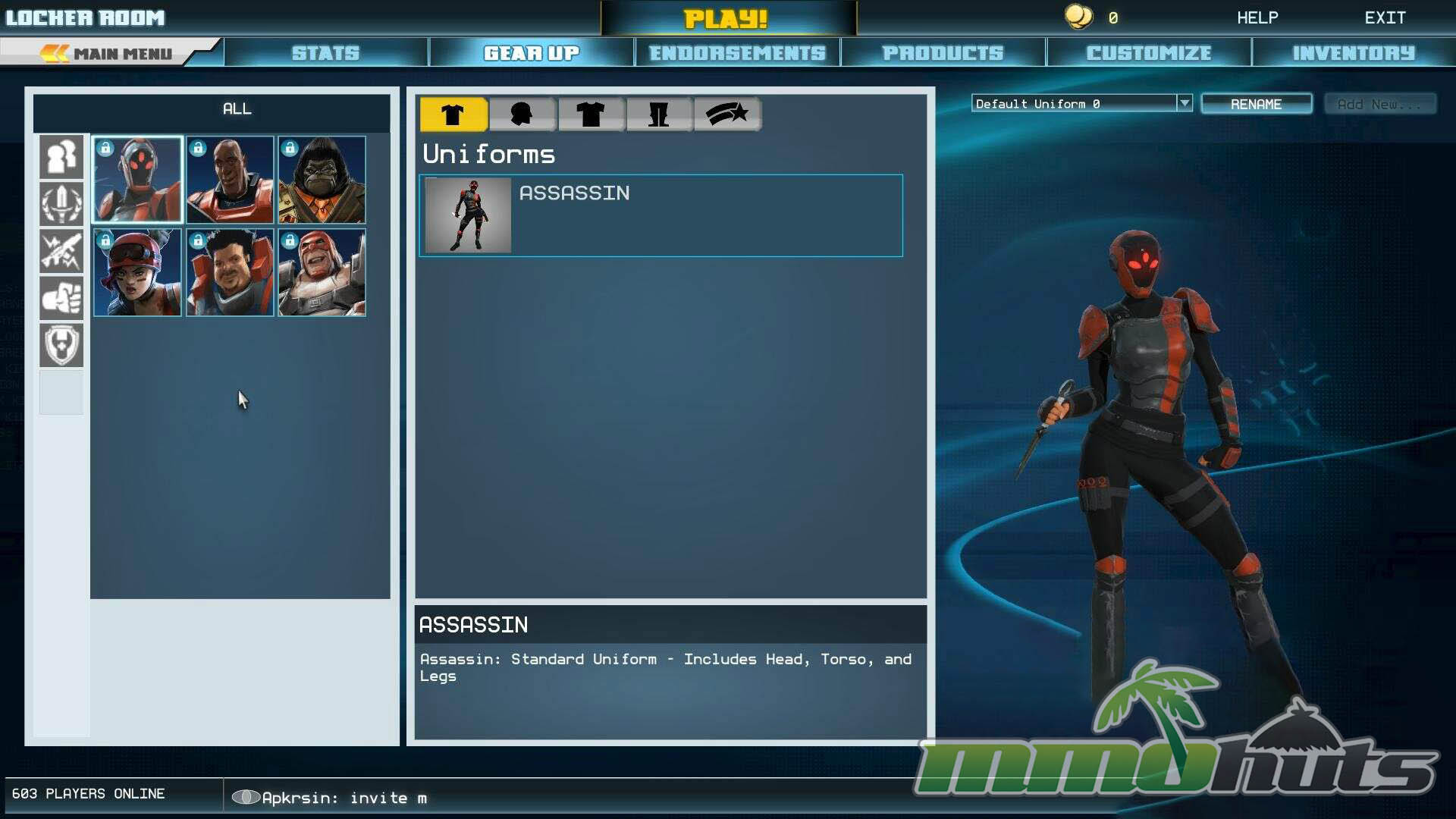
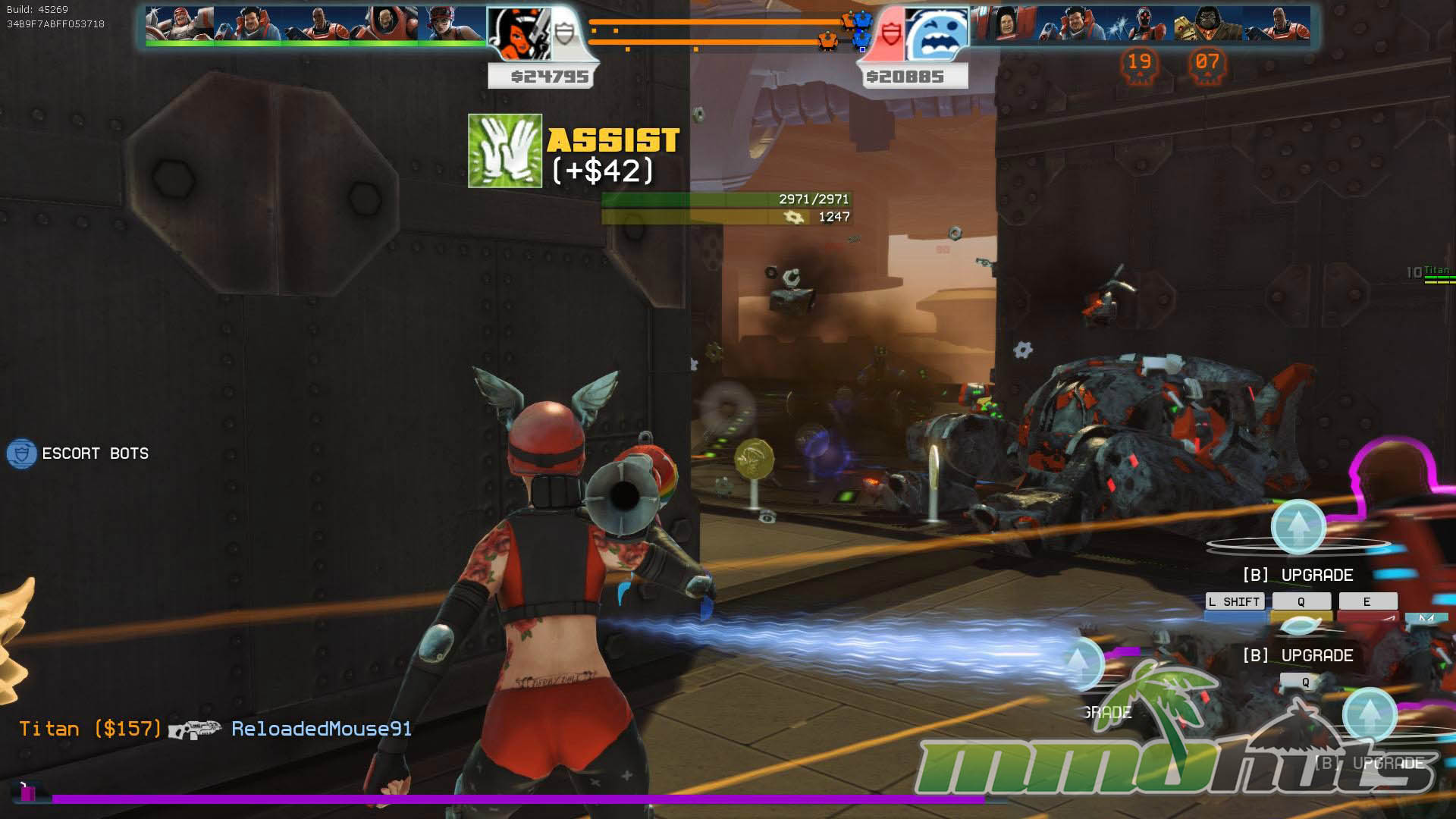
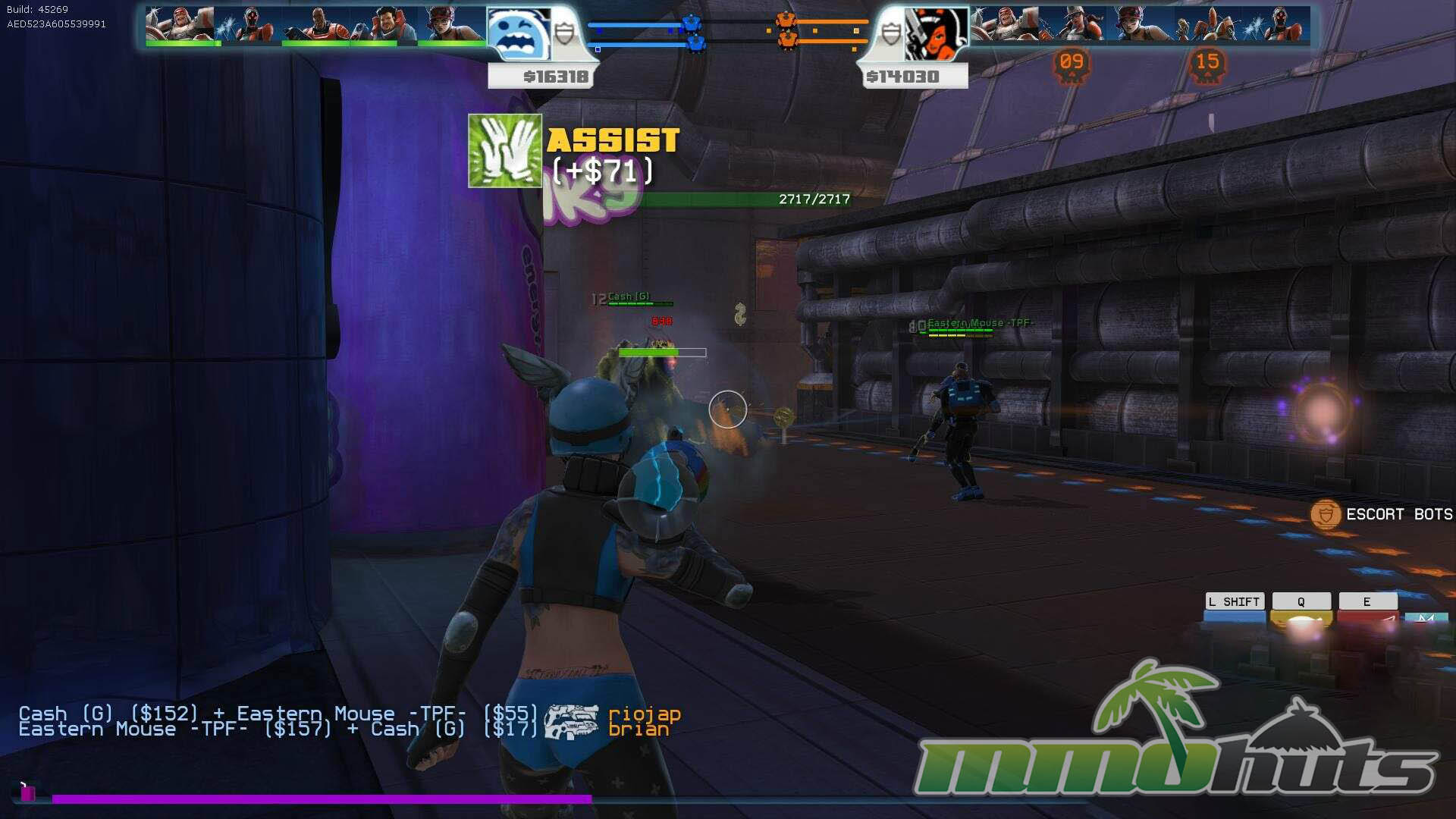
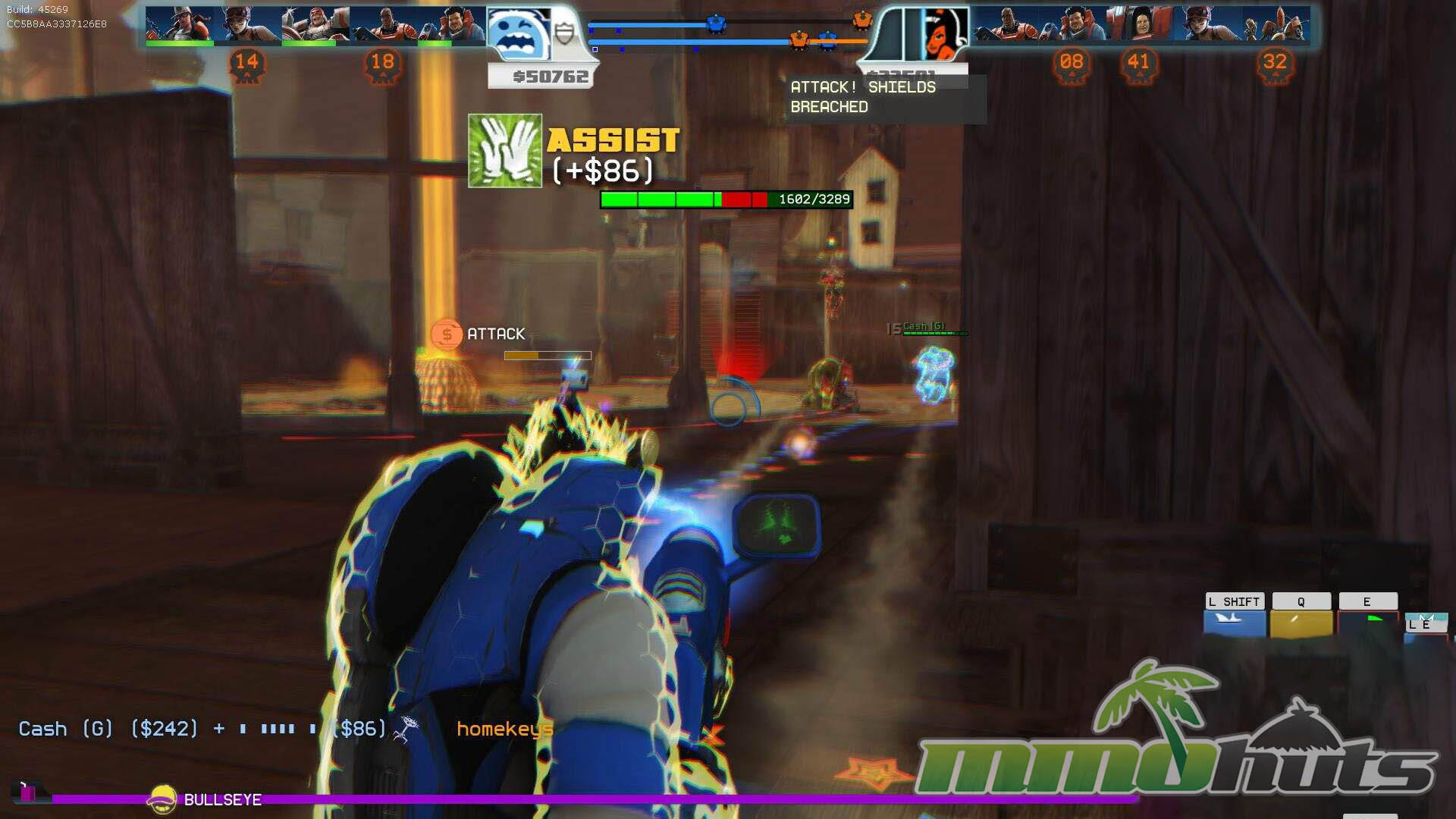

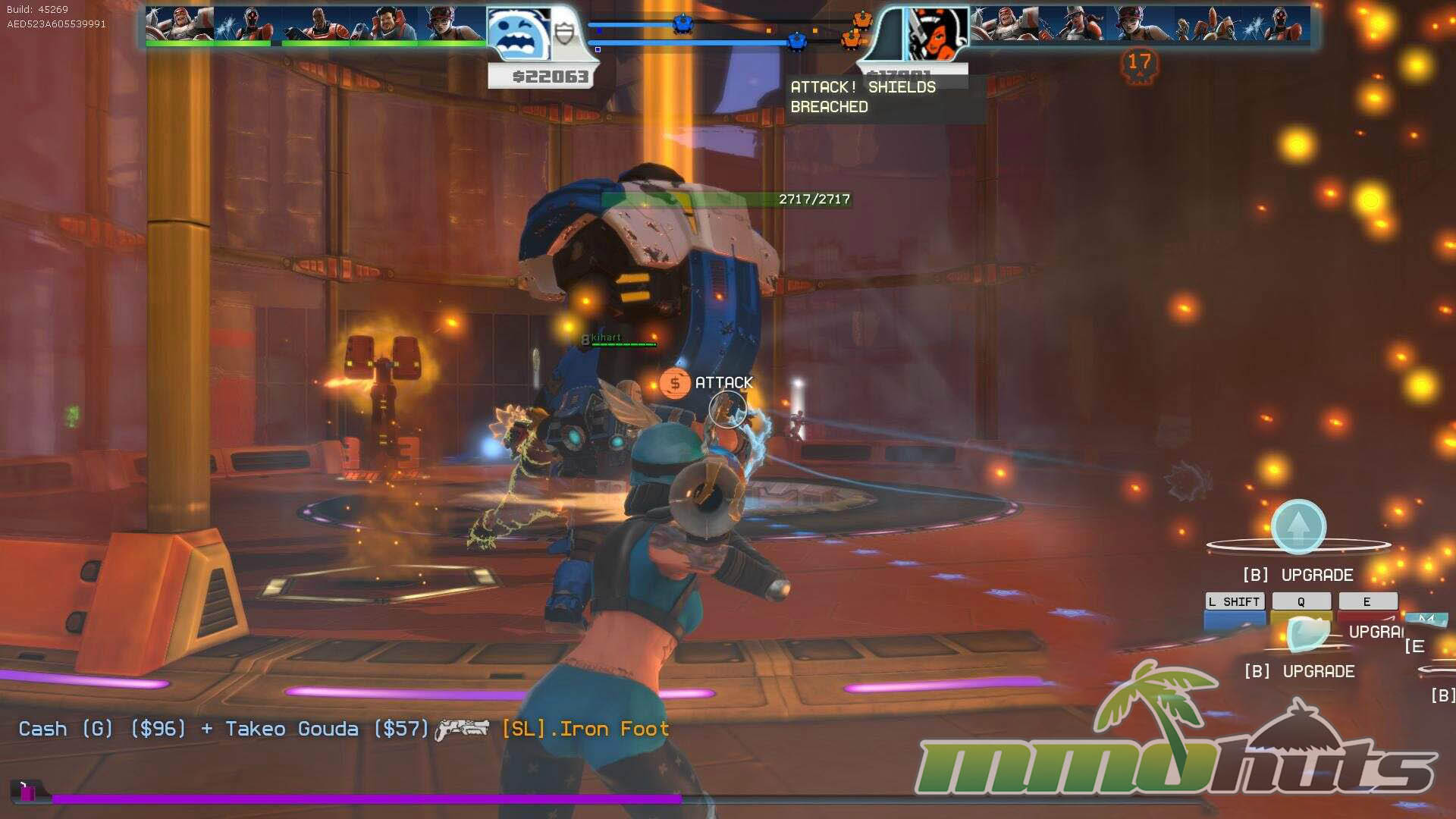
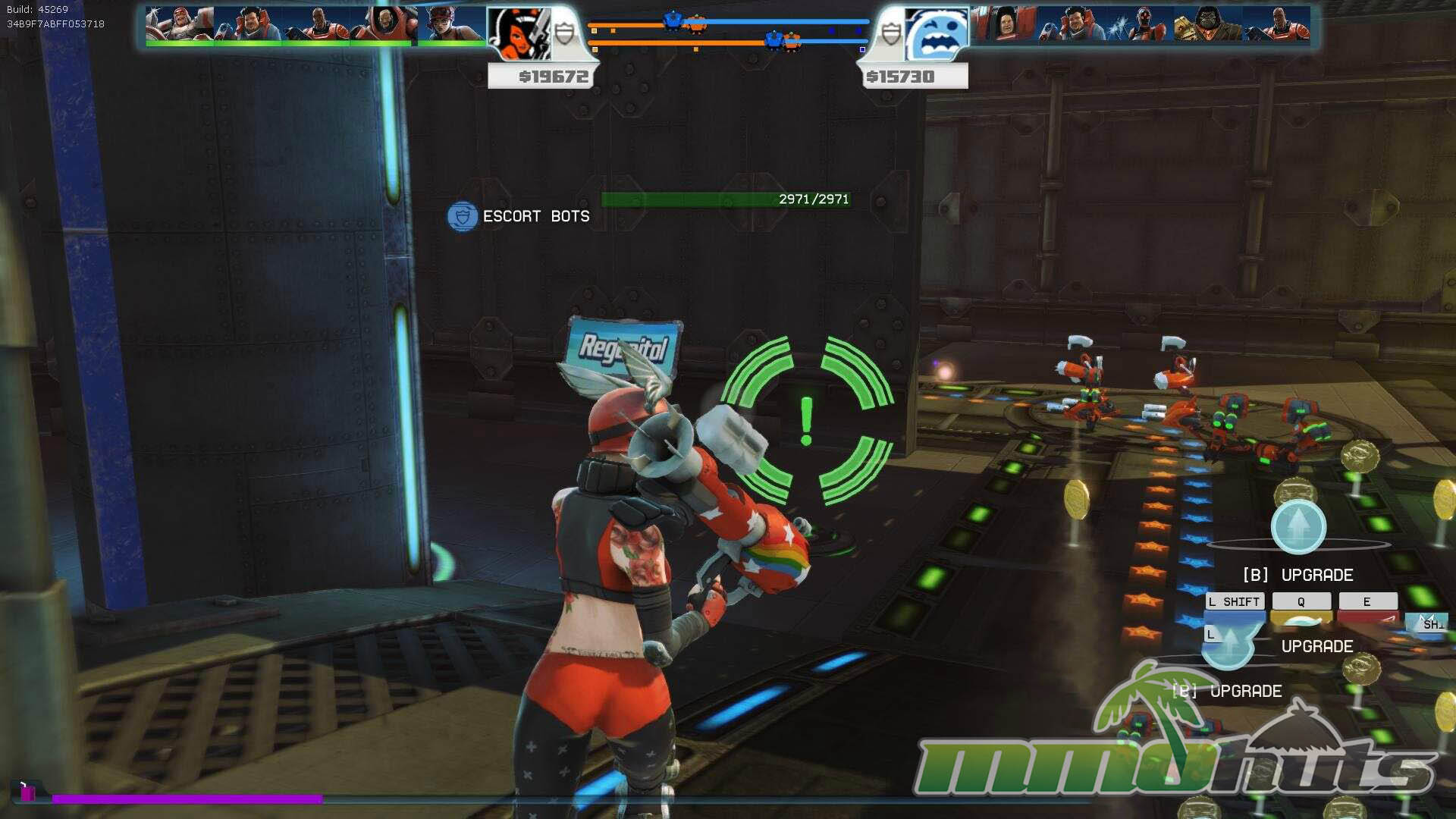
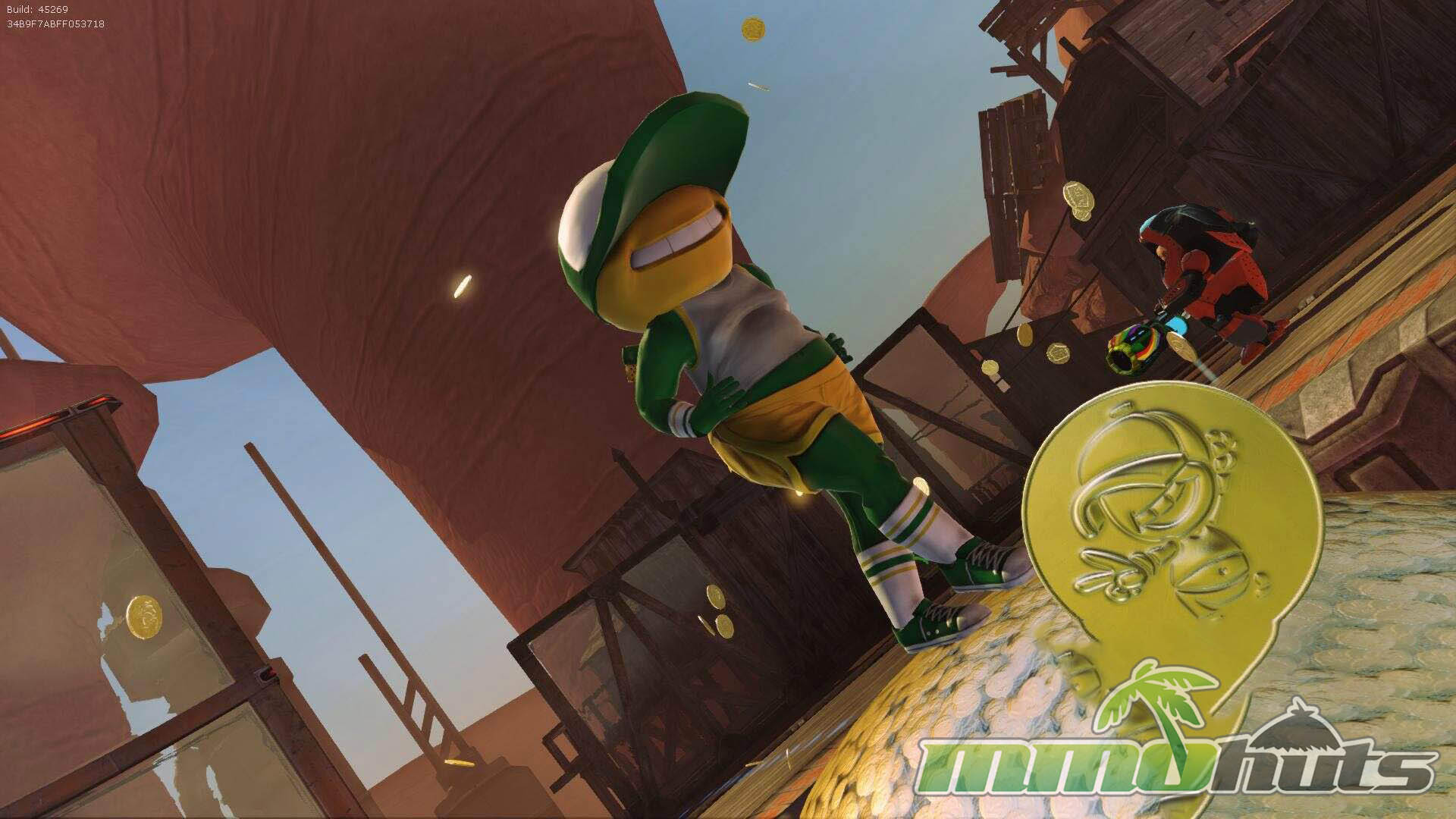
Super Monday Night Combat Featured Video

Super Monday Night Combat Review
Super Monday Night Combat is essentially a competitive sci-fi “sports broadcast” built around MOBA structure, only played from a third-person perspective. Instead of an isometric camera and click-to-move, you are aiming shots, tracking targets, and using cover and elevation while still juggling the familiar priorities of lanes, turrets, and bot pressure. It is positioned as the upgraded evolution of the original Monday Night Combat, and that shows in how much emphasis it places on the arena battle format and the broader Pro roster.
Visually, Super MNC still holds up better than you might expect from a 2012 release. Arenas are colorful and readable, characters are intentionally exaggerated, and ability effects are flashy without completely obscuring the action. Audio is also a strong point, with punchy combat feedback and a soundtrack that happily jumps between styles. That eclectic mix fits the game’s “futuristic game show” framing, and it gives matches a distinct identity compared to more serious MOBAs and shooters.
Learning the ropes is the real first boss
The biggest early hurdle is not the enemy team, it is understanding what the game is asking you to do and how its systems fit together. Super MNC does not provide a clean, modern onboarding flow, and it introduces terms like “Products” and “Endorsements” with minimal context. For genre veterans, the broad strokes are familiar, but the details matter a lot here, especially because stat tuning and loadouts can strongly influence survivability and damage breakpoints.
There is a training option that tries to cover the essentials in a single space with voice-over guidance, but it feels more like a rapid tour than a step-by-step tutorial. The result is a steep learning curve where new players can grasp movement and shooting quickly, yet still struggle with builds, objectives, and the rhythm of when to push lanes versus when to group for fights.
An arena MOBA, filmed like a live broadcast
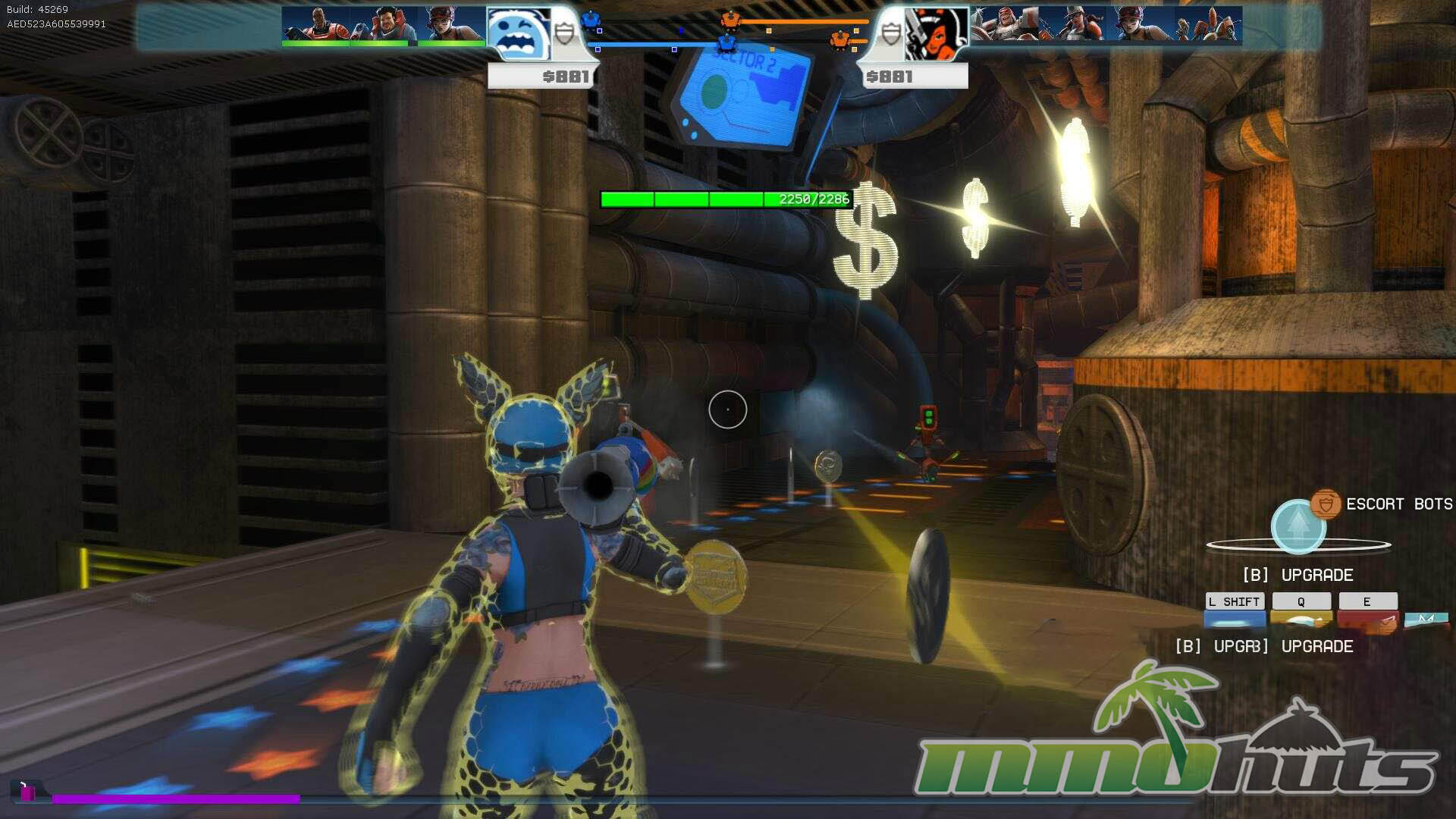
At its core, Super MNC borrows the familiar DOTA-style loop: lanes are filled with AI bots, teams advance by winning fights and pushing waves, defensive turrets block progress, and the end goal is to take down the opposing team’s Moneyball. The twist is that every decision is filtered through third-person gunplay, so positioning, aim consistency, and vertical routes become major factors in how engagements play out.
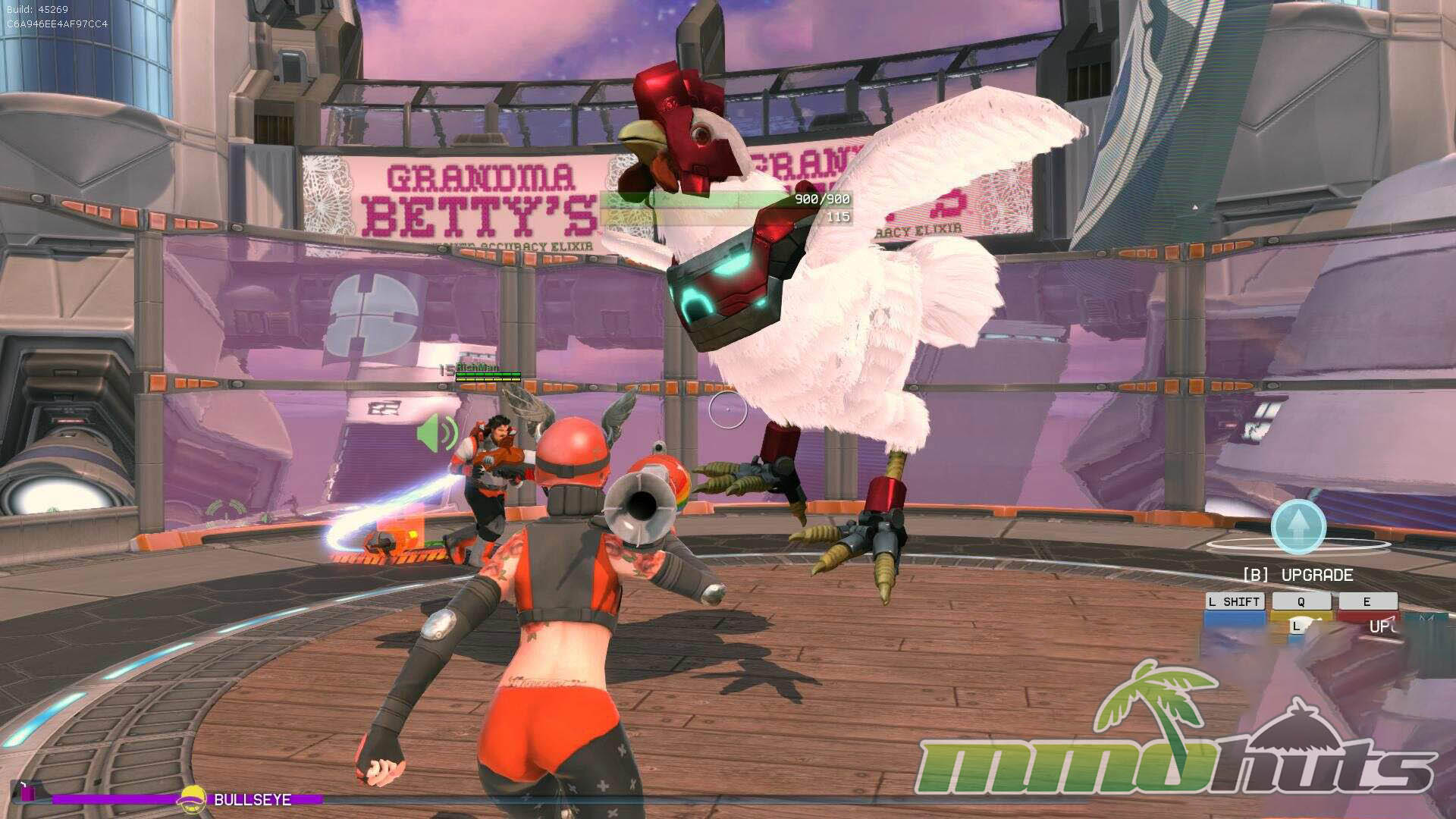
The game’s movement and map design encourage constant repositioning. You are not only trading shots in a lane, you are also hopping onto platforms, taking angles, and diving into close-range brawls when a kit demands it. Abilities are mapped to keys like Left Shift, Q, and E, which keeps moment-to-moment execution closer to an action game than a traditional MOBA. The comedic sports-show presentation ties it together, with announcers delivering commentary and playful banter while the match escalates.
In addition to the standard competitive format, there is also a Tower Defense mode where five players cooperate against endless bot waves. It leans more into survival and wave management, offering a different pace than the objective race of Moneyball matches.
Matchmaking is the game’s biggest obstacle today
Queueing is handled through matchmaking after selecting a mode, but the experience can be rough. Team balance frequently feels uneven, and it is common to see newer players matched against coordinated veterans. That would be frustrating in any competitive game, but it hits particularly hard in a MOBA-like environment where small advantages snowball into turret pressure and objective control.
The more pressing issue is simply finding matches. With a very low playerbase, queue times can stretch from a few minutes to much longer, especially if you are not actively organizing groups. The lack of a strong leaver penalty also hurts match integrity, because players can drop out of a losing game without meaningful consequences. In a mode where numbers and map presence matter, a single departure can quickly turn a close match into a one-sided cleanup.
Endorsements and Products: build depth with tradeoffs
Progression rewards Experience and Combat Credits whether you win or lose, which keeps the grind from feeling overly punishing. Over time you unlock and buy Endorsements and Products that let you tune how each Pro performs. Endorsements are tied to leveling and purchased with Combat Credits, and they boost specific attributes such as reload speed, health recovery, or critical chance.
The catch is that Endorsements come with drawbacks, lowering other stats as a counterbalance. Higher levels increase both the benefit and the penalty, so you are encouraged to make deliberate choices rather than simply stacking upgrades. Products also improve stats, but they do so without the same negative side effects. They are also purchased with Combat Credits and sometimes require a certain level to equip, making them a straightforward way to round out a build once you know what your character needs.
Monetization stays mostly on the safe side
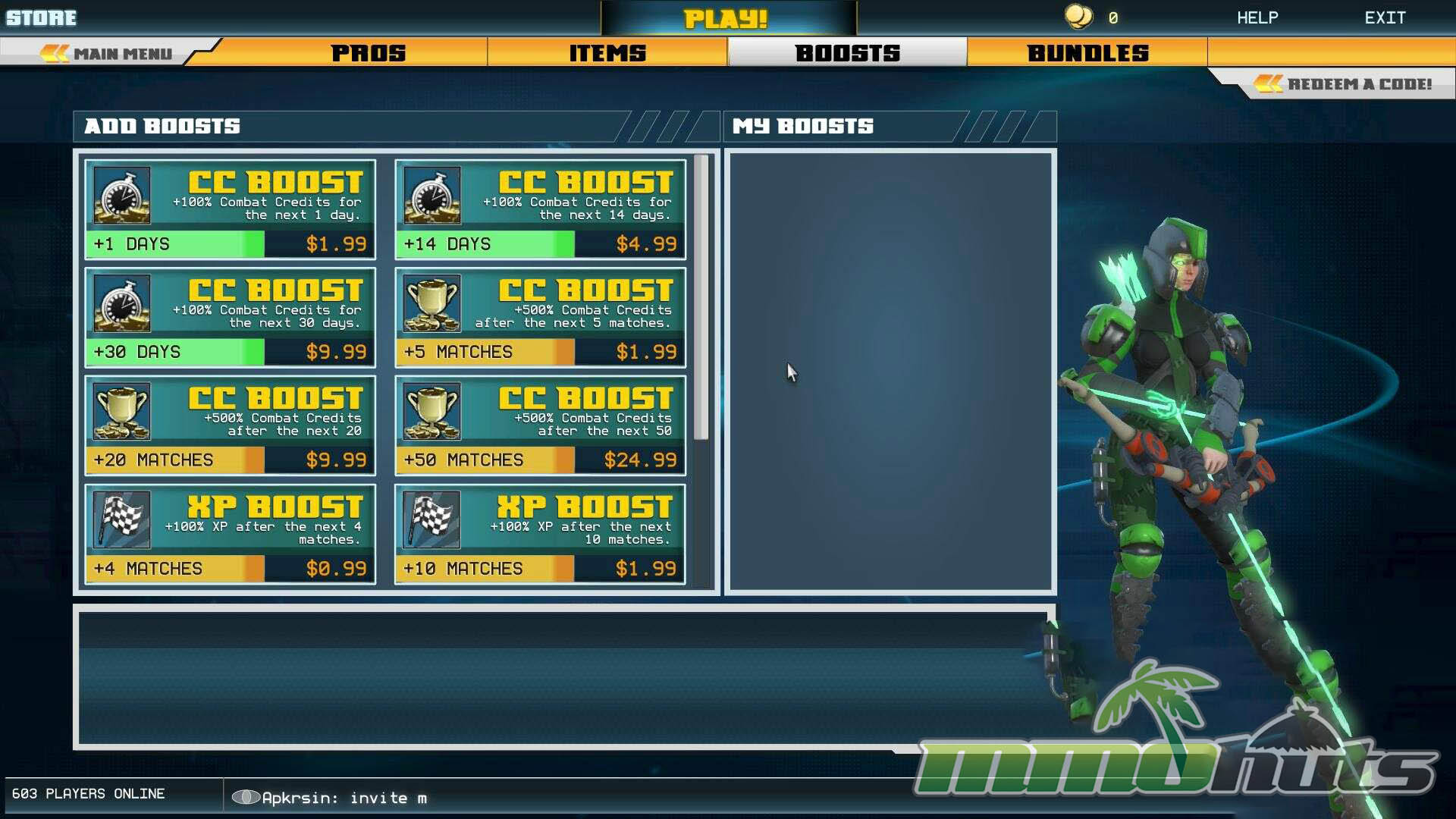
The in-game store supports both Combat Credits and real money purchases. Gameplay-affecting unlocks like additional Pros and build components can be obtained through earned currency, while cash spending focuses on cosmetics (costumes, taunts) and convenience items such as boosts for credits and experience. Importantly, it avoids the worst pay-to-win pitfalls, and the overall balance stays closer to what you would expect from a competitive MOBA structure.
The Final Verdict – Good
Super Monday Night Combat remains an unusually creative blend of third-person shooter execution and MOBA objective play, wrapped in a comedic sports broadcast that gives it a personality few competitors ever matched. When you actually get into a good match, the pacing is exciting, the roster variety is fun to explore, and the soundtrack and presentation do a lot to keep the experience upbeat.
The downside is that the game is difficult to recommend purely on accessibility today. Weak onboarding, uneven matchmaking, and especially the very low playerbase create friction that can overwhelm the game’s strengths. Still, for players willing to work around long queues or coordinate with others, Super MNC is a distinctive and entertaining title that is worth sampling, particularly if you want a lighter, more arcade-like take on MOBA combat.
Super Monday Night Combat Links
Super Monday Night Combat Official Site
Super Monday Night Combat Steam Page
Super Monday Night Combat Wikipedia
Super Monday Night Combat Wikia
Super Monday Night Combat System Requirements
Minimum Requirements:
Operating System: XP(SP3) / Vista / Windows 7
CPU: Pentium 4 2.0GHz or Athlon MP 1900+
RAM: 1 GB RAM
Video Card: GeForce 7800 GS or Radeon X800 GT
Hard Disk Space: 2 GB available space
Recommended Requirements:
Operating System: XP(SP3) / Vista / Windows 7
CPU: Pentium D 830 3.0GHz or Athlon LE-1640
RAM: 2 GB RAM
Video Card: GeForce GT 240 or Radeon HD 5570 512MB
Hard Disk Space: 2 GB available space
Super Monday Night Combat Music & Soundtrack
Super Monday Night Combat Additional Information
Developer: Uber Entertainment
Publisher: Uber Entertainment
Game Engine: Unreal Engine
Open Beta: April 18, 2012
Original Release Date: April 18, 2012
Development History / Background:
Super Monday Night Combat (Super MNC) is a free-to-play 3D third-person MOBA developed and published by Uber Entertainment. It appeared on Steam with an Open Beta label on April 17, 2012, then was officially released shortly after on April 18, 2012. Compared to Monday Night Combat, which leaned more heavily into Tower Defense roots, Super MNC shifts the focus toward the full MOBA-style lane and objective experience while keeping the same playful, televised deathsport framing.