The far edge of space becomes a battleground after the discovery of what appears to be the last remaining Stargate. Star Crusade takes that premise and turns it into a digital collectible card game where you pick one of six races, build a race-locked deck, and fight other players online for control and bragging rights.
 | Publisher: Xim, Inc Playerbase: Small Type: CCG Strategy Release Date: December 15, 2015 Pros: +Space setting and faction flavor. +Strong ambient soundtrack. +Card crafting via melting extras. +Developers appear engaged with feedback. Cons: -Frequent instability, crashes, and assorted bugs. -Very familiar design that closely resembles genre leaders. -Monetization can feel pay-to-win. |

Star Crusade Overview
Developed and published by Xim, Inc., Star Crusade is a science-fiction themed CCG built around six distinct races. Each race comes with its own card pool and tactical identity, which means your deckbuilding options are heavily shaped by the faction you choose. From there, the loop is what you would expect from a competitive digital card game: assemble decks, queue into online matches, and climb either casually or through ranked play.
Alongside standard PvP, the game also includes a Raid mode that focuses on pre-constructed drafting for that specific format, rather than restricting you to only the cards you already own. Progression centers on earning credits through play, then spending those credits on Booster Packs to expand your collection. Extra cards are not entirely wasted either, because duplicates can be melted down and converted into crafting resources that help you create specific cards you are missing.
Star Crusade Key Features:
- Sci-Fi Theme – a space-forward look and feel with futuristic card designs and interstellar battlegrounds.
- Good Music – the soundtrack leans into ambient, cosmic tones that suit the setting during longer matches.
- Six Unique Race – each faction has a dedicated deck identity, with strengths and weaknesses that encourage different playstyles.
- Easy to Pick Up – the ruleset is approachable, but learning matchups and card interactions takes time.
- Customize Your Deck – cosmetic options include deck backs, avatars, and commander choices through the Store.
Star Crusade Screenshots
Star Crusade Featured Video

Star Crusade Classes
Star Crusade offers six races (functionally its “classes”), each with a dedicated set of cards and a general strategic theme to build around.
- Annunaki– a control-leaning faction focused on psychic tricks, disruption, and stealing or turning enemy units against their owner.
- Consortium – resource-driven and opportunistic, built around black-market flavor, mercenary tactics, and economic advantages.
- Hierarchy – a disciplined, ordered society led by immortal AI, generally pushing structured, efficient plays and board management.
- Shan’Ti – genetics-obsessed and mutation-oriented, with tools that alter units mid-fight and reward adaptive sequencing.
- Terrans – the human-aligned choice, commonly revolving around machines and numbers to create pressure and maintain the board.
- Hajir-Gog – a brute-force faction driven by revenge, favoring direct aggression and raw stat power to overwhelm opponents.
Star Crusade Review
Star Crusade is a digital CCG from Xim, Inc. that clearly targets the same audience as the biggest names in the genre. Its pacing, match structure, and overall user experience will feel immediately recognizable to anyone who has spent time with modern online card battlers. That familiarity is not automatically a problem, but in Star Crusade it becomes the central issue: the game often struggles to justify itself beyond its sci-fi skin and a handful of small tweaks.
A Familiar Blueprint With a Space Paint Job
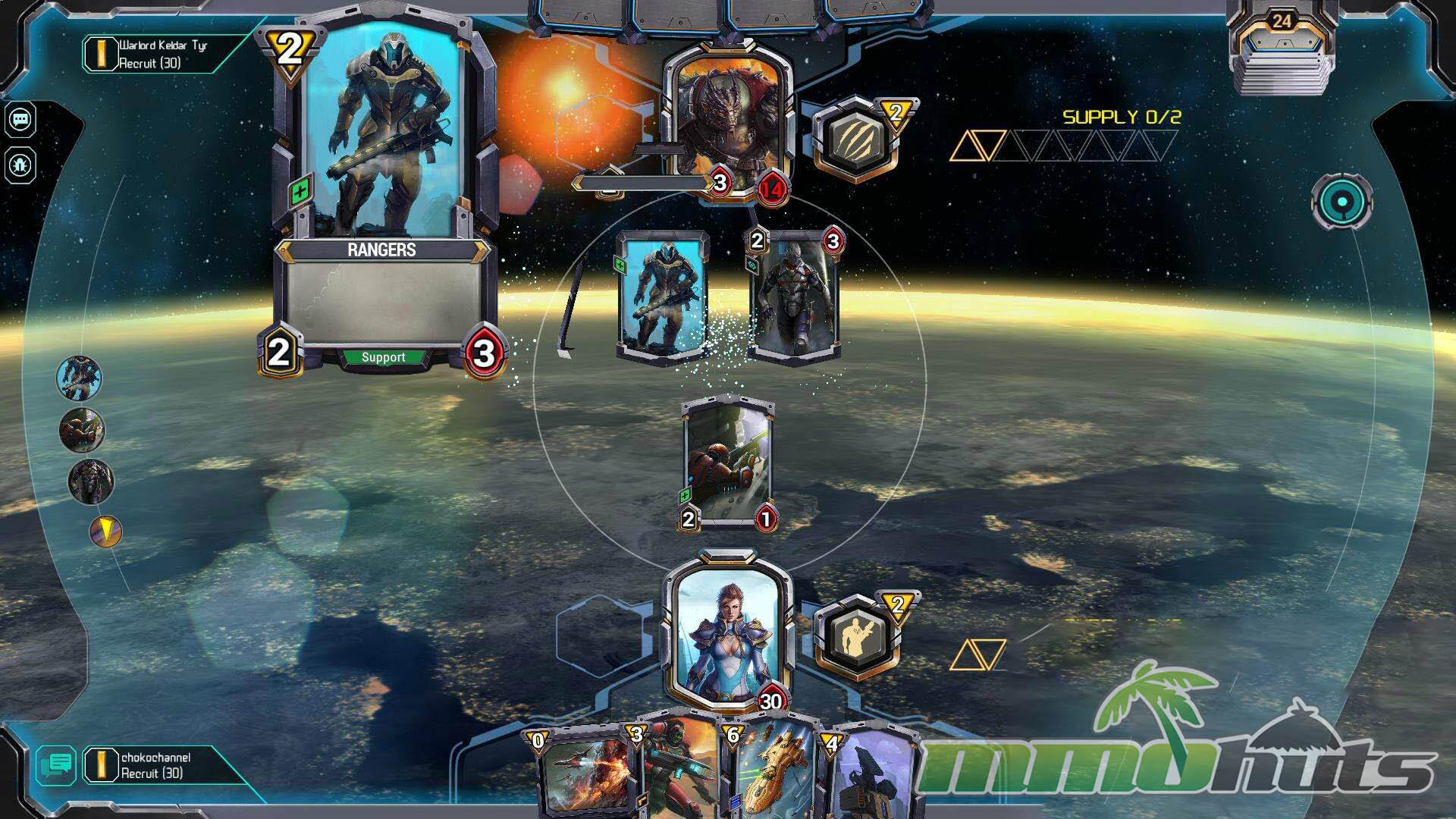
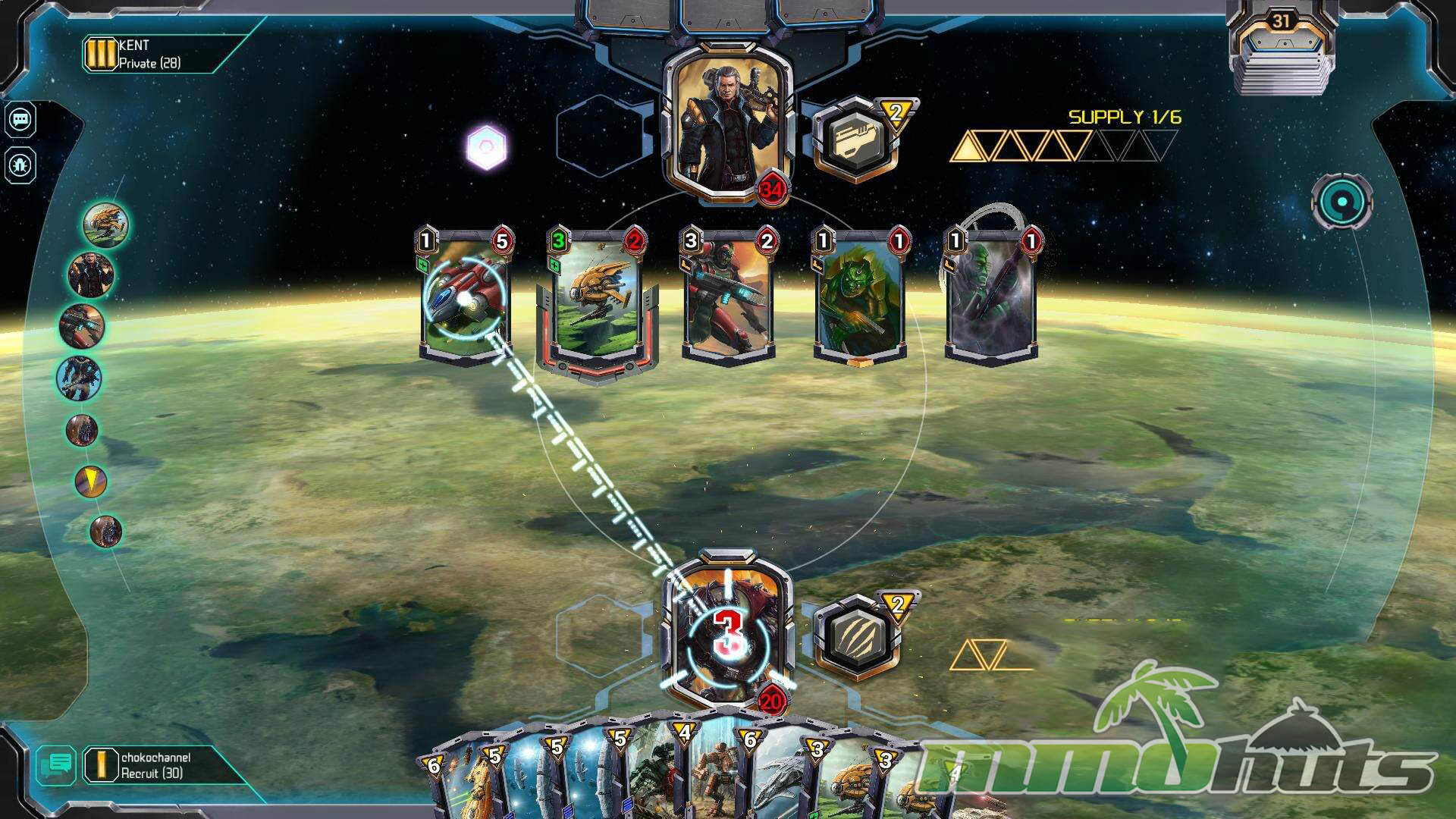
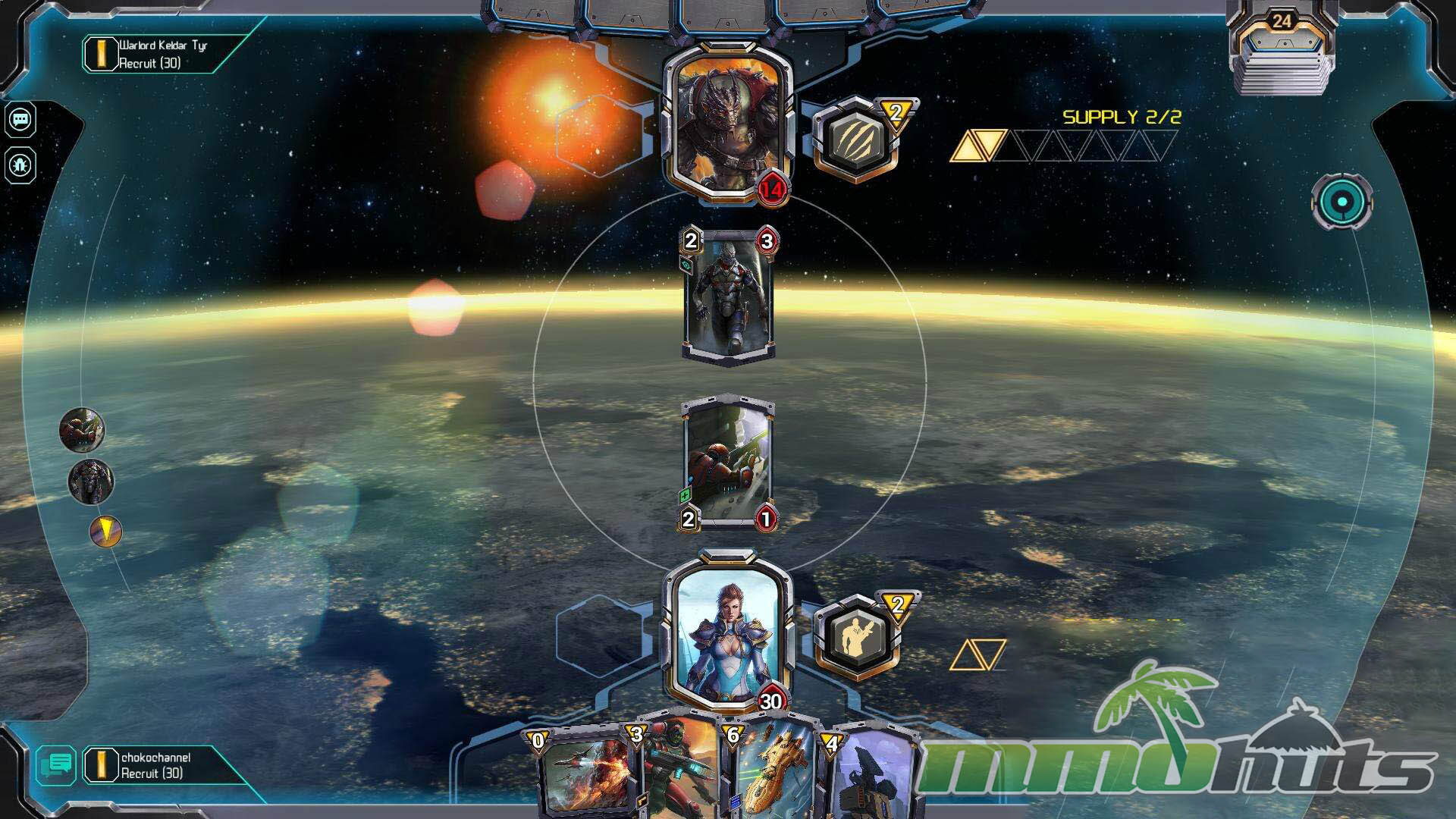
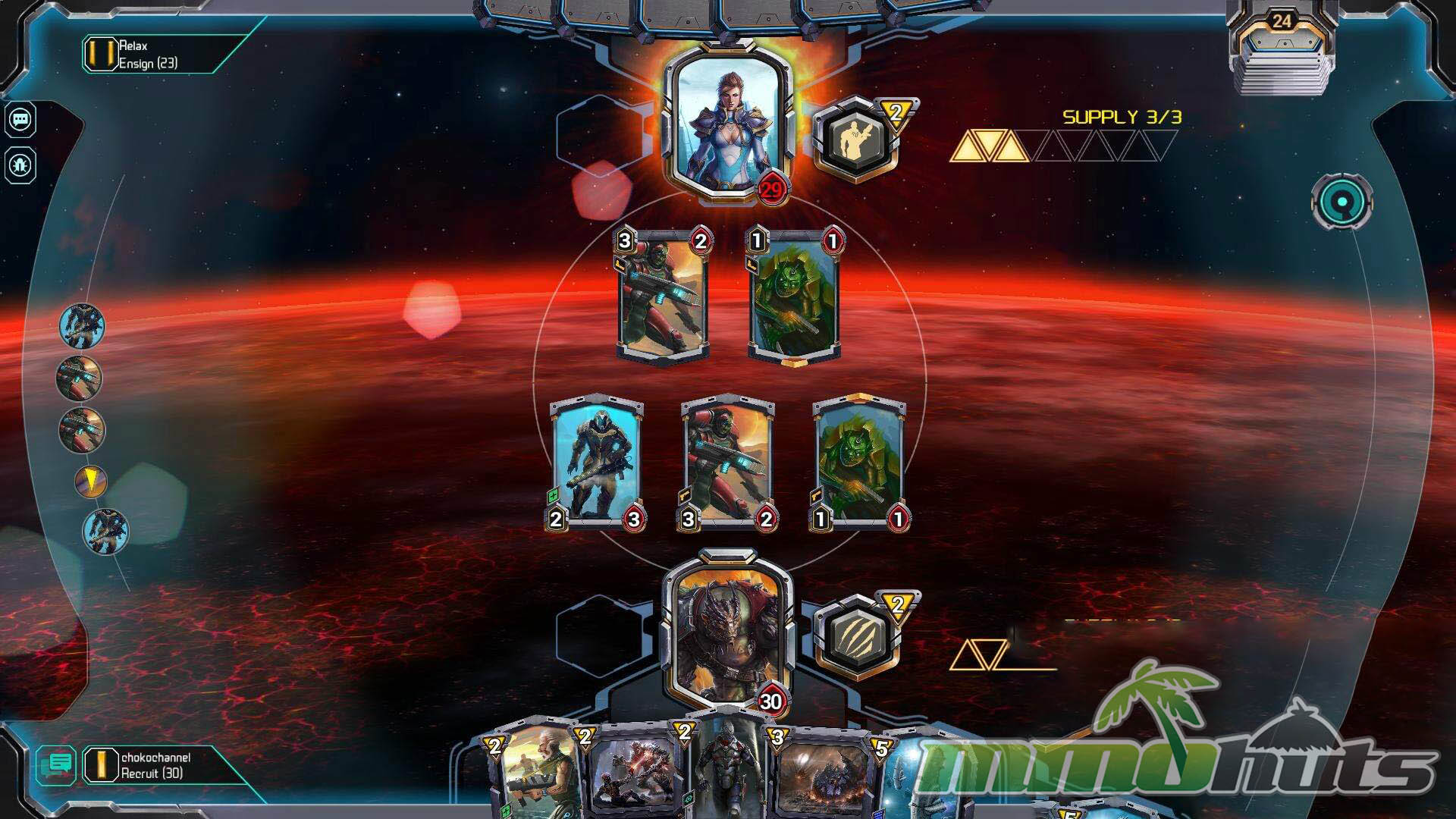
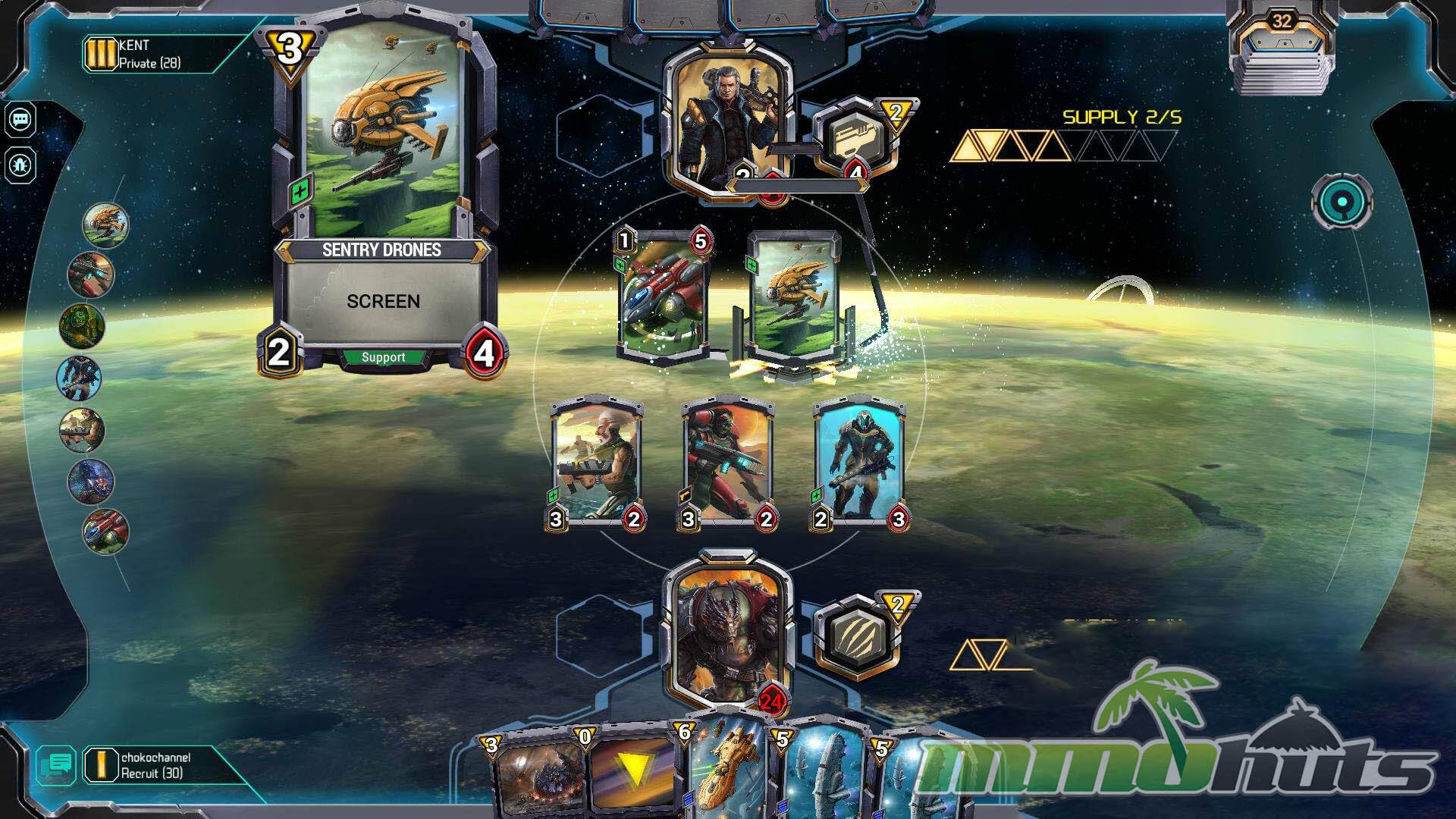
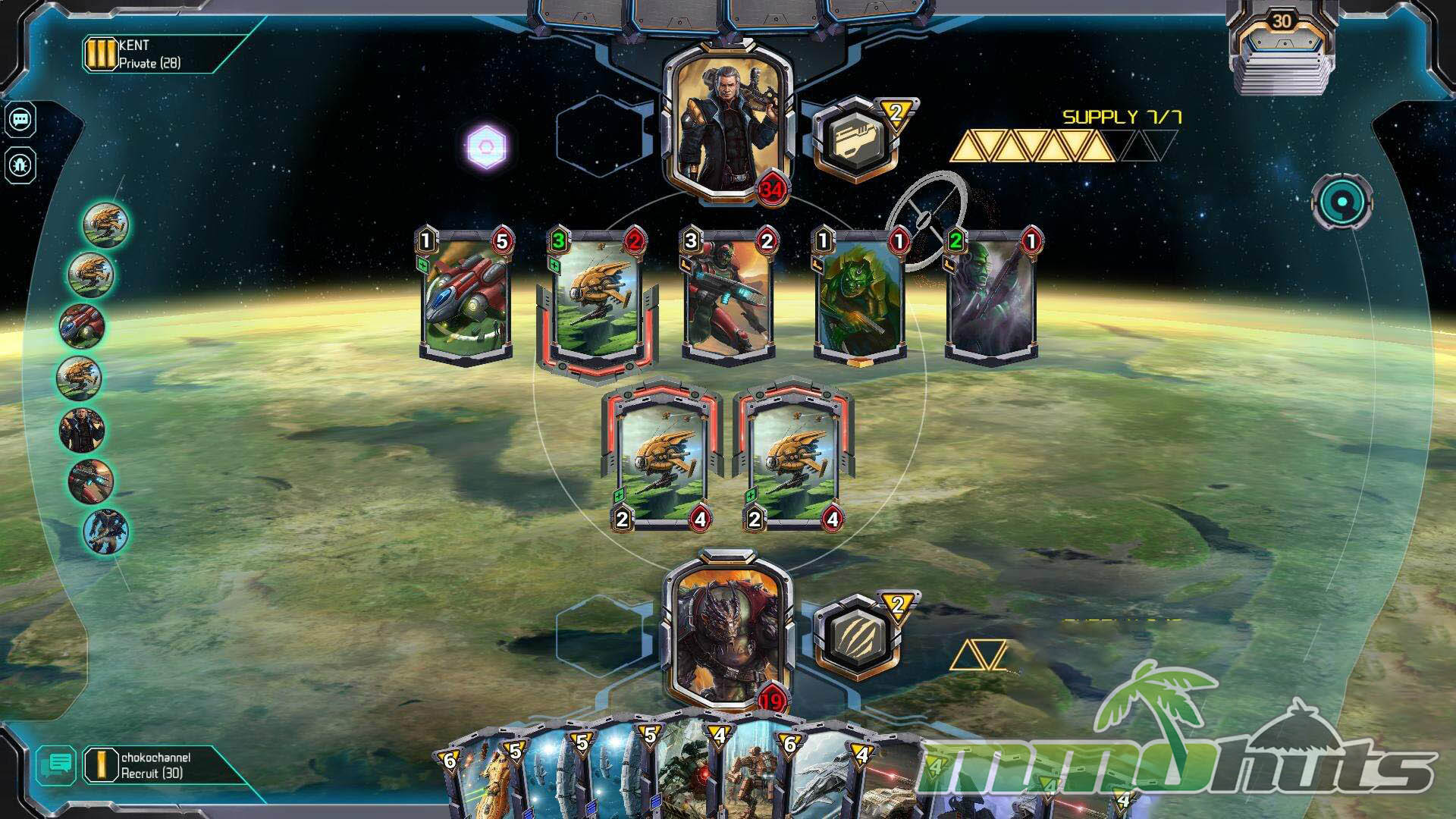
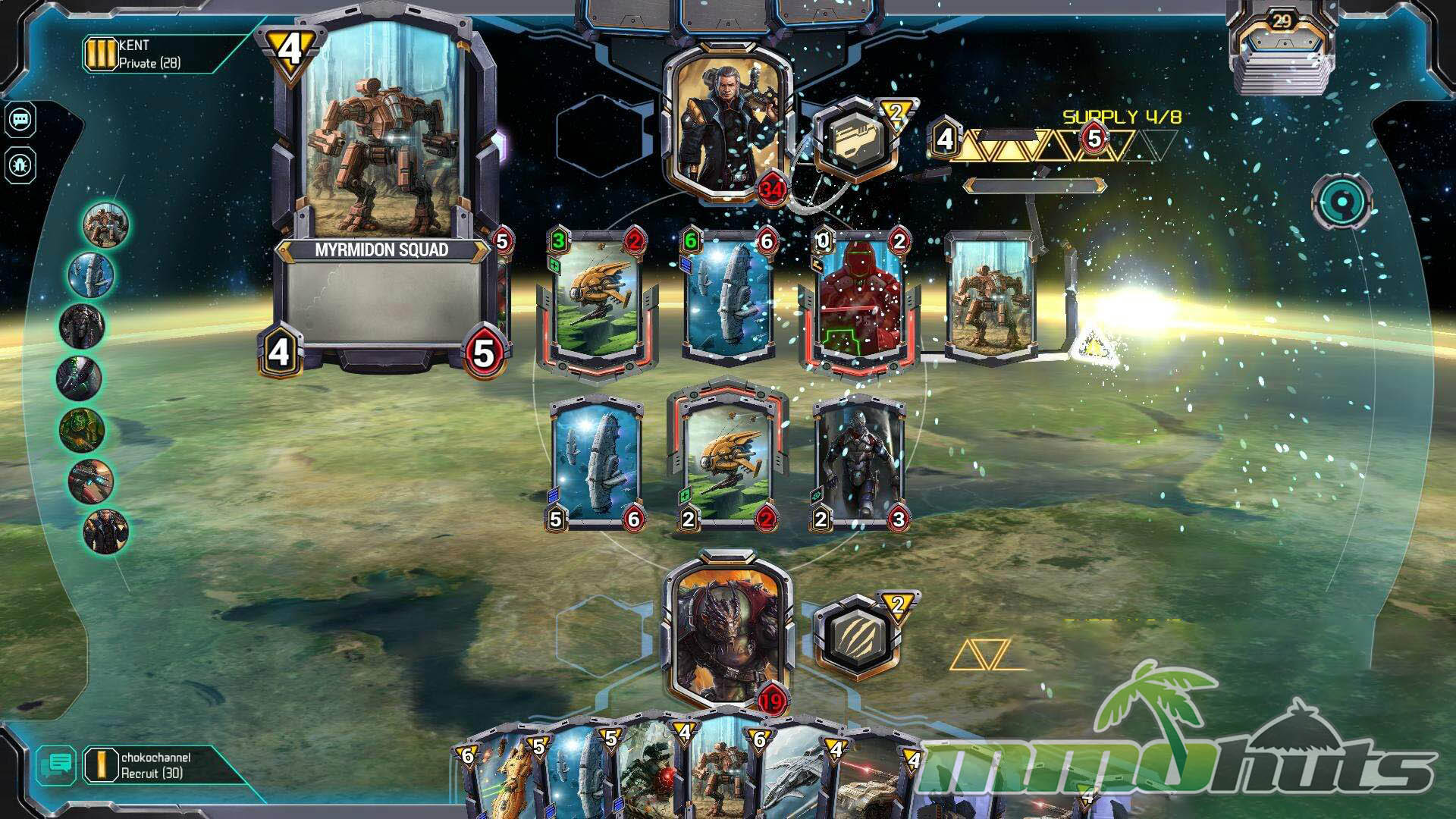
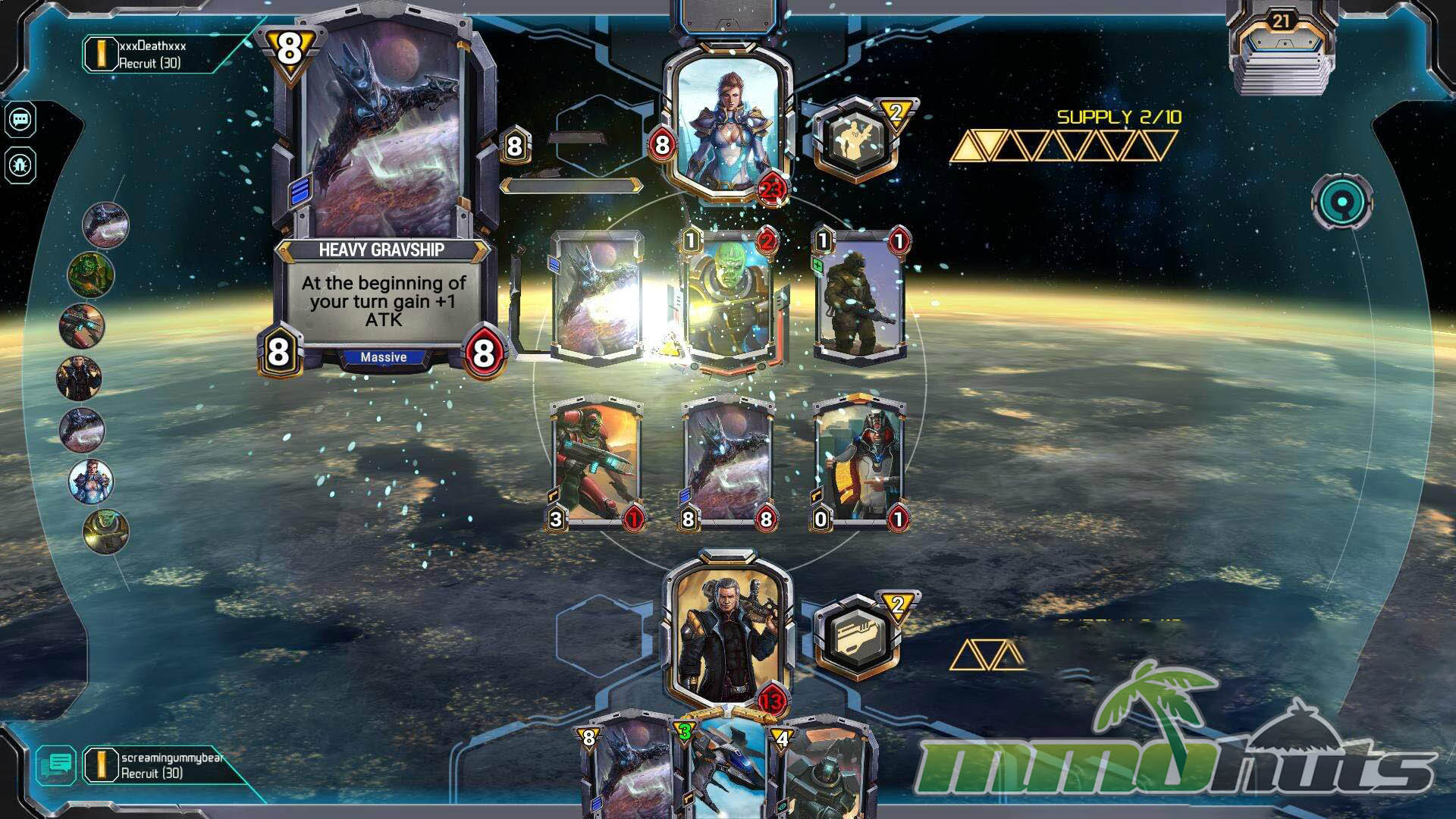
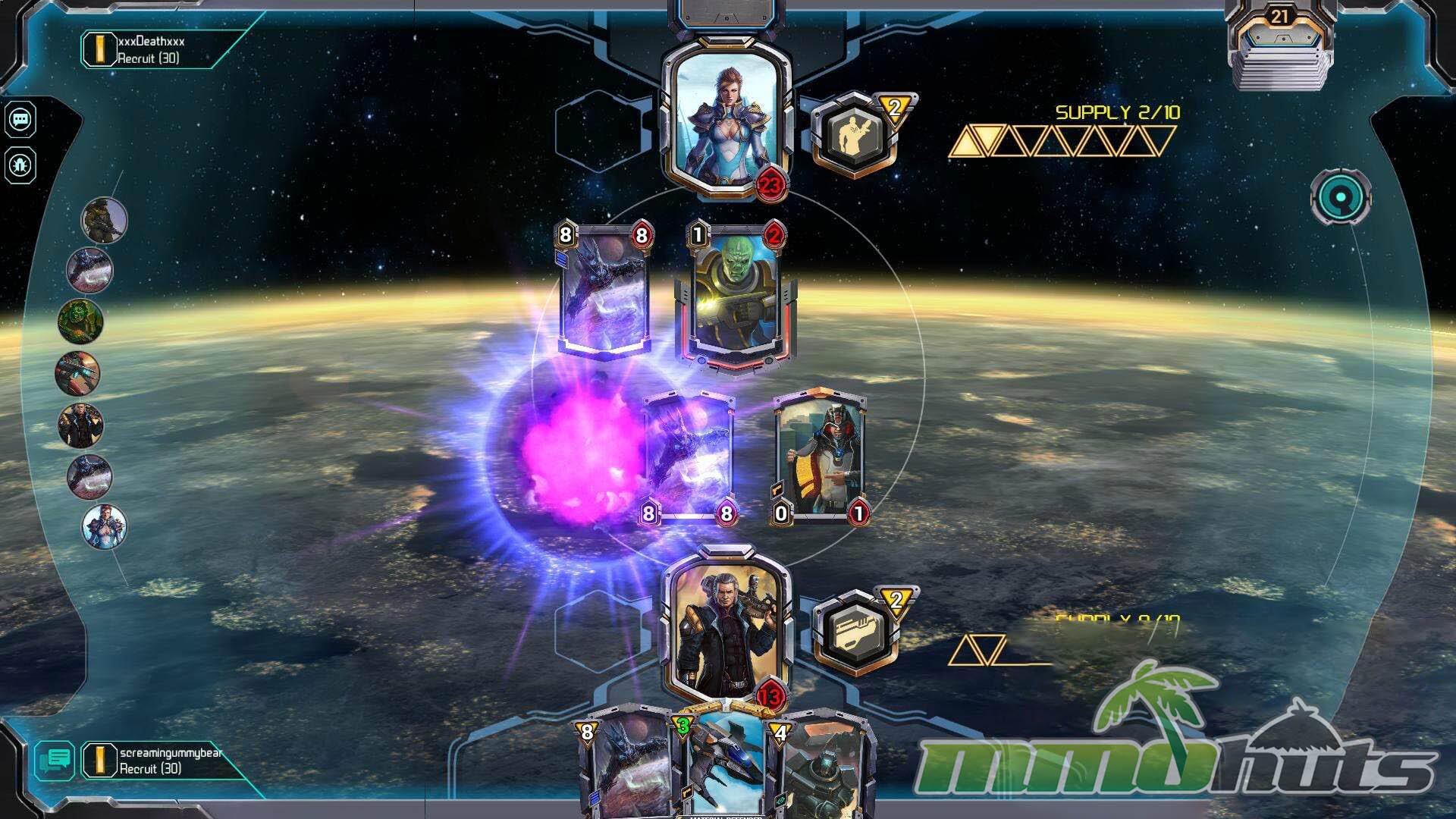
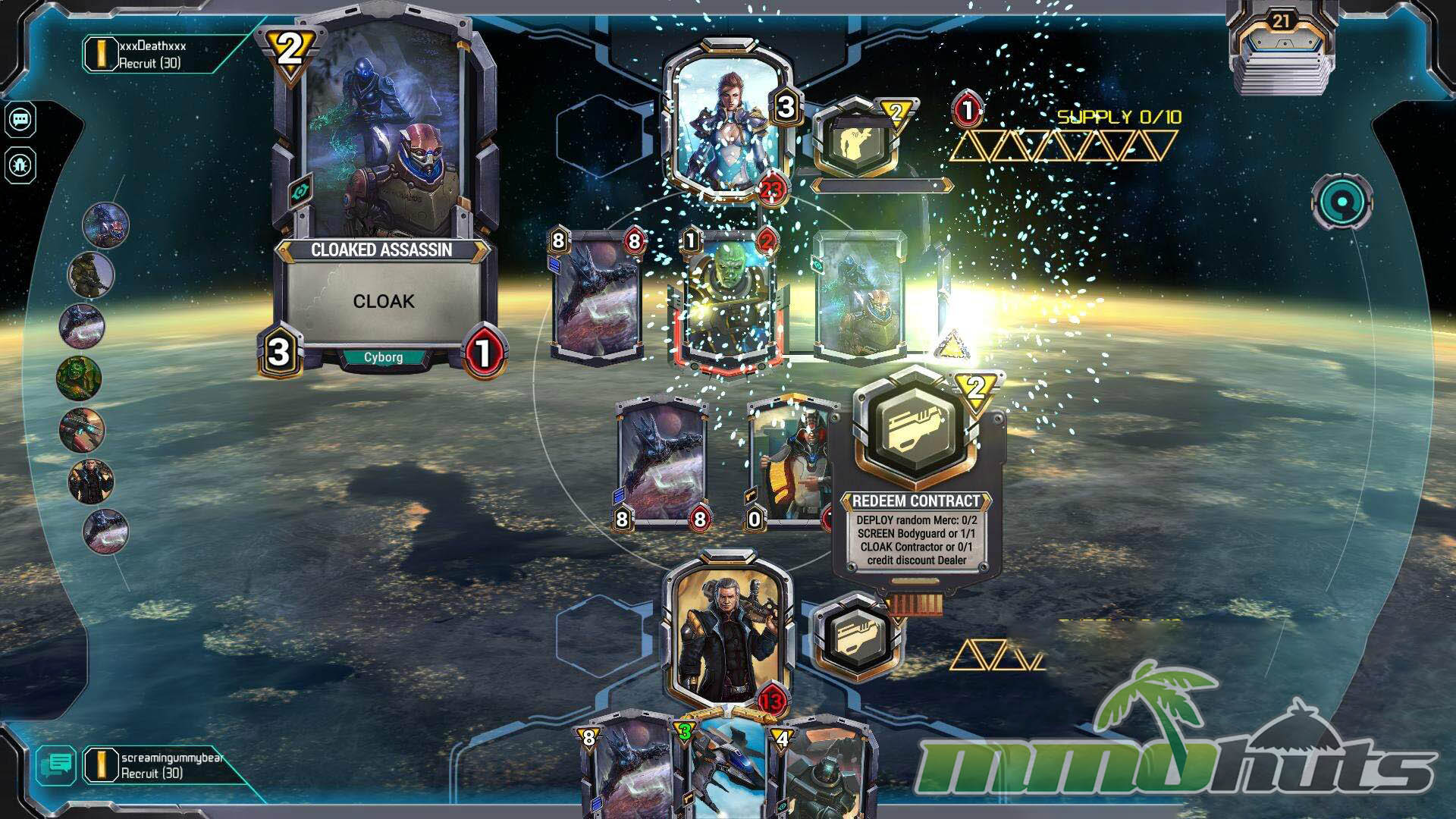
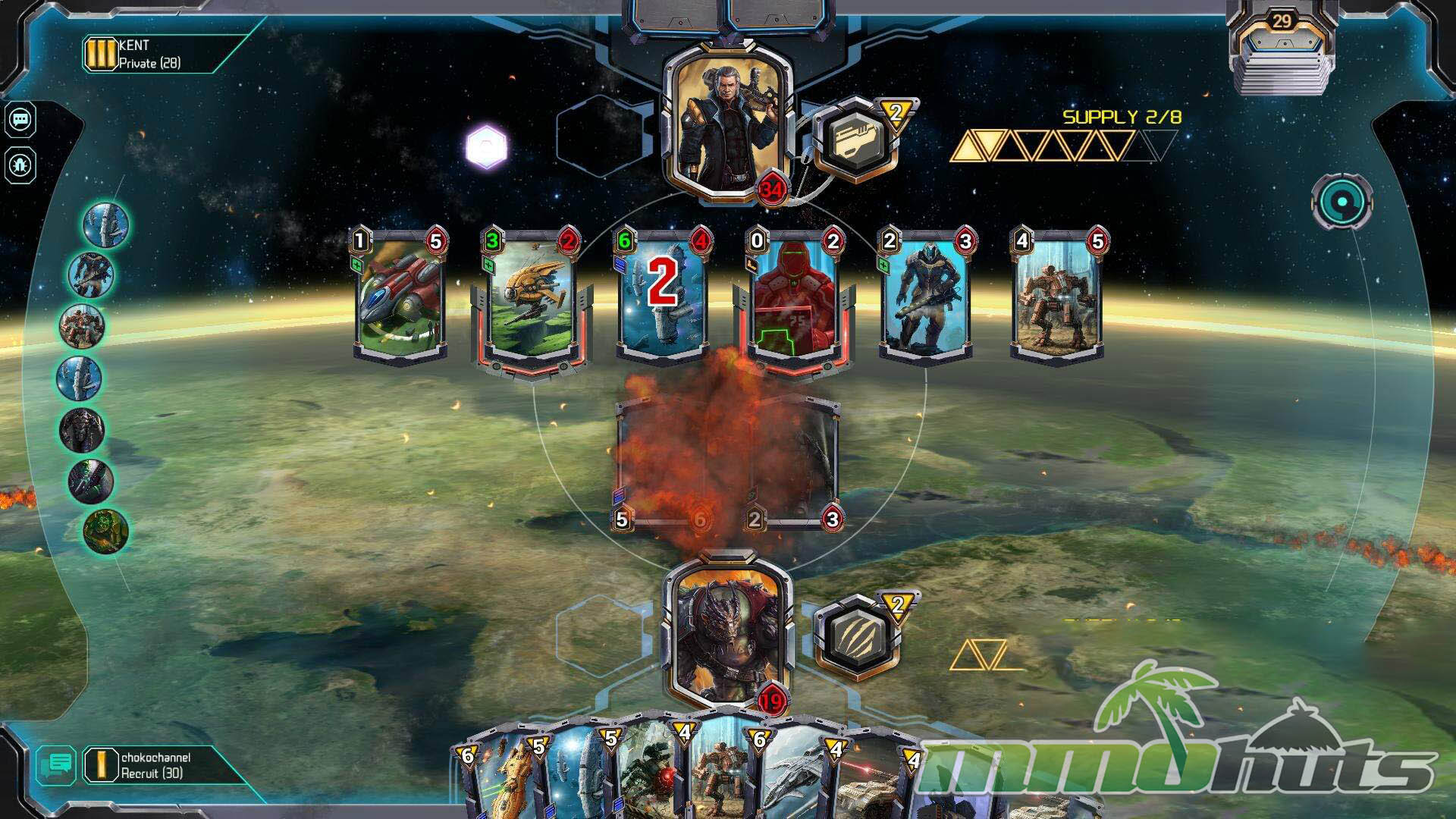
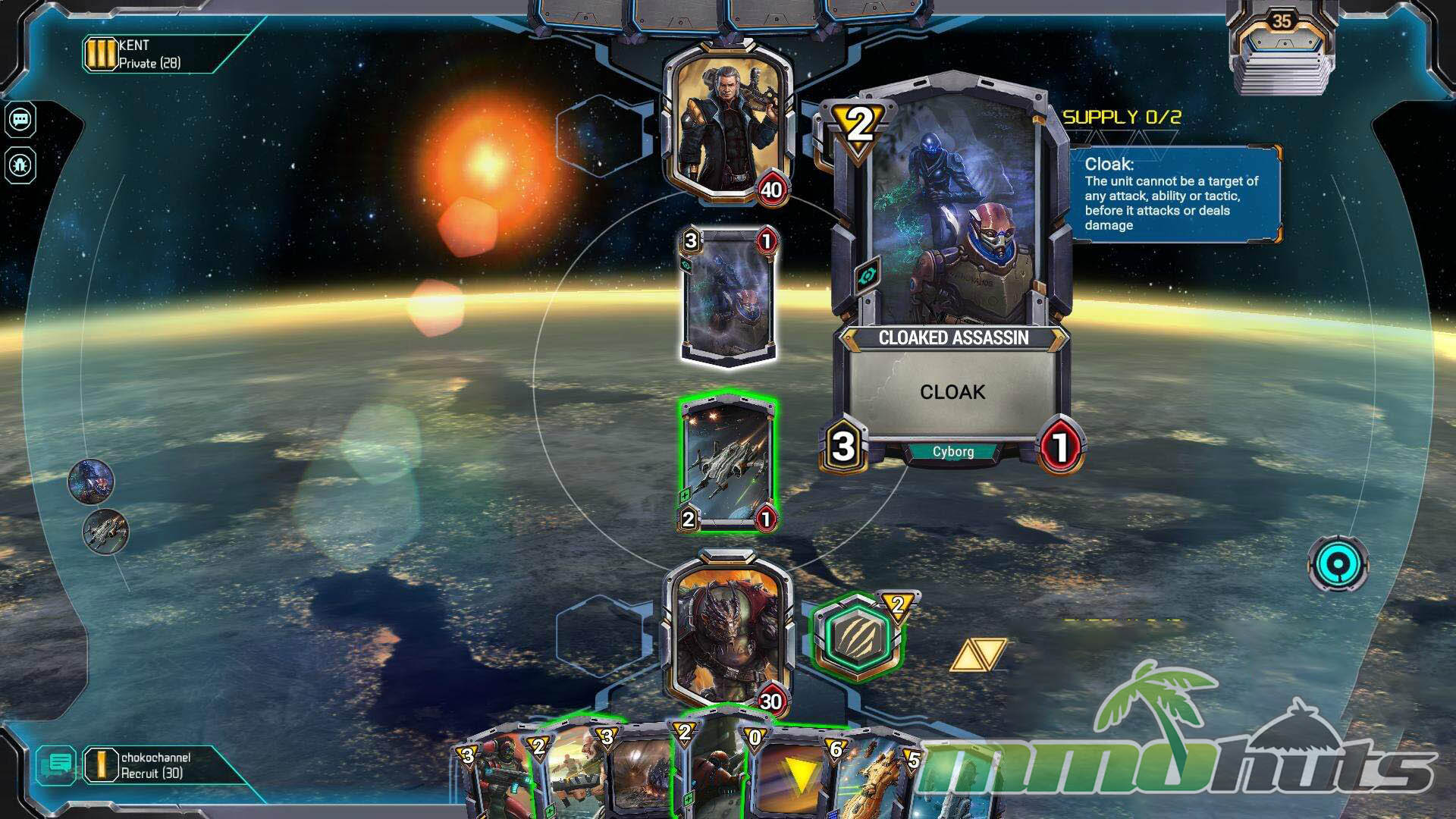
At its core, Star Crusade plays like a typical turn-based duel where you deploy units and effects by spending a turn-limited resource called “supply.” Supply starts low and increases over time, which naturally gates the most powerful cards until later turns. Any unused supply disappears at the end of the turn, so turns are about maximizing tempo rather than banking resources.
The win condition is also straightforward: reduce the opposing commander’s health to zero. Even the match openers and flow echo what genre fans already know, including an opening hand mulligan to smooth out bad draws and a compensating advantage for the player going second.
Combat, likewise, is built on units with attack and health values, with units being removed when their health hits zero. Status effects add variety (for example, mechanics that force attacks into specific targets or prevent a unit from acting), but the game is not always consistent about clearly communicating what every keyword does. Some effects are intuitive, while others can leave newer players guessing until they see them resolve in an actual match.
Stability and Match Quality Hold It Back
The larger problem is not simply that Star Crusade feels derivative, it is that the experience can be difficult to rely on. During play, crashes and disconnects can undermine both learning and competition. When matches end because someone never properly loads in, or a client fails mid-game, it is hard to take ranked play seriously, and it is even harder to recommend the game to players who expect a stable ladder environment.
Raid Mode and the “Too Similar” Problem
Star Crusade’s Raid mode is meant to be a change of pace, offering a deck-building format where you are not limited by your personal collection. In practice, it mirrors the same kind of draft-style mode many players already associate with leading CCGs. The result is that even the game’s alternative modes can feel more like familiar genre checkboxes than a distinct identity.
To be clear, plenty of card games share DNA, and that is normal for the genre. The issue here is how often Star Crusade’s interface, flow, and systems line up with existing expectations, while providing relatively few new mechanics that meaningfully reshape how decisions feel turn-to-turn.
Card Collection, Progression, and Monetization
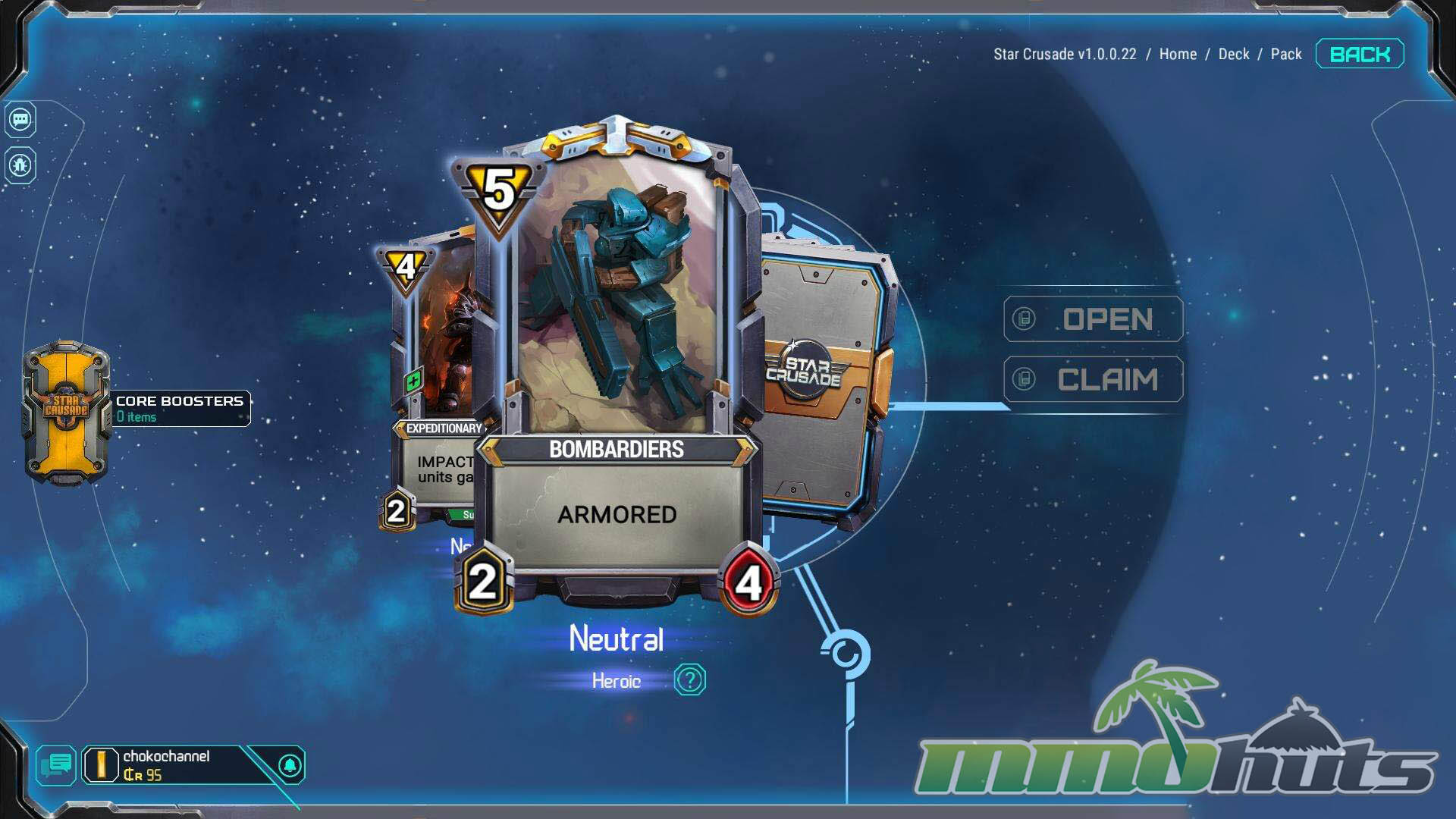
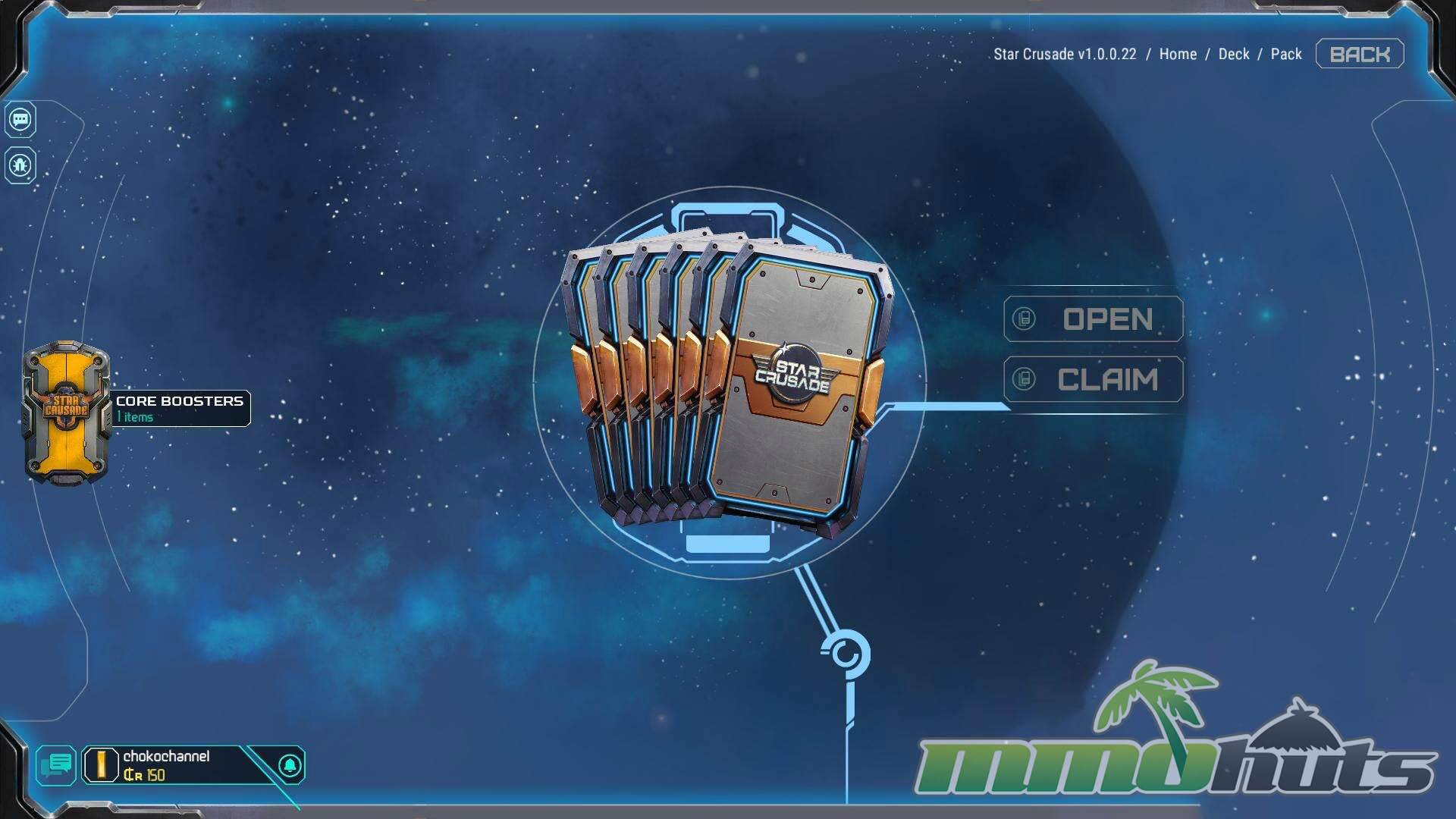
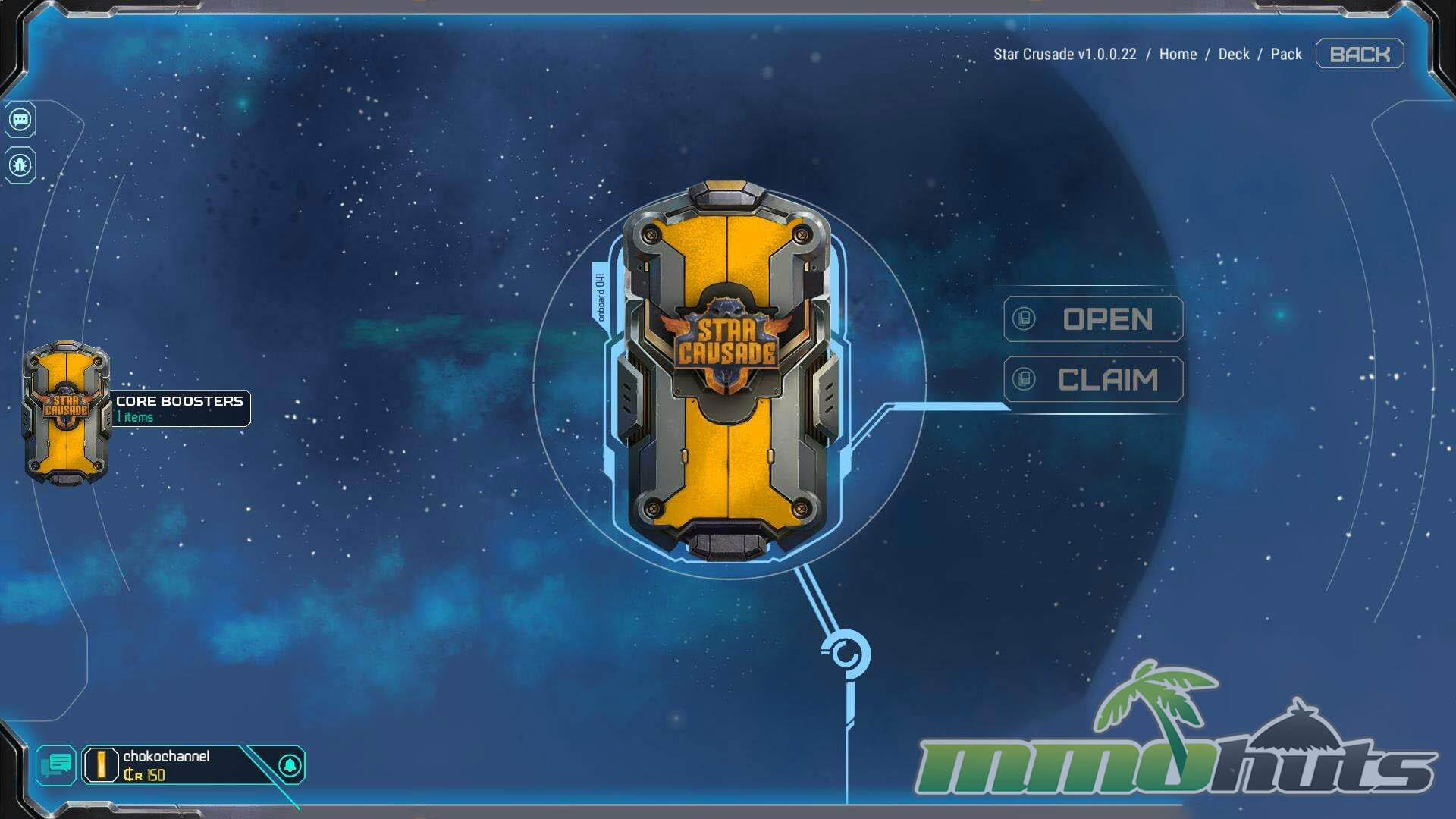
Progression revolves around earning credits through wins and Daily Missions, then converting those credits into Booster Packs. Packs contain six cards with different rarities: Regular, Conscript, Elite, Heroic, and Paragon. Booster Packs also guarantee at least one Elite card, which helps reduce the feeling of completely wasted openings.
Like most free-to-play CCGs, the Store offers Booster Packs for real money as well. That creates a familiar pressure point: paying players can accelerate collection growth significantly, while free players must grind longer to access the same breadth of options. In a competitive card game, that gap can easily be interpreted as pay-to-win, especially when powerful cards or optimized lists become the difference-maker in ranked play.
Deckbuilding is faction-locked, with neutral cards usable across races. Deck sizes are flexible, ranging from 25 to 40 cards, and you are generally limited to two copies of a given card (with Raid mode operating under its own rules). Each race leans into a distinct identity, such as Annunaki’s emphasis on psychic manipulation and control, which can be satisfying when you find a faction that matches your preferred style.
Crafting and the Storefront
Star Crusade includes a crafting system called Fusion Mode, allowing you to melt unwanted cards into scraps and then convert those scraps into targeted cards. Conceptually, this is a welcome feature because it reduces reliance on random pack openings. The downside is that the exchange rate can feel steep, meaning it may take a large number of melted cards to create a single desirable one.
The Store extends beyond packs, offering campaigns that grant cards or credits, plus cosmetic customization like deck backs, avatars, and commander options. If you enjoy personalization, there is something to browse here, although the practical advantage still centers on how quickly you can build competitive decks.
What Actually Sets It Apart?
There are differences, but they are mostly incremental rather than transformational. Deck size flexibility is one notable change, and the commander’s health being tied to deck size creates an interesting tradeoff between durability and consistency. The inability to chat with opponents also changes the social texture of matches, for better or worse, depending on your tolerance for in-game banter.
Still, these points do not fundamentally change how the game feels in motion. For most players, the moment-to-moment decisions and overall match rhythm will register as extremely familiar, which makes the game’s originality harder to defend.
Presentation: Theme Helps, Visuals Vary
The sci-fi framing is the main reason Star Crusade stands out at a glance, and the soundtrack generally complements the setting well. Where the presentation stumbles is in the finer details. Animations and effects can feel stiff, and some card art lacks the distinctiveness needed to make a large collection memorable. Sound effects are mixed, with a few satisfying cues and others that come across as flat.
In a CCG, polish matters because you will be repeating the same actions constantly, drawing, playing, attacking, and resolving effects. When those interactions feel clunky, it becomes more noticeable over time, especially compared to genre leaders with exceptionally refined interfaces.
Final Verdict – Poor
Star Crusade has a clear niche on paper: a space-themed digital CCG with multiple races, a crafting system, and familiar competitive modes. In practice, it faces two major hurdles. First, it struggles to feel meaningfully distinct from more established card games that offer a smoother, more confident experience. Second, technical instability and frequent disruptions can undercut the integrity of matches, which is particularly damaging for a strategy game built around fair competition.
The encouraging note is that the developers appear to be actively collecting feedback and making it easy to report problems. If Star Crusade improves stability and carves out a stronger mechanical identity over time, it could become more than a curiosity for sci-fi enthusiasts. As it stands, it is difficult to recommend broadly, especially to players who prioritize polish and reliable ranked play.
Star Crusade Requirements
Minimum Requirements for PC:
Operating System: Windows Vista
CPU: Intel Pentium D
RAM: 2 GB RAM
Graphics: NVIDIA GeForce 6800
Hard Disk Space: 3 GB
Star Crusade Music & Soundtrack
Coming Soon…
Star Crusade Additional Information
Developer(s): Xim, Inc
Publisher(s): Xim, Inc
Composer(s): Gary Dworetsky and Nikolay Senkin
Languages: English, Russian
Open Beta: December 15, 2015
Release Date: TBA
Development History / Background:
Star Crusade is a sci-fi CCG strategy game developed and published by Xim, Inc. The game was first released for Open Beta on December 15, 2015 on Steam for the PC.