Smite is a free-to-play 3D fantasy MOBA that puts you in control of legendary gods from world mythology and drops you into fast, team-based matches. Its biggest twist on the genre is perspective and control, instead of the classic top-down, click-to-move style, Smite plays from a third-person, over-the-shoulder camera with WASD movement, which makes fights feel closer to an action game than a traditional strategy-heavy MOBA.
 | Publisher: Hi-Rez Studios Playerbase: High Type: MOBA Release Date: March 25, 2014 Pros: +A distinct third-person spin on the MOBA formula. +Healthy competitive ecosystem and ranked play. +Plenty of modes and a large roster of Gods. +Fair monetization with no pay-to-win power. Cons: -Many Gods must be earned or purchased before you can use them. -Tough for new players to learn efficiently. |

Smite Overview
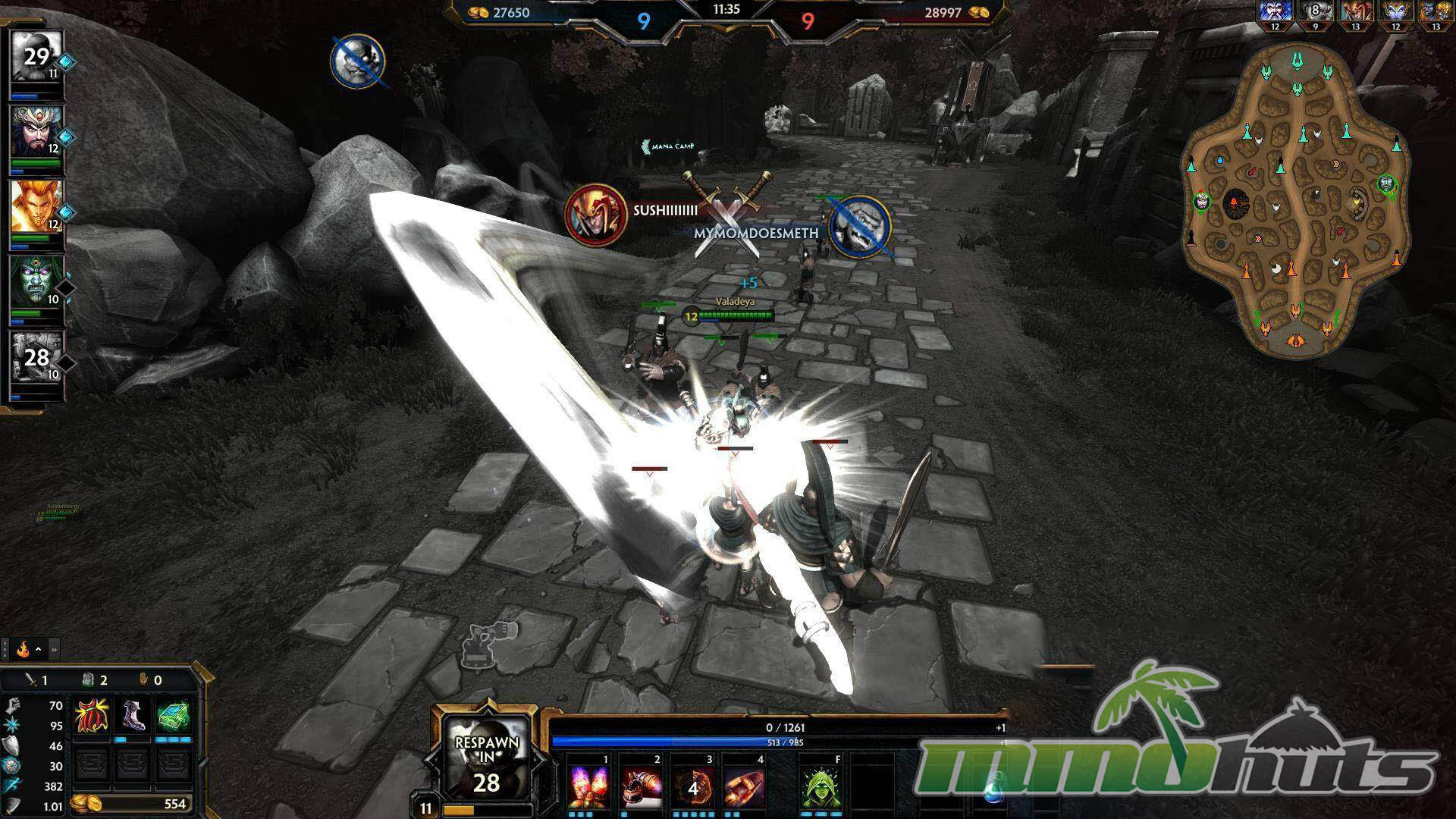
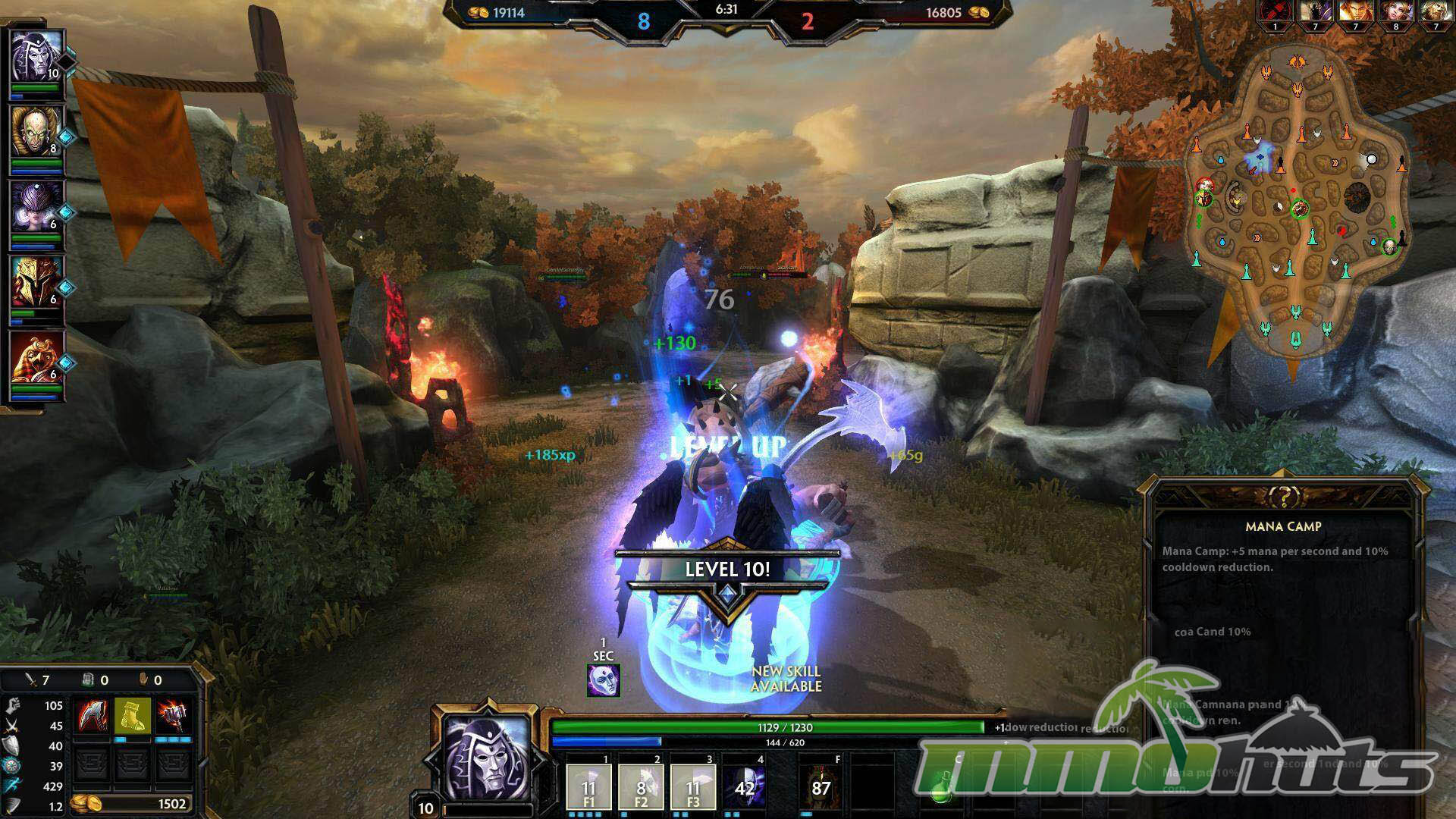
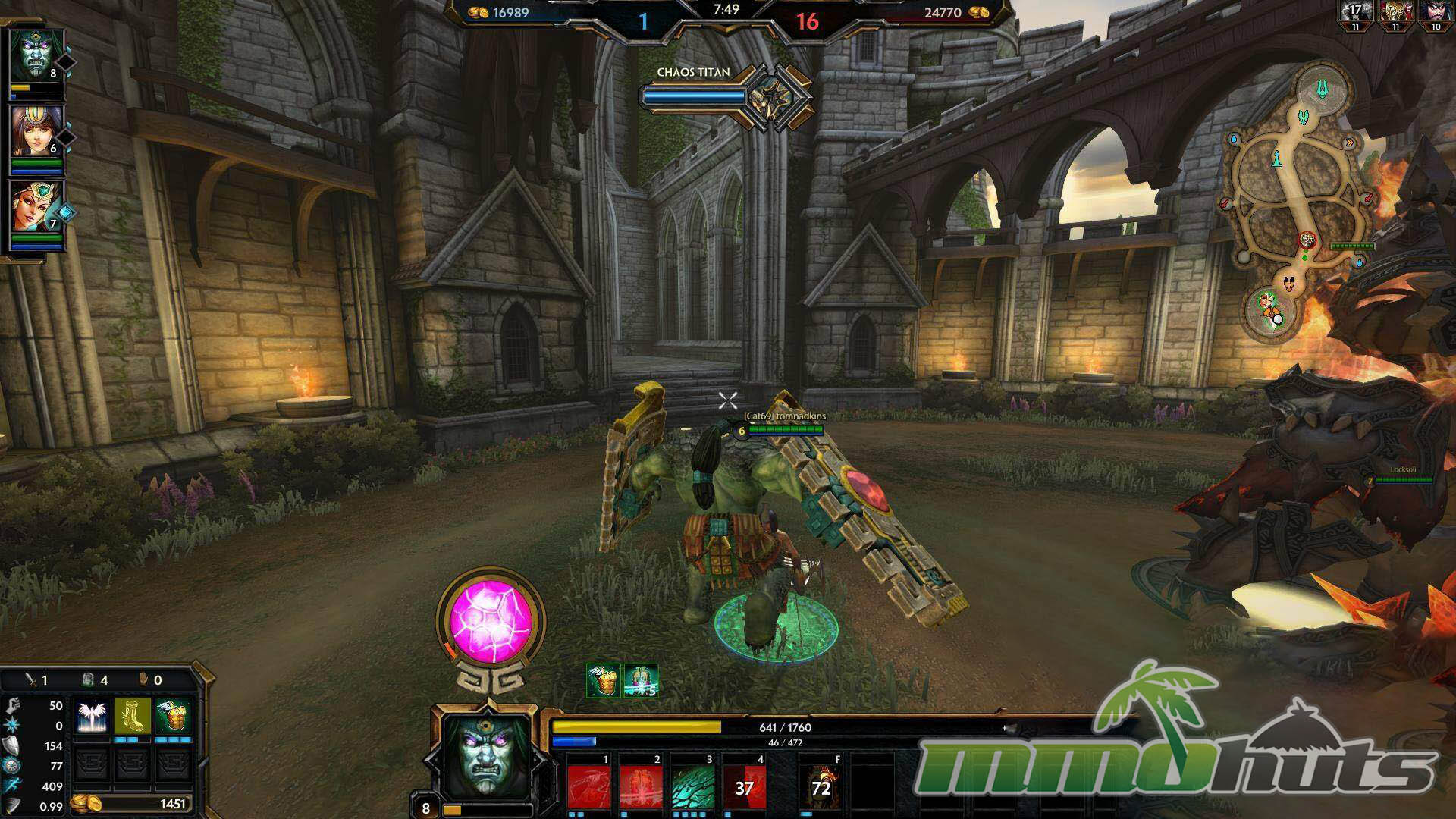
Smite reinterprets the familiar MOBA loop through a more hands-on control scheme. Instead of commanding a hero from above with mouse clicks, you steer your God directly using WASD and an over-the-shoulder view, then aim basic attacks and many abilities manually. That shift changes more than just the camera, it alters how laning, team fights, and escapes feel, because spacing and line-of-sight matter in a very immediate way.
The roster includes 60+ playable Gods drawn from multiple pantheons, including Greek, Egyptian, Hindu, Mayan, Norse, and Roman inspirations. While the characters and presentation lean heavily into myth, the match goals generally stick to MOBA fundamentals: push lanes with minion waves, break through defensive structures, and ultimately destroy the enemy team’s main objective, represented here by the Titan in many modes.
Game Modes:
- Conquest – the standard 5v5 experience with three lanes and a jungle full of neutral camps.
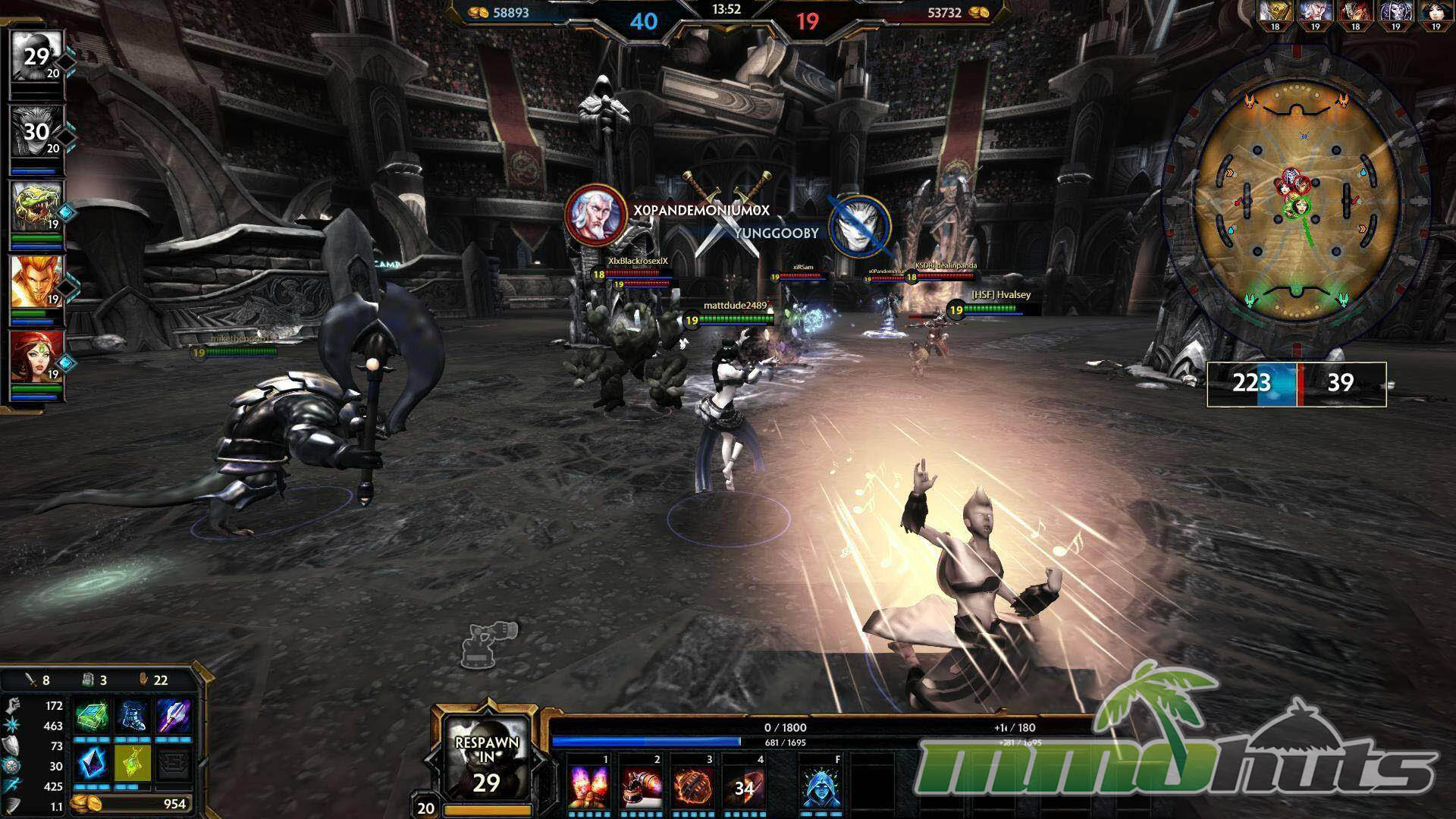
- Arena – a 5v5 brawl map with no lanes, where teams start at 500 points and try to drain the opponent’s total by securing kills and objective scoring.
- Joust – a tighter 3v3 mode built around a single lane, it also supports 1v1 play.
- Assault – Smite’s ARAM-style mode, everyone receives a random God and fights on a one-lane map.
- Siege – a quicker, two-lane alternative to Conquest featuring a Siege Juggernaut minion that helps crack structures.
- Match of the Day – rotating daily variants with special rules and themed restrictions, played across different maps.
Smite Screenshots




Smite Featured Video

Smite Review
Smite (often written as SMITE) is a free-to-play MOBA developed by Hi-Rez Studios and released for Windows on March 25, 2014. It entered a crowded genre, but it managed to stand out largely because it does not feel like a standard top-down lane pusher. With its third-person camera and familiar keyboard movement, matches play with more immediacy, and even routine actions like last-hitting or poking in lane demand more deliberate aiming and positioning.
That different viewpoint is not just cosmetic. It affects the pace of fights, the way you track threats, and how often quick reactions matter. Smite still rewards macro decisions, rotations, and objective play, but the moment-to-moment execution has a more action-oriented flavor than many competitors.
Gods and Deities
The character roster is built around mythological figures, from gods and goddesses to legendary beings. Pulling from real-world mythologies has occasionally sparked debate about representation, but Hi-Rez has positioned the roster as a broad, multi-pantheon collection and has continued adding new choices beyond the 60+ already available.
Customization is a major part of the appeal. Gods can be outfitted with skins, emotes, and optional voice packs. Voice packs are particularly practical because they tie into in-match callouts, letting players trigger spoken lines for things like warnings or requests for help. In practice, they are useful for communication, even if the performance and fit of certain voice lines can vary depending on the character.
A mix of playful and prestige cosmetics are available. Some skins are comedic or offbeat, while others are tied to progression, including the familiar Golden, Legendary, and Diamond tiers that unlock for purchase as you earn worshippers and reach ranks 1, 5, and 10 on a God.

Reaping Rewards
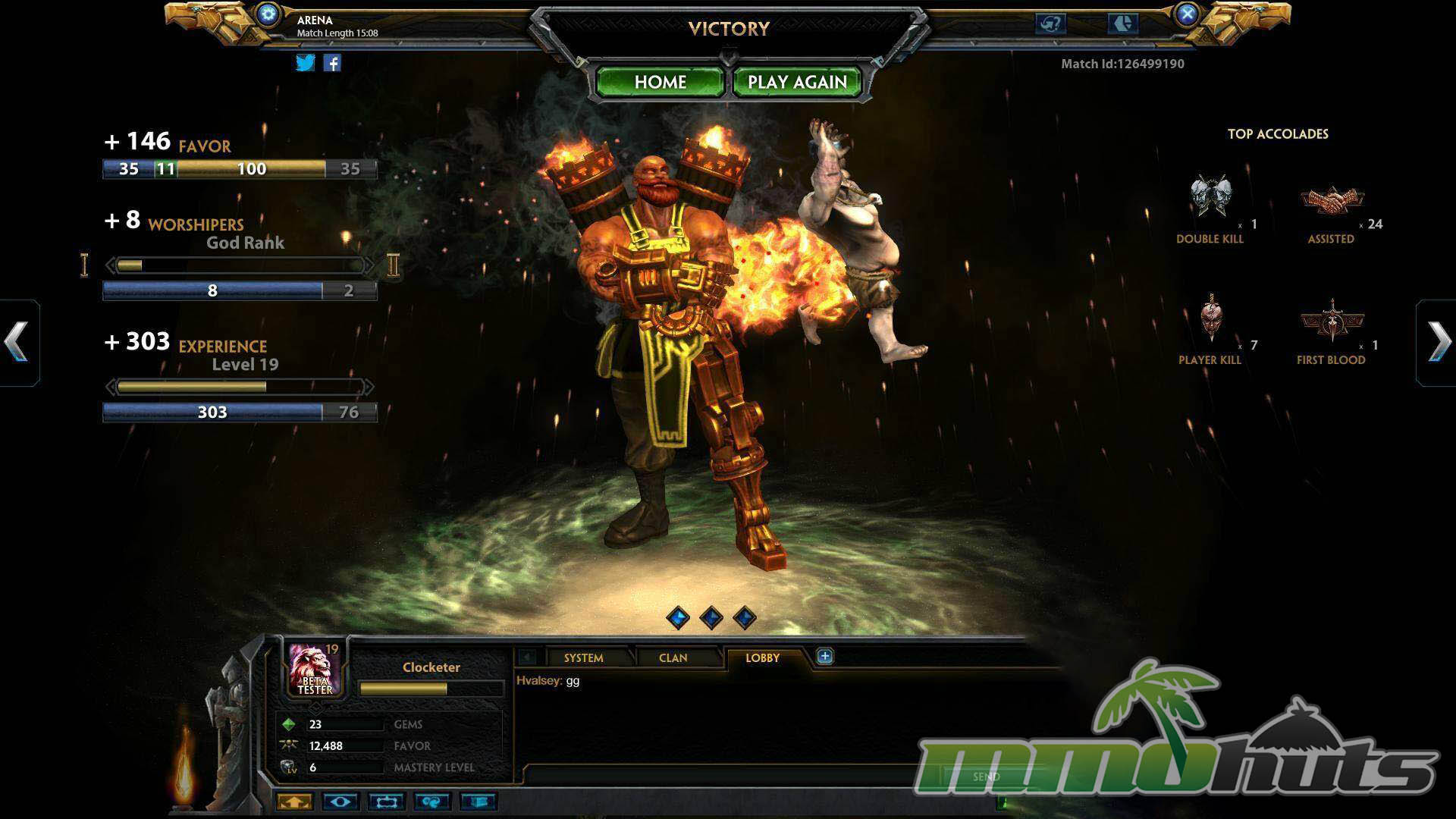
Progression in Smite is anchored by a few key reward tracks. Playing matches earns favor, worshippers, and goodwill. Favor functions as the core in-game currency, used to unlock Gods, obtain select cosmetics, and even rent characters you do not own yet. It comes from regular play and other routine milestones, including leveling and consecutive log-ins.
Goodwill is Smite’s incentive system for positive behavior. Completing matches without disruptive actions, such as going AFK or leaving, increases goodwill, and that percentage bonus improves how much favor you receive from games. It is a simple mechanism, but it reinforces that consistent participation is rewarded.
Worshippers are earned for the specific God you play. Accumulating them increases God rank and mastery, which in turn unlocks profile rewards and allows certain mastery-related skins to become purchasable.
Monetization is handled through Gems, a premium currency used for cosmetics and convenience unlocks like Gods and voice packs. Importantly, the store is not built around selling raw power advantages, keeping the competitive baseline more intact than many free-to-play models.
Game Modes
Smite does a good job of offering alternatives when you are not in the mood for a full Conquest match. Even if MOBAs are inherently repetitive by design, the game’s selection of maps and formats helps break up the routine, especially with Match of the Day adding rotating modifiers and themed rule sets.
Most core modes still revolve around the familiar structure-destruction win condition, where teams push through lanes, remove towers and other defenses, then finish the central objective, called the Titan in Smite. The difference is in how each mode compresses or expands that formula.
Conquest is the flagship 5v5 mode, featuring three lanes, a jungle, and the expected roles and rotations. Defensive structures include towers and phoenixes. Phoenixes also act like inhibitors, once destroyed they empower the minion wave in that lane, shifting pressure and creating openings to attack the base.
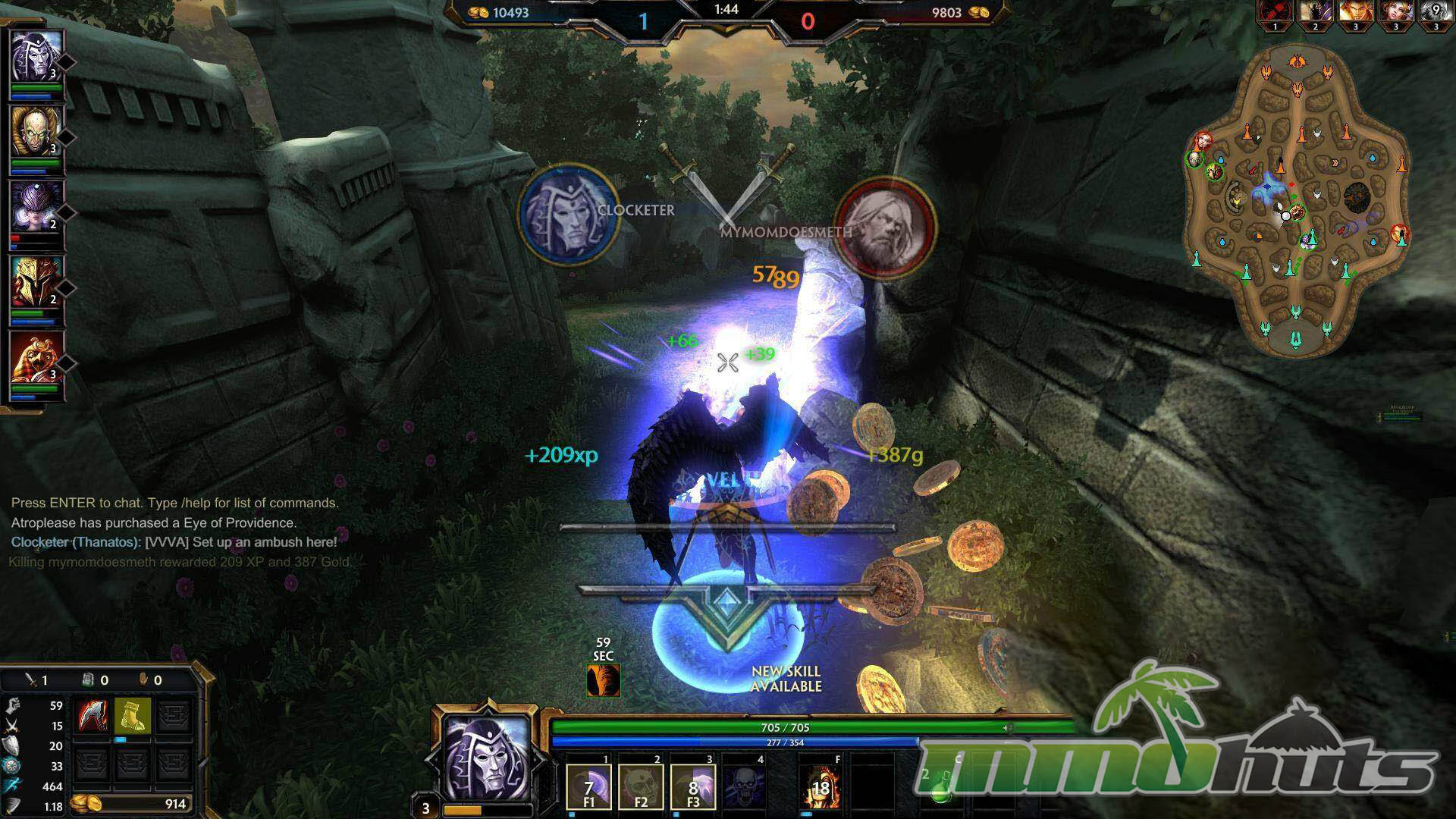
Joust streamlines the Conquest experience into a single-lane 3v3 map, with jungle space around it. It also starts players at level 3, helping matches reach meaningful fights faster. Siege sits between Joust and Conquest, using two lanes in a 4v4 format and also starting at level 3. Its standout mechanic is the Siege Juggernaut, a special unit that helps teams convert pressure into structure damage and encourages coordinated lane pushes.
Assault is the one-lane, random-God format. Like other ARAM-style modes, it emphasizes improvisation and team fighting, with limited ability to retreat for safety or shopping until death. Smite also includes a balancing approach around healing so one team is not automatically advantaged simply by rolling sustain-heavy picks.
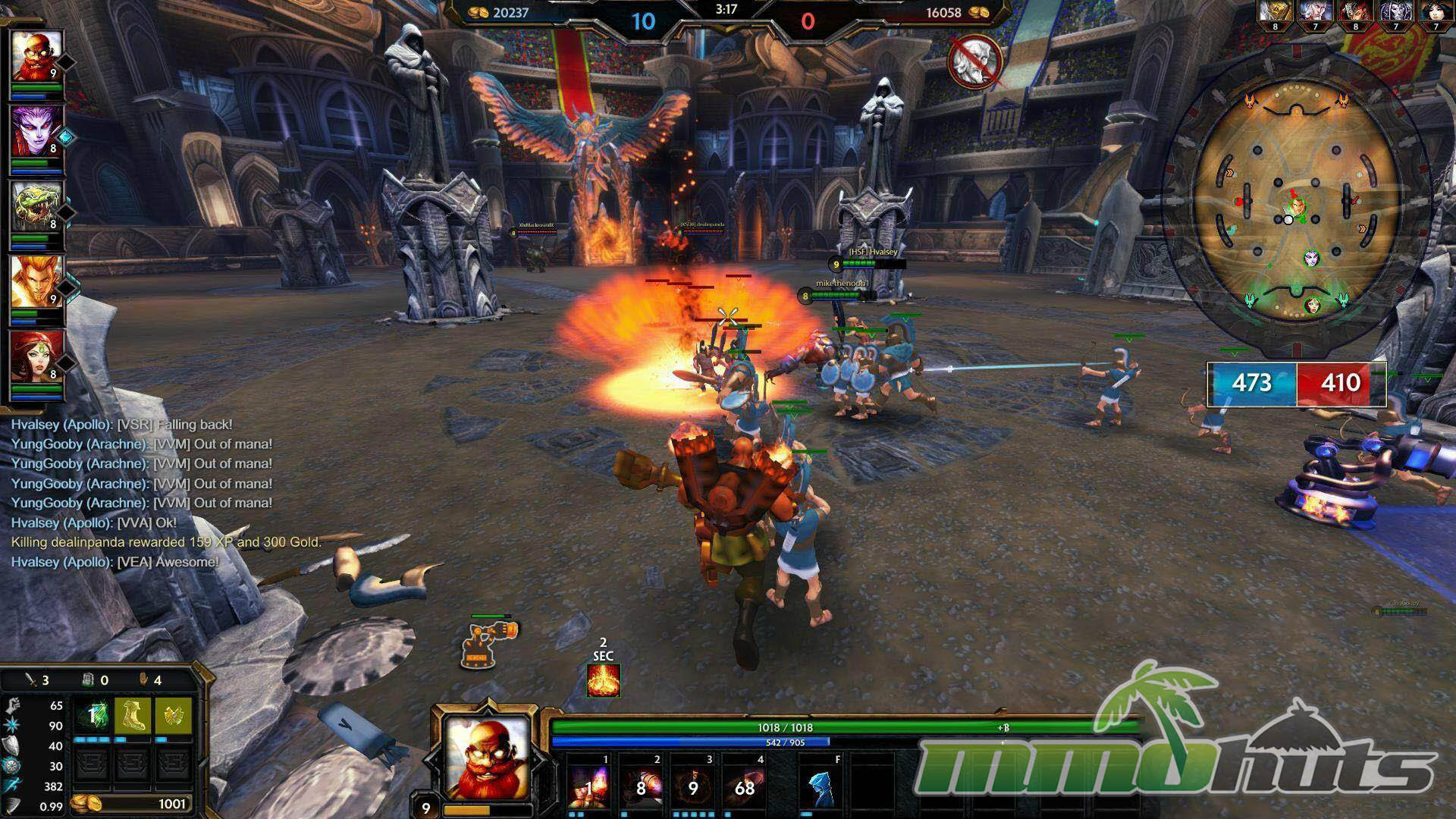
Arena is the most straightforward alternative. There is no Titan and no laning phase, just a large 5v5 battleground where teams start with 500 points and try to reduce the enemy’s total to zero. Scoring comes from kills and minion-related objectives, but the mode often plays like a sustained team-fight environment, which can be ideal for learning kits or warming up mechanics.
Competitive players also have ranked options, available on Conquest and Joust. The ranked ladder, called the League, ranges from Bronze to Master, and seasonal rounds provide cosmetic rewards like icons and badges. Smite has also maintained an active esports presence over the years, which adds a clear path for players who want structured competition.

Gameplay
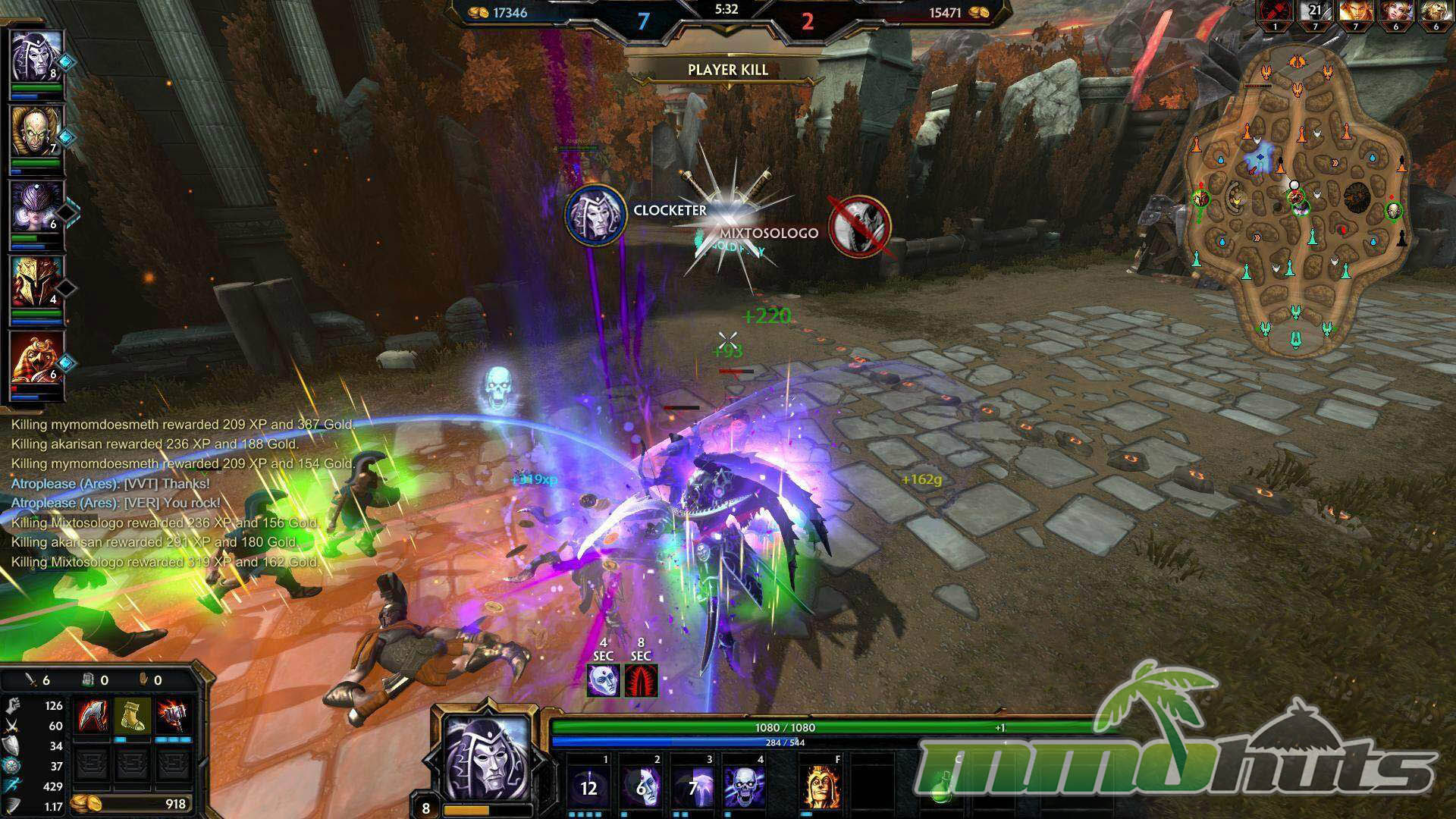
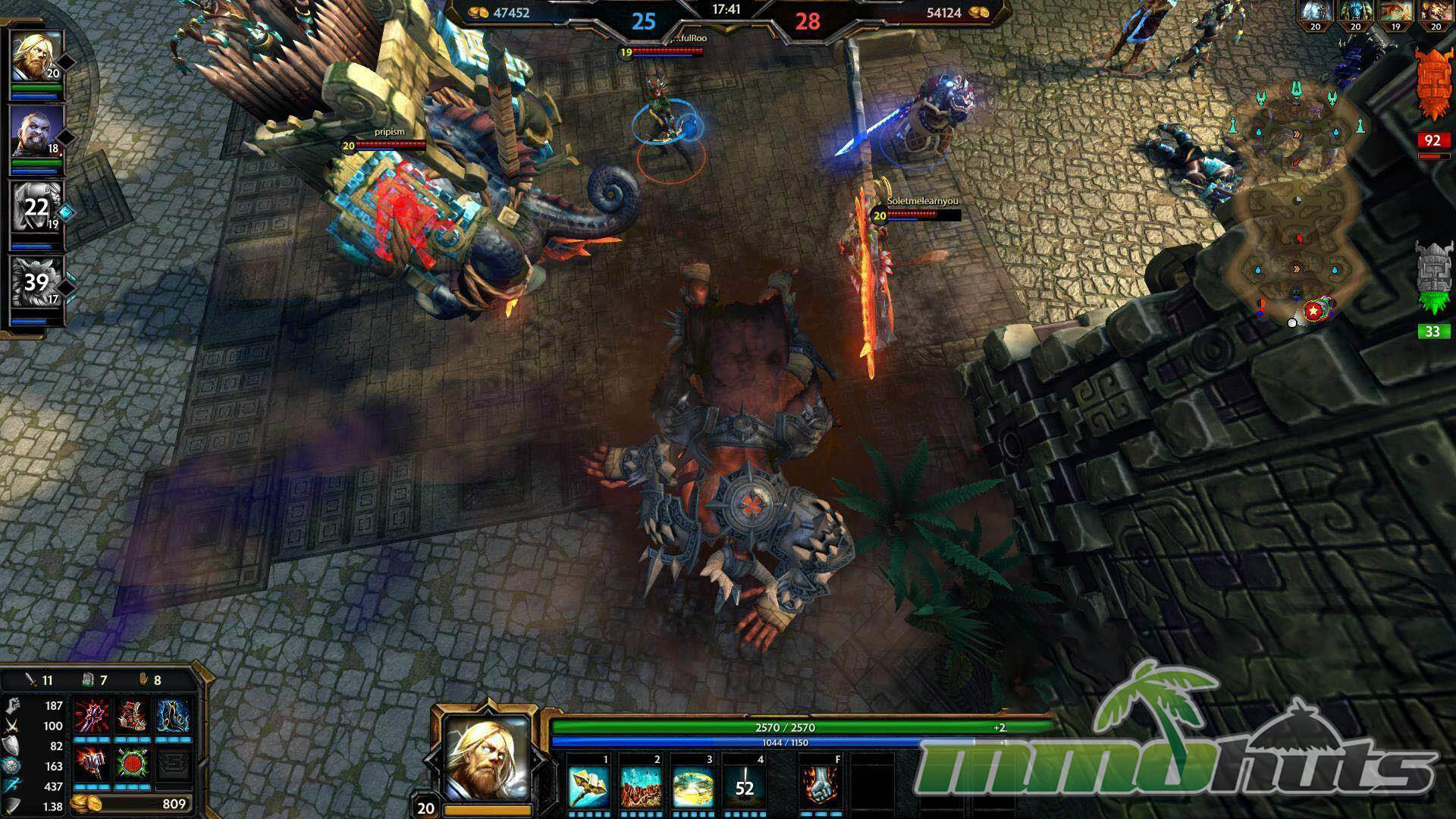
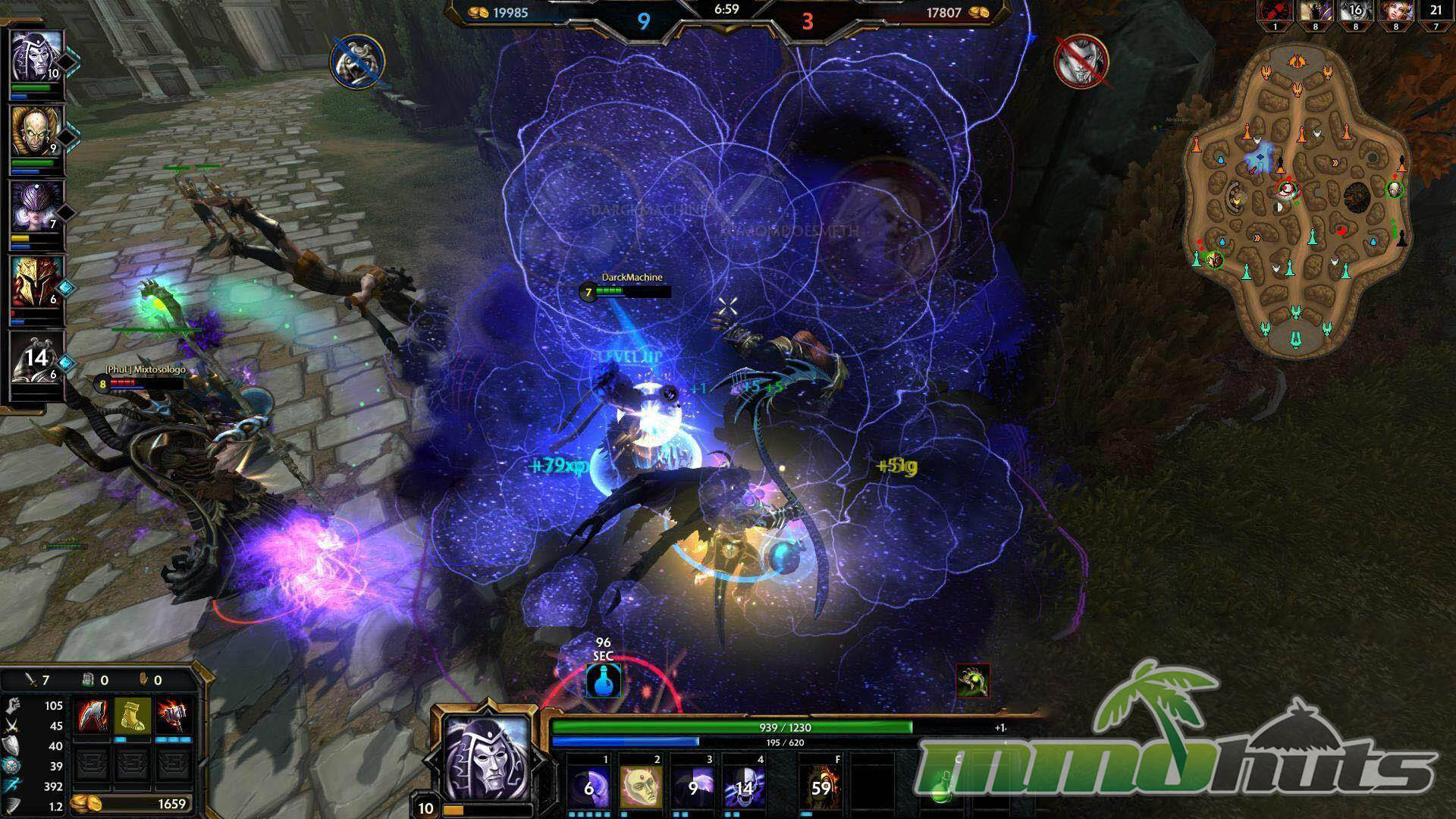
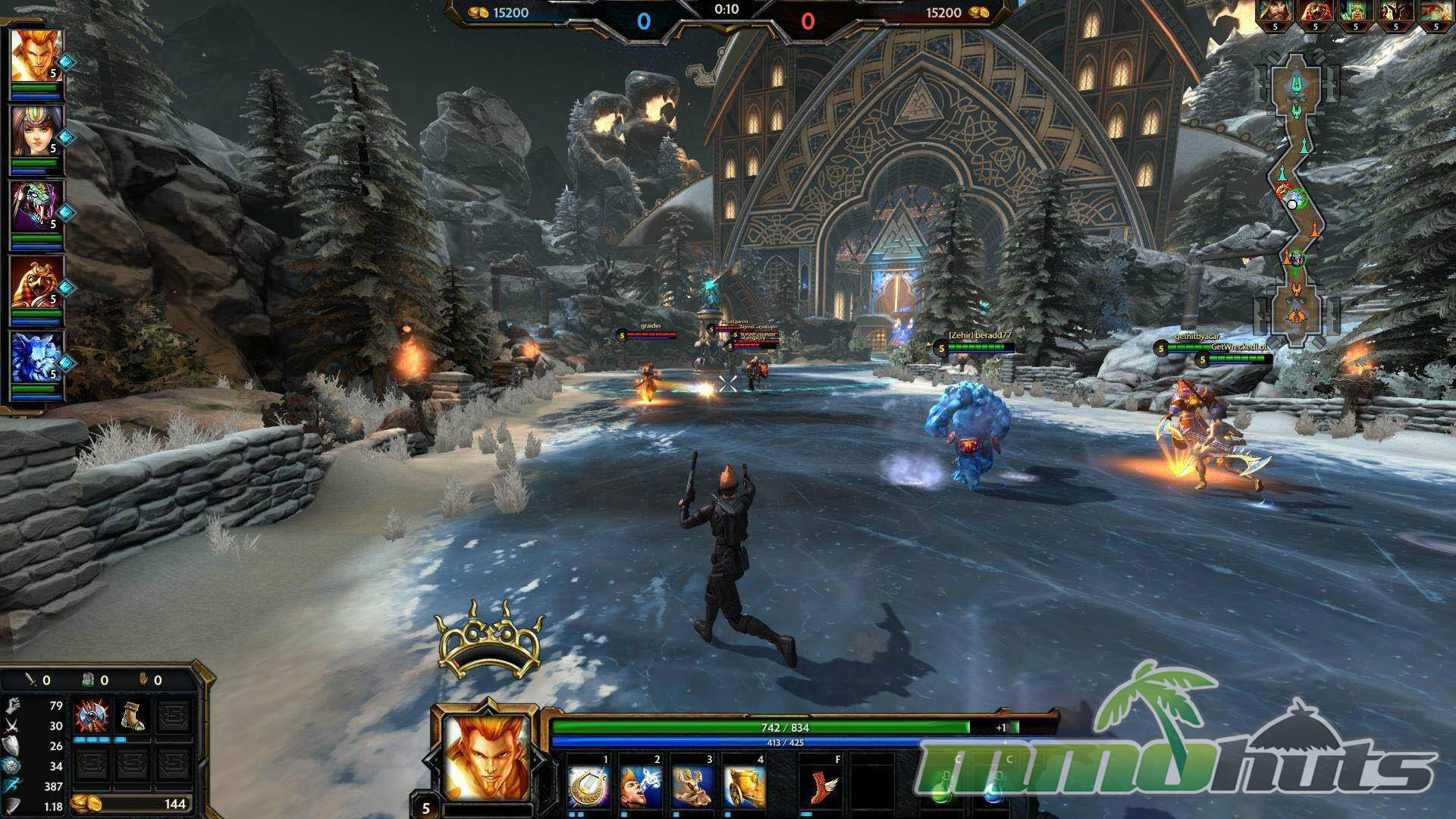
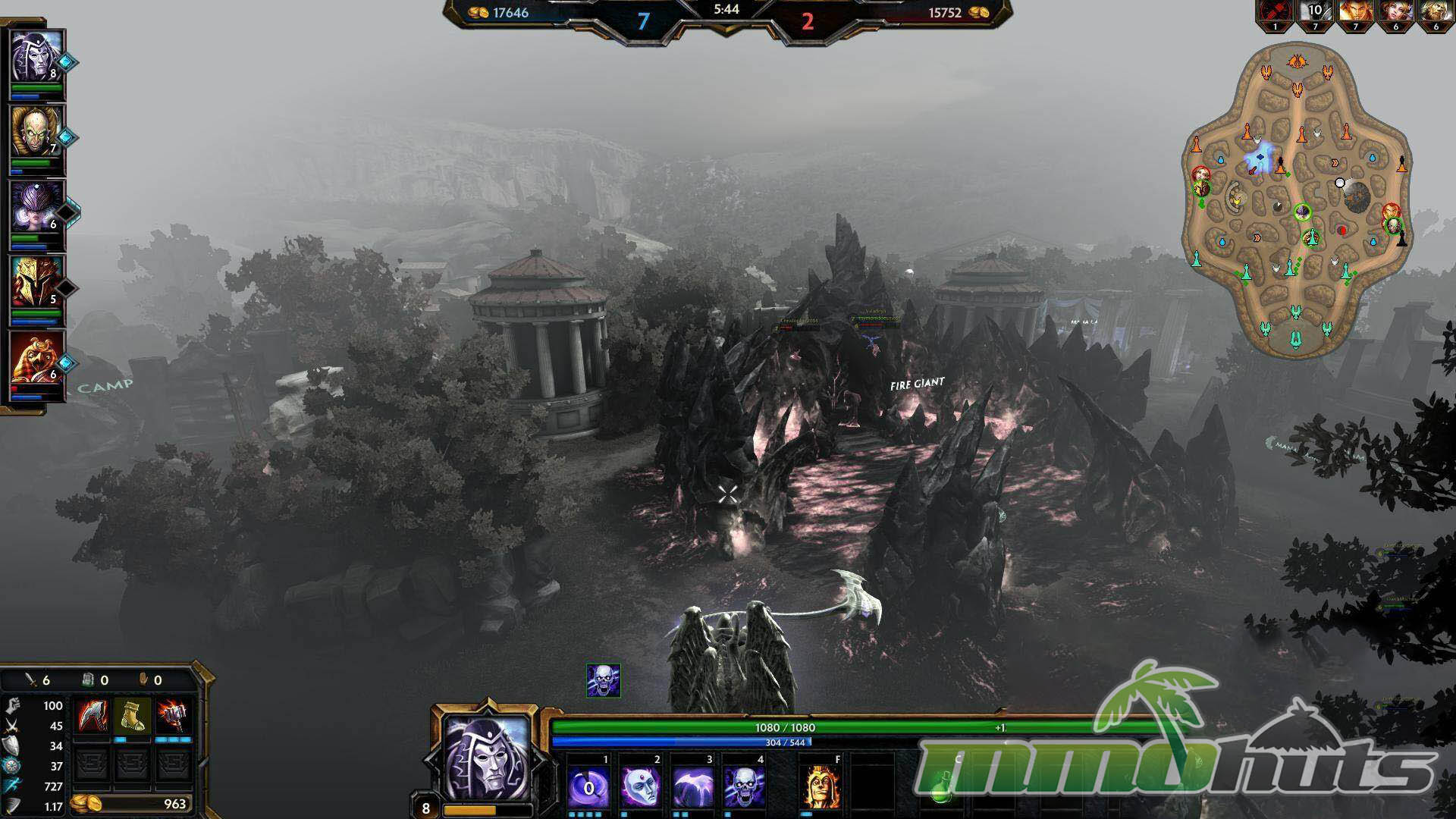
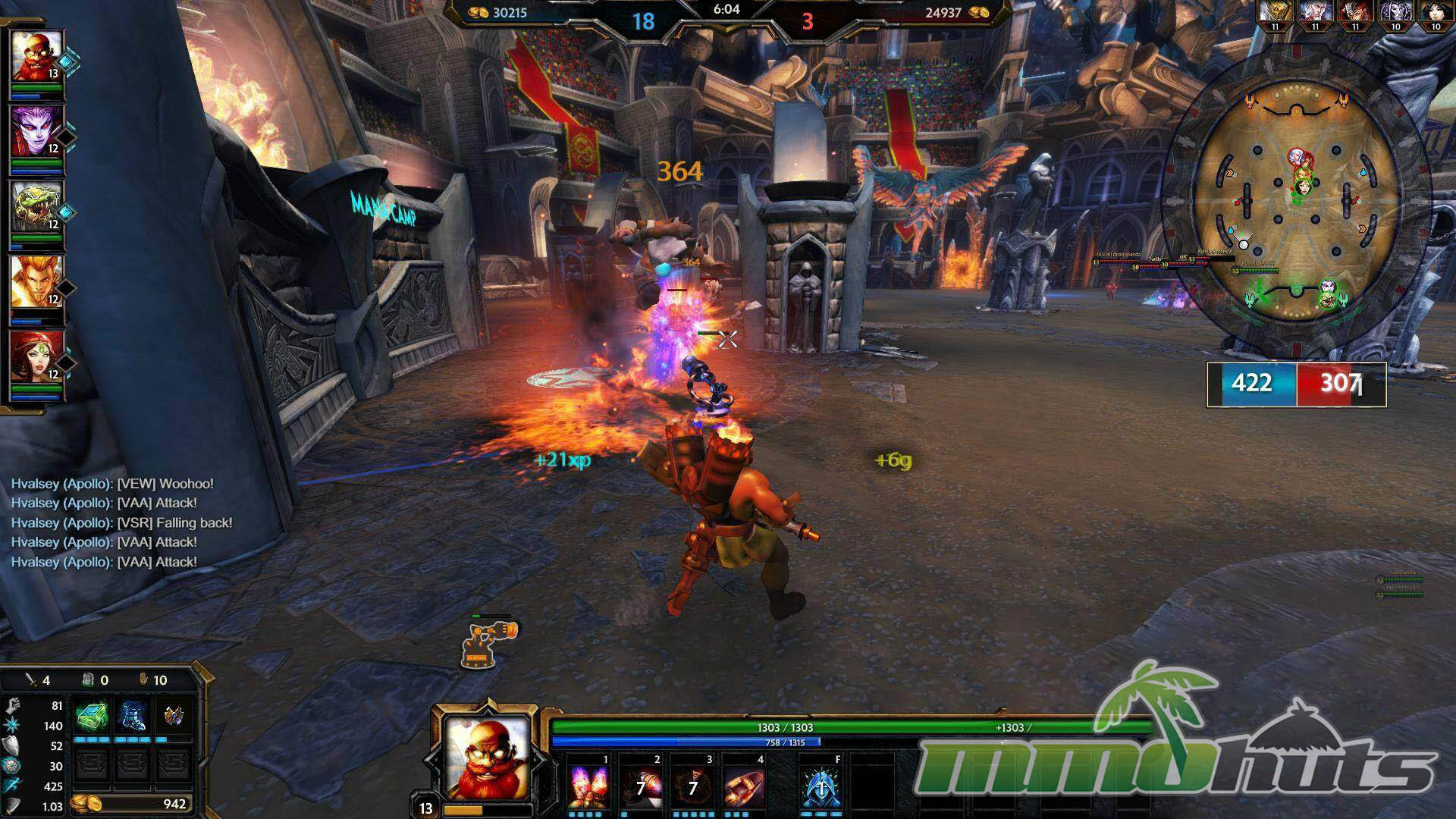
Smite’s biggest strength remains how different it feels to control compared to most MOBAs. The third-person camera makes spacing and angles feel tangible, and because many attacks require aiming, small mechanical decisions matter constantly. It is not enough to be near a target, you must be lined up, manage your movement, and commit to casts while opponents strafe and juke.
The action-oriented flow can make Smite resemble an action RPG at times, especially during skirmishes and jungle fights. Large structures and monsters have more visual presence from the ground-level view, and movement-based abilities (leaps, dashes, and vertical ultimates) are more dramatic and readable because your character physically travels through space rather than sliding across a top-down map.
The camera also changes information management. Without an overhead view, awareness becomes a skill you must develop, and inattentive players can be punished by ganks more easily. At the same time, that limitation creates opportunities, smart rotations and ambushes are more practical, and roaming tends to feel more natural than in some lane-centric MOBAs.
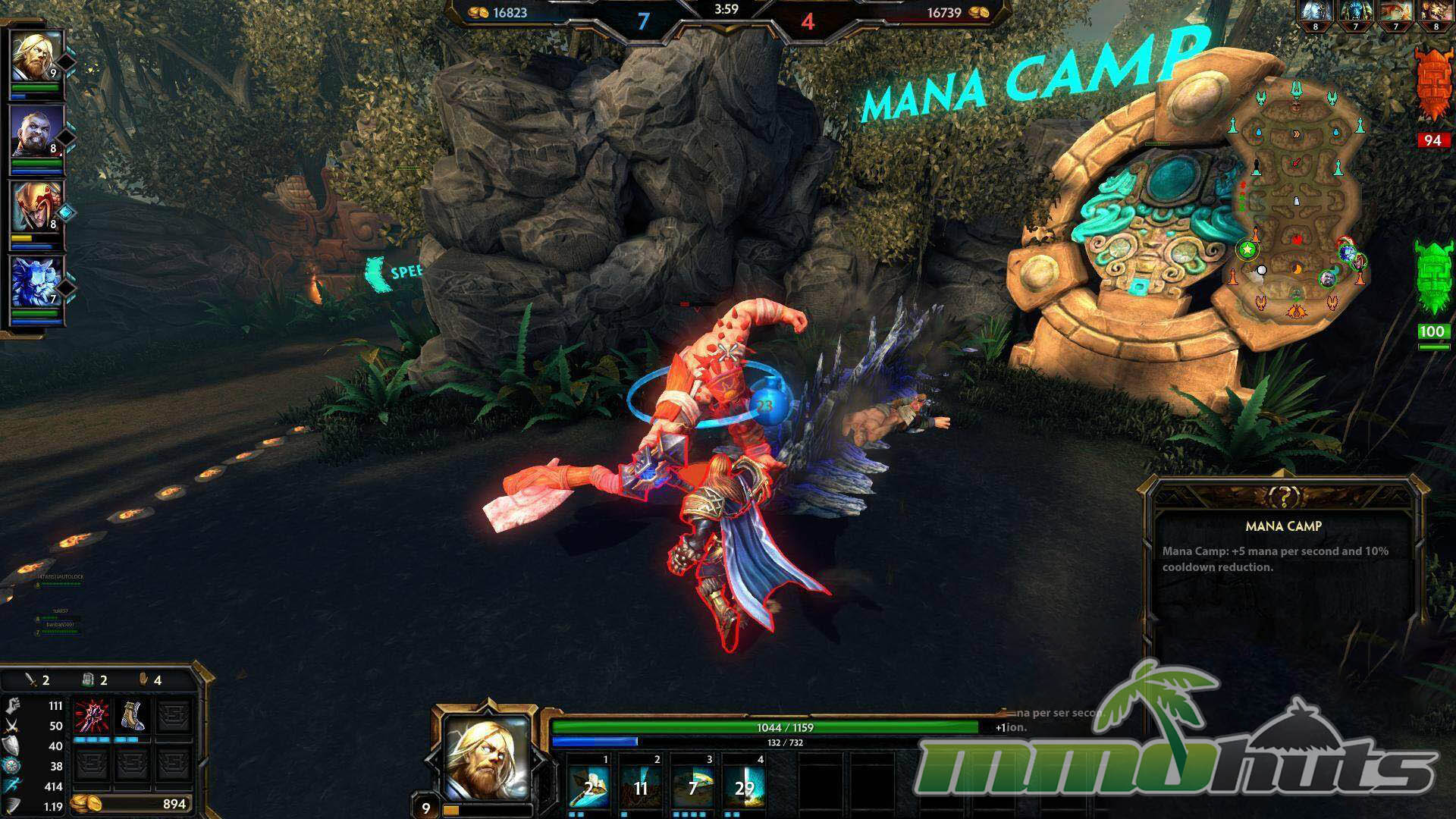
Jungle play benefits from this too. Neutral camps and buffs reward pathing and timing, and the jungle’s layout can feel more confusing when navigated from behind your character. That slight disorientation can be a feature as much as a drawback, because it makes invasions and counterganks more tense, especially when you are fighting a camp and your vision is narrowed.
Itemization and Abilities
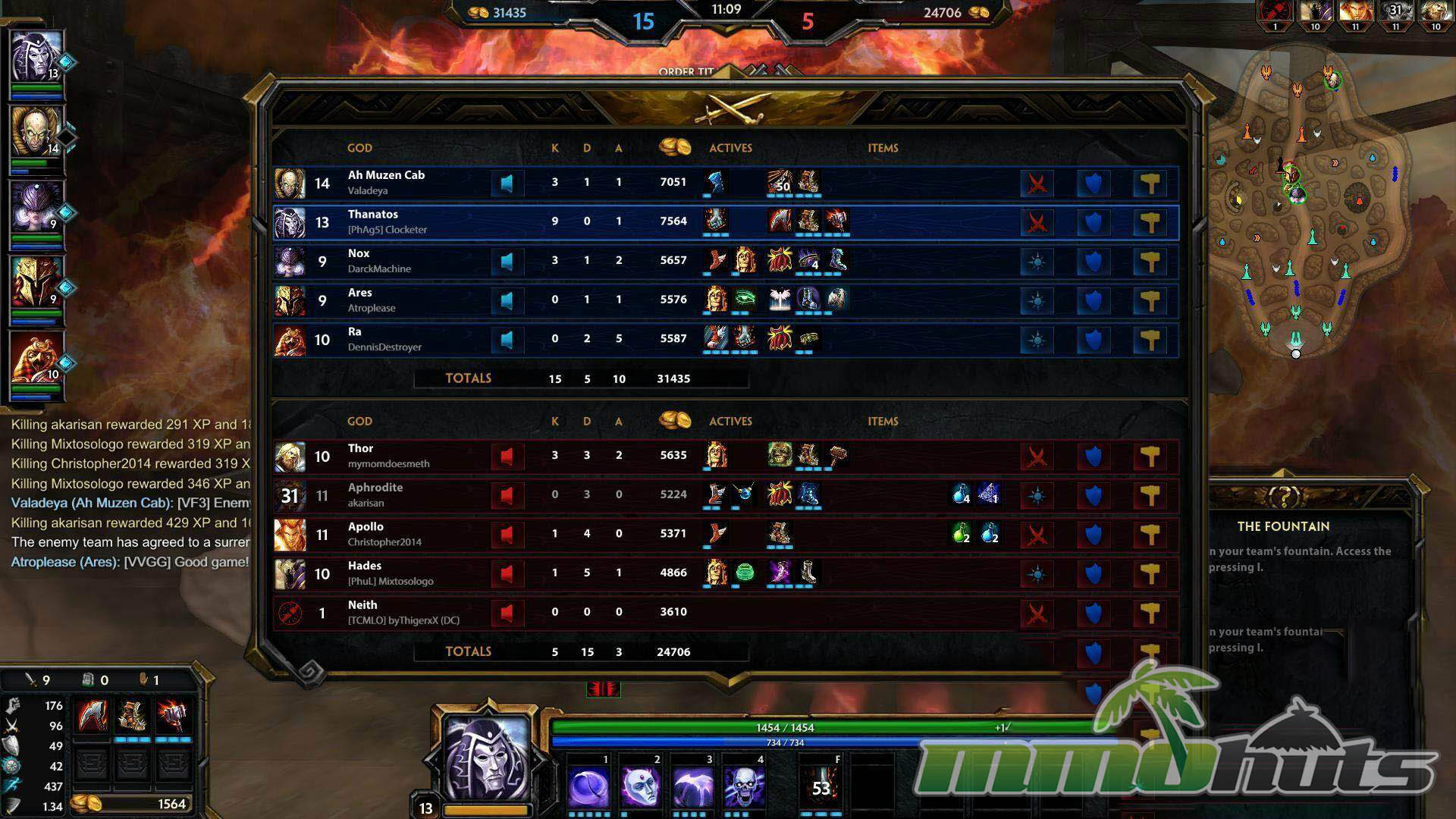
Smite’s item system is divided into actives, passives, and consumables, with dedicated slots by category. Rather than building long recipe trees, many items upgrade through three tiers, which keeps shopping faster and easier to read mid-match.
Actives are a key layer of decision-making. They fill a similar niche to summoner-style utilities in other MOBAs, providing effects like crowd control immunity or mobility tools that can enable initiations and escapes. Consumables cover the expected basics, such as wards and potions, along with short-duration buffs.
God kits are typically built around four abilities, with the ultimate unlocked at level five. Some ultimates interact with other skills or temporarily reshape a kit, creating extra layers of complexity. Overall, Smite’s ability design tends to be varied, and it is difficult to reduce kits to simple templates across the roster.
For accessibility, Smite includes autobuy and autolevel options. New players can use them to focus on learning movement, aiming, and match flow without being overwhelmed by build choices. They are also convenient when you want a low-maintenance setup, and the underlying templates can be customized or toggled whenever you prefer.

Final Verdict – Great
Smite is an easy recommendation for MOBA players who want something that feels more physical and immediate. The third-person camera and manual aiming create a distinct identity, and the mythological theme provides a roster that is both visually memorable and mechanically diverse. Between multiple modes and a meaningful ranked ladder, it offers plenty of structure for both casual sessions and serious improvement.
The game is not frictionless. Match flow can be interrupted by queues, and the learning curve is real, especially because the camera demands stronger awareness than a top-down view. Still, if you are looking for a MOBA that prioritizes action, moment-to-moment execution, and a different sense of scale, Smite remains one of the most distinctive options in the genre, and it is best enjoyed with friends or a consistent group.
Smite Links
Smite Official Website
Smite Gamepedia (Database / Guides)
Smite Wikipedia Page
Smite Subreddit
SmiteFire (Smite Guides / News)
Smite System Requirements
Minimum Requirements:
Operating System: Windows XP SP2 / Vista / 7
CPU: Intel Core 2 Duo 2.4 GHz / AMD Athlon 64 X2 2.7 GHz
Video Card: Nvidia GeForce 8800 GT / ATI Radeon 3870
RAM: 2 GB
Hard Disk Space: 10 GB
Recommended Requirements:
Operating System: Windows 7 / 8
CPU: Intel Core i5 750 2.67 GHz / AMD Phenom II X4 965 3.4 GHz or better
Video Card: Nvidia GeForce GTX 560 / ATI Radeon 6950 or better
RAM: 4 GB or better
Hard Disk Space: 10 GB
Smite Music & Soundtrack
Smite Additional Information
Developer: Hi-Rez Studios
Executive Producer: Chris Larson
Art Director: Thomas Holt
Composer: Chris Rickwood
Other Platforms: Windows / Xbox One / Playstation 4
Game Engine(s): Unreal Engine 3
Closed Beta Date: May 31, 2012 – January 23, 2012
Open Beta Date: January 24, 2012 – March 24, 2014
Playstation 4 Release Date: March 22, 2016 (Open beta)
Foreign Publishers:
China: Tencent
Latin America: Level Up! Games
Development History / Background:
Smite was developed by Alpharetta, Georgia-based Hi-Rez studios. Work on the project began in 2010, and Hi-Rez first revealed the game publicly at PAX East on April 21, 2011. Closed beta testing started on May 31, and the game quickly found an audience. Hi-Rez Studios CEO Eren Goren noted that Smite was the company’s only title to be profitable even while still in beta. Built on Unreal Engine 3, the project’s team size expanded significantly over time, growing from roughly 15 developers during the early closed beta period to 80 after open beta, then reaching 175+ by commercial release on March 24, 2014.