Shadowverse is a free-to-play, multi-platform online collectible card game built around quick duels, strong class identity, and a signature evolve mechanic that can swing a match in an instant. With seven leaders to choose from and hundreds of cards illustrated in Cygames’ anime-fantasy style, it aims to capture the accessibility of modern digital card games while giving each class its own rules, resources, and win conditions.
 | Publisher: Cygames Playerbase: Medium Type: Multi-platform Online CCG Release Date: June 17, 2016 Pros: +Seven classes with clear identities. +Clean presentation and smooth performance. +Striking anime-fantasy card art. +Evolve mechanic adds real tactical depth. +Less match-deciding RNG than many rivals. Cons: -No card trading. -Some visuals and art are repurposed from Rage of Bahamut. |



Shadowverse Overview
Shadowverse is Cygames’ polished take on the digital CCG formula, created by the studio behind Rage of Bahamut and Granblue Fantasy. The presentation leans hard into Japanese fantasy art, and long-time fans will recognize that some illustrations and assets echo Cygames’ earlier titles. Mechanically, it sits in familiar territory for anyone who has played modern online card battlers, you summon followers, cast spells, and try to reduce the opposing leader’s life to zero, but it differentiates itself through sharper class separation and the evolve system that defines the tempo of many matches.
Deckbuilding revolves around seven classes, each designed with its own internal logic and payoffs. Forestcraft tends to reward chaining multiple inexpensive plays in a turn, Dragoncraft is known for accelerating its resource curve to access high-cost threats earlier, and Shadowcraft leans on generating and spending “shadows” for powerful effects. The remaining classes follow similarly specific identities, meaning your choice of leader is not cosmetic, it is a commitment to a particular style of game plan and card pool.
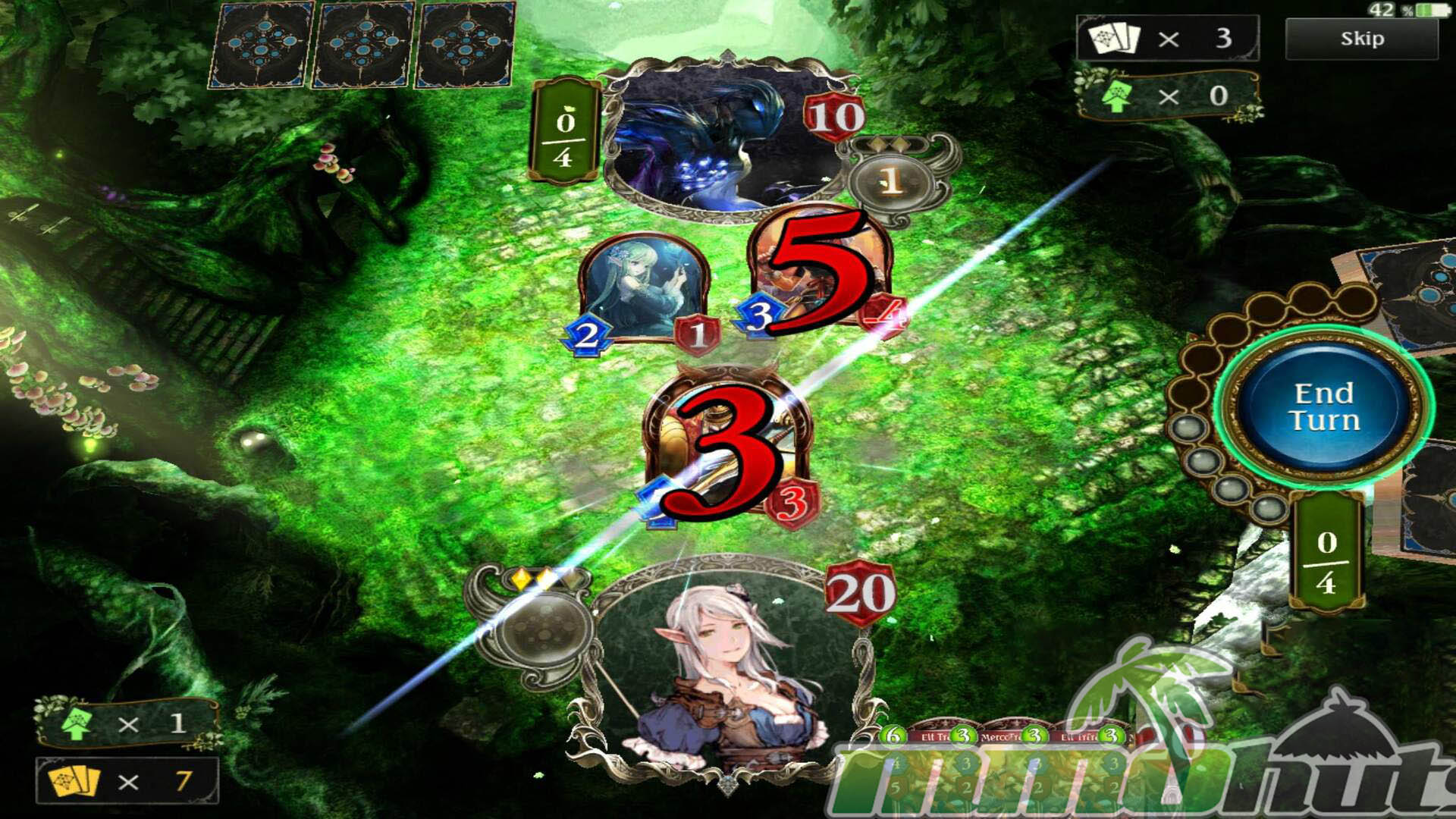
The signature feature is evolution. Mid-match you can evolve a follower on board to boost its stats and, on many cards, unlock additional abilities that change combat math or create immediate pressure. It is a simple concept that adds a meaningful decision point each game, because the timing of an evolve often matters as much as the card you choose to evolve.
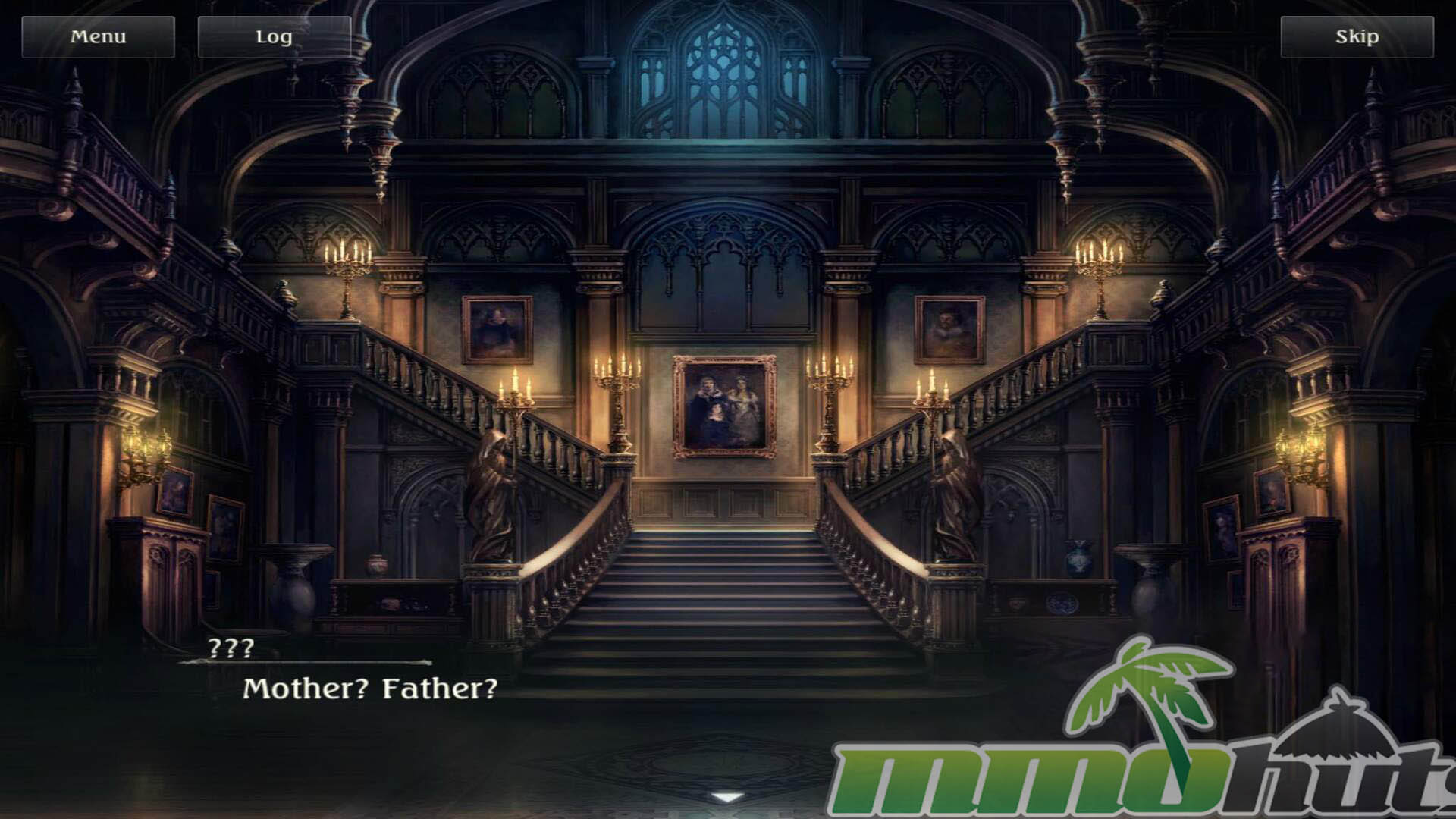
Outside of PvP, Shadowverse includes a voiced story campaign that doubles as a guided tour of each class. Between the campaign, ranked and unranked matches, and draft-style modes, the game offers multiple ways to play while you build out a collection of more than 400 cards through packs and crafting.
Shadowverse Key Features:
- Seven Distinct Classes – pick one of seven leaders and learn their play patterns through campaign chapters, including Forestcraft, Swordcraft, Bloodcraft, Havencraft, and more.
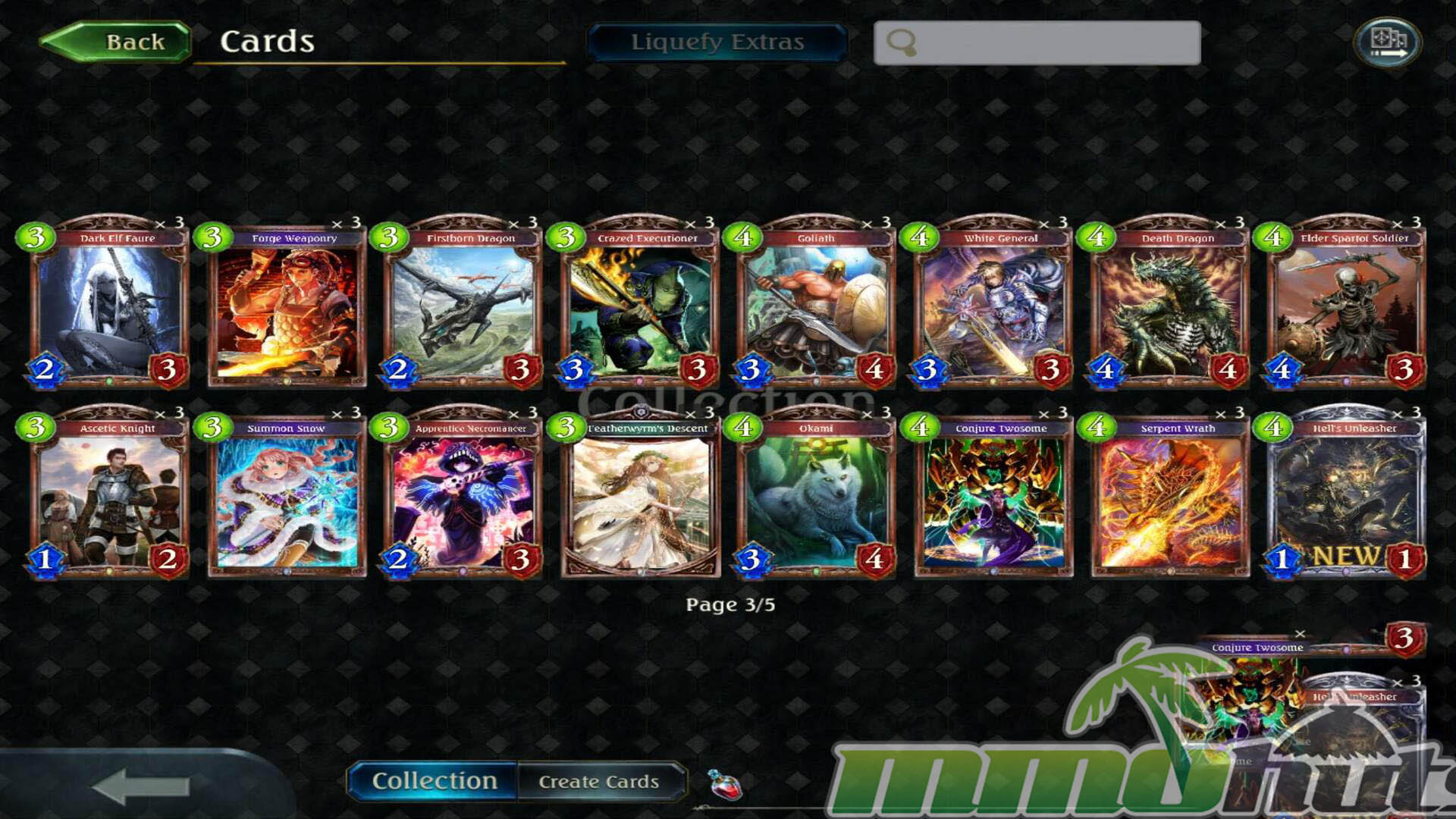
- Over 400 Cards to Collect – build a collection across all classes with cards that have unique effects, stats, and visual evolutions.
- Hearthstone-inspired Gameplay –fight over the board, manage resources each turn, and push damage until the opposing leader’s life hits zero.
- Evolve Cards – upgrade followers during a match to gain stats and, for many cards, extra effects that can flip a losing position.
- Variety of Game Modes – play through a fully voice-acted story campaign or jump into multiplayer options, including Take Two for on-the-fly deckbuilding.
Shadowverse Screenshots





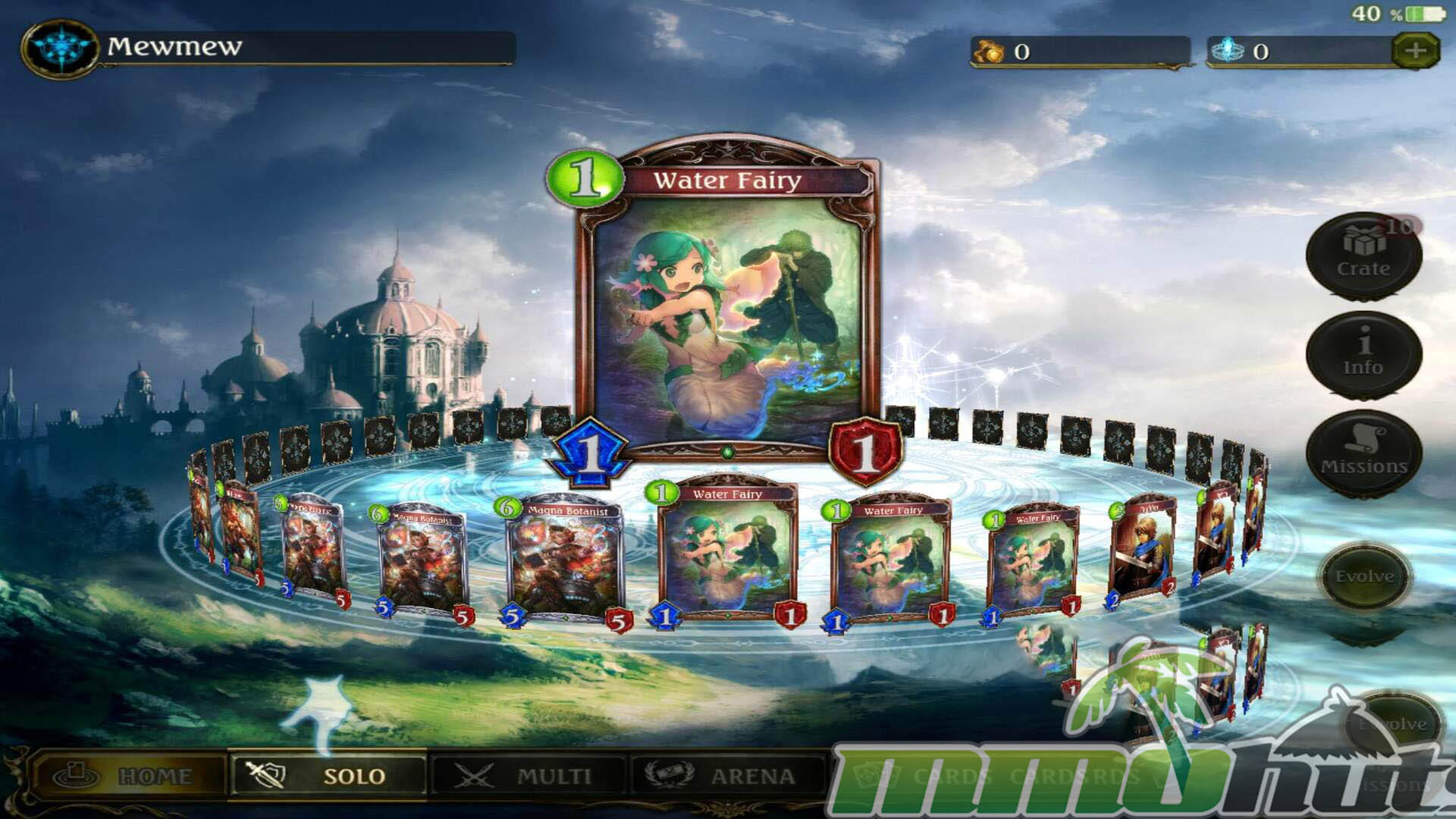
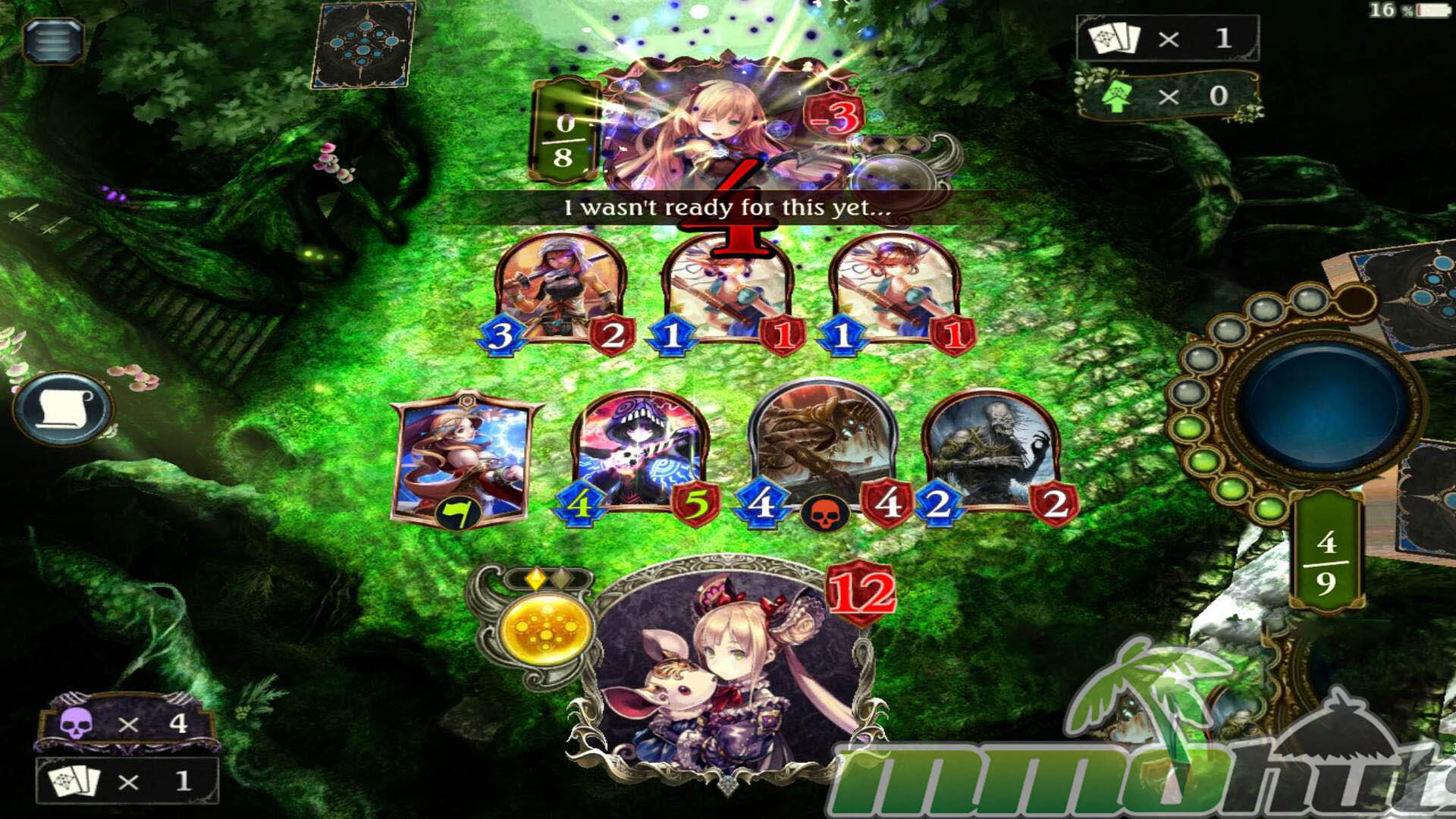

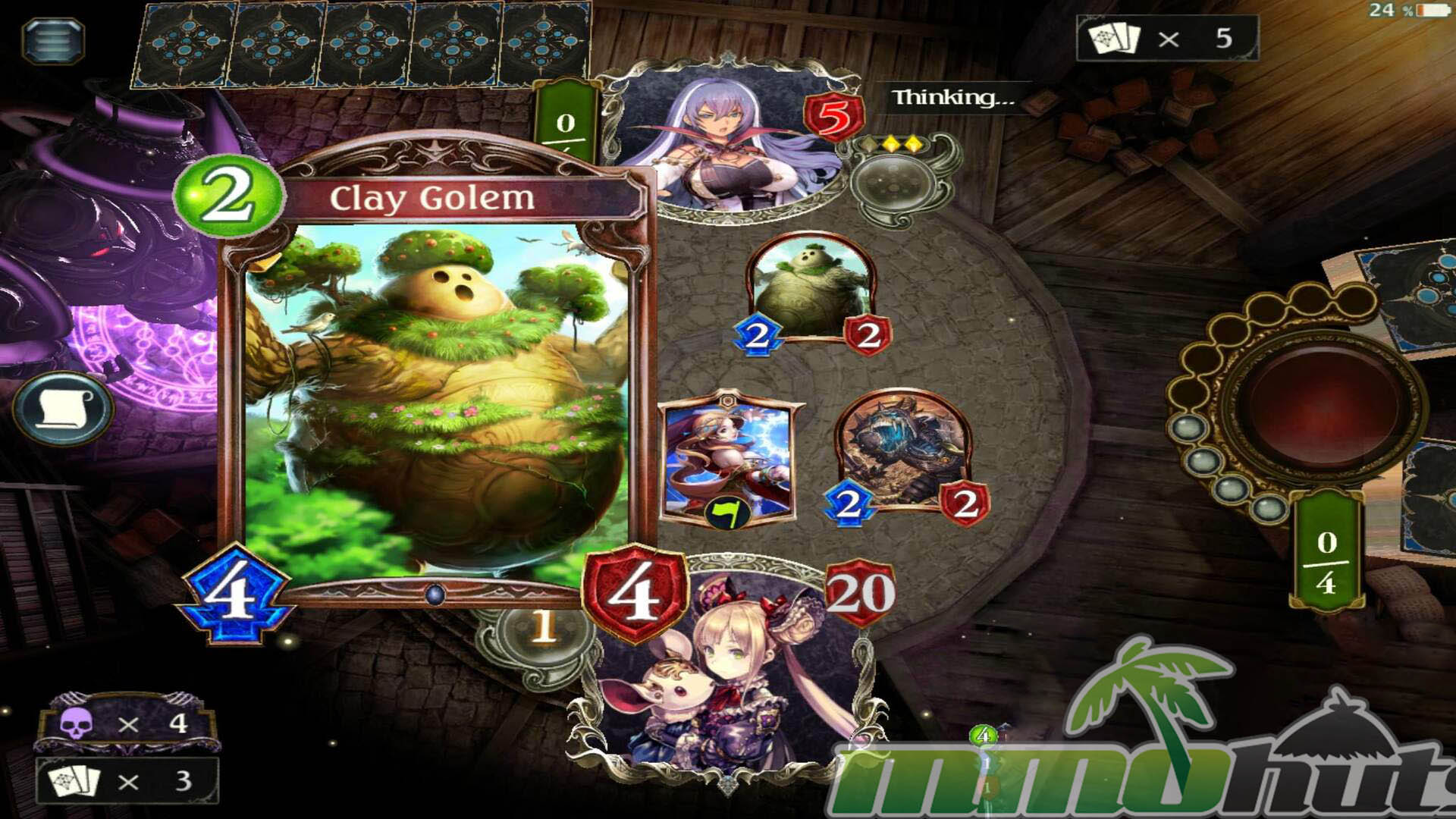
Shadowverse Featured Video

Shadowverse Review
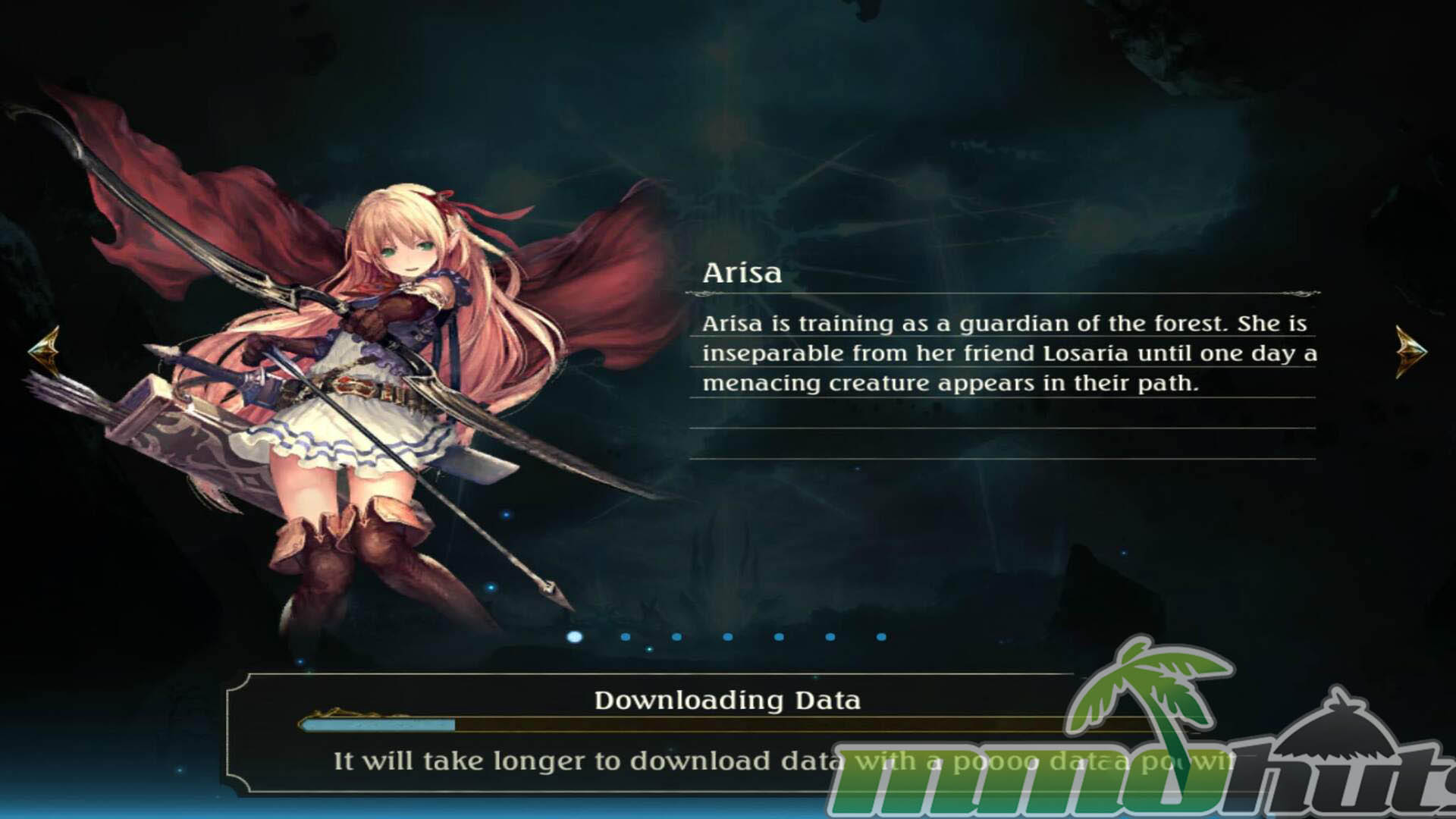
Shadowverse is a 2D, anime-styled online card battler set in a fantasy setting where a mysterious threat, the Shades, begins spilling into the world under the omen of the Morning Star. Rather than following a single protagonist, the game frames its story around seven different leaders, each with their own motivations and, more importantly, their own mechanical identity on the battlefield. That structure makes the campaign feel like both narrative content and an extended tutorial for how each class wants to win.
From a pure interface standpoint, Shadowverse looks and feels like a game designed with mobile first in mind, with large buttons and clear board states. The 2D presentation is not trying to compete with the most elaborate 3D board theatrics in the genre, but the card art is where the game puts its best foot forward. If you enjoy Cygames’ character design and fantasy illustrations, the collection is consistently strong, and evolutions give many cards a satisfying “powered up” look that reinforces the theme mechanically.
The audio work deserves mention too. Leaders are voiced, the campaign leans into that visual-novel cadence, and even individual cards have lines when played. It is a small detail that adds personality to otherwise abstract pieces on a board, especially when you spend a lot of time grinding matches.
Getting Started Without Getting Lost
Your first session includes a short, structured tutorial that teaches the fundamentals through a handful of scripted matches. It covers the basics you would expect, playing followers, attacking, and understanding common keywords (including Ward as the game’s equivalent of taunt and Fanfare as a play-trigger effect). It also introduces the evolve mechanic early, which is wise, because it is the defining decision point in most games.
What the onboarding does not fully do is teach the deeper “why” behind each class. Shadowverse’s classes are more than just different card pools, many of them revolve around distinct internal rules and conditions. To really understand that layer, the story campaign is the intended path, and it is also a steady source of early rewards even if you primarily plan to play PvP.
The Core Loop and the Evolve Twist
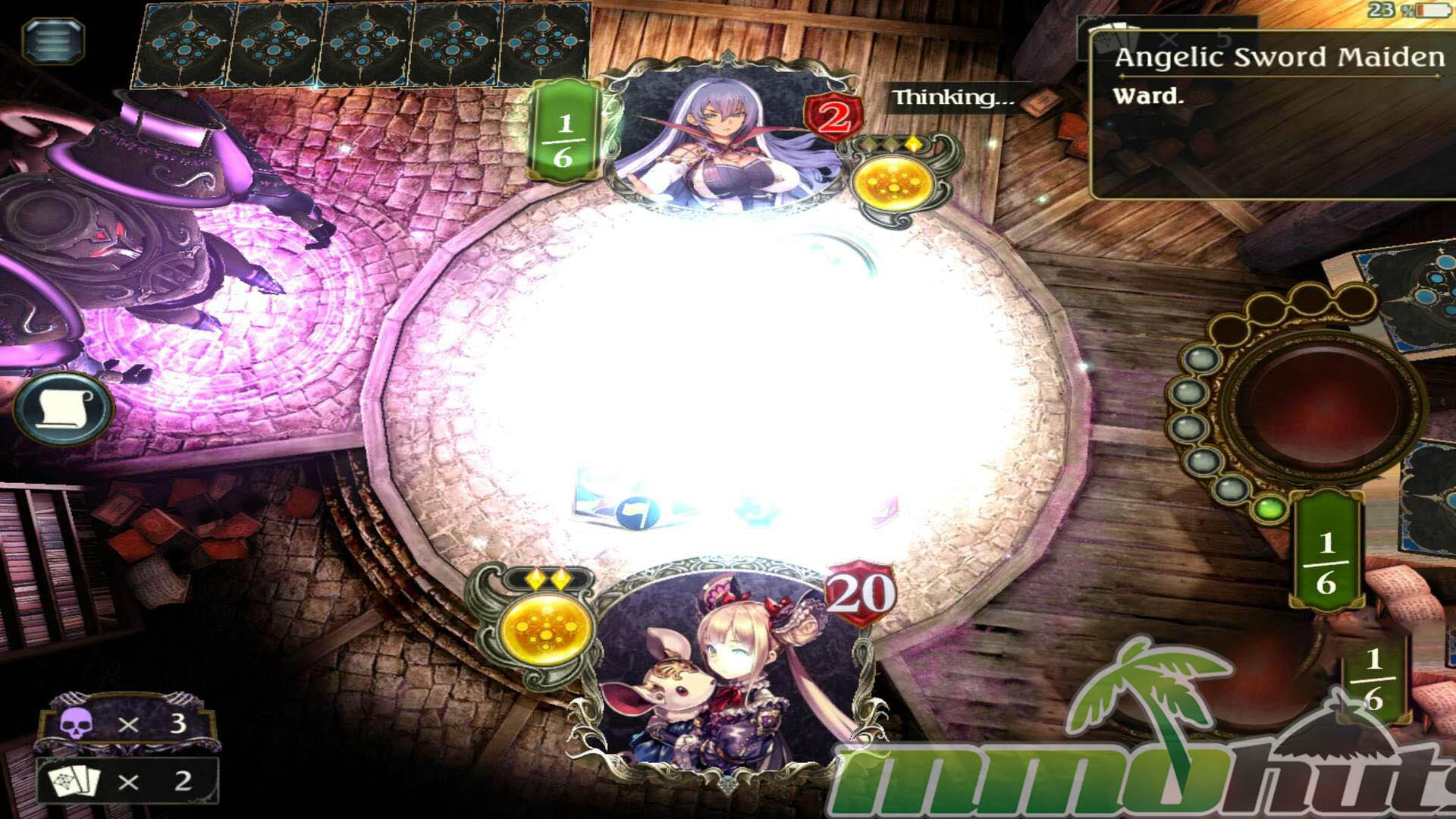
At its foundation, Shadowverse follows the familiar structure of digital CCGs: two players bring 40-card decks, leaders start at 20 life, and a resource system increases turn by turn to enable bigger plays as the match goes on. You develop a board of followers, answer the opponent’s threats, and look for windows to push damage to finish the game.
Evolution is the system that changes the texture of those familiar rules. Once the match reaches the evolve turns, players can spend evolution points to upgrade a follower already in play, improving its stats and often triggering additional effects. The balance detail is important: the player going first receives fewer evolution points than the player going second, which helps offset the natural advantage of acting first in a tempo-driven card game. In practice, many games revolve around planning your evolve turns, baiting out opposing evolutions, or using an evolve at exactly the right moment to seize the board.
There are also cards that interact with evolution points, which means experienced deckbuilders can treat evolve as a resource to manipulate rather than a simple once-per-turn boost. It adds strategic weight without being overly complex to understand.
Seven Classes That Actually Play Differently
Deck construction is where Shadowverse’s strongest design choice shows up. The classes are not just themed differently, they tend to reward different behaviors. Forestcraft often encourages playing multiple cards in a single turn for bonuses, while Bloodcraft can turn dangerous when your leader’s life total drops into a certain range. Dragoncraft’s identity revolves around ramping resources so it can deploy expensive threats ahead of schedule, and Shadowcraft leans on building up and spending shadows for effects that feel distinct from simple “mana for cards” exchanges.
The campaign is a practical way to learn these identities because each leader’s chapters naturally highlight that class’ key patterns. Even if the story beats do not land for everyone, the mode is still worth playing for the steady stream of unlocks, packs, and tickets that help you experiment with different archetypes early.
Competitive Options and a Useful Social Feature
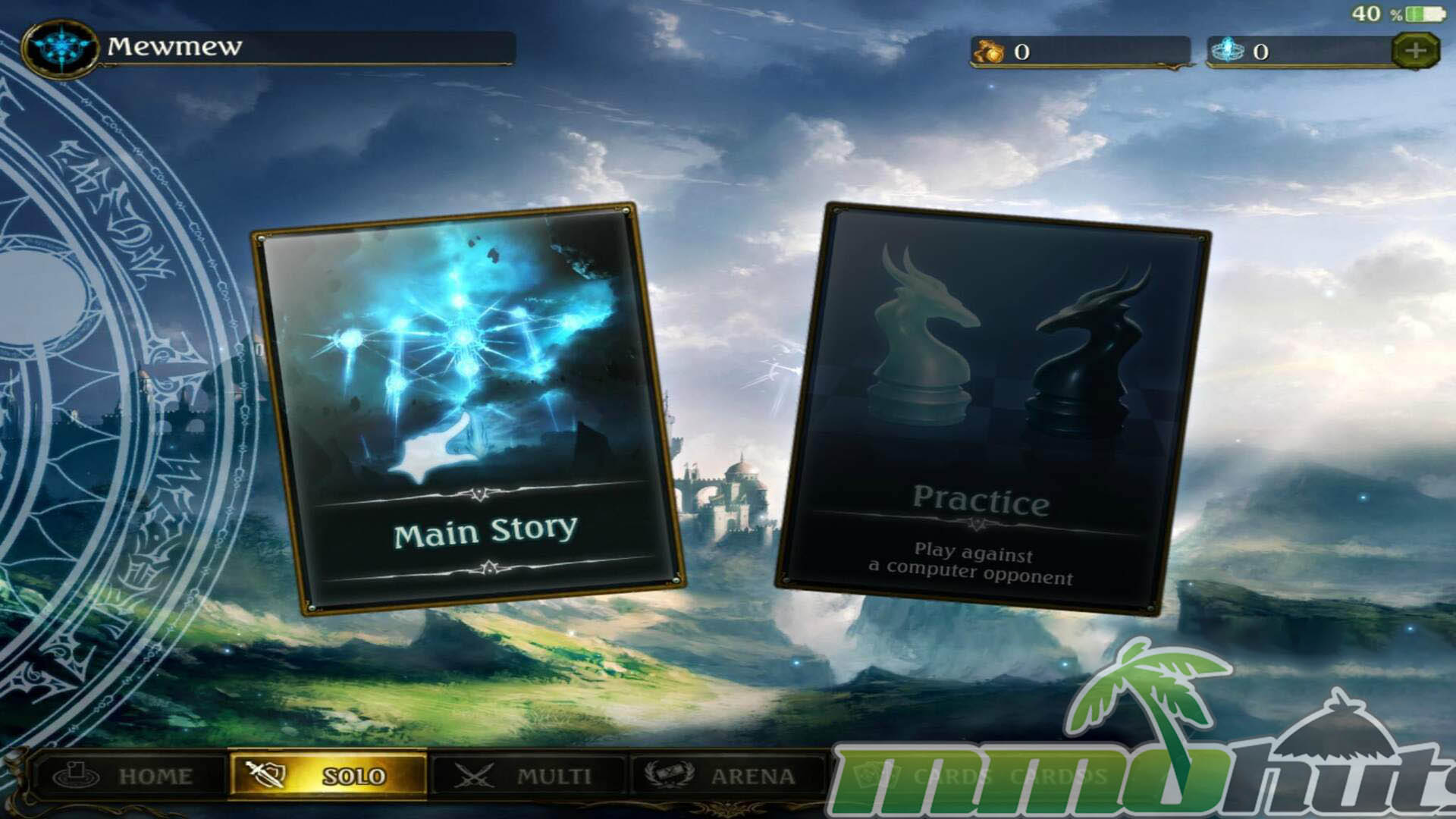
Multiplayer is split into standard matchmaking and Take Two, the game’s draft-like mode. Standard play includes unranked and ranked queues, and it also supports private matches. That last option is surprisingly valuable, because it lets you test lists with friends or run informal mini-tournaments without jumping through hoops.
Take Two follows the familiar “build a deck from limited choices, then play a run” structure popularized by arena modes in other CCGs. Entry requires tickets, which you can earn through play or purchase. The mode is a good change of pace when you are missing key cards for constructed decks, and it also pushes you to learn class fundamentals instead of relying on a single refined list.
Monetization and Collection Building
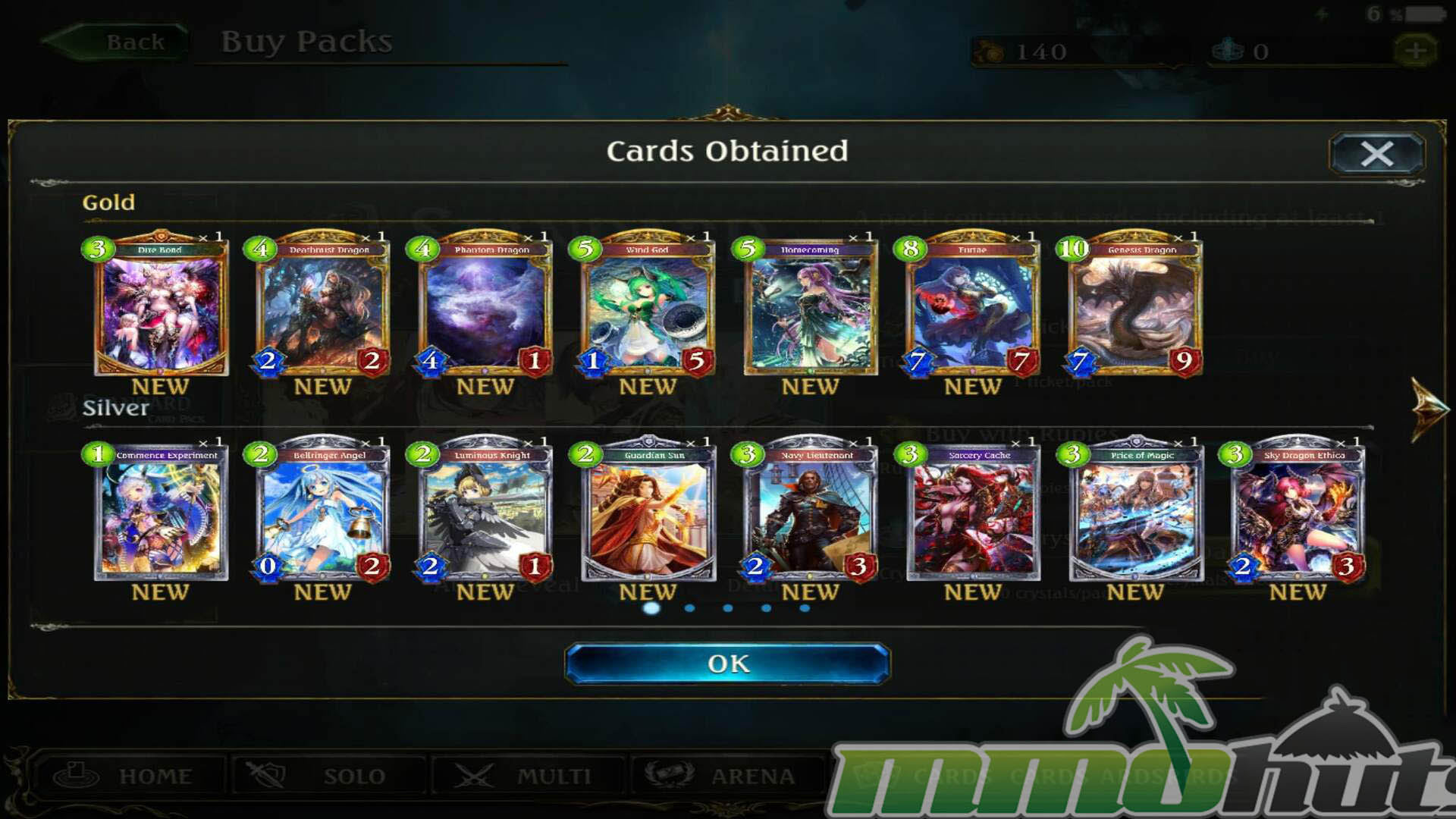
The shop offers what you would expect from a free-to-play card game: cosmetics like avatars and card backs, plus card packs. Packs are priced around the typical industry baseline and contain eight cards. Purchases are not the only route, because you can also obtain packs through tickets and in-game currency earned from play. As with most games in the genre, spending accelerates collection growth, but the overall structure is recognizable and, importantly, the game gives you multiple paths to build decks over time.
Final Verdict – Great
Shadowverse succeeds by taking a familiar digital CCG foundation and layering meaningful identity on top of it. The evolve mechanic adds a clear mid-game pivot point that rewards timing and planning, and the seven classes feel more distinct than in many competing card battlers. The campaign is a solid learning tool, PvP offers both standard ladders and a draft-style alternative, and the audiovisual presentation, especially the card art and voice work, gives the game a strong personality.
If you enjoy competitive card games and want something with anime-fantasy flair and class mechanics that genuinely change how you play, Shadowverse remains an easy recommendation.
Shadowverse Online Links
Shadowverse Official Website
Shadowverse Official Forums
Shadowverse Steam Page
Shadowverse Facebook
Shadowverse Android
Shadowverse iOS
Shadowverse System Requirements
Minimum Requirements (Windows):
Operating System: Windows 7/8.1/10 (32-bit or 64-bit)
Processor: Intel Core2 Duo 2.4GHz/AMD A4-7300
Memory: 2 GB RAM
Graphics: NVIDIA GeForce 7600GT (VRAM 256MB) or AMD Radeon HD 8470D
Storage: 2 GB available space
Minimum Requirements (Mac OS X):
OS: OS X 10.9
Processor: Intel Core 2 Duo 2.4 GHz
Memory: 2 GB RAM
Graphics: NVIDIA GeForce 320M
Storage: 2 GB available space
Mobile:
Operating System: Android 4.1 or later / iOS 8.0 or later
Shadowverse Music & Soundtrack
Coming Soon…
Shadowverse Additional Information
Developer: Cygames
Publisher: Cygames
Platforms: Android, iOS, Steam (PC and Mac)
Announcement Date: October 16, 2015
Closed Beta Date: January 21, 2016
Release Date: June 17, 2016
Steam Release Date: October 28, 2016
Development History / Background:
Shadowverse is a free-to-play online CCG developed and published by Cygames, a Japanese game developer known for a wide range of mobile hits, including Granblue Fantasy, Idolmaster Cinderella Girls, and Rage of Bahamut. The project was first teased via a countdown site and formally revealed with a trailer on October 16, 2015, which pointed to a 2016 release window in Japan. A closed beta followed on January 21, 2016, giving players an early look at its systems before the full launch on June 17, 2016 for both iOS and Android. In terms of art and assets, it draws on Cygames’ existing catalog, reusing elements from Granblue Fantasy and Rage of Bahamut in ways that will feel familiar to fans. The game later expanded to Steam on October 28, 2016, bringing the same core experience to PC and Mac players.