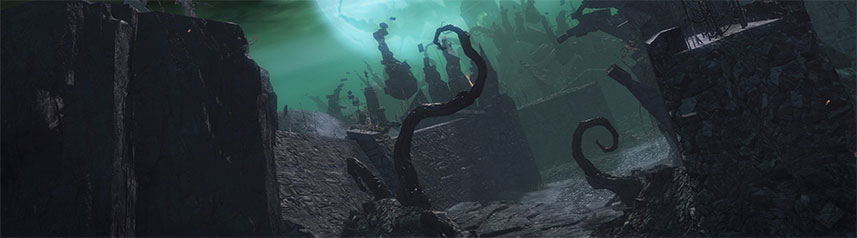
Ryzom is a science-fantasy MMORPG built around sandbox progression, where your character grows by improving skills across four broad schools: Magic, Combat, Harvesting, and Crafting. Instead of locking you into a traditional class, the game encourages experimentation, letting you combine disciplines to create a flexible build that fits whatever role you want to play in the world.
 | Publisher: Winch Gate Playerbase: Low Type: MMORPG Release Date: September 19, 2004 Pros: +Loyal, helpful community. +Classless progression with lots of freedom. +Player-made zones and tools. Cons: -Systems can feel overcomplicated. -Aging visuals and interface. -Occasional animation glitches. |

Ryzom Overview
Ryzom is an MMORPG that blends sci-fi concepts with fantasy flavor, placing you on an alien world that feels more organic and unpredictable than most theme park games. Character creation starts by selecting one of four races, then refining your look with sliders that let you shape a distinct avatar. From there, the game’s identity becomes clear: there are no rigid classes, and advancement is tied to doing. Fight to improve combat disciplines, craft repeatedly to raise crafting proficiency, and spend time gathering and harvesting to become better at resource work.
Where Ryzom really separates itself is in how it treats abilities. Rather than simply unlocking a skill and using it forever, actions can be assembled and tuned by the player using a modular system. You balance effects against resource costs, speed, range, and other tradeoffs, which creates a high ceiling for personalization in both combat and non-combat play. The broader world design matches that philosophy. Ryzom does not constantly push you down a single quest chain, it gives you space to set goals and learn the world at your own pace. Add in shifting seasons, weather, and a day and night cycle, and you get a sandbox MMO that still feels unusual, supported by a long-running community that has kept the game alive since 2004.
Ryzom Key Features:
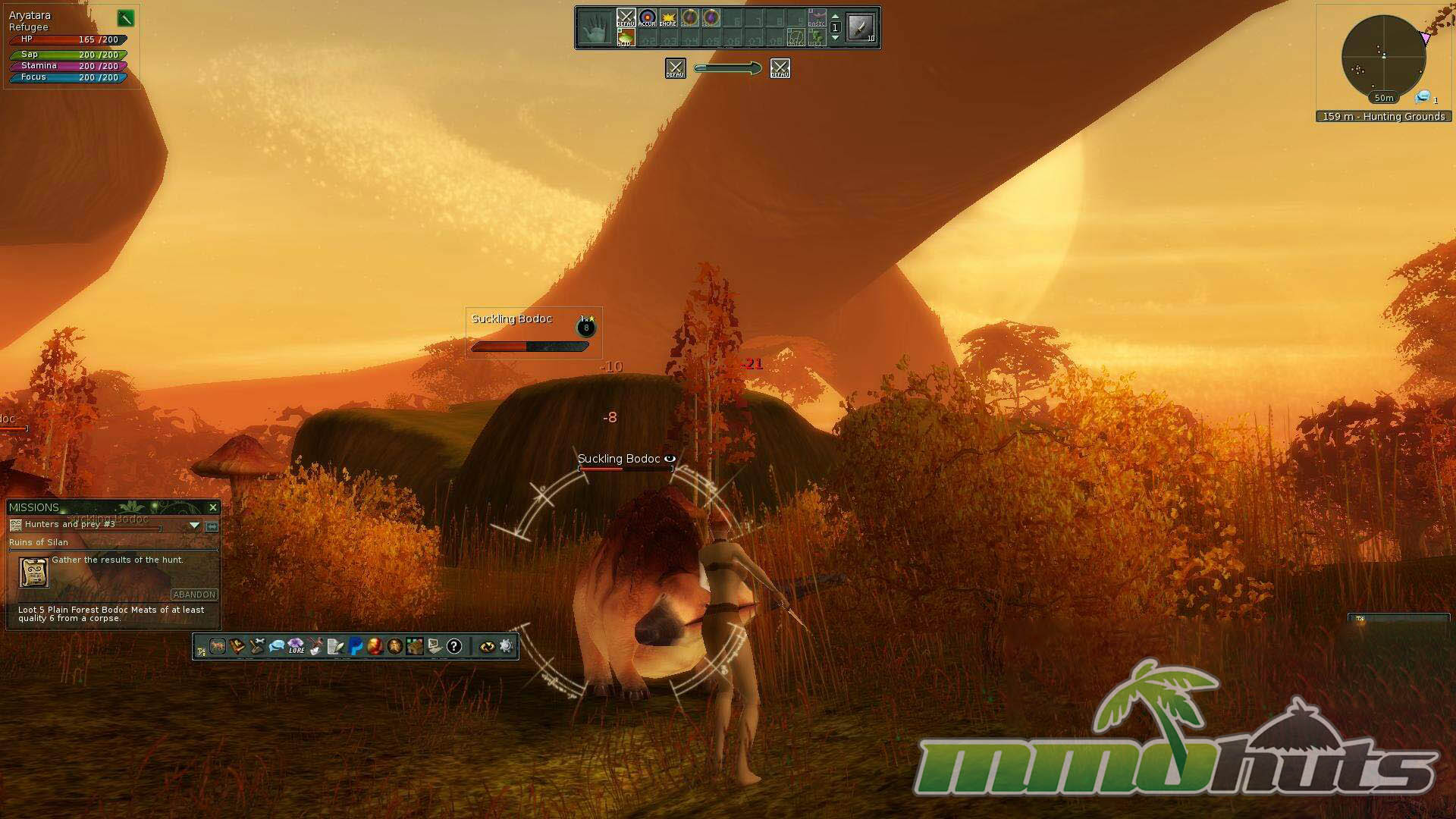
- Dynamic Environments – day and night transitions, changing weather, and seasonal shifts help the world feel alive, from clear skies to harsh storms.
- No Classes- progress comes from practice, improve Magic, Combat, Harvesting, and Crafting in any mix you prefer.
- Open Source tools – Ryzom’s open-source tech enables players to build and share their own areas and projects.
- Complex Skill Customization – abilities are assembled from “stanzas,” letting you tailor actions to specific tactics and resource budgets.
- Intricate Crafting –dedicated crafters can work toward top-tier gear through persistence and a deep material system.
Ryzom Screenshots


Ryzom Featured Video

Ryzom Review
Ryzom has a reputation as a “systems MMO,” the kind of game that rewards players who enjoy tinkering, experimenting, and setting their own direction. Going in, the age is obvious, but the bigger question is whether its sandbox ideas still hold up in a genre that increasingly favors streamlined interfaces and guided progression. After spending time with it, I came away respecting what it attempts, even if the overall experience can be difficult to recommend broadly.
Building Your Character
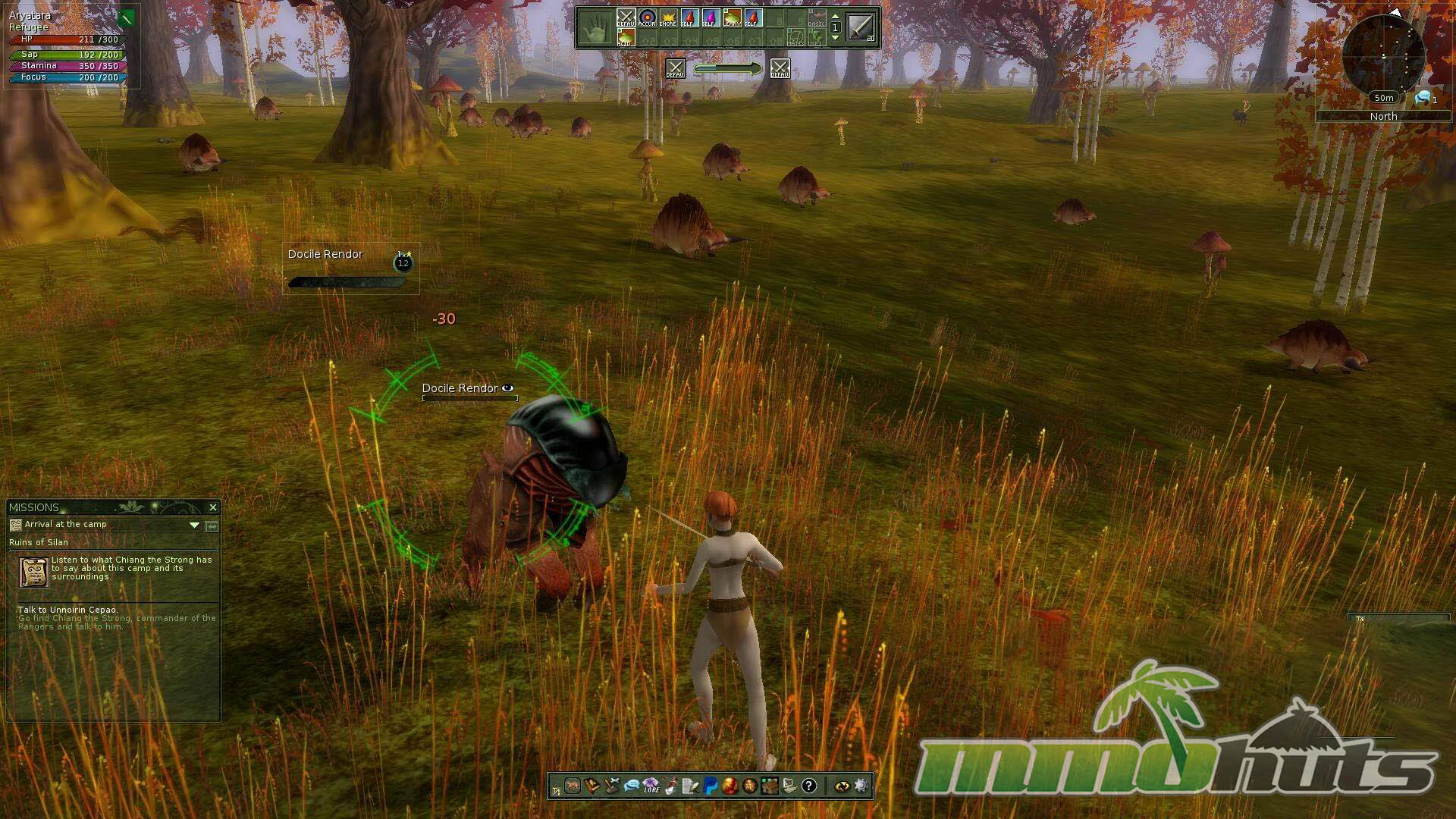
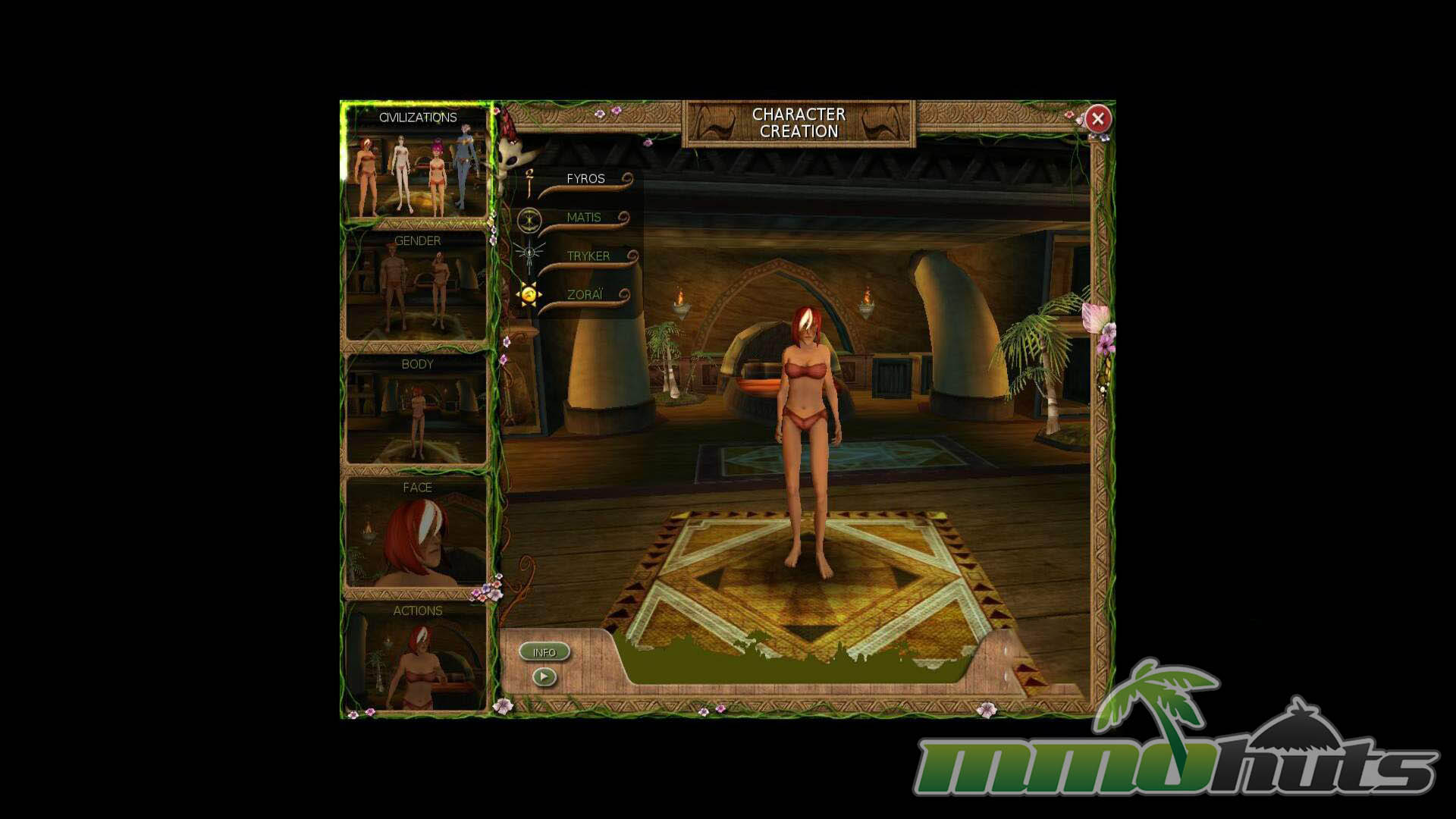
Ryzom begins with four distinct races and a slider-based character creator. The tools are functional and let you exaggerate proportions in ways that can range from subtle to odd-looking, depending on how far you push them. Visually, it is unmistakably a 2004-era MMORPG, but the important part is that you can create a recognizable identity before stepping into the starting areas. Because the game is classless, this early choice is more about aesthetics and roleplay than it is about committing to a permanent combat role, which fits the sandbox tone well.
Combat Feel
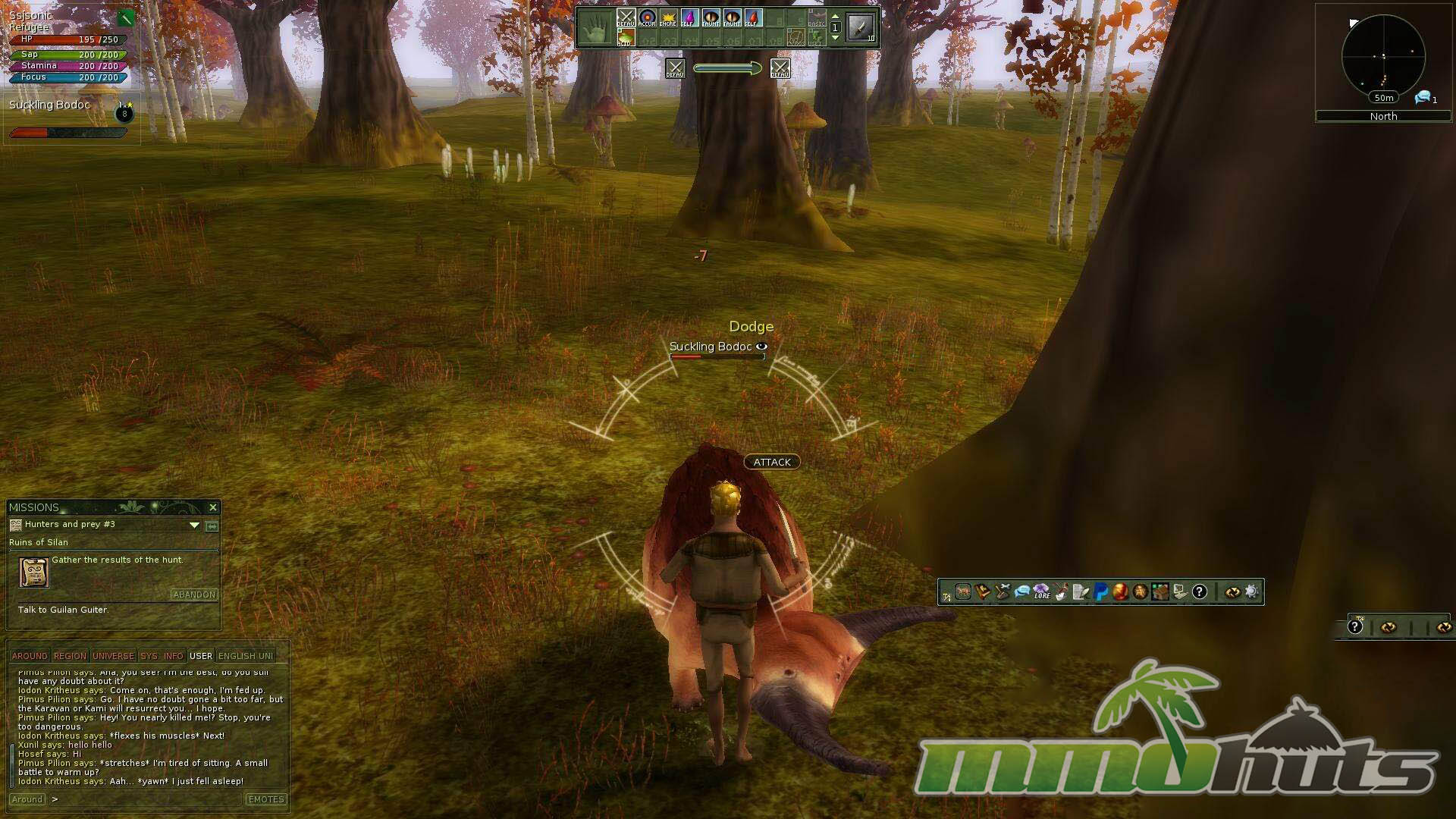
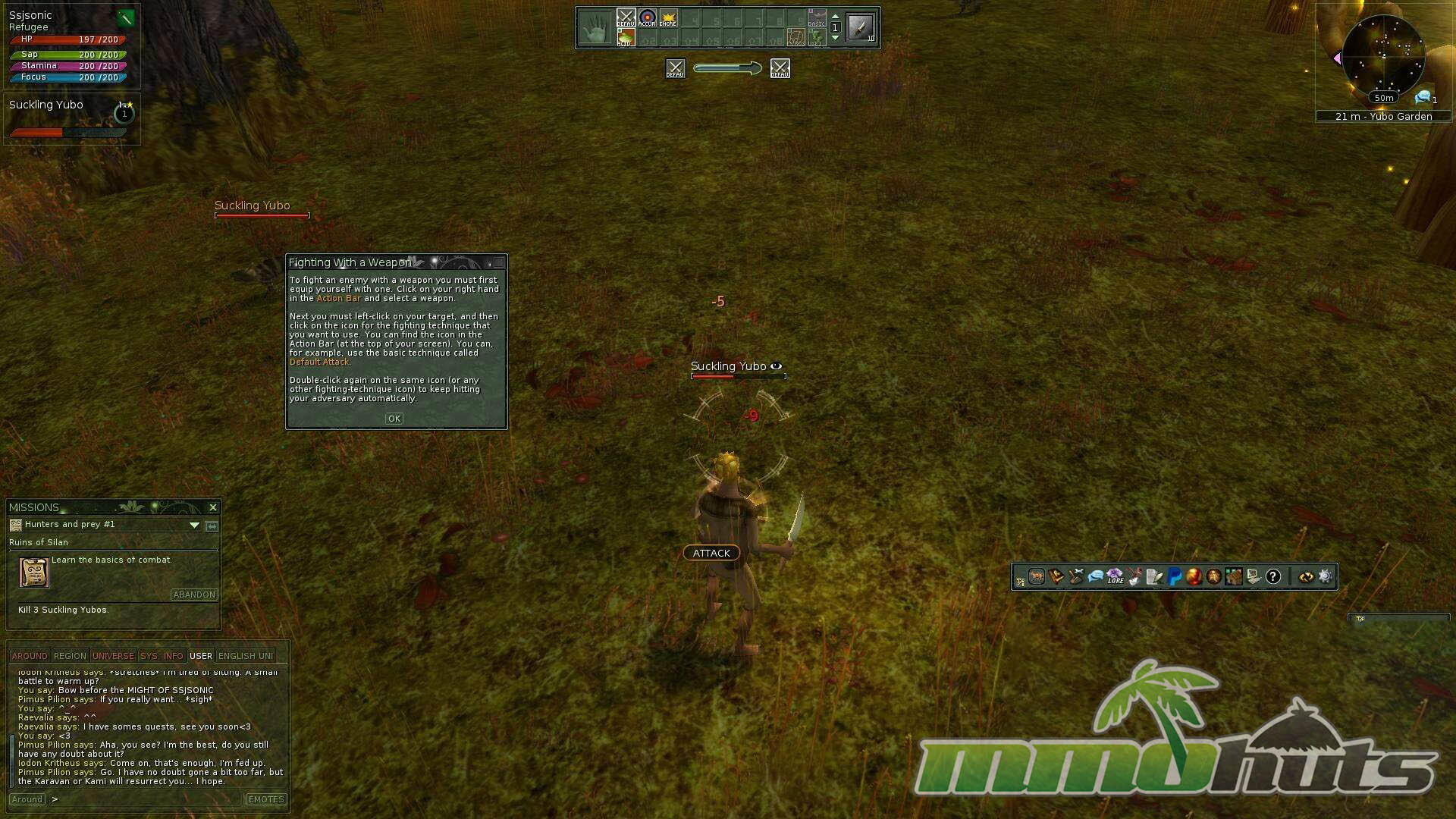
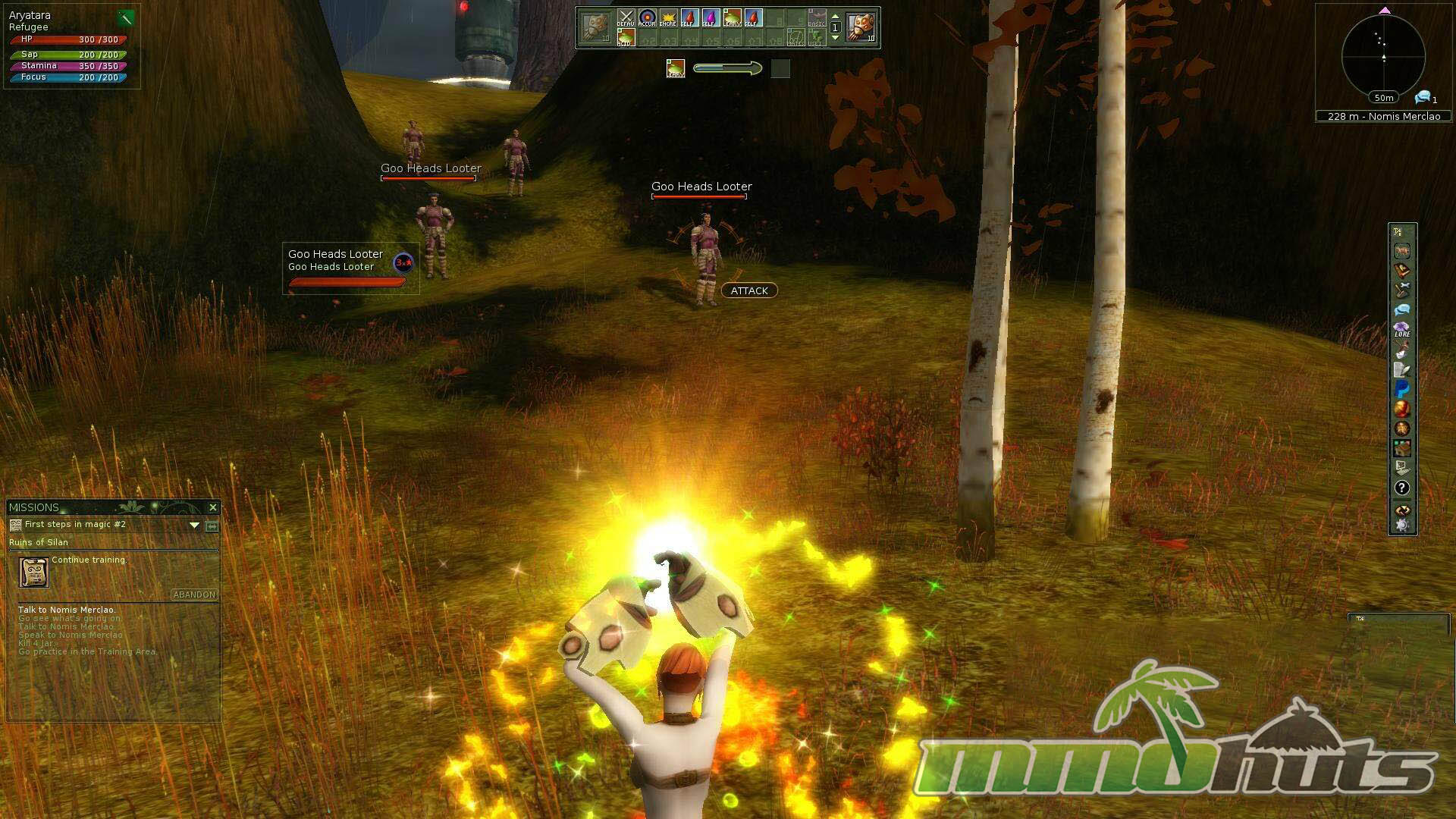
Moment-to-moment fighting is serviceable, but it lacks the impact and readability modern MMO combat tends to prioritize. Attacks land without much weight, and early encounters can feel like routine repetition rather than exciting skirmishes. Sound design does some of the heavy lifting, but it can also become grating when the same cues dominate every fight. The result is combat that works mechanically, yet rarely feels especially satisfying on its own, particularly during the early grind.
That said, Ryzom becomes more interesting when you start approaching it as a build-and-test game rather than a pure action loop. Switching focus toward magic and experimenting with different ability setups helped highlight the game’s strengths, even if the underlying pacing remains old-school.

Skill Progression and Custom Abilities
Progression is tied to usage, do the thing and you get better at the thing. As you gain enough experience in a discipline, trainers open up additional techniques. On paper this is straightforward, but in practice the learning curve is steeper than most MMOs because the interface and terminology can be dense. Ryzom’s big differentiator is its modular “stanza” approach, where many actions are effectively assembled from components. You can tune an ability by adjusting its parts and the costs it demands, which creates meaningful tradeoffs in performance.
The system is genuinely flexible, but it can also feel like it is fighting the player. Even basic improvements can involve multiple layers of options and currencies, and it is easy to lose time navigating menus rather than playing. Players who enjoy building macros, optimizing rotations, or experimenting with knobs and dials will find a lot to like here. For everyone else, the depth can read as unnecessary complexity. At its best, the stanza system makes Ryzom feel like a true sandbox, because your toolkit is not just “what you unlocked,” it is “what you designed.”

Visuals, World Design, and Immersion
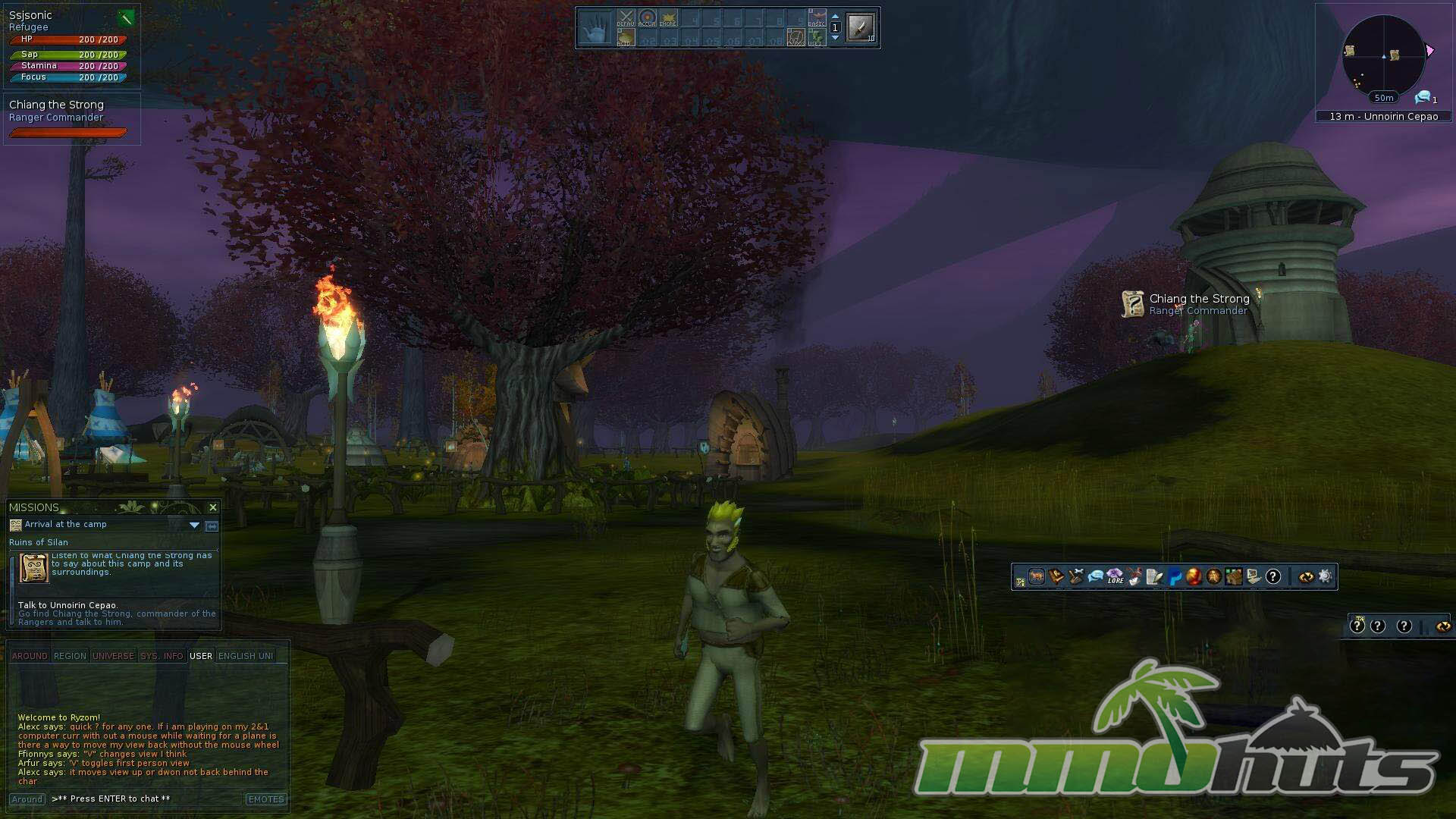
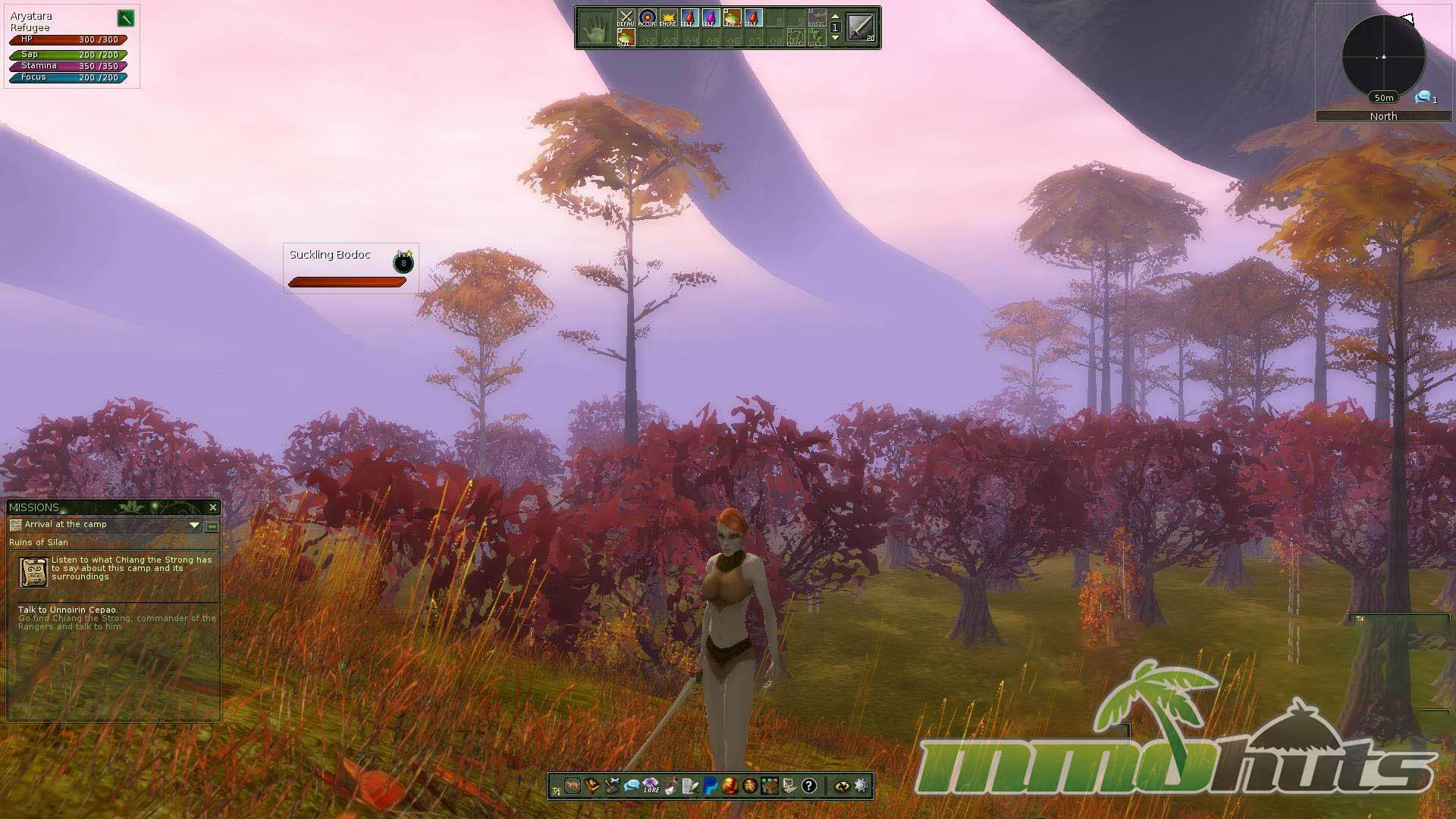
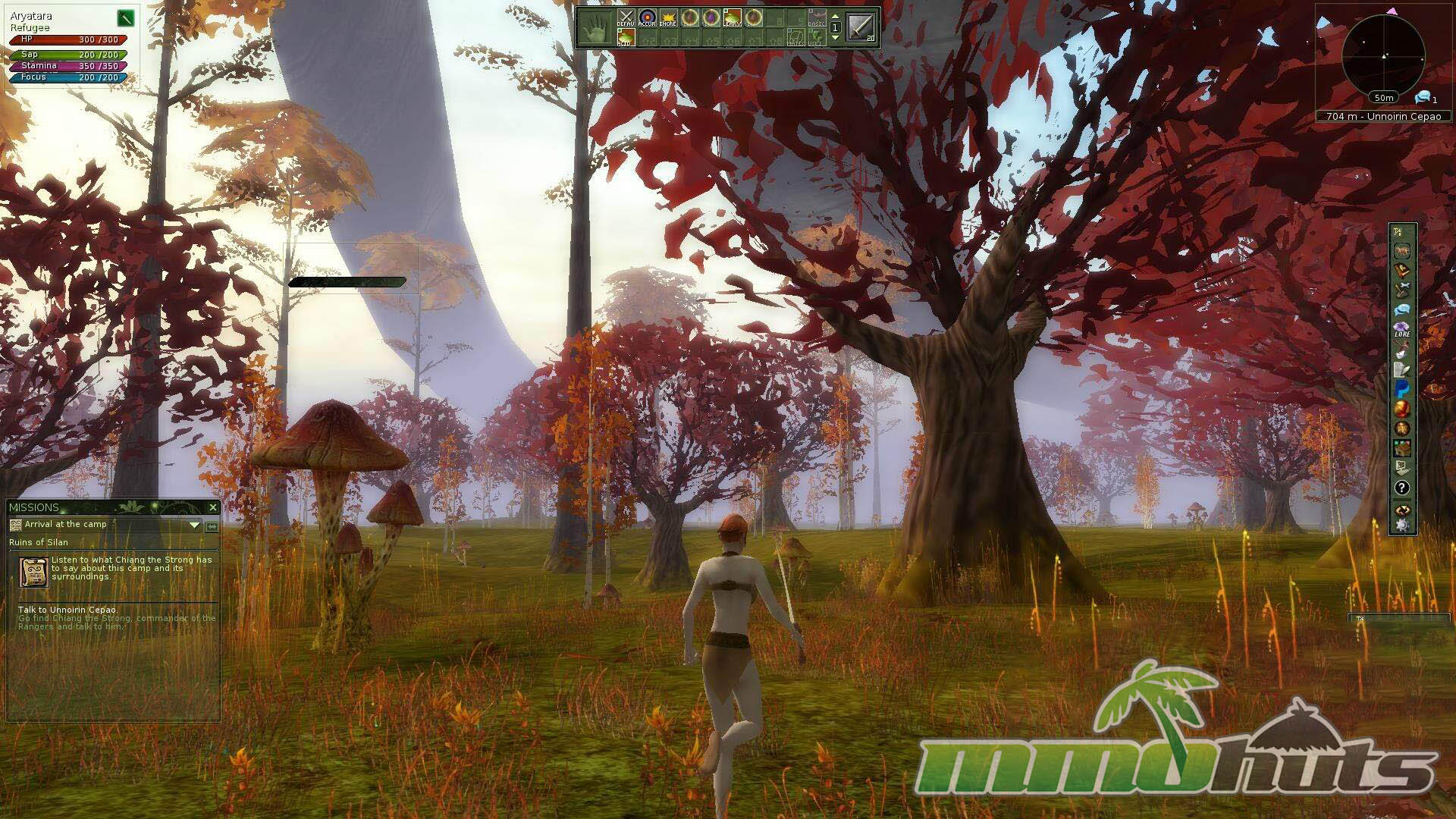
Ryzom’s world has an identity, but it is also one where the technical limitations show. Character models, textures, and animations are dated, and the interface reinforces that older MMO feel. The more immersion-breaking issue is collision and traversal. Objects that look like decorative foliage can behave like solid blocks, and fences, cliffs, and environmental edges sometimes rely on invisible boundaries. Those barriers keep you aware of the game’s constraints, especially when exploration is one of the main reasons to play a sandbox MMO in the first place.
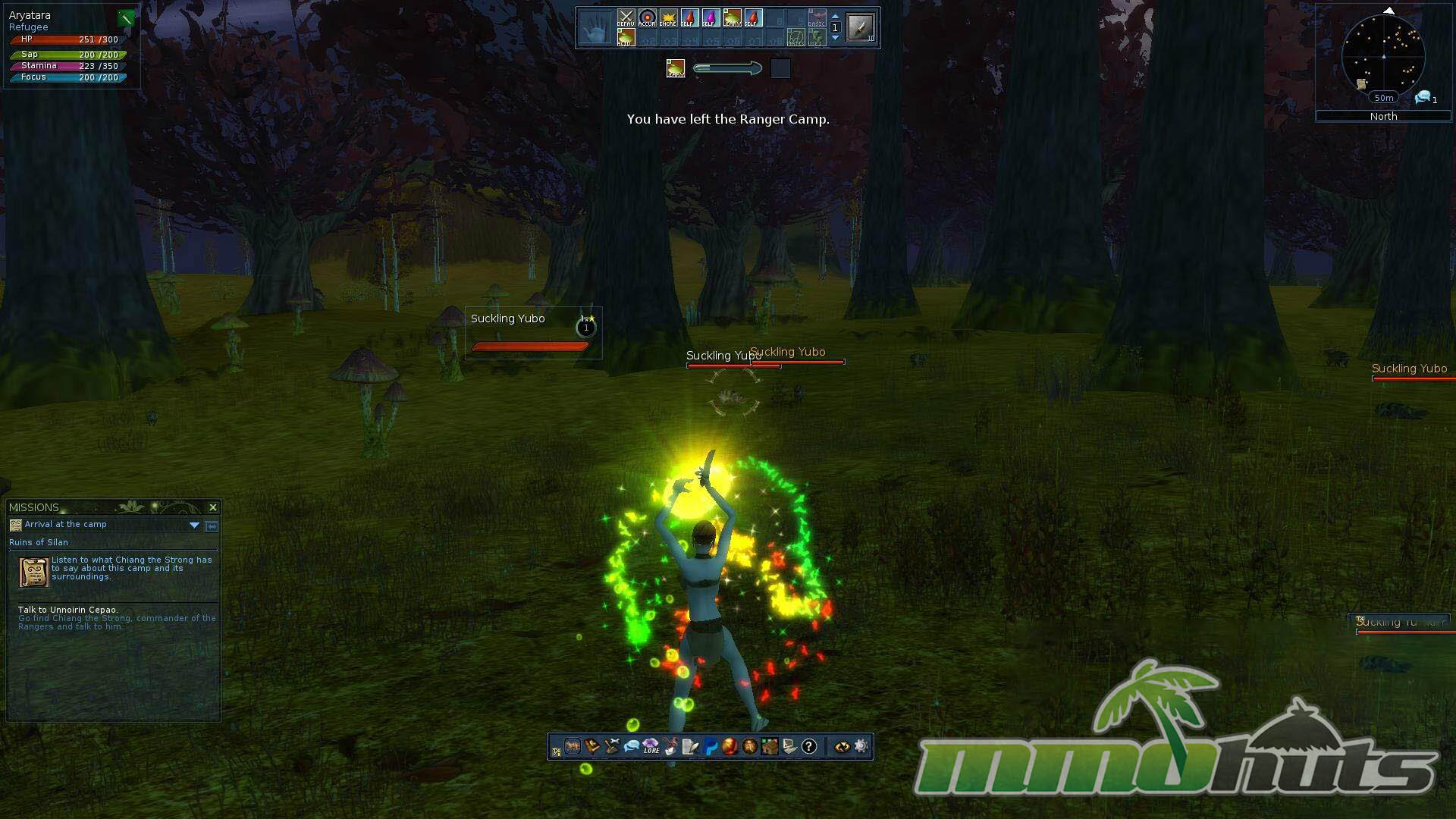
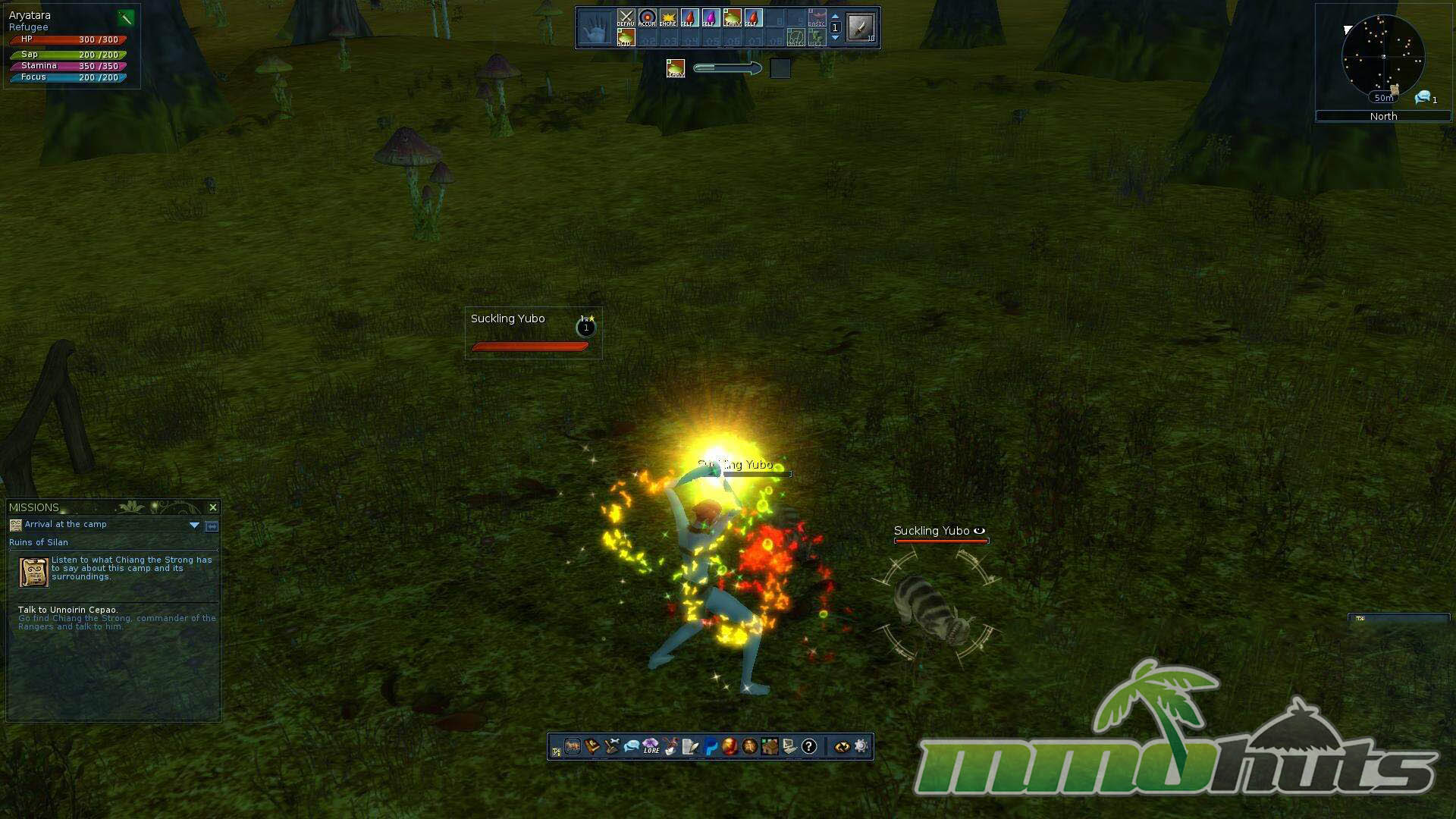
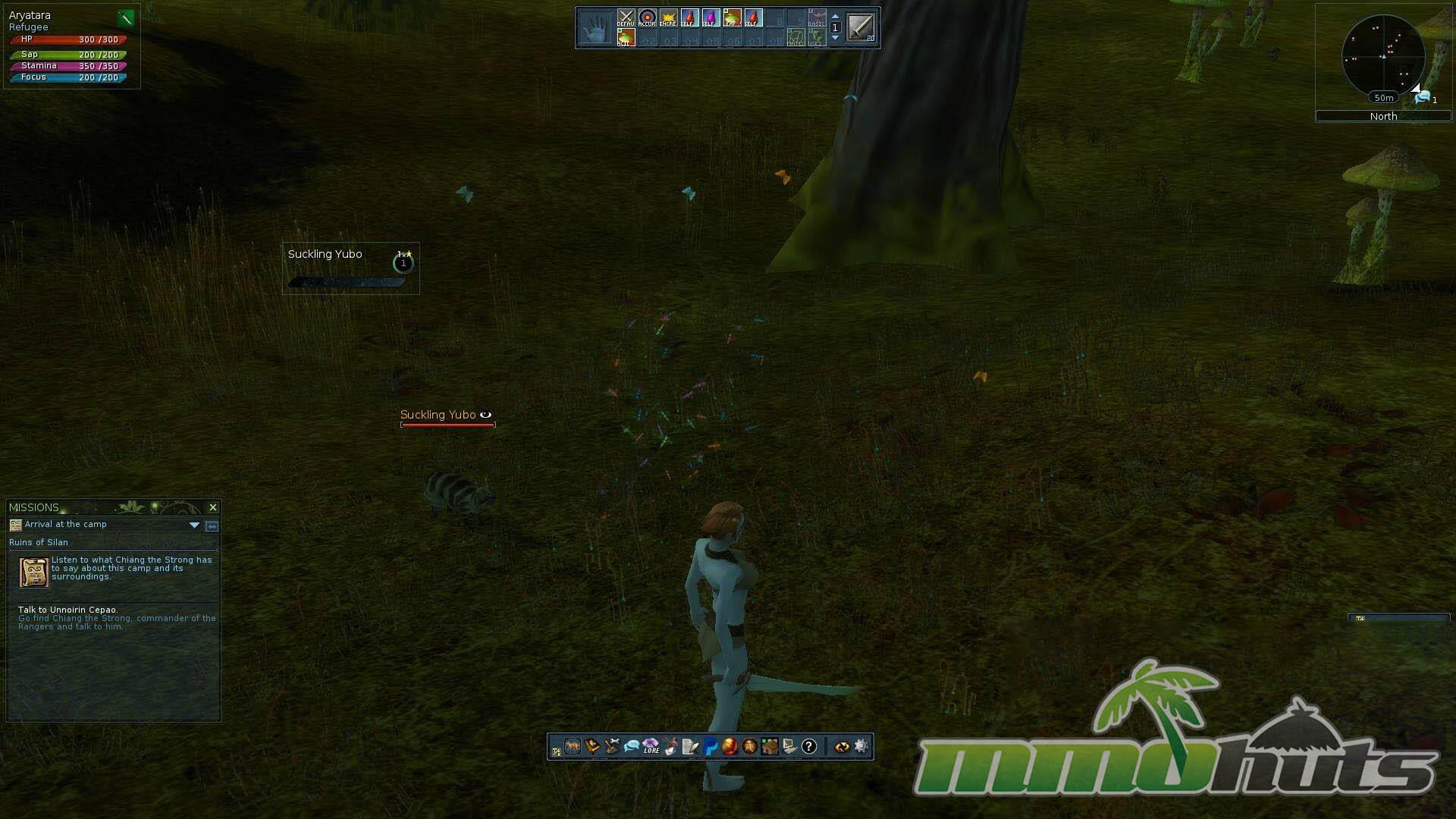
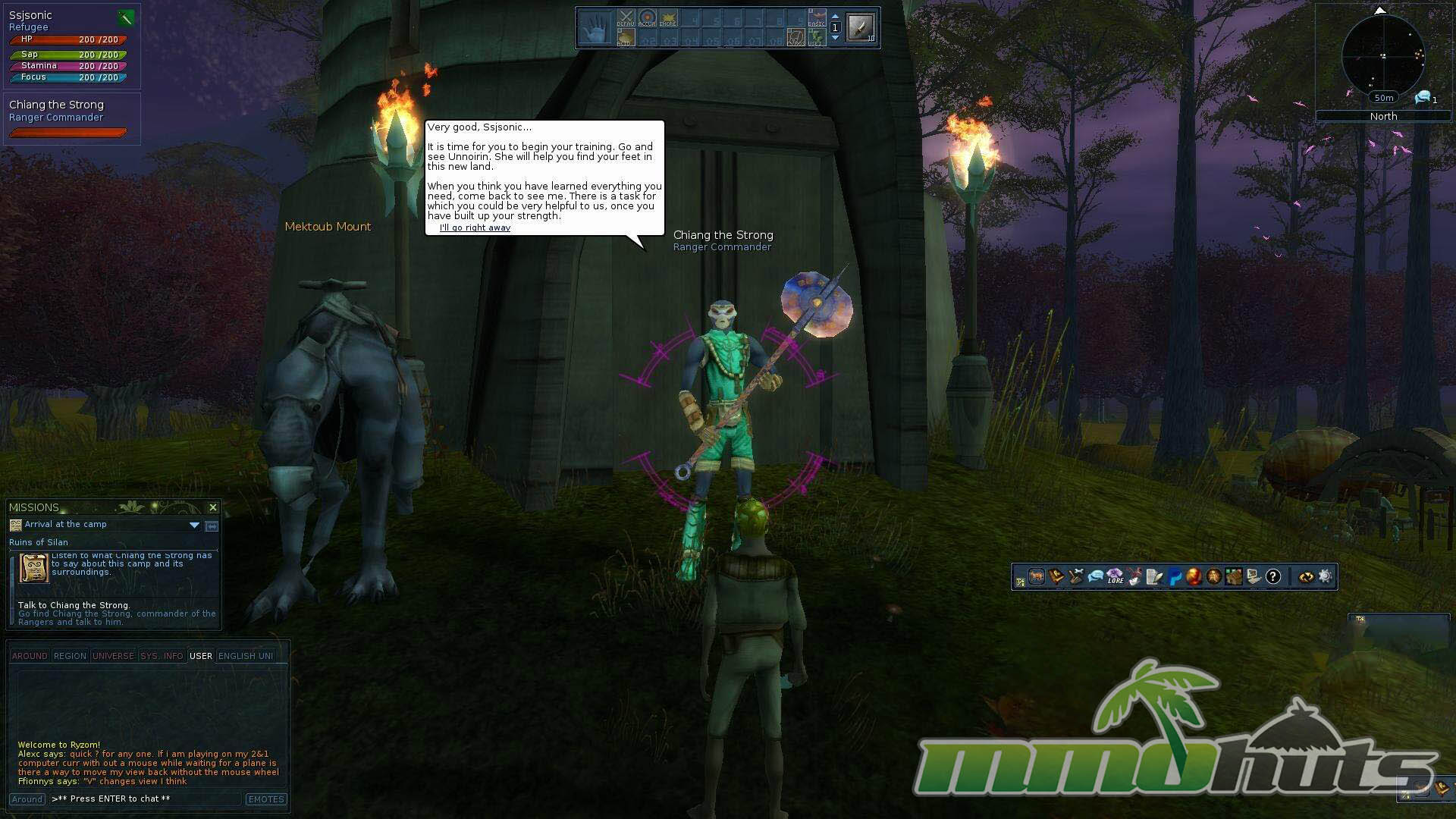
Still, there are moments where the engine shines. The dynamic weather and seasonal changes are ambitious for its era, and lighting can look surprisingly good in the right conditions. At night, spell effects and torchlit camps can create scenes that are more atmospheric than you might expect from a game of this age. It is not consistently beautiful, but it can be striking in brief windows.
Harvesting and Crafting
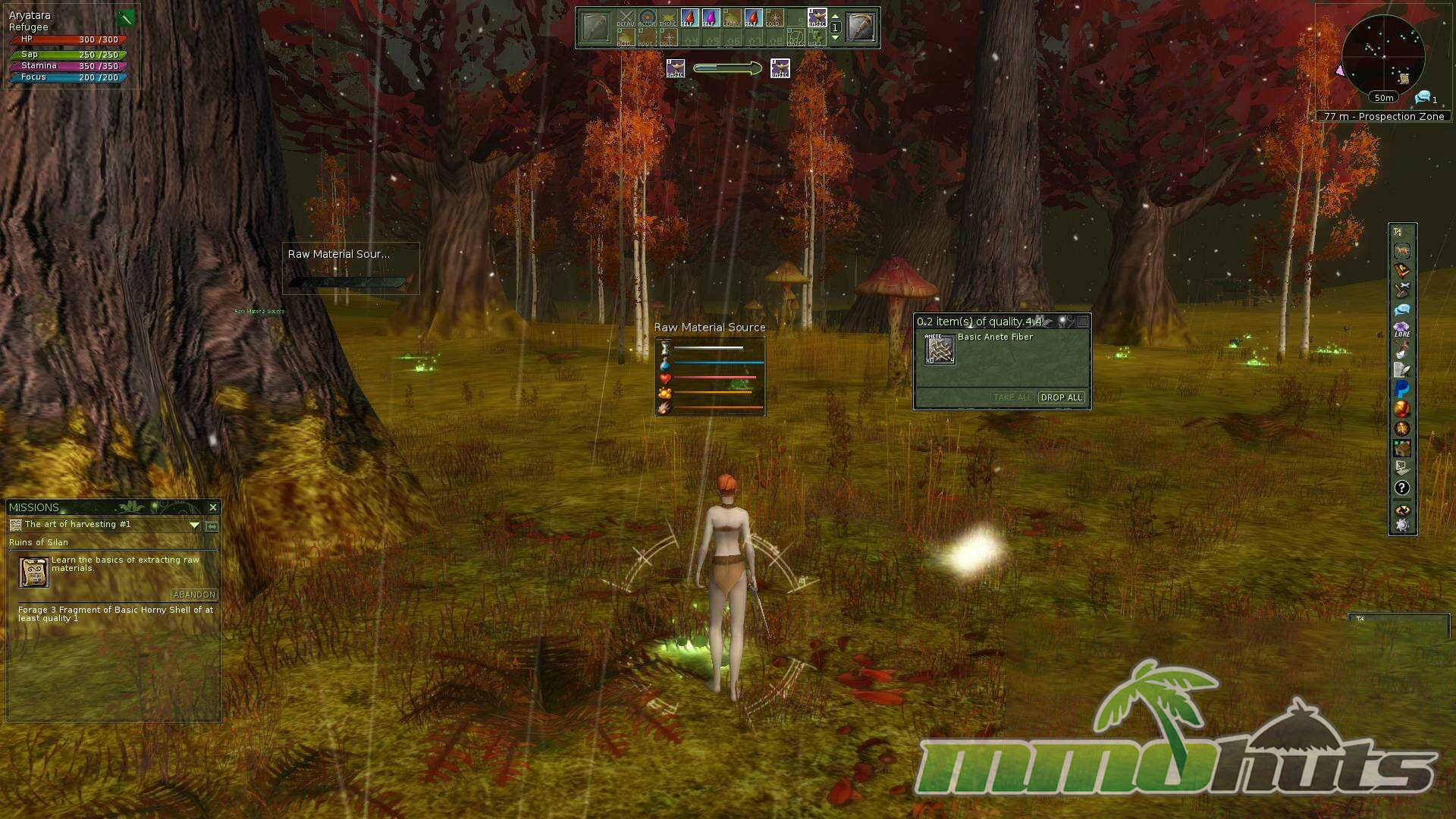
Resource gathering is a major pillar of Ryzom’s economy. You will spot resource nodes in the environment and then use tools to extract materials through an automated process where timers and quality bars matter. It is a system with more moving parts than the simple “click node, get item” approach, and it asks you to pay attention to depletion and timing. The downside is that it can become repetitive quickly, and the act of gathering itself often feels detached from the character on-screen, especially when animations misbehave or fail to line up with what you are doing.
Crafting is where the effort pays off. Ryzom treats crafting as a serious progression path, and player-made gear matters, which gives dedicated crafters and harvesters real relevance in the community. Like the rest of the game, crafting leans into complexity, with meaningful decisions around materials and execution. If you enjoy deep crafting systems and don’t mind learning through external resources, the wiki and community knowledge base can make this aspect one of the most rewarding parts of the game.
Cash Shop
Ryzom can be played for free up to a limit, but skill progression is capped at 125 unless you subscribe. Given how grind-oriented and long-term the progression is, players who reach that point will likely already know whether the game’s pace and systems suit them. The subscription model also makes sense in context, since a smaller MMO with ongoing server costs tends to rely on its most committed community members to keep the lights on.
Final Verdict – Good
Ryzom is a niche MMO that survives on depth, experimentation, and a community that appreciates its unusual approach. Its best ideas are still compelling, especially the customizable skill system and the importance of crafting within the economy. At the same time, the dated interface, inconsistent presentation, and demanding learning curve make it difficult to recommend to players looking for a smooth modern experience. If you want a sandbox MMORPG that does not constantly guide you, and you enjoy mastering complicated systems, Ryzom is worth trying. If you need tight combat feedback and contemporary polish, it is likely to feel like a relic.
Ryzom Links
Ryzom Official Site
Ryzom Wikipedia
Ryzom Wiki [Database/Guides]
Ryzom Wikia [Database/Guides]
Ryzom Open Source Project [Ryzom Core]
Ryzom Requirements
Minimum Requirements:
Operating System: XP / Vista / 7 / 8
CPU: Pentium 4 2.0GHz or Sempron 2200+
Video Card: GeForce 6100 or Radeon X1200 128mb
RAM: 1 GB
Hard Disk Space: 7 GB
Ryzom is also available on Linux and Mac OS X.
Ryzom Music
Coming Soon!
Ryzom Additional Information
Developer: Nevrax
Publisher: Winch Gate
Nevrax CEO (Former): David Cohen Corval
Open Beta (First): April, 2004
Open Beta (Second): August 30, 2004
Open Beta Ends: September 14, 2004
Development History / Background:
Ryzom was created by the European studio Nevrax and is currently owned and run by Winch Gate. Development started in 2000, and the game launched in September 2004 under the name The Saga of Ryzom. In 2006 the title was shortened to Ryzom. The game struggled to reach a large audience, and on November 21, 2006 Nevrax stated the company was likely to fail. A Free Ryzom Campaign followed, aiming to raise funding to purchase the game and transition it into a free-to-play model. Since 2009, Winch Gate has operated Ryzom, and on May 06, 2010 the source code was fully released.