In Rust, survival is a constant scramble across a procedurally generated island where your next meal, your next tool, and your next mistake all matter. You start with nothing, then you gather, hunt, and craft your way toward shelter and weapons, all while knowing the most dangerous “wildlife” is usually another player. Staying alive means reading the environment, managing resources, and deciding when to hide, when to negotiate, and when to fight.
 | Publisher: Facepunch Studios Playerbase: High Type: B2P Survival Game Release Date: December 11, 2013 Pros: +Deep and flexible base-building. +Procedurally generated server worlds. +Large, satisfying crafting catalog. +Frequent updates and iteration. Cons: -Lack of onboarding makes early hours confusing. -Performance and stability can be rough. -Meaningful progress demands a big time investment. |

Rust Overview
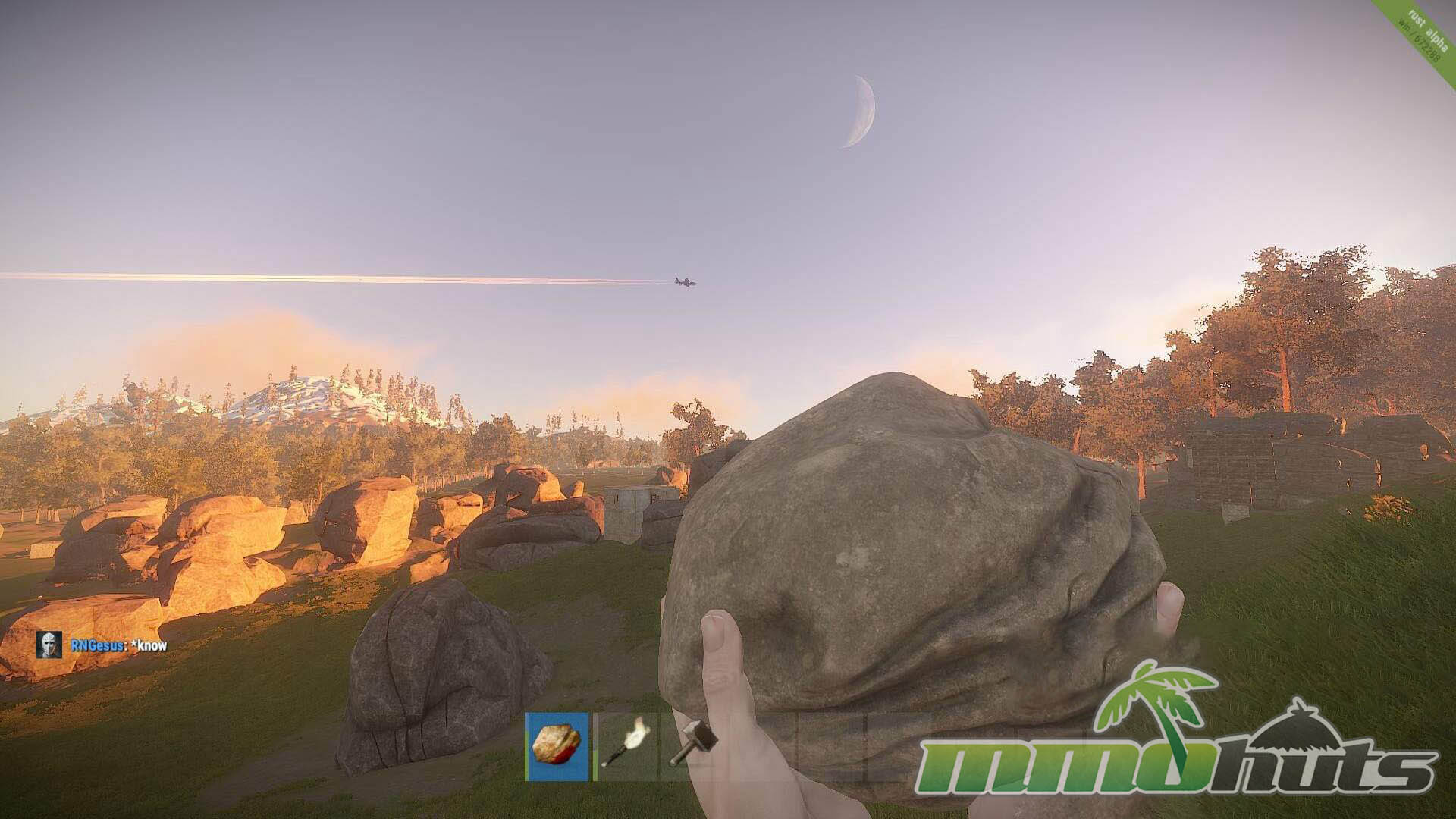
Rust is an action-focused survival game developed by Facepunch Studios. The premise is simple and intentionally harsh: you awaken alone, exposed, and under-equipped, then you have to carve out a life by scavenging supplies, crafting gear, and securing a safe place to store what you earn. Each server generates its own island layout, offering varied terrain and biomes to travel through, including snowy peaks and thick forests, which helps keep exploration from feeling identical between worlds.
The early loop is about turning the basics into momentum. You gather wood and stone, improvise your first tools and weapons, and hunt wildlife for food and materials. From there, crafting opens up into a broad catalog, ranging from simple bows and clothing to locks and firearms, letting you gradually shift from “barely surviving” to “capable of defending yourself.” The catch is that the island is shared. Other players can be allies, opportunists, or outright threats, and encounters can swing from peaceful voice chat to sudden violence in seconds.
Base-building is a major pillar. Rust’s construction tools allow for everything from compact starter shacks to layered compounds designed to protect loot, delay raiders, and create firing angles. That defensive planning matters because raiding is just as central as building. Well-armed players can breach bases for resources, initiate firefights, and turn the endgame into a tense cycle of fortifying, scouting, and striking at rivals.
Rust Key Features:
- Robust building utility – a straightforward toolset that supports both quick starter bases and complex fortress layouts.
- Realistic survival – hunger, wildlife, hostile players, and the environment all apply pressure, rewarding caution and smart choices.
- Extensive crafting – a wide spread of gear, from primitive weapons and clothing to guns and higher-tier equipment.
- Player raiding – attack and defend bases for loot, whether through stealthy infiltration or all-out gunfights.
- Procedurally generated maps – server worlds differ in layout and biome placement, keeping exploration and base locations feeling less predictable.
Rust Screenshots


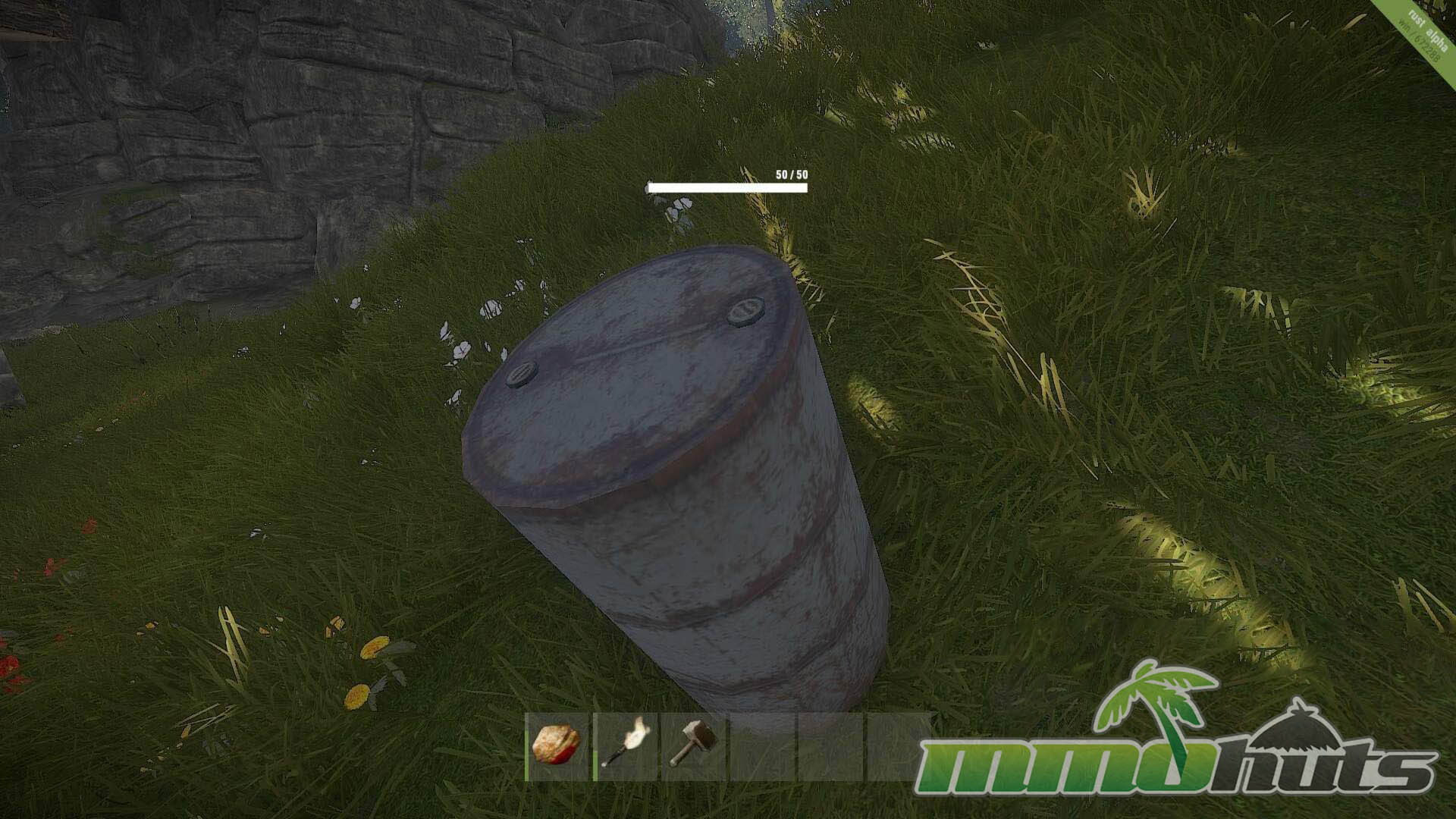
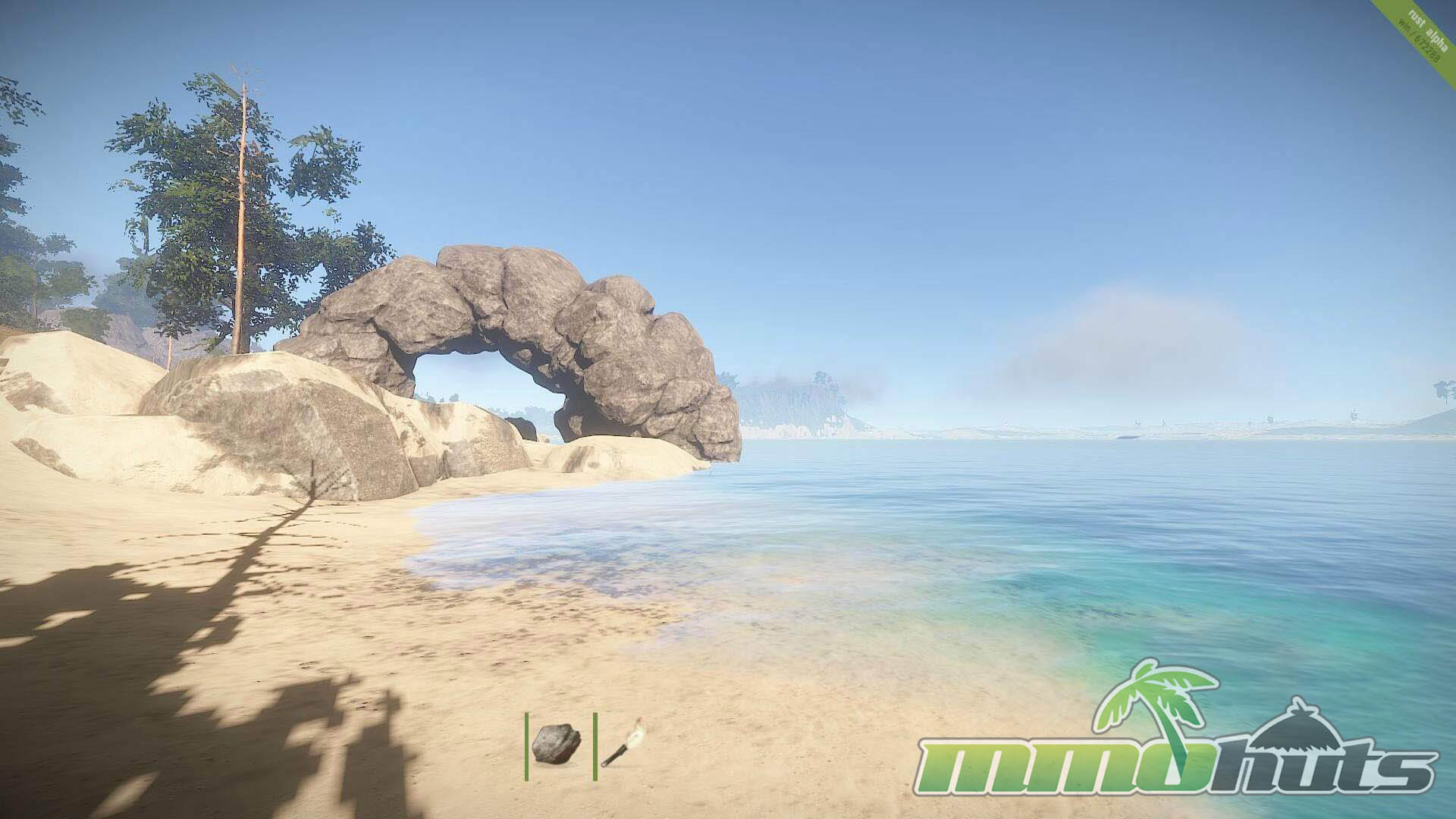
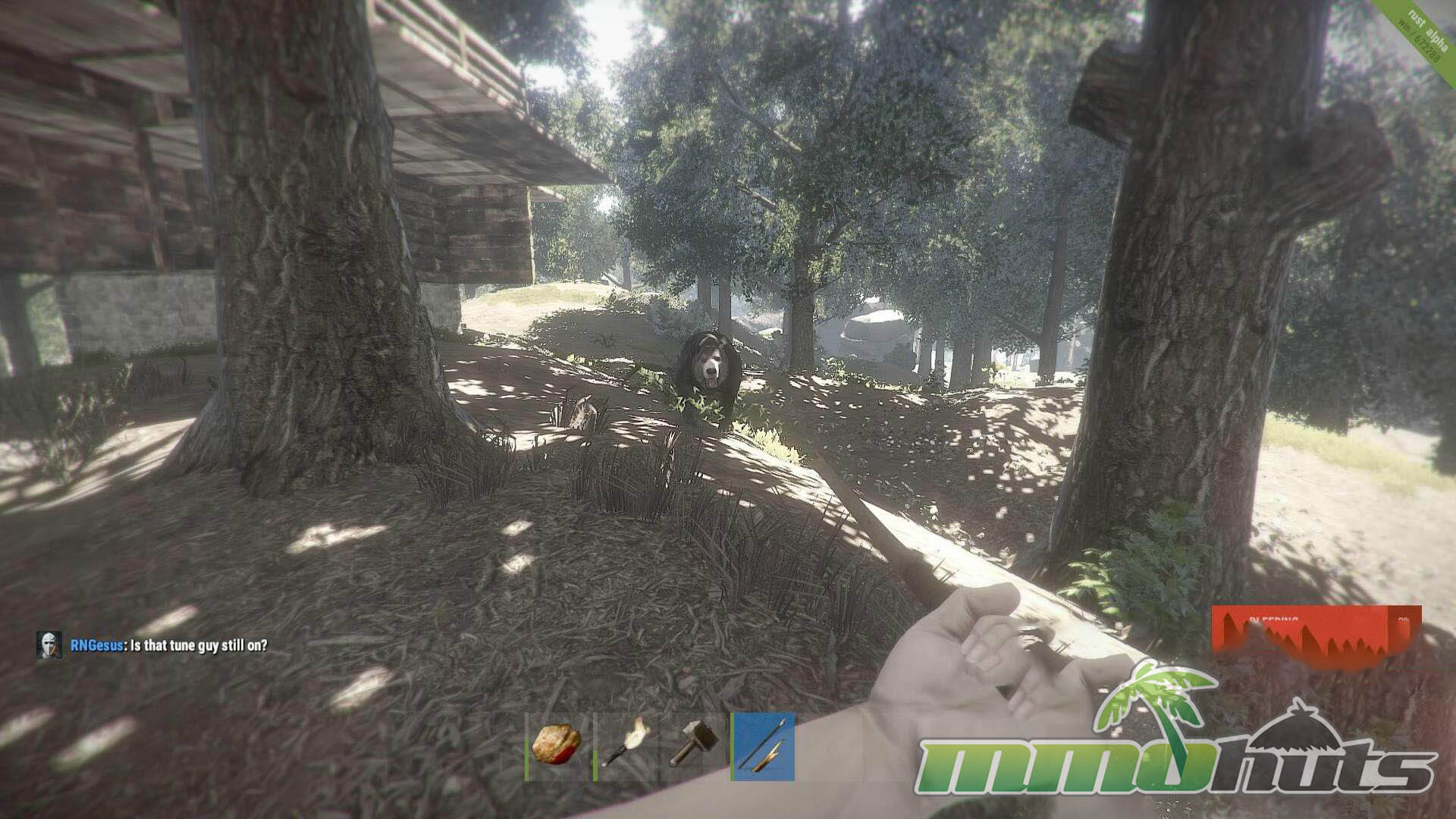
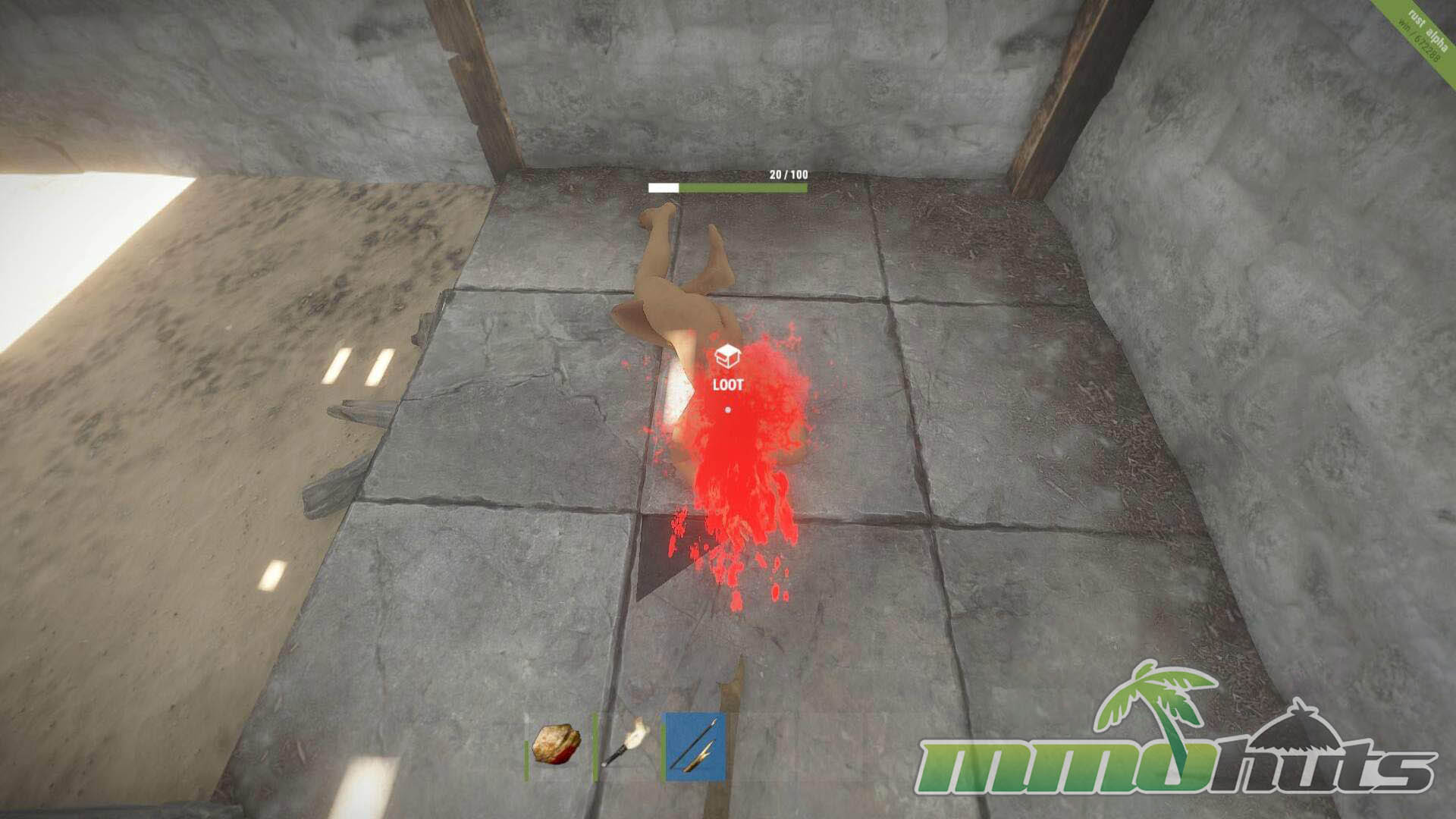
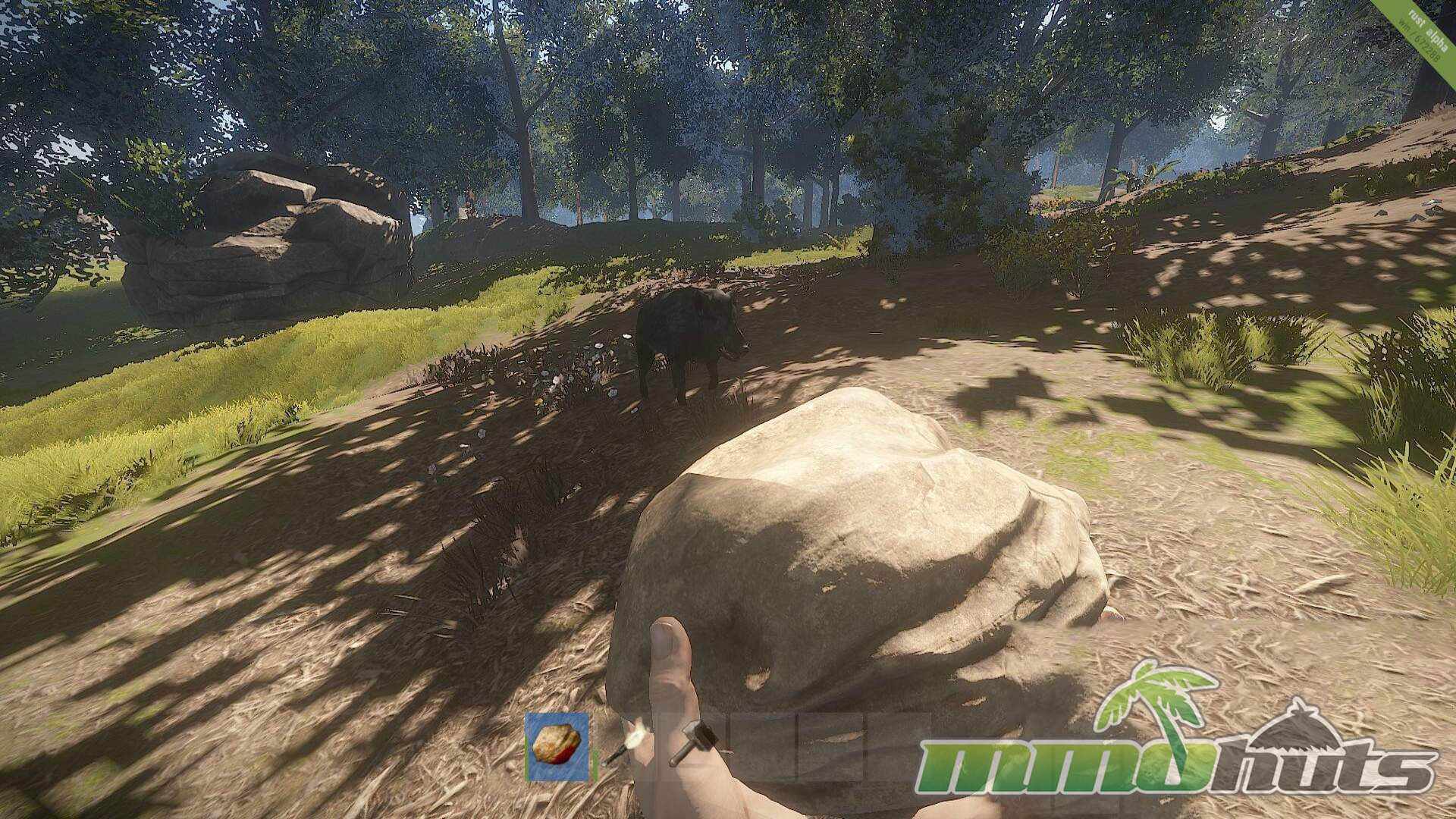
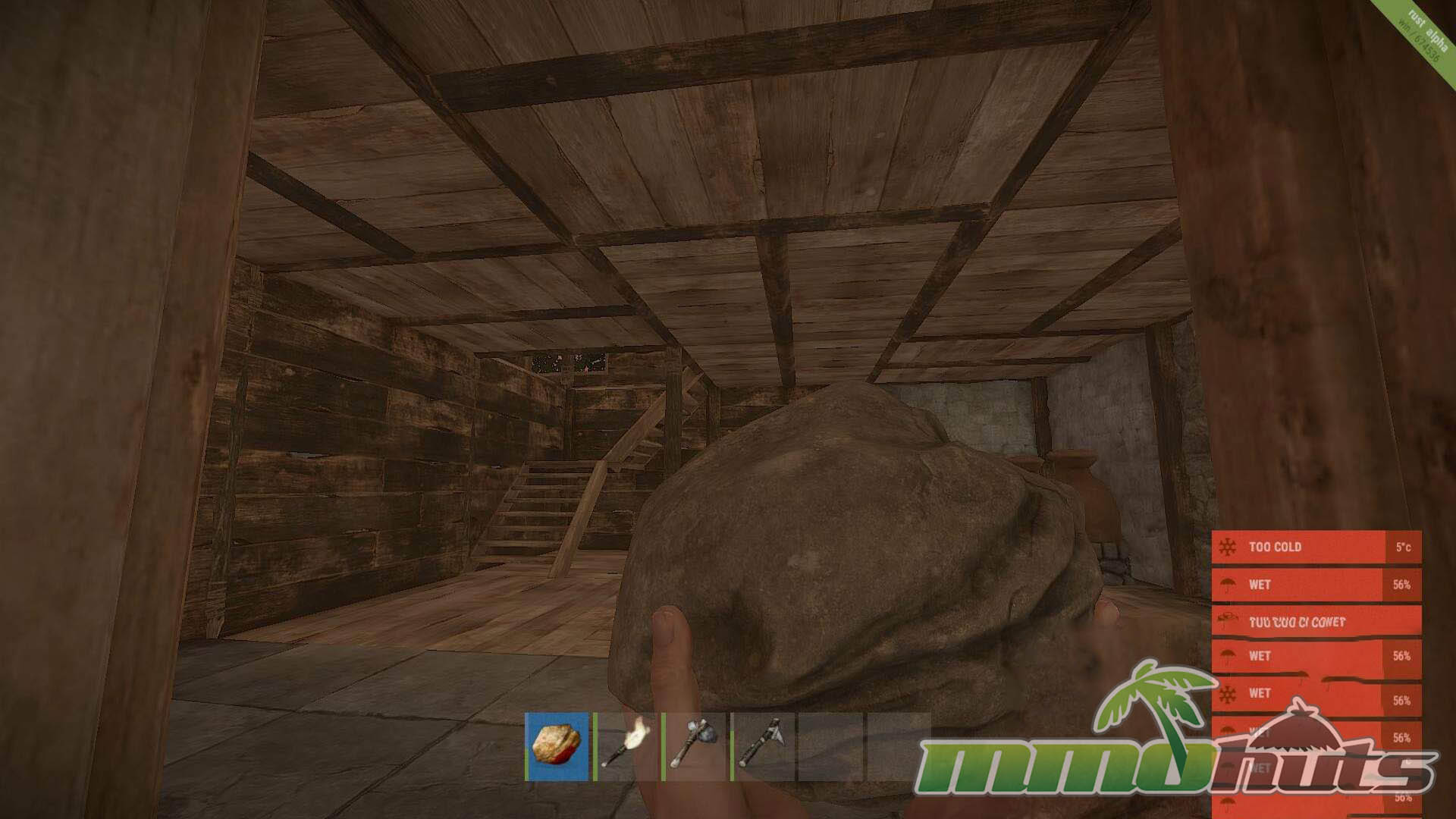

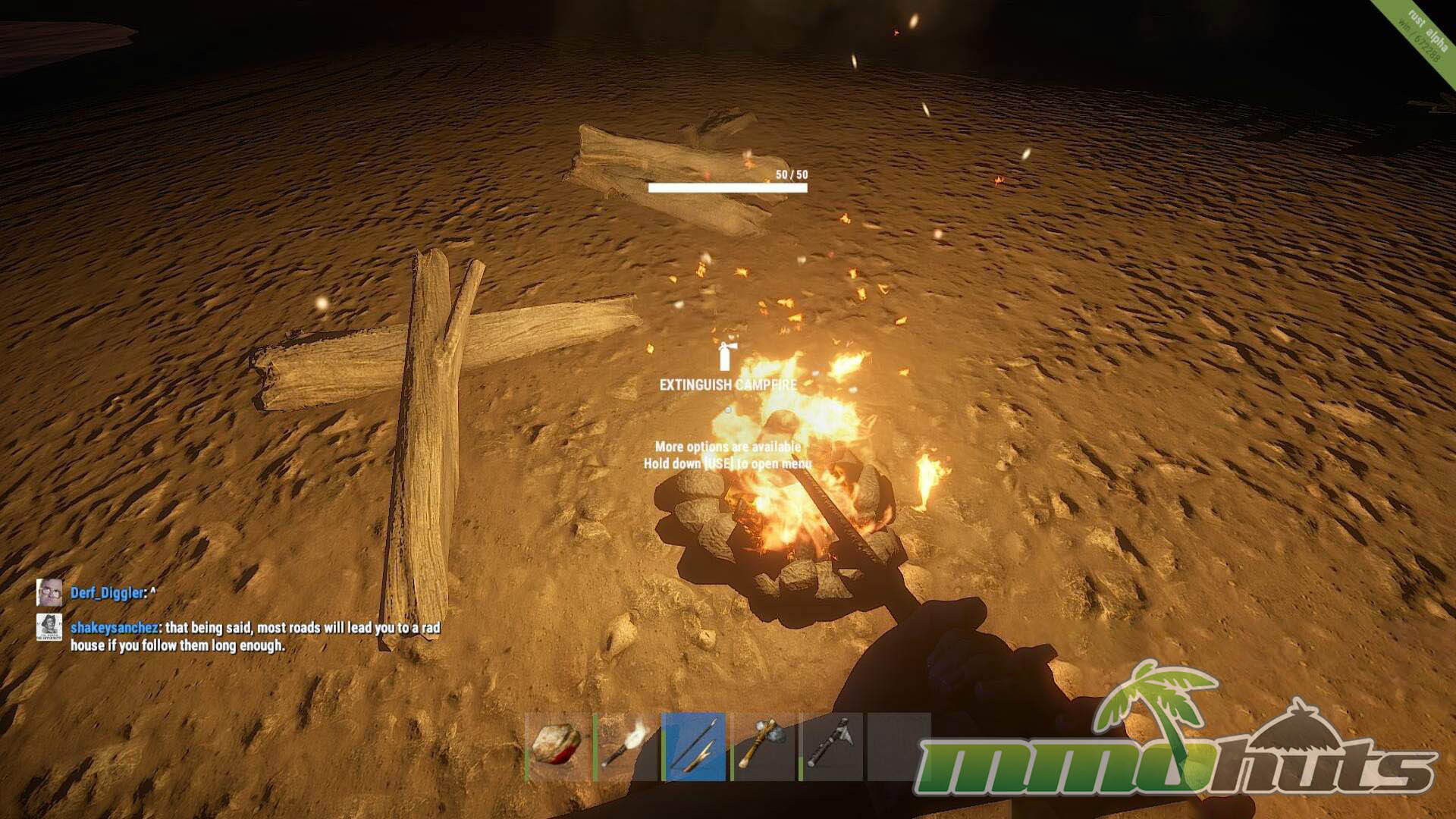
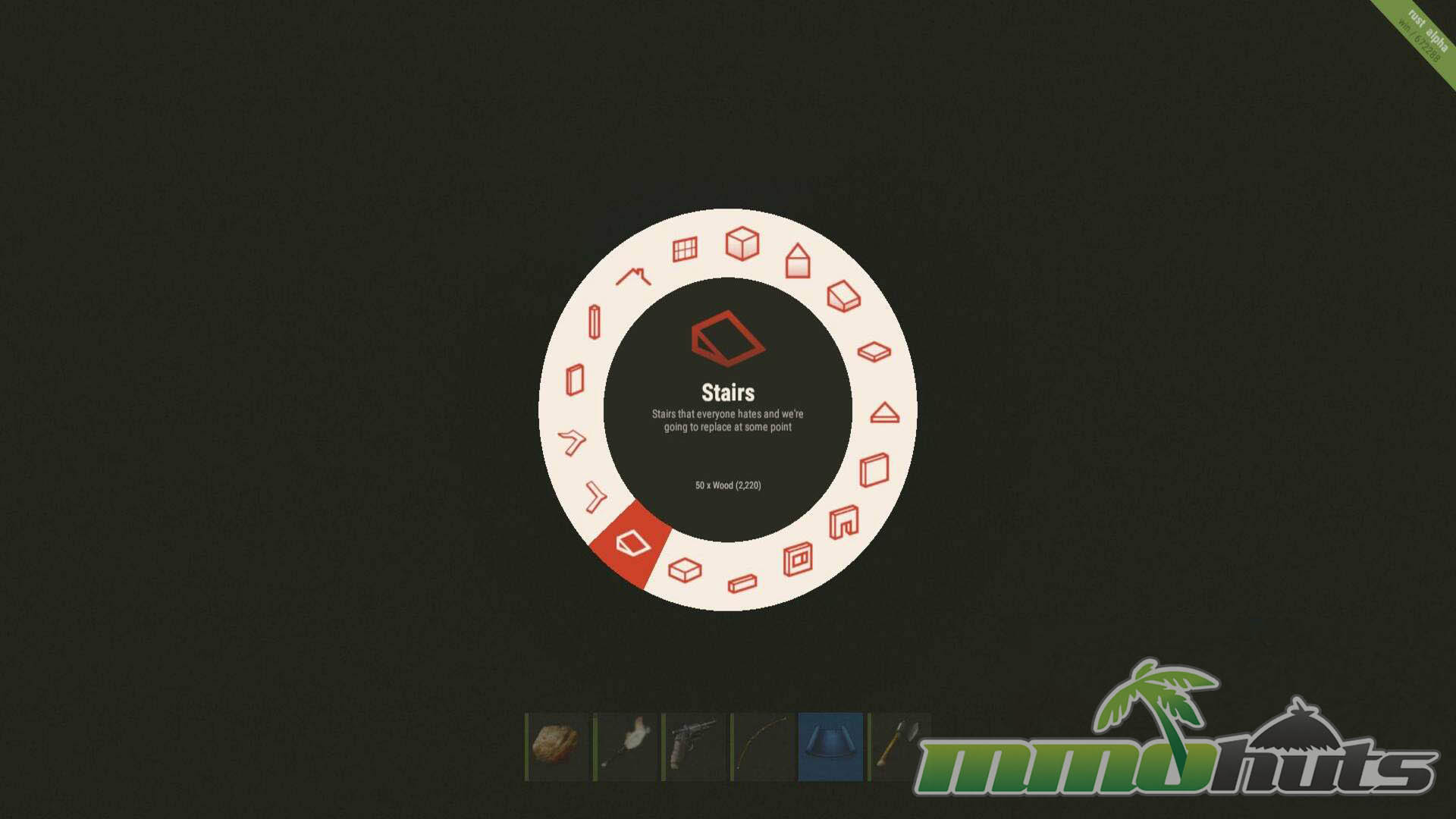
Rust Featured Video

Rust Review
Rust has always been a game about stories you did not plan to tell. One session you are happily chopping trees and cooking food, the next you are negotiating with a stranger who may or may not be circling behind you with a rock. That mix of routine survival tasks and unpredictable player behavior is what gives Rust its identity, and it is also what makes it exhausting, hilarious, and occasionally infuriating.
First Steps on a New Server
Dropping into a populated server sets the tone immediately. You load in with minimal supplies, and the world feels bigger than it first appears, with beaches leading into inland hills, forests, and distant snow. Even before you craft anything, the environment communicates risk, not just from animals and weather but from the fact that someone else may already be watching the coastline for easy targets.
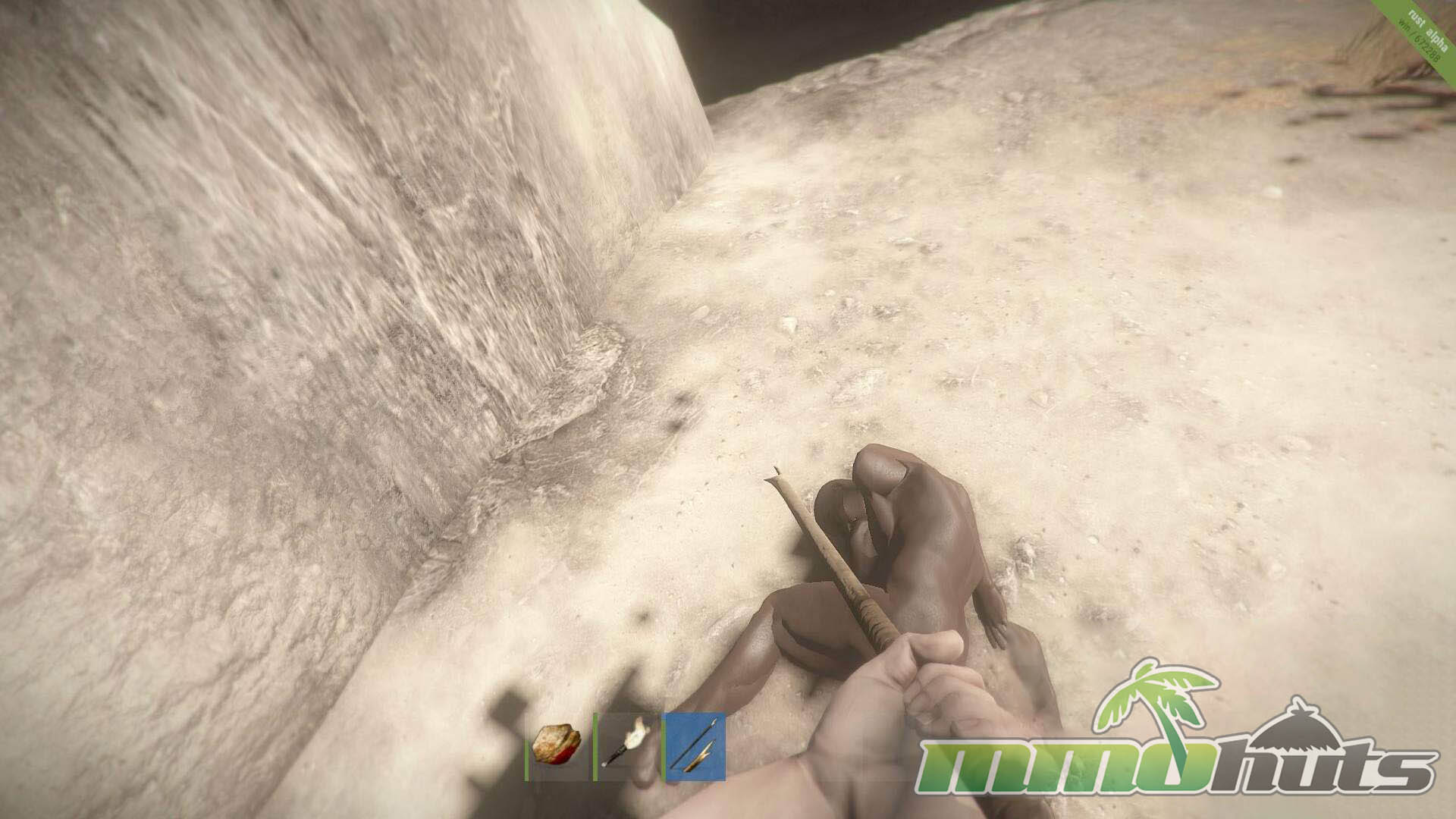
The opening minutes are a race to get functional: collect enough wood and stone to make basic tools, find food and water, and decide where you can safely set up. Rust’s early game is intentionally vulnerable, and the fastest way to “feel human” is to assemble a simple weapon and some clothing. The problem is that every action broadcasts intent, and other players can interpret “gathering resources” as “carrying loot worth stealing.”
Crafting, Progression, and the Survival Loop
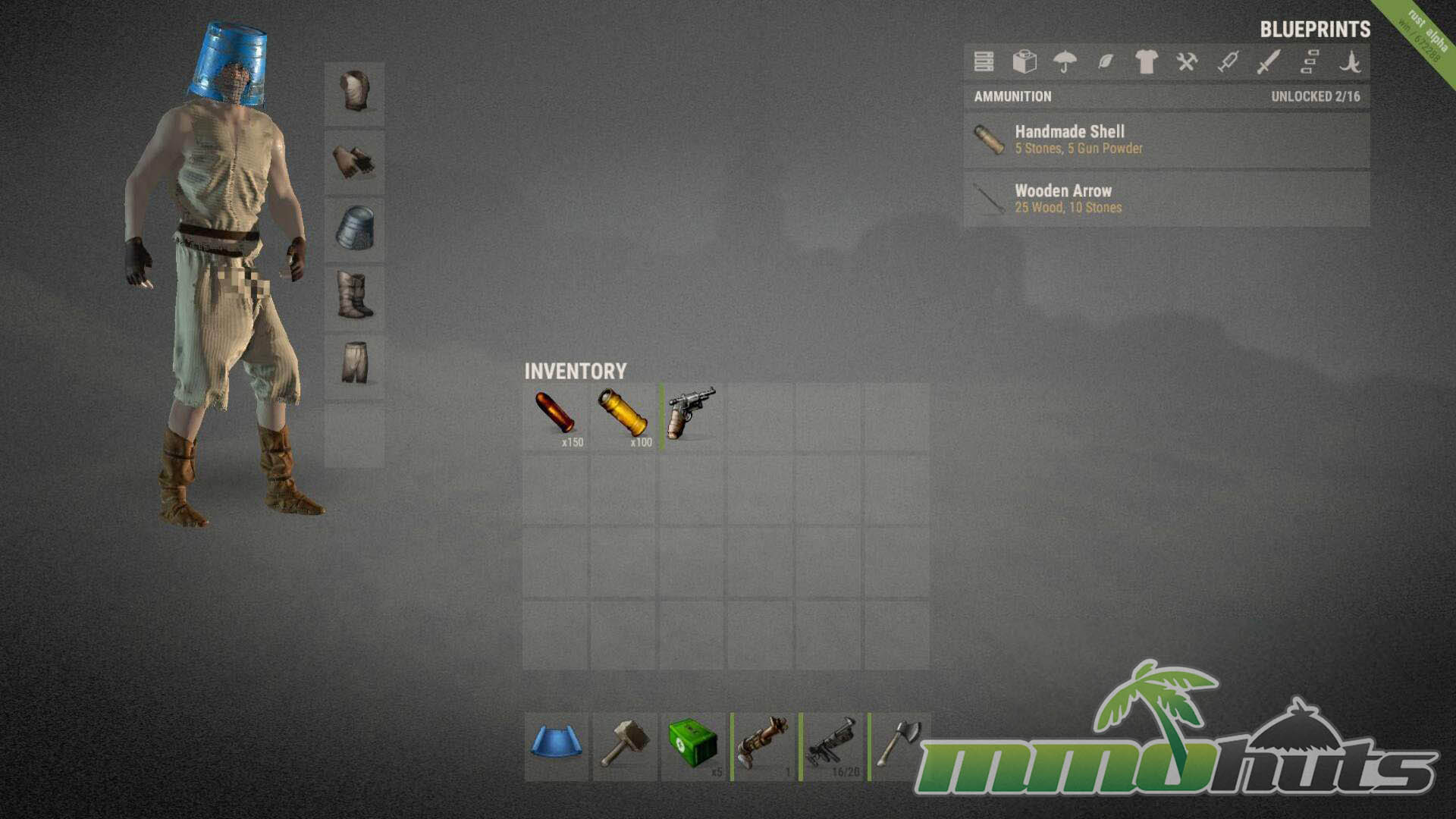
Crafting is one of Rust’s strongest systems because it is both broad and immediately useful. A large portion of the item list is visible from the start, which gives clear goals even when you are new: you can see what you could build, then work backward to figure out what you need. Early on, that usually means primitive tools, a spear or bow, and the basics for a starter shelter. As you explore, you start thinking in tiers, moving from “I can defend myself” to “I can win a fight” and eventually “I can hold a base.”
Higher-end equipment pushes you to roam and take risks. Rust nudges players toward points of interest and contested areas by tying better weapons and gear to exploration and scavenging. That creates a natural escalation: the island’s quiet edges are for getting established, while the interior and popular routes are where you gamble your progress for faster upgrades.
Visuals and World Variety
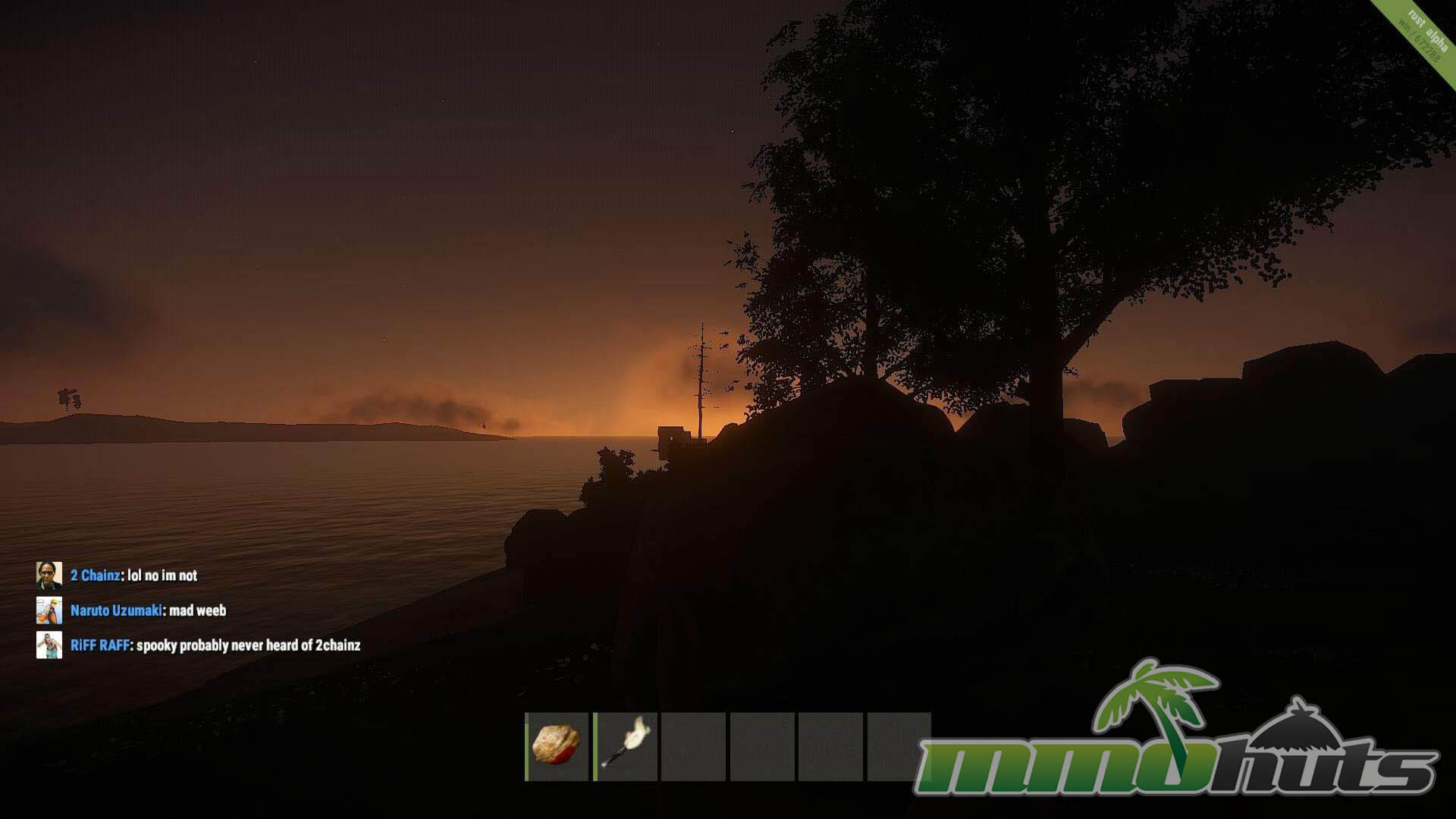
Rust’s presentation does a lot of heavy lifting for immersion. Lighting changes, weather, and the shift from day to night all influence how safe travel feels. Night can make navigation and combat tense, and the use of light sources can be a double-edged sword, helping you see while also making you visible. The island’s different biomes also help pacing; moving from temperate forests toward colder regions is not just a change of scenery, it can change how you plan your route and what you need to bring.
Procedural generation helps keep servers from blending together. Even when you recognize the “types” of locations, the way they connect across the terrain encourages different base choices, ambush spots, and travel habits. Exploration stays relevant longer than in many survival games because the world itself can be a strategic variable.
Temperature and Other Status Pressures
Rust’s survival layer goes beyond health and hunger by making the environment an active threat. Status effects like being too cold, getting wet, or dealing with radiation add friction to long trips and punish careless planning. Wandering into the wrong region without the right preparation can quickly turn into a scramble for warmth, shelter, or healing.
This system also makes small victories feel meaningful. A simple fire is not just flavor, it can stabilize a bad situation, and learning how to manage comfort and exposure becomes part of your baseline skill set. Over time, these mechanics shape where you travel and how long you can safely stay away from your base.
Players, Trust, and Sudden Violence
Rust’s community-driven tension is the real endgame. Encounters are rarely neutral. A stranger might offer help, stall you with conversation, or attack mid-sentence. Because gear and resources are always on the line, many players default to aggression, and fights can be over almost as soon as they start. That volatility is part of the appeal, but it also means new players can feel punished before they understand what they did wrong.
Combat itself is quick and unforgiving. Primitive weapons can be lethal in close range, and firearms raise the stakes even higher. What makes fights memorable is the context: ambushes on the road, desperate defenses at a base door, or chaotic skirmishes where a third party appears to clean up whoever is left standing.
Raiding ties everything together. Building a base is not simply about having a place to craft, it is about delaying intruders, protecting storage, and forcing attackers to spend time and resources. At the same time, raiding is a tempting shortcut to progress if you can pull it off. Tools like ladders can shift how vulnerable a structure is, and the arms race between builders and raiders is one of Rust’s defining long-term dynamics.
Base Building and Defensive Design
Rust’s construction is one of the best in the genre because it is both approachable and deep. Instead of forcing you to assemble every component as a separate craft, the building flow is streamlined so you can place foundations, walls, and other pieces quickly, then refine and upgrade as you go. That makes early shelters easy to get down, while still supporting complex designs once you understand the system.
The ability to adjust, reinforce, and strategically plan layouts gives base-building real identity. Good bases are not just bigger, they are smarter, using layers, choke points, and placement to waste a raider’s time and resources. Structural rules and physics also discourage some of the more nonsensical designs, and the result is that building feels grounded in the world rather than purely abstract.
Final Verdict – Great
Rust remains one of the most compelling open-world survival sandboxes available, largely because its systems interlock cleanly. Gathering and crafting create constant short-term goals, base-building provides long-term projects, and PvP and raiding supply the unpredictable human element that turns routine runs into stories. Procedurally generated maps help keep servers feeling distinct, and the pace of fights keeps tension high even in simple encounters.
It is not a gentle game. The learning curve can be steep without a tutorial, performance can be inconsistent, and meaningful progress often demands serious time. For players who enjoy high-stakes survival, emergent social dynamics, and the satisfaction of building something worth defending, Rust is still easy to recommend.
Rust Links
Rust Official Site
Rust Steam Store
Rust Wikipedia
Rust Reddit
Rust Wikia [Database/Guides]
Rust Gamepedia [Database/Guides]
Rust System Requirements
Minimum Requirements:
Operating System: Windows XP, Windows Vista, or Windows 7
CPU: Pentium 4 1.8GHz or Athlon XP 1700+
Video Card: GeForce 210 or Radeon X600 Series
RAM: 4 GB
Hard Disk Space: 4 GB
Recommended Requirements:
Operating System: Windows XP, Windows Vista, or Windows 7
CPU: Core 2 Duo E4400 2.0GHz or Athlon 64 X2 Dual Core 4200+
Video Card: GeForce GT 340 or Radeon X1900 GT
RAM: 8 GB
Hard Disk Space: 10 GB
Rust is compatible with Mac OS X and SteamOS + Linux.
Rust Music & Soundtrack
Coming Soon…
Rust Additional Information
Developer(s): Facepunch Studios
Publisher(s): Facepunch Studios
Distributor(s): Valve Corporation (Steam)
Engine: Unity 5
Lead Developer(s): Garry Newman
Other Platform(s): OS X, Linux
Alpha Release Date: December 11, 2013
Alpha Reboot Release Date: June 17 2014
Development History / Background:
Rust is developed by British independent video game company Facepunch Studios. Garry Newman founded the company in March, 2009. The project began as an attempt to capture the tension of open-world survival that games like DayZ popularized, while leaning harder into crafting and construction in the spirit of Minecraft. Shortly after release, Rust moved copies quickly, reaching over 150,000 sold within two weeks. As of May 24, 2014 more than 1.6 million copies have sold, totaling over $46.5 million. In June 2014 the team chose to rebuild the game after the codebase became difficult to manage, shipping an experimental branch alongside the existing version. On August 29, 2014 the rewritten version of Rust was ported to Unity 5, and it replaced the legacy build as the main game on October 1, 2014. Outside of Rust, Facepunch is widely known for Garry’s Mod, which remains the studio’s best-known title, and it also acquired the rights to Before, a survival project by Bill Lowe set during the Pleistocene era.