Rocket League takes the familiar rules of soccer and drops them into a toybox of rocket-powered cars, turning every kickoff into a fast, physical scramble for control. The result is a competitive arcade sports game where mechanical skill matters, but so does reading bounces, rotating into defense, and staying composed when the field turns into a pileup.
 | Publisher: Psyonix Playerbase: High Type: Physics-based Vehicle Soccer Game Release Date: July 07, 2015 Pros: +Includes offline single-player. +Local splitscreen play. +Supports cross-platform matchmaking. +Replay system with cinematic angles. +Plays best with controller support. Cons: -Bots can feel uneven in difficulty (when enabled). -No strong deterrent for quitting matches. -Some players report stability issues and crashes. |

Rocket League Overview
Rocket League is a physics-driven blend of car combat energy and soccer structure, built as a follow-up to Supersonic Acrobatic Rocket-Powered Battle-Cars. You pick a compact, rocket-boosted vehicle, launch onto an enclosed pitch, and try to drive a massive ball into the other team’s goal. The premise is simple, but the way momentum, rebounds, and aerial movement interact creates a surprisingly deep skill curve, especially once players start chaining jumps, boosts, and midair adjustments.
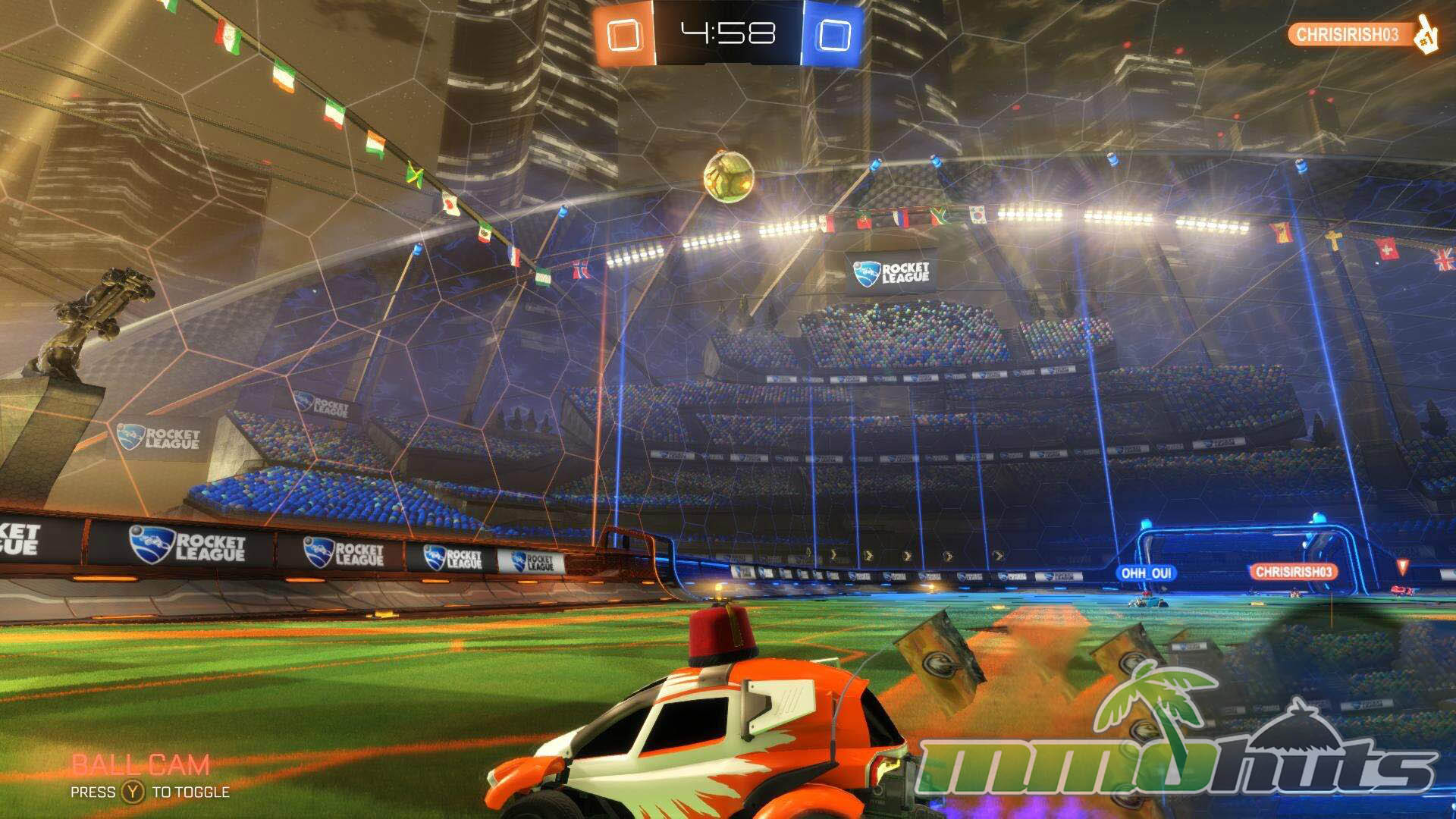
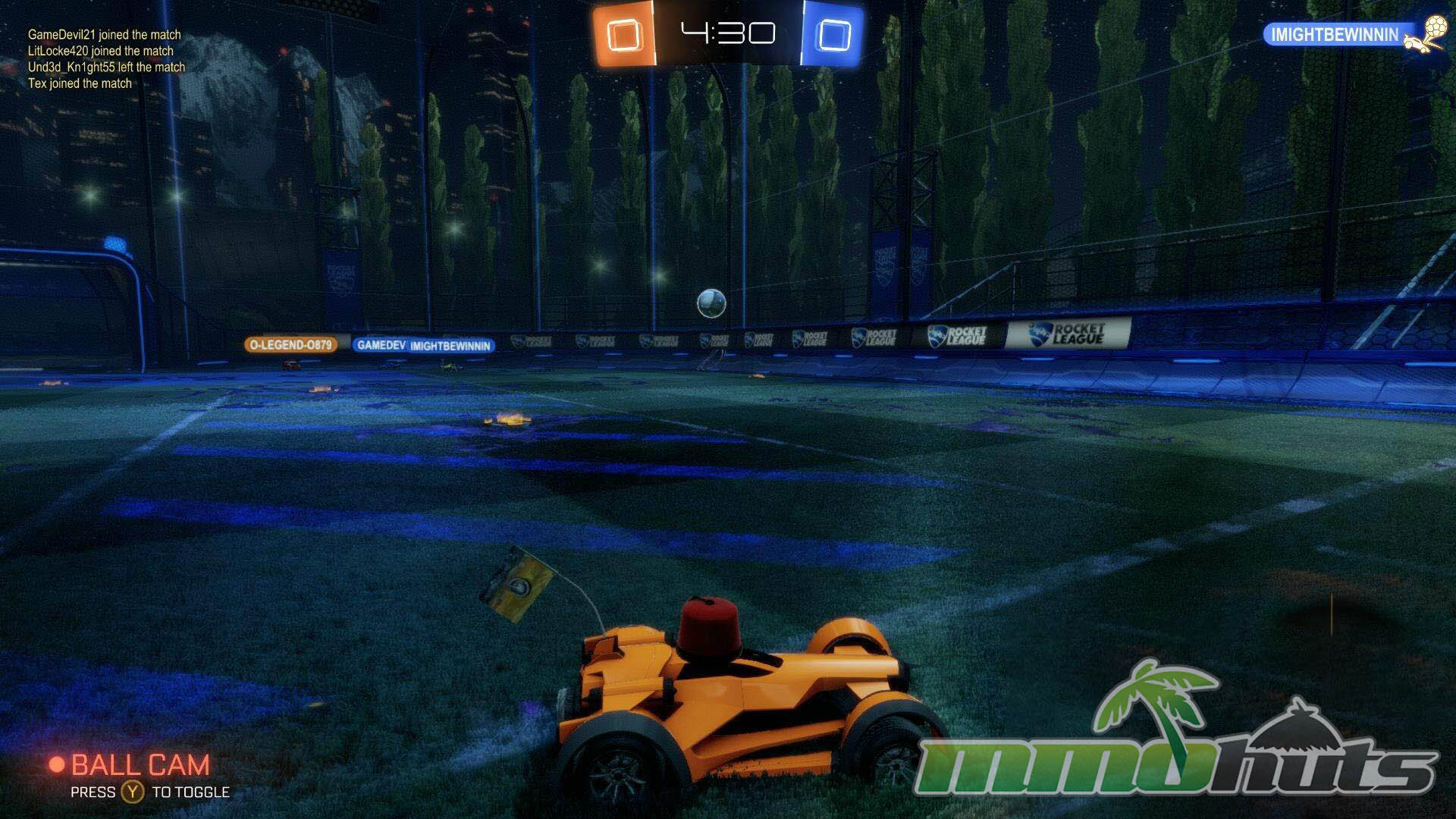
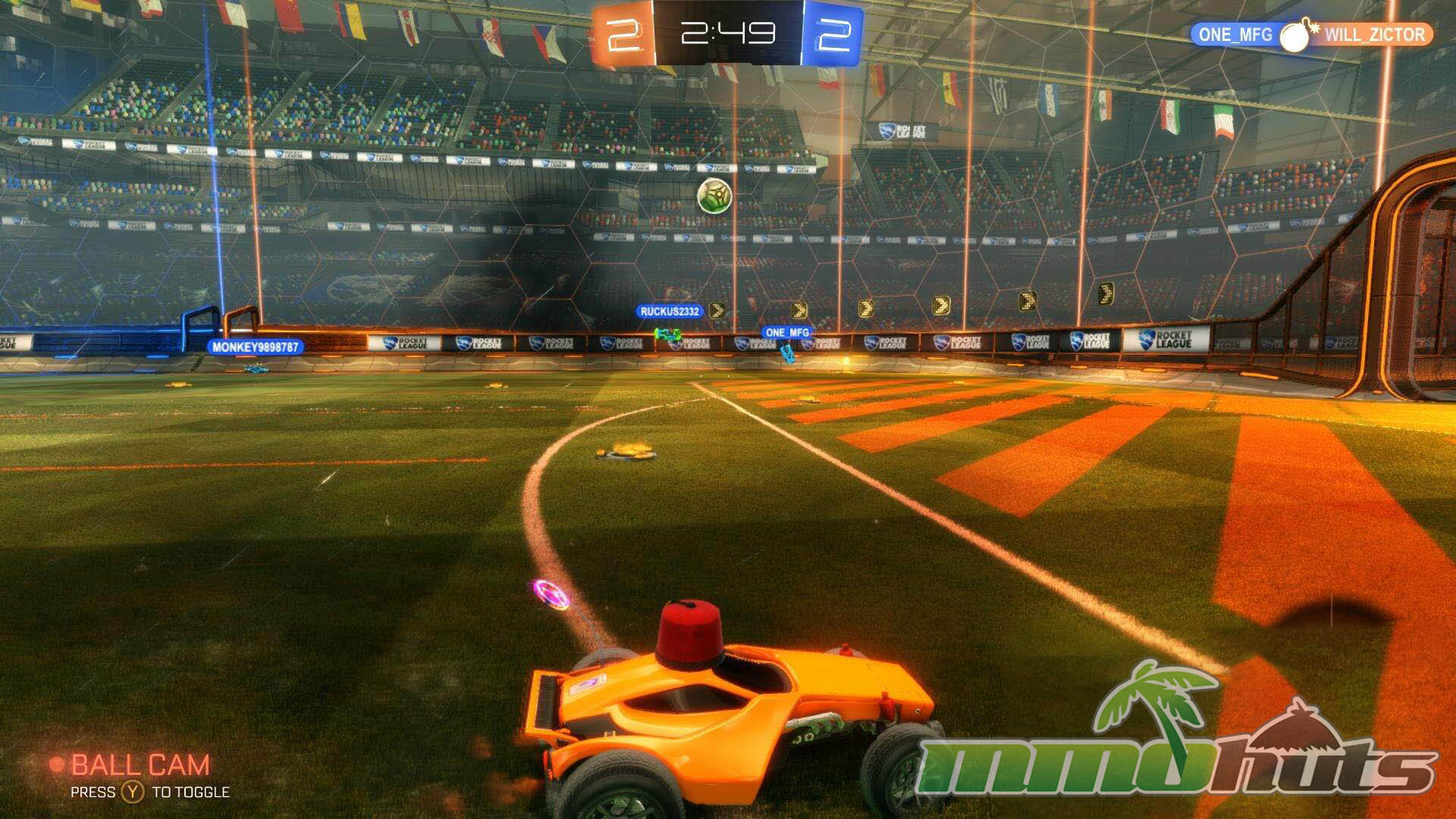
Matches support two to eight players total, spread across several stadiums with distinct lighting and presentation. Between games, the garage offers plenty of cosmetic personalization, including paint colors, decals, toppers, antennas, and flags, plus additional cars to unlock as you play. Rocket League also supports local splitscreen for up to four players, letting you team up on one screen or take those same pairings online. For competitive-minded players, ranked play tracks performance stats like goals and assists, and the built-in replay system makes it easy to review matches or share highlight-worthy moments.
Rocket League Key Features:
- Unlockable items – Earn new vehicles and cosmetic parts, then outfit your car with different colors, hats, and decals.
- Cross-platform play – PC and Playstation 4 players can queue together and compete in the same matches.
- Splitscreen Support – Play locally with 2 to 4 players, then take that group online to test coordination.
- Leaderboards – Keep tabs on wins, losses, goals, and assists as you climb and compare results.
- Broadcast Replays – Save matches, then scrub through them with rewind and fast-forward for analysis or sharing.
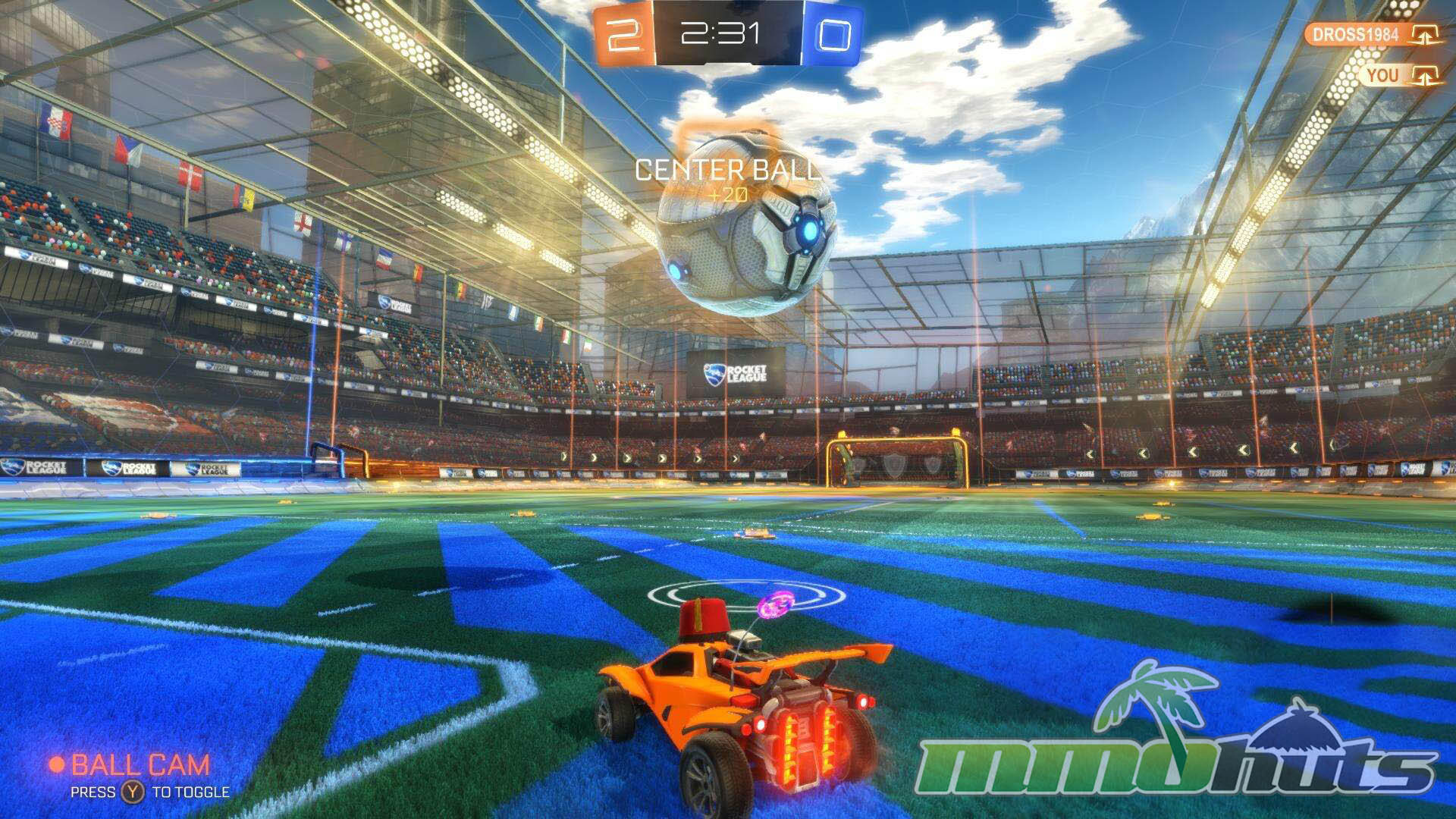
Rocket League Screenshots

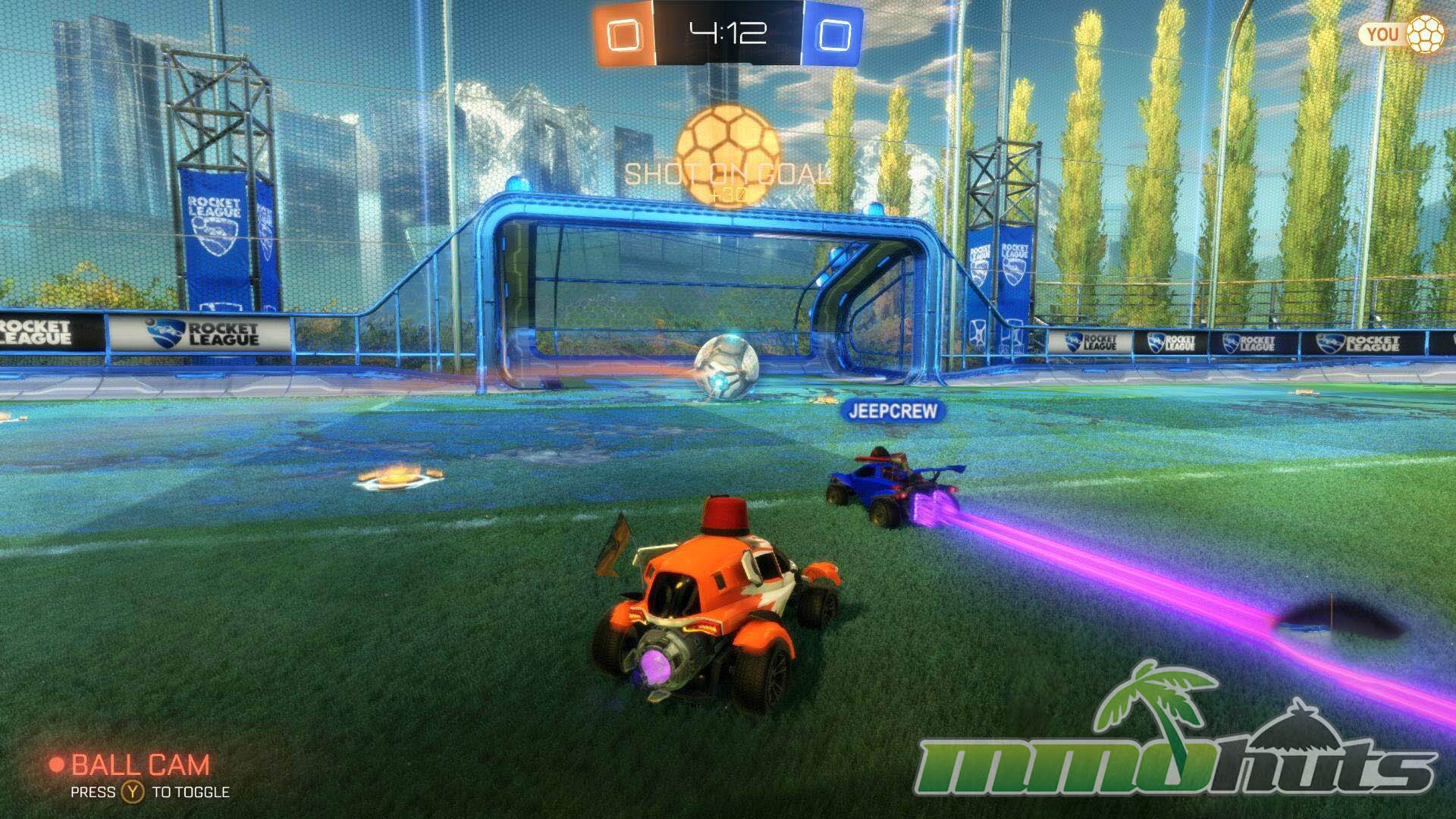
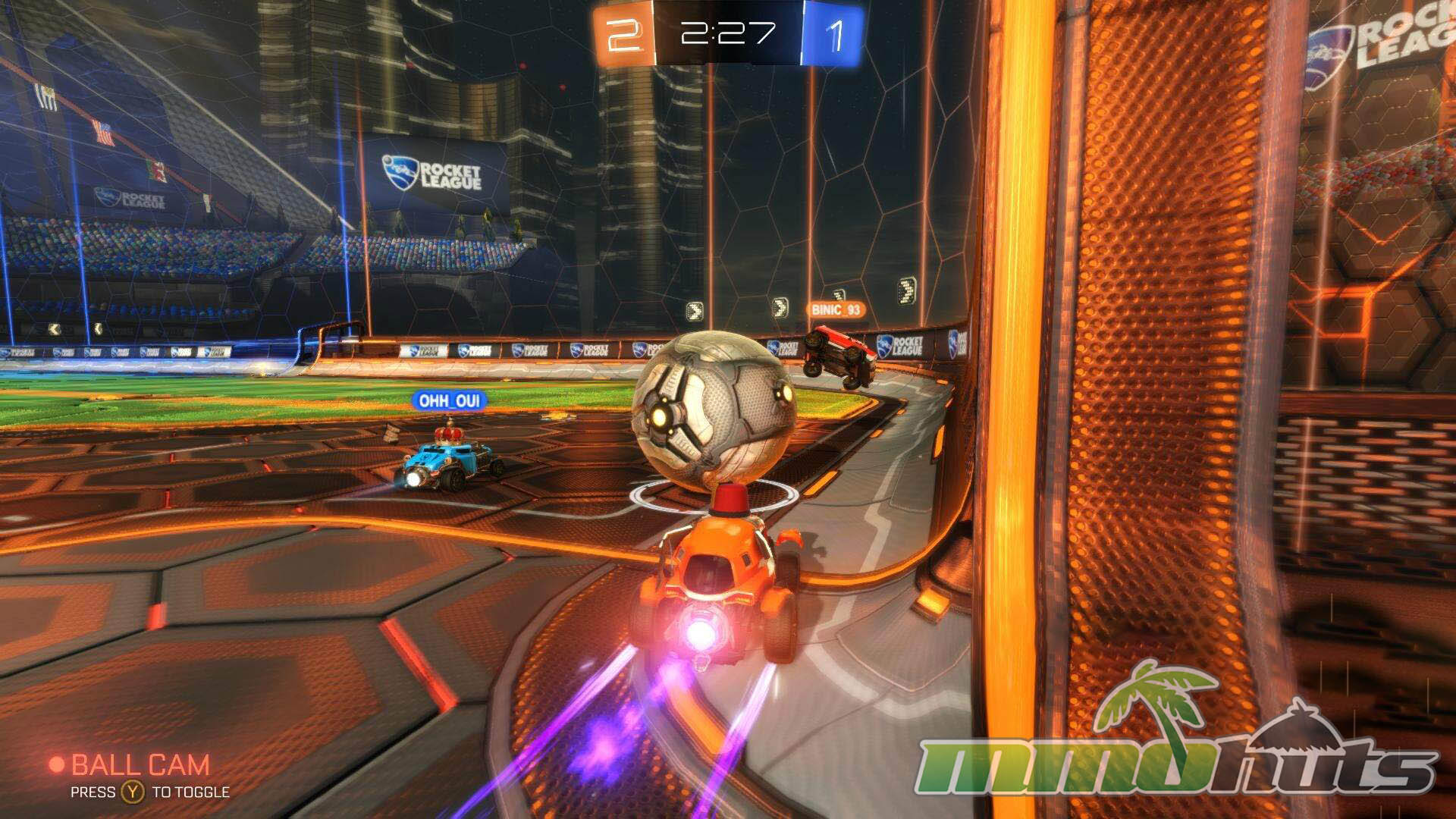
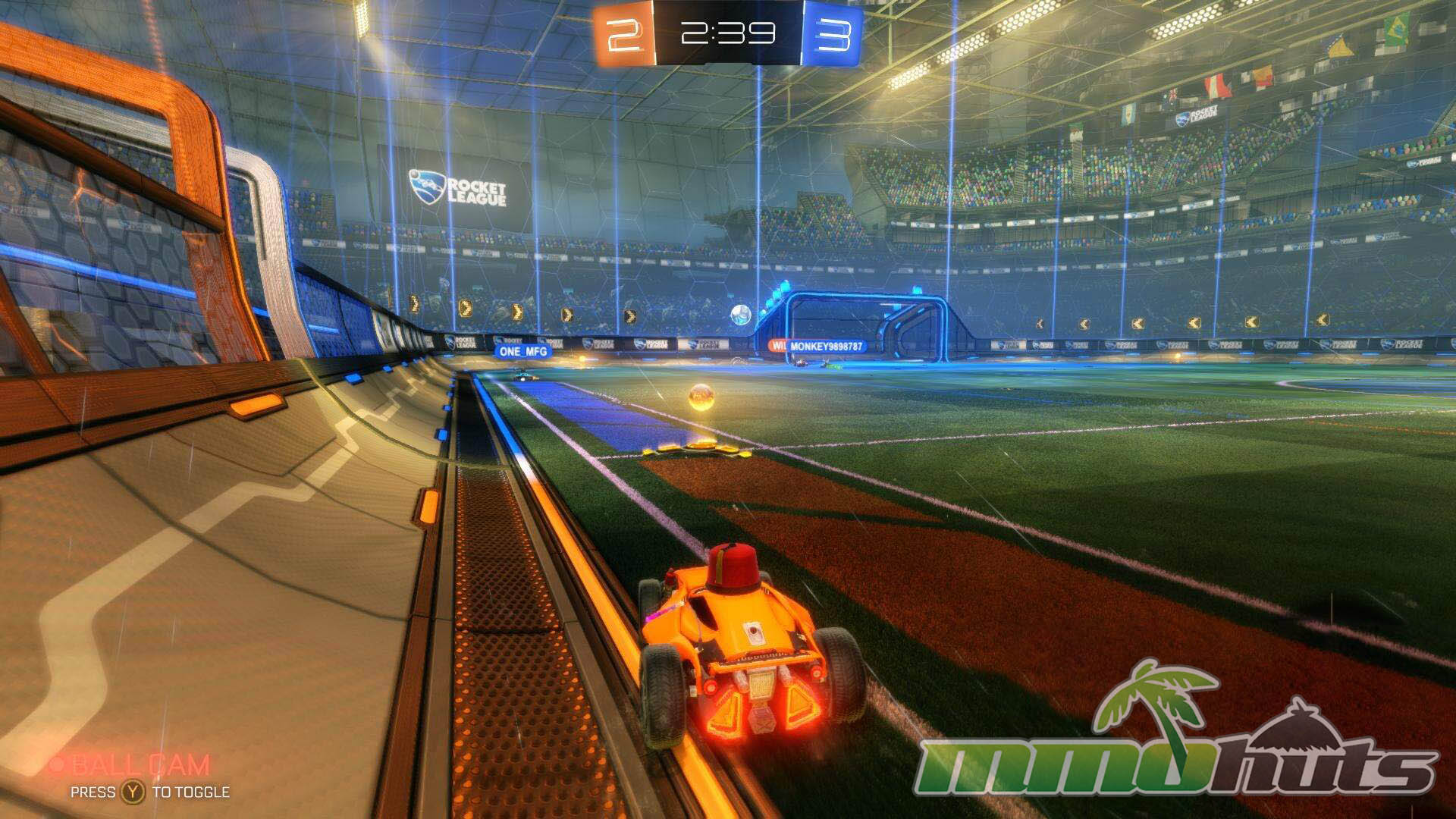
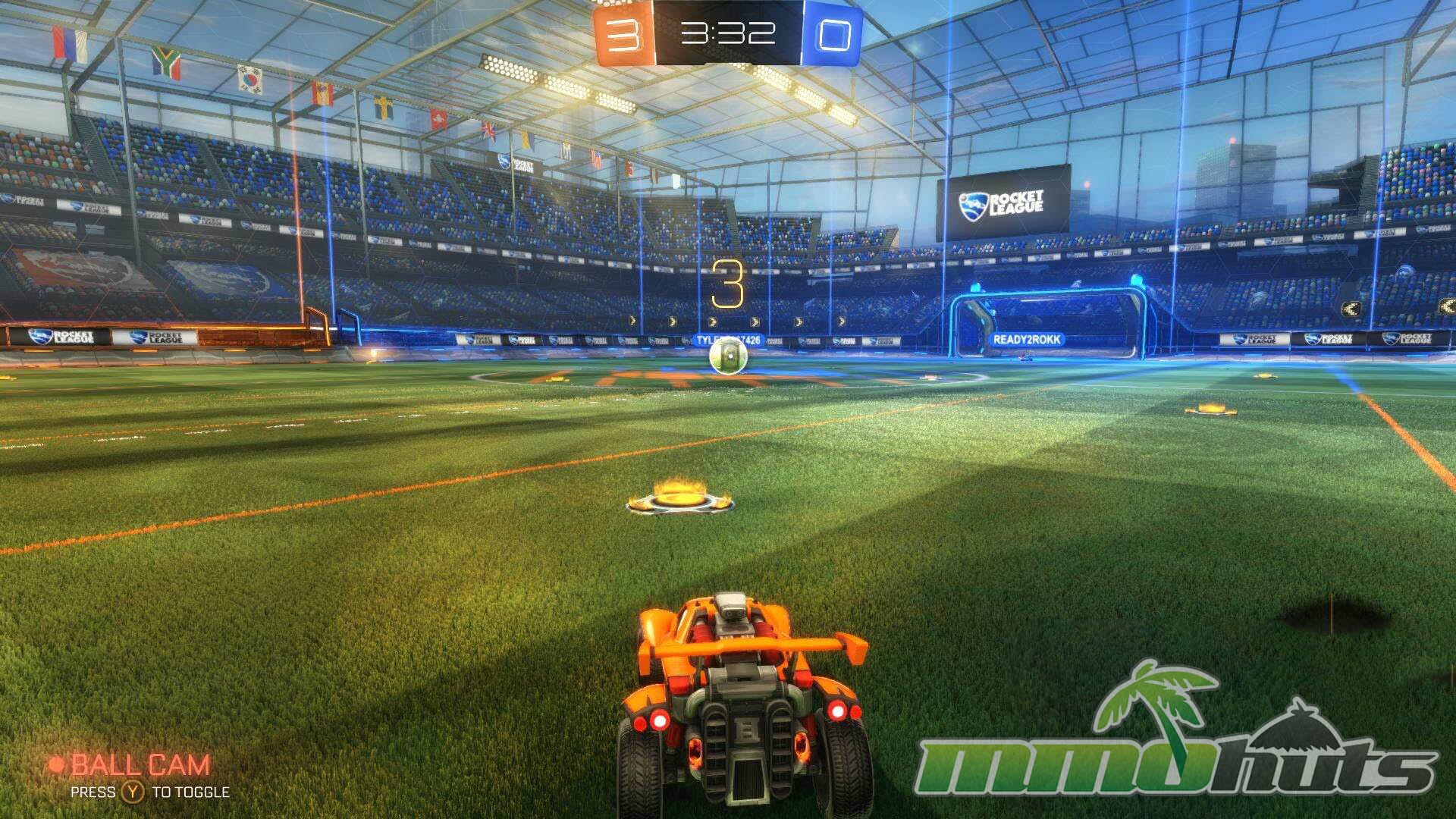
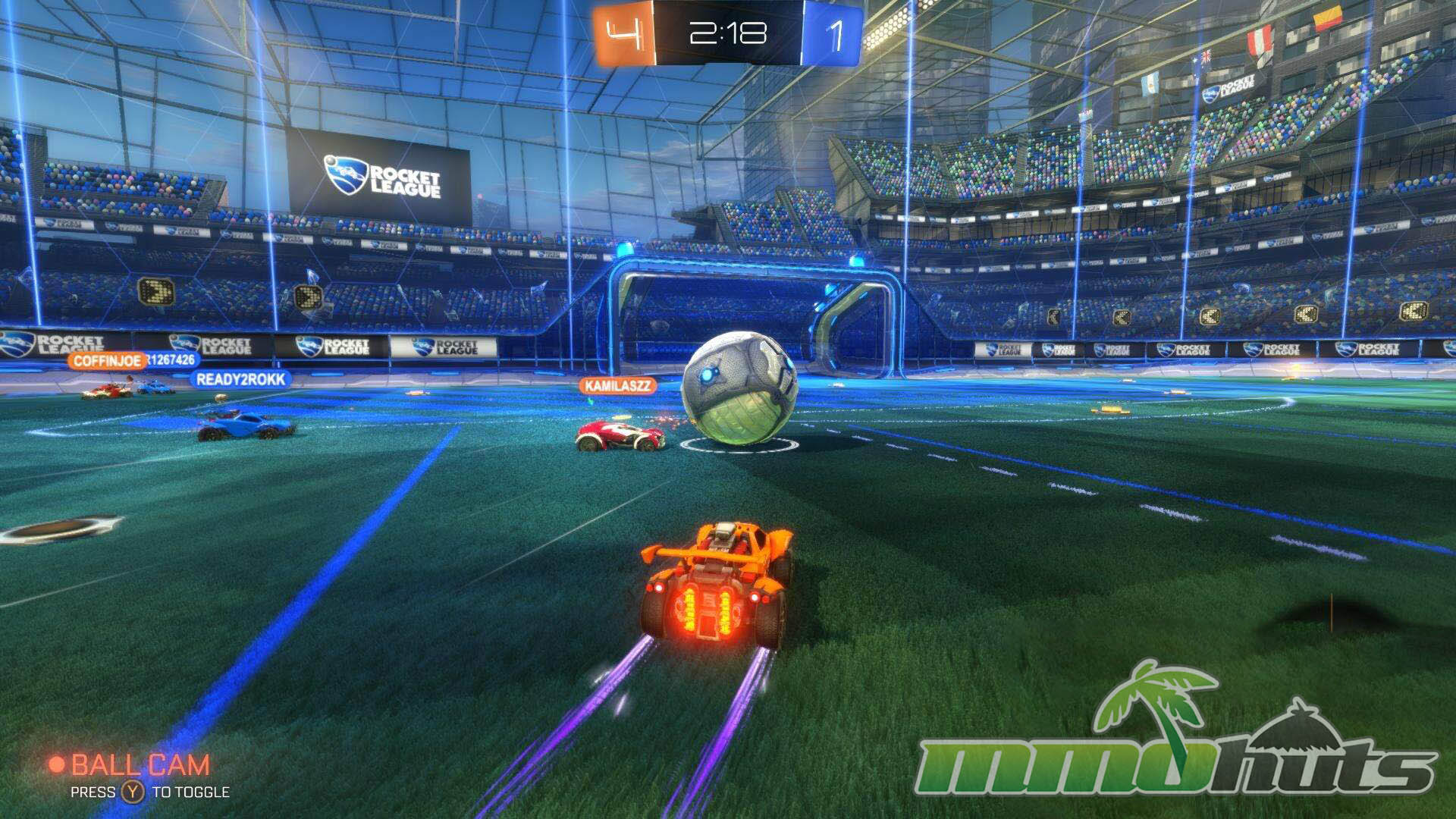
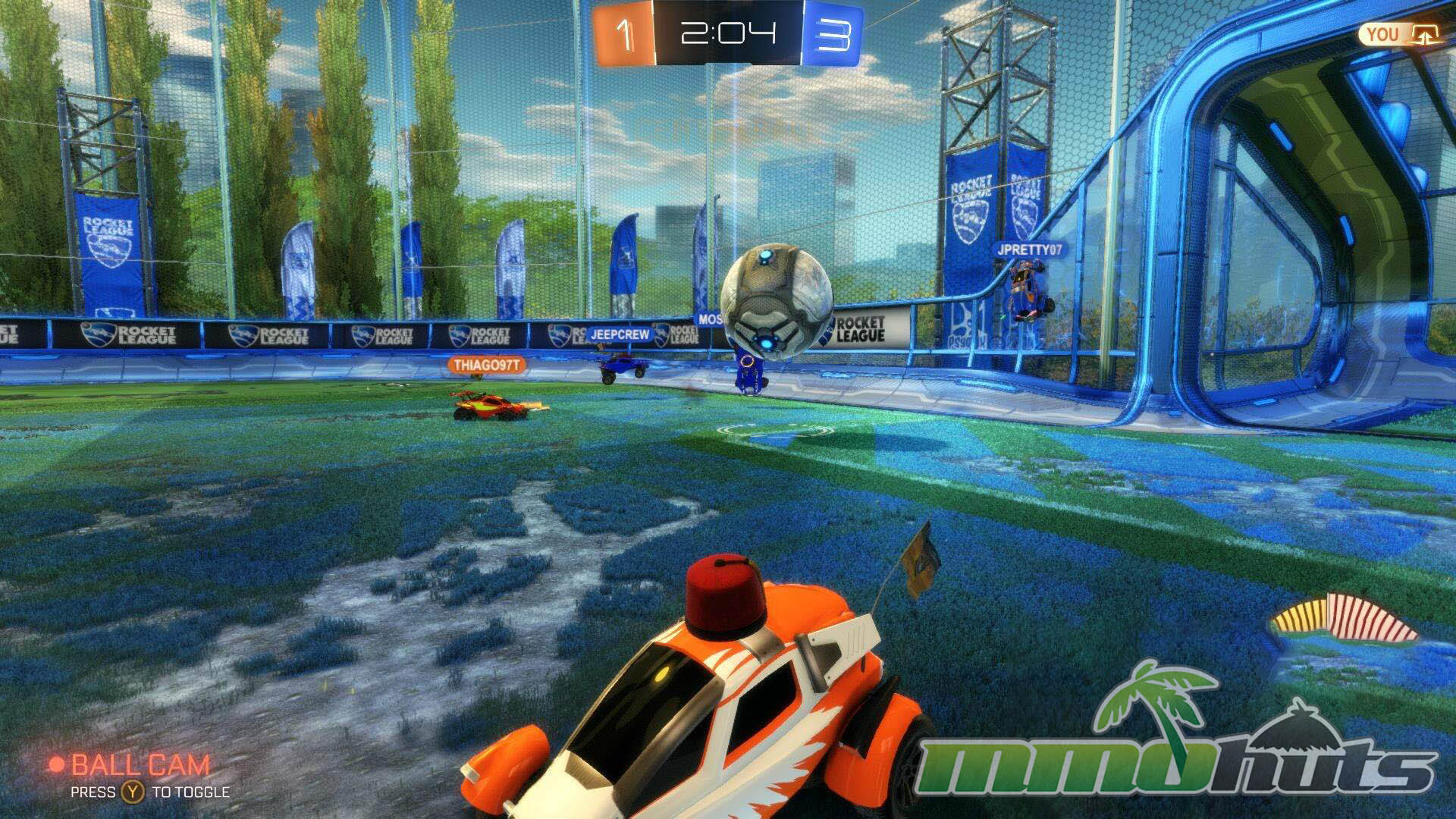
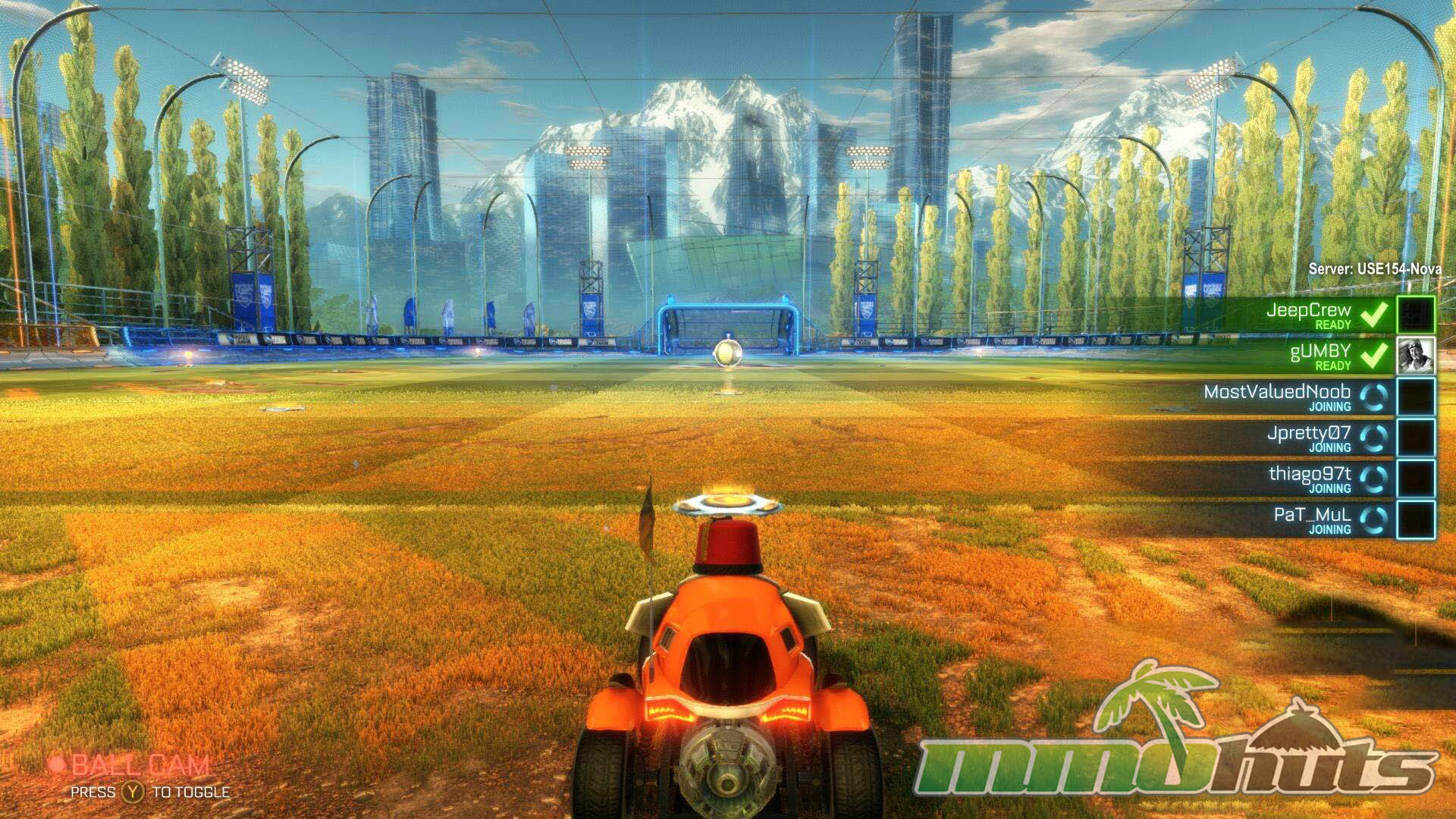
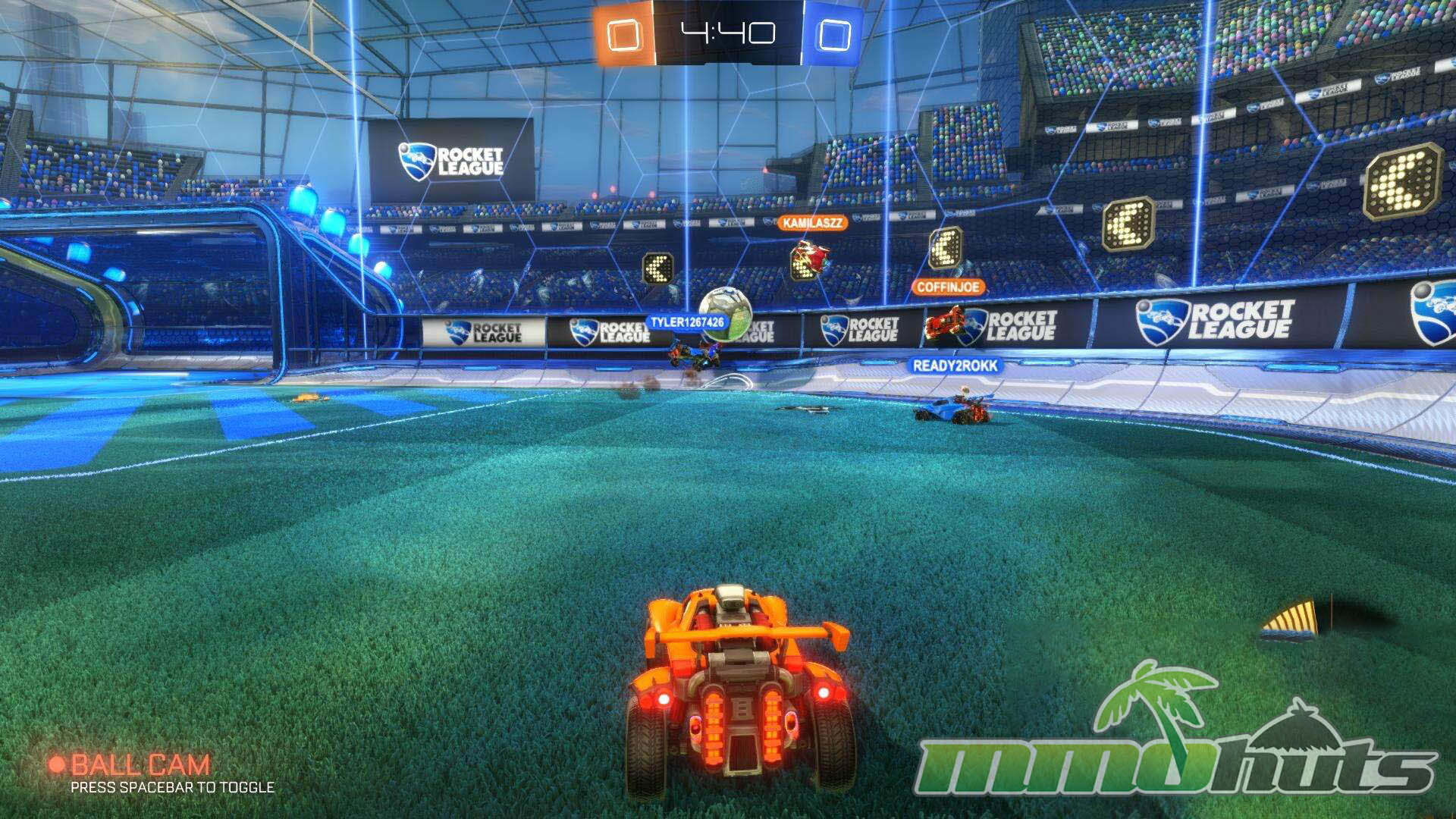


Rocket League Featured Video

Rocket League Review
Rocket League is one of those rare competitive games that is easy to understand in seconds but keeps revealing new layers the longer you stick with it. The stadium, the rules, and the scoreboard all resemble soccer, yet the actual experience feels closer to a physics sandbox where every touch can become a pass, a shot, a clear, or an accidental setup for the other team. It is both legitimately tense and frequently funny, because the same systems that enable skilled aerial plays also produce chaotic collisions and unpredictable scrambles.
Gameplay
Games range from 1v1 to 4v4, with 3v3 generally feeling like the most balanced mix of space and pressure. The core objective never changes, hit the ball into the opponent’s goal, but the way you get there depends on positioning and timing as much as raw speed. Kickoffs are explosive, challenges at midfield can instantly flip momentum, and a single missed touch in defense can turn into a goal before you have time to recover.
Match length is short, typically around five minutes, which makes Rocket League ideal for quick sessions while still supporting extended ranked grinds. Boost pads scattered around the arena are the key resource, and managing them is part of the strategy. Grabbing small pads keeps you mobile, while controlling the larger boost pickups lets you make decisive plays, chase down breakaways, or get back on defense after committing forward.
The arena’s curved walls and enclosed design are a huge part of the game’s identity. You can ride the side panels to keep pace with the ball, angle your car off the wall for centers, or even carry speed up toward the ceiling. Because rebounds are consistent and readable with experience, Rocket League rewards players who learn how the ball will react to surfaces and how to meet it at the right angle rather than simply chasing it.
Jumping and aerial control are where Rocket League separates newcomers from confident players. A basic jump is enough for quick blocks and pops, but combining jumps with boost opens up midair shots, clears, and interceptions. Dodges and flips provide bursts of acceleration and stronger hits, and they are essential for both offense and recovery. The control scheme is approachable, yet executing under pressure, at speed, with opponents bumping you and the ball changing direction, takes practice.
Controls
Rocket League strongly favors controller play, and in practice it is easy to see why. Analog steering gives smoother, more precise turns, and having boost, jump, and camera control mapped comfortably makes aerial adjustments feel more natural. Keyboard and mouse is viable, but it often feels less intuitive for fine vehicle control, particularly when you are trying to feather turns, line up angled hits, or recover quickly after a collision.
Camera management is another important skill. You can toggle a ball-focused view that keeps the action centered, which is excellent for tracking bounces and aerial reads. The tradeoff is awareness, because the locked view can hide where opponents and teammates are rotating. A free camera helps with spacing, bump attempts, and positioning for passes. Switching between the two depending on the moment is part of playing efficiently.
One lesson Rocket League teaches quickly is that touching the ball is not always the correct play. Poorly timed challenges can turn into perfect passes for the other team, and mistimed clears can drift directly toward your own goal. The game’s physics are fair, but they are unforgiving, and smart decision-making matters just as much as mechanics.
Aesthetics
Running on Unreal Engine 3, Rocket League delivers a clean, colorful presentation that suits its arcade tone. The stadiums are bright and readable, car silhouettes are distinct, and effects like boost trails and goal explosions add spectacle without making the field hard to parse. It is not aiming for realism, and that choice works in its favor, because clarity is crucial when everything is moving quickly.
Audio is also a strength. The soundtrack by Mike Ault leans into energetic electronic tracks that fit the pace of short, intense matches. Sound effects provide good feedback, from the thump of a solid hit to the crunch of a collision, helping you judge impact and speed even when the camera angle is busy.
Customization
Customization is extensive and mostly cosmetic, which keeps the playing field level while still letting players show personality. Between paint finishes, decals, toppers, flags, and antennas, it is easy to build a car that looks uniquely yours. Unlocks arrive at a steady pace, and because cosmetics do not influence performance, the system feels more like a fun progression layer than a competitive advantage.
Choosing different vehicles also remains largely a style preference in practice. The real differentiator is how comfortable you feel with a car’s hitbox and your own timing, not raw stats. That keeps the focus on learning the game rather than chasing the “best” unlock.
Teamwork
In uncoordinated matches, Rocket League often devolves into everyone chasing the ball, which can be entertaining but messy. The game becomes significantly better when players rotate, leave space, and trust teammates to take turns challenging. Even minimal communication, such as calling who is going for the ball, dramatically reduces double commits and accidental bumps that create open nets.
One persistent frustration is how much quitting can warp the match. When a team loses a player, the disadvantage is severe, and it is especially noticeable in ranked play where every goal swings momentum. Because matches are short, it would be nice to see stronger incentives to stay until the end, or systems that better protect match integrity when someone leaves.
Seasons
Rocket League includes an offline single-player ladder mode called Seasons, where you play through a structured set of matches against bots. It is useful as a low-pressure way to learn movement, striking, and basic positioning, and it is a welcome option for players who want to play without relying entirely on online matchmaking.
There are also community-run tournaments and leagues, though access is handled through Rocket League’s website rather than directly inside the client. The tools for organizing events are there, including team identity options like logos and banners, but the separation from the game itself can make the scene feel less visible to casual players. Even so, Rocket League clearly has the ingredients for long-term competition, because the skill ceiling is high and improvement is easy to feel from week to week.
Final Verdict – Excellent
Rocket League earns its reputation through pure moment-to-moment play. It is immediately approachable, consistently exciting, and deep enough to support serious competitive improvement without ever losing its pick-up-and-play charm. While issues like uneven bot performance, match leavers, and occasional crashes can dampen the experience for some players, the core design is strong enough to keep pulling you back for “one more game.” If you enjoy skill-based multiplayer with a clear ruleset and endless room to improve, Rocket League is an easy recommendation.
Rocket League Links
Rocket League Official Site
Rocket League Steam Store
Rocket League Developer’s Website
Rocket League Wikipedia
Rocket League Reddit
Rocket League Wikia [Database/Guides]
Rocket League System Requirements
Minimum Requirements:
Operating System: Windows XP, Windows Vista, or Windows 7
CPU: Core 2 Duo E4400 2.0GHz or Athlon 64 X2 Dual Core 4000+
Video Card: GeForce 8800 GS or Radeon HD 2900 GT
RAM: 2 GB
Hard Disk Space: 2 GB
Recommended Requirements:
Operating System: Windows XP, Windows Vista, or Windows 7
CPU: Core 2 Quad Q6600 2.4GHz or APU A6-3600 Quad-Core
Video Card: GeForce GTX 260 v2 or Radeon HD 5850 1024MB
RAM: 4GB
Hard Disk Space: 2 GB
Rocket League Music & Soundtrack
Rocket League Additional Information
Developer(s): Psyonix
Engine: Unreal Engine 3
Composer(s): Mike Ault
Other Platforms: Playstation 4
Announcement Date: February 19, 2014
Closed Alpha: February 01, 2014
Beta: January 15, 2015 (PC)
Release Date: July 07, 2015
Steam Release Date: July 07, 2015
Development History / Background:
Rocket League is developed by American video game development company Psyonix. It is the sequel to the 2008 game Supersonic Acrobatic Rocket-Powered Battle-Cars (SARPBC). Psyonix announced the project on February 19, 2014, and made an Alpha version of the game playable the same month. An official launch date was announced on June 03, 2015, and Sweet Tooth’s car from Twisted Metal was announced as an exclusive unlockable for the PS4 version of the game. Rocket League released through Steam on July 07, 2015, and was part of the Instant Game Collection on PS4 in North America. Psyonix is also developing the humans versus vampire PvP game Nosgoth for PC.