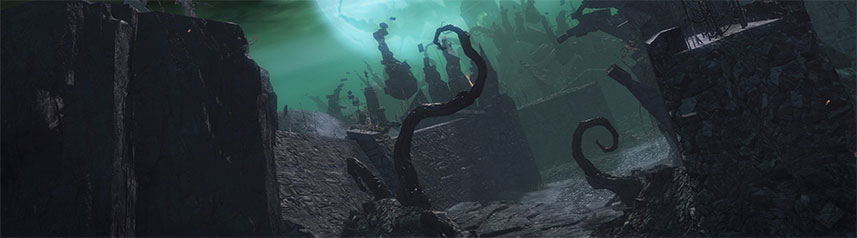
Fight, forage, and improvise your way through Klei Entertainment’s darkly playful survival sandbox, presented with 2D characters set against a stylized 3D world. Staying alive means juggling three constant pressures, your hunger, your health, and your sanity, while the wilderness throws everything from the elements to hostile creatures at you.
 | Publisher: Klei Entertainment Playerbase: Medium Type: B2P Survival Release Date: December 15, 2014 PvP: PvP can be enabled by server Pros: +Distinctive visual identity. +Procedurally generated worlds keep runs fresh. +Huge crafting catalog with loads of useful gear. Cons: -Punishing onboarding (no built-in tutorial). |

Don’t Starve Together Overview
Don’t Starve Together drops you and other players into a hostile, randomly generated wilderness where survival is the only real objective. Your group’s day-to-day routine quickly becomes a balancing act: gather resources before dusk, keep a reliable light source for nightfall, manage food so the team does not collapse into starvation, and avoid sanity spirals that make everything worse. Between seasonal threats, roaming monsters, and sudden disasters, the world is designed to pressure you into planning, prioritizing, and adapting rather than settling into comfort for long.
Co-op is the heart of the experience, but the game also supports different ways to play depending on how strict you want survival to be and whether you want to share a server with friends or open it up to strangers. PvP can be switched on at the server level, turning an already tense sandbox into something even more unpredictable.
Don’t Starve Together Key Features:
- Hunting and Gathering – harvest materials across multiple biomes, trap or fight creatures, and turn what you find into food, tools, and shelter.
- Team Play – survival is a group problem, not an individual one. Fallen players can linger as ghosts and create new risks for the living, and dedicated servers can support up to 64 players.
- Crafting – build out a toolkit of weapons, survival gear, structures, and clothing suited to different dangers and seasons.
- Randomly Generated New Worlds – each start is a new map with different layouts and opportunities, which helps keep repeated runs from feeling identical.
- Great Soundtrack and SFX – an eerie, characterful audio mix, with musical “voices” for characters and a soundtrack that leans into unsettling whimsy.
Don’t Starve Together Screenshots
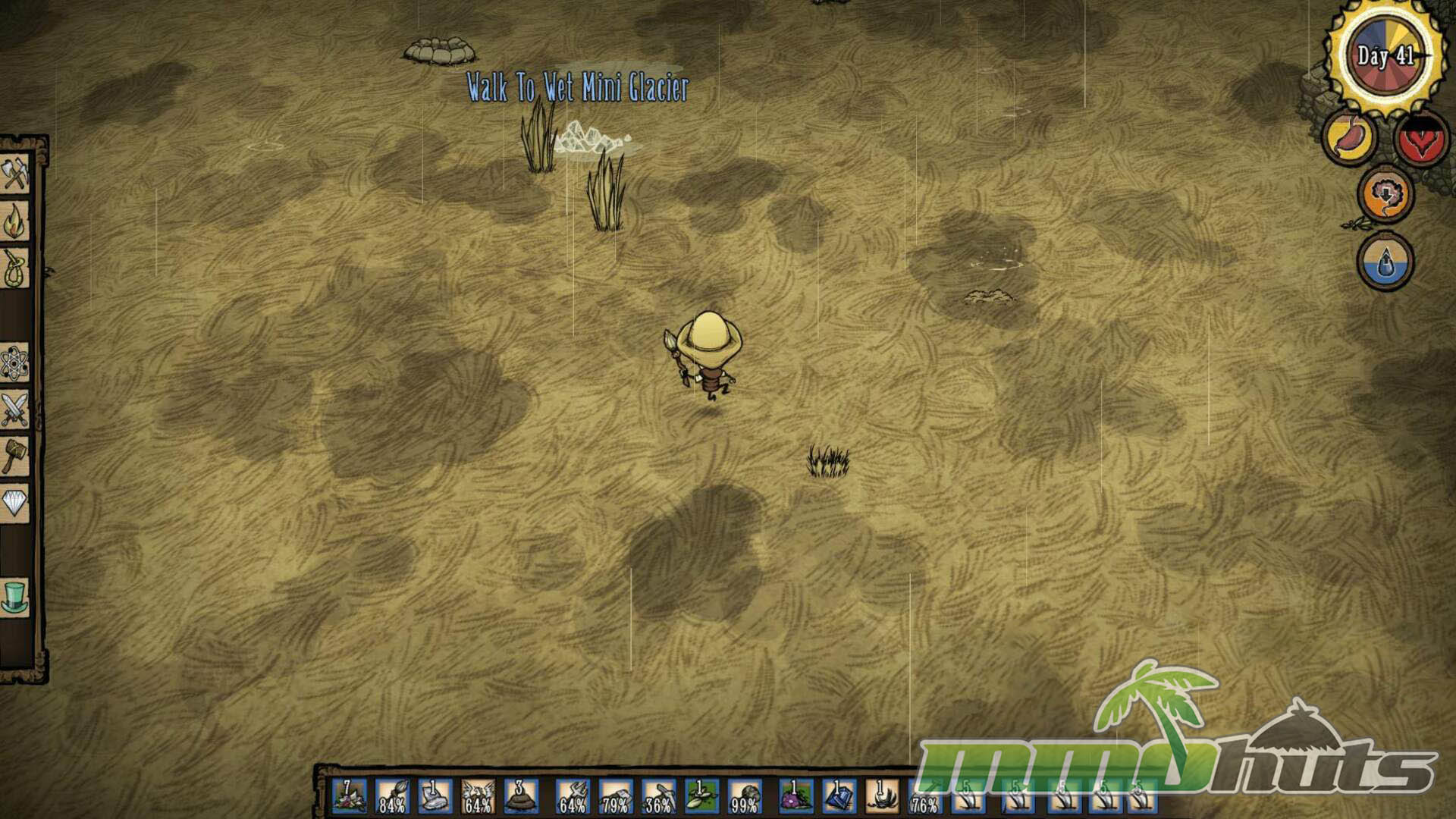
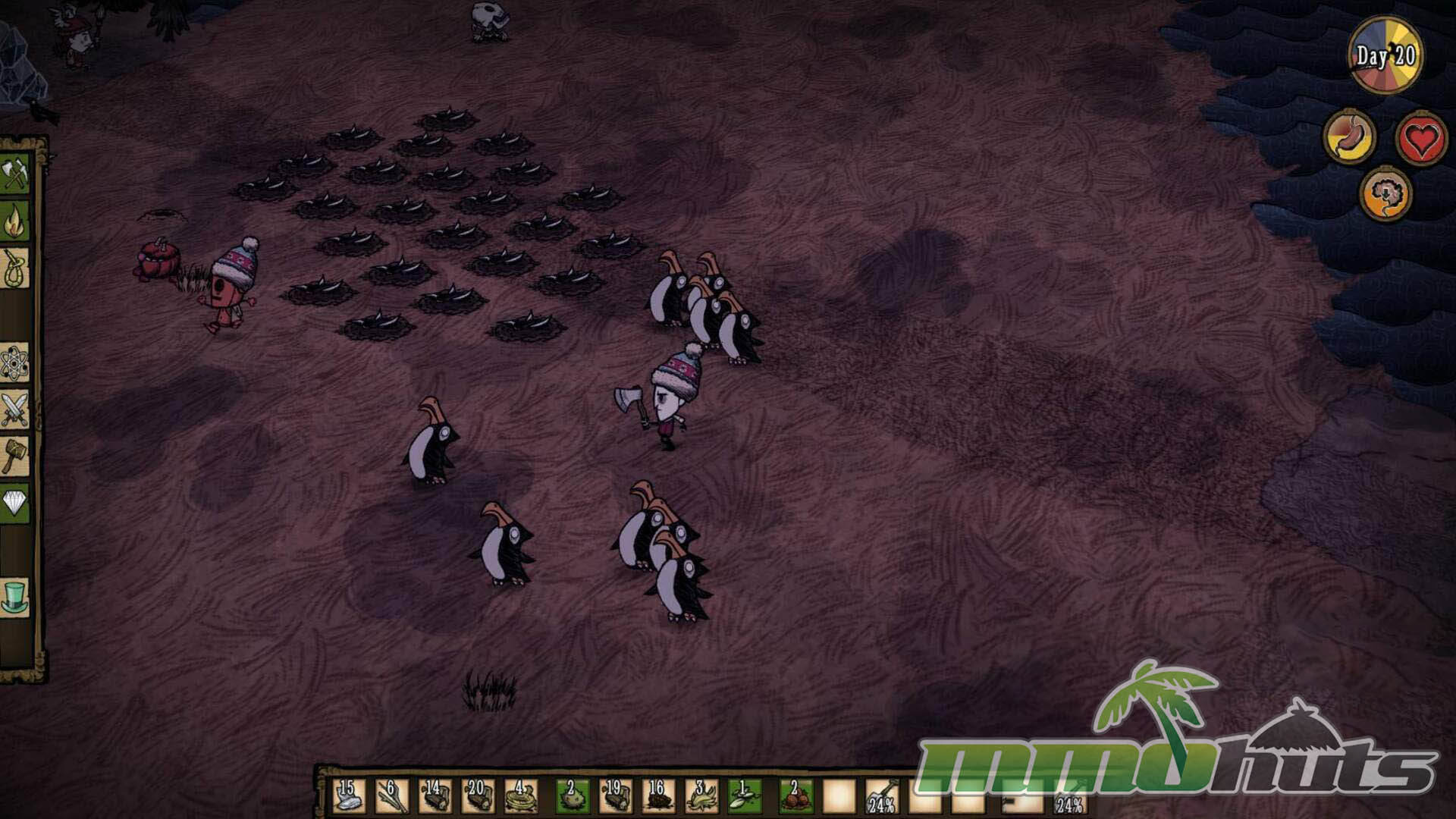
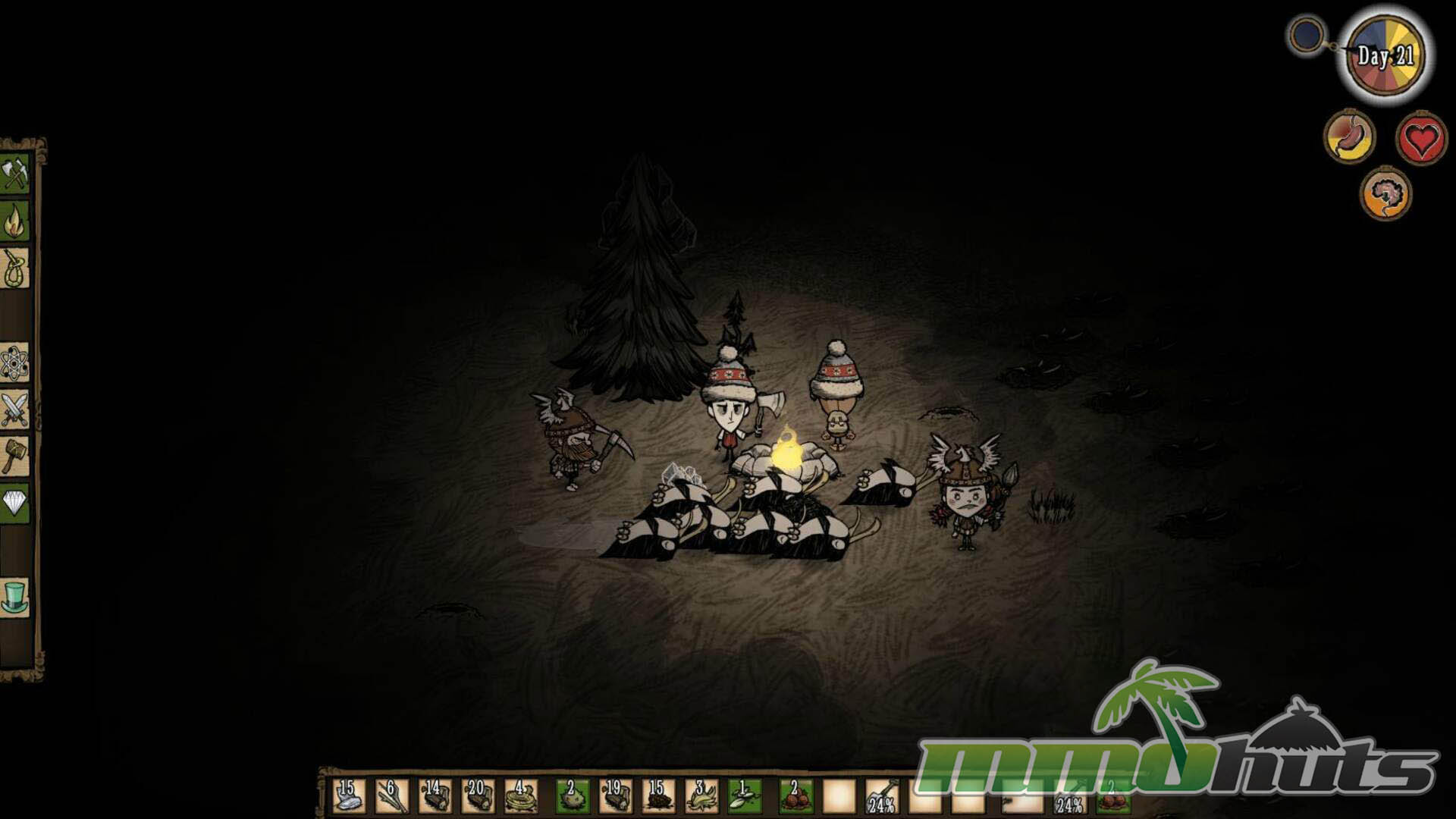
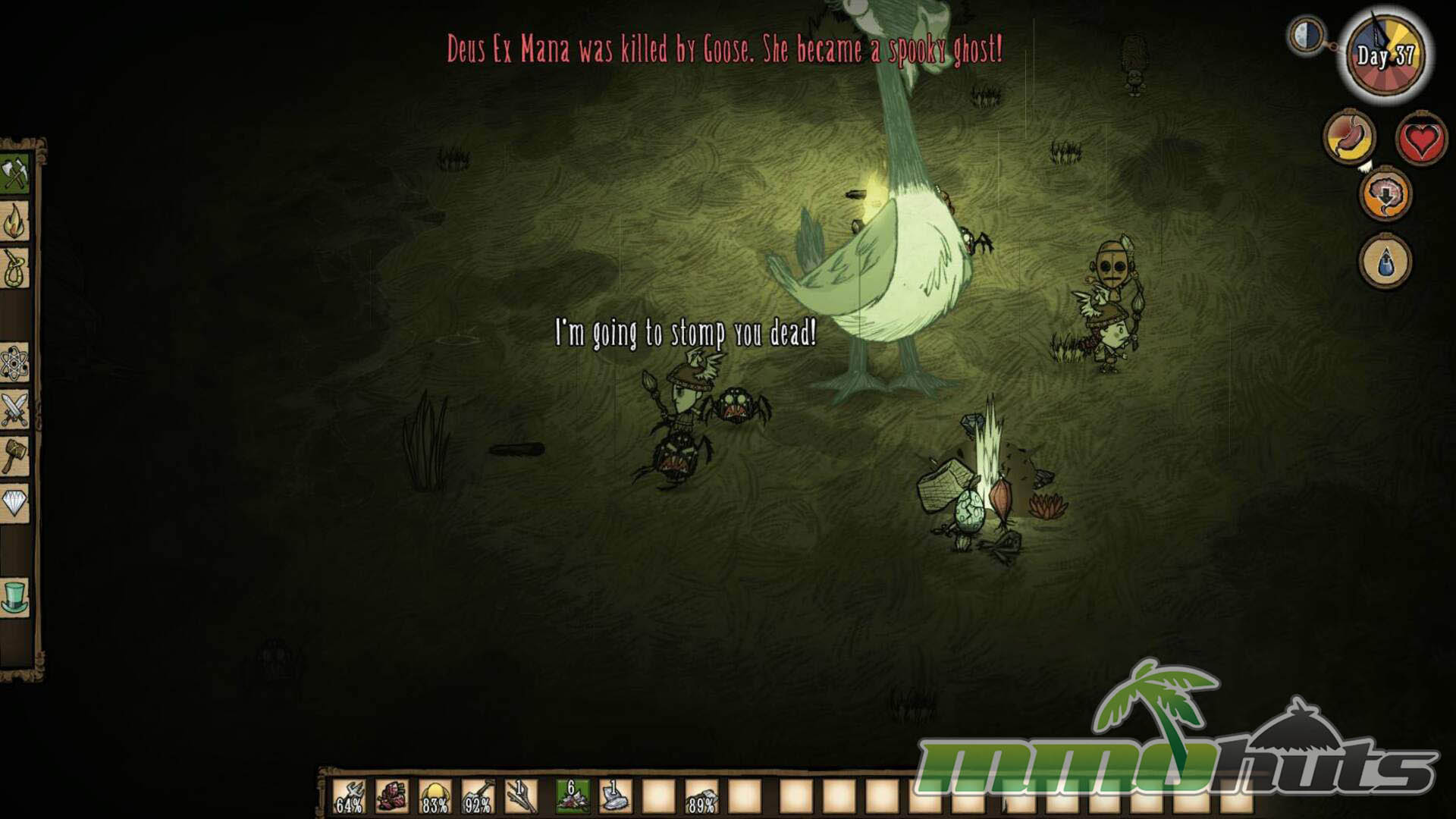
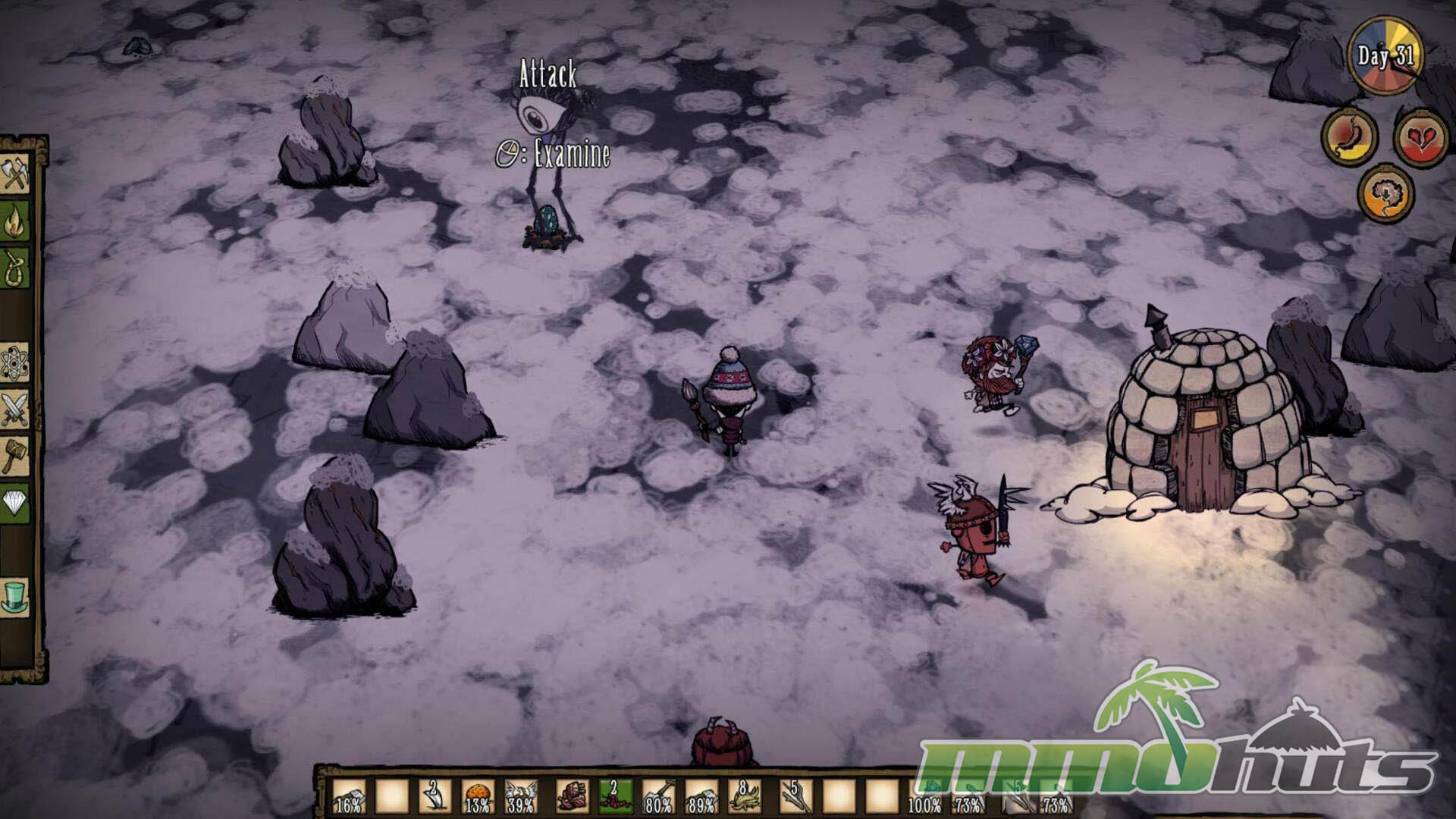
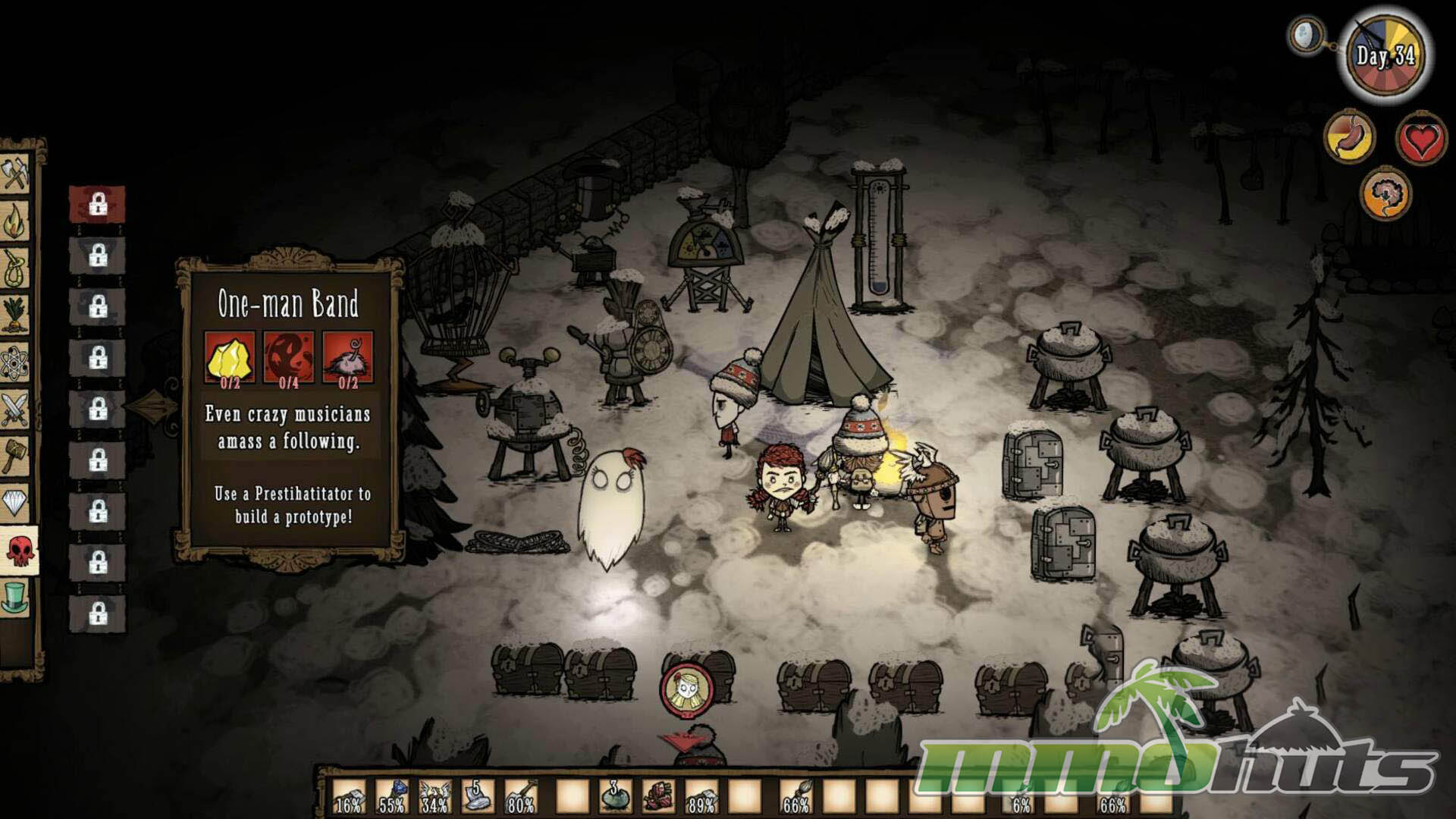
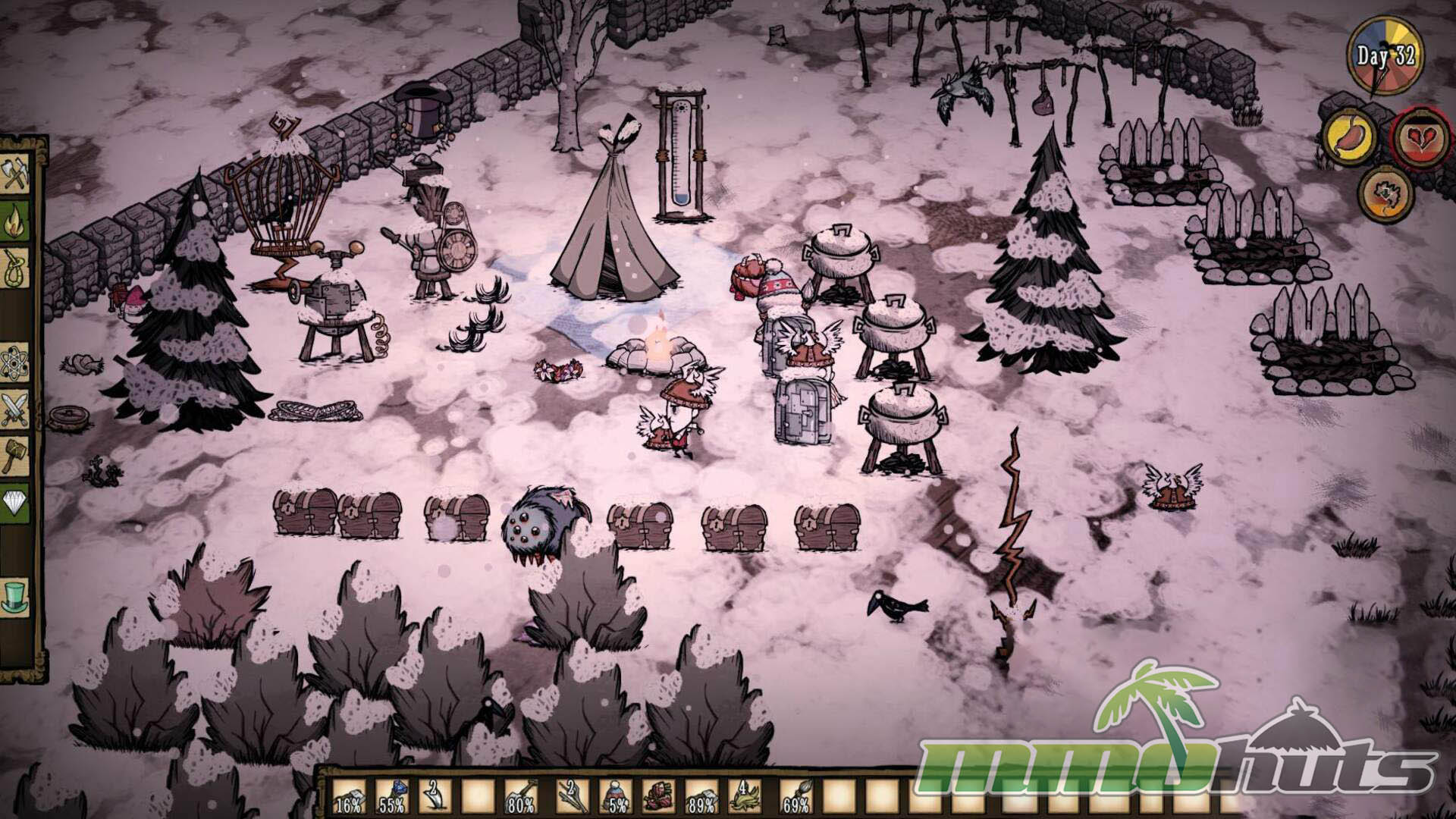
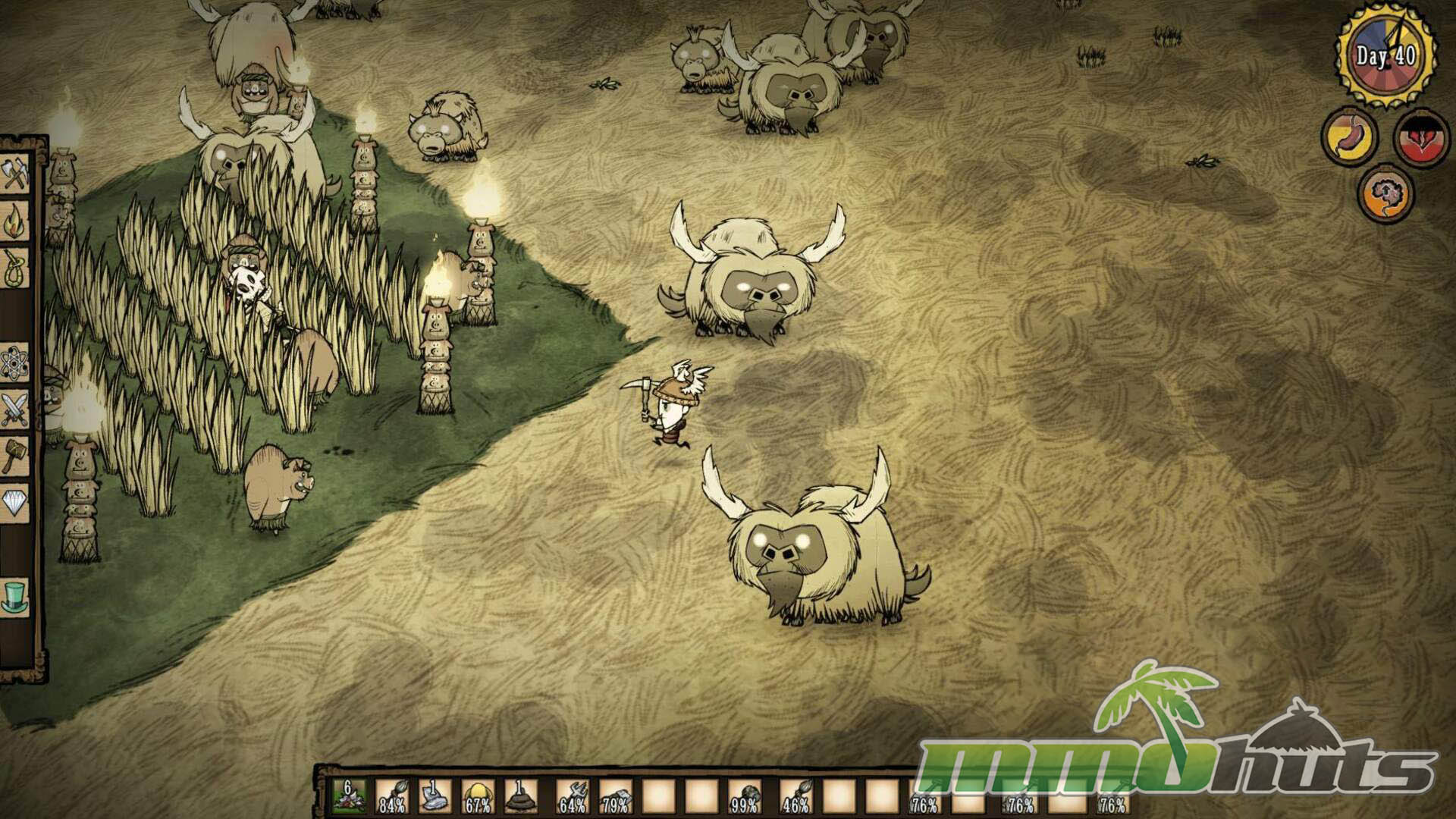
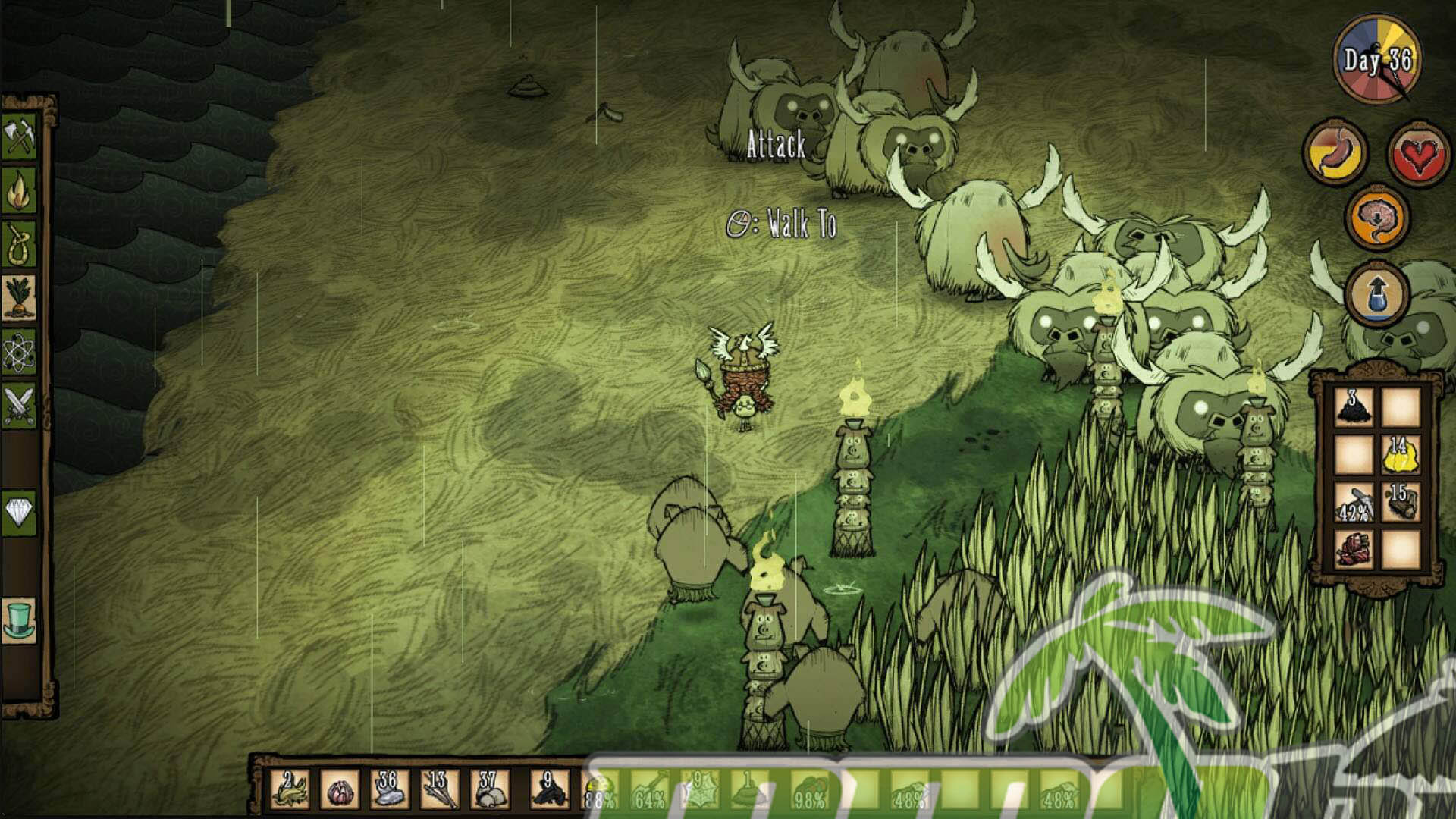
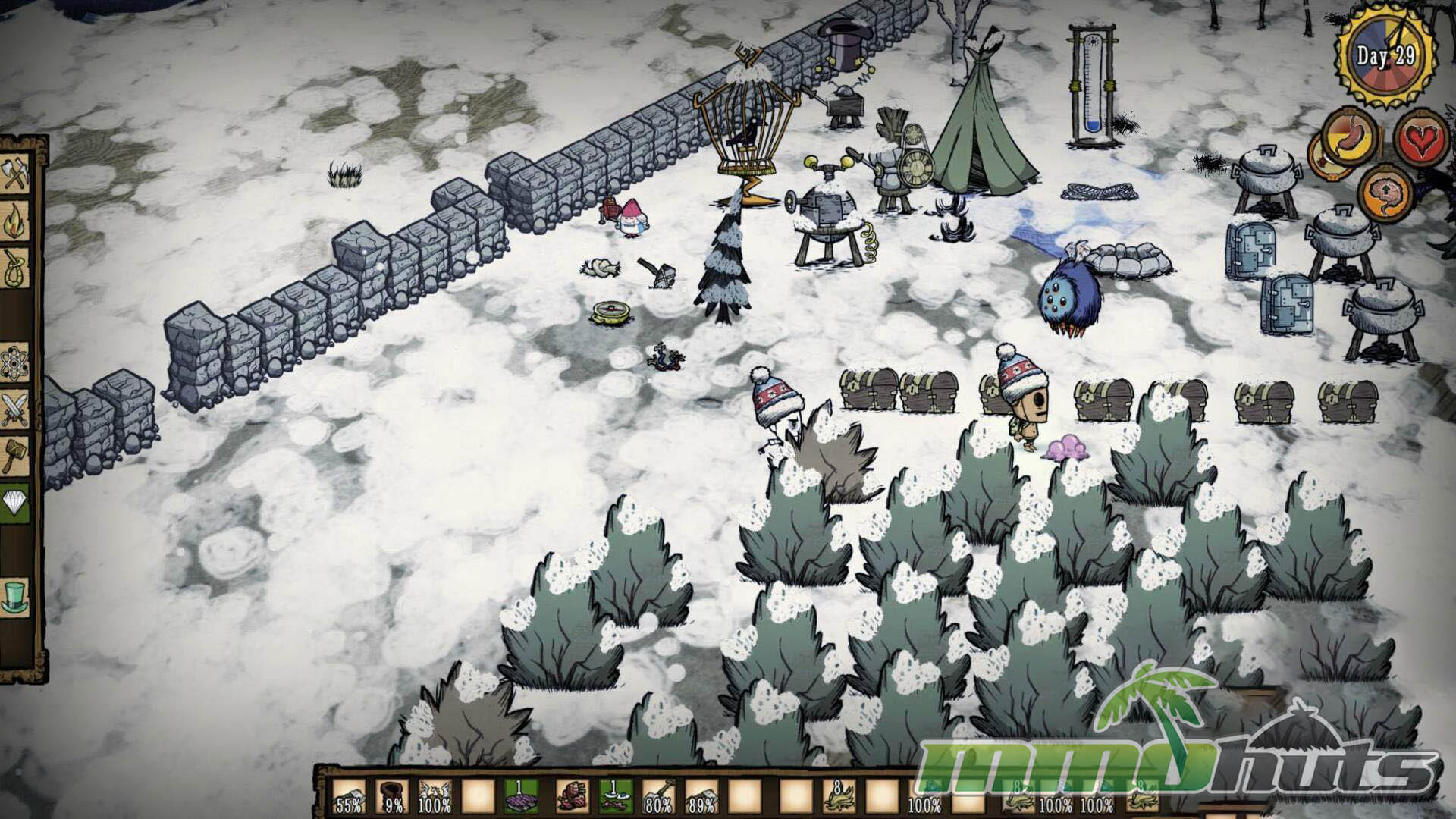
Don’t Starve Together Featured Video

Don’t Starve Together Review
Don’t Starve Together is still in the Early Access Beta Testing stage. MMOs.com will update this review when the full game is released.
As a multiplayer-focused companion to Don’t Starve, this version exists for players who wanted the same harsh survival loop but with shared problem-solving, shared panic, and the occasional shared disaster. Playing with friends changes the tone immediately, a bad night is still deadly, but it is also a story you experience together rather than a solitary failure screen. It is the same cruel world, only now your mistakes and triumphs are communal.
Survival That Refuses to Go Easy
Moment to moment, Don’t Starve Together is defined by pressure. There is no gentle tutorial, no quest chain to follow, and very little explanation beyond what you can infer through experimentation. Your character is tracked by three core meters, hunger, health, and sanity, and every decision is connected to at least one of them. Staying fed keeps you alive, staying healthy keeps you from dying to the next surprise, and staying sane prevents the game from compounding your problems when you can least afford it.
Time matters as much as resources. The day and night cycle forces you to plan around darkness, because without light, night is not merely inconvenient, it is lethal. That single rule creates a constant rhythm: explore and collect during the day, secure fuel and safety for dusk, then use evenings to craft, cook, and prepare for the next push outward.
The crafting system is where the scavenging loop pays off. Simple finds like twigs, grass, and monster drops become tools, weapons, clothing, and structures, which in turn expand what you can safely do. Early progression feels like learning a language, once you understand what ingredients enable which tools, the world opens up, but until then you should expect several hard resets as the game teaches through failure.
Initial runs are often the most exciting, because every new creature, weather shift, or nighttime sound carries a real threat. That intensity also highlights one of the game’s defining traits: it is a pure survival sandbox, not a traditional progression game with a finish line. You can invest hours into a base and still lose it quickly when a roaming threat or seasonal event arrives. For some players, that risk is exactly the appeal, for others, it can feel punishing in a way that is difficult to justify.
Hints of Lore, With Little to Chase (Yet)
The world is not empty of narrative flavor. Character comments, unsettling landmarks, and strange environmental details suggest that something bigger is going on, and that the cast did not simply stumble into chaos by accident. You will encounter ominous set pieces that feel like they belong to a larger mystery, and the atmosphere implies a presence behind the curtain.
That said, in its Early Access state, those breadcrumbs do not translate into a clear storyline you can actively pursue. The result is a setting that feels rich and suggestive, but not fully explorable in narrative terms. If you are hoping for a strong story arc to carry long sessions, it may feel thin, at least compared to the single-player experience.
Visual Identity and Audio That Carry the Mood
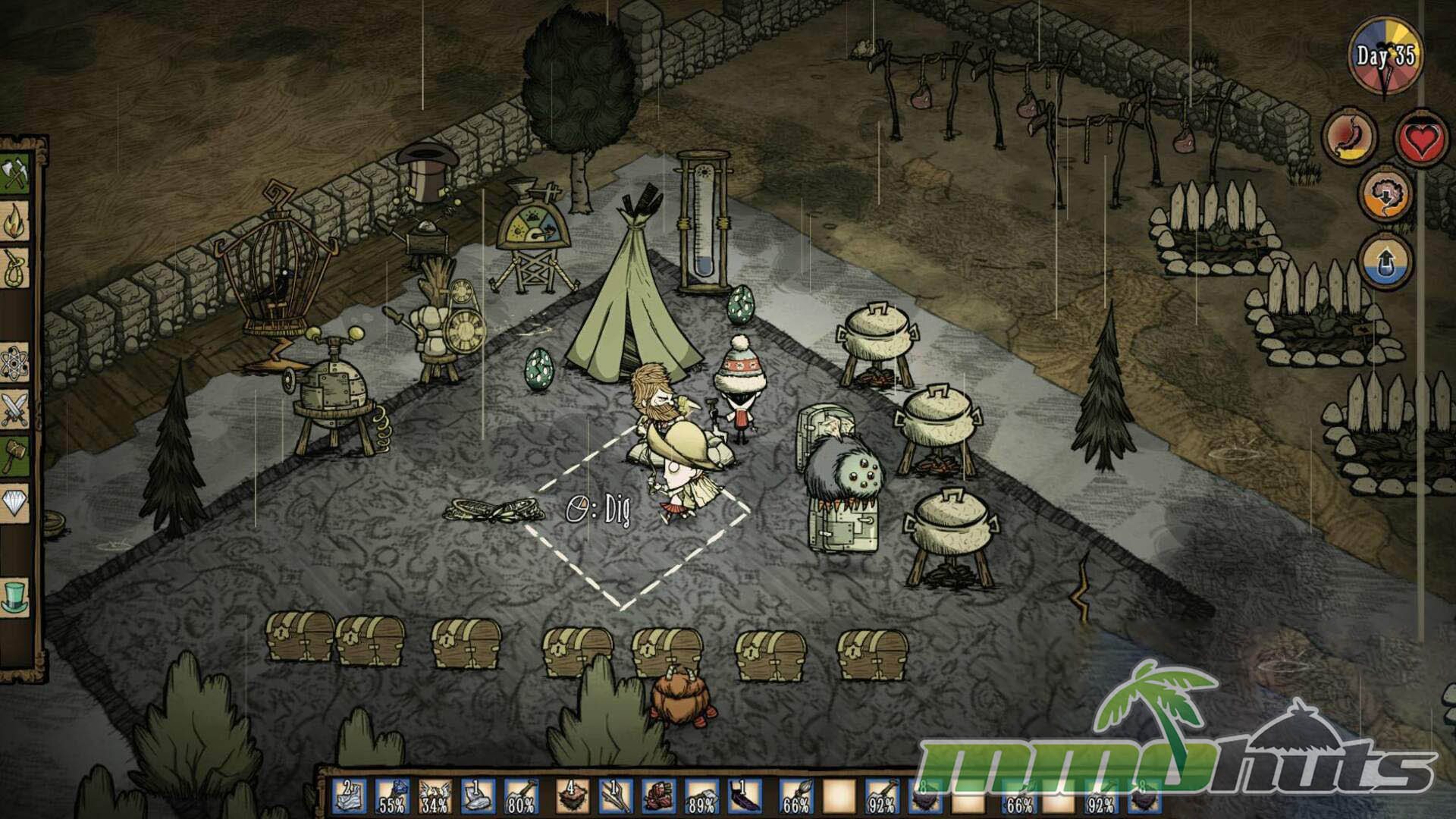
Don’t Starve Together’s presentation remains one of its biggest strengths. The stylized look, often compared to storybook gothic, makes even mundane actions like chopping trees or cooking dinner feel distinct. The contrast of 2D characters against a 3D environment creates a stage-like quality, and the world’s shapes and animations reinforce the idea that everything is slightly “wrong” in an intentional, charming way.
Sound design does just as much work as the art. The music leans into creepy, playful tones that keep tension simmering without drowning you in noise. Small audio cues are meaningful too, whether it is the shift into night, the approach of danger, or character “voices” expressed through instruments. It all contributes to a survival game that feels cohesive and memorable even when you are simply managing chores.
Why You Keep Coming Back
In the short term, replay value is strong because failure is frequent and educational. A run that ends abruptly often leaves you with immediate lessons, better base placement, smarter food planning, or a clearer idea of what to craft first. Starting over is not just expected, it is part of the game’s loop, and the procedural worlds ensure that your next attempt will not be a carbon copy of the last.
Longer term, replayability depends on how much you enjoy mastering systems for their own sake. After enough worlds, the seasonal cycle and common threats can start to feel familiar. The game counterbalances that with a varied character roster, each with quirks that meaningfully change your approach. Different strengths and weaknesses encourage role division in co-op, and they can also act as self-imposed challenges that keep repeated runs interesting.
Another key reason Don’t Starve Together stays fresh is the way it supports multiple modes, each shaping the consequences of death and the overall tone of a server.
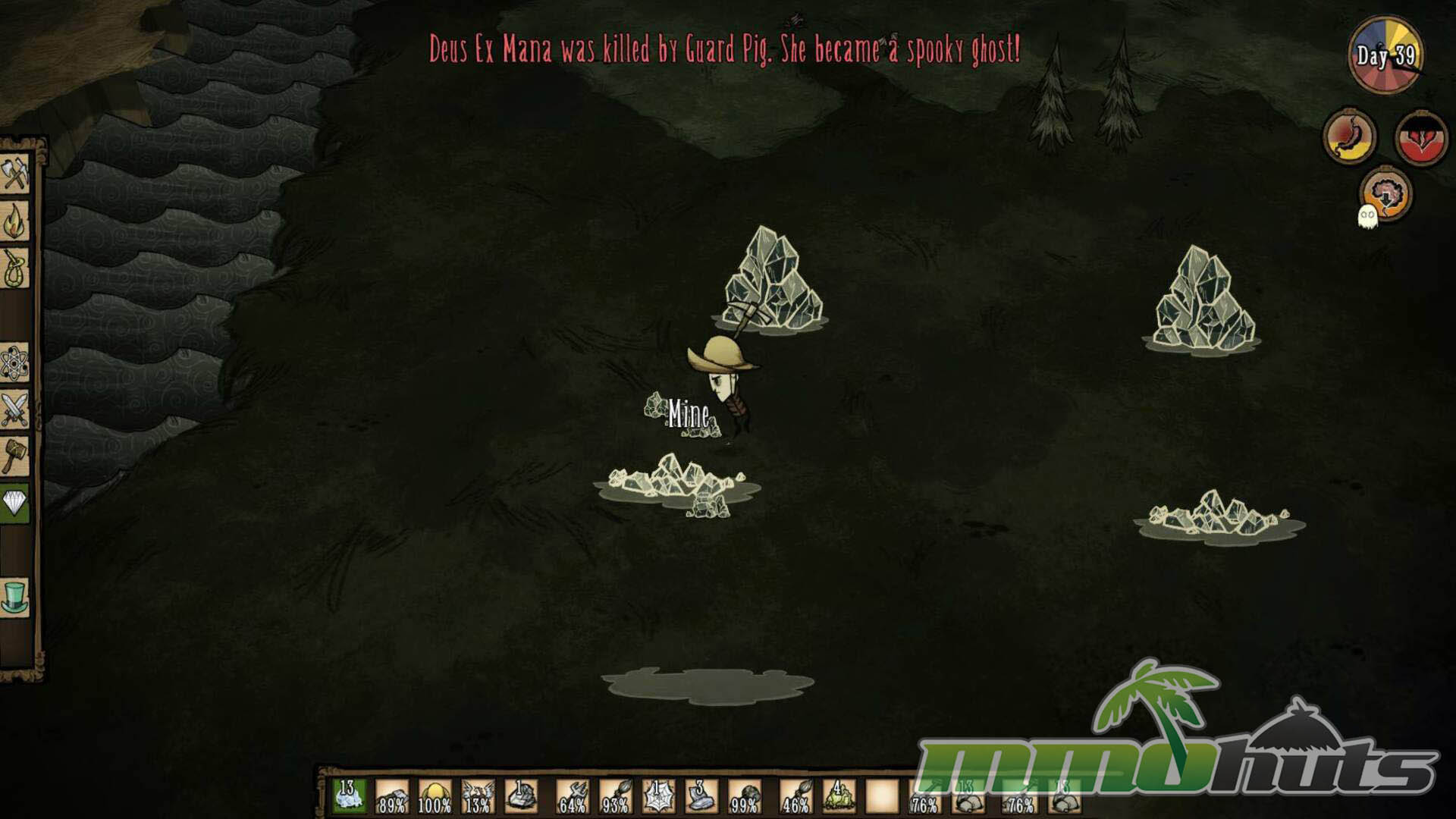
Survival is the standard ruleset. When a player dies, they persist as a ghost and can negatively affect the sanity of living teammates. If everyone dies, a countdown begins, and if no one returns before it ends, the world resets.
Endless lowers the stakes. Defeated players can come back at the Jury-Rigged Portal (the spawn point), and because death is less punishing to the group, cooperation becomes more optional rather than mandatory.
Wilderness leans into scattered starts and a harsher loop. Players appear in different parts of the world instead of spawning together. On death, you do not remain as a ghost, you return to character selection and re-enter with a wiped map state, which pushes a more nomadic, less base-centric style.
On top of that, server settings can allow PvP and open play with strangers, which can dramatically change how cautious, cooperative, or competitive a session feels.
Final Verdict – Great
Don’t Starve Together succeeds as a co-op survival sandbox because it turns desperation into teamwork. Sharing a fire through a dangerous night, splitting chores to keep a camp running, or racing to help a teammate in trouble creates the kind of emergent stories that co-op games do best. Its biggest drawback is also central to its identity: the game can feel brutally indifferent, and without a strong narrative thread to reward long-term investment, some players will struggle with the idea that a thriving world can collapse in moments.
If you enjoy learning through trial and error, planning around harsh systems, and treating each run as its own tale of survival, it is an excellent multiplayer spin on a distinctive formula. With deeper story support in the future, it could become even easier to recommend to players who want more than pure survival for survival’s sake.
Don’t Starve Together Links
Don’t Starve Together Official Site
Don’t Starve Together Steam
Don’t Starve Wikipedia
Don’t Starve Together Wikia (Database / Guides)
Don’t Starve Subreddit
Don’t Starve Together System Requirements
Minimum Requirements:
Operating System: Windows Vista / 7 / 8 / 10 / Linux
CPU: 1.7+ GHz or better
RAM: 1 GB RAM
Video Card: Radeon HD5450 or better
Hard Disk Space: 750 MB
Mac OS X Requirements:
Operating System: Lion (OSX 10.7.X)
CPU: 2 GHz Intel CPU
RAM: 4 GB RAM
Video Card: Any Nvidia or ATI GPU
Hard Disk Space: 750 MB
Don’t Starve Together Music & Soundtrack
Don’t Starve Together’s soundtrack and effects are a major part of why the game feels so tense without relying on jump scares. The music tends to hover between playful and unsettling, nudging you to stay alert even during routine tasks. Character “voices” represented through instruments keep dialogue flavorful while fitting the world’s surreal tone, and environmental sounds provide useful signals about time of day and nearby threats.
Don’t Starve Together Additional Information
Developer(s): Klei Entertainment
Publisher(s): Klei Entertainment via Steam
Game Engine: C++ and LUA
Composer(s): Vince de Vera and Jason Garner
Development History / Background:
Don’t Starve Together was created by Klei Entertainment, a studio based in Vancouver, British Columbia. The origins of the series trace back to a 48-hour game jam project in 2010. With other titles in development, Klei initially set the idea aside before returning to it later and shaping it into a full release.
As sandbox survival games became increasingly popular (with games like Rust and DayZ often cited in the wider trend), Klei revisited the concept with a strong focus on discovery and experimentation. Inspirations included the Nintendo DS survival title Lost in Blue, Minecraft’s open-ended problem solving, and the visual sensibilities associated with Tim Burton. The result was a survival game built around learning systems, testing boundaries, and adapting to an unfriendly world.
Multiplayer was a frequent request from the community, and Klei announced on May 7, 2014 that a co-op expansion would arrive that summer. Don’t Starve Together entered Steam Early Access on December 15, 2014 and was received very positively. During early access, the game required purchase to play, and after it leaves beta, owners of the original Don’t Starve will receive Don’t Starve Together for free.