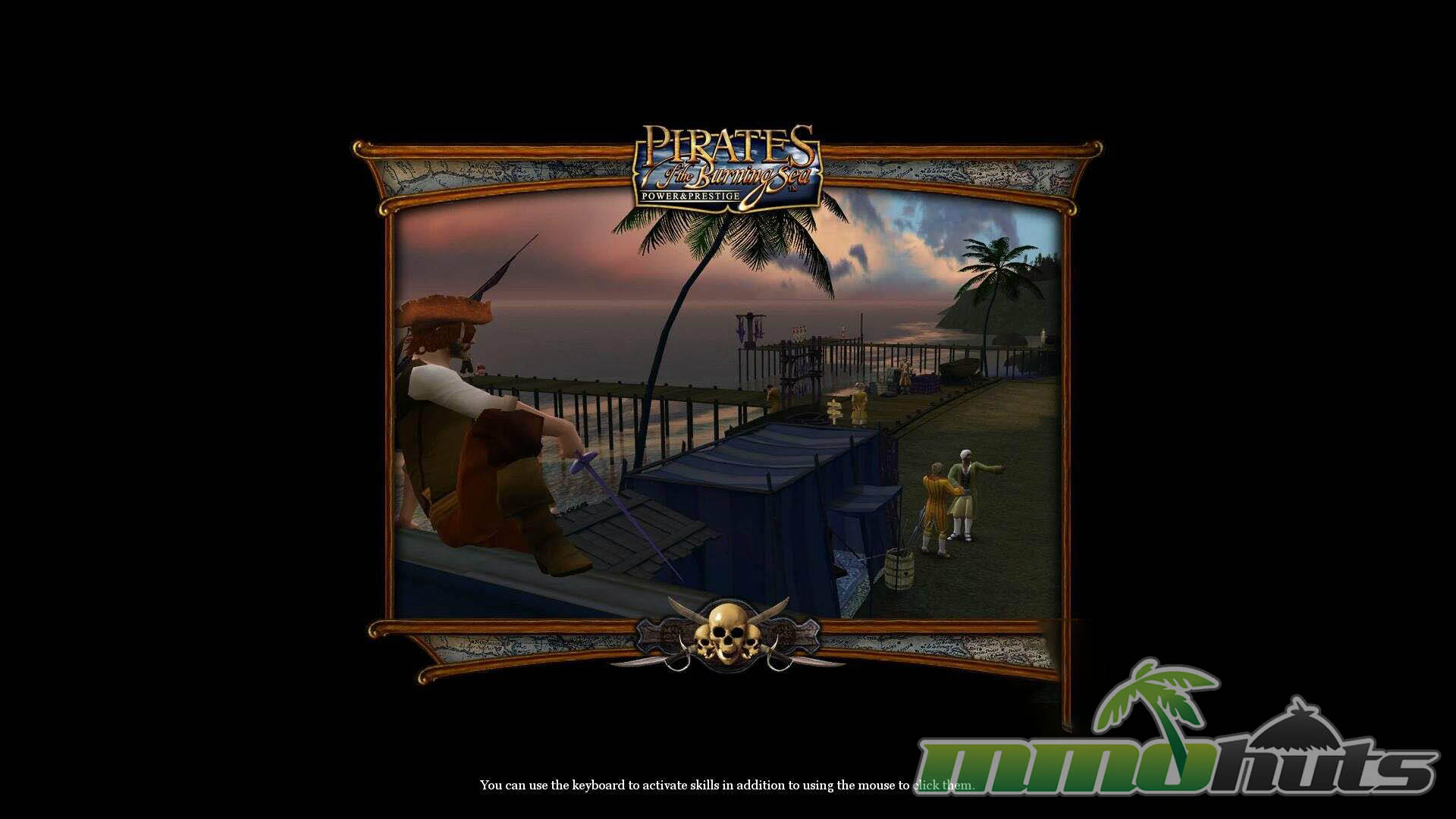
Pirates of the Burning Sea is a free-to-play MMORPG set in the Caribbean during the 1700s, built around methodical ship battles, faction conflict, and a largely player-made economy. You pick a side among three European nations or sail under the pirate banner, then split your time between commanding an Age of Sail vessel and getting involved in on-foot skirmishes, duels, and boarding actions.
 | Publisher: Vision Online Games Playerbase: Low Type: MMORPG PvP: Port Battles / Open Sea Combat Release Date: January 22, 2008 Pros: +Authentic-feeling naval combat. +Swordplay and boarding fights. +Four distinct factions. +Good mix of activities. Cons: -High barrier to entry. -Stiff character visuals and animations. -Some loops can feel grindy. |

Pirates of the Burning Sea Overview
Pirates of the Burning Sea (often shortened to PotBS) is a free-to-play MMO that puts you in the role of a captain operating across a historically flavored Caribbean. Your character is fully customizable, then tied to a career path that shapes how you fight, how you progress, and even how you typically acquire new ships. The available careers include Freetraders and Naval Officers for players who enjoy economy or fleet-focused combat, along with more aggressive options like Cutthroats and other pirate-leaning roles that thrive on ambushes and boarding.
Faction choice sits at the heart of the experience. You can align with one of three nation factions or choose the pirate life, and that allegiance determines where you begin and how you fit into the wider war over ports and trade routes. From there, the game alternates between two main pillars. The first is naval combat, where you take direct control of heading and speed and make tactical decisions about positioning, abilities, and firing. The second is swashbuckling combat, which covers on-foot fighting during missions, duels, and boarding sequences where you clash with enemies at close range.
At sea, PotBS leans into the fantasy of commanding a period ship without turning it into pure arcade action. The game features over 150+ historical ships, and battles emphasize angles, timing, and control, with visible damage as engagements escalate. Class identity also extends into ship progression: naval officers tend to earn improved vessels through military commendations, pirates often secure ships by defeating and taking them in combat, and freetraders use civilian pennants and economic play to obtain ship rewards.
Pirates of the Burning Sea Key Features:
- Five Playable Classes – choose from five careers: Naval Officer, Privateer, Freetrader, Buccaneer, or Cutthroat.
- Four Player Factions – ally with one of the three European nations: England, France, or Spain, or opt to be a pirate.
- Intense Ship Combat – take to the high seas and engage in tactical ship combat that includes over 150 different historical ships.
- Swashbuckling – participate in direct character combat using four fighting styles that include Florentine, Fencing, Dirty Fighting, and Brawling.
- PvP and PvE Modes – enter an allied port to begin a PvP Port Battle or stick to economy and trading in a game that supports many different playstyles.
Pirates of the Burning Sea Screenshots





Pirates of the Burning Sea Featured Video

Pirates of the Burning Sea Review
Pirates of the Burning Sea is a veteran MMO built around the Age of Sail, set in the Caribbean during the 1720s. Developed by Flying Lab Software, it launched on January 22, 2008 and initially arrived as a subscription game published under Sony Online Entertainment. Even back then, PotBS stood apart because it did not chase high fantasy trends, it tried to simulate naval tactics, faction logistics, and a trading economy inside a persistent online world.
The game’s long life has involved multiple handoffs and a major business model shift. In 2010, PotBS moved to a freemium style of free-to-play access, which made it easier to sample the game without committing upfront. That same year, the Power & Prestige expansion pushed the conquest layer further by adding deeper incentives around port control, including the idea of players becoming governors of captured ports. Later, Flying Lab Software stepped away, and Portalus Games (formed by members of the original team) continued operations beginning in 2013. Portalus kept the game running with smaller changes and maintenance before eventually winding down around 2018. In 2019, Vision Online Games took over operation duties, and the game remains playable today. The population is clearly niche, but the remaining community tends to be invested, and there are still few MMOs that offer the same combination of ship combat, production chains, and large-scale port warfare.
How the Game Plays
PotBS is best understood as two games that constantly feed into each other. On one side you have your captain, their career skills, and swashbuckling encounters. On the other side you have your ship, its loadout, and a tactical combat model built around positioning rather than raw reaction time. Early on you pick a faction, Great Britain, France, Spain, or the Pirate faction, and that choice frames your place in the ongoing conflict over ports. You then pick a career among five options: Naval Officer, Privateer, and Freetrader for national factions, plus Buccaneer and Cutthroat for pirates.
That career choice matters in practical ways. Naval Officers lean toward commanding heavier warships and contributing to organized fleet play. Privateers often feel like skirmishers, built to pressure targets and exploit openings. Freetraders are the economy specialists, with advantages tied to production, trade, and logistics. Pirate careers are more comfortable living on the edge, focusing on disruption, boarding, and opportunistic fights. Progression is tied to ranks and ability unlocks (with a level cap of Rank 50), and as you climb you gain access to larger ships and more specialized tools for both PvE and PvP.
Naval Combat
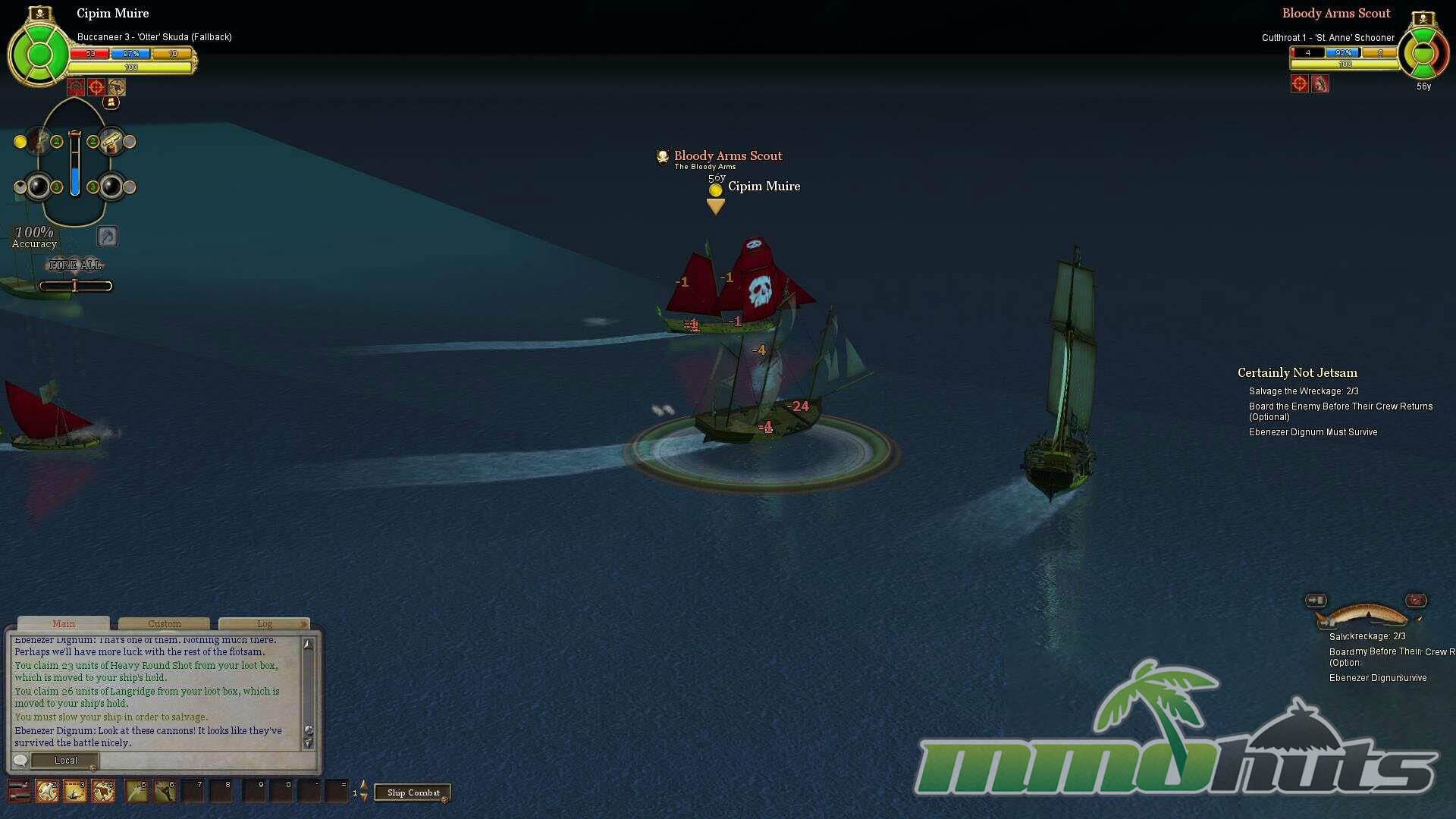
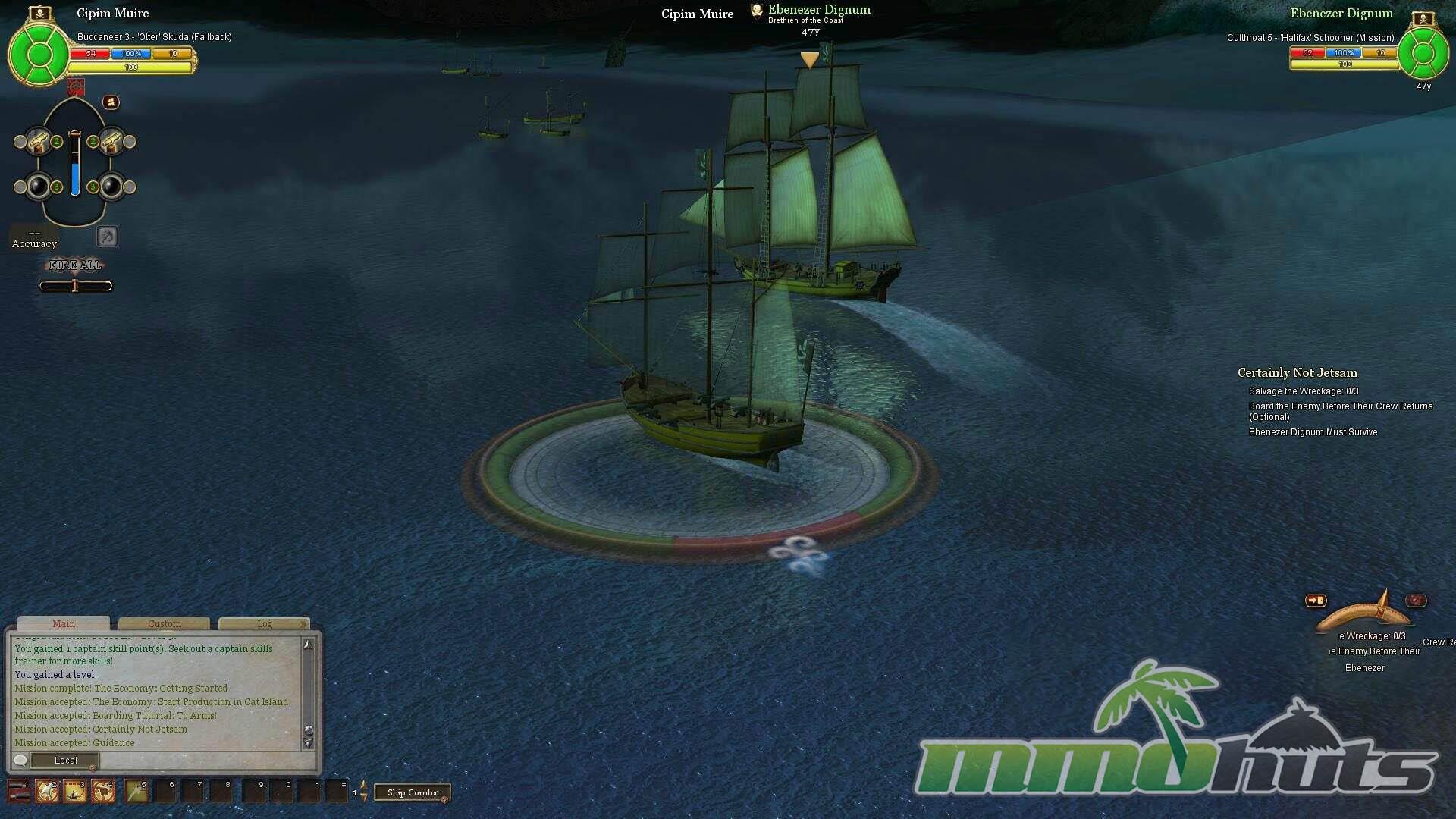
The sailing and combat model is the main reason many players still recommend PotBS. Encounters at sea occur as instanced battles triggered from the open ocean map, and the pacing is intentionally measured. Winning is about understanding wind, maintaining favorable angles, and choosing when to commit to a broadside versus when to disengage and reset.
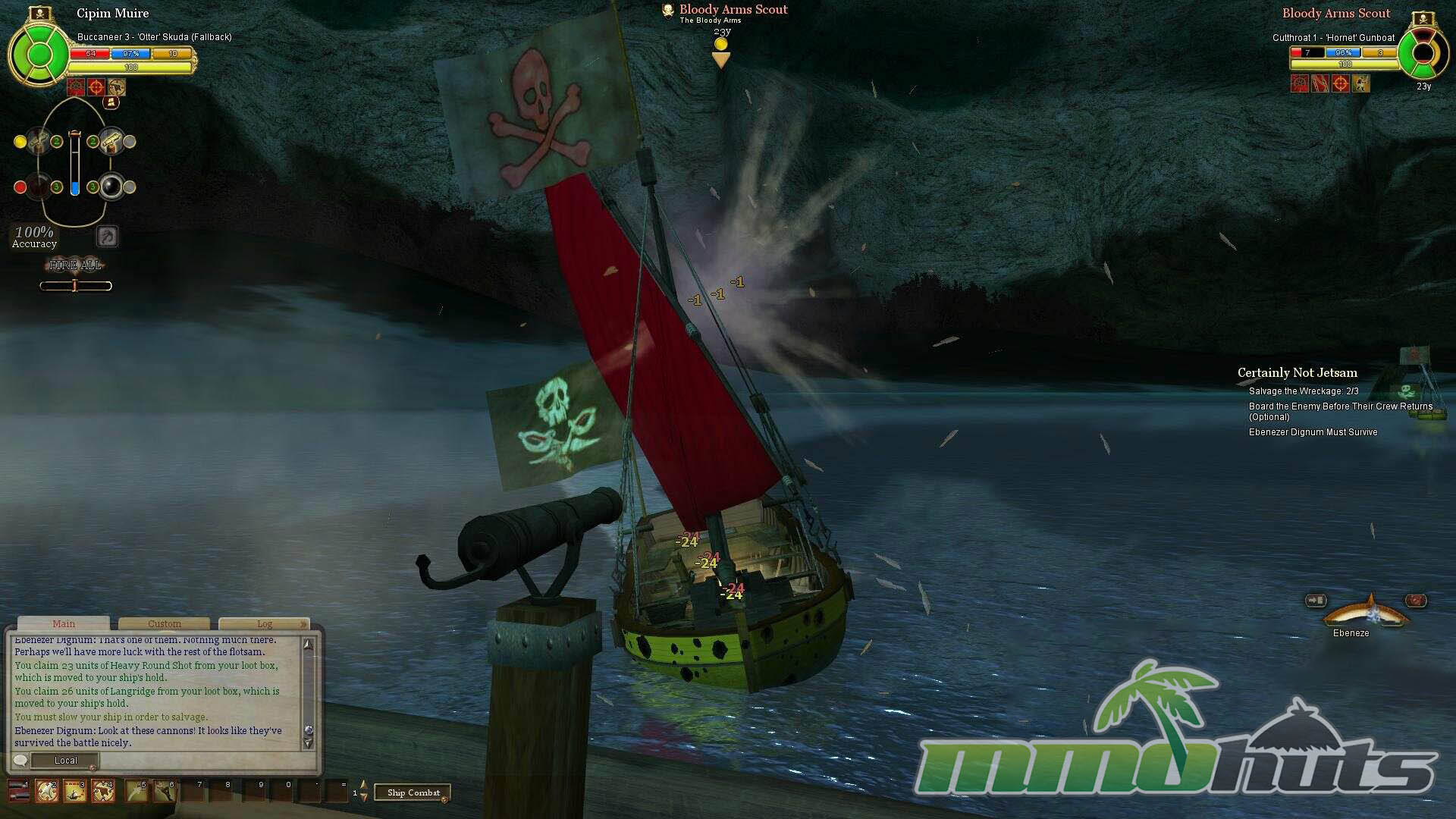
Combat revolves around cannon volleys and ammunition choices. You can use round shot to punish hull integrity, chain shot to shred sails and restrict movement, and grapeshot to thin enemy crew. This adds meaningful decision-making from the first exchange, because crippling a target’s mobility can be as valuable as raw damage. Crew management also matters since crew losses reduce efficiency, and you frequently make calls about when to repair, when to push, and when to protect your ship from a bad trade.
Career abilities further shape fights, giving ships situational boosts, defensive tools, or debuffs that change the tempo. PotBS rewards captains who treat each engagement like a positioning puzzle, using wind, distance, and timing to turn a smaller ship into a real threat. When a target is weakened enough, you can grapple and board, shifting from cannon warfare to a close-range fight on deck to finish the capture or secure the victory.
Swashbuckling (Land-Based Combat)
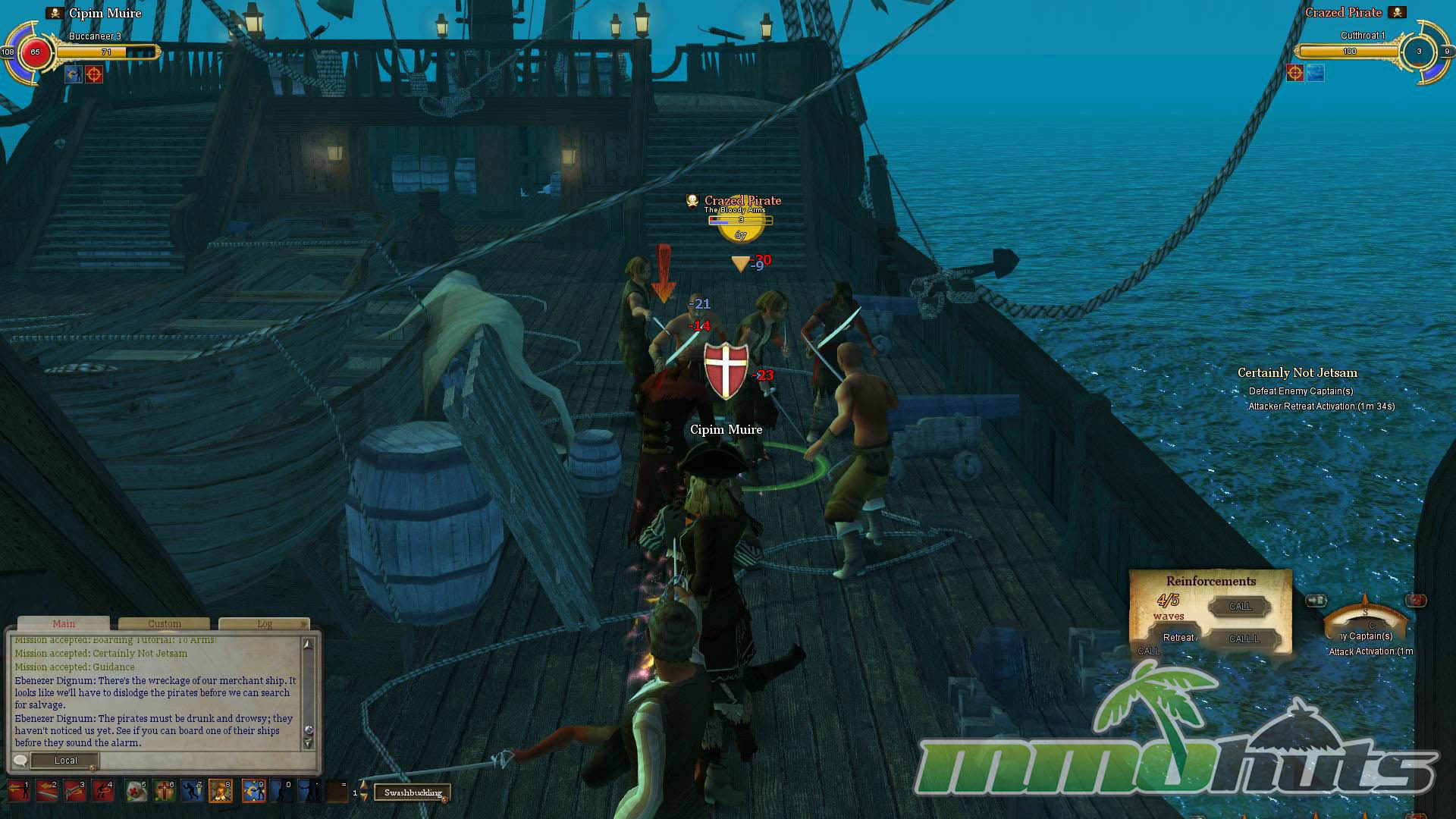
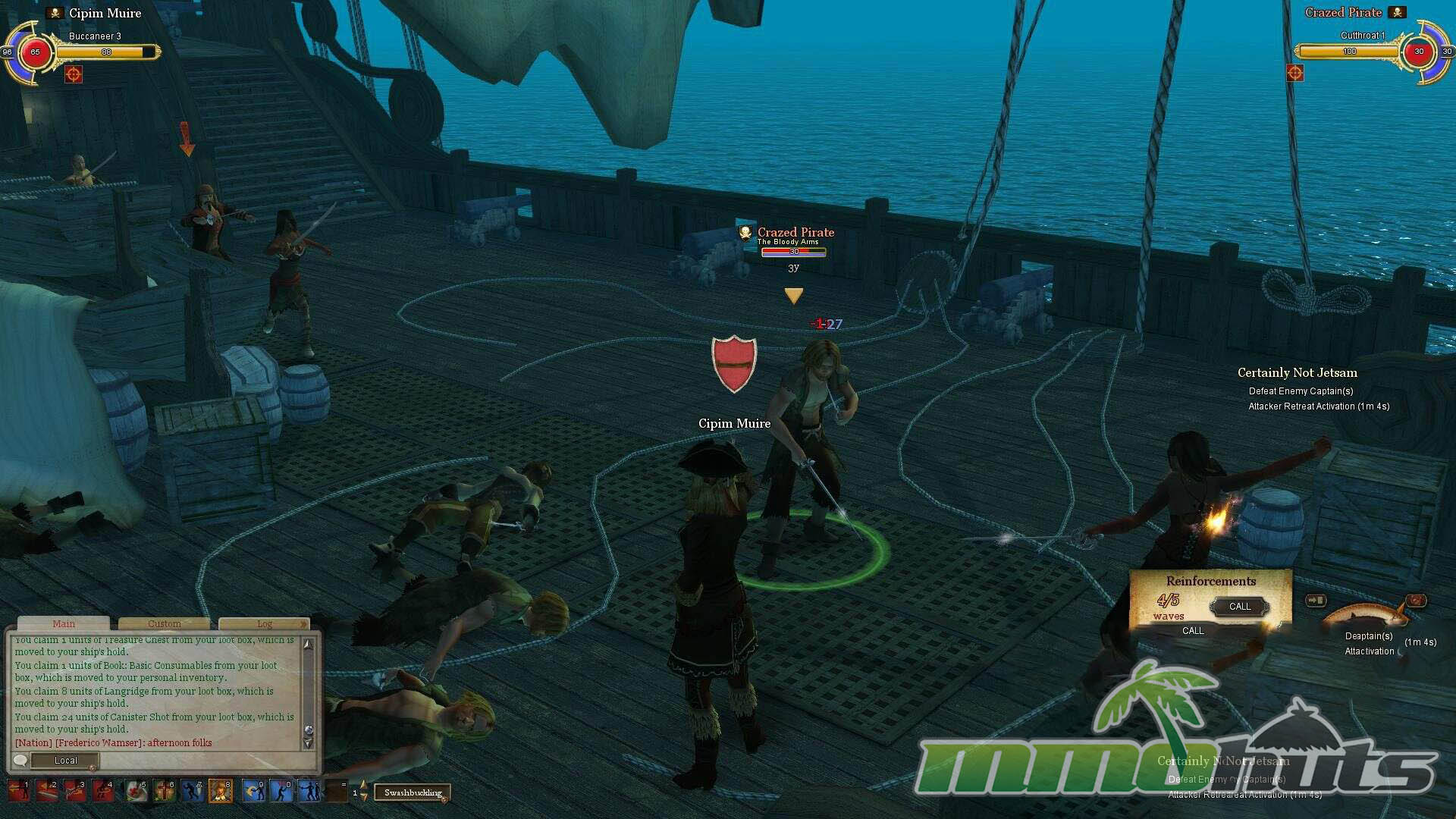
The on-foot component exists to support the seafaring fantasy, not to replace it. Swashbuckling appears in mission instances, tavern brawls, duels, and especially boarding actions. The system uses a third-person, ability-driven approach with combos, blocks, and situational skills rather than a modern action-combat feel.
Players choose from four fighting styles: Fencing, Florentine, Dirty Fighting, and Brawling. Each style comes with its own flavor and move set, ranging from more technical dueling to rougher, close-quarters aggression. It is enjoyable in short bursts and helps break up long sailing sessions, but it can also become predictable over time, particularly when you are clearing similar mission objectives or repeating familiar encounters. The upside is that it does a good job of making boarding feel like a payoff rather than a cutscene, and it supports the game’s strong customization and role-play appeal through costumes and period-appropriate gear.
Ships, Progression, and Loadouts
PotBS offers over 150 historical ship types, from small fast vessels to imposing endgame warships. Progression is strongly tied to what you can command, and ships function as your primary “build.” How you obtain them depends on your career and playstyle. Some players focus on rewards and commendations, others on crafting and markets, and pirates often prefer capturing ships through combat.
A defining element is durability. Ships are not endless, they have a limited number of durability points, and sinking costs one. When durability is gone, the ship is permanently lost and must be replaced. This gives PvP and high-risk PvE more weight than in typical theme-park MMOs, because losses are not purely cosmetic. The freemium era also introduced insurance options that helped soften the harshest outcomes, but the core idea remains, bringing tension to every serious engagement.
Outfitting is where min-maxing and experimentation shine. You can adjust cannons, protection, rigs, and various performance upgrades, then carry consumables like repair kits and different ammo types to match your plan. That flexibility allows ships to be tuned for roles such as brawling, kiting, escort duty, or hauling. It is a satisfying system for players who enjoy preparing a build and then seeing it succeed under pressure.
Crafting, Economy, and Trade
PotBS is unusually committed to a player-driven economy. Ships, cannons, and many essential supplies come from crafting rather than being handed out through loot tables. Production is tied to player-owned economic structures, often called plots, where you build facilities that generate resources and components on real-time cycles. Labor accumulates even while you are offline (up to a cap), which means a dedicated crafter can keep a supply chain moving steadily without being logged in all day.
The economy is intentionally interconnected. A finished ship requires inputs from multiple industries, and those industries are distributed across different ports. In practice, this creates a natural reason for trading, hauling, and cooperation. Trading companies often divide responsibilities, while solo players tend to specialize and rely on markets for what they cannot efficiently produce themselves.
Trading is not just a money-making side activity, it is part of the war machine. Valuable cargo needs to be moved between ports, and the moment you load up a ship with in-demand materials, you become a tempting target in contested waters. Escorts, route planning, and ship choice all matter. When the economy is active, it becomes one of the most memorable parts of the game, because players are not only fighting for territory, they are fighting to secure supply lines that keep fleets afloat.
PvP, Conquest, and Port Battles
Faction warfare is the structural spine of PotBS. The world map is defined by ports that can be contested and, in many cases, captured. Players push ports toward conflict by generating unrest through a mix of activities such as missions and sinking NPCs around the target area, with economic actions also playing a role. As unrest grows, the waters around that port become increasingly dangerous, turning into PvP zones that encourage skirmishes, ambushes, and defensive patrols.
The climax is the Port Battle, a scheduled instanced PvP event that can involve large teams (often up to 24 players per side, depending on the battle). These fights are the closest the game gets to a true naval “endgame,” with organized fleet movement, coordinated target calling, and careful ship selection. Preparation matters as much as execution, because repairs, ammunition, and ship durability all influence what risks a team can afford to take.
Conquest runs in cycles, which helps keep the map from stagnating forever. Nations compete for dominance over a period, then the conflict resets enough to keep future cycles meaningful. Pirates operate as the disruptive wild card. Rather than playing the exact same territory game as nations, they thrive by raiding, turning areas into chaos, and temporarily flipping ports into Pirate Havens that deny stable economic benefits. It is a different style of play that suits players who prefer opportunism over long-term empire building.
Outside of scheduled battles, open-sea PvP can happen when players cross paths in contested regions. That creates emergent encounters like hunting parties targeting traders, small dueling groups looking for fair fights, or defensive fleets escorting supply runs. Because ship loss has real consequences, PvP carries tension that many MMOs lack, and it rewards captains who know when to fight and when to disengage.
Graphics, Interface, and Audio
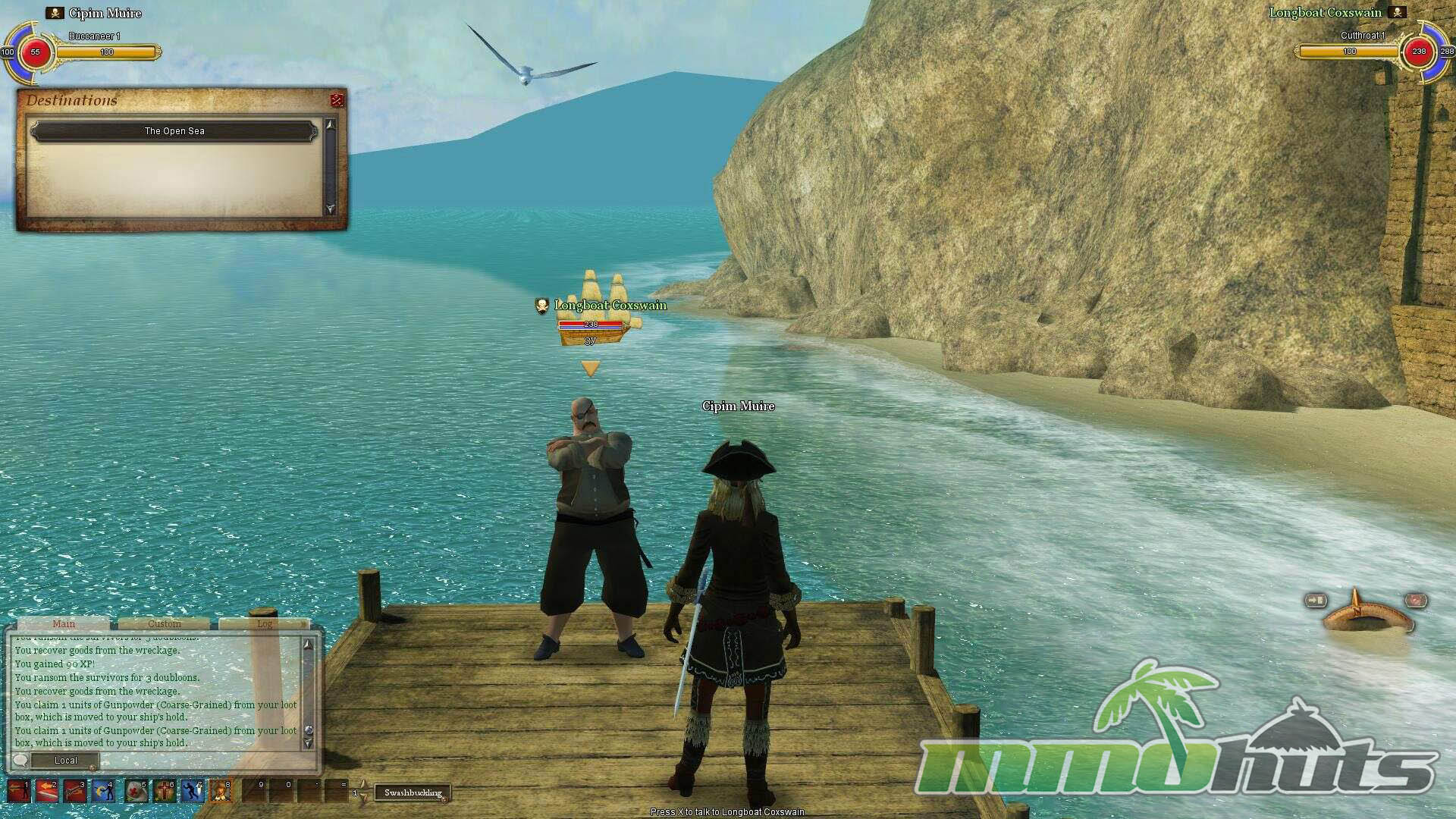
PotBS shows its age, but it also has strengths that still land. The ship models and ocean presentation remain the most impressive parts, with readable damage states and an atmosphere that sells the period. Broadside exchanges can still look dramatic, especially when lighting, smoke, and weather align. The weaker side is character presentation. Animations and model detail are stiff by modern standards, and on-foot environments can feel plain compared to newer MMORPGs.
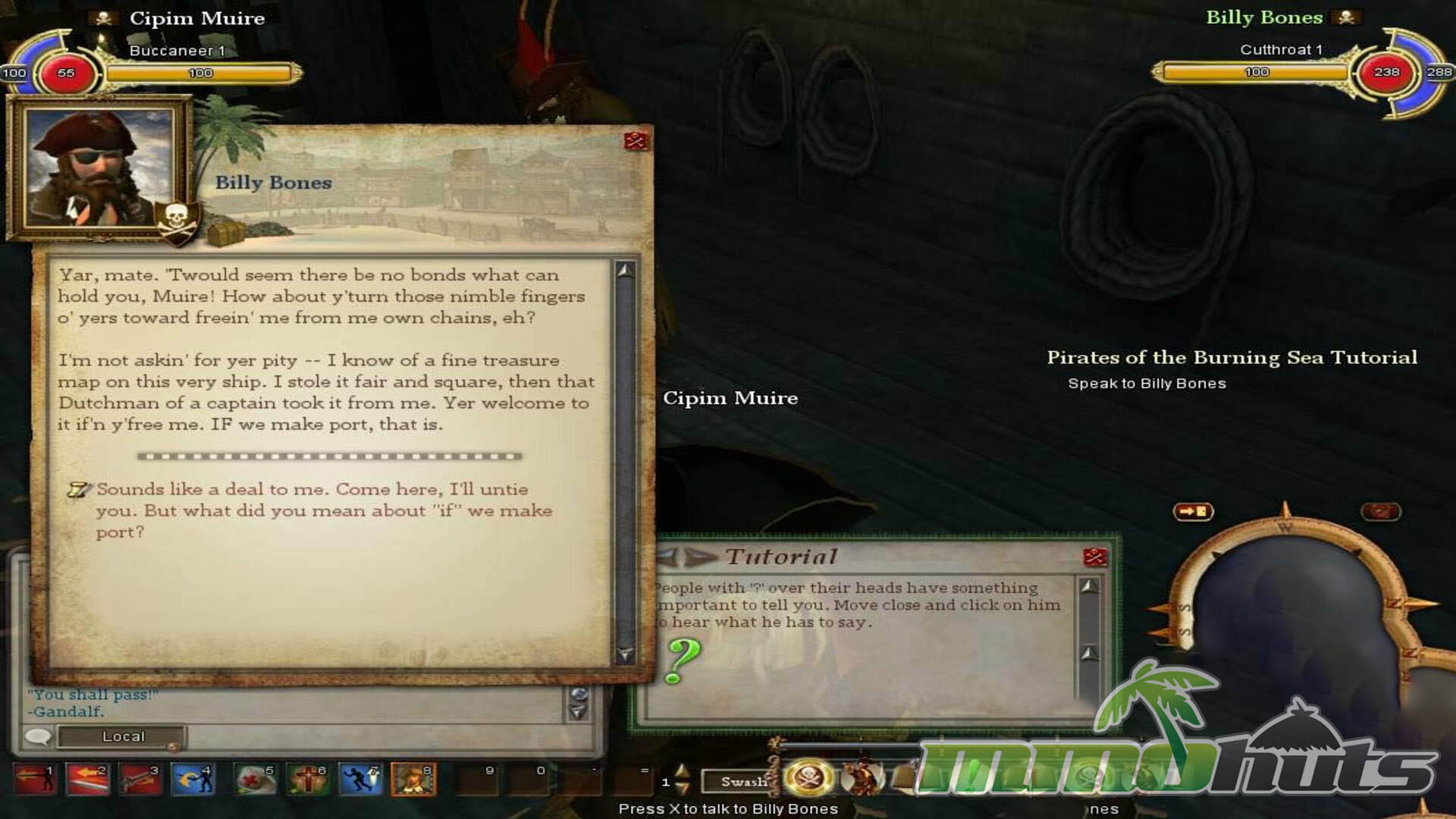
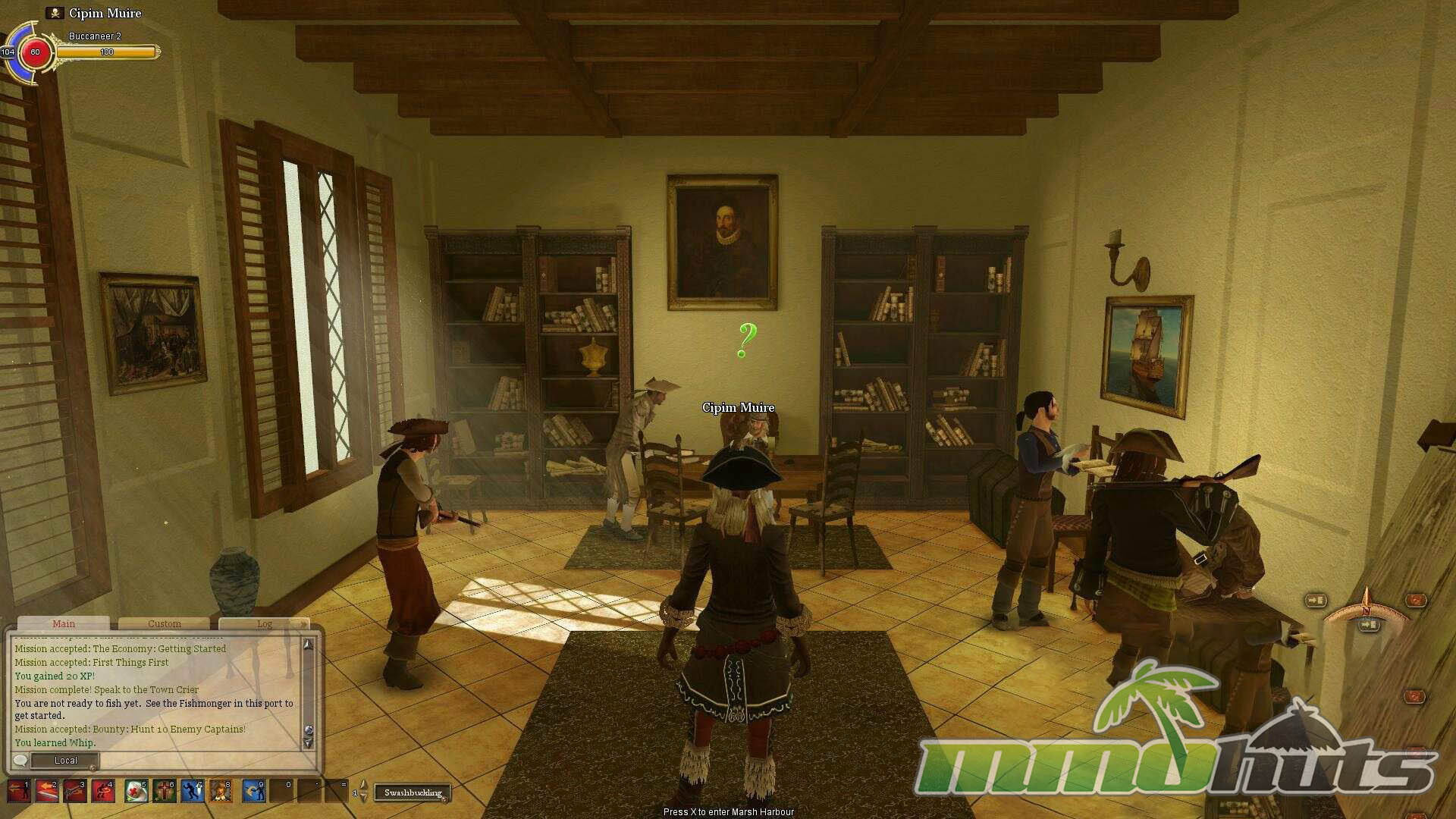
The interface is functional but busy. Between ship management, inventory, economy windows, and mission tracking, the UI can feel dense until you learn what to ignore and what to keep open. Once you are comfortable, it supports the game’s complexity reasonably well, but it does not feel contemporary.
Sound design is one of the game’s quieter strengths. Cannon fire, creaking hulls, and the impact of volleys give combat weight, while the music leans into swashbuckling themes without becoming distracting. Voice acting is limited, with most narrative delivered through text, which is consistent with MMOs from the era.
Community and Staying Power
PotBS has never been a mass-market MMO, and the “Low” playerbase label is accurate. That said, the smaller population has created a recognizable social environment where rivalries and alliances can feel personal. Joining a society is strongly recommended, both to learn the systems and to access the parts of the game that shine, especially port battles, organized trading, and faction planning.
The game’s survival is notable. It has persisted through ownership changes, reduced update cadence, and the realities of maintaining an older MMO. Today it is best approached as a specialist title: if you want a polished, modern presentation and constantly refreshed content, it will feel dated. If you want deliberate naval tactics, a meaningful economy, and faction warfare driven by players, there is still nothing quite like it.
Final Verdict – Good
Pirates of the Burning Sea succeeds where it matters most for its concept: ship combat is tactical and satisfying, the economy is unusually interconnected, and the conquest layer gives PvP real context beyond random fights. It also asks a lot from new players, with older visuals, dense systems, and swashbuckling combat that can feel repetitive once the novelty fades. With a modest population, the best moments often depend on finding the right community and showing up for scheduled conflicts. For players who value strategy, logistics, and Age of Sail atmosphere over modern sheen, PotBS remains a worthwhile, distinct MMO.
Pirates of the Burning Sea Online Links
Pirates of the Burning Sea Official Site
Pirates of the Burning Sea Official Forums
Pirates of the Burning Sea Wiki (Info / Guides)
Pirates of the Burning Sea System Requirements
Minimum Requirements:
Operating System: Windows XP / Vista
CPU: Pentium IV 1.5 GHz
Video Card: NVIDIA GeForce FX 5700 or equivalent
RAM: 512 MB
Hard Disk Space: 4 GB
Recommended Requirements:
Operating System: Windows XP / Vista
CPU: Core Duo 2.0 GHz or better
Video Card: NVIDIA GeForce 6600 or better
RAM: 1024 MB
Hard Disk Space: 4 GB
Pirates of the Burning Sea Music & Soundtrack
Coming Soon…
Pirates of the Burning Sea Additional Information
Developer: Flying Lab Software, Portalus Games
Publisher: Portalus Games, Gamearena, Sony Online Entertainment
Open Beta Date: December 14, 2005 to January 1, 2008
Pre-Release Date: January 07, 2008
Release Date: January 22, 2008
Development History / Background:
Pirates of the Burning Sea began development at Flying Lab Software in 2002 and was first published by Sony Online Entertainment. As the scope grew, the team expanded significantly and shifted focus toward getting the MMO ready for a lengthy public test. Open beta started on December 14, 2005 and continued until January 01, 2008, followed by a pre-release period that began on January 07, 2008. The game officially launched on January 22, 2008 and originally required a subscription, with early supporters receiving access during the pre-release window.
After launch, population management became a priority. By April 2008, one-time server transfers were offered as part of an effort to concentrate players, and additional consolidation continued through 2008 as multiple servers were closed. Further reductions occurred on March 05, 2010, leaving Roberts and Antigua as the remaining servers. Later that year, on November 22, 2010, PotBS shifted away from a pure subscription approach and adopted a multi-tier freemium model.
In December 2012, Sony Online Entertainment announced plans to shut the game down. In response, a group of original Flying Lab developers formed Portalus Games and took over hosting, keeping PotBS running from February 2013 through 2015. Portalus ultimately stepped away, but the game continued on and remains available as a free to play title by Vision Online Games