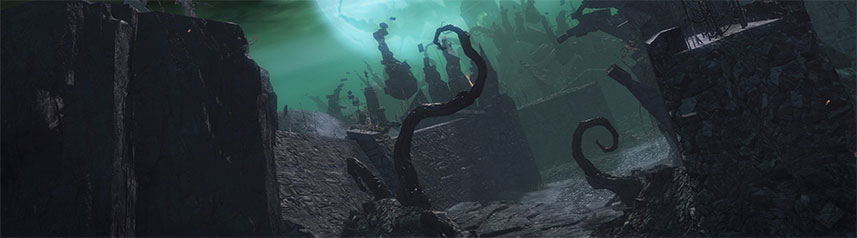
Might and Magic: Duel of Champions is a competitive collectible card game built around deckbuilding, faction identity, and tactical positioning. With a pool of more than 770 cards, it offered plenty to chase, whether you preferred working through the solo campaign to learn matchups or jumping into PvP and tournaments to test refined lists built from creatures, spells, and fortunes.
 | Publisher: Ubisoft Playerbase: Low Type: CCG Release Date: August 10, 2012 Shut Down: October 31, 2016 Pros: +Large selection of cards to collect. +Flexible deckbuilding with lots of viable directions. +Lengthy, useful campaign. Cons: -Sparse graphics options. -PvP can drag due to lack of a clear turn timer. -Monetization can skew competitive balance. -No announced Android version. |

Might and Magic: Duel of Champions Overview
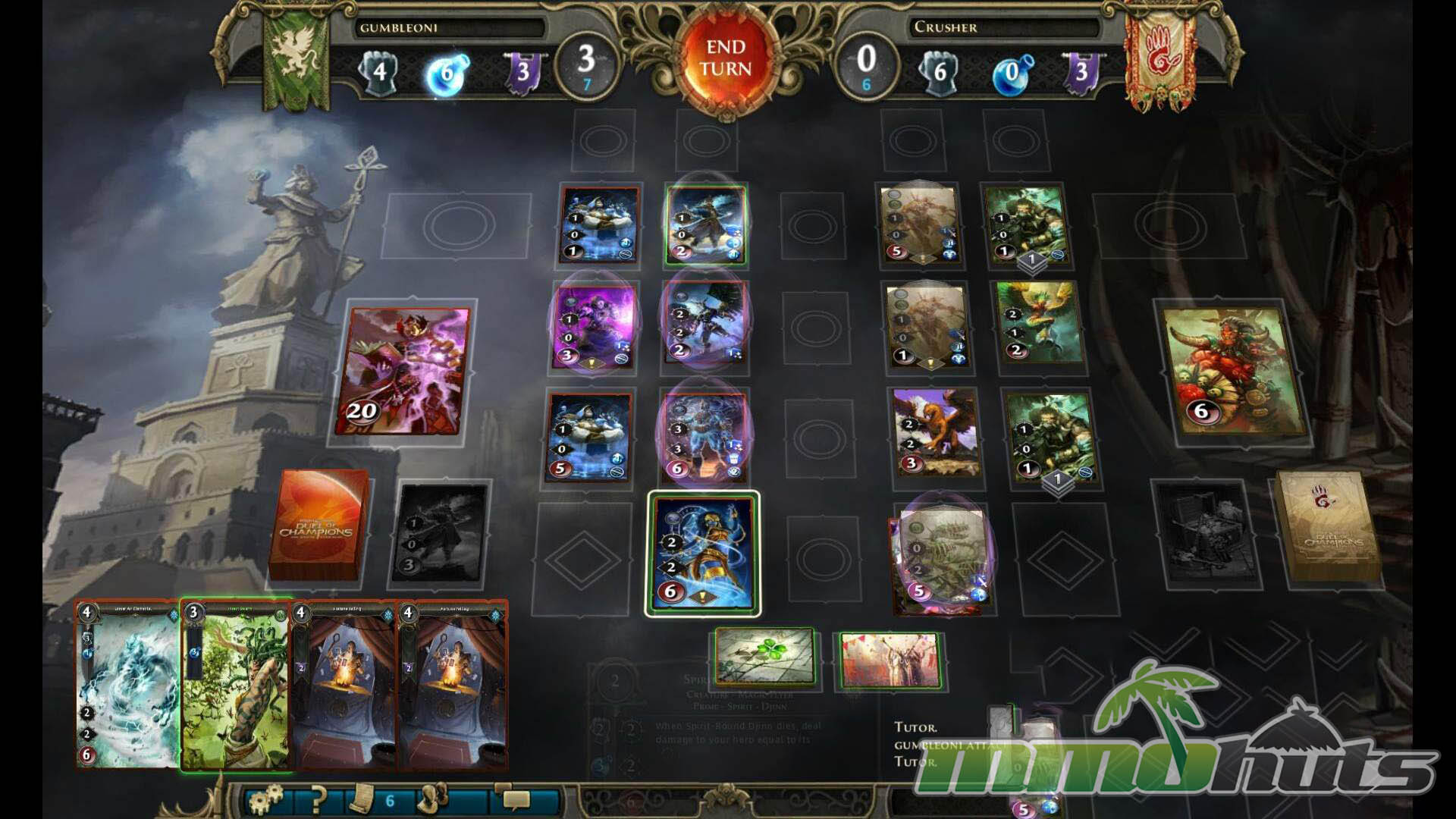
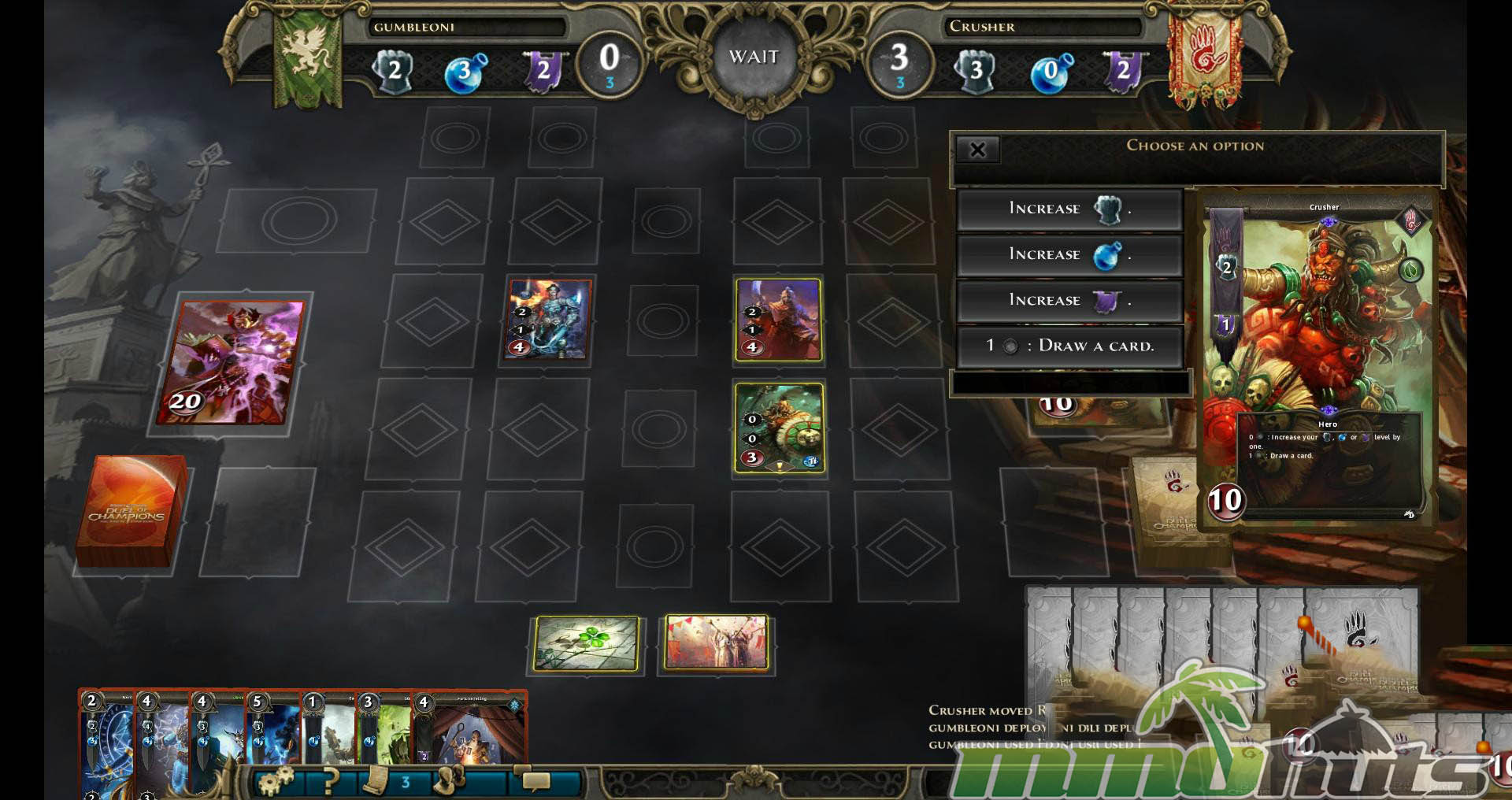
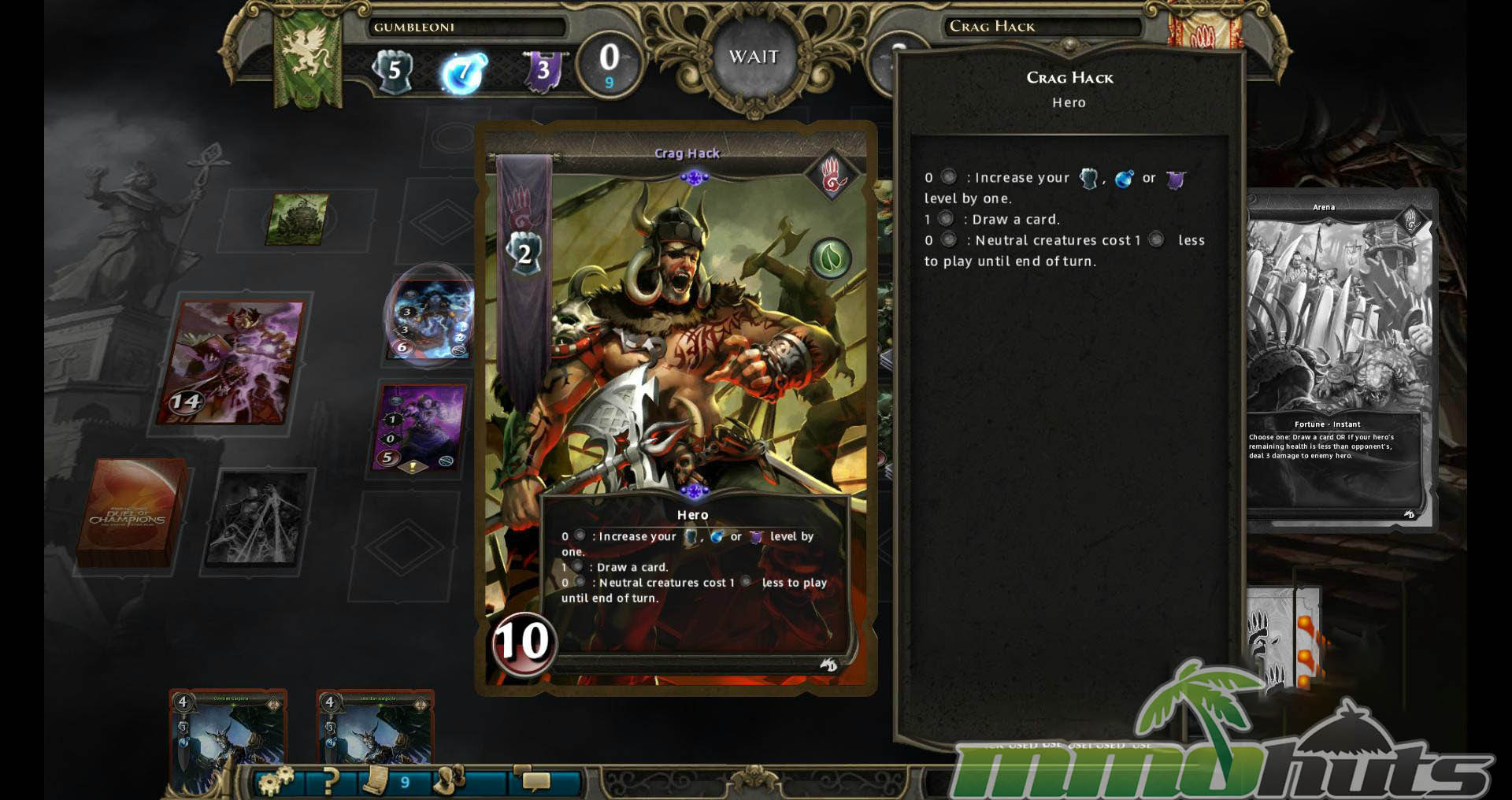
Might and Magic: Duel of Champions is a digital trading card game focused on collecting cards, assembling faction-based decks, and outplaying opponents across both PvE and PvP modes. Players build around a chosen hero and then fill a deck from a pool of over 770 cards, using a straightforward deck manager to tweak ratios, refine win conditions, and experiment with synergies. Battles revolve around summoning creatures, casting spells, and using fortunes while placing units across a 16-slot battlefield that makes positioning matter as much as raw card power.
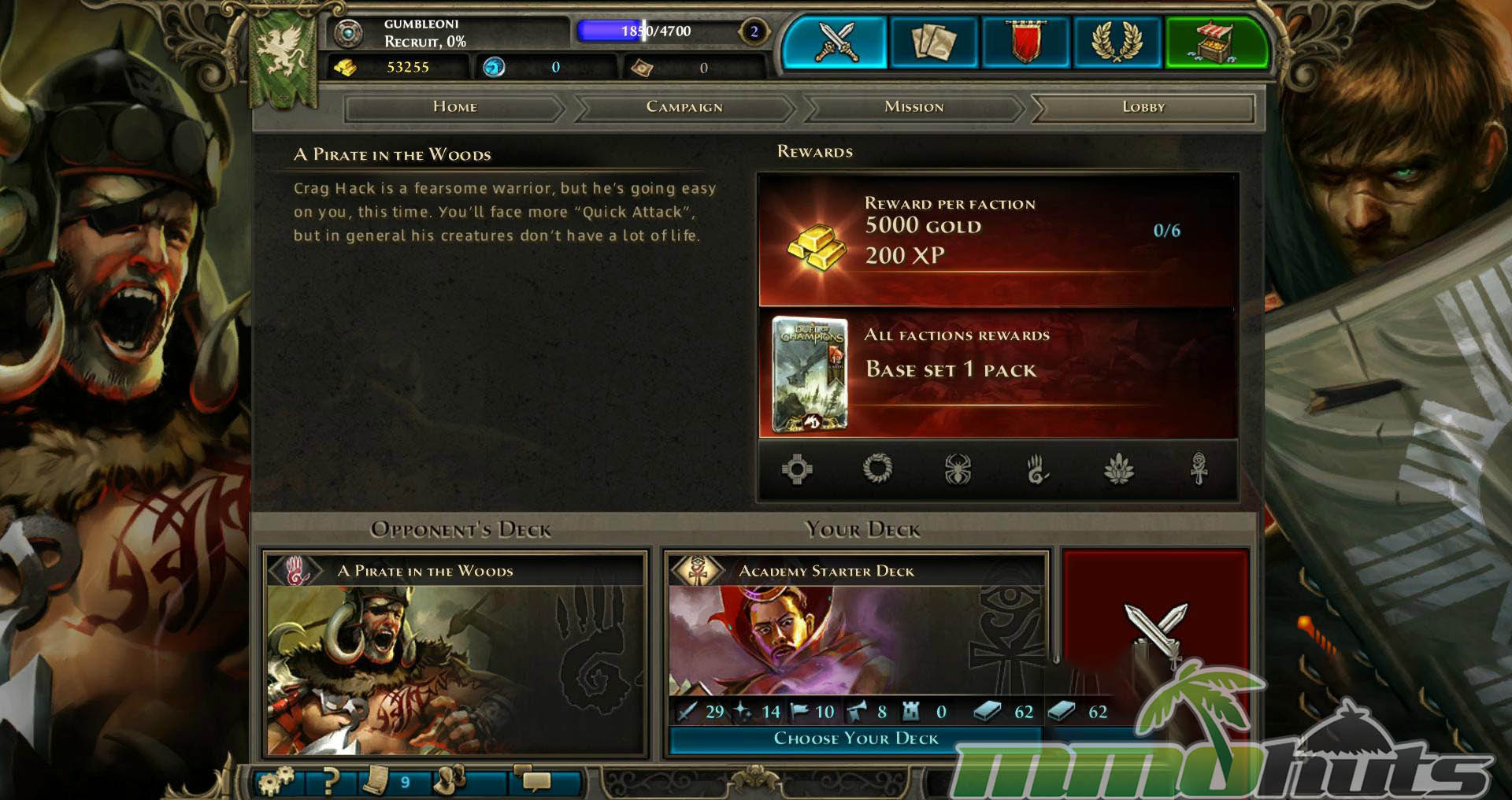
At launch, the game offered 6 factions with distinct themes and tools, giving each deck a clear personality and typical play patterns. The single-player campaign functions as an extended onboarding path, sending you through a steady run of encounters against varied enemy lineups (goblins, pirates, and other foes), rewarding wins with gold and experience. Gold can then be spent on booster packs to grow your collection and open up new deck concepts. Once comfortable, players could move into PvP via casual matches or ranked play, climbing leaderboards and testing builds against the wider community. Competitive play also included two tournament formats designed for head-to-head play and prizes. Might and Magic: Duel of Champions shut down on October 31, 2016.
Might and Magic: Duel of Champions Key Features:
- Six factions – pick from six elemental-aligned factions, each supporting different strategies and card pools.
- Campaign – a substantial solo mode that teaches fundamentals while letting you trial deck ideas against AI opponents.
- Deck Customization – build toward your preferred style, with decks supporting up to 209 cards, enabling everything from tight lists to experimental piles.
- Tournaments – two tournament types provide structured PvP competition and rewards for consistent play.
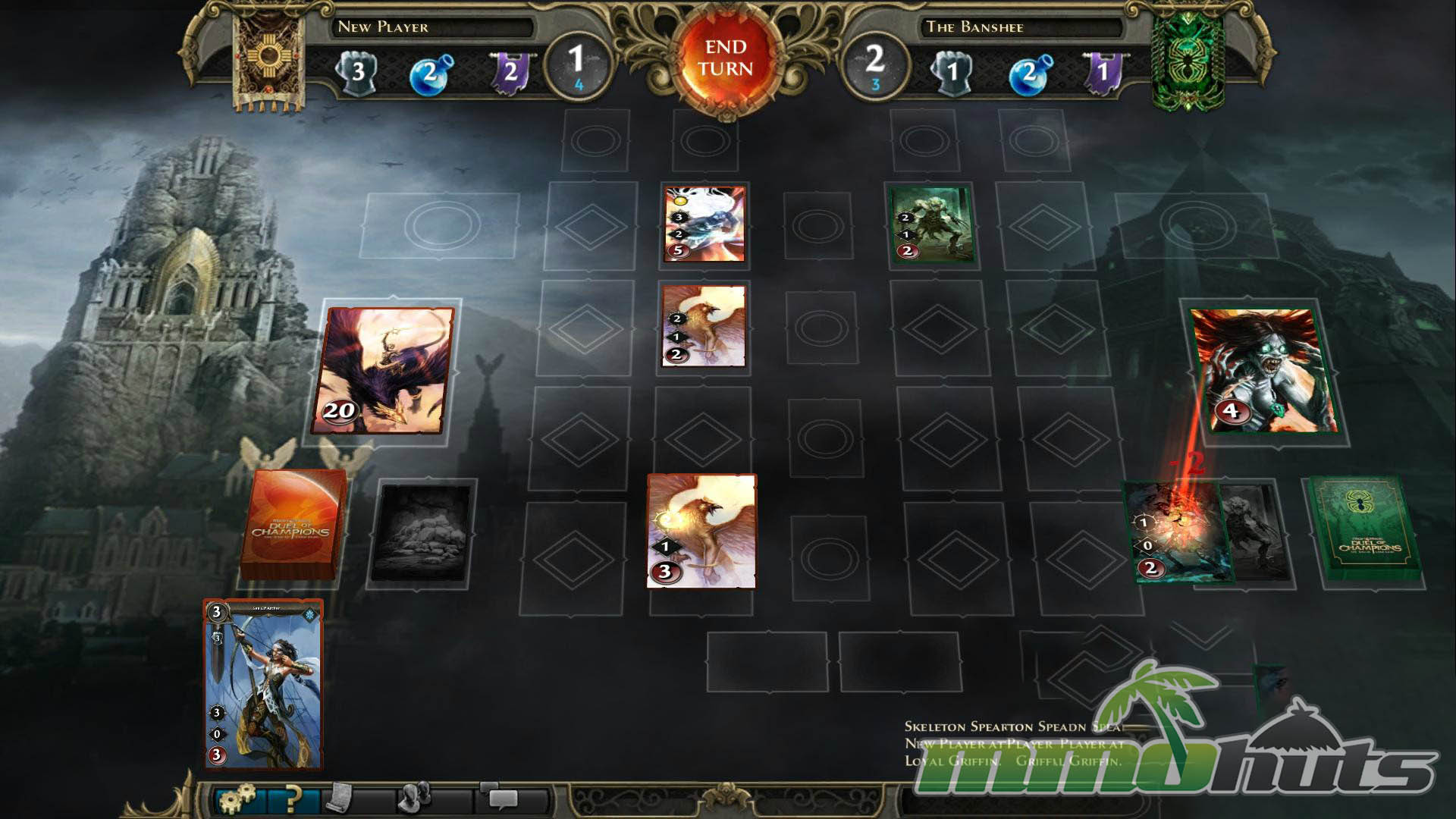
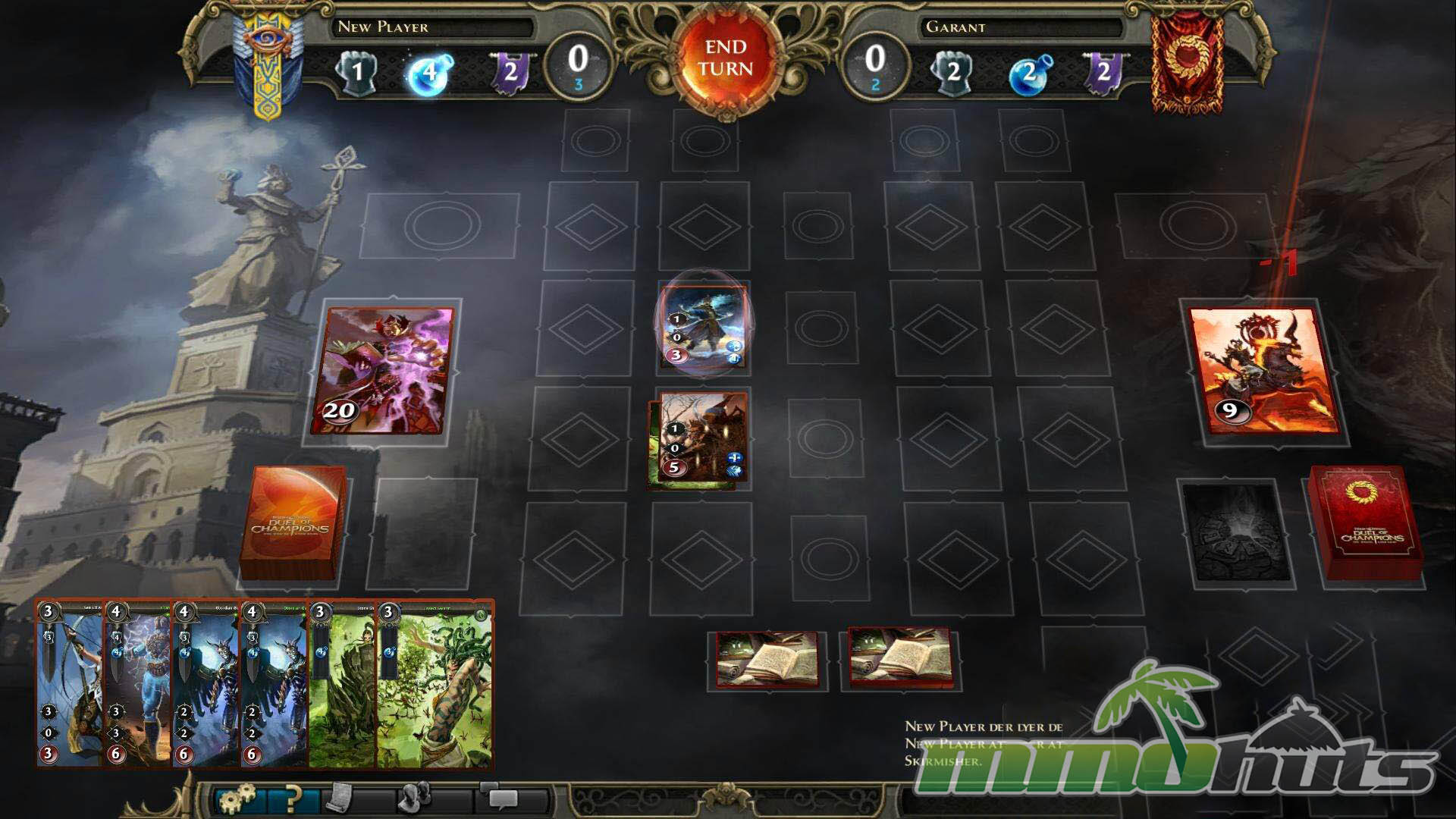
- Tactical Deployment – place units across a 16 slot field and adjust to enemy lanes, timing, and board control to push damage efficiently.
Might and Magic: Duel of Champions Screenshots


Might and Magic: Duel of Champions Featured Video

Might and Magic: Duel of Champions Review
Might and Magic: Duel of Champions arrived during a period where digital card games were rapidly standardizing around familiar resource curves, creature combat, and booster-pack economies. Ubisoft’s take still leans on those genre expectations, but it differentiates itself with a lane-based board, a hero-stat system that gates what you can play, and a pace that generally favors decision-making over spectacle. It is not the deepest card battler ever made, but it carved out its own identity by making positioning and lane coverage a constant part of every turn.
Gameplay
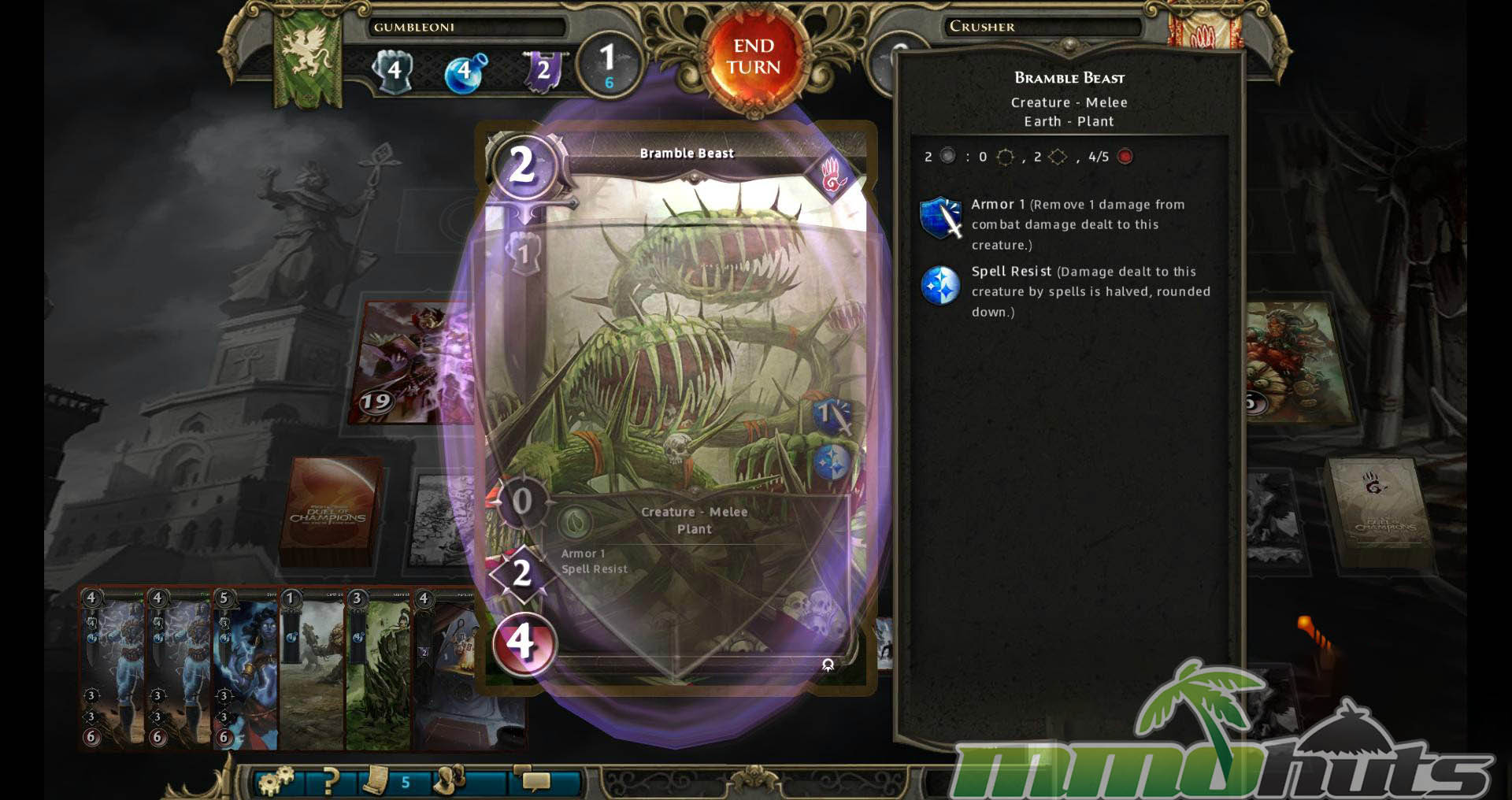
Matches play out on a split battlefield with each player facing the other across a grid. At the start of turns you gain resources used to deploy cards, but you are also managing your hero’s attributes, Might, Magic, and Destiny, which act as additional requirements for many plays. In practice this creates a simple but meaningful progression where early turns often involve developing your hero and stabilizing lanes, while later turns open access to stronger effects and higher-impact creatures.
What makes the combat loop stand out is how creatures interact with lanes. Units are tied to their row, and most of the time they fight within that corridor, so leaving a lane empty can quickly translate into direct pressure on your hero. With a health total of 20, games can swing once a player loses control of a lane, especially when a board state allows repeated attacks to go unanswered. When creatures clash, the attacker deals its damage and the defender hits back based on retaliation, so trading and sequencing matter, not just raw stats.
Each card is limited to a single action per turn, which includes attacking and movement. That restriction makes repositioning a legitimate tactical choice rather than a free optimization step. Shifting a creature to a different slot can open an attack line, protect a vulnerable row, or enable an ability that triggers from movement or board state. Because space is limited, the board can become a puzzle of timing and placement where a single move sets up the next two turns.
Aesthetics
Duel of Champions keeps its presentation functional. Attacks are quick and consistent rather than highly animated, which helps matches move along without long effect sequences interrupting the flow. The result is a snappy rhythm where turns resolve cleanly and the focus stays on the board and your hand.
The card art does most of the heavy lifting visually, and it generally succeeds. Illustrations are detailed and readable, often leaning toward posed character and creature shots rather than dramatic action scenes, but the style fits the Might and Magic tone. The soundtrack adds weight, using a grand, fantasy-leaning musical palette that supports the feeling of a formal duel rather than a chaotic skirmish.
Deck Selection
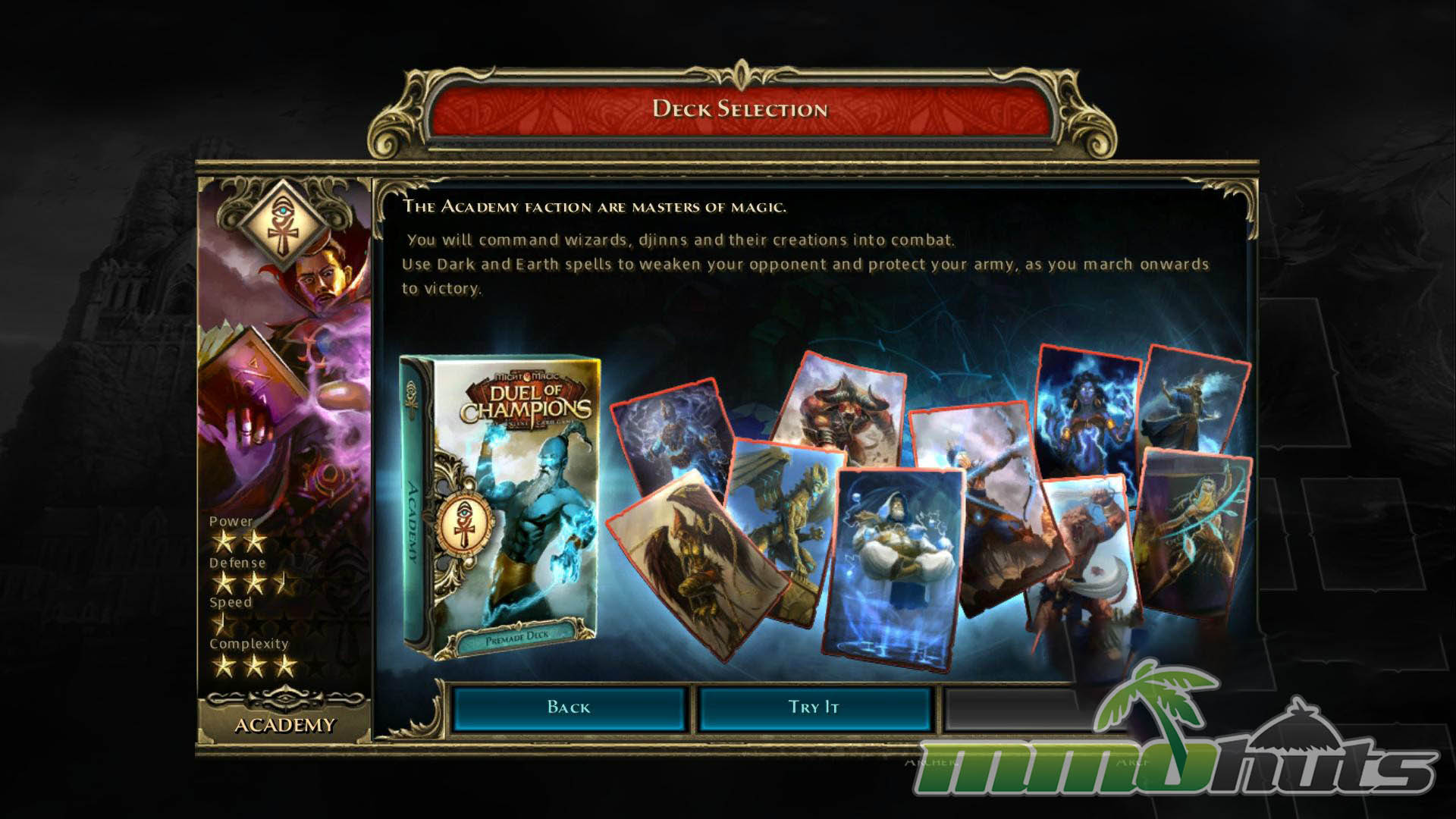
After the tutorial, new players are pushed toward selecting one of 6 starting decks. Each is summarized using a handful of broad descriptors (power, defense, speed, complexity), which is helpful as a quick guide even if it cannot fully explain how a deck actually wins. The important part is that the game lets you try before you fully commit, reducing the risk of picking a faction that does not click with your preferences.
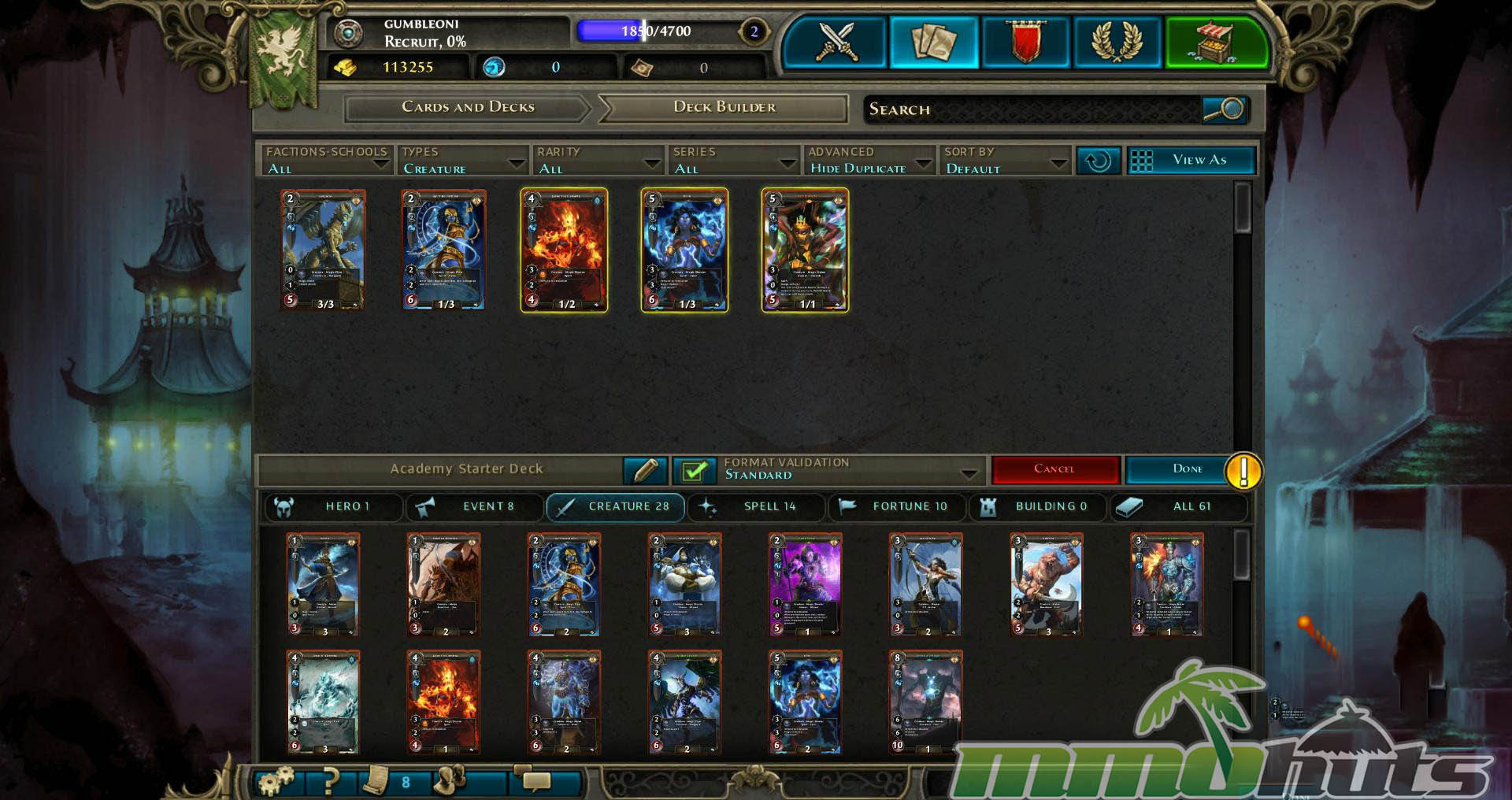
The deckbuilder itself is approachable, mostly a matter of filtering your collection and dragging cards into place. Your hero choice strongly influences what you can include, so collection growth is tied not just to acquiring strong cards, but also to unlocking additional hero options that widen your deckbuilding space. The ability to build extremely large decks (up to 209 cards) is technically liberating, but in practice tighter lists tend to perform better because consistency is crucial in a card game. Staying closer to the minimum of 59 cards generally makes it easier to execute a plan and draw the pieces you built around.
Campaign
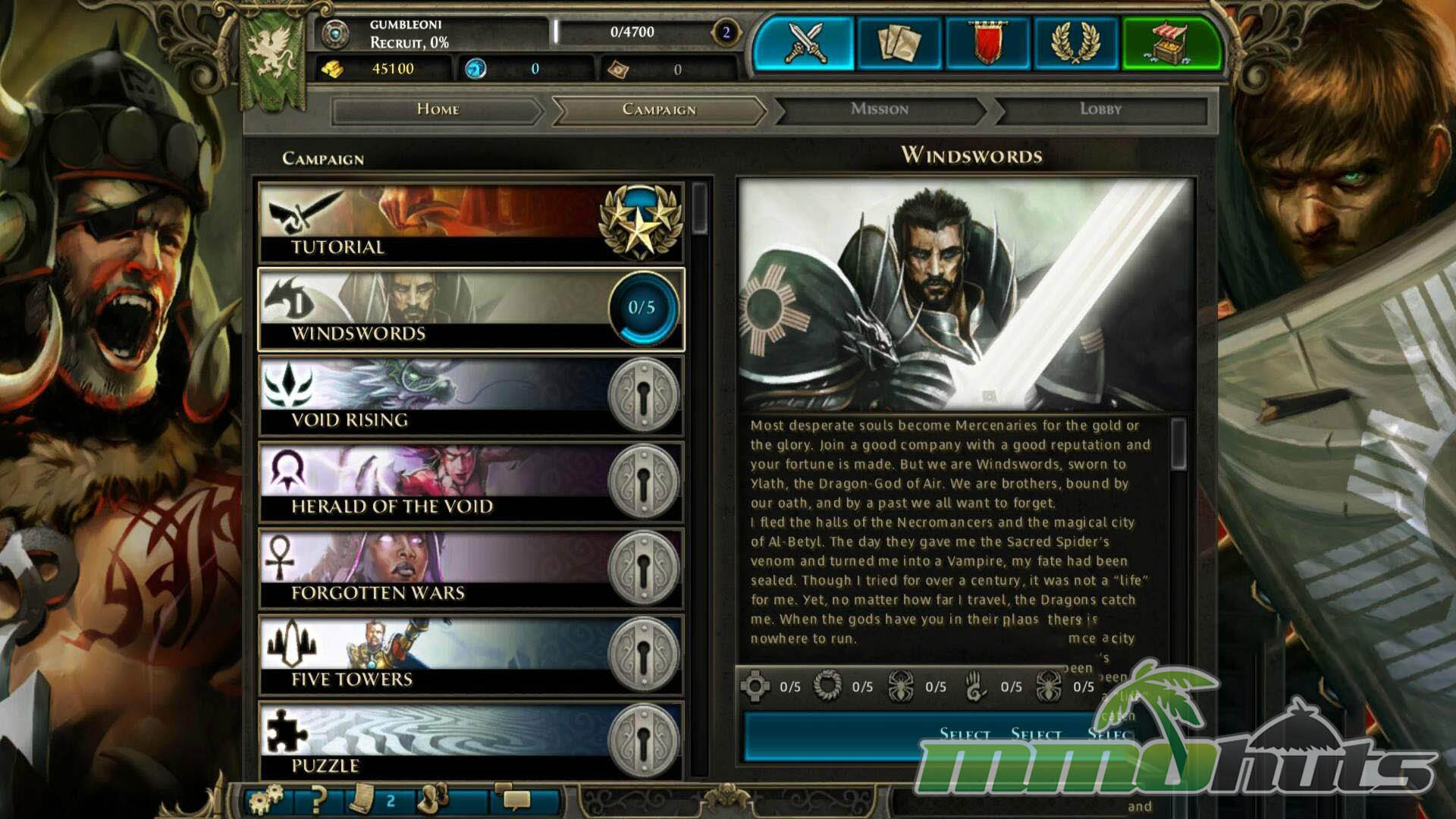
The campaign is more than a token tutorial. It works as a long-form training ground where you can learn faction pacing, test card interactions, and develop comfort with lane management without the pressure of ranked play. Early encounters can feel slow depending on your starter deck and collection, especially when you run into AI setups that stall lanes and force you to win through incremental advantages.
That slower pace is not automatically a flaw, it gives you time to understand why a turn worked or failed, and it encourages experimenting with spells and positioning choices. The bigger issue is longevity. Once you finish the campaign, there is little in the way of additional AI content to serve as a repeatable sandbox. For players who prefer PvE, or who want a stress-free place to practice, that limitation is noticeable.
PvP
PvP is split into casual and ranked queues. Casual matches can be a comfortable space for learning, especially when many opponents are still on starter collections and are working out the basics of lane coverage and resource planning. However, human pacing is inconsistent, and without a strong, visible turn timer, games can occasionally feel slower than they need to be. Even when the match is interesting, long pauses can drain momentum.
Ranked play is where the competitive ecosystem lives, supported by leaderboards and tournament options that give dedicated players something to chase. Swiss Tournaments require a Tournament Ticket (available via the Shop) and run as an 8-player ladder-style event. Jackpot Tournaments are a matchmaking-based free-for-all where gold rewards are distributed to top performers at the end. These modes add structure, but they also highlight the reality of collection-driven advantage. The more complete your card pool, the more options you have to refine a list for the metagame.
Cash Shop
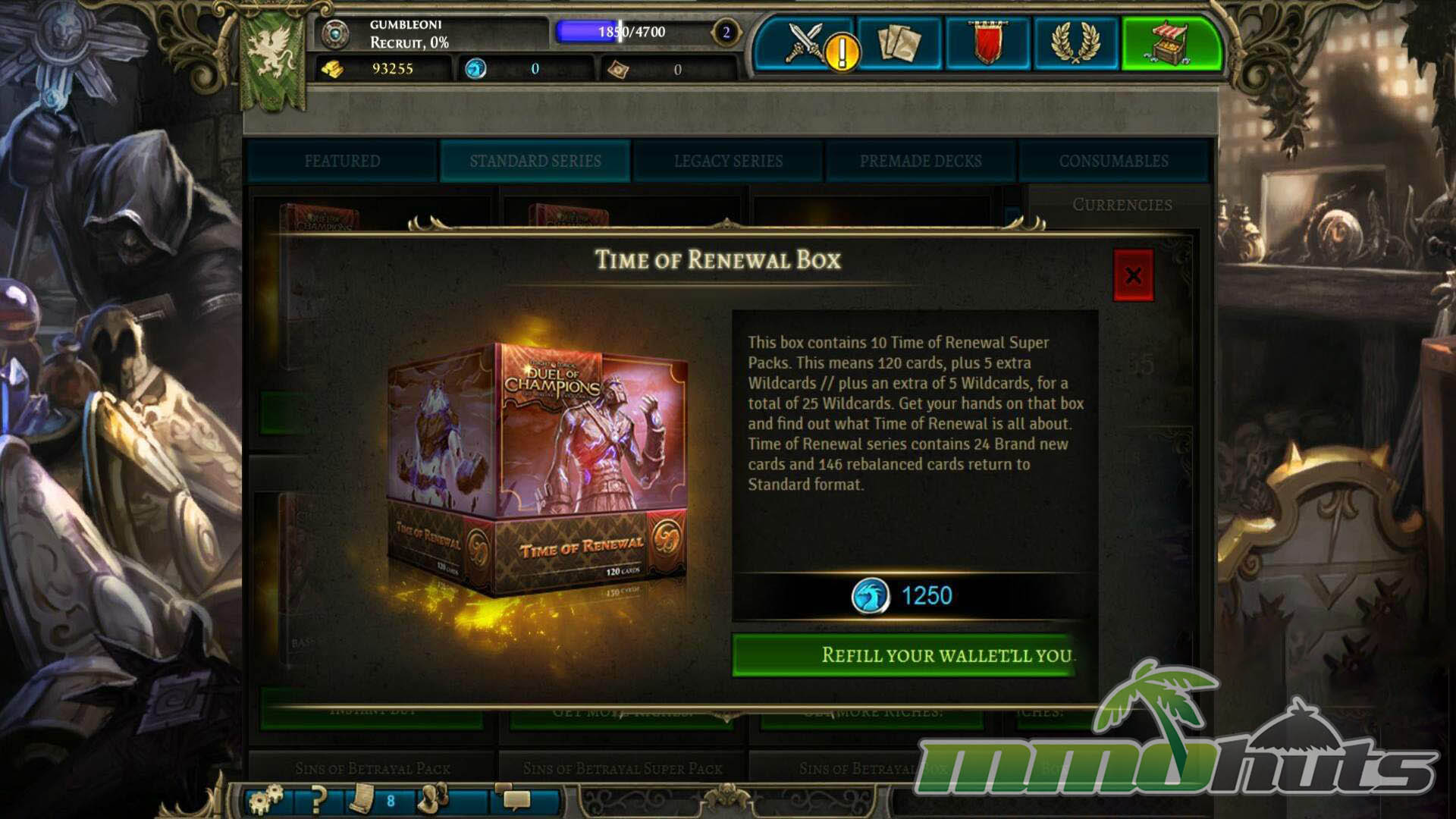
Like most CCGs, the store is easy to understand because it mirrors physical card game purchasing habits. The game uses two currencies: gold earned from play, and seals as a premium currency purchased with real money. Seals can speed up collection building through larger purchases and bundles, although gold can also be used to buy card packs, keeping a path open for non-spending players.
Buying packs is still the core loop for expanding options, and the game leans into that familiar excitement, even when the results are uneven. Because packs provide only a limited number of cards, progress can feel tied to luck, and duplicates or off-faction pulls can slow down deck improvement. That friction tends to push competitive players toward either grinding heavily or spending to accelerate collection growth.
This is where the pay-to-win concern comes from. In any booster-based system, the player willing to buy large volumes of packs can, over time, assemble a broader and stronger toolbox than someone relying only on earned currency. Skill still matters, especially in a game where placement and sequencing are important, but access to key cards and optimal builds can tilt the playing field. Gold income exists and can be meaningful, yet it does not fully remove the advantage of faster acquisition through spending, and randomness can make targeted deck construction frustrating.
Beyond packs, players can also purchase temporary Gold Boost and XP Boost effects to increase rewards. They are convenience items rather than necessities, but they reinforce the game’s focus on accelerating progression.
Final Verdict – Great
Might and Magic: Duel of Champions is a strong digital card game, defined by quick match flow, a large card pool, and a board that makes positioning matter. The lane-based battlefield gives it a distinct feel compared to more traditional head-to-head card battlers, and the campaign does a good job preparing players for real matches while providing a substantial amount of content on its own. Deckbuilding is also approachable, with enough depth to reward careful tuning.
Its biggest drawbacks are familiar to the genre: competitive play can become skewed by collection size and spending, and the lack of a clear move timer can make some PvP matches drag. Even with those issues, it remains an enjoyable, tactically flavored CCG that offered a refreshing alternative for players who wanted more board presence and lane management in their card duels.
Might and Magic: Duel of Champions Links
Might and Magic: Duel of Champions Official Site
Might and Magic: Duel of Champions Steam Page
Might and Magic: Duel of Champions iTunes Store
Might and Magic: Duel of Champions Reddit
Might and Magic: Duel of Champions Gamepedia [Database/Guides]
Might and Magic: Duel of Champions Wiki [Database/Guides]
Might and Magic: Duel of Champions System Requirements
Minimum Requirements:
Operating System: Windows XP, Windows Vista, or Windows 7
CPU: Pentium 4 2.4GHz or Sempron 2400+
Video Card: GeForce 210 or Radeon X600 Series
RAM: 1GB
Hard Disk Space: 1 GB
Recommended Requirements:
Operating System: Windows XP, Windows Vista, or Windows 7
CPU: Core 2 Duo E4600 2.4GHz or Athlon 64 X2 Dual Core 5400+
Video Card: GeForce GT 230 or Radeon HD 6550D
RAM: 2GB
Hard Disk Space: 1 GB
Might and Magic: Duel of Champions is available for iPads.
Might and Magic: Duel of Champions Music & Soundtrack
Might and Magic: Duel of Champions Additional Information
Developer(s): Blue Byte
Publisher(s): Ubisoft
Lead Writer: Kurt McClung
Release Date: August 10, 2012
Steam Release Date: November 07, 2013
Shut Down: October 31, 2016
Other Platforms: iPad
Development History / Background:
Might and Magic: Duel of Champions was developed by the German studio Blue Byte. Founded in 1988, the company built its reputation through strategy staples such as Battle Isle and The Settlers, before being acquired by Ubisoft in 2001. Duel of Champions launched on August 10, 2012, and later reached Steam on November 07, 2013, broadening its audience on PC. Blue Byte is also known for its work on the Anno series, including Anno Online. Despite a distinctive lane-based approach, Might and Magic: Duel of Champions ultimately shut down on October 31, 2016, and it struggled to maintain traction in a market increasingly dominated by major digital CCGs like Hearthstone and Shadowverse.